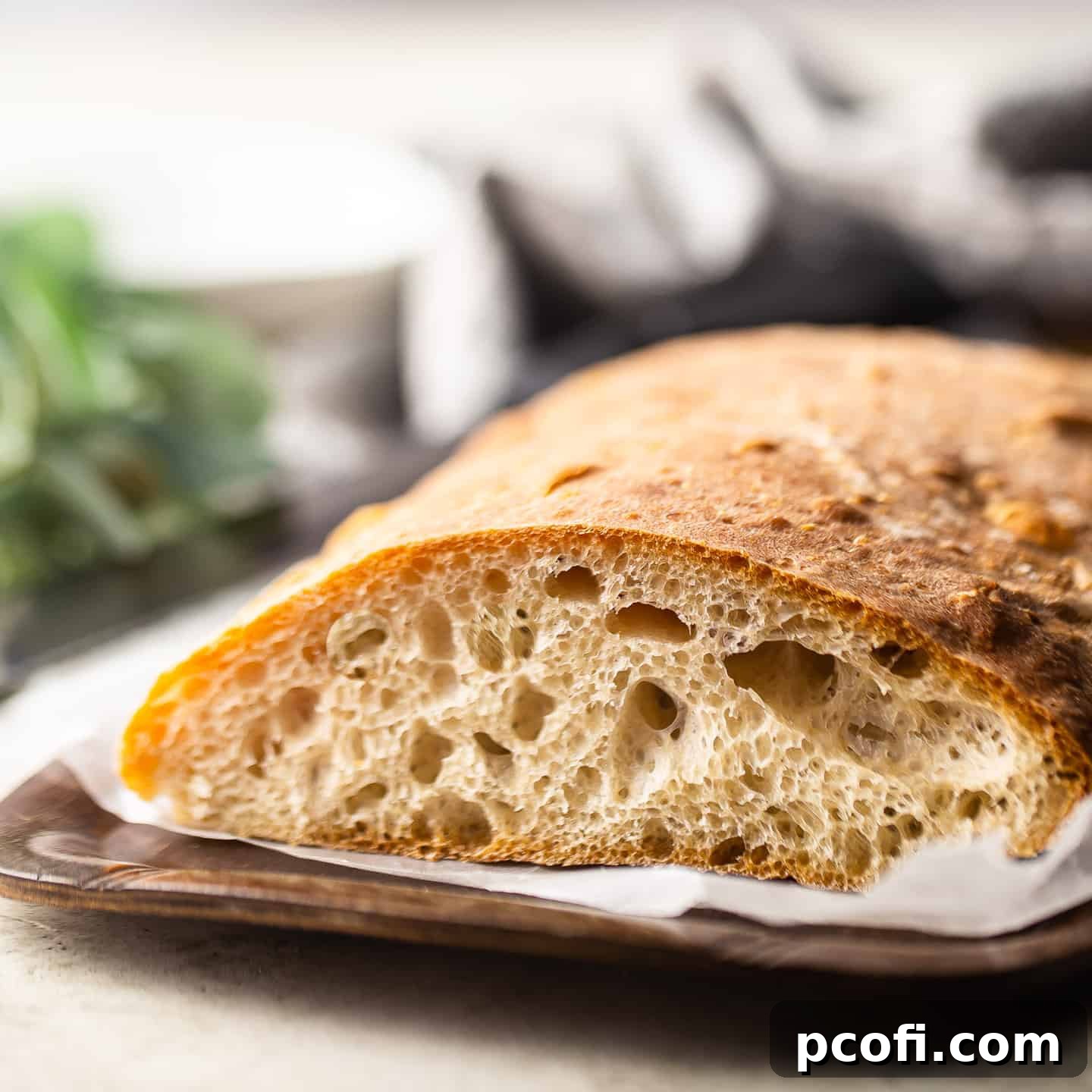
If you’ve ever dreamt of baking artisan-quality bread at home, this Easy Ciabatta Bread Recipe is your perfect starting point. Forget complicated techniques or hours of kneading; this simple, reliable method delivers irresistibly crusty, airy ciabatta with minimal fuss. Whether you adore French baguettes, wholesome whole wheat bread, or flaky homemade croissants, you’ll quickly fall in love with the rustic charm and incredible texture of freshly baked ciabatta.
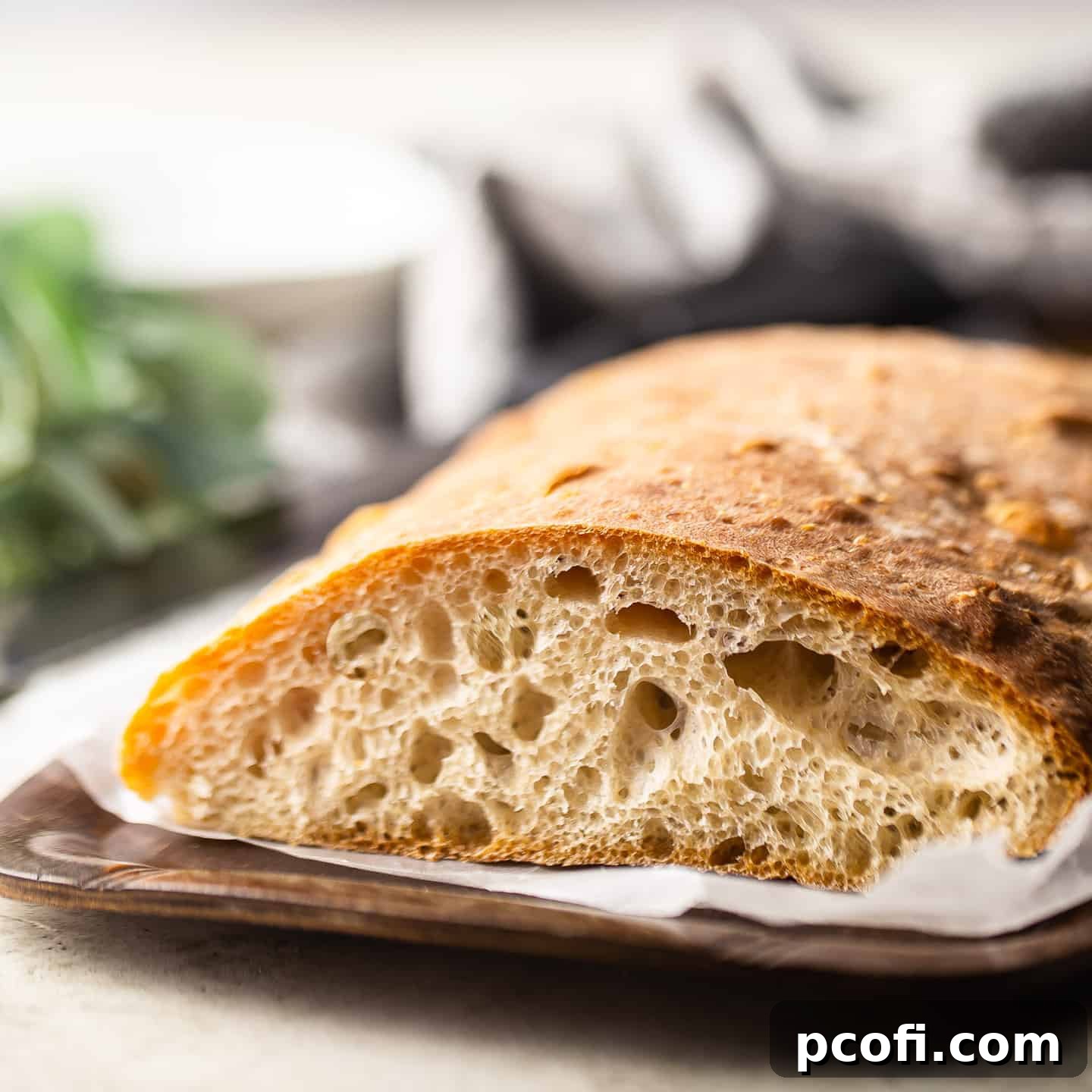
Table of Contents
- Discover the Magic of Artisan Ciabatta at Home
- What is Ciabatta Bread? Understanding the Italian “Slipper”
- Why This No-Fuss Ciabatta Recipe Will Become Your Favorite
- Essential Ingredients for Perfect Ciabatta
- Step-by-Step Guide: Crafting Your Homemade Ciabatta
- Elevate Your Flavor: The Overnight Ciabatta Option
- Expert Tips for Ciabatta Success
- Smart Storage Solutions: Keeping Your Ciabatta Fresh
- Versatile Ways to Enjoy Your Homemade Ciabatta
- Troubleshooting Common Ciabatta Challenges
- Delicious Ciabatta Variations to Explore
- More Delicious Homemade Bread Recipes
- Easy Ciabatta Bread Recipe Card
Discover the Magic of Artisan Ciabatta at Home
Imagine pulling a warm, golden loaf of ciabatta from your oven, its crust crackling with every touch, revealing a tender, open-crumbed interior. This vision can become your reality with our straightforward ciabatta recipe. Utilizing just four fundamental ingredients and requiring minimal active effort—mostly gentle folding and patient resting—you can achieve professional-looking and tasting bread right in your kitchen.
This recipe is designed for maximum flavor development and ease. You have the flexibility to bake it within a few hours for a quicker treat, or opt for an overnight cold fermentation. The extended rest time allows the yeast to work its magic slowly, deepening the bread’s nutty, complex flavors and enhancing its signature airy texture. The result is a beautifully rustic bread: light, airy inside with those characteristic large air pockets, a perfectly crisp exterior, and a wonderfully chewy edge. It’s bread that truly begs to be torn, dipped, or used for your favorite sandwiches.
What is Ciabatta Bread? Understanding the Italian “Slipper”
Ciabatta, pronounced “cha-BAH-tuh,” is an Italian bread whose name literally means “slipper,” a nod to its slightly flattened, elongated shape. Originating in Veneto, Italy, in the early 1980s as an alternative to the popular French baguette, ciabatta quickly became a beloved staple. What sets ciabatta apart is its incredibly high hydration dough—meaning it contains a high ratio of water to flour—which is typically handled with a no-knead or minimal-knead method.
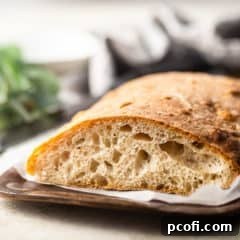
This wet dough is the secret to ciabatta’s distinct qualities: a wonderfully open crumb structure teeming with varied air bubbles, from large, dramatic holes to smaller, intricate pockets. The crust, meanwhile, bakes to a beautiful golden-brown, offering a satisfying crunch that contrasts beautifully with the tender, moist interior. These unique characteristics make ciabatta not just a bread, but an experience.
Its robust flavor and texture make it incredibly versatile. Serve it simply, drizzled with high-quality olive oil and a splash of balsamic vinegar. Slice and toast it for a quick garlic bread with butter, or use thick slices as the base for gourmet sandwiches and panini. Ciabatta also makes an excellent accompaniment to hearty, cozy one-pot dinners, like a creamy Mushroom Risotto, comforting Corn Chowder, a robust Chili, or even a fresh and vibrant Cobb Salad. Its ability to soak up sauces and complement various flavors is truly unmatched.
Why This No-Fuss Ciabatta Recipe Will Become Your Favorite
There are countless reasons to add this ciabatta recipe to your baking repertoire. It simplifies the artisan bread-making process without sacrificing quality or flavor. Here’s why it stands out:
- Minimal Ingredients: You’ll only need four basic ingredients, all commonly found in most kitchens, making spontaneous baking sessions a breeze.
- Effortless Preparation: Say goodbye to strenuous kneading! This recipe relies on a few gentle folds and ample resting time to develop gluten, making it perfect for beginners and seasoned bakers alike.
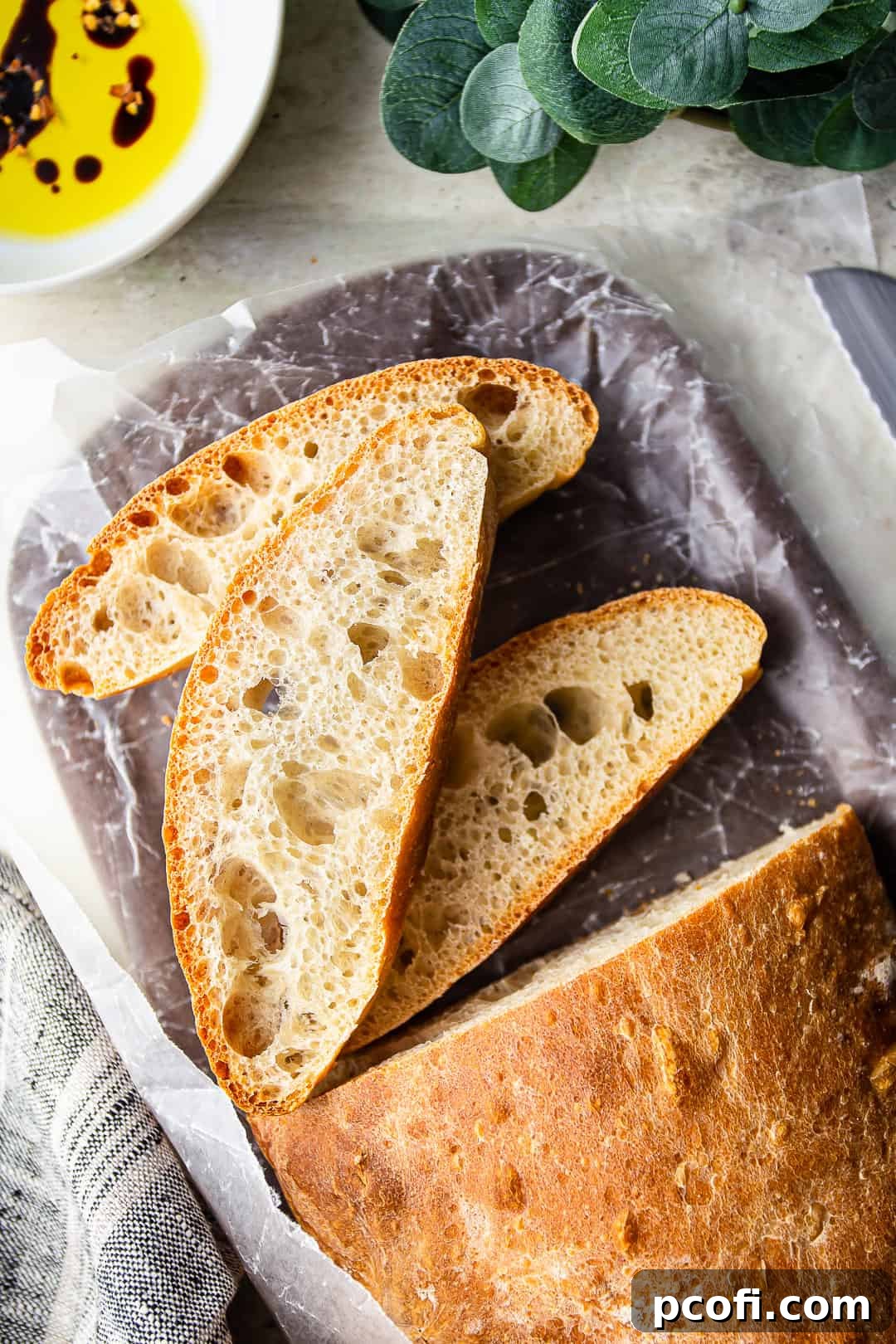
- Unrivaled Texture: The finished bread boasts a signature light and airy interior, characterized by impressive open holes and a delicate, crisp crust that crackles with every bite.
- Versatile Baking Options: Whether you prefer a classic large loaf or individual ciabatta rolls, this dough adapts beautifully. Plus, it freezes exceptionally well, ensuring you always have fresh, homemade bread on hand.
- Deep, Developed Flavor: With options for both quick baking and extended cold fermentation, you can control the depth of flavor, achieving a wonderfully complex taste that rivals bakery-bought loaves.
Essential Ingredients for Perfect Ciabatta
Achieving outstanding ciabatta requires just a handful of simple ingredients. The quality of these components, combined with precise measurements, is key to the bread’s signature texture and taste. The full list with exact amounts can be found in the recipe card at the bottom of this page.
- All-Purpose Flour: There’s no need for specialty bread flours here. Standard all-purpose flour works perfectly, providing the right balance of protein to develop a beautiful gluten structure without making the dough too tough.
- Salt: More than just a seasoning, salt is crucial in bread making. It not only enhances the overall flavor but also regulates yeast activity, preventing the dough from rising too quickly and contributing to a stronger gluten network.
- Active Dry Yeast: This leavening agent is responsible for the dough’s rise, creating those coveted airy pockets and contributing to the bread’s characteristic texture and subtle yeasty aroma. Ensure your yeast is fresh and active for best results.
- Water (Warm and Cool): Water is arguably the most critical ingredient in ciabatta, as its high quantity creates the wet dough essential for an open crumb. Warm water (around 105–110°F, bath-warm) is used to activate the yeast, while cool water helps to hydrate the flour gradually, keeping the dough loose and sticky, which is ideal for ciabatta’s structure.
Step-by-Step Guide: Crafting Your Homemade Ciabatta
Making ciabatta is a process of patience and gentle handling, rather than vigorous kneading. Follow these five simple steps to bake your own magnificent loaf.
Step 1: Initiating Your Dough
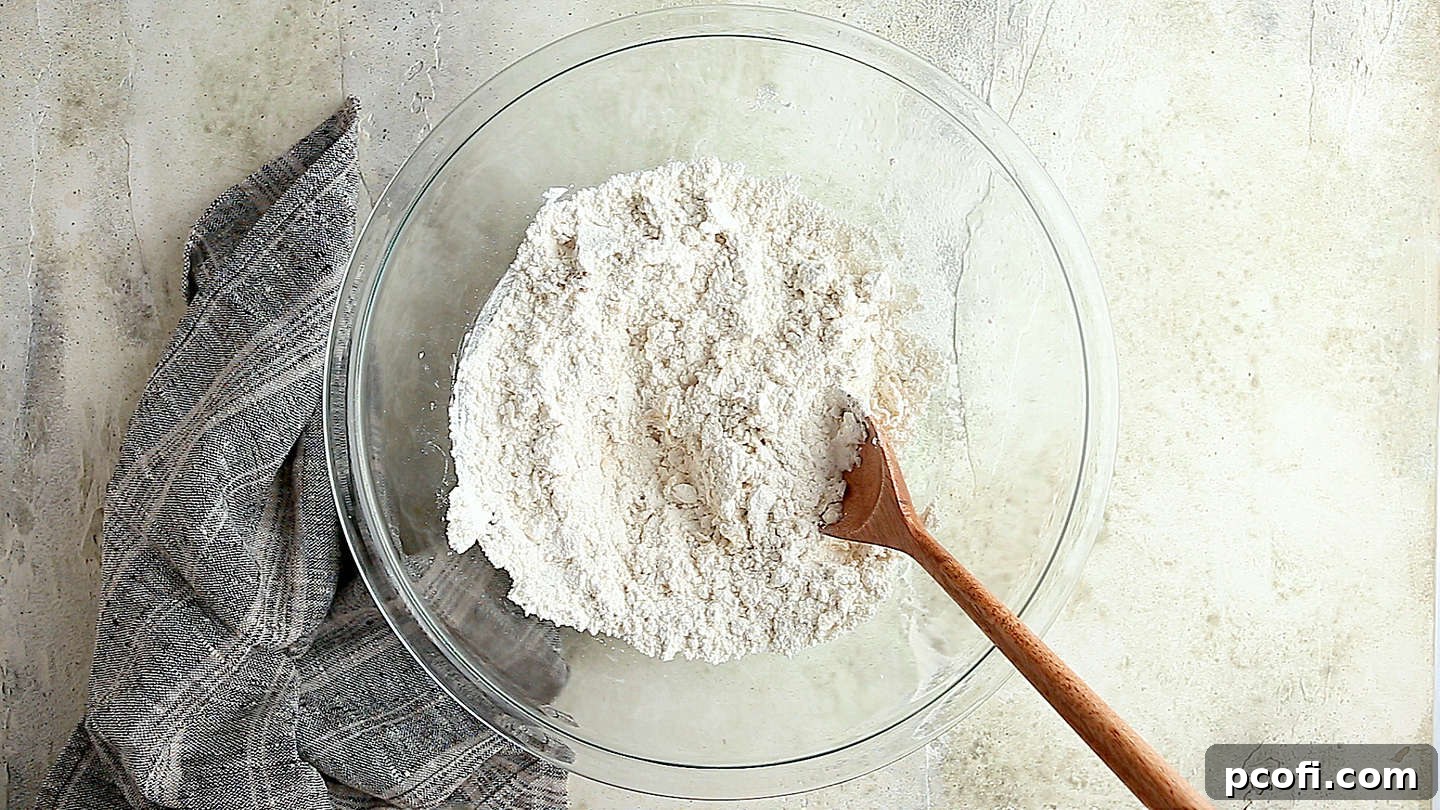
Begin by combining your dry ingredients. In a large mixing bowl, whisk together the all-purpose flour and salt until they are thoroughly blended. This ensures even distribution of salt, which is vital for flavor and yeast control.
In a separate, smaller bowl, activate your yeast. Dissolve the active dry yeast in the warm water (aim for a temperature between 105-110°F, similar to a warm bath). Let it sit for about 5 minutes until it becomes foamy, indicating the yeast is active and ready.
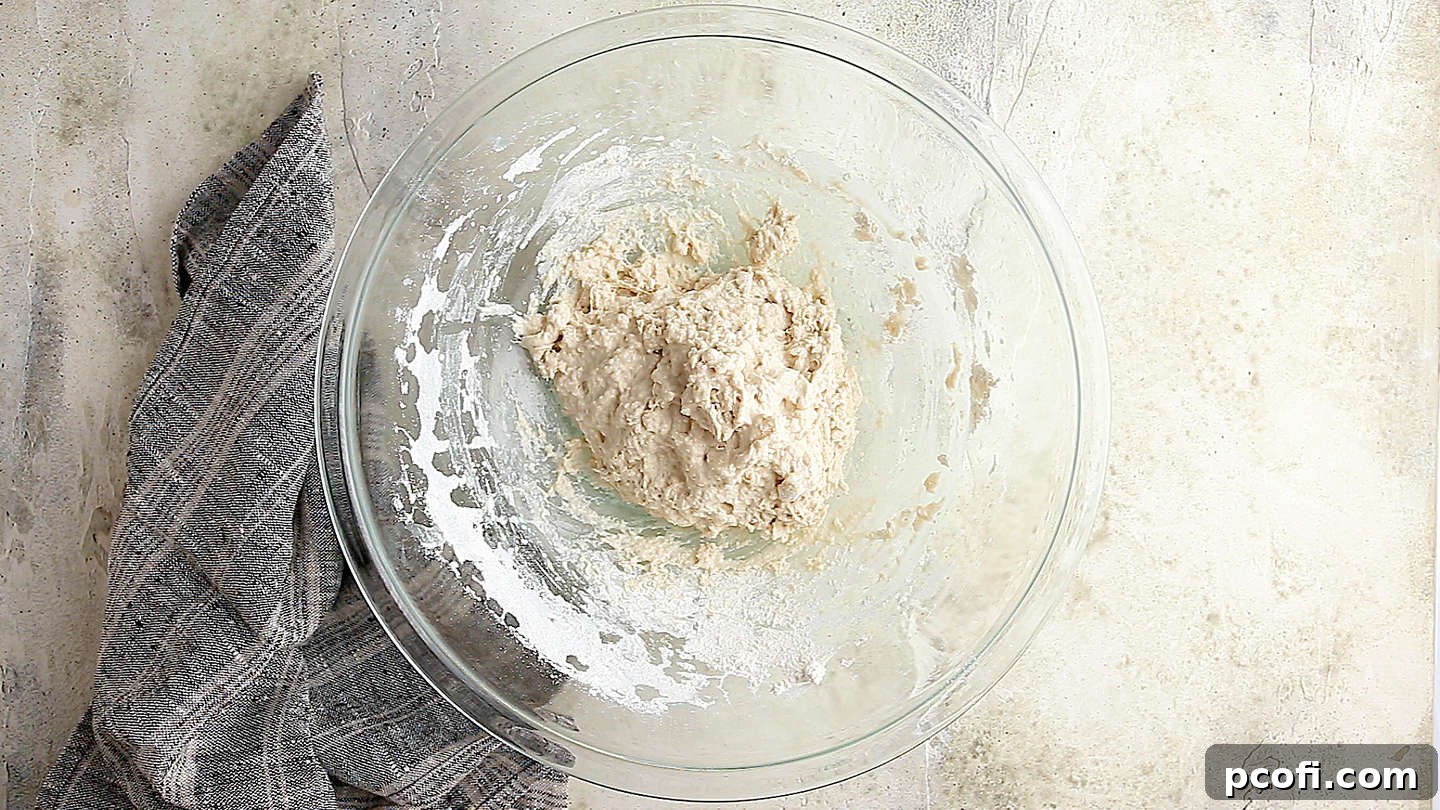
Pour the foamy yeast mixture into the flour and salt. Then, slowly incorporate the remaining cool water, adding it a bit at a time and stirring after each addition. The dough will be incredibly wet and loose—this is exactly the consistency you want for ciabatta, as it’s key to its airy texture. Once combined, cover the bowl tightly with plastic wrap and let the dough rest at room temperature for 30 minutes. This initial rest allows the flour to fully hydrate and the gluten development to begin.
Step 2: The Art of Gentle Folding and Resting
Instead of traditional kneading, ciabatta dough develops its gluten structure through a series of gentle folds and rests. After the initial 30-minute rest, you will perform two sets of folds over a two-hour period.
To fold, lightly flour your hands (or wet them slightly to prevent sticking). Gently stretch a section of the dough from the top, fold it over itself towards the bottom. Repeat this from the bottom to the top, then from the left to the right, and finally from the right to the left. These folds strengthen the dough without deflating the precious air bubbles.
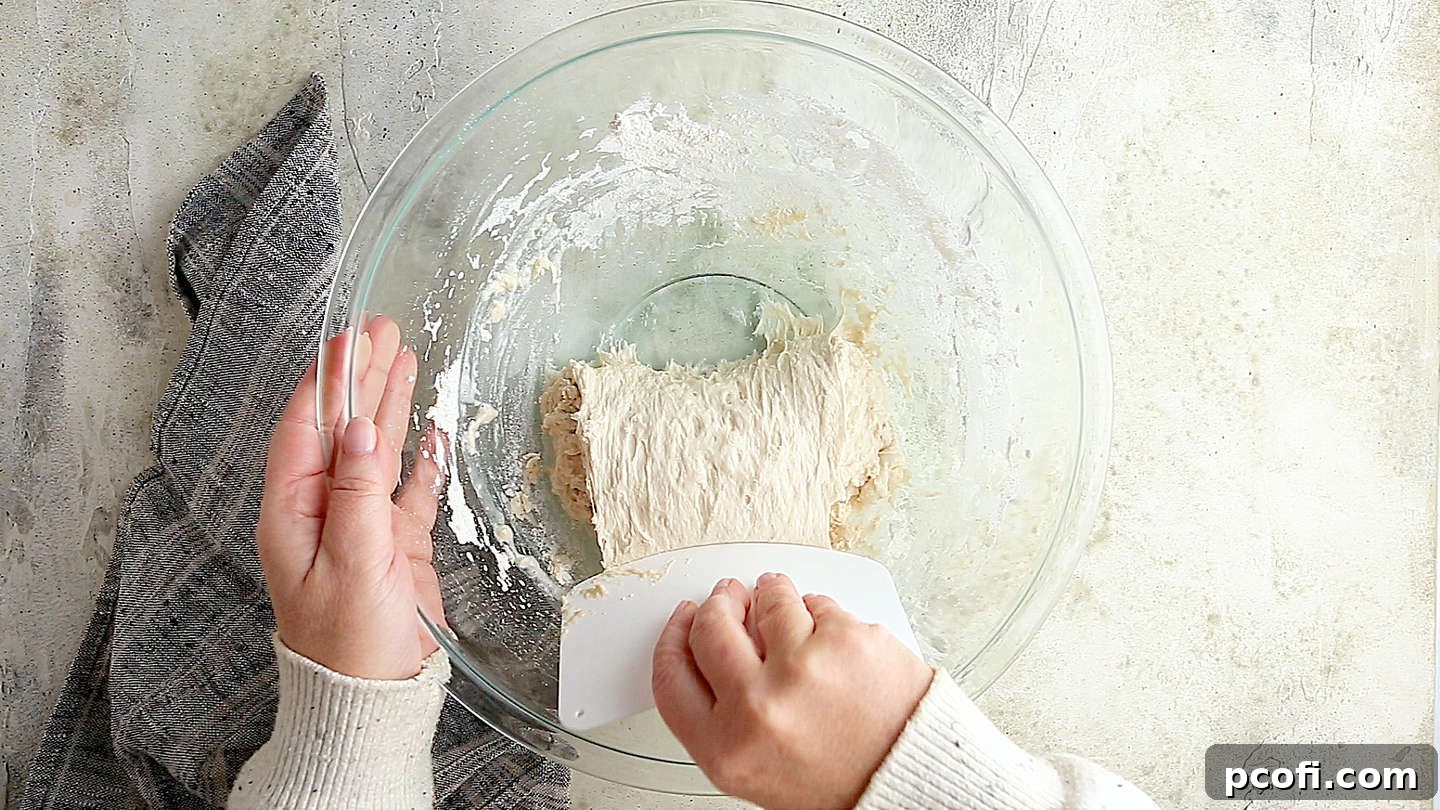
After the first set of folds, cover the bowl again and let the dough rest for one full hour. Repeat the folding process once more, then cover and allow it to rest for another hour. This patient approach is crucial for building the dough’s internal structure and elasticity, which are vital for the open crumb of ciabatta.
Step 3: Expertly Shaping Your Ciabatta Loaf or Rolls
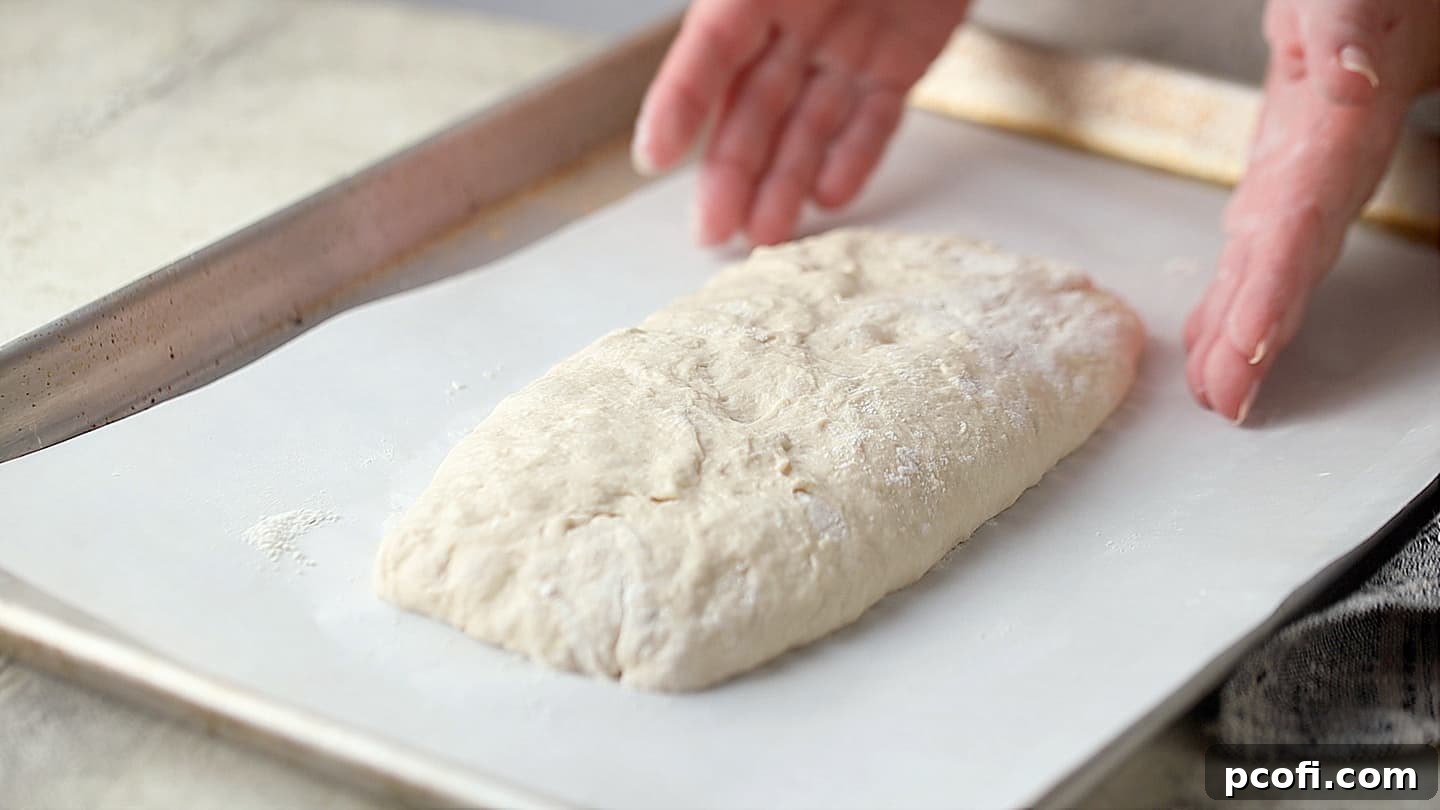
Ciabatta dough is intentionally wet and sticky, which can make shaping seem daunting, but it’s simpler than it appears. Lightly flour your work surface and hands. Gently scrape the dough onto a parchment-lined baking sheet. The dough will naturally form a loose, somewhat rectangular shape. Avoid overworking it; the goal is to maintain as much of the internal air as possible.
If you’re making a traditional ciabatta loaf, gently pat the dough into a more defined rectangular or oval shape, embracing its rustic nature. If you prefer ciabatta rolls, use a dough scraper or knife to divide the dough into six equal portions. Gently shape each portion into a small square or rectangle, placing them on the parchment-lined sheet with enough space in between to allow for their final rise without touching.
Step 4: The Crucial Final Rise
The final rise, or proofing, is where your ciabatta truly develops its volume and characteristic airy texture. Loosely cover your shaped dough (whether a loaf or rolls) with generously oiled plastic wrap. The oil prevents the delicate dough from sticking to the wrap and helps preserve those precious air bubbles you’ve worked so hard to create. Place the covered dough in a warm spot and let it rise for 30–45 minutes, or until it looks plump and nearly doubled in size. This final proof allows the yeast to produce more gas, further expanding the internal structure.
Step 5: Achieving the Perfect Bake with Steam
Proper baking is essential for ciabatta’s signature crisp crust and airy interior. While your dough is undergoing its final rise, preheat your oven to a high temperature of 475°F (245°C). Critically, place an empty, heat-safe pan (a cast iron skillet, an old baking pan, or a broiler pan works well) on the bottom rack of your oven during preheating. This pan will be used to create steam.
Once your dough has risen beautifully, gently remove the plastic wrap. Lightly mist the surface of the dough with water using a spray bottle. Carefully transfer the baking sheet with your ciabatta to the middle rack of the preheated oven. Immediately and carefully pour about two cups of hot water into the empty pan on the bottom rack. Quickly close the oven door to trap the steam.
Bake the ciabatta until its crust is deeply golden brown, wonderfully crisp, and when tapped on the bottom, the loaf sounds hollow. For precise results, an instant-read thermometer inserted into the center should register an internal temperature of about 190°F (88°C). Baking typically takes between 35 to 45 minutes, but keep in mind that oven temperatures can vary, so adjust accordingly.
Elevate Your Flavor: The Overnight Ciabatta Option
For an even richer, more complex flavor profile and superior texture, consider the overnight option. After you’ve completed Step 3 (shaping the loaf or rolls), simply cover the dough loosely with oiled plastic wrap and refrigerate it. This cold fermentation can last for up to 2 days, allowing the yeast to ferment slowly, which develops deeper flavors and a more robust gluten structure. You can even freeze the shaped, unbaked dough for up to 2 weeks for ultimate convenience.
When you’re ready to bake, there’s no need to thaw if frozen, or bring it to room temperature if refrigerated for an extended period. Just remove it from the fridge or freezer, preheat your oven as directed in Step 5, and proceed with baking. The cold dough will experience an “oven spring” (a rapid rise) in the hot oven, often leading to an even more dramatic open crumb structure.
Expert Tips for Ciabatta Success
Even though this is an “easy” recipe, a few insider tips can help guarantee a perfect ciabatta every time:
- Oil Your Plastic Wrap Generously: This simple step prevents the delicate, wet dough from sticking, which can otherwise tear the surface and deflate vital air bubbles, leading to a denser crumb.
- Embrace Gentle Folding: Remember, folding replaces kneading for this high-hydration dough. Be gentle to retain as much air as possible within the dough, as these air pockets contribute to ciabatta’s signature open texture.
- Don’t Rush Cold Fermentation: If opting for the overnight method, embrace the wait. Cold fermentation not only deepens the bread’s flavor but also strengthens its gluten network, resulting in a more structured and airy final product.
- Steam is Your Best Friend: The steam created in the oven during the initial baking phase is crucial. It keeps the crust soft initially, allowing the bread to fully expand before setting, leading to a thin, incredibly crisp crust and impressive oven spring.
- Know When It’s Done: Rely on both visual cues (deep brown, crusty exterior) and auditory signals (hollow sound when tapped). For ultimate precision, an internal temperature of 190°F (88°C) is your best indicator of a perfectly baked loaf.
Smart Storage Solutions: Keeping Your Ciabatta Fresh
Freezing Unbaked Ciabatta for Future Enjoyment
Preparing ciabatta ahead of time is incredibly convenient. Once you’ve shaped your loaves or rolls (after Step 3), place them on a baking sheet and freeze until they are completely firm. Once solid, wrap each loaf or roll tightly in plastic wrap, then transfer them to freezer-safe bags. They can be stored in the freezer for up to two weeks.
When a craving for fresh bread strikes, simply remove the unbaked ciabatta from the freezer. You don’t need to thaw it! Place it directly on a parchment-lined baking sheet and bake as directed in Step 5, adjusting the baking time if necessary (it might take a few extra minutes from frozen). This ensures you have artisan-quality ciabatta whenever you desire.
How to Store Your Baked Ciabatta Bread
Freshly baked ciabatta is best enjoyed on the day it’s made, but it can be stored to prolong its deliciousness. At room temperature, tightly wrapped, it will remain soft and delicious for a couple of days. For a slightly longer shelf life, you can refrigerate it for about a week.
For longer-term storage, freezing is your best option. I love to freeze sliced or whole loaves. To freeze, allow the baked bread to cool completely. Wrap it tightly in plastic wrap, then in foil, and place it in a freezer-safe bag. Slices can be thawed quickly at room temperature or gently warmed in a 170°F (77°C) oven until soft and fresh again. Whole loaves will require longer thawing, but can also be refreshed in the oven.
Versatile Ways to Enjoy Your Homemade Ciabatta
With its delightful texture and mild, yeasty flavor, ciabatta is an incredibly versatile bread. Here are more ideas to make the most of your homemade creation:
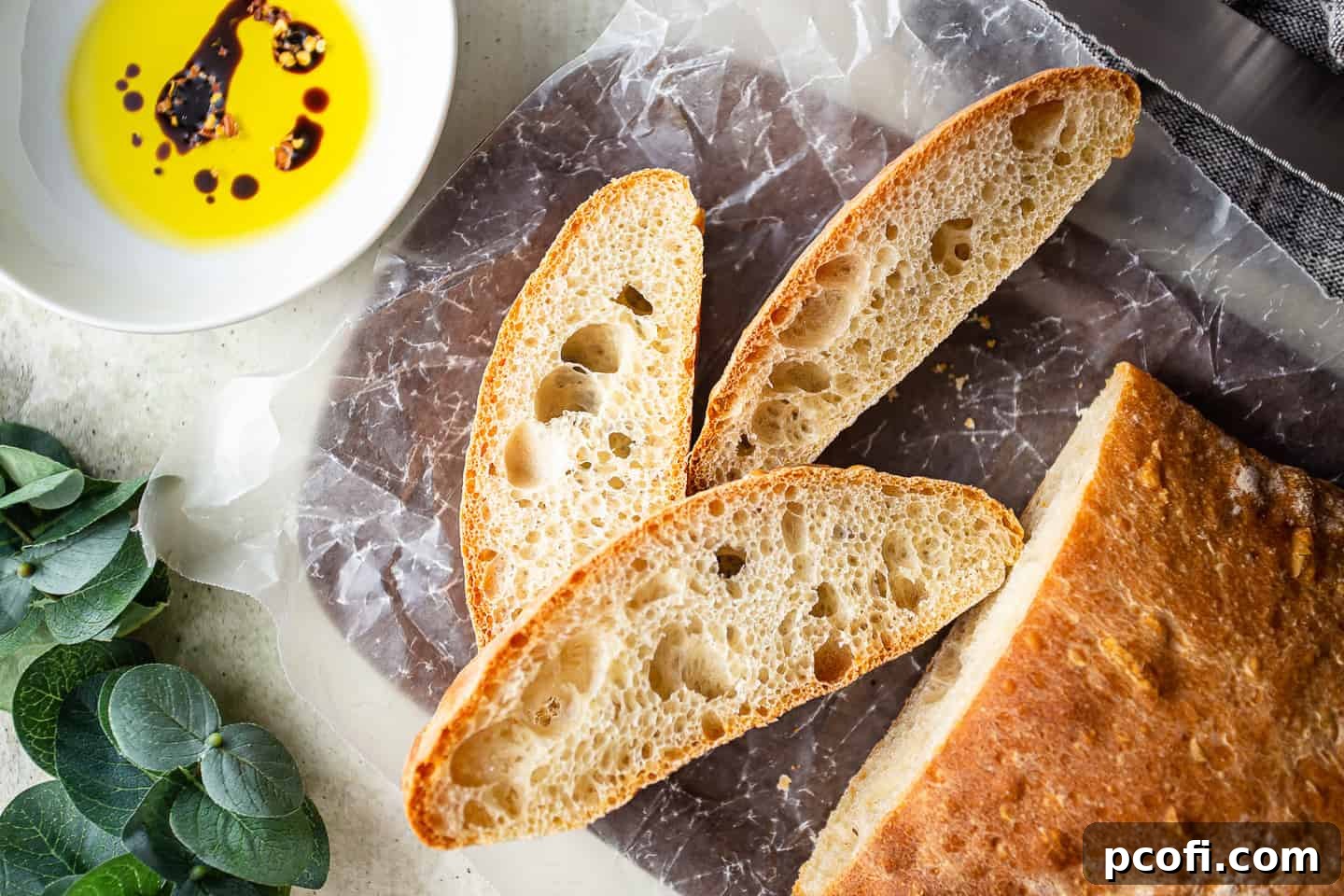
- Classic Dipping: The simplest and often best way to enjoy ciabatta is torn into rustic pieces and dipped into a fragrant olive oil, perhaps seasoned with a pinch of sea salt, black pepper, and herbs like oregano or basil. Add a dash of balsamic vinegar for a tangy kick.
- Gourmet Sandwiches and Panini: Ciabatta’s sturdy crust and airy interior make it ideal for holding generous fillings. Create Italian-inspired sandwiches with fresh mozzarella, ripe tomatoes, basil, and prosciutto, or grill it into a warm panini with roasted vegetables and melted cheese.
- Bruschetta Base: Slice ciabatta, toast lightly, rub with a garlic clove, drizzle with olive oil, and top with classic bruschetta mixtures like diced tomatoes, fresh basil, and a balsamic glaze, or explore toppings like tapenade, ricotta with honey, or sautéed mushrooms.
- Side for Soups and Stews: Its absorbent crumb makes ciabatta perfect for sopping up rich broths and sauces from hearty soups, stews, and chilis.
- Homemade Croutons: If your ciabatta is a day or two old, cut it into cubes, toss with olive oil and seasonings, and bake until golden and crispy for incredible homemade croutons to elevate any salad.
- Garlic Bread: Slice the loaf lengthwise, spread with a mixture of softened butter, minced garlic, and fresh parsley, then bake until golden and aromatic.
Troubleshooting Common Ciabatta Challenges
While this recipe is designed to be easy, bread baking can sometimes present unexpected hurdles. Here are solutions to common ciabatta issues:
- Dense Crumb, Few Holes: This is often due to insufficient hydration or overworking the dough. Ensure you’re measuring your water accurately and resisting the urge to add more flour during folding, even if the dough feels very sticky. Also, be gentle during folding to preserve the air bubbles. A cold overnight ferment can also help develop a more open crumb.
- Crust is Not Crisp Enough: Steam is key for a crisp crust. Make sure your oven is adequately preheated to 475°F (245°C) and you create plenty of steam by pouring hot water into the preheated pan at the bottom of the oven. Avoid opening the oven door too frequently during the first 10-15 minutes of baking, as this releases the steam.
- Dough is Too Sticky to Handle: Ciabatta dough is meant to be very sticky. Lightly flouring your hands and work surface (or wetting your hands slightly) before handling will help. Remember that resistance to sticking is not a sign of a bad dough, but rather a characteristic of high hydration.
- Bread Spreads Too Much: If your dough spreads rather than holds its shape, it might be slightly overproofed (risen too long) or not have enough gluten development. Ensure your folds are effective but gentle, and monitor the final rise closely.
- Not Browning Properly: If your crust isn’t getting that deep golden-brown color, your oven temperature might be off. Use an oven thermometer to ensure accuracy. Also, make sure the bread is baking for the full recommended time, or until the internal temperature is reached.
Delicious Ciabatta Variations to Explore
Once you’ve mastered the basic ciabatta, feel free to experiment with additions to create your own unique loaves:
- Herbed Ciabatta: Fold in 1-2 tablespoons of fresh chopped rosemary, thyme, or oregano during the first folding step.
- Olive Ciabatta: Add ½ cup of pitted and roughly chopped Kalamata or green olives to the dough during the initial mixing stage.
- Sun-Dried Tomato Ciabatta: Incorporate ¼ cup of oil-packed sun-dried tomatoes (drained and chopped) with the dry ingredients for a burst of savory flavor.
- Garlic and Parmesan Ciabatta: Mix in 2-3 cloves of minced garlic and ¼ cup of grated Parmesan cheese during the final folding.
- Whole Wheat Ciabatta: For a healthier twist, you can substitute up to 50% of the all-purpose flour with whole wheat flour, though this might result in a slightly denser crumb.
More Delicious Homemade Bread Recipes
If you’ve enjoyed making this easy ciabatta, you might love exploring other homemade bread recipes:
- Focaccia Bread
- Soft Homemade Dinner Rolls
- Moist & Sweet Cornbread
- Southern-Style Buttermilk Biscuits
Easy Ciabatta Bread
Leave a Review
Save Recipe
Ingredients
- 2 cups (250 g) all-purpose flour
- 1 teaspoon (6 g) kosher salt
- 1/4 cup (59.15 g) warm water, (around 105 degrees F)
- 1 teaspoon (12 g) active dry yeast, (approx. half a packet)*
- 3/4 cup (177.44 g) cool water
Instructions
- Place the flour and salt in a large mixing bowl, and whisk to combine.
- Sprinkle the yeast over the warm water and stir to combine.
- When the yeast mixture looks foamy (after about 5 minutes) stir it into the flour mixture (it will be very dry).
- Add the cool water, a little at a time, stirring after each addition. (Once all the water has gone in, the dough will be very wet and sticky.)
- Cover with plastic wrap and allow the dough to rest at room temperature for 30 minutes.
- Fold the dough over on itself: top to bottom, bottom to top, left to right, then right to left.
- Cover and rest for 1 hour, then repeat the folding process one more time.
- Cover and rest for 1 more hour.
- Scrape the dough onto a parchment-lined baking sheet, and pat it into a rectangular shape (for a loaf), or divide it into 6 equal portions and shape each into a small square or rectangle (for rolls).
- Cover lightly with oiled plastic wrap and allow to rise at room temperature for 30 to 45 minutes, or in the refrigerator overnight.
- Preheat the oven to 475 degrees F and place an empty oven-safe dish on the bottom rack.
- Mist the unbaked bread with water and place it in the center rack of the oven.
- Pour about 2 cups of water into the empty dish and bake until the bread is brown & crusty, makes a hollow sound when tapped, and registers an internal temperature of 190 degrees F (approx. 35 to 45 minutes).
Notes
Adapted from Sarah Black’s “One Dough Ten Breads.”