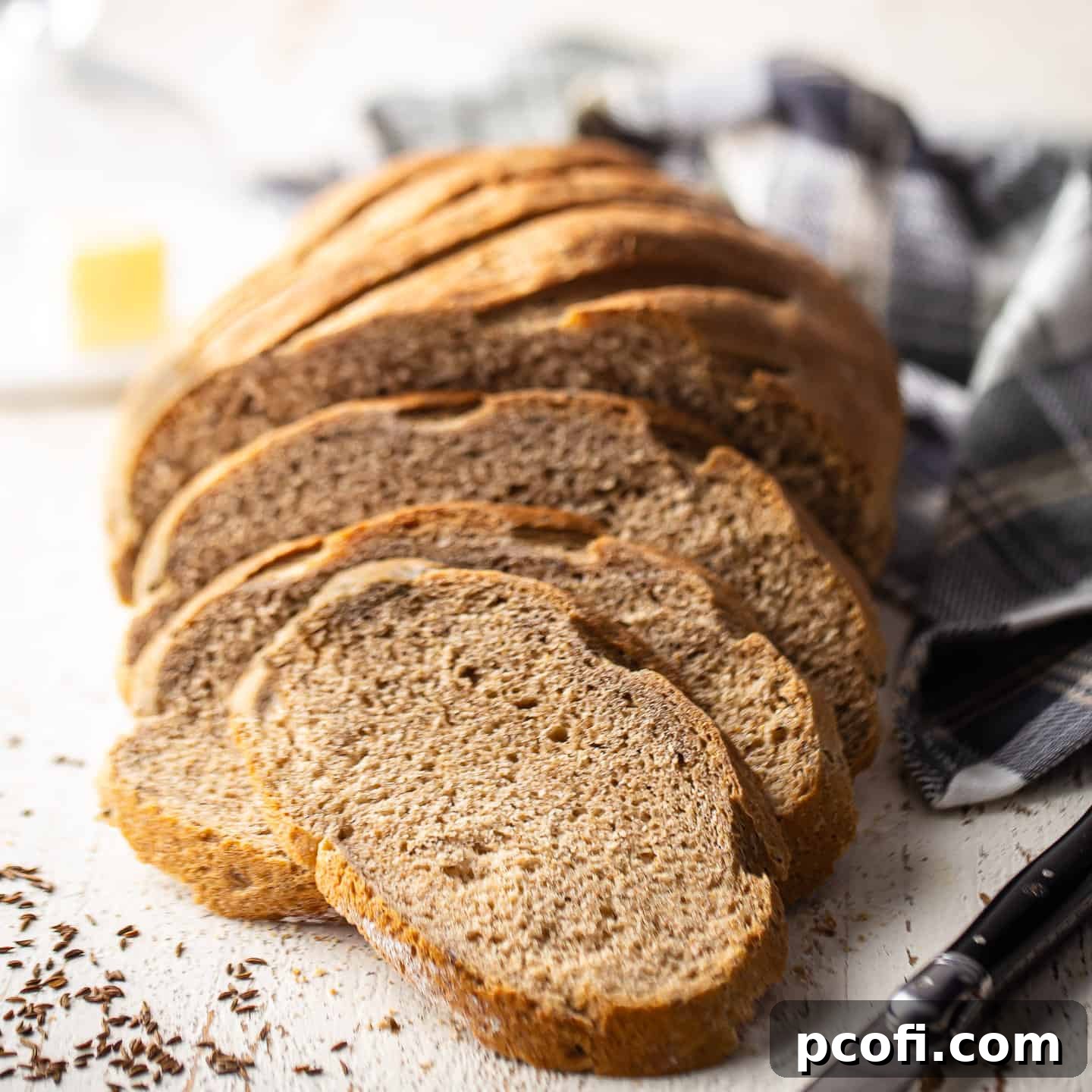
Easy rye bread recipe: Everything you’ve ever dreamed of! Hearty, crunchy crust & a soft, airy interior. Perfect for toast or sandwiches!
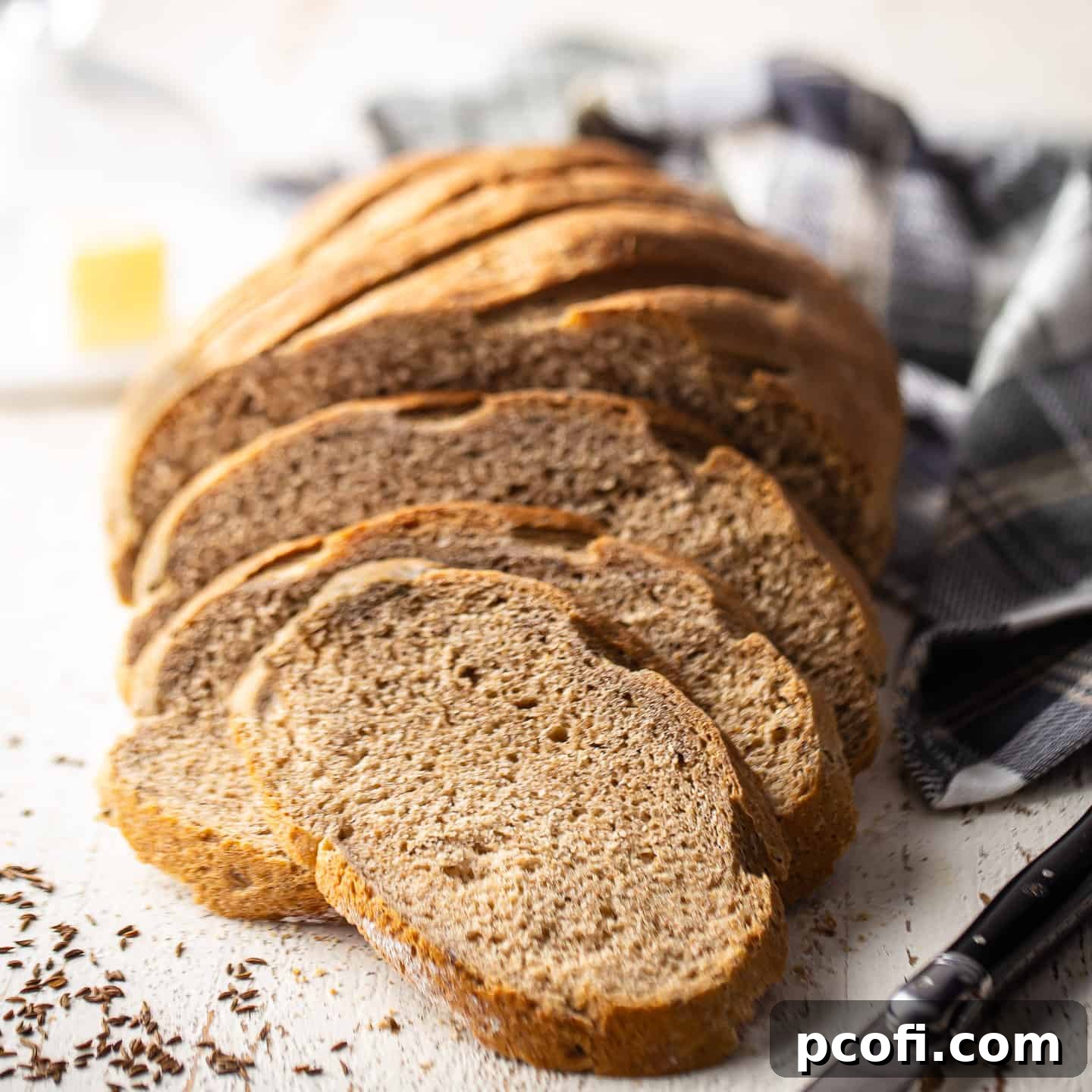
There’s a special joy that comes from baking bread at home, and few loaves offer the comforting aroma and satisfying texture quite like a perfectly crafted rye bread. This recipe is dedicated to everyone seeking that ideal loaf: a bread with a robust, crispy crust and an incredibly soft, airy interior. Whether you envision it slathered with butter, piled high with sandwich fillings, or simply toasted to golden perfection, this rye bread delivers on every front.
Many of you have reached out, sharing your love for homemade bread and often requesting specific recipes. This particular rye bread recipe comes as a response to one such request, several months in the making. Your suggestions are invaluable and inspire us to create and refine the recipes featured here. We believe this carefully developed recipe stands out as one of the best rye breads you can bake, offering a truly traditional flavor profile that’s both complex and wonderfully balanced.
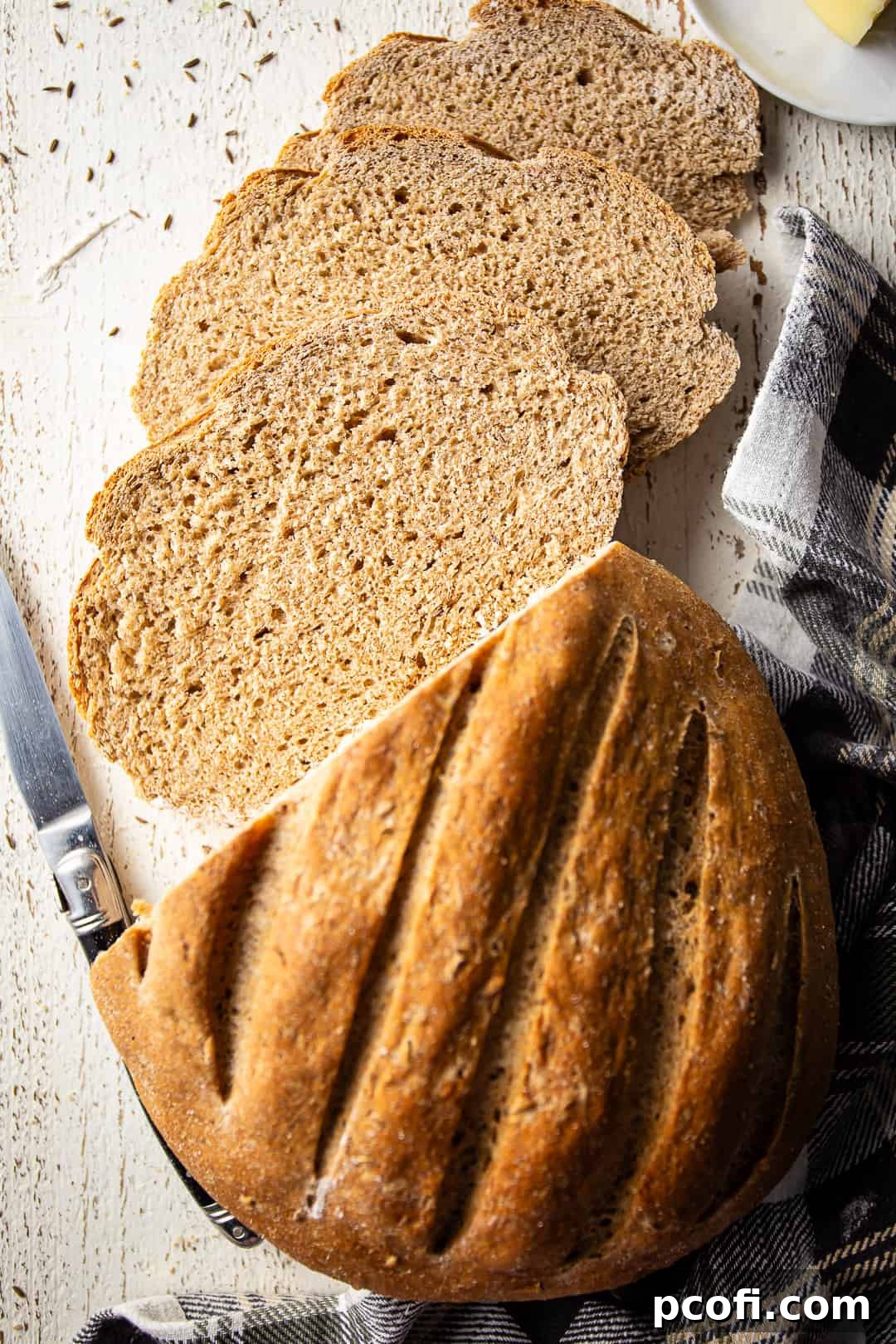
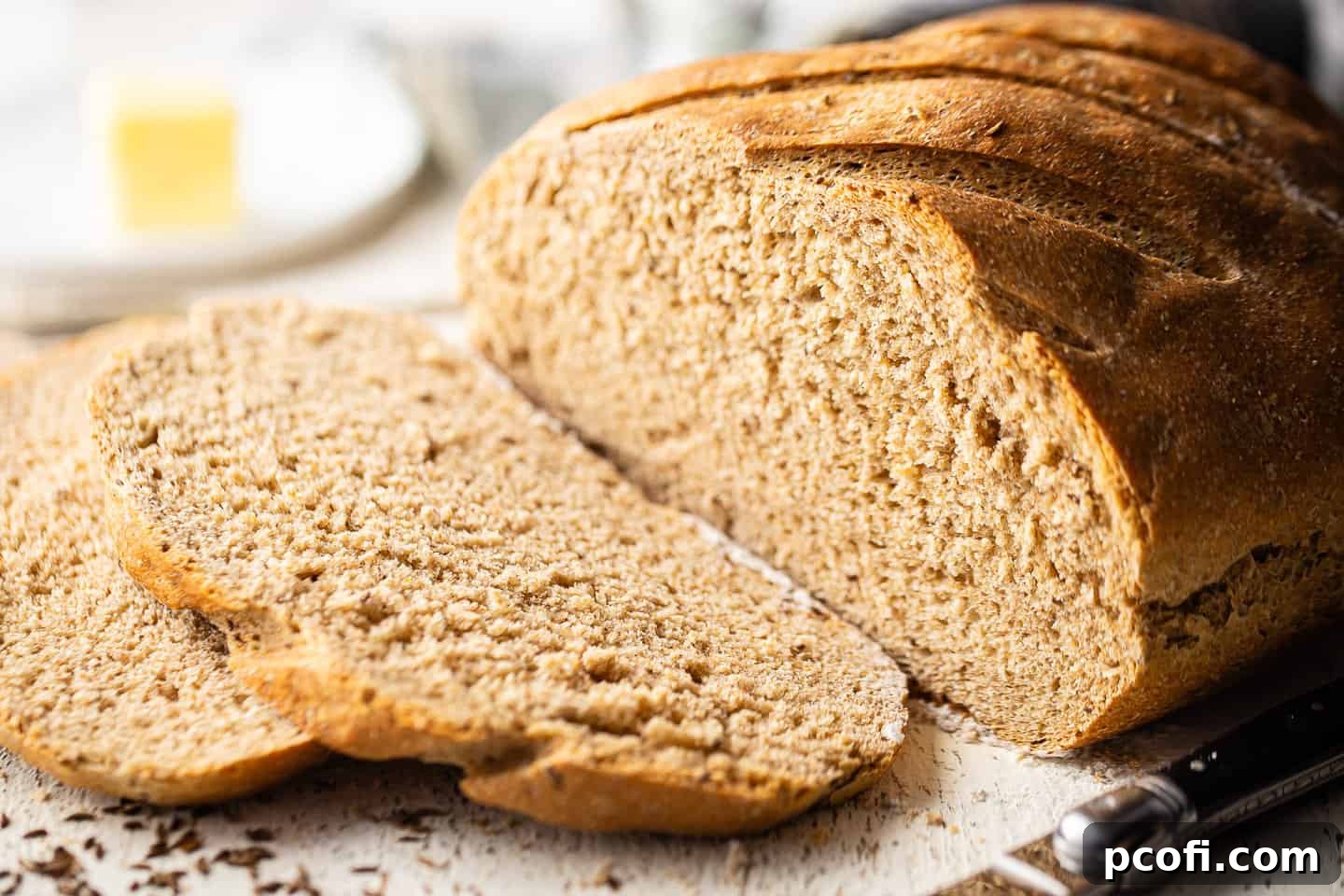
Our goal was to create a rye bread that bakes up beautifully tall, with a consistent, open crumb, and the authentic taste that true rye lovers crave. The secret lies in a harmonious blend of sweet, salty, nutty notes, elevated by the distinctive aroma of caraway seeds. The result is a loaf with a delightfully chewy crust that gives way to a moist, pillowy-soft center. It’s a testament to the magic of simple ingredients and dedicated technique.
Bread baking has become a true passion, and we’re always thrilled by how enthusiastically our bread recipes are received. From our soft whole wheat bread to the moist and sweet cornbread, and the ever-popular easy French baguette, these recipes have resonated with bakers seeking quality and simplicity. We’re confident this rye bread will join those ranks as a new favorite in your kitchen.
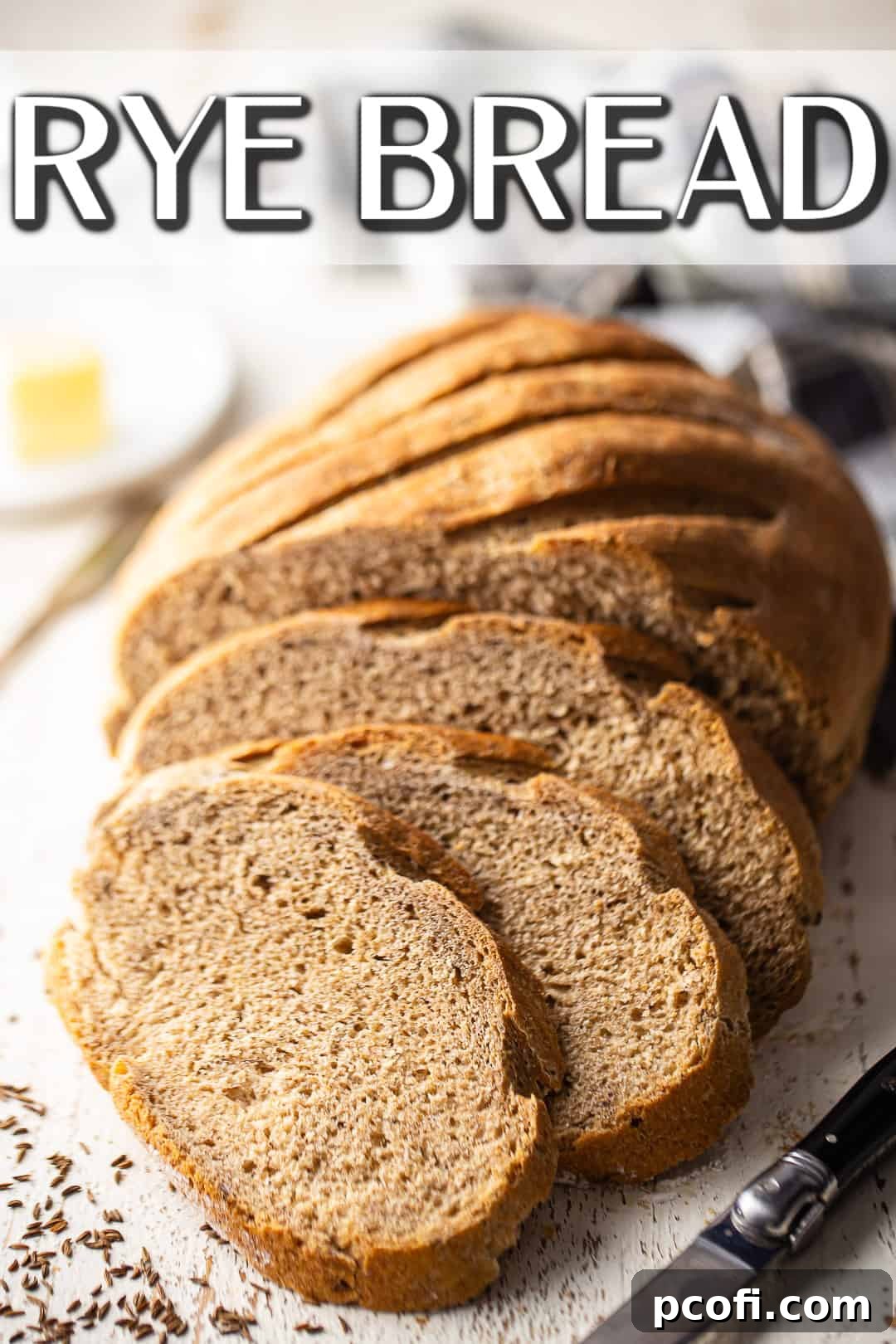
Table of Contents
- What is Rye Bread? Discovering a Classic Grain
- Why This is the Best Rye Bread Recipe You’ll Try
- What Does Rye Bread Taste Like? A Flavor Profile
- Essential Ingredients for Perfect Rye Bread
- Special Equipment for Bread Baking
- How to Make Homemade Rye Bread: Step-by-Step Guide
- Serving Suggestions for Your Rye Bread
- Expert Tips for Rye Bread Success
- Frequently Asked Questions About Rye Bread
- Explore More Yeast Bread Recipes
What is Rye Bread? Discovering a Classic Grain
Rye bread, at its core, is a type of bread crafted predominantly from rye flour, which is milled from the grain of the rye plant. Similar to wheat, barley, and oats, rye is an ancient cereal grain with a rich history, particularly in Eastern and Northern European cuisines. Unlike wheat, rye flour contains less gluten, which is the protein network responsible for the elasticity and chewiness in many breads. This lower gluten content is precisely what gives rye bread its characteristic dense texture and unique flavor.
Historically, rye was cultivated in regions where wheat struggled to grow, making it a staple grain for centuries. Its resilience to harsh climates and poorer soils made it an essential food source, leading to the development of countless regional rye bread variations, from the dark, dense pumpernickel of Germany to the lighter, tangy sour rye of Scandinavia. This particular recipe strikes a wonderful balance, utilizing a combination of rye and bread flour to achieve a loaf that is hearty and flavorful, yet still boasts a tender, open crumb – a perfect representation of classic American-style rye bread.
Beyond its culinary appeal, rye grain is also known for its nutritional benefits. It is a good source of fiber, which aids digestion and helps maintain gut health. Additionally, rye flour is packed with essential minerals like manganese, magnesium, zinc, and iron, making rye bread a wholesome and nutritious choice for any meal.
Why This is the Best Rye Bread Recipe You’ll Try
Among the myriad of bread recipes available, this homemade rye bread stands out for several compelling reasons, making it a truly rewarding baking project for both novice and experienced bakers alike. We’ve fine-tuned every aspect to ensure a loaf that is consistently delicious and satisfying.
- Unforgettable Flavor Profile: This isn’t just any rye bread; it’s a symphony of tastes. The balanced blend of sweetness from honey and molasses, the subtle tanginess of fermented yeast, and the distinct, aromatic spice of caraway seeds creates a deeply satisfying flavor that is both traditional and wonderfully complex. Each slice offers a memorable culinary experience.
- Simple, Accessible Ingredients: You won’t need to hunt for exotic items. Our recipe relies on a handful of readily available ingredients, transforming basic pantry staples into an extraordinary loaf of bread. This simplicity means you can focus on the joy of baking rather than the stress of sourcing.
- Effortlessly Easy to Make: While bread baking can sometimes seem daunting, this recipe is designed with ease in mind. The steps are straightforward and clearly outlined, making the process manageable even for beginners. Much of the time involved is hands-off, allowing the dough to work its magic while you tend to other tasks.
- Superior Texture, Every Time: Prepare for a loaf with a perfectly crackly, robust crust that gives way to an incredibly soft, moist, and springy interior. This delightful contrast in textures makes it ideal for everything from hearty toast to substantial sandwiches. The inclusion of bread flour alongside rye flour is key to achieving this perfect balance of chewiness and lightness.
- Versatile and Rewarding: This rye bread isn’t just delicious; it’s incredibly versatile. It’s the perfect companion for sweet or savory toppings, a sturdy base for any sandwich, and an impressive centerpiece for your dining table. The satisfaction of pulling a warm, aromatic loaf from your own oven is a reward in itself, filling your home with an inviting aroma and your belly with wholesome goodness.
What Does Rye Bread Taste Like? A Flavor Profile
The flavor of rye bread is as distinctive as its texture, setting it apart from more common wheat-based loaves. When you bite into a slice of well-made rye bread, you’ll encounter a fascinating blend of tastes that evolve with each chew.
At its core, rye grain itself imparts a unique earthy, somewhat robust flavor. Some describe this as slightly peppery or even reminiscent of cloves, a subtle spiciness that adds depth. While my palate, having enjoyed rye bread for years, might simply register it as “the taste of rye,” newer tasters often pick up on these intriguing undertones. It’s a flavor that hints at the grain’s ancient origins and its hearty character.
Beyond the grain itself, rye bread typically carries a noticeable tangy, yeasty flavor. This comes from the fermentation process, which, especially with active dry yeast, allows for a longer, slower rise. This extended proofing time develops complex acids in the dough, contributing to that classic sour note often associated with traditional rye breads. This tanginess is beautifully complemented by a nutty, whole-grain taste, a wholesome earthiness that grounds the bread’s overall profile.
Crucially, many traditional rye bread recipes, including this one, incorporate caraway seeds. These small, crescent-shaped seeds are the true signature of classic rye, contributing a powerful and unmistakable aroma and flavor. Often described as sharp, with hints of lemon, anise, or even a subtle licorice-like quality, caraway seeds provide a warm, pungent, and slightly sweet-bitter note that is absolutely essential for that iconic “rye bread” taste. Without them, the bread might be delicious, but it wouldn’t quite be the classic rye experience we know and love. This recipe strikes a careful balance, ensuring the caraway flavor enhances, rather than overwhelms, the natural taste of the rye flour.
Essential Ingredients for Perfect Rye Bread
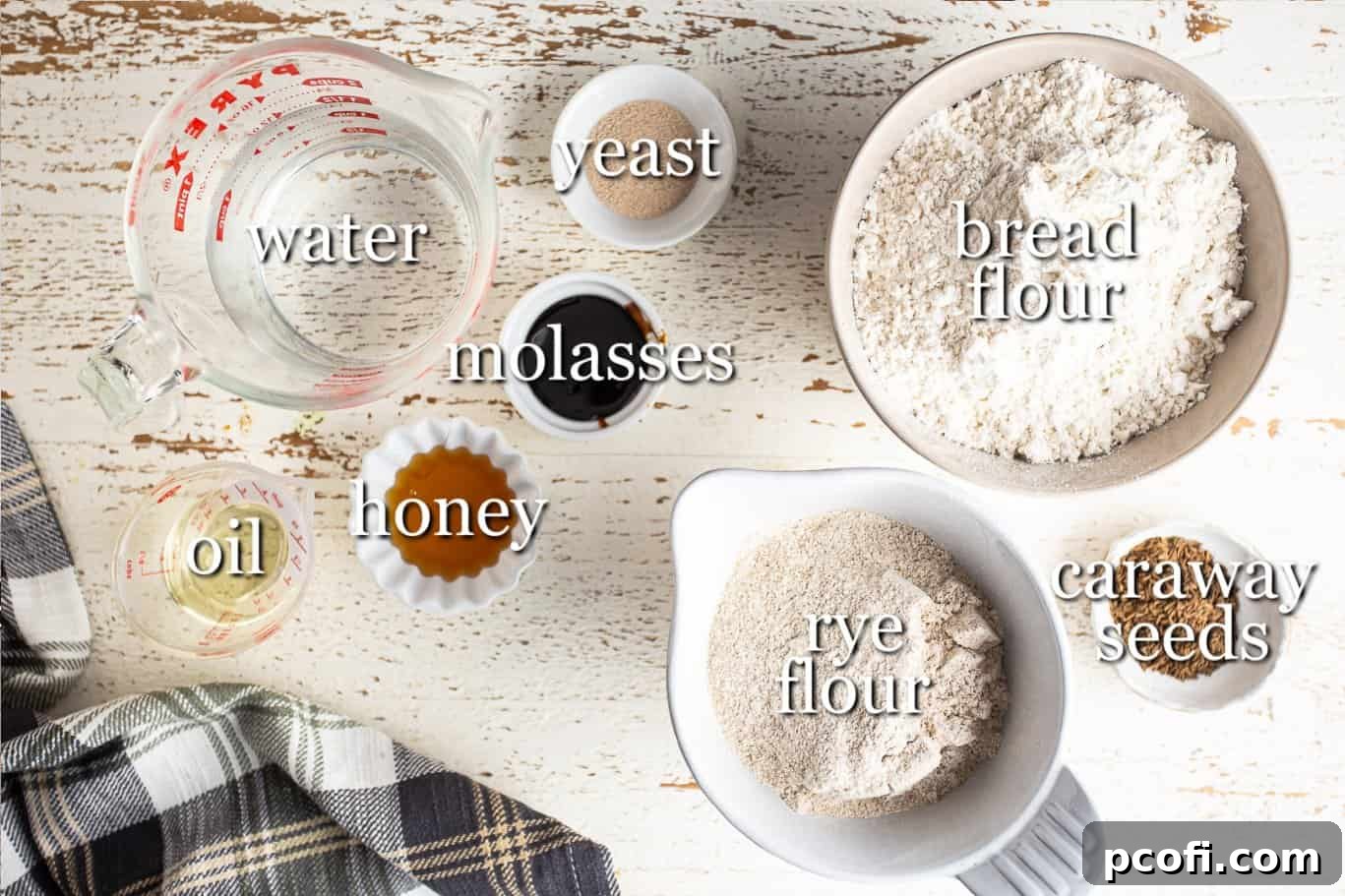
Crafting exceptional rye bread begins with understanding the role of each ingredient. Here’s a breakdown of what you’ll need and why it’s important for achieving that perfect loaf:
Water: The foundation of our dough. It needs to be lukewarm, ideally around 105°F (40°C), which feels like a baby’s bath. This temperature is crucial for activating the yeast without killing it. Too hot, and the yeast will die; too cold, and it won’t activate properly, leading to a poor rise.
Oil: We recommend a neutral-tasting oil, such as vegetable oil. Any oil that remains liquid at room temperature will work. The oil adds moisture and tenderness to the crumb, contributing to that desirable soft texture, and also helps to enrich the dough.
Honey: This natural sweetener, along with molasses, serves a dual purpose. It provides food for the yeast, encouraging vigorous fermentation and a good rise, while also imparting a subtle sweetness to the bread. For a vegan rye bread, agave nectar is an excellent substitute, offering similar sweetness and consistency.
Molasses: A key ingredient for its distinctive flavor and deep color. Molasses adds a nuanced, slightly bitter complexity that beautifully complements the rye flour and caraway seeds. It also contributes significantly to the characteristic dark hue of traditional rye bread.
Yeast: Active dry yeast is our preferred choice for this recipe. It requires proofing (dissolving in warm liquid) and allows for a slower, more controlled rise. This extended fermentation time is essential for developing a deeper, more complex flavor in the bread. While instant yeast or even a sourdough starter can be used with slight adjustments (as detailed in our FAQ), active dry yeast delivers the best results for this specific rye bread.
Flour: This recipe uses a strategic combination of two flours for optimal results.
- Rye Flour: Indispensable for authentic rye bread flavor. However, using 100% rye flour would result in a very dense, heavy loaf due to its low gluten content. It provides the characteristic taste and aroma we seek.
- Bread Flour: Crucial for providing the structure and chewiness. Bread flour has a higher protein content than all-purpose flour, which means it develops more gluten when kneaded. This gluten network traps the gases produced by the yeast, allowing the bread to rise properly and creating that satisfying, chewy texture we all love in a good loaf.
Caraway Seeds: While optional, these seeds are highly recommended for that signature, traditional rye bread flavor. Their distinct aromatic and slightly sharp notes are what many associate with classic rye. If you’re a purist, don’t skip them!
Salt: Essential for balancing and intensifying all the other flavors. We prefer kosher salt for its clean taste and lack of additives, unlike many table salts which contain iodine that can impart a bitter note. Salt also plays a role in regulating yeast activity, preventing the dough from rising too quickly.
Special Equipment for Bread Baking
While great bread can certainly be made with minimal tools, having the right equipment can significantly streamline the process and enhance your results. Here’s a list of useful items for baking this rye bread:
- Measuring Cups and Spoons: Precision is key in baking. Accurate measurements ensure the correct balance of ingredients, which is vital for yeast activation, dough consistency, and final texture. Consult our guide on how to measure ingredients for baking for best practices.
- Mixer: A stand mixer fitted with a dough hook is a fantastic tool for this recipe, making the kneading process effortless and efficient. It ensures thorough gluten development without the arm workout. If you don’t have one, this bread can absolutely be made by hand with a bit more elbow grease, or even in a bread machine on the dough cycle.
- Baking Sheet or Loaf Pan: The choice here depends on your desired loaf shape. For a classic “Vienna” (oblong) or a rustic “boule” (round), a sturdy sheet pan or even a Dutch oven (for extra crust development) works well. If you prefer a more uniform, sandwich-style loaf, a standard-sized loaf pan is perfect.
- Lame: This specialized tool, often a sharp razor blade attached to a handle, is used to score the top of the loaf before baking. These shallow cuts serve a dual purpose: they create visually appealing patterns and, more importantly, allow steam to escape in a controlled manner as the bread expands in the oven. This prevents uncontrolled cracking and helps achieve a beautiful, crunchy crust. A very sharp knife or straight-edge razor blade can be used as an alternative.
- Metal Pan for Steam: To achieve that coveted crunchy crust, we create a steamy environment in the oven. Placing a metal pan filled with water on the bottom rack during baking is the simplest way to do this. Metal pans are preferred over earthenware baking dishes, as some ceramic dishes can crack when rapidly heated or when additional water is added to them in a hot oven.
- Thermometer: An instant-read thermometer is your best friend for determining bread doneness. For this rye bread, aiming for an internal temperature of around 200°F (93°C) ensures it is fully baked through, with optimal texture and flavor.
- Wire Rack: Once baked, your bread needs to cool properly to prevent a soggy bottom. Transferring the loaf to a wire rack allows air to circulate around all sides, ensuring the crust remains crisp and the internal moisture distributes evenly as it cools.
How to Make Homemade Rye Bread: Step-by-Step Guide
Baking this delicious rye bread is a straightforward process, broken down into six simple yet crucial steps. Follow along for a truly rewarding baking experience.
Step 1: Dissolve the Yeast and Combine Wet Ingredients
Begin by gathering your wet ingredients. Pour the warm water into a large bowl – ideally the bowl of your stand mixer if you’re using one. Add the oil, honey, and molasses to the water. The honey and molasses will not only add flavor but also provide vital sugars for the yeast to feed on.

Next, sprinkle the active dry yeast evenly over the surface of the liquid mixture. Avoid stirring it in immediately. This allows the yeast granules to rehydrate gradually.
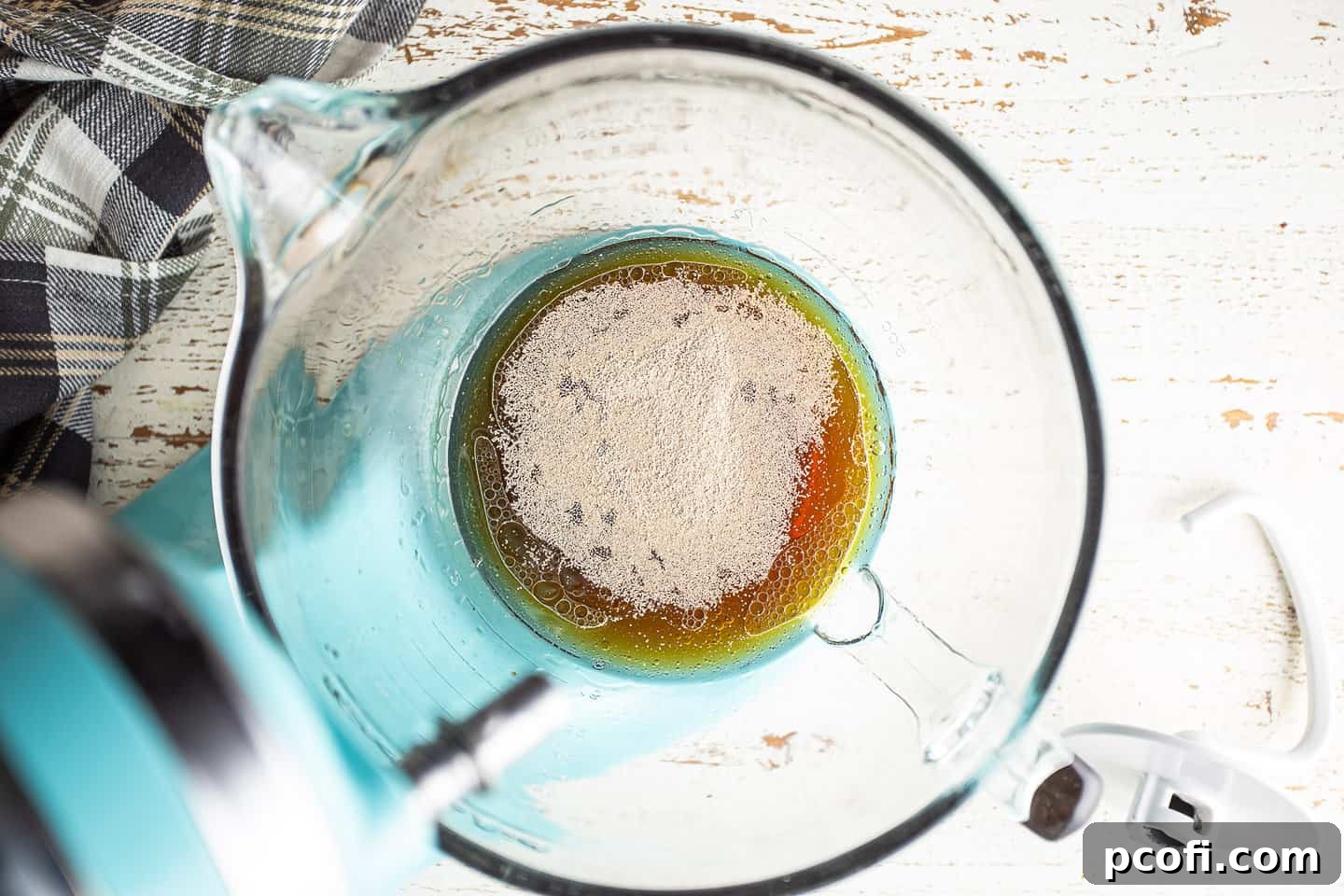
Let the mixture sit undisturbed for about 5 minutes. During this time, the yeast will dissolve, activate, and begin to show signs of life – you’ll see a light foam or bubbly layer forming on the surface. This “proofing” step confirms your yeast is active and ready to work.

Step 2: Incorporate Dry Ingredients and Achieve Initial Dough Consistency
Once your yeast is active, it’s time to introduce the dry components. Add the rye flour, caraway seeds (if you’re using them for that authentic flavor), and kosher salt directly into the bowl with the wet ingredients.
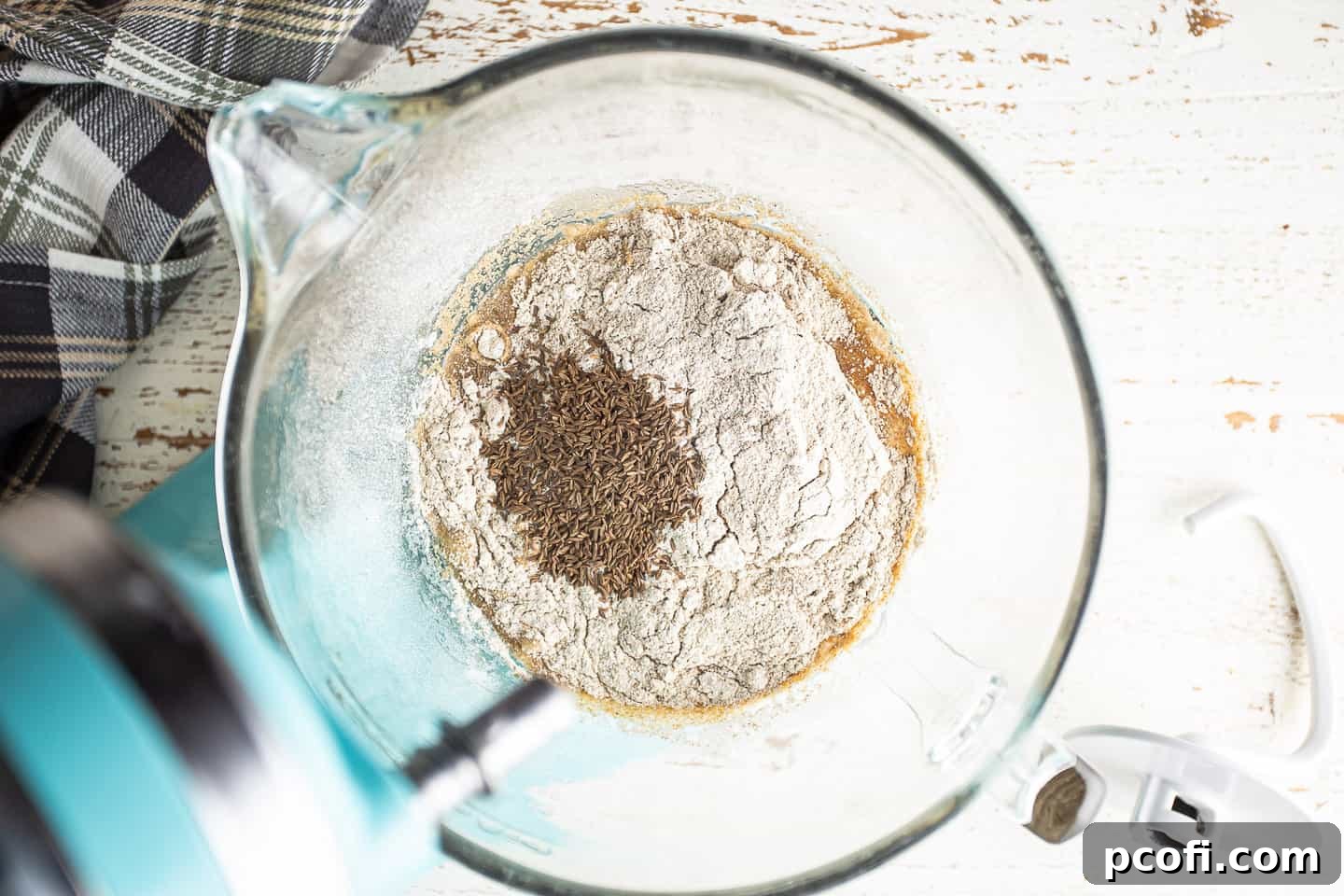
Stir these ingredients until they are mostly incorporated. At this stage, you’ll have a surprisingly wet, almost batter-like mixture. Don’t worry, this is normal for a rye-heavy dough.
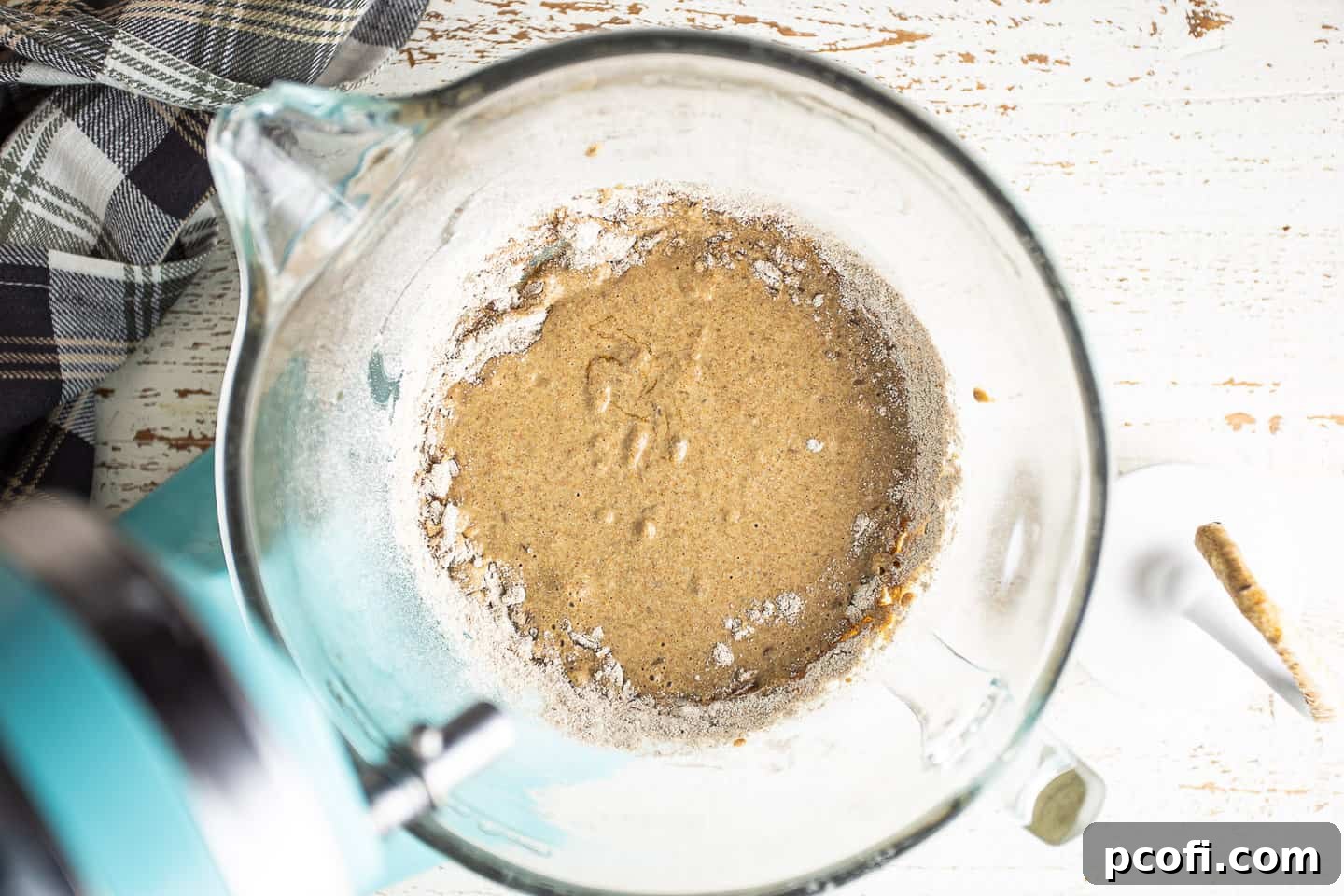
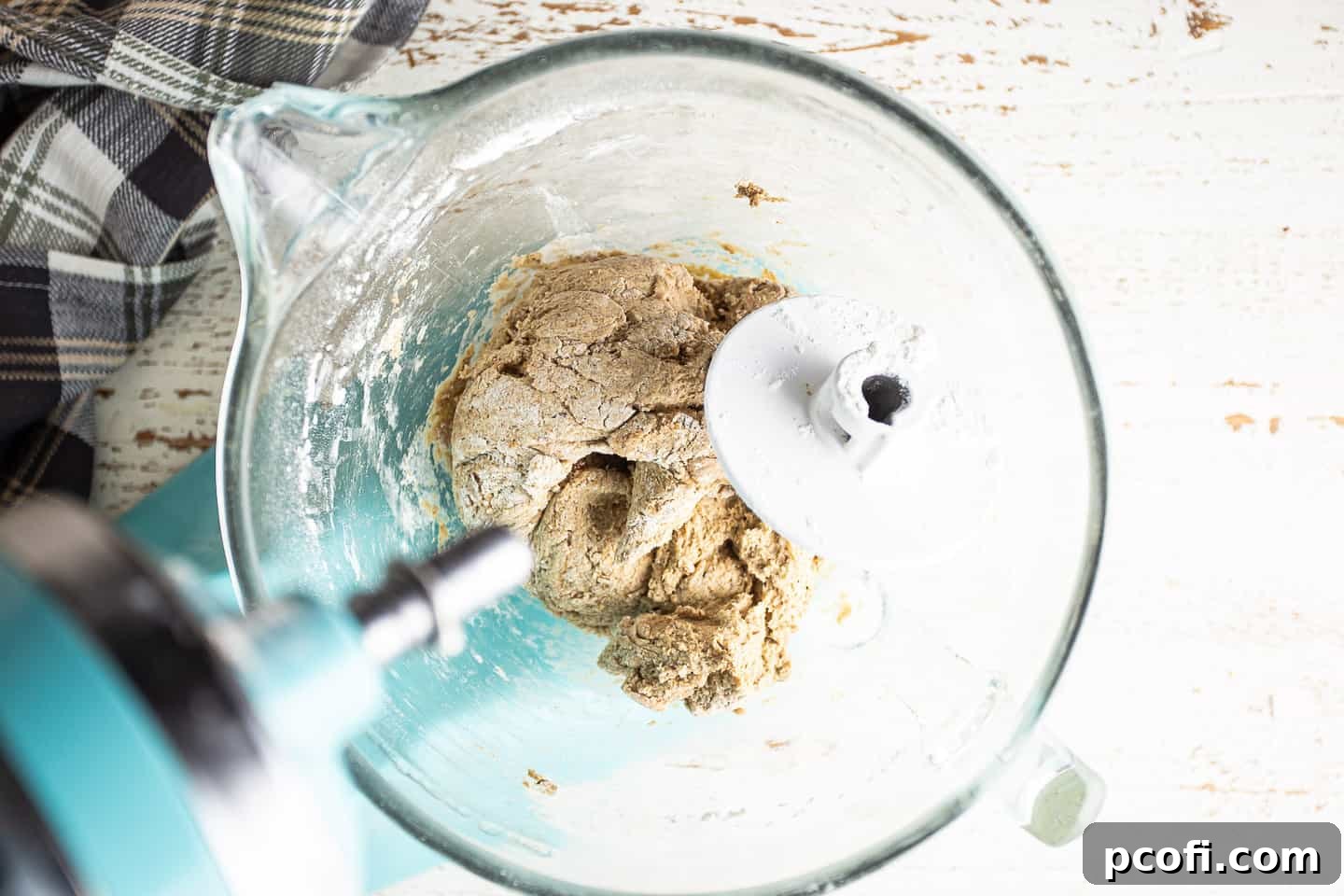
Now, gradually add the bread flour, about half a cup at a time. Mix thoroughly after each addition. Continue adding flour until the dough stiffens and begins to pull cleanly away from the sides of the bowl. The exact amount of bread flour may vary slightly depending on factors like humidity and how precisely you measured the other ingredients, so trust the dough’s texture rather than sticking rigidly to the measurement. You want a firm, but still slightly tacky dough.
Step 3: Develop the Gluten Through Vigorous Kneading
This is arguably the most critical step for achieving the desired texture in your rye bread. Many bakers underestimate the importance of proper kneading, but it’s essential for developing the gluten network that gives bread its structure and chewiness.
Observe the dough’s appearance before kneading: it’s likely a bit shaggy and loose. Now, attach the dough hook to your stand mixer and knead vigorously for a full 10 minutes. Resist the urge to stop early! If kneading by hand, be prepared for a good workout; fold, push, and turn the dough consistently.
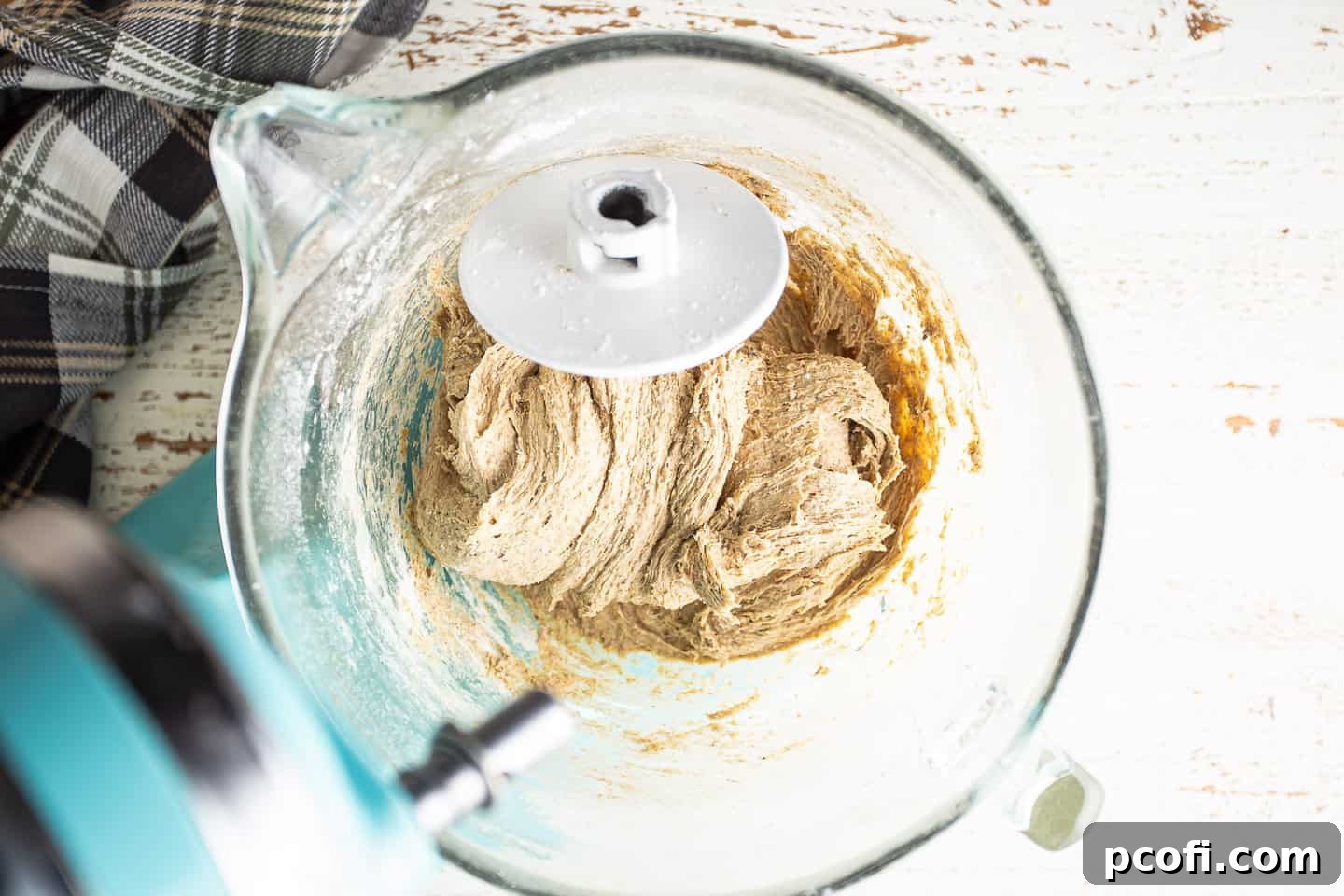
After 10 minutes, you’ll notice a significant transformation. The dough will appear much smoother, more elastic, and wonderfully stretchy. This change signifies that the glutens have been sufficiently activated and worked into long, resilient strands. This robust gluten development is what allows the dough to capture and hold the gases produced by the yeast, resulting in that delightful airy, chewy texture. Insufficient kneading will lead to a crumbly, dense loaf, so set a timer and don’t skimp on this step!
Step 4: First Rise (Bulk Fermentation)
Once your dough has been thoroughly kneaded and is smooth and elastic, it’s time for its first rise, also known as bulk fermentation. Lightly grease the bowl (if not already greased from mixing), place the dough back in, and cover it loosely with plastic wrap. For best results, lightly mist the underside of the plastic wrap with non-stick spray to prevent it from sticking to the rising dough.
Place the covered bowl in a warm environment. Yeast thrives in warmth, so a sunny windowsill, a slightly warmed (but turned off) oven, or an oven with a “Proof” setting is ideal. Allow the dough to rest and rise until it has visibly doubled in its original size, which typically takes about 1 hour, but can vary depending on the ambient temperature and yeast activity. You’ll see it puff up beautifully with trapped air bubbles – a clear sign of successful gluten development and active yeast. Without adequate kneading and the correct flour, these air bubbles wouldn’t be able to form or would simply escape, leading to a flat loaf.
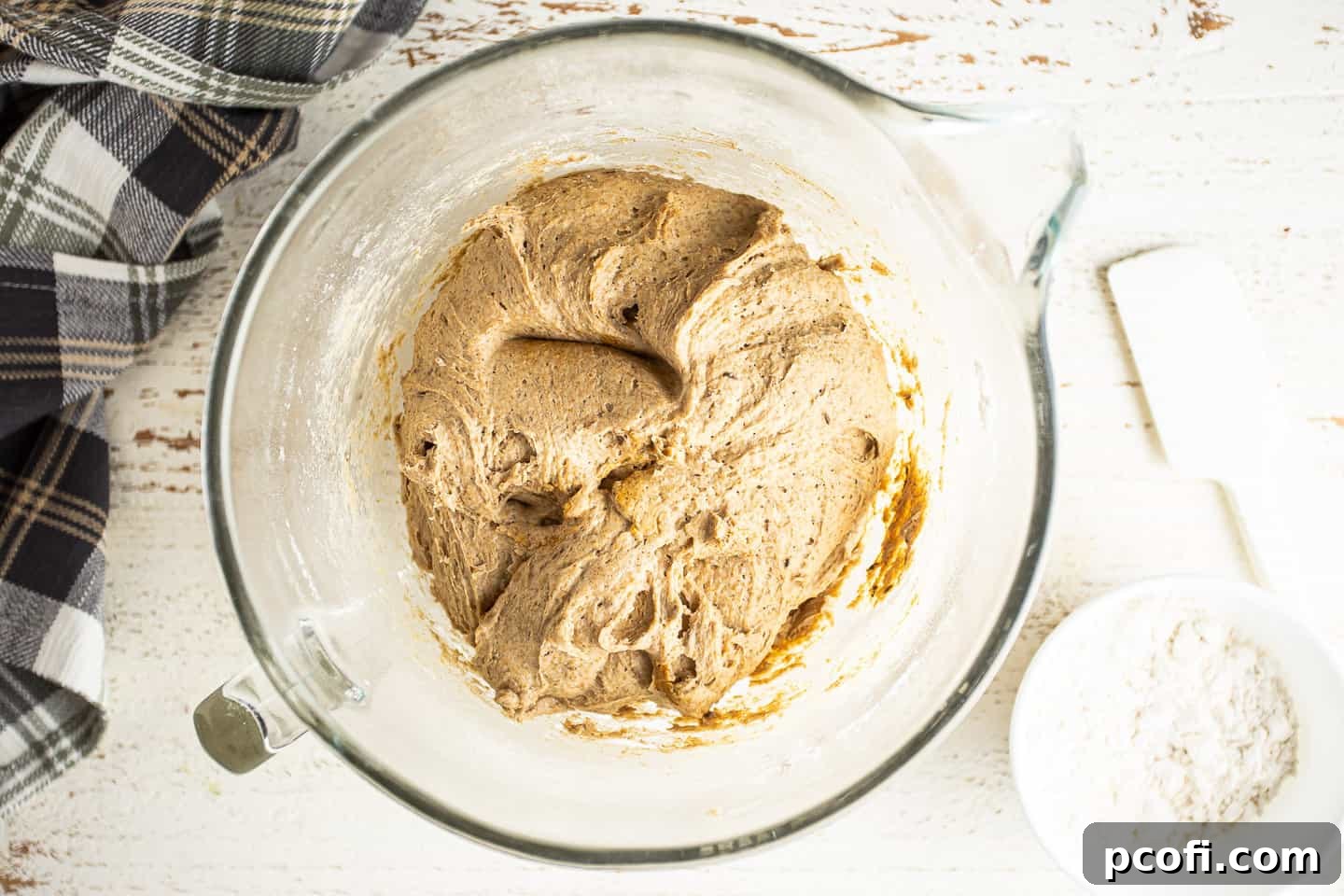
Step 5: Shape the Loaf and Second Rise (Proofing)
After the first rise, gently “punch down” the dough to release the accumulated gases. Transfer the dough to a lightly floured surface and knead it a few times to evenly redistribute the yeast and further strengthen the gluten. This degassing step helps to create a finer, more even crumb texture in the final bread.
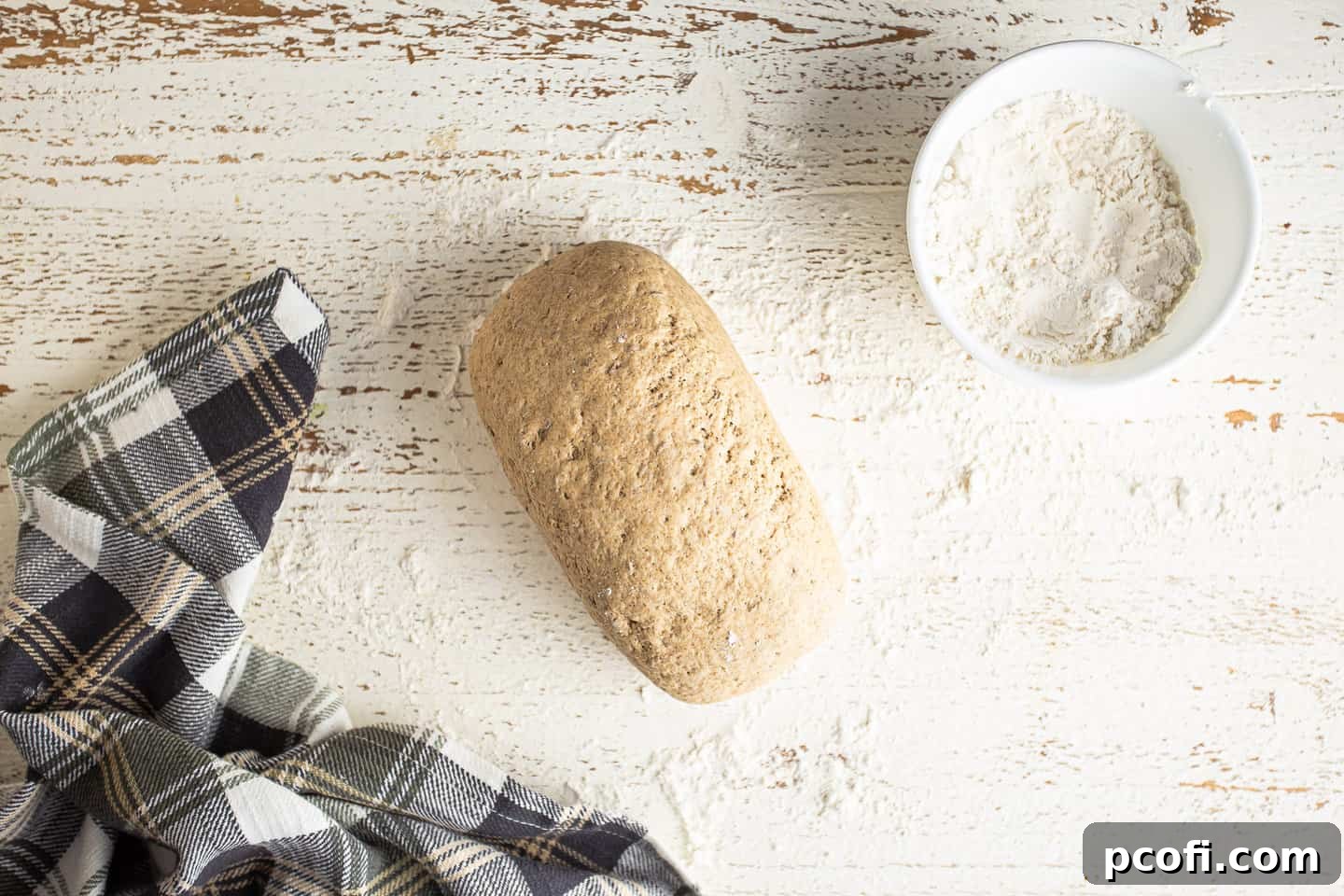
Now, shape your dough. For a classic Vienna loaf (an elongated oval), gently pull and tuck the dough to form the desired oblong shape. If you prefer a round boule, simply round the dough smoothly. Alternatively, carefully transfer it into a prepared standard loaf pan for a sandwich-style bread.
Once shaped, cover the loaf again, loosely with plastic wrap (again, misted lightly with non-stick spray), and let it undergo its second rise (proofing) in a warm place. This second rise, also approximately 1 hour or until doubled in volume, further enhances the bread’s flavor and ensures a light, airy texture. This is the final expansion before baking, ensuring your bread achieves maximum volume.
Step 6: Bake to Golden Perfection
Before placing your shaped loaf in the oven, prepare the baking environment for optimal crust development. Place a metal pan (such as a sturdy baking dish or old roasting pan) filled with about an inch of water on the very bottom rack of your oven. Then, preheat your oven to 350°F (175°C). The water will create steam, which is essential for a beautiful, crunchy crust.
While the oven is preheating, take your unbaked loaf and, using a lame or a very sharp blade, make a few shallow slashes on its surface. These cuts are not just for aesthetics; they serve a crucial functional purpose. As the bread bakes and expands, steam will escape through these controlled slashes, preventing the crust from cracking unevenly in undesirable places and allowing for an impressive “oven spring” (the final burst of rising in the oven).
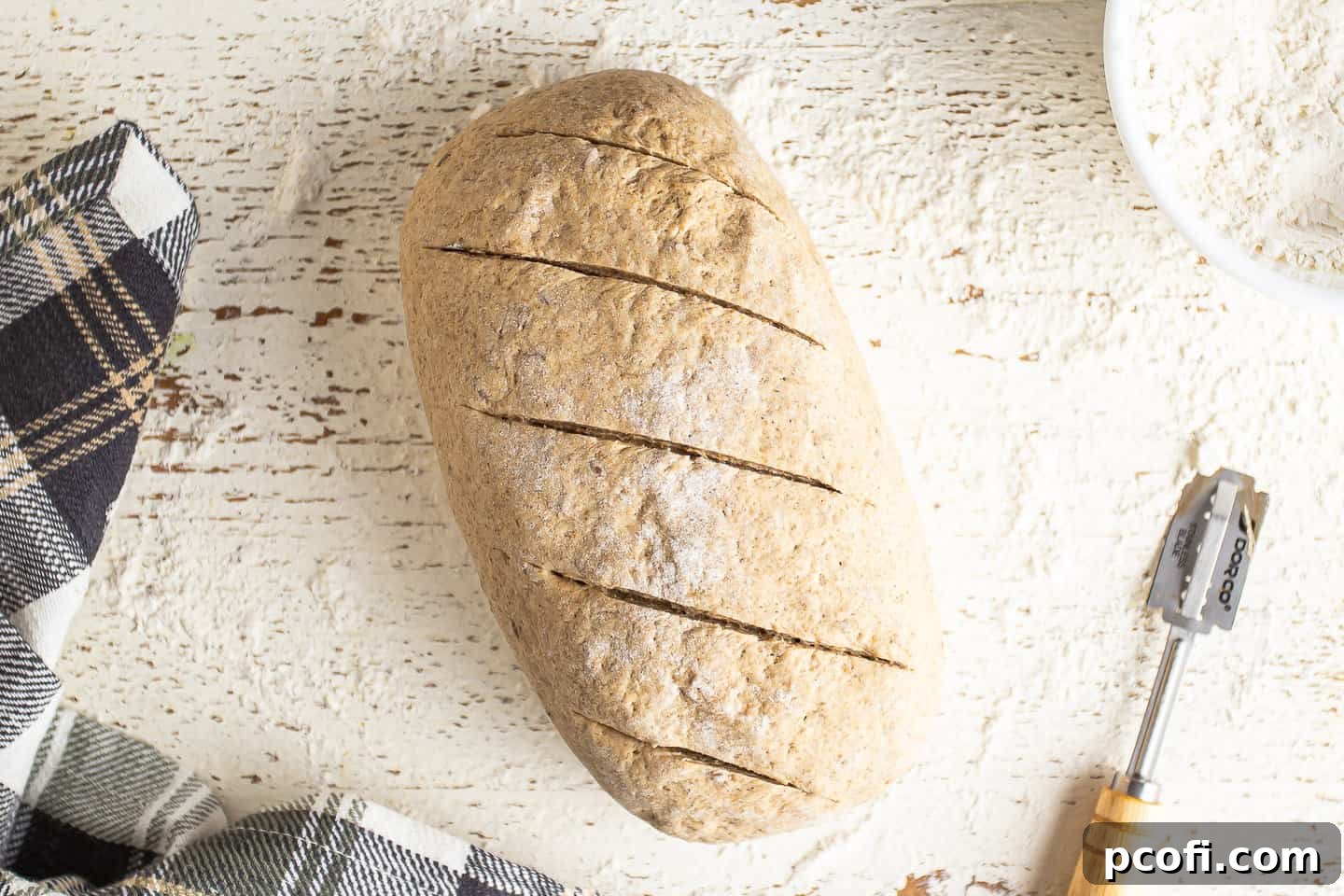
Carefully transfer your loaf to the preheated oven (either on a baking sheet or in its loaf pan). Bake for approximately 1 hour, or until the bread achieves a deep golden-brown crust and registers an internal temperature of around 200°F (93°C) when checked with an instant-read thermometer. This internal temperature confirms the bread is fully cooked through.
Serving Suggestions for Your Rye Bread
There’s truly nothing quite like a freshly baked loaf of homemade bread, still warm from the oven. The aroma alone is enough to make your mouth water! Once your rye bread has cooled enough to handle (we recommend letting it cool on a wire rack for at least 20 minutes to prevent a soggy bottom and allow the internal structure to set), it’s ready to be enjoyed in countless delicious ways.
Our favorite way to savor this rye bread initially is simply in thick, hearty slices, generously slathered with soft, good-quality butter and a pinch of flaky sea salt. The richness of the butter perfectly complements the bread’s nutty, tangy notes, creating an incredibly satisfying experience. But the versatility of this bread extends far beyond that:
- Classic Sandwiches: The robust flavor and firm yet soft texture make it an ideal choice for sandwiches. It’s the perfect foundation for a classic Reuben sandwich, piled high with corned beef, Swiss cheese, sauerkraut, and Russian dressing. It also pairs wonderfully with pastrami, smoked turkey, or even simple ham and cheese.
- Toasts and Crostini: Slice it, toast it, and let its hearty flavor shine. Top with avocado, smoked salmon, cream cheese, or a simple fried egg for a gourmet breakfast or brunch. Thinner slices can be toasted and used as crostini for appetizers, topped with bruschetta, tapenade, or cheese spreads.
- Accompaniment to Meals: Serve alongside a warming bowl of soup (like a rich mushroom soup or classic lentil), a hearty stew, or a fresh green salad. Its ability to soak up delicious broths and sauces makes it an excellent companion.
- Cheese Boards: The complex flavors of rye bread make it a sophisticated addition to any cheese board. It pairs beautifully with strong, aged cheeses, as well as creamy soft cheeses.
- Open-Faced Delights: Create open-faced sandwiches with various toppings – from herbed cream cheese and radishes to liverwurst and pickled onions.
However you choose to enjoy it, this homemade rye bread promises to be a delightful addition to your table, bringing warmth, comfort, and an authentic taste that will impress everyone.
Expert Tips for Rye Bread Success
Achieving a perfect loaf of rye bread, with its characteristic crunchy crust and tender interior, is easier than you think with these expert tips:
- Verify Yeast Freshness: Yeast is a living organism, and its potency can diminish over time. Always check the expiration date on your yeast package. If it’s past its prime or if you’re unsure, “proof” a small amount by dissolving it in a bit of warm water with a pinch of sugar. If it doesn’t become foamy and bubbly within 5-10 minutes, your yeast may be dead, and your bread won’t rise. A fresh batch is a small investment for successful baking.
- Create a Warm, Gentle Environment for Rising: Yeast thrives in conditions that are comfortably warm, much like us! Aim for a dough temperature between 75-85°F (24-30°C) during proofing. Water that is too hot (above 115°F/46°C) will kill the yeast, preventing your bread from rising. Conversely, a cold environment will significantly slow down or completely halt yeast activity. Ideal spots for rising include a sunny windowsill (if not too hot), a slightly warmed (then turned off) oven, or an oven with a dedicated “Proof” setting. Keeping the dough lightly covered with greased plastic wrap also helps maintain warmth and moisture.
- Knead Thoroughly and Vigorouslly: Do not underestimate the power of a good knead! Rye flour contains less gluten than wheat flour, but the bread flour in this recipe provides the necessary protein for structure. Developing this gluten network is essential for a chewy, airy crumb and preventing a crumbly texture. We recommend setting a timer and kneading for a full 10 minutes with a stand mixer (using a dough hook) or diligently by hand. The dough should transform from shaggy to smooth, elastic, and stretchy, passing the “windowpane test” (where a small piece can be stretched thin enough to see light through it without tearing).
- Harness the Power of Steam During Baking: For that enviable, crunchy crust, a steamy oven is crucial. Placing a metal pan filled with water on the bottom rack of your oven during preheating and baking creates a moist environment. This steam keeps the crust soft initially, allowing the bread to expand fully (the “oven spring”) before the crust sets. It also helps gelatinize starches on the surface, leading to a thinner, crispier crust and a beautiful sheen.
- Cool Completely on a Wire Rack: Patience is a virtue when it comes to cooling bread. As soon as your rye bread is baked, transfer it from the pan (if used) to a wire rack. This allows air to circulate around the entire loaf, preventing condensation from forming on the bottom and making it soggy. Cooling also allows the internal structure of the bread to stabilize and the moisture to redistribute evenly, ensuring the perfect crumb texture and preventing a gummy interior. Slicing too early can compromise both texture and flavor.
- Proper Flour Measurement: Always spoon flour lightly into your measuring cup and level it off with a straight edge, rather than scooping directly from the bag. This prevents compacting the flour and adding too much, which can result in a dry, dense loaf.
Frequently Asked Questions About Rye Bread
Yes, rye bread is generally considered a healthy choice, especially when compared to many highly processed white breads. Because it’s made with whole rye grains, it retains more of its natural nutrients and fiber. Rye flour is a good source of dietary fiber, which promotes digestive health, helps regulate blood sugar levels, and can contribute to a feeling of fullness. It also contains beneficial minerals such as manganese, magnesium, iron, and zinc. While this rye bread recipe is not gluten-free (as it uses both rye and bread flour), it is naturally egg-free and dairy-free, and can easily be made vegan by substituting agave nectar for honey.
Several factors can contribute to a loaf that doesn’t rise. The most common culprit is inactive or “dead” yeast. Ensure your water temperature is lukewarm (around 105°F/40°C); water that’s too hot will kill the yeast, and water that’s too cold won’t activate it. Always check the expiration date on your yeast. Another reason could be the proofing environment: yeast needs warmth to thrive, so ensure your dough is rising in a cozy, draft-free spot. Lastly, under-kneading the dough can prevent proper gluten development, which means the dough can’t effectively trap the gases produced by the yeast, leading to a flatter loaf. Make sure to knead for the full recommended time.
Absolutely! For a sourdough rye bread, you can substitute 100-150 grams of active, fed sourdough starter (at 100% hydration) for the active dry yeast. You may also need to slightly adjust the total water content depending on the hydration of your starter. Keep in mind that sourdough fermentation is generally slower than commercial yeast, so you will need to extend both the first and second rise times, often significantly. Watch the dough, not the clock, looking for it to double in volume.
Yes, you can use instant yeast. Instant yeast doesn’t require proofing in water, so you can mix it directly with the flours and salt before adding the wet ingredients. However, instant yeast typically works faster than active dry yeast, so you will likely need to reduce the rise times by about 10-15 minutes for each stage. Again, pay attention to the dough’s volume rather than strictly following the time recommendations.
A crumbly texture in rye bread is often a sign of insufficient gluten development or improper proofing. The most common cause is not kneading the dough enough. Without adequate kneading (a full 10 minutes with a mixer or vigorous hand-kneading), the gluten network won’t be strong enough to hold the dough together, leading to a fragile, crumbly crumb. It can also occur if the bread hasn’t risen enough, or if it has over-risen and then collapsed, causing the internal structure to weaken. Ensure you follow the kneading instructions precisely and monitor the dough’s rise, aiming for it to double in size for each proofing stage.
Yes, this recipe is quite flexible for making ahead. The unbaked dough can be stored in the refrigerator for up to 2 days (after the first rise) or frozen for up to 2 weeks. If refrigerating, simply allow the shaped dough to come to room temperature and complete its second rise before baking. If freezing, thaw the dough in the fridge overnight, then shape and proof. Fully baked rye bread keeps well (loosely covered to prevent drying) at room temperature for about 3 days. To extend its shelf life, you can refrigerate it for up to a week or freeze it for several months. Thaw frozen bread at room temperature or in the refrigerator, and refresh it in a warm oven for a few minutes before serving for best results.
This recipe yields one generous loaf of rye bread. The nutritional information provided in the recipe card accounts for the entire loaf, including caraway seeds. To determine the serving size and corresponding nutritional values per slice, simply divide the total by the number of slices you cut from the loaf. A typical loaf might yield 18 slices, but this can be adjusted based on your preferred slice thickness.
Explore More Yeast Bread Recipes
If you’ve enjoyed baking this classic rye bread and are eager to expand your bread-making repertoire, here are some other fantastic yeast bread recipes that are sure to delight:
- Fluffy Cheese Danish
- Sweet Orange Rolls
- Decadent Gooey Butter Cake
- Homemade Pretzel Buns
As an Amazon Associate, I earn from qualifying purchases.
Rye Bread Recipe
Easy rye bread recipe: Everything you’ve ever dreamed of! Hearty, crunchy crust & a soft, airy interior. Perfect for toast or sandwiches!
Servings: 1 loaf (approximately 18 slices)
Prep Time: 30 mins
Cook Time: 1 hr
Resting Time: 2 hrs
Total Time: 3 hrs 30 mins
Ingredients
- 1 1/2 cups (354.88 g) warm water (approx. 105°F / 40°C)
- 2 tablespoons (28 g) vegetable oil
- 1 tablespoon (21 g) honey (or agave nectar for vegan)
- 1 tablespoon (20 g) molasses
- 2 1/4 teaspoons (7 g) active dry yeast
- 1 1/2 cups (153 g) rye flour
- 1 tablespoon (6 g) caraway seeds (optional, but recommended for classic flavor)
- 2 teaspoons (12 g) kosher salt
- 2 1/2 cups (312.5 g) bread flour (you may need slightly more or less)
Instructions
- In a large bowl (or stand mixer bowl), combine the warm water, oil, honey, and molasses. Sprinkle the active dry yeast over the liquid.
- Allow the yeast to dissolve and activate for approximately 5 minutes until a light foam appears on the surface.
- Add the rye flour, caraway seeds (if using), and kosher salt to the liquid mixture. Stir until mostly incorporated.
- Gradually add the bread flour, about half a cup at a time, mixing until a stiff dough forms and pulls away cleanly from the sides of the bowl.
- Knead the dough vigorously for a full 10 minutes using a stand mixer with a dough hook or by hand until it is smooth, elastic, and stretchy.
- Lightly grease the bowl, place the dough back in, and cover loosely with plastic wrap (lightly misted with non-stick spray). Allow it to rise in a warm place until doubled in volume (approximately 1 hour for the first rise).
- Gently punch down the dough to release air. Transfer to a lightly floured surface, knead a few times, and shape into an oblong loaf (Vienna shape) or place in a standard loaf pan.
- Cover the shaped loaf loosely with greased plastic wrap and allow it to rise again in a warm place until doubled in volume (approximately 1 hour for the second rise).
- While the loaf is rising for the second time, place a large metal pan filled with about 1 inch of water on the bottom rack of your oven and preheat the oven to 350°F (175°C).
- Once the oven is preheated, use a sharp lame or knife to make a few shallow slashes on the surface of the unbaked loaf.
- Bake the loaf in the steamy oven for approximately 1 hour, or until the crust is golden brown and the internal temperature reaches around 200°F (93°C) with an instant-read thermometer.
- Cool the bread in the pan (if using a loaf pan) for 20 minutes, then transfer it to a wire rack to cool completely before slicing and serving.
Notes
This rye bread can be baked free-form on a sheet pan as an oblong (Vienna) or round (boule) loaf, or in a standard-sized loaf pan for a more traditional sandwich shape.
Nutrition Information (per whole loaf)
(Please note: Nutritional information is an estimate and may vary based on specific ingredient brands and preparation methods. This calculation is for the whole loaf and includes caraway seeds. Divide by the number of slices for per-serving values.)
- Calories: 2074kcal
- Carbohydrates: 380g
- Protein: 58g
- Fat: 37g
- Saturated Fat: 3g
- Polyunsaturated Fat: 11g
- Monounsaturated Fat: 19g
- Trans Fat: 0.1g
- Sodium: 4691mg
- Potassium: 1337mg
- Fiber: 30g
- Sugar: 35g
- Vitamin A: 28IU
- Vitamin C: 1mg
- Calcium: 183mg
- Iron: 9mg
Cuisine: American
Course: Appetizer, Breakfast, Side Dish, Snack