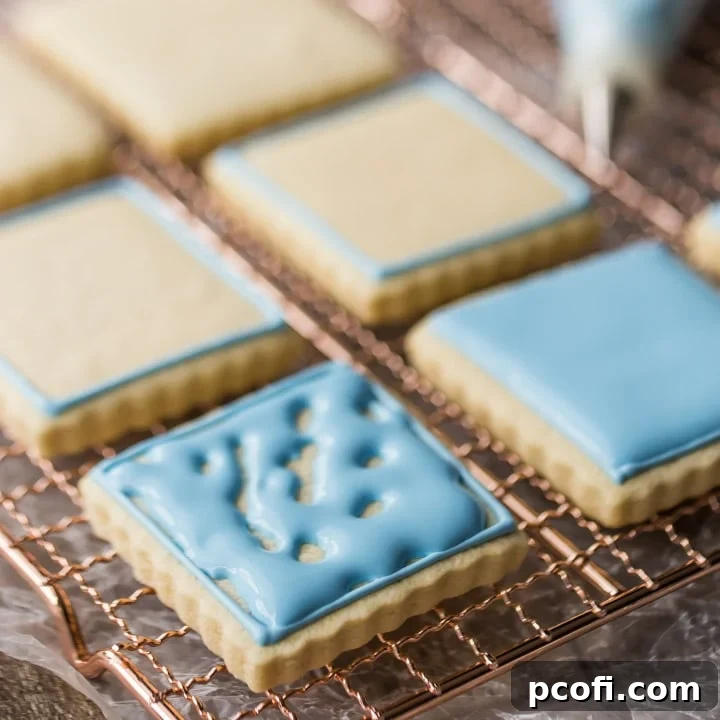
The definitive royal icing recipe you’ve been searching for! Achieve flawless, bakery-quality decorations on cookies, cakes, cupcakes, and even gingerbread houses. This easy-to-follow recipe pipes smoothly and dries to a perfectly hard finish, making your edible creations stunning and durable.
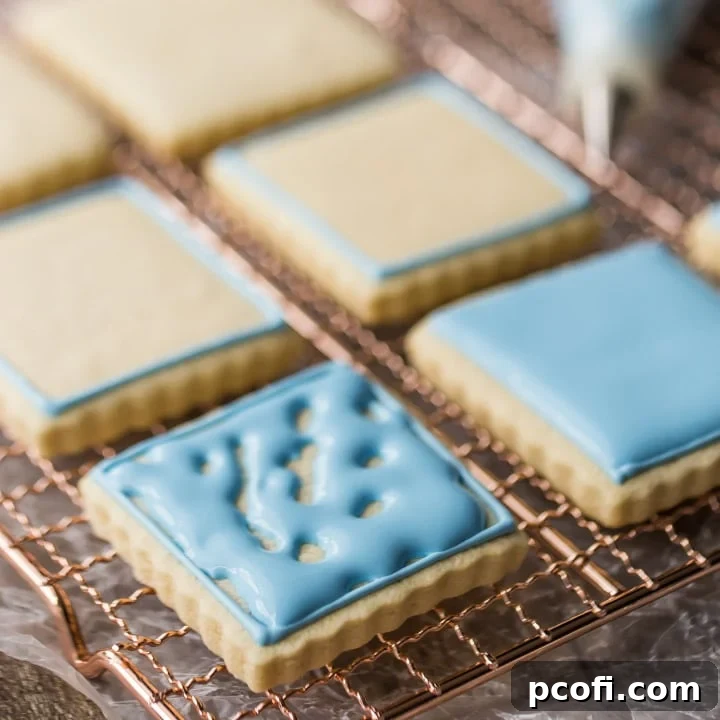
*Originally published June 14, 2018. Expertly updated December 9, 2021, for enhanced clarity and improved tips.*
Every passionate baker knows the importance of a reliable, versatile recipe in their repertoire. Today, we’re diving into an absolute classic that’s essential for countless dazzling desserts: Royal Icing! This isn’t just any recipe; it’s a foundational skill that will unlock a world of decorating possibilities, transforming simple baked goods into edible works of art.
Our royal icing recipe stands out for its incredible ease of preparation and consistently perfect results. Whether you’re a seasoned decorator or just starting your journey, you’ll find this formula simple to master and immensely rewarding. It’s a true staple, providing a smooth finish that dries hard and firm, yet remains easy to bite into.
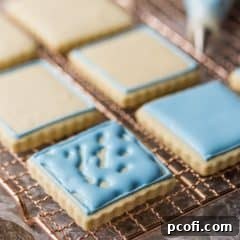
The applications for this fantastic icing are boundless. Envision creating intricate royal icing transfers, delicate piped roses, or elegant embroidery-like accents on cakes and cupcakes. It’s also the ideal “glue” for constructing robust gingerbread houses that stand tall through the holidays. But perhaps its most beloved use, and certainly one of our favorites, is as a flawless cookie icing, providing a smooth canvas for all your creative expressions.
To truly elevate your cookie decorating game, pair this incredible royal icing with some of our beloved cookie recipes. You’ll find a selection of ideal bases just waiting for a touch of this perfect embellishment: explore our Cut-Out Cookies that Don’t Spread, indulge in the richness of our Chocolate Cut-Out Sugar Cookies, embrace the festive spirit with Gingerbread Cookies that Won’t Spread, and delight in our Soft Cut-Out Sugar Cookies. Each provides the perfect foundation for your royal icing masterpieces.
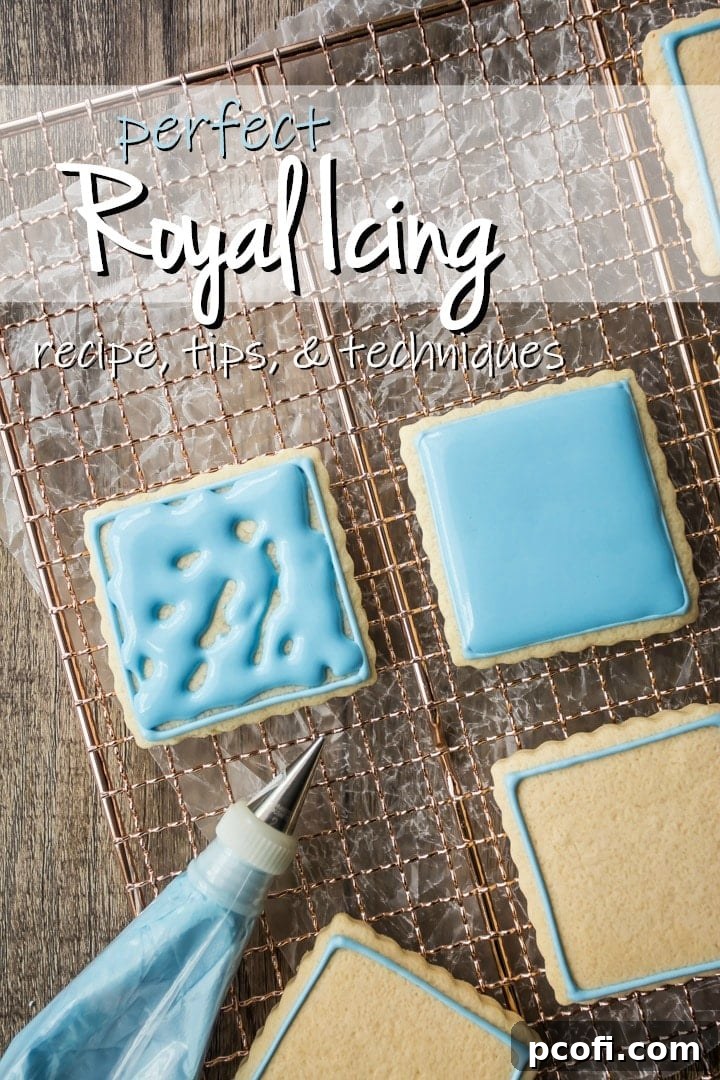
Table of Contents: Your Guide to Perfect Royal Icing
- Understanding Royal Icing: What it Is
- Why This is the Best Royal Icing Recipe You’ll Ever Need
- The Taste of Royal Icing and Flavoring Options
- Essential Ingredients for Royal Icing
- Specialized Equipment for Perfect Piping
- How to Make Royal Icing: Step-by-Step
- Adding Color: How to Tint Royal Icing
- Mastering Consistency for Flawless Decorating
- Drying Your Royal Icing Decorations
- Storage and Shelf Life of Royal Icing
- Can You Freeze Decorated Royal Icing Cookies?
- Using Real Egg Whites Instead of Meringue Powder
- Expert Tips and Tricks for Royal Icing
- Explore More Icing and Frosting Recipes
Jump to Recipe
Understanding Royal Icing: What it Is
Royal icing is a classic, versatile decorator’s dream, celebrated for its ability to transform from a soft, spreadable mixture into a beautifully hard, candy-like finish. Originating in the 18th century, it gained its “royal” moniker after being used to decorate Queen Victoria’s wedding cake, symbolizing its elegance and regal appeal. Traditionally, it’s made from egg whites, but our modern recipe offers a superior, safer alternative using just three simple ingredients: meringue powder, water, and powdered sugar.
While some traditional recipes call for fresh egg whites, we strongly advocate for meringue powder. This choice offers several distinct advantages: it ensures more consistent results because egg sizes and albumen content can vary, and crucially, it eliminates any concerns about consuming raw egg whites, making your creations safe for everyone to enjoy. As royal icing dries, it hardens to a smooth, firm consistency, similar to a delicate sugar candy. It’s robust enough to prevent smearing and damage, yet delicate enough to bite into with ease, offering a satisfying crispness. This unique characteristic makes it perfect for intricate piping work on cookies, creating three-dimensional decorations, or even constructing edible architectural marvels.
Imagine piping an elaborate image, a delicate floral design, or a precise pattern onto your cookies. Once applied, simply allow it to air dry for a few hours, or ideally, overnight. The result will be a stunning, durable decoration that holds its shape beautifully and adds a professional touch to any baked good.
Why This is the Best Royal Icing Recipe You’ll Ever Need
Crafting perfect royal icing shouldn’t be a daunting task. Our recipe has been refined to offer a superior experience and outstanding results every single time. Here’s why this will become your go-to royal icing recipe:
- Unwavering Consistent Results: The bane of many bakers is an unpredictable recipe. With our method, you can confidently expect excellent performance and identical outcomes batch after batch. This reliability is key for large projects or when aiming for professional-looking decorations. The precise ratios and use of meringue powder minimize variables, ensuring your icing consistently pipes smoothly and dries hard.
- Minimal Ingredients: You don’t need a pantry full of exotic items to achieve spectacular results. This recipe simplifies baking by requiring just three core ingredients – meringue powder, water, and powdered sugar. This not only makes it cost-effective but also incredibly convenient, allowing you to whip up a batch whenever inspiration strikes.
- Effortless Preparation: Forget complex, time-consuming steps. This royal icing comes together in mere minutes with the help of an electric mixer. Its straightforward process means less time struggling in the kitchen and more time enjoying the creative act of decorating. Even beginners will find it incredibly simple to achieve the right texture.
- Unmatched Versatility in Flavor and Color: While deliciously sweet on its own, this royal icing is a blank canvas for your culinary imagination. It can be effortlessly tinted with food colorings to match any theme or occasion, from vibrant birthday cookies to elegant wedding cakes. Furthermore, it readily accepts a variety of extracts, allowing you to infuse your decorations with notes of vanilla, almond, lemon, peppermint, or any other flavor you desire, adding an extra dimension to your treats.
The Taste of Royal Icing and Flavoring Options
At its core, royal icing offers a delightfully sweet flavor, primarily tasting of sugar. Most quality meringue powders impart a subtle, pleasing vanilla note, which complements a wide range of desserts beautifully. This inherent sweetness and mild vanilla base make it a perfect pairing for less sweet sugar cookies or gingerbread.
However, the beauty of royal icing lies in its adaptability. You can easily elevate its flavor profile to harmonize with your baked goods. A common and popular addition is a few drops of fresh lemon juice, which provides a bright, zesty counterpoint to the sweetness. Alternatively, any type of extract can be incorporated to add depth and complexity. Think of almond extract for an elegant touch, peppermint for holiday treats, or even a hint of rum for a more sophisticated dessert.
When experimenting with flavorings, exercise caution regarding the amount of liquid you add. Royal icing is exquisitely sensitive to consistency – it is, in fact, ALL about the consistency. Even a few extra drops of liquid, be it juice or extract, can dramatically alter its thickness, potentially making it too thin for detailed piping. Always add flavorings sparingly and adjust as needed, keeping a close eye on your icing’s texture to maintain perfect decorating consistency.
Essential Ingredients for Royal Icing
Achieving perfect royal icing requires just a handful of readily available ingredients. Each plays a crucial role in the texture, stability, and workability of your icing.
Meringue powder: This is the star ingredient that provides stability and structure to royal icing. Meringue powder is a dried blend of egg whites, sugar, cornstarch, and gums, acting as a convenient and safe substitute for fresh egg whites. You can typically locate it in the baking or cake decorating aisles of most craft stores, or conveniently order it online. Its benefits are twofold: it’s considerably safer to consume than raw egg whites, and it guarantees a more consistent result as it eliminates the variability in egg white volume and protein content often found with fresh eggs.
Water: Essential for reconstituting the meringue powder and bringing the icing together. The amount of water is critical for achieving the initial stiff consistency, which can then be adjusted for various decorating needs. Using filtered water can also contribute to a smoother, purer taste.
Powdered sugar (Confectioners’ sugar): This finely milled sugar is indispensable for royal icing. Its powdery texture dissolves effortlessly into the mixture, ensuring a perfectly smooth, lump-free icing that pipes beautifully. Granulated sugar, with its larger, crystalline structure, simply won’t work as it would result in a gritty, unstable icing that lacks the desired smooth finish and hard-drying properties. Always sift your powdered sugar before adding it to prevent any stubborn lumps from forming.
Specialized Equipment for Perfect Piping
While royal icing itself requires minimal ingredients, having the right tools on hand will significantly enhance your decorating experience and the quality of your finished products. These pieces of equipment are key to mixing, coloring, and applying your icing with precision.
- Measuring cups and spoons: Accurate measurements are paramount in baking and icing preparation. These ensure you get the perfect ratio of ingredients every time. For best practices on ingredient measurement, refer to our guide: How to Measure Ingredients for Baking.
- Mixing bowl: A sturdy, large mixing bowl is essential for combining your ingredients. Opt for a bowl made of glass or stainless steel, as plastic bowls can sometimes retain grease, which can negatively impact meringue powder’s ability to whip properly.
- Electric mixer: A powerful mixer is your best friend when making royal icing. A stand mixer fitted with a whisk attachment is ideal for hands-free operation and consistent whipping, allowing the meringue powder to incorporate maximum air. A powerful handheld mixer can also work effectively, though it requires more active engagement.
- Gel paste food coloring: While liquid food coloring can be used, gel paste colors are highly recommended. They offer vibrant, concentrated hues without adding significant liquid, which can alter the delicate consistency of royal icing. This is crucial for maintaining the desired texture for piping.
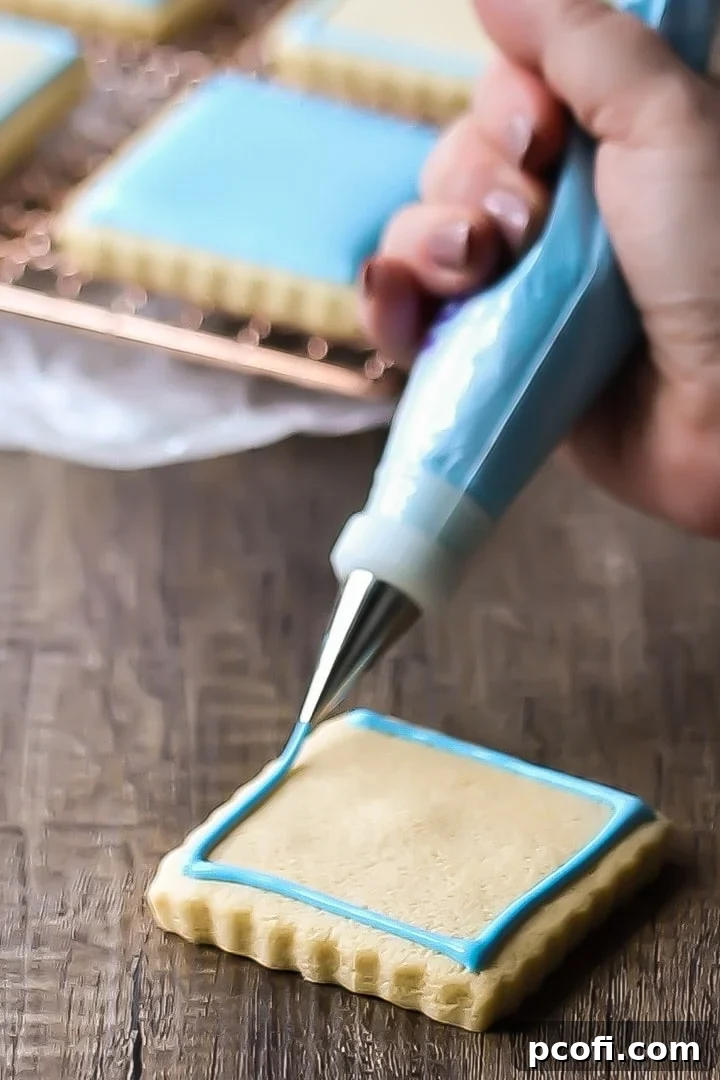
- Piping bags and tips: These are indispensable for all royal icing decorations. High-quality piping bags (disposable or reusable) and a selection of metal piping tips (round for outlines and flooding, star for flowers, etc.) allow for precise application and a variety of decorative effects.
How to Make Royal Icing: Step-by-Step for Sugar Cookies
Creating this perfect royal icing for sugar cookies is surprisingly simple, requiring just two main steps. The key is to start with a very stiff consistency, which you can then thin down as needed for various decorating techniques.
Step 1: Dissolve the Meringue Powder
Begin by placing the meringue powder and the measured water into your mixing bowl. Give them a quick stir with a whisk or spoon until they are just combined. This initial step helps to hydrate the meringue powder, preparing it for whipping and ensuring it incorporates smoothly without lumps.
Step 2: Add Powdered Sugar and Whip to Stiff Peaks
Now, add all of the sifted powdered sugar to the bowl. Secure the whisk attachment onto your electric mixer. Start mixing on a very low speed to gently incorporate the powdered sugar with the liquid. This prevents a “sugar cloud” from erupting in your kitchen. Once the ingredients are mostly combined and the risk of airborne sugar is minimal, gradually increase the mixer speed to high.
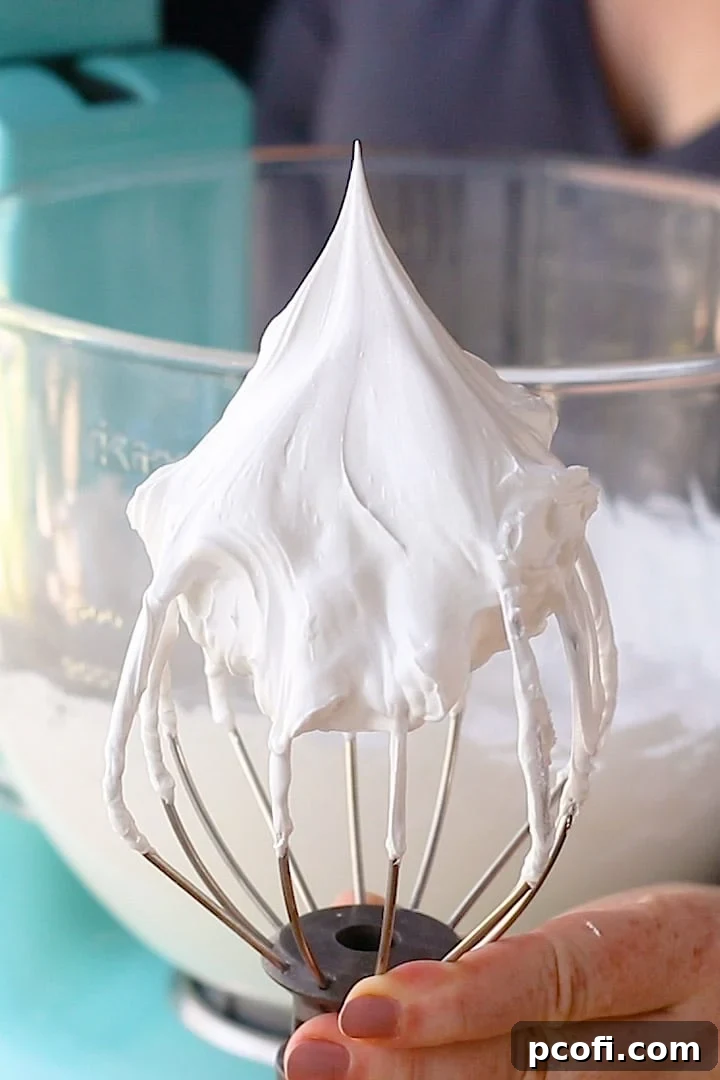
Continue to whip the mixture on high speed. You’ll observe the icing transforming, becoming progressively thicker, whiter, and increasing in volume. Whip until the icing is incredibly stiff and holds its shape firmly. When you lift the whisk, the icing should form a distinct, unyielding peak that stands straight up without drooping – this is known as a “stiff peak.” Even if your ultimate goal is a thinner consistency for flooding, it is crucial to start with this stiff base. It’s always easier to thin down stiff icing than to thicken runny icing, providing you with maximum control over your decorating process.
Adding Color: How to Tint Royal Icing
Once you’ve achieved your stiff royal icing base, the fun of adding color begins! Royal icing is incredibly receptive to coloring, allowing you to create a vibrant palette for your decorative projects. You can use various types of food coloring, but for the most professional and consistent results, we highly recommend gel paste icing colors.
Gel paste colors are superior because they are highly concentrated, meaning you only need a tiny amount to achieve rich, deep hues. This is a critical advantage for royal icing, as it prevents diluting the precious consistency you’ve worked hard to achieve. Unlike liquid food colorings, which can thin out your icing rapidly, gel pastes won’t significantly affect the texture, ensuring your icing remains perfect for precise piping and flooding. Simply dip a toothpick into the gel paste and swirl it into a small portion of icing. Add more color gradually until you reach your desired shade, mixing thoroughly to ensure even distribution.
Mastering Consistency for Flawless Decorating
When it comes to royal icing, consistency is not just important—it’s absolutely paramount! Achieving the right texture is the secret to smooth outlines, perfectly flooded cookies, sturdy structures, and intricate details. It’s the most crucial skill to master for stunning results.
Always begin by making your royal icing as stiff as possible, whipping it extensively to incorporate ample air. This stiff consistency provides the strongest base. Once you have your stiff icing, scoop small portions into separate bowls for each color you plan to use, then tint them with your preferred gel paste colors.
Finally, begin to thin down each colored portion to the specific consistency required for your decorating task:
- Very Stiff Consistency: This is ideal for structural work like assembling gingerbread houses, where strong adhesion and rapid setting are needed. It’s also perfect for intricate, three-dimensional piping, such as creating realistic roses, delicate flowers, or basketweave patterns, as it holds its shape perfectly.
- Outline Consistency (20-second count): For decorating cookies and creating transfers, you’ll want an outline consistency. This is slightly thinner than very stiff, allowing for smooth, clean lines that act as a dam for flood icing. When you lift a spoonful and let the icing drizzle back into the bowl, it should take about 20 seconds for the drizzled line to completely disappear and become smooth.
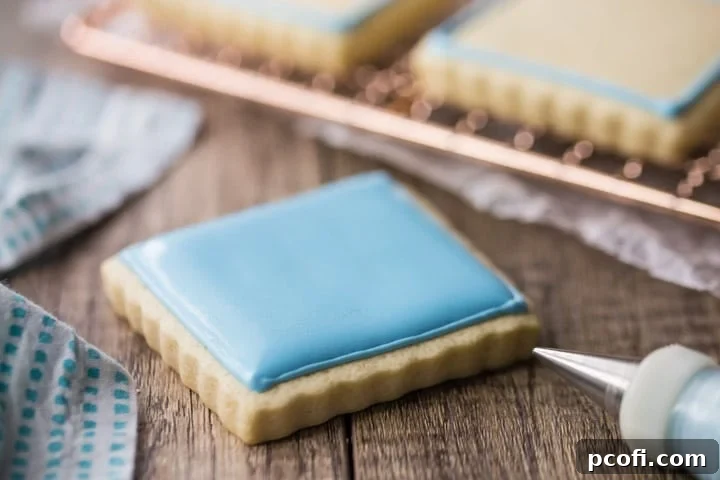
- Flood Consistency (10-second count): This is a thinner consistency used for filling in (or “flooding”) outlined areas of your cookies or transfers. It’s designed to “self-level,” meaning it will naturally spread and smooth out into a perfectly flat, even surface once applied. To test for flood consistency, lift a spoonful and let the icing drizzle back into the bowl. It should take approximately 10 seconds for the drizzled line to completely melt back into the puddle of icing, creating a seamless surface. If it disappears faster, it’s too thin; if it takes longer, it’s too thick.
To thin your icing, add water drop by drop, stirring thoroughly after each addition. This process requires patience and a light hand. Remember, once water is added, it’s extremely difficult to reverse the process without adding more powdered sugar, which can alter the overall balance of your icing. Start with the tiniest amount of water and observe how the icing reacts. If you are uncertain about what these consistencies should look like, many online videos (including one often linked in the recipe card) demonstrate the “10-second rule” and other visual cues for outlining and flooding icing. This visual guidance can be invaluable for beginners.
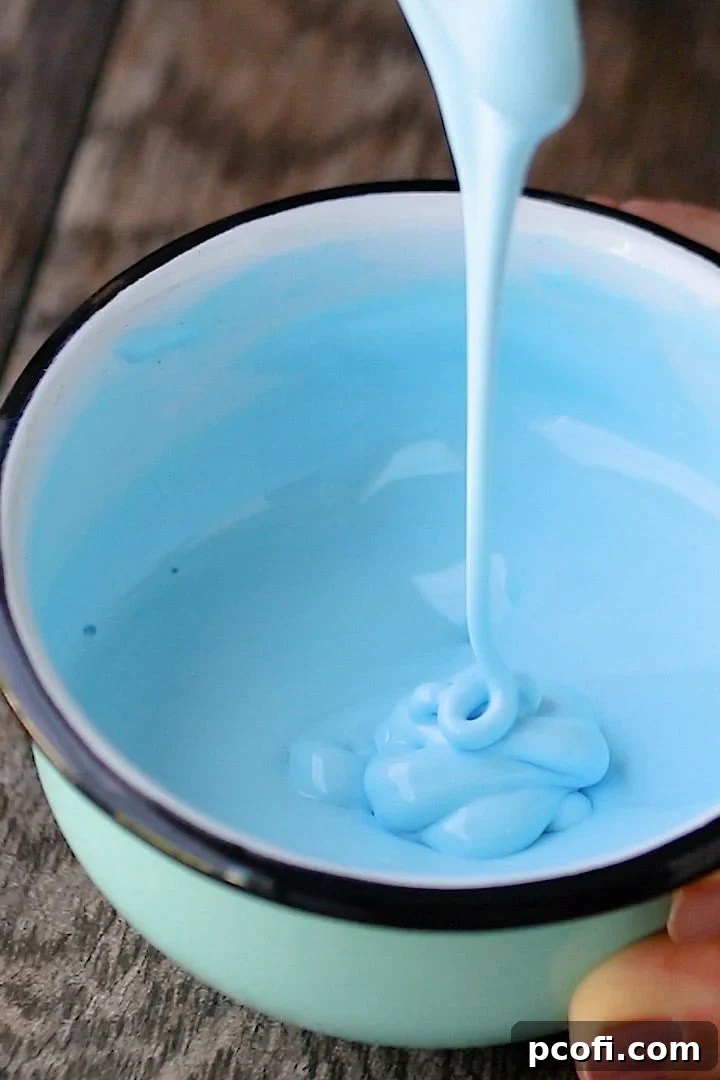
The image above perfectly illustrates a well-achieved flood consistency. Notice how the icing is fluid enough to melt into the existing puddle within a few seconds, yet retains enough body to stay within the boundaries you pipe onto a cookie without spilling over the sides. This balance is key to achieving that signature smooth, professional finish.
Drying Your Royal Icing Decorations
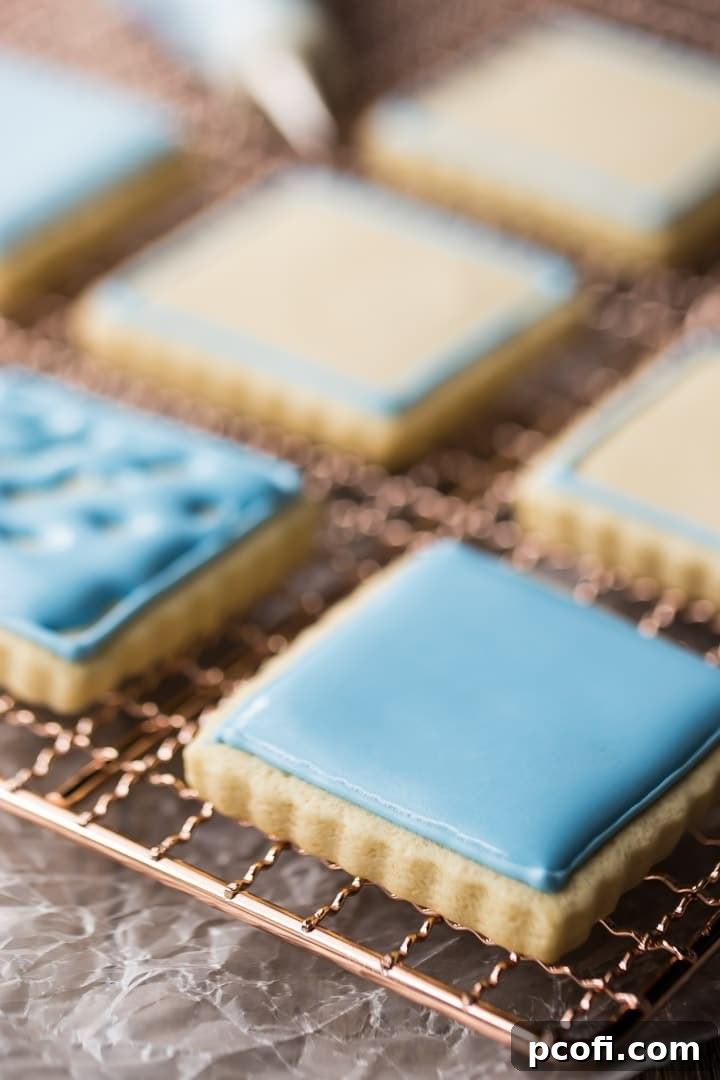
Once your beautiful royal icing designs are piped onto your cookies or other baked goods, the crucial drying phase begins. While royal icing forms a thin crust on its surface within a relatively short period—typically 15 to 30 minutes—the underlying icing often remains wet and vulnerable for several hours. For optimal results and to ensure complete hardness, patience is key.
We highly recommend allowing your decorated items to dry thoroughly overnight. Arrange your cookies in a single, flat layer on parchment-lined baking sheets. This ensures even airflow around each piece, promoting consistent drying. Don’t worry about your cookies going stale during this period; the hardened royal icing actually acts as a protective barrier, sealing in the freshness of the cookie and preserving its texture.
It’s important to avoid drying royal icing in humid environments, which can lead to issues like “cratering” (small holes forming in the flood icing) or a dull, matte finish. Therefore, we generally do not recommend using the refrigerator or freezer for drying. The fluctuating humidity levels in these appliances can negatively impact the icing’s set. Room temperature, in a dry area, is always the best environment. If you need to accelerate the drying process, especially in slightly humid conditions, positioning a fan nearby to gently circulate air can be very effective. This helps to evaporate moisture more quickly, promoting a faster and harder set. Ensure the fan isn’t too strong, as it could potentially cause ripples in unset flood icing.
Storage and Shelf Life of Royal Icing
One of the remarkable qualities of royal icing is its impressive shelf life, primarily due to its extremely high sugar content. This high concentration of sugar acts as a natural preservative, inhibiting bacterial growth, much like a hard candy. Therefore, royal icing technically “won’t ever spoil” in the traditional sense.
However, while it remains safe to consume, you will observe a degradation in quality over time. For optimal results and ease of use, it’s best to use fresh royal icing. If stored properly in an airtight container at room temperature, it typically holds its perfect consistency for about 24 hours. Beyond this, you may notice some changes:
- After 24 hours: The icing may begin to become slightly thinner and more watery. If this occurs, you can often restore its desired consistency by gently stirring it and, if necessary, whipping in a tiny bit more sifted powdered sugar.
- After 36 hours: Separation might become apparent, with a layer of water accumulating on top. Don’t despair! A good stir will usually bring it back together, restoring its homogeneous texture.
- After 48 hours (2-3 days): You might start to notice a slightly grainy texture. Unfortunately, once royal icing develops this graininess, it’s very challenging to salvage it to its original smooth state. For this reason, we generally recommend using any leftover royal icing within 2 to 3 days, or discarding it if the texture is no longer ideal for decorating.
Always store royal icing in an airtight container to prevent it from drying out and forming a crust. If you’re storing it for a short period (a few hours), pressing a piece of plastic wrap directly onto the surface of the icing before covering the container can help prevent a crust from forming.
Can You Freeze Decorated Royal Icing Cookies?
While making a fresh batch of royal icing is always recommended for the best results due to its ease of preparation and the slight degradation in texture over time, the question of freezing often arises. Freezing leftover *liquid* royal icing isn’t typically advised, as the thawing process can cause separation and textural changes that make it less suitable for fine decorating work.
However, if your goal is to prepare and decorate sugar cookies in advance, and then freeze them to preserve their freshness until they are ready to be eaten or gifted, the answer is a resounding yes! Fully decorated, completely dried royal icing cookies freeze exceptionally well. Here’s how to do it effectively:
- Ensure your royal icing decorations are 100% dry and hard. This usually means leaving them at room temperature overnight, or even for 24 hours, to ensure no moisture remains.
- Carefully place the dried, decorated sugar cookies in a single layer within an airtight container.
- If you need to create multiple layers, place a sheet of parchment paper or wax paper between each layer of cookies. This acts as a protective barrier, preventing any potential color bleed or damage to the intricate designs from the cookies above or below.
- Seal the container tightly to prevent freezer burn and protect against odors.
- When you are ready to thaw the cookies, remove the container from the freezer, but crucially, leave the lid slightly ajar or remove it completely. This allows for optimal airflow around each cookie. Thaw the cookies at room temperature. The open-lid approach helps to prevent condensation from forming directly on the decorated surface of the cookies, which could otherwise disturb the delicate royal icing design or cause colors to run.
Following these steps will allow you to enjoy perfectly preserved, beautifully decorated cookies whenever you need them, making advance preparation for events or holidays a breeze.
Using Real Egg Whites Instead of Meringue Powder
Our preferred method for royal icing utilizes meringue powder for its consistency and safety benefits. However, for those who prefer a more traditional approach or simply don’t have meringue powder on hand, it is indeed possible to make royal icing using fresh egg whites. While we don’t personally advocate for this method due to the variability and raw egg concerns, here’s how you can adapt the recipe:
To substitute meringue powder and water with fresh egg whites, you would typically use 3 large egg whites. In terms of weight, this translates to approximately 120 grams of egg white. It’s crucial to ensure these egg whites are free of any yolk contamination, as even a tiny amount of fat can prevent them from whipping properly. When using fresh egg whites, ensure they are pasteurized if you have concerns about raw egg consumption, especially when serving to children, pregnant women, or individuals with compromised immune systems. Always remember to whip the egg whites to a foamy consistency before gradually incorporating the powdered sugar, following a similar whipping process to the meringue powder method.
Expert Tips and Tricks for Royal Icing
Working with royal icing can be a delightful experience, and these expert tips are designed to make your decorating process smoother, cleaner, and more efficient, helping you achieve professional-looking results with less frustration.
Keep it Clean with Plastic Wrap: Cleaning piping bags, especially after intricate royal icing work, can be messy. Here’s a brilliant trick: before placing your tinted icing into a piping bag, scoop it onto a piece of plastic wrap and roll it into a log. Then, gently slide this plastic-wrapped log of icing into your piping bag. When you’re finished decorating, simply slide out the wrapped icing. This technique significantly reduces the amount of icing that comes into direct contact with the piping bag, meaning you’ll only need to thoroughly clean your piping tips, saving you valuable time and effort.
Secure the Bag: To prevent icing from oozing out the top of your piping bag while you’re decorating, and to keep it from drying out prematurely, always twist the open end of the bag tightly. Secure this twisted portion with a rubber band or a twist tie. This small step keeps the icing neatly contained, maintains pressure for consistent piping, and most importantly, prevents any stray icing crumbs from hardening and scattering, which can be a real nuisance in your workspace.
Prevent Clogged Tips with Moisture: One of the most common frustrations when using royal icing is when it hardens and clogs the small opening of your piping tip. This can happen within just a few minutes of inactivity. While you can try to clear it with a toothpick, you risk forcing hardened icing further into the tip, creating a worse clog. A simple preventative measure is to place a damp paper towel or cloth at the bottom of a drinking glass. When you take a break from piping, store your piping bags (tip-side down) in this glass. The gentle moisture from the paper towel will keep the icing at the tip from crusting over, ensuring a smooth flow the moment you’re ready to resume decorating.
Smooth Surfaces for Flooding: For perfectly smooth, crater-free flood icing, gently tap your decorated cookies on your counter surface a few times immediately after flooding. This helps to release any trapped air bubbles, which are a primary cause of craters, and encourages the icing to settle into a completely flat, even surface.
Explore More Icing and Frosting Recipes
While royal icing is a fantastic tool for detailed decorating, the world of icings and frostings is incredibly diverse! Each type offers unique textures, flavors, and applications, allowing you to match the perfect topping to any baked good. Expand your baking horizons with a few more of our favorite icing recipes:
- Fluffy Marshmallow Frosting: Light, airy, and wonderfully sweet, perfect for topping cupcakes or s’mores-inspired desserts.
- Decadent Whipped Chocolate Ganache: A rich, luxurious frosting that’s intensely chocolatey and incredibly smooth, ideal for cakes and sophisticated treats.
- Classic Cream Cheese Frosting: Tangy, sweet, and perfectly creamy, a timeless choice for carrot cake, red velvet, and pumpkin spice desserts.
- Light & Airy Whipped Cream Frosting: A delicate and fresh topping that’s not too sweet, perfect for fruit tarts, angel food cake, or as a light filling.
- Silky Swiss Meringue Buttercream: Smooth, stable, and less sweet than American buttercream, this is a decorator’s favorite for elegant cakes and cupcakes.
Do you love to decorate with royal icing? Have you tried making a recipe like this before, or perhaps have some secret tips that make the process even easier? We’d love to hear from you! Please share your thoughts, experiences, and any additional brilliant advice in a comment below!
This post contains affiliate sales links.
Royal Icing: The Ultimate Decorating Companion
Leave a Review
Save Recipe
Ingredients
- 2 tablespoons (29.57 g) meringue powder
- 6 tablespoons (90 g) water
- 2 2/3 cups (320 g) powdered sugar, sifted
- Gel paste icing colors, for tinting (optional)
- Additional water, for thinning (optional)
Instructions
- Place the meringue powder and water in a large mixing bowl. Whip with the whisk attachment until foamy, about 3 minutes.
- Gradually add the sifted powdered sugar. Continue to whip on medium-high speed until the icing is very stiff and thick, holding a firm peak when the whisk is lifted.
- As desired, tint the icing using gel paste icing colors, adding sparingly until the desired shade is achieved.
- Thin the icing to your preferred consistency by adding additional water, a drop at a time, stirring well after each addition. Refer to the “Mastering Consistency” section for guidance on different consistencies.
Notes
- Cut-Out Cookies that Don’t Spread
- Chocolate Cut-Out Cookies
- Gingerbread Cookies
- Soft Cut-Out Sugar Cookies
Calories: 51kcal
Carbohydrates: 13g
Sugar: 13g
Mention @bakingamoment on Instagram or tag #bakingamoment.