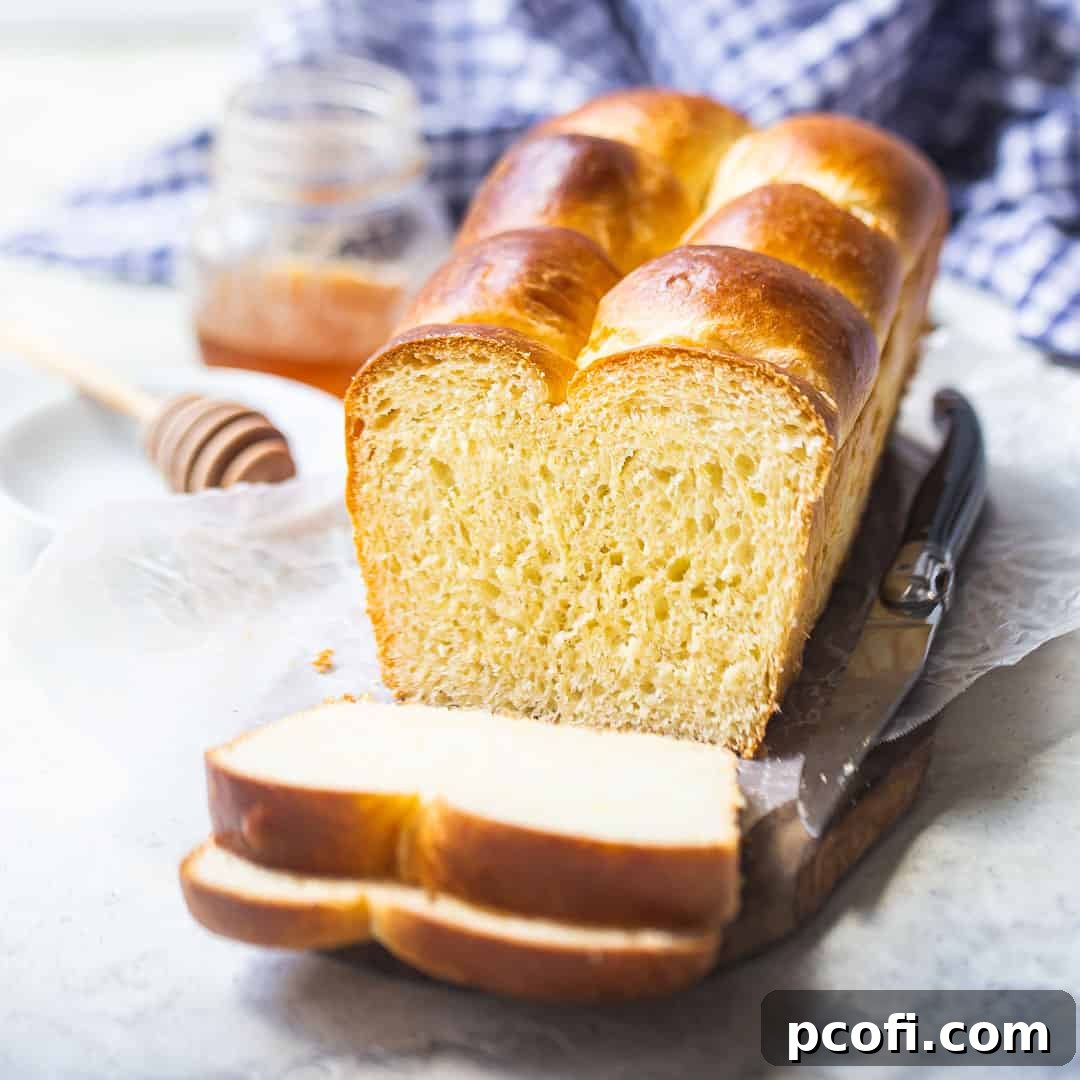
Brioche Bread: Unveil the Softest, Most Buttery Loaf You’ll Ever Bake
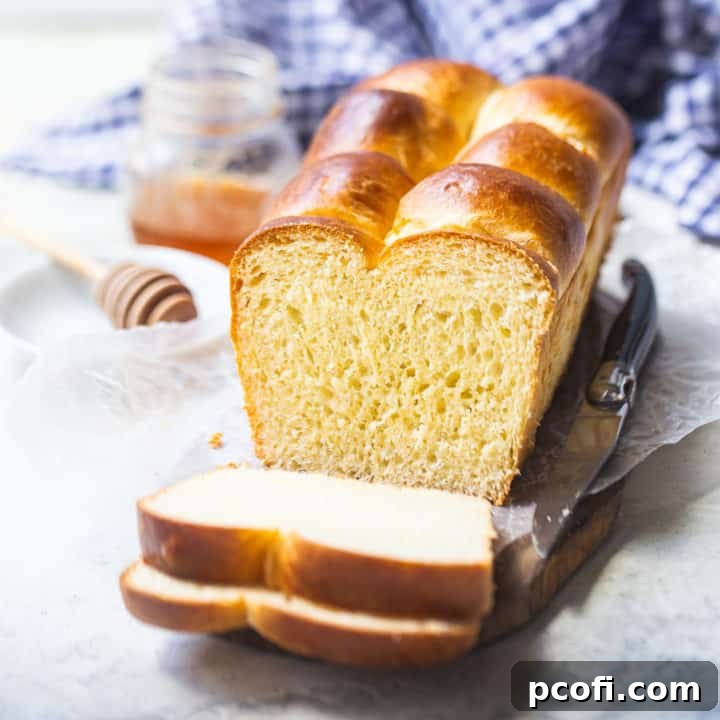
There’s nothing quite like the comforting aroma of freshly baked bread filling your home. Today, we’re diving into the delightful world of brioche – a bread that transcends the ordinary, offering a truly luxurious experience. If you’ve been looking for the ultimate recipe for a soft, moist, and irresistibly buttery loaf, you’ve come to the right place. This brioche bread recipe promises a pillowy texture and a rich flavor that will make it an instant favorite.
The journey of baking bread is an incredibly rewarding one. Over the past few months, my friends and I have become utterly captivated by the art of bread making. It’s more than just a culinary pursuit; it’s a therapeutic ritual that culminates in something profoundly satisfying. From the rhythmic kneading of the dough to the anticipation of its rise, and finally, the golden-brown masterpiece emerging from the oven, every step is a joy. The incredible aromas that permeate the house are truly the icing on the cake, creating an atmosphere of warmth and happiness.
In my quest for exceptional bread, I’ve shared recipes for beloved classics like Challah Bread, authentic New York Bagels, and decadent Homemade Sticky Buns. My “Yeast Breads” category is brimming with countless more recipes for you to explore and master. But today, I am especially thrilled to introduce you to one of my absolute favorites: homemade brioche. Its unique qualities set it apart, making it a truly special treat.
Similar to other beloved enriched doughs such as Hawaiian Rolls, the sweet and swirling Babka, and flaky Homemade Crescent Rolls, brioche bread is distinguished by its generous inclusion of eggs and butter. These rich ingredients are the secret to its signature moist, pillowy texture and its distinctly buttery, subtly sweet flavor profile. Each bite is a pure indulgence, transforming ordinary meals and snacks into extraordinary culinary moments.
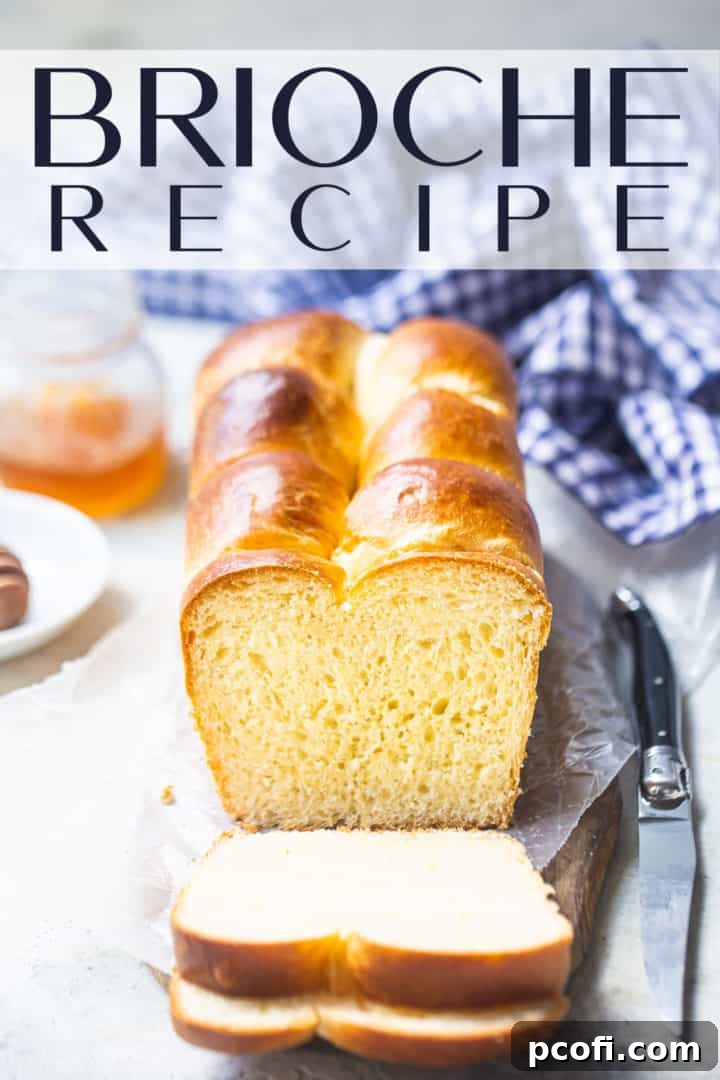
What Exactly is Brioche Bread?
At its heart, brioche is an “enriched” bread, meaning its dough is generously fortified with butter and eggs. This enrichment is what gives brioche its characteristic rich flavor, golden hue, and a moist, almost cake-like crumb that melts in your mouth. Unlike lean breads, which typically only contain flour, water, yeast, and salt, enriched breads boast a higher fat and sugar content, resulting in a softer texture and a longer shelf life.
Brioche belongs to the prestigious “viennoiserie” family, a category of baked goods that blurs the line between bread and pastry. Other famous members of this family include flaky croissants and delicate Danish pastries. These items are typically made from yeasted doughs with significant amounts of butter and often sugar, giving them a rich, tender crumb and luxurious taste.
To perfect this brioche loaf recipe, I meticulously adapted my highly popular brioche hamburger buns recipe. The original inspiration for that recipe came from the renowned pastry chef Joanne Chang. For those unfamiliar, Joanne Chang is an extraordinary, classically-trained baker and pastry chef, celebrated for her exquisite creations. She is a James Beard award winner and the owner of the acclaimed Flour Bakery in Boston and Cambridge. Her brioche pastries are internationally recognized for their perfection, making her ratios an unparalleled starting point for any brioche endeavor. When you build on a foundation from such a master, success is almost guaranteed.
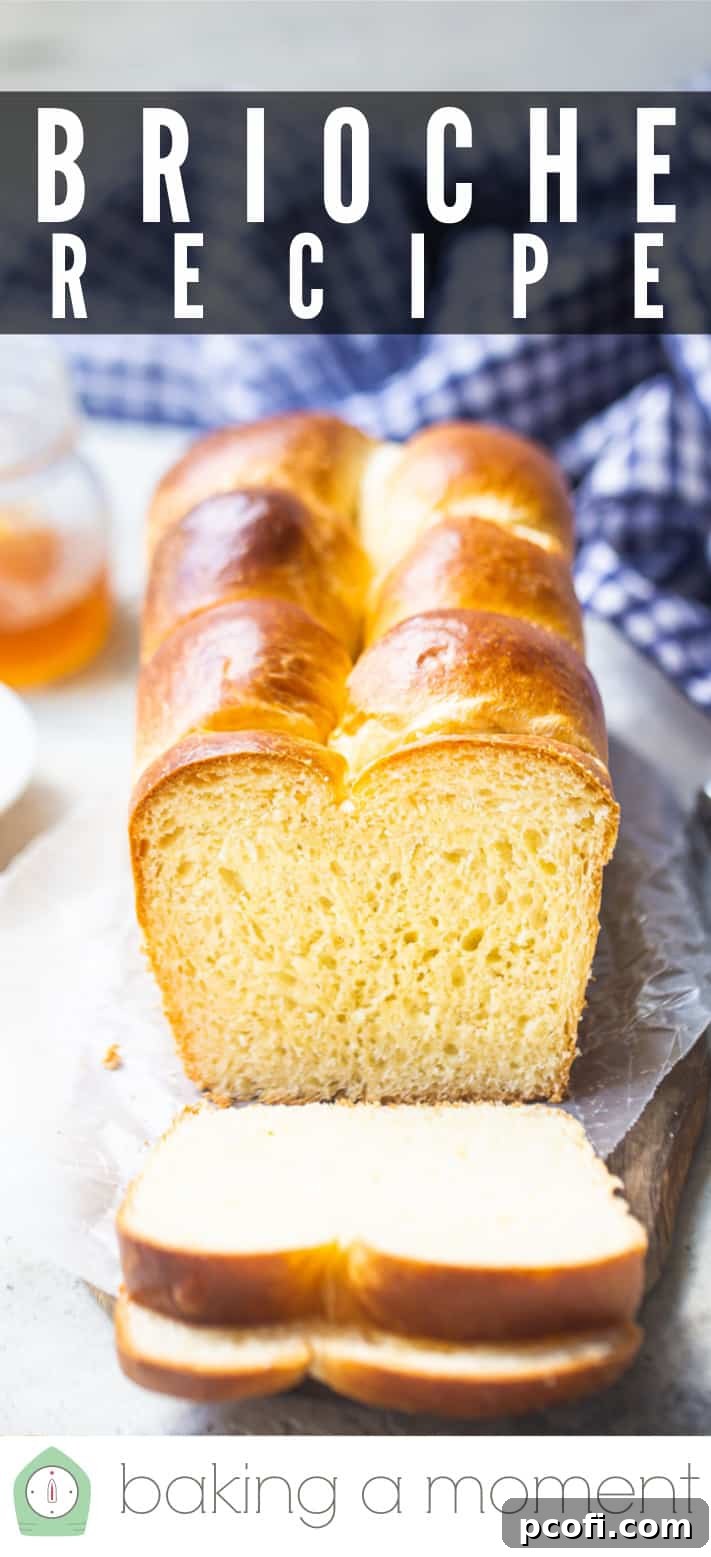
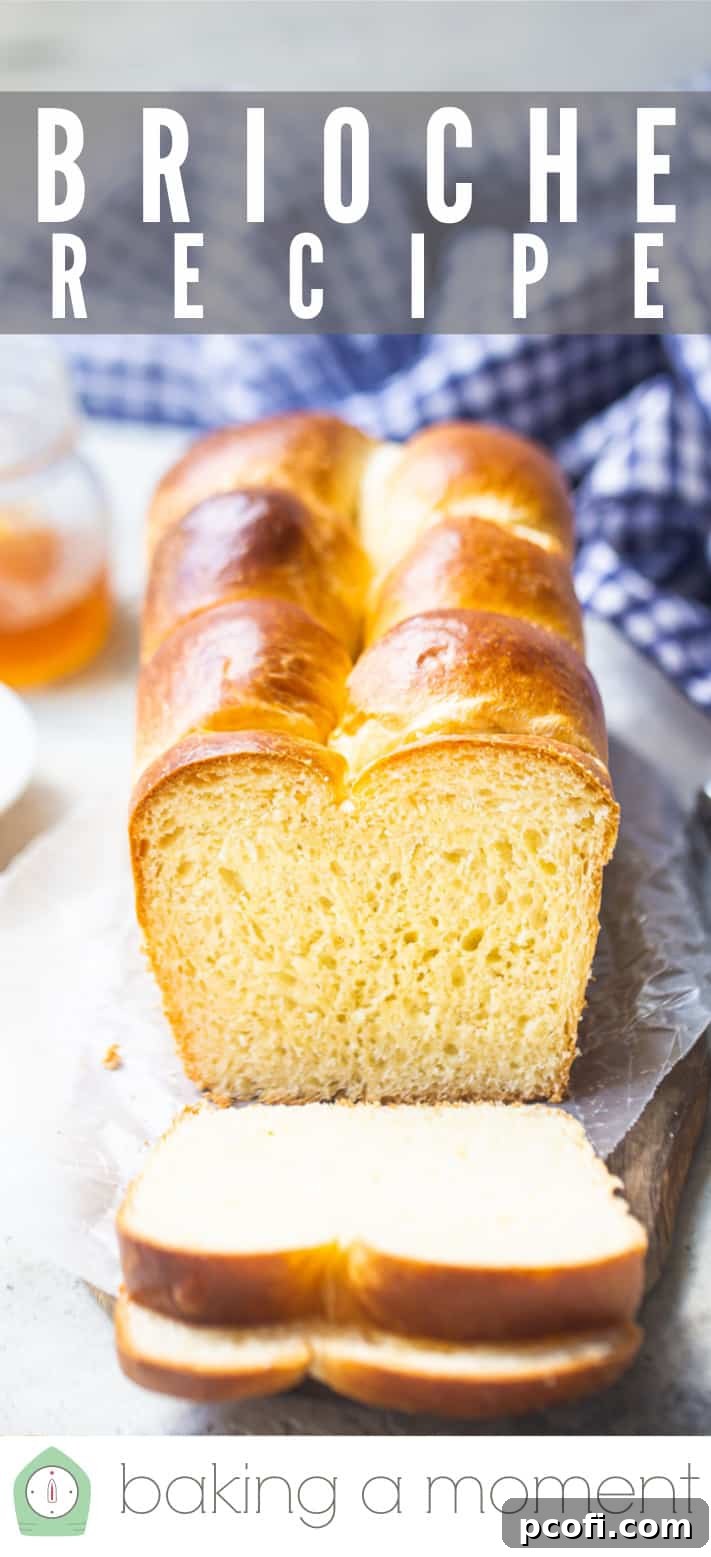
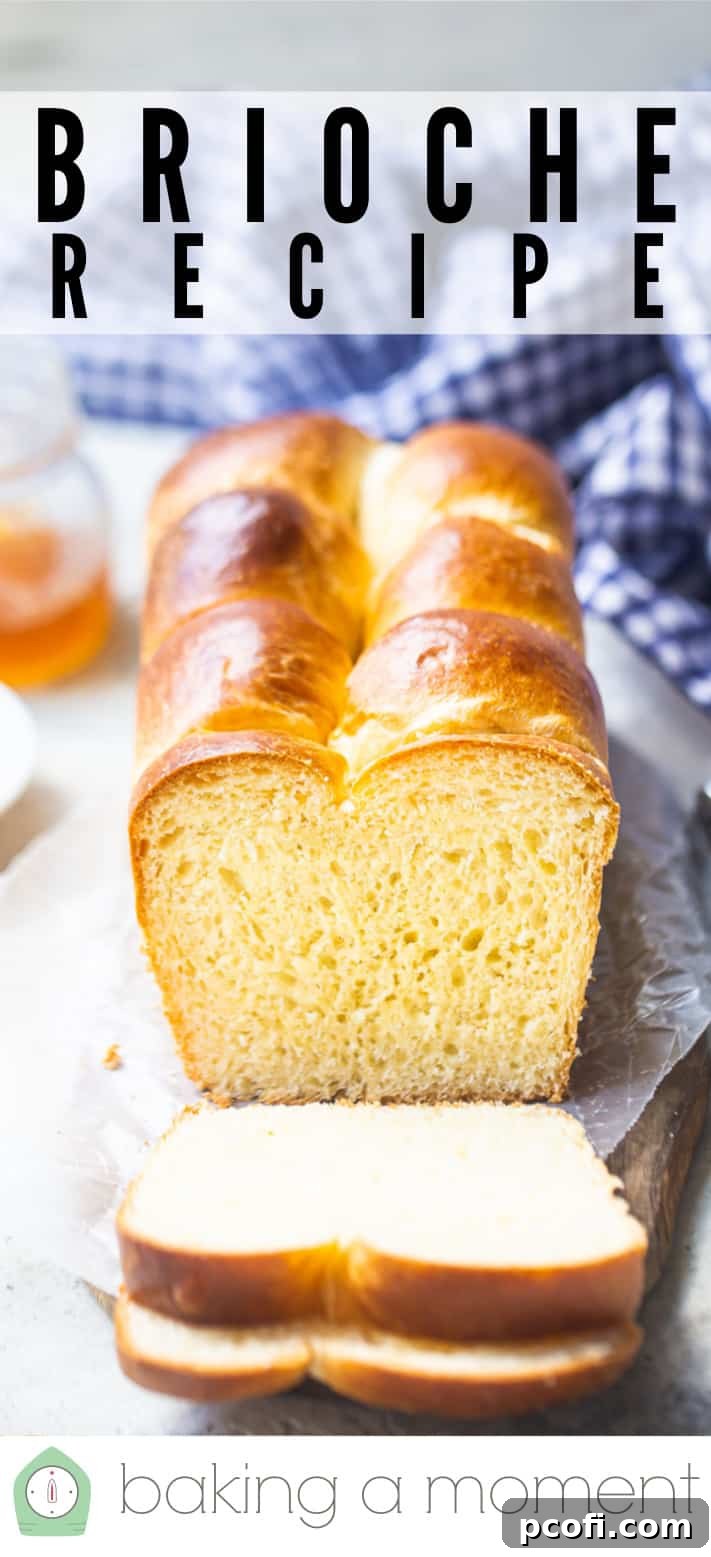
One of the beauties of brioche dough is its incredible versatility in shaping. While traditionally seen in delicate, individual forms like the charming three-leaf clover rolls or the classic “brioche à tête” (snowman-shaped buns), it can also be transformed into elegant loaves. Today, I’ll guide you through making a beautiful brioche loaf with a simplified braided look, known as “nantaise.” This shaping method is not only visually appealing but also ensures an even bake and a delightful pull-apart texture.
Mastering the Art of Brioche Bread: A Step-by-Step Guide
Crafting the perfect brioche loaf requires patience and a specific timeline, primarily due to a slow, overnight rise in the refrigerator. This extended chilling period is crucial for developing the dough’s complex flavors and ensuring its rich, tender texture. Therefore, I highly recommend beginning the dough preparation the evening before you intend to enjoy your brioche. After its overnight rest, the dough will need a second, leisurely rise of 4 to 5 hours at room temperature. Planning ahead ensures that if you start the dough the night before, your freshly baked, golden brioche will be ready by early afternoon the following day.
Let’s break down this rewarding process into five manageable steps:
- Prepare the Dough
- Overnight Chill
- Shape the Loaf
- Second Proofing
- Baking to Golden Perfection
1. Prepare the Dough: Building the Foundation
The first critical step involves combining your dry ingredients. In a large mixing bowl, whisk together all-purpose flour and bread flour. The combination of these two flours is key to achieving brioche’s signature texture. Bread flour, with its slightly higher protein content, is essential for developing strong gluten networks. This gluten is what gives the brioche its incredible elasticity and chew, contributing to that desirable stretchy, yet tender, crumb. While bread flour can sometimes be challenging to locate, it’s becoming more widely available. If you have trouble finding it locally, you can easily order bread flour online.
If, for any reason, bread flour is completely unavailable or you prefer not to purchase it, you can substitute it entirely with all-purpose flour. However, be aware that you might need to extend the kneading time slightly to adequately develop the glutens. A reliable way to check for proper gluten development is the “windowpane test.” To perform this, pinch off a small piece of dough and gently flatten it with your fingertips. Then, carefully stretch the dough from the center outwards. If it can stretch thin enough to become almost translucent, allowing light to pass through without tearing, then your glutens are well-developed, and your dough is ready for the next stage.
After whisking the flours, create a small well in the center of the mixture. Into this well, pour in the water, yeast, sugar, salt, and eggs. These wet ingredients will activate the yeast, sweeten the dough, and provide the richness that defines brioche.
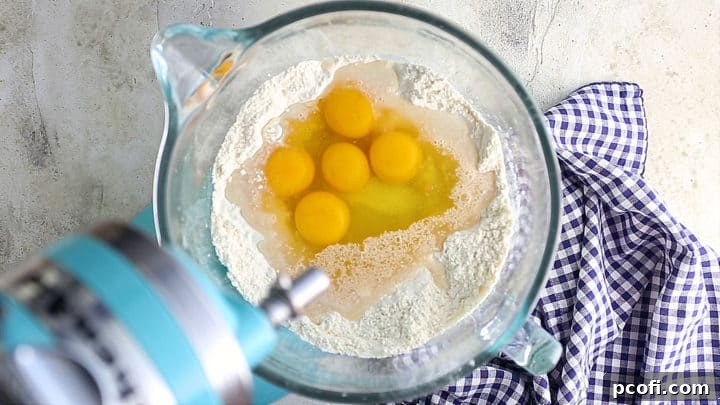
Attach the dough hook to your stand mixer and begin mixing all the ingredients together on low speed. This initial mixing phase typically takes about 7 minutes. Remember to stop halfway through to scrape down the bottom and sides of the bowl with a silicone spatula. This ensures all ingredients are thoroughly incorporated and prevents dry pockets of flour from remaining unmixed.
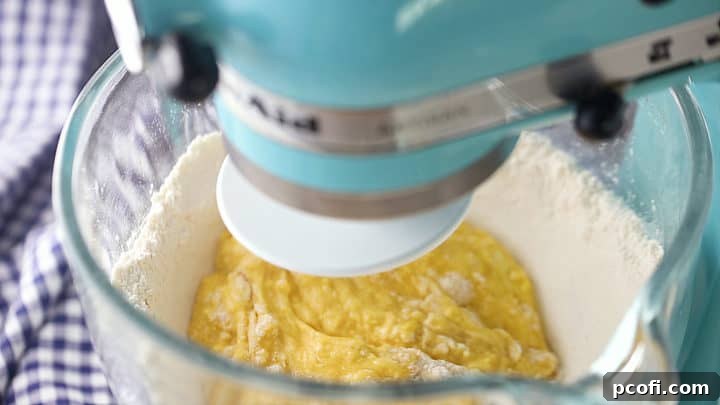
Once you’ve achieved a cohesive, albeit very loose and sticky, dough, it’s time for the star ingredient: butter. This stage requires a bit of finesse. Ensure your butter is softened to room temperature – this is crucial for even incorporation. Drop the softened butter into the mixing bowl, one tablespoon at a time. Allow each addition to become fully incorporated into the dough before adding the next. This gradual process ensures the butter is evenly distributed, leading to a perfectly tender and rich brioche.
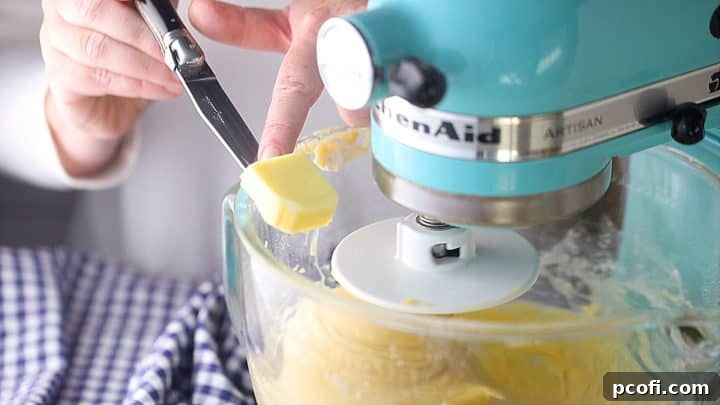
Even after all the butter has been added, the dough will still appear very loose and slack. Don’t be alarmed; this is perfectly normal for an enriched dough. The magic happens during the subsequent, long kneading process. First, knead the dough on low speed for 10 minutes. Then, increase the mixer speed to medium and continue kneading for an additional 15 minutes. This extended kneading time is a workout for your mixer but absolutely essential for developing the robust gluten structure that gives brioche its signature elastic, yet tender, crumb. The result will be a dough with a truly fantastic texture, ready for its overnight transformation.
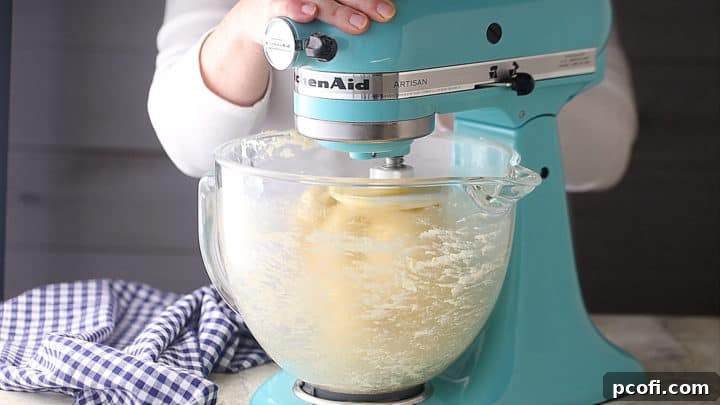
2. Overnight Chill: The Secret to Flavor and Texture
Once your dough has transformed into a smooth, elastic ball, gently remove it from the mixing bowl. Lightly mist the inside of the bowl with a non-stick spray, then return the dough to the bowl. Cover it securely with greased plastic wrap, ensuring an airtight seal. This prevents the dough from drying out. Finally, transfer the covered bowl to the refrigerator to chill overnight. This slow, cold fermentation is a crucial step. It not only deepens the flavor of the brioche but also makes the dough much easier to handle when it comes time for shaping, thanks to the firming of the butter within the dough.
3. Shape the Nantaise Loaf: Crafting Beauty
The next morning, you’ll be delighted to find that your brioche dough has significantly expanded and matured, ready for shaping! Turn the chilled dough out onto a lightly floured surface. This recipe yields two loaves, so begin by dividing the dough into two equal portions. Next, take each half and divide it further into eight equal portions. Precision here helps ensure uniform rolls for your loaf.
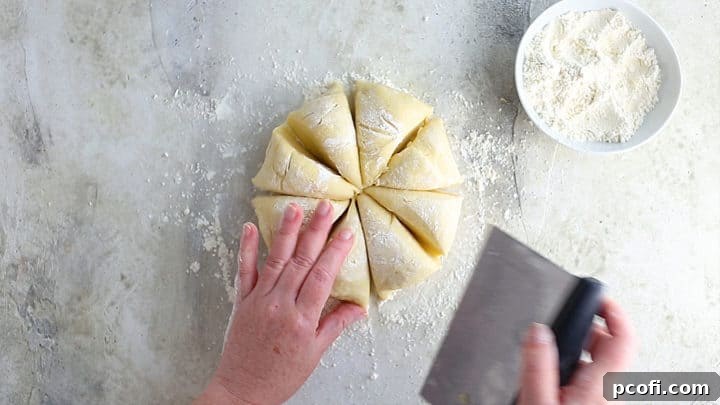
Take each small portion of dough and roll it into a smooth, tight ball. The goal is to create even, round spheres. Once you have all eight balls for one loaf, arrange them in two staggered rows of four within your greased loaf pans. This specific arrangement creates the “nantaise” style, which resembles a simplified braid and results in beautiful pull-apart slices. For a visual guide on how to achieve this elegant shaping, refer to the video embedded in the recipe card below.
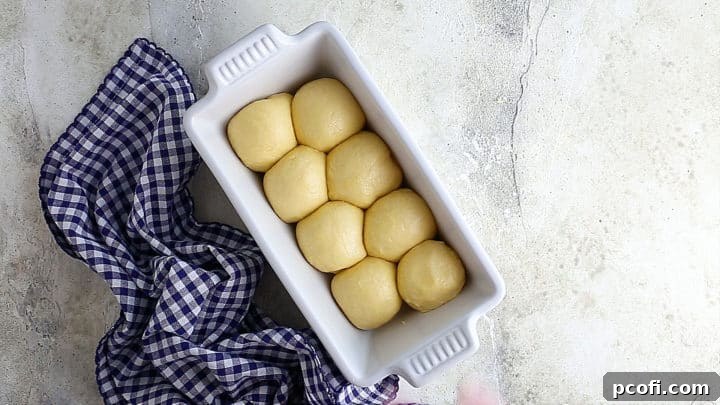
I personally find the Le Creuset Stoneware Heritage Loaf Pan to be excellent for this recipe, offering consistent heat distribution and a beautiful bake. However, any standard loaf pan will work well. If you prefer a simpler approach to shaping, feel free to form the dough into a single log, much like I did with this soft whole wheat bread. The beauty of brioche is that its deliciousness shines through, regardless of its form.
4. Second Proofing: The Crucial Rise
Once your brioche loaf has been lovingly shaped, cover it lightly with greased plastic wrap. This prevents a skin from forming on the dough, which could hinder its rise. Then, place the pans in a warm, draft-free spot and allow the dough to undergo its second rise for 4 to 5 hours. This stage, also known as proofing, is absolutely critical to the final texture of your brioche. It allows the yeast to produce more gas, creating air pockets that contribute to the bread’s light and airy crumb.
Exercise particular care during this second rise, as timing is everything. If you don’t allow sufficient time for the dough to proof, your brioche could emerge from the oven with a dense, gummy texture. Conversely, if the dough proofs for too long (over-proofing), the gluten structure can weaken and collapse, potentially causing the loaf to deflate during baking. The goal is for the unbaked bread to roughly double its original volume. Another excellent indicator that your brioche is perfectly proofed is the “fingertip test.” Gently press your fingertip into an inconspicuous part of the dough, just up to your first knuckle. If the indentation holds its form and springs back very slowly, your dough is ready for the oven. If it springs back quickly, it needs more time; if it collapses, it’s likely over-proofed.
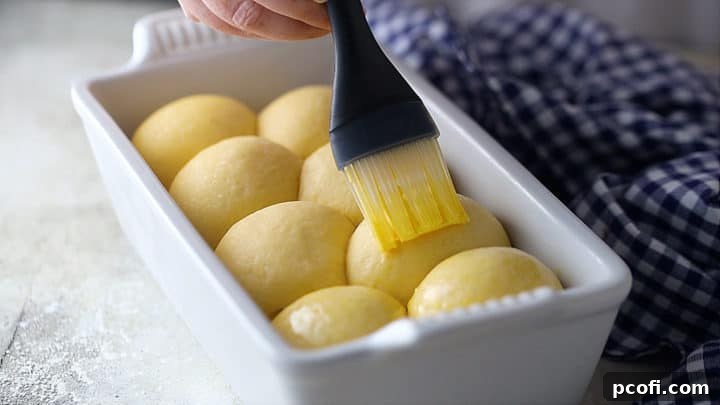
Before baking, brush the surface of the risen loaves with an egg wash. This simple mixture of one egg beaten with about a tablespoon of water gives the brioche a stunning, glossy, golden-brown sheen and contributes to a beautiful crust. It also helps to create that appealing visual contrast that makes brioche so irresistible.
5. Baking to Golden Perfection
Preheat your oven to 350 degrees F (175 degrees C). Bake your brioche bread until it is beautifully puffed, deeply golden brown on top, and fully set in the middle. For ultimate precision, use an instant-read thermometer to check the internal temperature, which should register around 190 degrees F (88 degrees C) for a perfectly baked loaf. This ensures the bread is cooked through without being dry.
Once baked, allow the brioche to cool in its pan for approximately 30 minutes. This crucial resting period allows the bread to firm up and prevents it from collapsing when removed. After 30 minutes, carefully transfer the loaves to a wire rack to cool completely. Cooling on a rack ensures air circulation around the entire loaf, preventing condensation and a soggy bottom. While it’s tempting to dive right in, allowing it to cool fully improves its texture and makes for easier slicing.
Essential Equipment: Do You Need a Stand Mixer for Brioche?
While some dedicated bakers might attempt brioche by hand, I highly recommend using a stand mixer for this recipe. Brioche dough is inherently quite sticky and requires extensive kneading to develop its rich gluten structure. A stand mixer, especially a powerful one like the KitchenAid Artisan Stand Mixer that I use, handles this task with ease, ensuring thorough kneading without the fatigue and frustration of manual labor. Trying to make this dough by hand would be incredibly challenging and time-consuming due to its high butter content and stickiness.
I strongly advise against using an electric hand mixer. These typically lack the power and torque needed for such a heavy dough, and you would likely burn out the motor. A bread machine, however, might be a viable alternative for the dough-making cycle. Although I haven’t personally tested this recipe in a bread machine, its kneading capabilities could potentially handle the enriched brioche dough well. If you decide to use one, ensure it has a “dough” or “basic dough” setting and then proceed with the shaping, proofing, and baking steps as outlined.
Exploring Dietary Variations: Gluten-Free and Dairy-Free Brioche
While the classic brioche recipe relies heavily on gluten and dairy for its signature texture and flavor, it is possible to experiment with alternative ingredients. Please note that I have not personally tested these variations, so I cannot guarantee identical results, but they offer promising avenues for those with dietary restrictions.
For a gluten-free brioche, look for a high-quality gluten-free flour blend specifically designed to substitute 1:1 for regular wheat flour in baking. These blends typically combine various gluten-free flours and starches to mimic the properties of wheat flour. Here are a few reliable options:
- King Arthur Flour Gluten-Free Measure for Measure Flour
- Bob’s Red Mill Gluten-Free All-Purpose Baking Flour
- Cup4Cup Multi-Purpose Gluten-Free Flour
When working with gluten-free flours, you might find the dough less elastic. Adjustments to liquid content or kneading time may be necessary.
If you’re aiming for dairy-free brioche, choose a butter substitute that performs as a 1:1 replacement for regular butter. Many excellent plant-based butter sticks are available on the market today that behave very similarly to dairy butter in baking, maintaining the richness and texture required for brioche.
Creating a truly vegan brioche, which would also omit eggs, is a more challenging endeavor but not impossible. If you’re keen on experimenting, you might try using flax or chia eggs as an egg substitute. For each egg called for in the recipe, mix 1 tablespoon of ground flaxseeds or chia seeds with 2 to 3 tablespoons of water. Allow this mixture to sit for about 15 minutes, or until it thickens and forms a gel-like consistency. While these substitutes can provide some binding, they may not fully replicate the richness and structure that real eggs provide in brioche.
Versatile Uses for Your Homemade Brioche
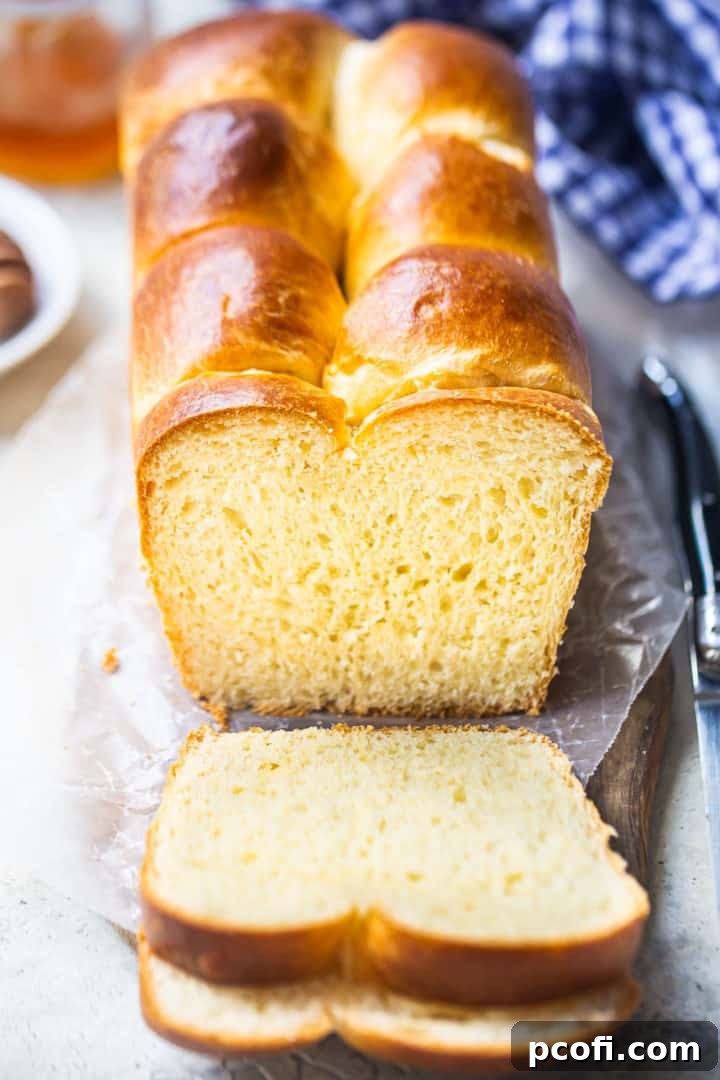
Once you’ve baked this incredible brioche bread, you’ll discover its immense versatility. It’s so inherently delicious and buttery that it truly shines on its own. Simply tearing off a piece and savoring its moist, fluffy texture is a delightful experience. However, if you’re looking to elevate it even further, try spreading it with a generous smear of creamy butter and your favorite fruit preserve, like a vibrant strawberry jam. The combination of sweet and rich is simply divine.
Beyond being a standalone delight, brioche makes an absolutely fantastic sandwich bread. Its slight sweetness and tender crumb perfectly complement both savory and sweet fillings. I particularly love using it to create a gourmet grilled ham and cheese sandwich, enhanced with a hint of piquant Dijon mustard. The way the brioche toasts to a golden crisp while remaining soft inside makes for an unforgettable sandwich experience. It’s also superb for classic egg sandwiches or even delicate tea sandwiches.
Should your brioche bread begin to lose its peak freshness and turn a little stale, don’t despair! Stale brioche is a treasured ingredient for transforming into other delectable dishes. Its rich qualities make it ideal for classic comfort foods. It’s the perfect foundation for a decadent French toast, absorbing the custard mixture beautifully. Or, repurpose it into a luscious bread pudding. Give it a try in this cozy French Toast Casserole or a comforting Bread & Butter Pudding. You’ll find that its buttery essence lends itself wonderfully to these sweet applications.
Storing Your Brioche for Lasting Freshness
Proper storage is key to enjoying your homemade brioche for as long as possible. If you wish to get a head start on baking, you can freeze the unbaked loaves. After shaping the dough and placing it in foil-lined pans, transfer the pans directly to the freezer. Once the dough is frozen solid, you can remove it from the pans and wrap the frozen dough tightly in several layers of plastic wrap and then foil. The unbaked dough will keep beautifully in the freezer for up to two weeks. When you’re ready to bake, simply thaw the frozen dough in its pan, allow it to complete its second rise, and then proceed with the baking instructions as outlined in the recipe.
For baked brioche bread, ensure it is completely cooled before storing. To maintain its softness and freshness, keep it in an airtight container or a zip-top bag at room temperature. It will remain wonderfully fresh for a few days. If you need to extend its shelf life further, store it in the refrigerator for up to a week. For longer storage, slices or a whole loaf can be tightly wrapped and frozen for several weeks; simply thaw at room temperature or gently warm for a fresh-baked feel. This ensures you always have a slice of this buttery delight ready to enjoy!
More Irresistible Bread Recipes to Try
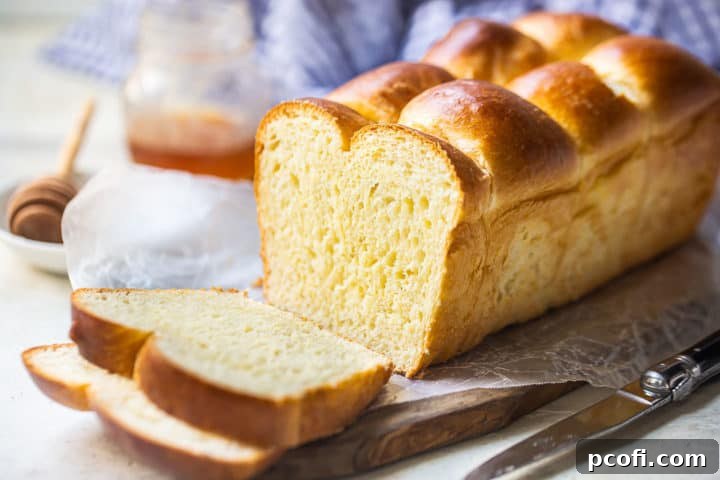
If you’ve enjoyed the process of baking this amazing brioche, you’ll love exploring more of my favorite bread recipes. There’s a whole world of yeasted delights waiting for you!
Discover Your Next Baking Adventure:
- Classic Soft White Bread Recipe
- Simply Perfect Pizza Dough Recipe
- Incredibly Soft Homemade Dinner Rolls
- Authentic Crusty French Baguette Recipe
As an Amazon Associate, I earn from qualifying purchases.

Brioche Bread Recipe
Leave a Review
Save Recipe
Ingredients
- 2 1/4 cups (281.25 g) all-purpose flour
- 2 1/4 cups (281.25 g) bread flour
- 1/2 cup (118.29 g) water
- 3 1/4 teaspoons (16.02 g) dry active yeast, (1 1/2 packets)
- 1/2 cup (100 g) granulated sugar
- 1 tablespoon (14.79 g) kosher salt
- 5 (220 g) eggs, , large
- 22 tablespoons (325.31 g) unsalted butter, (2 3/4 sticks), softened
- egg wash, (1 egg beaten with 1 tablespoon water)
Instructions
-
Place the all-purpose and bread flours in a large mixing bowl and whisk to combine.
-
Add the water, yeast, sugar, salt, and eggs, and mix together on medium-low speed until combined (approx. 7 minutes), stopping to scrape the bottom and sides of the bowl with a silicone spatula.
-
While continuing to mix on low speed, add the butter a tablespoon at a time, allowing each addition to fully incorporate before adding the next.
-
When all the butter has been added, knead the dough on low speed for 10 minutes, then increase the speed to medium and knead for an additional 15 minutes.
-
Allow the dough to chill in a greased, covered bowl overnight in the refrigerator .
-
Divide the dough in half, then divide each half into 8 equal portions.
-
Roll each portion in a tight, smooth ball, and line the dough balls up in 2 staggered rows of 4, in each of 2 greased loaf pans (see video below).
-
Cover the loaf pans with greased plastic wrap, then allow them to rise in a warm place for 4 to 5 hours.
-
Preheat the oven to 350 degrees F and brush the unbaked loaves with egg wash.
-
Bake the loaves until puffed, deeply golden, and set (approx. 30 to 40 minutes).
-
Cool for 30 minutes in the pans, then transfer them to a wire rack to cool completely.