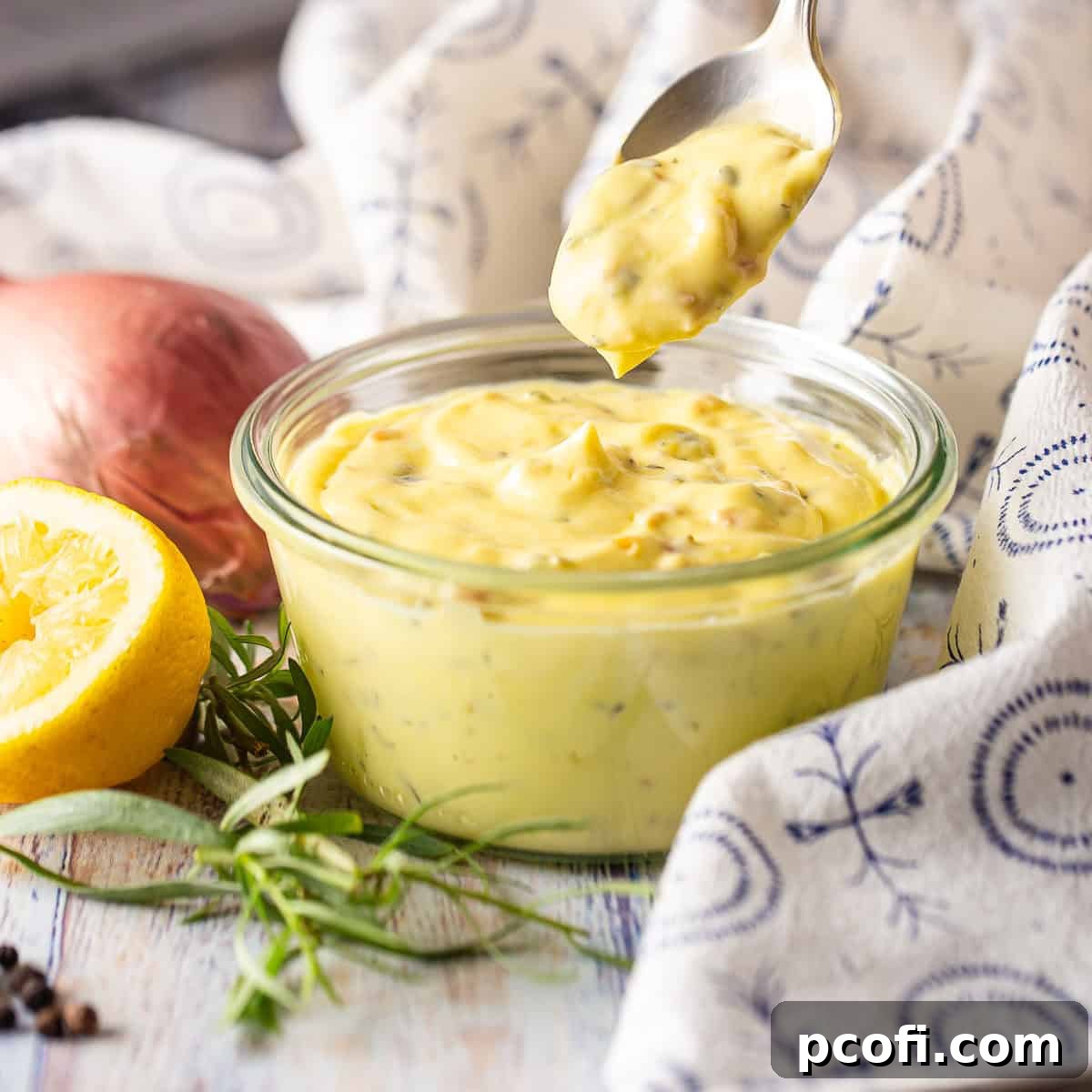
Welcome to the world of classic French cuisine, where simple ingredients transform into extraordinary flavors. Among the pantheon of iconic sauces, Béarnaise Sauce stands out as a true masterpiece. This luxurious condiment, renowned for its creamy texture, vibrant tang, and the distinct aromatic kiss of fresh tarragon, has the power to elevate any dish it graces. From a perfectly seared steak to delicate poached eggs, or even roasted vegetables, Béarnaise adds a touch of gourmet sophistication that is surprisingly achievable in your home kitchen. While its reputation might suggest complexity, mastering this velvety emulsion is simpler than you might imagine, promising an unparalleled flavor reward that will impress both your palate and your guests.
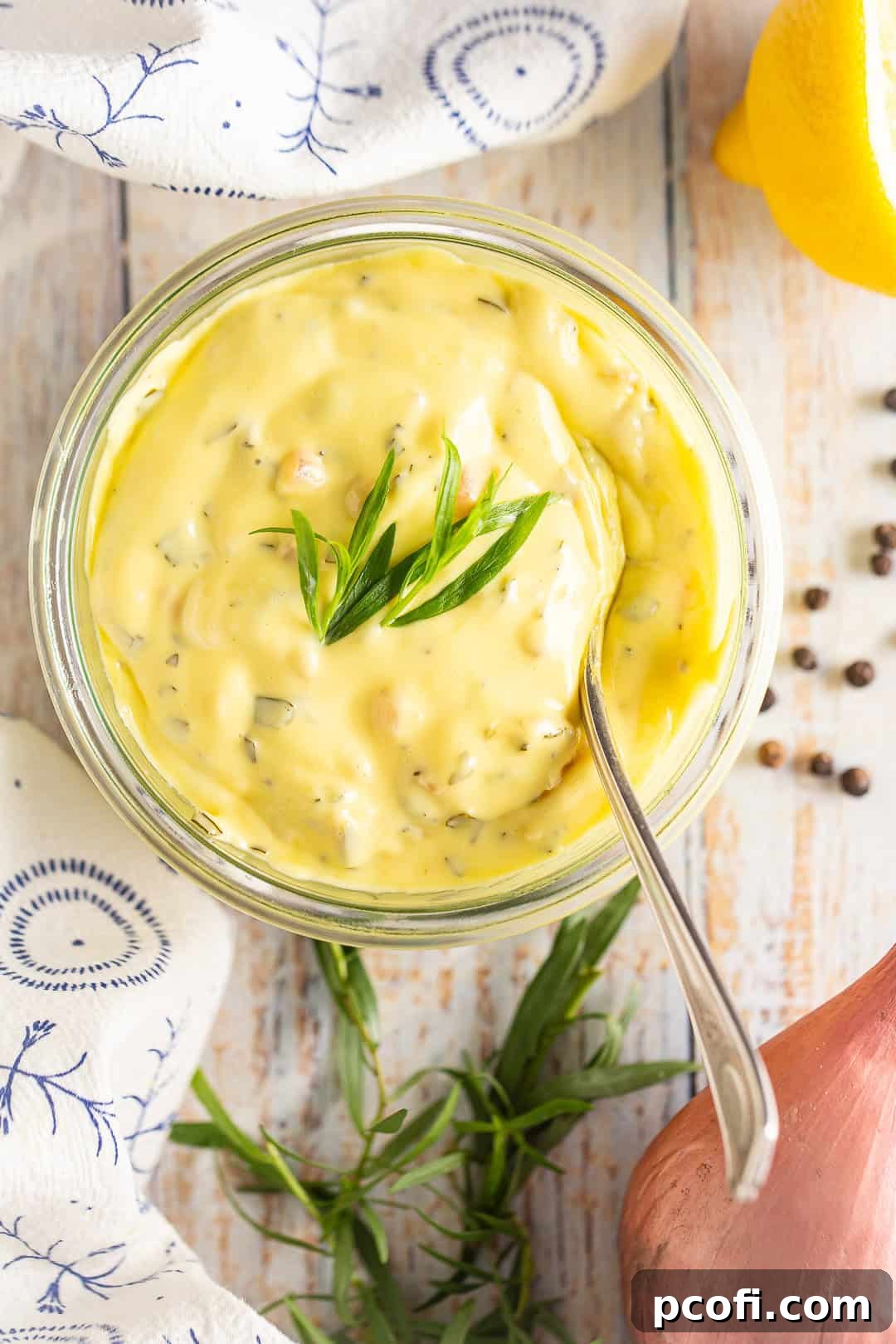
Table of Contents
- The Legacy of Béarnaise: A French Classic
- Why You Will Love This Homemade Béarnaise Sauce
- Understanding the Ingredients for Perfect Béarnaise
- Step-by-Step Guide to Making Béarnaise Sauce
- Expert Tips and Troubleshooting for Béarnaise Perfection
- How to Serve Béarnaise Sauce: Endless Possibilities
- Frequently Asked Questions About Béarnaise Sauce
- More Delicious Breakfast and Brunch Recipes
Jump to Recipe
The Legacy of Béarnaise: A French Classic
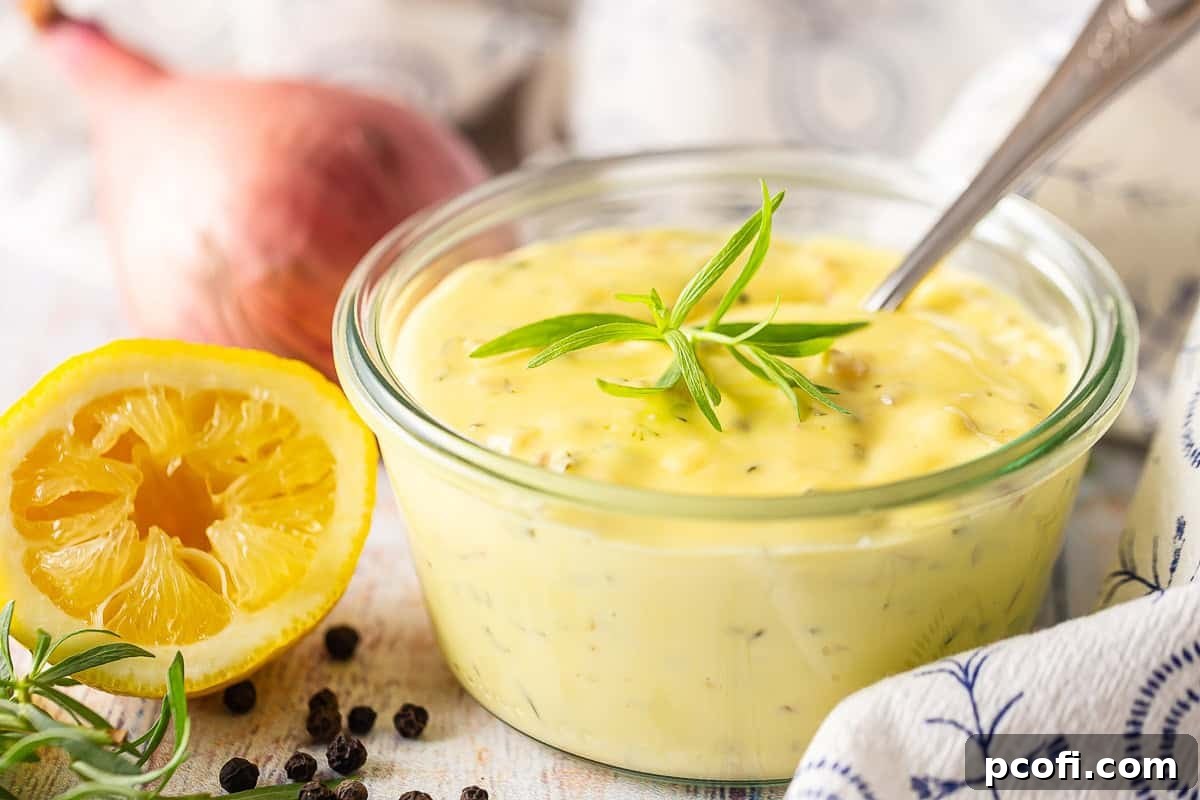
Béarnaise sauce holds a distinguished place in French gastronomy, famously recognized as a derivative of Hollandaise, one of the five foundational “mother sauces” of classical French cuisine. While both are luscious emulsions built on egg yolks and butter, Béarnaise distinguishes itself with a unique flavor profile that sets it apart. It begins with a fragrant reduction of white wine vinegar, minced shallots, and crushed black peppercorns, which forms the tangy backbone of the sauce. The defining element, however, is the infusion of fresh tarragon – an herb whose subtle anise-like notes lend a bright, slightly peppery, and undeniably sophisticated character to the rich, buttery base.
This culinary alchemy results in a velvety-smooth sauce that strikes a harmonious balance between its creamy richness and refreshing acidity. It’s this intricate interplay of flavors and textures that makes Béarnaise not just a condiment, but a transformative element, capable of turning an ordinary meal into an extraordinary dining experience. Its precise origin is debated, but many culinary historians trace it back to the mid-19th century in France, often linked to the Parisian restaurant Le Pavillon Henri IV in Saint-Germain-en-Laye, west of Paris. Regardless of its exact birthplace, Béarnaise quickly captivated palates and cemented its status as a quintessential accompaniment to grilled meats and eggs, a tradition that continues to this day. Learning to make Béarnaise at home is not just about cooking; it’s about embracing a piece of culinary history and bringing restaurant-quality elegance to your table with your own hands.
This exquisite sauce is not only a dream with classics like a Reverse-Seared Steak or a majestic Grilled Tomahawk Ribeye, but also incredible with pan-seared chicken, grilled salmon, or even drizzled over roasted asparagus for a simple yet luxurious side dish.
Why You Will Love This Homemade Béarnaise Sauce
There’s a special kind of satisfaction that comes from creating a classic sauce like Béarnaise from scratch. Beyond the bragging rights, here’s why this homemade Béarnaise recipe is destined to become a staple in your culinary repertoire:
- **Unmatched Flavor Profile:** Experience a rich, velvety sauce with the perfect symphony of creamy, tangy, and distinctly herbal notes from fresh tarragon. It’s a flavor dimension you simply won’t find in store-bought alternatives.
- **Surprisingly Simple to Master:** Despite its gourmet reputation, making Béarnaise at home is remarkably straightforward. Our recipe breaks down the process into easy-to-follow steps, proving you don’t need to be a Michelin-star chef to achieve impressive results.
- **Made with Wholesome Ingredients:** You’re in control of what goes into your sauce. Using fresh, quality ingredients means a cleaner, more vibrant flavor, free from artificial additives or preservatives.
- **Elevates Any Meal:** Transform everyday dishes into extraordinary culinary experiences. A dollop of homemade Béarnaise can turn a simple steak or a plate of scrambled eggs into something truly special, bringing restaurant-quality elegance to your homemade meals.
- **Versatile Culinary Companion:** While famously paired with steak and eggs, Béarnaise is incredibly versatile. It’s delicious on pan-seared chicken, grilled fish, roasted or steamed vegetables, or even as a sophisticated dip for homemade fries or crusty bread.
- **No Fancy Equipment Required:** Forget specialized gadgets. This recipe primarily relies on a small skillet and a blender (or immersion blender), tools commonly found in most kitchens, making it accessible for everyone.
Understanding the Ingredients for Perfect Béarnaise
The magic of Béarnaise lies in the careful selection and precise combination of its few, yet powerful, ingredients. Each component plays a vital role in achieving that signature creamy texture and complex flavor.
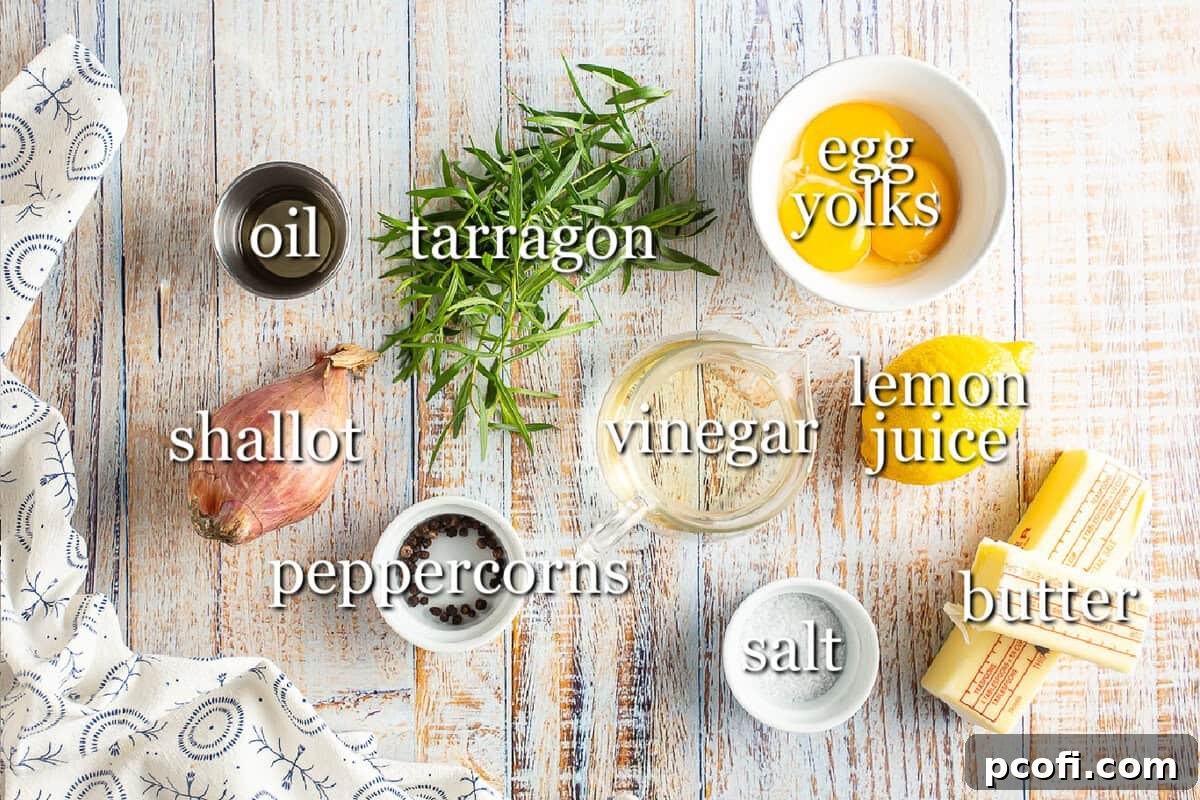
- Neutral Oil: A light, neutral-flavored oil such as canola or vegetable oil is ideal for sautéing the shallots and tarragon. Its mildness ensures that the delicate flavors of the herbs and aromatics shine through without being overshadowed.
- Shallot: Often described as a milder, sweeter cousin to the onion, minced shallots provide a subtle oniony depth and a hint of sweetness to the reduction, complementing the tarragon beautifully.
- Fresh Tarragon Leaves: This is the star of Béarnaise, giving the sauce its signature bright, slightly licorice-like, and peppery flavor. Using fresh tarragon is non-negotiable for an authentic taste; dried tarragon simply won’t yield the same vibrant results. Finely chopping it ensures maximum flavor extraction during the reduction.
- Whole Black Peppercorns: These are simmered in the reduction to infuse it with a gentle, aromatic heat. Whole peppercorns provide a more nuanced pepper flavor compared to ground pepper, which can be too sharp.
- White Wine Vinegar: Essential for acidity, white wine vinegar provides the necessary tang to cut through the richness of the butter and egg yolks. It’s crucial for balancing the flavors and brightening the overall sauce. Good quality vinegar makes a noticeable difference.
- Egg Yolks: The foundation of any emulsion sauce like Béarnaise, egg yolks act as the emulsifying agent. They contain lecithin, a natural emulsifier that helps bind the butter and vinegar mixture into a stable, creamy consistency. Use fresh, large egg yolks for best results.
- Fresh Lemon Juice: A squeeze of fresh lemon juice adds another layer of brightness and tang, enhancing the overall flavor profile and preventing the sauce from tasting too heavy. Always opt for fresh over bottled lemon juice.
- Kosher Salt: A fundamental seasoning that balances and enhances all the other flavors. Seasoning properly is key to bringing out the best in the sauce. Start with the recommended amount and adjust to taste.
- Unsalted Butter: The other main component of this rich sauce. Using unsalted butter allows you to precisely control the final saltiness of your Béarnaise. It must be melted and kept hot for proper emulsification, as the heat helps to cook the egg yolks gently and create a smooth, stable sauce. Clarified butter (ghee) can also be used for an even purer butter flavor and a lower risk of separation, though melted whole butter works perfectly well if handled correctly.
Step-by-Step Guide to Making Béarnaise Sauce
Creating Béarnaise sauce is a two-part process: first, making the flavorful tarragon-shallot reduction, and second, emulsifying that reduction with egg yolks and hot butter. Follow these steps carefully for a perfect outcome.
Step 1: Prepare the Aromatic Reduction
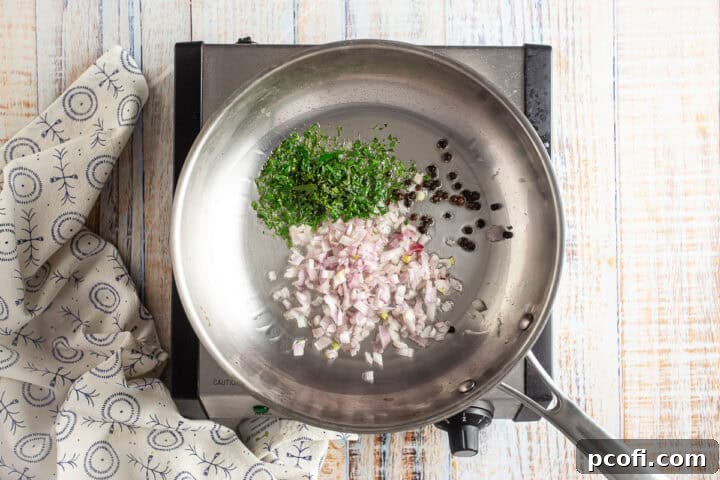
Make the Reduction: Begin by heating two teaspoons of a neutral oil in a small skillet over medium heat. You’ll know it’s ready when the oil starts to shimmer slightly. Add the minced shallot, finely chopped fresh tarragon leaves, and whole black peppercorns to the hot oil. Sauté this fragrant mixture for about 3 to 5 minutes, stirring occasionally, until the shallots become tender and translucent. This process helps to soften the shallots and release the aromatic oils from the tarragon and peppercorns, building a robust flavor base for your sauce.
Step 2: Simmer and Intensify Flavors
Simmer and Reduce: Pour in the 1/4 cup of white wine vinegar and reduce the heat to low. Allow the mixture to simmer gently. The goal is to reduce the liquid by approximately two-thirds, which should take around 10 minutes. This slow simmering concentrates the flavors of the shallots, tarragon, and peppercorns, creating a potent and tangy essence that will be the heart of your Béarnaise. Once reduced, remove the skillet from the heat and set it aside to cool slightly. It’s important for the reduction to be warm, not scorching hot, when you incorporate it later.
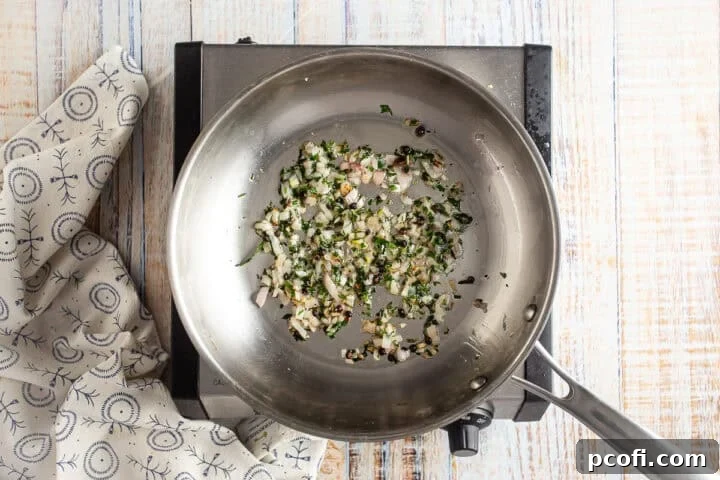
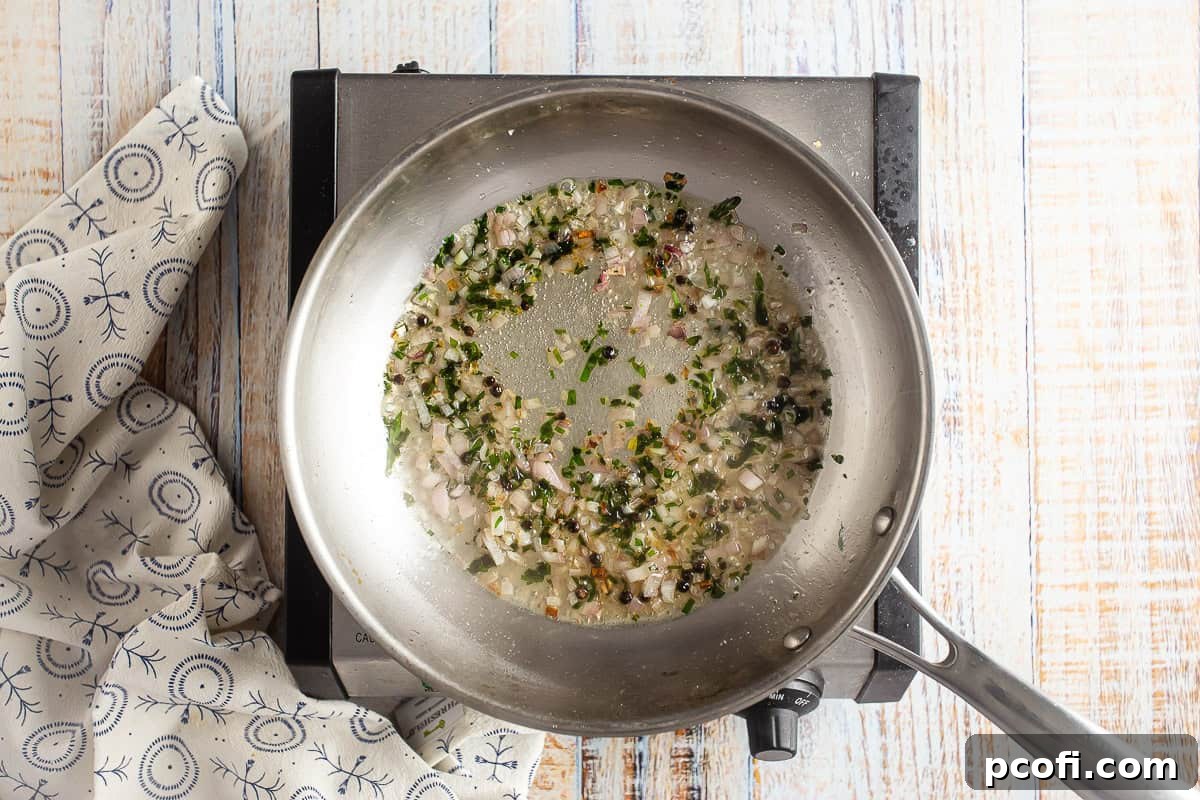
Step 3: Prepare the Emulsion Base
Blend the Base: In a blender (a regular countertop blender or an immersion blender will work wonders), combine the three egg yolks, fresh lemon juice, and kosher salt. Blend on high speed for approximately 30 seconds. You’ll notice the mixture transforming into a pale yellow, lighter, and almost doubled in volume. This aeration is crucial as it helps create a stable emulsion in the next step, allowing the butter to be incorporated smoothly.
Step 4: The Art of Emulsification
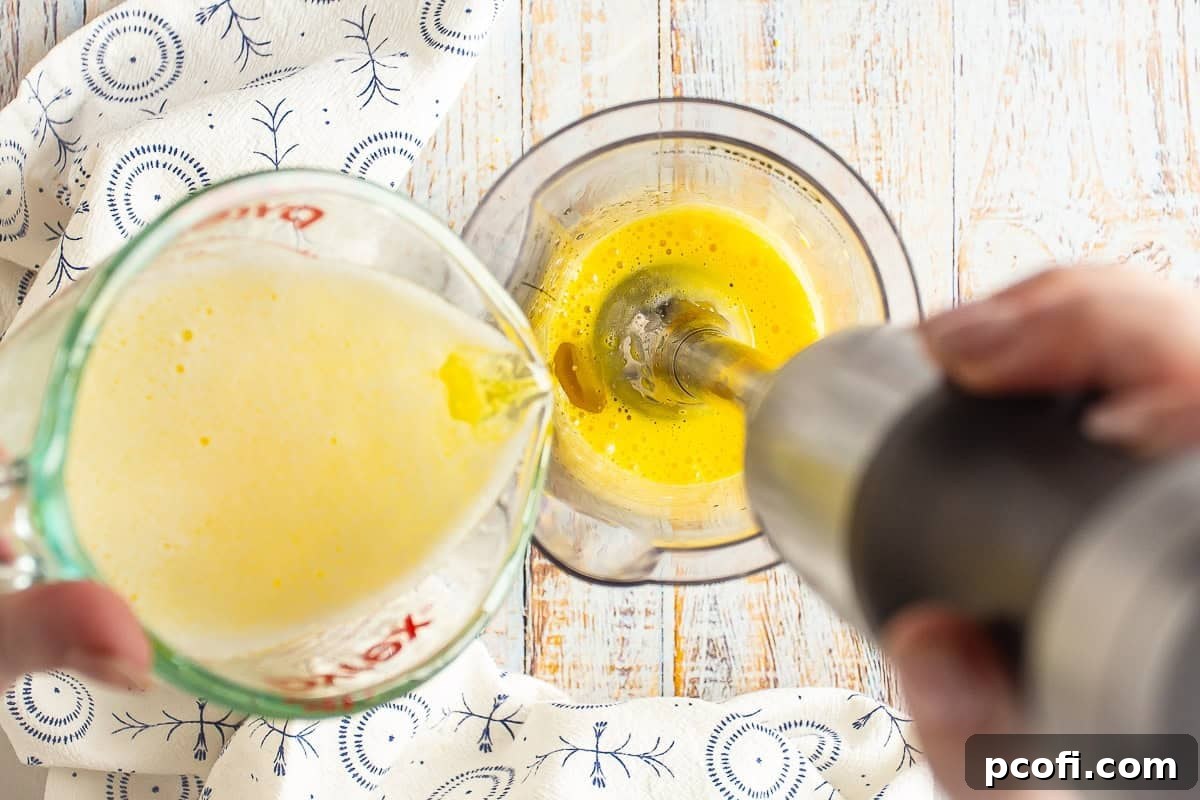
Emulsify: This is the most critical step for a successful Béarnaise. With the blender still running on a medium to high setting, very slowly and steadily drizzle in the hot melted butter. The stream should be thin and continuous, almost like a thread. As you pour, the egg yolk mixture will gradually thicken and transform into a smooth, creamy, and luscious sauce. The key is patience; adding the butter too quickly can cause the emulsion to break, resulting in a separated, oily sauce. Continue blending until all the butter is incorporated and the sauce has reached your desired consistency. The heat from the butter gently cooks the egg yolks, creating a stable and safe-to-eat sauce.
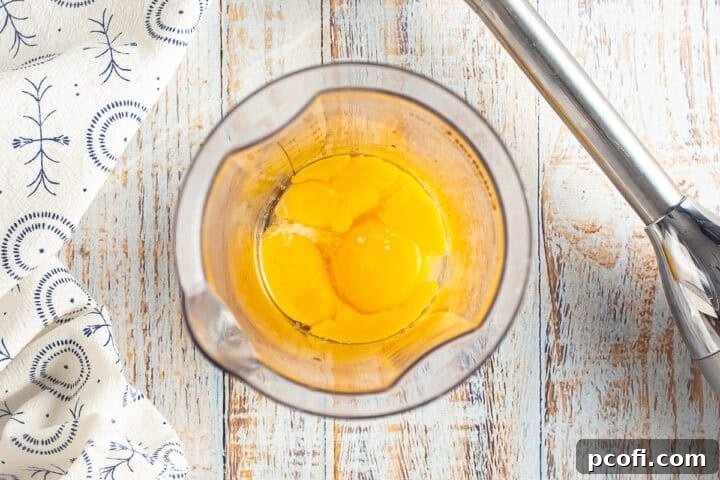
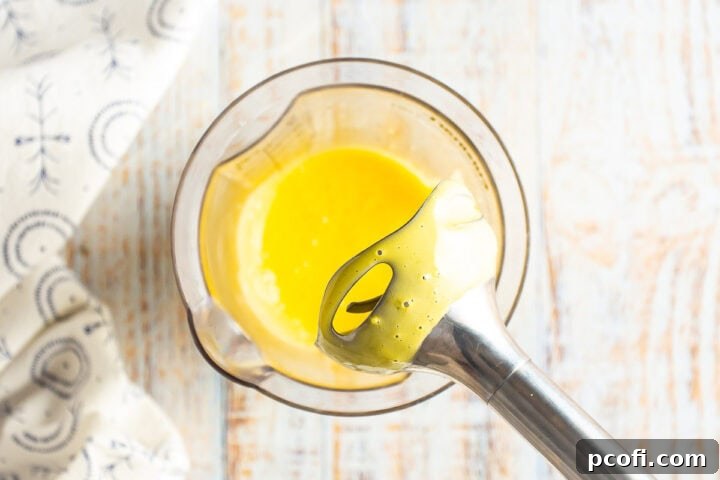
Step 5: Finish and Serve
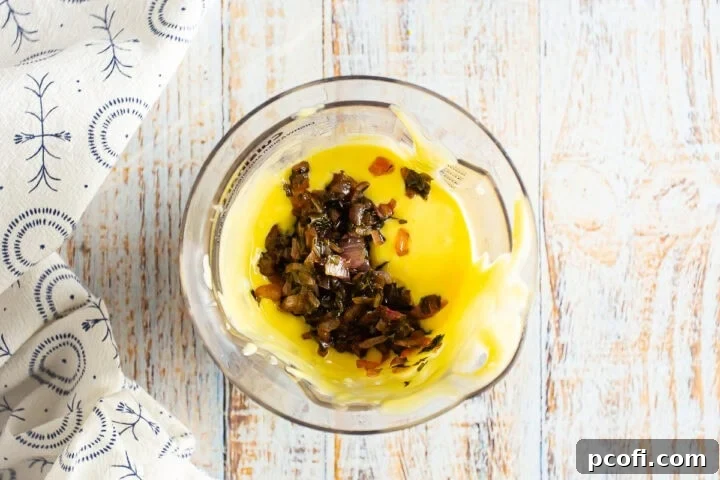
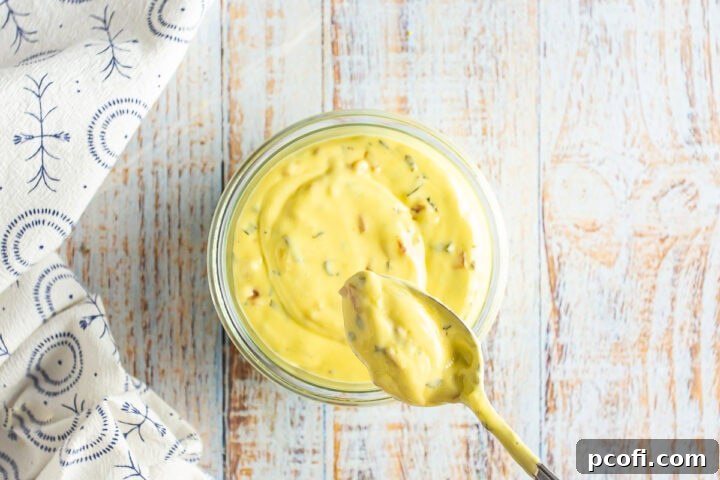
Finish the Sauce: Carefully remove the whole peppercorns from your cooled tarragon-shallot reduction. You can do this by straining the reduction through a fine-mesh sieve or simply picking them out. Then, gently fold the flavorful shallot-tarragon mixture into your freshly emulsified sauce. Stir it in thoroughly to distribute the aromatics evenly. Taste and adjust seasoning with additional salt or a tiny squeeze of lemon juice if needed. Serve your exquisite Béarnaise warm immediately. If holding, keep it in a warm, but not hot, place.
Expert Tips and Troubleshooting for Béarnaise Perfection
Crafting a flawless Béarnaise sauce is a rewarding experience, but like all emulsion sauces, it benefits from a few expert tips and knowing how to troubleshoot common issues. Here’s how to ensure your sauce is perfect every time:
- Temperature is Key: The temperature of your ingredients is paramount. Ensure your melted butter is hot, but not boiling, when you begin the emulsification. Warm egg yolks (brought to room temperature before blending) also emulsify more easily. The contrast in temperatures helps the egg yolks bind with the fat.
- Slow and Steady Wins the Race: When adding the hot melted butter to the egg yolks, pour it in an extremely slow, thin, and steady stream. This gradual incorporation is crucial for forming a stable emulsion. If you add it too quickly, the sauce is likely to break and separate. Imagine a tiny, continuous trickle.
- Keep it Moving: Whether using a blender or whisking by hand, consistent motion is vital during the emulsification process. This continuous agitation helps to break the butter into tiny fat droplets that can then be suspended in the egg yolk mixture.
- Achieving a Silky Finish: If you prefer an ultra-smooth, restaurant-style Béarnaise, consider straining the finished sauce through a fine-mesh sieve. This will remove any small pieces of shallot or tarragon, resulting in a luxuriously silky texture.
- The Right Tools for Success: While a powerful blender or immersion blender is ideal for speed and stability, a Béarnaise can also be made by hand using a whisk over a double boiler. If using a double boiler, ensure the bowl doesn’t touch the simmering water to prevent the egg yolks from scrambling. Whisk vigorously and continuously as you drizzle in the butter.
Troubleshooting a Broken Béarnaise: Don’t Despair!
Even experienced cooks can encounter a “broken” Béarnaise, where the sauce separates into an oily mess and a watery liquid. But fear not, it’s usually salvageable!
- For a Slightly Broken Sauce: If you notice slight separation, try whisking in a teaspoon of very hot water or a few drops of fresh lemon juice into the sauce. Sometimes, a bit more liquid can help re-emulsify the fats.
- For a Completely Separated Sauce: If it’s totally broken, start with a fresh egg yolk in a clean bowl. Gradually and very slowly whisk in a small amount of the broken sauce, a teaspoon at a time, into the fresh egg yolk. Once it starts to come together, you can begin adding the remaining broken sauce more steadily. The fresh egg yolk acts as a new emulsifying agent to rescue the sauce.
Storage and Reheating
Béarnaise sauce is best enjoyed fresh. However, if you have leftovers:
- Storage: Store leftover Béarnaise in an airtight container in the refrigerator for up to 1-2 days.
- Reheating: Gently reheat Béarnaise over a double boiler, whisking constantly until just warm. Do not let it get too hot, or it will curdle. You may need to whisk in a teaspoon of warm water or broth to restore its original consistency. Microwave reheating is generally not recommended as it can easily cause separation.
How to Serve Béarnaise Sauce: Endless Possibilities
Béarnaise sauce is incredibly versatile and can elevate a wide range of dishes beyond its traditional pairings. Its rich, tangy, and herbaceous profile makes it a fantastic accompaniment for many savory meals. Here are some ideas to inspire your culinary creations:
- The Classic Pairings:
- Steak: The ultimate partner for any cut of grilled, pan-seared, or roasted beef. Think Reverse-Seared Steak, Prime Rib, Filet Mignon, or a Grilled Tomahawk Ribeye. The richness of the sauce perfectly complements the savory meat.
- Eggs: A dollop over poached eggs for a Béarnaise Eggs Benedict, or drizzled on scrambled eggs or an omelet, instantly elevates breakfast or brunch.
- Seafood Delights:
- Grilled or Pan-Seared Fish: Salmon, cod, halibut, or sea bass benefit immensely from Béarnaise. The sauce adds moisture and a burst of flavor that pairs beautifully with delicate fish.
- Shellfish: Serve alongside grilled shrimp, scallops, or even steamed lobster for a luxurious touch.
- Poultry Perfection:
- Chicken: Drizzle over roasted, grilled, or pan-seared chicken breasts or thighs. It adds a gourmet flair to simple chicken dishes.
- Duck: A perfect match for roasted duck breast, where its acidity cuts through the duck’s richness.
- Vegetarian & Side Dishes:
- Asparagus: Steamed or roasted asparagus spears are a classic vegetable pairing.
- Potatoes: Spoon over baked potatoes, roasted new potatoes, or even alongside French fries (for a truly decadent experience!).
- Broccoli & Cauliflower: Lightly steamed or roasted florets are transformed by the creamy sauce.
- Artichokes: A wonderful dipping sauce for steamed artichoke leaves.
- Creative Culinary Uses:
- Sandwiches & Burgers: A smear of Béarnaise can turn a gourmet burger or steak sandwich into a culinary revelation.
- Vegetable Tart or Quiche: A drizzle over a savory tart or quiche can add an unexpected layer of flavor.
Remember, Béarnaise is best served warm, as its texture can change if allowed to cool completely. Enjoy the endless possibilities this classic French sauce brings to your table!
Frequently Asked Questions About Béarnaise Sauce
What is the difference between Béarnaise and Hollandaise sauce?
Both Béarnaise and Hollandaise are French mother sauces, butter emulsions made with egg yolks. The key difference lies in their flavorings. Hollandaise uses lemon juice (or sometimes white wine) for acidity. Béarnaise, on the other hand, starts with a reduction of white wine vinegar, shallots, and peppercorns, and critically, incorporates fresh tarragon, giving it a distinct herbal and slightly anise-like flavor.
Can I make Béarnaise sauce ahead of time?
Béarnaise sauce is truly best when served fresh, immediately after preparation, as its delicate emulsion can be prone to breaking. While you can store it in an airtight container in the refrigerator for up to 1-2 days, reheating requires extreme care. Gentle warming over a double boiler, whisking continuously, is the preferred method to try and restore its consistency. Avoid high heat or microwaving, which will almost certainly cause it to separate.
What causes Béarnaise sauce to curdle or break?
A broken or curdled Béarnaise is typically due to one of three reasons: the butter was added too quickly, the egg yolks got too hot and scrambled (if making over a double boiler), or the sauce became too cold. Temperature control and slow, steady emulsification are crucial to prevent this. If your sauce does break, you can often rescue it by whisking it very slowly into a fresh egg yolk or a teaspoon of hot water.
Can I use dried tarragon instead of fresh?
While you technically *can* use dried tarragon, it is highly recommended to use fresh tarragon for Béarnaise. Fresh tarragon provides a vibrant, nuanced, and distinctly aromatic flavor that is essential to the sauce’s character. Dried tarragon has a much more muted and sometimes hay-like flavor that won’t give you the same authentic taste experience.
Is Béarnaise sauce served hot or cold?
Béarnaise sauce is always served warm. The ideal temperature is just slightly above room temperature, allowing it to maintain its creamy, flowing consistency without becoming greasy or separating. It should never be served piping hot, as excessive heat will cause the emulsion to break and the egg yolks to curdle.
More Delicious Breakfast and Brunch Recipes
If you loved creating and enjoying this homemade Béarnaise, you might be inspired to explore other delightful recipes perfect for breakfast, brunch, or any time you crave a comforting meal. Here are some more favorites to add to your culinary repertoire:
- Hearty Breakfast Casserole
- Cinnamon Hazelnut Breakfast Pastries
- Triple Berry Honey Yogurt Breakfast Cheesecakes
- Crispy Chicken and Waffles
- Classic Homemade Waffle Recipe
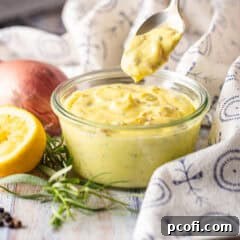
Béarnaise Sauce
Ingredients
- 2 teaspoons oil
- 1/2 shallot, minced
- 1 bunch tarragon leaves, finely chopped
- 1/2 teaspoon whole black peppercorns
- 1/4 cup white wine vinegar
- 3 egg yolks
- 1 lemon juice only
- 1/2 teaspoon kosher salt
- 3/4 cup butter, melted & hot
Instructions
-
Heat the oil in a small skillet over medium heat until shimmering.
-
Add the shallot, tarragon, and peppercorns and saute until the shallot is tender and translucent (approx. 3 to 5 minutes).
-
Stir in the vinegar and turn the heat down to low.
-
Allow the mixture to simmer until reduced by about 2/3rds (approx. 10 minutes).
-
Set the mixture aside and allow it to cool.
-
Place the egg yolks, lemon juice, and salt in a blender and blend together until pale and doubled in volume (approx. 30 seconds).
-
With the blender continuing to run, pour in the hot melted butter in a slow, steady stream, allowing the sauce to thicken.
-
Remove the peppercorns, then fold in the shallot mixture and serve warm.