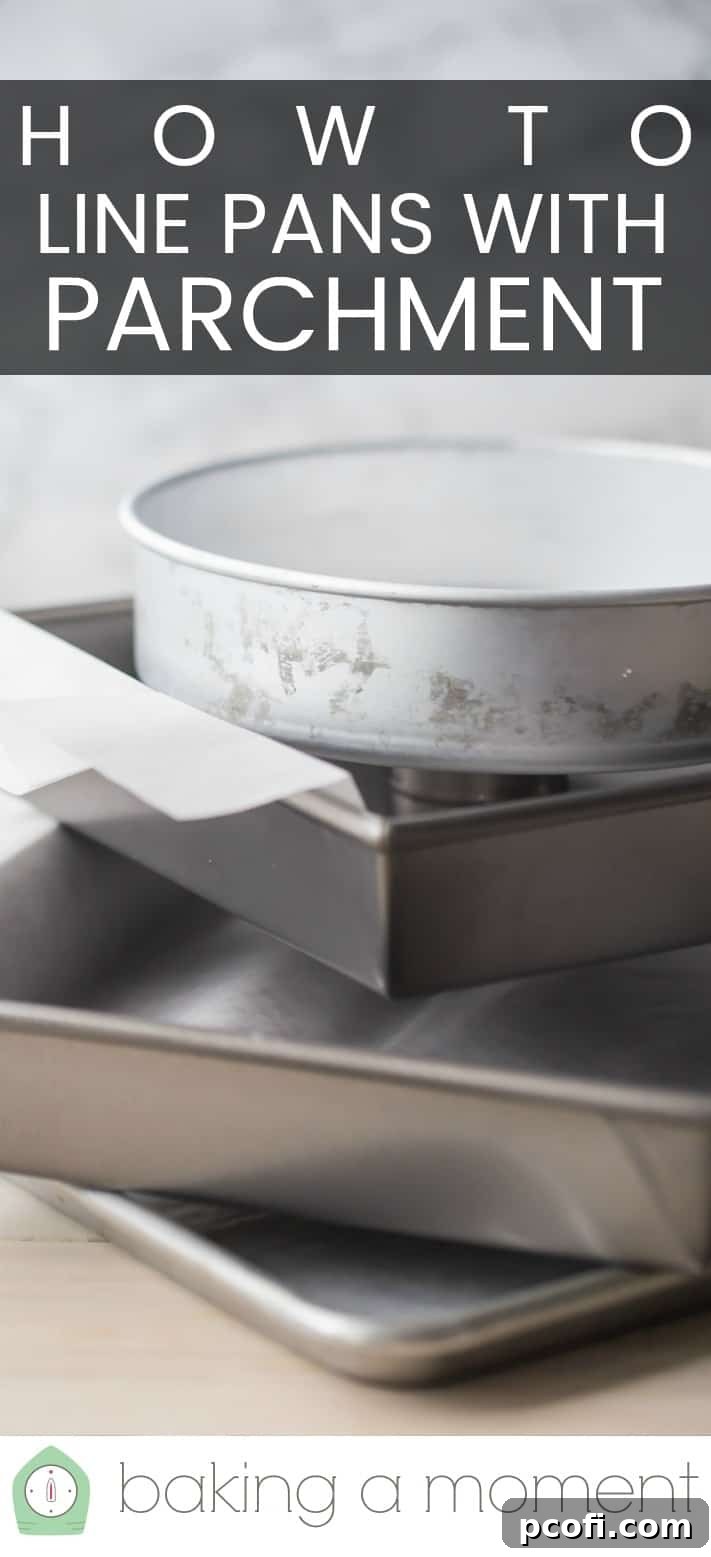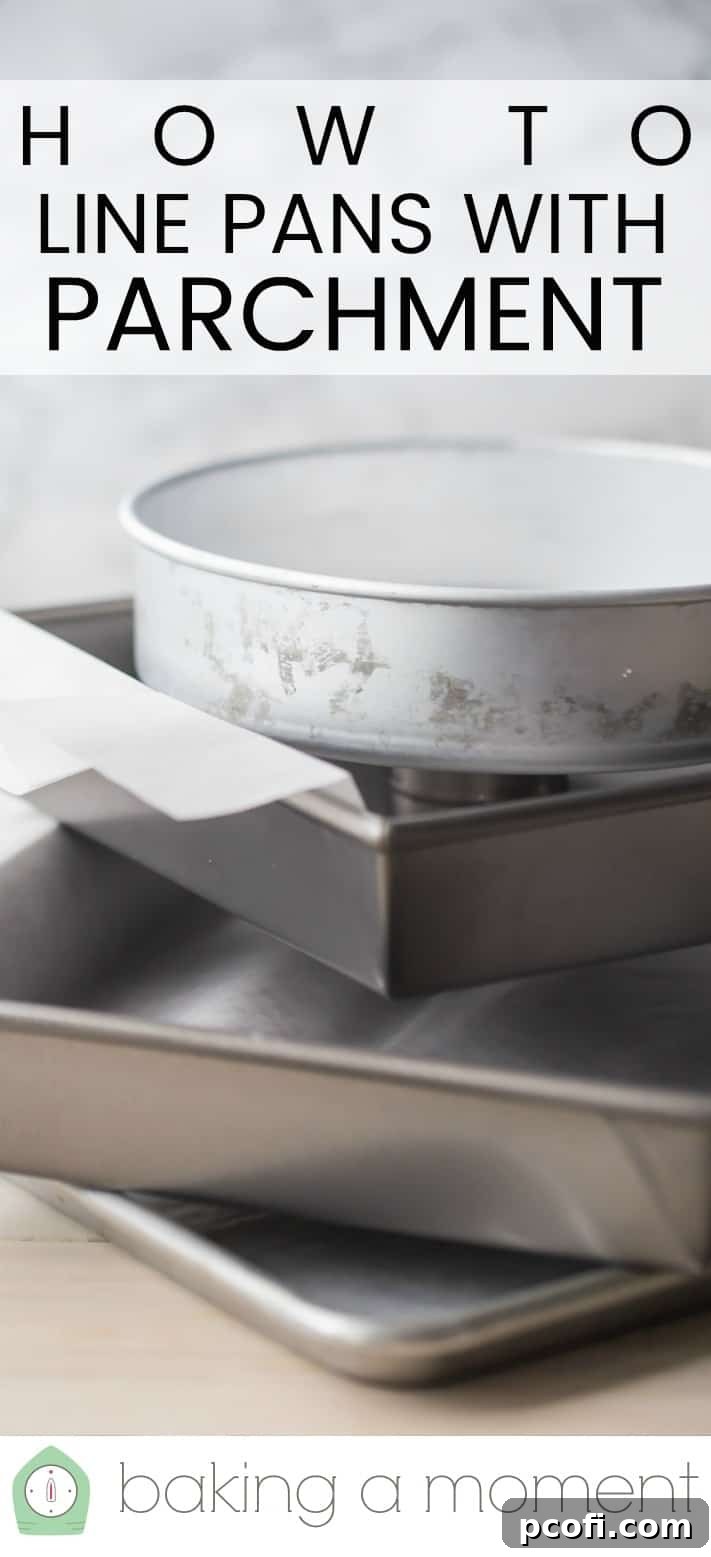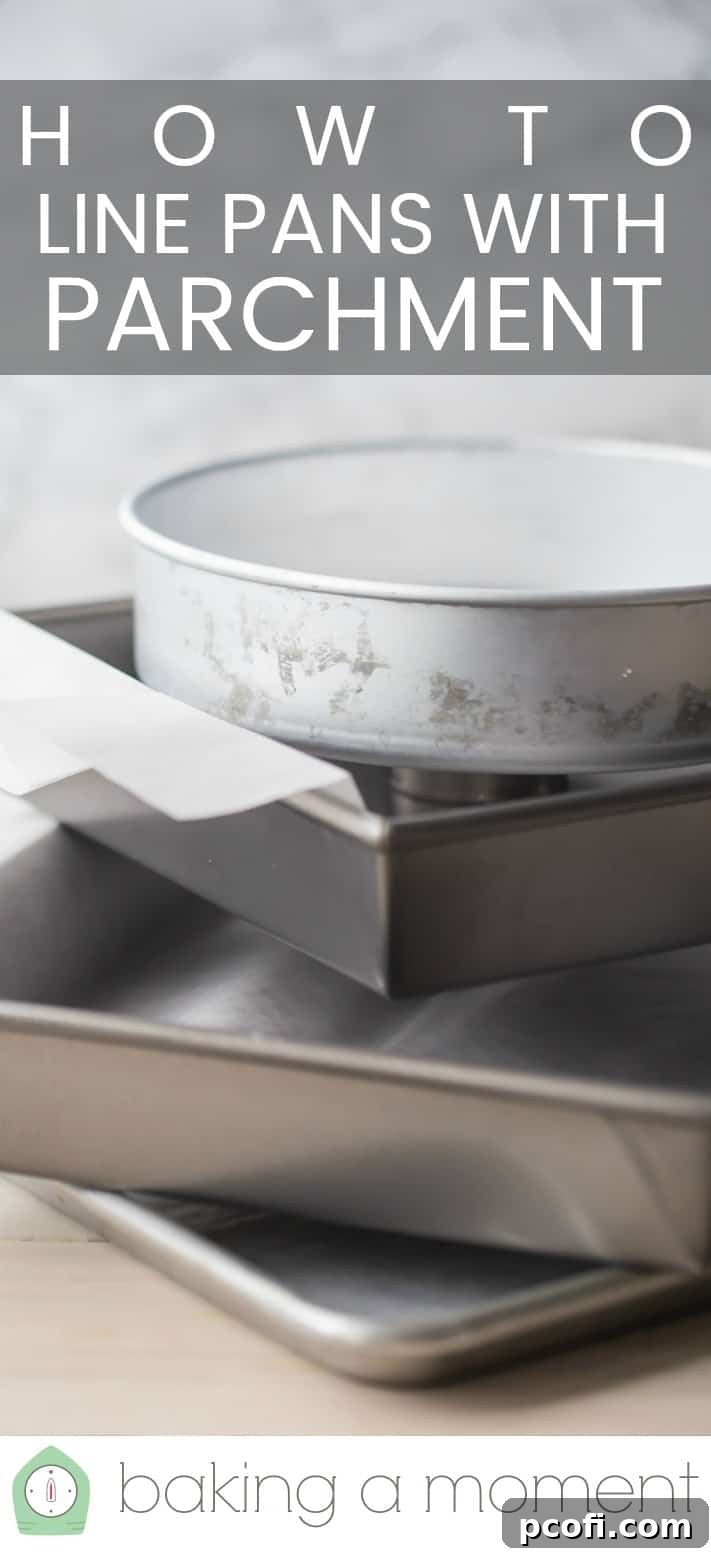
Master the Art of Non-Stick Baking: Your Ultimate Guide to Lining Pans with Parchment Paper
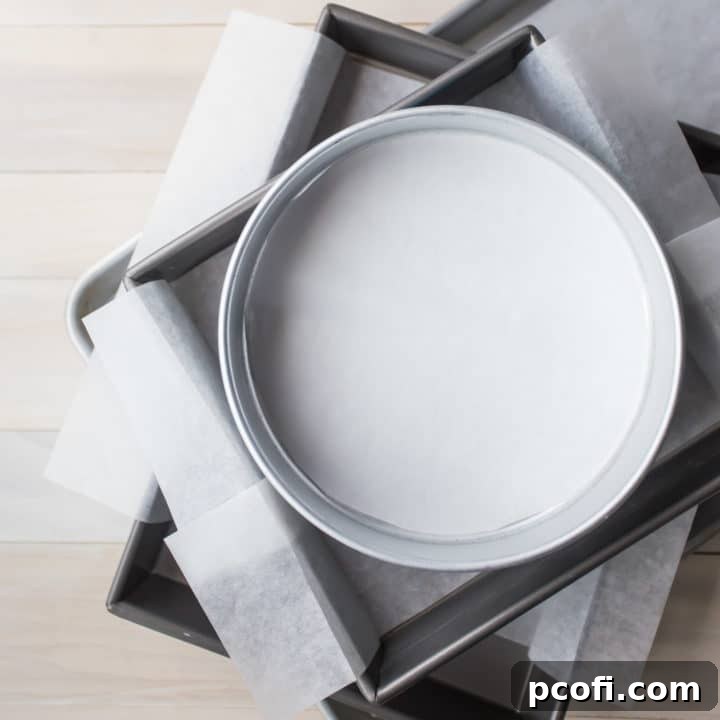
There are few things as frustrating in the kitchen as dedicating time and effort to crafting a beautiful dessert, only to have it stubbornly stick to the pan. The excitement of a perfectly baked cake or a batch of chewy brownies can quickly turn to disappointment when half of it remains glued to the bottom, refusing to budge. This common baking woe has plagued home bakers for generations, leading to broken treats, messy cleanups, and, let’s be honest, a little bit of culinary heartbreak.
Here at [Your Blog Name/My Kitchen], we believe that baking should be a joyous and rewarding experience, free from such common pitfalls. That’s why we’re committed to not only sharing delicious recipes but also equipping you with essential baking knowledge. We’ve previously delved into crucial topics like accurate weight conversions, the importance of measuring ingredients properly, and understanding why certain flours, like cake flour, make all the difference.
Today, we’re tackling one of the most fundamental yet often overlooked aspects of successful baking: how to ensure your baked goods release flawlessly from the pan every single time. The secret? A simple, indispensable tool: parchment paper.
Lining your baking pans with parchment paper is a game-changer. It’s an effortless technique that guarantees a smooth release, simplifies cleanup, and elevates your baking confidence. Say goodbye to sticky situations and hello to perfectly presented treats!
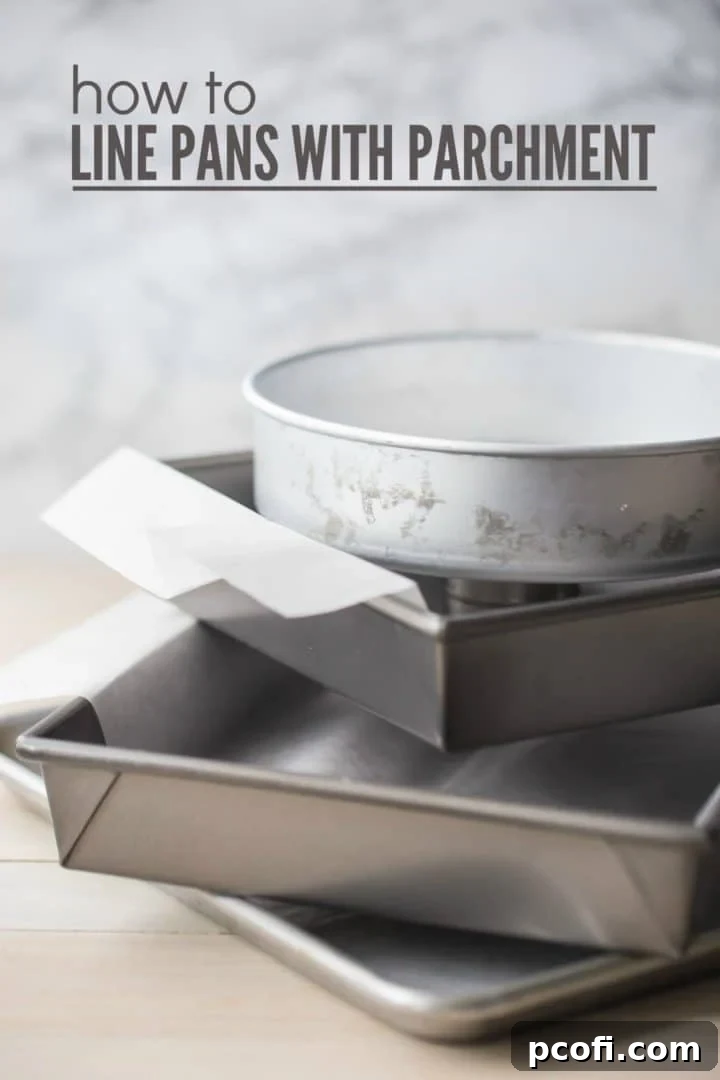
Why Parchment Paper is an Absolute Baking Essential
You might be wondering why something as seemingly simple as parchment paper is hailed as a baking hero. For me, and countless other experienced bakers, it’s an absolute non-negotiable step in almost every recipe. I’d confidently say that about 90% of the baking projects undertaken in my kitchen begin with a roll or stack of parchment paper. Here’s why it’s so vital:
1. The Ultimate Non-Stick Solution
The primary and most compelling reason to use parchment paper is its superior non-stick quality. Unlike simple greasing and flouring, which can sometimes fail, parchment paper provides a consistent, reliable barrier between your delicate batter and the pan surface. This ensures that cakes, cookies, brownies, and loaves lift away cleanly and effortlessly once cooled. When you combine a light mist of non-stick spray on the pan’s sides with a perfectly fitted parchment liner on the bottom, you’re practically guaranteed a flawless release.
2. Effortless Lifting and Transfer
For items baked in rectangular or square pans, such as brownies, bar cookies, or even certain cakes, parchment paper offers an ingenious advantage: a built-in “handle.” By allowing the parchment to overhang the edges of the pan, you create a convenient sling. Once your baked good has cooled sufficiently, you can simply grab these overhangs and lift the entire creation straight out of the pan. This not only prevents breakage but also makes slicing and serving incredibly easy, allowing for perfectly uniform portions without ever struggling to dig them out.
3. Simplified Cleanup and Pan Preservation
Nobody enjoys scrubbing burnt-on bits from baking pans. Parchment paper dramatically minimizes cleanup. For many items, especially those that aren’t excessively wet or oily like cookies or scones, a quick wipe with a damp sponge is all your cookie sheet needs after the parchment is removed. This not only saves you precious time and effort but also helps preserve the longevity and non-stick coating of your baking pans. It acts as a protective layer, shielding your pans from direct contact with sugary residues that can be tough to remove and might otherwise degrade the pan’s surface over time.
4. Promotes Even Baking
While often overlooked, parchment paper can also contribute to more even baking. It creates a slight insulating layer, which can help prevent the bottoms of cakes and cookies from browning too quickly or scorching. This is particularly beneficial for delicate items that require a gentle, consistent heat application for optimal texture and doneness.
5. Versatility Beyond Baking
Beyond its primary role in preventing sticking, parchment paper is incredibly versatile. It can be used to separate layers of cookies for storage, line pans for roasting vegetables, create disposable piping bags, or even as a simple surface for kneading dough or rolling out pastry. It’s truly a multi-functional tool in any busy kitchen.
Understanding Different Types of Parchment Paper
While the concept of parchment paper seems straightforward, there are a few variations to consider:
- Rolls of Parchment Paper: This is the most common form found in grocery stores, typically alongside aluminum foil and plastic wrap. It’s economical and allows you to cut custom sizes, but it can sometimes curl, making it a bit tricky to work with.
- Pre-Cut Parchment Sheets: A true convenience! These sheets are usually sized to fit standard half-sheet pans perfectly and lie flat without curling. While often a bit more expensive per sheet, the time and frustration saved make them well worth the investment, especially for frequent bakers.
- Bleached vs. Unbleached: Bleached parchment is treated with chlorine, giving it a bright white appearance. Unbleached parchment, often brown, is processed without chlorine, appealing to those seeking more environmentally friendly options. Functionally, there’s no significant difference for most baking applications.
- Silicone Coating: The non-stick quality of parchment paper comes from its silicone coating, which is food-safe and heat-resistant. Ensure you’re buying genuine parchment paper and not wax paper, which looks similar but will melt in the oven.
What Kinds of Pans Can You Line with Parchment?
The beauty of parchment paper is its adaptability. Most standard baking pans can benefit from being lined. The only exceptions are typically highly decorative bundt cakes, where the intricate design would be obscured by the paper, and cupcakes or muffins, which are better served by individual paper liners.
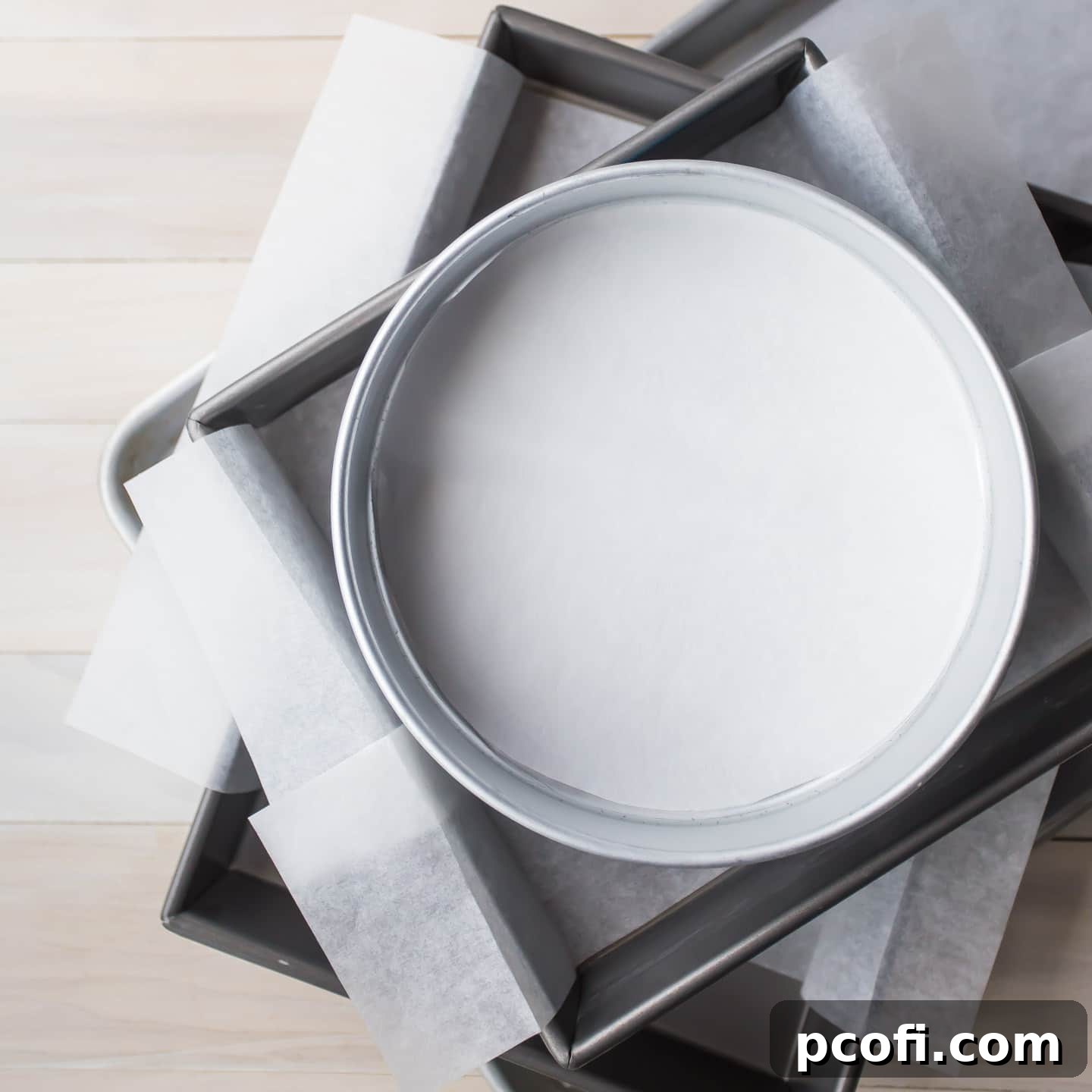
For virtually every other pan in your collection, parchment is your friend:
- Cookie sheets or half sheet pans
- Square baking pans
- Rectangular pans (like 9×13-inch brownie pans)
- Loaf pans
- Round cake pans
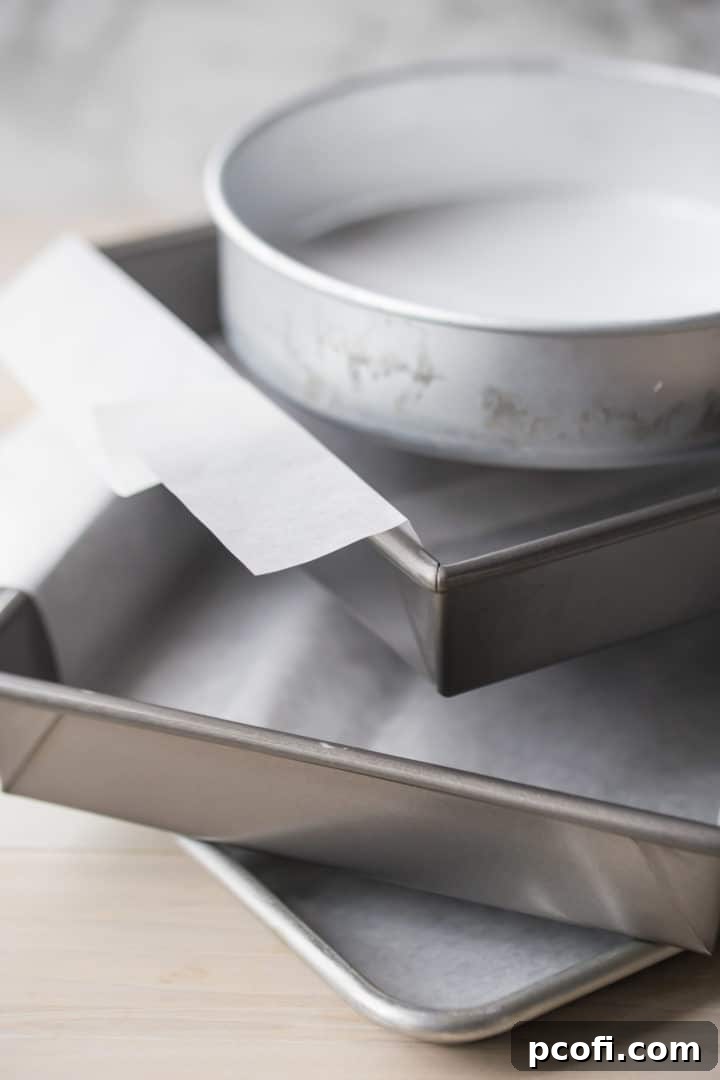
Detailed Guide: How to Line Your Baking Pans with Parchment Paper
The method for lining a pan varies slightly depending on its shape, but each technique is straightforward and quickly mastered.
How to Line Cookie Sheets and Half Sheet Pans with Parchment
This is by far the simplest method. If you’re using pre-cut parchment sheets, they are often designed to fit standard half-sheet pans perfectly. All you need to do is lay the sheet flat on the pan. If using a roll, simply unroll a piece slightly larger than your pan and tear or cut it to size, allowing a small overhang if desired for easier gripping. The natural weight of the cookie dough or other items will keep it in place. This method is fantastic for cookies, scones, roasted vegetables, and anything you want to easily transfer off the sheet without scraping.
How to Line Rectangular Pans with Parchment (for Brownies, Bars, etc.)
Lining rectangular pans creates that invaluable “sling” for easy lifting. Here’s how:
- Tear off a piece of parchment paper that’s long enough to cover the bottom of your pan and extend up over the two longer sides by several inches on each end.
- Carefully press the parchment into the pan, ensuring it lies flat against the bottom.
- Crease the paper sharply where it meets the two longer sides of the pan, pushing it firmly into the corners.
- Allow the excess paper to hang over the edges of the pan. These will be your “handles.”
- The two shorter sides of the pan will not be covered by parchment. This is perfectly fine, especially if you give the entire pan a light coating of non-stick spray before adding the parchment. The combined effect ensures nothing sticks.
This method is a lifesaver for making brownies, blondies, or any bar cookies, allowing you to lift the entire slab out for neat, clean cuts.
How to Line Square and Loaf Pans with Parchment
For square and loaf pans, which have deeper sides, a slightly different approach ensures full coverage:
- Start with a piece of parchment paper significantly longer than your pan.
- Fold the parchment lengthwise, creating a sharp crease.
- Place the folded paper into the pan, aligning the fold with one of the bottom edges. This will create a “zig-zag” shape with two layers covering the bottom and extending up two opposite sides.
- Crease the paper where it meets the bottom and sides of the pan.
- If necessary, you can cut small slits in the corners of the parchment where the side walls meet the ends of the pan. This helps the paper lie flatter.
- Press the paper firmly into place. The two remaining uncovered sides of the pan should be sprayed with non-stick spray.
This method works excellently for quick breads, meatloaf, or square cakes, providing those useful lifting handles.
How to Line Round Pans with Parchment (for Cakes, Cheesecakes)
Lining a round cake pan ensures clean edges and easy removal, crucial for beautiful layer cakes and cheesecakes:
- Lightly grease the bottom of your round pan. This helps the parchment adhere.
- Place the cake pan directly on top of a sheet of parchment paper.
- Using a pen or pencil, trace around the base of the pan.
- Carefully cut out the traced circle.
- Place the parchment circle into the bottom of the greased pan, pressing it flat.
- For extra security, you can also grease the parchment circle itself and flour the sides of the pan if your recipe calls for it.
This simple step guarantees your cakes won’t stick, making inversion or transfer a stress-free process.
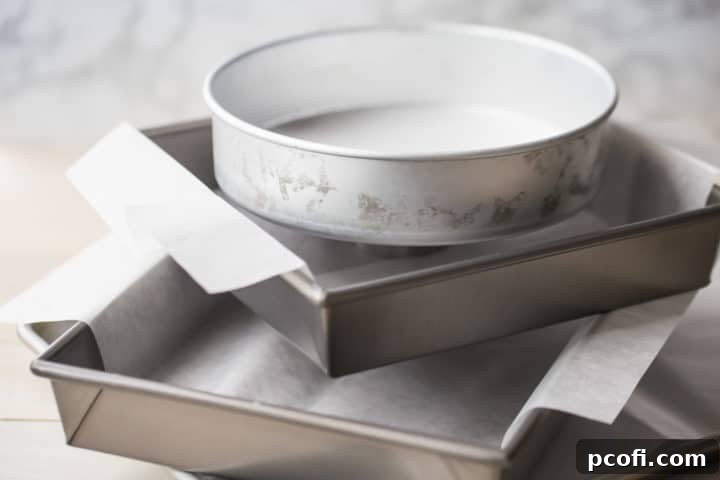
Where to Get Your Essential Parchment Paper Supplies
Finding parchment paper is easy, as it’s a staple in most grocery stores:
- Grocery Stores: Look in the baking aisle, typically near aluminum foil, plastic wrap, and trash bags. You’ll usually find rolls of parchment paper there.
- Online Retailers (like Amazon): For ultimate convenience and often better value, especially if you bake frequently, I highly recommend purchasing pre-cut parchment sheets online. They come in stacks, lay perfectly flat, and save you the hassle of cutting from a roll. They are a game-changer for efficiency in the kitchen.
Here’s a link to the pre-cut parchment paper sheets that I personally use and highly recommend. Having a stack on hand will transform your baking routine, making it genuinely no-muss, no-fuss.
Parchment Paper vs. Other Options: A Quick Comparison
It’s important to distinguish parchment paper from other common kitchen wraps:
- Parchment Paper vs. Wax Paper: While they look similar, they are NOT interchangeable. Parchment paper is silicone-coated and heat-resistant, safe for oven use up to its specified temperature. Wax paper is coated with wax and will melt and smoke in the oven, potentially ruining your food and creating a mess. Use wax paper for cold applications only, like separating layers of cookies in a storage container.
- Parchment Paper vs. Aluminum Foil: Aluminum foil is great for covering dishes to prevent over-browning or for heavy-duty roasting, but it does not have the same non-stick properties as parchment paper. Food can still stick to foil, and it doesn’t offer the same effortless release.
- Parchment Paper vs. Silicone Baking Mats (e.g., Silpat): Silicone baking mats are excellent reusable alternatives to parchment paper, especially for cookies and macarons. They offer superb non-stick properties and are very durable. However, they can be more expensive upfront, require washing, and don’t provide the “lift” or shaping capabilities of parchment for certain pan linings.
Troubleshooting Common Parchment Paper Questions
- Can I reuse parchment paper? For certain applications, yes! If it’s only lightly soiled from a batch of cookies, you can often reuse the same sheet for a second or even third batch. However, for heavily soiled or wet applications, it’s best to use a fresh piece.
- What is the maximum temperature for parchment paper? Most parchment papers are rated for temperatures up to 425°F (220°C). Always check the manufacturer’s recommendations on the packaging to ensure safe use at high temperatures.
- My parchment paper curls up! How do I keep it flat? This is common with rolls. A trick is to gently crumple the piece of parchment paper into a ball, then flatten it out. This breaks down the paper’s memory and makes it lie flatter. Alternatively, a tiny dab of butter or cooking spray in the corners of the pan before placing the parchment can help it stick down.
Embracing parchment paper in your baking routine is a small change that yields immense rewards. It ensures perfect results, makes cleanup a breeze, and allows you to focus on the joy of creating delicious treats without the dread of sticking. So, stock up on this invaluable kitchen tool, and get ready for a lifetime of successful, stress-free baking!
As an amazon associate I earn from qualifying purchases.