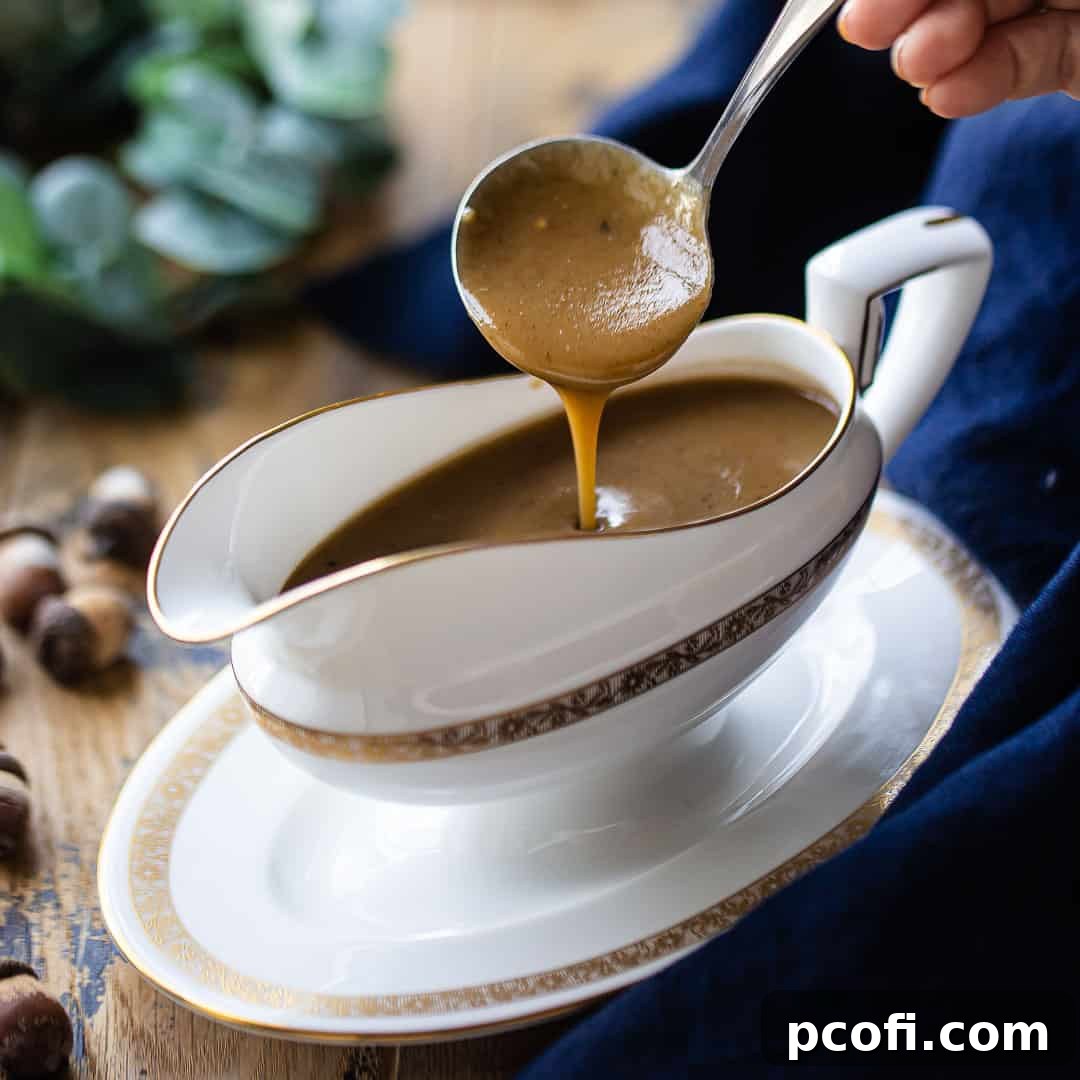
How to Make Gravy: The Ultimate Easy Recipe for Perfect, Flavorful Gravy Every Time
Your Guide to Rich, Lump-Free Homemade Gravy, with Pan Drippings or from Scratch
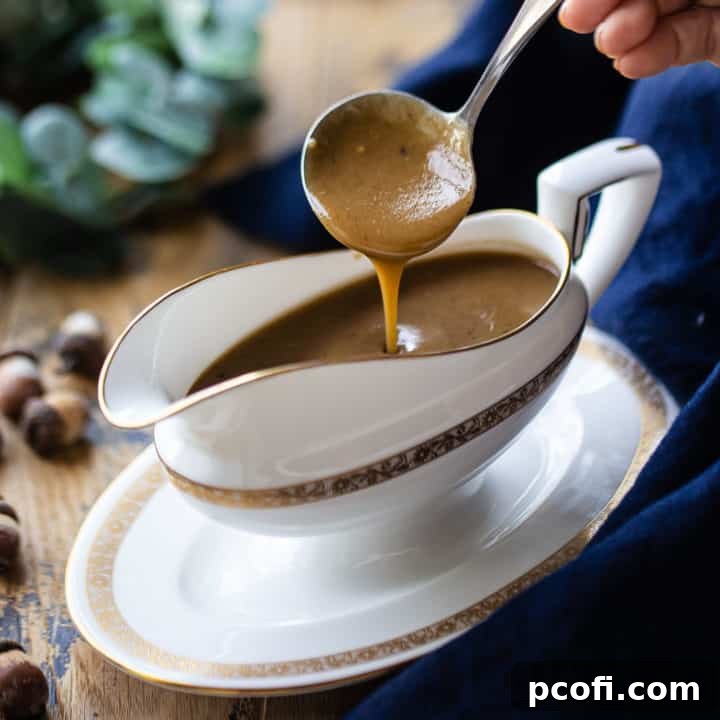
After sharing our incredibly popular make-ahead mashed potatoes recipe last week, it’s only natural that our next culinary adventure dives into the essential companion: the perfect homemade gravy. Because, let’s be honest, what could possibly complement a mountain of creamy mashed potatoes better than a generous pour of rich, savory gravy? Especially with the festive holiday season, like Thanksgiving, just around the corner, mastering this fundamental sauce is a true game-changer for any home cook.
Many of us have a complicated history with gravy. We’ve all been there: desperately trying to achieve that ideal balance of seasonings, aiming for a consistency that’s neither too thick nor too thin, and frantically whisking away lumps. It often feels like a high-wire act, particularly on busy holidays when the main roast is resting, and countless side dishes demand your attention. The pressure to deliver a flawless gravy can be a significant source of kitchen stress.
That’s precisely why I dedicated considerable time to perfecting this easy gravy recipe. My goal was to create a truly foolproof method that consistently delivers exceptional results, eliminating the guesswork and the stress. This recipe is designed to be a reliable staple, ensuring that you can confidently create a delicious, smooth, and lump-free homemade gravy every single time, whether it’s for a grand holiday feast or a simple Sunday dinner.
You’ll quickly fall in love with this gravy because of its simplicity and adaptability. It works beautifully with virtually any roasted meat, transforming ordinary pan drippings into a luxurious sauce. Its rich, meaty flavor, enhanced by a harmonious blend of carefully chosen herbs and seasonings, is simply divine. Plus, it offers ultimate flexibility: you can prepare it ahead of time, or whip it up while your roast rests, utilizing those precious pan drippings for maximum flavor. Say goodbye to gravy struggles and hello to consistently perfect homemade gravy!
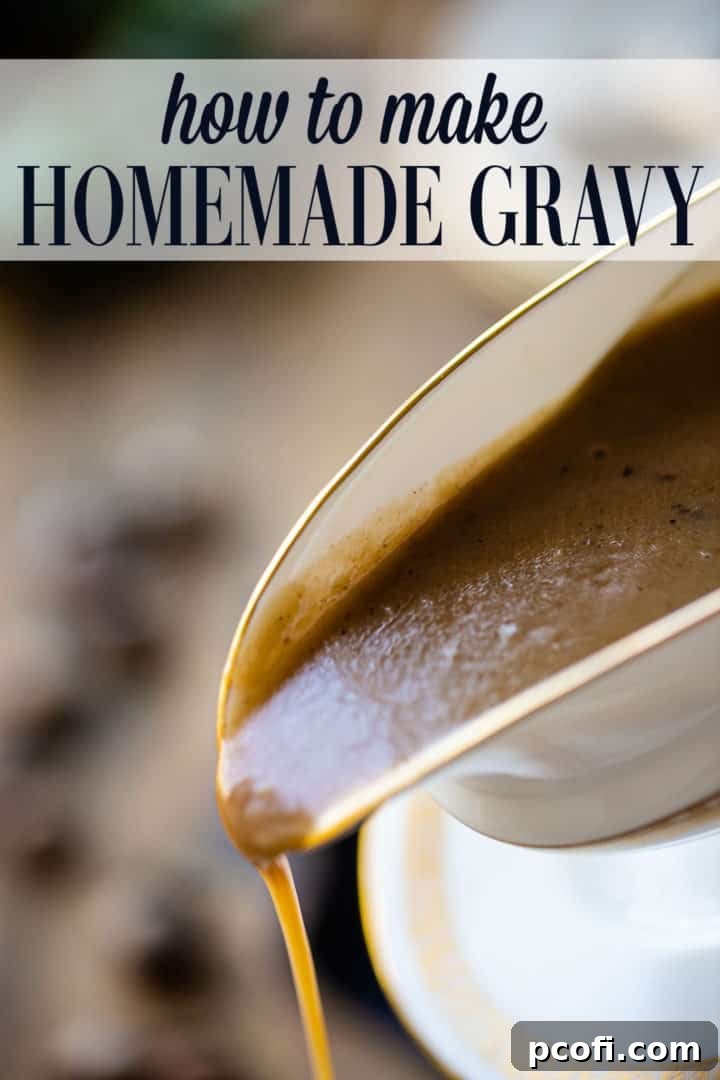
Mastering Homemade Gravy: Step-by-Step Guide
The foundation of an outstanding gravy begins with flavorful pan drippings. These are the golden liquid and browned bits left in your roasting pan after cooking meat, packed with concentrated flavor. There are a few excellent ways to gather these essential components, even if you don’t have a whole roast at hand.
For the classic approach, as you might see in a video demonstration, roasting a bird (like a turkey or chicken) provides ample drippings. However, if you’re planning to make gravy ahead of time or don’t have a roast, a clever trick is to simply sauté the giblets (from poultry) until they are nicely browned. This generates delicious flavorful bits (called “fond”) and rendered fat, which are crucial for the gravy’s depth.
The key takeaway here is to ensure you have a pan with some browned, flavorful residues at the bottom, along with a little rendered fat. These elements will form the rich base of your homemade gravy.
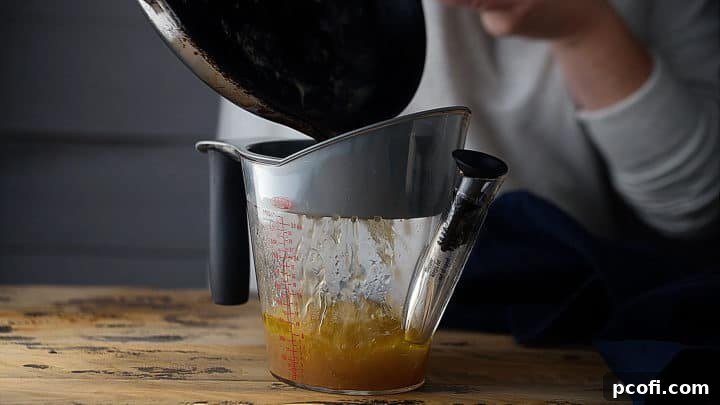
If you’re starting with a freshly roasted meat, carefully remove it from the pan and place it on a cutting board to rest. This resting period allows the juices to redistribute, resulting in a more tender and flavorful roast. While your meat rests, pour the precious pan drippings into a fat separator. This handy tool allows the fat to rise to the top, making it easy to pour off the flavorful meat juices from the bottom, separating the good stuff from excess grease.
Next, place your roasting pan back on the stove over medium-high heat. Add a tablespoon of the separated fat from the drippings, along with a tablespoon of butter. The butter not only adds richness but will also brown beautifully, contributing an even deeper, nuttier flavor to your gravy. Allow it to melt and bubble, watching for it to turn a light golden brown.
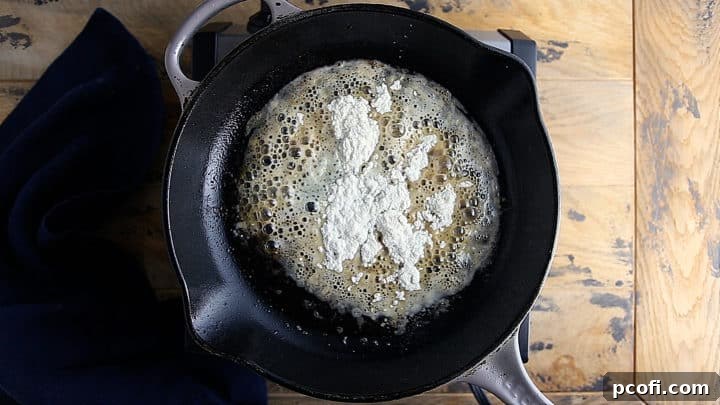
Once the butter has melted and browned, sprinkle in the all-purpose flour. This step is crucial for creating what’s known as a “roux.” A roux is a mixture of fat and flour cooked together, which serves as the primary thickening agent for your gravy. Whisk the flour into the fat constantly, ensuring it’s evenly distributed and starts to cook.
Continue cooking the roux, stirring frequently, until it achieves a beautiful, deep nut-brown color. This browning process is vital, as it toasts the flour, developing a richer, more complex flavor and contributing to the overall color of your homemade gravy. Remember, brown equals flavor, and a well-browned roux is a hallmark of an exceptional gravy.
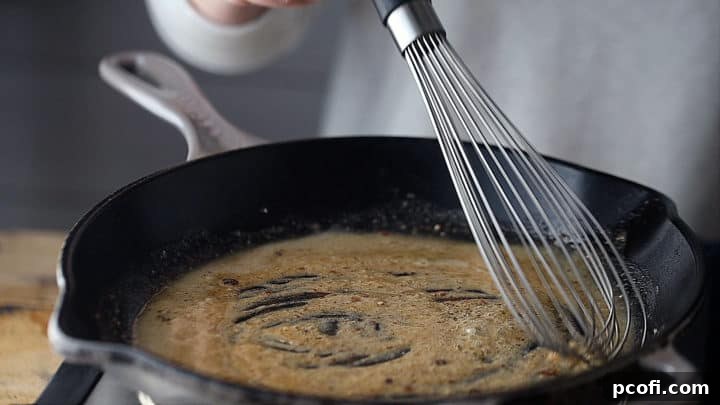
Once your roux has reached that desired deep nut-brown hue, it’s time to deglaze the pan with white wine. Deglazing means adding liquid to a hot pan to release the delicious “fond” – those browned, caramelized bits stuck to the bottom of the pan. These bits are flavor powerhouses, and the wine helps dissolve them, incorporating their deliciousness into your gravy. Don’t worry about the alcohol; it will cook out, leaving behind only its nuanced flavor. Whisk the wine into the roux vigorously, ensuring the mixture becomes perfectly smooth and completely lump-free. The combination will create a rich, glossy base.
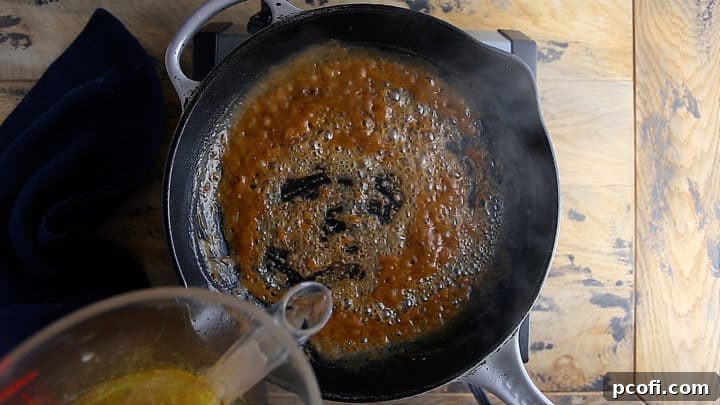
Now, gradually introduce the pan juices (the liquid separated from the fat) into the roux. The total liquid needed for this gravy recipe is about 2 cups (in addition to the wine). If your roast yielded a generous amount of pan juices, feel free to use them all. If you find yourself a little short, simply make up the difference with an appropriate stock (chicken, turkey, or beef, depending on your roast). Whisk the liquids in slowly and steadily to prevent lumps from forming, ensuring a perfectly smooth homemade gravy.
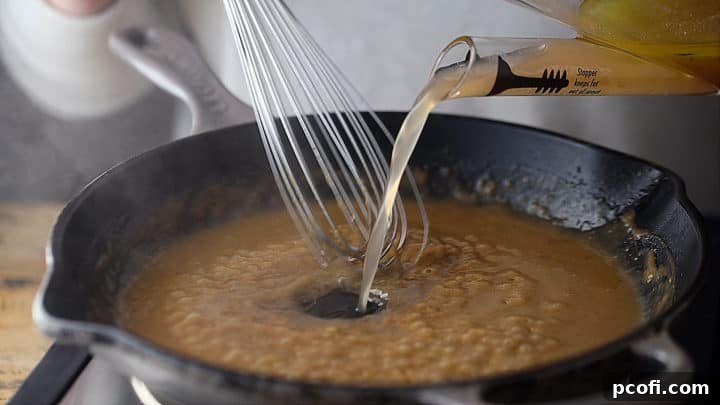
With the liquids fully incorporated, it’s time for the star of the show: the seasonings. For poultry-based gravies like turkey gravy or chicken gravy, I adore a blend of a sprig of fresh sage, some onion powder, and a few pinches of classic poultry seasoning. This combination creates a warm, aromatic profile that perfectly complements the rich flavor of the roast. Gently stir or whisk these into the simmering gravy.
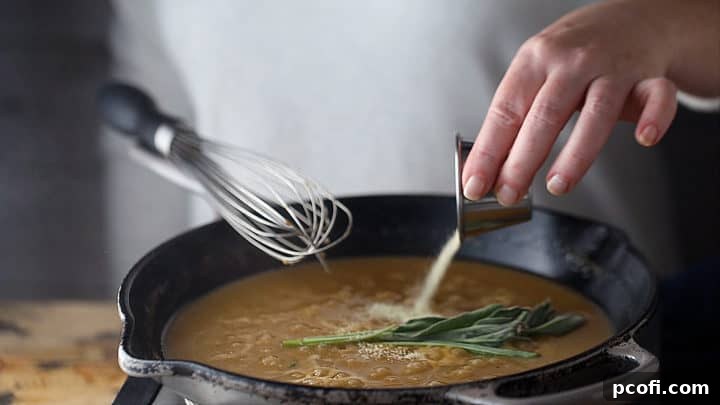
If you’re crafting a beef gravy, pork gravy, or lamb gravy, consider a different herb and spice blend. Rosemary, thyme, and garlic powder are excellent choices for red meats. A small squirt of tomato paste can add a subtle umami depth, while a dollop of Dijon mustard can introduce a delightful tang. Experiment with what suits your palate and the specific roast you’re serving!
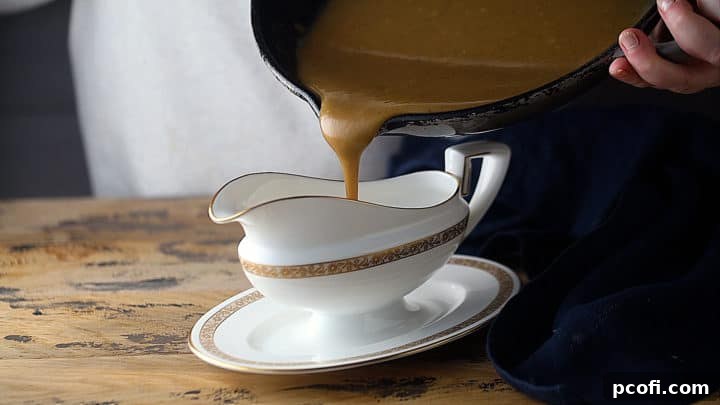
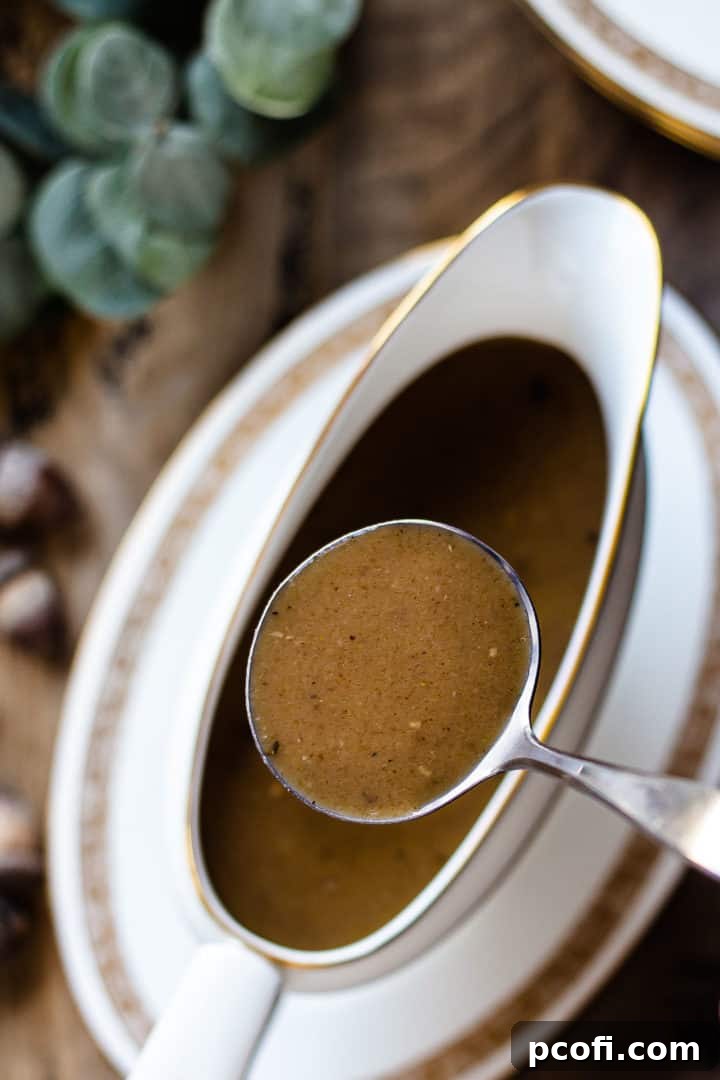
Finally, season your gravy with kosher salt and freshly ground black pepper to taste. Allow the gravy to come to a gentle simmer. This is an important step because the flour in the roux doesn’t reach its full thickening power until the mixture is simmering. So, if your gravy seems a bit thin at first, resist the urge to add more thickener immediately; give it a few minutes to simmer and thicken. Also, keep in mind that gravy will naturally thicken quite a bit more as it cools, so aim for a slightly thinner consistency than you desire when hot.
What If You Don’t Have Any Pan Drippings? Making Gravy from Scratch
One of the beauties of this easy gravy recipe is its flexibility. Even if you don’t have pan drippings from a fresh roast, you can still create an incredibly flavorful homemade gravy. This is particularly useful if you want to make gravy ahead of time or if your main dish doesn’t produce many drippings.
If you’re serving poultry, check the bird’s cavity for giblets (the neck, heart, and liver). Sauté these small pieces in a little butter or oil until they are deeply browned. This process creates wonderful fond at the bottom of your pan and renders some flavorful fat, giving you an excellent starting point. Then, proceed with the recipe, using additional butter and good quality stock (chicken or turkey) to compensate for the lack of pan drippings and juices.
For beef, pork, or lamb gravy without drippings, you can start by searing a small amount of an inexpensive cut of meat or even just some meaty bones in your pan. Brown them well to render some fat and create that crucial fond. Alternatively, you can build flavor by sautéing aromatics like finely diced onions, carrots, and celery in butter or oil until caramelized. This provides a deep, savory base. Once your flavorful foundation is established, continue with the roux-making process, replacing the pan drippings with additional butter or oil and using beef or pork stock accordingly.
What Kind of Meat Can You Use with This Gravy Recipe?
This simple, versatile gravy recipe is incredibly adaptable and pairs beautifully with almost any type of roasted meat, making it your ultimate go-to for a wide range of meals. Whether you’re planning a holiday feast or a cozy Sunday dinner, this gravy delivers an extra layer of savory goodness.
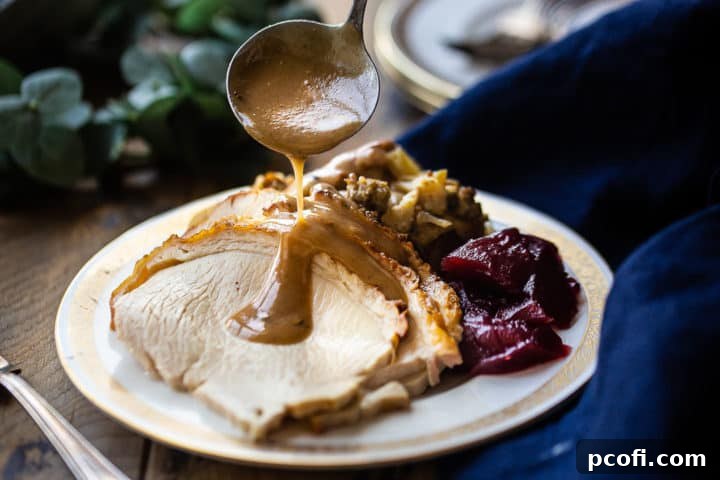
- Turkey Gravy: A Thanksgiving essential! Using turkey drippings and turkey or chicken stock creates the classic, comforting flavor everyone loves.
- Chicken Gravy: Perfect for a roasted chicken or even store-bought rotisserie chicken. It transforms simple poultry into a gourmet meal.
- Duck Gravy: Rich and decadent, a duck gravy made with its flavorful drippings is an indulgence.
- Beef Gravy: Ideal for pot roasts, prime rib, or even Salisbury steak. Opt for beef drippings and a robust beef stock, perhaps with a touch of rosemary or thyme.
- Pork Gravy: A fantastic accompaniment to roasted pork loin, pork chops, or ham. Pork drippings and pork or chicken stock work wonderfully.
- Lamb Gravy: Elevates a leg of lamb or lamb chops with its earthy, savory notes. Lamb drippings and beef stock create a luxurious sauce.
These are just a few of the delicious possibilities! The key is to match your pan drippings (or the stock you use if starting from scratch) to the type of meat you are serving. For the poultry gravy you see demonstrated here, we used chicken drippings and chicken stock. If you’re preparing a red meat like beef or lamb, always opt for a good quality beef stock to ensure the flavors harmonize perfectly.
Troubleshooting: Common Gravy Problems and How to Fix Them
Gravy has a reputation for being notoriously tricky, but with a few simple tips and tricks, you can overcome common pitfalls. Here’s how to avoid and fix the most frequent gravy dilemmas:
Not Thick Enough (How to Thicken Gravy)
If your gravy seems too thin, don’t panic! First, ensure it has truly come to a gentle simmer. The starches in the roux need sufficient heat to activate and thicken the liquid. Let it simmer for a few minutes, whisking occasionally, and observe. Often, it just needs a little more time to reach its full potential.
If it’s simmering and still not thick enough, you have a couple of options:
- Flour & Fat Paste: In a separate small bowl, mix a tablespoon of fat (pan drippings, softened butter, or neutral oil) with a tablespoon of all-purpose flour until it forms a smooth paste (this is also known as a “beurre manié”). Whisk a small amount of this paste into your simmering gravy at a time, allowing it to cook for a minute or two after each addition to see how much it thickens. Repeat until you achieve your desired consistency.
- Cornstarch Slurry (Gluten-Free Option): For a quicker, clearer thickening agent, mix one tablespoon of cornstarch with two tablespoons of cold water or stock to create a smooth slurry. Slowly whisk this into your simmering gravy. Cornstarch thickens rapidly, so add it gradually and let it simmer for a minute to ensure it’s fully incorporated and has done its job.
Too Thick (How to Thin Gravy)
If you’ve accidentally over-thickened your gravy, making it gloopy or pasty, the fix is easy. Simply whisk in a little more warm stock (matching the type of gravy) or even hot water, a tablespoon at a time, until it reaches your preferred smooth, pourable consistency. Warm liquid blends more easily and prevents temperature shock.
Lumpy Gravy (How to Get Rid of Lumps)
Lumps are often a result of adding liquids too quickly to the roux or not whisking thoroughly enough at the initial stages. The best defense against lumps is a good offense: whisk constantly and slowly when incorporating the wine, pan juices, and stock into your roux. Ensure each addition is fully smooth before adding more liquid.
If despite your best efforts, you end up with a lumpy gravy, don’t despair!
- Fine-Mesh Sieve: The simplest and most effective solution is to pour your gravy through a fine-mesh sieve. This will catch all the lumps, leaving you with a silky-smooth gravy.
- Blender: For a quick fix, you can carefully use an immersion blender or transfer the gravy to a regular blender. Blend until smooth. Be aware that blending can sometimes incorporate a lot of air, which might make the gravy appear lighter in color and slightly thicker.
Too Salty (How to Fix Over-Salted Gravy)
This is a common culprit for many home cooks, myself included! Getting overzealous with the salt can easily throw off the entire balance of flavors.
- Dilute with Liquid: The quickest way to reduce saltiness is to add more unsalted stock or water. However, this will also thin out your gravy, so you might need to re-thicken it afterwards using one of the methods mentioned above.
- Add a Sweet Element: A small touch of sweetness can beautifully balance out excessive saltiness without drastically changing the flavor profile. My personal favorite secret ingredient is a few drops of maple syrup; its rich, earthy notes complement savory flavors wonderfully, especially in turkey gravy. Alternatively, a tiny pinch of sugar or honey can also work. Add just a few drops or a pinch at a time, stirring and tasting until the saltiness mellows to your liking.
- Introduce Acidity: A very small squeeze of lemon juice or a drop of apple cider vinegar can also help cut through and balance overly salty flavors. Start with a tiny amount as a little goes a long way.
Storage and Reheating Tips for Homemade Gravy
The good news is that homemade gravy is excellent for making ahead and storing, making your meal prep much smoother, especially during busy holidays.
Freezing Gravy: Gravy freezes exceptionally well. Allow it to cool completely before transferring it to airtight, freezer-safe containers or heavy-duty freezer bags. It will keep in the freezer for up to several months without significant loss of quality. When you’re ready to use it, thaw it overnight in the refrigerator.
Refrigerating Gravy: Gravy can also be stored in the refrigerator for 3 to 4 days. You’ll notice that when cold, it becomes very thick and gelatinous. This is completely normal and is due to the natural collagen present in the meat juices. Don’t worry; it will return to its smooth, pourable consistency upon reheating.
Reheating Gravy: To reheat your homemade gravy, simply transfer it to a small saucepan on the stove over low to medium-low heat. Whisk it gently and continuously as it warms to ensure it becomes smooth and lump-free. If it seems too thick after reheating, you can always whisk in a splash of additional stock or water until it reaches your desired consistency.
A Few More of My Favorite Thanksgiving Recipes:
- Classic Thanksgiving Stuffing
- Easy Homemade Cranberry Sauce
- Soft & Fluffy Homemade Dinner Rolls
- Pumpkin Pie with Candied Pecan Topping
- Simply Perfect Apple Pie
- Decadent Pecan Pie
As an Amazon Associate, I earn from qualifying purchases.
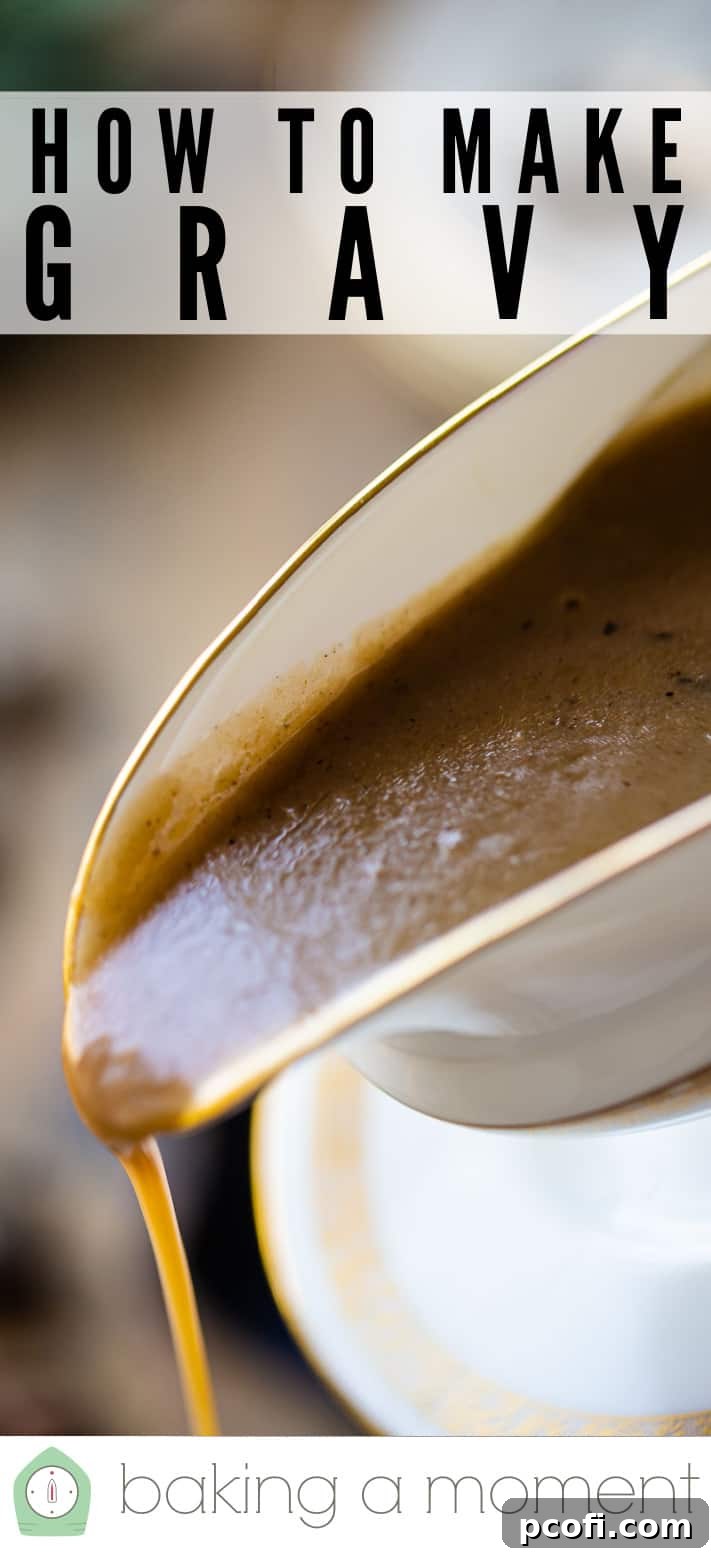
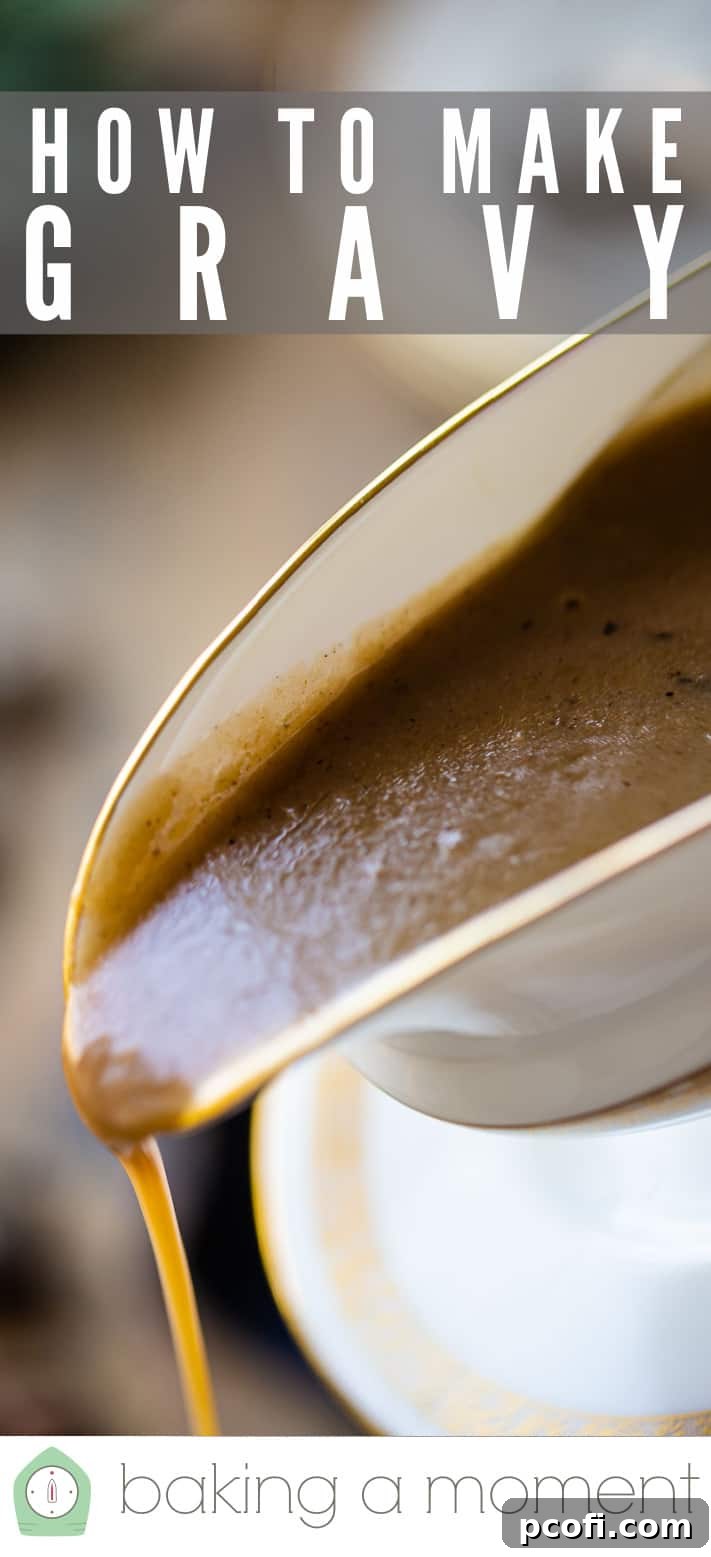
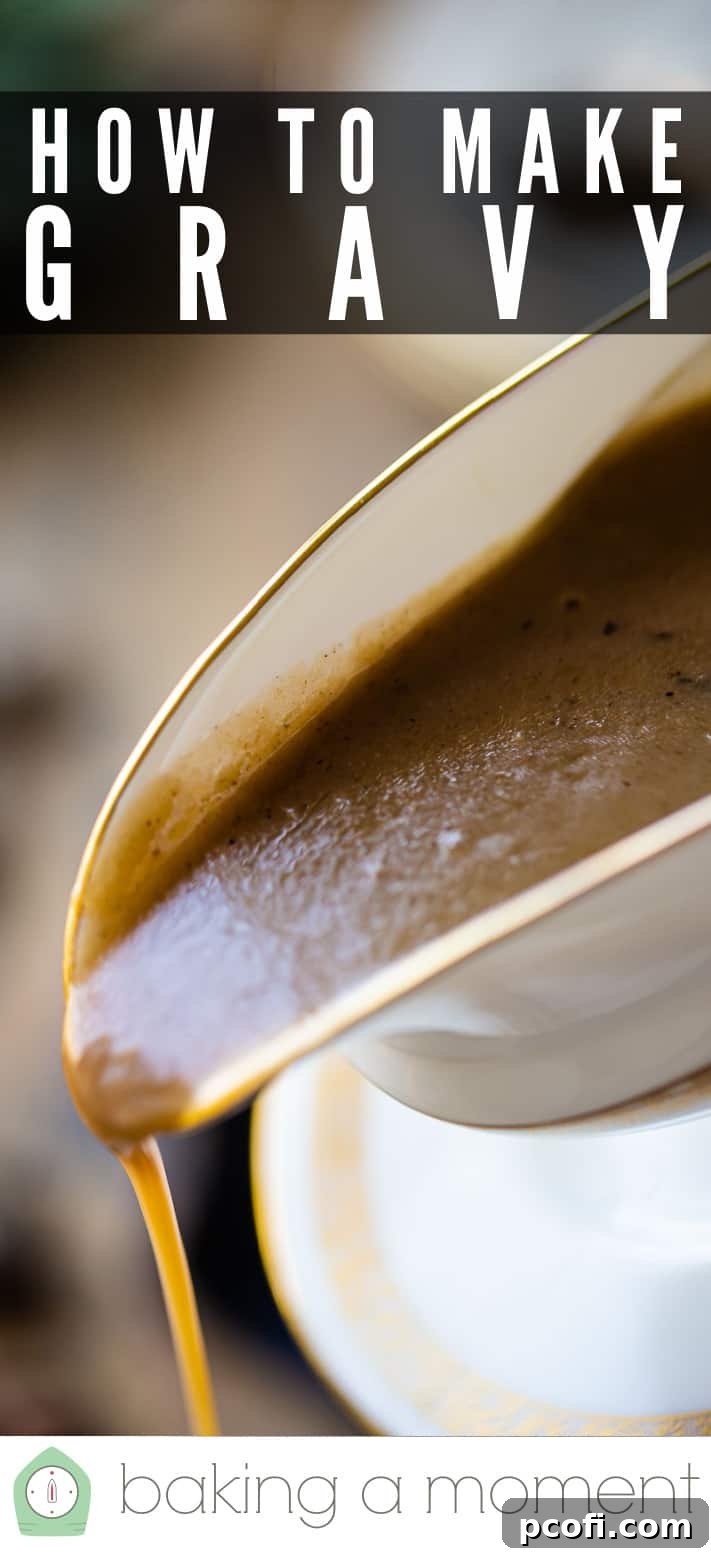
Easy Homemade Gravy
8
1/4- cup servings
10
mins
10
mins
20
mins
Leave a Review
Save Recipe
Ingredients
- 1 tablespoon (14.79 g) fat from pan drippings, (or substitute with the same amount of butter or oil)
- 1 tablespoon (14.79 g) butter
- 2 tablespoons (29.57 g) all-purpose flour
- 1/4 cup (60 g) white wine, (or substitute with the same amount of pan juices or stock)
- 1 cup (113 g) pan juices, (or substitute with the same amount of stock)
- 1 cup (235 g) stock, (beef, pork, chicken, or turkey)
- 1 sprig fresh sage
- 3/4 teaspoon (2.46 g) onion powder
- 1/2 teaspoon (2.46 g) poultry seasoning
- 1/4 teaspoon (1.23 g) kosher salt, (or to taste)
- 1/8 teaspoon (0.62 g) freshly ground black pepper, (or to taste)
Instructions
-
After cooking your roast or searing your meat, remove it from the pan and pour the drippings into a fat separator.
-
Place the roasting pan over medium-high heat. Add 1 tablespoon of fat from the pan drippings along with the butter, and cook until browned.
-
Whisk in the flour and continue to cook, stirring constantly, until a deep nut-brown color is achieved.
-
Whisk in the white wine, scraping up any brown bits (fond) from the bottom of the pan.
-
Continue whisking until no lumps remain and the mixture is a smooth, mahogany brown color.
-
Slowly whisk in the pan juices, then the stock, ensuring to whisk out any lumps after each addition.
-
Whisk in the fresh sage, onion powder, poultry seasoning, salt, and pepper.
-
Simmer the gravy gently until it has thickened to your desired consistency.
Notes
Serving:
0.25
cup
,
Calories:
53
kcal
,
Carbohydrates:
3
g
,
Protein:
1
g
,
Fat:
3
g
,
Saturated Fat:
1
g
,
Cholesterol:
6
mg
,
Sodium:
246
mg
,
Potassium:
37
mg
,
Fiber:
1
g
,
Sugar:
1
g
,
Vitamin A:
106
IU
,
Iron:
1
mg
American
Topping
Tried this recipe?
Mention @bakingamoment on Instagram or tag #bakingamoment.