
Authentic Irish Scones Recipe: Fluffy, Traditional & Easy to Make
If you’ve ever savored a true Irish Scone, served warm with rich clotted cream and a dollop of sweet jam, you already know the magic. These delectable treats boast a perfectly crisp, golden exterior, yielding to a soft, incredibly fluffy interior. They strike that ideal balance of sweetness, feeling special without crossing into dessert territory, making them a perfect accompaniment for any time of day.
This authentic Irish scone recipe simplifies the baking process, requiring no specialized skills or hard-to-find ingredients. In just about 30 minutes, you can conjure up a batch of these comforting delights, ideal for a leisurely weekend breakfast, an elegant afternoon tea, or whenever you crave a warm, homemade indulgence.

Table of Contents
- Discover the Charm of This Authentic Irish Scone Recipe
- Essential Ingredients You’ll Need for Perfect Irish Scones
- Step-by-Step Guide to Making Irish Scones (with Photos)
- Expert Tips and Tricks for Flawless Scones
- Irish Scone Recipe FAQ
- More Delightful Breakfast and Brunch Recipes
Jump to Recipe
While St. Patrick’s Day is a wonderful occasion to celebrate Irish culture, there’s no need to wait for a special day to indulge in the delicious and authentic Irish recipes I discovered during my recent travels to the enchanting Emerald Isle. My culinary journey has already brought us delights like Irish soda bread and Irish oat cookies, with an Irish apple tart still on the horizon. Yet, among all these treasures, today’s recipe holds a special place in my heart: authentic Irish scones!
During my time in Ireland, it felt as though not a single day passed without me enjoying a scone. As a regular reader of this blog, you’re well aware of my profound love for scones; they are, without a doubt, my favorite breakfast treat. And the scones found across Ireland? They are truly in a league of their own. Exceptionally fluffy and soft, bursting with a rich, buttery flavor and a subtle hint of sweetness, authentic Irish scones embody comfort food at its absolute finest.
I am thrilled to share with you the precise method for making these incredible scones. This technique was graciously shared with me by none other than Darina Allen, the celebrated Irish chef and founder of the renowned Ballymaloe School of Cookery. When it comes to authenticity, you simply cannot get more traditional than that.
You might find authentic Irish scones to be a delightful departure from what you’re typically used to. While I have a beloved basic scone recipe on this site that I’ve been perfecting for years – one that leans more cake-like and moist, similar to those you might find at a coffee shop like Starbucks – these Irish scones offer a different experience. They are traditionally round, not triangular, and possess a wonderfully crumblier, lighter texture.
They share a comforting kinship with a southern-style biscuit or a shortcake, but with the distinct addition of eggs, which contributes to their richness. These scones are also notably sweeter and are traditionally made with regular whole milk rather than buttermilk, offering a slightly different flavor profile. I absolutely adore them slathered with butter and a generous spoonful of homemade strawberry jam. They are equally delightful with vibrant lemon curd and a cloud of freshly whipped cream!
Whip up a batch of these authentic Irish scones to pair with your morning coffee or afternoon tea. They are truly an unforgettable treat that brings a piece of Irish culinary heritage right into your home!
Discover the Charm of This Authentic Irish Scone Recipe
If you’re wondering why this particular Irish scone recipe deserves a spot in your baking repertoire, here are a few compelling reasons:
- Classic and Authentic Flavor: This recipe delivers the genuine taste and texture of traditional Irish scones. Made with simple, honest ingredients, they boast that characteristic golden top, a soft interior, and a flavor profile that speaks of generations of Irish baking. It’s a taste of the Emerald Isle in every bite.
- Fast and Effortless Baking: Don’t let their exquisite taste fool you; these scones are remarkably quick and easy to make. With minimal prep time and a swift bake in a hot oven, you can have warm, fresh scones on your table in under 30 minutes. No complicated techniques or stand mixers required – just simple, satisfying baking.
- Tender, Never Dry Texture: The secret to truly magnificent scones lies in their tender crumb, and this recipe excels at it. By using cold butter and employing a gentle mixing technique, we ensure the butter melts slowly, creating pockets of steam that result in an incredibly light, soft, and fluffy interior that is never dry or tough.
- Perfect Canvas for Toppings: While utterly delicious on their own, these Irish scones are designed to be generously adorned. They are the ideal vessel for a variety of sweet and savory accompaniments. Think luscious strawberry jam, rich clotted cream, homemade whipped cream, zesty lemon curd, or simply a generous pat of good quality butter. The possibilities are endless and endlessly delicious!
Essential Ingredients You’ll Need for Perfect Irish Scones
The beauty of this traditional Irish scone recipe lies in its simplicity, utilizing basic ingredients that, when combined correctly, create something truly extraordinary. You’ll find the full list with exact measurements in the recipe card at the bottom of this post, but here’s a closer look at each component and its role:

- All-Purpose Flour: This forms the sturdy yet delicate base of our scones, providing the classic structure. It’s crucial to use all-purpose flour; avoid bread flour, as its higher protein content can lead to a chewy texture, which is not what we want for light, fluffy scones.
- Granulated Sugar: A modest amount of granulated sugar is added to impart a subtle sweetness, making the scones feel special without being overtly sugary. It also aids in achieving that beautiful golden-brown crust on the tops during baking.
- Baking Powder: This is the primary leavening agent responsible for the impressive rise and airy, fluffy interior of your Irish scones. Ensure your baking powder is fresh and active for the best results; an expired one will lead to flat scones.
- Kosher Salt: A pinch of kosher salt is essential. It balances the sweetness of the sugar and, crucially, enhances and brings out the rich, buttery flavors of the other ingredients, elevating the overall taste profile.
- Unsalted Butter (Cold): This is a non-negotiable ingredient for achieving flaky, tender scones. When very cold butter melts in the hot oven, it creates pockets of steam, which separate the layers of dough, resulting in that desirable light and airy texture. Keep it chilled right up until the moment you incorporate it into the dry ingredients.
- Whole Milk: Whole milk adds vital moisture and richness to the scone dough, contributing to its tender crumb and delightful flavor. If whole milk isn’t available, you can substitute it with a mixture of lower-fat milk (like 2%) and a splash of heavy cream for similar richness.
- Large Eggs: Eggs play a dual role in this recipe. They contribute to the structure and richness of the scones, helping them hold their shape and adding to the luxurious mouthfeel. Additionally, a portion of the egg and milk mixture is reserved to brush over the tops, creating a gorgeous glossy, golden finish.
- Demerara Sugar (Optional): For an extra touch of elegance and texture, sprinkling demerara sugar on top before baking is highly recommended. This coarse, sparkly sugar provides a lovely crunch and a professional, bakery-worthy appearance, enhancing the visual appeal and adding another layer of texture.
Step-by-Step Guide to Making Irish Scones (with Photos)
Creating these delightful Irish scones is a straightforward process. Follow these detailed steps to achieve perfect, fluffy results every time.
Step 1: Combine Dry Ingredients
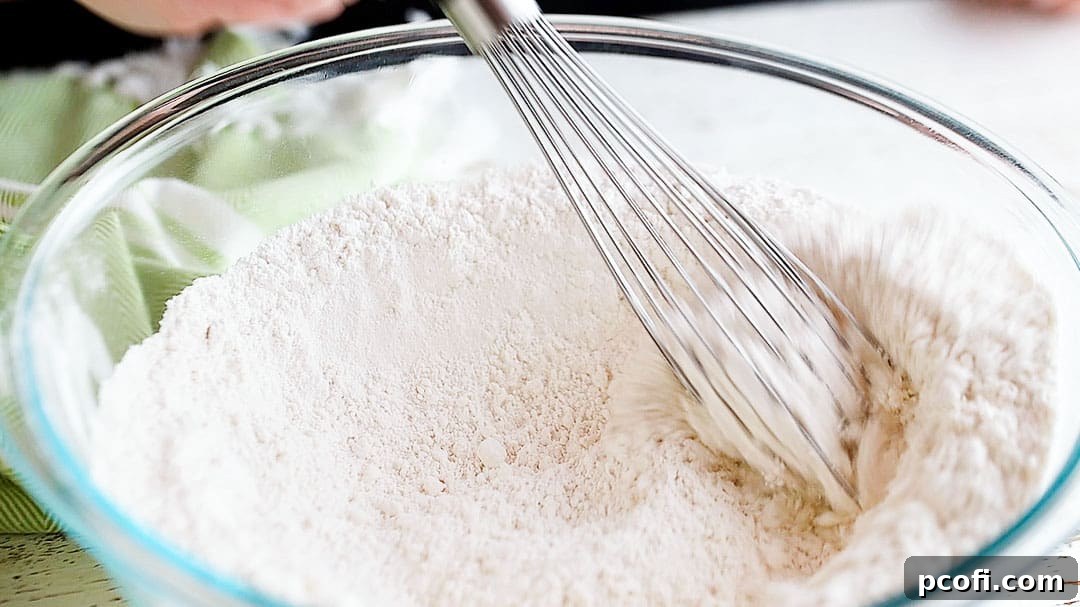
Begin by gathering your essential dry ingredients: all-purpose flour, granulated sugar, baking powder, and kosher salt. Place them all into a large mixing bowl. Take a whisk and gently combine these dry ingredients for a few seconds, ensuring they are thoroughly mixed and evenly distributed. This initial step sets the stage for uniform flavor and rise.
Step 2: Grate In Butter
Next, it’s time for the butter, and I have two crucial pieces of advice to share regarding this key ingredient for truly exceptional scones:
- Whenever possible, opt for high-quality imported Irish butter. Its incredible flavor profile will undeniably elevate your scones to an unparalleled level of deliciousness.
- Most importantly, ensure your butter is kept extremely cold. This is paramount for achieving scones that are wonderfully light and incredibly puffy, as the cold butter creates steam during baking.
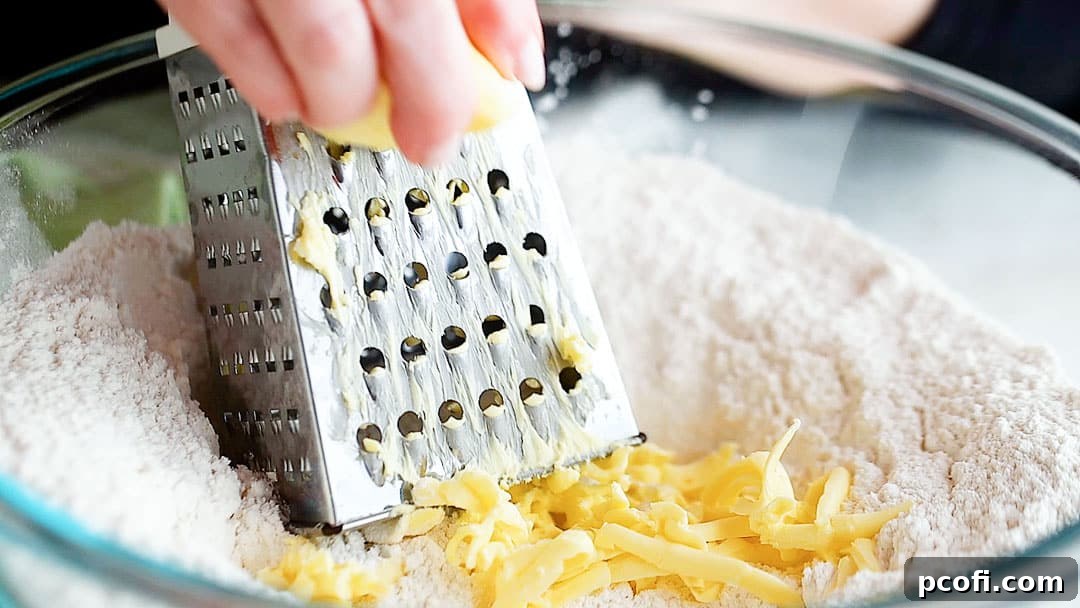
The instructors at the Ballymaloe School of Cookery taught us an ingenious trick: grating the cold butter directly into the dry ingredients. This method quickly incorporates the butter into the flour mixture, creating perfectly sized, tiny pieces that are ideal for developing a flaky texture.
Step 3: Mix Butter into Dry Ingredients
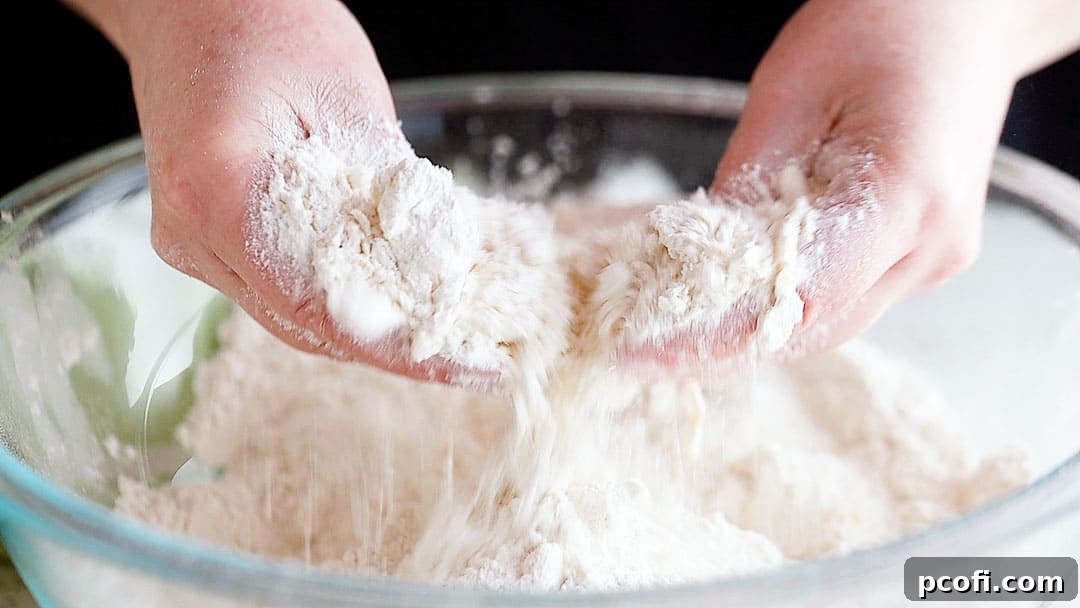
Once all the cold butter has been grated into your dry ingredients, it’s time to gently incorporate it. Use your hands to delicately rub the butter into the flour mixture, using a light, fluffing motion as you go. This gentle handling is absolutely critical to avoid overworking the dough and to ensure the scones remain light and exquisitely fluffy. Continue until the mixture resembles fine breadcrumbs, with no large pieces of butter remaining.
Step 4: Combine Milk & Eggs
In a separate bowl, whisk together the whole milk and large eggs until they are well blended and homogenous. Now, add *most* of this liquid mixture to the bowl containing your dry ingredients and butter mixture. Make sure to hold back about a tablespoon or so of the milk and egg mixture.
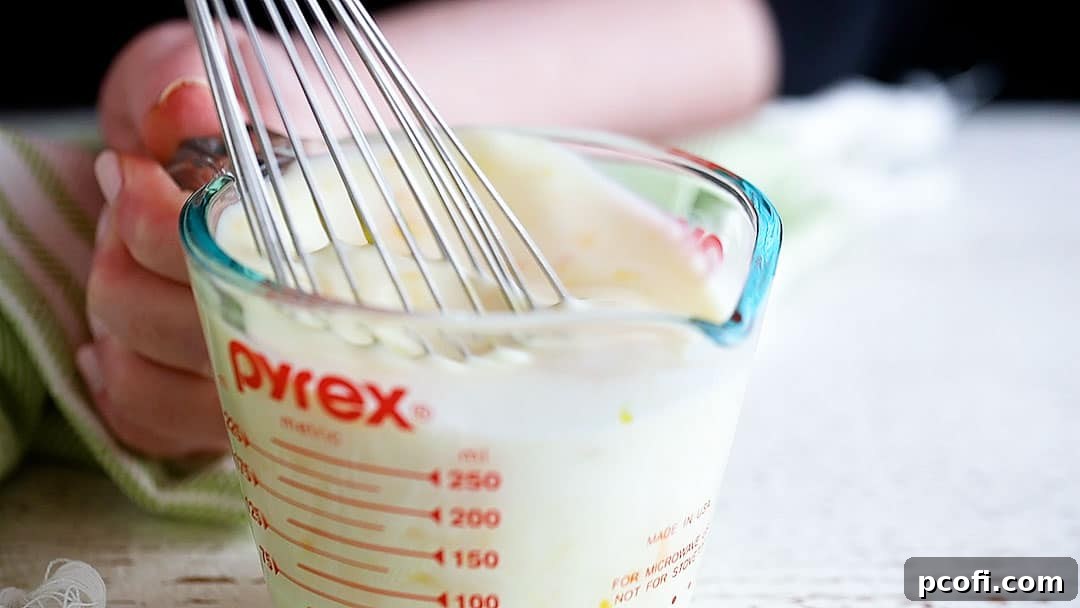
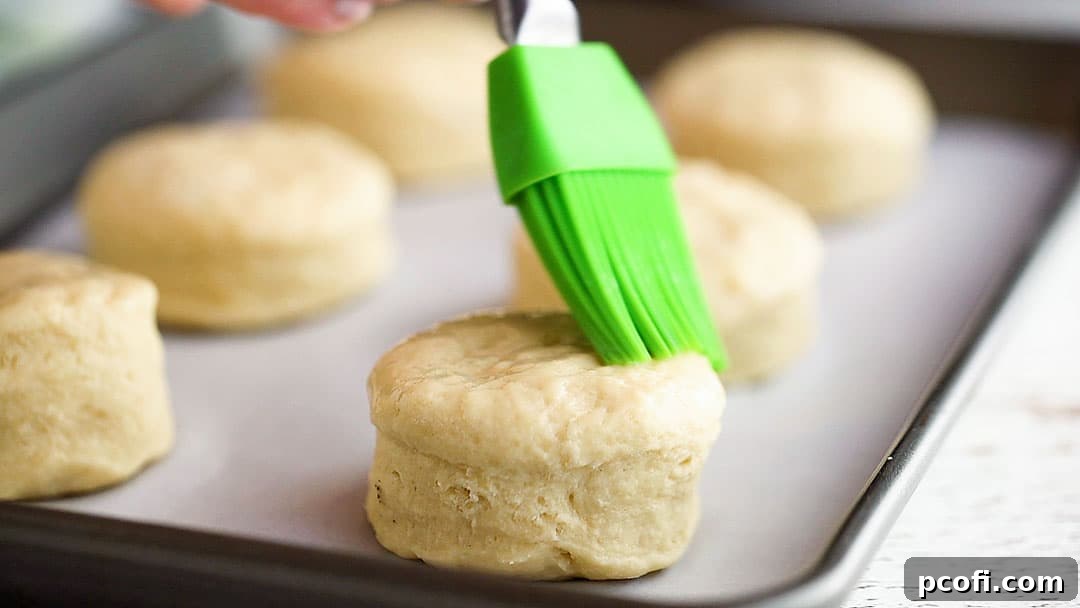
The reason for reserving a small amount of the liquid is important: you will use this leftover tablespoon to brush over the tops of your unbaked scones just before they go into the oven. This egg wash creates a beautiful, shiny, and evenly golden crust, giving your scones that perfect bakery-quality finish.
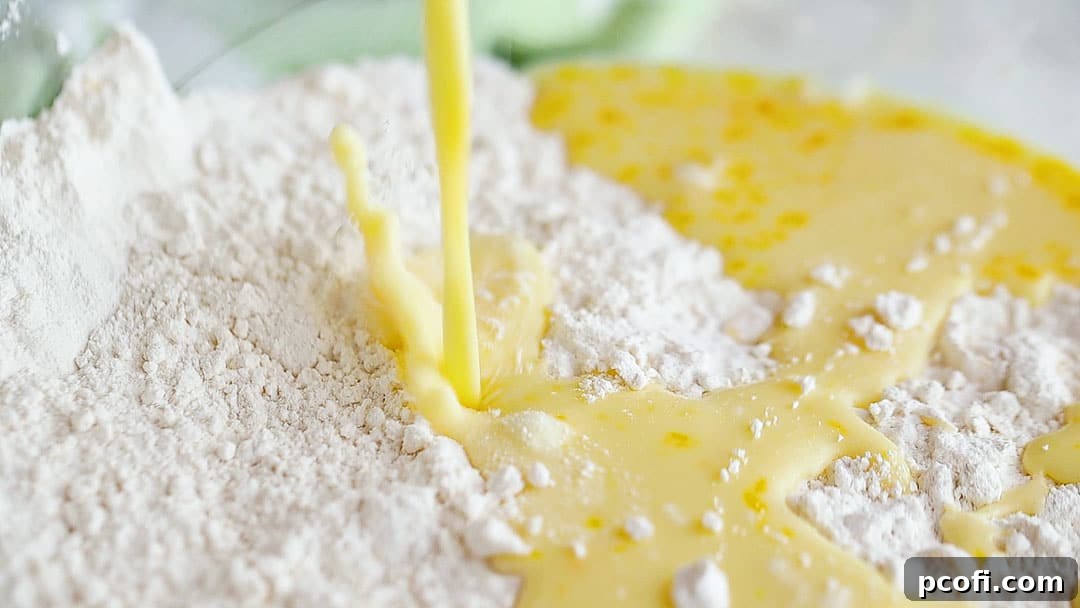
Step 5: Use Hands To Combine into Dough
Now, with clean hands, gently work the liquid into the dry ingredients. Our expert teachers at Ballymaloe advised making a “claw” with your hand, using your fingertips to lightly combine everything. The goal is to bring the dough together just until it forms a cohesive mass, avoiding any vigorous kneading or overworking. Gentle is key for tender scones.
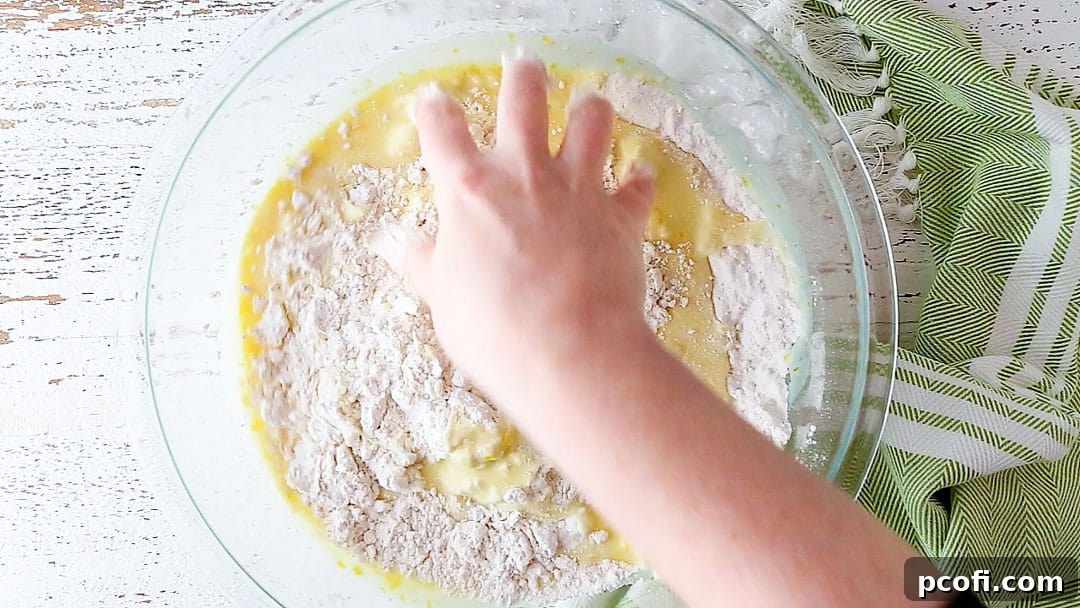
After a short while of gentle mixing, you will notice the ingredients starting to come together. The mixture will form a slightly sticky dough that gathers into a ball. At this point, resist the urge to continue mixing; as soon as it forms a ball, it’s ready for the next step.
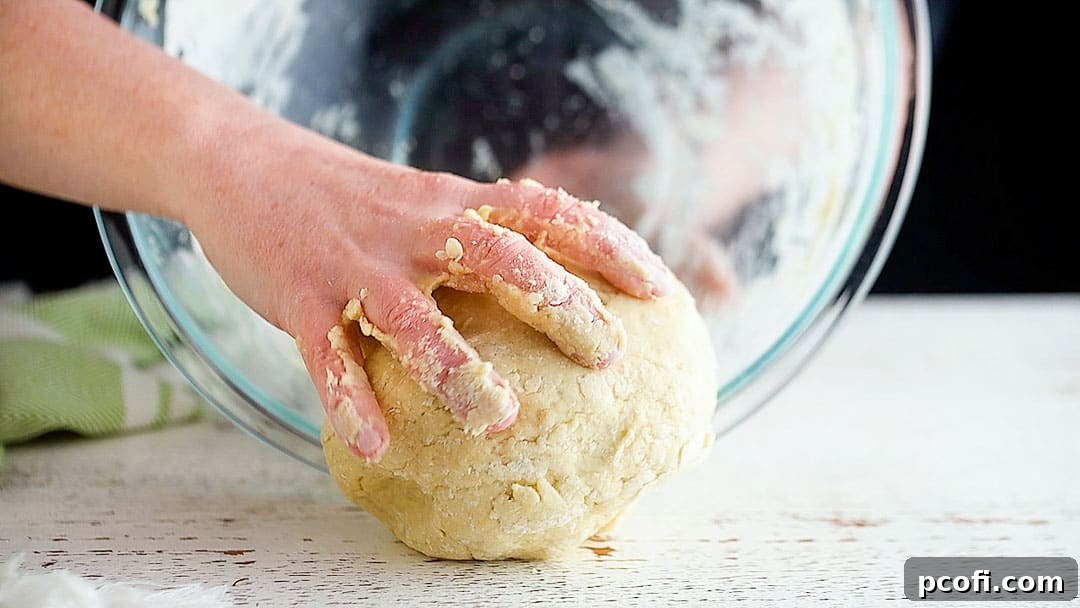
Step 6: Form Dough Disc
Lightly flour your clean work surface to prevent sticking. Transfer the scone dough onto it. With gentle hands, pat the dough into a disc that is approximately 1 inch thick. This thickness is important for achieving beautifully risen scones with a good crumb structure. Avoid rolling with a pin, as this can compress the dough too much.
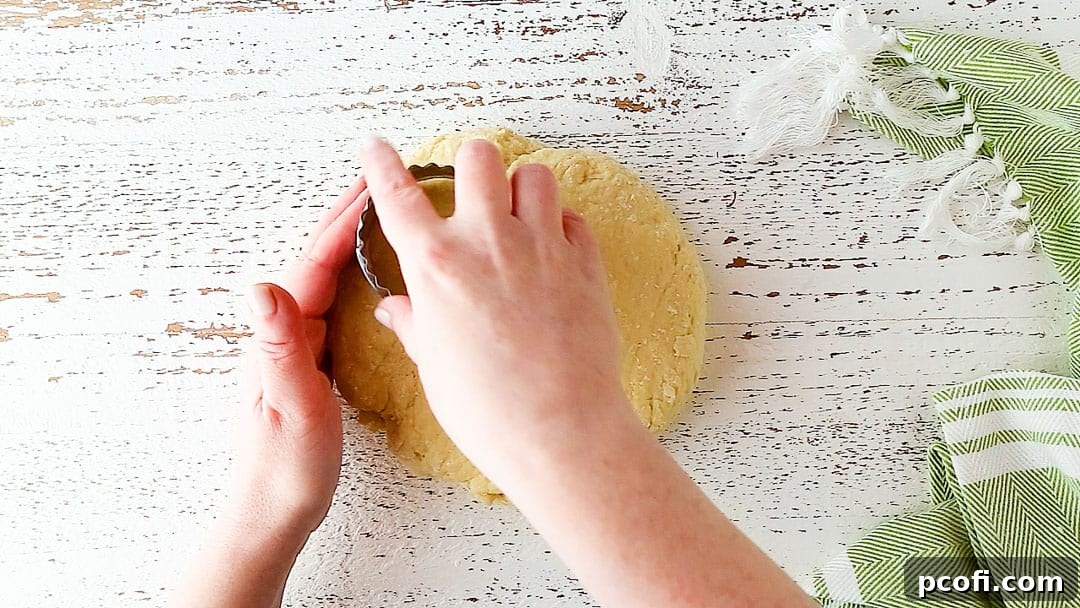
Step 7: Cut Scones and Prepare for Baking
Now, using a 2 1/2-inch round cutter, cut out your individual scones. For the cleanest cuts and to prevent the dough from sticking, it’s very helpful to dip the cutter in a little flour before each cut. Place your freshly cut, unbaked scones onto a baking sheet that has been lined with parchment paper. Then, gently brush the tops of each scone with the reserved milk and egg mixture from Step 4. This egg wash will give them a gorgeous golden hue and a subtle sheen once baked.
Step 8: Add Demerara Sugar (Optional)
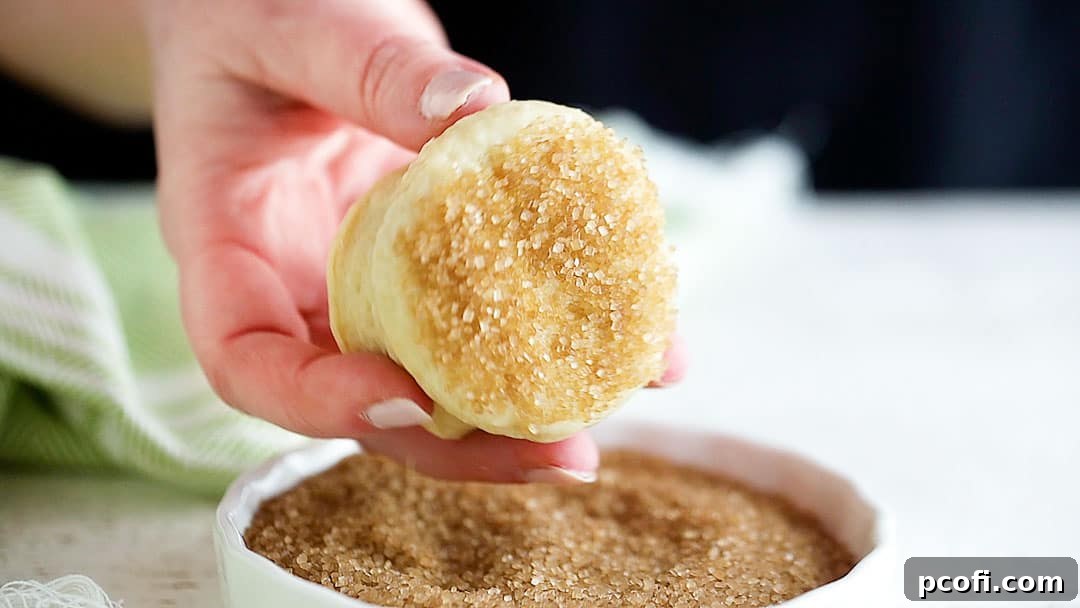
For an extra touch of texture and visual appeal, gently dip the egg-washed tops of your scones into demerara sugar. This step is optional but highly recommended for that authentic bakery-style finish.
Demerara sugar is a minimally processed form of cane sugar, known for its coarse, crunchy texture and a slightly darker, golden color. It’s sometimes referred to as “raw sugar.” You can typically find it in the baking aisle of most well-stocked supermarkets, or it’s readily available to order online: demerara sugar.
Step 9: Bake to Golden Perfection
Finally, transfer your prepared baking sheet with the scones into a very hot oven. The temperature of 475 degrees F is not a typo – this high heat is crucial for a quick rise and a wonderfully fluffy interior! Bake the scones for the recommended time, or until they have risen beautifully, are visibly puffy, and have developed a lovely golden-brown color around their edges and on top. Keep a close eye on them, as oven temperatures can vary.
Expert Tips and Tricks for Flawless Scones
Achieving truly perfect Irish scones is all about a few key techniques. Master these tips, and you’ll be baking like a pro in no time:
- Embrace the Cold: The importance of cold butter cannot be overstated for the best scone texture. It creates essential pockets of steam that result in a wonderfully flaky and tender crumb. If your kitchen is particularly warm, consider chilling your flour and even your mixing bowl for a few minutes before starting. If the dough feels too warm after mixing or handling, pop it into the refrigerator for 10-15 minutes before cutting the scones.
- The Light Touch is Key: When mixing the dough, think gentle, not vigorous. Overmixing is the enemy of tender scones, as it develops the gluten in the flour, leading to a tough, chewy texture. Mix just until the wet and dry ingredients are barely combined and the dough comes together. A few lumps are perfectly fine; in fact, they’re often a sign of properly handled dough.
- High Heat for High Rise: Don’t be shy with the oven temperature! A very hot oven, like the 475°F specified in this recipe, is crucial. The intense initial heat causes the moisture in the cold butter and dough to rapidly turn into steam, creating a quick burst of rise. This “oven spring” is what gives scones their impressive height and fluffy structure. Ensure your oven is fully preheated before baking.
- Clean and Direct Cuts: When cutting your scone dough, use a sharp round cutter and press straight down. Avoid twisting the cutter, as this can seal the edges of the scone dough, preventing it from rising properly. Dipping the cutter in flour between each cut also helps ensure a clean, sharp edge and prevents sticking, which contributes to a better rise.
Irish Scone Recipe FAQ
If you’ve encountered challenges when making scones in the past, rest assured that this authentic Irish scone recipe is designed for success. Below, I’ll address some of the most common questions and concerns to help you master these delicious treats.
Absolutely! It’s quite common to find scones with dried fruit, particularly in the UK and Ireland. A handful of dried currants, golden raisins, or chopped dried apricots are traditional and delightful additions. Beyond dried fruit, you can get creative by incorporating fresh or frozen berries (no need to thaw), chopped nuts, seeds, or even chocolate chips. If you decide to add mix-ins, I suggest using about 1/2 to 1 cup, depending on your personal preference and how generously you want them distributed throughout the scones. Gently fold them in during Step 5, ensuring not to overmix the dough.
If your scones come out flatter than expected, the most common culprit is often inactive baking powder. Always check the expiration date on your baking powder to ensure it hasn’t lost its leavening power. Another critical factor is ensuring your butter is ice-cold; as discussed, cold butter creates steam when it hits the hot oven, which is essential for puffing up your scones and helping them achieve their impressive height. Finally, always make sure your oven is fully pre-heated to the specified high temperature before placing your scones inside, as this initial burst of heat is vital for a good rise.
This particular style of authentic Irish scone, while incredibly tender, isn’t as moist or cake-like as what you might encounter at an American coffee shop. However, they should still bake up light, fluffy, and tender with a lovely, slightly crumbly texture. If your scones are turning out excessively dry or hard, the most likely reason is overbaking. Keep a vigilant eye on them as they bake; you’ll want to remove them from the oven just as their edges begin to turn golden brown. Remember that baking times are always approximate guidelines, as no two ovens are exactly alike. Prioritize visual cues over strict adherence to the clock. Additionally, be very careful not to overwork the dough; mixing it just until the wet and dry ingredients are barely combined is crucial. Overworking the dough develops too much gluten, which will result in tough, dense scones.
Baked Irish scones are a fantastic treat that you can prepare ahead. They store remarkably well and will stay fresh for several days when kept at room temperature in an airtight container to prevent them from drying out or becoming stale. For longer storage, you can easily pop them into a zip-top freezer bag and freeze them for at least a few months. When ready to enjoy, simply re-warm them as described below. However, I do not advise preparing the scone dough ahead of time and refrigerating it unbaked. The baking powder will lose its “oomph” (leavening power) if the dough sits for too long, which will result in flatter scones. For the best rise and texture, it’s always best to bake this scone recipe as soon as the dough is made.
To bring a leftover scone back to its glorious, just-baked warmth, you have a couple of excellent options. For a quick re-warm, gently heat it in the microwave for about 15-20 seconds on full power. Alternatively, for a slightly crisper exterior, wrap the scone in aluminum foil and place it in a low oven (around 170 degrees F or 75 degrees C) until it’s warmed through, typically 10-15 minutes. Both methods will revive its tender interior and make it feel freshly baked.
Authentic Irish scones are delightfully sweet enough on their own, but for the ultimate indulgence, serving them with traditional accompaniments is highly recommended. Split a warm scone in half, generously spread it with soft butter, and add a dollop of your favorite jam – raspberry or strawberry jam are classic choices. For an even more luxurious experience, add a spoonful of rich clotted cream, lemon curd, and/or a cloud of freshly whipped cream. While I find it unnecessary to sweeten the whipped cream, a tiny pinch of sugar can be added if you prefer a sweeter touch. A cup of freshly brewed tea or coffee completes this perfect culinary experience.

More Delightful Breakfast and Brunch Recipes
If you enjoyed making these authentic Irish scones, you might also love exploring these other delicious breakfast and brunch ideas:
- French Toast Casserole: A comforting and easy-to-make dish perfect for feeding a crowd.
- Quiche Lorraine: A classic savory tart with a rich, creamy filling and flaky crust.
- Easy Homemade Croissants: Master the art of flaky, buttery croissants with this simplified recipe.
- Homemade Cinnamon Rolls: Soft, gooey, and irresistible, these are a weekend morning favorite.

Authentic Irish Scones
12
scones
15
15
30
Leave a Review
Ingredients
- 3 3/4 cups (468.75 g) all-purpose flour
- 1/4 cup (50 g) granulated sugar
- 1 tablespoon baking powder
- 1/8 teaspoon kosher salt
- 1/2 cup (113.5 g) unsalted butter, (1 stick), cold
- 1 cup (244 g) whole milk*
- 2 eggs, (large)
- demerara sugar, (optional garnish)
Instructions
-
Preheat your oven to 475 degrees F (245 degrees C). Prepare a baking sheet by lining it with parchment paper.
-
In a large bowl, combine the flour, granulated sugar, baking powder, and kosher salt. Use a whisk to thoroughly combine these dry ingredients.
-
Using a box grater, grate the very cold unsalted butter directly into the flour mixture. Then, using your hands, gently rub the butter into the dry ingredients until the mixture resembles fine breadcrumbs.
-
In a separate bowl, whisk the whole milk and eggs together until well blended. Add almost all of this liquid mixture to the dry ingredients,** mixing gently with your clean hand until a dough starts to form.
-
Once the dough gathers itself into a cohesive ball, transfer it to a lightly floured surface. Gently knead it a few times (just enough to bring it together), then pat it into a disc approximately 3/4-inch thick.
-
Use a 2 1/2-inch diameter round cutter to cut out the scones. For optimal rise, press the cutter straight down without twisting. Any dough scraps can be gently gathered and re-patted to form additional scones, but be careful not to overwork the dough.
-
Place the unbaked scones on your prepared baking sheet. Brush the reserved milk/egg mixture evenly over the tops of each scone, then sprinkle generously with demerara sugar (if using).
-
Bake for 14 to 16 minutes, or until the scones are beautifully puffed up, golden brown on their bottoms, and lightly golden on top.
-
Allow the scones to cool slightly on a wire rack. Once cooled enough to handle, split them open and serve warm with butter, your favorite jam, and whipped cream, if desired. Enjoy!
Notes
**Remember to reserve approximately 1 tablespoon of the milk and egg liquid to brush over the scones before baking; this creates a beautiful golden crust.
Calories: 264kcal
,
Carbohydrates: 35g
,
Protein: 6g
,
Fat: 11g
,
Saturated Fat: 7g
,
Cholesterol: 56mg
,
Sodium: 46mg
,
Potassium: 177mg
,
Fiber: 1g
,
Sugar: 5g
,
Vitamin A: 374IU
,
Calcium: 76mg
,
Iron: 2mg