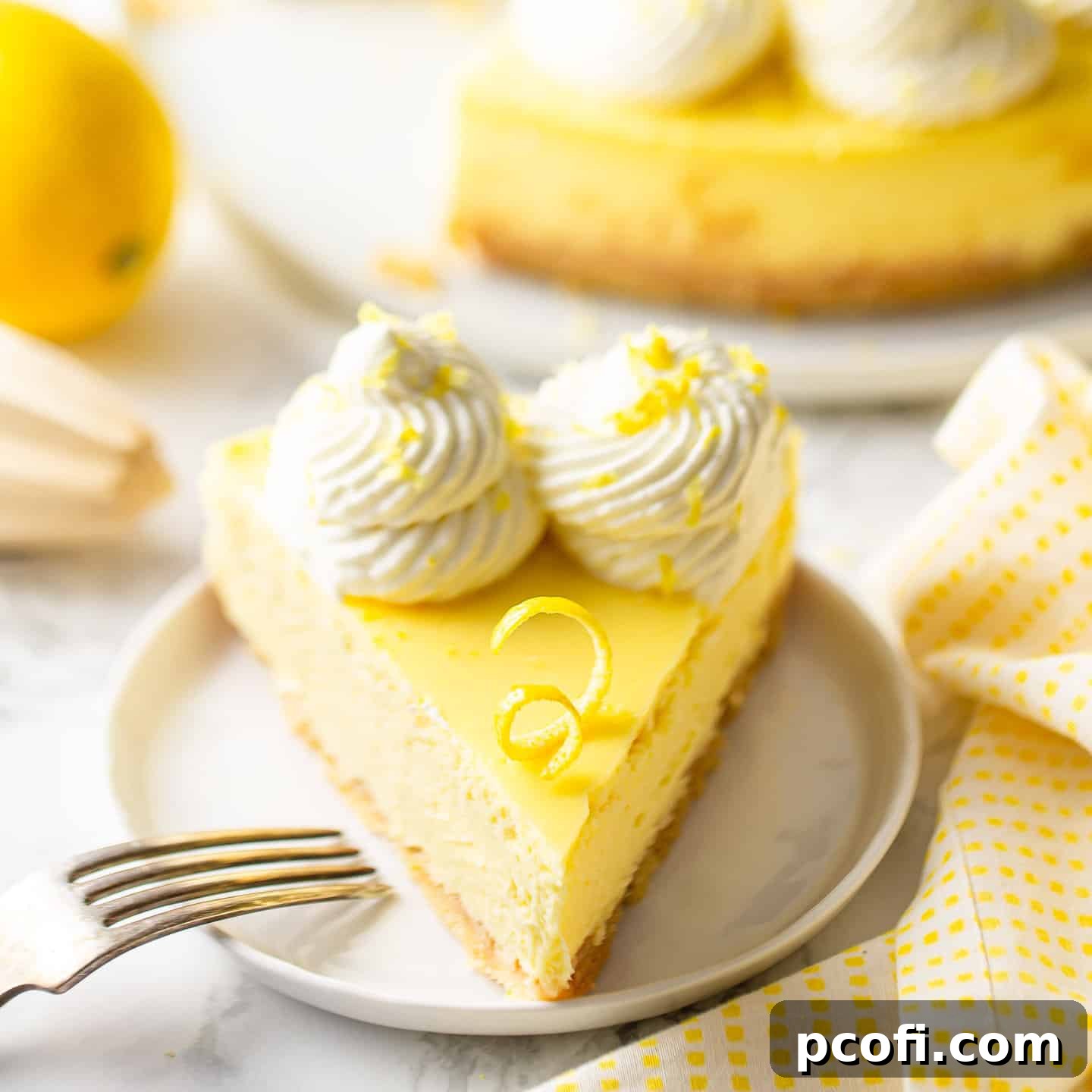
Indulge in the ultimate dessert experience with this incredibly easy and utterly delicious lemon cheesecake recipe! Perfect for any occasion, this cheesecake boasts a luxurious, creamy texture and bursts with vibrant, sunny citrus flavor that will delight every lemon lover.
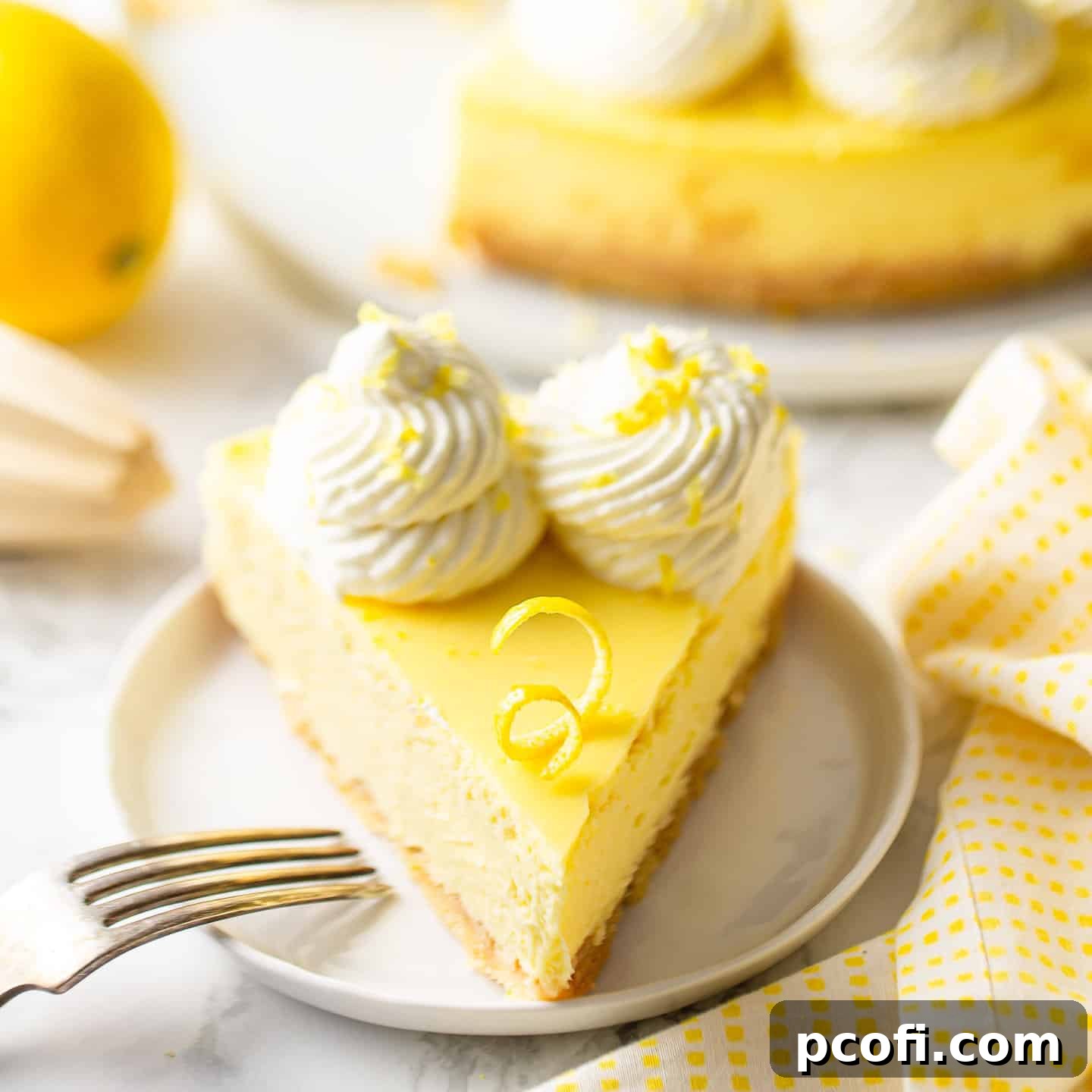
As the days grow shorter and the weather turns colder, there’s nothing quite like a touch of sunshine to brighten your spirits. This lemon cheesecake recipe is exactly that – a ray of zesty light that transports you to a warm, summer day with every delightful bite. It’s a simple yet sophisticated dessert that celebrates the invigorating power of fresh lemons, making it a perfect antidote to the dreariest time of the year.
While summer berries and stone fruits have their seasonal charm, the humble lemon remains a dependable source of bright, tangy flavor year-round. This makes citrus desserts a consistent favorite, especially when you crave something fresh and lively. Beyond this magnificent cheesecake, I adore other lemon-infused treats like classic lemon bars, elegant lemon tarts, and comforting lemon pudding cakes. Each offers a unique way to enjoy the beloved citrus, but today, we’re focusing on the supreme indulgence of a perfectly baked lemon cheesecake.
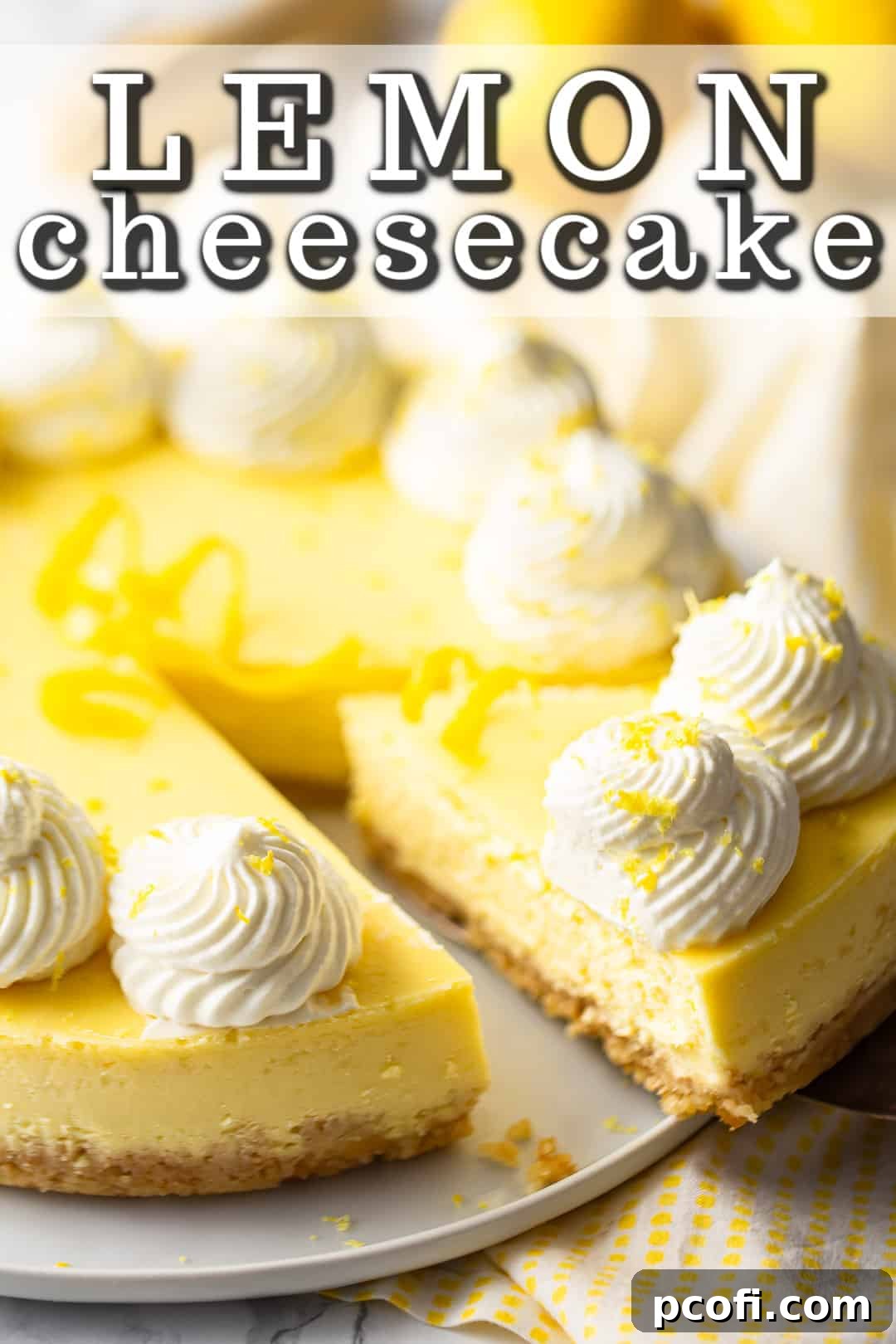
Table of Contents
- What is Lemon Cheesecake?
- Why This is the Best Lemon Cheesecake Recipe
- What Does Lemon Cheesecake Taste Like?
- Essential Ingredients for Lemon Cheesecake
- Specialized Equipment You’ll Need
- How to Make Perfect Lemon Cheesecake
- Serving Suggestions for Lemon Cheesecake
- Expert Tips for Cheesecake Success
- Frequently Asked Questions About Lemon Cheesecake
- More Irresistible Cheesecake Recipes
Jump to Recipe
What is Lemon Cheesecake?
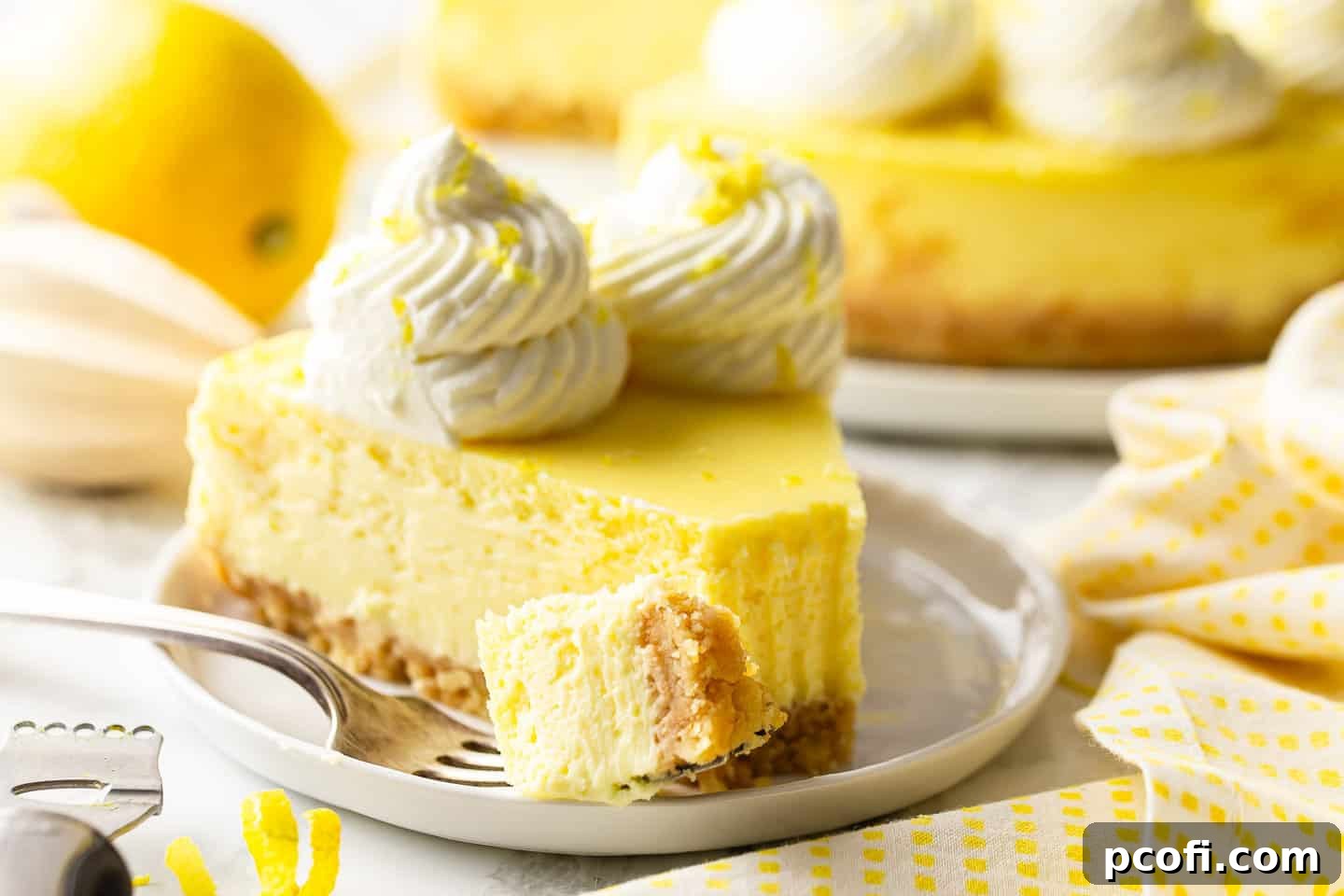
Lemon cheesecake, at its heart, is a glorious fusion of rich creaminess and bright tang. This particular recipe delivers a wonderfully soft, dense, and exquisitely creamy New York-style cheesecake. What sets it apart is the unmistakable zippy and cheerful flavor of fresh lemon, perfectly infused throughout the velvety filling. It rests upon a delicate yet crunchy lemon shortbread crust, which not only provides a delightful buttery contrast to the smooth filling but also echoes the citrus notes with added lemon zest. The harmonious blend of textures—from the firm, crumbly crust to the melt-in-your-mouth filling—creates a truly unforgettable dessert experience.
Why This is the Best Lemon Cheesecake Recipe
- Unforgettable Flavor Profile: This isn’t just a cheesecake; it’s a celebration of lemon. The tangy citrus notes are perfectly balanced with the creamy richness, creating a flavor that will make your taste buds sing and leave you craving another slice. It’s vibrant, refreshing, and deeply satisfying, offering a sophisticated sweetness with a delightful zesty kick.
- Simple, Accessible Ingredients: You don’t need exotic items for this masterpiece. This recipe relies on a handful of common pantry staples, making it easy to whip up without a special trip to the store. High-quality cream cheese, fresh lemons, and butter are the stars, proving that sometimes the simplest ingredients create the most profound flavors.
- Effortless Preparation: Despite its impressive appearance and gourmet taste, this lemon cheesecake is surprisingly easy to make. The steps are straightforward, guiding you through each stage with clarity. You’ll have this delightful dessert prepped and in the oven in no time, making it perfect for both experienced bakers and enthusiastic beginners.
- Flawless, Crack-Free Finish: Achieving a crack-free cheesecake can often be a challenge, but with this meticulously developed recipe, unsightly cracks are a thing of the past. I’ve personally made this countless times, and each cheesecake emerges from the oven with a perfectly smooth, unblemished top, ensuring a beautiful presentation every single time.
What Does Lemon Cheesecake Taste Like?
Prepare for a taste sensation! The moment this dessert touches your palate, you’ll be greeted by an immediate burst of bright, tangy citrus. It’s a delightful, puckery lemon flavor that is both invigorating and refreshing, setting the stage for what’s to come. As the initial zest mellows, the rich, smooth essence of cream cheese emerges, coating your palate with its luxurious creaminess. This creates a beautifully balanced experience, where the sharpness of the lemon cuts through the richness of the cheese, preventing it from being overly heavy.
Adding another layer of sensory delight is the crunchy, buttery shortbread crust. Its delicate sweetness and satisfying texture provide a wonderful contrast to the smooth, almost custardy filling. Together, these elements create a complex yet harmonious flavor profile that is both comforting and exhilarating—a truly exquisite treat for anyone who appreciates fine desserts with a vibrant twist.
Essential Ingredients for Lemon Cheesecake
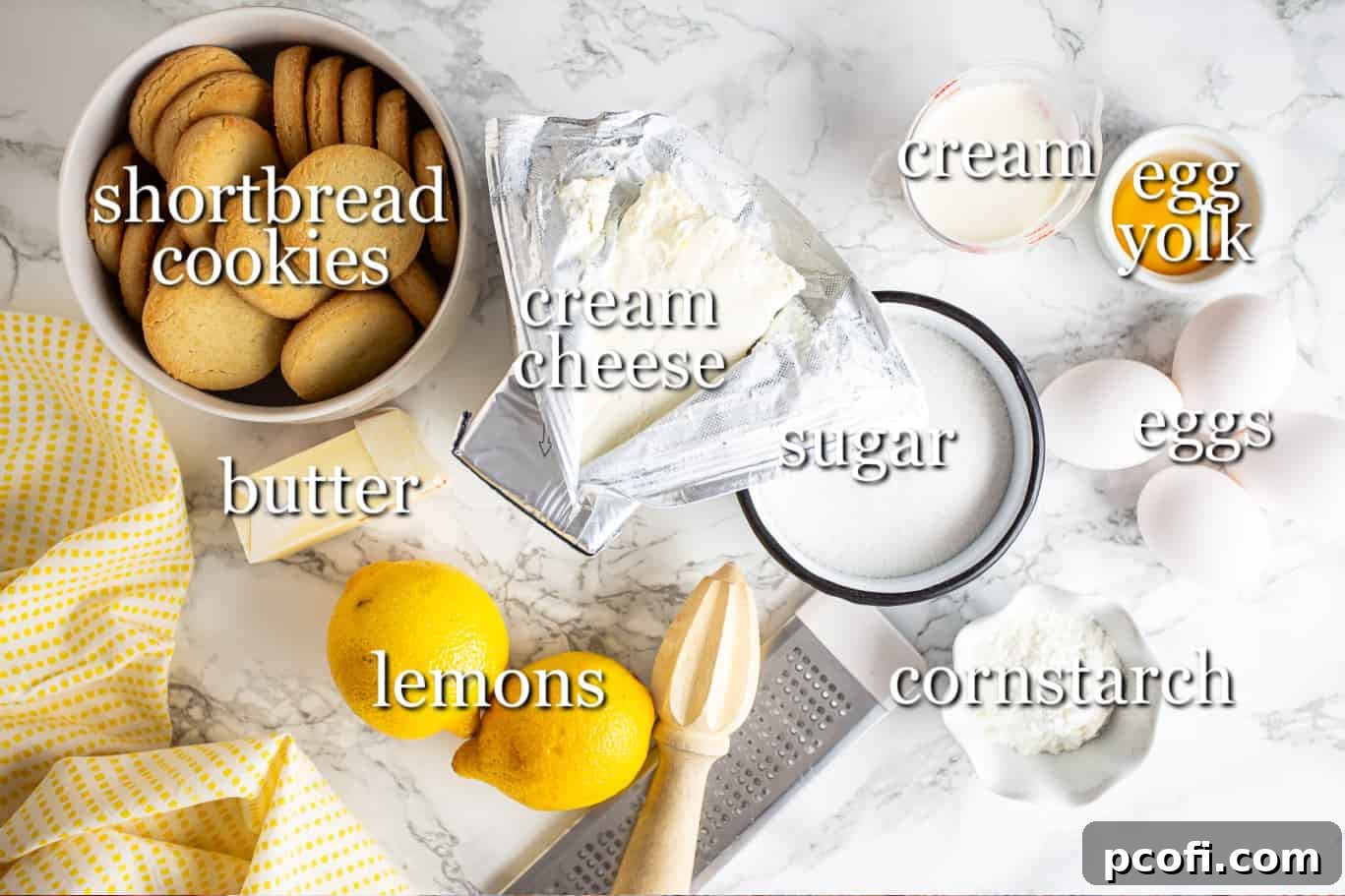
Shortbread Cookies: The foundation of this incredible cheesecake is its crust. I typically use a whole package of store-bought classic shortbread cookies, which provide a perfectly buttery and crumbly base. However, if you’re feeling ambitious and want to elevate your cheesecake to superstar status, you can easily make your own. My Shortbread Cookies recipe offers a fantastic homemade option that adds an extra touch of love.
Lemons: Fresh lemons are absolutely paramount for achieving the best flavor in this recipe. You’ll need both their vibrant zest and their tart juice. The zest carries the intense lemon oil, providing aromatic depth, while the juice delivers that essential tang. While bottled juice can work in a pinch, it simply won’t yield the same bright, fresh, and nuanced flavor that freshly squeezed lemon provides. Always opt for fresh if possible!
Butter: Melted unsalted butter is crucial for binding the shortbread crumbs into a cohesive crust. I prefer unsalted butter because it gives me precise control over the overall saltiness of the dessert. Different butter brands can vary significantly in their salt content, so using unsalted ensures a consistent and perfectly balanced flavor profile every time.
Cream Cheese: For that signature dense and creamy cheesecake texture, full-fat cream cheese in brick form is essential. Avoid using whipped or low-fat varieties, as they contain too much water and will result in a runny or less stable cheesecake. Ensure your cream cheese is softened to room temperature before mixing to prevent lumps and achieve a silky-smooth batter.
Granulated Sugar: Regular white granulated sugar provides the necessary sweetness to balance the tart lemon and rich cream cheese. It also contributes to the cheesecake’s structure. You can experiment with other 1:1 granulated sweeteners if you have dietary preferences, but ensure they swap evenly for best results.
Cornstarch: This humble ingredient acts as a brilliant thickening agent for the cheesecake filling. Cornstarch is colorless, odorless, and flavorless, meaning it thickens without altering the delicate taste of your lemon cheesecake. It’s vital to use cornstarch, which is a fine white powder, and not cornmeal, a coarser yellow grain that tastes distinctly of corn chips.
Heavy Whipping Cream: A touch of heavy whipping cream (also known as “double cream” outside the US) significantly improves the consistency of the cheesecake, making it even more luxurious and smooth. It also helps the flavors linger on your palate, enhancing the overall richness and mouthfeel of the dessert.
Eggs: You’ll need four whole large eggs plus one additional large egg yolk. Eggs are critical for adding richness and flavor, but more importantly, they act as a binder that allows the cheesecake to set properly as it bakes. They contribute to the creamy texture and help prevent cracking by providing structure to the delicate custard.
Specialized Equipment You’ll Need
- Measuring Cups and Spoons: Precision is key in baking. Always follow my guide on how to accurately measure ingredients to ensure perfect results every time.
- Microplane Grater: Essential for effortlessly removing the fine, aromatic zest from your lemons without grating into the bitter white pith. This tool maximizes flavor.
- Food Processor: This makes quick work of grinding your shortbread cookies into fine, even crumbs for the crust. A consistent crumb size ensures a uniform crust.
- Fork: A simple fork is all you need for lightly tossing the crust ingredients together, ensuring the melted butter is evenly distributed.
- Electric Mixer: Whether you prefer a powerful stand mixer with a paddle attachment for hands-free mixing or a versatile handheld electric mixer for portability, an electric mixer is crucial for achieving a smooth, lump-free cheesecake batter.
- Silicone Spatula: Indispensable for scraping down the sides and bottom of your mixing bowl, ensuring all ingredients are fully incorporated and no precious batter is left behind.
- Citrus Juicer: A good citrus juicer extracts maximum juice from your lemons efficiently, ensuring you get every drop of that tangy flavor.
- Cake Pan: I strongly recommend using a regular 9-inch diameter cake pan for this recipe. Unlike springform pans, which I’ve found notoriously leak (even with every trick in the book!), a solid cake pan prevents any water bath moisture from seeping in, guaranteeing a perfectly crisp crust.
- Non-stick Spray: A light coating of non-stick spray is essential for properly greasing the cake pan, ensuring your cheesecake releases easily after chilling.
- Parchment Paper: Lining the bottom of your cake pan with parchment paper is a foolproof method to ensure your cheesecake can be effortlessly removed from the pan once cooled and chilled.
- Larger Roasting Pan: This is for creating a water bath (or “bain-marie”), a gentle cooking method where the cheesecake pan sits inside a larger pan filled with water. This technique allows for slow, even cooking, preventing cracks and yielding an incredibly smooth, creamy texture.
How to Make Perfect Lemon Cheesecake
Creating this irresistible lemon cheesecake is a delightful process, broken down into four straightforward steps that ensure a flawless finish and incredible flavor.
Step 1: Prepare the Zesty Lemon Shortbread Crust
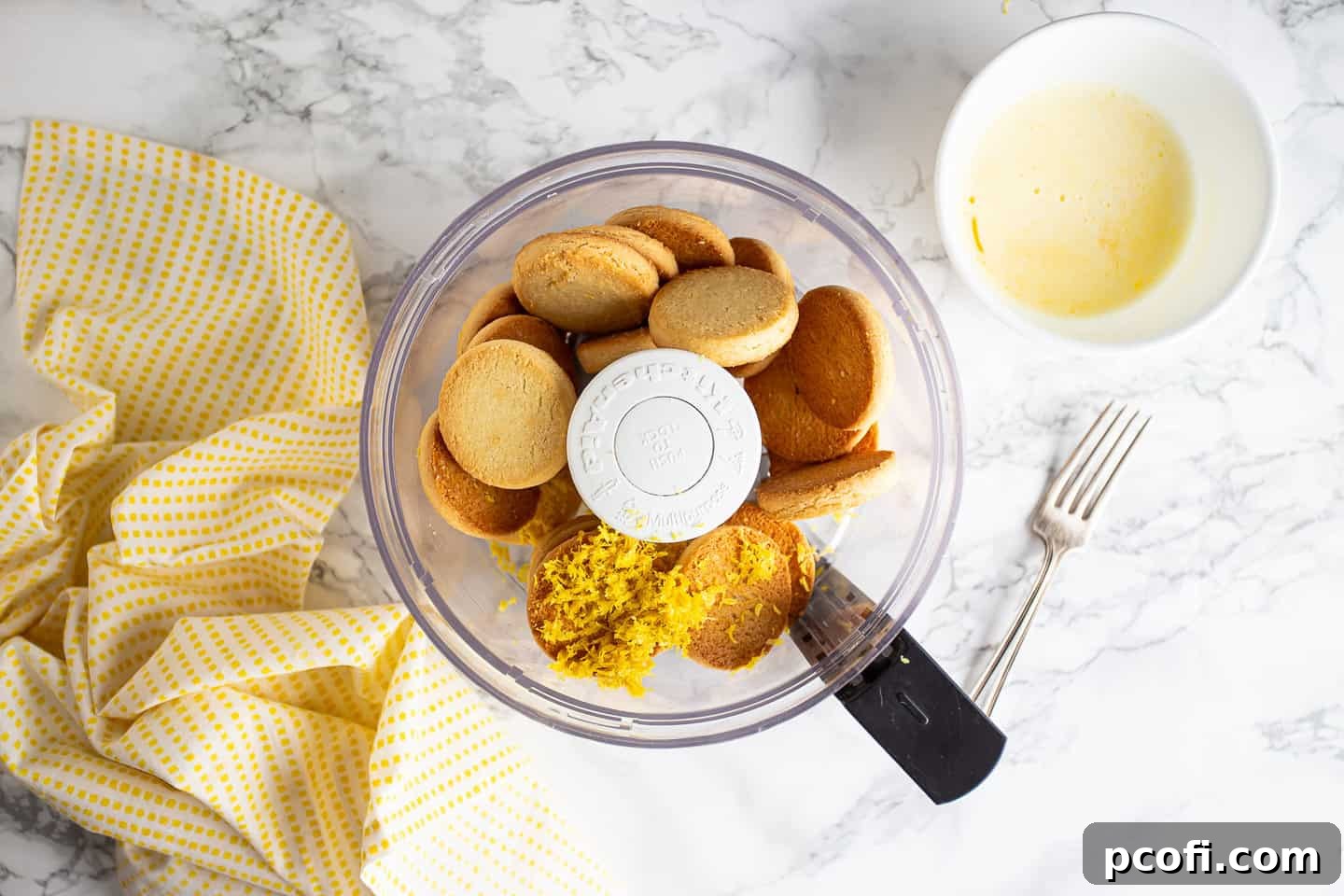
Begin by combining your shortbread cookies with the vibrant zest of one lemon. Place both in the bowl of a food processor and pulse until you achieve fine, uniform crumbs. The lemon zest infused into the crust adds an extra layer of bright citrus flavor right from the base.
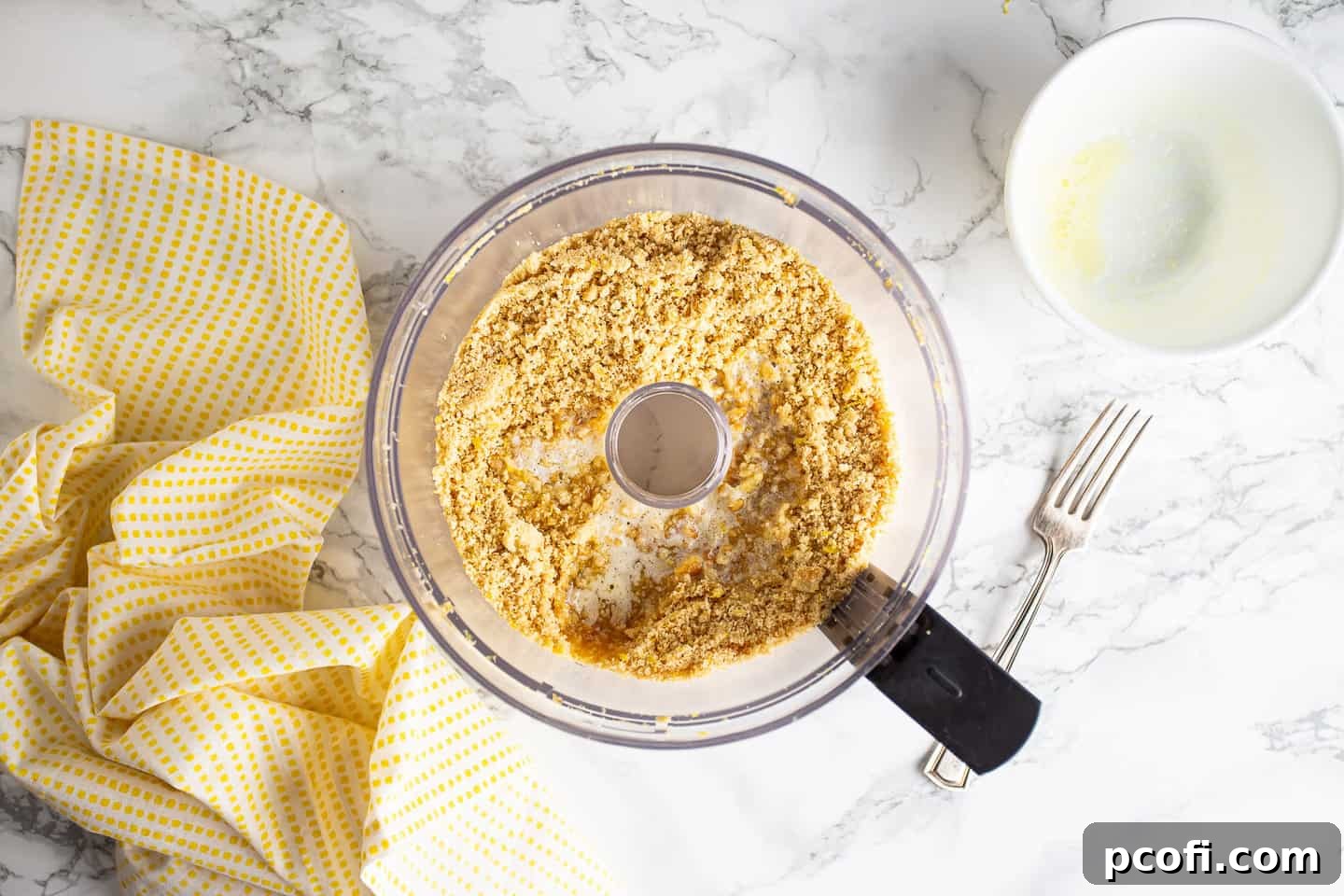
Next, pour the melted butter over the crumb mixture. Using a fork, gently toss everything together until the crumbs are thoroughly moistened and well-combined. The butter acts as a binder, ensuring your crust will hold its shape beautifully.
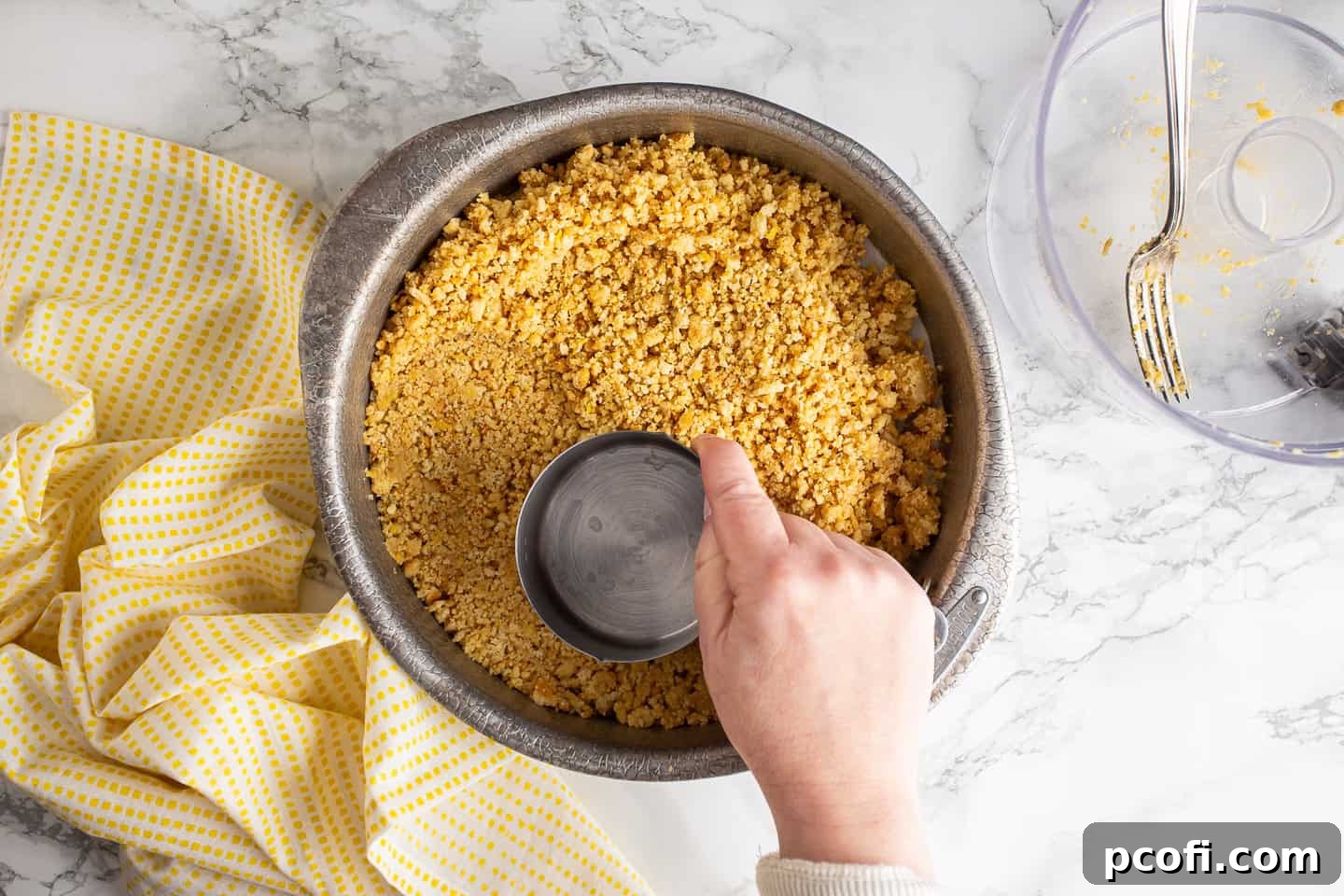
Transfer this buttery, zesty crumb mixture into the bottom of your prepared cake pan. Press it down firmly and evenly across the base. For a perfectly flat and compact crust, use the bottom of a measuring cup or a flat-bottomed glass to really pack it down. This ensures a sturdy and delicious foundation for your cheesecake.
Step 2: Craft the Silky Cheesecake Base
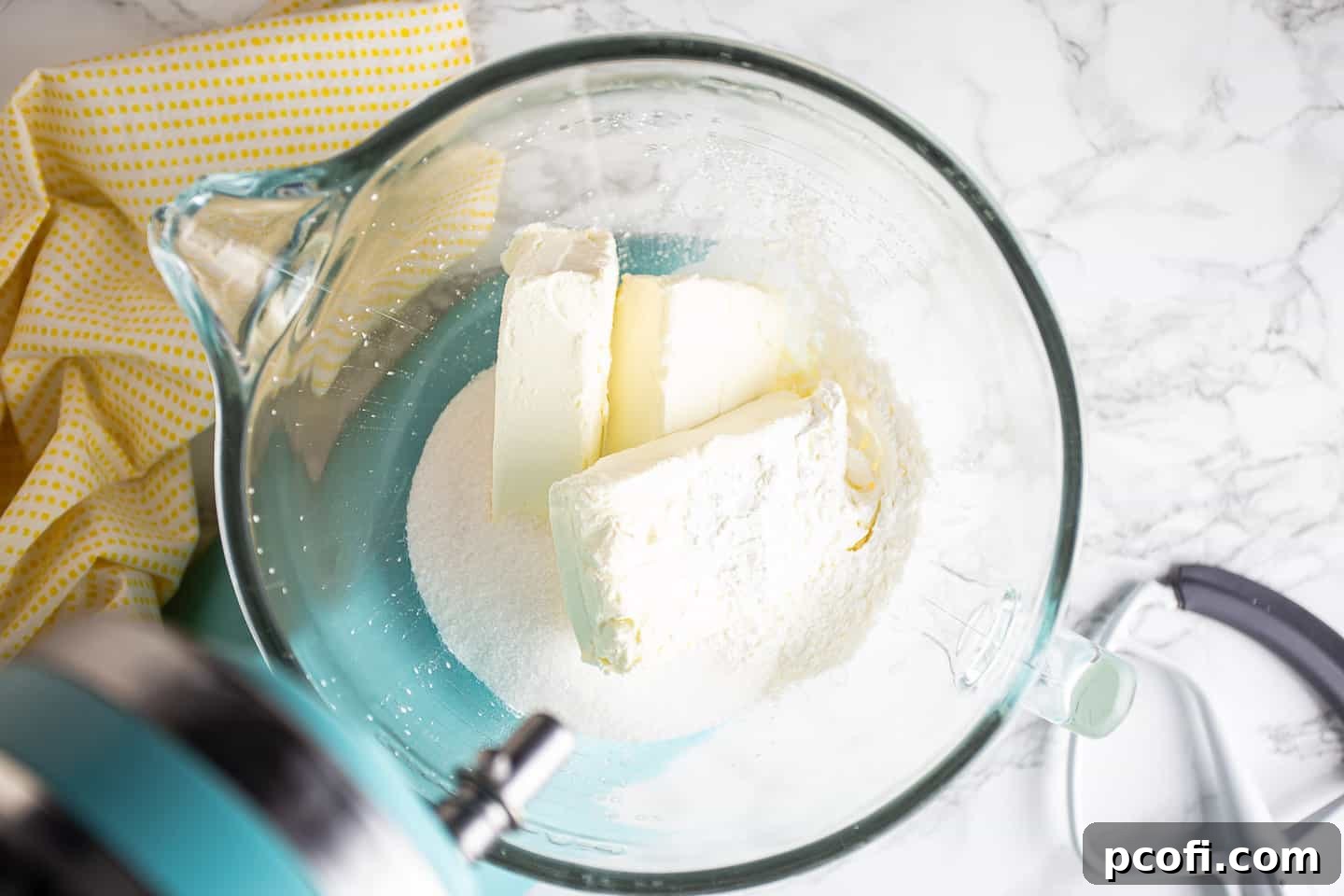
In a large mixing bowl, combine the softened cream cheese, granulated sugar, heavy cream, and cornstarch. Using an electric mixer fitted with a paddle attachment, stir these ingredients together on low speed just until they are smooth and fully combined. The goal here is to blend, not to whip, so avoid incorporating too much air. Over-whipping can introduce excess air, which can cause the cheesecake to puff up in the oven and potentially crack as it cools.
Step 3: Incorporate Eggs and Fresh Lemon Juice
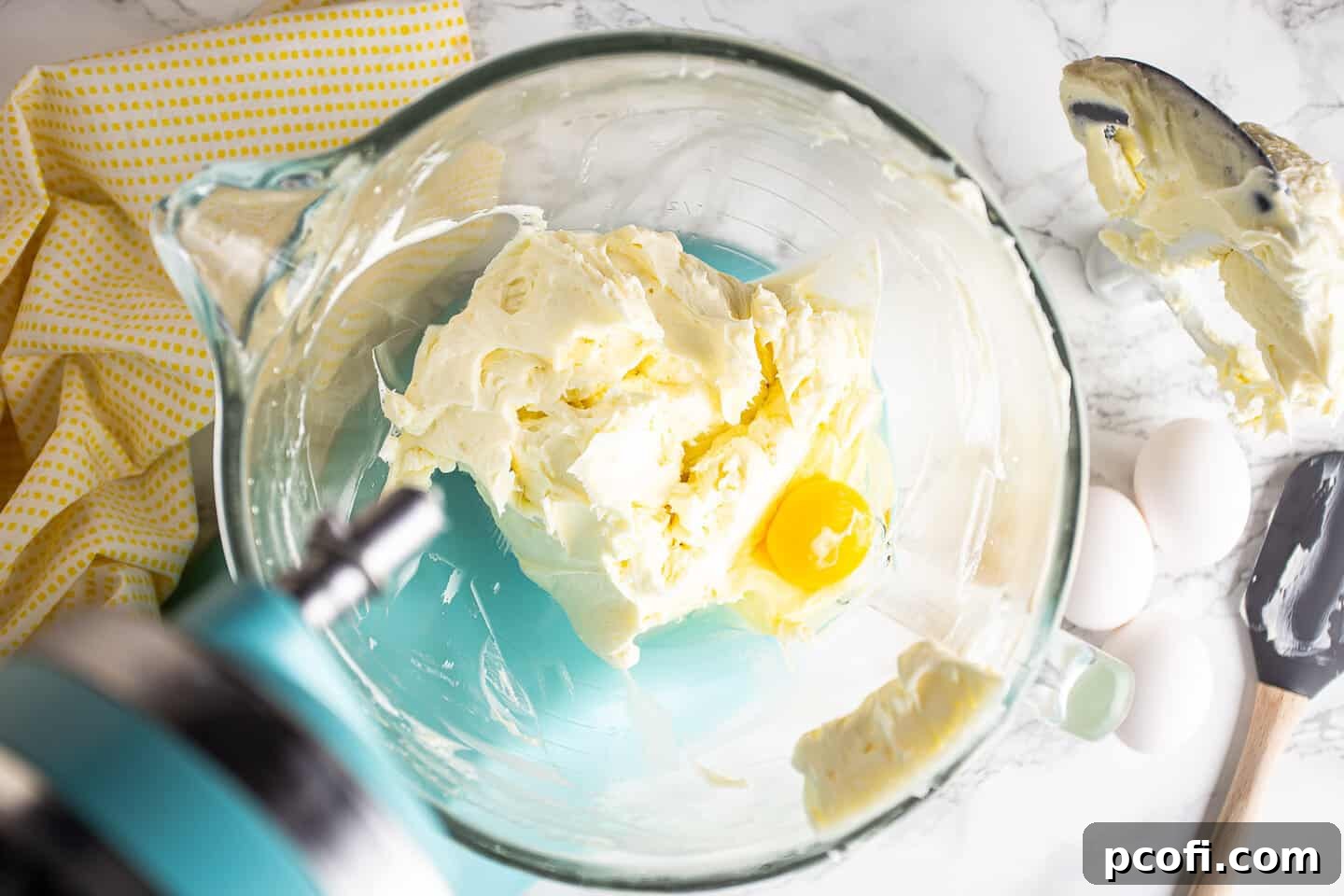
Before adding the eggs, use a silicone spatula to meticulously scrape down the bottom and sides of the mixing bowl. This ensures that any thicker bits of cream cheese are thoroughly incorporated into the batter, guaranteeing a uniformly smooth texture. It’s a small step that makes a big difference in preventing lumps.
Now, begin adding the eggs, one at a time. This step is crucial: allow each egg to be fully incorporated into the batter before adding the next. This gentle approach helps maintain the creamy consistency and prevents the batter from becoming lumpy or curdled. The eggs provide structure and richness to the cheesecake.
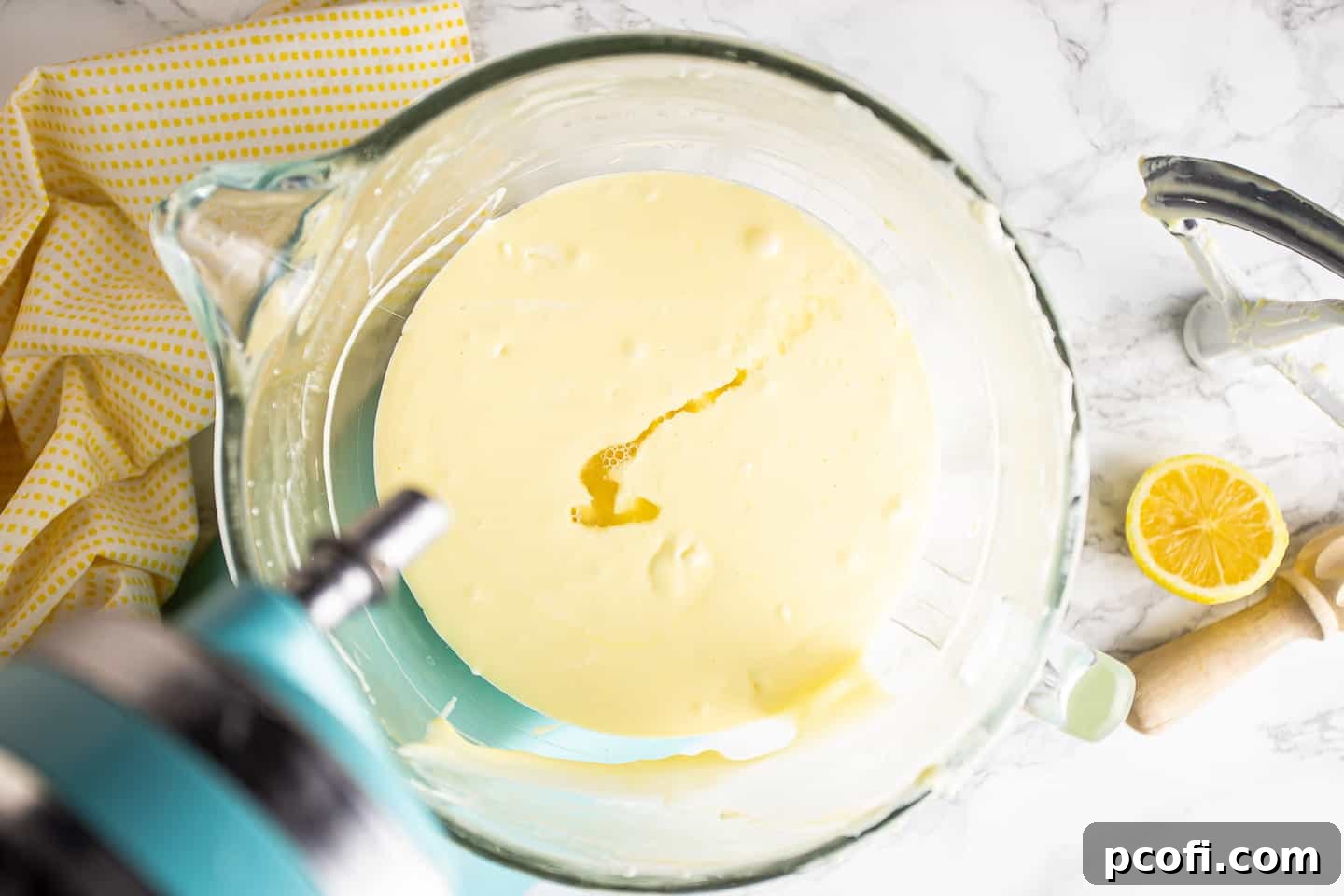
Finally, stir in the fresh lemon juice. This is where the vibrant citrus flavor truly comes alive, creating that signature tangy zest that defines a great lemon cheesecake. Stir just until combined, again, taking care not to overmix.
Step 4: Bake Gently in a Water Bath for Creamy Perfection
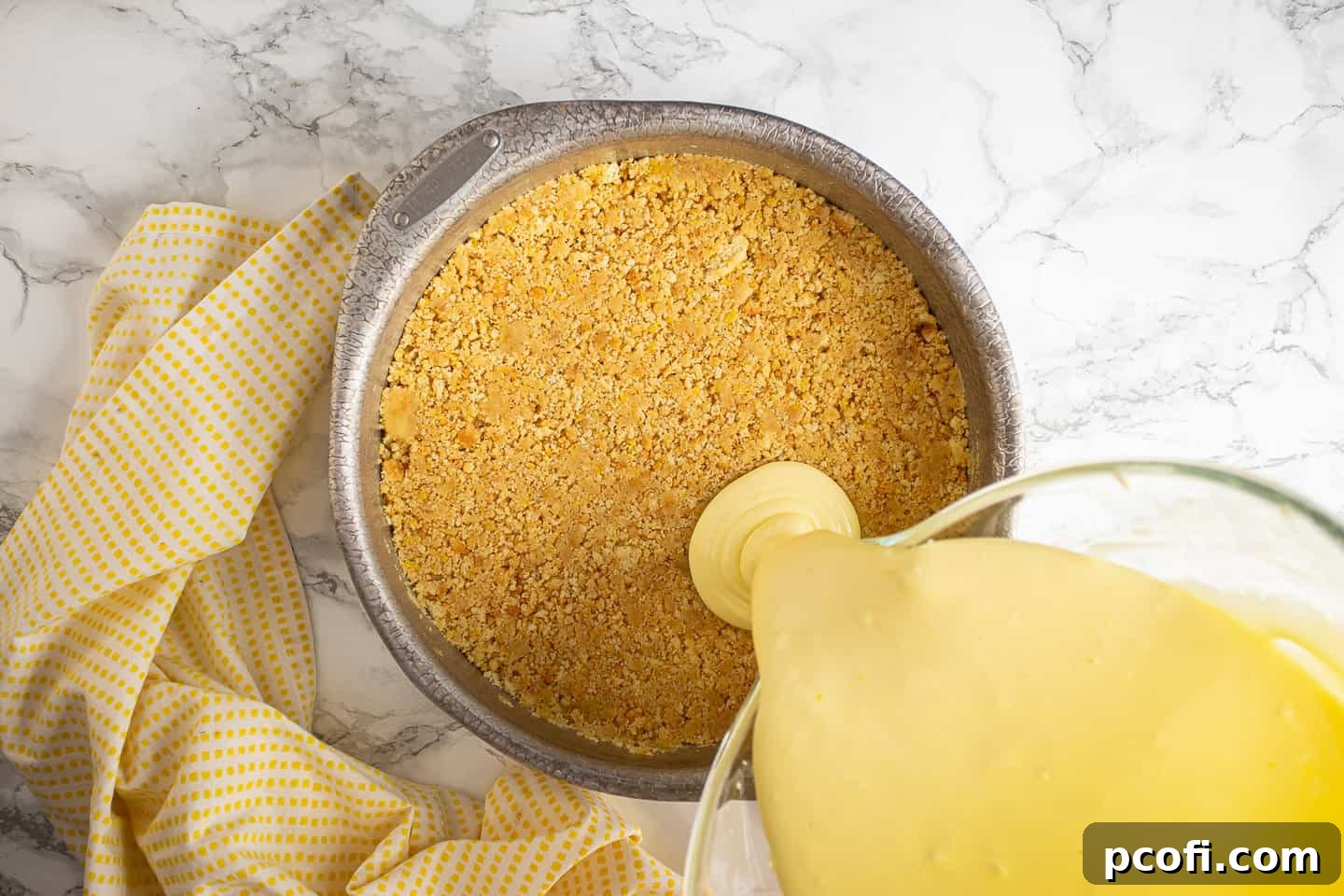
Carefully pour the silky, lemony cheesecake batter over the prepared shortbread cookie crust in your cake pan. Gently tap the pan a few times on the counter to release any trapped air bubbles.
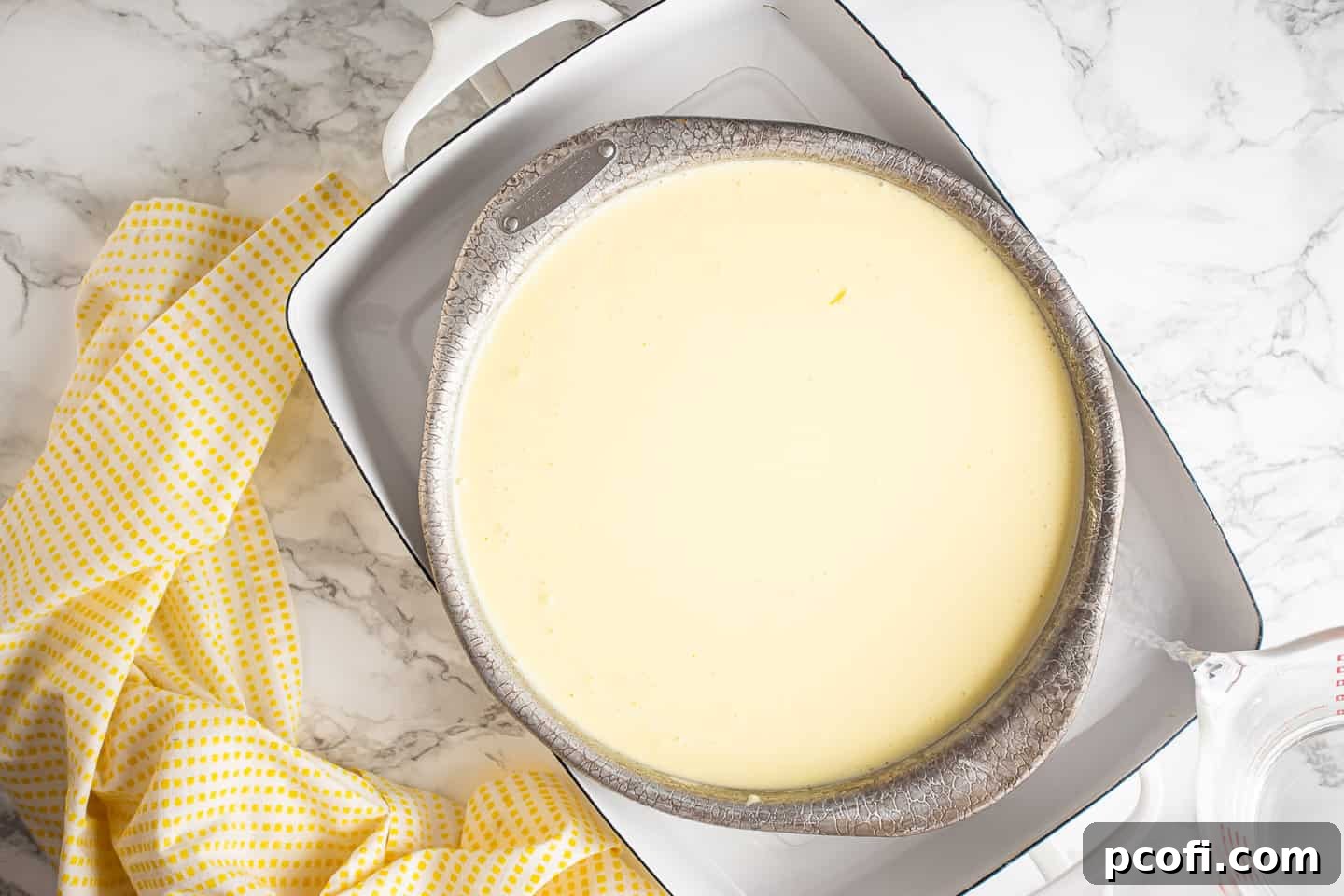
Next, place the cake pan containing the unbaked cheesecake into a larger roasting pan. Fill the larger pan about three-quarters of the way with hot water, creating what is known as a “water bath” or “bain marie.” This crucial technique ensures the cheesecake bakes slowly and evenly, preventing it from cracking and resulting in an incredibly smooth, custardy texture.
Bake the cheesecake until the sides are set and appear firm, but the very center still has a slight, gentle wobble when you lightly jiggle the pan. This indicates it’s perfectly cooked. The cheesecake will continue to firm up significantly as it cools very slowly, a key step for that flawless texture. After baking, resist the urge to immediately remove it from the oven; instead, let it cool gradually inside the turned-off oven with the door ajar for an hour before transferring it to the fridge for several hours of chilling.
Serving Suggestions for Lemon Cheesecake
This exquisite lemon cheesecake is versatile and can be enjoyed as a luxurious dessert or a refreshing afternoon snack. It’s equally delicious served chilled straight from the refrigerator or at a slightly cooler room temperature, allowing its nuanced flavors to fully develop.
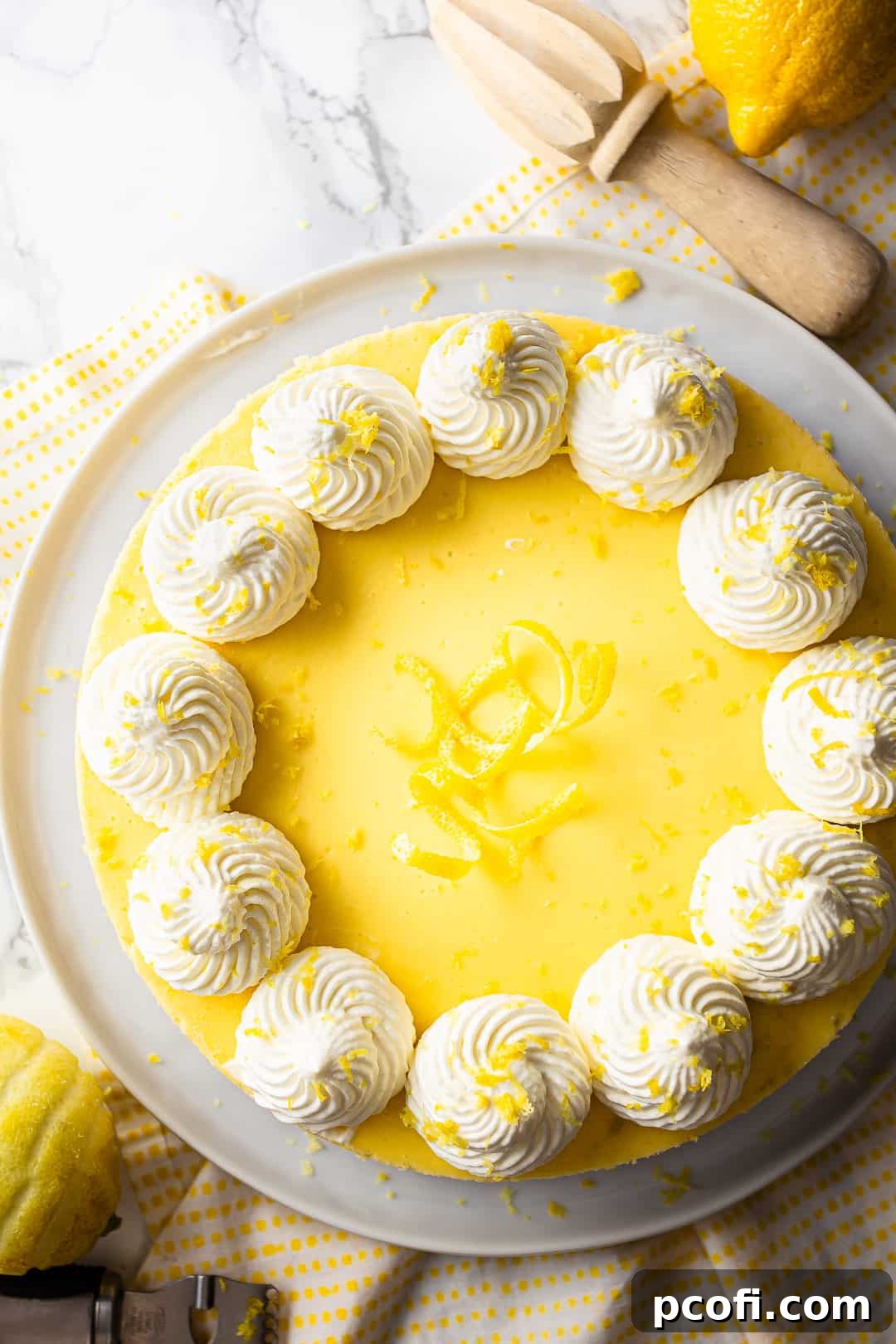
To truly elevate the experience, I love to garnish each slice with elegant swirls of lightly sweetened, softly whipped cream. A generous sprinkle of additional lemon zest not only adds a pop of color but also intensifies the citrus aroma. For an extra touch of sophistication, you can create beautiful lemon zest curlicues using a channel knife, transforming your dessert into a visual masterpiece. Consider adding fresh berries, such as raspberries or blueberries, for a burst of complementary fruitiness, or a drizzle of homemade lemon curd for an extra layer of lemon intensity.
Expert Tips for Cheesecake Success
Bash the Cookies with Ease: No food processor? No problem! Achieve perfectly fine shortbread crumbs by placing your cookies in a large zip-top bag. Seal it tightly, then use a heavy object, like the smooth side of a meat mallet or a rolling pin, to bash them until they reach the desired crumbly consistency. This method works wonders for a perfectly textured crust.
Always Use Room Temperature Ingredients: This is perhaps the most critical tip for a smooth, lump-free cheesecake batter. Ensure all your dairy ingredients, especially the cream cheese and eggs, are at room temperature. Cold cream cheese will stubbornly resist blending, leading to lumps and requiring excessive mixing, which can incorporate too much air and cause cracks.
Incorporate Eggs Slowly and Gently: When adding the eggs to your batter, do so one at a time. Mix just until each egg is fully incorporated before adding the next. This prevents the batter from becoming too liquidy too quickly, ensuring a smooth emulsion and preventing curdling or lumps.
Avoid Over-Whipping the Batter: Resist the temptation to beat the batter vigorously. Over-whipping introduces excessive air, which causes the cheesecake to expand too much during baking. As it cools, this trapped air escapes, often leading to unsightly cracks on the surface. Mix on low speed, just until smooth.
Opt for a Regular Cake Pan Over Springform: While springform pans are excellent for no-bake cheesecakes, flourless chocolate cakes, and tiramisu cakes, I strongly advise against them for baked cheesecakes. In my experience, they almost always leak, even when meticulously wrapped in foil or plastic, leading to a soggy crust from the water bath. A seamless regular cake pan, when properly prepped with non-stick spray and parchment, will unmold beautifully after chilling, ensuring a perfectly dry and crisp crust.
Transform into Lemon Cheesecake Bars: If you prefer a more casual presentation or need to serve a crowd, this recipe can easily be baked in a square pan and cut into bars. Simply adjust the baking time slightly; keep a close eye on it as smaller or shallower pans may cook faster. This format is perfect for potlucks or dessert platters.
Embrace the Water Bath: Baking cheesecake in a larger pan filled with water (a water bath or bain-marie) is not optional—it’s essential for a truly perfect cheesecake. This method provides a moist, even heat that allows the cheesecake to rise slowly and cook gently, which is the secret to a creamy texture and a crack-free surface. The steam prevents the edges from drying out and baking faster than the center.
Cool Your Cheesecake Slowly and with Care: Cheesecakes are delicate creatures that thrive on gentle treatment. After baking, turn off your oven, crack the door slightly, and allow the cheesecake to cool slowly inside the oven for at least an hour. This gradual cooling process prevents drastic temperature changes that can shock the cheesecake and cause cracks. Only after this slow cool should it be transferred to the refrigerator for thorough chilling before serving.
Frequently Asked Questions About Lemon Cheesecake
After your cheesecake has fully baked and cooled slowly in the oven, place it in the refrigerator to chill thoroughly until it is completely firm. This typically takes at least 4-6 hours, or ideally, overnight. Once chilled, gently invert the cake pan onto a flat plate. Then, place your final serving dish on top of what is now the bottom of the cheesecake (which will become the top when flipped again), and carefully flip it over. Remove the initial plate and lift the cake pan. If you encounter any resistance, it’s likely due to the butter in the crust solidifying from the cold. Simply dampen a dishtowel with very hot water, wring it out, and wrap it around the sides and bottom of the pan for a few minutes. The gentle warmth will soften the butter just enough for the cheesecake to release easily.
Lumpy batter is a common issue that usually stems from one of two reasons. Firstly, you might have added your eggs too quickly; they should be incorporated one at a time, allowing each to fully blend before the next is added. Secondly, you may have forgotten to scrape down the bottom and sides of the mixing bowl with a silicone spatula, leaving unmixed pockets of cream cheese. Additionally, ensuring all your ingredients, especially the cream cheese, are at room temperature before you begin mixing is crucial for a smooth, lump-free batter.
Absolutely, and in fact, it’s highly recommended! Planning ahead when making any cheesecake is a great idea. While the active preparation time is minimal, cheesecakes require a significant amount of time for baking, followed by a crucial slow cooling period, and then several hours of chilling in the refrigerator. I usually aim to bake my cheesecakes the night before I plan to serve them. This allows ample time for them to chill and firm up completely in the fridge, ensuring perfect slices and optimal flavor development.
For the cheesecake depicted in these images, I typically divide it into 12 equal and generous slices. This portion size provides a satisfying serving without being overly indulgent. The nutritional information provided in the recipe card below is calculated for 1/12th of the entire cheesecake. Please note that this calculation does not include any optional garnishes, such as whipped cream or additional lemon zest, which would add to the overall caloric and nutritional values.
This lemon cheesecake can be safely left at room temperature for a few hours. However, for longer storage and to maintain its freshness and creamy texture, it should always be refrigerated. Wrap the cheesecake tightly with plastic wrap or store it in an airtight container to prevent it from absorbing any odors from other foods in your fridge. Properly chilled, it will last for a week or two. For even longer storage, you can freeze it for a few months. To thaw, simply transfer it to the refrigerator overnight or allow it to come to room temperature for a few hours before serving.
Certainly! While the lemon shortbread crust adds a wonderful complementary flavor, you can absolutely experiment with other crust options. A classic graham cracker crust is always a popular choice and works beautifully with lemon. You could also try a vanilla wafer crust or even an almond flour crust for a gluten-free alternative. Just ensure your chosen crust recipe has the right consistency to hold the filling without becoming soggy.
The key to a perfectly baked cheesecake is looking for the right consistency. The edges should appear set and firm, but the very center (about a 2-3 inch circle) should still have a slight, gentle wobble when you lightly jiggle the pan. Avoid baking until the entire surface is firm, as this will result in an overbaked, dry, and potentially cracked cheesecake. Remember, it will continue to set as it cools.
More Irresistible Cheesecake Recipes
If this lemon cheesecake has ignited your passion for creamy, dreamy desserts, you’re in luck! I have a wide array of other fantastic cheesecake recipes that are sure to satisfy any craving. From classic no-bake options to rich, decadent baked varieties, there’s a cheesecake for every taste and occasion. Be sure to explore these other favorites:
- Classic No-Bake Cheesecake
- Decadent No-Bake Chocolate Cheesecake
- Elegant White Chocolate Raspberry Cheesecake
- Luxurious Red Velvet Cheesecake
As an amazon associate I earn from qualifying purchases.
Lemon Cheesecake
Leave a Review
Save Recipe
Ingredients
- 11.2 ounces (317.52 g) shortbread cookies
- 1 tablespoon (6 g) lemon zest, (zest of one lemon)
- 5 tablespoons (70 g) unsalted butter, melted
- 24 ounces (680.39 g) cream cheese, (3 8-ounce bricks), softened
- 1 cup (200 g) granulated sugar
- 1/4 cup (59.5 g) heavy whipping cream
- 3 tablespoons (24 g) cornstarch
- 4 (176 g) eggs, large
- 1 (18 g) egg yolk, large
- 1/4 cup (61 g) lemon juice, (juice of 2 lemons)
- sweetened softly whipped cream, (optional garnish)
- additional lemon zest, (optional garnish)
Instructions
-
Place the shortbread cookies and zest in the bowl of a food processor and pulse to fine crumbs.
-
Pour in the melted butter and toss with a fork to combine.
-
Transfer the mixture to a greased, parchment-lined 9-inch diameter cake pan.
-
Press the crust into an even layer over the bottom of the pan.
-
Using an electric mixer fitted with the paddle attachment, stir the cream cheese, sugar, cream, and cornstarch together on low speed until smooth (approx. 2 to 4 minutes).
-
Scrape the bottom and sides of the bowl with a silicone spatula, then stir in the eggs one at a time, allowing each one to fully incorporate before adding the next.
-
Stir in the lemon juice, then pour the batter over the crust.
-
Preheat the oven to 400 degrees F and place the cake pan inside a larger pan filled 3/4 of the way with water.
-
Bake the cheesecake for 15 minutes, then turn the oven temperature down to 300 degrees F and continue to bake until the sides are set but the middle is still slightly wobbly (approx. 65 to 75 minutes).
-
Turn off the oven, open the door slightly, and allow the cheesecake to cool slowly for one hour.
-
Garnish with 2/3 cup heavy whipping cream whipped to soft peaks with 1/4 cup powdered sugar, and more lemon zest, if desired.*