How to Make Perfect Pillowy Gnocchi: Your Ultimate Guide to Light and Delicious Potato Dumplings!
There’s a special kind of culinary magic that happens when you create something utterly delicious from simple, wholesome ingredients. For me, that magic is often found in the art of making homemade gnocchi. These delightful potato dumplings, with their light, pillowy texture, have an incredible ability to soak up rich sauces and savory broths, transforming any meal into an unforgettable experience. After a brief hiatus, I am absolutely thrilled to re-share this timeless gnocchi recipe with you today!
Returning to the process of crafting these little gems has reminded me just how enjoyable and straightforward it can be, and more importantly, how utterly scrumptious the results are. There’s a deeply comforting quality to a plate of perfectly prepared gnocchi that few other dishes can rival.
I wholeheartedly categorize potato gnocchi as the quintessential comfort food. It evokes the same warm, soul-satisfying feeling as a steaming bowl of creamy chicken and wild rice soup, the indulgent delight of poutine, or a classic serving of baked macaroni & cheese. If you’re seeking a culinary hug, a dish to uplift your spirits, or simply a cozy escape, this easy gnocchi recipe is exactly what you need. Imagine curling up with a bowl of these tender dumplings, lovingly coated in a fragrant sage brown butter sauce and dusted with Parmesan cheese – it’s pure bliss!
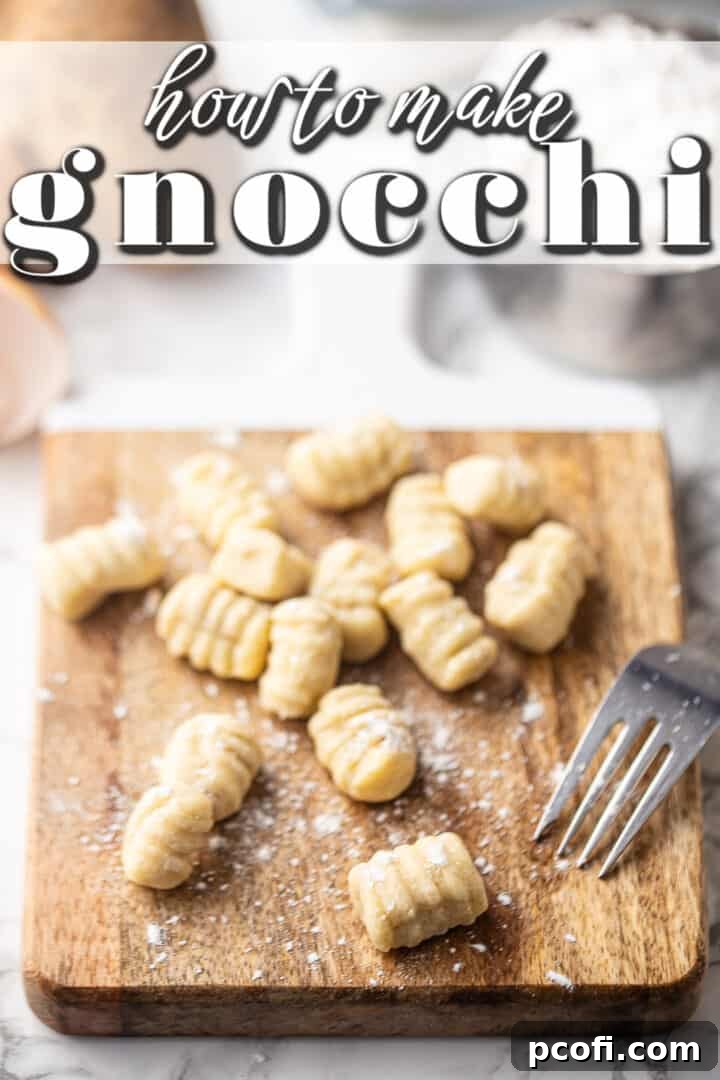
Table of Contents
- What Are Gnocchi? A Culinary Delight Explained
- Why You’ll Adore This Homemade Gnocchi Recipe
- What Do Gnocchi Taste Like? A Flavor Profile
- Essential Ingredients for Gnocchi: Simple Yet Powerful
- Special Equipment for Gnocchi Making: Tools for Success
- Step-by-Step: Crafting Your Perfect Potato Gnocchi
- Creative Serving Suggestions for Gnocchi: Beyond the Basic
- Expert Tips for Perfect Gnocchi: Master the Art
- Frequently Asked Questions About Gnocchi
- More Italian Recipes to Savor: Expand Your Culinary Horizons
Jump to Recipe Card
What Are Gnocchi? A Culinary Delight Explained
Gnocchi (pronounced NYOH-kee) are a beloved type of Italian dumpling, traditionally crafted from potatoes, flour, and egg. Unlike pasta, which is typically made with semolina flour and water, gnocchi derive their distinctive texture and flavor from potatoes, making them a unique and hearty alternative.
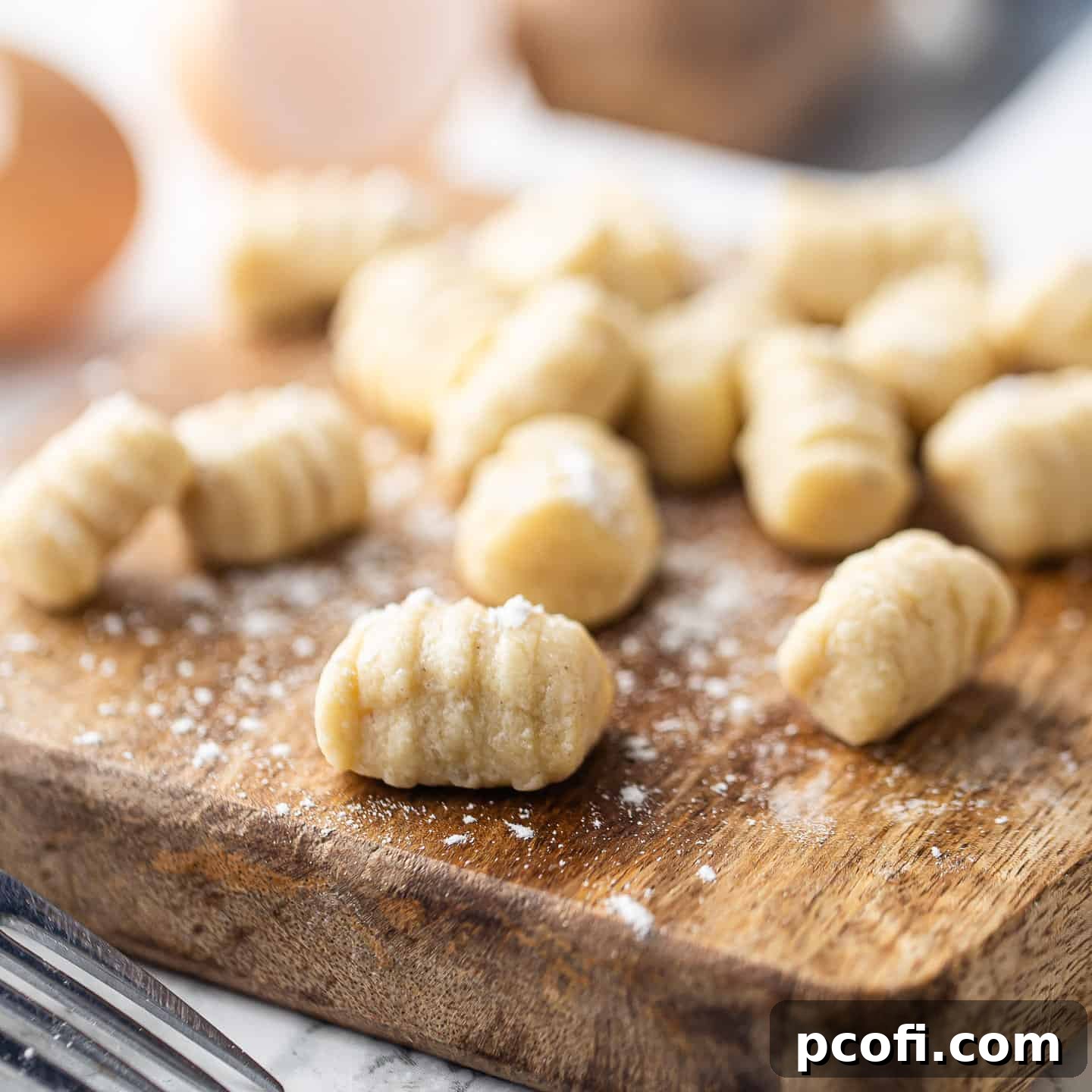
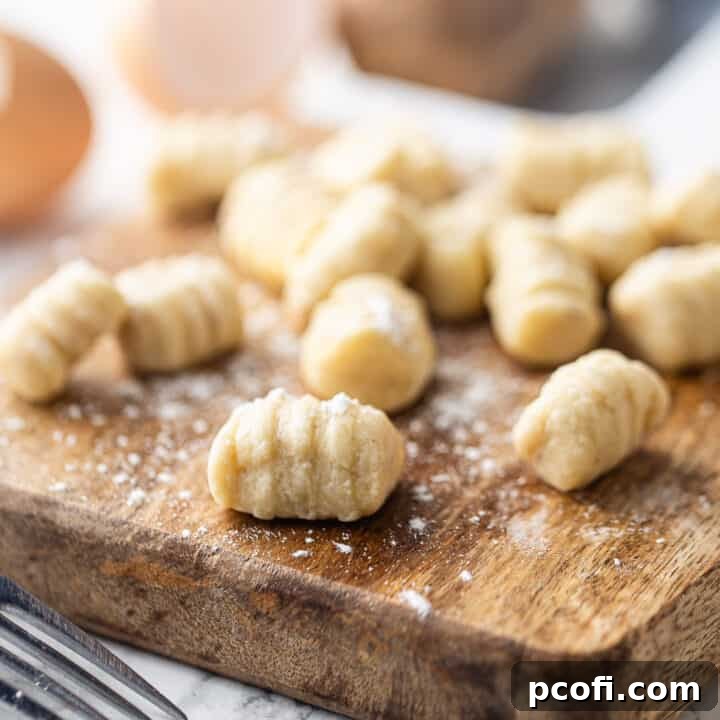
These small, soft dumplings are often shaped into characteristic pillowy ovals, frequently featuring delicate ridges along their sides. These ridges aren’t just for aesthetics; they serve a practical and delicious purpose, designed to capture and hold onto every drop of the delectable sauces they are served with, ensuring maximum flavor in every bite.
The versatility of gnocchi is one of its most appealing attributes. They can be enjoyed in a myriad of ways, much like pasta. Popular preparations include tossing them in a vibrant classic tomato sauce, enriching them with a decadent creamy gorgonzola sauce, or simply serving them pan-fried in fragrant brown butter with fresh sage and a generous dusting of Parmesan cheese. Beyond these traditional methods, gnocchi also make an excellent addition to soups, providing a delightful textural contrast and making the meal even more substantial and satisfying. This adaptability makes homemade gnocchi a fantastic dish for any occasion, from a simple weeknight dinner to an elegant culinary creation.
Why You’ll Adore This Homemade Gnocchi Recipe
- Unforgettable Flavor: Our secret to truly exceptional gnocchi lies in baking the potatoes instead of boiling them. This technique significantly reduces water absorption, resulting in a more concentrated potato flavor and a lighter, fluffier texture that boiled potatoes simply can’t achieve. You’ll taste the difference in every delicious bite!
- Minimal Ingredients: Forget complicated ingredient lists! You’ll only need four core, readily available ingredients to create a generous batch of these incredible potato dumplings. This simplicity makes it a perfect recipe for both novice and experienced cooks.
- Therapeutic Process: There’s something incredibly meditative and satisfying about the hands-on process of shaping each individual gnoccho. It’s a culinary craft that engages your senses and allows you to truly connect with your food, turning cooking into a relaxing and rewarding experience.
- Endless Versatility: Once you master this basic gnocchi recipe, a world of culinary possibilities opens up! Gnocchi can be paired with an astonishing array of sauces, from rich and creamy to light and fresh, and even incorporated into hearty stews or baked dishes. It’s a staple that truly complements any meal.
What Do Gnocchi Taste Like? A Flavor Profile
When you bite into these homemade potato gnocchi, you’ll immediately notice a wonderfully pronounced potato flavor. The experience is akin to enjoying exceptionally light and fluffy mashed potatoes, yet with a distinct firmness and chewiness that elevates them beyond a side dish. It’s truly a delightful culinary hybrid, offering the comforting earthiness of potatoes beautifully intertwined with the satisfying bite of well-made pasta. This unique textural and flavor combination is what makes gnocchi so universally appealing and distinct from other dumpling or pasta varieties.
Essential Ingredients for Gnocchi: Simple Yet Powerful
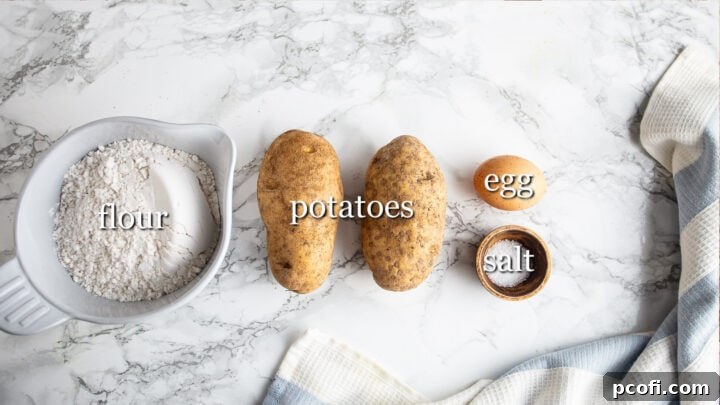
Crafting perfect homemade gnocchi requires just four fundamental ingredients. The quality of these few components plays a crucial role in the final texture and flavor of your potato dumplings, so choosing wisely is key.
Potatoes: The Heart of Your Gnocchi
The choice of potato is paramount when making gnocchi. I strongly recommend using **russet potatoes** (also known as baking potatoes) for this recipe. Russets are known for their high starch content and low moisture, which makes them bake up incredibly light, dry, and fluffy – precisely the qualities you need for exquisitely tender and pillowy gnocchi.
While some culinary traditions might suggest waxy varieties like red bliss or Yukon gold potatoes, I find these tend to yield a denser, heavier gnocchi due to their higher moisture content. For the truly light and airy dumplings we’re aiming for, russets are undeniably the superior choice. Using a dry, fluffy potato ensures you’ll need less flour, which is key to avoiding tough gnocchi.
Flour: The Binding Agent
All-purpose flour is my go-to for its balanced protein content, which provides just enough structure without making the gnocchi tough. It creates a tender dough that’s easy to work with and results in a delicate dumpling.
For those seeking alternatives, you can experiment with whole-grain options, though you might find you need slightly less flour as whole grains absorb liquid differently. If you’re looking to make gluten-free gnocchi, a gluten-free flour blend designed for 1:1 substitution should work beautifully, ensuring everyone can enjoy these delicious dumplings.
Egg: The Essential Binder
An egg is a critical component in your gnocchi dough, acting as the primary binder. It helps hold the potato and flour mixture together, giving the dough stability and structure. Without sufficient egg, your delicate gnocchi could easily dissolve into the boiling water, turning your efforts into a starchy mess. The egg ensures your dumplings remain intact and firm as they cook, maintaining their delightful shape and texture.
I recommend using a **large chicken egg**. If you’re preparing a vegan version of this recipe, a plant-based egg substitute that is formulated for a 1:1 replacement will work just as effectively. While it’s often advised to use room temperature eggs for baking, I’ve found that for gnocchi, this isn’t a critical factor, so don’t fret if your egg is straight from the fridge.
Salt: Flavor Enhancer
Salt isn’t just for seasoning; it’s a vital flavor carrier that intensifies the inherent goodness of the potatoes and complements any sauce you choose. Its presence ensures that your gnocchi are seasoned from the inside out, providing a well-rounded and savory profile.
My preference is kosher salt. Unlike many table salts, kosher salt typically lacks iodine and anti-caking agents, which can sometimes impart a slightly bitter or metallic aftertaste. Kosher salt offers a pure, clean flavor, and its larger flake size makes it easier to measure and distribute evenly throughout the dough. It’s also widely available and quite affordable, making it an excellent choice for everyday cooking.
Special Equipment for Gnocchi Making: Tools for Success
While you don’t necessarily need an arsenal of fancy kitchen gadgets to make amazing homemade gnocchi, certain tools can undeniably streamline the process and elevate your results. Here’s a look at some helpful equipment, along with viable alternatives if you don’t have them on hand:
- Measuring Cups and Spoons: Essential for accurately portioning your flour and salt. Precision in measurement contributes to the perfect dough consistency.
- Clean Work Surface or Large Mixing Bowl: A spacious, clean surface (like a countertop or wooden board) is ideal for mixing and kneading the gnocchi dough. Alternatively, a large mixing bowl offers a contained space, especially helpful if you’re new to dough handling.
- Potato Ricer: This is my absolute favorite tool for gnocchi! A potato ricer transforms baked potatoes into a light, airy, and consistent “rice” texture without overworking them, which is crucial for pillowy dumplings. It mashes and aerates the potatoes in one effortless step, preventing lumps and heavy dough. If you don’t have a ricer, a sturdy potato masher can work, but aim for a smooth, lump-free consistency.
- Fork: A simple kitchen fork is perfect for initially incorporating the egg and salt into the potato-flour mixture and later for shaping the gnocchi with classic ridges.
- Bench Scraper (or Bench Knife): Another highly recommended tool! A bench scraper is invaluable for cleanly gathering dough, dividing portions, and efficiently scraping your work surface for easy cleanup. If you don’t have one, a regular knife or a firm spatula can be used for dividing, and a damp cloth for cleanup.
- Gnocchi Board: This specialized board features a series of parallel ridges designed to quickly and easily create the signature grooves on your gnocchi, which are essential for holding sauces. While a dedicated gnocchi board is fantastic, you can achieve similar results by rolling the dumplings along the tines of a regular fork.
Step-by-Step: Crafting Your Perfect Potato Gnocchi
Making homemade gnocchi is a rewarding culinary journey that unfolds in just a few simple steps. Follow this guide carefully to achieve light, tender, and incredibly flavorful potato dumplings.
Step 1: Prepare and Cook Your Potatoes with Care
Begin by preheating your oven to 425°F (220°C). Thoroughly prick each potato all over with a fork or a sharp knife. This crucial step allows steam to escape during baking, preventing the potatoes from exploding and ensuring they cook evenly. Place the pricked potatoes directly on an oven rack or a baking sheet and bake until they are completely tender, usually about 1 hour, depending on their size. You should be able to easily pierce them with a fork.
Once baked, the immediate concern is managing moisture. Steam is the primary enemy of light gnocchi, as excess moisture in the potatoes necessitates adding more flour, leading to a denser dumpling. As soon as the potatoes are cool enough to handle safely, slice them in half lengthwise. This action immediately releases accumulated steam. Promptly scoop out the fluffy potato flesh into a bowl, discarding the skins. Work quickly to minimize moisture reabsorption.
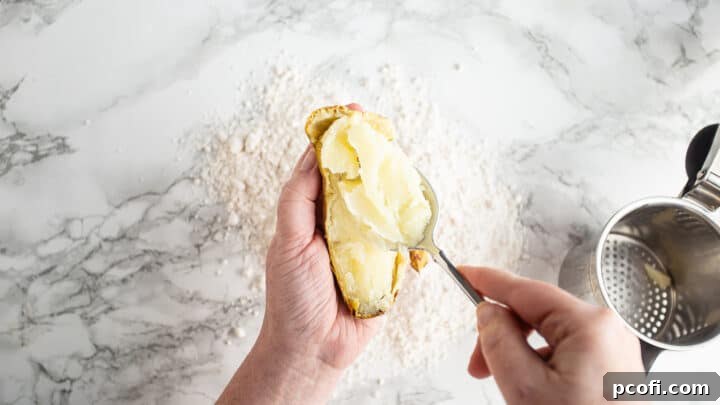
Step 2: Rice the Potatoes and Incorporate the Flour
On a clean, spacious work surface (such as a large wooden board or a very clean countertop), spread your all-purpose flour into an even, thin layer. This provides a bed for the riced potatoes and helps distribute the flour evenly from the start.
Take your cooked potato flesh and push it through a potato ricer directly onto the prepared layer of flour. The ricer is an indispensable tool here; it not only thoroughly mashes the potatoes into fine, spaghetti-like strands but also aerates them beautifully. This aeration is crucial for achieving that desired light and pillowy texture, preventing any lumps that could lead to heavy gnocchi.
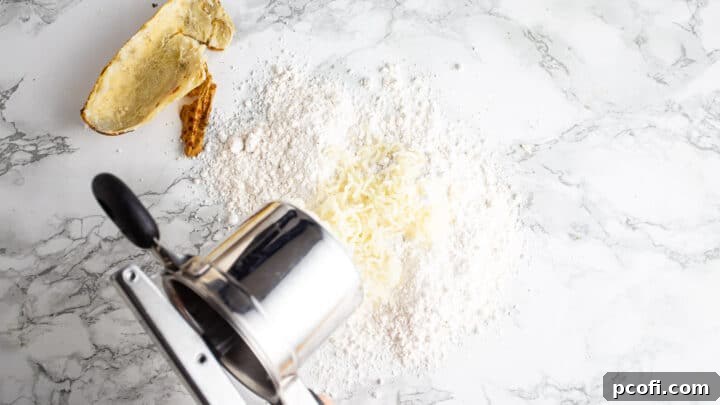
Once all the potato is riced, use your hands to gently and quickly toss the riced potato strands with the flour. Your goal is to coat every particle of potato with flour, ensuring a consistent mixture without overworking the dough. This initial toss helps to prevent stickiness later on and begins the process of forming a cohesive dough.
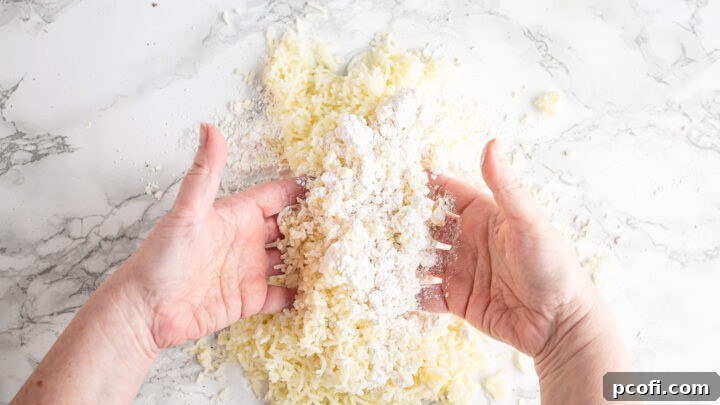
Step 3: Bind the Dough with Egg and Salt
Gather your flour and riced potato mixture into a neat pile on your work surface. Create a distinct well (a hollow space) in the center of this pile. Crack your egg directly into this well, and then add the measured kosher salt alongside it. The well technique keeps the liquid contained initially, allowing for controlled incorporation.
Using a fork, begin by gently beating the egg and salt together within the well. As you do this, gradually start to incorporate the surrounding potato-flour mixture from the sides of the well into the liquid. Work slowly and methodically, ensuring the egg and salt are thoroughly combined with the dry ingredients. This step is crucial for developing the dough’s structure and flavor.
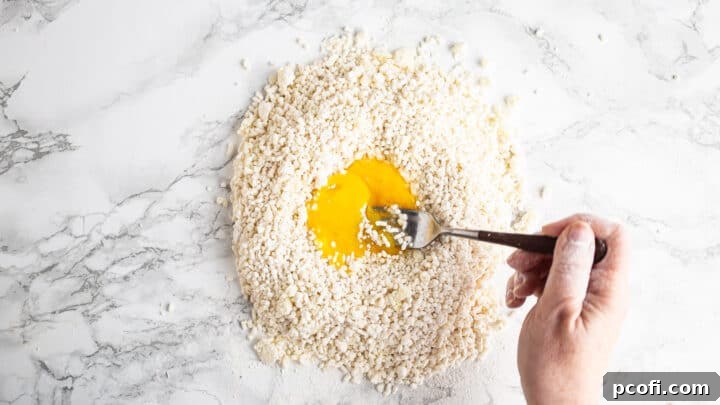
Continue this gentle incorporation with the fork until the mixture becomes too stiff to effectively stir. At this point, transition from the fork to using your hands. Begin to gently knead the dough, bringing all the ingredients together into a cohesive ball. Remember, the key to tender gnocchi is minimal handling.
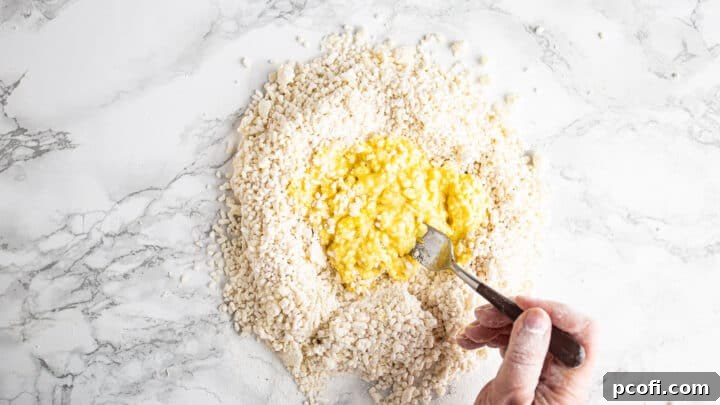
Crucial Tip: Avoid over-kneading the dough at all costs! Overworking the dough develops the gluten in the flour, which will result in tough, rubbery gnocchi instead of the light, pillowy texture you desire. Use as few strokes as possible – just enough to gather the dough into a soft, slightly tacky ball that holds its shape. If the dough feels overly sticky, add a tiny bit more flour, a teaspoon at a time, until it’s manageable.
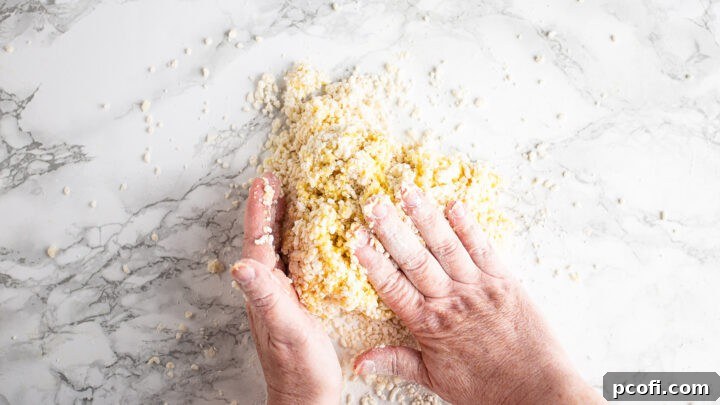
Step 4: Expertly Shape Your Gnocchi
Once your dough is gently formed, divide it into four equal portions. This makes the rolling and shaping process more manageable and ensures consistent dumpling sizes.
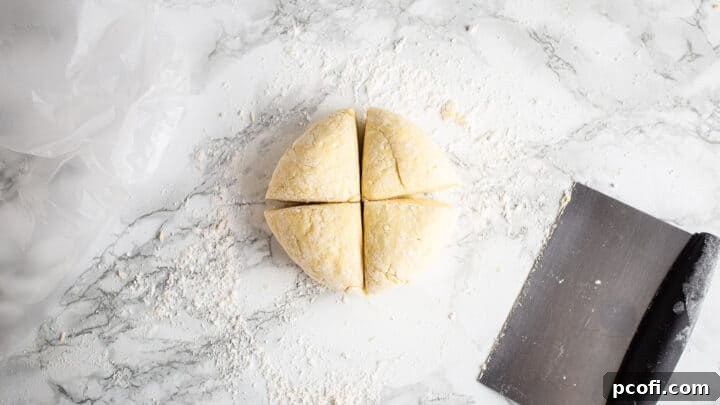
Take one portion of dough and, with light pressure from your palms and fingertips, roll it out into a long, uniform rope. Aim for a diameter of approximately 3/4-inch (about 2 cm). Ensure the rope is consistent in thickness to ensure even cooking of your gnocchi.
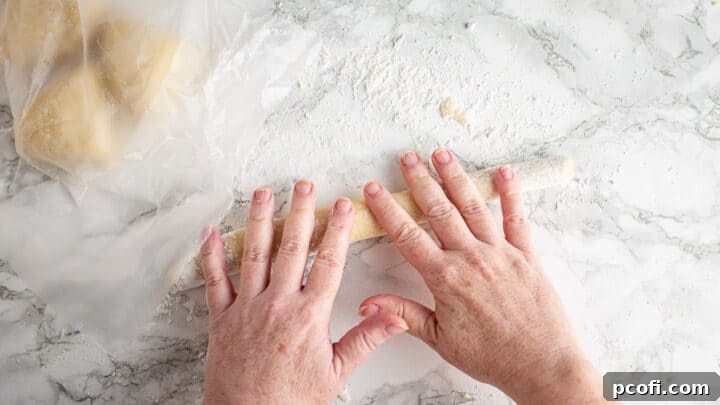
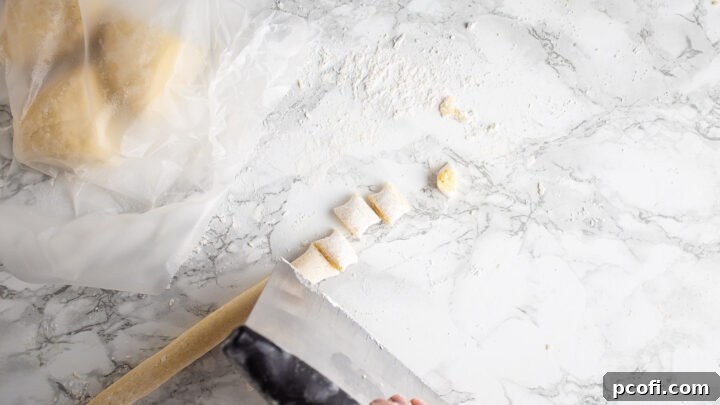
Using a bench scraper or a sharp knife, cut the rope into individual dumplings, each approximately 3/4-inch long. At this point, you have adorable little pillow-shaped gnocchi, which are perfectly delicious as they are! Many people prefer this simple shape.
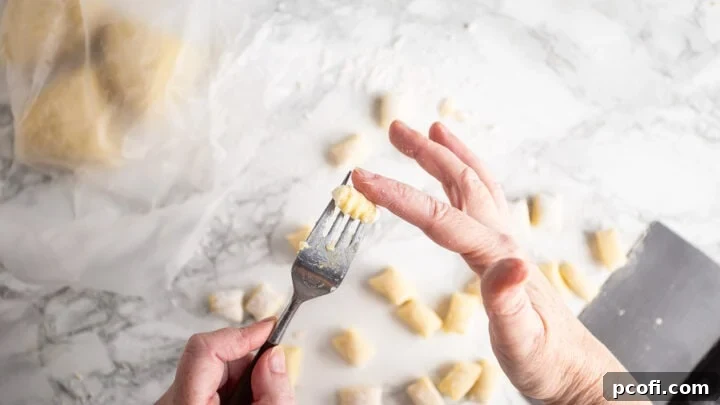
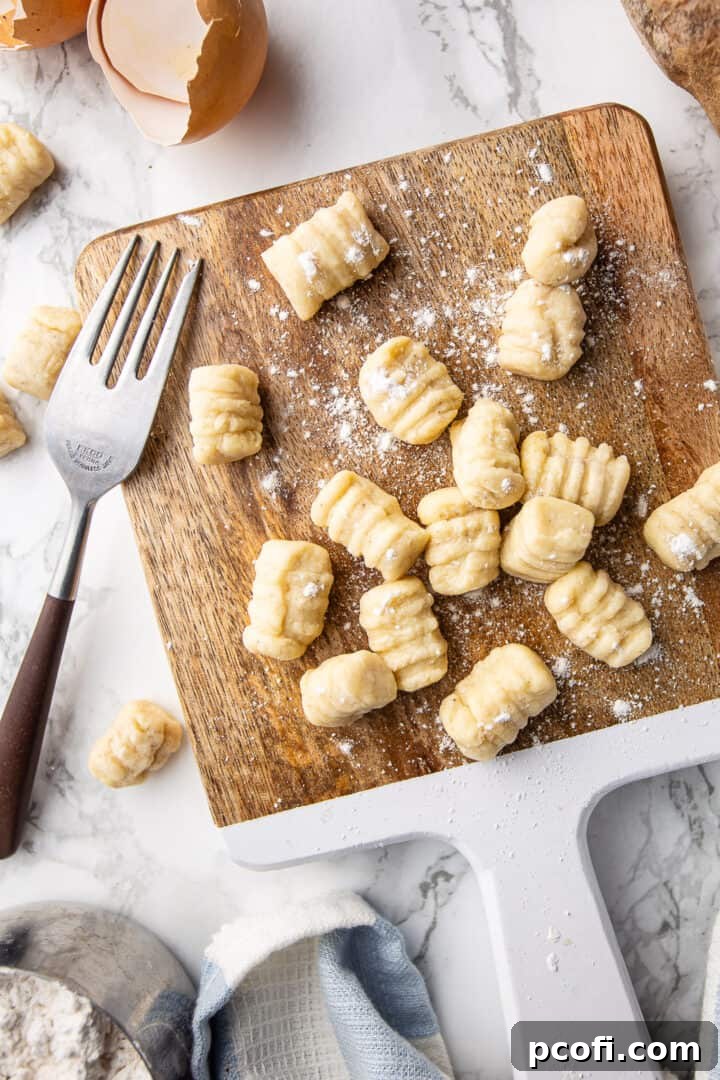
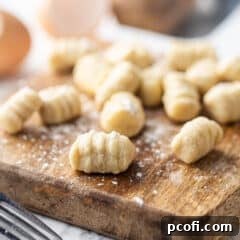
However, if you want your sauces to truly cling to every surface, creating ridges is a fantastic idea. Take each individual dumpling and gently roll it down the back of a fork’s tines, applying light pressure as you roll. This simple action will create the classic parallel lines on the gnocchi’s surface, enhancing its ability to capture and deliver flavor. For an even more traditional and efficient method, you can use a gnocchi board.
Step 5: Cook Immediately or Freeze for Later Enjoyment
Once your gnocchi are shaped, you have two excellent options: cook them right away for an immediate feast, or freeze them for future culinary delights. Freezing homemade gnocchi is a fantastic way to enjoy them whenever the craving strikes.
To freeze, arrange the uncooked gnocchi in a single layer on a parchment-lined baking sheet. Ensure there is enough space between each dumpling; if they touch, they will freeze together and be difficult to separate. Slide the entire tray into the freezer. Once the gnocchi are frozen solid (this usually takes a couple of hours), you can transfer them to a freezer-safe zip-top bag. They will keep beautifully in the freezer for up to several months, ready to be cooked straight from frozen.
Whether fresh or frozen, cooking gnocchi is remarkably quick and straightforward. Bring a large pot of generously salted water to a rolling boil. Adding salt to the water not only seasons the gnocchi but also helps prevent them from sticking. Gently tip in a manageable batch of gnocchi. Avoid overcrowding the pot, as this can lower the water temperature and lead to uneven cooking.
Gnocchi cook incredibly fast! They typically take only a minute or two, even when dropped directly into boiling water from the freezer. You’ll know they are perfectly done when they gracefully bob to the surface of the water. As each gnoccho floats up, promptly retrieve it with a slotted spoon. From the pot, they can go straight into your prepared sauce, ready to absorb its flavors and complete your dish. Enjoy the fruits of your labor!
Creative Serving Suggestions for Gnocchi: Beyond the Basic
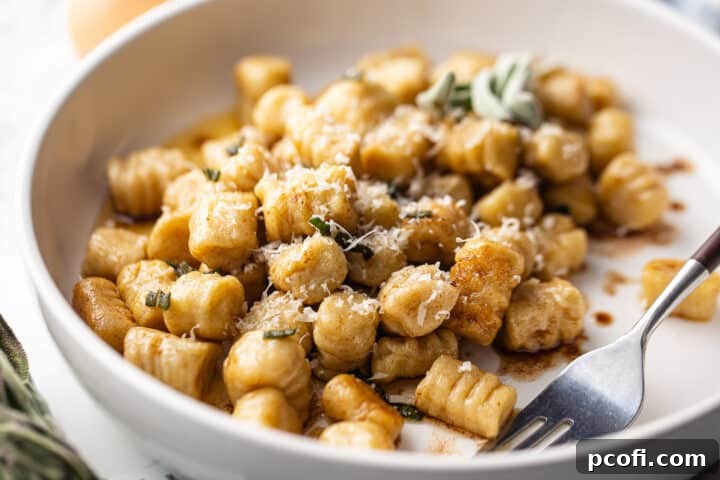
The beauty of homemade gnocchi lies in its incredible versatility, allowing it to be paired with an extensive range of sauces and preparations. While a classic choice, like the one pictured, is always a winner, don’t hesitate to get creative in the kitchen!
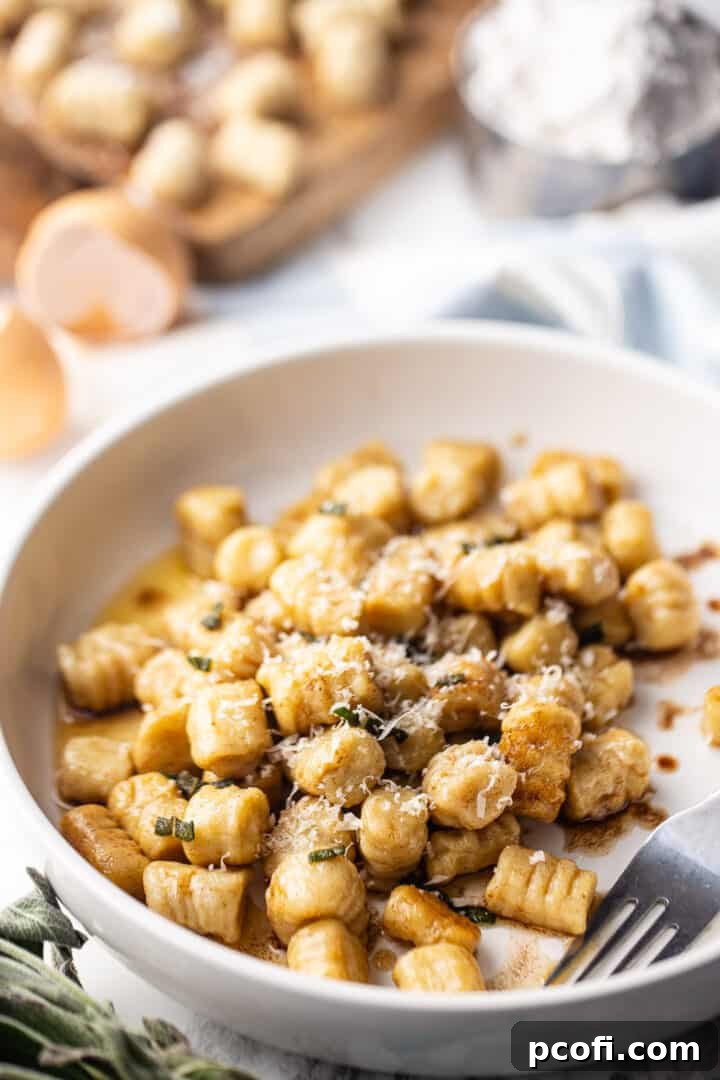
For the exquisite dish you see here, I simply tossed the freshly cooked gnocchi into a warm skillet filled with rich, nutty brown butter. A few sprigs of fresh sage were added to infuse the butter with its aromatic warmth, and then the entire dish was generously showered with freshly grated Parmesan cheese. This preparation is a truly traditional and comforting way to enjoy gnocchi, especially delightful during the cooler months when its warmth is most appreciated.
If you’re new to making brown butter, it’s a simple technique that adds a depth of flavor that is truly unparalleled. You can find a detailed tutorial here: How to Brown Butter.
Beyond this classic, consider these delightful alternatives:
- Classic Tomato & Basil: A simple, vibrant marinara sauce with fresh basil highlights the gnocchi’s potato flavor.
- Pesto Perfection: Toss with a homemade or good quality store-bought pesto for a fresh, herbaceous burst.
- Creamy Mushroom: A rich sauce featuring sautéed mushrooms, garlic, and a touch of cream creates an earthy and indulgent meal.
- Gorgonzola Cream: For cheese lovers, a luscious gorgonzola cream sauce offers a bold and unforgettable flavor profile.
- Roasted Vegetable Medley: Lightly toss cooked gnocchi with seasonal roasted vegetables (like cherry tomatoes, zucchini, or asparagus) and a drizzle of olive oil.
- Baked Gnocchi: Layer gnocchi with your favorite pasta sauce and mozzarella, then bake until bubbly and golden for a hearty casserole.
- Added to Soups & Stews: For an even heartier meal, drop uncooked gnocchi directly into simmering soups or stews during the last few minutes of cooking.
Expert Tips for Perfect Gnocchi: Master the Art
Achieving truly light and pillowy homemade gnocchi is an art, but one that is easily mastered with a few key techniques. Pay close attention to these expert tips to ensure your potato dumplings are nothing short of perfection.
Bake, Don’t Boil Your Potatoes for Superior Texture
You might notice that many traditional gnocchi recipes call for boiling potatoes. However, for truly superior gnocchi, I unequivocally recommend baking them. The reason is simple: moisture is the arch-nemesis of light and airy gnocchi. Boiled potatoes absorb a significant amount of water, which then requires you to add considerably more flour to achieve a workable dough. The unfortunate consequence of extra flour is a heavier, denser, and often tougher dumpling.
By baking your potatoes, you ensure they cook through while remaining relatively dry and fluffy. This dry potato base means you’ll need minimal flour to bind the dough, resulting in the exquisitely light and airy texture we all crave. This method not only improves the texture but also concentrates the potato’s natural flavor, making your gnocchi taste even better.
Release the Steam: A Crucial Step
Following closely on the heels of the baking tip is the importance of releasing steam from your cooked potatoes. If hot potatoes are left to cool intact, the steam trapped within them will condense back into moisture, rehydrating the potato flesh. As mentioned, this added moisture will force you to incorporate more flour into your dough to achieve the correct consistency.
Therefore, as soon as your baked potatoes are cool enough to safely handle, slice them in half lengthwise. This immediate action allows the steam to escape quickly and efficiently. Work promptly to scoop out the fluffy flesh and continue with the ricing process. Speed here is your ally in maintaining that desirable dry potato base.
Never Over-Knead: The Secret to Tenderness
Kneading is a fundamental technique in bread making, where it develops gluten, creating a strong, elastic, and chewy texture. While this is wonderful for a crusty loaf, it’s the exact opposite of what you want for gnocchi. Overworking your gnocchi dough will develop these glutens, leading to tough, rubbery, and bouncy dumplings that lack the delicate, melt-in-your-mouth quality of perfectly made gnocchi.
The goal for gnocchi is lightness and tenderness. To achieve this, bring your dough together with as little kneading as humanly possible. Once the mixture forms a cohesive, soft ball that is no longer sticky, stop working it. A few gentle folds and presses are all that’s needed to unify the ingredients. Trust the process and resist the urge to knead extensively.
Frequently Asked Questions About Gnocchi
If your gnocchi seem to disappear into the boiling water, it’s almost always due to a lack of binding agent. The egg in the recipe is crucial for holding the potato and flour mixture together. If you omit the egg or don’t use enough, your gnocchi won’t have the necessary structure to withstand the boiling process and will sadly disintegrate. Ensure you follow the recipe’s egg quantity precisely!
Fuzzy or mushy gnocchi are typically a sign of overcooking. Gnocchi cook very rapidly! They should float to the surface of the water within a minute or two of being added to a rolling boil. As soon as you see them rise, promptly remove them from the pot with a slotted spoon and transfer them directly into your prepared sauce. Lingering in the hot water for too long will cause them to absorb too much liquid and become waterlogged and mushy.
Tough, rubbery, or overly bouncy gnocchi are usually the result of overworking the dough. Excessive kneading develops the gluten in the flour, making the dumplings dense and chewy, rather than light and tender. When preparing the dough, work quickly and handle it as little as possible. The moment the ingredients come together into a cohesive, soft ball, stop kneading, divide the dough, and move on to shaping. Less is truly more when it comes to gnocchi dough.
Uncooked gnocchi can be stored in the refrigerator for up to a day, lightly covered. For longer storage, flash-freeze uncooked gnocchi on a parchment-lined baking sheet until solid, then transfer them to a freezer-safe zip-top bag. They will keep well in the freezer for a couple of months and can be cooked directly from frozen. If you have leftover cooked gnocchi, store them in an airtight container in the fridge for up to 3-4 days. Reheat gently in a pan over medium-low heat with a little sauce or olive oil, or briefly in the microwave, until warmed through.
This recipe is designed to yield a generous batch of gnocchi, sufficient to feed 4 people as a main course, or more if served as a side or appetizer. The nutritional information provided in the recipe card below is calculated for 1/4 of the total batch, and it pertains specifically to the potato gnocchi themselves, not including any accompanying sauces or toppings.
More Italian Recipes to Savor: Expand Your Culinary Horizons
If you’ve enjoyed mastering the art of homemade gnocchi, you’ll love exploring more delicious Italian dishes that bring warmth and flavor to your table. Here are a few of my other favorite Italian recipes that I think you’ll truly enjoy:
- Pork Milanese
- Chicken Piccata
- Mushroom Risotto
- Garlic Knots
As an Amazon Associate, I earn from qualifying purchases.
Classic Potato Gnocchi Recipe
Leave a Review
Save RecipeSaved!
Ingredients
- 2 large (approx. 426 g) russet potatoes
- 1 cup (125 g) all-purpose flour, (you may need slightly more or less depending on potato moisture)
- 1 large (approx. 44 g) egg
- 1 teaspoon (6 g) kosher salt
Instructions
-
Preheat your oven to 425 degrees F (220°C). Prick the russet potatoes all over with a fork or a sharp knife to allow steam to escape during baking.
-
Bake the potatoes directly on an oven rack or baking sheet for approximately 1 hour, or until they are completely tender when pierced with a fork.
-
While the potatoes are baking, prepare your work surface. Spread the all-purpose flour in a wide, even pile on a clean countertop or in a large mixing bowl.
-
As soon as the baked potatoes are cool enough to handle, carefully slice them in half lengthwise to release steam. Scoop out the fluffy potato flesh and immediately push it through a potato ricer directly onto the flour. Discard the potato skins.
-
Using your hands, gently and quickly toss the riced potato and flour together until every potato particle is lightly coated.
-
Gather the potato/flour mixture into a mound and create a well in the center. Crack the large egg into the well and add the kosher salt.
-
Working from the center outward, use a fork to beat the egg and salt together. Slowly begin to draw the potato mixture from the sides of the well into the egg, gradually incorporating it.
-
Continue mixing with the fork until the dough becomes too thick to work further. At this point, switch to using your hands.
-
Quickly and gently finish incorporating the ingredients with minimal kneading. Gather the dough into a soft, cohesive ball. The less you knead, the more tender your gnocchi will be. (The dough should be soft but not overly sticky. If it feels too sticky, add a very small amount of flour, a teaspoon at a time.)
-
Divide the dough into 4 equal portions. Take one portion and roll it into a long rope, approximately 3/4-inch (2 cm) in diameter. Repeat with remaining dough portions.
-
Using a bench scraper or knife, cut each rope into individual dumplings, roughly 3/4-inch (2 cm) long.
-
To create the signature sauce-grabbing ridges, gently roll each dumpling over a gnocchi board or the back of a fork.
-
As you shape the gnocchi, place them on a parchment-lined baking sheet, ensuring they do not touch each other to prevent sticking.
-
To Freeze: Lightly cover the tray of uncooked gnocchi with plastic wrap and freeze until solid. Once frozen, transfer the gnocchi to a zip-top freezer bag and store in the freezer for up to a few months. Cook directly from frozen.
To Cook Immediately: Bring a large pot of generously salted water to a boil. Add the gnocchi and boil for 1 to 2 minutes, or until they float to the surface. Promptly remove with a slotted spoon, drain lightly, and serve immediately with your preferred sauce, such as brown butter, fresh sage, and grated Parmesan.