The Ultimate Classic Thanksgiving Stuffing Recipe: Your Go-To Holiday Side Dish
Get ready to discover the Thanksgiving stuffing recipe that will become a cherished tradition in your home year after year. Perfectly complementing your holiday turkey dinner, this recipe delivers the authentic, time-honored flavor that families crave during the festive season. Forget complicated gourmet versions; this is the classic, comforting stuffing you remember from childhood, elevated with simple tips for guaranteed success.
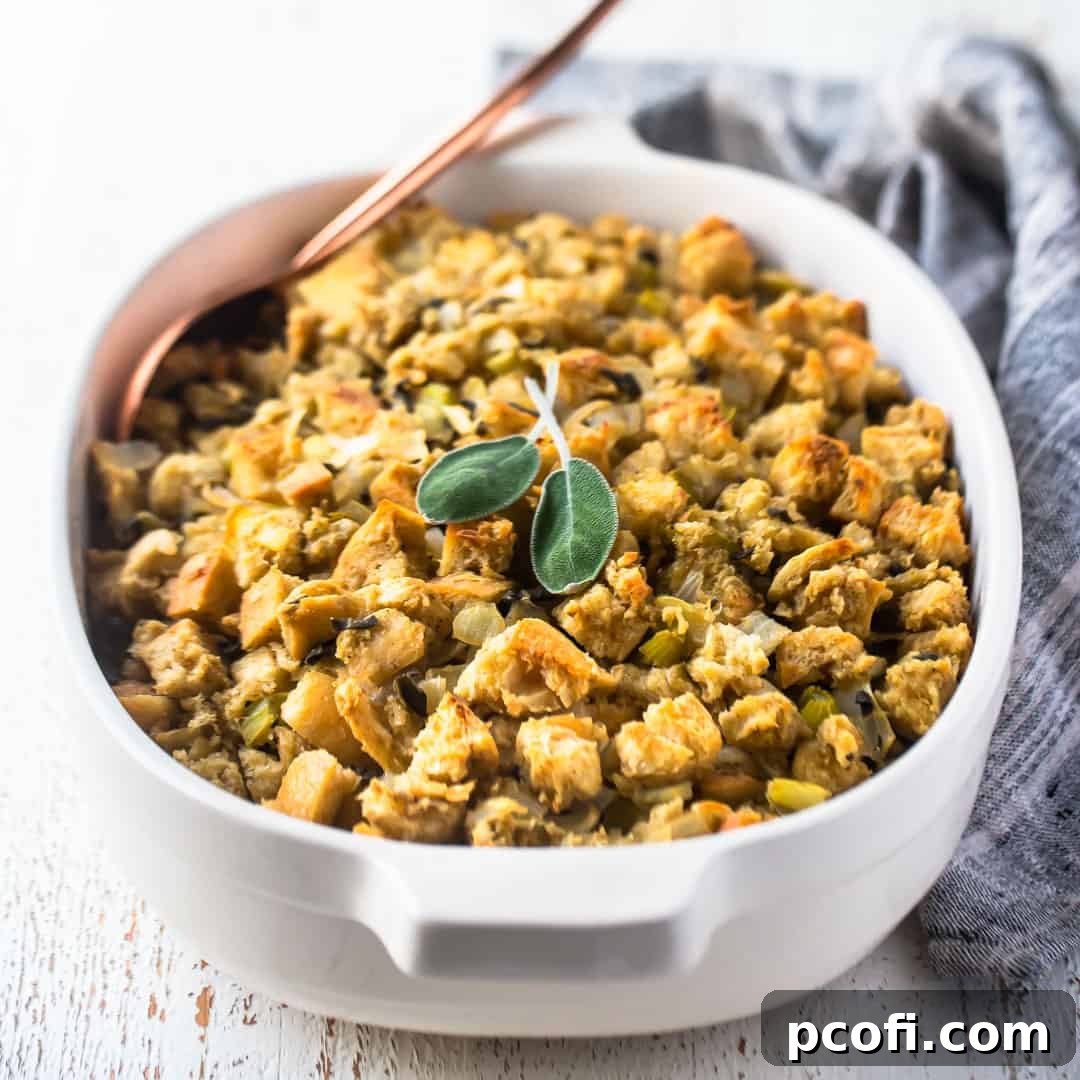
This beloved Thanksgiving stuffing recipe was originally shared on November 11, 2019. We’ve recently refreshed this post with a brand new video tutorial and additional expert tips to ensure your stuffing is perfect every time. Rest assured, the core recipe remains unchanged, offering the same delicious flavors our family has enjoyed for years. We hope you’ll love this classic side dish as much as we do!
The air has taken on a crisp bite, and the daylight hours are rapidly shortening – winter’s embrace is definitely making its presence felt. Just last week, we were basking in mild, sunny weather, and now, almost overnight, temperatures have plummeted by a significant margin. The early sunset at 4:30 PM only adds to that cozy, introspective winter vibe.
But with the change in seasons comes the most wonderful time of the year: the holidays! As we approach mid-November, my mind is already fully immersed in Thanksgiving preparations. I’m dreaming of warm, flaky homemade crescent rolls, the comforting sweetness of pumpkin pie with candied pecan topping, and the bright tang of homemade cranberry sauce. These are the flavors that truly define the season.
However, amidst all these delightful dishes, there’s one that holds a truly irreplaceable spot on our Thanksgiving table: this classic, deeply flavorful Thanksgiving stuffing recipe. It’s the ultimate comfort food, the savory counterpoint to all the sweet indulgences, and frankly, Thanksgiving simply wouldn’t be complete without it.
Understanding Thanksgiving Stuffing: Dressing vs. Stuffing
Thanksgiving stuffing, or dressing as it’s often called, is that wonderfully savory, bready concoction that graces almost every holiday dinner spread. It’s typically served alongside the main event of roast turkey, rich gravy, and vibrant cranberry sauce. For many, including myself, a plate with just these three components (and maybe a generous scoop of creamy mashed potatoes!) constitutes the perfect Thanksgiving meal.
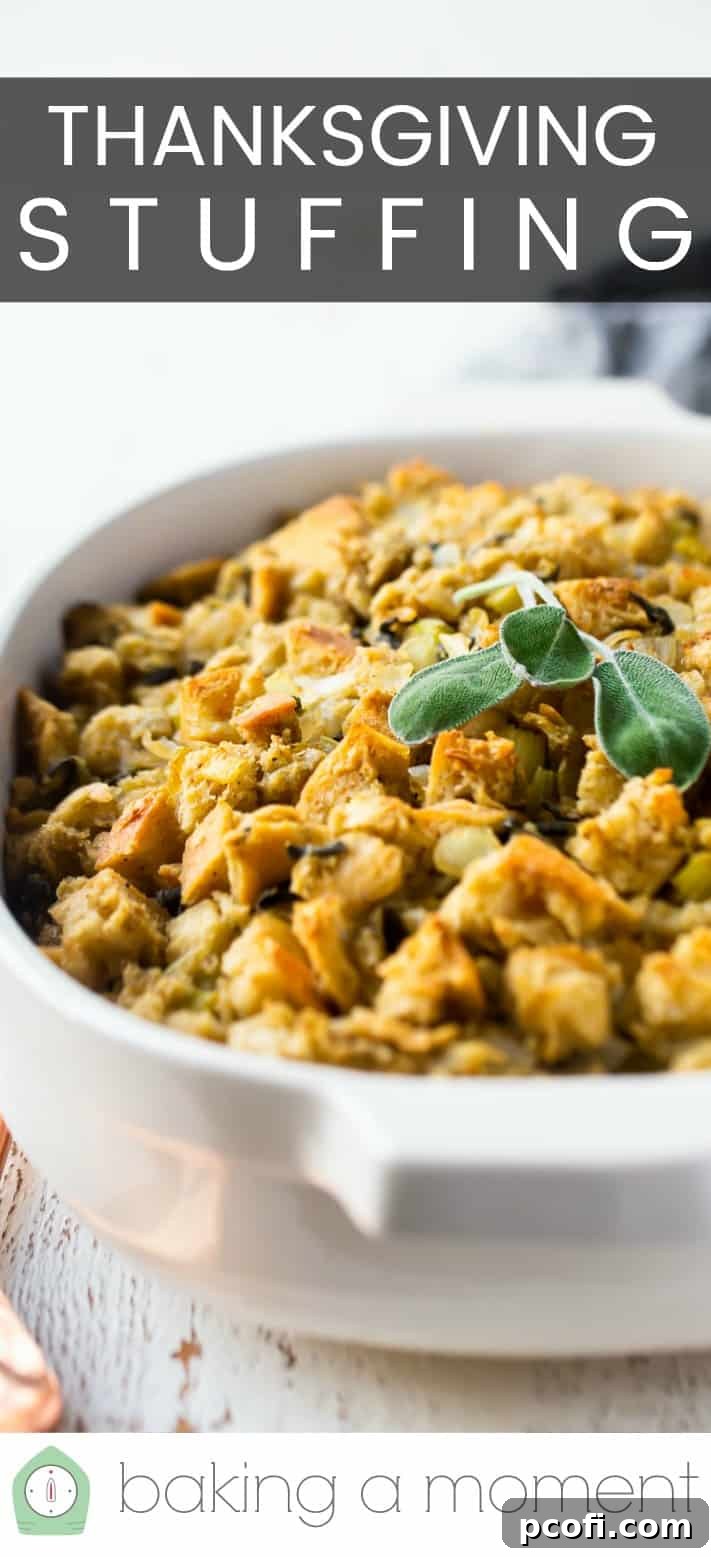
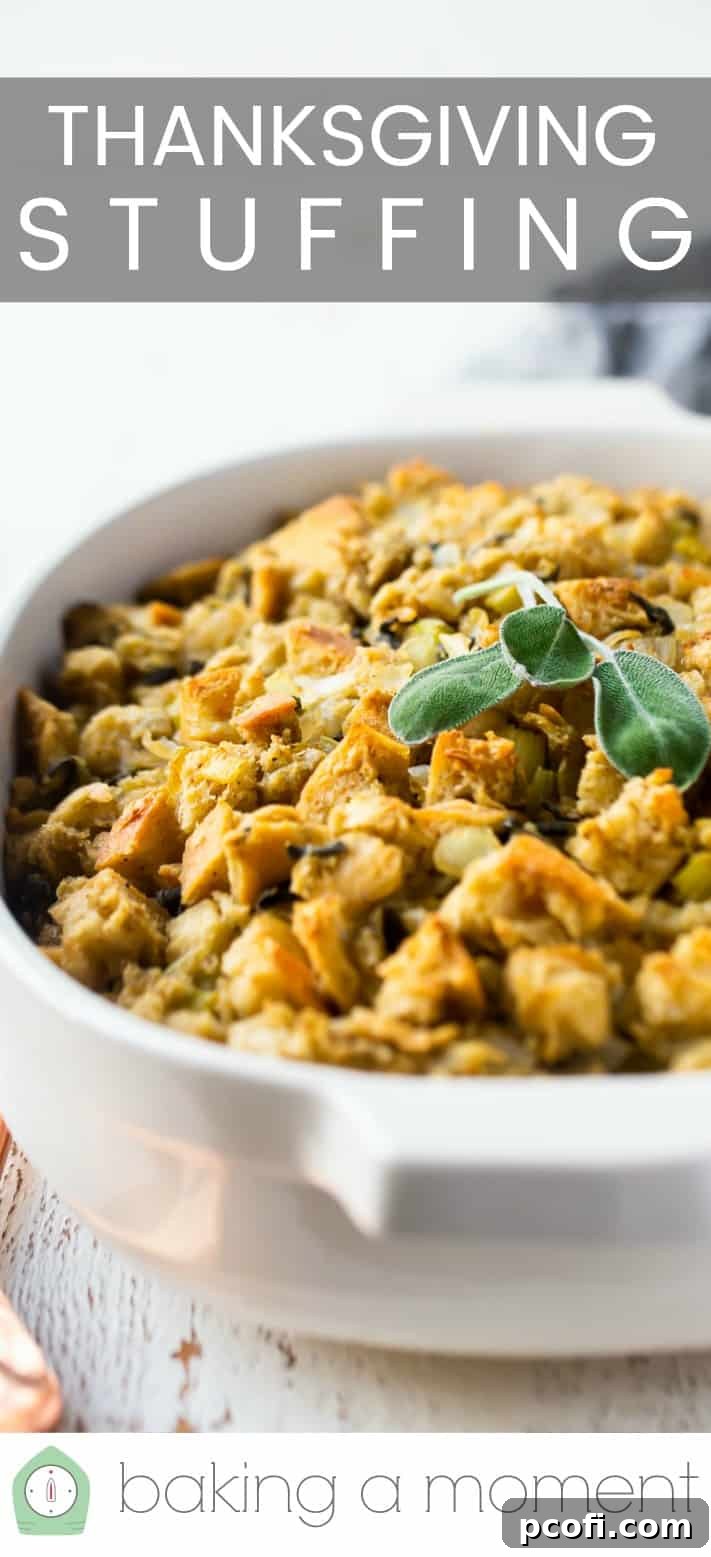
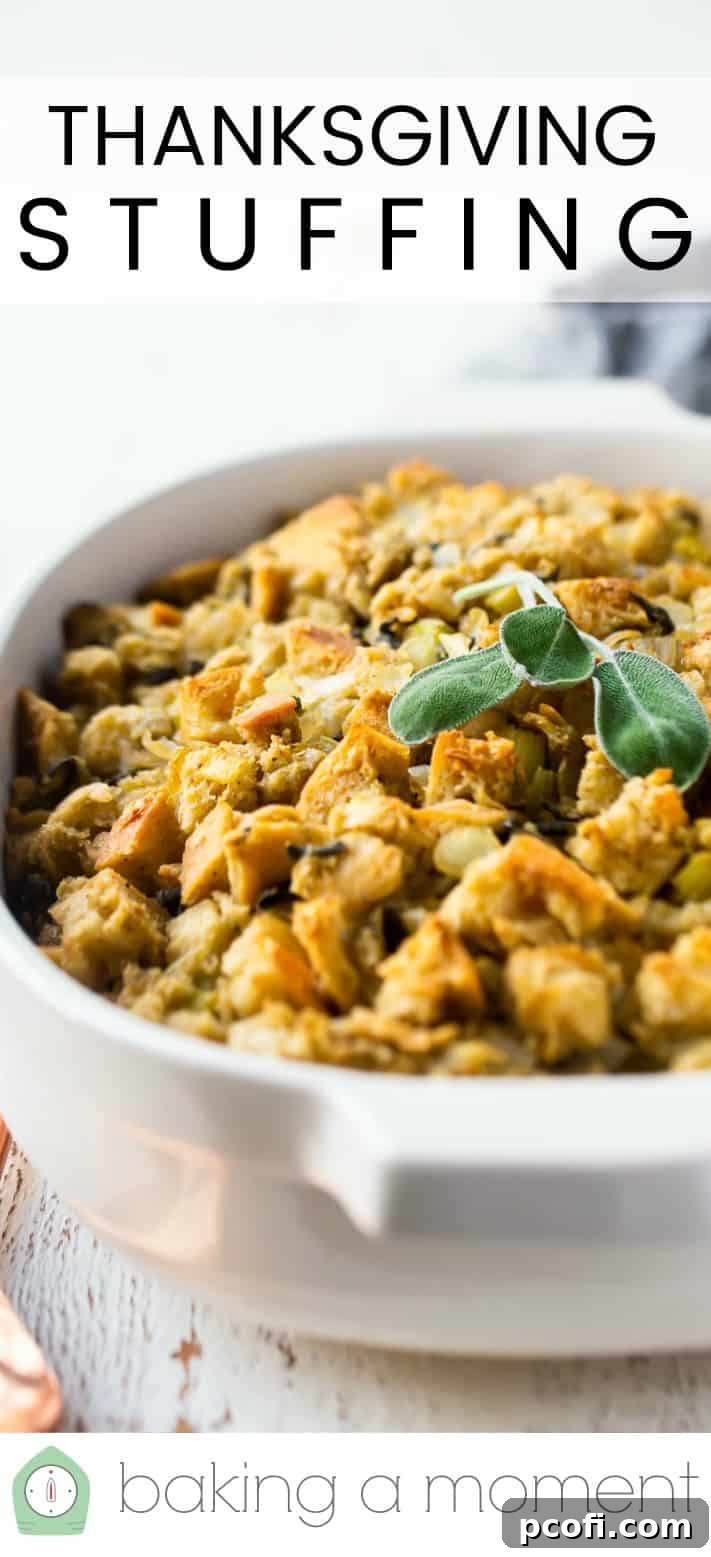
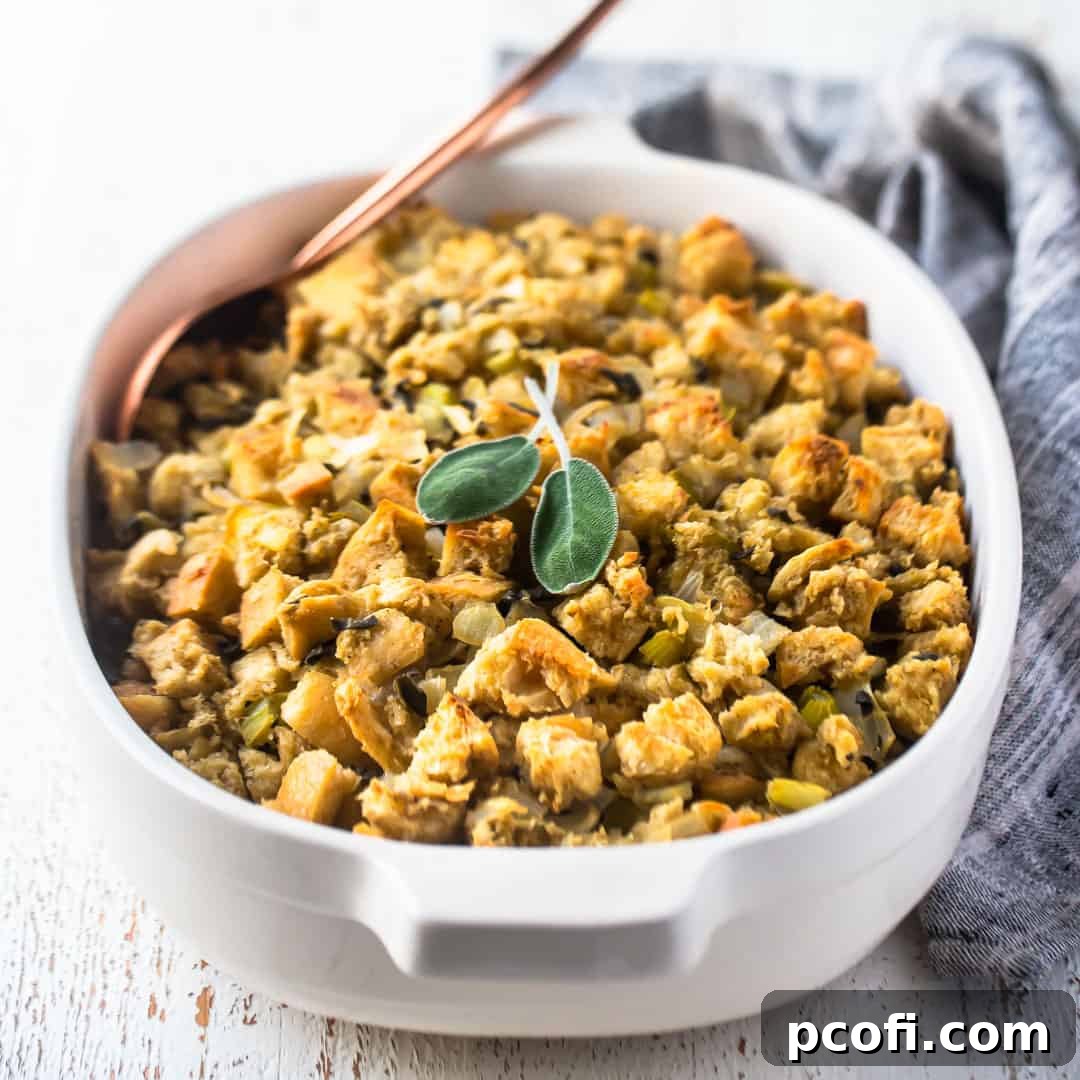
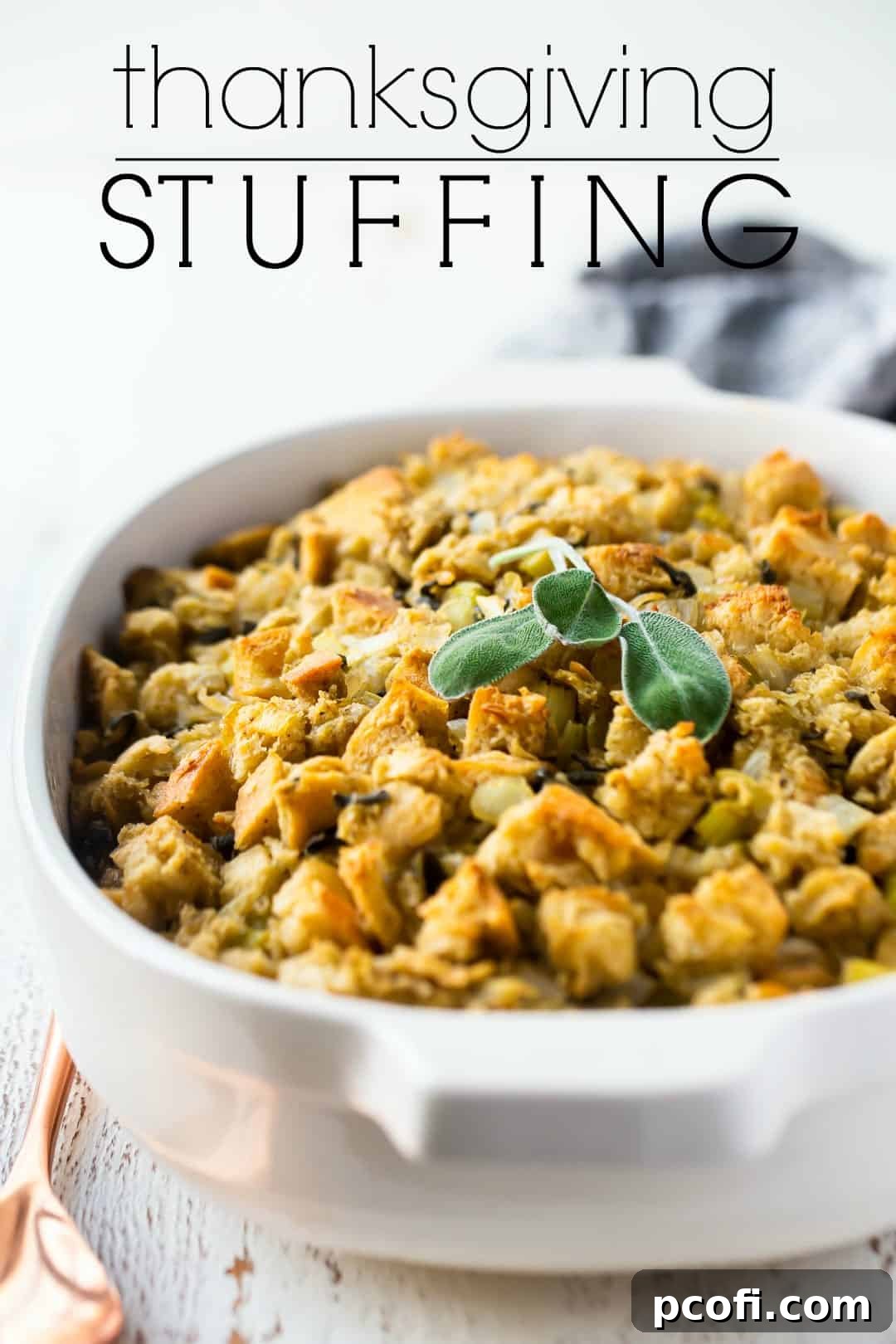
Technically speaking, the term “stuffing” is reserved for the mixture that is cooked *inside* the cavity of the turkey. When this delightful bread-based side dish is prepared and baked separately in a casserole dish, as you see in these images, it’s more accurately referred to as “dressing.” While culinary purists might insist on this distinction, the reality is that most home cooks and diners use the terms interchangeably, often defaulting to “stuffing” regardless of how it’s prepared. So, feel free to call it whatever you like – its deliciousness is undeniable!
While the allure of cooking stuffing inside the turkey can be strong, most culinary experts strongly advise against it. The primary reason is food safety and optimal cooking. For the stuffing inside the bird to reach a safe internal temperature (typically 165°F or 74°C), the turkey itself often needs to cook much longer, which can lead to dry, overcooked white meat. Additionally, baking stuffing separately allows for a better texture – a crisp, golden-brown top and edges with a perfectly moist interior – something that’s difficult to achieve when it’s encased within the turkey. Trust me on this: for the best results, both in terms of flavor and texture, bake your Thanksgiving dressing in its own dish. It’s a game-changer!
My family, like many others, has a deep appreciation for traditional flavors. Over the years, I’ve experimented with more elaborate or “gourmet” stuffing recipes, but I’ve learned that when it comes to Thanksgiving, they yearn for the classic taste, reminiscent of what Grandma used to make. Thanksgiving is a holiday rooted in tradition, and sometimes, the simplest, most familiar flavors are the most cherished.
That’s why this recipe embraces simplicity and classicism. It’s designed to deliver the quintessential Thanksgiving stuffing experience that everyone anticipates. All the beloved components are present: aromatic sautéed onions and celery provide a foundational savory depth, while plenty of fresh sage infuses the dish with that unmistakable, earthy, and truly Thanksgiving-defining aroma and taste. Sage is, without a doubt, the quintessential herb of the holiday season, bringing warmth and a savory balance to the entire meal.
Crafting Homemade Stuffing from Scratch: An Easy Guide
Creating your own homemade stuffing from scratch might sound daunting, but it’s surprisingly simple and incredibly rewarding. The most time-consuming part of the process is often just the preparation of your ingredients, particularly the chopping of vegetables. Beyond that, it’s mainly about combining a handful of flavorful components and allowing the oven to work its magic.
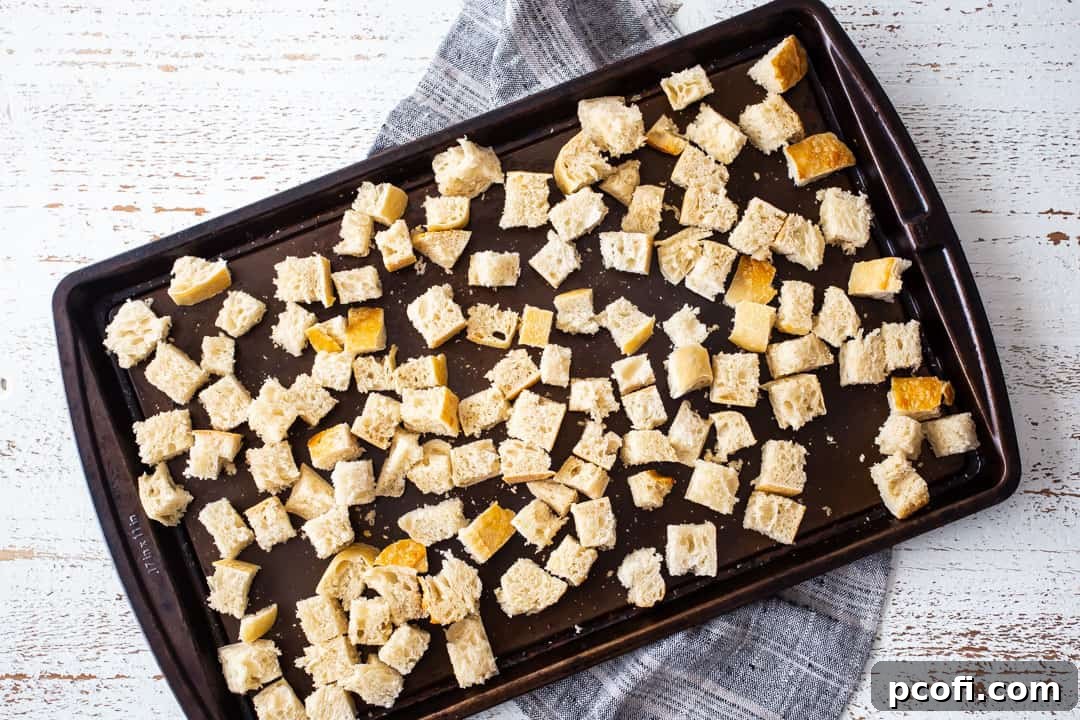
To embark on this classic Thanksgiving stuffing journey, begin with the foundation: the bread. Start by cubing your chosen bread into small, uniform pieces. The next crucial step is to dry these bread cubes in the oven. This isn’t just about removing moisture; it’s about preparing the bread to become an ultimate flavor sponge. By drying it, the bread becomes firm enough to hold its shape during baking and, more importantly, it develops an open, porous structure that readily soaks up all the rich, savory liquids and seasonings, ensuring every bite is bursting with holiday flavor. This technique yields a far superior texture and taste compared to simply using stale bread.
For more in-depth insights into why oven-drying bread is the superior method for exceptional stuffing, you can explore detailed explanations like this one: How to Oven-Dry Bread for Faster, More Flavorful Thanksgiving Stuffing. It truly makes a noticeable difference in the final product.
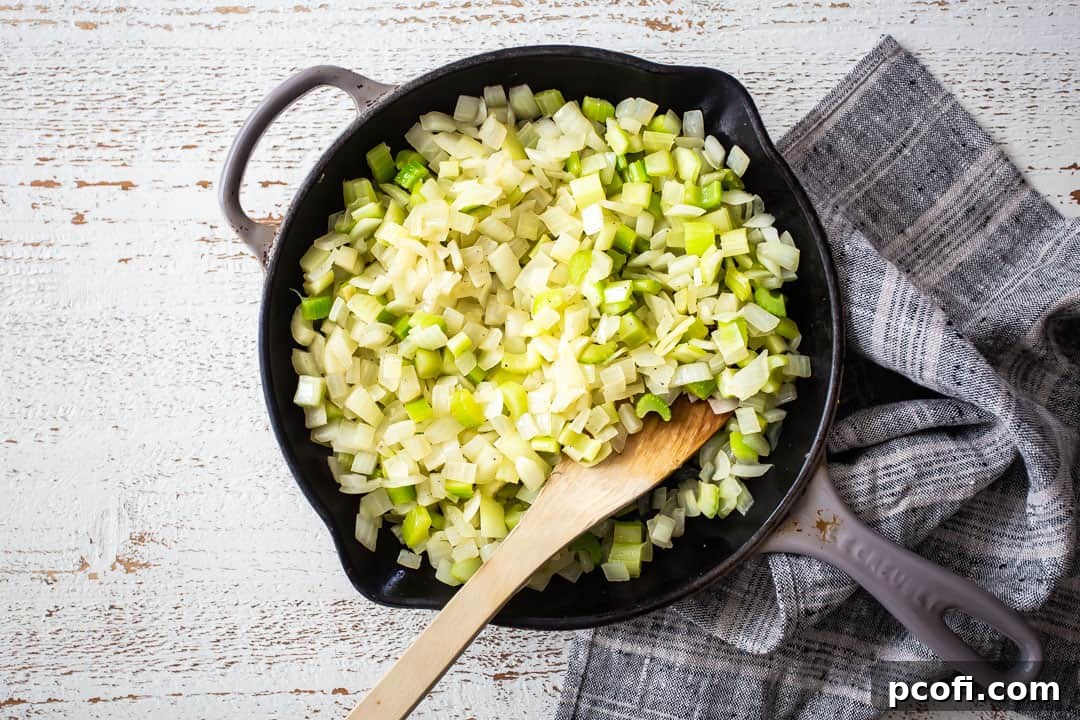
While your bread cubes are toasting and drying in the oven, you can begin sautéing your aromatics. A generous amount of finely chopped onion and celery are essential for this traditional recipe. These humble vegetables perform multiple critical roles: they contribute a deep, classic savory flavor that forms the backbone of any good stuffing, and their natural moisture helps to keep the entire dish wonderfully tender and juicy, preventing it from drying out during baking. Sauté them gently until they are softened and translucent, allowing their flavors to fully develop.
Once the onions and celery have reached that perfectly tender state, transfer them to a generously sized mixing bowl. To this bowl, add your oven-dried bread cubes, along with a decadent amount of melted butter, flavorful chicken or vegetable stock, and a carefully selected blend of seasonings. The melted butter not only adds richness and moisture but also helps carry the flavors throughout the bread.
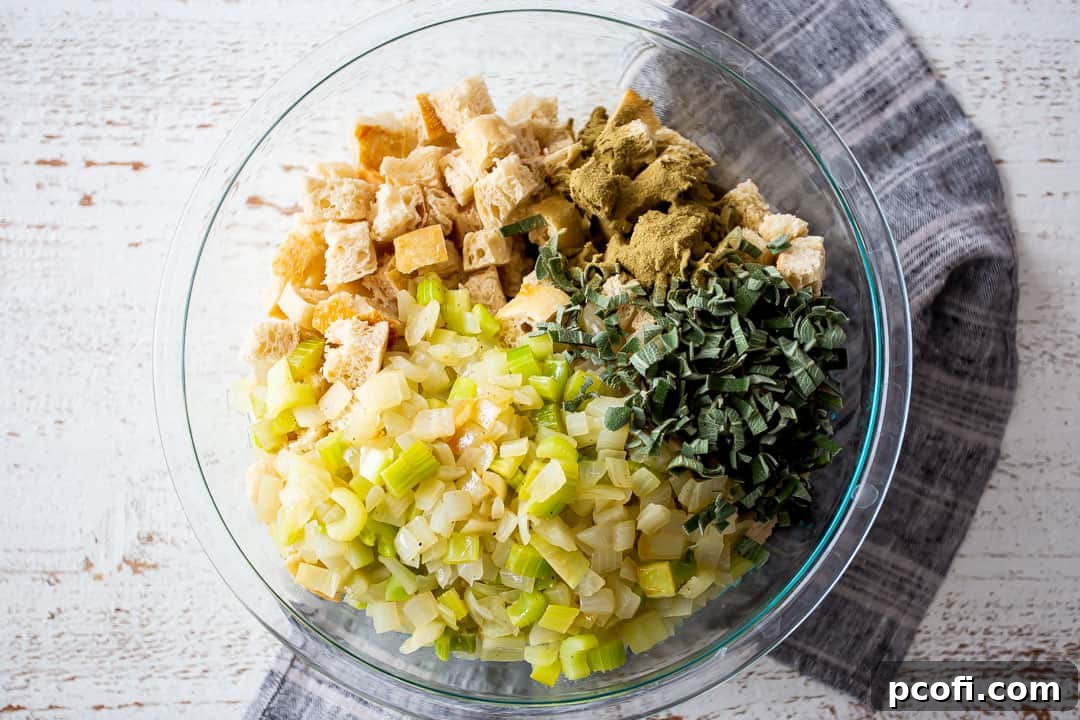
For seasoning, my personal secret weapon is Bell’s poultry seasoning. This specific blend contains all the essential herbs and spices that perfectly encapsulate the taste of the holidays, delivering an unparalleled Thanksgiving-y flavor that truly sets this stuffing apart. You can usually find it in the spice aisle of most well-stocked grocery stores. If it’s unavailable locally, it can be conveniently ordered online here: Bell’s Poultry Seasoning. Alternatively, any good quality poultry seasoning will work. In addition to this blend, we incorporate plenty of fresh sage, as its distinctive aroma and taste are synonymous with the Thanksgiving feast.
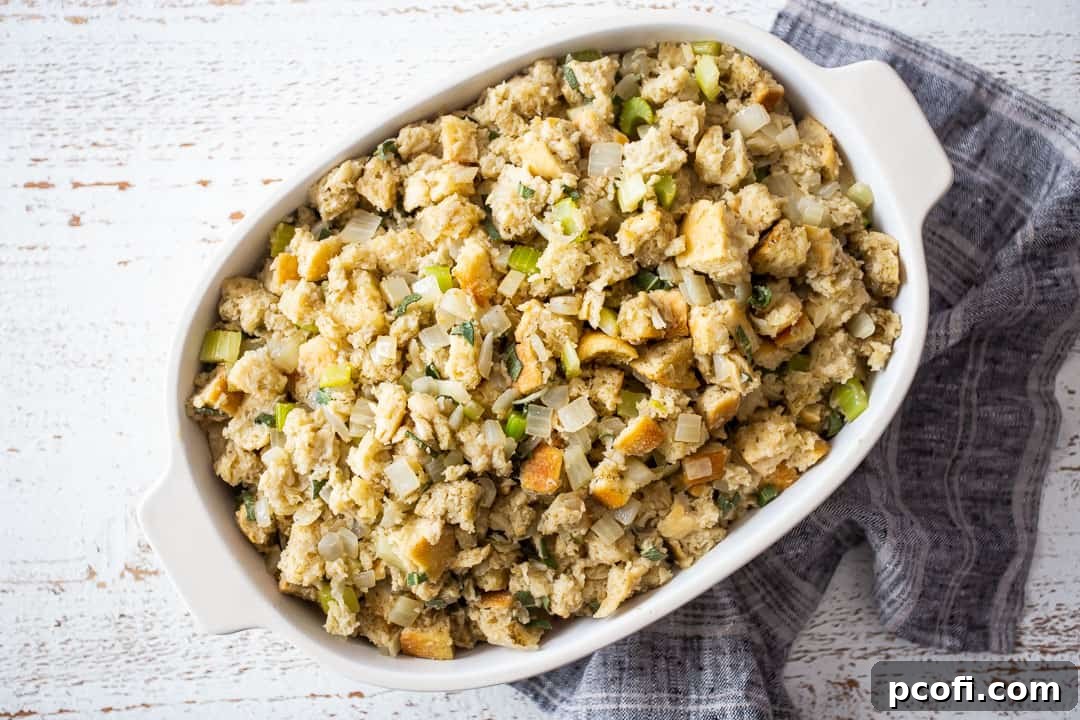
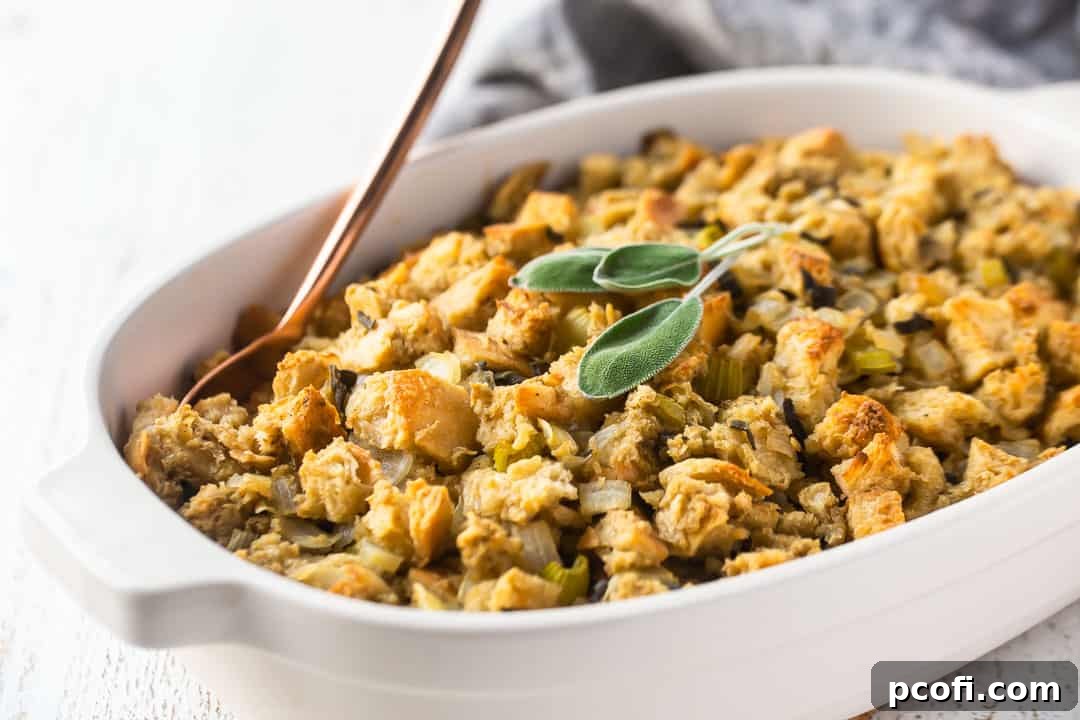
Gently toss all these ingredients together until they are thoroughly combined, ensuring that every bread cube is evenly coated with the savory liquids and seasonings. Then, transfer the mixture into a prepared casserole dish, pressing it down lightly. Bake it until it’s beautifully golden-brown and crisp around the edges, thoroughly heated through, and your entire home is filled with the most incredible, mouthwatering aromas of the holidays. The scent alone is enough to tell you it’s ready!
Choosing the Best Bread for Your Stuffing
The type of bread you choose for your stuffing plays a significant role in its final texture and flavor. While this recipe is remarkably versatile and can accommodate almost any bread, some varieties truly shine and can subtly alter the character of your stuffing.
For a truly classic and universally loved stuffing, a simple white sandwich bread is an excellent choice. Its neutral flavor allows the herbs and aromatics to take center stage, and its soft texture becomes wonderfully moist when baked. If you’re looking for a slightly chewier texture with a subtle crust, French bread (such as a baguette or pain de campagne) works beautifully. For a richer, more luxurious stuffing, consider using brioche; its buttery notes complement the other ingredients perfectly. Potato bread is another fantastic option, offering a tender crumb and a hint of sweetness.
For those who appreciate a more complex flavor profile, sourdough bread introduces a delightful tanginess that can brilliantly cut through the richness of the holiday meal. And let’s not forget cornbread! A cornbread stuffing offers a distinct, rustic flavor and a slightly crumbly yet moist texture that is especially popular in Southern cuisine. You can even combine different types of bread for a multi-layered flavor and texture experience.
During the holiday season, you might find large bags of pre-cubed and dried bread specifically marketed for stuffing. This is a fantastic time-saver, especially when you’re juggling multiple dishes. Don’t hesitate to take advantage of this shortcut if it’s available; your stuffing will still taste every bit as delicious and homemade, freeing you up to focus on other aspects of your holiday feast. The key is to ensure the bread is dry, regardless of whether you dried it yourself or bought it pre-dried.
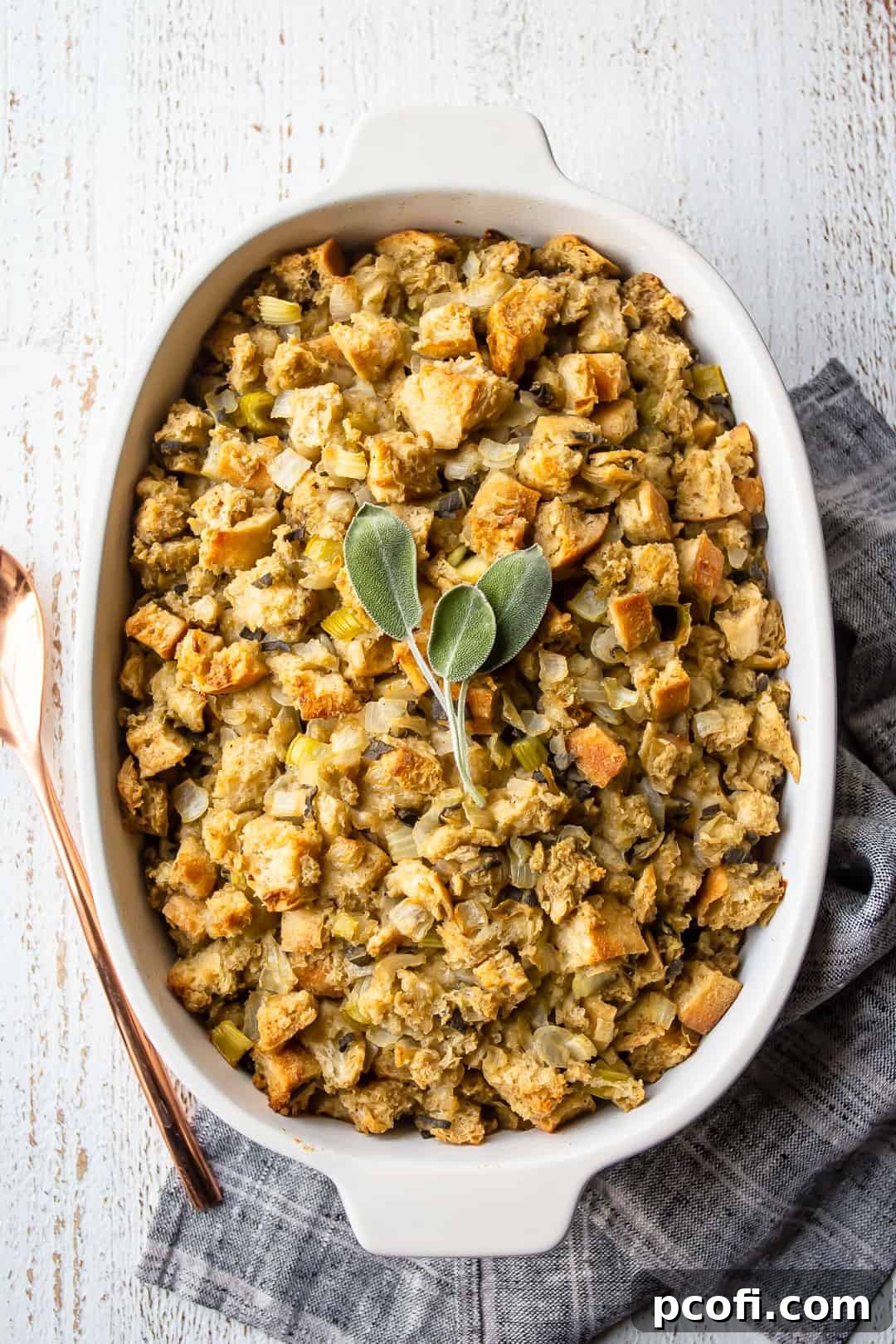
Elevate Your Stuffing with Delicious Add-Ins
While this basic Thanksgiving stuffing recipe is perfect in its pure, traditional form, it also serves as an excellent canvas for customization. Adding a few extra ingredients can subtly enhance its flavor and texture, creating an even more memorable side dish. Here are some of my favorite additions to “jazz things up” a little:
- Granny Smith Apples: For a touch of bright, fruity sweetness and a hint of tartness, add peeled, cored, and diced Granny Smith apples. Their firm texture holds up well during baking, and they don’t need to be pre-cooked. They bring a lovely freshness that complements the savory herbs.
- Roasted Chestnuts: These provide a wonderfully earthy, slightly sweet, and nutty flavor that is quintessential for holiday dishes. Look for pre-cooked and peeled roasted chestnuts for convenience. Chop them roughly before adding to the mix.
- Crumbled Cooked Sausage: For a heartier stuffing with an extra layer of savory depth, incorporate crumbled and cooked sausage. Bulk sausage is easier to work with than links; if you can find sage-flavored sausage, it will harmonize beautifully with the existing herb profile. Brown the sausage first, then drain any excess fat before adding it to the bread mixture.
- Oysters: Though I haven’t tried it personally, oyster stuffing is a long-standing tradition in many families. The briny flavor of fresh or canned oysters adds a unique, umami-rich dimension that some find indispensable. If using, make sure to chop them and incorporate them just before baking.
Other popular additions include dried cranberries for sweetness, chopped pecans or walnuts for crunch, or sautéed mushrooms for an earthy richness. Feel free to experiment and find your family’s perfect combination!
Making This Stuffing Vegan, Vegetarian, or Gluten-Free
The original version of this classic Thanksgiving stuffing recipe is made with butter and chicken stock, meaning it is not suitable for vegan or vegetarian diets. However, it’s incredibly easy to adapt this recipe to fit various dietary needs without compromising on flavor or texture. With a few simple substitutions, everyone can enjoy this beloved holiday side.
To create a **vegan Thanksgiving stuffing**, you’ll need to make two key changes:
- Replace the unsalted butter with an equal amount of high-quality vegan margarine or plant-based butter. Ensure it melts well and provides a similar richness.
- Substitute chicken stock with an equal amount of flavorful vegetable stock. Look for a low-sodium vegetable stock to control the salt content.
For a **vegetarian stuffing**, simply use vegetable stock instead of chicken stock, while keeping the butter. These adjustments are straightforward and will still yield a wonderfully savory and aromatic dressing.
If you’re looking for a **gluten-free Thanksgiving stuffing**, the primary change involves the bread. Simply use a good quality gluten-free bread, cubed and dried just as you would regular bread. Many brands of gluten-free bread are now widely available and work exceptionally well in stuffing recipes. All other ingredients in this recipe are naturally gluten-free, making the conversion effortless. Always double-check ingredient labels for hidden gluten, especially in packaged stocks and seasonings, to ensure complete adherence to a gluten-free diet.
These simple modifications ensure that this delicious, traditional stuffing can be enjoyed by everyone at your holiday table, regardless of their dietary preferences or restrictions.
Prepare Ahead: Essential Tips for a Stress-Free Thanksgiving
Thanksgiving day is often a whirlwind of cooking, baking, and coordinating multiple dishes to be ready at the same time. Any recipe that allows for advance preparation is a huge asset, and this Thanksgiving dressing is perfectly suited for making ahead. This strategic planning can significantly reduce stress and free up valuable oven space on the big day.
You can prepare this stuffing 2 to 3 days before your holiday feast. Simply assemble it completely, transfer it to your baking dish, cover it tightly with foil or plastic wrap, and store it in the refrigerator. This allows the flavors to meld beautifully and gives you one less thing to worry about on Thanksgiving morning.
On Thanksgiving day, remove the covered stuffing from the refrigerator about an hour before you plan to serve dinner. This allows it to come closer to room temperature, ensuring it heats more evenly. A perfect time to pop it into the oven is when your turkey is just coming out to rest. Most large turkeys require a resting period of at least 30 minutes to an hour before carving, which is the ideal window to heat your stuffing and any other pre-prepared side dishes. This method ensures your stuffing is piping hot and ready to serve right when the turkey is carved and other dishes are plated, creating a seamless and delicious holiday meal.
Freezing Leftover Thanksgiving Stuffing: A Delicious Way to Extend the Holiday Cheer
It’s always wonderful to have a little extra Thanksgiving stuffing, but sometimes you find yourself with more leftovers than you can eat in a few days. The good news is that this classic stuffing freezes beautifully, allowing you to savor the flavors of the holiday long after the last guest has departed. Proper freezing and reheating techniques are key to maintaining its delicious taste and texture.
Cooked Thanksgiving stuffing can be safely stored in the freezer for at least a couple of months. To ensure optimal quality and prevent freezer burn, make sure to wrap it tightly. You can either portion it into individual servings in freezer-safe containers or wrap larger quantities thoroughly in plastic wrap and then aluminum foil. This double-layer protection helps to seal in moisture and prevents any unpleasant freezer odors from permeating the stuffing.
When you’re ready to enjoy your frozen stuffing, the best method for thawing is to transfer it to the refrigerator the night before. This allows for a gradual thaw, preserving its texture. To reheat, you have a couple of options:
- Oven Method: Place the thawed stuffing in an oven-safe dish, cover it loosely with foil, and warm it gently in a 325-350°F (160-175°C) oven until it’s heated through. The foil helps retain moisture, preventing it from drying out. For a crispier top, remove the foil for the last 10-15 minutes of heating.
- Microwave Method: For smaller portions, the microwave offers a quicker reheating solution. Place the stuffing in a microwave-safe dish, cover, and heat in short intervals, stirring occasionally, until hot. Be careful not to overheat, as this can make the stuffing tough.
With these tips, you can enjoy the comforting taste of Thanksgiving stuffing whenever the craving strikes, making your holiday memories last even longer!
- Simply Perfect Apple Pie
- Fluffy Sweet Potato Biscuits
- Classic Pecan Pie
- Decadent Pumpkin Cheesecake Bars
As an amazon associate I earn from qualifying purchases.
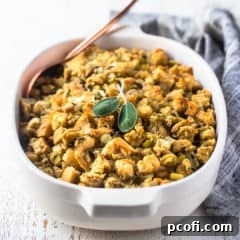
Thanksgiving Stuffing Recipe
Leave a Review
Save RecipeSaved!
Ingredients
- 2 loaves (56 g) bread,, cubed (approx. 18 cups or 29 ounces)
- 1 tablespoon oil
- 2 onions,, roughly chopped
- 6 stalks celery, , roughly chopped
- 4 cups (0.95 l) chicken stock, (one 32-ounce box)
- 1 cup (227 g) unsalted butter, (2 sticks), melted
- 1/2 cup (16 g) roughly chopped fresh sage, (from one .75-ounce pack)
- 2 tablespoons poultry seasoning
- 2 teaspoons (2 1/2 teaspoons) kosher salt,, divided
- 1/2 teaspoon ground black pepper
Instructions
-
Preheat the oven to 275 degrees F.
-
Arrange the cubed bread in an even layer on baking sheets, and dry in the oven for 30 minutes or until crisp.
-
Heat the oil in a large skillet over medium heat, then add the onion, celery, and 1 teaspoon of salt.
-
Cook the onions and celery (stirring) until slightly softened and translucent (about 5 minutes).
-
Preheat the oven to 350 degrees F, and lightly mist a 3.5-quart baking dish with non-stick spray.
-
Transfer the dry bread cubes to a large mixing bowl.
-
Add the cooked vegetables, stock, melted butter, sage, poultry seasoning, remaining salt, and pepper, and toss everything together until well-combined.
-
Transfer the mixture to the prepared baking dish and bake for 1 hour, or until heated through and slightly browned and crisp around the edges.