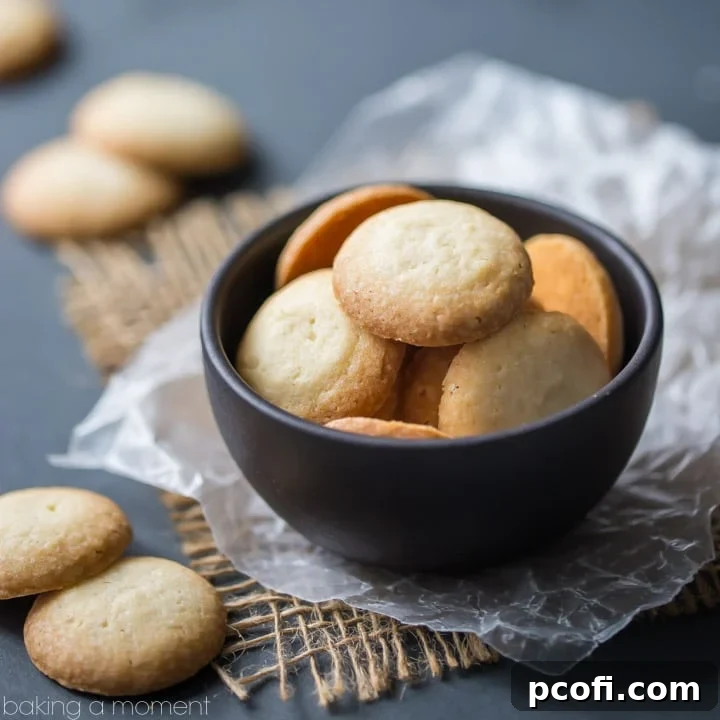
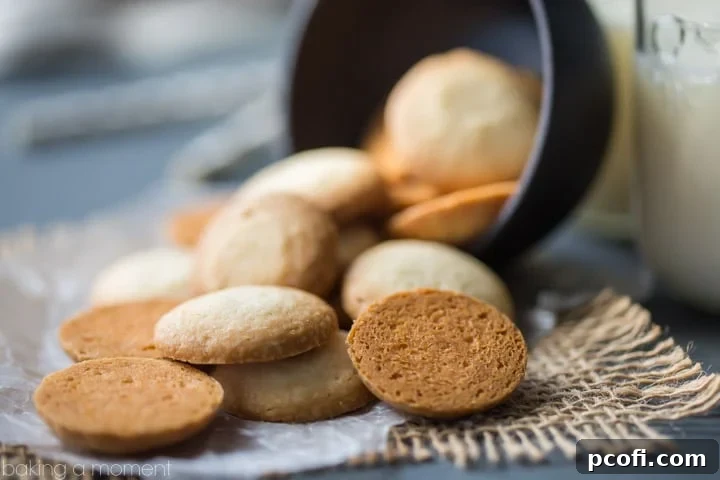
Homemade Vanilla Wafers are a delightful treat that far surpass their store-bought counterparts. With their irresistibly crisp edges, wonderfully tender centers, and a profound, authentic vanilla flavor, these wafers redefine what a simple cookie can be. Forget the artificial taste and dense texture of boxed varieties; these homemade wonders offer a delicate, buttery richness that truly melts in your mouth.
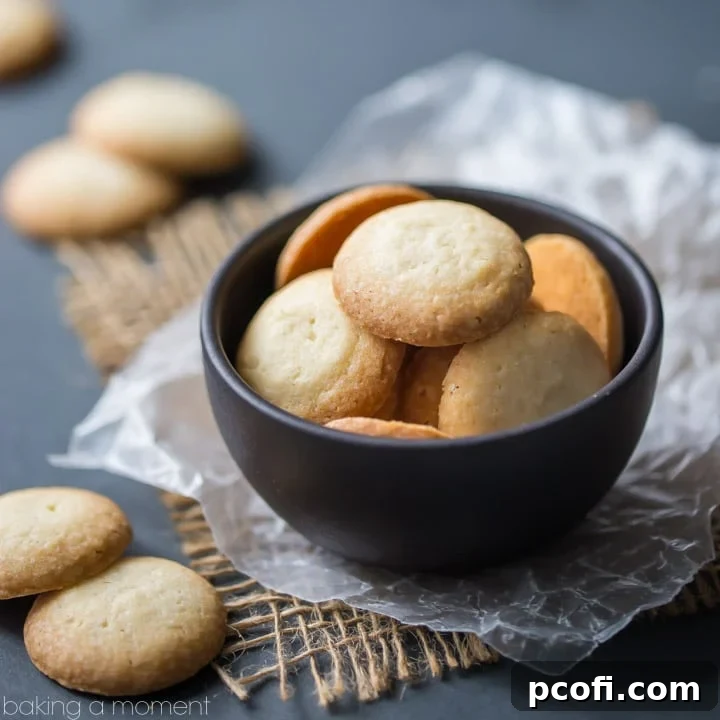
Table of Contents
- Why You’ll Adore This Recipe
- Essential Ingredients
- Step-by-Step Visual Guide: Crafting Vanilla Wafers
- Expert Tips for Perfect Wafers
- Exciting Flavor Variations
- Creative Serving Suggestions
- Storage and Make-Ahead Options
- Common Questions Answered
- Explore More Cookie Recipes
Jump to Recipe
For years, I searched for a vanilla wafer recipe that truly captured the essence of what these beloved cookies should be. Many recipes promised, but few delivered that authentic, nostalgic flavor and perfect texture. This recipe, however, is a game-changer. It not only achieves the classic crispy texture without being hard or overly crunchy, but it also boasts a profound, buttery, and intensely fragrant vanilla flavor that practically dissolves on your tongue.
The beauty of these homemade vanilla wafers lies in their surprising simplicity. Crafted with just a handful of staple ingredients, mixed effortlessly in a stand mixer, you can produce a generous batch of approximately 65 cookies. This makes them ideal for satisfying a crowd, stocking up on delightful toddler snacks, or simply ensuring you always have a comforting treat on hand for unexpected cravings.
Beyond their irresistible taste straight from the cooling rack, these versatile cookies open up a world of culinary possibilities. Enjoy them plain as a sophisticated snack, transform them into elegant sandwich cookies with a creamy frosting filling, crumble them over vibrant parfaits for added texture, or utilize them as a flawless, buttery base for classic desserts like banana pudding or rich cheesecakes. The potential is limitless, making them a staple in any home baker’s repertoire.
Why You’ll Adore This Recipe
- Unmatched Flavor from Real Ingredients: Unlike many commercial wafers that rely on artificial flavors, our recipe harnesses the power of real butter, fresh milk, and premium vanilla extract. This commitment to quality ingredients results in a rich, complex, and genuinely bakery-style taste that is both comforting and sophisticated. Each bite delivers a burst of authentic vanilla, complemented by the luxurious mouthfeel of real dairy.
- Effortless Preparation: This recipe is designed with simplicity in mind. Requiring only one mixing bowl, the dough comes together quickly with minimal fuss. Best of all, there’s no need for chilling the dough, which means you can go from craving to indulging in fresh, warm vanilla wafers in record time. It’s perfect for busy weeknights or when you need a delicious treat without a lengthy baking process.
- Impeccable Texture: Achieving the ideal vanilla wafer texture is an art, and this recipe masters it. These cookies bake up with an airy, light crispness that gives way to a delicate, melt-in-your-mouth tenderness. The balance of a subtly crisp exterior and a soft interior, coupled with just the right amount of sweetness, creates a truly perfect cookie experience that will leave you reaching for just one more.
- Incredibly Versatile: While utterly delicious on their own, these homemade vanilla wafers are also remarkably adaptable. They can seamlessly replace any store-bought wafer in your favorite recipes. Whether you’re making a classic banana pudding, crafting an innovative pie crust, or simply looking for a delightful accompaniment to your coffee or tea, these wafers will elevate any dish or moment. Their sturdy yet delicate nature makes them perfect for a wide range of culinary applications.
Essential Ingredients for Perfect Vanilla Wafers
Crafting these exquisite vanilla wafers relies on a precise combination of common pantry staples. Each ingredient plays a crucial role in achieving that signature crisp-tender texture and rich vanilla flavor. Below is a detailed breakdown of what you’ll need, but always refer to the complete recipe card at the bottom of this post for exact measurements and a comprehensive list.
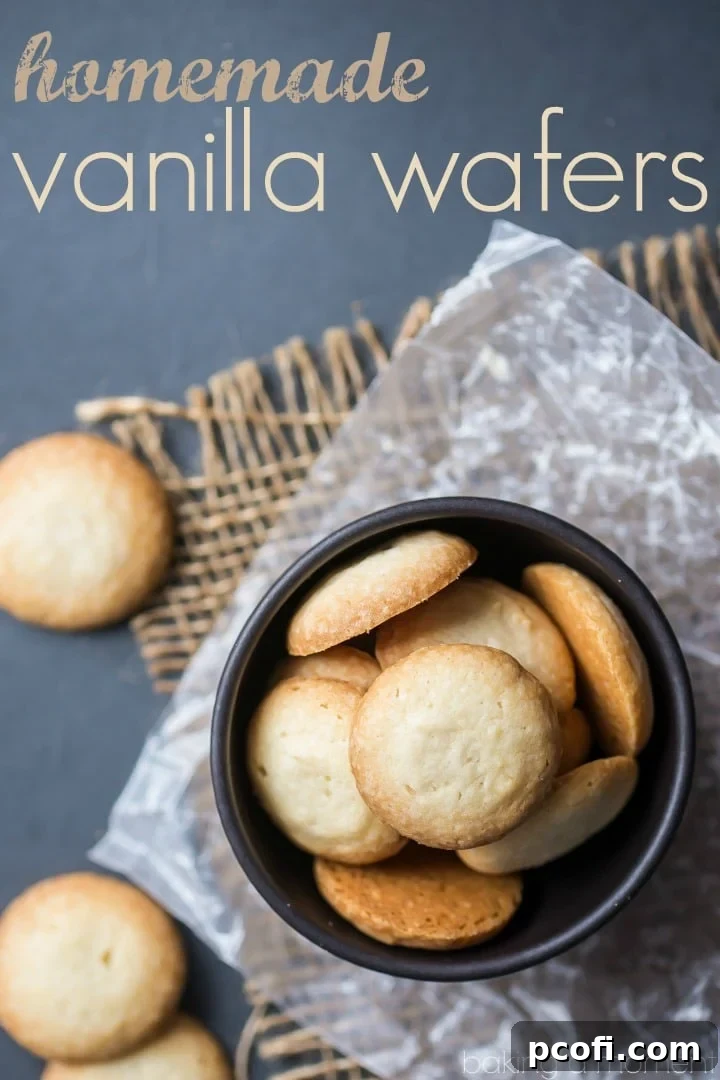
- Unsalted Butter: The foundation of our wafers’ classic richness and delightful crispness. Using unsalted butter allows you to control the overall salt content of the cookies precisely. If your pantry only holds salted butter, simply reduce the amount of added kosher salt in the recipe by a quarter teaspoon to maintain the perfect flavor balance. Ensure your butter is properly softened to room temperature for optimal creaming.
- Powdered Sugar (Confectioners’ Sugar): This fine sugar is key to achieving the incredibly tender, almost melt-in-your-mouth texture that defines these wafers. Its super-fine granules dissolve completely, contributing to a smooth dough and a delicate crumb. It also helps prevent the cookies from spreading too much, maintaining their perfect shape.
- Granulated Sugar: Working in harmony with powdered sugar, granulated sugar contributes to those desirable crisp edges and provides the perfect level of sweetness without being cloying. Its coarser crystals aid in the creaming process, creating air pockets that result in a lighter cookie structure.
- Milk: A vital liquid component that binds the dough, lending it the ideal consistency for piping and ensuring the cookies bake up moist and tender, never dry. Whole milk is generally recommended for its rich fat content, which enhances flavor and texture, but lower-fat milk varieties can also be used successfully if preferred.
- Vanilla Extract: The absolute star of this recipe. Given that “vanilla” is in the name, investing in a high-quality vanilla extract is paramount here. A good pure vanilla extract will impart a deep, aromatic, and complex flavor that truly shines through, making all the difference in the final taste. Avoid imitation vanilla for the best results.
- All-Purpose Flour: Provides the necessary structure for these delicate cookies while keeping them wonderfully light. The proper measurement of flour is critical; always use the “spoon and level” method to avoid over-measuring. Scooping flour directly from the bag can compact it, leading to a denser, tougher cookie.
- Kosher Salt: A small but mighty ingredient, kosher salt is essential for balancing the sweetness of the sugars and enhancing the deep, fragrant notes of the vanilla. It brightens the overall flavor profile, preventing the cookies from tasting one-dimensionally sweet.
Step-by-Step Visual Guide: Crafting Homemade Vanilla Wafers
Step 1: Prepare Your Baking Pans
Begin by preheating your oven to a precise 350°F (175°C). This ensures the oven is at the correct temperature for even baking from the moment your cookies go in. Next, line your baking sheets with high-quality parchment paper. This simple step is crucial for preventing sticking, promoting even heat distribution, and making cleanup a breeze. A well-prepared pan sets the stage for perfectly baked wafers.
Step 2: Cream the Butter and Sugars Until Fluffy
In a large mixing bowl, combine your softened unsalted butter, powdered sugar, and granulated sugar. Beat these ingredients together on medium speed for a generous 3 to 5 minutes. This creaming process is vital: it incorporates air into the mixture, resulting in a pale, fluffy, and voluminous base. This aeration is key to achieving the light, tender, and melt-in-your-mouth texture that makes these vanilla wafers so special, so do not rush this step.
Step 3: Incorporate the Liquid Ingredients
After creaming, pause to scrape down the sides and bottom of your mixing bowl thoroughly with a silicone spatula. This ensures all ingredients are uniformly combined. Then, add the milk and the star of the show, vanilla extract. Mix on low speed just until these liquid ingredients are fully incorporated into the butter-sugar mixture. Overmixing at this stage can lead to a less tender cookie.
Step 4: Gently Fold in the Dry Ingredients
To the wet mixture, add the all-purpose flour and kosher salt. Mix on the lowest speed, or by hand with a spatula, until you no longer see any pockets of dry flour. The key here is to mix until just combined. Overmixing flour develops the gluten too much, which can result in tough, chewy cookies instead of the delicate, tender wafers we’re aiming for.
Step 5: Precisely Pipe Your Wafers
Transfer the prepared cookie dough into a piping bag fitted with a plain round tip, such as an Ateco 804 or Wilton 1A (approximately 1/2 inch opening). On your parchment-lined baking sheets, pipe uniform 1-inch (2.5 cm) diameter circles. Ensure you leave adequate space between each wafer, as they will spread slightly during baking. For perfectly round and consistent cookies, you can lightly trace 1-inch circles on the back of your parchment paper beforehand as a guide.
Step 6: Bake to Golden Perfection
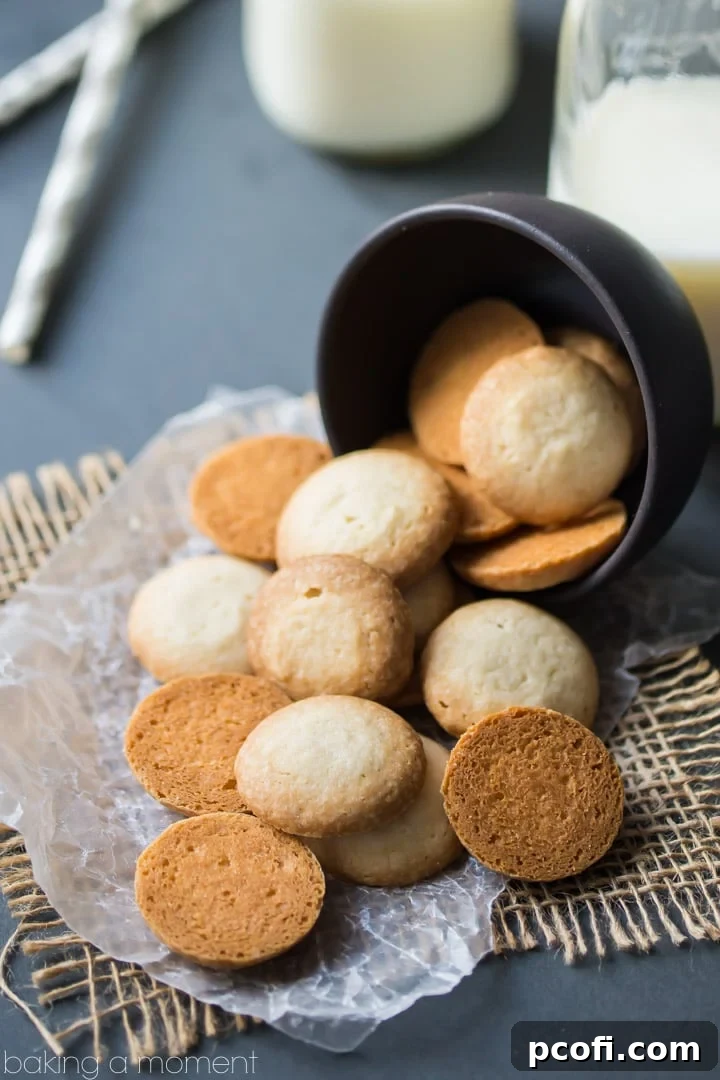
Carefully place your baking sheets into the preheated oven. Bake for approximately 20 to 24 minutes. The exact baking time may vary depending on your oven, so keep a close eye on them. The wafers are done when their bottoms and edges turn a beautiful golden brown. The tops should remain light in color, with only the very edges showing a subtle golden hue, indicating their crisp texture is developing beautifully.
Step 7: Allow to Cool Completely and Store
Once baked, remove the baking sheets from the oven and allow the vanilla wafers to cool completely on the sheets. This cooling time is essential for the wafers to firm up and achieve their signature crispness. Attempting to move them too soon can cause them to break. Once fully cooled, transfer the cookies to an airtight container. Proper storage ensures they retain their crisp texture and fresh flavor for as long as possible.
Expert Tips for Perfect Homemade Vanilla Wafers
- Softened Butter is Non-Negotiable: The temperature of your butter is paramount. If your butter is too cold, it won’t properly incorporate air during the creaming stage, leading to dense cookies. Conversely, if it’s too warm or melted, the cookies can spread excessively and become greasy. Aim for butter that yields slightly when pressed but still holds its shape. This ideal consistency ensures maximum aeration and perfect texture.
- Master the Creaming Process: Patience is a virtue, especially during the creaming step. Beating the butter and sugars for the full 3 to 5 minutes is not just a suggestion; it’s a critical technique. This extended mixing time thoroughly aerates the mixture, creating tiny pockets of air that expand in the oven, giving your wafers their characteristic light and tender crumb. A well-creamed base is the secret to a superior wafer.
- Ensure Uniform Piping: For consistently baked and beautiful wafers, strive for uniformity when piping. Cookies of similar size and thickness will bake more evenly, preventing some from being overdone while others are still soft. If you’re new to piping, don’t hesitate to draw small 1-inch circles on the underside of your parchment paper as a guide. This simple trick will help you achieve perfectly round and even wafers every time.
- Monitor the Bottoms for Doneness: While the tops of these wafers remain quite pale, the true indicator of doneness lies in their bottoms and edges. Keep a watchful eye through the oven door, and if necessary, gently lift a cookie with a spatula to check its underside. The cookies are perfectly baked when the bottoms are a lovely golden brown and the very edges show a subtle, light browning. This ensures maximum crispness without being burnt.
- Thorough Cooling for Crispness: It might be tempting to sample a warm wafer, but resist the urge! Allowing the cookies to cool completely on the baking sheet is crucial for them to fully crisp up. As they cool, moisture evaporates, and their structure sets. Storing warm cookies in an airtight container will trap steam, turning your perfectly crisp wafers soft and chewy. Always wait until they are entirely cool before transferring them for storage.
- Don’t Overmix the Flour: Once you add the flour, mix only until just combined and no dry streaks remain. Overmixing develops gluten, which can lead to a tough, chewy cookie instead of a delicate, tender wafer. A light hand is best here.
- Consider Oven Temperature: Ovens can vary widely in temperature. If you frequently bake, an oven thermometer can be a great investment to ensure your oven is consistently heating to the correct temperature. This helps prevent under or over-baking your delicate wafers.
Exciting Flavor Variations to Try
While classic vanilla wafers are undoubtedly delicious on their own, don’t shy away from experimenting with subtle additions to create unique flavor profiles. These simple variations can transform your homemade wafers into an even more personalized treat:
- Elevate with Vanilla Bean: For an exceptionally rich vanilla experience and a visually stunning speckled appearance, substitute half of the vanilla extract with an equal amount of high-quality vanilla bean paste. The tiny black flecks of vanilla bean will not only deepen the flavor but also add a gourmet touch to your wafers.
- Brighten with Citrus Zest: Introduce a refreshing burst of flavor by adding a few pinches of finely grated lemon or orange zest to the dough along with the liquid ingredients. The vibrant essential oils in the zest will infuse the wafers with a delightful, zesty brightness that beautifully complements the vanilla.
- Warm with Subtle Spices: For a cozy and comforting twist, stir in a small pinch (about 1/4 teaspoon) of ground cinnamon or freshly grated nutmeg with the dry ingredients. These warm spices will add a subtle depth and a hint of autumnal charm, making the wafers perfect for cooler weather or holiday gatherings.
Creative Serving Suggestions
These versatile homemade vanilla wafers are fantastic on their own, but they truly shine when incorporated into other desserts or served with complementary pairings. Here are some inspiring ideas to get you started:
- The Ultimate Banana Pudding: A classic pairing! Layer these crisp homemade wafers with creamy vanilla pudding, sliced fresh bananas, and fluffy whipped cream for an unforgettable, old-fashioned banana pudding that tastes miles better than any version made with store-bought cookies.
- Crumbly Pie and Cheesecake Crusts: Transform these wafers into a buttery, flavorful crust for your favorite pies, tarts, or cheesecakes. Simply crush them into fine crumbs, mix with melted butter, and press into a pie dish for a homemade base that adds an extra layer of delicious vanilla flavor.
- Elegant Chocolate-Dipped Wafers: For a simple yet sophisticated treat, dip half of each cooled wafer into melted dark, milk, or white chocolate. Lay them on parchment paper to set, and perhaps sprinkle with sea salt or chopped nuts for an extra flourish. This creates a beautiful “half-and-half” cookie that’s perfect for gifting or entertaining.
- Homemade Ice Cream Sandwiches: Take your summer desserts to the next level by creating gourmet ice cream sandwiches. Spread a thin layer of your favorite softened ice cream (vanilla, strawberry, or even coffee would be divine) between two wafers and gently press. Wrap individually and freeze until firm for a delightful, customized frozen treat.
- Parfait Layers: Crumble the wafers into coarse pieces and layer them with yogurt, fresh berries, and granola for a quick and satisfying breakfast or dessert parfait. The crisp texture provides a wonderful contrast to creamy elements.
- With Coffee or Tea: Sometimes the simplest pairings are the best. Enjoy these delicate wafers alongside a freshly brewed cup of coffee or your favorite herbal tea for a moment of pure bliss. Their subtle sweetness and vanilla aroma make them an ideal companion.
Storage and Make-Ahead Options
Proper storage is essential to maintain the crisp texture and fresh flavor of your homemade vanilla wafers. Here’s how to keep them at their best, and how to plan ahead:
Room Temperature Storage: Once completely cooled, store the baked vanilla wafers in an airtight container at room temperature. Placed in a cool, dry spot, they will maintain their crispness and delicious flavor for up to one week. Avoid exposing them to humidity, as this can cause them to soften.
Freezing Baked Wafers: For longer storage, these wafers freeze beautifully. Arrange the cooled cookies in a single layer in an airtight freezer-safe container, placing parchment paper between layers to prevent sticking. They can be frozen for up to two months. When you’re ready to enjoy them, thaw the cookies uncovered at room temperature. Thawing them uncovered helps prevent condensation, ensuring they retain their delightful crisp texture.
Make-Ahead Dough (Not Recommended): While some cookie doughs benefit from chilling, this vanilla wafer dough is designed for immediate piping and baking. The delicate balance of ingredients and the importance of air incorporation during creaming mean that chilling the dough can make it too stiff to pipe easily and may alter the final texture. For best results, prepare and bake the dough on the same day.
Common Questions Answered About Homemade Vanilla Wafers
The combination of both sugar types is crucial for achieving the perfect texture. Powdered sugar, with its very fine consistency, contributes to the wafers’ incredible tenderness and melt-in-your-mouth quality. Granulated sugar, on the other hand, helps create those desirable crisp edges and promotes a lovely golden-brown finish, adding to the overall sensory experience of the cookie.
The most common reason for overly thick dough is excess flour. It’s vital to measure flour accurately using the “spoon and level” method: spoon flour into your measuring cup and then level it off with a straight edge. Never scoop flour directly from the bag, as this can compact it and lead to using too much. If your dough is still a bit stiff, you can let it sit at room temperature for a few extra minutes to soften slightly before attempting to pipe.
While a piping bag fitted with a plain round tip is highly recommended for achieving the classic, uniform wafer shape, you can certainly make these without one. Alternatively, you can use two small spoons to drop small mounds of dough onto the baking sheet. Then, gently flatten them slightly with the back of a spoon to create thin discs. The cookies will have a more rustic, drop-cookie appearance but will taste just as delicious.
Maintaining crispness is all about proper cooling and storage. First, ensure the cookies cool completely on the baking sheet before moving them. This allows any residual moisture to evaporate and their structure to set. Second, once fully cooled, transfer them immediately to an airtight container. Humidity is the enemy of crisp cookies, so a tightly sealed container will protect them from moisture in the air and keep them wonderfully crisp for days.
Explore More Delectable Cookie Recipes
If you loved baking these homemade vanilla wafers, you’ll surely enjoy exploring other delightful cookie recipes from our collection. Expand your baking repertoire with these tried-and-true favorites, perfect for any occasion or craving:
- Fluffernutter Cookies: A nostalgic treat combining peanut butter and marshmallow fluff into a chewy, delightful cookie.
- Ricotta Cookies: Incredibly soft, cake-like cookies with a hint of citrus, perfect for celebrations.
- Classic Butter Cookies: Simple yet elegant, these rich, tender cookies are a timeless favorite.
- Blueberry and Cream Cookies: A delightful blend of sweet blueberries and creamy goodness in every bite.
- Zesty Lemon Crinkle Cookies: Bright and tangy cookies with a soft interior and a lovely crinkled, sugary exterior.

Homemade Vanilla Wafers
Leave a Review
Save Recipe
Ingredients
-
1/2 cup
(113.5 g)
unsalted butter, (1 stick), softened -
1/2 cup
(60 g)
powdered sugar -
1/4 cup
(50 g)
granulated sugar -
1/4 cup
(61 ml)
milk -
1 1/2 teaspoons
(1.5 teaspoons)
vanilla extract -
1 1/4 cup
(156.25 g)
all-purpose flour -
1/2 teaspoon
(0.5 teaspoon)
kosher salt
Instructions
-
Preheat the oven to 350 degrees F (175°C) and line baking sheets with parchment paper.
-
Place the butter, powdered sugar, and granulated sugar in a large mixing bowl, and beat on medium speed until pale and fluffy (3 to 5 minutes).
-
Scrape the bottom and sides of the bowl with a silicone spatula, then mix in the milk and vanilla extract until combined.
-
Stir in the flour and salt, taking care not to overwork the dough. Mix until just combined and no dry streaks remain.
-
Transfer the dough to a pastry bag fitted with a 1A round tip. Pipe 1-inch diameter circles onto the prepared baking sheets, leaving space between each.
-
Bake for 20 to 24 minutes, or until golden brown on the bottoms and around the edges. The tops should remain light.
-
Cool completely on the baking sheets, then store in an airtight container to maintain crispness.