The Ultimate 3-Ingredient Ham Glaze Recipe: Sweet, Sticky, and Irresistible
Transform your holiday ham with this incredibly easy, 3-ingredient ham glaze recipe. It delivers a perfect balance of sticky-sweet and savory notes, promising a truly mouthwatering centerpiece for any festive occasion. Forget complicated concoctions; simplicity is key to unlocking spectacular flavor!
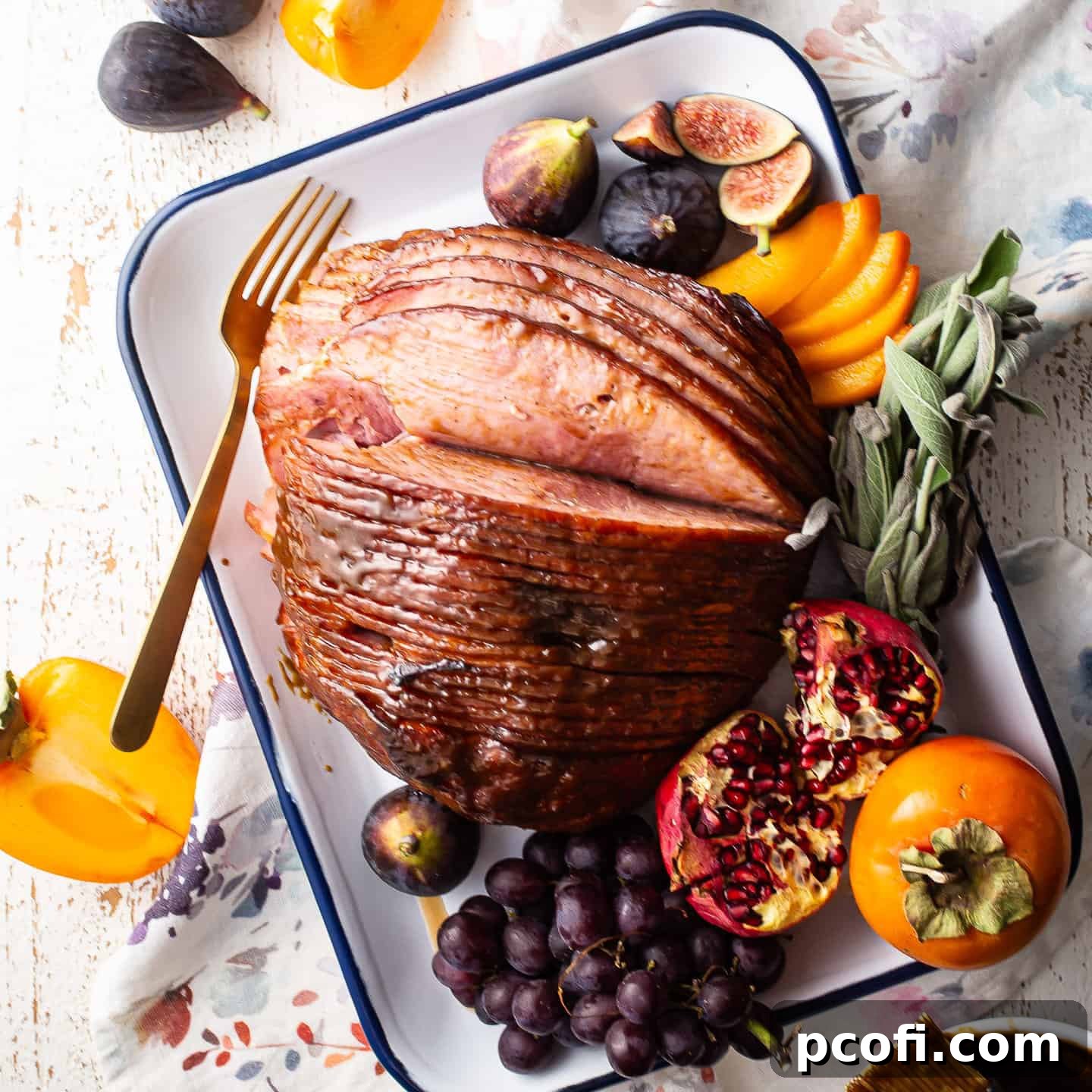
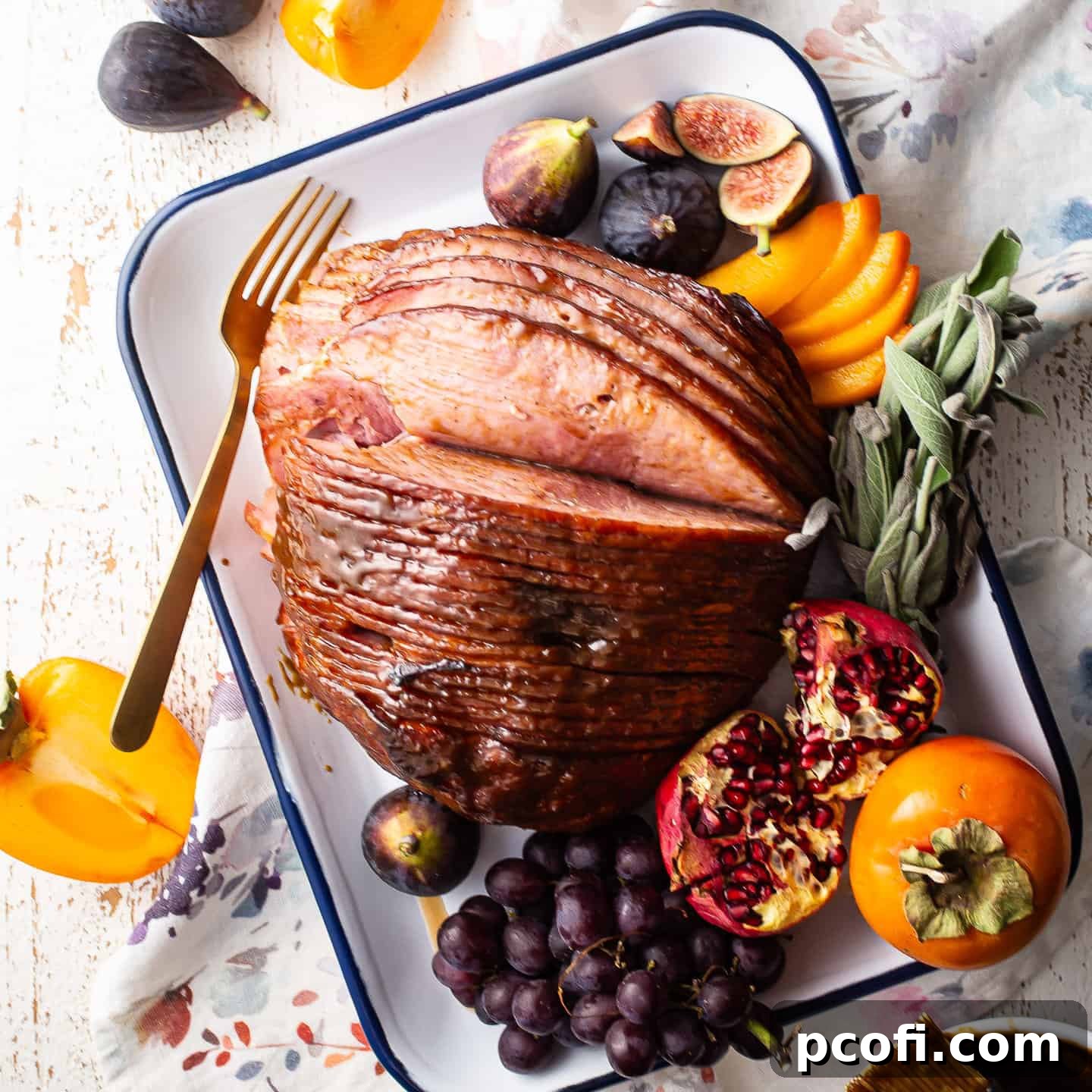
As the festive season approaches, especially with Easter on the horizon, one dish invariably takes center stage in our family meals: the glorious ham. It’s more than just a meal; it’s a cherished tradition, a symbol of gathering, and for many, a culinary highlight eagerly anticipated year after year. The rich, savory aroma that fills the kitchen as a ham bakes is simply intoxicating, but what truly elevates it from good to unforgettable is the perfect glaze.
Today, I’m thrilled to share a ham glaze recipe that has been a staple in my kitchen for as long as I can remember. This isn’t just any glaze; it’s a testament to how three simple ingredients can come together to create something truly magical. The idea for this incredible combination actually originated during my early days as a pastry chef, working at a bustling catering company. We often ran carving stations at grand parties, featuring prime rib, roast turkey, and, of course, ham. The glazes used were always impressive, and over the years, I’ve refined and tweaked that original concept to arrive at this flawless, foolproof version.
You might wonder how just three ingredients can yield such a spectacular flavor, but trust me, they do. The careful balance creates a sweet, savory, and subtly spiced coating that perfectly complements the inherent richness of the ham. This recipe is designed to generously double-glaze a 5-pound ham, which is typically ample to feed around a dozen people, especially when accompanied by a medley of delightful side dishes. Hosting a larger crowd? No problem at all – this recipe doubles effortlessly, ensuring everyone gets a taste of this sticky-sweet perfection.
Speaking of sides, no holiday ham dinner is complete without a few iconic accompaniments. I highly recommend serving your glazed ham with my legendary pineapple stuffing, creamy cheesy scalloped potatoes, and a vibrant Jello salad for a truly memorable feast.
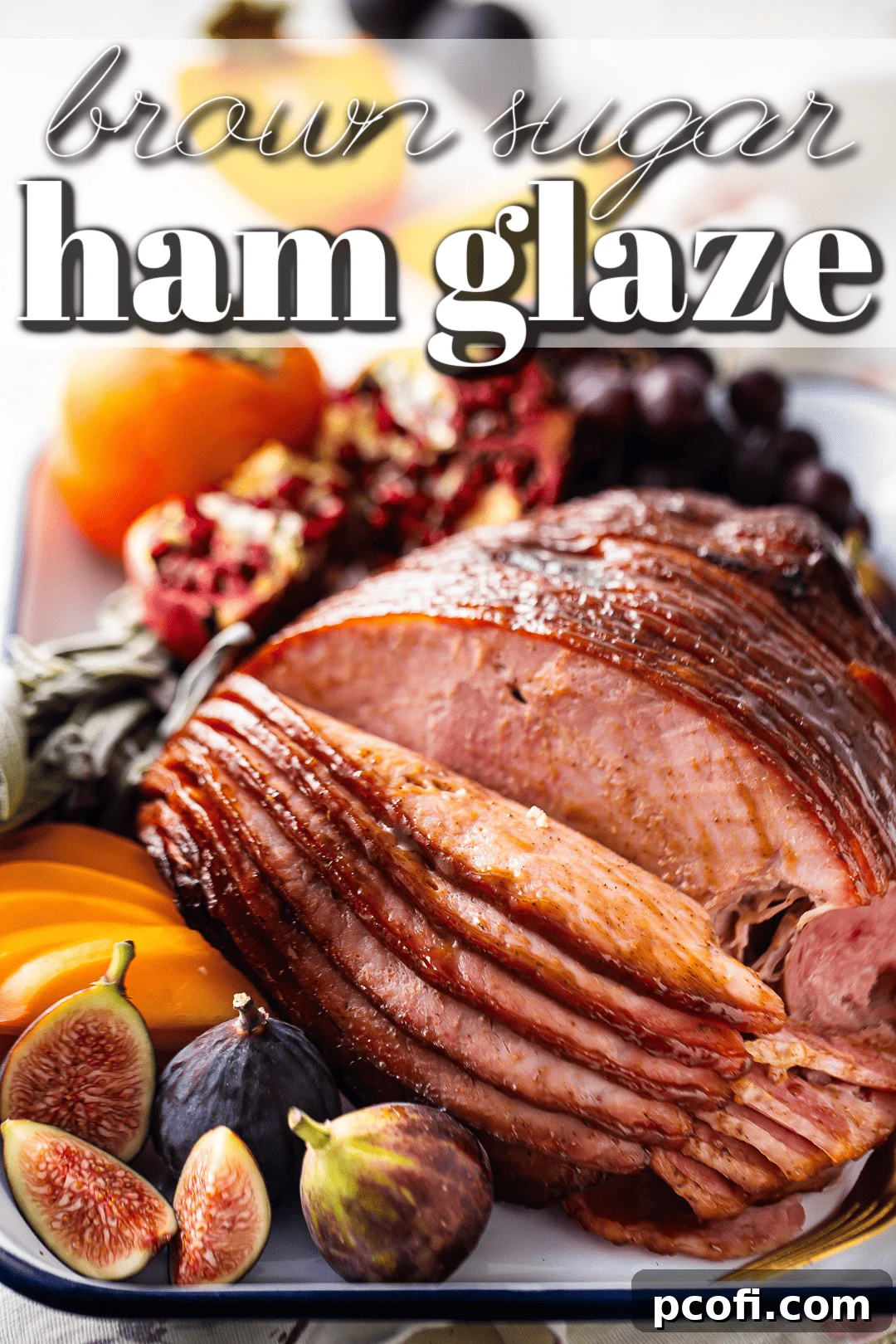
Table of Contents
- What is Ham Glaze?
- Why This is the ONLY Ham Glaze Recipe You Need
- The Irresistible Taste: What to Expect
- Your Essential 3 Ingredients
- Tools for Glazing Success
- Step-by-Step Guide: Crafting Your Perfect Ham Glaze
- Serving Your Magnificent Glazed Ham
- Expert Tips for a Flawless Glazed Ham
- Frequently Asked Questions
- More Festive Easter Recipes
Jump to Recipe
What is Ham Glaze?
In the United States, ham typically refers to the cured and smoked upper back leg of a pig. The curing process infuses the meat with a plethora of flavorful seasonings, and the smoking adds yet another layer of complex, smoky goodness. Given this inherent deliciousness, you might find yourself asking: why bother with a glaze at all?
There are two compelling reasons to embrace a ham glaze. Firstly, in my culinary philosophy, there’s simply no such thing as too much flavor. A well-crafted glaze enhances the ham’s natural taste, adding dimension and excitement. Secondly, and perhaps even more importantly, a glaze plays a crucial role in keeping the ham wonderfully moist and sealing in its natural juices. The secret lies in sugar, a primary component of most glazes. Sugar is hydrophilic, meaning it “loves” water. When applied to the ham, it actually draws moisture into the meat, preventing it from drying out during the baking process.
As the ham bakes, the sugars in the glaze reduce and caramelize in the heat of the oven. This creates a deeply satisfying, slightly chewy, and almost candy-like crust around each slice. This caramelized edge is truly one of the best parts of a glazed ham, adding an incredible textural contrast that I absolutely adore.
This particular version of ham glaze boasts a generous amount of warm brown sugar, which lends a rich, molasses-like sweetness. This is beautifully balanced by the tangy bite of Dijon mustard and a fragrant kick from aromatic ground cloves, resulting in a classic, traditional flavor profile that your family and guests will undoubtedly rave about.
Why This is the ONLY Ham Glaze Recipe You Need
Among countless ham glaze recipes, this one stands out for its exceptional simplicity and phenomenal results. Here’s why it will quickly become your go-to:
- Incredible Flavor Profile: The classic combination of brown sugar, tangy mustard, and aromatic cloves isn’t just a random assortment; these ingredients are culinary best friends with ham. They harmonize beautifully, creating a complex, balanced flavor that is both sweet and savory, with a delightful warmth. This glaze doesn’t just sit on the surface; it penetrates slightly, infusing every bite with deliciousness.
- Minimal Ingredients: You’ll only need three items from your pantry! In a world of overly complicated recipes, this one keeps it refreshingly simple. Fewer ingredients mean less shopping, less fuss, and a clearer focus on quality.
- Effortless Preparation: You will literally spend less than 5 minutes whipping up this glaze. There’s no pre-cooking required, no complex steps – just a quick stir, and it’s ready to transform your ham. This makes holiday meal prep significantly less stressful.
- Remarkably Versatile: While perfect as is, this glaze serves as an excellent foundation for creativity. It invites you to experiment with additional flavors you love, allowing you to personalize your ham without starting from scratch. Think of it as a delicious blank canvas.
The Irresistible Taste: What to Expect
Prepare your taste buds for an exquisite experience! This ham glaze recipe delivers a delightful sweetness, imbued with the deep, complex molasses notes of brown sugar. This rich sweetness is masterfully cut by the sharp, piquant tang of Dijon mustard, which prevents the glaze from being overly cloying. Adding another layer of intrigue is the distinct warm, pungent, and slightly spicy flavor from the cloves. Together, these elements create a multi-dimensional taste that is both comforting and exciting, transforming a simple ham into a gourmet feast.
Your Essential 3 Ingredients
You truly need only three straightforward ingredients to craft this incredibly effective ham glaze. Each plays a vital role in achieving that perfect balance of flavor and texture:
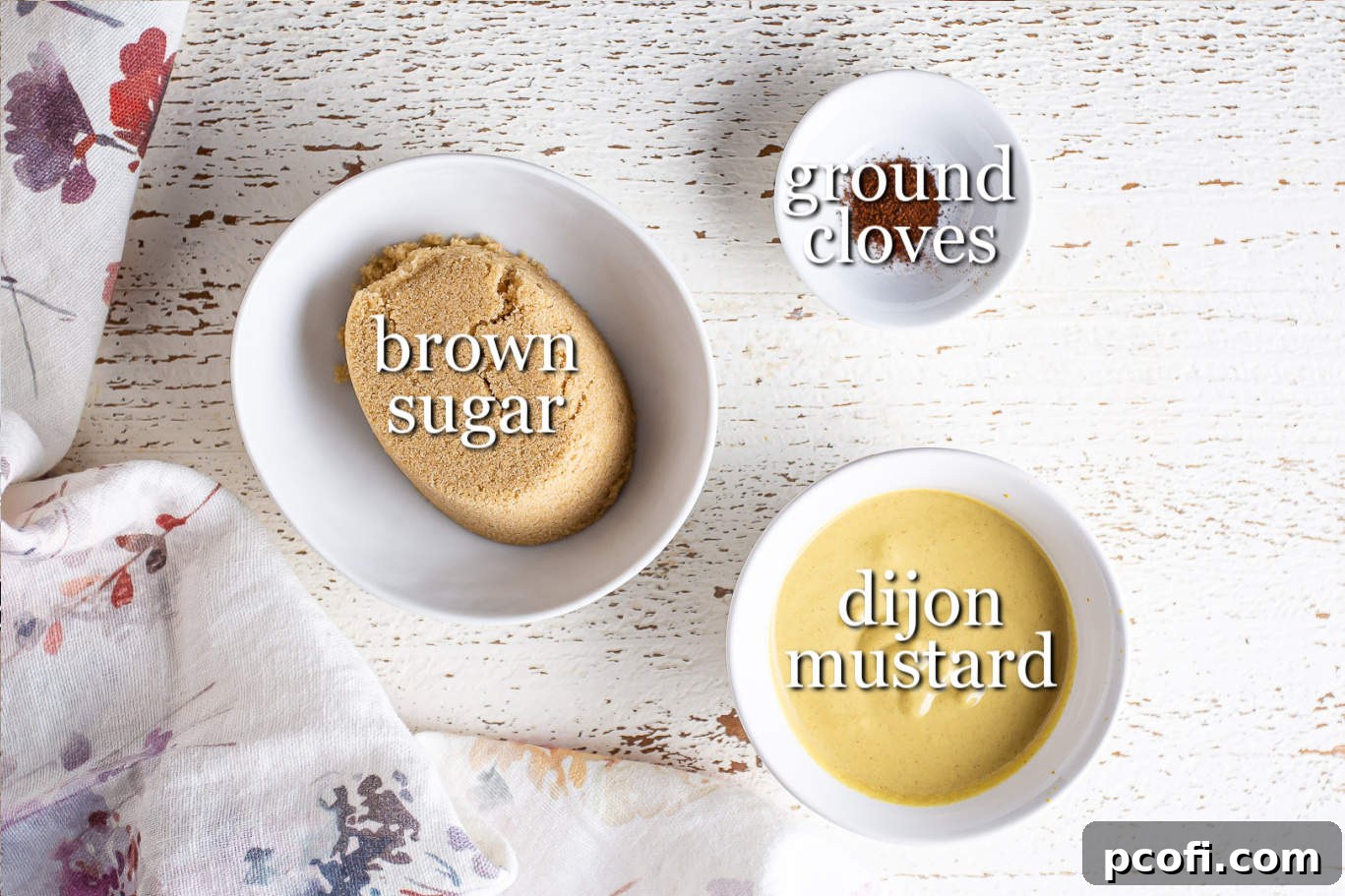
Brown sugar: This is the star of our glaze, providing the essential sweetness and contributing to that beautiful sticky, caramelized crust. I’ve successfully used both light brown sugar and dark brown sugar, and I find they both yield equally delicious results. Light brown sugar offers a milder molasses flavor, while dark brown sugar provides a more robust, deeper caramel note. Feel free to use whichever variety you happen to have readily available in your pantry.
Mustard: For this glaze, I wholeheartedly recommend a smooth Dijon mustard. Dijon is a French mustard characterized by its pale yellow color and a tangy, slightly spicy flavor, often made by blending ground mustard seeds with white wine. Its unique acidity and sharpness are crucial for cutting through the richness of the ham and balancing the sweetness of the brown sugar. While Dijon is my preference, other types of mustards, such as yellow mustard or even a grainy mustard, could work in a pinch, though they will alter the final flavor profile slightly.
Cloves: The warm, aromatic spice of cloves pairs magnificently with ham, a classic flavor combination that has stood the test of time. Historically, cooks would score the thick skin and fat layer of a ham in a diamond pattern and then stud it with whole cloves for both flavor and visual appeal. While whole cloves are less common on hams available today, incorporating ground cloves directly into the glaze achieves the same wonderful aromatic infusion, ensuring every bite carries that delightful, festive spice.
Tools for Glazing Success
Making this ham glaze is incredibly simple and requires minimal specialized equipment. Here’s what you’ll need to ensure a smooth and successful glazing process:
- Measuring cups and spoons: Accuracy is important in baking and cooking, even for simple recipes. Ensure you follow a reliable guide on how to measure ingredients to get the right ratios for your glaze.
- Bowl: A medium-sized mixing bowl is perfect for combining all the ingredients. Its size allows for easy stirring without spillage.
- Brush: A silicone pastry brush is my top recommendation. Its non-stick bristles make it exceptionally easy to clean after handling sticky glazes. However, a traditional bristle pastry brush will work just as effectively. If you don’t have a brush on hand, a spoon can be used to carefully dollop and spread the glaze over the ham, though a brush offers more even coverage.
Step-by-Step Guide: Crafting Your Perfect Ham Glaze
This incredibly easy ham glaze comes together in just three straightforward steps, ensuring a stress-free experience even on the busiest of holiday cooking days.
Step 1: Combine the Ingredients
Begin by gathering your three essential ingredients: brown sugar, Dijon mustard, and ground cloves. Place all of them into a mixing bowl.

Once all ingredients are in the bowl, simply stir everything together vigorously. Continue mixing until the brown sugar, mustard, and cloves are thoroughly combined, forming a smooth, consistent, and slightly thick paste. There should be no lumps of sugar remaining.
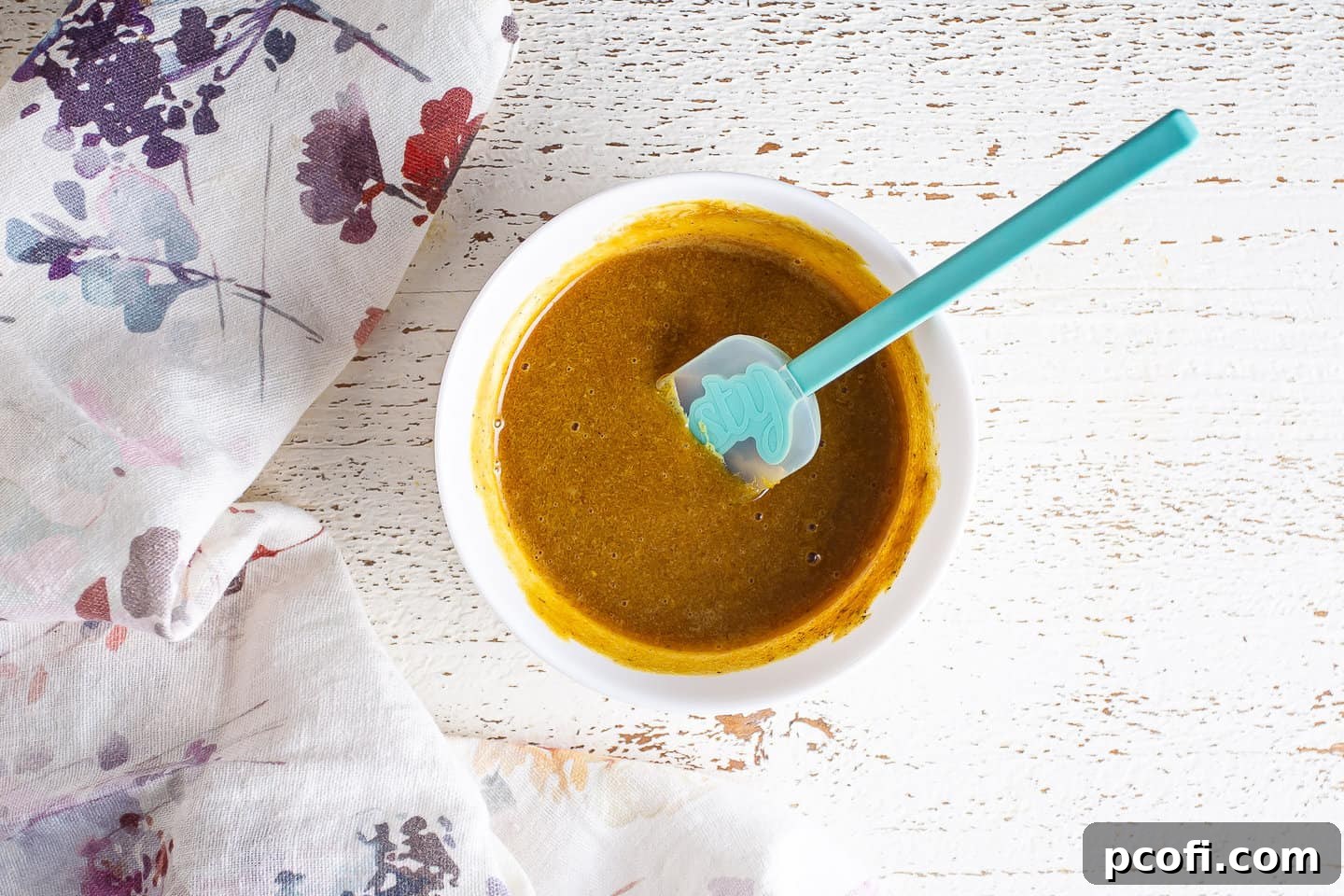
That’s all there is to making the glaze itself! Its simplicity belies the incredible flavor it will impart.
Step 2: Glaze Your Ham
Now, it’s time to apply this beautiful glaze to your ham. I personally prefer a spiral-sliced ham because it simplifies serving for guests; the pre-cut slices make it incredibly easy for them to help themselves. However, this versatile glaze recipe works wonderfully on any type of ham, whether it’s a bone-in, boneless, or even a smaller ham steak.
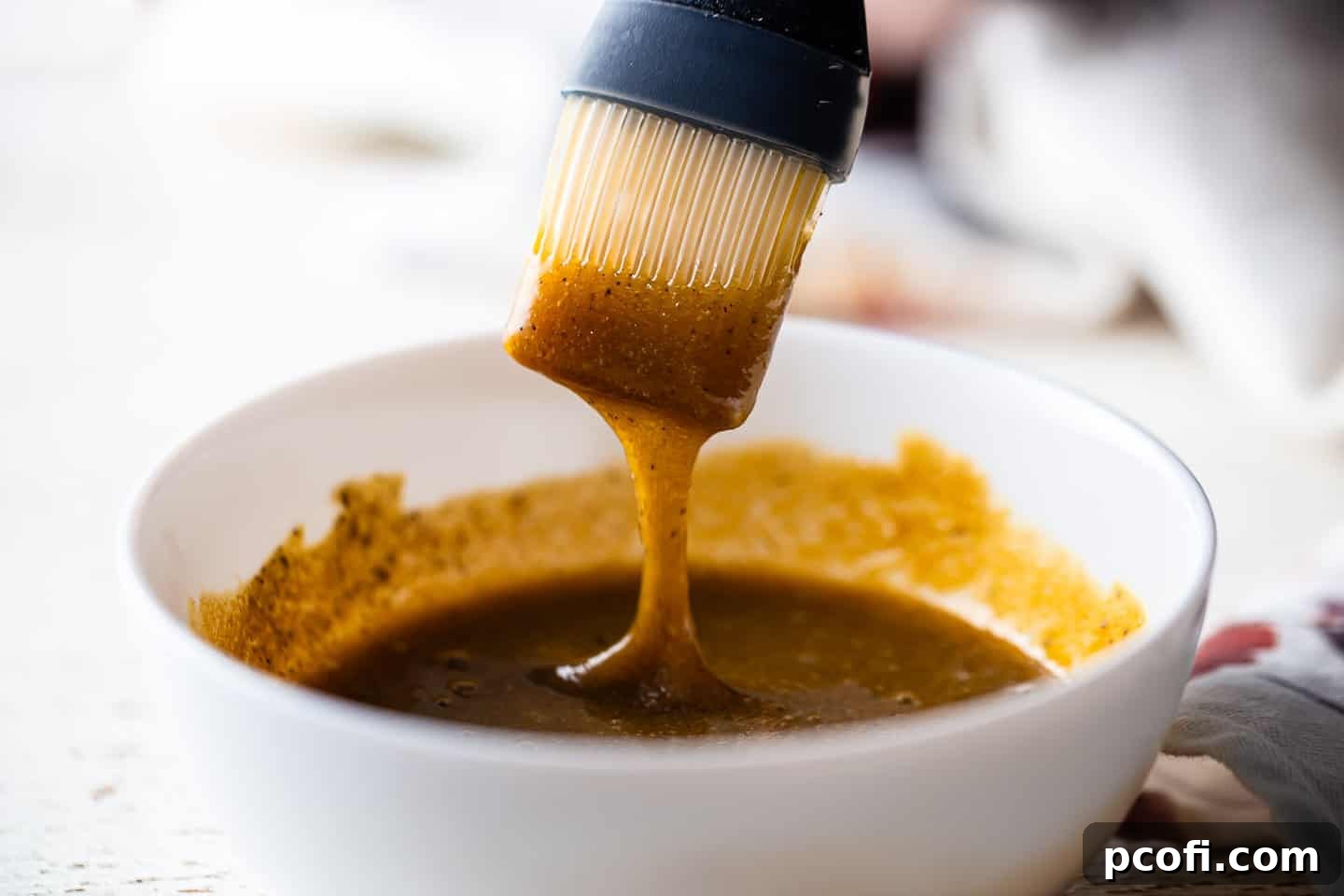
Using your pastry brush, generously apply about half of the prepared glaze all over the entire surface of the ham. For spiral-sliced hams, take extra care to work some of the glaze in between all the layers and crevices. This ensures every slice gets a taste of that irresistible sweet and savory coating. The goal is an even, thorough application.
Once glazed, place your ham into a baking dish and prepare it for the oven.
Step 3: Bake
Before baking, remember to preheat your oven to 350 degrees Fahrenheit (175 degrees Celsius). Most hams sold today are already fully cooked, meaning your primary goal is simply to heat it through to a safe internal temperature while developing that fantastic glaze. You’ll almost always find specific cooking directions on the ham packaging, which you should refer to first.
However, as a general guideline for reference, plan on baking your ham for approximately 15 minutes per pound at 350°F. For example, a 5-pound ham would typically require about 75 minutes of baking time. The critical factor is to ensure the ham reaches an internal temperature of 145 degrees Fahrenheit (63 degrees Celsius), which you can verify with a meat thermometer.
About 15 to 30 minutes before you expect the ham to be fully cooked and reach its target internal temperature, remove it from the oven and brush on the remaining half of your ham glaze. This second application is key to achieving that wonderfully sticky-sweet, deeply caramelized crust. Return the ham to the oven and continue baking until it is heated through and reaches the desired internal temperature. The glaze will deepen in color and become beautifully lacquered.
Serving Your Magnificent Glazed Ham
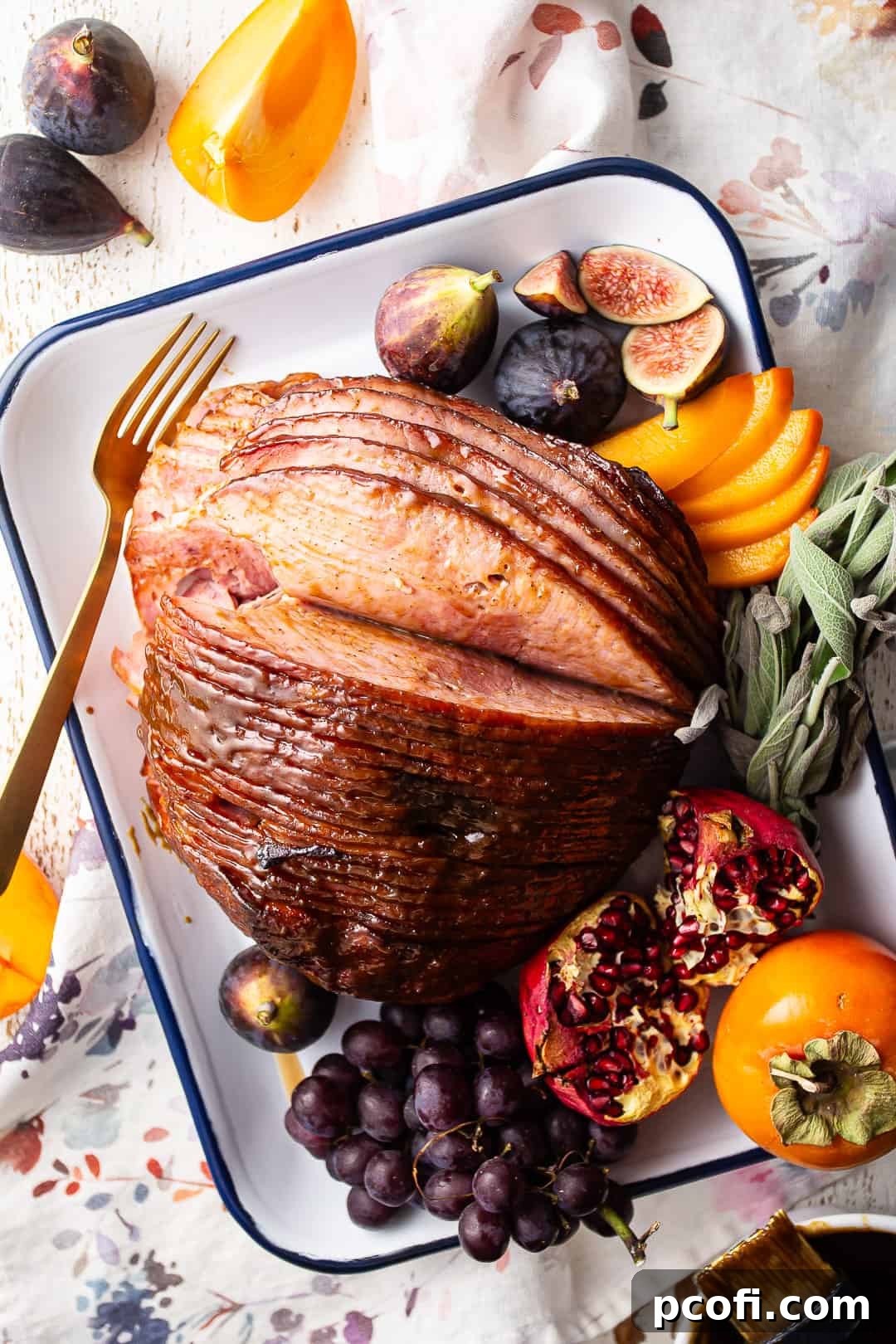
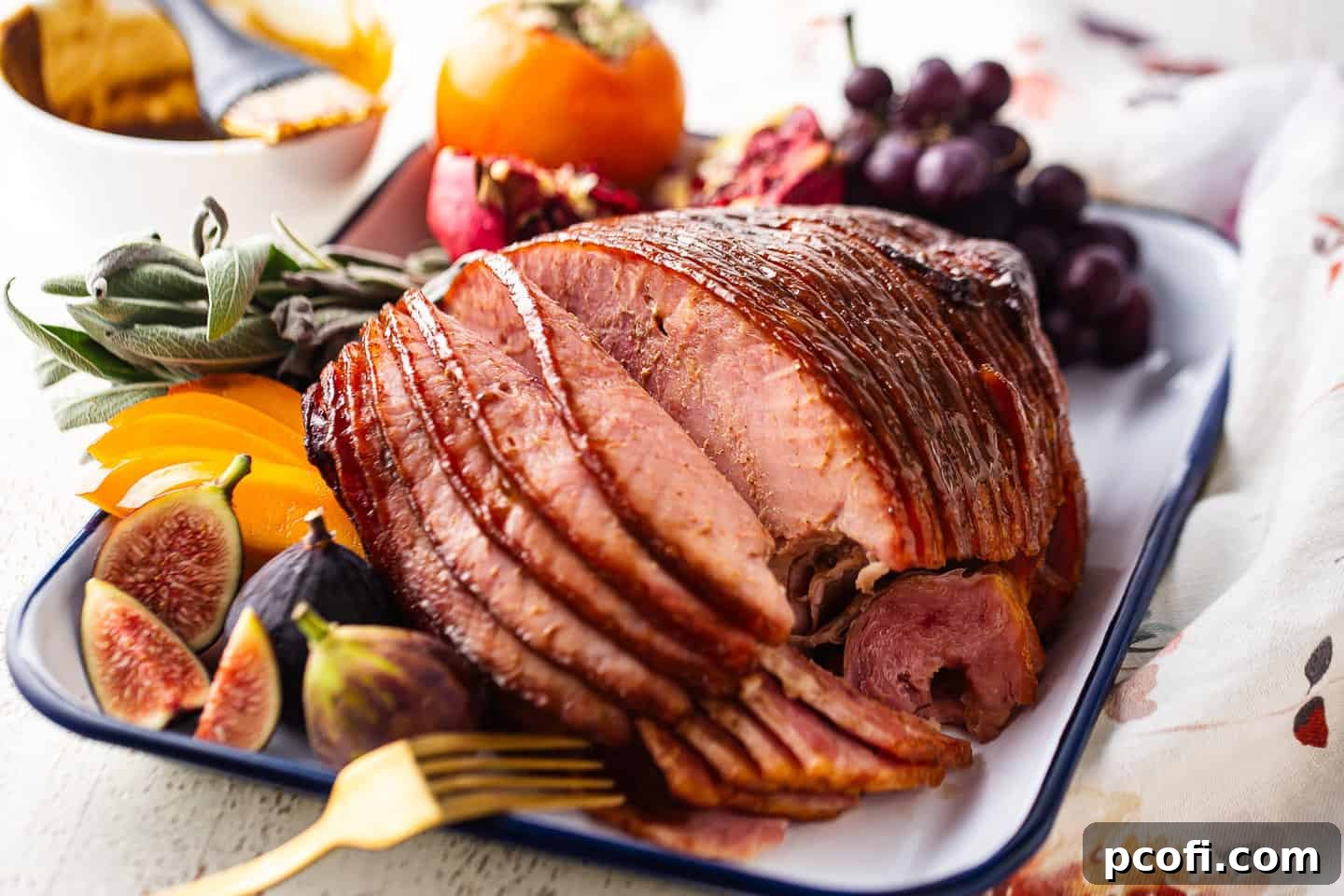
Once your glazed ham emerges from the oven, resplendent and fragrant, it’s ready to be the star of your meal. I typically serve my roast ham warm, fresh from the oven, but its deliciousness doesn’t diminish if served cold or at room temperature – making it incredibly versatile for buffet-style gatherings or for enjoying leftovers.
For holiday meals, my family often enjoys dinner a little earlier in the afternoon. This allows for ample time to digest, get a head start on any kitchen cleanup, and perhaps even enjoy a relaxed transition to dessert. A perfectly cooked ham pairs beautifully with a variety of classic side dishes. Beyond my aforementioned legendary pineapple stuffing, cheesy scalloped potatoes, and Jello salad, I also love to include vibrant glazed carrots, comforting green bean casserole, and an unexpected but delicious ramen noodle salad on the buffet spread. And of course, no meal is complete without a basket of pillow-soft homemade dinner rolls to sop up every last drop of the glorious pan drippings.
For dessert, after such a magnificent main course, it simply has to be a classic. My top choices include a rich coconut cream pie or a decadent chocolate cream pie. Another fantastic option that complements the sweetness of the ham beautifully is a sticky, caramelized pineapple upside-down cake.
Expert Tips for a Flawless Glazed Ham
Achieving a perfectly glazed ham is simple, but a few expert tips can elevate your results from great to truly exceptional. Follow these pointers for a show-stopping holiday centerpiece:
- Get Creative with Flavor Enhancements: While this 3-ingredient ham glaze is perfect as is, it’s also a fantastic base for customization. Feel free to infuse it with other flavors you adore! Consider stirring in a few teaspoons of pineapple juice or a splash of rum (or even pineapple rum for a tropical twist!), a dollop of bright orange marmalade, some finely chopped candied ginger, or a pinch of freshly grated ginger for extra zing. For a different sweet base, you could swap out the brown sugar for luscious honey, rich maple syrup, or fruity apricot jam. And if you crave a bit of heat, a pinch of crushed red pepper flakes or cayenne pepper will add a delightful spicy kick.
- Prevent Burning with Foil: Keep a close eye on your ham as it bakes, especially after the glaze has been applied. Ovens can have hot spots, and the sugars in the glaze can caramelize quickly, sometimes to the point of burning. If you notice any areas of the glaze starting to become too dark, simply tent the ham loosely with aluminum foil. This will protect the surface while allowing the ham to continue cooking through.
- The Critical Resting Period: Once your ham reaches the optimal internal temperature of 145 degrees Fahrenheit (63 degrees Celsius), resist the urge to carve it immediately! Remove the ham from the oven, tent it with foil, and allow it to rest for at least 5 to 10 minutes. This resting period is crucial for redistributing the juices throughout the meat. When the ham is first removed from the oven, its juices are concentrated at the surface. If you cut into it too soon, those precious juices will leak out onto your carving board, resulting in a drier ham. Giving it a little time allows the juices to reabsorb, ensuring your ham remains moist and tender all the way through each succulent slice.
- Choosing the Right Ham: Most hams available at the grocery store are pre-cooked, making them ideal for a quick and easy holiday meal. Look for “fully cooked” labels. Spiral-sliced hams are convenient for serving, while a bone-in ham often offers more flavor due to the bone marrow, though it requires a bit more effort to carve. For uncooked hams, adjust your baking time significantly (consult package instructions) and always ensure it reaches the safe internal temperature.
- The Power of a Meat Thermometer: This is your best friend for perfectly cooked ham. An instant-read meat thermometer will accurately tell you when your ham has reached the safe internal temperature of 145°F (63°C). Insert it into the thickest part of the ham, avoiding the bone, for the most accurate reading.
- Easy Carving Techniques: For a spiral-sliced ham, simply slice around the bone to release the pre-cut slices. For a bone-in ham, carefully remove the thick outer skin if present. Then, carve slices parallel to the bone, or for a more traditional look, make a few long, deep cuts perpendicular to the bone, then slice downwards.
Frequently Asked Questions
Absolutely! When you’re hosting a holiday meal or a large gathering, any prep you can do in advance is a true lifesaver. This simple ham glaze is perfect for making ahead. Simply mix all three ingredients together, transfer it to an airtight container, and store it in your refrigerator for several days or even freeze it for longer storage. This allows you to focus on other aspects of your meal when crunch time arrives.
Thanks to its core ingredients – brown sugar, mustard, and cloves – this glaze has an excellent shelf life. Stored properly in an airtight container in the refrigerator, it should keep beautifully for a few weeks. If you make a larger batch and don’t use it all, you can also freeze it for up to 2-3 months. Just make sure it’s thawed completely in the fridge before use.
After your meal, if you have any delicious glazed ham remaining, it’s important to store it properly to maintain freshness and safety. You can leave your glazed ham out at room temperature for a couple of hours, but any longer than that, and it should be moved to the refrigerator. Wrap it tightly in plastic wrap or aluminum foil, or place it in an airtight container to prevent it from drying out. Chilled, it will keep well for approximately 3 to 5 days. For longer storage, freeze leftover ham. Wrap individual portions tightly in plastic wrap, then place them in freezer-safe bags or containers. It will last for a month or two in the freezer. To reheat, thaw frozen ham in the refrigerator overnight, then warm it gently (covered with foil to retain moisture) in a 170-degree F (77°C) oven until thoroughly heated through.
This recipe makes enough glaze to generously double-glaze a 5-pound boneless, spiral-sliced ham. When choosing your ham, a good general rule is to calculate about 1/2-pound per person if you’re buying a bone-in ham, or about 1/3-pound per person for a boneless ham. If you’re serving a wide array of side dishes, you might be able to go slightly smaller, but remember, leftovers are always a welcome bonus! The nutritional information provided below is calculated for a 1/3-pound portion, and it includes both the ham and the delicious glaze.
While Dijon is highly recommended for its unique tang and smoothness, you can substitute it with other mustards in a pinch. Yellow mustard will provide a milder, more classic American mustard flavor, while a whole-grain mustard will add texture and a more robust, earthy taste. Keep in mind that these substitutions will alter the final flavor profile slightly, but will still contribute the necessary acidity to balance the sweetness.
For this glaze, ground cloves are much easier to incorporate and distribute evenly, ensuring a consistent flavor throughout. Fresh whole cloves would need to be very finely ground or steeped to release their flavor effectively, which adds an extra step. Sticking with ground cloves will give you the best results with minimal effort.
More Festive Easter Recipes
To round out your Easter celebration or any festive gathering, here are a few more of my favorite recipes that are sure to impress:
- Coconut Macaroons
- Hummingbird Cake
- Orange Rolls
- Pound Cake
As an amazon associate I earn from qualifying purchases.

Ham Glaze Recipe
Leave a Review
Save Recipe
Ingredients
- 1/2 cup (110 g) brown sugar, (light or dark) loosely packed
- 1/3 cup (83 g) Dijon mustard, (I prefer the smooth kind)
- 1/4 teaspoon (0.5 g) ground cloves
Instructions
-
Preheat the oven to 350 degrees F (175°C) and place the ham in a baking dish.
-
Stir the brown sugar, Dijon, and cloves together in a small bowl. Brush about half the mixture all over the outside of the ham and in between the slices, ensuring even coverage.
-
Bake the ham at 350 degrees F (175°C) for approximately 15 minutes per pound.
-
About 15 to 30 minutes before the ham is expected to be done, brush the remaining glaze all over the outside of the ham and in between the slices. Continue to bake until the ham reaches an internal temperature of 145 degrees F (63°C).