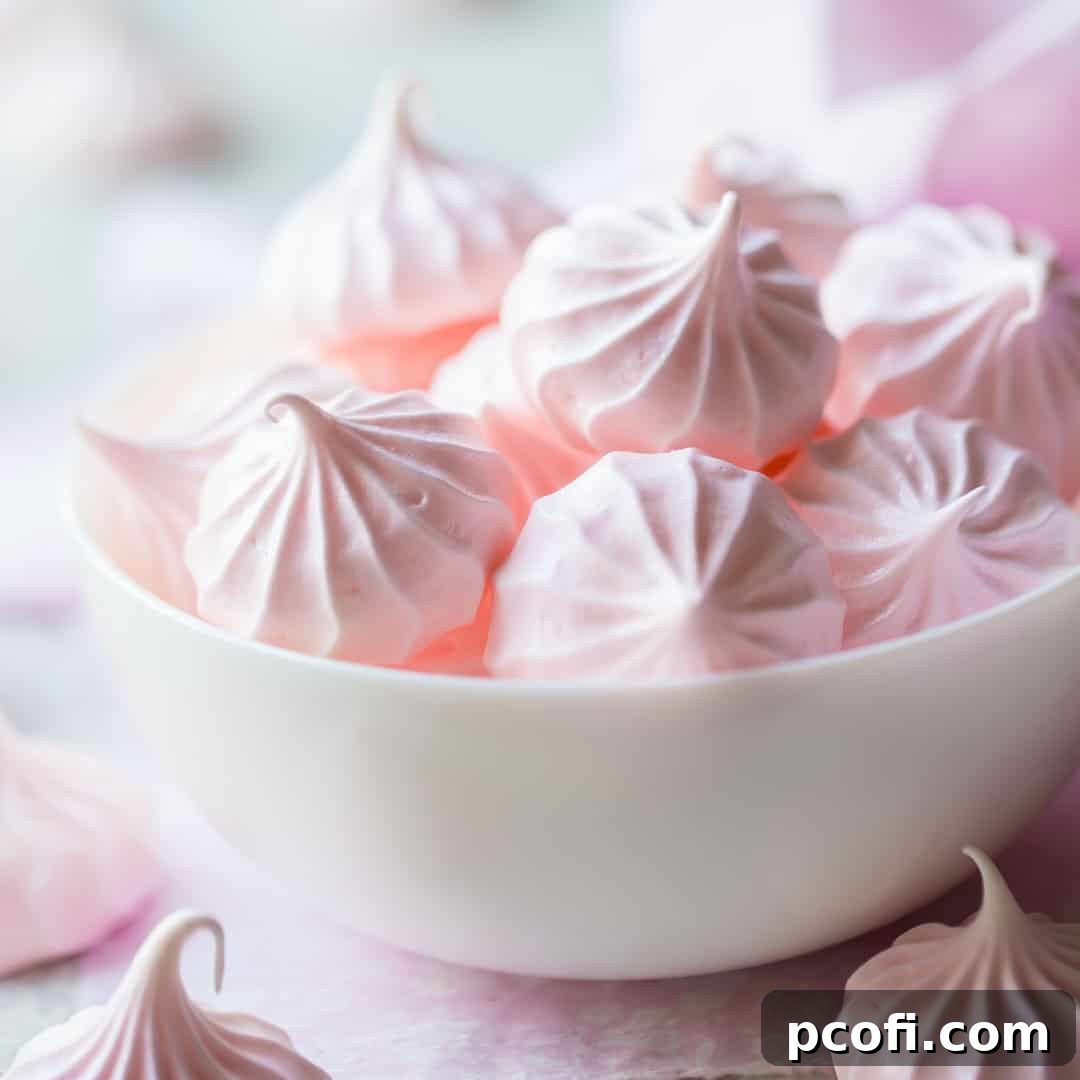
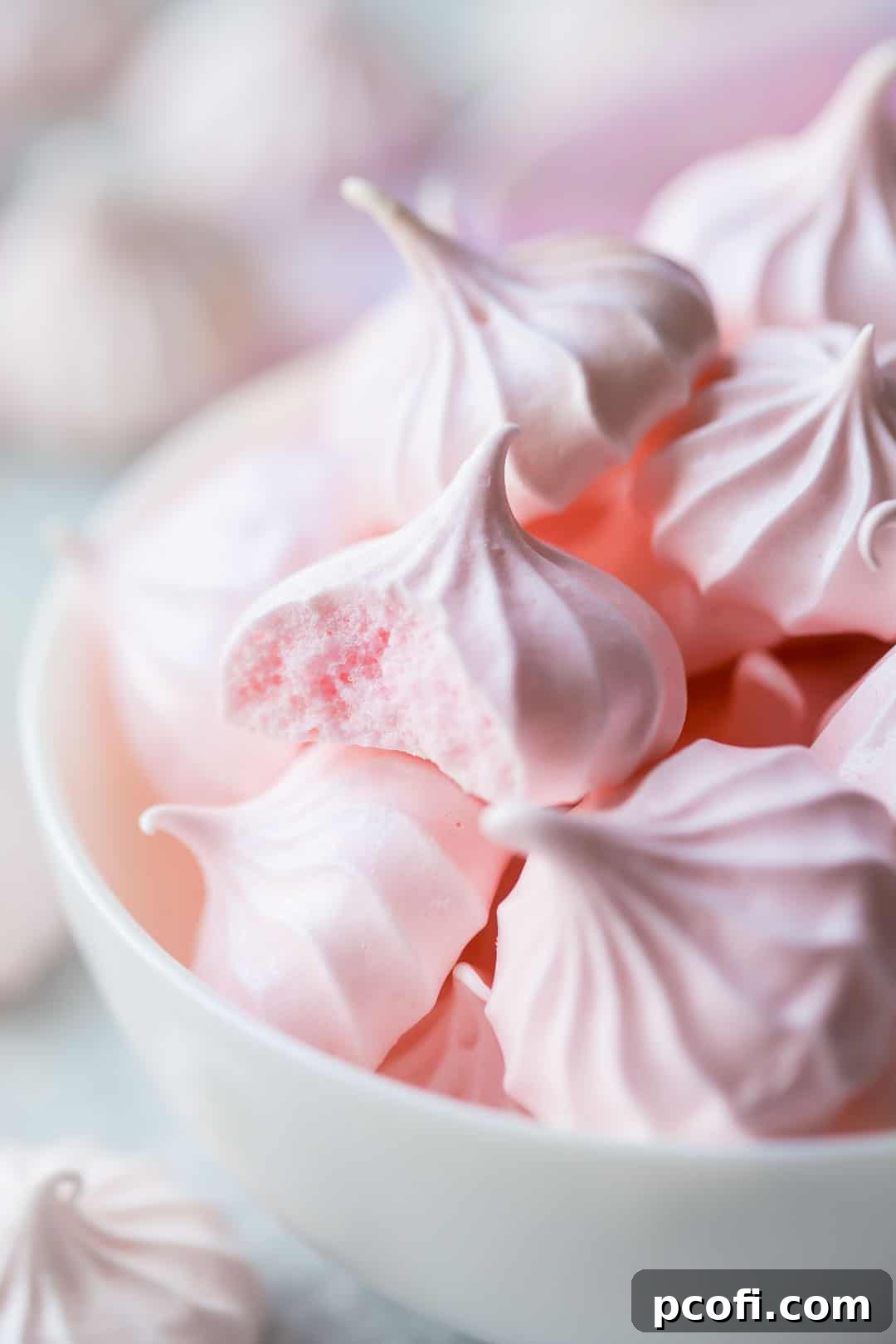
Delight in the sweet, crisp, and wonderfully airy texture of these homemade Meringue Cookies. Like biting into a delicate sugar cloud, these ethereal treats melt in your mouth, leaving a whisper of sweetness. Perfectly piped into elegant “kisses” and often tinted with subtle colors, they make a stunning addition to any dessert platter or a thoughtful homemade gift.
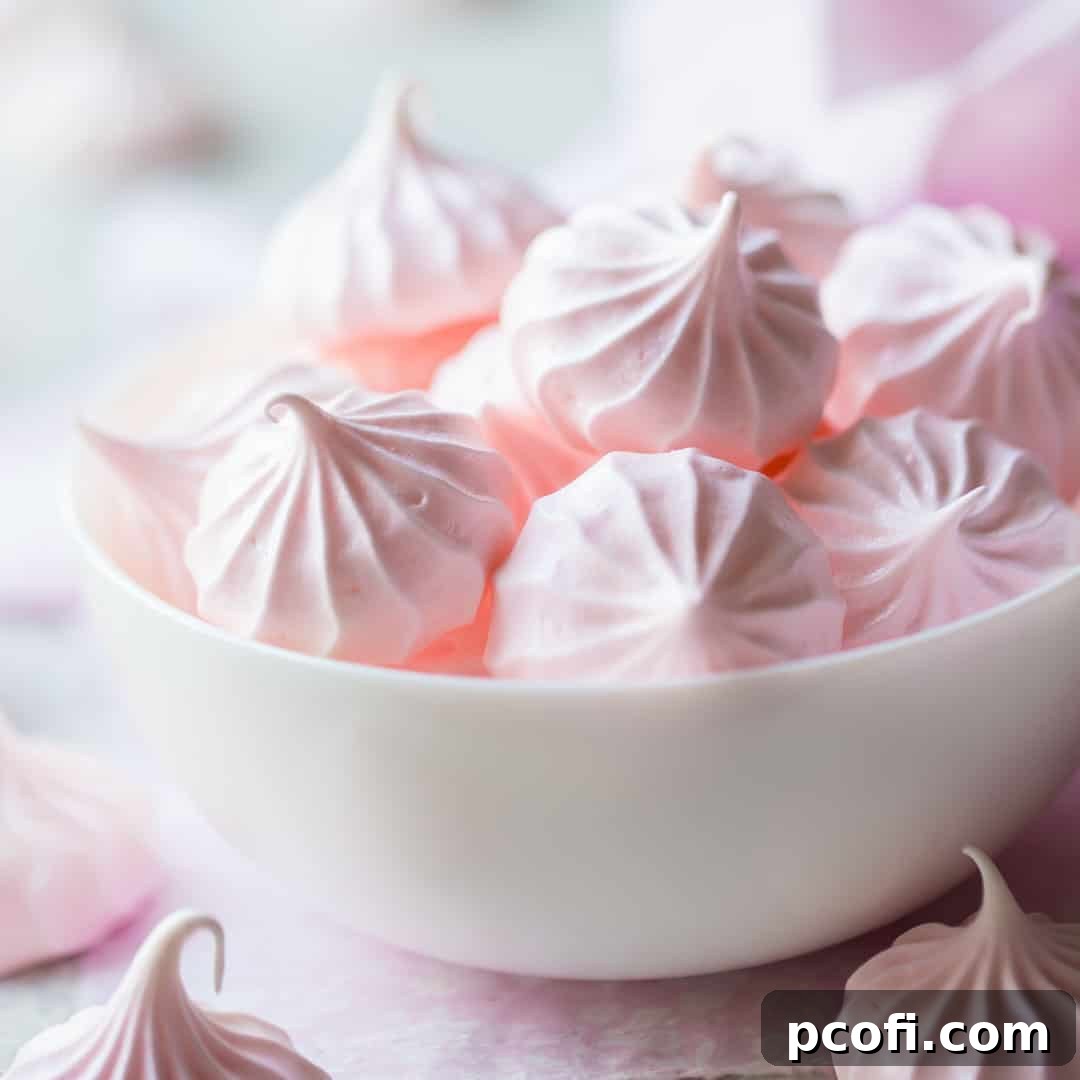
Table of Contents
- Why You’ll Adore This Meringue Cookie Recipe
- The Science and Art of Meringue
- Essential Ingredients for Perfect Meringue Cookies
- In Photos: Step-by-Step Meringue Cookie Guide
- Expert Tips & Troubleshooting for Meringue Success
- Meringue Cookies FAQ
- Flavor Variations for Your Meringue Cookies
- More Delightful Meringue Recipes
Jump to Recipe
Here on this site, a multitude of beloved recipes begin with the magic of meringue. From the silky smooth chocolate Swiss meringue buttercream to the cloud-like texture of angel food cake, and even the delicate shells of coffee macarons, meringue is a fundamental building block. While the concept of whipping egg whites and sugar until they’re fluffy and stiff may appear straightforward, achieving perfection can sometimes be a subtle art, fraught with common pitfalls if you’re not equipped with the right knowledge.
I frequently receive questions about the intricacies of meringue making, which inspired me to compile this extensive guide. And what better way to master the craft than by creating these absolutely adorable and utterly delicious baked meringue cookies? They serve as the ideal starting point for anyone looking to conquer the delicate world of meringue.
For these particular meringue cookies, our goal isn’t so much traditional baking as it is a slow, gentle drying process. This ensures they achieve that characteristic crispness without any browning whatsoever, preserving their pristine appearance and delicate flavor. They bake at a very low temperature—a mere 200 degrees Fahrenheit—for an extended period, allowing all the moisture to evaporate slowly and evenly.
Why You’ll Adore This Meringue Cookie Recipe
- Light & Airy Perfection: Experience the ideal texture – wonderfully crisp on the outside with a slight melt-in-your-mouth quality, rivaling the finest bakery meringues.
- Naturally Gluten-Free & Guilt-Free: Made purely from egg whites and sugar, these delightful bites are free from flour and butter, making them a naturally gluten-free and incredibly light dessert option, often around just 10 calories per cookie.
- Infinitely Customizable: Unleash your creativity! Easily switch out vanilla extract for other essences, or add a few drops of food coloring to match any holiday, party theme, or personal preference.
- Effortlessly Make-Ahead: These cookies are a host’s dream! They store beautifully, maintaining their delightful crunch for days, which makes them perfect for preparing in advance for gatherings.
The Science and Art of Meringue
At its heart, meringue is deceptively simple: just egg whites and sugar whipped together until they transform into a fluffy, stiff, and glossy cloud. However, it’s the subtle additions and precise technique that elevate it from good to truly exceptional.
I always recommend including a few extra ingredients to ensure stability and balanced flavor. Cream of tartar is my go-to for making meringue more stable, helping the egg whites hold their structure beautifully. A pinch of salt is essential to cut through the sweetness and enhance the overall taste. And, of course, a good quality vanilla extract provides that classic, comforting aroma.
If you find yourself without cream of tartar, don’t fret! A few drops of fresh lemon juice or white vinegar work just as effectively. These acidic agents help denature the egg white proteins, allowing them to form a stronger, more stable foam when whipped.
But why stop at vanilla? The world of flavor is your oyster! Experiment with almond extract for a nutty nuance, delicate rosewater for an elegant floral note, bright lemon extract or zest for a zesty zing, or even exotic orange blossom water for a touch of the Middle East. For a truly unique twist, consider folding in finely ground freeze-dried fruit, like raspberries or strawberries, pulverized into a powder in a food processor. This adds natural color and intense fruit flavor without introducing excess moisture.
Essential Ingredients for Perfect Meringue Cookies
Each ingredient plays a crucial role in creating the perfect meringue. Refer to the recipe card at the bottom of this post for the exact measurements.
- Large Egg Whites: These are the foundation of your meringue. For optimal volume and stability, ensure your egg whites are at room temperature. This allows their proteins to stretch more easily, incorporating more air. Separate your eggs carefully to avoid any yolk contamination.
- Cream of Tartar: This acidic powder acts as a stabilizer. It helps the egg whites achieve maximum volume and maintain those strong, stiff peaks without collapsing, making your meringue more forgiving and robust.
- Kosher Salt: Just a small pinch makes a significant difference. Salt doesn’t just balance the sweetness; it also enhances the overall flavor profile of the cookies, preventing them from tasting flat or overly sugary.
- Granulated Sugar: Not only does sugar provide sweetness, but it’s also critical for the meringue’s structure and signature crisp texture. As it dissolves into the whipped egg whites, it strengthens the protein network, making the meringue glossy and stable.
- Vanilla Extract: The classic choice for a reason, vanilla adds a warm, inviting flavor. Feel free to substitute with other extracts to experiment with different flavor profiles as desired.
- Icing Color (Optional): A tiny drop or two of gel-based food coloring (not liquid) can transform your meringues into beautiful pastel hues without adding excess moisture, which can deflate the delicate structure.
In Photos: Step-by-Step Meringue Cookie Guide
Step 1: Prepare Your Workspace and Oven
Begin by preheating your oven to a low 200°F (95°C). This crucial low temperature ensures the meringues dry out slowly without browning. Line two large baking sheets with parchment paper or silicone baking mats. This prevents sticking and makes for easy cleanup.
Step 2: Start Whipping the Egg Whites
Place your room-temperature egg whites in a meticulously clean, grease-free mixing bowl (preferably stainless steel or glass). Add the cream of tartar and salt. Begin mixing on medium speed. Watch as the egg whites gradually transform, becoming foamy and opaque, indicating they are ready for the next stage.
Step 3: Gradually Incorporate the Sugar
Increase the mixer speed slightly, then begin adding the granulated sugar, just a tiny amount at a time—about 1/4 teaspoon per addition. This slow, steady stream is absolutely paramount. It allows the sugar crystals ample time to fully dissolve into the egg whites, preventing a grainy texture and ensuring a stable meringue. Patience here is key to success!
Step 4: Achieve Stiff, Glossy Peaks
Once all the sugar has been incorporated, increase the mixer speed to high. Continue whipping until the meringue reaches a state of glossy perfection and holds very stiff peaks. You should be able to invert the bowl over your head (carefully!) without the meringue budging. This indicates a perfectly stable structure.
Step 5: Infuse Flavor and Color
Gently fold in your chosen vanilla extract. If you’re opting for color, add a small drop or two of gel icing color and carefully fold it in with a spatula until evenly distributed. Avoid overmixing, which can deflate the meringue.
Step 6: Pipe Your Meringue Kisses
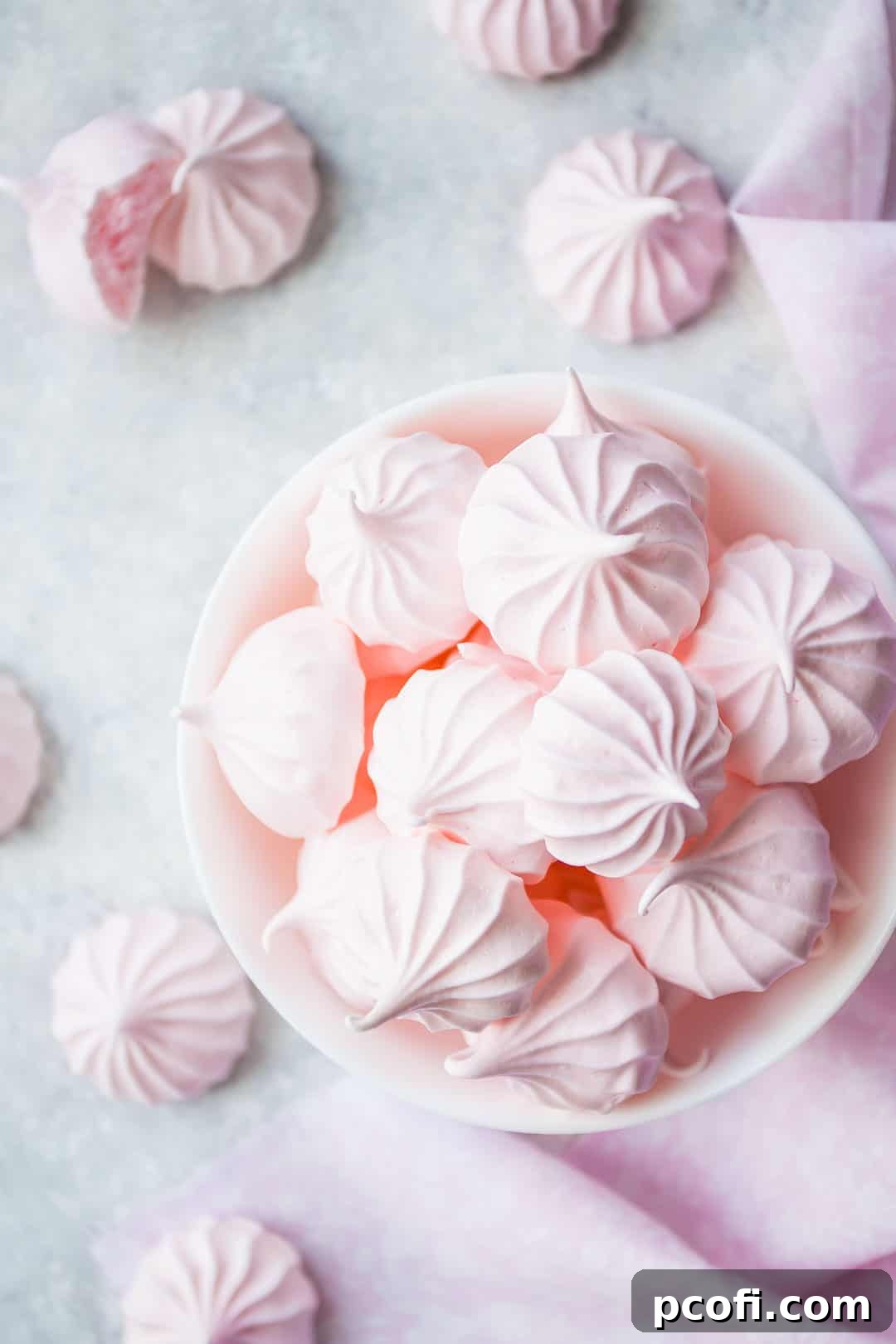
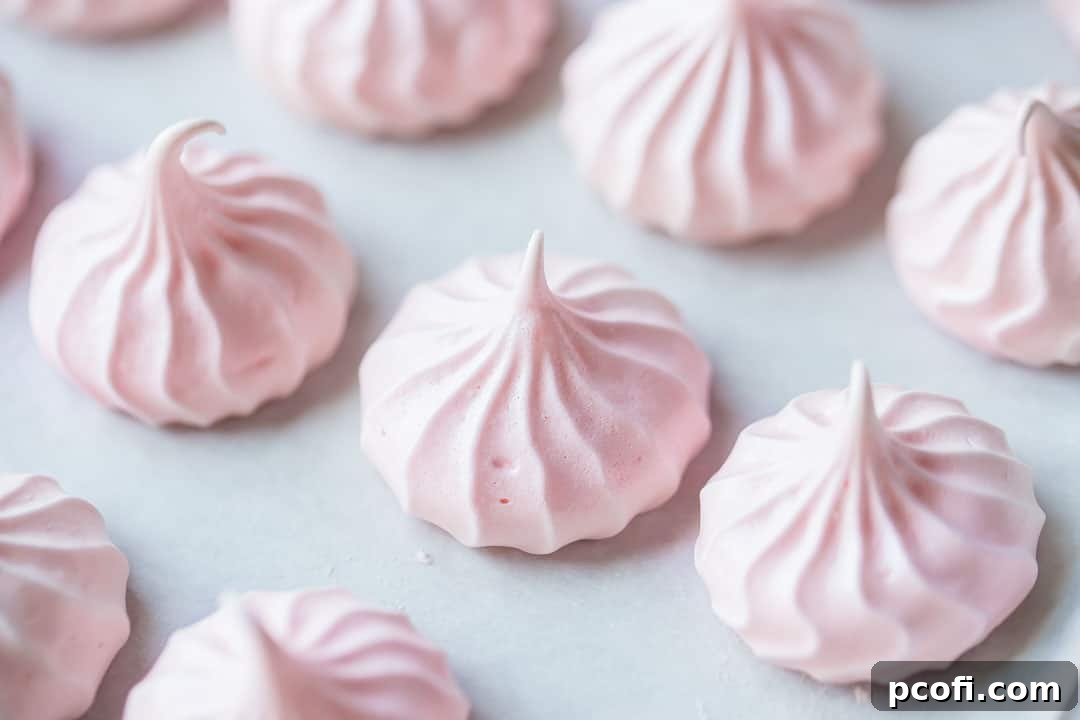
Transfer the beautiful meringue mixture into a piping bag fitted with your favorite star tip (a French star tip creates lovely ridges). Pipe small, approximately 1-inch diameter kisses onto your prepared baking sheets, ensuring they are spaced slightly apart to allow for proper air circulation during baking.
Step 7: The Gentle Drying Process (Bake Low & Slow)
Place your baking sheets in the preheated oven. Bake for an extended period of 2 to 2 1/2 hours. The meringues should emerge completely dry and crisp, with no signs of browning. Once baked, turn off the oven and prop the door slightly ajar. Allow the meringue cookies to cool completely inside the oven. This gradual cooling prevents cracking and ensures maximum crispness.
Expert Tips & Troubleshooting for Meringue Success
Why Won’t My Meringue Stiffen? The Delicate Balance
While the ingredients for meringue are refreshingly simple, the technique demands precision. The most critical factor is often timing and environment. Here’s what to keep in mind:
- Sugar Timing is Everything: Adding sugar too early can hinder the egg whites from developing sufficient volume. Introduce it too late, and the sugar crystals might not fully dissolve, leading to a “weepy” or grainy meringue. The sweet spot is when the egg whites are foamy and just beginning to turn white.
- The Slow Sugar Drizzle: Never dump all the sugar in at once! This can cause the meringue to deflate, expelling all the precious air you’ve worked hard to whip in. Add it gradually, literally a quarter teaspoon at a time, to ensure it dissolves completely and integrates seamlessly.
- The Enemy is Fat: This cannot be stressed enough: every piece of equipment—your mixing bowl, whisk, and even your spatula—MUST be scrupulously clean and absolutely free of any trace of grease or fat. Even the most microscopic oily residue will prevent the egg whites from whipping up properly. Wash everything in very hot, soapy water, then dry thoroughly. Some bakers even wipe their bowls with a bit of lemon juice or white vinegar to ensure no fat remains.
- Beware the Yolk: Egg yolks are pure fat. When separating eggs, be exceedingly careful not to let any yolk accidentally break into the whites. If even a tiny speck of yolk contaminates the whites, they will likely never reach the desired stiff peak stage. It’s always a good practice to separate each egg into a small, separate bowl before adding it to your main mixing bowl, just in case a yolk breaks.
- Humidity is a Foe: Meringues are hygroscopic, meaning they absorb moisture from the air. High humidity can prevent them from drying out properly in the oven or cause them to become sticky and soft after baking. Try to make meringues on a dry day if possible.
- Over-whipping: While you want stiff peaks, don’t whip the meringue indefinitely. Over-whipped meringue can become grainy and brittle, losing its smooth, glossy texture. Stop as soon as the peaks are firm and hold their shape beautifully.
Meringue Cookies FAQ
While it’s possible to make meringues ahead of time, it does carry a degree of risk, primarily due to environmental factors. Your best chance for success is on a very dry day. If the weather is at all rainy, foggy, or humid, you’re likely to encounter issues. Meringues are incredibly susceptible to moisture and can re-absorb humidity from the air, turning sticky and soft, even after they’ve come out of the oven perfectly crisp. I’ve experienced this frustration firsthand many times! For optimal texture and enjoyment, it is always recommended to make and serve meringue cookies as close to serving time as possible. If you must prepare them ahead, aim for a low-humidity day.
To preserve the crispness of your meringue cookies, proper storage is paramount. The key is to protect them from moisture. If you live in a perpetually dry climate, you might have more leeway. Otherwise, place the completely cooled meringue cookies in an airtight container immediately after they’ve finished cooling in the oven. Ensure the container is sealed tightly. Store them at room temperature, away from any sources of heat or humidity. While they can last for several days without spoiling, their texture may start to become slightly sticky over time depending on your environment. Never store them in the refrigerator, as the moisture inside will quickly ruin their texture. If you have any additional questions not covered here, please feel free to leave a comment below!
These charming little meringue kisses are fantastic for snacking, but once you’ve mastered the art of meringue making, a world of culinary possibilities opens up! Here are just a few examples of how you can utilize this versatile confection:
- Edible Cups or Nests: Pipe meringue into delicate cup or nest shapes, then bake them. Once cooled, fill these elegant vessels with luscious lemon curd, fresh berries, a scoop of ice cream, or even a dollop of whipped cream for a sophisticated dessert.
- Beautiful Pavlovas: Challenge yourself with a Pavlova! Unlike these crisp cookies, Pavlova is typically baked slightly faster at a higher temperature, creating a crisp exterior that gives way to a wonderfully soft, marshmallow-like interior. Perfect for fruit and cream toppings.
- Pies and Baked Alaskas: Meringue makes a spectacular topping! Think classic lemon meringue pie or a show-stopping baked Alaska. The meringue topping for these desserts is often not baked through but rather lightly toasted to golden perfection using a kitchen brulee torch or briefly under a hot broiler.
- French Macarons: If you can whip up a stable meringue, you’re already halfway to creating those exquisite, delicate French macarons. Mastering meringue is the most crucial step in macaron making.
- Swiss Meringue Buttercream: Don’t forget my absolute favorite frosting: Swiss meringue buttercream! It’s incredibly silky, less sweet than traditional buttercreams, and wonderfully stable, making it perfect for decorating cakes and cupcakes.
The unusually low oven temperature (200°F or 95°C) is crucial because it allows the meringue cookies to slowly dry out and become crisp without browning or burning. Meringue is primarily sugar and egg whites, both of which can caramelize and brown quickly at higher temperatures. A low oven temperature ensures the moisture evaporates gently, resulting in a perfectly white, light, and airy cookie that maintains its delicate structure and melts in your mouth.
A grainy meringue typically indicates that the granulated sugar didn’t fully dissolve into the egg whites. This often happens if the sugar is added too quickly or if the egg whites weren’t whipped sufficiently before the sugar was introduced. To avoid this, ensure you add the sugar very slowly, a little at a time, allowing each addition to dissolve before adding more. You can test for dissolved sugar by rubbing a small amount of meringue between your fingers; it should feel perfectly smooth, not gritty.
Flavor Variations for Your Meringue Cookies
While classic vanilla meringue cookies are always a hit, don’t hesitate to get creative with flavors and colors to match any occasion or craving. Here are some ideas:
- Citrus Zest: Finely grate the zest of a lemon, orange, or lime and fold it into the meringue with the vanilla extract. This adds a bright, refreshing aroma and subtle flavor.
- Coffee/Mocha: Dissolve 1-2 teaspoons of instant espresso powder in the vanilla extract before adding it to the meringue, or simply fold in a teaspoon of cocoa powder for a subtle mocha flavor.
- Peppermint: Perfect for holidays! Add a few drops of peppermint extract instead of vanilla. You can also crush candy canes and sprinkle them over the piped meringues before baking.
- Spices: A pinch of ground cinnamon, nutmeg, or even a tiny amount of ginger can add warmth and complexity, especially delicious during autumn.
- Nutty Notes: Replace vanilla with almond extract, or for a bolder flavor, hazelnut extract.
- Cocoa Swirls: After piping half the meringue, gently fold 1-2 tablespoons of cocoa powder into the remaining meringue. Then, layer the plain and chocolate meringues in a piping bag for a beautiful swirled effect.
More Delightful Meringue Recipes
- Classic Lemon Meringue Pie
- The Best Swiss Meringue Buttercream
- Seasonal Pumpkin Meringue Tarts with Whole Wheat Shortbread Crust
- Elegant Raspberry Meringue Sandwiches with Whipped Dark Chocolate Ganache Filling
- Festive Chocolate Peppermint Meringue Christmas Trees
- Exotic Pomegranate Meringue Tart with Brown Butter Shortbread Crust
- Simply Perfect Chocolate Swiss Meringue Buttercream
4.84 stars (18 ratings)
Meringue Cookies
Leave a Review
Save RecipeSaved!
Ingredients
- 4 large egg whites
- 1/4 teaspoon (0.25 teaspoon ) cream of tartar*
- 1/4 teaspoon (0.25 teaspoon) kosher salt
- 3/4 cup (150 g) granulated sugar
- 1/2 teaspoon (0.5 teaspoon) vanilla extract**
- 1 drop icing color, (optional)
Instructions
-
Preheat your oven to 200 degrees F (95°C). Line two baking sheets with parchment paper or silicone mats.
-
In a large, impeccably clean mixing bowl, combine the room-temperature egg whites, cream of tartar, and salt.
-
Begin whipping the egg whites on medium speed until they become foamy and just start to turn white and opaque.
-
While continuously whipping, gradually add the granulated sugar, approximately 1/4 teaspoon at a time, ensuring each addition dissolves completely.
-
Once all the sugar has been incorporated, increase the mixer speed to high. Continue whipping until the meringue is glossy, thick, and forms very stiff peaks that hold their shape firmly.
-
Gently stir in the vanilla extract. If using, carefully fold in the icing color with a spatula until the desired hue is achieved.
-
Transfer the meringue to a piping bag fitted with a French star tip. Pipe 1-inch diameter kisses onto your parchment-lined baking sheets, leaving a small space between each cookie.
-
Bake the meringues in the preheated oven for 2 to 2 1/2 hours, or until they feel completely dry, light, and crisp throughout. They should not brown.
-
Once baked, turn off the oven and prop the door slightly ajar. Allow the meringue cookies to cool completely inside the oven for at least an hour, or until the oven is cool. This helps prevent cracking and ensures maximum crispness. Serve immediately or store as directed.
Notes
**Feel free to experiment with other types of extracts (e.g., almond, peppermint, rosewater) to customize the flavor profile of your meringue cookies according to your taste.