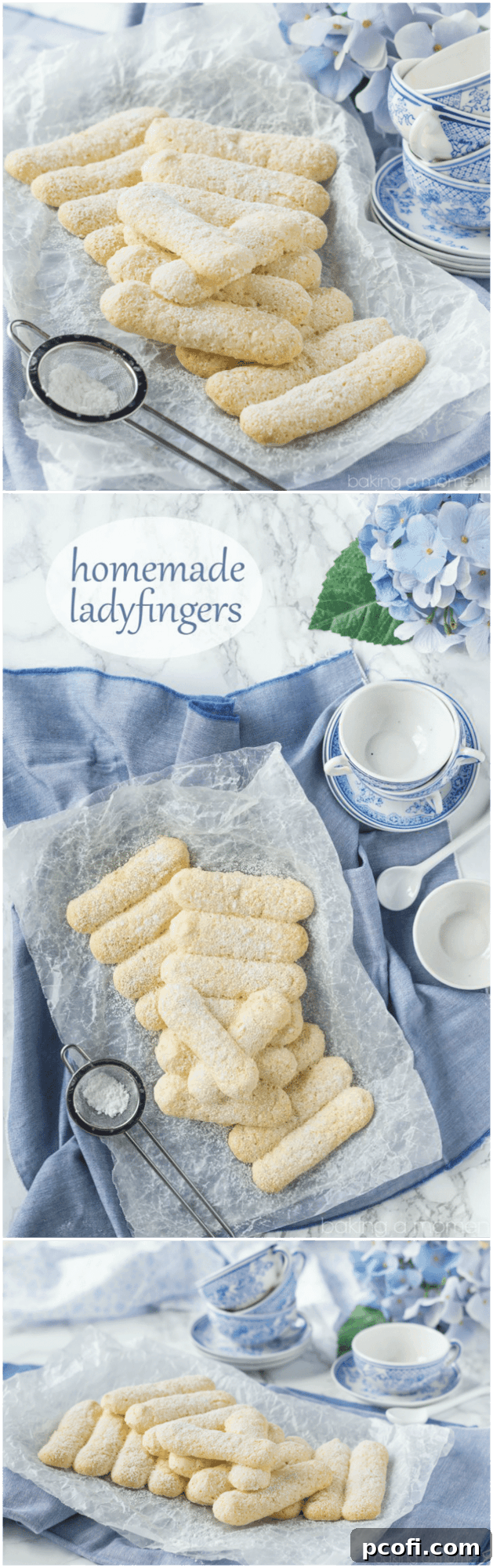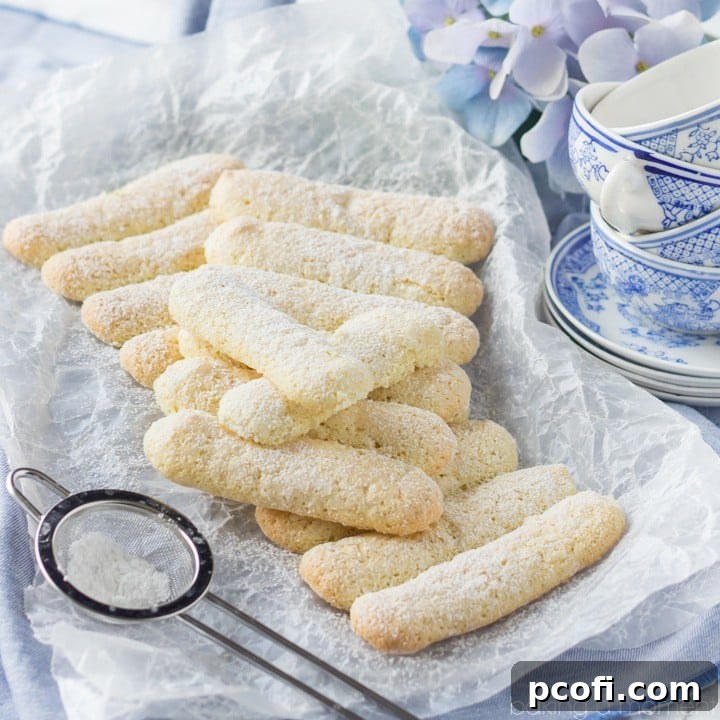
Homemade Ladyfingers: Your Ultimate Guide to Perfect Italian Sponge Biscuits
Embark on a delightful baking journey and discover the simple joy of crafting authentic homemade ladyfingers. These elegant, light, and airy sponge biscuits are not just a treat in themselves, but also the quintessential foundation for beloved desserts like the classic Italian Tiramisu and the sophisticated Charlotte cake. While often associated with gourmet baking, making ladyfingers from scratch is surprisingly straightforward, requiring only a few basic ingredients and a touch of finesse. If you can master the art of separating eggs and piping a straight line, you are moments away from creating these delicate wonders that promise a superior flavor and texture far beyond anything store-bought.
The Unmistakable Advantage of Homemade Ladyfingers
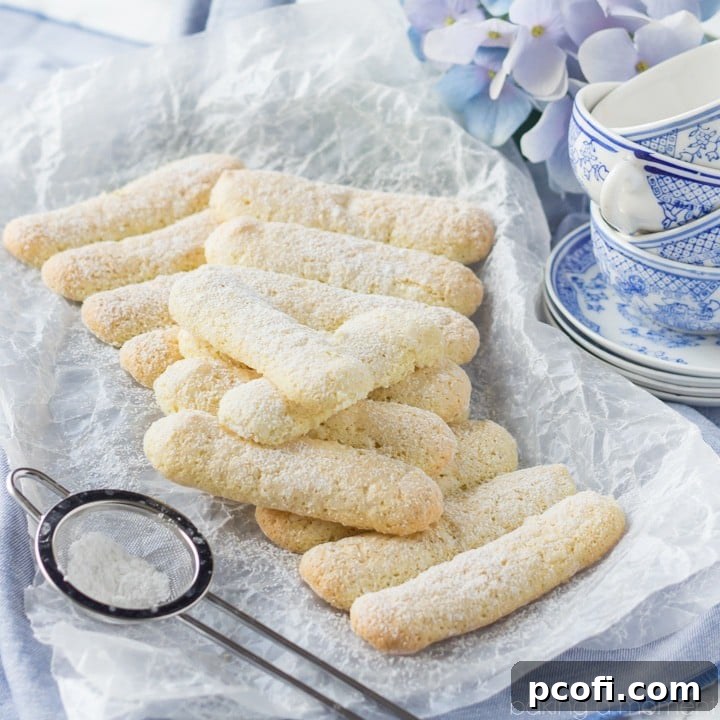
Many home bakers shy away from making ladyfingers, often opting for the convenience of packaged varieties found in the grocery store. However, the difference between a homemade ladyfinger and its store-bought counterpart is truly remarkable. Commercially produced ladyfingers, frequently found in a rigid cardboard box, tend to be dry, somewhat bland, and often lack the delicate, melt-in-your-mouth quality that defines these traditional Italian cookies. They are often denser, less absorbent, and simply don’t impart the same fresh, rich flavor and tender texture to your desserts that a homemade version does.
Our meticulously tested recipe transforms this perception, making the process both accessible and enjoyable for bakers of all skill levels. By using only fresh eggs, granulated sugar, and good quality all-purpose flour, you’re not only controlling every ingredient that goes into your treats but also guaranteeing a product free from unknown additives and artificial flavors. The result is a batch of ladyfingers that are incredibly light, wonderfully spongy, perfectly sweet, and exquisitely delicate. Imagine the subtle vanilla aroma filling your kitchen as these golden-brown beauties bake, a stark contrast to the often-stale scent of store-bought alternatives. This recipe is designed to be virtually foolproof, allowing even novice bakers to achieve professional-quality results in less than an hour of active preparation and baking time. Forget those hard, strange biscuits; embrace the fresh, airy goodness of homemade.
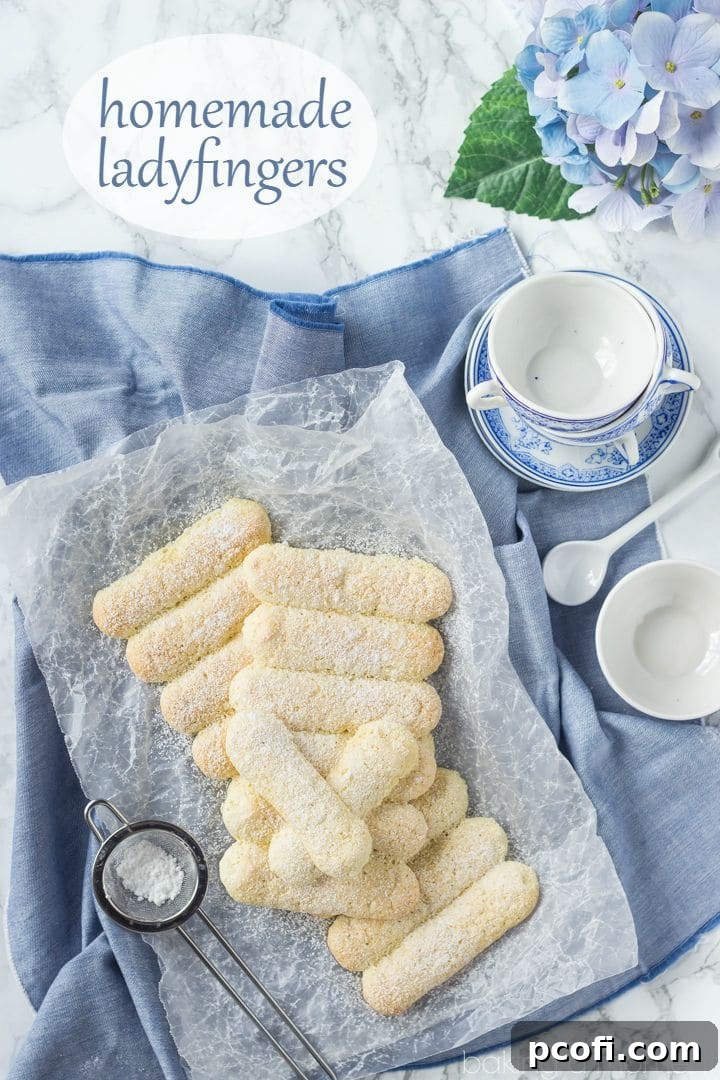
Demystifying Key Techniques for Light and Airy Ladyfingers
The secret to achieving those perfectly light and airy ladyfingers lies predominantly in how you handle your eggs. The batter for ladyfingers is essentially a delicate genoise-style sponge, meaning it relies heavily on the aeration of eggs rather than chemical leaveners like baking powder. Understanding these core techniques will not only help you perfect ladyfingers but also provide a solid foundation for mastering many other delicate baked goods.
The Art of Egg Separation and Whipping to Perfection
The foundation of exceptional ladyfingers rests on correctly separating egg whites from yolks and then whipping each component to its optimal consistency. Egg whites, when whipped, create a stable foam that traps air, providing the signature lift and ethereal lightness that ladyfingers are known for. It is absolutely crucial that no egg yolk contaminates the whites, as even the smallest speck of fat from the yolk will interfere with the protein structure of the whites, preventing them from whipping into firm, voluminous peaks. A helpful and highly recommended method is to crack each egg into a small, separate bowl first. Then, carefully scoop out the yolk and transfer the pure white to your main mixing bowl. This safeguards against a broken yolk ruining your entire batch of whites, saving you time and ingredients.
Once separated, begin whipping your egg whites on medium speed. As they become foamy and opaque, gradually increase the speed and slowly rain in half of your granulated sugar. The sugar not only sweetens the meringue but, more importantly, it stabilizes the foam, allowing it to hold its volume and achieve a glossy appearance. Continue whipping until the whites form stiff, glossy peaks that stand upright when the whisk is lifted. For the egg yolks, combine them with the remaining sugar and whip vigorously using a stand mixer or hand mixer until the mixture undergoes a significant transformation. It should become much paler, changing from a vibrant orange-yellow to a light canary yellow, and significantly thicker. When you lift the beaters, the mixture should fall back into the bowl in a slow, thick ribbon that holds its shape for a few seconds before smoothly disappearing. This crucial “ribbon stage” indicates ample aeration and proper emulsification, both vital for contributing to the ladyfingers’ fluffy, tender texture.
Expert Tips for Flawless Homemade Ladyfingers Every Time
Even with a straightforward recipe, a few insider tips can make all the difference, ensuring your homemade ladyfingers are consistently perfect. These pointers address common questions and challenges, guiding you toward baking success and helping you avoid common pitfalls.
- Embrace Room Temperature Eggs: For the absolute best results, always aim to use eggs at room temperature. Egg whites at room temperature have a lower surface tension, allowing them to whip up much faster and achieve significantly greater volume compared to cold eggs. This increased volume translates directly into lighter, more ethereal ladyfingers. If you’re short on time and forgot to take your eggs out, a quick trick is to place them in a bowl of warm (not hot) water for about 5-10 minutes.
- Prevent Yolk Contamination at All Costs: We cannot overstate the importance of a clean egg separation. The smallest amount of fat from a broken yolk can completely ruin your egg whites’ ability to whip to their full potential. Crack eggs individually into a small bowl, carefully transferring only the pure white to your main mixing bowl. This way, if a yolk breaks, you only lose one egg, not the whole batch of whites.
- Gradual Sugar Integration for Meringue Stability: When adding sugar to your whipping egg whites, do so slowly and steadily. This allows the sugar crystals ample time to dissolve completely into the meringue, creating a stable, glossy, and smooth foam. Dumping the sugar in too quickly can cause the whites to deflate or result in a gritty texture, both of which are undesirable for delicate ladyfingers.
- Whip Yolks to the Ribbon Stage: Do not cut short the whipping time for your egg yolks and sugar. This step is critical for incorporating enough air and developing the mixture’s structure. The “ribbon stage” is visually identified when the mixture is pale, thick, and falls from the beater in a ribbon that briefly holds its shape on the surface before slowly dissolving. This ensures a rich, flavorful, and stable base for your delicate batter.
- The Art of Gentle Folding: After preparing your aerated egg whites and yolks, combining them requires an exceptionally delicate hand. Use a wide, flexible silicone spatula and employ a “cut and fold” technique. Slice down through the center of the mixture, then sweep the spatula across the bottom of the bowl and up the side, gently folding the lighter mixture over the heavier one. Rotate the bowl and repeat this motion. The primary goal is to combine the ingredients thoroughly without deflating the precious air you’ve whipped into the eggs. Don’t worry if the batter looks a little streaky initially; you’ll do a final few folds when incorporating the flour.
- Sifting Flour for Supreme Lightness: Always sift your all-purpose flour directly over the egg mixture before folding. Sifting removes any lumps and, more importantly, aerates the flour. This makes it significantly easier to fold into the delicate batter without overmixing, which can develop gluten and lead to tough, dense ladyfingers. The objective is always a light, tender crumb.
- Create a Piping Guide for Uniformity: For professional-looking, uniformly sized ladyfingers, a simple piping guide is an absolute game-changer. Take a piece of parchment paper and draw parallel lines about 3 inches (7.5 cm) apart, then perpendicular lines approximately 1 inch (2.5 cm) apart. Slip this marked sheet under the clean parchment paper on your baking sheet. This visual guide will help you pipe consistently sized ladyfingers, ensuring even baking and a beautiful, cohesive presentation in your final desserts. This reusable guide is an invaluable asset for repeated baking.
- Double Dusting with Powdered Sugar: The initial dusting of powdered sugar before baking serves two crucial purposes: it creates a slightly crackly, delicate crust on the surface of the ladyfingers and helps prevent them from sticking to the parchment. Don’t be alarmed if the sugar seems to melt quickly into the unbaked batter; this is perfectly normal. For an extra touch of elegance and a more pronounced sugary finish, you can lightly dust them again with additional powdered sugar after they have baked and cooled.
- Smart Storage for Make-Ahead Convenience: Ladyfingers are excellent candidates for preparing in advance. Once fully baked and completely cooled, they can be stored in an airtight container at room temperature for up to 3-4 days without losing their delicate texture. For longer storage, loosely double-wrap them in plastic bags or place them in an airtight container and freeze for up to one month. Thaw them at room temperature for a few hours before using them in your favorite desserts.
- Don’t Peek! Maintain Oven Temperature: Resist the urge to open the oven door during the first 10-12 minutes of baking. A sudden drop in temperature can cause the delicate, air-filled ladyfingers to collapse and lose their volume. Trust your oven and let them bake undisturbed until they are set and just starting to turn golden at the edges.
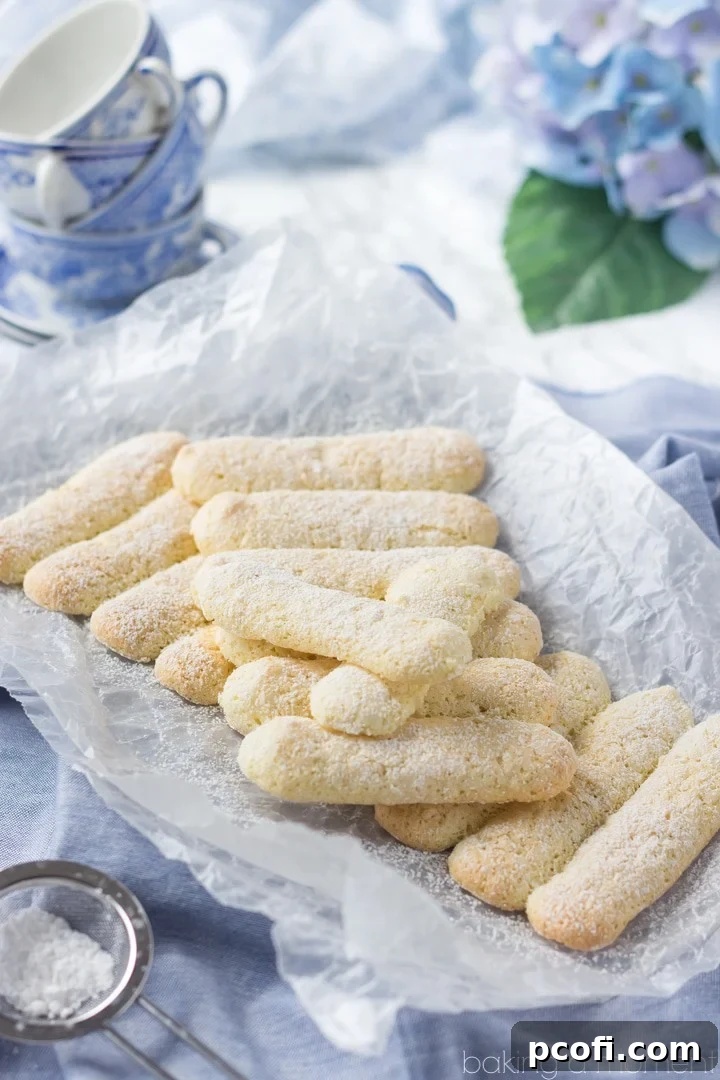
Beyond Tiramisu: The Incredible Versatility of Ladyfingers
While the word “ladyfinger” instantly conjures images of luxurious Tiramisu, these humble sponge biscuits boast an incredible versatility that extends far beyond the famous coffee-flavored dessert. Their unique texture—firm enough to hold shape yet tender and incredibly absorbent—makes them ideal for a myriad of sweet creations in both classic and modern pastry.
Consider the elegant Charlotte Russe, where ladyfingers form a beautiful edible border around a rich Bavarian cream or a vibrant fruit mousse. They are also fantastic in various layered trifles, where they soak up fruit juices, liqueurs, or creamy custards to create a harmonious blend of flavors and textures. For a simpler pleasure, enjoy them on their own as a delightful accompaniment to your morning coffee, afternoon tea, or a scoop of ice cream. You can even use them as a creative base for individual fruit tarts, as a component in a sophisticated ice cream sandwich, or simply dusted with extra powdered sugar for a quick, elegant snack. Their mild sweetness means they pair exquisitely with almost any fruit, cream, or chocolate combination you can imagine, making them a true staple in any baker’s repertoire.
Recommended Baking Tools for Ladyfinger Baking Success
Equipping yourself with the right tools can significantly enhance your baking experience and contribute to the consistent quality and ease of making your homemade ladyfingers. These items are often indispensable for achieving those picture-perfect results:
- Pastry Bag and Piping Tips: A durable pastry bag (disposable or reusable) paired with a round piping tip (such as an Ateco 804 or 806) is essential for piping uniform, attractive ladyfingers. The consistent size ensures even baking and a professional appearance.
- Parchment Paper: Crucial for preventing sticking and allowing for easy removal and transfer of the delicate baked goods. Pre-cut parchment sheets can save you valuable time and hassle.
- Quality Baking Sheets: Heavy-gauge, light-colored aluminum baking sheets are highly recommended as they conduct heat evenly and prevent the bottoms of your ladyfingers from browning too quickly or unevenly.
- Stand Mixer or Hand Mixer: While whipping eggs by hand is possible, a good quality stand mixer or a powerful hand mixer will make the arduous task of whipping egg whites and yolks significantly faster and far more effective, ensuring maximum aeration and volume.
- Silicone Spatula: An absolute must-have tool for gently folding delicate ingredients, effectively preserving the fragile air incorporated into the egg mixtures.
- Fine Mesh Sieve: Essential for sifting flour, ensuring a lump-free batter and contributing to the lightest possible crumb in your ladyfingers.
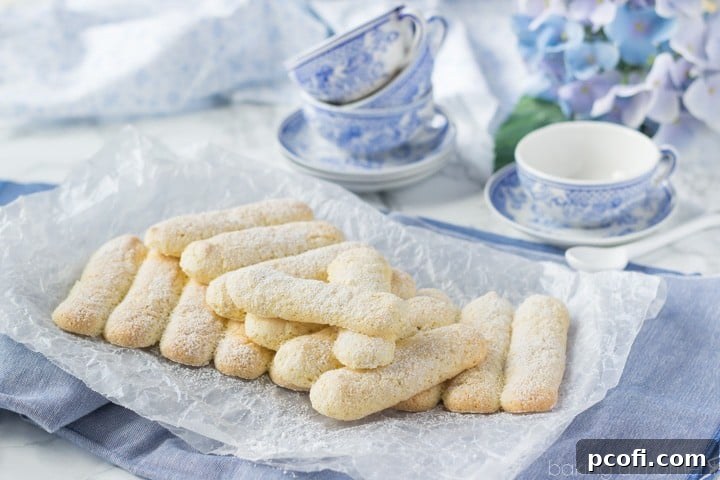
Your Journey to Baking Perfection Starts Here
Crafting homemade ladyfingers is a wonderfully rewarding experience that elevates your dessert-making skills and brings an authentic, artisanal touch to your culinary creations. With this comprehensive guide and straightforward recipe, you’re now well-equipped to bake these delicate sponge biscuits with confidence and ease. Enjoy the process, savor the delicious, fresh results, and prepare to impress your family and friends with the irresistible taste and texture of freshly baked ladyfingers!
This post contains affiliate sales links.
Homemade Ladyfingers Recipe
Follow this detailed recipe to create perfect, light, and airy homemade ladyfingers for all your favorite desserts, from tiramisu to charlotte cakes.
Homemade Ladyfingers
Cook Time: 15 mins
Total Time: 35 mins
These light, sweet, and delicate sponge cakes are incredibly easy to make from scratch and are the perfect base for your next tiramisu or Charlotte recipe!
Ingredients
- 3 large eggs
- 1 egg white
- 1/2 cup (100 g) granulated sugar, divided
- 1/2 teaspoon (0.5 teaspoon) vanilla bean paste (vanilla extract may be substituted)
- 1 cup (125 g) all-purpose flour
- 1/8 teaspoon (0.13 teaspoon) kosher salt
- Powdered sugar (for dusting)
Instructions
- Preheat your oven to 375 degrees F (190°C). Line a large baking sheet with parchment paper. To ensure uniform ladyfingers, it’s highly recommended to create and place a piping guide (as described in the “Essential Tips” section above) underneath the parchment paper.
- Carefully separate the eggs, placing the yolks in a large mixing bowl and the egg whites (from 3 eggs + 1 extra egg white) into a separate, clean, and slightly smaller mixing bowl. Ensure no yolk gets into the whites.
- Begin whipping the egg whites on medium-high speed using a stand mixer or hand mixer. Continue whipping until the whites become fluffy and soft peaks just begin to form.
- While continuing to whip, gradually add 1/4 cup of the granulated sugar to the egg whites in a slow, steady stream. This helps to stabilize the meringue.
- Continue whipping the egg whites until they reach stiff, glossy peaks. When you lift the whisk, the peaks should stand firm and upright. Set this bowl aside.
- In the large bowl containing the egg yolks, add the remaining 1/4 cup of granulated sugar. Whip the egg yolks and sugar mixture on high speed until it becomes very pale yellow and thick, reaching the “ribbon stage” (when lifted, the mixture falls back into the bowl in a thick ribbon that holds its shape briefly before dissolving).
- Stir in the vanilla bean paste (or vanilla extract) into the whipped egg yolk mixture until just combined.
- Gently fold about one-third of the whipped egg whites into the egg yolk mixture using a silicone spatula. Use a “cut and fold” technique to carefully lighten the yolk mixture.
- Add the remaining whipped egg whites and continue to fold them gently into the yolk mixture until mostly combined, taking care not to deflate the air. A few streaks of white are acceptable at this stage.
- Sift the all-purpose flour directly over the egg mixture.
- Add the kosher salt, and carefully fold everything together until the flour is just incorporated and no dry streaks of flour remain. Avoid overmixing.
- Transfer the delicate batter to a pastry bag fitted with your chosen round piping tip (e.g., Ateco 804).
- Pipe the batter into approximately 3-inch long lines onto the prepared parchment-lined baking sheet. Leave about 1 inch of space between each ladyfinger, or pipe them just barely touching if you prefer the traditional side-by-side appearance.
- Generously dust the piped ladyfingers with powdered sugar before placing them in the oven.
- Bake for 14-16 minutes, or until the ladyfingers are lightly golden around the edges and feel springy to the touch. Avoid opening the oven door too early, especially in the first 10 minutes.
- Once baked, remove the baking sheet from the oven and allow the ladyfingers to cool completely on the parchment paper before carefully transferring them. For an even prettier finish, you can dust them with additional powdered sugar once they are cool.
Nutrition Information (per serving, approximate)
Calories: 26kcal, Carbohydrates: 4g, Cholesterol: 12mg, Sodium: 13mg, Potassium: 9mg, Sugar: 2g, Vitamin A: 20IU, Calcium: 2mg, Iron: 0.2mg