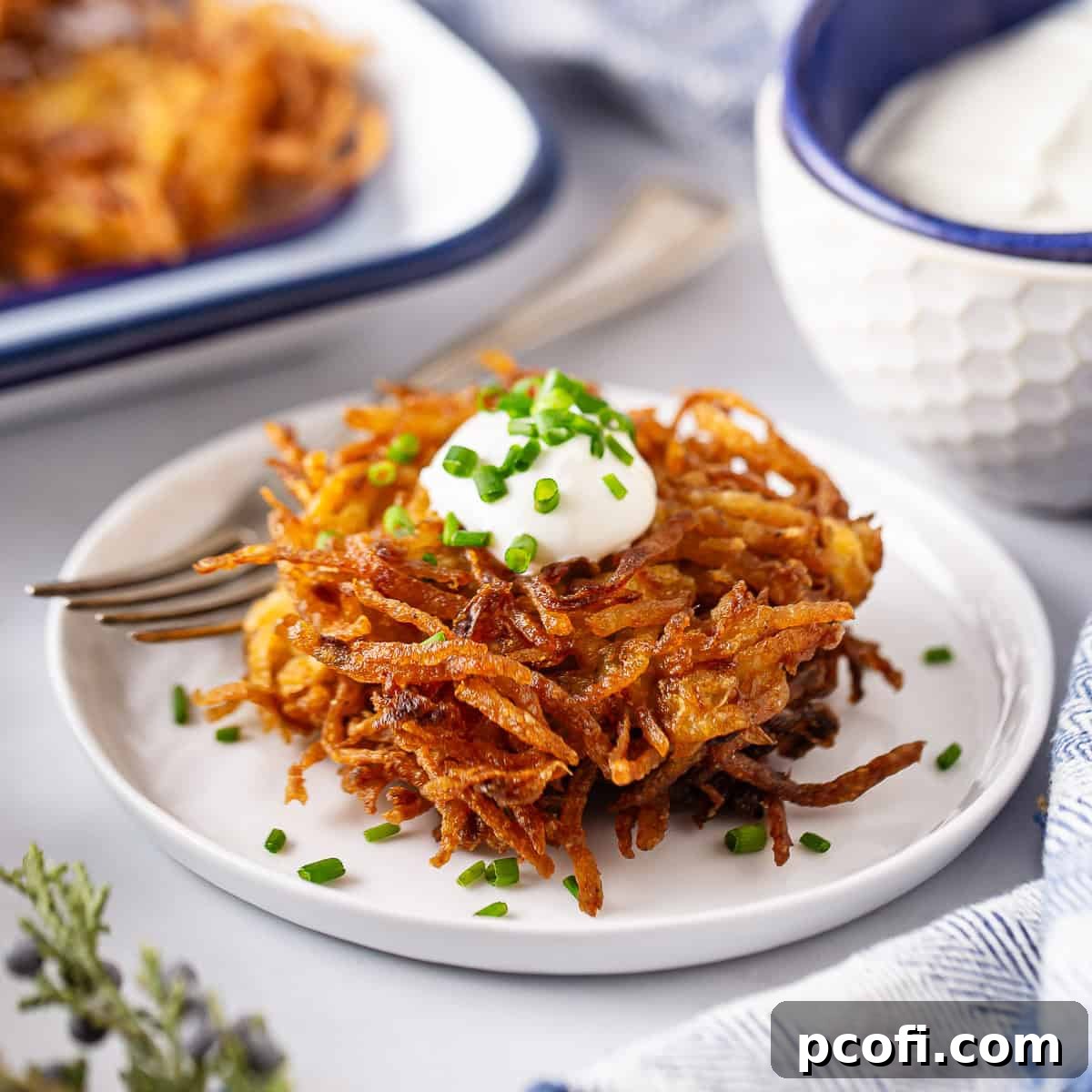
There are few comfort foods as universally cherished and delightfully satisfying as a plate of perfectly prepared Potato Pancakes. Known by many names, from classic American breakfast staples to the traditional Jewish latke or German Kartoffelpuffer, these crispy, golden-brown delights hold a special place in kitchens worldwide. With their irresistibly crisp edges, tender, savory centers, and deep, comforting flavor, potato pancakes offer a versatile treat that’s equally at home at a cozy family breakfast, a festive holiday gathering, or as a crowd-pleasing appetizer for any occasion. This recipe guides you through creating these easy, latke-style cakes from scratch, using just a few simple pantry staples to achieve truly remarkable results that taste just like grandma used to make, but with modern simplicity.
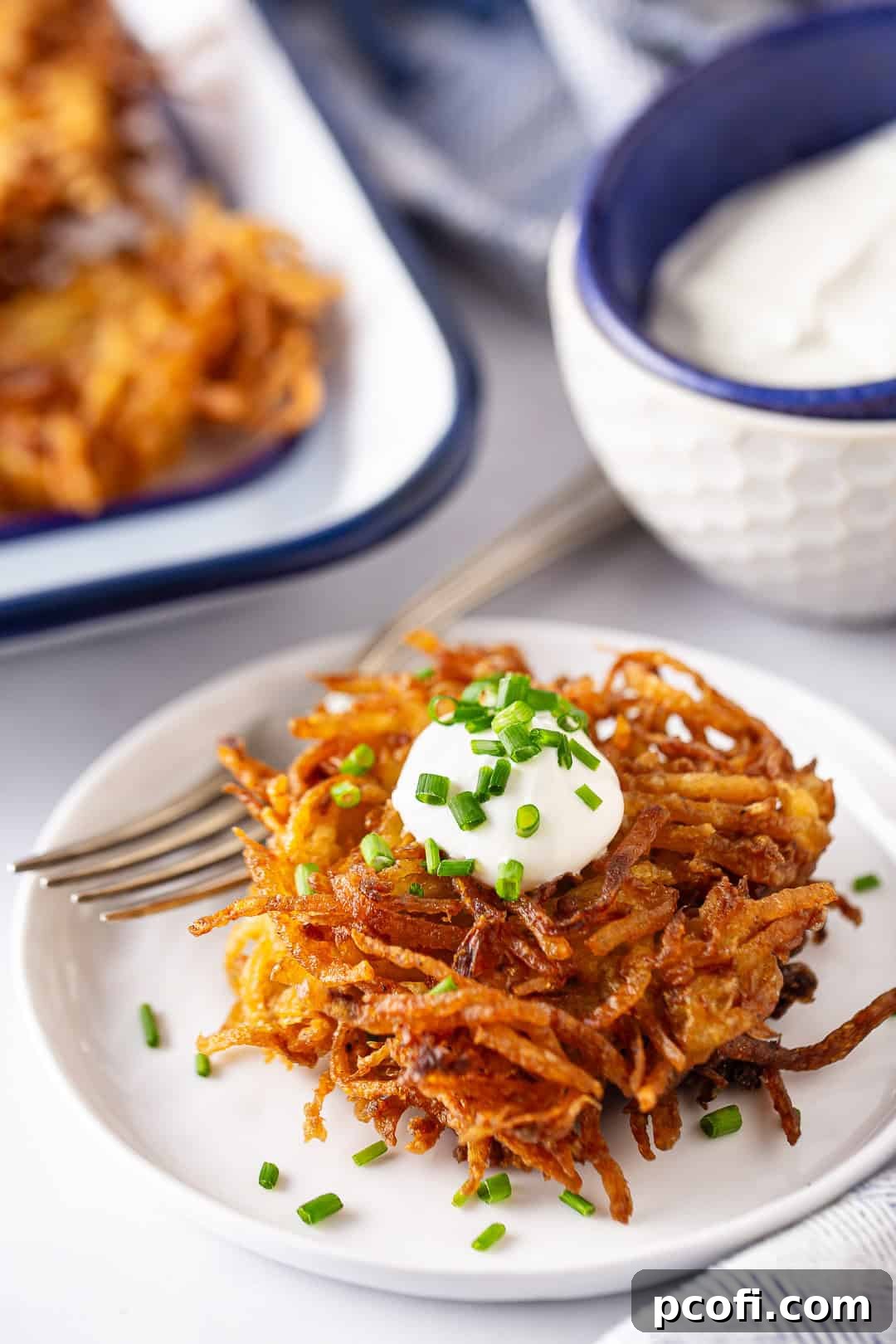
Table of Contents
- Why These Potato Pancakes Will Become a Family Favorite
- Essential Ingredients You’ll Need for Perfect Potato Pancakes
- Step-by-Step Guide to Making Homemade Potato Pancakes
- Pro Tips for the Crispiest Potato Pancakes
- Serving Suggestions and Delicious Variations
- Storage and Reheating Tips
- Frequently Asked Questions (FAQ)
- More Mouthwatering Potato Recipes
Jump to Recipe
At their core, potato pancakes are a marvel of simplicity: grated potatoes and onions, lightly bound with flour and egg, then seasoned to perfection. The magic happens next, as they’re shallow-fried in hot oil until they develop that irresistible golden crust, signaling a symphony of textures and flavors. Traditionally, these savory pancakes are served piping hot, adorned with generous dollops of cool sour cream, a sprinkle of fresh vibrant chives, or a side of sweet, tangy applesauce. This combination creates a classic, nostalgic treat that evokes warmth and happy memories.
More than just a dish, potato cakes embody the essence of comfort food. Preparing them from scratch reveals just how straightforward and profoundly satisfying they can be. This particular recipe is not merely a holiday essential, bringing joy to festive tables, but also an ideal choice for any moment you’re yearning for something genuinely homemade and utterly delicious. Dive in and discover the simple pleasure of crafting your own perfect potato pancakes!
Why These Potato Pancakes Will Become a Family Favorite
These potato pancakes aren’t just a meal; they’re an experience. Here’s why this recipe will quickly earn a permanent spot in your culinary repertoire:
- Unmatched Texture: Crisp on the Outside, Tender on the Inside: The hallmark of a truly great potato pancake is this exquisite contrast. We’ll show you exactly how to achieve that coveted golden, crunchy exterior that gives way to a soft, fluffy potato interior. It’s a textural delight that keeps everyone coming back for more.
- Effortless with Simple Ingredients: Forget complicated shopping lists. You’ll likely find everything you need for this recipe already in your pantry and refrigerator. We focus on fresh, accessible ingredients that combine to create incredible flavor without fuss. This simplicity makes them perfect for a spur-of-the-moment craving.
- Remarkably Versatile: Don’t limit these to just one meal! They shine brightly whether served for a hearty breakfast, a leisurely brunch, or as a delectable savory side dish alongside roasted meats or poultry. They also make an outstanding appetizer, especially when served with a variety of dipping sauces.
- Perfect for Crowds: Feeding a Gathering Has Never Been Easier: This recipe is incredibly forgiving and easily scalable. Whether you’re cooking for a small family dinner or hosting a large holiday party, you can effortlessly double or even triple the recipe to feed your entire crew without compromising on quality or flavor.
- A Taste of Tradition: For many, potato pancakes evoke cherished memories and cultural traditions. This recipe delivers that authentic, nostalgic flavor profile that feels both timeless and comforting, connecting you to generations of home cooks.
Essential Ingredients You’ll Need for Perfect Potato Pancakes
The beauty of this recipe lies in its simplicity, utilizing foundational ingredients that come together to create something truly magical. For the precise measurements, please refer to the comprehensive recipe card at the bottom of this article. Here’s a breakdown of the key components and their crucial roles:
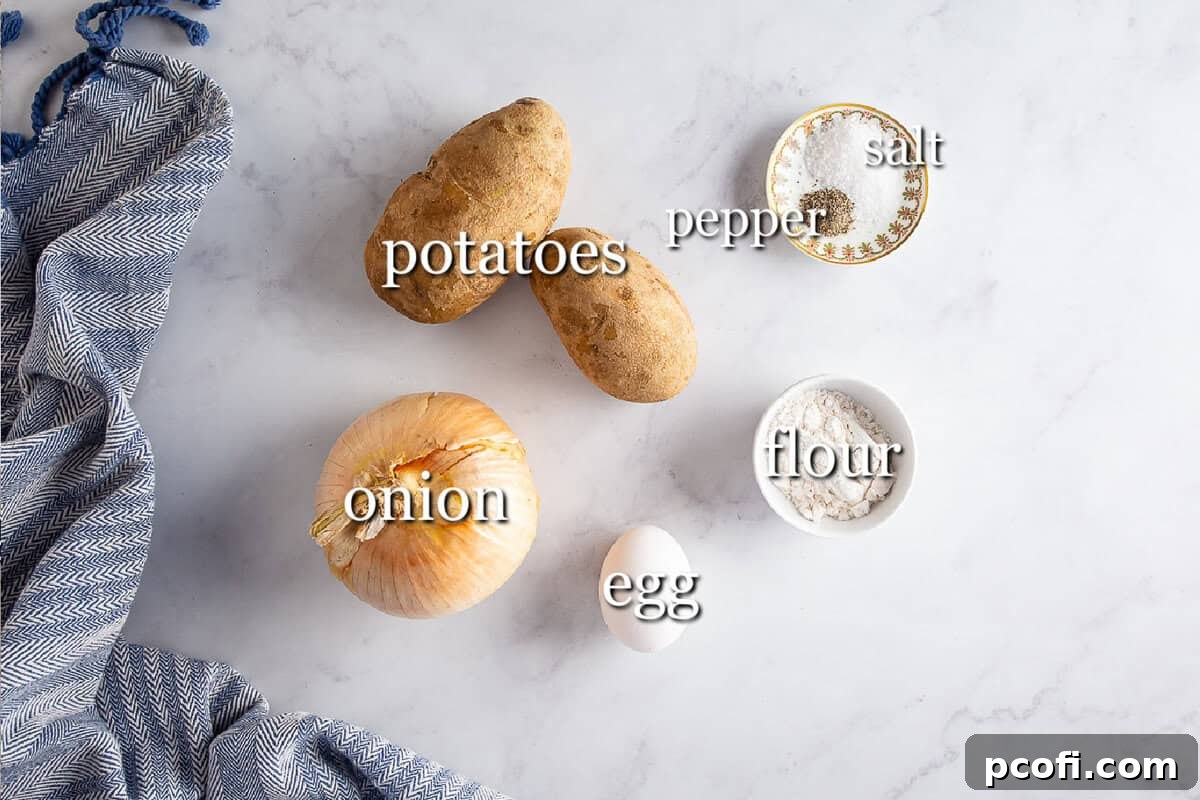
- Russet Potatoes: These are your best friend for potato pancakes. High in starch and remarkably low in moisture, Russet potatoes are ideal because they achieve that coveted fluffy interior while crisping up beautifully on the outside. Their texture is key to the signature pancake feel. While Yukon Golds can be a passable substitute in a pinch, they tend to be waxier and might result in a slightly softer pancake.
- Onion: Finely diced or grated onion adds a layer of essential savory depth and aromatic complexity. Its natural sweetness mellows during cooking, complementing the potatoes perfectly. Ensure it’s finely prepared to integrate smoothly into the mixture.
- All-Purpose Flour: A small amount of all-purpose flour acts as a binding agent, helping to hold the grated potato and onion mixture together. It provides essential structure, preventing the pancakes from falling apart in the pan and contributing to their overall texture.
- Egg: The egg is another critical binder, working in conjunction with the flour to emulsify the mixture. It helps create a cohesive batter that fries evenly and retains its shape. Fresh farm eggs often offer a richer flavor, but standard grocery store eggs will work perfectly well.
- Kosher Salt: This is our preferred salt for seasoning. Kosher salt has a larger grain and a purer flavor compared to table salt, which often contains anti-caking agents and iodine that can impart a slightly metallic taste. Importantly, the measurements for kosher salt are not 1:1 with table salt, so always refer to the recipe and use kosher for the best results.
- Ground Black Pepper: Freshly ground black pepper adds a pungent, aromatic kick. This ingredient is entirely customizable to your taste. If your family enjoys a bolder pepper flavor, feel free to add a few extra shakes. If you prefer a milder profile or have sensitive palates, it can be slightly reduced or even omitted without ruining the dish.
- Vegetable Oil: Essential for shallow-frying, a neutral-flavored oil like vegetable oil, canola oil, or grapeseed oil is recommended. You’ll need enough oil to reach approximately halfway up the sides of your pancakes as they cook, allowing them to fry evenly and develop that perfect golden crust. The exact quantity will depend on the size of your skillet.
- Sour Cream and Fresh Chives: (Optional, but highly recommended) This classic pairing offers a delightful contrast of cool, tangy creaminess against the hot, crispy pancake, with the fresh chives adding a bright, oniony lift. It truly elevates the experience.
- Applesauce: (Optional garnish) Another traditional and beloved topping, applesauce provides a hint of natural sweetness and fruitiness that beautifully complements the savory potato pancakes, offering a different, equally delicious flavor profile.
Step-by-Step Guide to Making Homemade Potato Pancakes
Creating these golden marvels is simpler than you might think. Follow these clear steps for perfect potato pancakes every time.
Step 1: Grate & Drain Potatoes and Onions
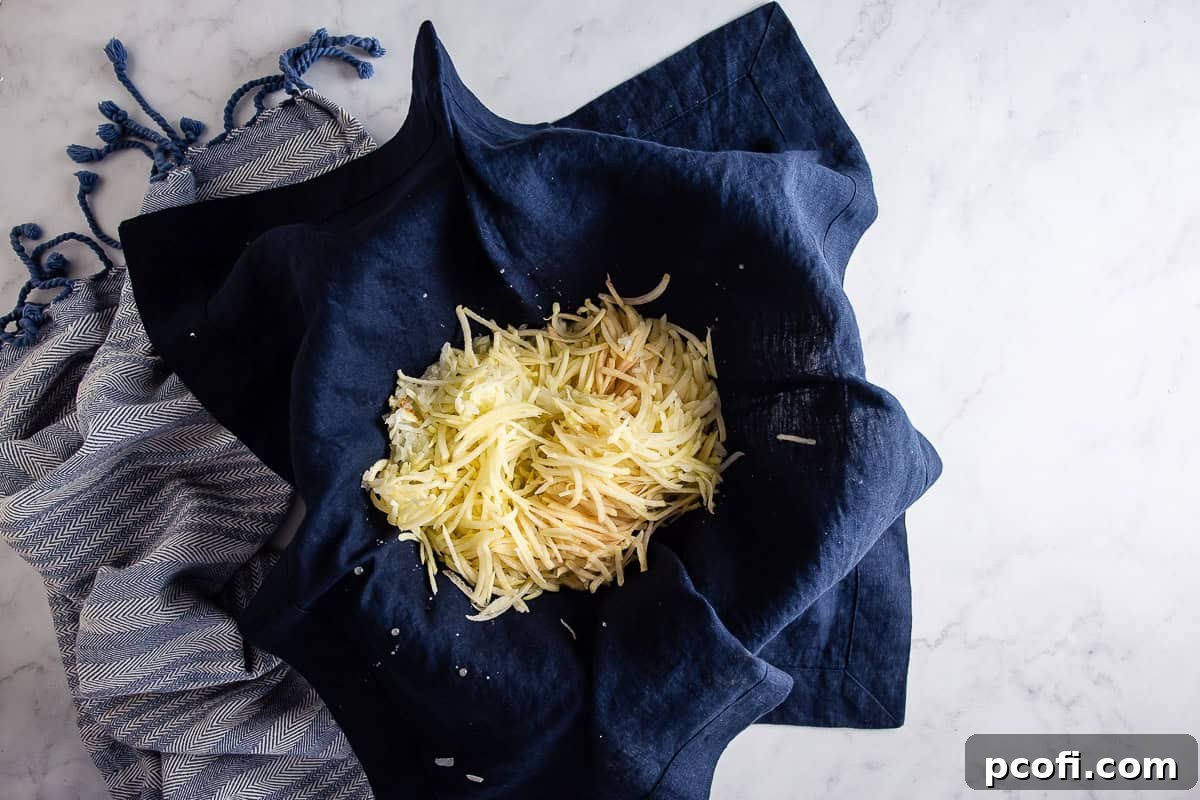
The journey to crispy potato pancakes begins with proper preparation. Start by peeling your Russet potatoes thoroughly. Using a sturdy box grater or the shredding attachment of a food processor, grate both the peeled potatoes and the onion. For the best texture, aim for a medium shred. Once grated, immediately gather the potato and onion mixture into a clean, heavy-duty kitchen towel or cheesecloth. This step is absolutely crucial: twist and wring out as much liquid as possible from the mixture. Potatoes release a surprising amount of water, and removing this excess moisture is the secret to achieving truly crispy pancakes, preventing them from becoming soggy.
Step 2: Combine Ingredients & Preheat Frying Oil
Transfer the thoroughly drained grated potatoes and onions to a large mixing bowl. Add the all-purpose flour, beaten egg, kosher salt, and ground black pepper. Mix everything together vigorously until all ingredients are well combined and the mixture forms a cohesive, slightly sticky batter. Don’t overmix, but ensure the flour and egg are evenly distributed. Simultaneously, prepare your frying station. Pour a sufficient amount of vegetable oil into a large, heavy-bottomed skillet (a cast-iron skillet is excellent for heat retention) until it reaches about half an inch in depth. Place the skillet over medium-low heat and allow the oil to preheat gradually. The ideal frying temperature is between 325°F and 375°F (160°C and 190°C). Use a kitchen thermometer to ensure accuracy, as consistent oil temperature is key to even cooking and browning.
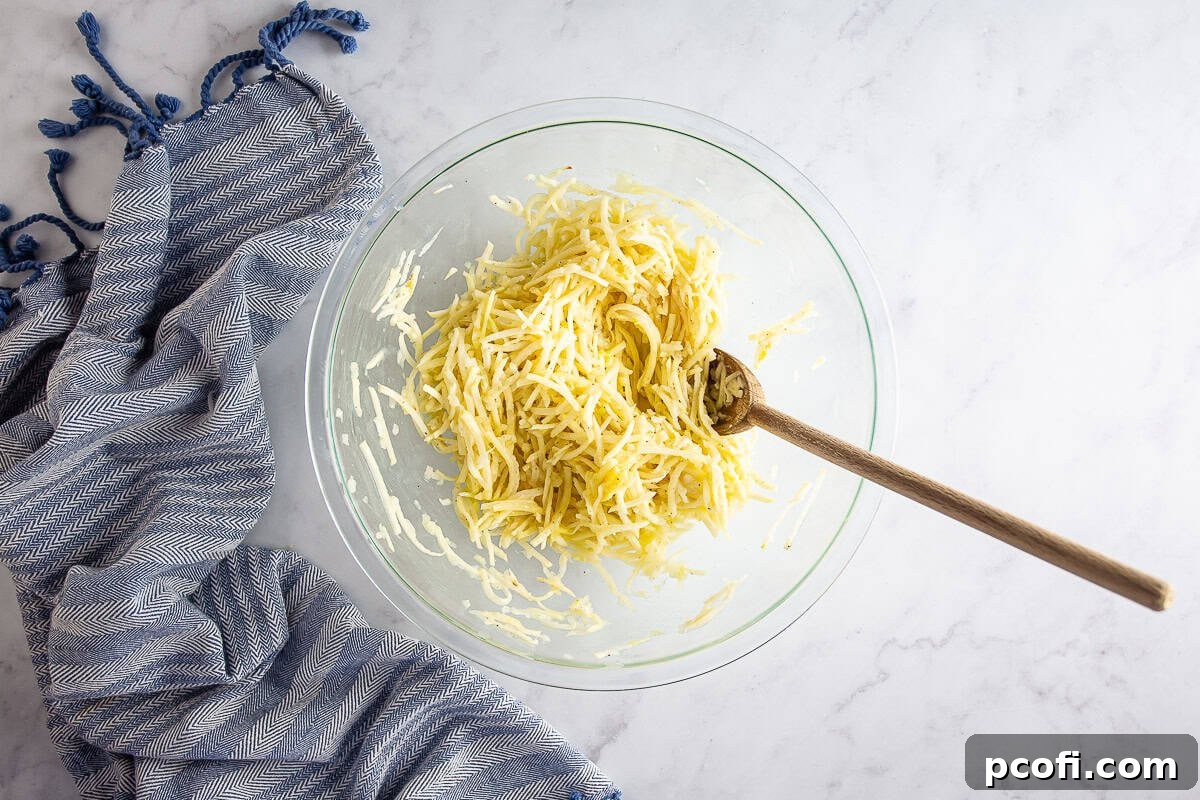
Step 3: Fry to Golden Perfection
Once your oil is at the correct temperature, carefully scoop about 1/4 cup of the potato mixture for each pancake into the hot oil. Gently press each mound with the back of a spatula to flatten it slightly into a disc shape, ensuring even cooking. Be mindful not to overcrowd the pan; fry in batches to maintain a consistent oil temperature and allow sufficient space for flipping. Fry the pancakes for 3-5 minutes on the first side, or until they develop a beautiful golden brown color and a satisfying crispness. Then, carefully flip each pancake using a sturdy spatula and cook for another 3-5 minutes on the second side, until both sides are equally golden and crispy, and the centers are cooked through and tender. Adjust the heat as needed to prevent burning.
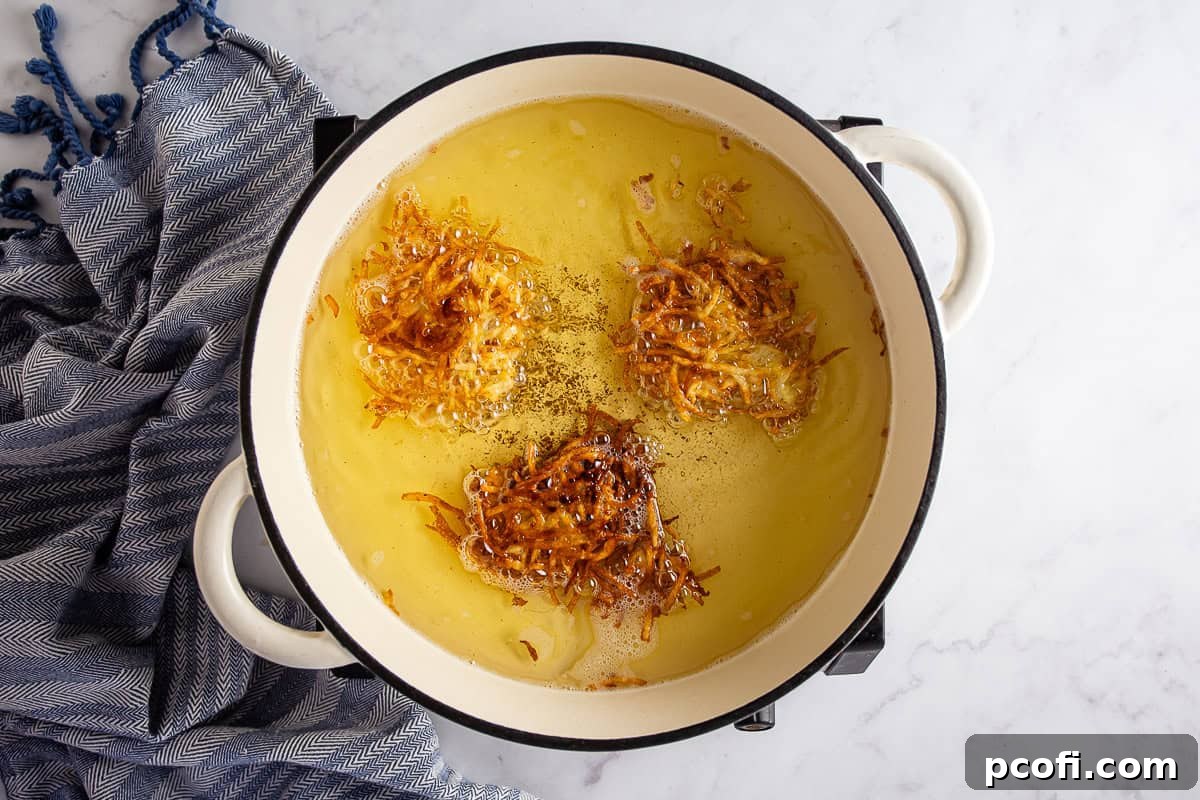
Step 4: Drain and Serve Immediately
As each batch of potato pancakes finishes frying, carefully remove them from the pan and transfer them to a plate lined with several layers of paper towels. This allows any excess oil to drain off, keeping your pancakes optimally crisp and less greasy. For larger batches, you can keep finished pancakes warm on a baking sheet in a low oven (around 200°F / 95°C) while you finish frying the remaining mixture. Serve your homemade potato pancakes warm, with your choice of traditional accompaniments like a generous dollop of sour cream, a scattering of fresh chives, or a sweet side of applesauce. Enjoy the comforting warmth and incredible flavor!
Pro Tips for the Crispiest Potato Pancakes
Achieving potato pancake perfection is all about technique. Here are some expert tips to ensure your latkes are consistently golden and deliciously crisp:
- Squeeze Out Every Drop of Moisture: This cannot be stressed enough! Excess moisture is the enemy of crispiness. After grating, place your potatoes and onions in a clean kitchen towel and wring them out with all your might. The drier the mixture, the crispier your pancakes will be. You might be surprised by how much liquid comes out!
- Do Not Overcrowd the Pan: Frying in batches is essential. Overcrowding your skillet will drastically lower the oil’s temperature, leading to soggy, greasy pancakes rather than golden, crisp ones. Give each pancake enough space to cook evenly and brown beautifully.
- Maintain Consistent Oil Temperature: Use a thermometer to keep your oil between 325-375°F (160-190°C). Too cool, and the pancakes absorb too much oil; too hot, and they burn on the outside before cooking through. Adjust your heat source as needed between batches.
- Keep Finished Pancakes Warm: If you’re making a large batch, preheat your oven to its lowest setting (around 200°F or 95°C). As each batch finishes frying, transfer them to a wire rack set over a baking sheet and keep them warm in the oven. This maintains their crispness until you’re ready to serve.
- Invest in a Cast-Iron Skillet: While any large skillet will work, a cast-iron skillet is a game-changer for frying. It retains heat exceptionally well and distributes it evenly, ensuring a consistently beautiful golden crust on your potato pancakes.
- Prevent Potato Oxidation: Grated potatoes can oxidize and turn brown quickly. Work efficiently, and once grated, try to mix them with the other ingredients and start frying relatively soon. A tiny splash of lemon juice in the water used to rinse potatoes (before draining) can also help prevent browning if you need a moment.
- Even Thickness for Even Cooking: When you scoop and flatten your potato mixture, try to make each pancake roughly the same thickness. This ensures they all cook at a similar rate, preventing some from being undercooked while others are burnt.
- Don’t Be Shy with Oil: Shallow frying means you need enough oil to cover at least half of the pancake. Don’t skimp; the oil is crucial for achieving that irresistible crust. You can always drain excess oil on paper towels afterward.
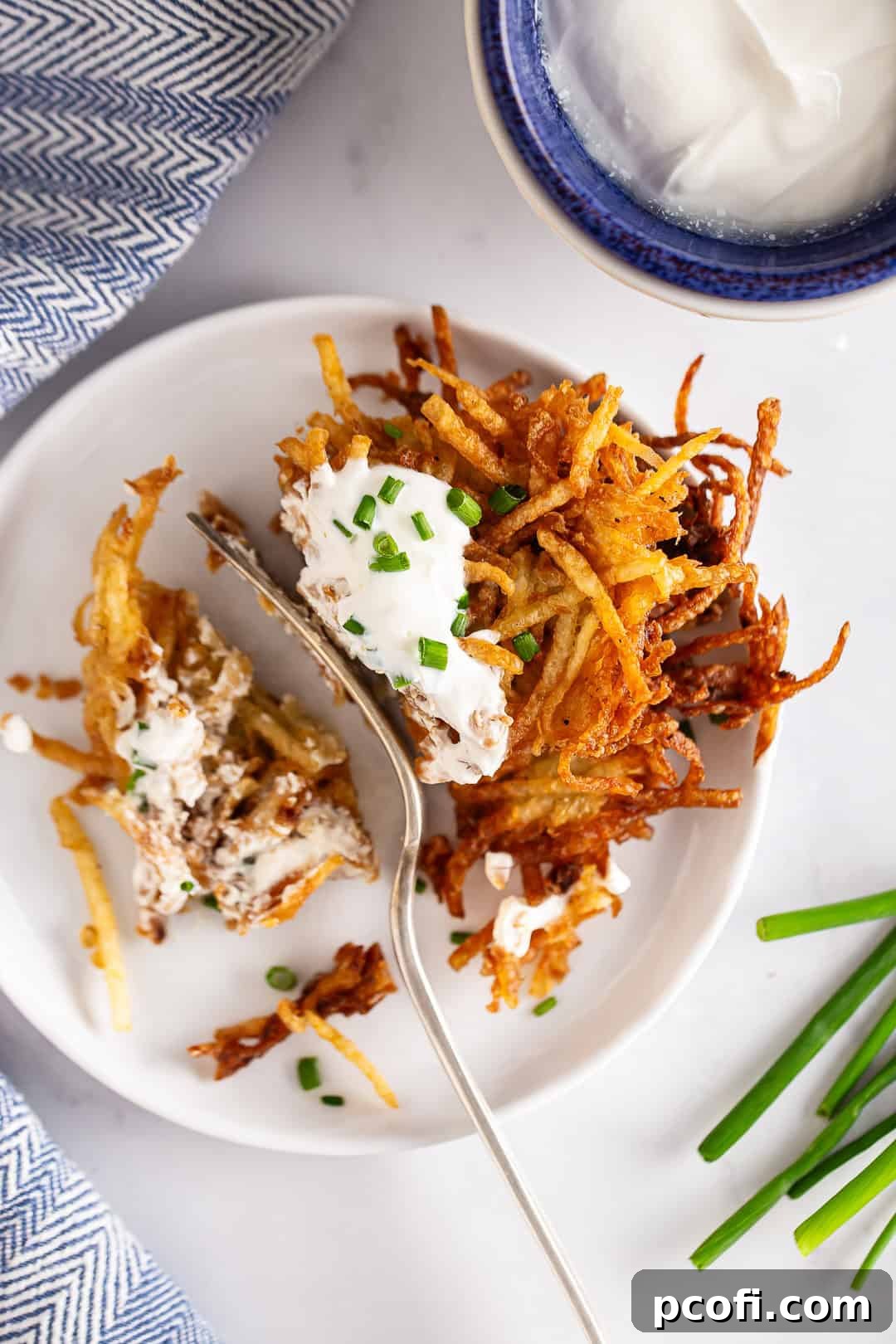
Serving Suggestions and Delicious Variations
While the classic pairings of sour cream, chives, and applesauce are always a hit, don’t hesitate to explore other delicious ways to enjoy your homemade potato pancakes:
- Savory Enhancements:
- Smoked Salmon & Dill: Elevate them to an elegant appetizer by topping with a dollop of crème fraîche, a slice of smoked salmon, and a sprig of fresh dill.
- Poached Eggs: For a hearty breakfast or brunch, serve warm potato pancakes with perfectly poached eggs and a sprinkle of paprika.
- Herbed Cream Cheese: Mix finely chopped fresh herbs (like parsley, thyme, or rosemary) into cream cheese for a flavorful spread.
- Caviar: For a truly decadent treat, top with a spoonful of your favorite caviar.
- Garlic & Herb Sour Cream: Stir minced garlic, onion powder, and various herbs into your sour cream for an extra flavor boost.
- Sweet Pairings:
- Cranberry Sauce: Especially around holidays, a dollop of homemade cranberry sauce offers a delightful sweet-tart contrast.
- Maple Syrup: For a truly breakfast-inspired twist, a drizzle of pure maple syrup can be surprisingly delicious.
- Fruit Compote: Beyond applesauce, consider pear or berry compotes for a different fruity sweetness.
- Creative Variations for the Batter:
- Garlic or Shallots: Add minced garlic or finely chopped shallots to the potato mixture for an extra aromatic kick.
- Fresh Herbs: Incorporate finely chopped fresh parsley, chives, or even a touch of rosemary into the batter.
- Cheese: Mix in a handful of grated Parmesan or sharp cheddar cheese for a cheesy twist.
- Spicy Kick: A pinch of cayenne pepper or red pepper flakes can add a subtle warmth.
- Sweet Potato Pancakes: Substitute half of the Russet potatoes with grated sweet potatoes for a slightly sweeter and vibrant orange pancake.
Storage and Reheating Tips
While potato pancakes are undeniably best enjoyed fresh from the frying pan, it is possible to make them ahead and reheat them. Proper storage and reheating will help maintain their desirable crisp texture.
- Storage: Allow any leftover potato pancakes to cool completely to room temperature. This is important to prevent sogginess. Once cooled, arrange them in a single layer on a plate or baking sheet, then cover tightly with plastic wrap or transfer them to an airtight container. Refrigerate for up to 2-3 days. If stacking, place a piece of parchment paper between layers to prevent sticking.
- Reheating: To restore their crispness, avoid the microwave, which will make them soft and chewy.
- Oven Method: Preheat your oven to 225°F (105°C). Arrange the pancakes in a single layer on a baking sheet. Heat for 10-15 minutes, or until warmed through and re-crisped.
- Air Fryer Method: Preheat your air fryer to 350°F (175°C). Place pancakes in a single layer in the air fryer basket (do not overcrowd). Cook for 3-5 minutes, flipping halfway, until hot and crispy.
- Skillet Method: For just a few pancakes, reheat them in a lightly oiled skillet over medium heat for a few minutes per side until crisp.
Frequently Asked Questions (FAQ)
Yes, you can prepare the batter a few hours in advance, but the potatoes may start to oxidize slightly. For the best crispness, fry them just before serving. If you must make them entirely ahead, reheat them in a 225°F (105°C) oven or an air fryer to help them regain their crisp texture.
Russet potatoes are truly ideal due to their high starch content and low moisture, which yields the best crispy texture. However, Yukon Golds can work as an alternative. Keep in mind that Yukon Golds are waxier and contain more moisture, so your pancakes may be slightly softer and less intensely crisp.
No food processor? No problem! A good old-fashioned box grater works just as well. It might take a bit more time and effort, but the results are equally fantastic. Grate on the medium-sized holes for the best consistency.
The most critical step is to squeeze out as much moisture as possible from the grated potatoes and onions using a clean kitchen towel. Also, ensure your oil is hot enough (325-375°F) and avoid overcrowding the pan, as both can lead to oil absorption and soggy results.
While traditional potato pancakes are fried for their signature crispness, you can bake them. Lightly brush or spray them with oil and bake at 400°F (200°C) for 15-20 minutes, flipping halfway, until golden brown. They will be less crispy than fried versions but still delicious.
More Mouthwatering Potato Recipes
If you love potatoes as much as we do, you’ll want to explore these other fantastic recipes that celebrate this versatile vegetable:
- Fluffy Homemade Potato Bread
- Creamy Cheesy Scalloped Potatoes
- Irresistible Loaded Potato Skins
- Hearty Loaded Baked Potato Soup
Classic Crispy Potato Pancakes
10 pancakes (approx.)
10 mins
10 mins
20 mins
Leave a Review
Ingredients
- 2 large russet potatoes (approx. 426g)
- 1 onion (approx. 110g)
- 3 tablespoons all-purpose flour (approx. 22.5g)
- 1 large egg (approx. 44g)
- 1 teaspoon kosher salt (approx. 6g)
- 1/4 teaspoon ground black pepper (approx. 0.5g)
- enough vegetable oil to come about 1/2-inch up the sides of a large pan
- sour cream & fresh chives (optional garnish)
- applesauce (optional garnish)
Instructions
-
Peel the potatoes and grate them using either a box grater or a food processor with a shredding disc.
-
Grate the onion using the same method as the potatoes.
-
Place the grated potatoes and onion in a clean kitchen towel and squeeze out as much moisture as humanly possible. This is key for crispy pancakes!
-
Transfer the well-drained potato and onion mixture to a large bowl. Add the flour, egg, salt, and pepper, stirring until everything is thoroughly combined.
-
Pour enough oil into a large, heavy-bottomed skillet (preferably cast-iron) to reach about 1/2-inch up the sides. Place the skillet over medium-low heat.
-
Heat the oil until it reaches a temperature between 325°F and 375°F (160°C to 190°C). Use a kitchen thermometer for accuracy.
-
Scoop about 1/4-cup portions of the potato mixture into the hot oil, gently pressing each mound with a spatula to flatten slightly into a disc. Do not overcrowd the pan; work in batches if necessary.
-
Fry for 3-5 minutes per side, or until golden brown and crisp. Carefully flip and repeat on the other side.
-
Remove the cooked potato pancakes from the pan and drain them on paper towels to absorb any excess oil. Serve immediately while warm with sour cream, chives, and/or applesauce.
Notes
Serving:
1
pancake
,
Calories:
53
kcal
,
Carbohydrates:
11
g
,
Protein:
2
g
,
Fat:
0.5
g
,
Saturated Fat:
0.2
g
,
Polyunsaturated Fat:
0.1
g
,
Monounsaturated Fat:
0.2
g
,
Trans Fat:
0.002
g
,
Cholesterol:
16
mg
,
Sodium:
241
mg
,
Potassium:
203
mg
,
Fiber:
1
g
,
Sugar:
1
g
,
Vitamin A:
25
IU
,
Vitamin C:
3
mg
,
Calcium:
11
mg
,
Iron:
1
mg
American, German, Jewish, Polish
Appetizer, Side Dish, Snack, Breakfast