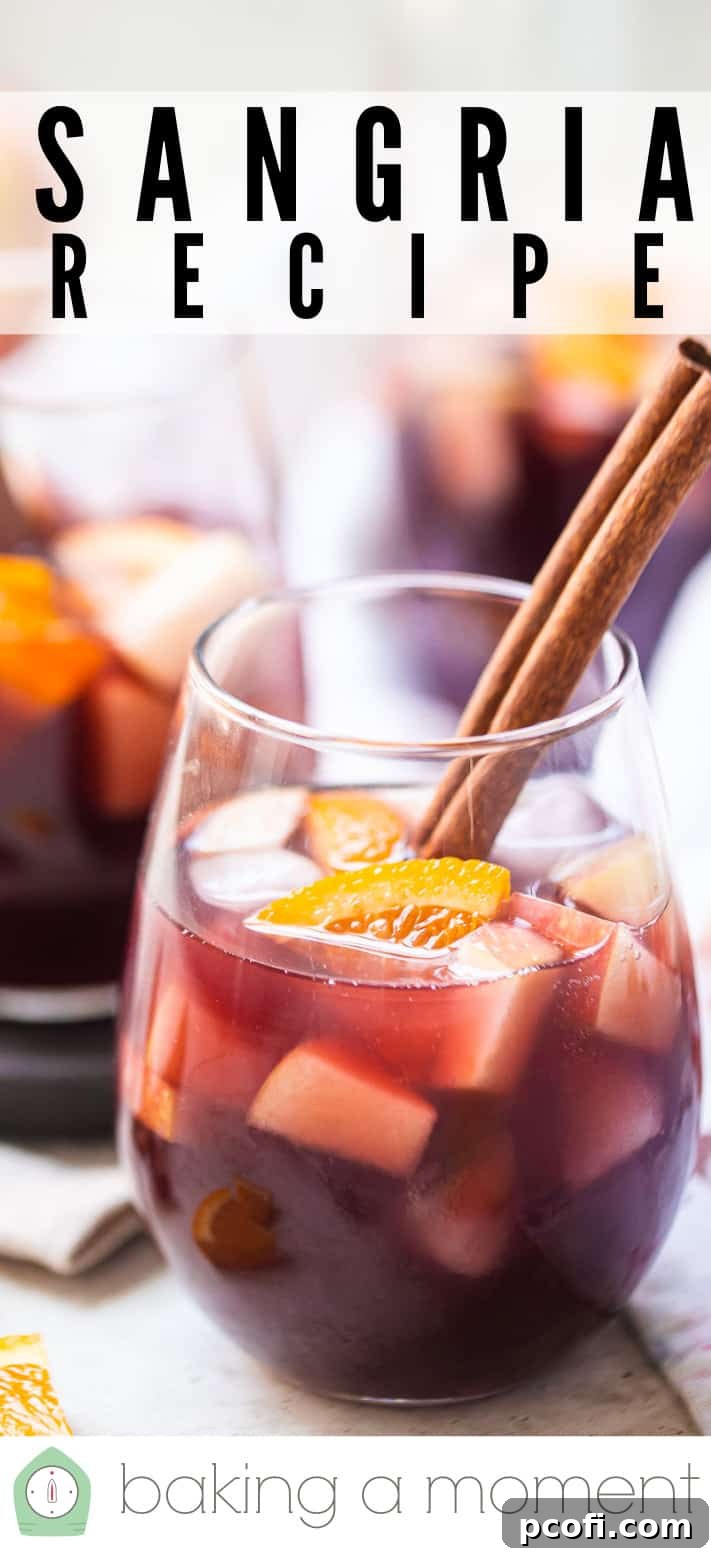
Authentic & Easy Sangria Recipe: Your Guide to a Perfect Spanish Drink
As the seasons shift, there’s a unique joy in savoring the outdoors, embracing cooler mornings, crisp evenings, and the gentle warmth of sunny afternoons. It’s the perfect setting to unwind with a good book and a perfectly crafted drink. And for those moments, nothing quite compares to a truly authentic sangria.
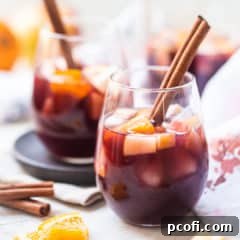
Forget the overly sweet, watered-down versions you might have encountered. This recipe is your ticket to a Spanish-inspired sangria that’s both vibrant and comforting, bursting with fresh fruit, smooth red wine, a hint of warm brandy, and a touch of fragrant cinnamon. It’s a delightful concoction that transports you straight to a sun-drenched patio in Spain, no matter where you are.
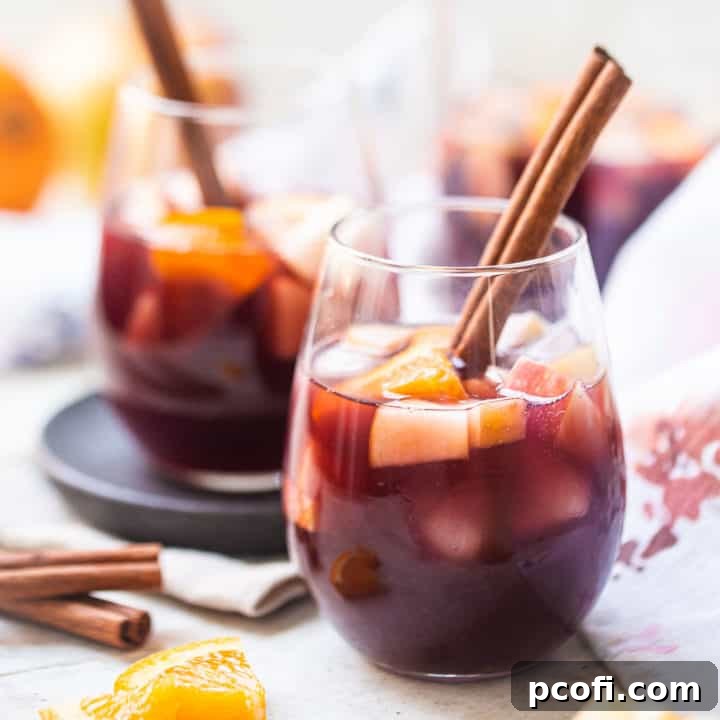
While refreshing tropical drinks like mango margaritas and strawberry daiquiris are summer staples, the turning leaves and cooler air call for something with a bit more depth and warmth. This sangria recipe perfectly bridges that gap. The luscious red wine, macerated fruit, toasty brandy, and inviting cinnamon create a cozy, full-bodied flavor that feels just right. Yet, served over ice, it maintains a refreshing quality, making it ideal for those lingering sunny afternoons.
It’s the kind of drink you can enjoy all year long – a crisp, fruity chill for summer gatherings, and a subtly spiced warmth that complements autumn feasts or cozy winter evenings. This balance of flavors and versatility is what makes traditional Spanish sangria so beloved, and this recipe captures that essence beautifully.
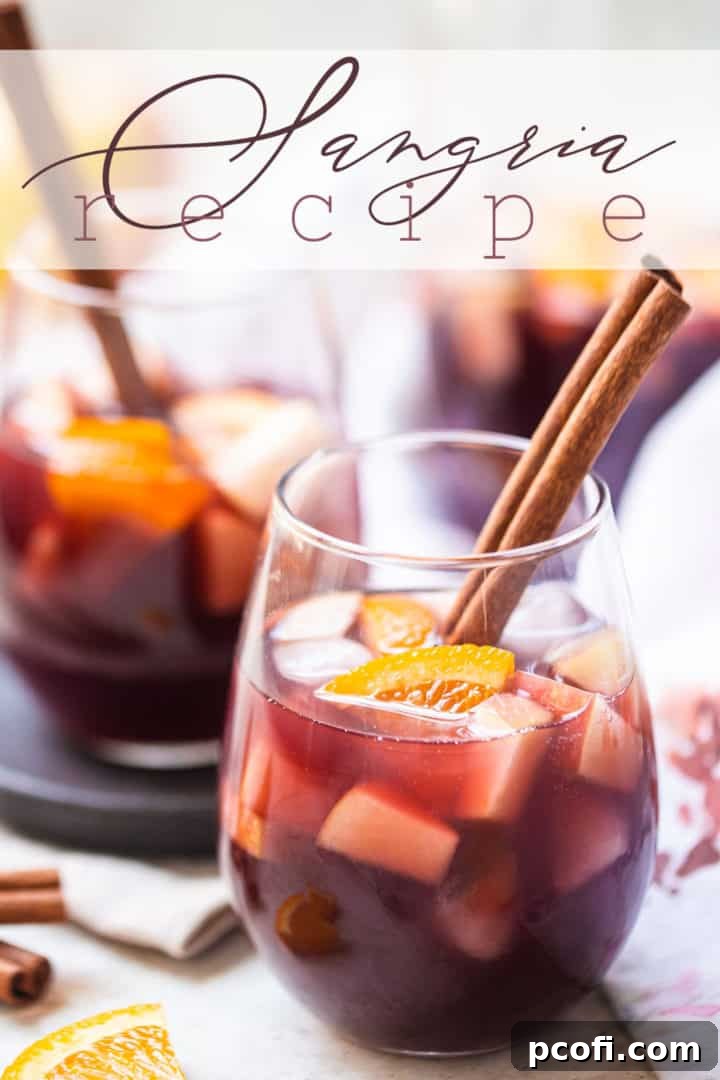
What Does Authentic Sangria Taste Like?
Authentic sangria offers a harmonious blend of sweet, fruity notes balanced by the robust character of red wine, a hint of spice, and a subtle warmth from brandy. It’s incredibly smooth and dangerously easy to drink, with a complex flavor profile that evolves as the fruit macerates. The initial sip might present bright citrus and apple flavors, followed by the richness of the wine and a comforting whisper of cinnamon on the finish. It’s a versatile drink that effortlessly pairs with a wide array of cuisines, from tapas to grilled meats or even a simple cheese board.
Its dual nature allows it to shine throughout the year. Chilled to perfection, it’s a wonderfully refreshing antidote to summer heat. But as the temperatures drop, the spiced and boozy elements provide a cozy, inviting quality that’s truly delightful during the fall and winter months. Think of it as a festive punch that’s sophisticated enough for special occasions but simple enough for a casual get-together.
What’s In This Easy Sangria Recipe?
The beauty of sangria lies in its simplicity and adaptability. While a few core ingredients form the foundation, you have ample room to get creative and customize it to your personal preferences or what’s in season. Here’s a detailed look at the essential components:
- Red Wine: Traditionally, a dry Spanish red wine is preferred, but feel free to use your favorite!
- Fresh Fruit: Apples and oranges are classic choices, but the possibilities are endless for seasonal twists.
- Brandy: This adds a lovely depth and warmth. Other liqueurs can be substituted for different flavor profiles.
- Fruit Juice: Orange juice is typical, enhancing the fruity sweetness.
- Sweetener: Optional, but a little brown sugar or honey can elevate the flavors.
- Cinnamon: A signature spice that imparts an authentic, comforting aroma and taste.
Choosing the Right Wine for Sangria
For an authentic Spanish sangria experience, seeking out a Spanish red wine is highly recommended. These wines often boast a lovely balance of fruitiness and structure that complements the other ingredients without overpowering them. Some popular and excellent choices for sangria include:
- Tempranillo: A full-bodied grape with notes of berry, plum, and sometimes a hint of leather or tobacco. It’s a staple in Rioja wines.
- Garnacha (Grenache): Known for its juicy red fruit flavors, a touch of spice, and a smoother tannin profile.
- Monastrell (Mourvèdre): Offers darker fruit notes, often with a savory or earthy undertone, particularly from regions like Jumilla.
- Mencia: A lighter-bodied, aromatic red with floral and red fruit characteristics.
- Bobal: A lesser-known but increasingly popular grape, delivering rich fruit and good acidity.
You can learn more about these fascinating Spanish varietals here: 7 Types of Spanish Red Wine and Spanish Wine Grape Types.
However, don’t feel restricted by tradition! The best wine for your sangria is one you enjoy drinking on its own. A dry, fruit-forward red wine that isn’t too tannic works best. Avoid anything overly expensive or complex, as its nuanced flavors will be masked by the fruit and other additions. An affordable Cabernet Sauvignon, Merlot, or Pinot Noir can also make a fantastic sangria.
Selecting the Perfect Fruit
Apples and oranges are the traditional stars of sangria, providing both sweetness and a refreshing tang. However, this is where you can truly let your creativity shine and embrace seasonal produce:
- Fall Sangria: Incorporate sliced pears, persimmons, or even cranberries for a festive touch.
- Winter Sangria: Pomegranate seeds, more citrus varieties (grapefruit, mandarins), or frozen berries add color and flavor.
- Spring Sangria: Think sliced strawberries, kiwi, or even a tropical twist with pineapple chunks.
- Summer Sangria: Fresh berries (strawberries, raspberries, blueberries), peaches, plums, or nectarines are exquisite.
The key is to use a variety of fruits that will macerate beautifully in the wine, absorbing its flavors while also releasing their own. You truly can’t go wrong with fresh, ripe fruit!
Enhancing Flavor with Other Ingredients
Beyond wine and fruit, a few other carefully chosen ingredients elevate this sangria from good to exceptional:
- Fruit Juice: Orange juice is a classic choice, offering a sweet, citrusy base that harmonizes with the wine and fruit. However, feel free to experiment with other juices. Apple juice or apple cider would be wonderful for a fall-themed sangria, while cranberry juice lends a more tart and bright flavor. For a truly lush and sweet version, pineapple juice is an excellent option.
- Liqueur/Spirits: A splash of brandy is traditional and adds a wonderful depth, complexity, and a pleasant boozy kick. If brandy isn’t on hand or you prefer a different flavor, consider dark rum for a warm, molasses note, triple sec for a bright orange essence, or even a raspberry liqueur for a fruity, elegant twist. These spirits contribute to the richness and alcohol content, making the sangria more potent and flavorful.
- Sweetener: I typically include a little light brown sugar to enhance the overall sweetness and provide a subtle caramel note. This is entirely adjustable based on the sweetness of your wine and fruit. You can substitute with regular granulated sugar, honey, maple syrup, or simply omit it if your wine and fruit are sweet enough. Taste and adjust to your preference.
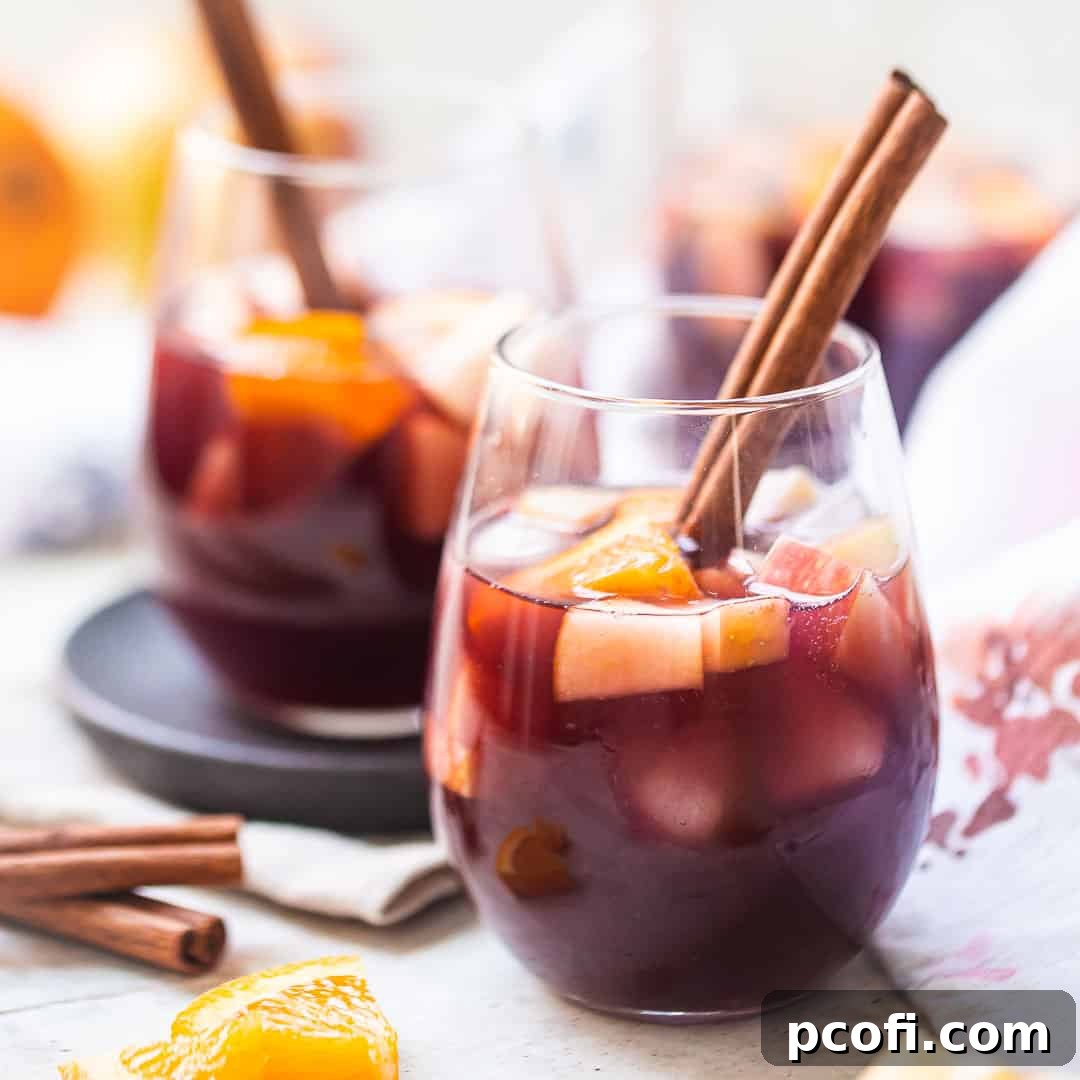
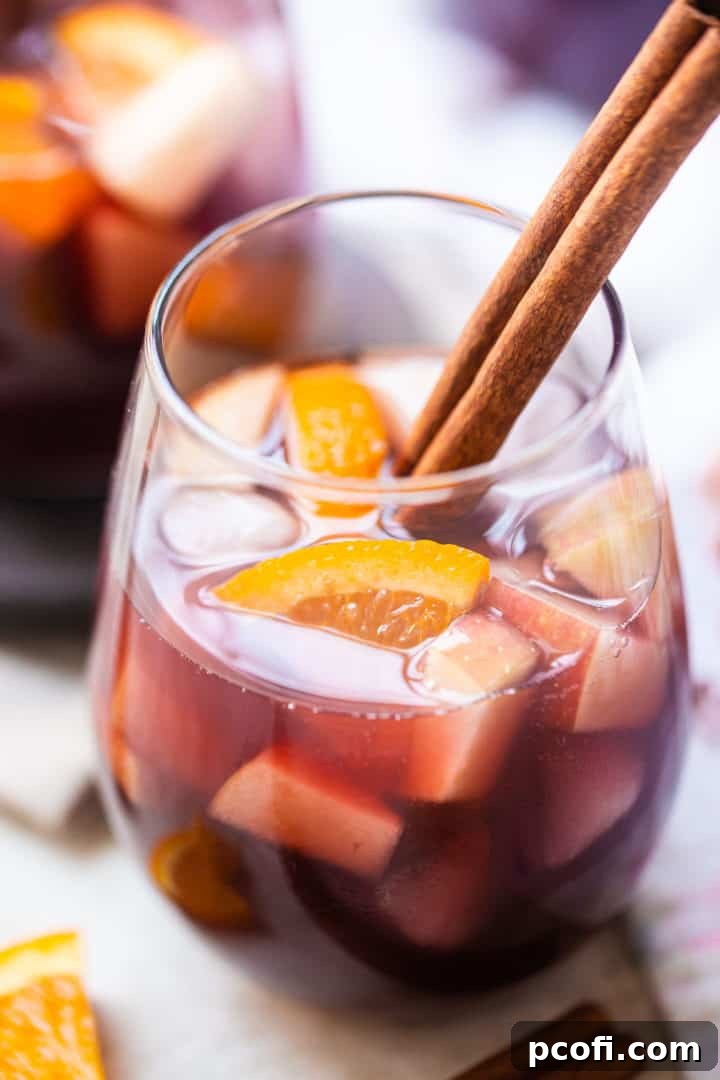
- Cinnamon: This is arguably the ingredient that truly gives sangria its distinctive and authentic Spanish character. While ground cinnamon might be tempting, it can leave a gritty sediment. Therefore, cinnamon sticks are highly recommended. They slowly release their aromatic warmth into the liquid without affecting the texture. You can drop a few into the pitcher to steep, or add one to each glass as a fragrant stirrer and garnish.
Optional Fizz: For those who love a bit of sparkle, turning your sangria into a fizzy delight is incredibly easy. Just top off each individual glass with a splash of club soda, seltzer, or lemon-lime soda just before serving. For a particularly autumnal or festive twist, ginger beer adds a delightful spicy kick that’s perfect for the season.
And if you’re a fan of frozen drinks, don’t miss my recipe for Frozen Sangria Slushies for a cool treat!
How to Make This Easy Sangria
Making this authentic sangria is delightfully straightforward, requiring minimal technique and maximum enjoyment. It’s essentially a “dump and stir” process, making it perfect for both novice and experienced hosts. Here’s a simple breakdown:
- Prepare the Fruit: Start by thoroughly washing and preparing your chosen fruits. For apples and oranges, core them (if needed) and chop them into medium-sized chunks or slices. The goal is to have pieces that are substantial enough to release flavor without dissolving too quickly. Add all the prepared fruit to a large pitcher or punch bowl.
- Add Sweetener and Liquids: Sprinkle the brown sugar over the fruit in the pitcher. Then, pour in the orange juice and brandy. Give these ingredients a quick stir to help the sugar begin to dissolve and coat the fruit.
- Introduce the Wine: Gently pour the entire bottle of red wine into the pitcher. Stir everything together one last time, ensuring all components are well combined.
- Macerate and Chill: This is the most crucial step for developing deep flavors. Allow the fruit to soak in the wine mixture for at least 30 minutes. Ideally, for the best flavor, let it sit in the refrigerator for 2 to 4 hours, or even overnight. The longer it rests, the more the flavors will meld and intensify, resulting in a richer, more complex sangria.
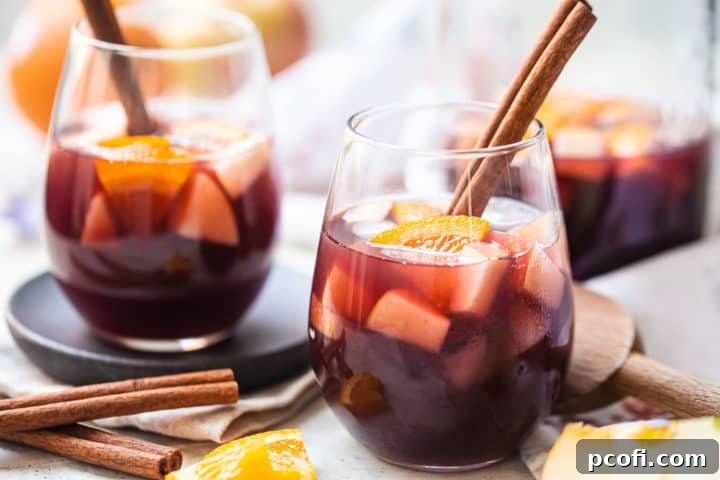
- Serve: When ready to serve, fill individual glasses with ice (do not add ice to the pitcher, as it will dilute the entire batch). Pour the sangria over the ice, ensuring each glass gets a generous amount of fruit. Garnish each serving with a fresh cinnamon stick for an added aromatic touch and a visually appealing presentation.
The beauty of sangria is that it only gets better with time, as the fruits continue to infuse their essence into the wine. So, if you can make it earlier in the day, or even the night before, you’ll be rewarded with an even more spectacular drink.
How Long Does Sangria Last?
As mentioned, sangria’s flavor typically improves as it sits, allowing the ingredients to marry. You can store your pitcher of sangria in the refrigerator for approximately 3 to 4 days. Beyond that, the fruit may start to break down and become mushy, affecting the texture and freshness of the drink. However, with how delicious and easy to drink this sangria is, it rarely lasts that long!
A Few More of My Favorite Cool Weather Drink Recipes:
- Hot Apple Cider
- How to Make a Moscow Mule
- White Chocolate Mocha
- Cranberry Sorbet Champagne Floats
As an Amazon Associate, I earn from qualifying purchases.
Sangria Recipe
Servings: 6 glasses
Prep Time: 10 mins
Resting Time: 30 mins
Total Time: 40 mins
Make this easy sangria recipe! Infused with brandy, orange juice, big chunks of fruit, and a hint of cinnamon. It’s delicious & so authentic!
Leave a Review
Ingredients
- 2 medium apples (I used Honeycrisp), about 364g
- 2 medium oranges (I used Navel), about 262g
- 3 tablespoons light brown sugar
- 1/2 cup (124g) orange juice
- 1/4 cup (60g) brandy
- 1 bottle (750g) red wine (preferably Spanish)
- Cinnamon sticks (for garnish and steeping) Cinnamon Sticks
Instructions
- Core and roughly chop the apple and orange, then add them to a large pitcher.
- Add the brown sugar to the pitcher, then pour the orange juice and brandy over the fruit.
- Pour in the red wine and stir gently to combine all ingredients.
- Allow the fruit to soak in the wine mixture for at least 30 minutes (or ideally, for 2-4 hours, or even overnight in the refrigerator, for best flavor development).
- Serve over ice, garnished with a fresh cinnamon stick in each glass.
Recipe Video
Notes
Sparkling water can be added to individual glasses, if desired, for a fizzy sangria.
Nutrition Information (per serving)
Calories: 187kcal, Carbohydrates: 18g, Protein: 1g, Fat: 1g, Saturated Fat: 1g, Sodium: 7mg, Potassium: 280mg, Fiber: 1g, Sugar: 14g, Vitamin A: 107IU, Vitamin C: 23mg, Calcium: 28mg, Iron: 1mg
Cuisine: Spanish
Course: Drinks