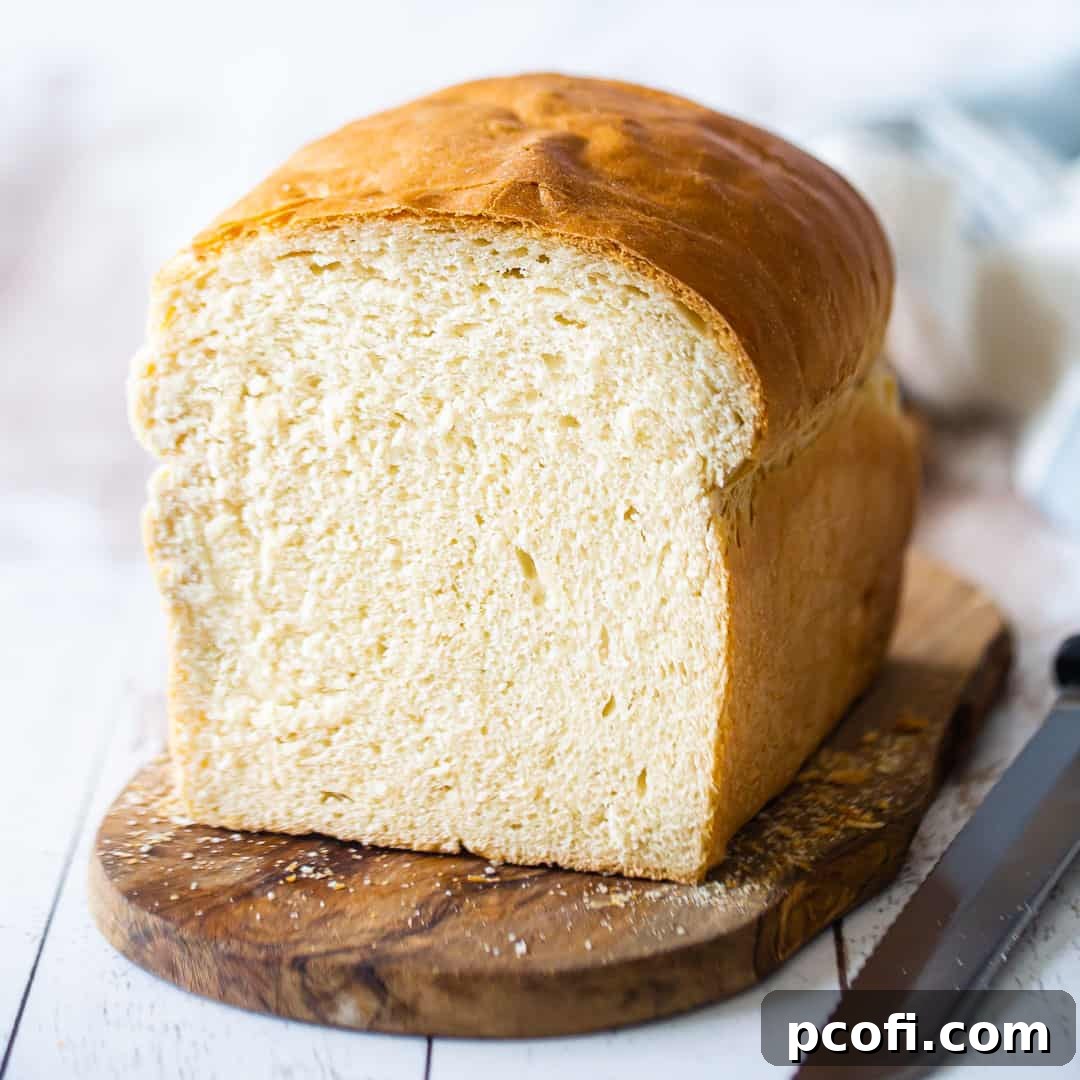
Unlock the secret to bakery-quality bread at home with this incredibly soft and pillowy white bread recipe. Designed for simplicity and maximum deliciousness, it’s the ultimate homemade loaf perfect for sandwiches, toast, or alongside any meal.
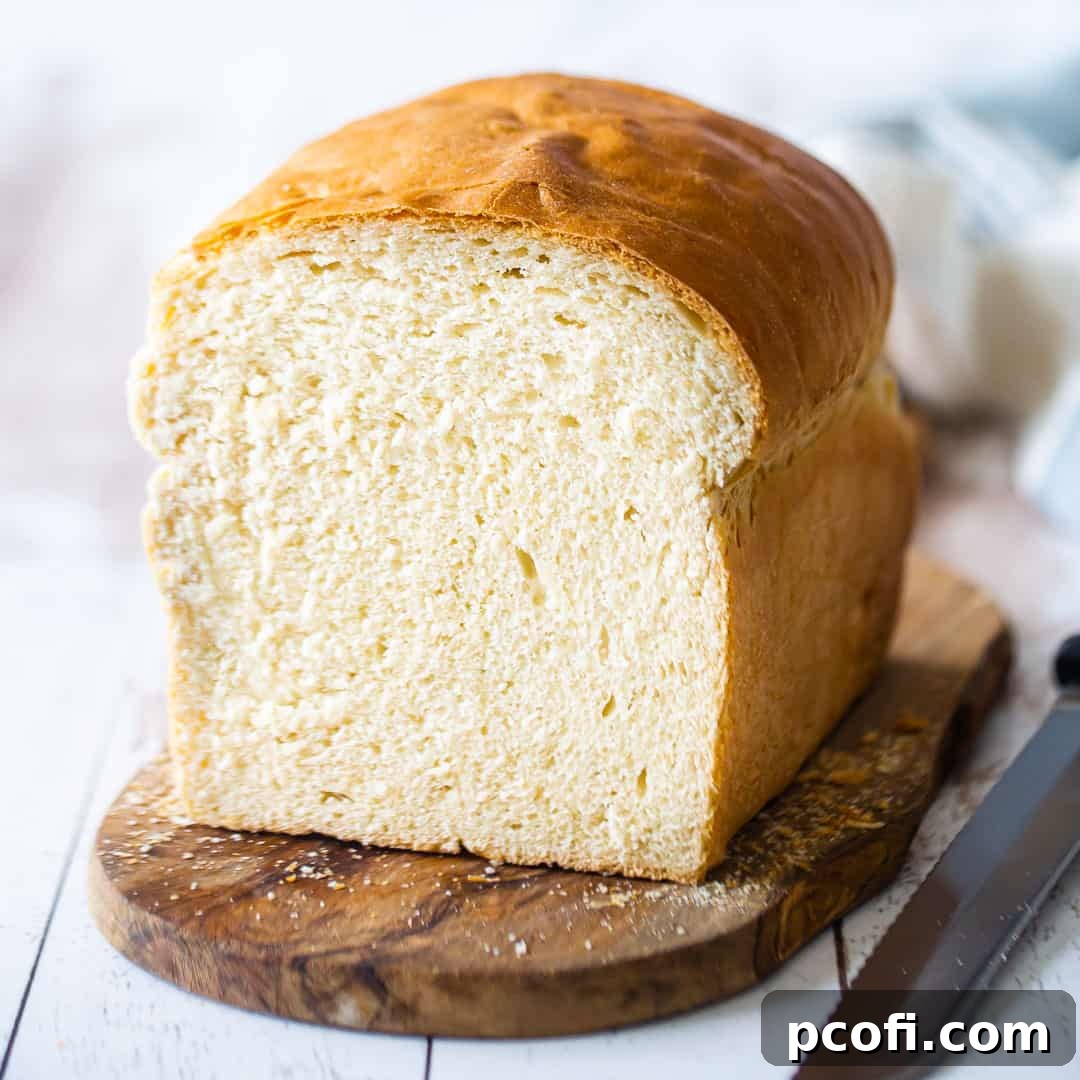
Table of Contents
- Why You’ll Adore This Soft White Bread Recipe
- Essential Ingredients for Soft White Bread
- Step-by-Step Guide to Homemade Soft White Bread
- Expert Baking Tips for Flawless Loaves
- Delicious Variations to Try
- Creative Serving Suggestions
- Frequently Asked Questions
- Proper Storage for Maximum Freshness
- Freezing Dough for Future Baking
- Recipe Yield and Nutrition Overview
- More Homemade Bread Recipes You’ll Enjoy
Jump to Recipe
As a new year unfolds, there’s no better way to kick things off than with a foundational recipe that will quickly become a cherished staple in your kitchen: homemade soft white bread!
In countless households, bread is a daily essential. It’s the comforting crunch of toast at breakfast, the backbone of a satisfying lunch sandwich, and often a delightful accompaniment to dinner, slathered with butter. While we certainly have our favorites, from hearty soft whole wheat bread and rustic crusty French baguettes to rich brioche buns, nothing quite compares to the sheer versatility and universal appeal of a simple, perfectly crafted white loaf.
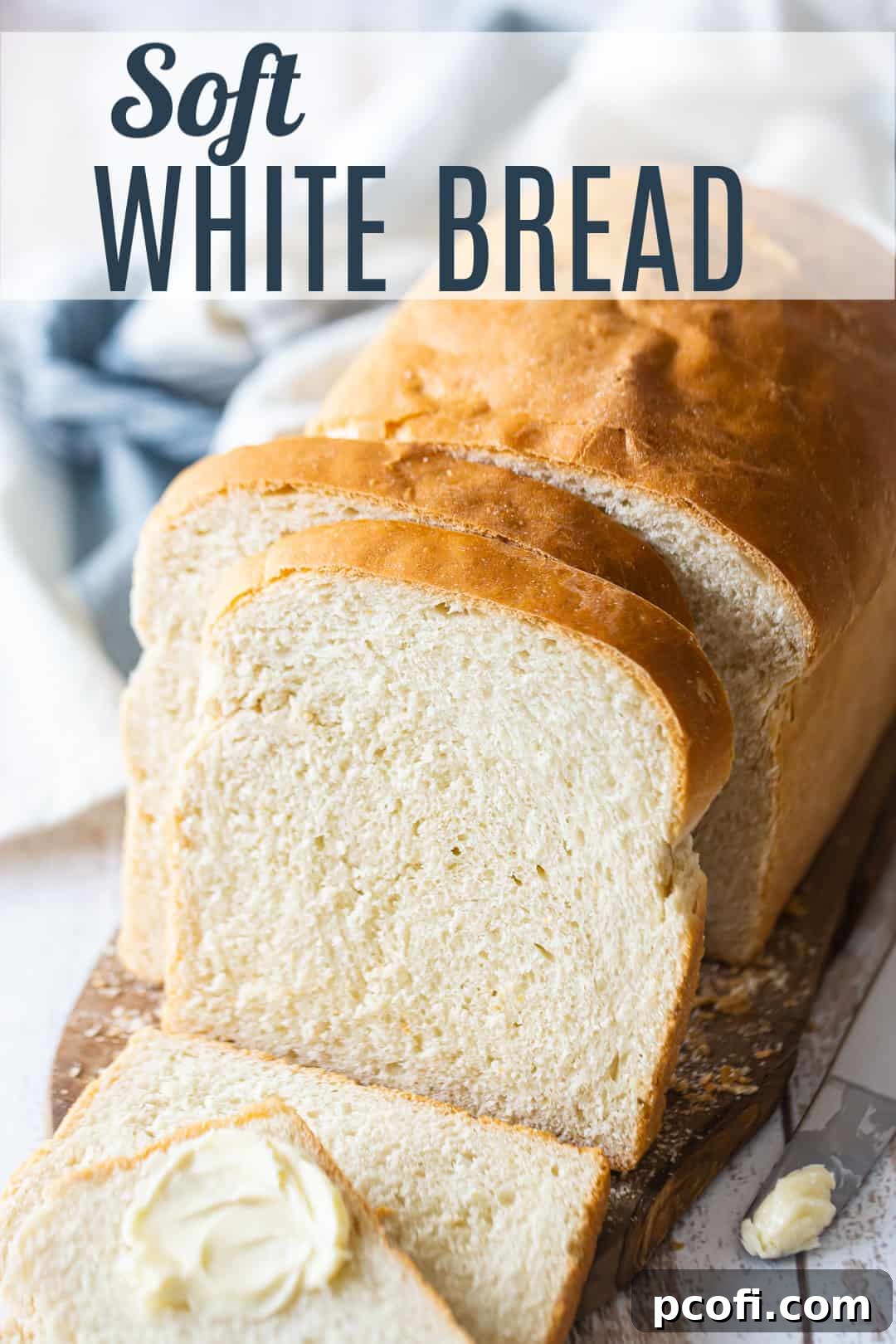
That’s why today, I’m thrilled to share my family’s absolute favorite soft white bread recipe. This isn’t just any bread; it’s a masterpiece of texture and taste, baking up with an ethereal softness, a light, fluffy crumb, and a flavor that’s subtly sweet and utterly balanced. In my humble opinion, it truly stands out as the best sandwich bread you’ll ever make.
What makes this recipe even better? Its incredible ease of preparation. With just a handful of basic ingredients and a straightforward method, you’ll be amazed at how simple it is to achieve such a professional-looking and tasting loaf. Get ready for this delightful soft white bread to enter heavy rotation in your baking routine!
Why You’ll Adore This Soft White Bread Recipe
Baking your own white bread is a truly rewarding experience, offering benefits that extend far beyond just a delicious treat. Here’s why this recipe will quickly become a household favorite:
Unbeatable Freshness: Nothing compares to the sensory delight of warm, freshly baked bread emerging from your oven. The intoxicating aroma filling your home is just the beginning. With homemade bread, you savor it at its peak freshness, a quality store-bought alternatives simply cannot match. You also gain complete control over ingredients, ensuring your loaf is free from preservatives and artificial additives often found in commercial breads.
Endless Customization: This recipe provides a fantastic foundation that invites creativity. Easily adjust the sweetness or saltiness to suit your palate. For an extra layer of flavor, experiment with additions like aromatic herbs (rosemary, thyme), fragrant spices (garlic powder, onion flakes), or nutritious seeds (sesame, poppy). This adaptability empowers you to craft a bread that perfectly caters to your unique taste preferences.
Superior Quality Ingredients: When you bake at home, you have the freedom to select the finest ingredients. Opt for organic flour, seek out locally sourced dairy, or explore specialty flours to elevate your bread’s quality. This conscious choice ensures a superior product that aligns with your personal standards for excellence and taste.
Enhanced Nutritional Value: Homemade white bread can be a significantly healthier choice. You dictate the exact amounts of sugar, salt, and fats, allowing for mindful adjustments. Furthermore, you can boost its nutritional profile by incorporating a percentage of whole wheat flour or other nutritious grains, increasing fiber and essential nutrients without sacrificing softness.
Remarkable Cost-Effectiveness: While there’s an initial investment in basic ingredients and kitchen tools, baking bread at home proves to be much more economical in the long run. The cost of ingredients for multiple loaves often equals or even less than a single premium loaf from a bakery. This makes regular home baking a smart and delicious way to save money on groceries.
Essential Ingredients for Soft White Bread
Achieving a wonderfully soft and flavorful white bread requires a careful balance of a few key ingredients. Understanding their role is crucial for baking success:
Warm Water
Water is the vital catalyst that awakens the dormant yeast. When yeast comes into contact with warm water, it begins to ferment, feeding on sugars and releasing carbon dioxide gas, which gives the dough its rise. The temperature is critical: aim for water that feels like a baby’s bath – pleasantly warm, around 105°F (40°C). Water that’s too hot will kill the yeast, while water that’s too cold will hinder its activation, leading to a flat loaf.
Active Dry Yeast
I highly recommend using active dry yeast for this recipe. It offers a more gradual rise, which allows the bread’s flavors to deepen and develop beautifully. It’s also widely available and stores well. Alternatively, instant yeast can be used; if so, reduce the quantity by about 25% (0.75x the amount) and expect slightly shorter rise times, typically by 15-20 minutes. Always double-check the expiration date on your yeast packet; expired yeast is often inactive and will prevent your bread from rising.
Granulated Sugar
Beyond simply adding sweetness, sugar plays multiple essential roles in bread baking. It serves as the primary food source for the yeast, providing the energy it needs to grow and produce gas. Sugar also contributes to the bread’s lovely golden-brown crust during baking and helps retain moisture, ensuring a soft, tender crumb. Regular white granulated sugar works perfectly, but feel free to substitute with another 1:1 granulated sweetener if desired.
Unsalted Butter
Butter is a key player in achieving rich flavor and an incredibly tender texture in white bread. It also promotes a beautiful golden-brown crust and helps the bread stay moist longer. I prefer unsalted butter as it gives me precise control over the overall salt content of the bread, which can vary between different butter brands. For a vegan or dairy-free alternative, a high-quality plant-based butter that substitutes 1:1 for dairy butter will work well.
Salt
Salt is not just for seasoning; it’s a fundamental flavor enhancer in bread. It intensifies all the other flavors without making the bread taste overtly salty. Crucially, salt also helps regulate yeast activity and strengthens the gluten structure, leading to a better-textured loaf. I recommend kosher salt for its pure flavor, as it typically lacks the additives (like iodine) found in table salt, which can impart a bitter note. It’s also readily available and affordable.
Bread Flour
The type of flour you choose significantly impacts the bread’s final texture. Bread flour is my top choice for this recipe due to its higher protein content. This higher protein level leads to stronger gluten development, which is essential for creating a robust crumb structure and that satisfyingly chewy texture characteristic of excellent homemade bread. While all-purpose flour can be used, you may need to knead the dough a bit longer to achieve adequate gluten development for that desired chewiness.
Essential Equipment for Homemade Bread Baking
You don’t need a professional bakery setup to make this fantastic bread. A few standard kitchen tools will suffice:
- Large Mixing Bowl: Essential for combining ingredients and allowing the dough to rise.
- Measuring Cups & Spoons: For precise ingredient measurements, crucial for baking success.
- Plastic Wrap: To cover the dough during its rising stages, preventing it from drying out.
- Non-stick Cooking Spray: To lightly grease the bowl and plastic wrap, ensuring the dough doesn’t stick.
- 9×5 Inch Loaf Pan: The perfect vessel for baking your beautifully shaped bread.
- Wire Cooling Rack: Indispensable for proper air circulation, allowing the bread to cool evenly and prevent sogginess.
Step-by-Step Guide to Homemade Soft White Bread
Creating this soft white bread is a straightforward process, even for novice bakers. Follow these steps for a perfect loaf every time:
Step 1: Activate the Yeast
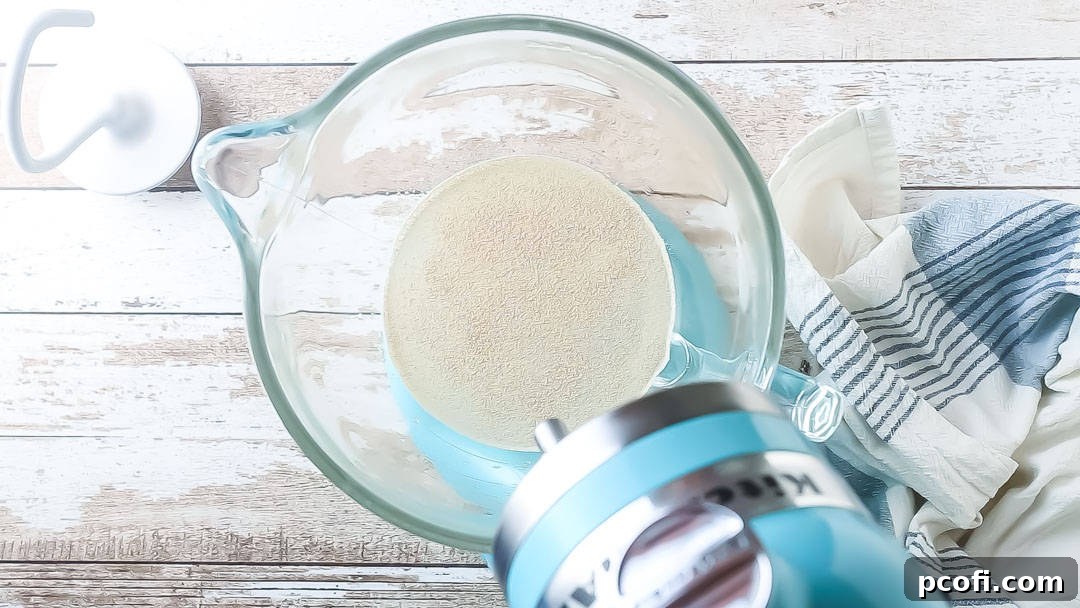
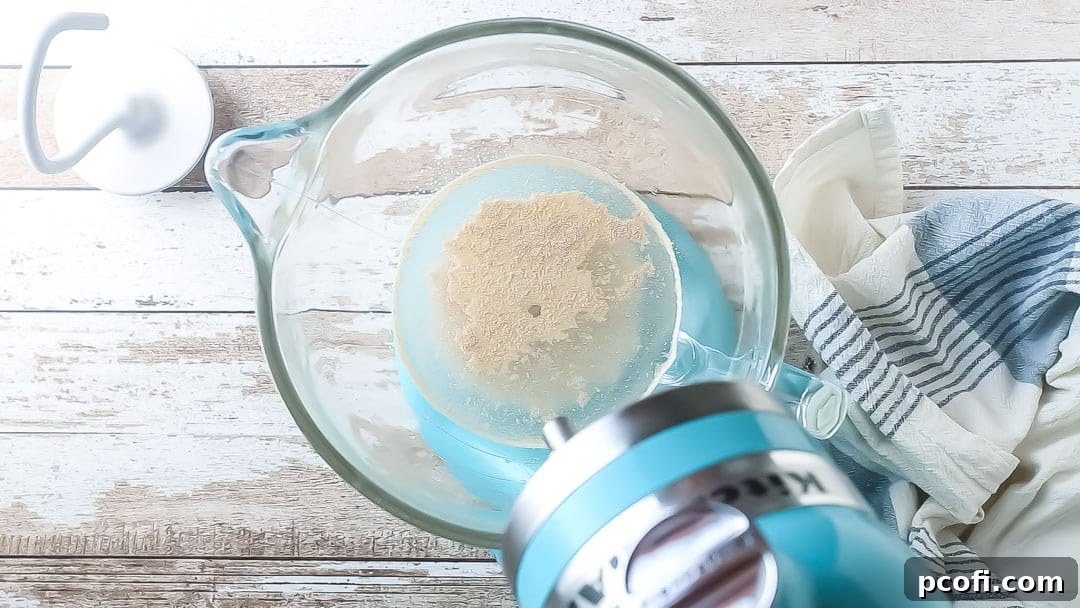
Begin by proofing your yeast. In a large mixing bowl, combine the warm water and a little sugar, then gently sprinkle the active dry yeast over the surface. The water temperature should be warm, similar to a baby’s bath – roughly 105°F (40°C). Be cautious not to use hot water, as this can kill the yeast and prevent your bread from rising. Allow the mixture to sit undisturbed for about 5 minutes. You’ll know your yeast is active and healthy when the mixture becomes visibly foamy and bubbly on the surface.
Step 2: Form the Dough
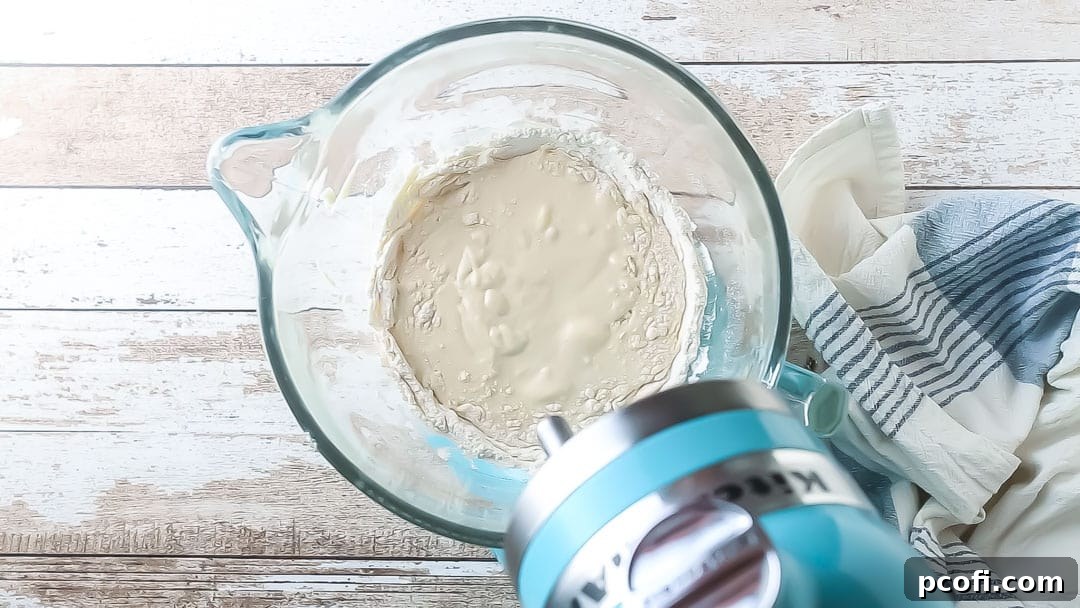
Once your yeast is active, add approximately 2 ½ cups of flour and the softened butter to the bowl. Mix these ingredients thoroughly until well combined. Next, incorporate the salt and continue adding the remaining 1 to 2 cups of flour gradually, a little at a time. The goal is to reach a dough consistency where it forms a cohesive ball and cleanly pulls away from the sides of the bowl. The dough should feel moist but not excessively sticky to the touch. Avoid adding too much flour, as this can result in a dense, dry loaf.
Step 3: Knead and Allow the First Rise
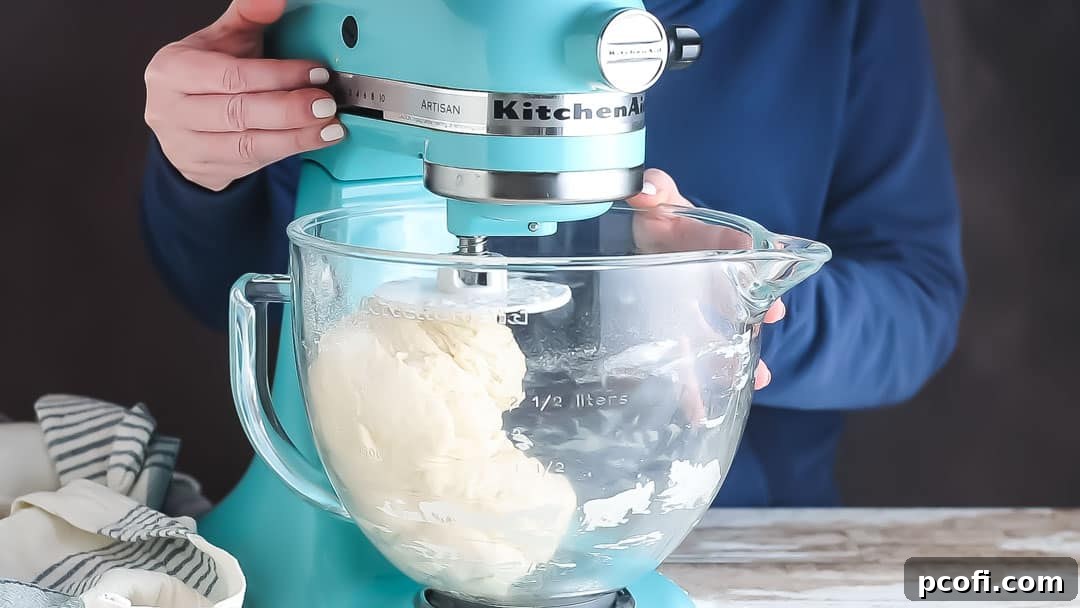
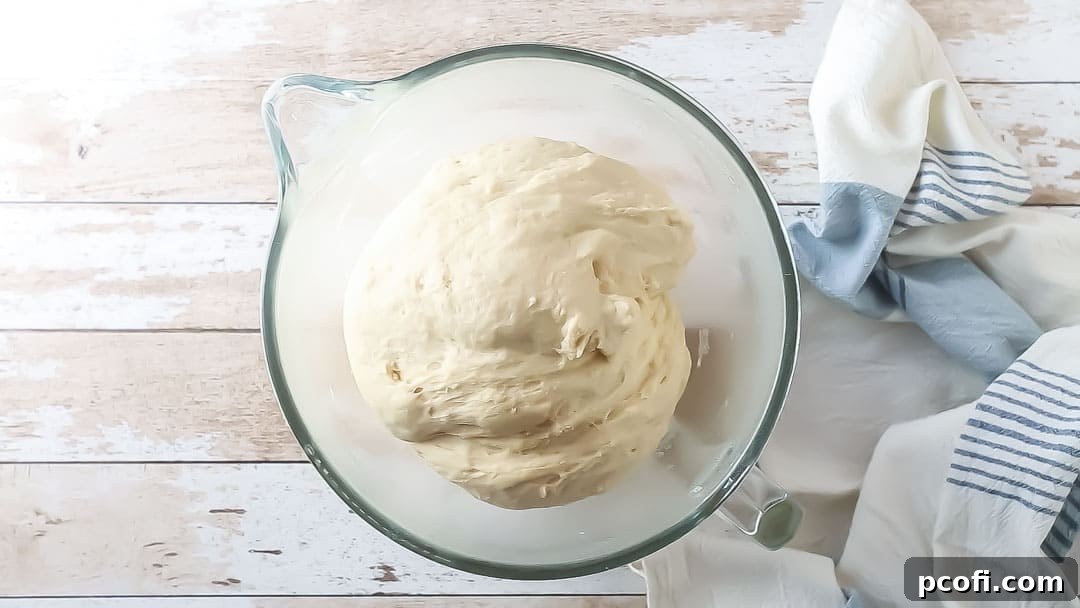
Kneading is a critical step for developing the gluten structure, which is responsible for the signature soft, pillowy, yet slightly chewy and elastic texture of this bread. Insufficient kneading will lead to a crumbly loaf. Knead the dough for at least 10 minutes, or until it feels smooth and elastic. To check for proper gluten development, perform the “windowpane test”: pinch off a small piece of dough and gently stretch it with your fingertips from the center outwards. You should be able to stretch it thin enough to see light pass through it, just like a windowpane, without it tearing. Once kneaded, lightly mist your mixing bowl with non-stick spray, return the dough, cover it loosely with plastic wrap, and let it rise in a warm spot until it has doubled in size. This typically takes 30-45 minutes, but can vary depending on your kitchen’s temperature.
Step 4: Shape the Loaf and Allow the Second Rise
After the first rise, gently punch down the dough to release the accumulated air. Transfer it to a lightly floured surface and knead it a few times to redistribute the yeast. Then, expertly shape the dough into an elongated loaf. Lightly mist a loaf pan with cooking spray and carefully place the shaped dough inside. Cover the pan loosely with plastic wrap that has also been misted with cooking spray (to prevent sticking). Allow the dough to undergo a second rise in a warm place until it has once again doubled in size, typically another 30-45 minutes. This second rise contributes to a lighter, airier texture in the final baked bread.
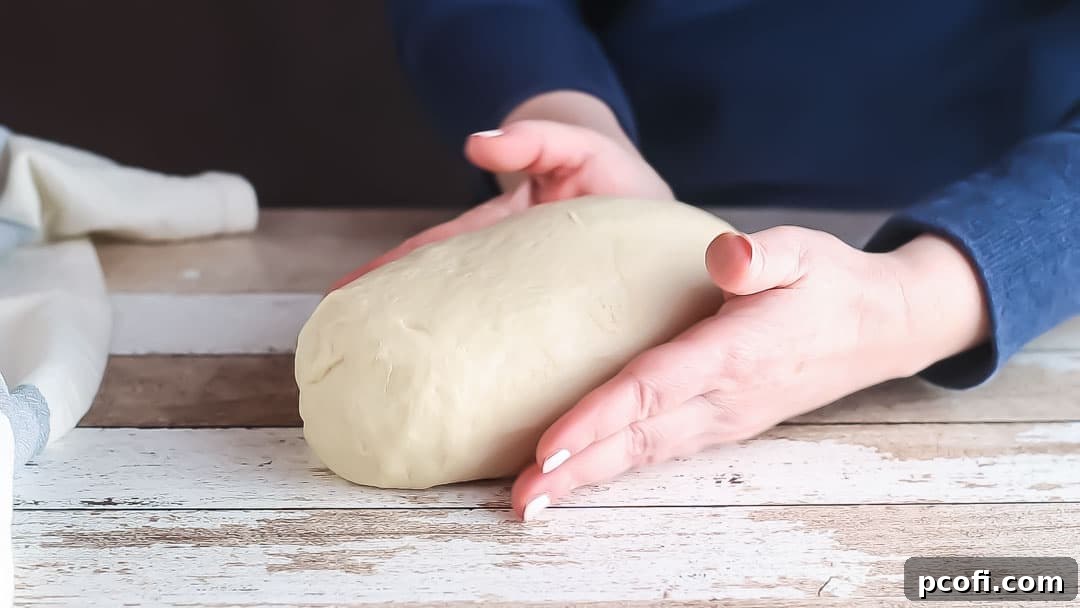
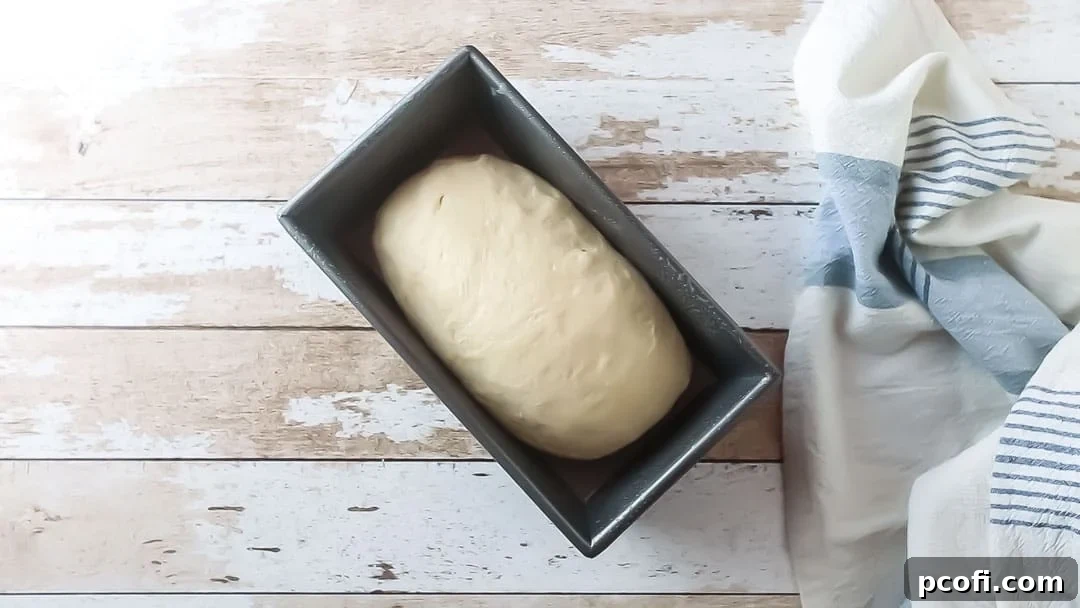
Step 5: Bake to Golden Perfection
Preheat your oven to 350°F (175°C). Once the dough has completed its second rise, remove the plastic wrap and carefully place the loaf pan into the preheated oven. Bake for approximately 40 to 45 minutes, or until the bread achieves a beautiful golden-brown color and appears satisfyingly puffy. To confirm doneness, gently tap the bottom of the loaf – it should produce a hollow sound, indicating it’s thoroughly baked and ready to be cooled.
Expert Baking Tips for Flawless Loaves
Even simple recipes benefit from a few expert insights. Here are some pro tips to ensure your soft white bread turns out perfectly every time:
Measure Ingredients with Precision
Baking is a science, and accurate measurement is paramount for consistent results. For dry ingredients, avoid scooping directly from the bag, which can compact the flour. Instead, spoon flour into your measuring cup and level it off with a straight edge. Better yet, use a kitchen scale to measure ingredients by weight (grams), as this is far more precise and guarantees consistency. For more detailed guidance, refer to How to Measure Ingredients for Baking.
Handle Yeast with Care
Yeast is a living organism, and its activity is sensitive to temperature. Always use warm water within the recommended range of 105-110°F (40-43°C) for proofing. Water that’s too hot will kill the yeast, rendering it inactive, while water that’s too cold will slow down or prevent activation. A small pinch of sugar added to the warm water helps ‘wake up’ the yeast and ensures vigorous fermentation.
Incorporate Flour Incrementally
The exact amount of flour needed for bread dough can vary based on several factors, including humidity, flour type, and even how it’s stored. The recipe provides an estimate, typically ranging from 3 ½ to 4 ½ cups. Always start with the lower amount (e.g., 2 ½ cups in this recipe) and add the remaining flour gradually, a little at a time. Stop adding flour as soon as the dough forms a ball and pulls away cleanly from the sides of the bowl. The dough should feel soft, pliable, and slightly tacky, but not sticky.
Thorough Kneading is Key
Kneading is perhaps the most crucial step for developing gluten, which provides the bread’s structure, elasticity, and chewiness. Insufficiently kneaded dough will result in a dense, crumbly loaf. Knead for at least 10 minutes (or longer if using all-purpose flour) until the dough is smooth, elastic, and passes the windowpane test (as described in Step 3). This ensures a well-risen, airy loaf with a satisfying texture.
Optimize Rising Times
The time it takes for dough to rise can vary considerably due to factors like room temperature and yeast activity. Don’t rely solely on the clock; instead, observe the dough. It’s ready for the next step when it has visibly doubled in size. Under-proofing will lead to a dense, gummy texture, while over-proofing can weaken the gluten structure, causing the bread to collapse or bake up smaller than desired. Keep a close eye on your dough and move forward once it reaches double its original volume.
Plan Ahead with Overnight White Bread
For convenience, you can prepare this recipe as an overnight soft white bread. After the loaf has been shaped (following the first rise), cover it tightly with oiled plastic wrap and refrigerate it for up to 48 hours. Alternatively, you can freeze the shaped dough for up to 2 weeks (any longer and the yeast may lose potency). On baking day, remove the dough from the fridge or freezer, allow it to come to room temperature, and then let it rise until doubled in size before baking as usual.
Cool Completely Before Slicing
Patience is a virtue, especially when it comes to cooling bread. Always allow your freshly baked loaf to cool completely on a wire rack before slicing into it. Cutting into warm bread can compress the crumb, making it gummy and potentially leading to a drier texture once fully cooled. Proper cooling ensures the bread maintains its moist interior and perfect shape.
Delicious Variations to Try
This soft white bread recipe is wonderfully adaptable. Here are a few ideas to customize your loaf:
Gluten-Free White Bread
While this specific recipe isn’t formulated to be gluten-free, you can adapt it. Look for a high-quality gluten-free all-purpose flour blend that is designed to substitute 1:1 for regular wheat flour. Brands like King Arthur Flour Gluten-Free Measure for Measure or Cup4Cup Multi-Purpose Gluten-Free Flour are often good starting points. Be aware that gluten-free dough behaves differently and may require slight adjustments in hydration and kneading time.
Dairy-Free or Vegan White Bread
Making this bread dairy-free or vegan is simple. Just swap the unsalted dairy butter for an equal amount of your favorite plant-based butter. Ensure you choose a brand that is suitable for baking and can be used in a 1:1 ratio. Many excellent vegan butter sticks are available on the market today.
Soft Whole-Grain Bread
If you’re looking to incorporate more whole grains, you can try substituting a portion of the bread flour with whole wheat flour. For a dedicated whole wheat version that maintains incredible softness, check out my Soft Whole Wheat Bread recipe, which has specific adaptations for optimal results.
Flavor Customization
Don’t hesitate to infuse your white bread with extra flavors. For a savory twist, try adding dried herbs like rosemary or oregano, a touch of garlic powder, or some grated Parmesan cheese to the dough. For an earthy texture, incorporate poppy, sesame, or sunflower seeds. Sweet variations could include a sprinkle of cinnamon or a handful of raisins. Experiment and create a unique bread that perfectly matches your preferences!
Creative Serving Suggestions
This versatile soft white bread can be enjoyed in countless ways. Here are some ideas to inspire you:
Classic Freshly Sliced Loaf
Enjoy your bread in its purest form: sliced fresh from the loaf. It’s fantastic as a simple side with dinner, perfect for soaking up sauces, or as the base for elegant tartines. For a timeless treat, assemble an out-of-this-world peanut butter and jelly sandwich!
Delicious Toast Creations
Lightly toast slices for breakfast or a snack. Spread with creamy butter and a dollop of homemade strawberry jam, tangy orange marmalade, or spiced apple butter. Elevate it further with a sprinkle of cinnamon sugar for comforting cinnamon toast, or use it as the foundation for trendy avocado toast. This bread also makes an excellent base for decadent French toast or a comforting bread pudding.
The Perfect Sandwich Foundation
The soft texture of this homemade white bread makes it ideal for sandwiches. Pile it high with your favorite deli meats, cheeses, crisp vegetables, crunchy pickles, and a generous spread of condiments. From classic BLTs and satisfying club sandwiches to creative new combinations, this bread will elevate any filling.
Homemade Croutons
Don’t let any leftover bread go to waste! Cut the slices into small cubes, toss them with olive oil, a medley of herbs (like oregano, basil, or thyme), and a pinch of salt and pepper. Bake them until golden and crispy. These homemade croutons are a fantastic addition to fresh salads or hearty soups, adding both texture and robust flavor.
Frequently Asked Questions
Yes, you can certainly leave out the sugar. However, be aware that sugar acts as food for the yeast, so your bread will likely require a longer rising time. Additionally, bread made without sugar tends to brown less and may have a shorter shelf life, going stale more quickly.
Absolutely! This recipe is adaptable for both. I personally use my stand mixer with a dough hook attachment for most of my bread making, which makes the kneading process effortless. If you prefer the convenience of a bread machine, it should work perfectly with this recipe. And don’t worry if you don’t have either; this white bread dough is very easy to mix and knead by hand!
Yes, making bread dough ahead of time is an excellent way to streamline your baking process. This dough can be stored in the refrigerator for up to 48 hours after its first rise. For longer storage, it can be frozen for up to 2 weeks. Beyond these times, the yeast may begin to lose its potency, affecting the rise. When ready to bake, simply thaw the dough (if frozen), allow it to come to room temperature, and proceed with the second rise and baking as usual.
While this recipe is not inherently gluten-free, you may be able to adapt it using a 1:1 gluten-free flour blend. I recommend high-quality blends like King Arthur Flour Gluten-Free Measure for Measure, Bob’s Red Mill Gluten-Free All-Purpose Baking Flour, or Cup4Cup Multi-Purpose Gluten-Free Flour. Keep in mind that gluten-free dough often requires adjustments and may not achieve the exact same texture as traditional wheat bread.
Several factors can impact the softness of your bread. Common culprits include: too much flour (which makes the dough stiff), insufficient kneading (leading to poor gluten development), under-proofing (the dough didn’t rise enough), or baking at too high a temperature. Ensure you’re measuring accurately, kneading thoroughly, allowing ample rise time, and using the correct oven temperature.
To check if your active dry yeast is still good, combine 1/2 cup of warm water (105-110°F), 1 teaspoon of sugar, and 2 teaspoons of yeast in a small bowl. Stir gently and let it sit for 5-10 minutes. If the mixture becomes foamy and bubbly, your yeast is active. If there’s no activity, your yeast is likely expired or dead, and you’ll need a new packet.
Proper Storage for Maximum Freshness
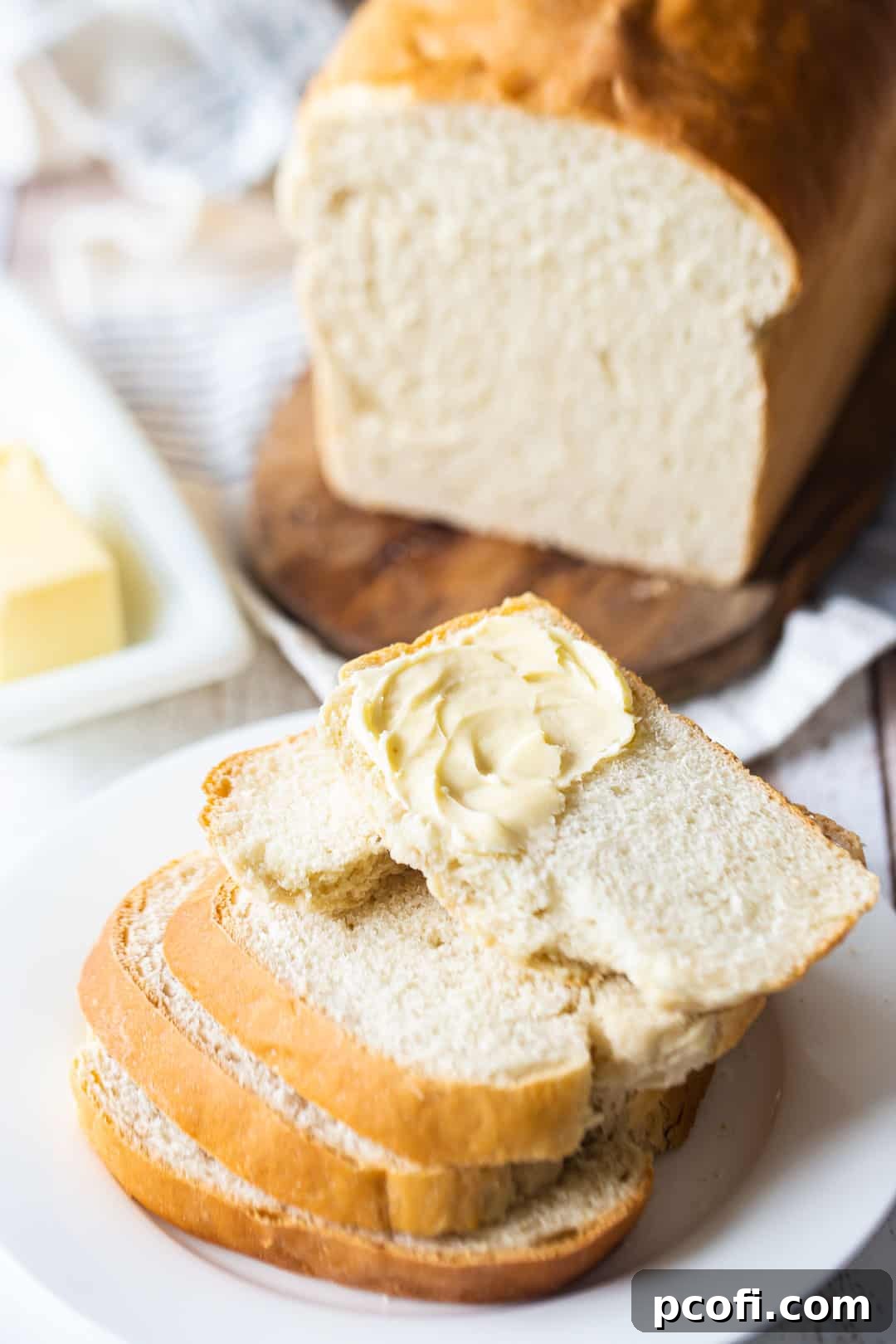
To enjoy your homemade soft white bread for as long as possible, proper storage is essential. At room temperature, tightly wrapped bread will remain fresh for up to one week. To extend its life, you can store it in the refrigerator for approximately 2 weeks. For longer preservation, freeze the entire loaf or individual slices for 1 to 2 months. Always ensure it’s well-wrapped to prevent drying out and freezer burn.
Freezing Dough for Future Baking
Preparing the dough in advance and freezing it is a fantastic way to have fresh homemade bread on demand. After the first rise, gently punch down the raw dough and place it into an airtight, freezer-safe container or a heavy-duty freezer bag. It will keep well in the freezer for about 2 months; freezing it for longer periods can cause the yeast to lose its vitality. When you’re ready to bake, simply thaw the dough to room temperature, shape it into a loaf, allow it to complete its second rise, and then bake as per the recipe instructions.
Recipe Yield and Nutrition Overview
This recipe yields one generously sized loaf of delicious homemade white bread. For consistency, the nutritional information provided in the recipe card below is based on the assumption that you slice the loaf into 12 equal portions. If your family has a larger appetite or you wish to have extra loaves on hand, feel free to double the recipe to make two loaves!
More Homemade Bread Recipes You’ll Enjoy
- Soft Homemade Dinner Rolls
- Soft Italian Breadsticks
- Easy Homemade Croissant Recipe
- Homemade Cinnamon Bread
As an Amazon Associate, I earn from qualifying purchases.
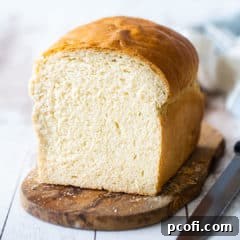
Soft White Bread
Leave a Review
Ingredients
- 1 1/2 cups (354.88 g) warm water
- 3 tablespoons (44.36 g) granulated sugar
- 1/4 ounce (7.09 g) active dry yeast*, (1 packet or about 2 teaspoons)
- 3 tablespoons (44.36 g) unsalted butter,, softened
- 3 3/4 cup (468.75 g) bread flour, (you may need as much as 4 1/2 cups)
- 3/4 teaspoon (3.7 g) salt
Instructions
-
Place the warm water and sugar in a large bowl and sprinkle the yeast on top. Set aside for 5 minutes to allow the yeast to proof.
-
Add the butter and 2 1/2 cups of the flour, and beat on medium speed for 3 minutes.
-
Stir in an additional 1 to 2 cups of flour, along with the salt, a little at a time, mixing until the dough gathers itself into a ball and pulls away cleanly from the sides of the bowl.
-
Continue to knead until the dough is smooth and elastic and it passes the windowpane test** (at least 10 minutes).
-
Place the dough in a large greased bowl, and cover lightly with plastic wrap. Allow it to rise in a warm place until doubled in size (approx. 30 to 45 minutes).
-
Lightly mist a 5-cup loaf pan with non-stick spray.
-
Punch down the dough and shape it into a loaf.
-
Place the dough in the prepared pan, cover it loosely with greased plastic wrap, and allow it to rise in a warm place until doubled in size (approx. 30 to 45 minutes).
-
Preheat the oven to 350 degrees F.
-
Uncover the dough and bake until puffy, golden, and light (approx. 40 to 45 minutes). It should make a hollow sound when tapped.
Notes
**Pinch off a little piece of dough and using your fingertips, stretch it gently from the center outward. You should be able to pull it tissue-thin without it tearing. It should be so thin you can see light passing through it, just like a windowpane.
Tried this recipe?
Mention @bakingamoment on Instagram or tag #bakingamoment.