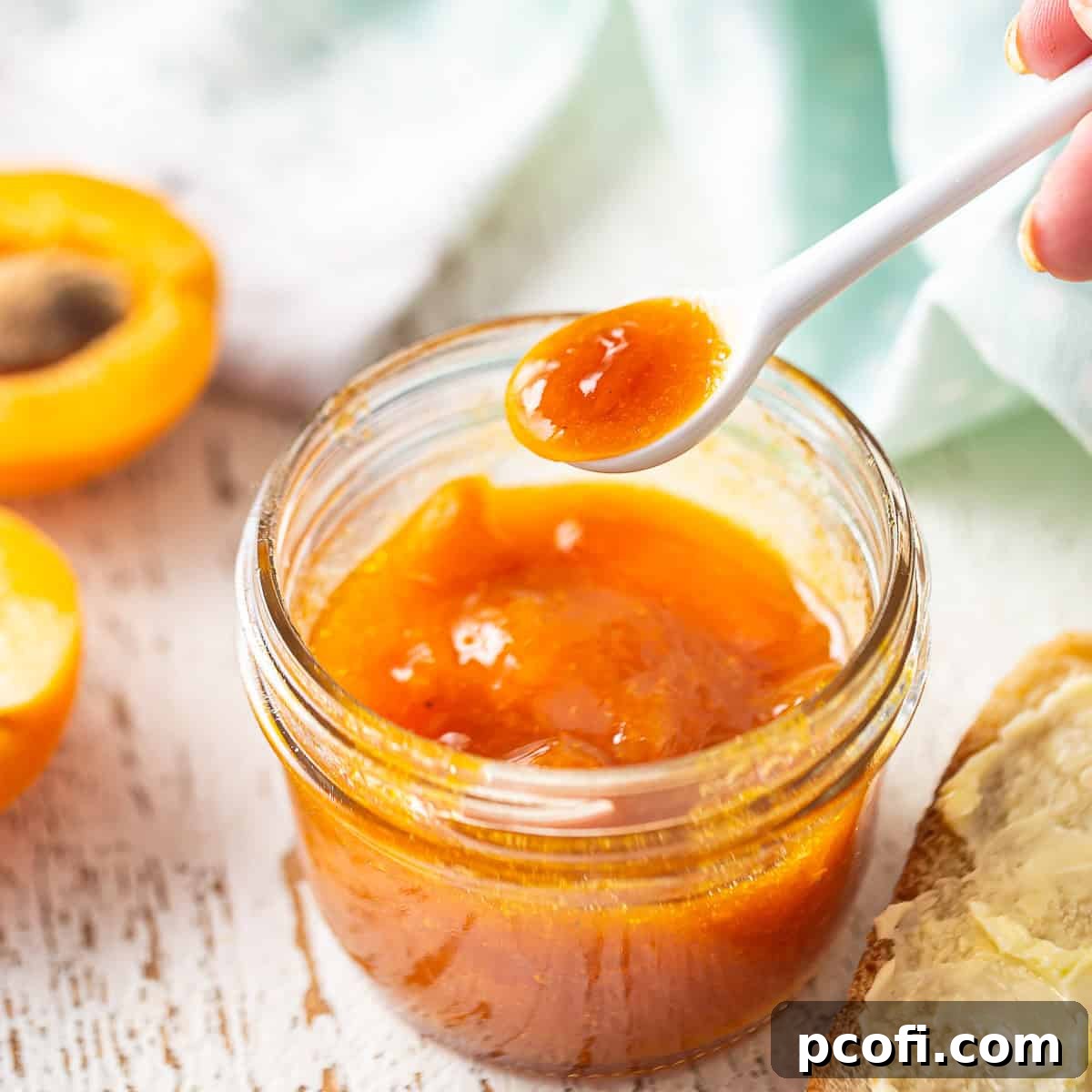
Unlock the secret to crafting exquisite homemade apricot jam bursting with vibrant summer flavor. This easy recipe requires no pectin and guides you through making perfect apricot preserves for your fridge, freezer, or pantry shelf.
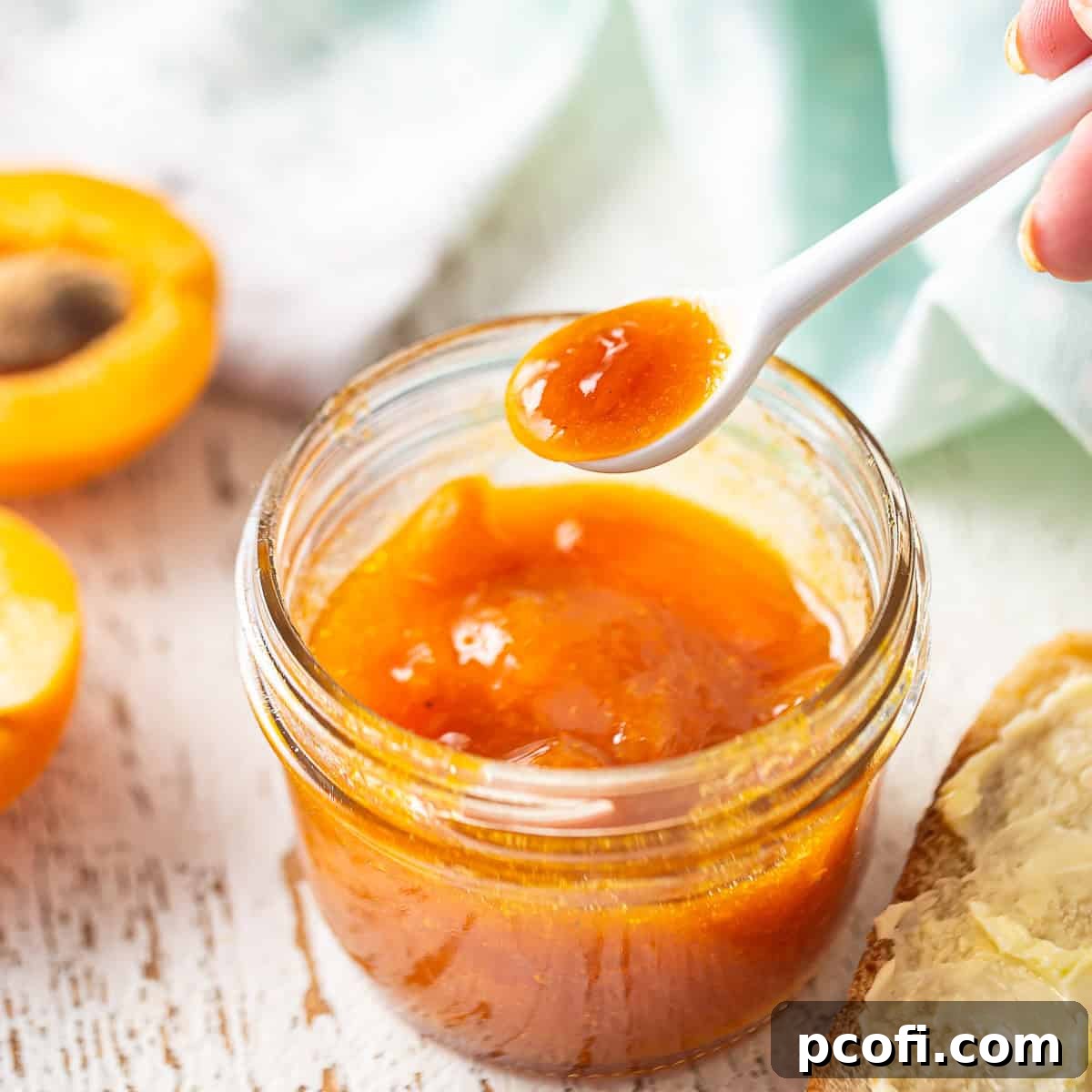
There’s nothing quite like the taste of summer sunshine captured in a jar, and that’s exactly what you get with homemade apricot jam. I’m absolutely delighted to share this simple yet incredibly rewarding apricot jam recipe with you today!
Apricots are truly one of nature’s delights, aren’t they? Their flavor is simply enchanting – like a peach, but with a more concentrated, subtly tangy sweetness that’s utterly unique. And right now, as summer peaks, these golden beauties are at their absolute best, offering peak flavor and ripeness.
Making jam or preserves isn’t just a culinary task; it’s a delightful way to bottle the fleeting deliciousness of summer and ensure you can savor that vibrant taste all year long. Imagine spreading that bright, fruity goodness on your morning toast in the dead of winter, or swirling it into your yogurt for a taste of sunshine!
While the idea of making jam from scratch might sound intimidating or complicated, I promise you it’s anything but! I’ve been mastering homemade jams every summer for years, and it has consistently proven to be a surprisingly easy and fun afternoon project. It’s a wonderfully creative outlet that yields incredibly satisfying results.
Having previously shared popular recipes for orange marmalade, strawberry jam, and blackberry jam, I’m thrilled to add this apricot version to our collection. Don’t forget to explore my “Sauces and Toppings” page for more inspiration and delicious ideas!
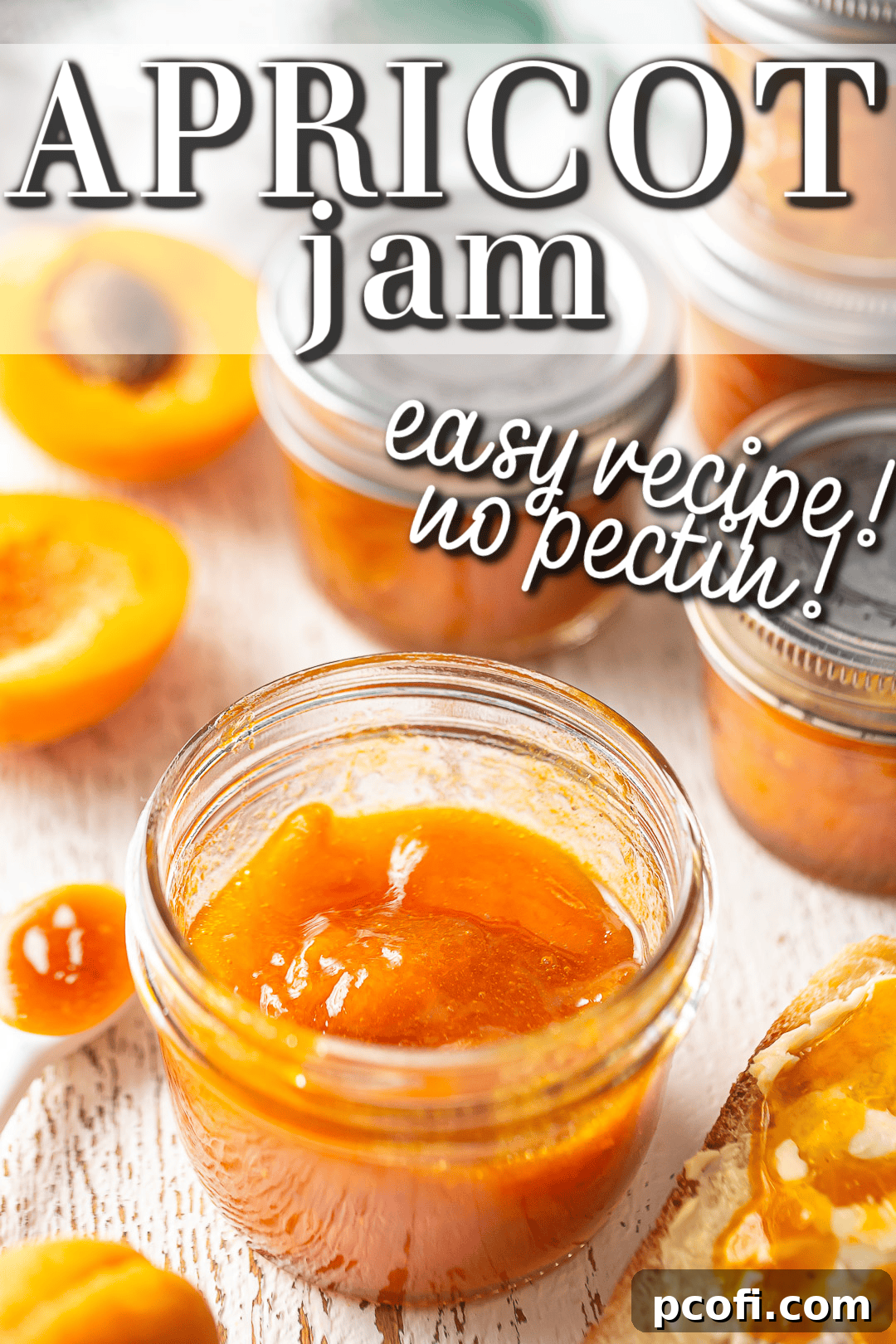
Table of Contents
- What is Apricot Jam?
- Why This is the Best Apricot Jam Recipe
- What Does Apricot Jam Taste Like?
- Essential Ingredients for Apricot Jam
- Special Equipment You’ll Need
- How to Make Apricot Jam: Step-by-Step
- Creative Ways to Serve Apricot Jam
- Expert Tips for Jam Making Success
- Frequently Asked Questions About Apricot Jam
- More Delightful Summer Recipes
Jump to Recipe
What Exactly is Apricot Jam?
While often used interchangeably, there’s a subtle distinction between jam and preserves. Technically, this recipe leans more towards apricot preserves, which is a delightful type of jam. The key difference lies in the fruit’s texture: traditional jam typically uses pureed fruit, resulting in a smoother spread, whereas preserves feature whole fruit pieces or larger chunks suspended in a sweet, gelled syrup. Personally, I find preserves more appealing—the chunkier, the better! Those delightful bits of fruit add wonderful texture and an even more intense fruit flavor.
At its heart, apricot jam is a magical transformation of fresh apricots and sugar, cooked down to a specific temperature where the natural pectin in the fruit causes it to set into a luscious, spreadable consistency as it cools. For an even more exceptional experience, I like to incorporate subtle flavor enhancers that truly elevate and spotlight the sunny, natural taste of fresh apricots.
Once prepared, this golden delight can be stored in jars, ready to be enjoyed whenever a craving strikes. Your storage method—refrigerator, freezer, or pantry—will depend on whether you opt for traditional canning.
Why This is the Ultimate Apricot Jam Recipe
- Unforgettable Flavor Profile: Prepare for a true explosion of concentrated apricot essence! This jam delivers a deep, rich apricot taste that’s both sweet and subtly tangy, with a delicate hint of almond that beautifully complements the fruit.
- Minimal Ingredients, Maximum Impact: You’ll be amazed at how such an extraordinary flavor can be achieved with just a handful of basic, fresh ingredients. No long shopping lists or obscure items needed.
- Effortless & Enjoyable Process: Far from being a daunting kitchen task, this recipe is designed to be a fun and satisfying afternoon endeavor. It’s a fantastic way to engage with seasonal produce and create something truly special, ensuring you can enjoy the taste of summer apricots throughout the entire year.
- Incredible Versatility: This recipe serves as a perfect foundation for culinary creativity. Feel empowered to experiment with your own unique additions, such as a touch of fresh herbs, a warming spice, or other complementary flavorings, to craft a truly bespoke and memorable preserve that reflects your personal taste.
What Does This Apricot Jam Taste Like?
Prepare your palate for an experience that truly celebrates the apricot. This recipe is meticulously crafted to deliver the most intensely apricot-forward flavor imaginable. It’s like taking the best qualities of a ripe peach and concentrating them tenfold into a vibrant, juicy essence.
The sweetness is perfectly balanced, never cloying, and harmoniously complemented by a subtle, refreshing tang that brightens every spoonful. Adding a bare whisper of almond is my secret touch, enhancing the natural characteristics of the stone fruit and creating a depth of flavor that is genuinely exquisite. It’s an incredibly delicious and sophisticated spread that will leave you craving more!
Essential Ingredients for Your Apricot Jam
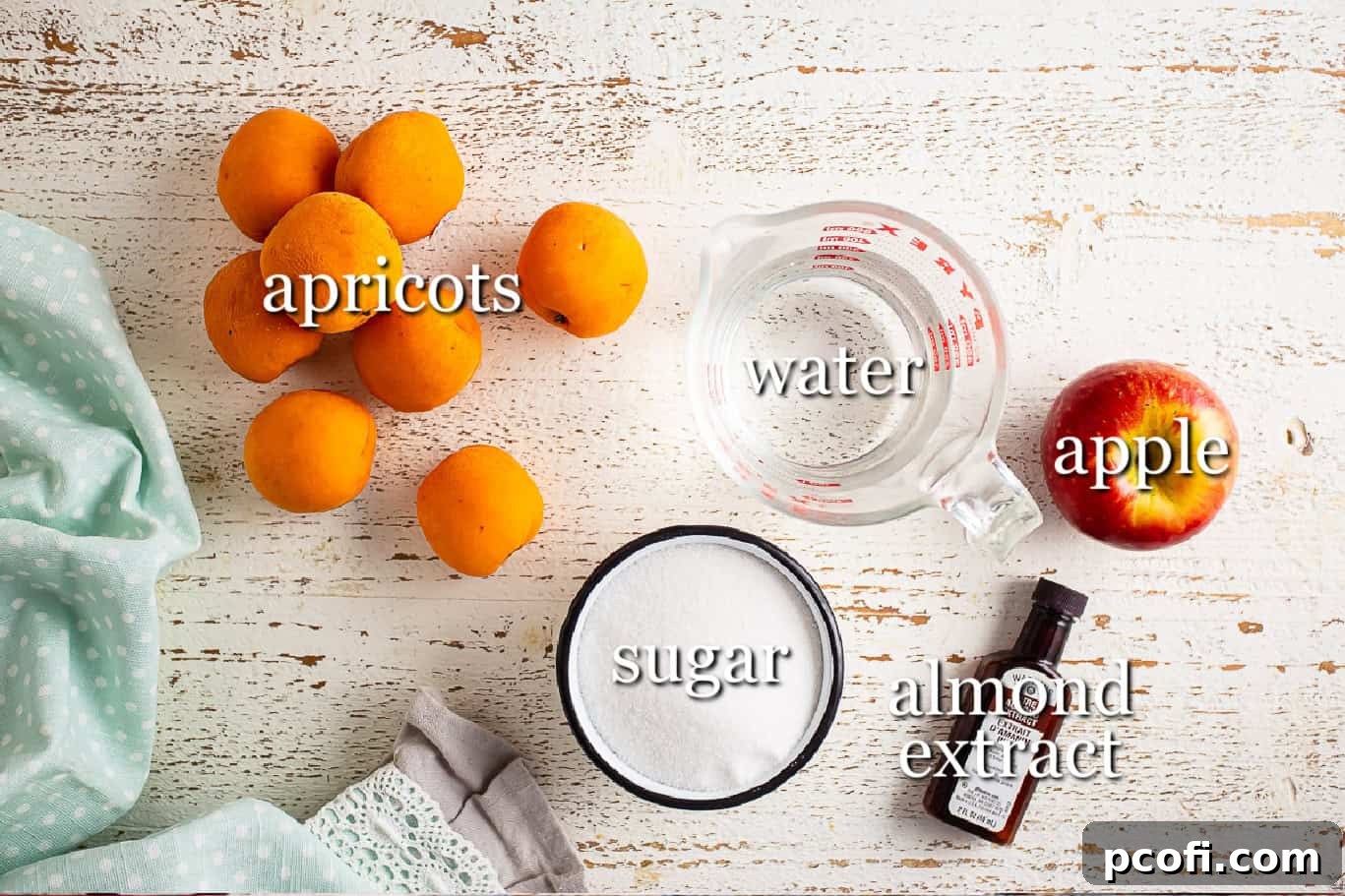
Creating sensational apricot jam starts with selecting the best ingredients. Here’s a closer look at what you’ll need:
Apricots: These beautiful, fresh apricots are, of course, the star of our show. You’ll need approximately 2 pounds, which translates to about 10 to 12 medium-sized fresh apricots. Look for firm, ripe fruit with a vibrant orange-yellow color. While fresh is ideal for peak season flavor, don’t hesitate to use high-quality frozen apricots (thawed) if fresh ones aren’t available; they will work beautifully too.
Apple: This might seem like an unusual addition, but the core, seeds, and peel of just one apple are your secret weapon for natural thickening power! Apples are naturally rich in pectin, a gelling agent found in many fruits. By including these parts, we harness nature’s own thickener, eliminating the need for any added commercial pectin in this recipe. This ensures a wonderfully natural set.
Water: A simple yet essential component. The water helps to soften the apricots and extract their natural juices and pectin during the initial simmering phase. The temperature of the water isn’t crucial when adding it to the pot.
Sugar: Granulated white sugar is the traditional sweetener of choice for jam making. Its role extends far beyond just adding sweetness; sugar is absolutely vital for preserving the jam. It creates an environment with high osmotic pressure, making it difficult for microbes like bacteria, yeasts, and molds (including botulism) to grow. A sufficient sugar content is key to safe, long-term storage of canned jams, allowing you to enjoy your apricot jam for months or even years.
Lemon: A splash of fresh lemon juice is a game-changer. Lemon juice serves a dual purpose: it significantly brightens and enhances the apricot’s natural flavor, cutting through the sweetness with a pleasant tang. More importantly, lemon juice provides essential acidity, which is crucial for activating the pectin in the fruit, helping the jam set firmly. You can adjust the amount to taste, depending on the tartness of your apricots and your preference.
Almond Extract: Here’s a little culinary secret! Did you know that apricots and almonds belong to the same botanical family? It’s true! This genetic kinship means that a tiny hint of almond extract profoundly enhances the natural, subtle nutty undertones of apricots and other stone fruits. It adds a layer of sophisticated depth that truly makes this jam sing, transforming it from delicious to absolutely sublime.
Special Equipment You’ll Need for Jam Making
- Measuring Cups and Spoons: Precision is important in jam making to ensure the right balance of fruit and sugar, and proper setting.
- Large, Heavy-Bottomed Pot: Essential for boiling your apricot preserves. A heavy bottom helps distribute heat evenly and prevents scorching. Choose a pot with plenty of space to allow for vigorous boiling without overflowing.
- Cheesecloth: A loosely woven cotton fabric, cheesecloth is perfect for creating a sachet (small bag) to hold the apple cores and peels. This allows their pectin to infuse into the jam without leaving solid bits behind, making for an easy removal.
- Long-Handled Spoon or Spatula: For frequent stirring, crucial to prevent the jam from sticking to the bottom of the pot and burning, especially as it thickens.
- Candy Thermometer or Jam Thermometer: This is an incredibly useful tool for accurately gauging the temperature of your jam as it cooks. Jam typically reaches its “gel point” (when it will set) around 210-220 degrees F (104-105 degrees C). While not strictly essential for experienced jam makers, it provides great confidence for beginners.
- Canning Jars: Specifically designed to withstand high temperatures, canning jars are durable and perfect for storing your homemade jam. If you plan to process your apricot jam in a water bath for shelf-stable storage, ensure you have new, unused lids as they are single-use for proper sealing.
How to Make Apricot Jam: A Simple 3-Step Guide
This delightful apricot jam recipe is surprisingly straightforward, coming together in three easy steps that even a novice can master.
Step 1: Gently Simmer the Fruit to Extract Pectin
Begin by carefully placing your halved and pitted apricots into your large, heavy-bottomed pot. Pour in the specified amount of water.
Now, take your apple cores and peels (including the seeds, which are rich in pectin) and place them into the center of a clean square of cheesecloth. Gather the corners and tie them securely to form a small sachet. Gently nestle this sachet down into the pot with the apricots and water.
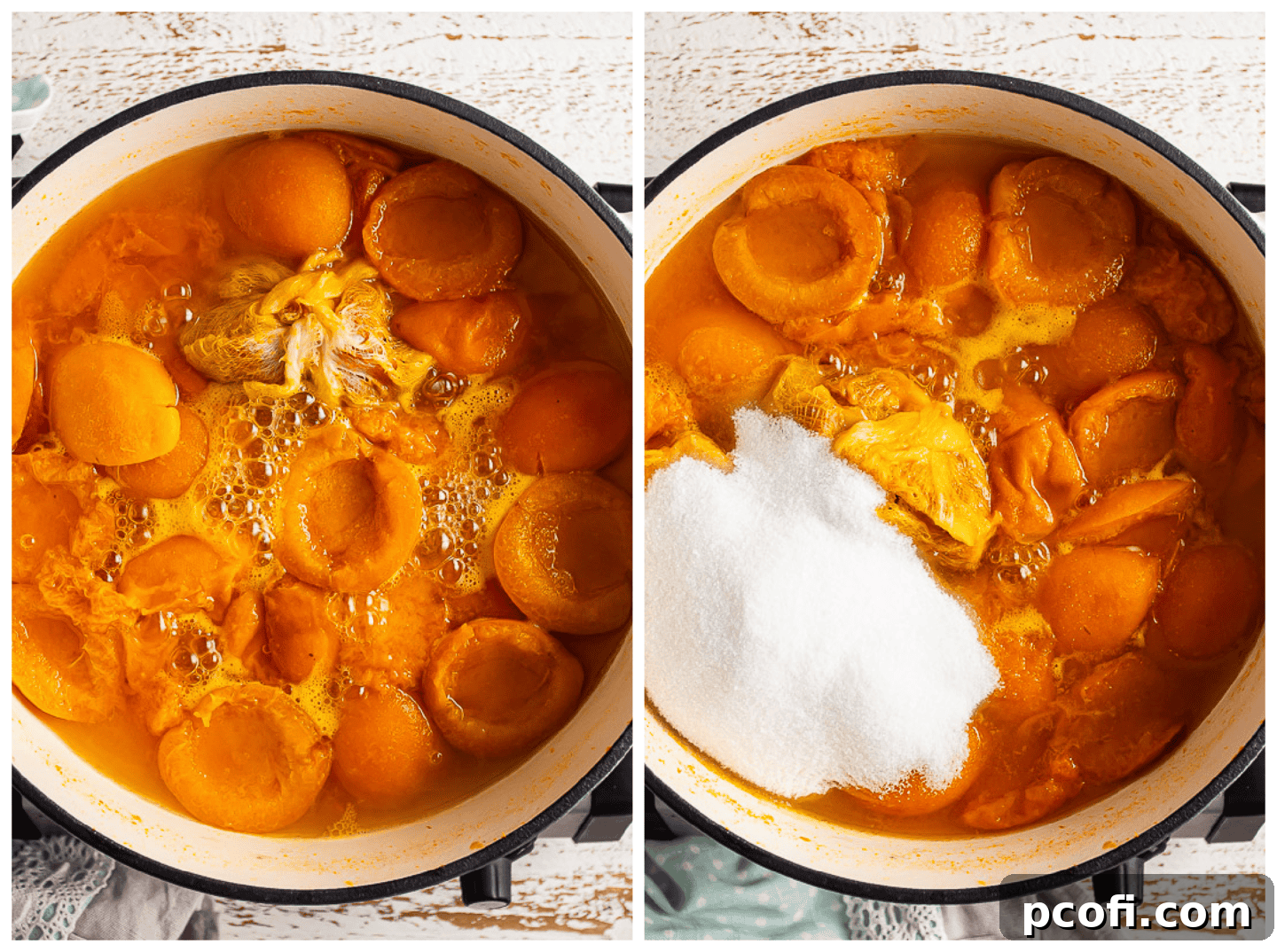
Bring this mixture to a gentle simmer over low to medium-low heat. Let it continue to simmer peacefully for approximately 20 minutes, stirring occasionally to prevent sticking. During this time, the apricots will soften considerably, releasing their juices, and you should begin to see a light foam forming on the surface of the liquid. This crucial initial simmering phase is designed to slowly draw out the natural pectin from both the apricots and the apple sachet, which is essential for the jam to set firmly later on.
Step 2: Add Sugar and Boil to the Perfect Set
Once the fruit is tender and pectin has been extracted, remove the apple sachet from the pot and discard it. Next, add the granulated sugar to the fruit mixture all at once.
Increase the burner heat to medium-high and stir everything together until the sugar is fully dissolved. Continue to cook, stirring frequently, allowing the jam to come to a full, rolling boil. Maintain this boil until your jam reaches the “magic temperature” of 210-220 degrees F (104-105 degrees C) on a candy thermometer. This temperature indicates that enough water has evaporated and the pectin has been activated to create a proper gel.
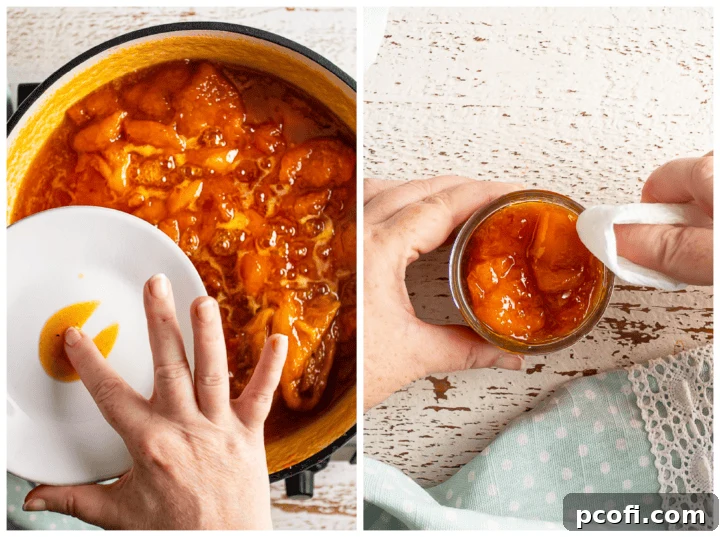
If you don’t have a thermometer, or simply want an extra assurance, perform the “wrinkle test.” Before you start cooking, place a small plate in the freezer to get it thoroughly chilled. When you suspect the jam is ready, dribble a small spoonful of the hot liquid onto the cold plate. Let it sit for a minute or two to cool slightly. Then, push your finger through the jam. If it wrinkles up and leaves a clear trail behind your finger, congratulations! You’ve successfully made jam!
Once the jam reaches its setting point, remove the pot from the heat immediately. Give it a taste. This is the perfect moment to brighten up the flavors: add a squeeze of fresh lemon juice (to taste) and a few drops of almond extract. Stir them in thoroughly.
Step 3: Transfer to Jars and Seal for Storage
This versatile recipe works wonderfully for refrigerator jam, freezer jam, or traditional shelf-stable jam processed in a water bath. Regardless of your chosen storage method, the first step is always to transfer the hot jam into clean jars. If you intend to can the jam, your jars should be sterilized before filling.
Carefully spoon the hot jam into the prepared jars, ensuring you leave about 1/4-inch to 1/2-inch of headspace at the top (the empty space between the jam and the lid). This headspace is crucial for proper sealing.
Using a clean, damp paper towel, meticulously wipe the rims of the jars to remove any jam residue. This ensures a clean surface for the lid to seal properly.
Place fresh canning lids on top of each jar, then screw on the metal bands until finger-tight.
If you wish to store your apricot jam at room temperature in your pantry, you must process the filled jars in a boiling water bath. Submerge the jars completely in boiling water for 20 minutes (adjust time for altitude if necessary). After the processing time, carefully remove the jars from the water bath and let them cool undisturbed on a clean towel on your counter. As they cool, you’ll hear satisfying “pops” as the vacuum seal forms. The “button” on top of each lid should suction downwards, indicating a good airtight seal. Jars of apricot jam that have been properly processed and sealed in this way can be stored in a cool, dark cupboard for up to 2 years, ready to bring sunshine to any day!
Creative Ways to Serve Your Apricot Jam
This delightful homemade apricot jam is incredibly versatile and can elevate a multitude of dishes beyond just toast. Its bright, tangy-sweet flavor makes it a fantastic addition to both sweet and savory applications.
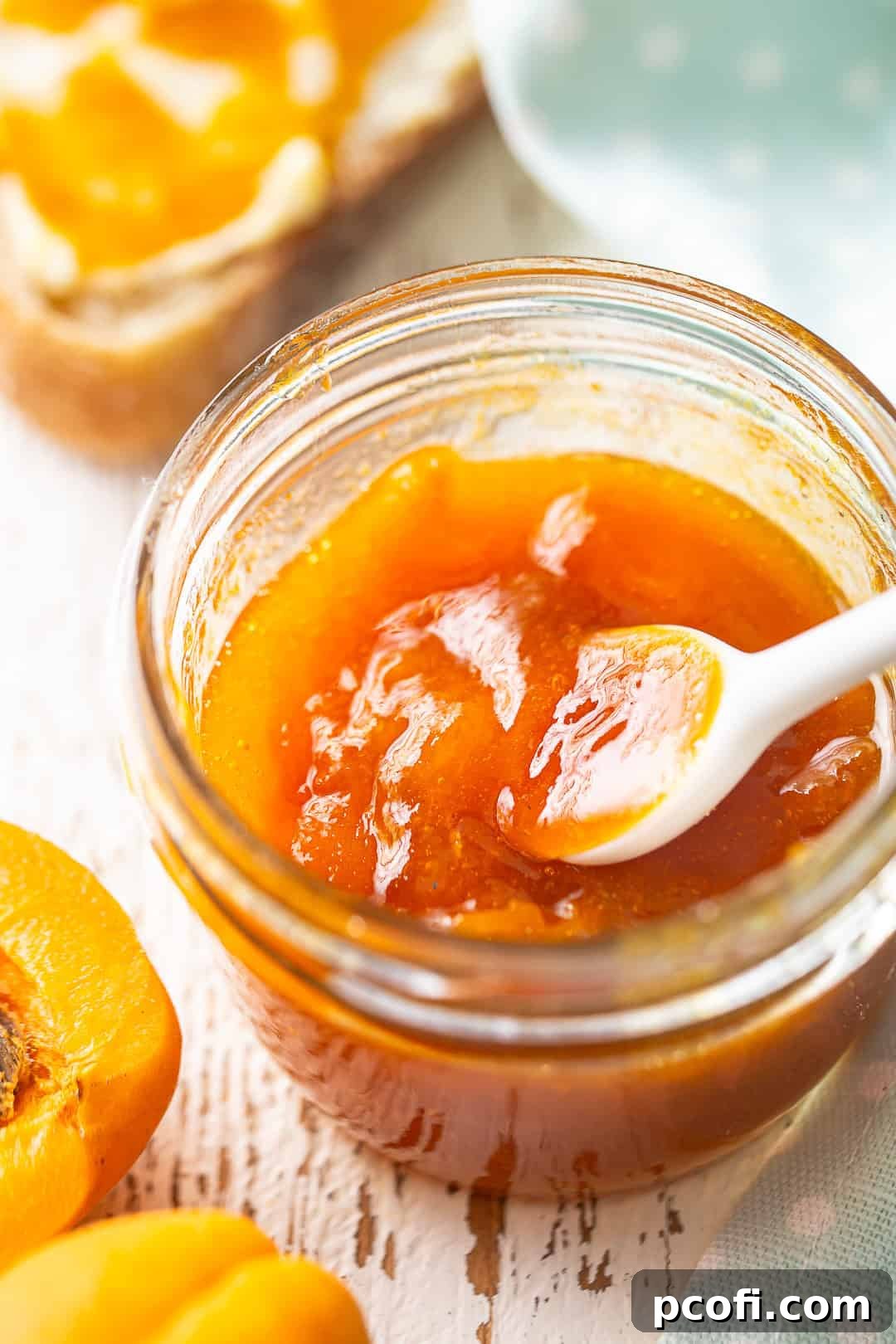
- Classic Breakfast & Brunch: My absolute favorite way to enjoy this jam is spooned generously onto warm, freshly baked buttered scones. Pure bliss! It’s also heavenly on classic toast, English muffins, crumpets, or warm croissants. For a special brunch, swirl it into oatmeal or yogurt with a sprinkle of granola.
- Delectable Desserts: Apricot jam is a sublime filling for cakes, cookies, and pastries. Imagine it layered between a light and airy white almond sour cream cake – that would be absolute heaven. It’s also perfect for filling thumbprint cookies; just drop a spoonful into the hollows of your freshly baked treats. Consider using it as a glaze for fruit tarts or as a sweet surprise in homemade turnovers.
- Savory Pairings: Don’t limit this jam to just sweets! Apricot jam makes a surprisingly excellent glaze for roasted chicken or pork. For a savory twist, stir in a little Dijon mustard, a pinch of chili flakes, or a sprig of fresh rosemary to create a complex and flavorful accompaniment for meats. It’s also absolutely fantastic when served alongside a creamy baked brie, especially with crusty bread or crackers, providing a beautiful contrast to the rich cheese.
- Cheese Boards: A dollop of this vibrant jam is an essential component of any sophisticated cheese board, pairing beautifully with a variety of cheeses from sharp cheddar to creamy goat cheese.
Expert Tips for Jam Making Success
Achieving perfect homemade jam is easy with a few insider tricks. Keep these expert tips in mind for consistently delicious results:
- Stir, Stir, Stir!: This is perhaps the most crucial rule in jam making. Frequent and thorough stirring is absolutely essential, especially once the sugar has been added and the jam begins to thicken. Without constant stirring, the fruit and sugar mixture can easily scorch and stick to the bottom of the pot, ruining your batch. Use a long-handled spoon or spatula to protect your hands from splashes.
- Add Flavorings Off the Heat: Once your jam has reached its desired consistency and you’ve removed it from the stove, that’s the ideal time to incorporate delicate flavor enhancers like lemon juice and almond extract. The aromatic compounds in these ingredients are quite volatile and can easily evaporate or diminish if exposed to high heat for too long. Adding them at the end ensures their vibrant flavors truly shine through.
- Refrigerator Apricot Jam: If you opt for a simpler, quicker method and choose not to process your jars in a boiling water bath, your homemade apricot jam can be safely stored in the refrigerator. In a well-sealed container, it will maintain its peak freshness and flavor for approximately 6 months.
- Freezer Apricot Jam: For even longer storage without the need for traditional canning, transfer your cooled jam into freezer-safe containers, leaving ample headspace for expansion. Frozen apricot jam will retain its quality and delicious taste for up to a year, offering a wonderful taste of summer whenever you need it.
Frequently Asked Questions About Apricot Jam
No, there’s absolutely no need to peel the apricots for this recipe! I actually prefer to leave the skins on for a couple of important reasons. Firstly, the skins contribute additional flavor and a lovely textural dimension to the preserves. Secondly, and perhaps most importantly, fruit skins naturally contain a good amount of pectin, which is the gelling agent that helps your jam set firmly. Leaving them on gives you an extra boost of natural pectin!
Apricot jam is incredibly versatile, and the possibilities for customization are endless! For a delightful twist, consider an apricot pineapple jam by replacing half of the apricots with crushed pineapple. If you enjoy a sweet and spicy kick, try adding finely minced jalapeño or habanero peppers – apricot and jalapeño jam, for instance, is absolutely fantastic served with cream cheese and crackers! You can also get creative with warming spices like a cinnamon stick, a star anise pod, or a few cardamom pods infused during cooking. Fresh herbs like basil, lemon thyme, or even a touch of ginger can also add a sophisticated layer of flavor. Don’t be afraid to experiment – the sky is truly the limit when it comes to personalizing your jam!
Don’t worry, it happens! If a jar doesn’t seal (the lid’s “button” doesn’t depress), you can try to reprocess it. Simply ensure the jar rim is perfectly clean, apply a brand new lid, screw on the band, and submerge it back into the boiling water bath for another 20 minutes. If, after a second attempt, it still doesn’t seal, it’s completely fine! Just treat that particular jar as refrigerator jam and store it in the fridge or freezer, consuming it within the appropriate timeframe for those methods.
The shelf life of your apricot jam depends on how it’s stored. If kept in the refrigerator, it should remain fresh and delicious for about 6 months. For longer storage, freezer jam will last approximately a year. If your jars were properly processed in a boiling water bath and the lids have successfully sealed (indicated by the depressed “button”), unopened jars can be stored in a cool, dark cupboard for an impressive period of up to 2 years. Always inspect jam for any signs of spoilage before consuming, regardless of storage time.
I typically calculate a serving size for jam as 1 tablespoon. The nutritional information provided below is based on a single 1-tablespoon serving. This recipe is designed to yield around four 4-ounce jars of apricot preserves, making it a manageable batch. If you’re looking to stock up or share with friends and family, feel free to easily double or triple the recipe as needed!
More Delightful Summer Recipes to Explore
- Crispy Zucchini Fritters
- Classic Blueberry Buckle
- Glazed Salmon over Fresh Corn and Tomatoes
- Authentic Basil Pesto Recipe
As an amazon associate I earn from qualifying purchases.
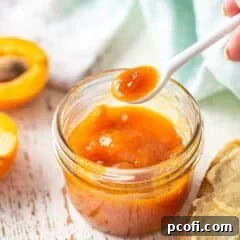
Easy Homemade Apricot Jam
Leave a Review
Ingredients
- 2 pounds (907.18 g) apricots, (approx. 10 to 12 fresh apricots), halved and pitted
- 1 1/2 cups (354.88 g) water
- 1 (67 g) apple core and peel, (including seeds)
- 1 (6 g) lemon peel
- 1 1/2 cups (300 g) granulated sugar
- 2 tablespoons (30 g) lemon juice, (or to taste)
- 1/4 teaspoon (1 g) almond extract
Instructions
-
Place the apricots and water in a large, heavy-bottomed pot.
-
Tie the apple core, apple peel, and lemon peel in a small square of cheesecloth and add it to the pot with the apricots.
-
Bring the mixture to a gentle simmer over medium-low heat, stirring occasionally.
-
Continue to simmer until the fruit is very soft and some foam begins to form on the liquid’s surface (about 20 minutes). Remove and discard the apple sachet.
-
Stir in all the sugar and increase the heat to medium-high.
-
Boil, stirring frequently, until the jam reaches 210-220 degrees F on a candy thermometer. Alternatively, perform the wrinkle test: a drop of the mixture on a cold plate should wrinkle and leave a trail when a finger is drawn through it.
-
Remove the pot from the heat. Taste and add lemon juice as needed to balance the sweetness.
-
Stir in the almond extract. Ladle the hot jam into clean, sterile jars, leaving 1/4 to 1/2 inch of headspace.
-
Wipe jar rims clean, top with fresh lids, and screw on the bands until finger-tight. If canning, submerge jars in boiling water for 20 minutes.
-
Remove from water bath (if processed) and cool completely on a clean towel.**
Notes
**If the “button” on the lid suctions down as the jars cool, they have sealed properly and can be kept at room temperature for up to 2 years. If not, keep the jam in the fridge or freezer and consume within 6-12 months.