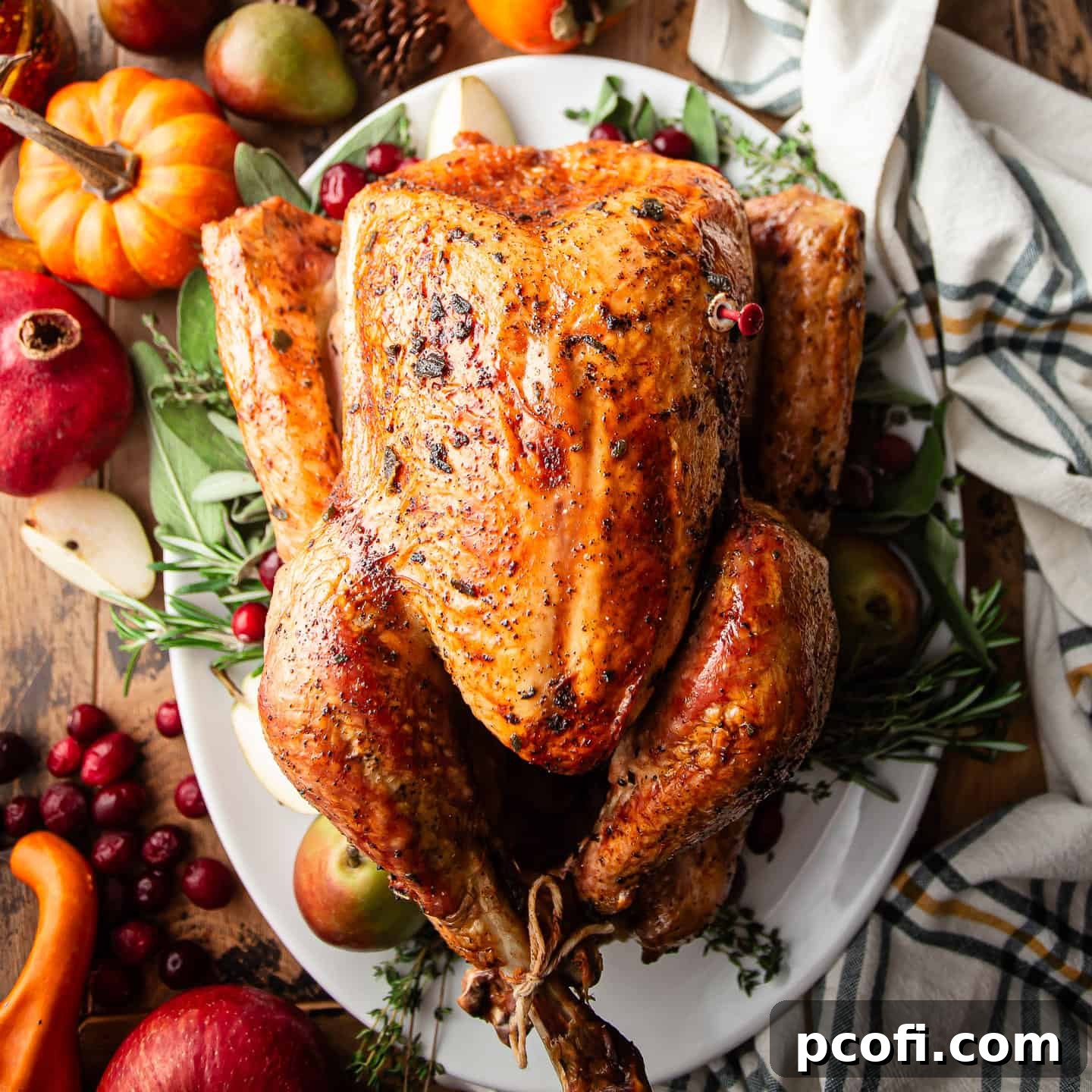
Elevate your holiday table with this exquisite Thanksgiving turkey recipe, promising a magnificently juicy bird with a glistening, crisp skin, exquisitely glazed in a harmonious blend of sweet maple and savory sage brown butter. This isn’t just a meal; it’s a celebration of flavors.
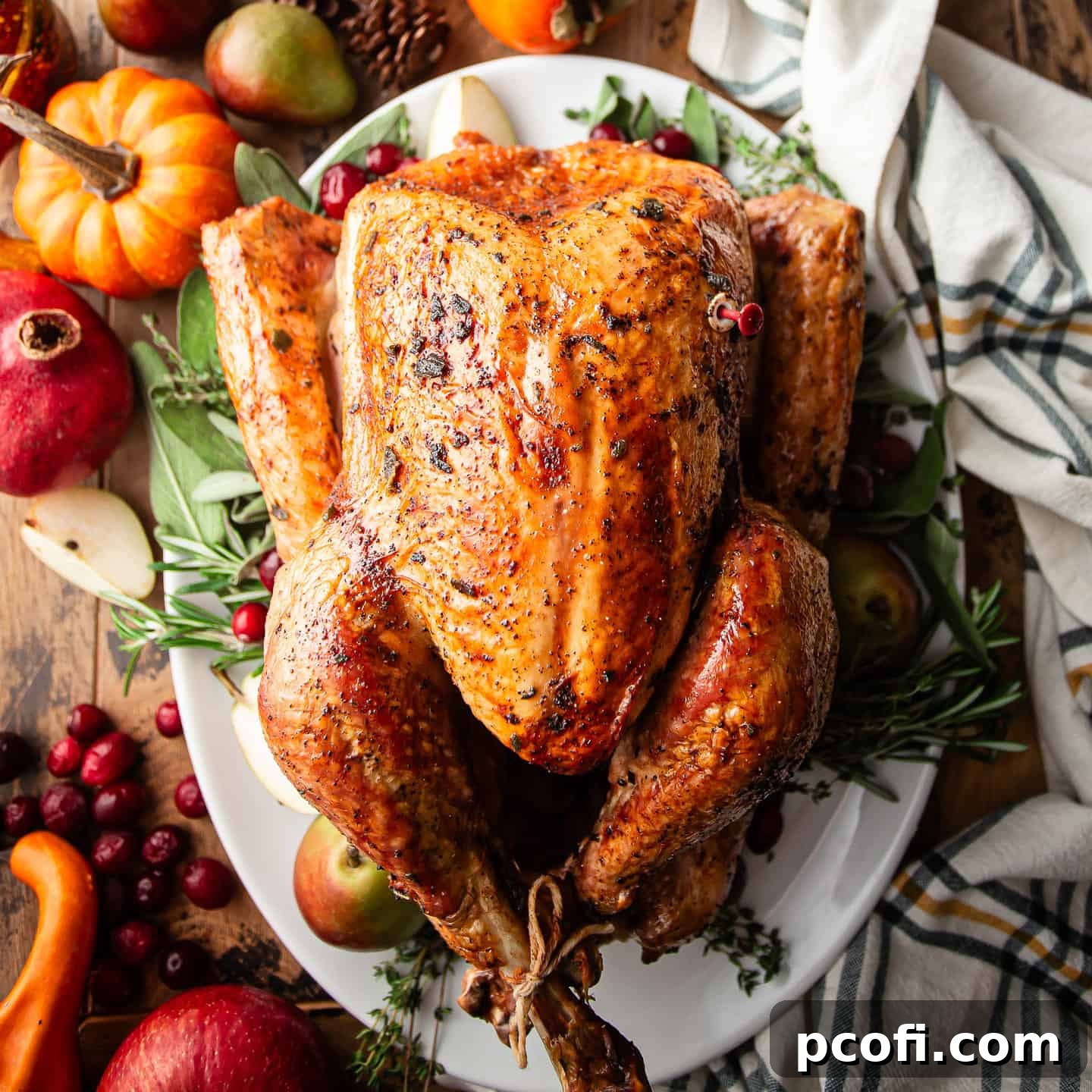
Thanksgiving dinner, a cherished tradition for many, centers around the show-stopping turkey. Over the years, I’ve explored countless methods for preparing this holiday centerpiece: from deep-frying to smoking, and various brining techniques, both wet and dry. While each approach yields its own delightful results, I’ve found that the most consistently flavorful and surprisingly effortless way to prepare a Thanksgiving turkey is through simple roasting, enhanced with aromatic seasonings.
In the midst of holiday preparations, which often involve juggling numerous side dishes and decadent desserts, simplicity becomes a true blessing. This maple and sage brown butter roasted turkey recipe is designed to ease your culinary burden without compromising on taste or presentation. It combines traditional Thanksgiving flavors with a straightforward technique, ensuring a perfectly cooked bird every time.
With just a handful of carefully selected ingredients, this recipe delivers everything you could possibly desire in a holiday turkey: exceptionally moist and tender meat, a rich, seasonal savory profile, and an irresistibly crispy, bronzed skin. It’s a testament to the fact that sometimes, the simplest methods yield the most spectacular outcomes, leaving you more time to cherish moments with loved ones.
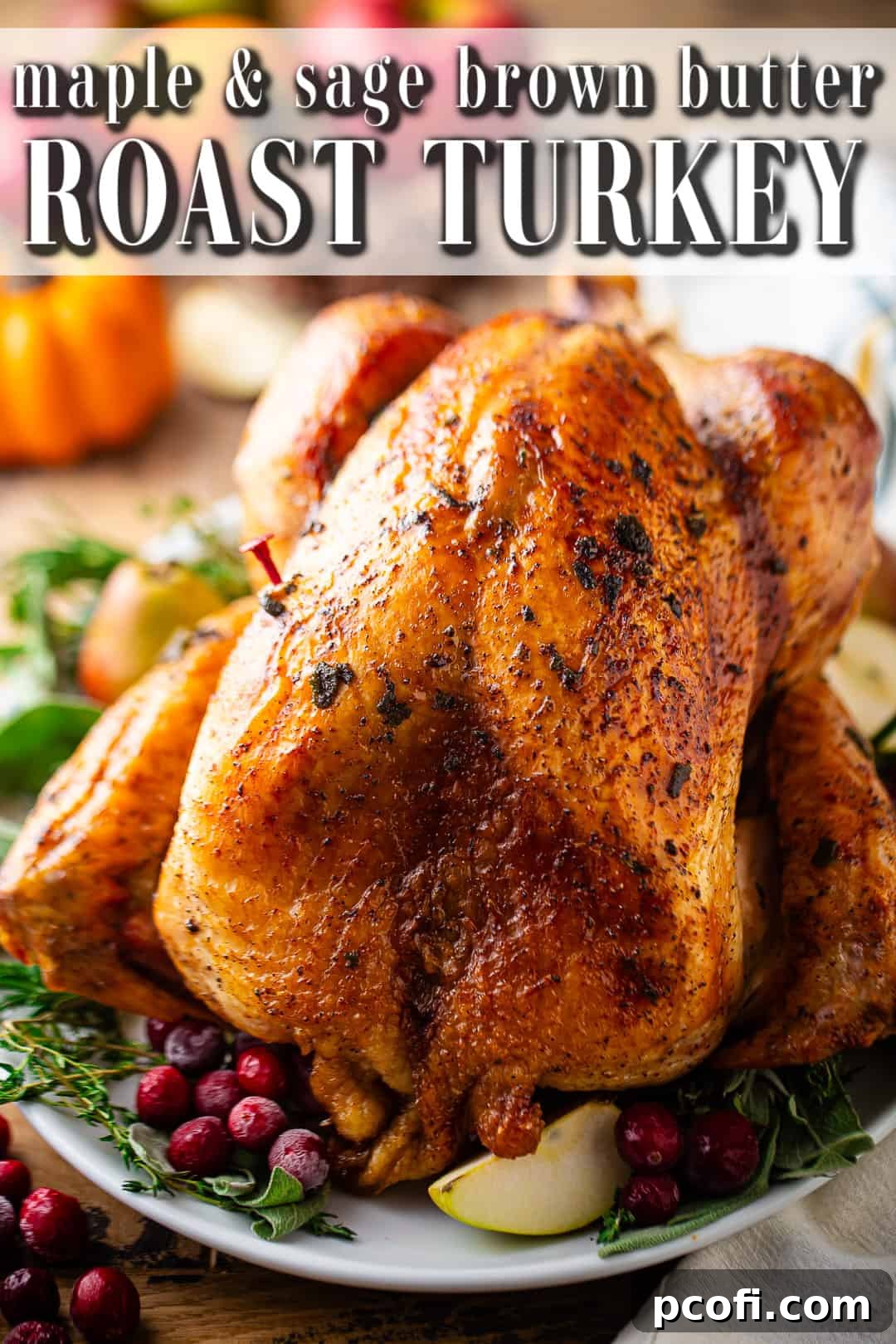
Table of Contents
- What Makes This Turkey Recipe Stand Out
- The Exquisite Flavor Profile of Maple and Sage Brown Butter Turkey
- Essential Ingredients for Your Holiday Turkey
- Specialized Equipment for Perfect Roasting
- Step-by-Step Guide to Roasting Your Turkey
- Serving Suggestions for a Memorable Thanksgiving Feast
- Expert Tips for a Flawless Thanksgiving Turkey
- Frequently Asked Questions About Roast Turkey
- More Fall and Winter Recipes to Savor
Jump to Recipe Card
What Makes This Turkey Recipe Stand Out
- Unforgettable Flavor: The innovative combination of rich maple and fragrant sage infused into brown butter creates a truly remarkable glaze. This unique flavor profile permeates the turkey, offering a savory, nutty, and subtly sweet taste that is absolutely perfect for the autumn and winter holidays.
- Minimal Ingredients: Despite its gourmet taste, this recipe calls for only a handful of fundamental ingredients, making it accessible even for novice cooks. You won’t need to hunt for exotic spices; everything is readily available.
- Remarkably Easy: Forget complicated brining or complex basting routines. With just a few minutes of active preparation, your oven takes over the majority of the work, allowing you to focus on other aspects of your holiday meal or simply relax.
- Visually Stunning: The maple and sage brown butter glaze not only tastes incredible but also helps create a breathtakingly beautiful turkey. The skin roasts to a magnificent bronzed crisp, presenting a regal centerpiece that will undoubtedly impress all your Thanksgiving guests. Its golden-brown hue and enticing aroma will be the star of your festive table.
The Exquisite Flavor Profile of Maple and Sage Brown Butter Turkey
At its core, this recipe delivers a classic, succulent roast turkey, renowned for its tender, juicy meat and the deeply satisfying savory notes characteristic of holiday feasts. However, what truly elevates this dish is the special glaze, particularly on the golden-brown skin.
The addition of real maple syrup contributes a subtle, earthy sweetness that not only enhances the turkey’s natural flavors but also aids in achieving that coveted bronzed, crispy exterior. It’s a taste that resonates with the cozy ambiance of the season without being overpowering.
Complementing the maple is the distinct aroma and flavor of sage brown butter. As butter is browned, its milk solids caramelize, imparting a wonderful nutty depth. When fresh sage leaves are added to this fragrant brown butter, they crisp up beautifully, releasing their essential oils and infusing the glaze with an unparalleled herbal earthiness. Sage, a quintessential herb of Thanksgiving, instantly evokes the warmth and tradition of the holiday, making every bite a nostalgic delight. This combination creates a complex yet comforting taste experience that your guests will rave about.
Essential Ingredients for Your Holiday Turkey
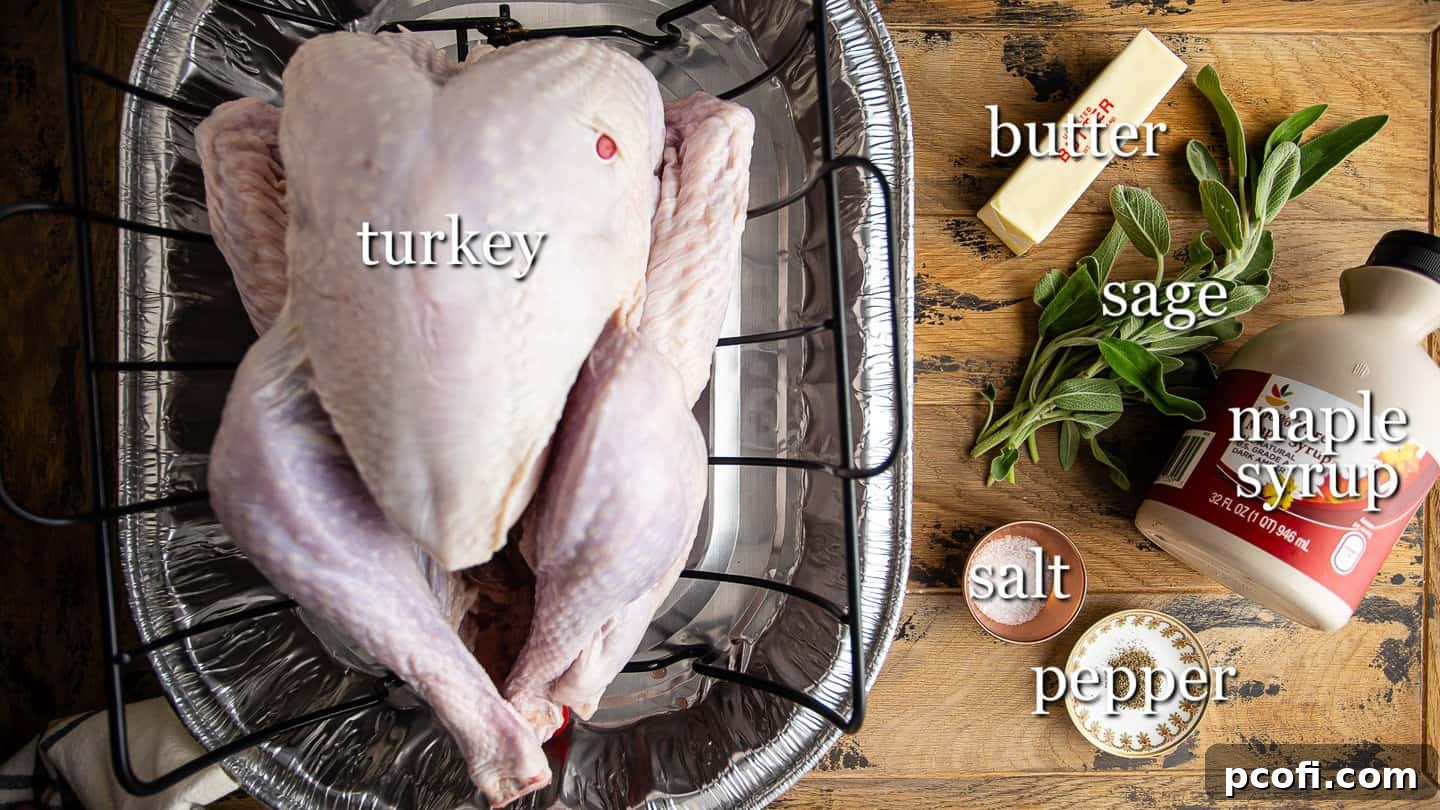
Careful selection of ingredients is key to achieving the best possible flavor and texture for your holiday turkey.
Butter: Opt for unsalted butter. This allows you complete control over the total salt content in your dish, ensuring a perfectly balanced flavor regardless of butter brand variations. We’ll transform this butter through browning, a process that caramelizes its milk solids, creating a profoundly savory, nutty base for our glaze that’s far richer than plain melted butter.
Sage: Fresh sage leaves are indispensable for this recipe. As they crisp in the brown butter, they release their aromatic oils, infusing the glaze with a potent, earthy, and slightly peppery flavor that defines Thanksgiving cuisine. Dried sage won’t offer the same vibrant taste or texture.
Maple Syrup: Insist on real maple syrup. Its distinct, complex sweetness not only contributes to the beautiful browning of the turkey skin but also imparts a unique, seasonal flavor that synthetic pancake syrups simply cannot replicate. It’s a subtle yet crucial element in the glaze.
Salt: I highly recommend kosher salt. Its larger flakes and absence of additives (unlike iodized table salt, which can impart a bitter aftertaste) ensure a pure, clean saltiness. It’s also an affordable and widely available staple in most grocery stores.
Pepper: Freshly ground black pepper is my preference for its robust, pungent flavor that complements the richness of the turkey and glaze. However, feel free to substitute with white pepper for a milder kick or a blend of peppercorns if you desire more complexity.
Turkey: When planning your purchase, a good rule of thumb is to calculate approximately 1 to 1 1/2 pounds of turkey per person to ensure ample servings and delicious leftovers. If you choose a frozen turkey, remember that thawing requires significant time – allocate one full day of thawing for every 4 pounds of turkey. A large bird might need several days, so meticulous planning is essential. Always thaw your turkey in the refrigerator or a cooler filled with ice to maintain safe temperatures and prevent bacterial growth.
Specialized Equipment for Perfect Roasting
- Roasting Pan: While traditional pans work well, using a sturdy foil roasting pan can dramatically simplify cleanup, especially on a busy holiday. Look for one with high sides to contain juices and prevent splatters.
- Kitchen String: Essential for trussing the turkey. This simple step helps the bird cook more evenly, maintains its shape, and keeps the breast meat moist by protecting it from overexposure to heat.
- Measuring Spoons: Accurate measurements are crucial for the glaze to ensure the perfect balance of sweet, salty, and herbal flavors.
- Small Skillet: A light-colored skillet is ideal for browning butter. The light interior allows you to easily monitor the color changes as the milk solids caramelize, preventing burning and ensuring a perfectly nutty brown butter.
- Basting Brush: A good quality basting brush is necessary for evenly applying the maple and sage brown butter glaze across the turkey’s skin, ensuring every inch develops that beautiful bronzed finish and rich flavor.
Step-by-Step Guide to Roasting Your Turkey
Roasting a turkey can seem daunting, but it’s far simpler than you might imagine. The oven does the heavy lifting, requiring only a few minutes of active preparation for this incredibly flavorful and easy turkey recipe.
Step 1: Prepare the Turkey for Roasting
Begin by ensuring your turkey is completely thawed. Once thawed, carefully remove it from its packaging. Locate and remove the giblets and neck from both the main cavity and, sometimes, the neck cavity – don’t forget to check both! A thorough pat-down with paper towels helps achieve crispy skin.
Position the turkey in your chosen roasting pan with the breast side facing up. To ensure even cooking and prevent the wing tips from burning, bend them back and tuck them securely under the turkey’s back. Finally, use a piece of kitchen string to tie the ankles together. These quick but essential steps contribute to a uniformly cooked and beautifully presented turkey, preventing any parts from drying out or over-browning prematurely.
Step 2: Craft the Aromatic Maple and Sage Brown Butter Glaze
The secret to this turkey’s incredible flavor lies in its glaze. Begin by melting the butter in a small, light-colored skillet over medium-low heat. The light color of the pan is crucial as it allows you to clearly observe the butter’s transformation, from melted to perfectly browned.
If you’d like a more in-depth guide, I have a dedicated post on the technique: How to Brown Butter.
As the butter cooks, it will first melt, then begin to boil, and eventually foam. Continue to cook, swirling the pan occasionally, until the foam subsides slightly, and the milk solids at the bottom begin to turn a beautiful amber-brown. This process happens quickly once the browning starts, so watch it very carefully to prevent burning. You’re aiming for a nutty aroma, not a burnt one.
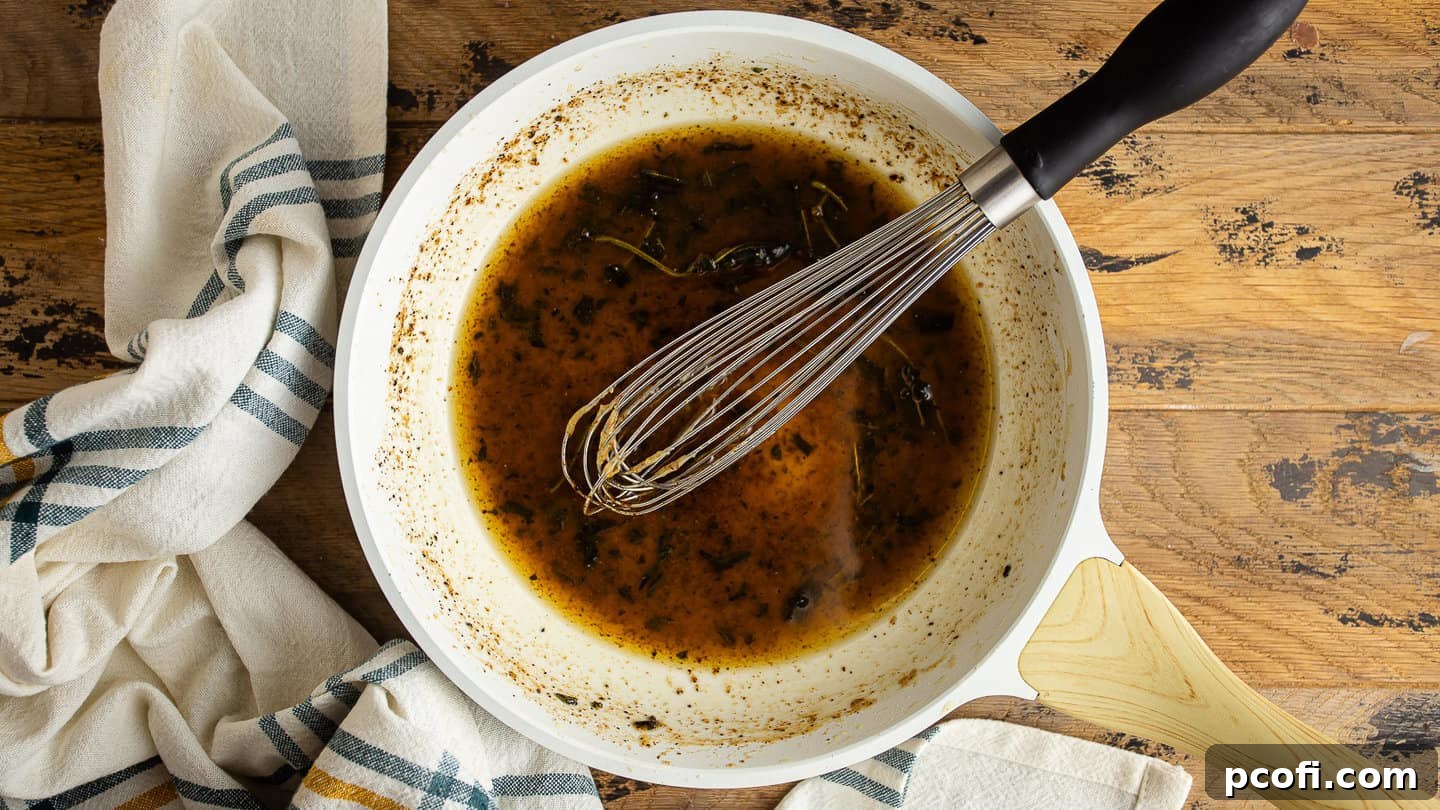
The moment the butter achieves that enticing amber color and nutty fragrance, immediately remove the skillet from the heat. Toss in the fresh sage leaves; they will sizzle vigorously and crisp up, reminiscent of tiny potato chips. This rapid frying releases their potent essential oils, perfuming the butter with an unparalleled herbal aroma. Quickly transfer the sage brown butter to a heat-safe bowl to stop the cooking process.
Finally, whisk in the maple syrup, kosher salt, and freshly ground black pepper until thoroughly combined. This creates your rich, aromatic, and perfectly balanced turkey basting glaze.
Step 3: Baste and Roast to Perfection
With your turkey prepped and your glaze ready, it’s time to roast. Preheat your oven to 325 degrees F (160 degrees C). Generously brush about half of the prepared maple and sage brown butter glaze evenly over the entire exterior of the bird. This initial layer will begin to build that beautiful bronzed crust.
Place the turkey in the preheated oven. The general rule for roasting is approximately 15 minutes per pound, but a reliable meat thermometer is your best friend. Roast the turkey until it registers an internal temperature of 165 degrees F (74 degrees C) in the thickest part of the thigh, ensuring the juices run clear, not pink. Avoid the bone when taking the temperature.
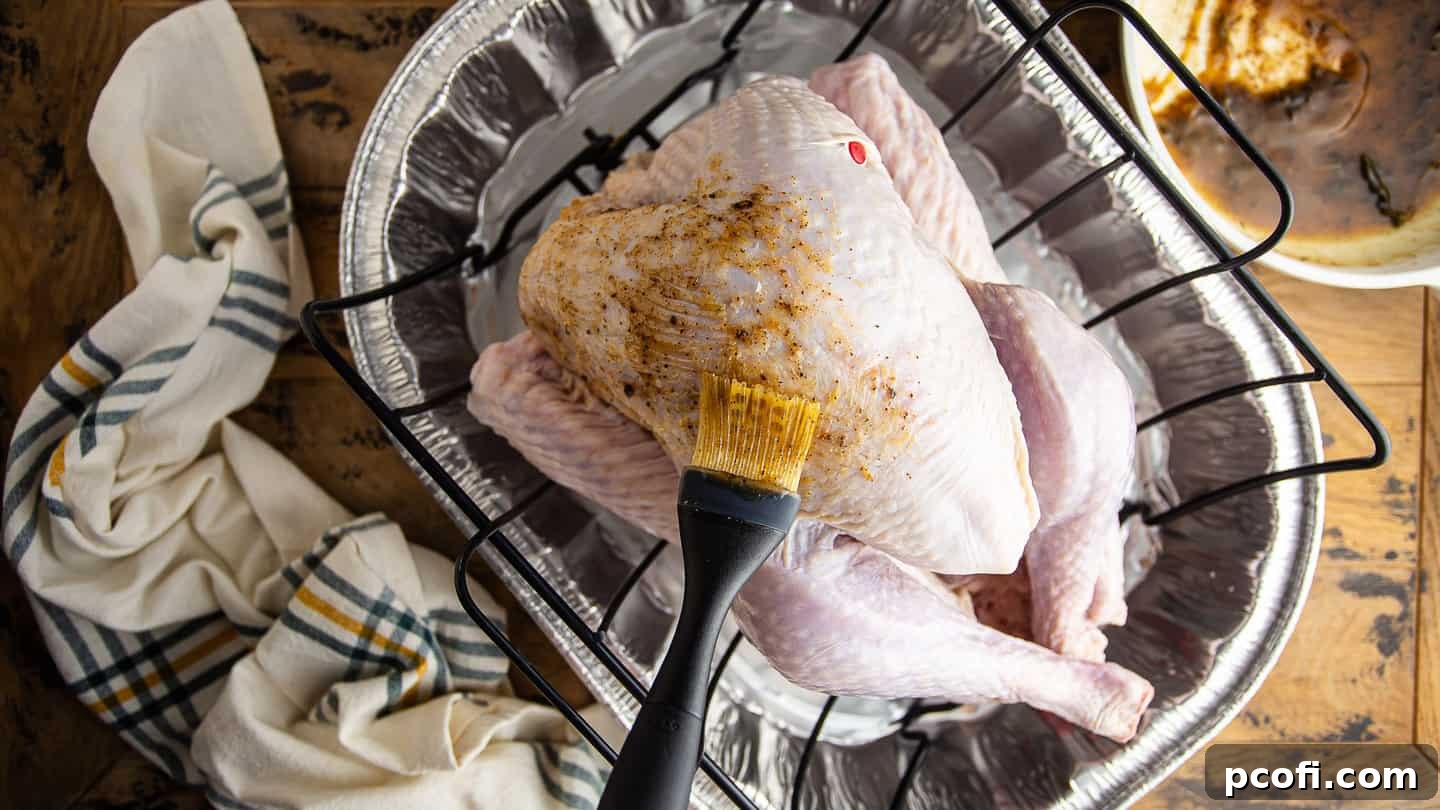
During the roasting process, you’ll want to baste the turkey with the remaining maple and sage brown butter mixture every 30 to 45 minutes. This continuous application not only adds flavor but also helps to keep the skin moist and promotes an even, deep golden-brown color. If any part of the turkey starts to brown too quickly, loosely tent that area with aluminum foil to protect it.
Step 4: The Essential Resting Period
This step is often overlooked but is absolutely critical for a supremely juicy turkey. Once the turkey reaches its target internal temperature of 165 degrees F, remove it from the oven immediately. Even after removal, the internal temperature will continue to rise by as much as 10 degrees due to residual heat, a phenomenon known as “carryover cooking.”
During this vital resting period, which should be at least 45 minutes to an hour, the internal juices that have been pushed to the surface of the meat during cooking will redistribute back throughout the bird. If you were to carve the turkey prematurely, these precious juices would simply spill out onto your cutting board, leaving you with dry meat.
The resting time offers a practical advantage as well: it frees up your oven, allowing you to warm up all your delicious side dishes just before serving. Don’t worry about the turkey getting cold; a large bird retains heat remarkably well. If you’re concerned, simply drape a sheet of aluminum foil loosely over the turkey to help retain warmth without steaming the crispy skin. Trust me, patience here is rewarded with an incredibly tender and moist turkey.
Serving Suggestions for a Memorable Thanksgiving Feast
This maple and sage brown butter turkey is a versatile centerpiece that pairs beautifully with all the beloved traditional Thanksgiving side dishes, creating a harmonious and unforgettable holiday meal. Here are some perfect accompaniments:
- Classic Thanksgiving Stuffing: A fragrant, savory bread stuffing is a must-have alongside roast turkey.
- Rich, Velvety Gravy: Made from the turkey drippings, this adds an indispensable layer of flavor and moisture.
- Creamy Make-Ahead Mashed Potatoes: Fluffy and comforting, these can be prepped in advance to ease holiday stress.
- Zesty Homemade Cranberry Sauce: The tartness provides a wonderful contrast to the rich turkey.
- Decadent Sweet Potato Casserole: A sweet and savory dish often topped with marshmallows or pecans.
- Warm, Pillowy Dinner Rolls: Perfect for soaking up gravy and accompanying every bite.
- Traditional Pumpkin Pie: No Thanksgiving is complete without a slice of classic pumpkin pie for dessert.
Expert Tips for a Flawless Thanksgiving Turkey
Achieving a perfectly roasted Thanksgiving turkey involves a bit of planning and a few key techniques. Follow these expert tips for a stress-free and delicious result:
Generous Portions: While 1 to 1 1/2 pounds of turkey per person might sound like a lot, it’s the ideal amount to ensure everyone gets a satisfying serving. I even recommend purchasing a little extra to guarantee plenty of delicious leftovers for sandwiches and other meals in the days following Thanksgiving. Plan for about 2 pounds per person if you love leftovers!
Adequate Thawing Time: This is perhaps the most crucial planning step. A large, frozen turkey requires significant time to thaw safely in the refrigerator. As a general rule, allow at least one day of thawing for every 4 pounds of turkey. For instance, a 20-pound bird will need at least 5 days. Start thawing your turkey by Monday at the very latest for a Thursday Thanksgiving, or even the Thursday before if you have a turkey approaching the 30-pound range. Buying your turkey well in advance gives you flexibility.
Safe Thawing with a Cooler: Thawing a turkey at room temperature is unsafe and can lead to bacterial growth. If refrigerator space is limited, an insulated cooler can be an excellent alternative. Fill the bottom of the cooler with plenty of ice and place your well-wrapped turkey inside. Monitor the ice daily, replenishing as needed to keep the turkey consistently cold throughout the thawing process.
Avoid Stuffing the Cavity: For food safety reasons, it’s generally not recommended to stuff the turkey’s cavity. Stuffing cooked inside the bird may not reach a safe internal temperature (165°F / 74°C) by the time the turkey itself is done, potentially leading to undercooked stuffing. Instead, prepare your dressing in a separate casserole dish and bake it alongside or after the turkey, allowing the turkey to rest while the stuffing finishes. This ensures both are perfectly cooked and safe to eat.
Utilize a Meat Thermometer: While calculating approximately 15 minutes of roasting time per pound provides a good estimate, the most accurate and safest way to confirm your turkey is fully cooked is by using a reliable meat thermometer. Insert a digital thermometer into the thickest part of the turkey’s thigh, ensuring it doesn’t touch the bone. The internal temperature should register a minimum of 165 degrees F (74 degrees C). For breast meat, aim for 160 degrees F (71 degrees C), as it will continue to rise during resting.
The Power of Resting: As mentioned, resting the meat is non-negotiable for a juicy turkey. Once removed from the oven, tent the turkey loosely with foil and let it rest undisturbed for at least 45 minutes, or even up to an hour and a half for larger birds. This allows the muscle fibers to relax and reabsorb the juices, ensuring a moist and tender carve. Use this time to finish other dishes or make your gravy!
Frequently Asked Questions About Roast Turkey
Can this turkey be made ahead?
If you’re looking to significantly reduce holiday stress, preparing your turkey the day before Thanksgiving is an excellent strategy. Follow all the recipe instructions for roasting. Once the turkey is cooked and rested, carve it completely and arrange the slices in a large casserole dish. To keep the meat moist during reheating, sprinkle it generously with a little turkey or chicken stock.
Cover the dish tightly with aluminum foil and refrigerate. On Thanksgiving Day, simply reheat the covered turkey in a moderate oven (around 300-325°F or 150-160°C) until it’s warmed through. This method frees up valuable oven space and time on the big day.
What is the serving size for this recipe?
The nutritional information provided in the recipe card below is based on a generous serving size of 1 1/2 pounds of carved meat per person. This accounts for both the cooked meat and potential bone weight, ensuring a substantial portion for each guest.
What should I do with leftover turkey?
Leftover turkey is one of the best parts of Thanksgiving! To store, allow the turkey to cool completely before carving and wrapping tightly. Store the wrapped turkey or carved meat in an airtight container in the refrigerator for 3 to 4 days, or freeze it for up to 6 months. When ready to use, thaw frozen turkey in the refrigerator overnight.
Reheat leftovers gently in the microwave or in a 170-degree F (77°C) oven, covered with foil, until warmed through to prevent drying. My absolute favorite way to enjoy leftover turkey is in a post-Thanksgiving sandwich. In my family, we gather for a leftover sandwich feast the day after. I love to pile mine high with stuffing, cranberry sauce, and coleslaw between two slices of toasted bread. It’s a culinary experience almost as good as the original feast!
A Few More of My Favorite Fall and Winter Recipes
Extend your seasonal culinary adventures with these comforting and flavorful recipes, perfect for chilly autumn and winter days:
- Vibrant Fall Salad: A refreshing and hearty salad featuring seasonal produce.
- Creamy Pumpkin Soup: A warming and comforting classic, perfect for a cozy evening.
- Rustic Apple Galette: A simple yet elegant dessert showcasing the best of fall apples.
- Homemade Pumpkin Spice Syrup: Elevate your coffee and desserts with this aromatic syrup.
As an Amazon Associate, I earn from qualifying purchases.
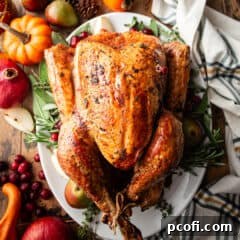
Maple and Sage Brown Butter Roasted Turkey
This Thanksgiving turkey recipe roasts up so juicy, with a bronzed, crisp skin glazed with sweet, seasonal maple and sage brown butter.
Leave a Review
Ingredients
- 1/2 cup (113.5 g) unsalted butter
- 6 (0.6 g) fresh sage leaves
- 2 tablespoons (40 g) maple syrup
- 1 1/2 teaspoons (9 g) kosher salt
- 1/2 teaspoon (1 g) ground black pepper
- 18 pound (8.16 kg) turkey, fresh or thawed
Instructions
To Make the Maple and Sage Brown Butter Glaze
- Place the butter in a small, light-colored skillet over medium-low heat.
- Allow the butter to melt, then bubble and boil.
- Continue to cook the butter, swirling the pan occasionally, as it bubbles down to a simmer.
- Watch carefully as the butter becomes foamy and the milk solids begin to brown.
- When the butter takes on a nutty, amber color, toss in the sage leaves (be careful, they will sizzle and spit).
- Immediately pour the sage brown butter from the skillet into a heat-safe bowl to halt the cooking process, and vigorously whisk in the maple syrup, salt, and pepper.
To Cook the Turkey
- Preheat the oven to 325 degrees F.
- Remove the giblets from both cavities of the turkey, tuck the wing tips behind the bird, and tie the ankles together with kitchen string.
- Place the bird in a roasting pan, and brush it with about half the glaze.
- Cook until the juices run clear (not pink) and the thigh meat registers an internal temperature of 165 degrees F, basting with the glaze every 30 minutes (approx. 2 1/2 to 3 hours total for an 18-pound turkey).*
- Allow the turkey to rest for 1 hour at room temperature before carving.
Notes
*If at any point the bird is starting to become too brown, cover that area loosely with foil.
Nutrition Information
Calories: 68 kcal,
Carbohydrates: 0.01 g,
Protein: 0.1 g,
Fat: 8 g,
Saturated Fat: 5 g,
Polyunsaturated Fat: 0.3 g,
Monounsaturated Fat: 2 g,
Trans Fat: 0.3 g,
Cholesterol: 20 mg,
Sodium: 1 mg,
Potassium: 2 mg,
Sugar: 0.01 g,
Vitamin A: 236 IU,
Calcium: 2 mg,
Iron: 0.002 mg
Course: Main Course
Tried this recipe?
Mention @bakingamoment on Instagram or tag #bakingamoment.