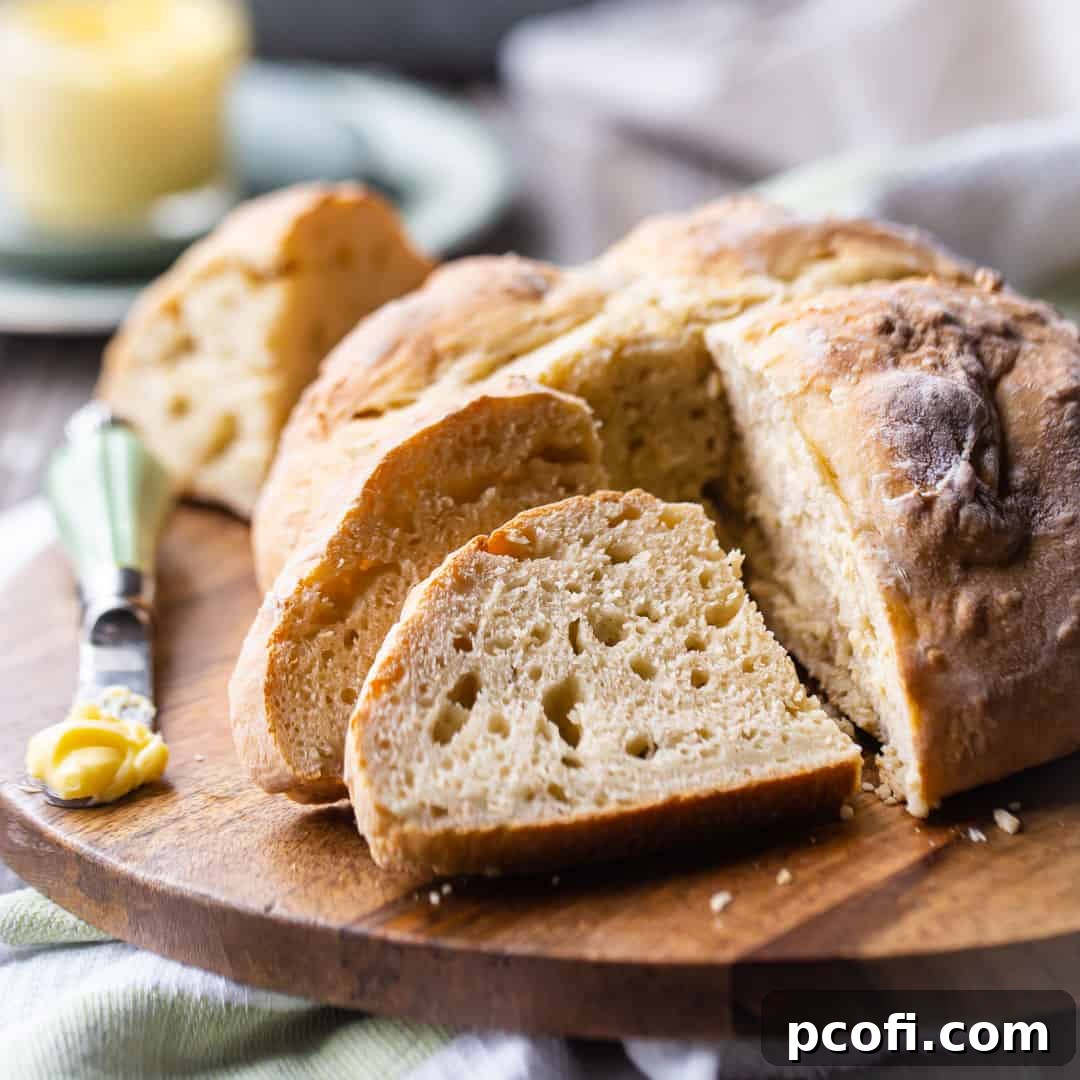
Irish Soda Bread stands as a testament to the beauty of simplicity in baking. This cherished recipe requires no yeast, no extensive kneading, and absolutely no rising time, yet it consistently delivers a stunning, crusty loaf. Imagine the aroma of freshly baked bread filling your kitchen, ready to be sliced and savored while still warm. This is the authentic, classic Irish Soda Bread experience, meticulously crafted with just a handful of fundamental ingredients. Each loaf boasts a beautifully golden, rustic crust that encases a wonderfully soft, tender interior, all imbued with the characteristic tangy flavor derived from genuine buttermilk. It’s a culinary journey back to the heart of traditional Irish kitchens, bringing a piece of heritage directly to your table.
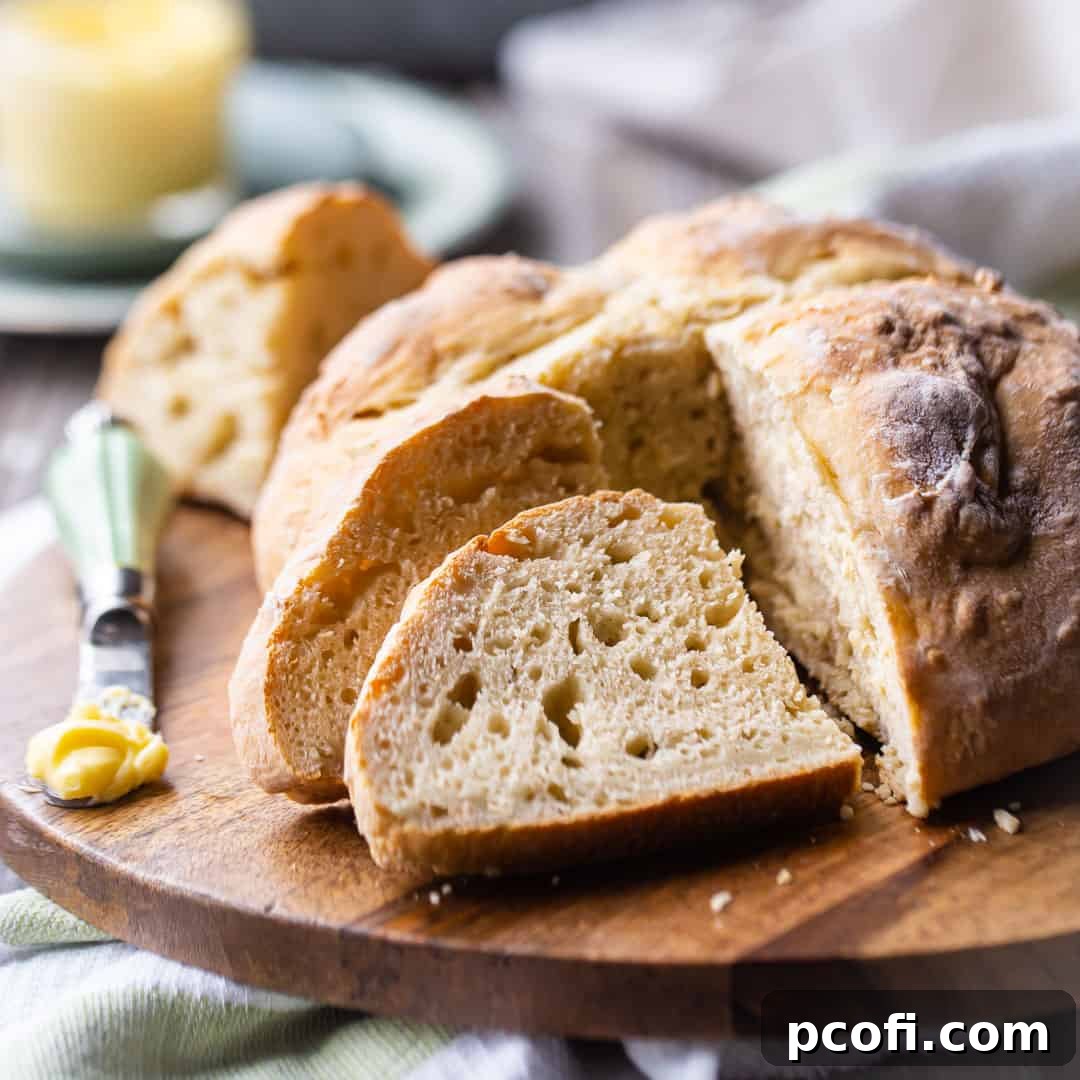
Table of Contents
- The Essence of Irish Soda Bread
- Why This Authentic Recipe Will Become a Favorite
- Essential Ingredients for the Perfect Loaf
- Step-by-Step Guide to Irish Soda Bread
- Expert Tips for a Flawless Irish Soda Bread
- Serving Suggestions and Delicious Variations
- Frequently Asked Questions About Irish Soda Bread
- Explore More Irish-Inspired Recipes
Jump to Recipe
The Essence of Irish Soda Bread
My recent travels to Ireland were nothing short of magical, a true highlight being the opportunity to immerse myself in the rich traditions of Irish baking directly from the masters. It brings me immense joy to share this authentic Irish soda bread recipe with you, a culinary gem that embodies the spirit and simplicity of traditional Irish fare.
While I also enjoy crafting festive treats for occasions like St. Patrick’s Day—such as my Shamrock Shake Macarons, whimsical Pot of Gold Cupcakes, or vibrant Rainbow Fruity Pebble Cake—today’s focus is on something truly rooted in Irish heritage. This recipe captures that authentic Irish vibe perfectly, a testament to its humble origins and enduring appeal.
The knowledge I gained came from the renowned Ballymaloe Cookery School in Cork, Ireland. Visiting Ballymaloe has always been a dream of mine, and experiencing it firsthand was truly a “pinch-me” moment that transcended expectations. It felt like a dream realized to learn the art of genuine Irish baking from none other than the legendary Darina Allen herself. Such an incredible privilege and an unforgettable learning experience!
Darina emphasized that soda bread is incredibly straightforward, requiring only four basic ingredients and coming together in a matter of minutes. If you find yourself yearning for the comforting taste of homemade bread but lack the time for complex, yeast-based preparations, this recipe is your ideal solution. It’s designed for efficiency without compromising on flavor or texture, making fresh bread accessible to everyone.
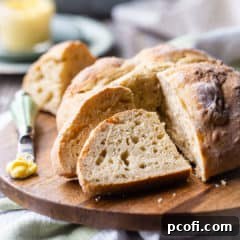
This soda bread bakes up with a delightfully crusty exterior that gives way to a soft, fluffy, and tender interior. The flavor profile is wonderfully simple, yet perfectly balanced—a pure expression of its core ingredients. It’s versatile enough to be enjoyed on its own or enhanced with various add-ins, which we’ll explore later. As is, it forms a perfect loaf that you’ll love to pair with rich, authentic Irish butter for breakfast, or serve as a versatile appetizer or side dish with any meal, elevating your dining experience with its rustic charm.
For those curious to see more of my journey through Ireland and the culinary inspirations I gathered, be sure to check out the “Ireland” highlight on my Instagram. It offers a glimpse into the landscapes and flavors that shaped this very recipe.
Why This Authentic Recipe Will Become a Favorite
Discover the compelling reasons why this traditional Irish Soda Bread recipe is not just another loaf, but a staple you’ll cherish in your baking repertoire:
- Effortless Simplicity with Only 4 Ingredients: This recipe champions minimalism. With just all-purpose flour, baking soda, salt, and buttermilk, you can create a truly remarkable loaf. These are simple, traditional, and incredibly pantry-friendly ingredients, making it easy to whip up a fresh batch anytime inspiration strikes. The magic lies in the quality of these few components, each playing a vital role in the bread’s distinct character.
- No Yeast, No Waiting, Pure Instant Gratification: Unlike conventional bread making, Irish Soda Bread bypasses the need for yeast, which means no lengthy proofing or rising times. The chemical reaction between baking soda and buttermilk is the secret to its quick lift. This translates to a significantly faster baking process – simply mix the ingredients, lightly shape the dough, and bake. It’s the perfect solution for those moments when you crave fresh, homemade bread without the fuss and extended commitment.
- Irresistible Crusty and Rustic Charm: Prepare to be captivated by its appearance. Each loaf develops a gorgeously golden, wonderfully rustic exterior that offers a satisfying crunch with every bite. This crust beautifully contrasts with the incredibly soft, tender interior crumb. This textural delight is a hallmark of authentic soda bread, providing a comforting and hearty eating experience that appeals to all senses.
- Unmistakably Authentic Flavor Profile: The true heart of traditional Irish Soda Bread lies in its signature tangy flavor, exclusively delivered by real buttermilk. This essential ingredient not only provides the necessary acidity for the baking soda to react and create lift but also imparts a unique depth and tenderness to the crumb that simply cannot be replicated by substitutes. It’s this distinctive tang that elevates the bread, making it genuinely authentic and incredibly delicious.
Essential Ingredients for the Perfect Loaf
The beauty of Irish Soda Bread lies in its humble ingredient list. Each component is critical to achieving the perfect balance of flavor and texture. For precise measurements, please refer to the comprehensive recipe card located at the bottom of this post.
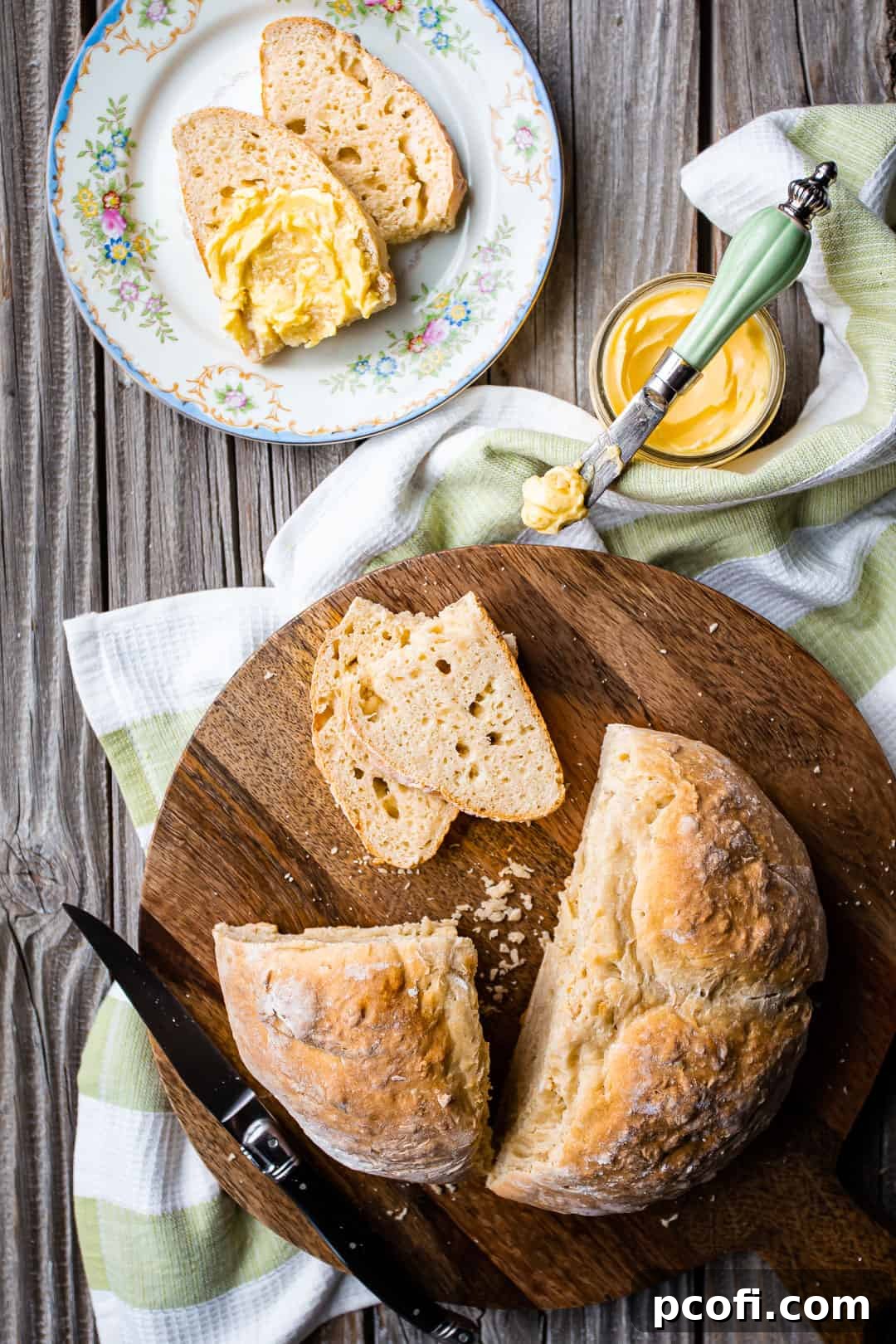
- All-Purpose Flour: This forms the foundational structure of our rustic loaf. For consistent results and to prevent a dense bread, it’s crucial to measure flour correctly. If measuring by volume, always spoon the flour into your measuring cup and then level it off with a straight edge. This technique prevents overpacking and ensures you don’t add too much flour, which can lead to a dry, heavy crumb.
- Kosher Salt: More than just a seasoning, salt is absolutely essential for enhancing and balancing the flavors in your soda bread. It brings out the subtle tang of the buttermilk and the earthy notes of the flour. If you typically use fine-grained table salt, remember to reduce the amount slightly, as it is saltier by volume than kosher salt.
- Baking Soda: This is the primary leavening agent for Irish Soda Bread. Its magic happens when it reacts with the acidity present in the buttermilk, producing carbon dioxide bubbles that cause the bread to rise beautifully and create that characteristic light, airy texture. For the best possible lift and consistent results, always ensure your baking soda is fresh. An old, less potent batch can result in a flatter, denser loaf.
- Buttermilk (Whole Milk Buttermilk if possible): Without a doubt, buttermilk is the star ingredient and the key to crafting truly authentic Irish soda bread. It’s a dual-purpose component: its acidity is vital for activating the baking soda, and its unique properties impart the signature tang, incredible tenderness, and moistness that define this traditional bread. While substitutes exist for other recipes, for classic soda bread, real buttermilk is irreplaceable. If you can find whole milk buttermilk, opt for it – its richer flavor and thicker consistency contribute to an even more superior loaf.
Step-by-Step Guide to Irish Soda Bread
Creating this traditional Irish Soda Bread is a rewarding and straightforward process. Follow these detailed steps to achieve a perfectly crusty and tender loaf every time.
Step 1: Combine Dry Ingredients
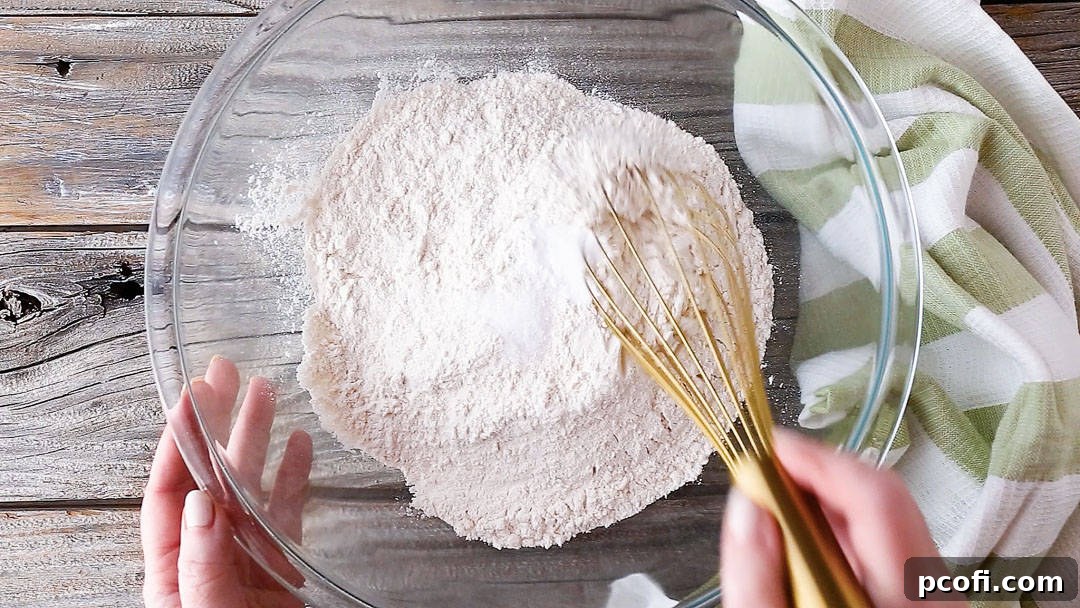
Begin by preparing your dry ingredients. In a large mixing bowl, meticulously whisk together the all-purpose flour, baking soda, and kosher salt. Ensure they are thoroughly combined to distribute the leavening agent and salt evenly throughout the mixture. This initial step is crucial for consistent rising and flavor in your final loaf.
Step 2: Add Buttermilk
Next, introduce the star liquid: buttermilk. Start by pouring in approximately 1 1/4 cups of buttermilk. The exact quantity needed can often vary based on environmental factors like the humidity in your kitchen, which affects flour absorption. Therefore, it’s always best to start with a conservative amount and gradually add more as needed, until the dough reaches the desired consistency. Aim for a sticky, shaggy texture, not a dry one.
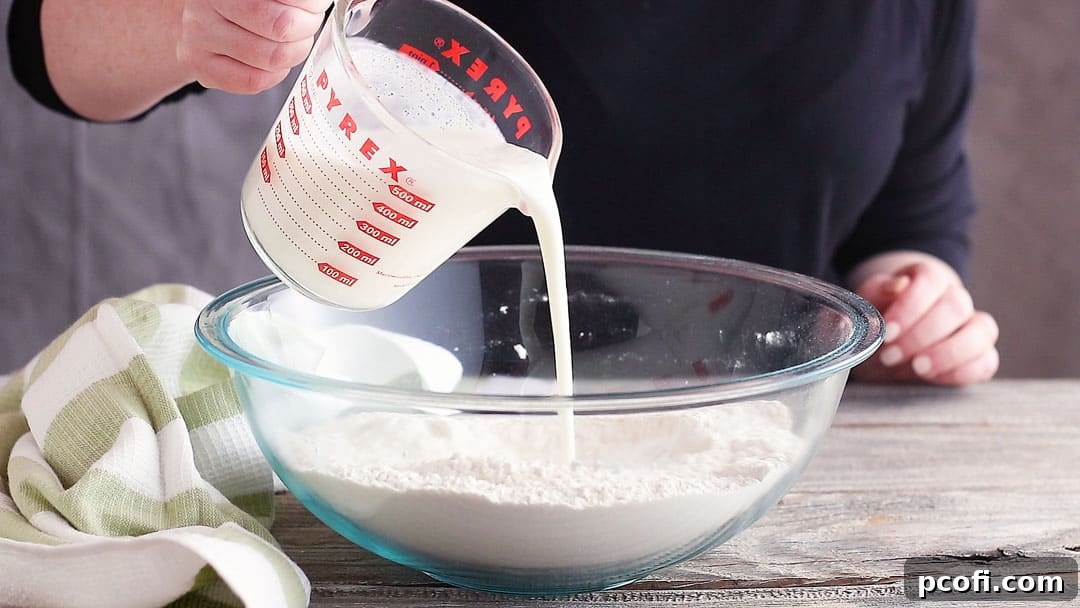
Step 3: Mix With Hands
Once the initial buttermilk has been added, it’s time to get hands-on! Using clean hands, gently begin to mix the dough. This is the traditional method taught by the esteemed chefs at Ballymaloe Cookery School. They instructed us to form a “claw” with our fingers and delicately work the dough by hand. The goal is to bring the ingredients together just until combined, avoiding overworking, which can lead to a tough loaf. The touch of human hands ensures you feel the dough’s evolving texture perfectly.
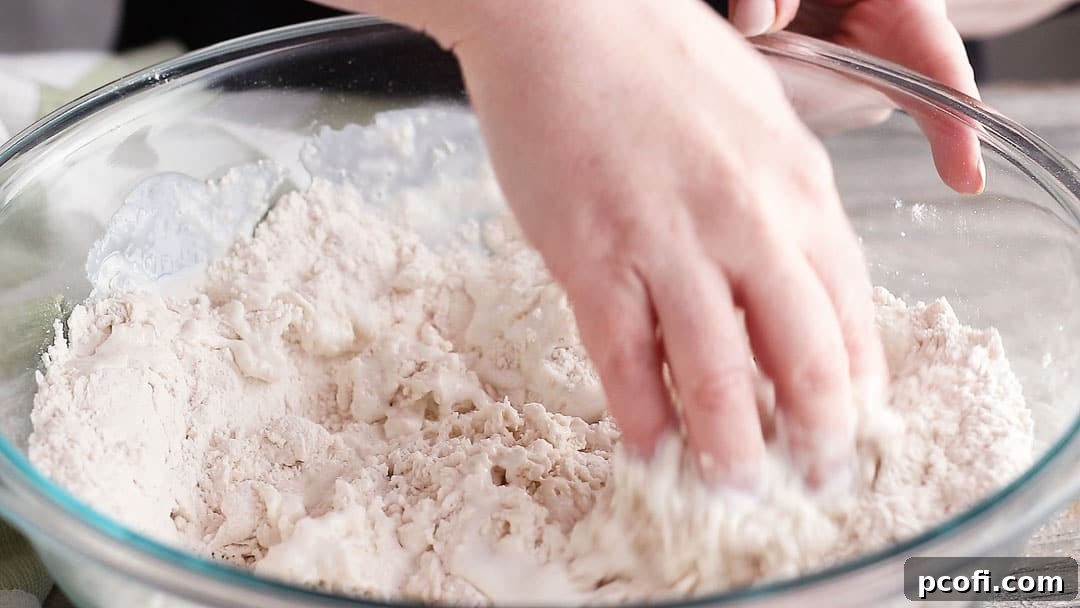
Step 4: Form Sticky Ball
As you mix, observe the dough’s hydration. If it appears excessively dry and crumbly, gradually incorporate additional buttermilk, a tablespoon at a time, until the mixture successfully gathers into a cohesive, large, and slightly sticky ball. A tacky, somewhat shaggy dough is precisely what you’re aiming for – this stickiness is a good indicator of a properly hydrated dough that will result in a tender, moist crumb after baking. Resist the urge to add too much flour at this stage, as it will dry out the bread.
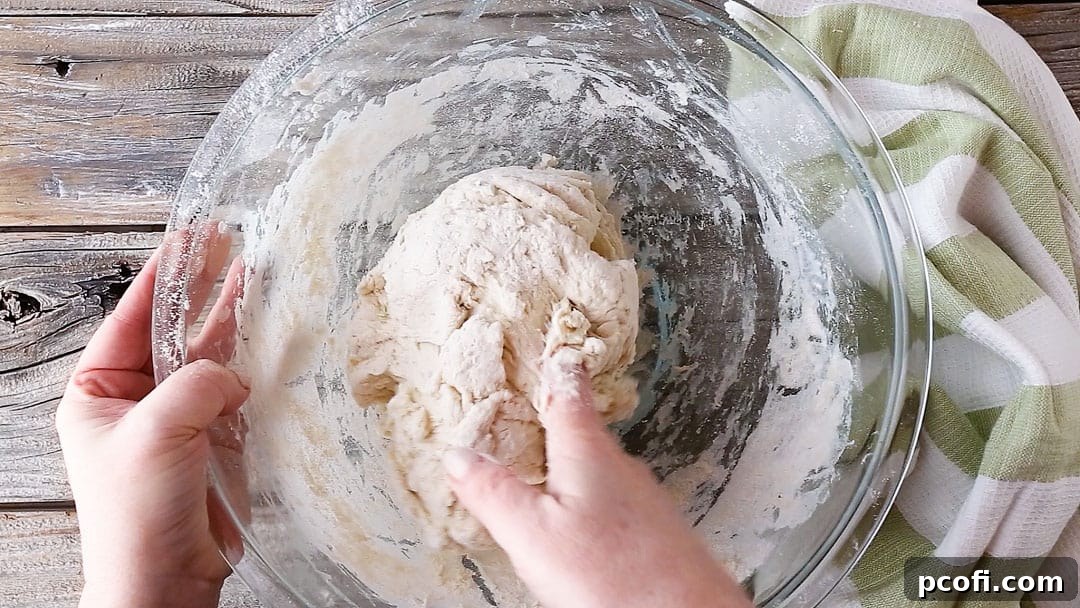
Step 5: Transfer To Baking Sheet
Once your dough has formed into a sticky ball, wash your hands thoroughly. Lightly flour a clean surface or directly transfer the dough onto a prepared baking sheet. A piece of parchment paper on the baking sheet can help prevent sticking and make cleanup easier.
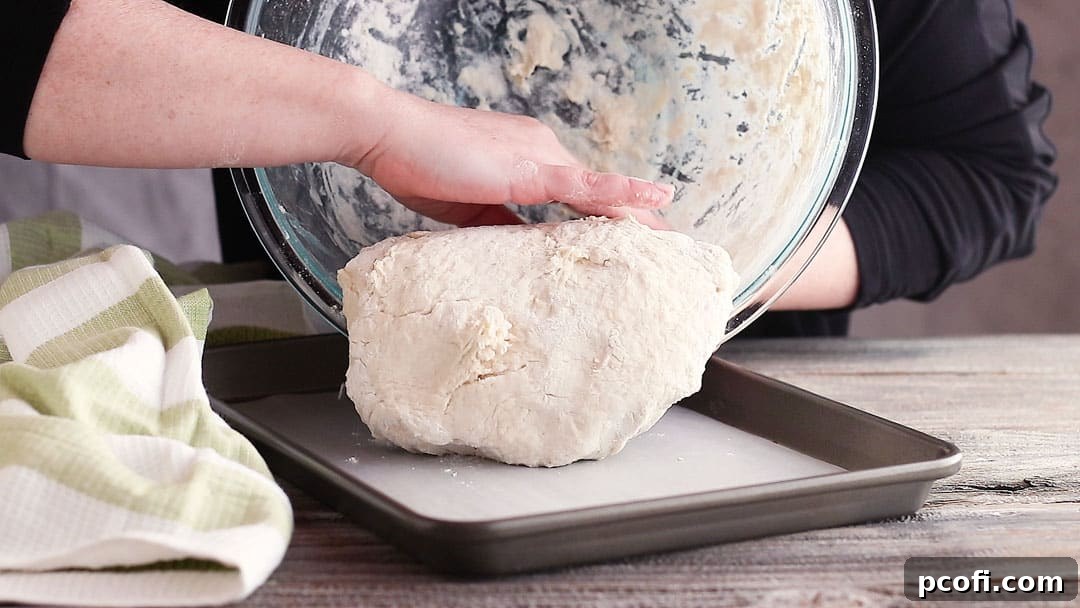
Step 6: Form Disc
Lightly dust your hands with a bit of flour to prevent sticking. Gently pat and shape the dough into a round, flat disc. Aim for a consistent thickness of approximately 1 1/2 inches. This shape is characteristic of traditional Irish Soda Bread and ensures even baking, resulting in that desirable rustic appearance.
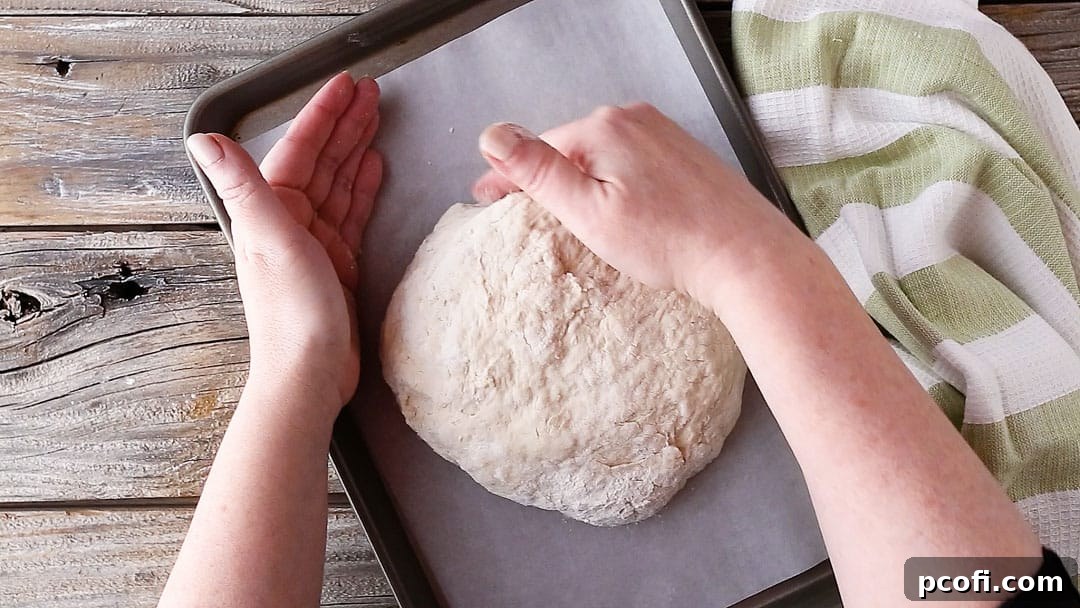
Step 7: Score Bread
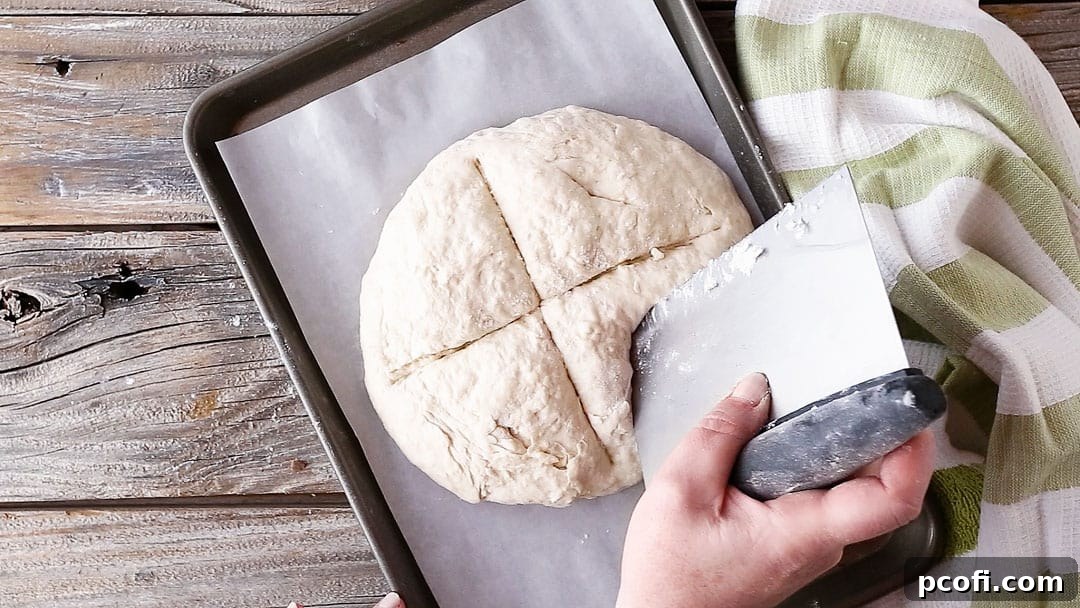
Now for a crucial traditional step: scoring the bread. Lightly flour the blade of a sharp knife. Use the floured knife to carefully score a deep criss-cross pattern across the top of the dough. This traditional practice is not merely decorative; it serves a vital functional purpose by allowing the loaf to expand and rise more evenly in the oven, preventing it from cracking haphazardly and promoting a beautiful, consistent bake.
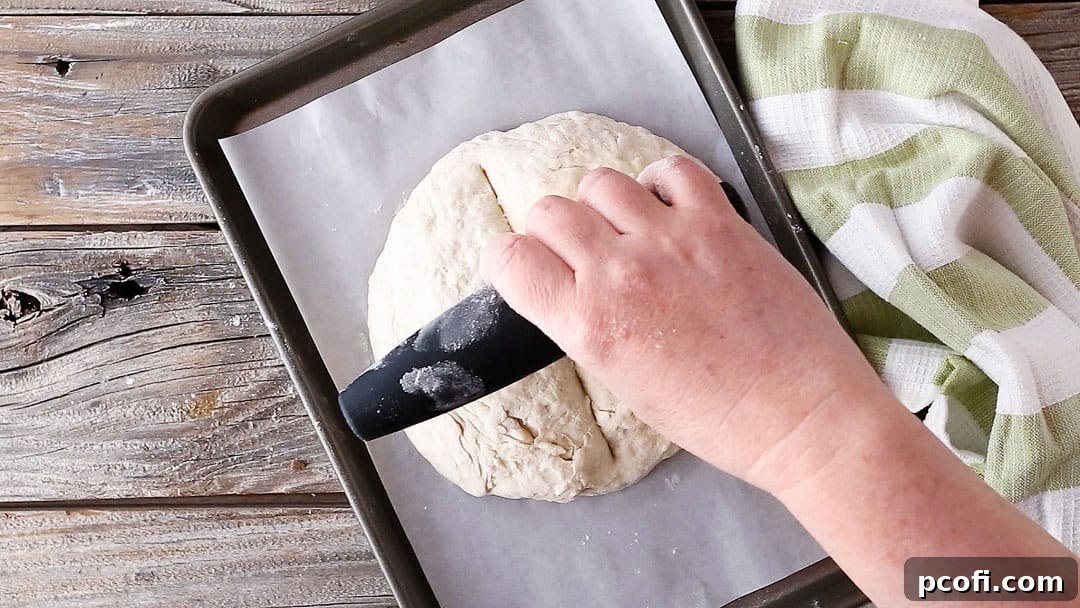
Step 8: Create Slit (Let the Faeries Out!)
Finally, and perhaps most charmingly, use the very tip of your knife to puncture a small slit in the center of each of the four quarters created by your criss-cross score. This step is more than just practical; it carries a delightful piece of Irish folklore! My teacher at Ballymaloe lovingly explained that this is done to “let the faeries out,” ensuring good luck and a perfect bake. While it helps steam escape, this whimsical tradition adds a special touch to the authentic process.
Step 9: Bake
Preheat your oven to an initial very high temperature of 450°F (yes, this is correct and not a typo!). This high initial heat provides a powerful burst, known as oven spring, which helps the bread rise quickly and develop that beautiful, crusty exterior. After this initial phase, reduce the oven temperature to 400°F to allow the loaf to continue baking through to the center without burning the crust. This two-stage baking method is key to achieving a bread that is both wonderfully crusty on the outside and incredibly fluffy on the inside.
You’ll know your soda bread is perfectly baked when its crust is a rich golden brown and firm to the touch. A classic test for doneness is to gently tap the bottom of the loaf with your fingertips; a hollow sound indicates that it’s fully cooked through and ready to be enjoyed.
Expert Tips for a Flawless Irish Soda Bread
Achieving the perfect Irish Soda Bread is simple, but a few expert tips can elevate your baking from good to extraordinary:
- Do Not Overwork the Dough: This is perhaps the most crucial rule for soda bread. Unlike yeast breads that benefit from extensive kneading, soda bread can become tough and dense if overmixed. A few gentle kneads—just enough to bring the ingredients together into a cohesive, shaggy ball—are all that’s needed. Handle the dough as little as possible to maintain its tender crumb.
- Embrace Stickiness: A common mistake is to add too much flour if the dough feels sticky. Resist this urge! A slightly tacky, somewhat shaggy dough is ideal. If your dough is too dry, the resulting loaf will be dense and unappetizing. The stickiness ensures proper hydration and contributes to the bread’s soft, moist interior.
- Fresh Baking Soda is Non-Negotiable: Baking soda is the sole leavening agent in this recipe, doing all the heavy lifting to make your bread rise. If your baking soda has been opened for a long time, its potency might have diminished. For guaranteed lift and the best results, always use a fresh box. You can test its freshness by mixing a teaspoon with a bit of vinegar; if it fizzes vigorously, it’s good to go!
- Allow for Slight Cooling Before Slicing: While the temptation to slice into a warm, fragrant loaf is strong, allowing your Irish soda bread to cool slightly on a wire rack before cutting is beneficial. During this brief cooling period, the bread continues to set and firm up, which helps prevent a gummy crumb and ensures cleaner slices.
- Preheat Your Oven Thoroughly: Ensure your oven is fully preheated to the specified high temperature before introducing the bread. A hot oven is essential for achieving the initial burst of rise (oven spring) and the desirable crispy crust.
- Know Your Oven: Oven temperatures can vary. If your oven tends to run hot or cold, adjust baking times accordingly. An oven thermometer can be a valuable tool for accuracy.
Serving Suggestions and Delicious Variations
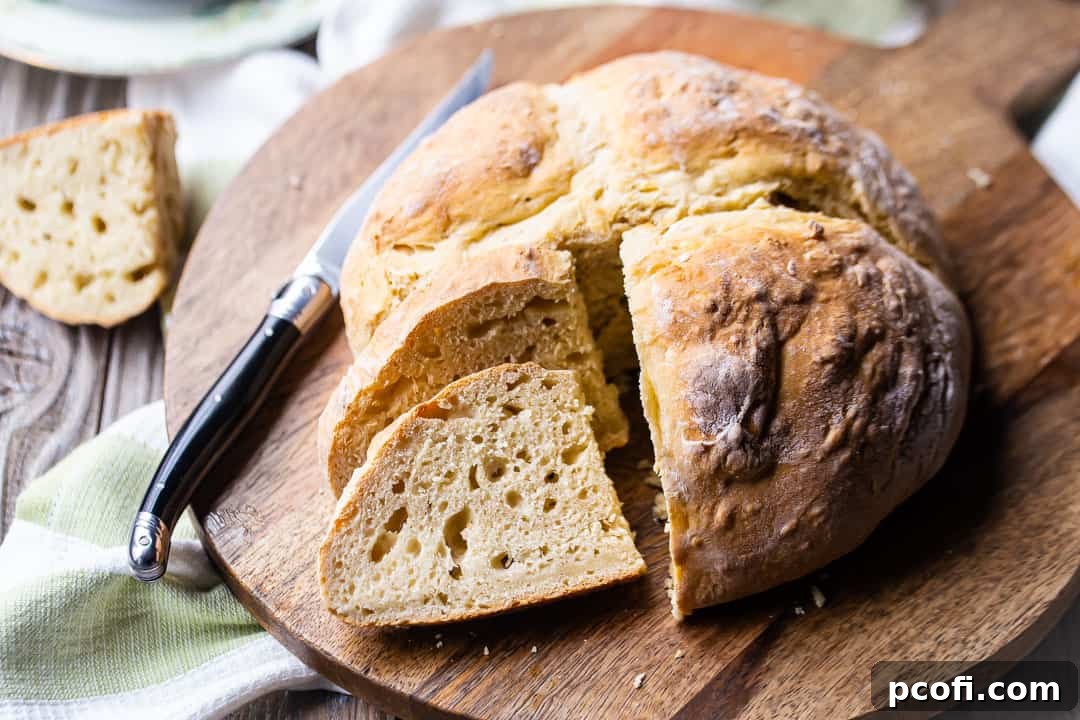
The unparalleled pleasure of warm, homemade bread, fresh from the oven, is truly an experience to cherish. Irish Soda Bread is no exception, and you should feel encouraged to cut into your freshly baked loaf without delay.
My preferred way to enjoy it is in its purest form: simply sliced and generously slathered with rich, imported Irish butter. For an extra touch of sweetness and fruitiness, a dollop of homemade jam makes a perfect accompaniment. Its humble flavor profile also makes it an incredibly versatile canvas for various meal pairings, from hearty stews to light soups, or as a delightful addition to a breakfast spread.
However, the versatility of Irish Soda Bread truly shines when you consider incorporating a few handfuls of mix-ins. You can get as creative as your heart desires! Here are a few popular and delicious ideas to inspire your next batch:
- Sweet Additions: For a classic sweet soda bread, fold in raisins, dried currants, or golden sultanas (also known as golden raisins). These dried fruits add bursts of sweetness and a lovely chewiness, transforming the loaf into a delightful treat perfect for tea time or a sweeter breakfast.
- Savory Enhancements: Elevate your soda bread into a savory delight by mixing in shredded cheese, such as a sharp Irish cheddar for an authentic touch, or a robust Parmesan. You could also incorporate finely chopped fresh herbs like chives, rosemary, or thyme for aromatic depth. Roasted garlic cloves or deeply caramelized onions would add a rich, umami flavor that complements the tang of the buttermilk beautifully.
- Nutty & Seedy Textures: Introduce a satisfying crunch and nutty flavor with various nuts and seeds. Pistachios, walnuts, or pecans offer a hearty texture, while caraway seeds are a traditional Irish choice, imparting a distinctive, subtle anise-like flavor. Sunflower seeds or pumpkin seeds also make wonderful additions, providing both texture and nutritional benefits.
The beauty of Irish Soda Bread lies in its adaptability. Don’t hesitate to experiment with combinations that appeal to your palate. Whether sweet or savory, the fundamental recipe provides a sturdy and delicious base for endless culinary exploration!
Frequently Asked Questions About Irish Soda Bread
For authentic Irish Soda Bread, I firmly believe there is truly no substitute that rivals the quality and flavor of real buttermilk. While you might encounter suggestions for souring regular milk by adding lemon juice or white vinegar, in my extensive baking experience, these substitutes typically perform well only in recipes where a multitude of other ingredients (like in a rich chocolate cake, for example) can mask or complement their subtle differences. In a recipe as pure and simple as this, comprising only four core ingredients, buttermilk takes on a significantly more critical role in defining the bread’s characteristic tang, tender crumb, and overall structure. It’s absolutely worth the effort to seek out genuine buttermilk if your goal is to achieve the truly traditional taste and texture of this beloved Irish loaf. Furthermore, if you can procure whole milk buttermilk, by all means do so. Its thicker consistency and richer flavor contribute to an even more superior and satisfying result. I often find it readily available in the dairy section of most well-stocked supermarkets.
While the unparalleled freshness of warm, straight-from-the-oven Irish Soda Bread is undeniably the best experience, this bread can certainly be prepared a few days ahead of time if necessary. Given its rapid preparation time, you might not often find yourself needing to make it significantly in advance. However, for planning purposes or convenience, a baked loaf will maintain its quality for approximately 4 to 5 days when stored at room temperature. The key to preserving its freshness and preventing it from becoming stale or dried out is to wrap it tightly in plastic wrap or store it in an airtight container. If you wish to serve it warm after storing, Irish soda bread can be gently re-warmed in a low oven, around 170°F (77°C). For best results, wrap the loaf in aluminum foil before heating it gently until it is warmed through, which helps to retain its moisture.
Yes, Irish Soda Bread freezes remarkably well, making it an excellent option for meal prepping or simply having a homemade loaf on hand whenever a craving strikes. To freeze, ensure the baked bread has cooled completely to room temperature. Then, wrap the entire loaf tightly, first in plastic wrap, followed by a layer of aluminum foil, or slip it into a durable freezer bag. Properly wrapped, it can be stored in the freezer for several months without significant loss of quality. When you’re ready to enjoy it, simply thaw the bread at room temperature, then reheat it gently in a low oven (as noted in the previous FAQ) until it is warmed through. This method allows you to enjoy the fresh taste of homemade Irish Soda Bread with minimal effort whenever you desire.
Explore More Irish-Inspired Recipes
If you’ve fallen in love with the rustic charm of Irish Soda Bread, you’ll be delighted to explore more traditional and inspired Irish recipes. These selections promise to bring the warmth and comfort of Irish cuisine right into your home:
- Irish Apple Cake with Whiskey Hard Sauce: A delightful dessert featuring tender apples baked into a moist cake, traditionally served with a rich whiskey-infused sauce.
- Hot Buttered Jamie: A comforting and warming drink, perfect for chilly evenings, often infused with spices and a touch of something special.
- Chocolate Stout Mini-Bundt Cakes with Irish Whiskey Hard Sauce: Indulgent mini cakes made with dark stout beer, offering a deep chocolate flavor, elegantly paired with a luxurious Irish whiskey sauce.
- Irish Apple Amber: A classic Irish dessert, featuring a sweet and tangy apple filling crowned with a delicate, meringue-like topping.
Each of these recipes offers a unique taste of Ireland, perfect for celebrations, cozy evenings, or simply indulging in a bit of culinary adventure.
Authentic Irish Soda Bread
Leave a Review
Ingredients
- 4 cups (500 g) all-purpose flour
- 3/4 teaspoon (1/2 teaspoon) kosher salt
- 1/2 teaspoon baking soda
- 1 1/2 cups (354.88 ml) buttermilk*, (you may need as much as 2 cups)
Instructions
-
Preheat the oven to 450 degrees F (232°C). Ensure the oven is fully preheated for proper oven spring.
-
In a large bowl, combine the flour, salt, and baking soda. Whisk them thoroughly to ensure all dry ingredients are evenly distributed.
-
Gradually add about 1 1/4 cups of the buttermilk to the flour mixture. Using clean hands, gently work the liquid into the dry ingredients until a shaggy dough begins to form. Avoid overmixing.
-
If the dough still seems too dry or isn’t coming together, add more buttermilk, one tablespoon at a time, until a slightly sticky dough is formed. The dough should be cohesive but still quite soft and somewhat shaggy.
-
Lightly knead the dough a few times on a floured surface or directly in the bowl (being careful not to overwork it). Transfer it to a baking sheet lined with parchment paper and gently pat it into a round disc, about 1 1/2-inches thick.
-
Flour the blade of a knife and score the dough in a traditional criss-cross pattern, cutting about halfway through the loaf. Then, use the tip of the floured knife to puncture a small slit in the center of each of the four quarters.
-
Bake the soda bread for 15 minutes at 450 degrees F (232°C). This high heat creates the initial rise and crust. After 15 minutes, reduce the oven temperature to 400 degrees F (200°C) and continue to bake for another 25 minutes.
-
To ensure an even crust on all sides, carefully turn the bread upside down on the baking sheet and continue to bake at 400 degrees F (200°C) for an additional 5 minutes.
-
The bread is done when it’s beautifully golden brown and crusty. To confirm, tap the bottom of the loaf with your fingertips; it should produce a hollow sound, indicating it’s fully cooked through. Transfer to a wire rack to cool slightly before slicing.