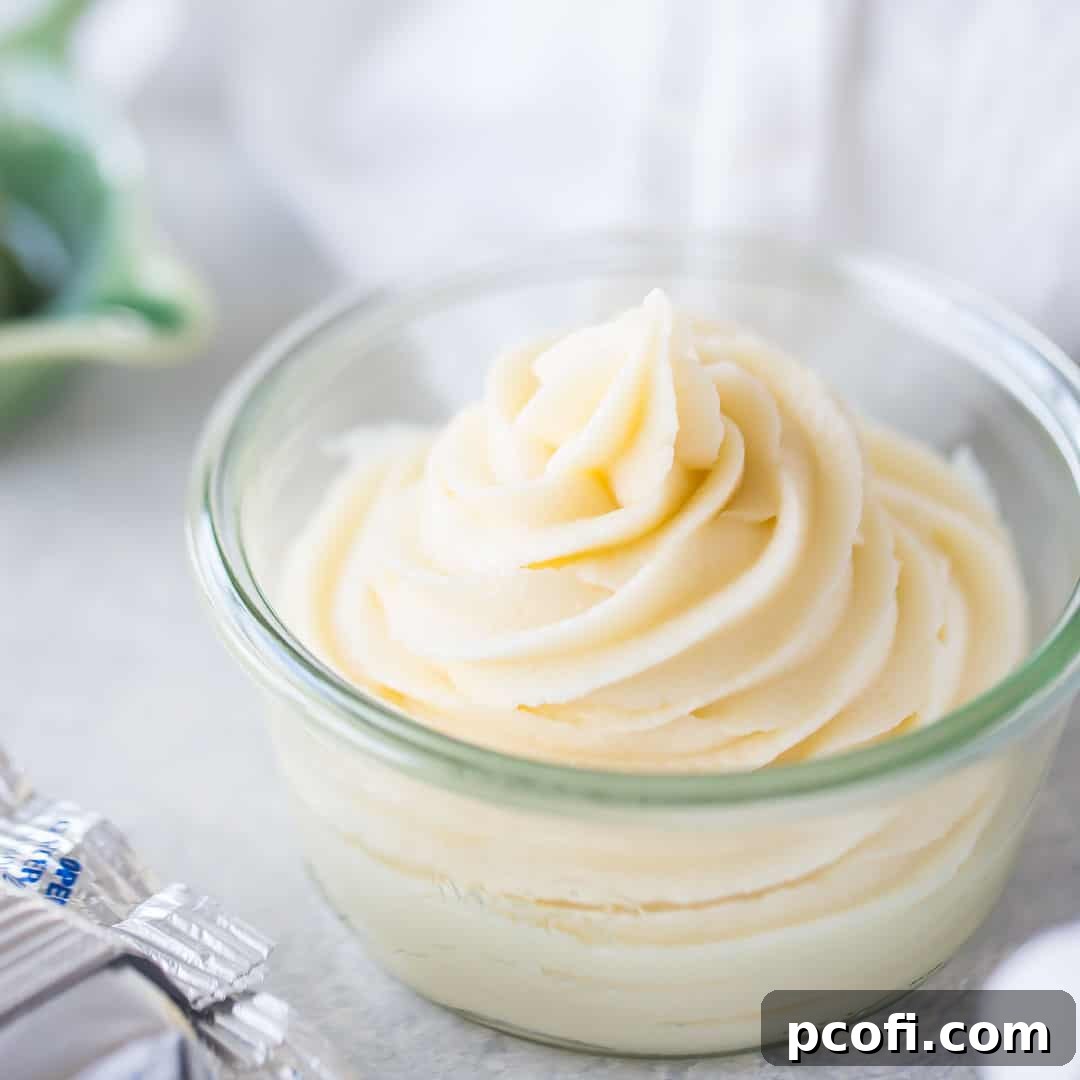
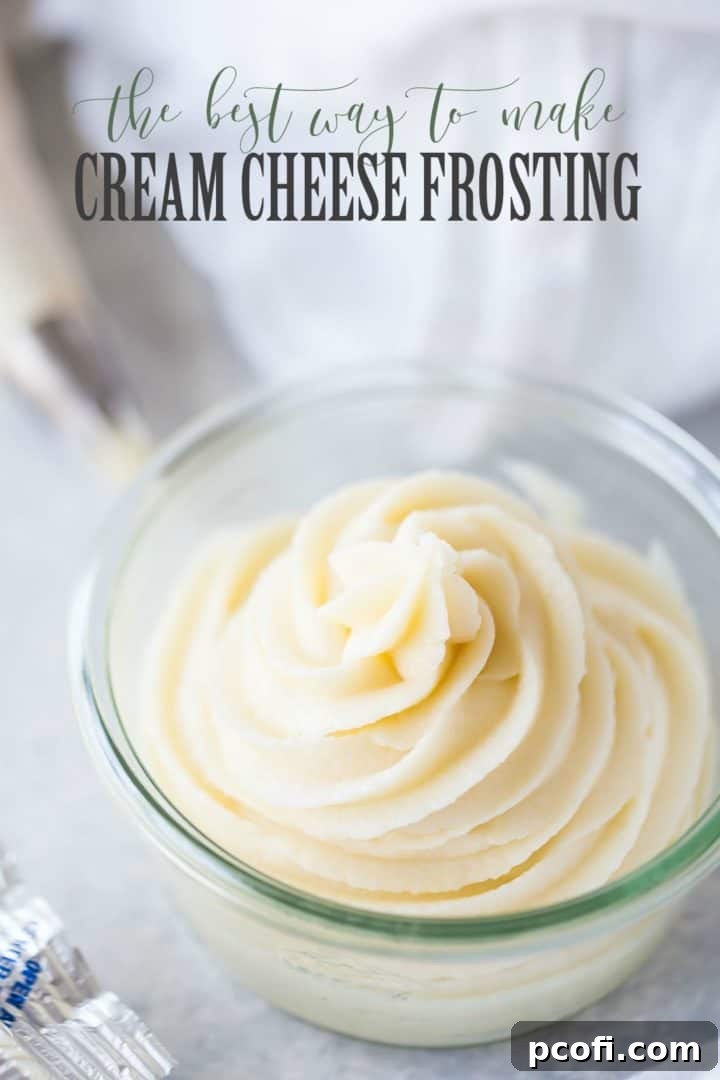
Unlock the secrets to crafting a truly irresistible cream cheese frosting that is not only incredibly delicious and tangy but also boasts a thick, fluffy, and perfectly stable consistency, making it ideal for beautiful piping and decorating!
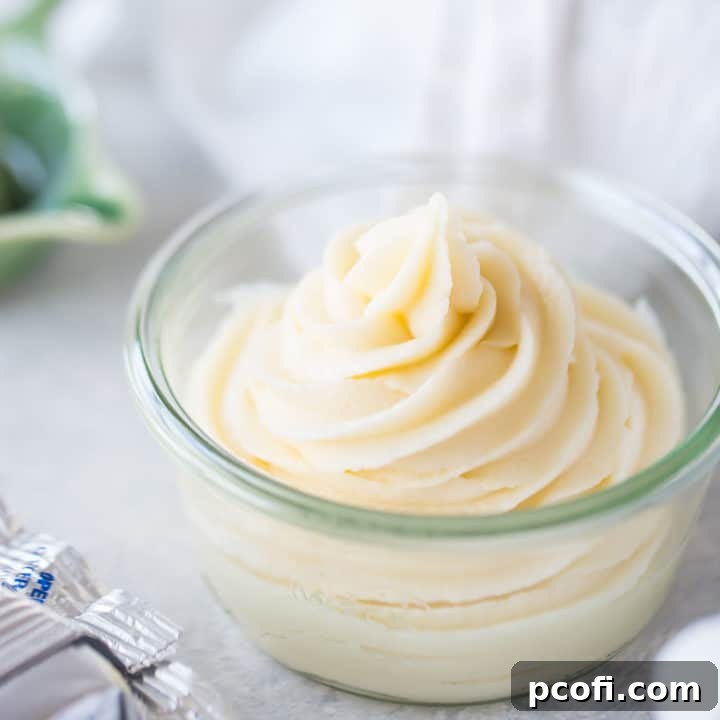
Table of Contents
- Mastering the Art of Cream Cheese Frosting
- Why This Cream Cheese Frosting Recipe is a Game-Changer
- Essential Ingredients for Perfect Frosting
- Butter
- Cream Cheese
- Lemon Juice
- Vanilla Extract
- Powdered Sugar
- Salt
- Key Equipment
- Step-by-Step Guide: How to Make Cream Cheese Frosting
- Step 1: Creaming the Base
- Step 2: Incorporating the Sweetness
- Step 3: Whipping to Fluffy Perfection
- Expert Tips for Flawless Cream Cheese Frosting
- Choose the Right Cream Cheese
- Ingredient Temperature Matters
- The Power of the Whisk Attachment
- Avoid Over-Whipping
- Frequently Asked Questions About Cream Cheese Frosting
- Creative Ways to Use Your Cream Cheese Frosting
- Tinting for Vibrant Colors
- A Smooth Base for Fondant
- Piping Perfection
- Storage and Shelf Life of Cream Cheese Frosting
Jump to Recipe
Mastering the Art of Cream Cheese Frosting
Hello, fellow baking enthusiasts! Today, we’re diving deep into the delightful world of cream cheese frosting – a topping that, while notoriously tricky, is utterly indispensable for so many beloved desserts. From the classic tangy flavor to its rich, creamy texture, nothing quite compares. While I’ve shared many fantastic frosting and filling recipes before, such as my decadent chocolate Swiss meringue buttercream, a velvety pastry cream, and zesty lemon curd, there are moments when only the distinct taste of cream cheese frosting will do.
This heavenly frosting is the ultimate companion for treats like fluffy red velvet cupcakes, moist hummingbird cake, comforting pumpkin cake, and any dessert featuring the warm spice of cinnamon. The unique balance of sweetness and tanginess elevates these desserts to a whole new level of deliciousness.
For years, I faced the common challenge of making cream cheese frosting that was consistently fluffy, stiff, and perfect for piping. It can be incredibly frustrating when your frosting turns out runny or soupy, leading to cakes that slip, slide, and even topple over. I’ve experienced my fair share of frosting failures and learned valuable lessons through trial and error. But after much experimentation, I’ve finally mastered the technique. Today, I’m thrilled to share all the insights and expert tips I’ve gathered to ensure your homemade cream cheese frosting is always a triumph, not a disaster!
Why This Cream Cheese Frosting Recipe is a Game-Changer
This recipe isn’t just about making cream cheese frosting; it’s about making the best cream cheese frosting you’ve ever tasted – one that’s reliable, beautiful, and utterly delectable. Here’s why you’ll absolutely adore it:
- Unforgettable Creamy and Tangy Flavor: This frosting delivers a perfect harmony of creamy sweetness and a distinct, refreshing tanginess that cuts through rich desserts. It’s a flavor profile that stands out and complements a wide array of baked goods, leaving a memorable impression.
- Luxuriously Smooth and Luscious Texture: Achieving the ideal texture is paramount, and this recipe guarantees a frosting that is incredibly smooth and easy to spread. It adds a velvety finish to cakes, cupcakes, and cookies, enhancing their overall mouthfeel and making every bite a delight.
- Incredibly Versatile and Complementary: One of the greatest strengths of this cream cheese frosting is its versatility. It pairs beautifully with a vast spectrum of flavors, making it a go-to for countless desserts. Whether it’s classic vanilla, decadent chocolate, wholesome carrot, vibrant red velvet, or earthy pumpkin, this frosting adds an extra layer of richness and depth to any treat.
- Lighter and Less Sweet Than Traditional Frostings: For those who find traditional buttercreams overly sweet, this cream cheese frosting is a refreshing alternative. The natural tang of the cream cheese balances the sugar, resulting in a frosting that feels lighter and allows the true flavors of your dessert to shine without being overshadowed by excessive sweetness.
- Stable and Pipeable for Professional Results: Many struggle with runny cream cheese frosting, especially when aiming for intricate decorations. This recipe focuses on achieving a stiff, stable consistency that holds its shape beautifully. You can confidently pipe elegant swirls on cupcakes or create smooth, level layers on cakes, achieving professional-looking results every time.
Essential Ingredients for Perfect Frosting
Each ingredient in this recipe plays a crucial role in achieving the perfect texture and flavor for your cream cheese frosting. Understanding their importance and how to best prepare them will guarantee exceptional results.
Butter
I always recommend using unsalted butter for this recipe. This allows you complete control over the salt content, which can vary significantly between different butter brands. By adding salt separately, you ensure a consistent and perfectly balanced flavor profile every time. For the best results, it’s essential to bring your butter to a proper room temperature. This softens it just enough to cream beautifully with the other ingredients without melting. You can achieve this by leaving it on the counter for a few hours, or if you’re short on time, microwave it for 10 seconds, flip it over, and microwave for another 8 seconds until softened but not melted.
Cream Cheese
The star of the show, cream cheese, is where many go wrong. For this recipe, it’s crucial to use cold cream cheese, taken straight from the refrigerator. Furthermore, always opt for full-fat cream cheese that comes in a brick, not the spreadable kind found in a tub. Tub cream cheese typically has a higher water content and is softer, which can lead to a runny, unstable frosting. The higher fat content in brick cream cheese is essential for achieving the necessary stiffness and fluffiness when whipped.
Lemon Juice
A secret weapon for enhancing flavor, a touch of lemon juice “lifts” the overall taste of the frosting. It significantly brightens the inherent tanginess of the cream cheese without making the frosting overtly lemony. The subtle citrus note adds a fresh dimension that balances the sweetness and richness, making the frosting even more irresistible.
Vanilla Extract
Vanilla extract is a fundamental flavor enhancer in almost any sweet recipe. In cream cheese frosting, it adds a warm, sweet aroma and a depth of flavor that complements the tanginess of the cream cheese beautifully. Use a good quality vanilla extract for the best possible taste.
Powdered Sugar
Also known as confectioners’ sugar or icing sugar, powdered sugar is vital for both sweetness and structure. Its fine texture dissolves easily, ensuring a smooth frosting without any grittiness. Crucially, powdered sugar also contains a small amount of cornstarch, which acts as a stabilizer, helping the frosting hold its shape and preventing it from becoming too soft or runny.
Salt
Often overlooked in sweet recipes, salt is a flavor multiplier. A small pinch of salt in this frosting doesn’t make it taste salty; instead, it sharpens and intensifies all the other flavors, making them pop. I prefer kosher salt because it has a pure flavor without any additives that can sometimes be found in regular table salt, which can leave a bitter aftertaste.
Key Equipment
Having the right tools can make all the difference in the ease and success of your frosting creation. While this recipe is straightforward, a good mixer is your best friend.
- Stand Mixer: A stand mixer fitted with the whisk attachment makes this recipe exceptionally easy. The powerful motor and consistent whipping action are perfect for incorporating air and achieving that light, fluffy texture.
- Electric Hand Mixer: If you don’t own a stand mixer, an electric hand mixer paired with a large mixing bowl will work just as effectively. Be prepared to hold it for a few minutes as you whip, ensuring all ingredients are thoroughly combined and aerated.
- Rubber Spatula: A good quality silicone spatula is indispensable for scraping down the sides and bottom of your mixing bowl, ensuring all ingredients are evenly incorporated and preventing lumps.
Step-by-Step Guide: How to Make Cream Cheese Frosting
Crafting this perfect cream cheese frosting is remarkably simple, breaking down into just three straightforward steps. Follow these instructions carefully for a smooth, stable, and utterly delicious result.
Step 1: Creaming the Base
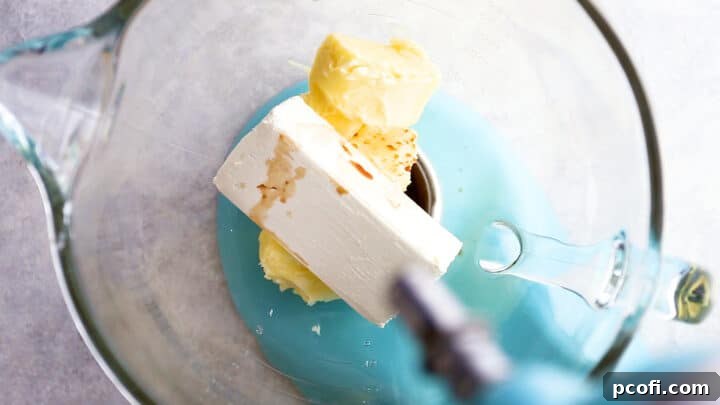
Begin by combining your essential ingredients: the softened, room-temperature butter, cold cream cheese (straight from the fridge is key!), lemon juice, and vanilla extract. Place them all into a large mixing bowl. Using your stand mixer with the whisk attachment (or an electric hand mixer), beat these ingredients together on medium-low speed. The goal here is to achieve a perfectly smooth, lump-free mixture. This initial creaming stage is crucial; any lumps missed now will be incredibly difficult to eliminate later once the powdered sugar is added. Ensure you scrape down the sides of the bowl frequently with a silicone spatula to incorporate everything evenly.
Step 2: Incorporating the Sweetness
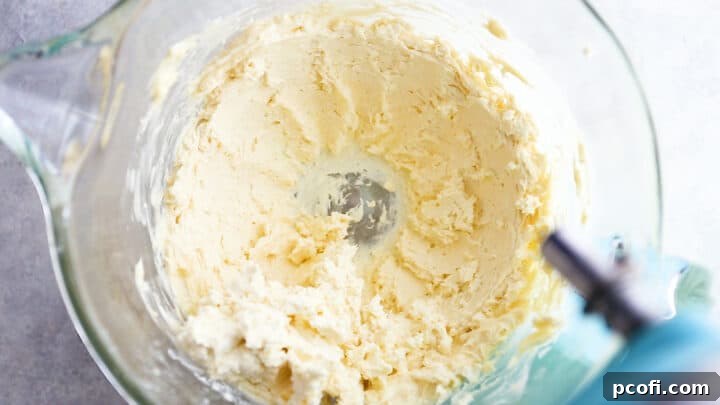
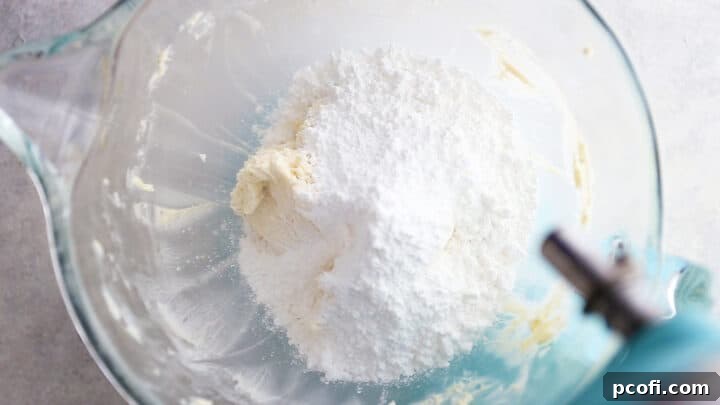
Once your butter and cream cheese mixture is completely smooth, it’s time to introduce the powdered sugar. Add approximately half of the total powdered sugar to the bowl. Mix it in on a medium-low speed until it is just combined and no dry streaks of sugar remain. After this initial incorporation, stop the mixer and thoroughly scrape down the bottom and sides of the bowl with your silicone spatula. This ensures that all the butter and cream cheese are mixed with the sugar. Then, add the remaining powdered sugar and the kosher salt to the bowl.
Step 3: Whipping to Fluffy Perfection
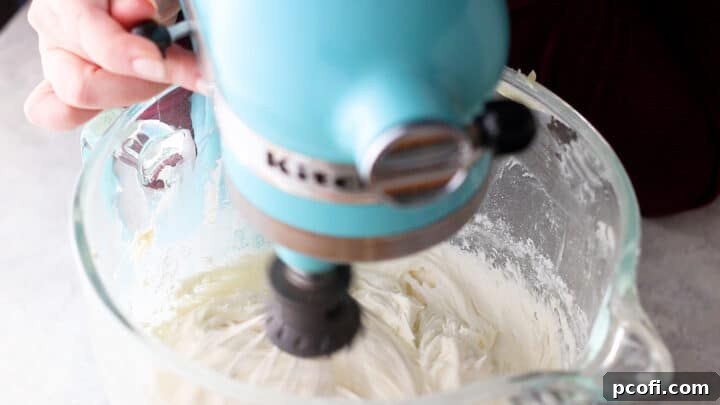
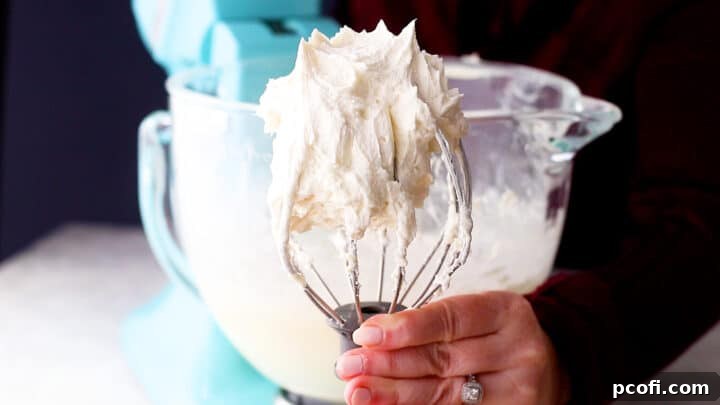
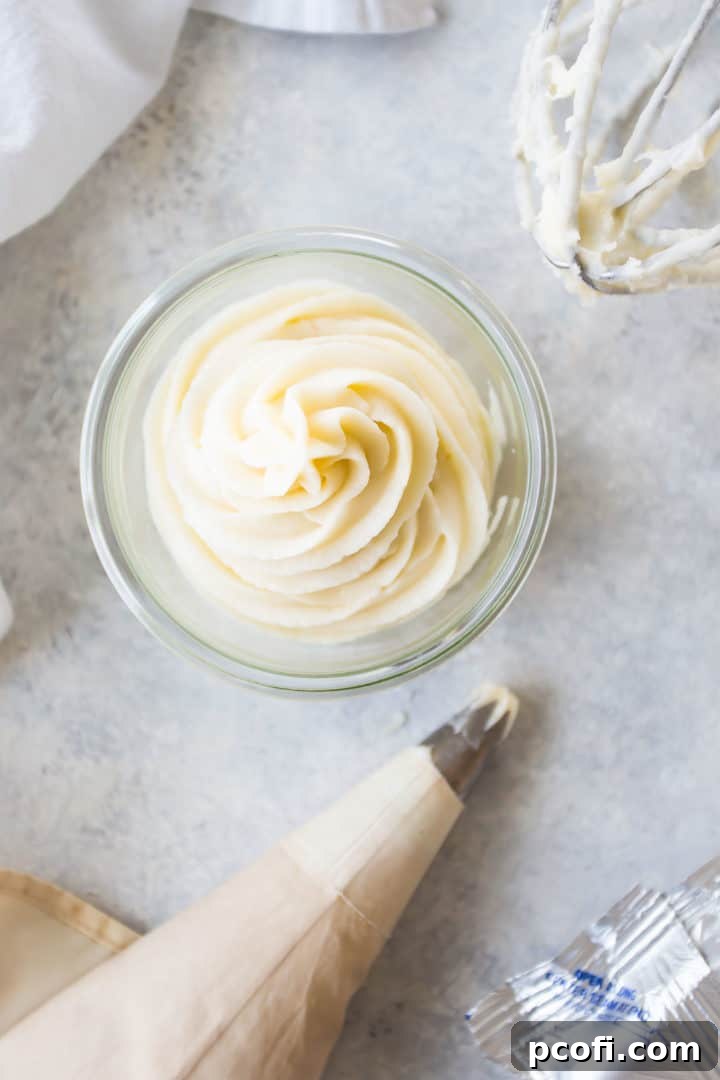
After the last addition of powdered sugar and salt has been combined into the mixture on medium-low speed, it’s time for the final, crucial step. Increase the mixer speed to medium-high. Whip the frosting vigorously until it transforms into a light, airy, and fluffy consistency. You’ll notice it visibly increases in volume and begins to hold stiff peaks. This indicates that it’s perfectly aerated and stable. As soon as you observe these characteristics – fluffy and stiff – immediately turn off the mixer. Over-whipping cream cheese frosting is a common mistake that can cause it to break down and become runny. The moment it reaches the desired texture, it’s ready for immediate use!
Expert Tips for Flawless Cream Cheese Frosting
Making stable and delicious cream cheese frosting can be a bit of an art, and I’ve certainly had my share of challenges over the years. But through extensive experimentation, I’ve gathered some invaluable tips that will help you achieve a perfectly fluffy, stiff, and pipeable frosting every single time. These insights are key to avoiding common pitfalls and ensuring your frosting is a triumph.
Choose the Right Cream Cheese
This is perhaps the most critical factor for a successful cream cheese frosting. In the US, cream cheese comes in various forms: bricks, spreads in tubs, and whipped spreads. For a truly stable and thick frosting, always opt for the cream cheese sold in a brick. Brick cream cheese has the lowest water content, which is essential for preventing a soupy or runny consistency. Spreads in tubs are softer and contain more moisture, making them unsuitable for sturdy frosting. If you live outside the US and brick cream cheese is unavailable, you might find it challenging to achieve the exact same results, as tub cream cheese variations can differ widely.
Ingredient Temperature Matters
The temperature of your ingredients is paramount. I consistently achieve the best results by using butter that is softened to a perfect room temperature, combined with cream cheese that is cold, taken directly from the refrigerator. If your butter is too cold, it won’t cream smoothly, leading to a lumpy frosting. Conversely, if your cream cheese is too soft or at room temperature, the frosting will likely turn out runny and lack the necessary structure for piping. This precise temperature contrast is key to the frosting’s final consistency.
The Power of the Whisk Attachment
When using a stand mixer, the choice of attachment makes a significant difference. I’ve found that the whisk attachment is far superior for cream cheese frosting compared to the paddle attachment. The whisk incorporates much more air into the mixture, creating that desirable light, fluffy, and stiff texture. The paddle attachment, on the other hand, often results in a looser, more soupy frosting that lacks volume and stability. Don’t underestimate the power of the whisk!
Avoid Over-Whipping
Cream cheese frosting is sensitive to over-whipping, which can quickly transform it from perfectly fluffy to a runny, broken mess. The moment you see your frosting become light, voluminous, and capable of holding stiff peaks, turn off your mixer immediately. Prolonged whipping can cause the cream cheese to break down, releasing its moisture and losing its emulsified structure. Trust your eyes; once it looks right, it is right!
Frequently Asked Questions About Cream Cheese Frosting
Why is my cream cheese frosting lumpy?
A lumpy cream cheese frosting is usually a result of butter that was too cold or not properly softened before mixing. Ensure your butter is at a true room temperature, soft enough to easily indent with your finger but not melted. When you combine the softened butter with the cold cream cheese, lemon juice, and vanilla, beat it thoroughly until the mixture is perfectly smooth before adding any powdered sugar. Any uncreamed butter chunks will create lumps that are nearly impossible to remove later.
Why is my cream cheese frosting runny?
Runny frosting is a common complaint, but it’s entirely preventable! The most frequent culprits are using low-quality cream cheese with high water content or opting for cream cheese from a tub instead of a brick. Always choose full-fat, block-style cream cheese for optimal firmness. Additionally, the type of mixer attachment matters; a whisk attachment incorporates more air and yields a fluffier, stiffer frosting than a paddle attachment. Finally, over-whipping can cause the cream cheese to break down and become watery. As soon as your frosting appears fluffy, light, and capable of holding stiff peaks, turn off your mixer to maintain its perfect consistency.
Can cream cheese frosting be used for decorating?
Absolutely! While cream cheese frosting is generally considered less stable than some other options like Swiss meringue buttercream or American-style buttercream, this specific method ensures it is firm enough for various cake decorating techniques. Its stable texture allows for piping beautiful swirls, borders, and even some intricate designs, making it a versatile choice for enhancing the visual appeal of your baked creations.
Creative Ways to Use Your Cream Cheese Frosting
This delectable cream cheese frosting is incredibly versatile and can elevate nearly any sweet treat. Its rich flavor and pipeable consistency make it perfect for a wide range of applications. Here are just a few ideas to get your creative juices flowing:
- Red Velvet Cake: The classic pairing, a must-try!
- Cinnamon Rolls: A warm, gooey roll topped with this tangy frosting is pure bliss.
- Carrot Cake: The perfect complement to the spiced goodness of carrot cake.
- Sugar Cookies: A flavorful alternative to traditional royal icing or buttercream.
- Banana Bread: Transform a simple banana bread into a dessert delight.
- Lemon Cupcakes: Enhance the citrus notes with a tangy-sweet frosting.
- Brownies: Adds a rich, creamy layer to fudgy brownies.
Tinting for Vibrant Colors
If you wish to add a splash of color to your frosting, it’s entirely possible! To tint this cream cheese frosting, gently stir in a few drops of gel-paste food coloring after the frosting has been fully whipped. Gel-paste colors are highly concentrated and won’t thin out your frosting, which is crucial for maintaining its stable consistency. I strongly advise against using liquid food coloring, as its water base can easily thin the frosting too much, potentially causing it to separate or become runny.
A Smooth Base for Fondant
For those looking to achieve a perfectly smooth finish with fondant, this frosting works wonderfully as an undercoat. Once your cake has been evenly frosted with the cream cheese icing, place it in the refrigerator to chill thoroughly. This cooling period will firm up the frosting, creating a solid, stable base. While the cake chills, prepare your fondant. Then, carefully drape the fondant over the chilled cake, smooth it out for a flawless surface, and trim away any excess. The firm cream cheese layer provides excellent support and a delicious flavor surprise under the fondant.
Piping Perfection
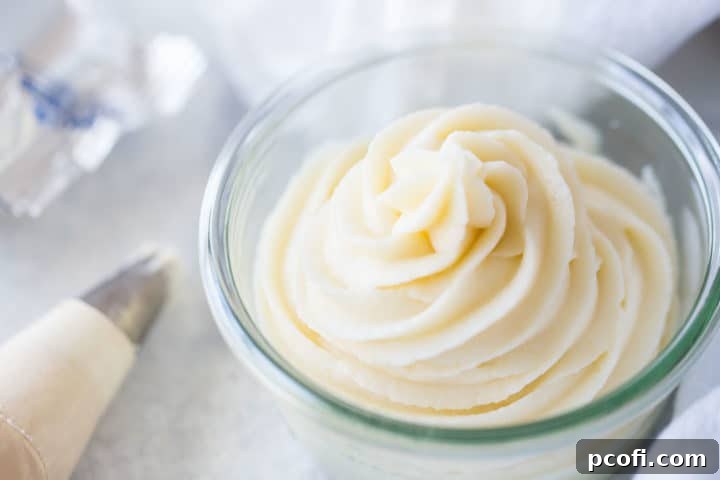
When prepared correctly, this cream cheese frosting is fantastic for piping intricate designs. Its stiffness allows it to hold its shape beautifully, making it ideal for decorative swirls on cupcakes or elegant borders on cakes. However, if you find that the frosting starts to soften during extended piping sessions due to the warmth of your hands, simply place your piping bag (or the bowl of frosting) into the refrigerator for a brief chill. A short cooling period will firm it back up, making it much easier to work with. Keep in mind that because this frosting contains powdered sugar, it will develop a slight crust as it dries. If you need a frosting that remains soft and non-crusting, consider alternative options like Swiss meringue buttercream, my special magical cream cheese frosting, or whipped cream frosting.
Storage and Shelf Life of Cream Cheese Frosting
Proper storage is essential to maintain the freshness and quality of your homemade cream cheese frosting, especially given its dairy content. After preparation, this frosting can safely remain at room temperature for several hours, typically up to a day, depending on the ambient temperature. However, for longer storage or in warmer environments, refrigeration is strongly recommended.
To store any leftover frosting, transfer it to an airtight container and place it in the refrigerator. Stored correctly, it will keep well for up to a week. When you’re ready to use it again, allow it to come to room temperature, then give it a quick whisk by hand or with an electric mixer to restore its creamy texture before decorating.
While some frostings can be frozen, I do not recommend freezing cream cheese frosting. The freezing and thawing process can sometimes cause the frosting to separate or become grainy, altering its smooth, desirable texture. For the best results, it’s always best to prepare this frosting fresh or consume it within its refrigerated shelf life.
As an Amazon Associate, I earn from qualifying purchases.
Cream Cheese Frosting
Learn all the best tips and tricks to make deliciously tangy cream cheese frosting that is thick, fluffy, and stable enough for piping!
Total Time: 10 mins
Ingredients
- 1 cup (227 g) unsalted butter, softened (2 sticks)
- 8 ounces (226.8 g) cream cheese, cold (the kind in a brick)
- 3 teaspoons lemon juice
- 2 teaspoons vanilla extract
- 5 cups (600 g) powdered sugar
- 1/8 teaspoon kosher salt
Instructions
- Place the butter, cream cheese, lemon juice, and vanilla in a large mixing bowl, and beat on medium-low speed until smooth.
- Scrape the bottom and sides of the bowl with a silicone spatula, and add about half the powdered sugar.
- Stir in the powdered sugar until combined, then scrape the bottom and sides of the bowl again, and add the remaining powdered sugar and the salt.
- Stir together until combined, then turn the mixer up to medium-high speed and whip until the frosting is fluffy and stiff. (Be careful not to over-whip the cream cheese frosting, or it could become runny. As soon as the frosting looks stiff, turn off the mixer and use the frosting immediately.)
Notes
Makes enough to frost 24 cupcakes, 1 triple-layer, 6-inch diameter cake, or 1 double-layer, 8-inch diameter cake.
Nutrition Information: Calories: 198kcal, Carbohydrates: 25g, Fat: 10g, Saturated Fat: 6g, Cholesterol: 30mg, Sodium: 31mg, Potassium: 15mg, Sugar: 24g, Vitamin A: 365IU, Vitamin C: 0.2mg, Calcium: 12mg, Iron: 0.1mg
Course: Dessert, Topping