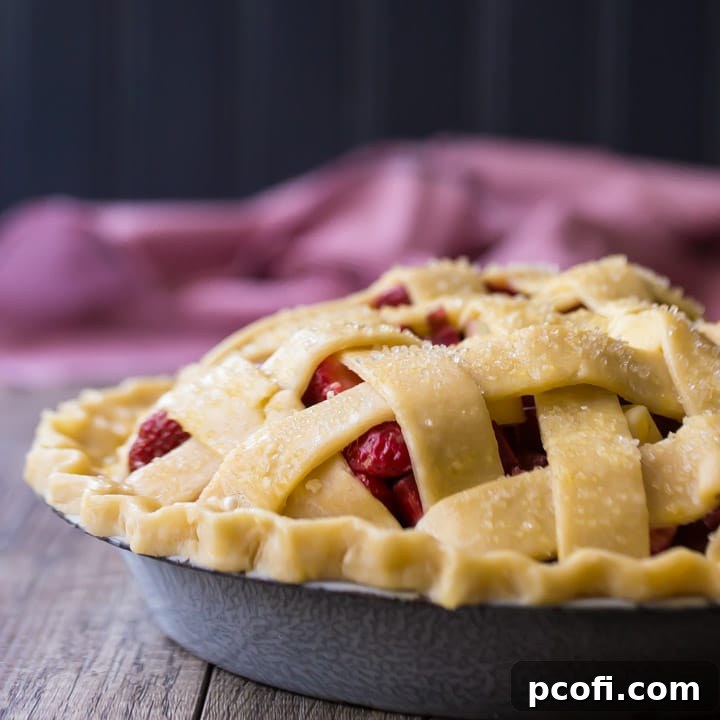
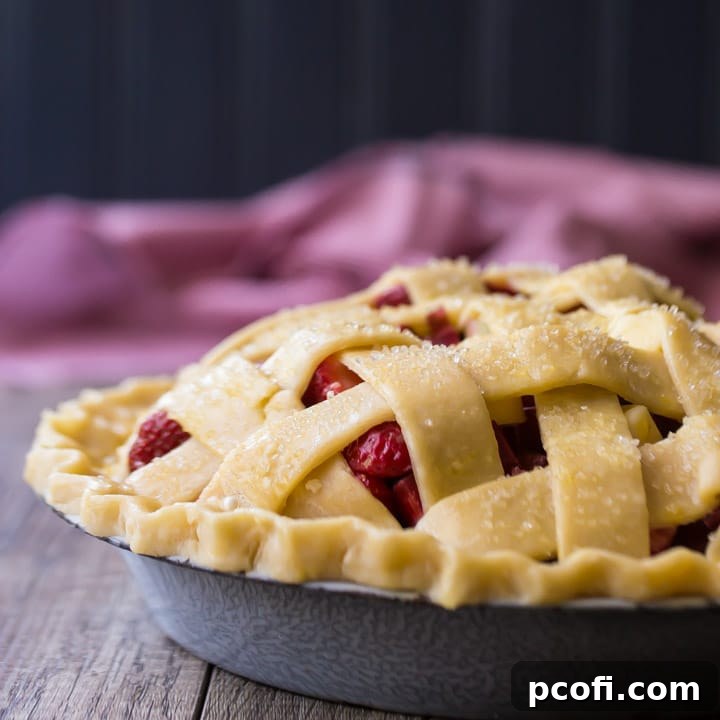
Crafting a beautiful lattice pie crust is simpler than you might imagine! Follow this comprehensive, step-by-step tutorial, complete with detailed photos and expert advice, to master the art of making an exquisite lattice pie crust that will impress everyone.
*Originally published June 15, 2018. Updated February 10, 2022.*
Few sights evoke a sense of warmth and nostalgia quite like a freshly baked pie, adorned with an intricate lattice crust, cooling gently on a windowsill. This classic, comforting image instantly transports you to simpler times and promises a slice of homemade deliciousness. You’ve likely admired this elegant pie topping many times, perhaps thinking it was too complex or demanding to attempt yourself. However, the truth is, creating a stunning lattice pie crust is a surprisingly straightforward process that adds a touch of professional artistry to any homemade pie.
Today, we’re going to demystify this beautiful baking technique, providing you with all the knowledge and confidence you need to weave your very own masterpiece. This versatile method can be applied to almost any of your favorite pie recipes, but it truly shines when paired with vibrant fruit fillings. Imagine a perfectly golden-brown lattice topping revealing glimpses of a rich apple pie, a luscious peach pie, a tart cherry pie, or a juicy blueberry pie. Beyond its visual appeal, the lattice design also serves a practical purpose, allowing steam to escape and ensuring your pie filling sets perfectly.
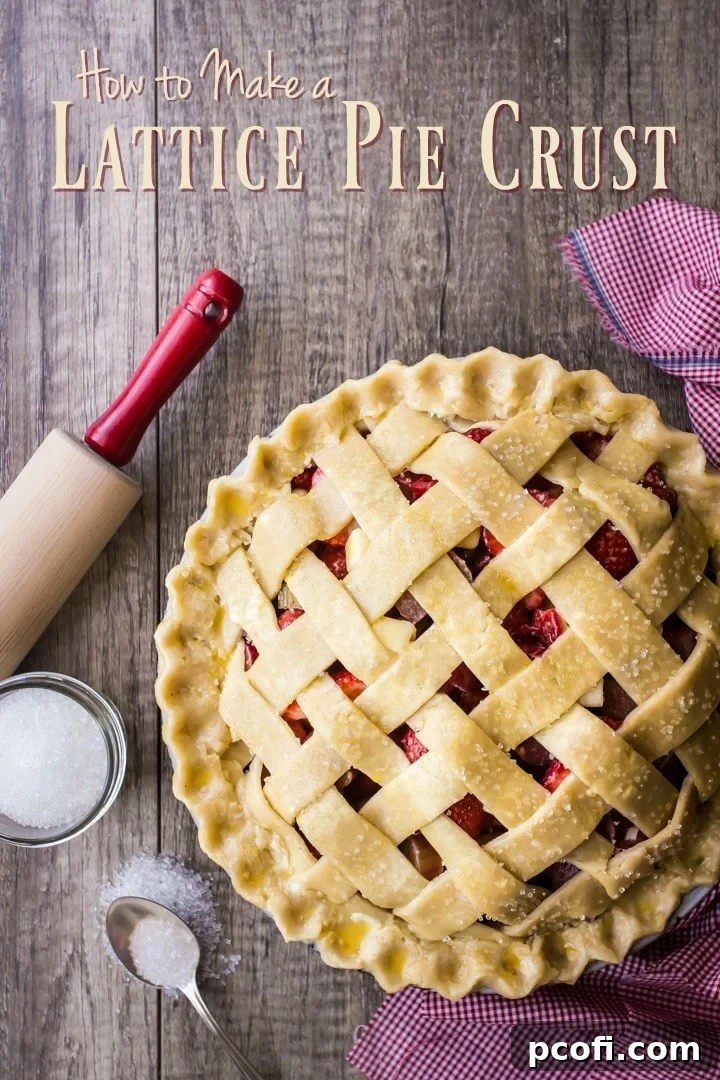
Table of Contents
- Why Choose This Lattice Pie Crust Tutorial?
- Essential Ingredients and Notes
- Recommended Tools and Equipment
- How to Make a Lattice Pie Crust: Step-by-Step Guide
- Expert Tips for a Perfect Lattice Crust
- Frequently Asked Questions (FAQs)
- Serving Suggestions for Your Lattice Pie
- Storage and Keeping Your Pie Fresh
- More Baking Tips and Resources
Jump to Recipe
Why Choose This Lattice Pie Crust Tutorial?
There are numerous reasons why mastering the lattice pie crust is a rewarding endeavor for any baker, and why this tutorial is your perfect guide:
- Crystal-Clear Guidance: This tutorial provides detailed, step-by-step photos and a comprehensive video, ensuring you can visualize each stage of the process, making it incredibly easy to follow along, even if you’re a beginner.
- Visually Stunning Presentation: A lattice crust elevates any pie from simple to spectacular. The interwoven strips of dough create an intricate and decorative pattern that screams “homemade with love” and will undoubtedly be the centerpiece of any dessert table. It’s an artistic flourish that shows off your baking prowess.
- Delightful Texture Contrast: Beyond its beauty, the lattice design offers a unique textural experience. The exposed filling caramelizes during baking, creating a delicious, slightly sticky contrast with the crisp, golden-brown, flaky pastry. Each bite offers a satisfying interplay of textures and flavors.
- Showcases the Filling: The open weave of the lattice allows the vibrant colors and luscious textures of your pie filling to be partially visible. This sneak peek tantalizes your guests, building anticipation for the deliciousness that lies within.
- Essential Steam Escape: More than just decorative, the gaps in a lattice crust serve a crucial functional purpose. They act as natural vents, allowing steam from the bubbling fruit filling to escape during the baking process. This prevents the top crust from puffing up excessively or becoming soggy, ensuring a perfectly cooked, flaky pie every time. Without proper ventilation, you risk a pie with an uneven crust or a watery filling.
Essential Ingredients and Notes
To embark on your lattice pie crust journey, you’ll need just a few key components. The quality of these ingredients will directly impact the success and flavor of your finished pie:
- Pie Crust Dough: The foundation of any great lattice pie is, of course, a fantastic pie crust. For a lattice top, you’ll need enough dough for both a bottom crust and a full top crust (typically a double-crust recipe). I highly recommend using a high-quality, flaky dough. You can use my tried-and-true recipes for Simply Perfect Homemade Pie Crust or, for a unique twist, my Chocolate Pie Crust. Both are wonderfully pliable and yield delicious results. Ensure your dough is well-chilled before you begin, as cold dough is much easier to handle and crucial for a flaky texture.
- All-Purpose Flour: A small amount of flour is essential for dusting your work surface and rolling pin. This prevents the delicate pie dough from sticking, allowing for smooth rolling and easy handling of your strips. Don’t overdo it, as too much flour can make the dough tough, but enough to create a non-stick surface is key.
- Egg Wash: This simple mixture is your secret weapon for achieving that coveted glistening, golden-brown finish on your baked pie. It’s typically made by whisking one large egg with about a tablespoon of water, milk, or cream. The egg proteins create a beautiful shine and help with browning, while the liquid thins it for easy brushing.
- Optional: Sparkling Sugar: For an extra touch of sparkle and a subtle textural crunch, consider sprinkling a pinch of clear sanding sugar over your egg-washed lattice crust before baking. It catches the light beautifully and adds a delightful finishing touch.
Recommended Tools and Equipment
Having the right tools can make the process of creating a lattice crust significantly smoother and more enjoyable:
- Rolling Pin: A sturdy and reliable rolling pin is indispensable for rolling out your pie dough to an even thickness. Whether you prefer a French-style or American-style rolling pin, ensure it’s comfortable to use and helps you achieve a consistent, thin sheet of dough.
- Pastry Wheel, Pizza Cutter, or Sharp Knife: To create neat and uniform strips of pie dough for your lattice, a dedicated rolling pastry wheel, a sharp pizza cutter, or a very sharp kitchen knife is essential. Precision in cutting strips leads to a more professional-looking lattice.
- Pie Dish: A standard 9-inch pie dish (glass, ceramic, or metal) is ideal for most pie recipes.
- Pastry Brush: A small pastry brush is needed for applying the egg wash evenly over your lattice crust.
- Cutting Board or Large Clean Surface: You’ll need ample space to roll out your dough and cut your strips.
- Measuring Tape or Ruler (Optional but Recommended): For those who desire perfectly uniform strips, a ruler can be helpful to ensure consistent width.
How to Make a Lattice Pie Crust: Step-by-Step Guide
Creating this beautiful pie topping is a truly satisfying process that can be achieved in just a few straightforward steps. Let’s walk through it together:
Step 1: Prepare the Bottom Crust
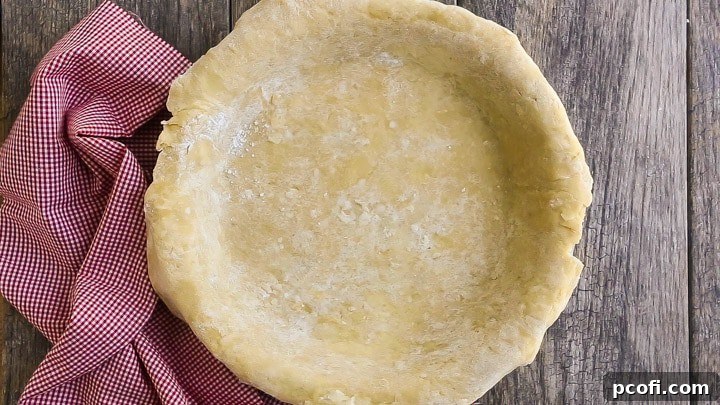
Begin by taking one half of your chilled pie dough. On a lightly floured surface, roll it out into a circle that is approximately 2 to 3 inches larger than the diameter of your pie dish. This extra dough will allow for crimping the edges later.
Carefully transfer the rolled-out dough into your pie pan. Gently ease it into place, ensuring it fits snugly against the bottom and sides without stretching, which can lead to shrinking during baking. Allow the excess dough to drape naturally over the sides of the pan. Trim any particularly long, unruly edges if needed, but leave a generous overhang for now.
Step 2: Add Your Favorite Pie Filling
Once your bottom crust is in place, it’s time to add your delicious pie filling. This technique works wonderfully with most fruit pies. For instance, here I’ve used a vibrant homemade strawberry rhubarb pie filling, which offers a delightful balance of sweet and tart flavors. Fill your pie to a generous level, making sure there’s enough room for the lattice crust on top. For an added touch of richness and to help the filling bubble beautifully, dot the top of your fruit filling with small cubes of cold butter before adding the lattice. This step is optional but highly recommended for depth of flavor.

Step 3: Create and Weave the Top Crust
Now for the artistic part! Take the remaining half of your chilled pie dough and roll it out on a lightly floured surface. Like the bottom crust, it should be rolled into a circle roughly 2 to 3 inches wider than your pie plate. This extra width is essential to ensure you have sufficiently long strips to drape over the edge for proper sealing and crimping.
Using a pastry wheel, pizza cutter, or a very sharp knife, cut the rolled-out dough into even strips. The thickness of your strips is entirely a matter of personal preference and can dramatically change the look of your lattice. For the visual examples in this tutorial, I’ve opted for a medium width of about 1 inch. You can choose to cut wider strips for a bolder, more rustic appearance, or thinner strips for a delicate, intricate design. Aim for consistency in width to ensure an even weave.
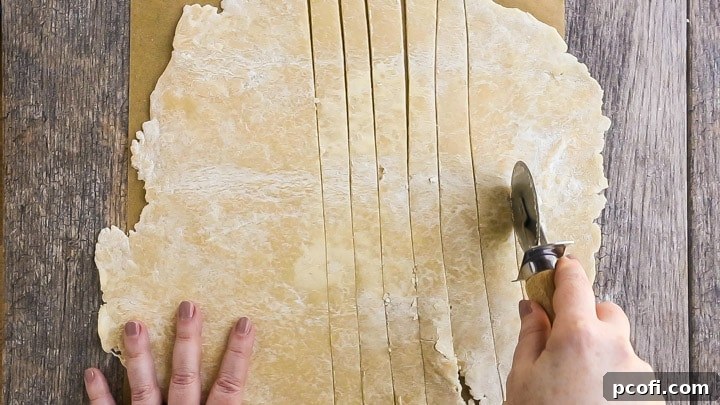
Carefully arrange half of your cut pie dough strips over the filled pie in parallel lines. Position them from one edge of the pie to the other. Again, the spacing is up to you – you can place them close together for a denser lattice, further apart for a more open look, or anywhere in between. Ensure there’s an even overhang on both sides.
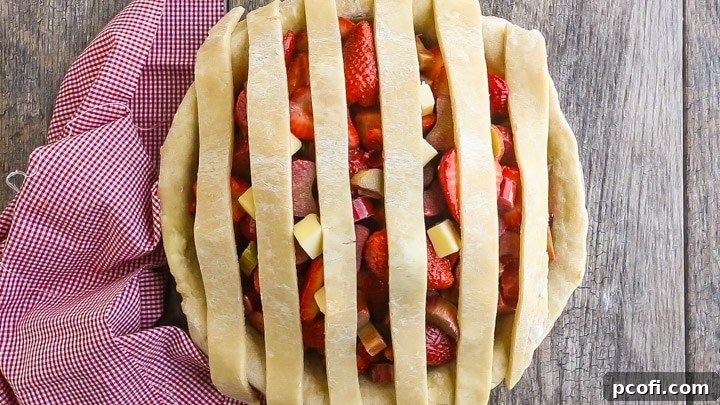
Now, gently fold back every other vertical strip to approximately the mid-line of the pie. Be careful not to tear the dough; handle it delicately. This creates an open space to begin your weave.
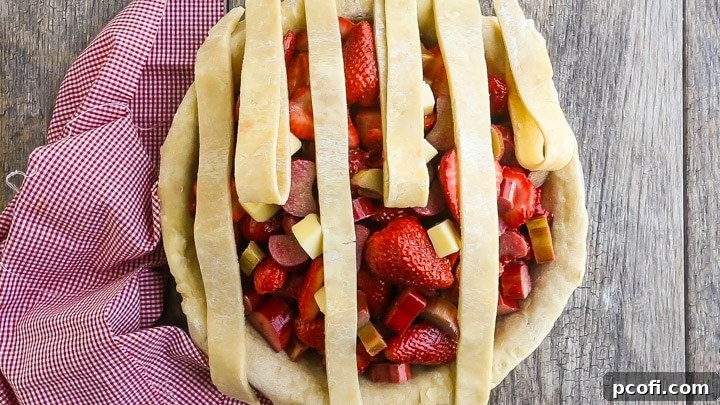
Take one of your remaining horizontal strips and lay it across the center of the pie, perpendicular to the vertical strips you just laid down. Position it carefully so it sits over the unfolded vertical strips and under the folded-back strips.
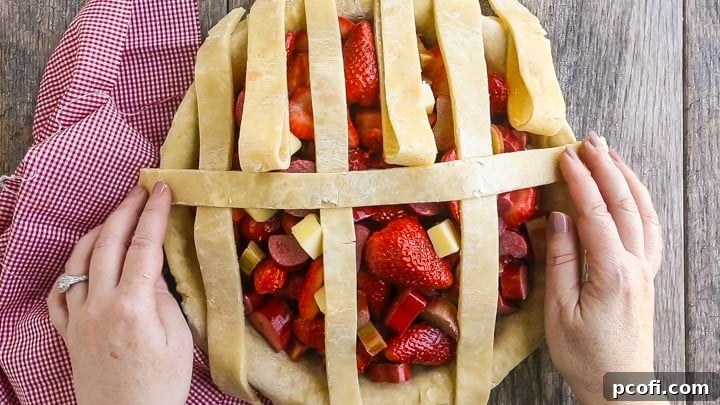
Now, gently fold the vertical strips you previously lifted back down over the newly placed horizontal strip. This secures the first row of your weave.
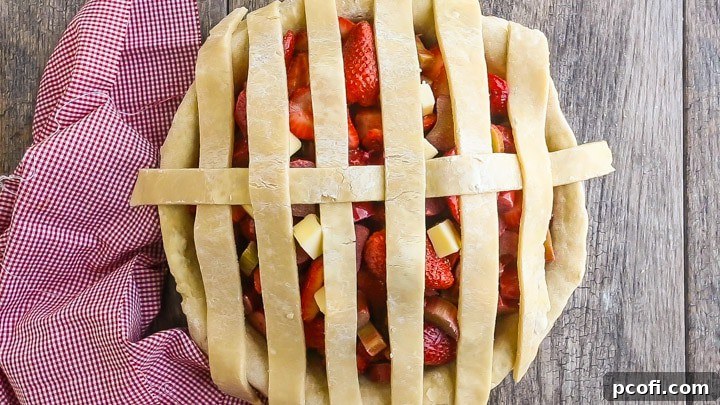
Next, lift the *other* set of vertical strips (the ones that were previously left flat) up and back towards the center, exposing the pie filling. This creates the alternate pattern for your next horizontal strip.
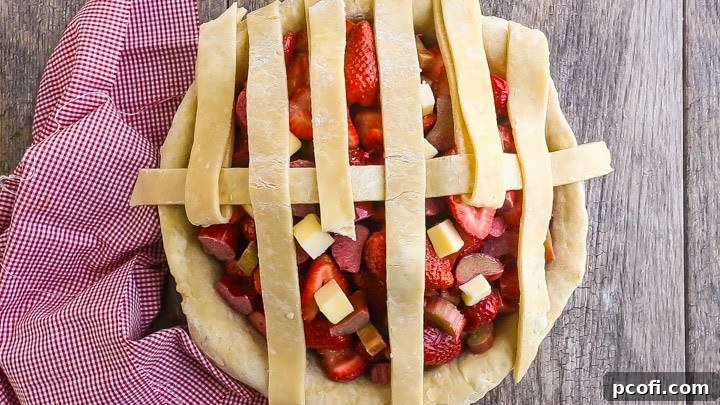
Place another horizontal strip over the exposed filling, parallel to the first horizontal strip you laid down. This strip will go under the vertical strips you just lifted and over the strips that remained flat in the previous step.
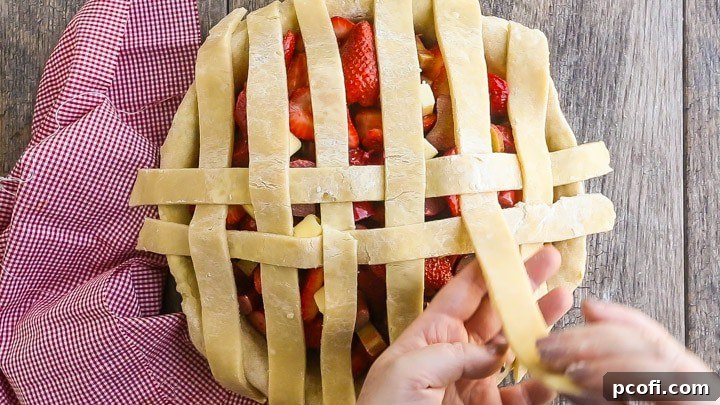
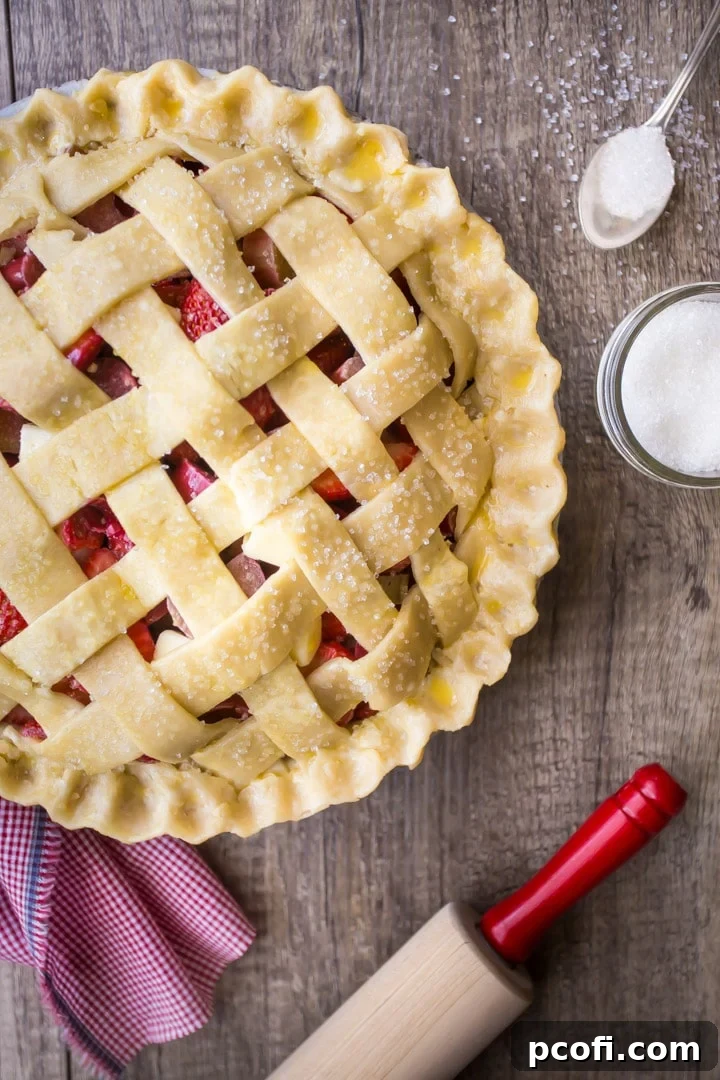
Continue this weaving process, alternating which vertical strips you lift with each new horizontal strip. You’ll essentially be creating an “over, under, over, under” pattern. Work your way from the center outwards until the entire top of your pie is covered with the beautiful, interwoven lattice crust. Take your time to ensure the strips are evenly spaced and the pattern is consistent.
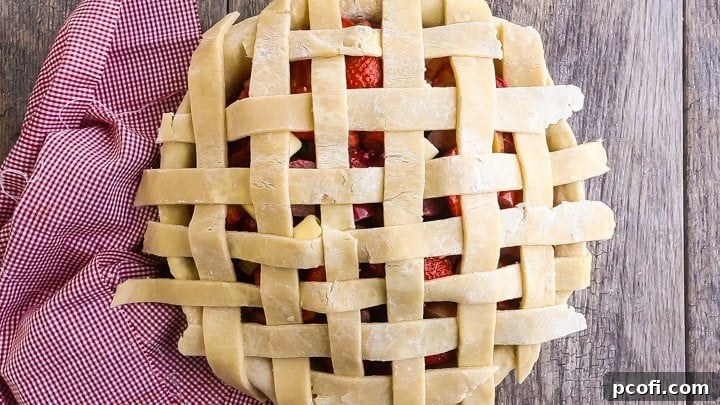
Once all your strips are woven, it’s time to seal the edges of your pie. Carefully trim away any excessive overhang of dough, leaving approximately 1 to 2 inches of excess dough around the entire perimeter. Then, gently fold or roll this excess dough up and over the edge of the bottom crust. Press firmly but gently to seal the top and bottom crusts together, creating a unified rim. This not only looks neat but also prevents the filling from bubbling out during baking.
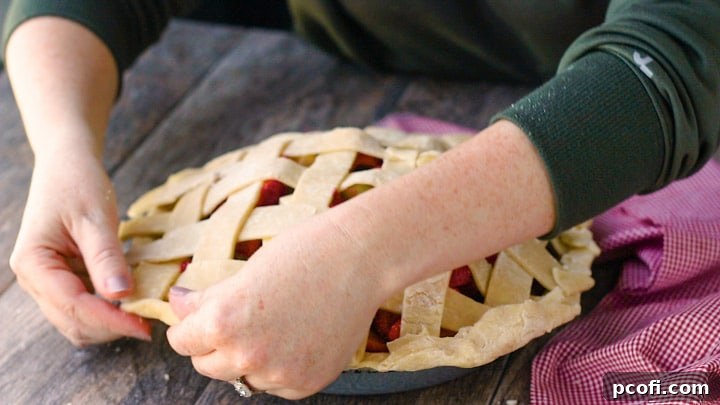
Step 4: Crimp the Edges for a Decorative Finish
Crimping the edge of your pie crust adds another layer of visual appeal and firmly seals the pie. There are several popular methods for achieving a beautiful crimped edge:
- Fork Method: A classic and simple approach. Use the tines of a fork to press down firmly around the entire perimeter of the pie, creating a series of parallel indentations.
- Pinch Method: For a more organic, rustic look, use your thumb and forefinger to gently pinch the dough at even intervals around the edge, creating a scalloped or fluted pattern.
- Knuckle Method (My Favorite!): As demonstrated in the accompanying video, I love using my knuckles to create a lovely, pronounced fluted edge. This technique involves pushing the dough outwards with one knuckle while simultaneously pressing inwards with the thumb and forefinger of your other hand. This creates a beautiful, deep zig-zag pattern that is both decorative and effective at sealing.
Whichever method you choose, ensure your crimping is even around the entire pie for a polished look.
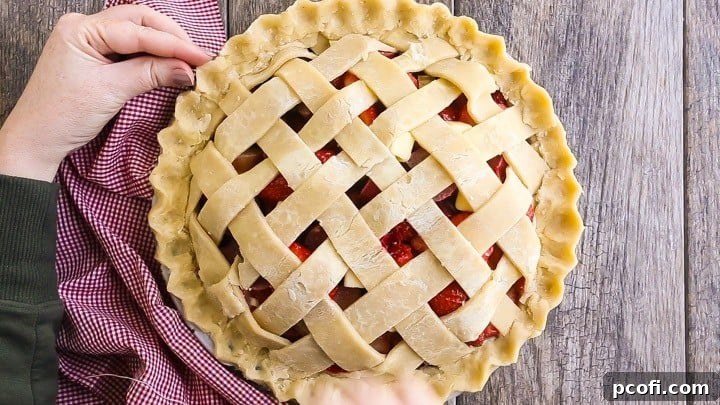
Step 5: Apply Egg Wash and Optional Garnish
To achieve that irresistible, professional-looking golden-brown and glossy finish, gently brush your entire lattice pie crust with egg wash. Prepare the egg wash by lightly beating one large egg with a tablespoon of water, milk, or cream. The liquid helps to thin the egg, making it easier to brush on evenly.
For an extra flourish, and as a completely optional step, you can sprinkle a pinch of clear sanding sugar over the egg-washed crust. This adds a beautiful sparkle and a delightful textural crunch that elevates the pie’s presentation even further. The sugar also contributes to a slightly more caramelized, golden crust. Once these steps are complete, your pie is ready for baking according to your specific recipe instructions!
Expert Tips for a Perfect Lattice Crust
Achieving a picture-perfect and deliciously flaky lattice pie crust is easier with these insider tips:
- Keep Your Dough Chilled: This is arguably the most critical rule for flaky pie crust. Always start with well-chilled pie dough, and ensure your work surface and even your hands are as cool as possible. Cold dough is less sticky, holds its shape better, and prevents the butter from melting prematurely, which is essential for creating those desired flaky layers.
- Work Quickly and Efficiently: Pie dough is sensitive to warmth. The longer it’s handled, the warmer it gets, and the softer the butter becomes. Work with purpose and speed, especially during the rolling and weaving stages, to minimize heat transfer from your hands.
- Don’t Be Afraid to Re-Chill: If at any point you notice your dough becoming too soft, sticky, or difficult to manage, stop immediately! Carefully slide your pie (or just the dough strips on a baking sheet) into the refrigerator for 15-20 minutes, or even the freezer for 5-10 minutes, to firm it back up. This brief chill will save your crust and guarantee a flaky outcome.
- Ensure Uniform Strip Thickness: While you can choose different widths for your strips, consistency is key. Use a ruler or a steady hand to cut strips of uniform thickness. This ensures even baking and a symmetrical, beautiful lattice pattern.
- Smooth and Clean Cuts: Employ a very sharp knife, a pizza cutter, or a pastry wheel to make clean, decisive cuts. Ragged edges can make your lattice look messy and may prevent the dough from baking evenly.
- Prevent Over-Browning: If you notice the edges of your pie crust (or any part of the lattice) are browning too quickly during baking, loosely cover those areas with aluminum foil. This acts as a shield, allowing the rest of the pie to catch up and preventing burnt spots while the filling cooks through.
- Embrace Imperfection: Don’t strive for absolute perfection on your first attempt. Baking is an art, and every homemade pie has its unique charm. Even a slightly rustic lattice will be delicious and appreciated!
Frequently Asked Questions (FAQs)
While undeniably beautiful, a lattice pie crust serves a crucial functional purpose beyond aesthetics. When a pie is filled with a juicy fruit mixture, the filling boils and produces a significant amount of steam during baking. Without a way for this steam to escape, it can cause the top crust to become soggy, lift off the filling, or even burst dramatically. The small openings, or “windows,” in the lattice design act as perfect vent holes, allowing the steam to release gradually. This ensures your crust remains crisp and flaky, and your filling sets beautifully without becoming watery. It’s truly a brilliant solution that combines form and function!
Sealing a lattice pie correctly is important to contain the filling and create a neat appearance. Once all your lattice strips are woven, trim any excess dough hanging over the edge of the pie dish, leaving about 1 to 2 inches of overhang. Then, gently fold or roll this excess dough inwards, tucking it under itself and pressing it firmly against the edge of the bottom crust. This creates a solid rim where the top and bottom crusts are securely joined. After folding, you can then crimp the edge using your preferred method (fork, fingers, or knuckles) to further seal and decorate it.
The basic procedure for weaving a lattice pie crust involves a simple alternating pattern. First, lay all the parallel vertical strips evenly spaced over your pie filling. Next, fold back every other vertical strip to the center. Place your first horizontal strip perpendicular to the vertical strips, letting it rest over the unfolded ones and under the folded ones. Fold the lifted vertical strips back down over the horizontal strip. Then, lift the *other* set of vertical strips (the ones that were previously flat) and place another horizontal strip. Repeat this alternating lifting and placing process until all strips are used, creating an “over and under” woven pattern across the entire pie.
Absolutely! Store-bought pie dough is a fantastic shortcut for creating a lattice crust. Just make sure to buy two rolls or packages of dough, as you’ll need enough for both the bottom crust and the lattice top. Keep it chilled until you’re ready to roll and cut the strips, and follow the same weaving steps outlined in this tutorial.
Lattice crusts are particularly well-suited for fruit pies. The open weave allows the colorful fruit fillings (like apples, berries, peaches, or cherries) to peek through, adding to the pie’s visual appeal. The steam vents are also crucial for fruit fillings, which tend to be very juicy and produce a lot of steam. While you *can* use it for other fillings, fruit pies are where the lattice truly shines.
Serving Suggestions for Your Lattice Pie
A beautifully crafted lattice pie is a treat in itself, but a few thoughtful accompaniments can elevate the experience even further:
- Classic Fruit Pies: As mentioned, lattice crusts are a perfect match for classic fruit pies. Imagine a warm slice of cherry pie, peach pie, strawberry rhubarb pie, or blueberry pie, showcasing its vibrant filling through the golden weave.
- A La Mode Perfection: There’s nothing quite like the timeless pairing of warm pie with a scoop of cold vanilla ice cream or a generous dollop of freshly whipped cream. The contrast in temperatures and textures is simply divine and enhances the flavors of both the flaky crust and the sweet, bubbling filling.
- With a Warm Beverage: For a cozy and comforting dessert, serve your lattice pie with a steaming cup of coffee, a soothing herbal tea, or even a sophisticated glass of dessert wine. The rich flavors of the pie beautifully complement these beverages, making for a perfect end to any meal.
- Garnishes: A sprinkle of cinnamon, a few fresh berries, or a light dusting of powdered sugar can add a final decorative touch just before serving.
Storage and Keeping Your Pie Fresh
To ensure your delicious lattice pie remains fresh and enjoyable for as long as possible, follow these storage guidelines:
- Cool Completely at Room Temperature: Before storing, it is absolutely essential to allow your baked lattice pie to cool down completely to room temperature. Attempting to cover a warm pie will trap condensation, which will inevitably lead to a soggy crust – nobody wants that!
- Proper Covering: Once the pie is fully cooled, cover it loosely but securely with plastic wrap or aluminum foil. Ensure the covering is snug enough to prevent air exposure, which can dry out the crust, but not so tight that it smashes the delicate lattice design.
- Refrigeration for Longevity: While fruit pies can often sit at room temperature for a day, refrigerating your lattice pie will significantly extend its freshness, especially if it contains dairy (like some cream pies, though less common with fruit). Place the wrapped pie in the refrigerator. Most fruit pies are best enjoyed within 2-3 days when stored in the fridge.
- Freezing (Optional): For longer storage, you can freeze a baked pie. Once completely cool, wrap the pie tightly in several layers of plastic wrap, then a layer of aluminum foil. Freeze for up to 2-3 months. Thaw in the refrigerator overnight and reheat in a low oven (around 300°F/150°C) until warmed through and the crust is crisp again.
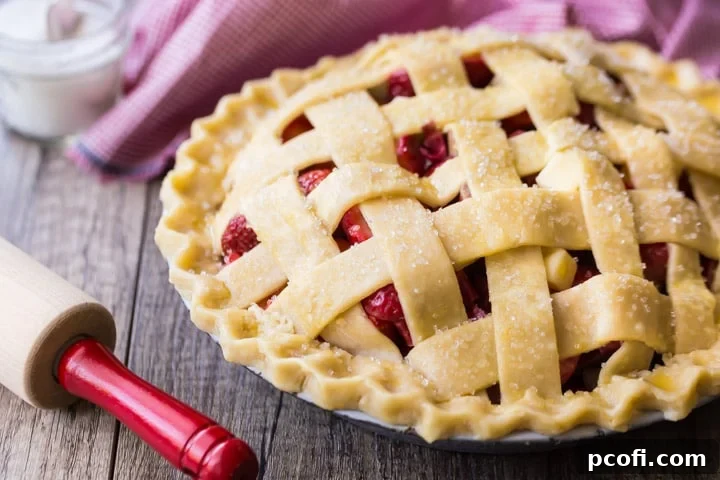
Hopefully, this detailed tutorial has equipped you with the confidence and inspiration to create your very own stunning lattice-top pie! It’s a skill that looks impressive but is truly accessible with a little patience and practice. Your efforts will be rewarded with a delicious, beautiful dessert that’s sure to be a crowd-pleaser.
If you still have any lingering questions or need further clarification, please don’t hesitate to ask in the comments section below. And for all you experienced lattice pie crust pros out there, I’d love to hear your invaluable tips and tricks – share your wisdom with our baking community!
More Baking Tips and Resources
Continue to hone your baking skills with these additional helpful resources and tips:
- How to Measure Ingredients for Baking
- How to Stock Your Baking Pantry
- How to Brown Butter
- Basic Streusel Recipe
- Homemade Vanilla Extract
This post contains affiliate sales links.

How to Make a Lattice Pie Crust
Leave a Review
Save RecipeSaved!
Ingredients
- 1 batch pie crust
- flour, for dusting the work surface to prevent sticking
- 1 egg, beaten with a tablespoon of water, milk, or cream for egg wash
- clear sparkling sugar, for optional garnish
Instructions
- Dust your work surface liberally with flour. Roll out half of your pie dough into a circle about 2 to 3 inches wider than your pie dish.
- Carefully transfer the rolled dough to your pie plate. Gently press it into place, allowing any excess to drape over the sides of the pan.
- Fill the bottom crust with your desired pie filling (e.g., fruit filling), dotting with cold butter if desired.
- Roll out the other half of the dough to a circle approximately 2 to 3 inches wider than the pie dish.
- Using a pastry wheel, pizza cutter, or sharp knife, cut the dough into even strips of your desired width (e.g., 1 inch).
- Arrange half of the dough strips over the filled pie in parallel lines, ensuring an even overhang on both sides.
- Gently fold every other vertical strip back to about the mid-line of the pie.
- Lay one horizontal strip of pie dough across the center of the pie, perpendicular to the vertical strips, placing it over the unfolded strips and under the folded-back strips.
- Fold the initially lifted parallel strips back down over the newly placed horizontal strip. Then, lift the *other* set of vertical strips (the ones that were previously flat) up towards the center.
- Lay another horizontal strip down parallel to the first, placing it over the flat strips and under the lifted strips. Repeat this alternating process until all strips have been used and the lattice covers the pie.
- Trim any excess dough to about a 1 to 2-inch overhang around the entire pie.
- Fold or roll the excess dough up and over the edge of the bottom crust, pressing firmly to adhere and seal the top and bottom layers together.
- Crimp the edge of the pie using your preferred method (e.g., fork, fingers, or knuckles) for a decorative finish.
- Brush the entire lattice pie crust with the prepared egg wash. Optionally, sprinkle with clear sparkling sugar for added texture and shine.
- Bake the pie according to your specific pie recipe’s directions, covering edges with foil if they start to brown too quickly.
Notes
Be sure to keep your pie dough cold! If it starts to feel soft or sticky, stop what you’re doing and pop it in the fridge or freezer to chill until firm again. This is crucial for a flaky crust.
This recipe works wonderfully with homemade pie crusts like Perfect Homemade Pie Crust or for a unique twist, Chocolate Pie Crust.
If you’re looking for something delicious to serve with your freshly baked pie, consider a scoop of this old-fashioned Vanilla Ice Cream or an easy No-Churn Ice Cream.
Serving: 1 slice
Calories: 26kcal
Carbohydrates: 4g
Protein: 1g
Fat: 2g
Saturated Fat: 1g
Cholesterol: 3mg
Sodium: 24mg
Potassium: 4mg
Vitamin A: 29IU
Calcium: 1mg
Iron: 1mg