
Easy coconut eggs made without cream cheese. These chocolate covered eggs have a sweet coconut filling and make a delicious homemade treat for Easter!

Table of Contents
- What are Coconut Eggs?
- The Magic of Homemade Easter Candy
- Only 7 Ingredients Needed
- In Photos: How To Make Coconut Eggs
- Tips & Tricks for Perfect Coconut Eggs
- Helpful Tools & Equipment
- Frequently Asked Questions
- More Homemade Candy Recipes
Jump to Recipe
As the vibrant colors of spring emerge and Easter approaches, there’s no better way to celebrate than with delightful homemade treats. Among the most cherished traditions is making candy, and these chocolate covered coconut eggs stand out as an incredibly easy and rewarding project. Unlike many other confections that demand precision cooking, this recipe requires absolutely zero baking or stove-top preparation beyond melting chocolate. It’s simply a matter of mixing a few staple ingredients, shaping them into festive egg forms, and then dipping them into luscious melted chocolate. This simplicity makes it a fantastic activity for involving children, creating cherished memories alongside delicious homemade candy.
If you’re searching for that perfect special treat for the Easter season – whether it’s to share with your family or to craft into thoughtful homemade gifts for friends and neighbors – this coconut cream eggs recipe is an absolute winner. Its sweet, creamy filling and rich chocolate coating are sure to impress. Should you be seeking more creative ideas for your Easter baskets, consider pairing these with other delightful homemade goodies like chocolate covered strawberries, rich homemade toffee, or light and airy coconut macaroons. These chocolate coconut eggs are a timeless classic that brings joy with every bite.
What are Coconut Eggs?
Chocolate covered coconut eggs are a quintessential Easter confection, beloved for their harmonious blend of textures and flavors. At their heart is a wonderfully creamy and sweet coconut filling, typically crafted from a simple combination of sweetened condensed milk, powdered sugar, and finely shredded coconut flakes. This delectable core is then generously enrobed in a smooth, rich layer of melted chocolate. The result is a delightful bite-sized treat that delivers a burst of tropical coconut sweetness perfectly complemented by the slightly bitter or mellow notes of chocolate. Often shaped like small eggs to fit the Easter theme, these homemade candies offer a distinct advantage over their store-bought counterparts: superior freshness, customizable flavors, and the undeniable charm of a treat made with love.
The magic of a coconut egg lies in its simplicity and satisfying mouthfeel. The interior is soft, chewy, and intensely coconutty, while the outer shell provides a satisfying snap and melts in your mouth. This classic combination has captivated dessert lovers for generations, making it a perennial favorite for spring celebrations. Whether you prefer the deep intensity of dark chocolate or the creamy sweetness of milk chocolate, these coconut eggs are versatile enough to suit any preference, providing a truly indulgent experience that tastes far more complex than its straightforward preparation suggests.
The Magic of Homemade Easter Candy
There’s something uniquely special about homemade candy, especially during holidays like Easter. It transcends the mere act of eating a sweet treat; it becomes an experience, a memory in the making. Crafting chocolate covered coconut eggs at home allows for a level of personalization and freshness that mass-produced options simply cannot match. You control the quality of ingredients, from the richness of the chocolate to the intensity of the coconut flavor, ensuring every bite is exactly how you envisioned it.
Beyond the superior taste, the process itself is part of the charm. The kitchen fills with sweet aromas, and the hands-on activity of mixing, shaping, and dipping can be incredibly therapeutic and enjoyable, particularly for families looking to spend quality time together. Imagine the delight on children’s faces as they help roll the coconut mixture or watch the eggs transform under a blanket of melted chocolate. These moments are invaluable, fostering a sense of accomplishment and contributing to cherished family traditions.
Homemade Easter candy also makes for incredibly thoughtful and unique gifts. Packaged in pretty boxes or bags, these chocolate coconut eggs convey a personal touch that speaks volumes. They are a delicious way to show appreciation, spread holiday cheer, and share the joy of the season. From casual family gatherings to elaborate Easter brunches, a plate of these handcrafted treats will always be a highlight, sparking conversations and smiles. Embrace the magic of making your own sweets this Easter, and discover why homemade truly is best.
Only 7 Ingredients Needed
Crafting these delectable homemade coconut eggs is surprisingly simple, requiring just a handful of common ingredients. Each component plays a crucial role in achieving the perfect balance of sweetness, texture, and flavor. Here’s a closer look at what you’ll need to create this irresistible Easter treat:
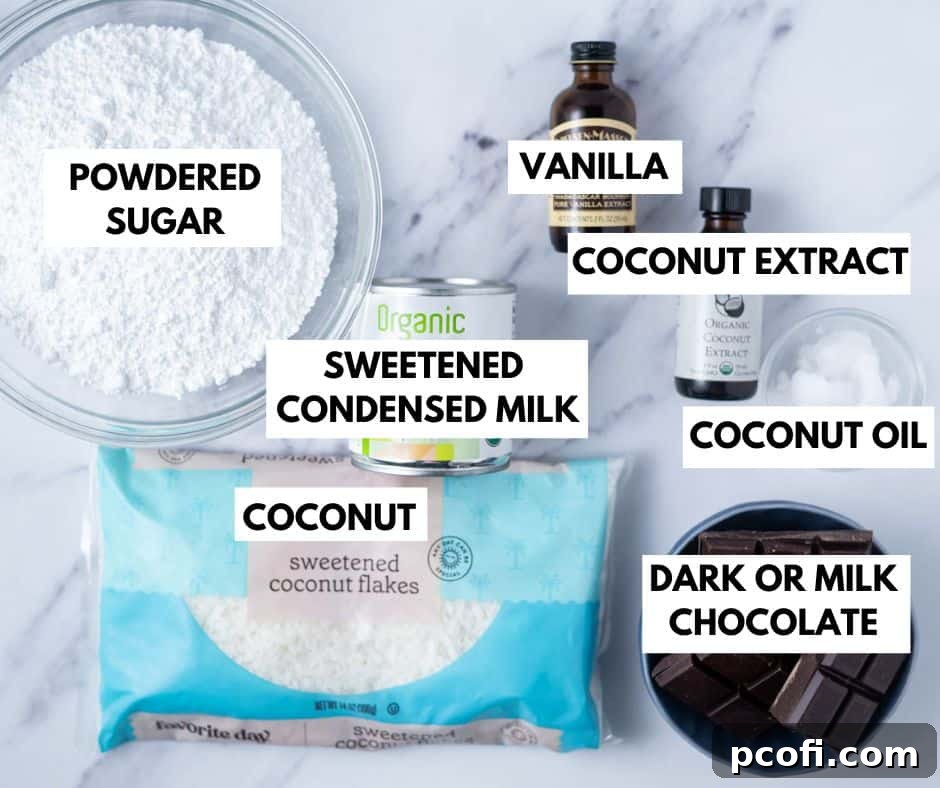
- Powdered Sugar: Also known as confectioners’ sugar, this ingredient is essential for two reasons. Firstly, it acts as the primary sweetener, giving the coconut filling its delightful taste. Secondly, its fine texture helps to bind the other ingredients together, resulting in a smooth, firm, and pliable coconut mixture that holds its shape beautifully. Sifting the powdered sugar before adding it can help prevent lumps and ensure an even consistency in your sweet coconut filling.
- Coconut: Sweetened coconut flakes are the star of this Easter candy recipe. Found readily in the baking aisle, these flakes provide the classic chewy texture and tropical flavor. For those who prefer a less intensely sweet candy, unsweetened coconut flakes can be a wonderful substitute. You can also lightly toast a portion of the coconut flakes to add a deeper, nuttier dimension to the filling or as a garnish for an extra layer of flavor and visual appeal.
- Sweetened Condensed Milk: This thick, creamy, and sweet milk product is the magic binder that brings the coconut filling together. It not only contributes a rich creaminess and additional sweetness but also provides the necessary moisture and stickiness to form the coconut eggs without any cooking. It’s what makes this a truly easy no-bake coconut treat.
- Extracts: A touch of vanilla extract is crucial for balancing and enhancing the overall flavors, adding a warm, aromatic depth. To truly amplify the tropical essence, coconut extract is a fantastic addition, boosting the natural coconut flavor in these homemade candy. Good quality extracts make a noticeable difference in the final taste.
- Chocolate: The choice of chocolate for coating these chocolate covered coconut eggs is entirely up to your preference. Dark chocolate offers a delightful contrast to the sweet coconut, while milk chocolate provides a creamier, sweeter finish. Semi-sweet chocolate is also an excellent choice, striking a balance between the two. For the best melting and dipping results, always opt for a high-quality chocolate baking bar rather than chocolate chips. Baking bars contain cocoa butter, which melts smoothly, while chocolate chips often contain stabilizers that prevent them from melting into a perfectly fluid consistency. White chocolate is another delicious option, though it will make the coconut eggs a bit sweeter.
- Coconut Oil: Melted with the chocolate, coconut oil serves a vital purpose. It thins the chocolate slightly, making it easier to dip the coconut eggs and achieve a smooth, even coating. Additionally, it helps give the chocolate a beautiful, glossy sheen once set, enhancing the visual appeal of your homemade treats. Vegetable shortening can be substituted if coconut oil is not available.
In Photos: How To Make Coconut Eggs
Making these delightful chocolate covered coconut eggs is a straightforward process, and with these visual aids, you’ll be creating perfect Easter treats in no time. Follow these steps for an easy and enjoyable candy-making experience.
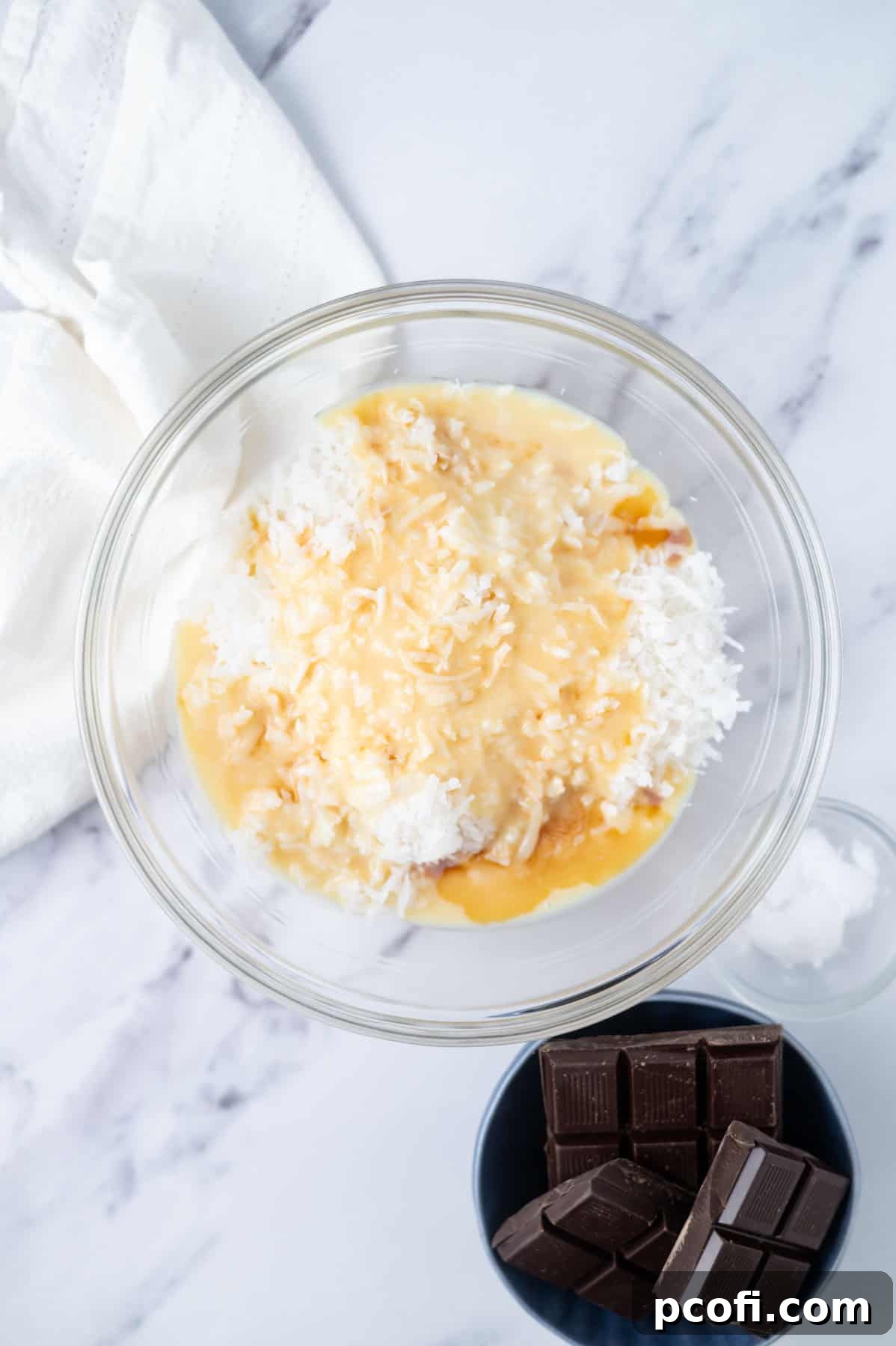
Step 1: Combine Wet and Dry Ingredients. Begin by lining a baking sheet pan with parchment paper or wax paper, and set it aside. Ensure it can fit comfortably in your freezer. In the bowl of a stand mixer fitted with a paddle attachment (or using a hand mixer), combine the sweetened coconut flakes, sweetened condensed milk, vanilla extract, and coconut extract. Mix on low speed until all ingredients are just combined and evenly moistened.
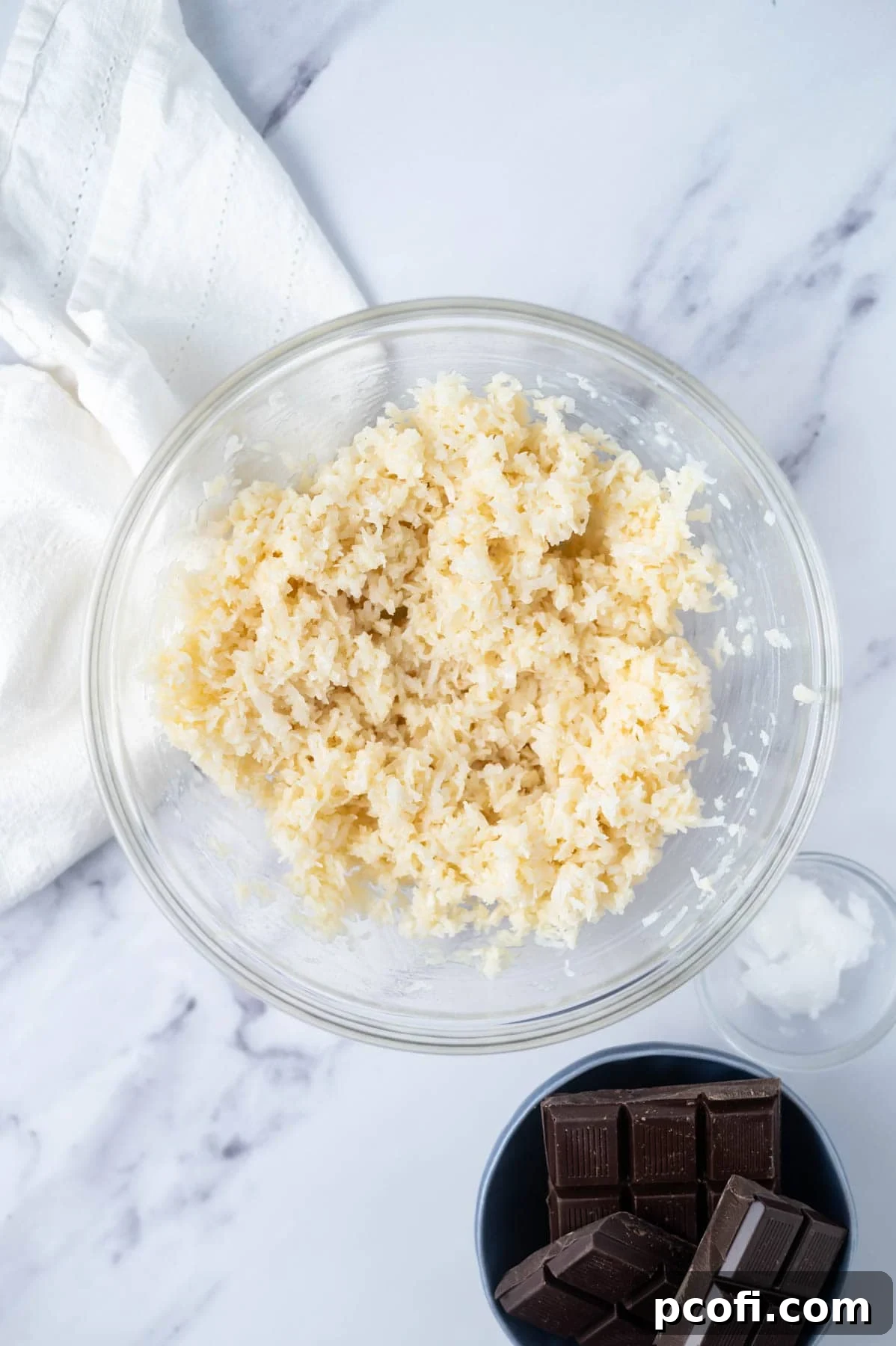
Step 2: Gradually Add Powdered Sugar. Next, slowly add the powdered sugar to the coconut mixture, about 1 cup at a time, continuing to mix on low speed. This gradual addition helps the sugar incorporate thoroughly without creating a dusty mess. Continue mixing until all the powdered sugar is combined and the mixture forms a thick, pliable dough. The mixture should be firm enough to handle but still soft and moist.
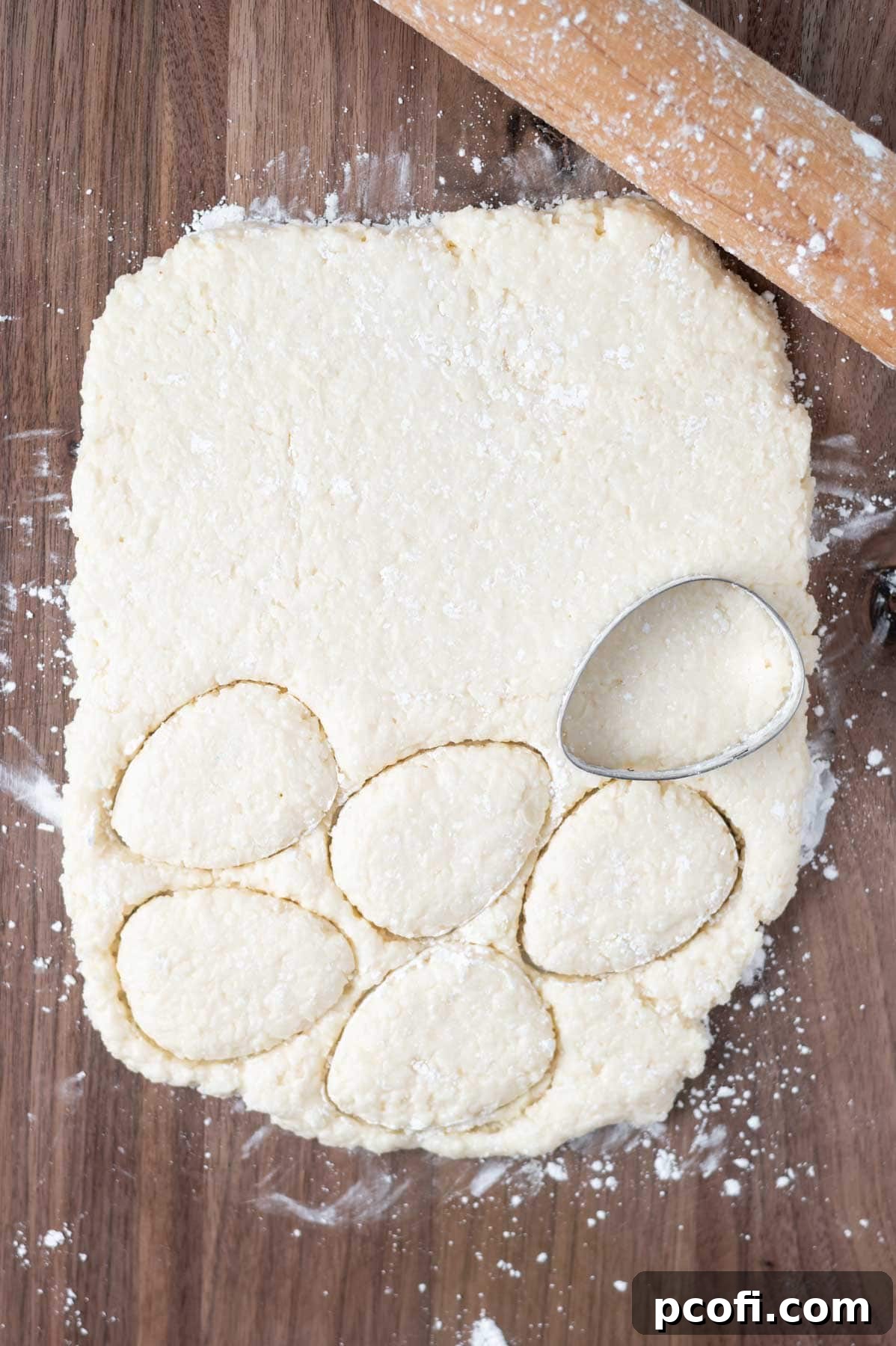
Step 3: Roll and Shape the Coconut Eggs. Transfer the coconut mixture onto a clean counter that has been lightly dusted with powdered sugar. Dust the top of the mixture with a little more powdered sugar to prevent sticking, then roll it out to an even thickness of about ½ inch. If you don’t have an egg cookie cutter, you can easily skip this step; simply scoop spoonfuls of the coconut filling and roll them into neat, egg-like shapes with your hands. Lightly dusting your hands with powdered sugar will prevent the mixture from sticking.
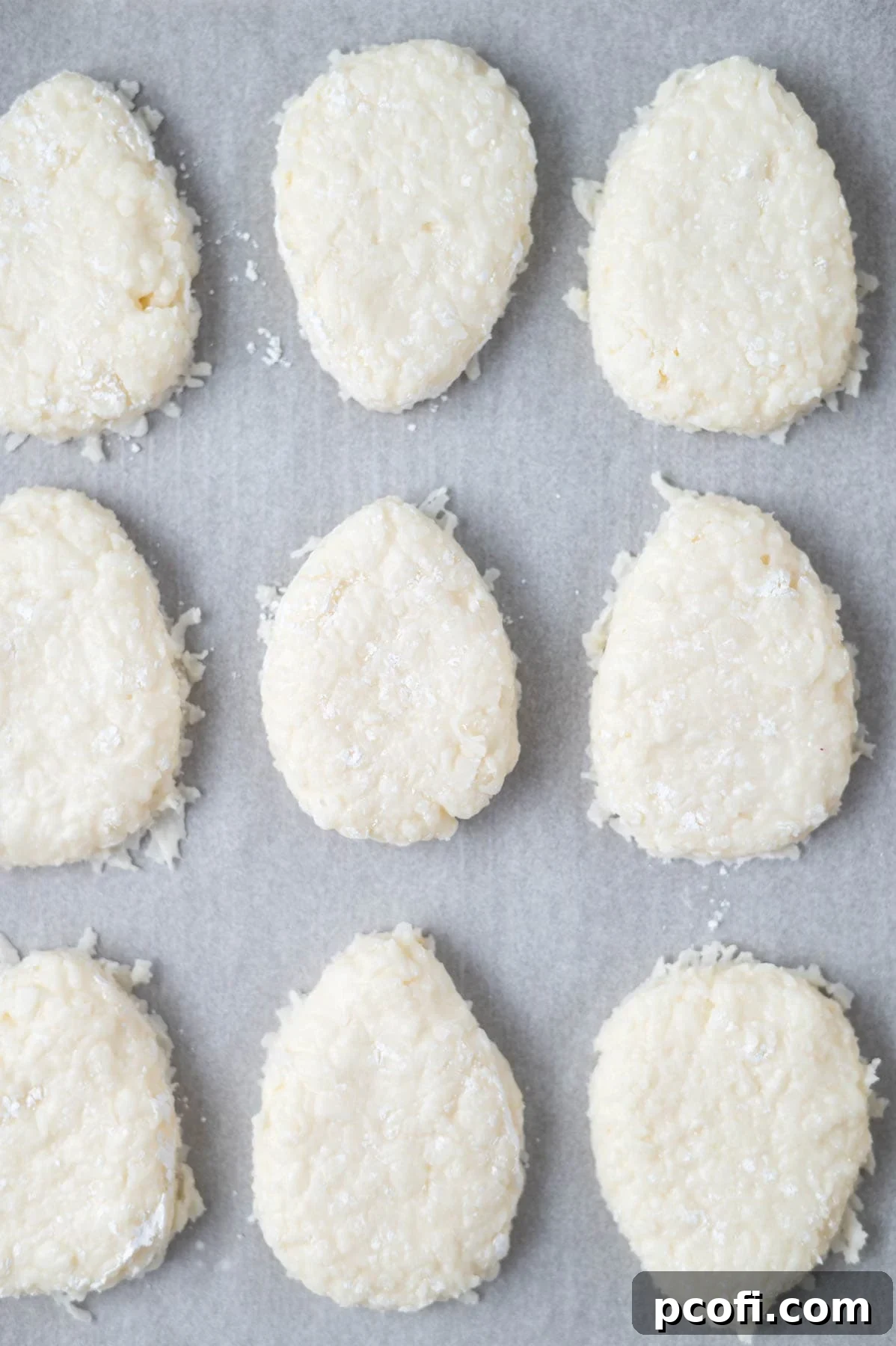
Step 4: Cut and Chill the Eggs. Using an egg cookie cutter, carefully cut out the egg shapes from the rolled coconut mixture. Gently transfer these shapes onto your prepared baking sheet or plates. A bench knife can be incredibly helpful for cleanly lifting the delicate coconut eggs from your rolling surface without distorting their shape. Once all eggs are cut, place the entire tray into the freezer for approximately 30 minutes. This chilling step is vital as it firms up the coconut eggs, making them much easier to dip into the warm chocolate without falling apart.
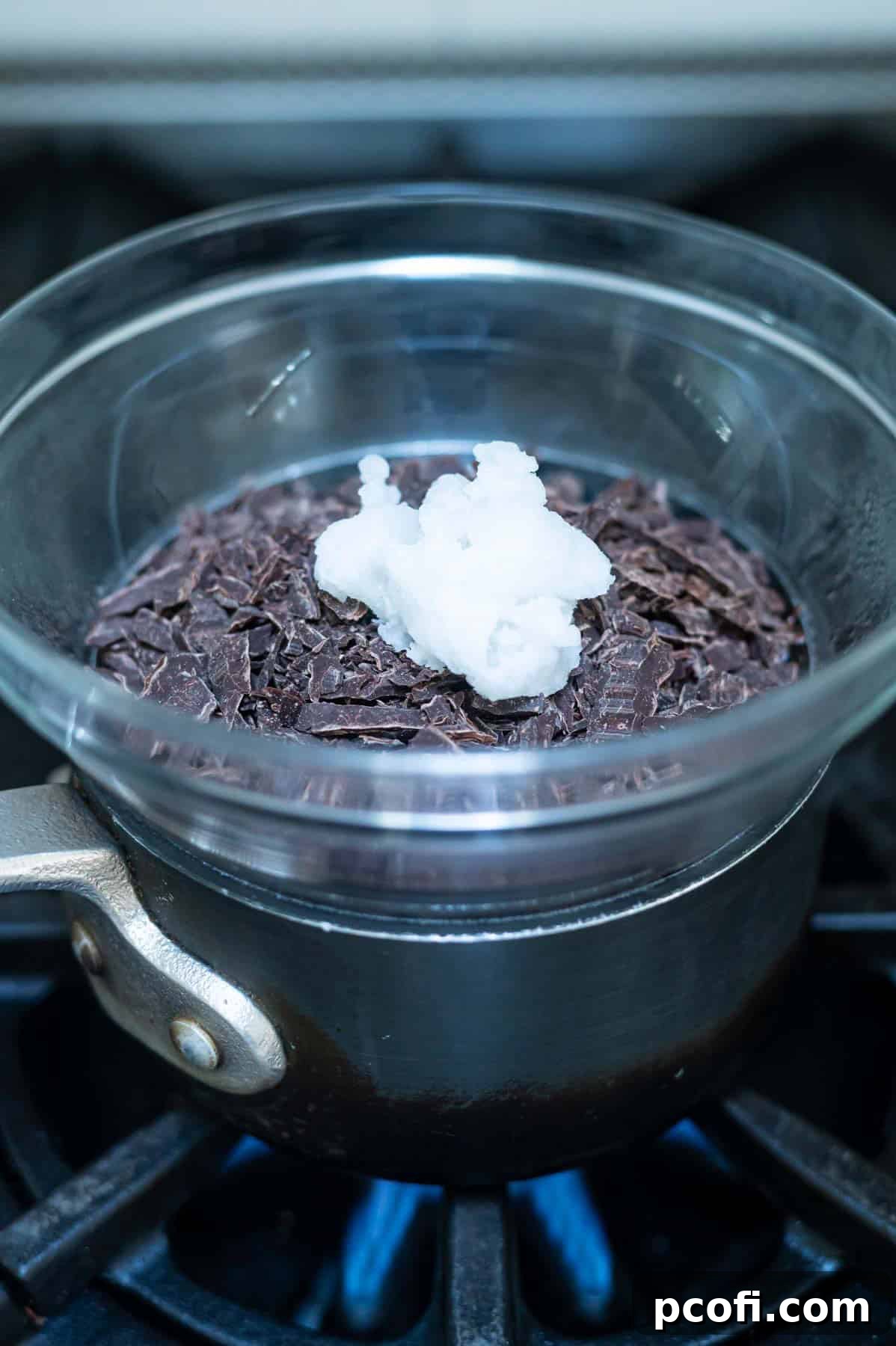
Step 5: Melt the Chocolate Coating. Once the coconut eggs are nearing the end of their chilling time, prepare your chocolate coating. Combine the chopped chocolate and coconut oil in a large, heatproof glass bowl. Place this bowl over a pot of simmering water, ensuring that the bottom of the bowl does not touch the water. Stir gently as the chocolate melts, heating until it is completely smooth and glossy. Alternatively, you can melt the chocolate and coconut oil together in a microwave-safe bowl, heating in 30-second intervals and stirring thoroughly after each, until smooth. Be careful not to overheat the chocolate.

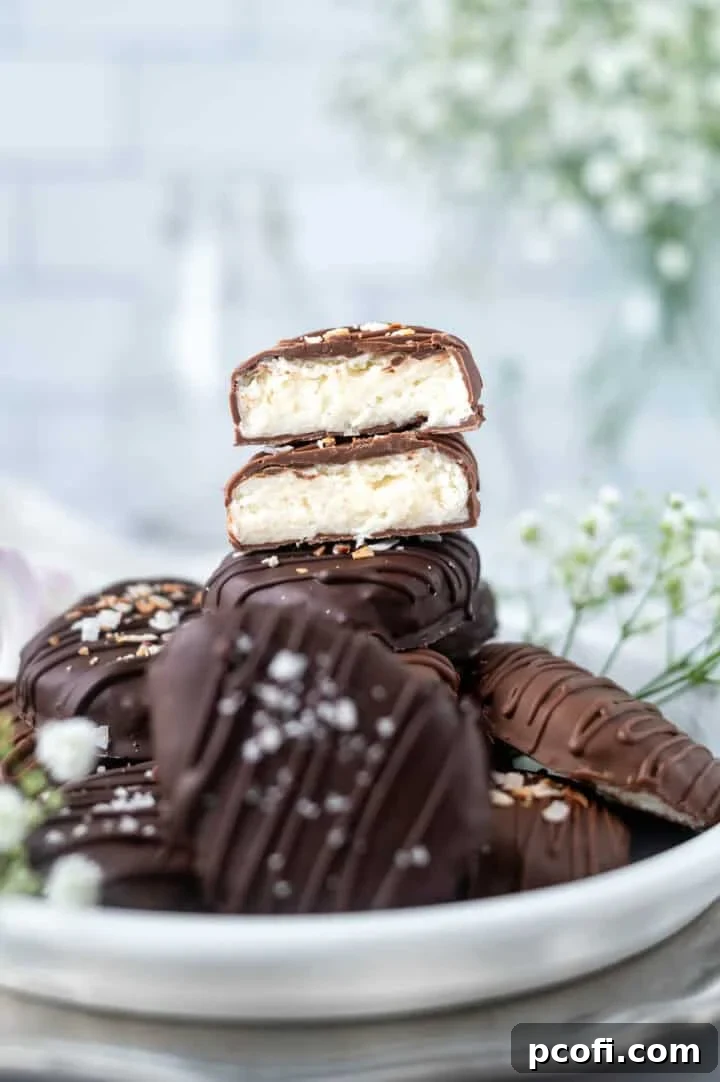
Step 6: Dip and Decorate. Remove the chilled coconut eggs from the freezer. Working quickly, dip each egg one by one into the melted chocolate. Use forks or dedicated candy dipping tools for easy handling. Gently tap off any excess chocolate to ensure a thin, even coating, and then carefully place the dipped eggs back onto your parchment or wax paper-lined tray. Repeat this process until all the eggs are coated. If you have any leftover melted chocolate, you can elegantly drizzle it over the tops of each coconut egg for an extra decorative touch. For additional embellishments like sprinkles, chopped nuts, or flaky sea salt, apply them immediately after dipping while the chocolate is still wet to ensure they stick. Allow the chocolate to set completely in the freezer or refrigerator before serving or storing.
Tips & Tricks for Perfect Coconut Eggs
Creating flawless chocolate covered coconut eggs is a truly satisfying endeavor. Here are some expert tips and tricks to ensure your homemade treats turn out perfectly every time:
- Don’t Skimp on Powdered Sugar for Rolling: When rolling out your sweet coconut filling, a generous dusting of powdered sugar on your work surface is your best friend. This prevents sticking and makes the mixture much easier to handle. If you find the mixture clinging to your cookie cutter, a quick dip or coating of the cutter in powdered sugar will solve the problem. This ensures clean cuts and perfectly shaped eggs.
- Prepare Your Dipping Station in Advance: Before you even start melting your chocolate, have everything ready. This includes your parchment-lined baking sheet (or plates) and your chilled coconut eggs. The dipping process requires speed, as the chocolate can begin to set relatively quickly, especially when coating cold eggs. A well-organized workspace minimizes stress and ensures a smooth operation.
- Timely Toppings Application: If you plan to add decorative toppings such as toasted coconut, sprinkles, finely chopped nuts, or flaky sea salt, it’s crucial to do so immediately after dipping each chocolate covered coconut egg into the chocolate. The melted chocolate acts as the adhesive, and it will quickly firm up, preventing toppings from sticking. If you’re drizzling with leftover melted chocolate for decoration, you can wait until the initial chocolate coating has already set. This prevents the drizzle from merging with the base layer, allowing it to stand out.
- The Power of Chilling: The 30-minute freeze is not optional. It makes the coconut eggs firm enough to withstand the warmth of the melted chocolate without losing their shape or crumbling. Cold eggs also help the chocolate set faster, reducing the wait time.
- Quality Chocolate Matters: Using a good quality baking bar (as opposed to chocolate chips) for your coating will yield a smoother, glossier, and more professional-looking finish. Baking chocolate contains a higher percentage of cocoa butter, which contributes to a superior melt and snap.
- Preventing Chocolate Seizing: When melting chocolate over a double boiler, be extremely careful that no water or steam comes into contact with the chocolate. Even a tiny drop of water can cause chocolate to “seize,” turning it into a grainy, unworkable paste. Ensure your bowl is completely dry and fits snugly over the pot of simmering water.
- Experiment with Flavors and Colors: While classic vanilla and coconut extracts are delicious, don’t hesitate to experiment! A touch of almond extract, rum extract, or even a few drops of food coloring in the coconut mixture could create fun variations for different occasions.
- Storage for Longevity: These homemade coconut eggs store exceptionally well. Keeping them in an airtight container in the refrigerator for up to a week ensures their freshness and prevents the chocolate from melting. For longer storage, they can be frozen for up to two months, making them perfect for preparing ahead of time.
Helpful Tools & Equipment
While this recipe is designed to be simple, having the right tools can make the process even smoother and more enjoyable. Here’s a list of essential and helpful equipment for making your chocolate covered coconut eggs:
- Egg-shaped Cookie Cutter: This tool is highly recommended for creating perfectly uniform and festive egg shapes. While you can always shape the coconut mixture by hand, a cookie cutter (mine is 2 ½ inches tall) ensures consistency and speeds up the shaping process, making your homemade Easter candy look professional.
- Bench Knife: A bench knife (or dough scraper) is incredibly versatile and helpful for this recipe. It’s ideal for cleanly lifting the delicate coconut eggs from your rolling surface without distorting their shape. It can also assist in gathering any excess coconut mixture, minimizing waste.
- Parchment Paper or Wax Paper: Essential for lining your baking sheets or plates. This non-stick surface prevents the coconut eggs from sticking to the pan, both before and after they are dipped in chocolate, making transfer and cleanup much easier.
- Stand Mixer or Hand Mixer: While not strictly mandatory (you could mix by hand), a stand mixer with a paddle attachment or a robust hand mixer makes combining the coconut filling ingredients much quicker and more efficient, ensuring a uniform mixture without too much effort.
- Large Glass Bowl and Saucepan (for Double Boiler): If you opt for the double boiler method to melt your chocolate, a heatproof glass bowl that fits snugly over a saucepan of simmering water is crucial. This method provides gentle, even heat, reducing the risk of scorching or seizing the chocolate.
- Candy Dipping Tools or Forks: Specialized candy dipping tools make the process of coating the eggs in chocolate incredibly neat and efficient. If you don’t have them, two forks can work perfectly well. Use one fork to hold the egg, and the other to gently tap off excess chocolate.
Frequently Asked Questions
A regular kitchen fork works great for dipping. Its tines allow excess chocolate to drip off easily. However, if you’re keen on making candies regularly, specialized candy making tools (like a spiral dipper or a two-tine fork) can make the process even smoother and cleaner, ensuring an even coating with minimal mess.
Absolutely not! While the egg shape is charming for Easter, you have complete creative freedom. You can use a round cookie cutter for simple coconut patties, or heart shapes would be incredibly cute for Valentine’s Day. Any not overly detailed cookie cutter should work well. You can also make them as small or large as you prefer. If you don’t have any cookie cutters, simply use your hands to roll the coconut cream filling into small balls, logs, or free-form shapes. Lightly dusting your hands with powdered sugar will prevent sticking.
To maintain their freshness and prevent the chocolate from melting, these chocolate covered coconut eggs should be stored in an airtight container. You can keep them in the refrigerator for up to one week. For longer preservation, they freeze beautifully and will last for up to two months. When ready to enjoy from the freezer, simply let them thaw slightly at room temperature for a few minutes.
Yes, you can! If you prefer a less sweet candy, unsweetened coconut flakes are a perfect substitute. Keep in mind that the filling will be less sweet overall, so you might consider adjusting the amount of powdered sugar to your taste, or opting for a sweeter chocolate coating like milk or white chocolate to balance it out.
Chocolate seizing is typically caused by even a tiny amount of water or steam coming into contact with the melting chocolate. When using a double boiler, ensure the bottom of your bowl doesn’t touch the simmering water, and prevent any steam from escaping and condensing into the chocolate. When microwaving, make sure your bowl and utensils are completely dry. Overheating chocolate can also cause it to become grainy, so heat in short intervals and stir frequently.
More Homemade Candy Recipes
If you enjoyed making these chocolate covered coconut eggs, you’ll love exploring other simple and delicious homemade candy recipes. Expanding your candy-making repertoire is a fantastic way to create more personalized treats for various occasions or just to satisfy a sweet craving. Here are a few more favorites that are just as rewarding to make:
- No Bake Peanut Butter Bars: A classic, easy-to-make treat featuring a rich peanut butter base topped with a smooth chocolate layer. Perfect for anyone who loves the peanut butter and chocolate combination.
- Millionaire’s Shortbread: Layers of buttery shortbread, gooey caramel, and decadent chocolate make this a truly indulgent homemade candy. It’s a bit more involved but utterly worth the effort for a luxurious treat.
- Chocolate Truffles: Elegant and incredibly easy, these rich, melt-in-your-mouth chocolate truffles are a fantastic gift or a sophisticated dessert. They can be customized with various coatings and flavorings.

Chocolate Covered Coconut Eggs
Leave a Review
Save RecipeSaved!
Ingredients
Coconut Filling
- 2 ½ cups sweetened coconut flakes, 300g
- ¾ cup sweetened condensed milk, 248g – half cup 165g
- ½ teaspoon vanilla extract
- ½ teaspoon coconut extract
- 3 cups powdered sugar, 360g
Chocolate Coating
- 12 ounces chocolate, chopped small (340g)
- 2 tablespoons coconut oil or vegetable shortening
Instructions
To make the coconut cream filling:
-
Line a baking sheet pan with parchment paper or wax paper and set aside. This will need to fit in your freezer, so feel free to use a plate or two, if needed.
-
In the bowl of a stand mixer fitted with a paddle attachment or with a hand mixer, combine the coconut, condensed milk, vanilla and coconut extracts. Mix on low speed until combined.
-
Next add the powdered sugar 1 cup at a time on low speed. Mix until combined.
-
Place the coconut mixture onto a lightly powdered sugar dusted counter, dust with more powdered sugar and roll to about ½ inch thick. (if you don’t have a cutter, you can skip this step and take a spoonful of the coconut filling and roll it into an egg-like shape with your hands. You may need to lightly dust your hands with powdered sugar so they don’t stick to the coconut mixture).
-
Using an egg cookie cutter cut the eggs out and place onto the prepared sheet pan/plates. A bench knife is helpful for removing the coconut eggs from your rolling surface.
-
Place your eggs into the freezer for about 30 minutes.
To make the chocolate coating:
-
When 30 minutes is up, melt the chocolate and coconut oil together by placing it in a large glass bowl over a pot of simmering water, making sure the water never touches the bottom of the bowl. Heat until the chocolate is melted and smooth. Another alternative is to melt the two together in the microwave using a heat-proof, microwaveable bowl.
-
Remove the eggs from the freezer and working quickly dip one by one in the melted chocolate, using forks or candy dipping tools. Gently tap off any excess chocolate and place the eggs back onto the parchment or wax paper lined tray. Repeat until all the eggs are dipped. With any leftover chocolate you have, you can drizzle some over the tops of each coconut egg. If you would like to decorate the tops of the finished candies with sprinkles, chopped nuts or toasted coconut, do it immediately after covering in chocolate so they will stick. If using extra melted chocolate to drizzle over the tops of the candies, you can do that after the chocolate has firmed up.
-
Then place in the freezer or refrigerator to harden. Once chilled, trim off any excess, if desired.
Notes
- *The yield will depend on the size of your eggs. I used a 2 ½ inch tall egg shaped cookie cutter and got 18 coconut eggs.
- Store in the fridge for a week or in the freezer for up to 2 months.
As an amazon associate I earn from qualifying purchases.