Classic Homemade Cherry Pie: A Timeless Summer Tradition
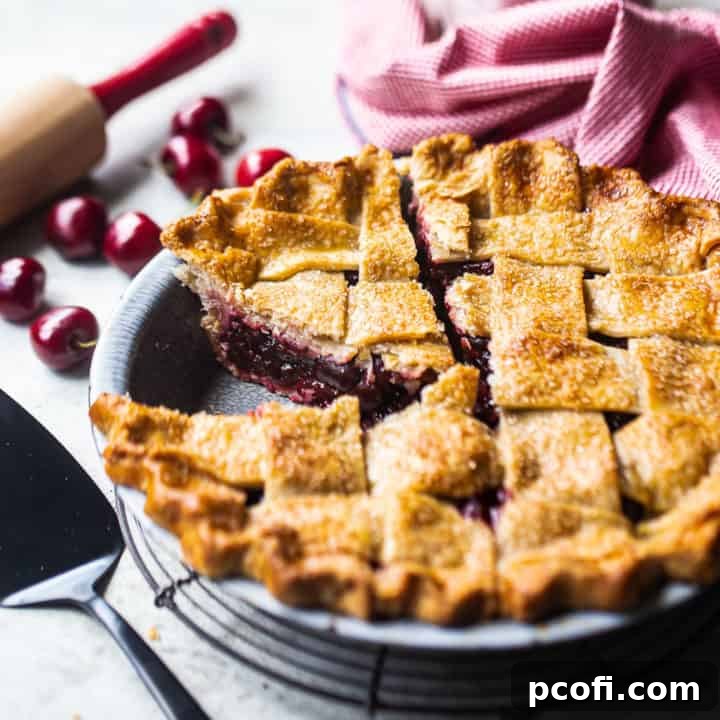
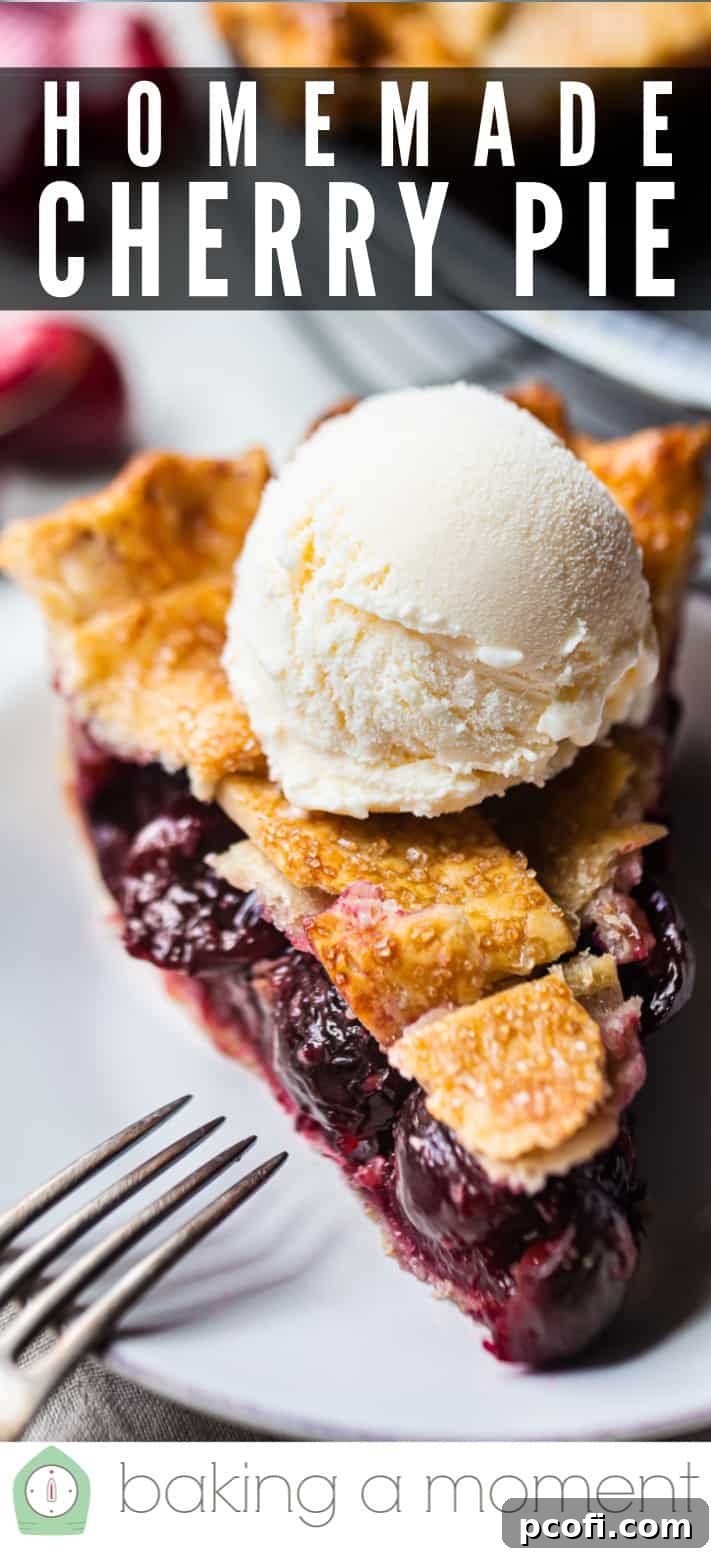
There’s something truly magical about a homemade cherry pie, isn’t there? That perfect blend of juicy, sweet-tart cherries nestled in a thick, glistening glaze, all encased in a tender, buttery, and irresistibly flaky crust. For many, it’s not just a dessert; it’s a taste of summer, a cherished family tradition, and a testament to the simple joys of home baking.
I confess, my journey to perfecting this ultimate cherry pie recipe wasn’t without its twists and turns. It feels like almost a year ago that I first set out to create the definitive guide to a truly great cherry pie for this site. Summer was fleeting, and despite my best efforts, I encountered a few snags that led me to temporarily shelve the project. But as soon as those vibrant red cherries began appearing in grocery stores again, I knew it was time to rekindle my passion and bring this classic to life.
Fruit pies are a cornerstone of my summer baking repertoire. While my husband favors a classic blueberry pie and my son adores a comforting apple pie, cherries hold a special place in my heart. The unique contrast of the sweet, slightly tart fruit in a rich, jammy filling against a golden, flaky crust is simply unparalleled. It’s hard to imagine summer without baking at least one (or perhaps several!) of these delightful cherry creations for my family.
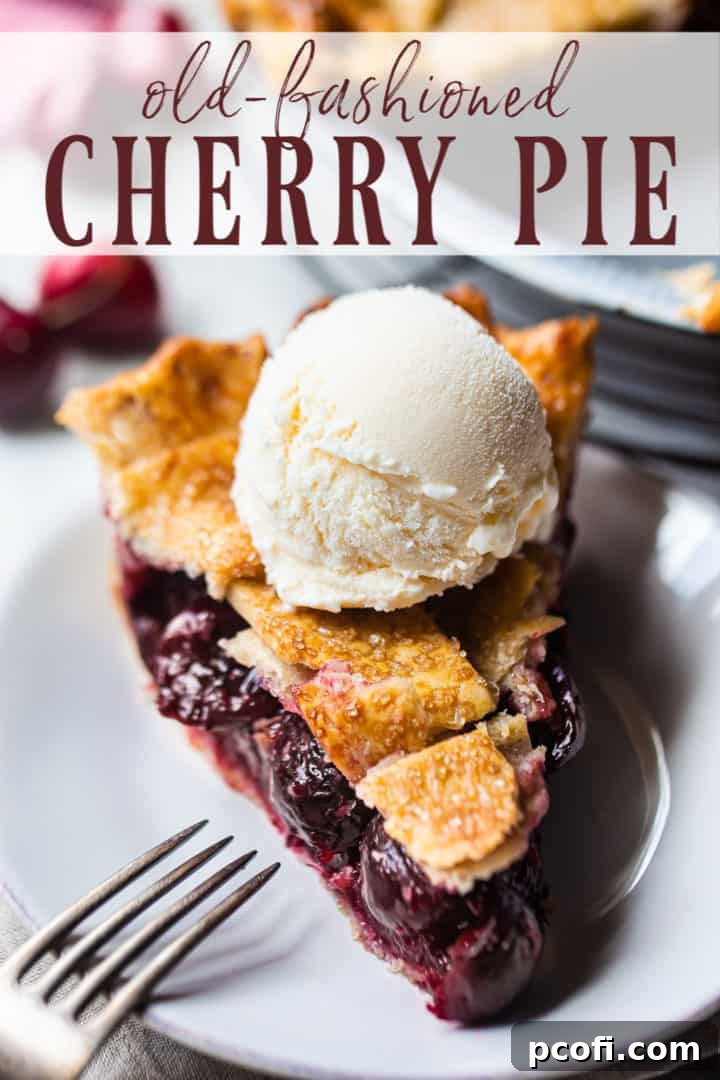
Mastering the Art of Homemade Cherry Pie
Crafting a delicious cherry pie from scratch might seem daunting, but it’s a rewarding process that can be broken down into two essential components: a superb pie crust and an irresistible cherry pie filling.
The Secret to a Perfect Pie Crust
A truly exceptional cherry pie begins with an extraordinary crust. While store-bought crusts offer convenience, nothing compares to the tender, flaky texture and rich, buttery flavor of a homemade pie pastry. I’ve spent years refining my pie crust recipe, and I truly believe it’s a game-changer.
My Perfect Homemade Pie Crust recipe is designed to be incredibly tender and ridiculously flaky, with a buttery depth that elevates any pie. I’ve made this recipe countless times, and it consistently garners rave reviews. The precise ratio of ingredients ensures a consistent, high-quality result every single time. It’s truly a foundational element for any pie baker to master.
For the best results, you’ll want to start with your pie crust, as it requires adequate chilling time in the refrigerator. Keeping the dough cold is crucial for achieving that desirable flaky texture. Warm, soft pastry dough is much harder to work with and yields a less impressive crust.
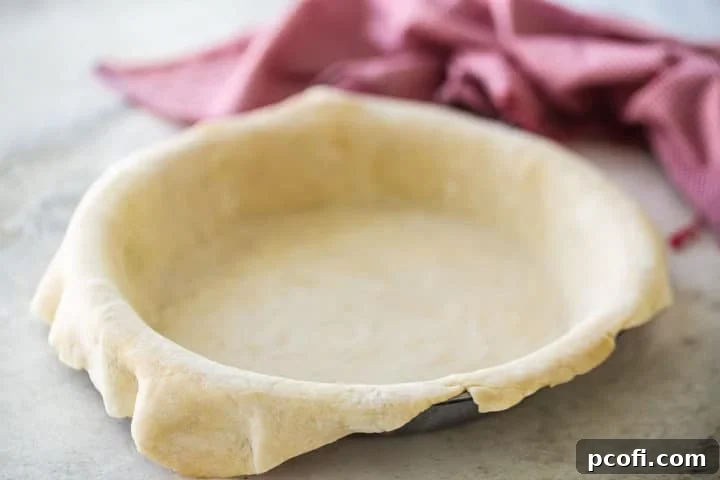
Once your dough is ready, roll out one half into a circle approximately an inch or two larger than your pie pan. (For reference, I typically use a standard 9 1/2-inch metal pie dish). Carefully transfer the rolled dough into the pan, gently easing it down the sides and into the bottom, allowing the excess to drape over the edges. Then, place the entire pie dish back into the refrigerator to keep the crust thoroughly chilled while you prepare the filling.
If you’re creating a double-crust pie or an elegant lattice-top pie (as I’ve done here), roll out the second half of your dough as well. Make it slightly larger than your pie, just like the bottom crust. Lay a sheet of parchment paper over it, roll it into a loose cylinder, tuck it into a plastic bag, and return it to the fridge. Keeping both crusts cold ensures they’ll be easy to handle and contribute to a supremely flaky finished product.
Crafting the Irresistible Cherry Pie Filling
Now, onto the heart of the pie: the luscious cherry filling. Start by preparing your cherries. They’ll need to be pitted and, ideally, halved. Pitting cherries can be a bit tedious, but a good cherry pitter makes the job surprisingly quick and easy. I highly recommend the OXO Cherry Pitter – it’s one of my most treasured kitchen gadgets, and it works wonders for olives too!
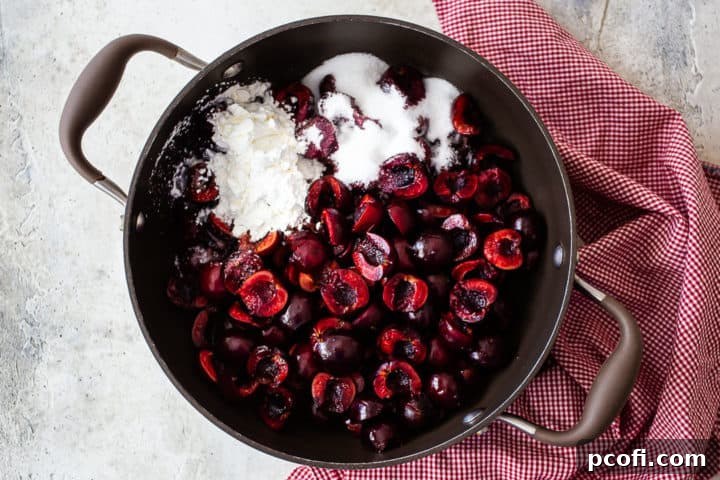
Once pitted and halved, place your cherries into a large pot. Add granulated sugar, cornstarch, fresh lemon juice, a hint of almond extract (which beautifully complements the cherry flavor), and a pinch of salt. The salt helps to balance the sweetness and enhance the overall fruit flavor.
**A note on cornstarch:** Cornstarch is your secret weapon for a perfectly thickened, jammy filling that isn’t runny. Ensure you’re using cornstarch, which is a fine, white, flavorless powder, and not cornmeal, which is yellow, gritty, and has a distinct flavor more suited for savory dishes like cornbread. You can easily order cornstarch online if you don’t have it on hand. If you prefer to avoid cornstarch, you can substitute it with 6 tablespoons of all-purpose flour for a similar thickening effect, though the final texture may be slightly less translucent.
Gently toss all the ingredients together with a spoon until the cherries are thoroughly coated with the sugar and cornstarch mixture.
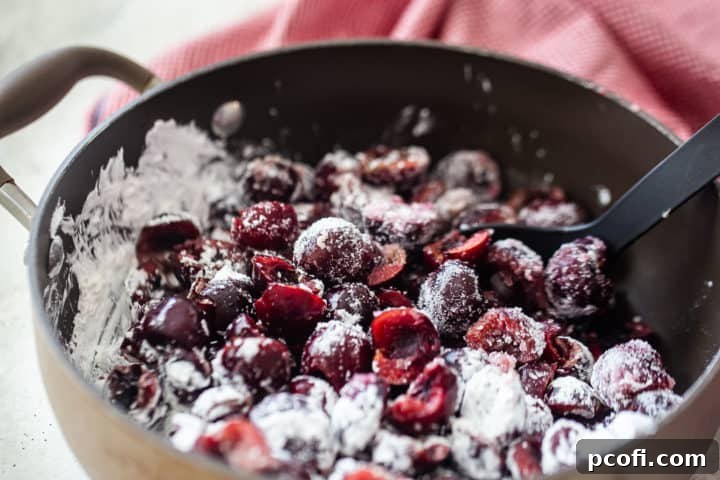
Next, cook the cherry mixture over low heat, stirring continuously. You’ll observe a delightful transformation: the liquid will gradually change from a cloudy pink to a rich, translucent red, becoming thick and syrupy. This process usually takes just a few minutes; as soon as it reaches a gentle simmer, the thickening agents will activate quickly. Once it achieves the desired consistency, remove it from the heat.
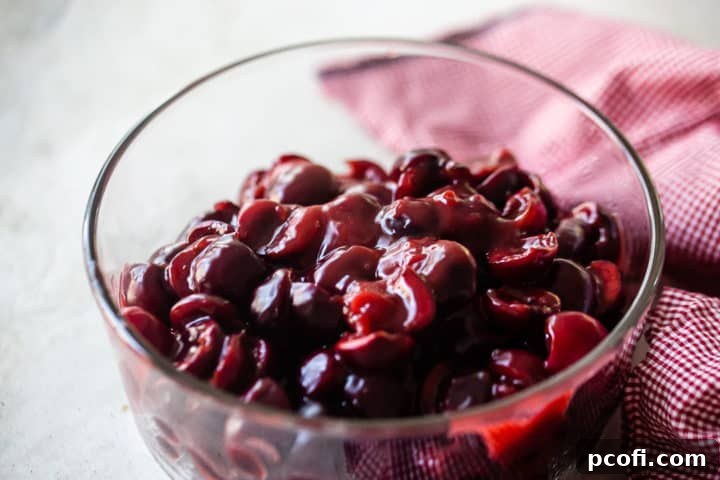
Allow the filling to cool completely before transferring it to your chilled bottom crust. This step is crucial, as adding hot filling to cold dough can compromise the flakiness of your crust. Once the filling is in the pie, dot the top generously with small pieces of cold butter. As the pie bakes, these butter dots will melt, adding richness and helping to create that perfect jammy texture.
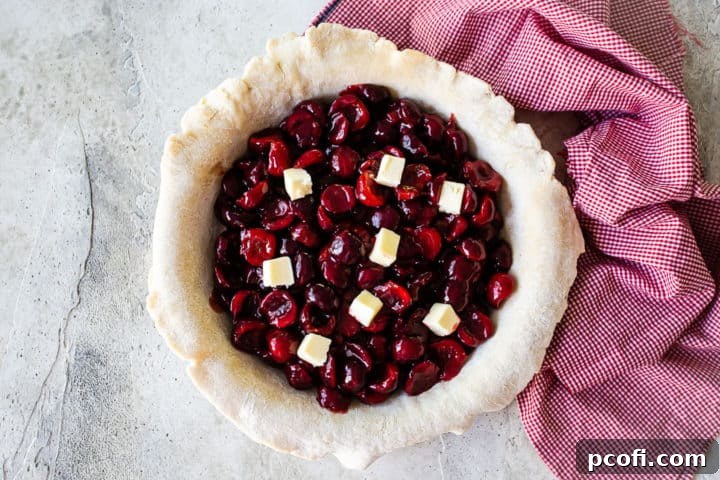
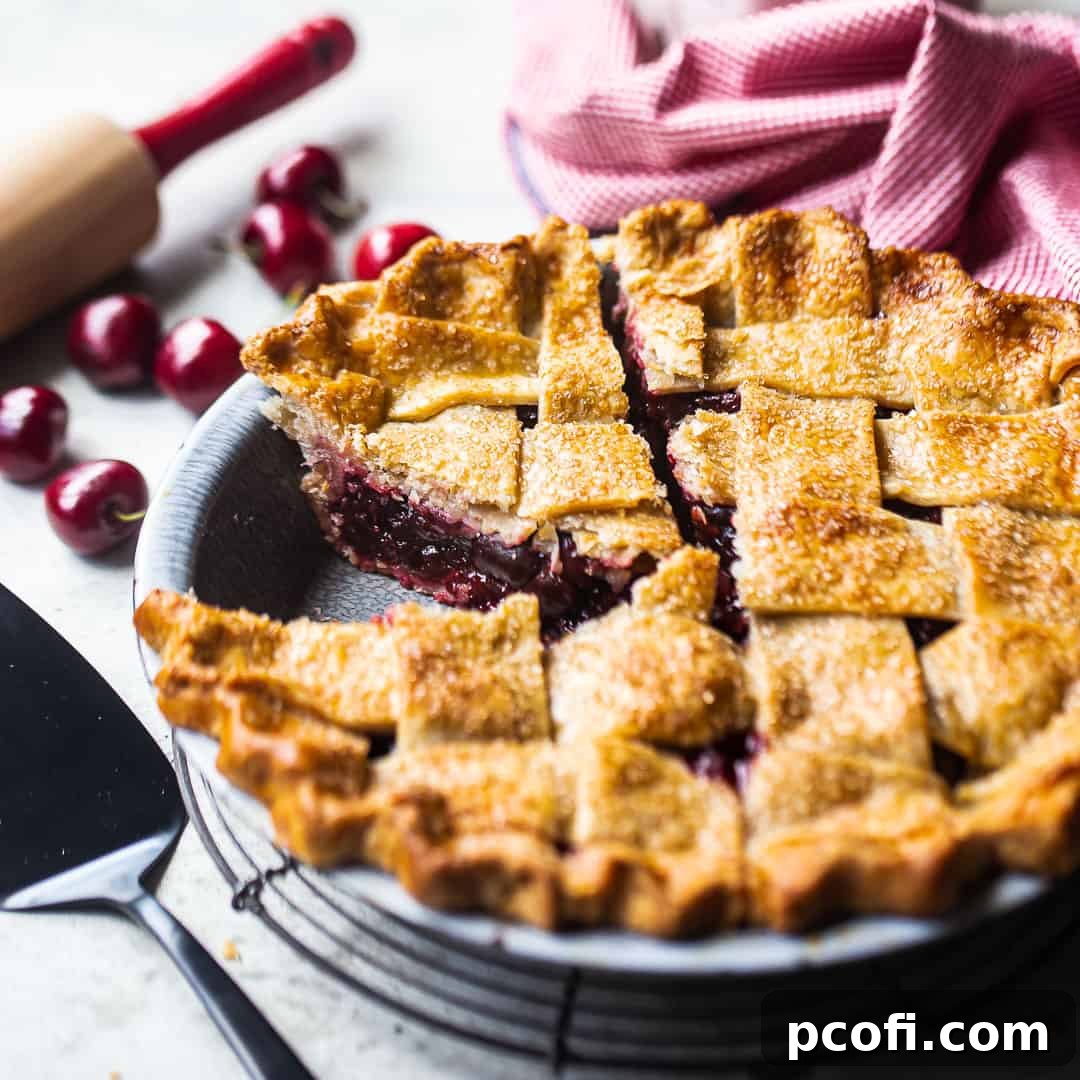
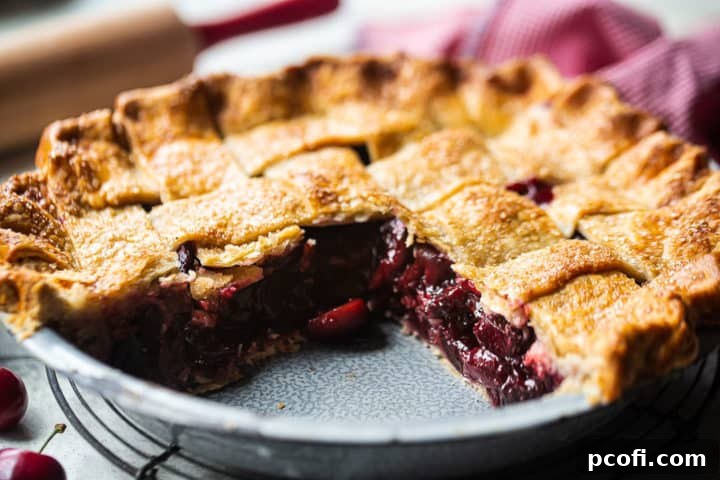
Now it’s time to decide on your pie’s topping! You can opt for a simple open-faced pie, add a delightful crumb topping, go for a classic double-crust, or create an elegant lattice top. I’ve chosen a lattice top for this recipe, not only for its beautiful appearance but also because the woven design provides natural vents, allowing steam to escape during baking and preventing a soggy crust. If you’d like to try your hand at this decorative technique, I have a detailed step-by-step picture and video tutorial available here: How to Make a Lattice Pie Crust.
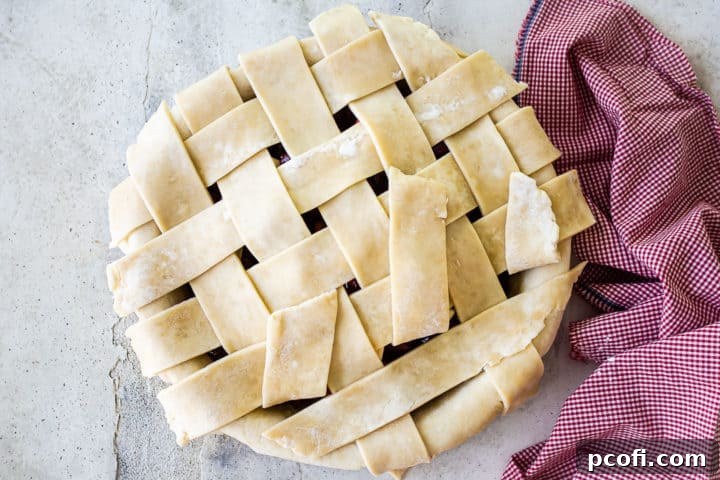
Once your top crust is in place, trim away any excess dough that hangs too far over the edge (I find kitchen shears, like these kitchen shears, perfect for this). Then, fold the edges under and crimp them decoratively to seal the pie and create a beautiful finish.
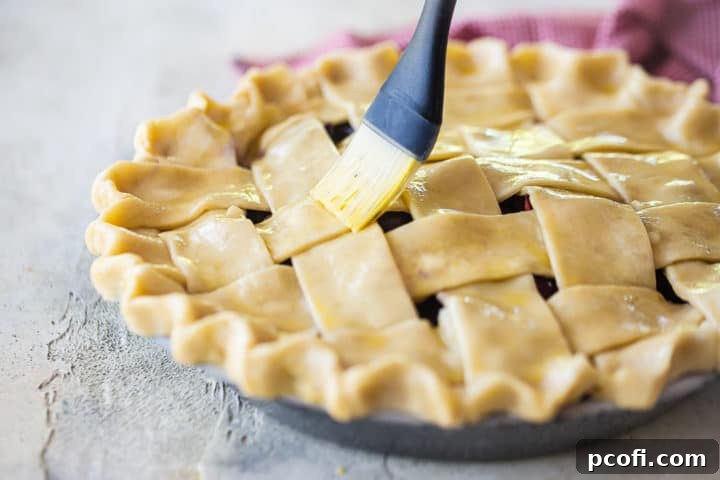
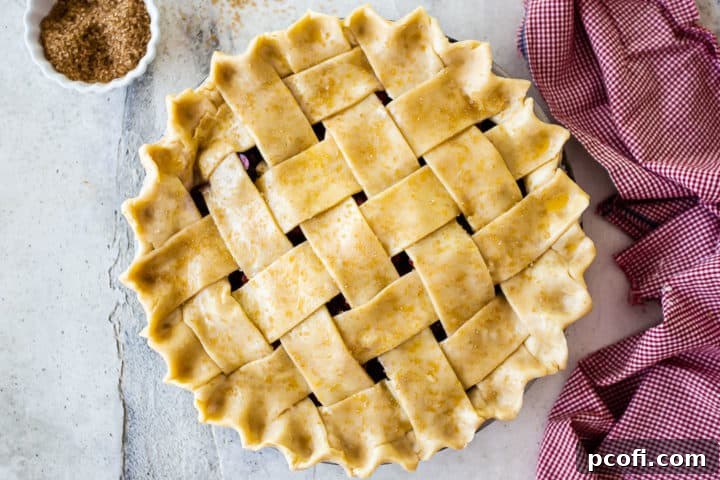
For that beautiful golden-brown color and a lovely glossy sheen, brush the top of your pie with an egg wash (typically one large egg beaten with a teaspoon or two of water). This step isn’t just for looks; it also helps the crust achieve a perfect texture. As an optional but highly recommended touch, sprinkle a little coarse sugar over the egg wash. I love the extra sweetness and satisfying crunch it adds, and it makes the finished pie sparkle beautifully! Look for demerara (or raw) sugar or clear sparkling sugar for this purpose.
Baking Your Cherry Pie to Perfection
Before your pie goes into the oven, ensure your crust is still very cold. A cold crust is essential for maximum flakiness! Don’t hesitate to pop the entire unbaked pie into the freezer for 10 to 15 minutes just before baking. This extra chill time sets the butter in the crust, preventing it from melting too quickly and ensuring a light, airy texture.
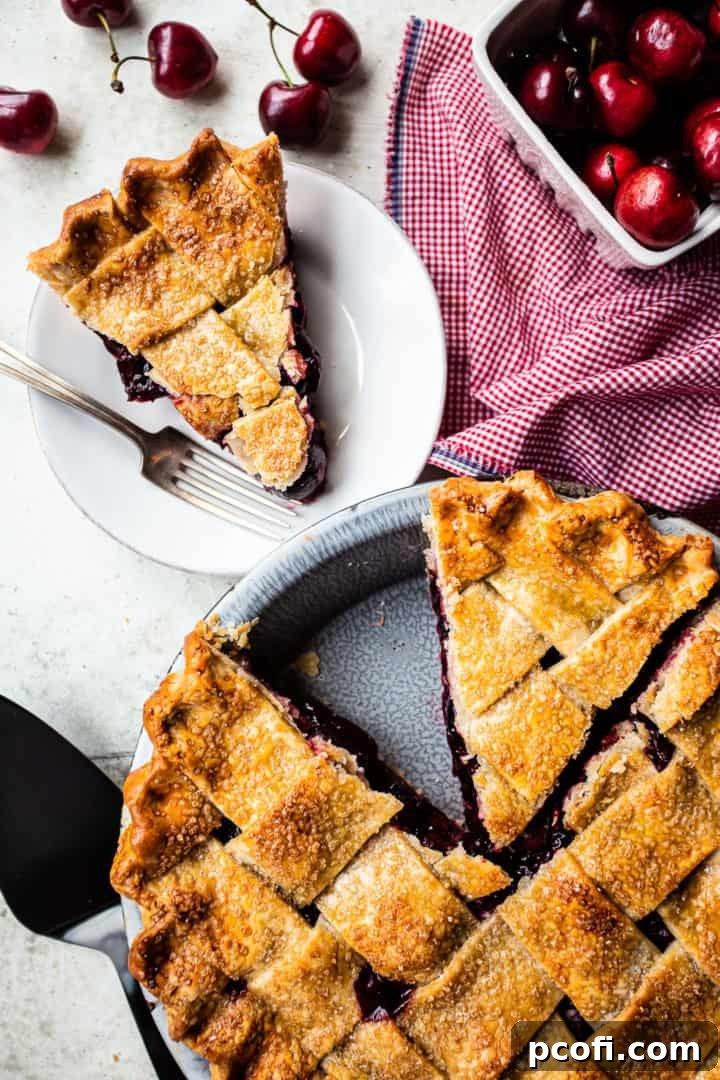
Once your oven is preheated to the correct temperature, place the unbaked pie on a baking sheet. This simple step acts as a safety net, catching any potential bubbling-over juices and saving your oven from a sticky mess. The pie will bake until the crust is beautifully golden and crisp, the filling is thick, bubbly, and visibly jammy, and the cherries inside are perfectly tender. You can gently insert a thin knife between the lattice strips to check the softness of the fruit.
If you notice the edges of your pie crust browning too quickly, don’t worry! Simply cover them loosely with strips of aluminum foil or use a dedicated pie shield to protect them, allowing the rest of the pie to catch up.
Frequently Asked Questions About Cherry Pie
What Kind of Cherries Should I Use for Pie?
This recipe is wonderfully versatile! For the pie pictured, I used fresh sweet cherries, which yield a milder, sweeter flavor. However, you can absolutely use thawed frozen cherries or even canned cherries (ensure they are just canned cherries, not pre-made cherry pie filling, which often contains added sugars and thickeners). You can use dark sweet cherries, tart (sour) cherries, or even a delightful combination of both. I recently tried a mix of half canned sour cherries and half fresh sweet cherries, and the result was a beautifully balanced flavor profile. If you opt for all tart cherries, you might want to increase the amount of sugar noted in the recipe card slightly to compensate for their natural acidity.
Can Cherry Pie Filling Be Canned for Later Use?
Yes, absolutely! This recipe can be adapted to make homemade canned cherry pie filling. Prepare the filling as directed, cooking it until it’s thick and syrupy. Then, carefully ladle the hot filling into sterilized canning jars, wipe the rims clean, secure the lids, and process them in a boiling water bath for 10 minutes. As the jars cool, you should hear the tell-tale “pop” of the lid sealing, indicating that they are properly preserved. For more detailed information on safe canning practices, you can refer to my Strawberry Jam recipe, which includes general preserving guidelines.
Can I Make This Pie Ahead of Time?
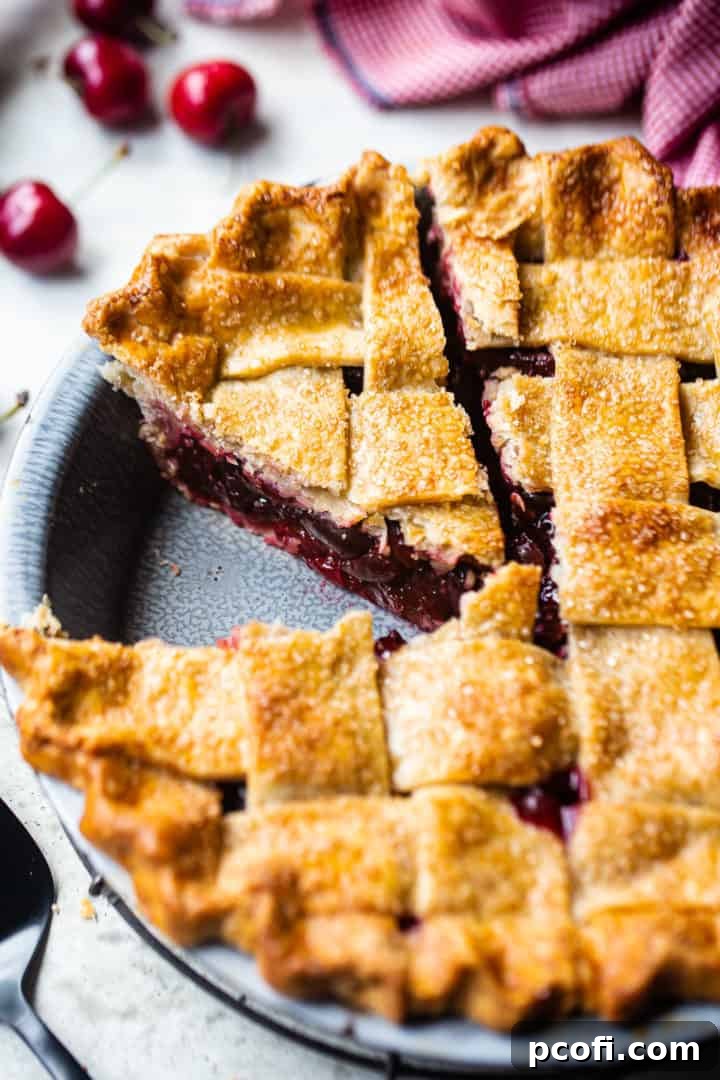
While the saying goes “easy as pie,” making a homemade pie does involve several steps, which can sometimes feel a bit overwhelming. Breaking the process into manageable stages that can be done ahead of time is an excellent strategy. I often prepare the pie crust the night before, roll it out, wrap it tightly to prevent drying, and refrigerate it overnight. The next day, I can focus on making the filling and baking the pie. This approach also allows ample time for the pie to cool completely before serving, which is crucial. Slicing into a hot pie often results in a runny filling that won’t hold its shape as well.
How Should I Store Leftover Cherry Pie?
Once baked, your cherry pie can typically be left out at room temperature for several hours. After that, it’s best to transfer it to the refrigerator to maintain freshness. Stored properly in the fridge, it should last for up to a week, though the bottom crust may become slightly less crisp over time.
Can Cherry Pie Be Frozen?
Yes, cherry pie freezes beautifully! First, bake the pie as directed and allow it to cool completely. Once cooled, place the entire pie into the freezer until it’s solid. At this point, you can remove it from its original pie pan, wrap it tightly in plastic wrap, and then slip it into a zip-top freezer bag for extra protection. Alternatively, consider baking your pies in disposable foil pans. This way, your favorite pie dish isn’t tied up in the freezer, and you can simply wrap the pie directly in its disposable tin.
To thaw, place the frozen pie in the refrigerator overnight or at room temperature for several hours. While the bottom crust might lose a bit of its crispness during the freeze-thaw process, the flavor will remain fantastic! To reheat, place the thawed pie in a 170°F (77°C) oven until it’s warmed through to the center.
More Favorite Pie Recipes to Explore
If you’ve enjoyed mastering this cherry pie, you might love exploring other delicious pie and tart recipes:
- Lemon Meringue Pie: A bright and tangy classic with a cloud of toasted meringue.
- Peanut Butter Pie: A creamy, rich, and utterly irresistible no-bake delight.
- Grasshopper Pie: A refreshing minty chocolate treat, perfect for any occasion.
- Chocolate Cream Pie: A decadent, silky smooth chocolate custard pie that’s pure indulgence.
As an Amazon Associate, I earn from qualifying purchases.
Cherry Pie
Leave a Review
Save RecipeSaved!
Ingredients
- 1 batch Perfect Homemade Pie Crust
- 6 cups (828 g) pitted & halved cherries
- 1/3 cup (78.86 g) granulated sugar, (you may need more if using sour cherries)
- 3 tablespoons (44.36 g) cornstarch
- 3 tablespoons (29.57 g) lemon juice
- 1/4 teaspoon (1.23 g) kosher salt
- 1/2 teaspoon (2.46 g) almond extract
- 2 tablespoons (29.57 g) unsalted butter
- egg wash, (1 large egg beaten with 2 teaspoons water)
- clear sparkling sugar, (optional garnish)
Instructions
-
Roll out the top and bottom crust to an inch or two larger than your pie dish.
-
Place the bottom crust in the pie dish (allowing the excess to drape over the sides), slip into a plastic bag, and chill in the refrigerator.
-
Place a sheet of parchment paper over the top crust, roll it into a cylinder, place it in a plastic bag, and chill in the refrigerator.
-
Place the cherries, sugar, cornstarch, lemon juice, and salt in a large pot and toss to coat.
-
Cook the cherry mixture over low heat until the juices have thickened and the filling is lightly simmering (approximately 5 minutes).
-
Transfer the filling to a heat-safe bowl, stir in the almond extract, and allow it to cool completely.
-
When the filling is completely cooled, spoon it into the chilled bottom crust, then dot the top with butter.
-
Remove the top crust from the refrigerator, unroll it, and cut it into strips.
-
Arrange the strips over the filling in a lattice pattern. (For info on how to do this, click here: How to Make a Lattice Pie Crust.)
-
Trim away any excess pie dough, turn the edges under, and crimp in a decorative pattern.
-
Brush the top crust with egg wash and sprinkle with coarse sugar, if using.
-
Chill the unbaked pie for 10 to 15 minutes while preheating the oven to 425 degrees F.
-
Bake the pie until the crust is golden brown and crisp, the filling is bubbling and thick, and the cherries are softened (approximately 45 minutes). (If the edges of the pie are browning too quickly, cover them with foil.)
-
Allow the pie to cool completely before slicing.
Notes