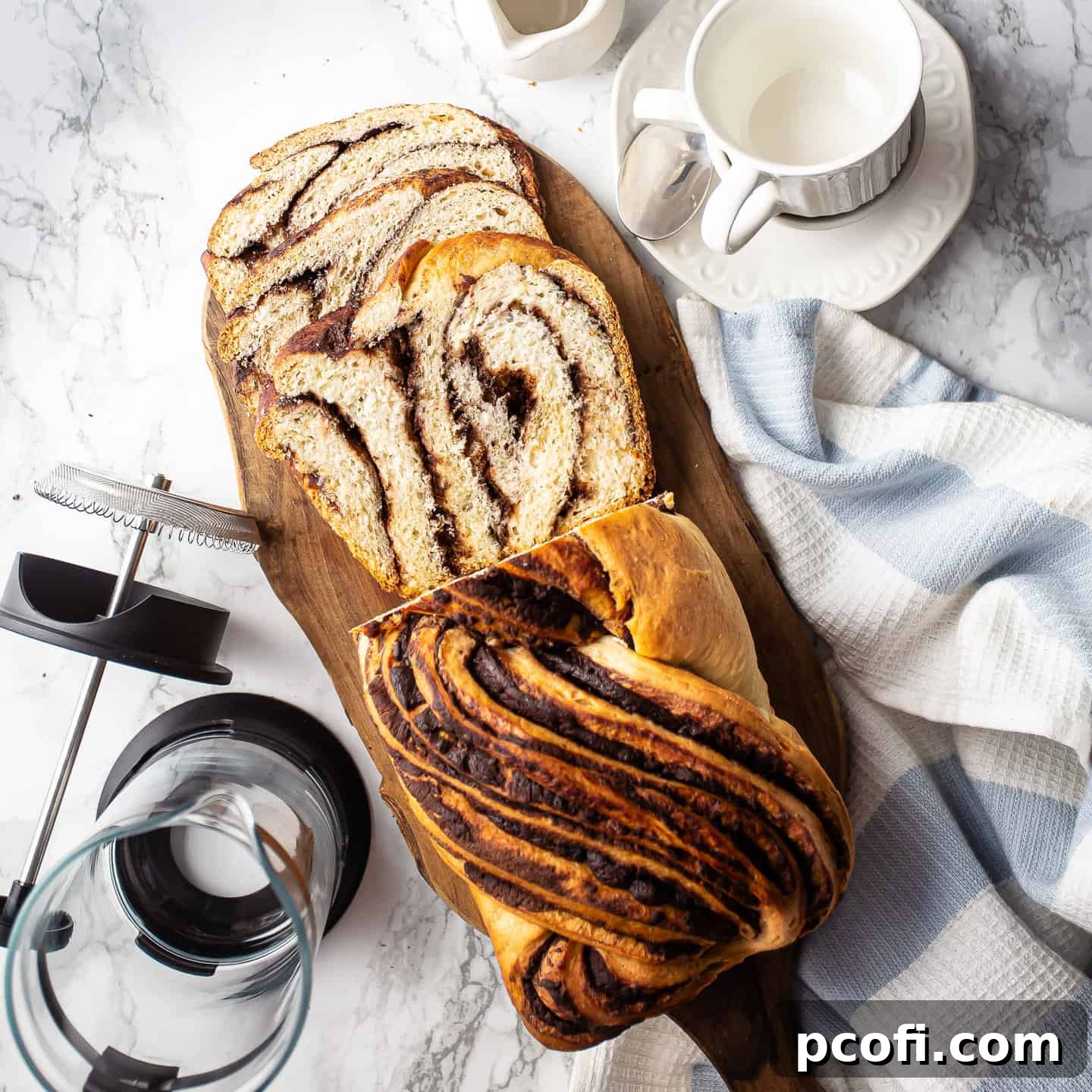
Discover the ultimate chocolate babka recipe! This step-by-step tutorial guides you through creating a moist, pillowy bread, elegantly swirled with rich dark chocolate in every delightful bite. Perfect for any occasion, this simplified version is easier to make and even more delicious than ever before.
Originally published: March 3, 2020.
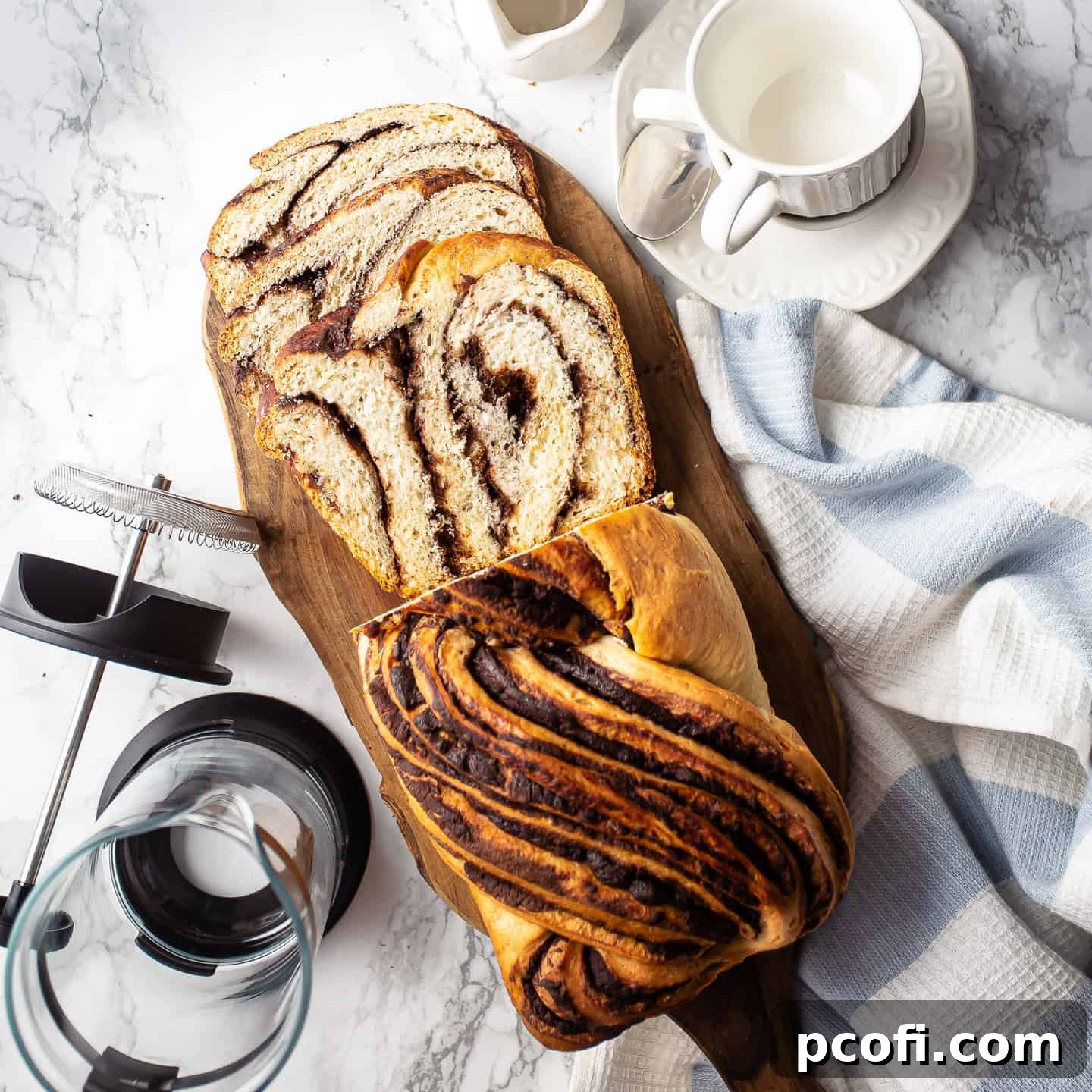
There’s a certain magic that happens when baking bread from scratch, and this chocolate babka recipe is no exception. We’ve completely reimagined and refined this beloved classic, transforming it into a version that is not only significantly easier to prepare but also promises an even more delightful taste and stunning visual appeal. Prepare to be captivated by the soft, pillowy texture of the bread as it gracefully swirls around layers of luscious dark chocolate, creating a symphony of flavors and textures in every single slice.
The art of fresh bread baking is undeniably one of life’s most comforting pleasures. There’s a profound satisfaction in the slow, methodical process—the kneading, the resting, the anticipation. It’s a journey that, while requiring patience and adherence to steps, culminates in an incredibly rewarding outcome. The aroma alone fills the home with an inviting warmth, promising a treat that transcends the ordinary. This babka is more than just a recipe; it’s an experience, a mindful practice that yields a masterpiece.
For those who love exploring the vast world of baked goods, our collection features a diverse array of bread recipes, from savory to sweet. Just last week, we delved into the rustic charm of rye bread, and before that, we explored delightful cheese Danish and hearty beer bread. Yet, among these wonderful creations, chocolate babka holds a special place. Its unique combination of moist, fluffy white bread and decadent dark chocolate ribbons truly sets it apart. It’s a versatile loaf that perfectly bridges the gap between a rich dessert and a comforting breakfast pastry, making it a standout in any baker’s repertoire.
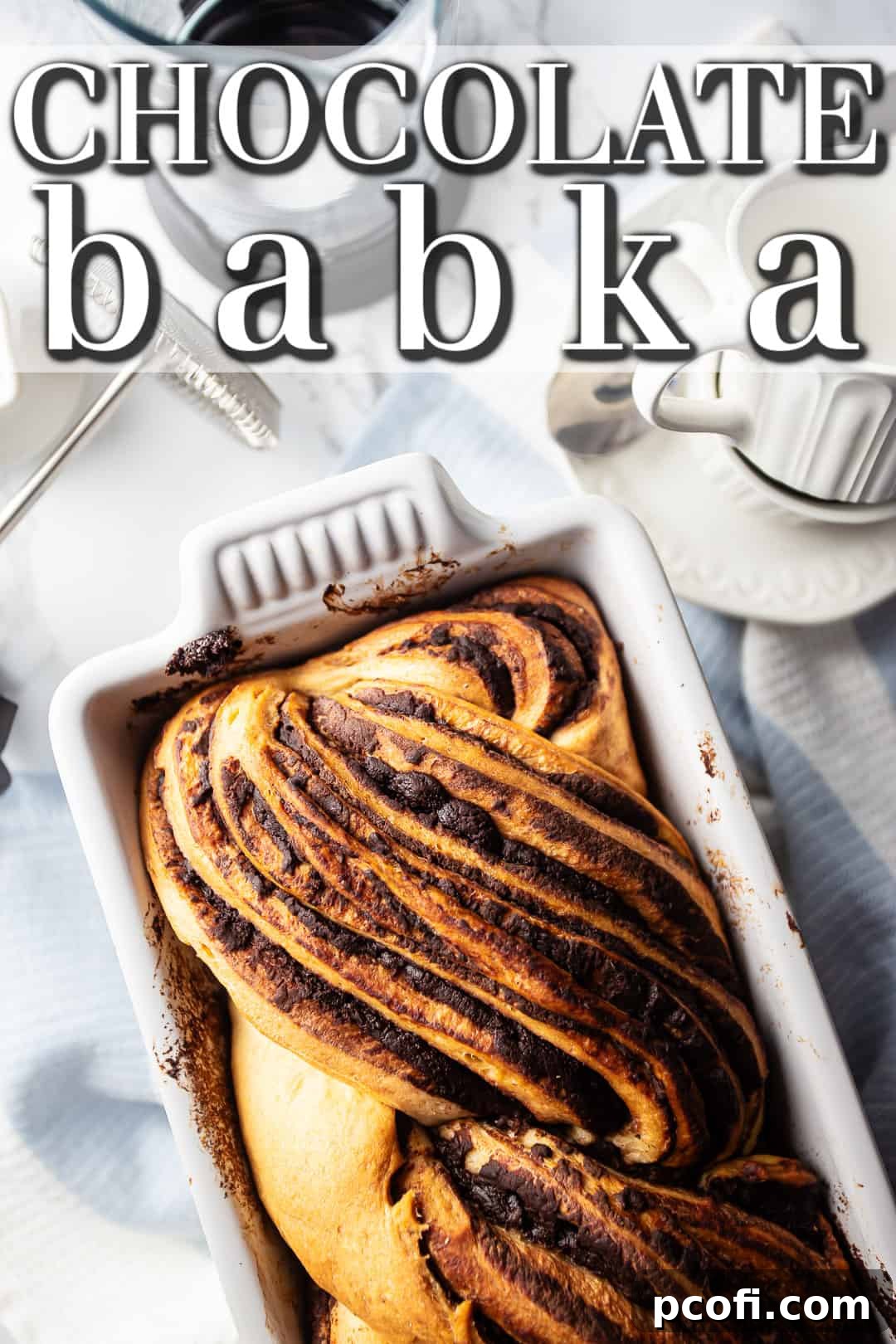
Table of Contents
- What is Chocolate Babka? History and Heritage
- Why This is the Best Chocolate Babka Recipe
- What Does Chocolate Babka Taste Like?
- Essential Ingredients for Your Babka
- Recommended Baking Equipment
- How to Make Chocolate Babka: Step-by-Step Guide
- How to Serve and Enjoy Your Babka
- Expert Tips for Perfect Babka
- Frequently Asked Questions (FAQs)
Jump to Recipe
What is Chocolate Babka? History and Heritage
Babka is a truly classic bread, steeped in history and tradition, with its origins tracing back to the vibrant culinary landscapes of Eastern Europe. This delightful confection typically features a rich, soft, and moist bread dough, often enriched with butter and eggs, which is then skillfully swirled with a sweet filling. While cinnamon sugar and various fruits are popular choices, our version highlights the irresistible allure of chocolate.
The name “babka” itself is derived from a Slavic term meaning “grandmother” or “old woman,” which might refer to its traditional pleated shape resembling a grandmother’s skirt. This comforting bread is a staple in many Eastern European cultures, especially within Jewish communities, where it is a cherished part of holiday celebrations and everyday life. You might recognize babka from its iconic appearance in delis, famously referenced in a certain Seinfeld episode. However, nothing quite compares to the warmth, freshness, and sheer satisfaction of a homemade babka, baked with love and precision right in your own kitchen.
Traditional babka varieties can range from simple cinnamon swirls to more elaborate poppy seed or fruit fillings. The chocolate babka, in particular, gained significant popularity in recent decades, becoming a modern classic beloved for its decadent flavor profile. Its charm lies not only in its taste but also in its intricate marbled appearance, a testament to the baker’s artistry. Making babka at home allows for complete control over the quality of ingredients and the depth of flavor, ensuring a truly superior loaf.
Why This is the Best Chocolate Babka Recipe
We believe this chocolate babka recipe stands out from the rest, and here’s why you’ll agree once you try it:
- Unforgettable Taste: Our babka boasts a bread that is perfectly balanced in sweetness, incredibly moist, and wonderfully pillowy soft. This exquisite dough serves as the ideal canvas for a generous, thick ribbon of dark chocolate ganache, creating a luxurious experience with every bite. The slight bitterness of the dark chocolate beautifully complements the sweet, rich bread.
- Exceptional Texture: Achieving the perfect texture in babka is an art, and this recipe delivers an incredibly airy and light crumb. It defies dryness, remaining tender and moist, allowing the distinctive swirls of chocolate to shine through without compromising the bread’s delicate structure. Each strand of bread is soft and pliable, truly melting in your mouth.
- Minimal Ingredients: We’ve intentionally streamlined the ingredient list to its bare essentials. You’ll find that you only need a handful of common pantry staples to create this magnificent bread. This simplicity ensures that the natural flavors of high-quality ingredients can truly come forward, rather than being masked by complexity.
- Remarkably Easy to Make: Don’t let the intricate appearance fool you; this recipe has been designed for accessibility. By following our clear, step-by-step instructions and incorporating our expert tips, you’ll find the process straightforward and enjoyable, even if you’re new to yeast baking. We guide you through each stage, making it a rewarding baking adventure from start to finish.
What Does Chocolate Babka Taste Like?
Imagine that delightful, soft, and slightly sweet white bread that brings back cherished childhood memories, but elevate it with the profound richness of premium chocolate. That’s the essence of chocolate babka. It’s a truly special treat that offers a sophisticated yet comforting flavor profile. The bread itself has a delicate sweetness and a hint of buttery richness, providing a perfect counterpoint to the deep, intense flavor of the dark chocolate swirls. The combination is heavenly—a perfect harmony of sweet and slightly bitter, soft and rich, creating a truly unique and irresistible experience.
Essential Ingredients for Your Babka
Crafting the perfect chocolate babka begins with selecting the right ingredients. Here’s a closer look at what you’ll need and why each component is crucial:
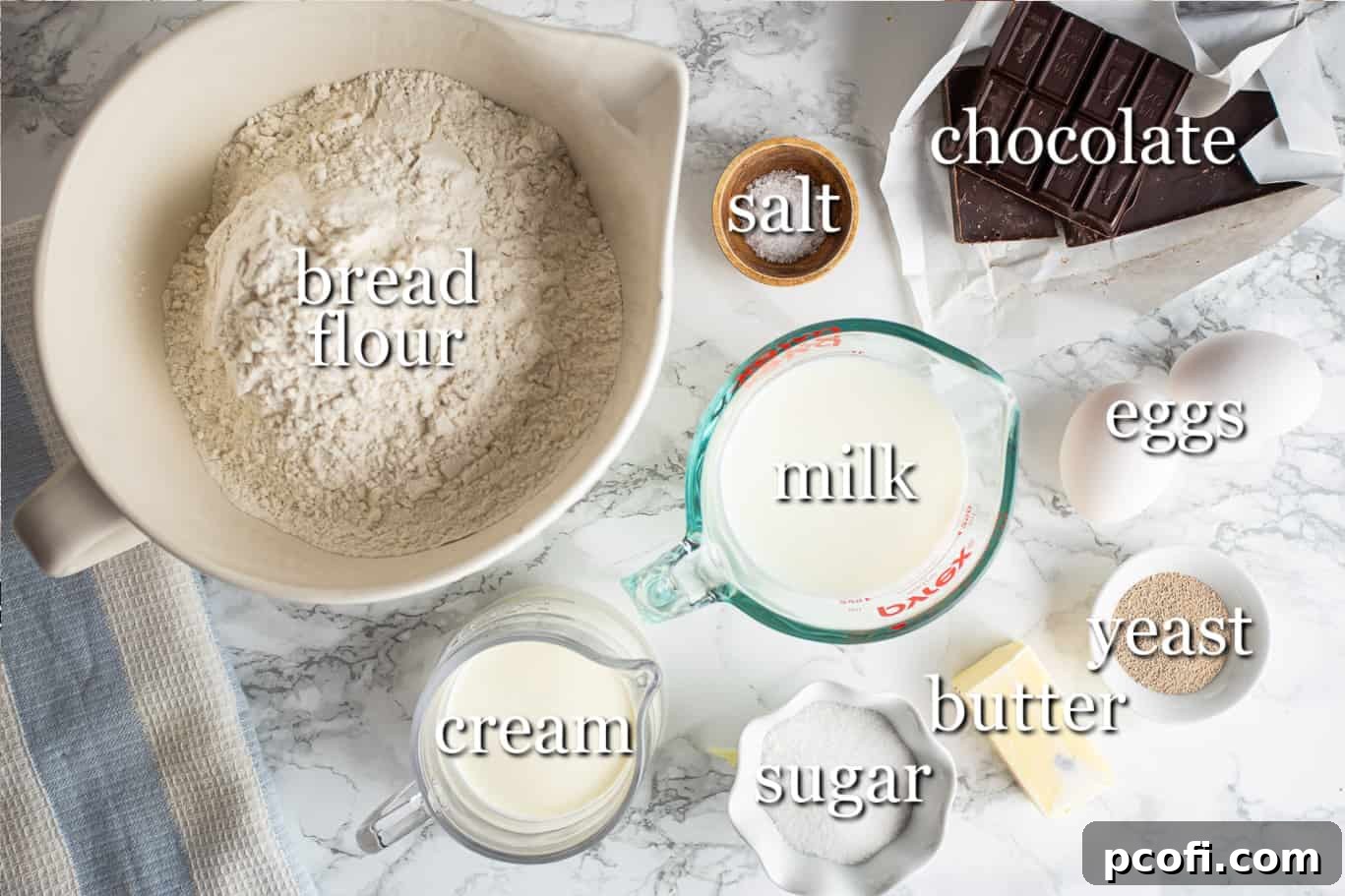
Flour: For the best results, bread flour is highly recommended. Its higher protein content develops more gluten, yielding that desirable elastic, chewy texture that is characteristic of excellent babka. However, if bread flour isn’t available, all-purpose flour can be used as a substitute in a pinch, though the final texture might be slightly less robust and elastic.
Salt: Salt plays a much larger role than simply making the bread “salty.” It is a fundamental flavor enhancer, intensifying the sweet and rich notes of the babka. We recommend kosher salt because it is free of additives like iodine, which can sometimes impart a metallic or bitter aftertaste. Kosher salt’s pure flavor allows the other ingredients to truly shine. It’s also widely available and cost-effective.
Sugar: Granulated white sugar contributes a delicate sweetness to the bread, ensuring it’s not overtly sugary but perfectly balanced. Beyond taste, sugar is vital for activating and feeding the yeast, which in turn helps the dough rise beautifully. Feel free to experiment with other granulated sweeteners if you prefer, as long as they can be substituted 1:1 in terms of volume and function.
Butter: Unsalted butter is preferred here, as it provides rich flavor and moisture to the babka without introducing excessive or unpredictable levels of salt. Using unsalted butter gives you precise control over the overall seasoning of your bread, ensuring consistent and delicious results every time. Ensure your butter is melted and slightly cooled before adding it to the dough.
Milk & Cream: These dairy components work in harmony with the butter to significantly enrich the bread, making it incredibly tender and flavorful. You can use any type of milk and heavy whipping cream you have on hand. For convenience, a combination of half & half can also be used if it’s readily available.
Eggs: Eggs are indispensable in babka dough, providing essential structure, richness, and a beautiful golden hue to the finished loaf. We recommend using large chicken eggs. If you’re looking for a plant-based alternative, ensure you use a product designed for 1:1 substitution in baking. While room temperature eggs are often advised for better incorporation, in this recipe, we’ve found it’s not absolutely critical for success.
Yeast: Our top recommendation is active dry yeast. This type of yeast facilitates a slower, more controlled rise, which allows for deeper flavor development through fermentation. While sourdough starter and instant yeast can also be used with slight adjustments to rise times, active dry yeast consistently yields a superior flavor and texture profile that we adore for babka.
Chocolate: The heart of this chocolate babka lies in its rich filling. For the most indulgent ganache, we strongly advise chopping baking bars of high-quality chocolate. Alternatively, premium chocolate chips can be used. We typically opt for semi-sweet chocolate, as it offers a perfect balance of sweetness and cocoa intensity. However, feel free to personalize your babka by using bittersweet chocolate for a bolder flavor, milk chocolate for a sweeter profile, or even white chocolate for a creamy, distinct twist.
Recommended Baking Equipment
Having the right tools can make your babka baking experience smoother and more enjoyable. Here’s what we recommend:
- Measuring Cups & Spoons: Accurate measurements are key in baking. Refer to our comprehensive guide on how to measure ingredients for baking to ensure precision.
- Bowls: You’ll need one large mixing bowl for preparing the bread dough, allowing ample space for the ingredients to combine and for the dough to rise. A smaller, heat-safe bowl will be essential for creating the rich chocolate filling.
- Plastic Wrap: This is crucial for covering your dough during its resting periods, preventing it from drying out and creating the ideal environment for yeast activity and proper rising.
- Rolling Pin: A sturdy rolling pin is necessary to evenly flatten your dough into a large, wide rectangle, providing the perfect surface area for spreading the delectable chocolate filling.
- Silicone Spatula: Ideal for thoroughly stirring the ganache filling and for smoothly spreading it across the rolled-out dough, ensuring an even layer of chocolate in every bite.
- Sharp Knife: A good, sharp knife is indispensable for slicing the rolled dough lengthwise, which is how you achieve that signature, beautiful swirled pattern unique to babka.
- Loaf Pan: A standard-sized loaf pan (typically 9×5 inches) is perfect for baking your babka. We used a stoneware pan, which retains heat beautifully. If you opt for a metal pan, you might need to slightly adjust your baking time as metal conducts heat differently.
- Stand Mixer with Dough Hook (Optional but Recommended): While this recipe can be made by hand, a stand mixer with a dough hook attachment will make the kneading process significantly easier and more efficient, ensuring a perfectly developed dough without the manual effort.
How to Make Chocolate Babka: Step-by-Step Guide
This stunning loaf comes together in just four straightforward steps, transforming simple ingredients into an extraordinary treat. Don’t be intimidated by its elegant appearance; the process is quite rewarding.
Step 1: Make the Dough
Begin by combining approximately half of your bread flour with the salt in a generously sized mixing bowl. Ensure they are well mixed to evenly distribute the salt. Next, create a distinct well in the center of the dry ingredients. Into this well, pour the warm milk, warm heavy cream, slightly cooled melted butter, and granulated sugar. The liquids should be warm, not hot, to create an optimal environment for the yeast.
Gently sprinkle the active dry yeast over the surface of these liquids. Allow it to sit undisturbed for about 5 minutes. This crucial step, known as proofing, allows the yeast to activate and ensures it’s alive and ready to work its magic. You should see a slight foam or bubbling on the surface, indicating the yeast is active.
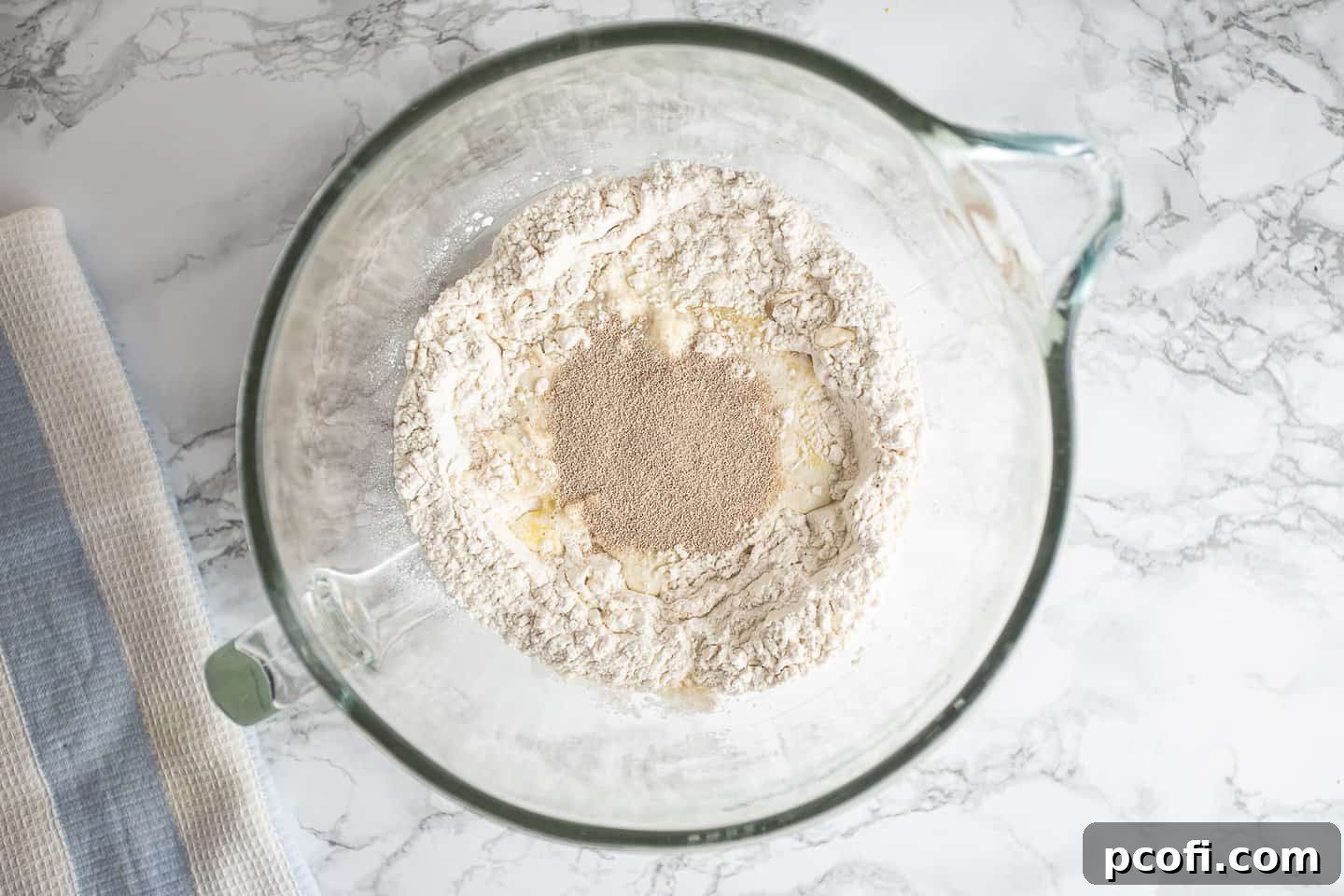
Once the yeast has dissolved, gently stir all the ingredients together in the bowl until you achieve a thin, somewhat loose batter. At this stage, it won’t look like bread dough yet. Now, add the large eggs to the mixture. The eggs will contribute to the richness and structure of your babka.
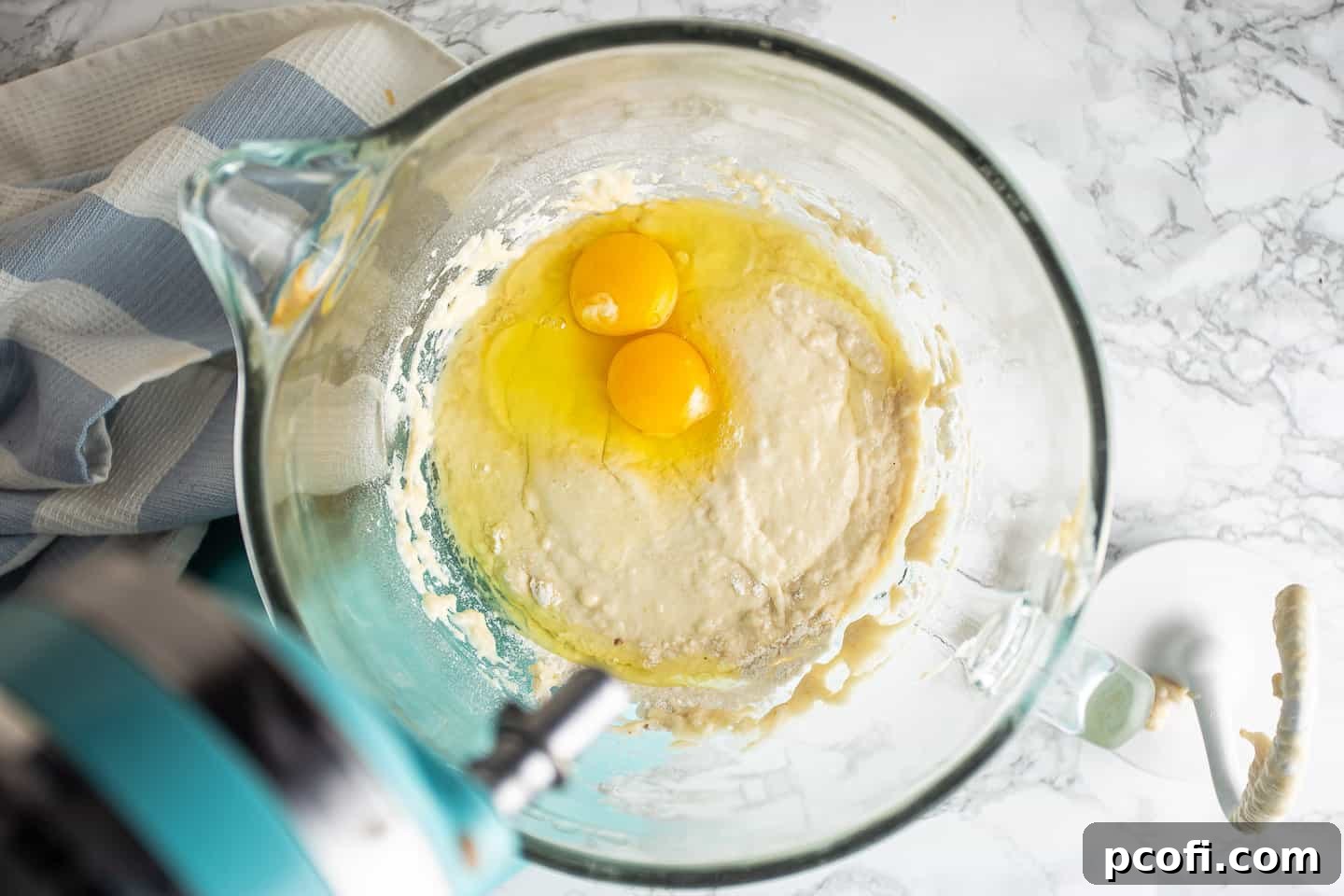
Mix the eggs thoroughly into the batter. Then, gradually incorporate the remaining flour, adding it about a quarter cup at a time. Continue mixing as you add, allowing the flour to be fully absorbed before adding more. The goal is to reach a consistency where the dough is stiff but no longer excessively sticky. It should start to pull away cleanly from the sides of the bowl and gather itself into a cohesive ball. This is a crucial visual cue; once you observe this, stop adding flour. The exact amount of flour can vary slightly depending on humidity and other factors, so trust the dough’s consistency over rigid measurements.
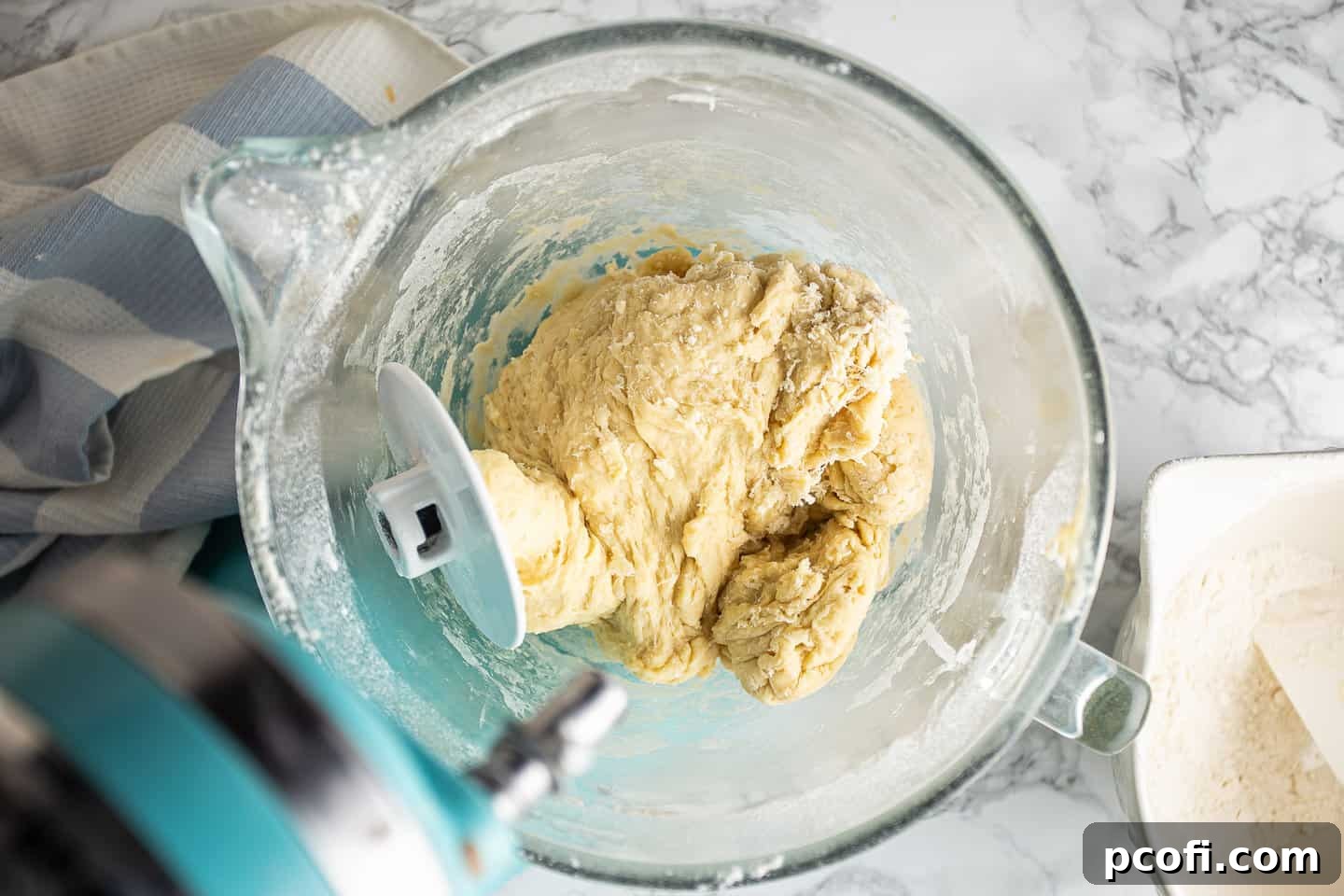
This is precisely what your dough should look like before kneading: slightly shaggy but forming a ball. Once it reaches this stage, it’s time for the all-important kneading process. Kneading is critical for developing the gluten in the flour, which gives the bread its satisfying elastic, chewy, and pillowy texture. Skimping on this step can result in a crumbly or dense loaf. Therefore, dedicate a full 10 minutes to kneading. If using a stand mixer with a dough hook, let it work its magic; otherwise, knead vigorously by hand until the dough transforms.
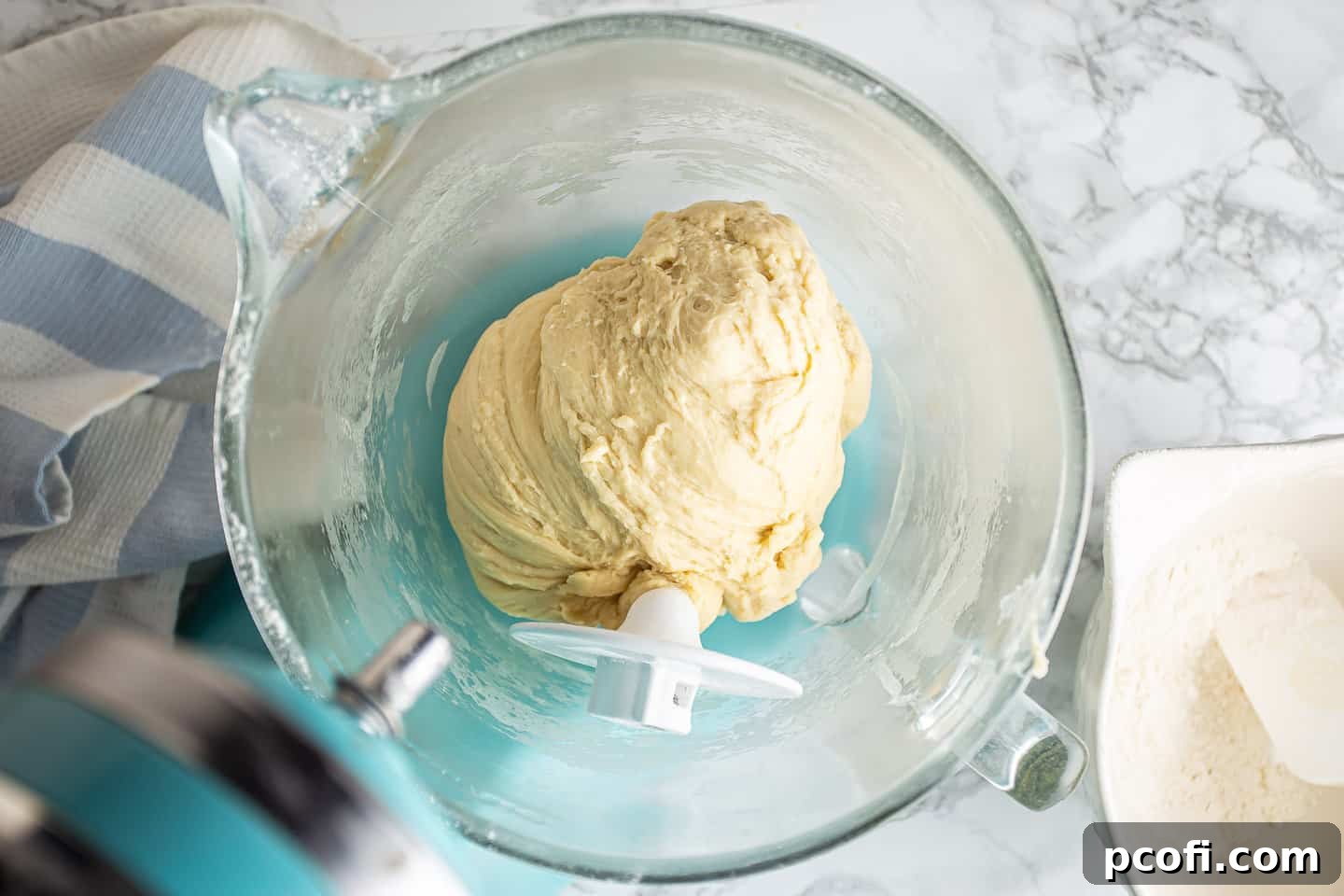
Observe the remarkable transformation after a thorough knead! The dough should now appear noticeably smoother, more elastic, and possess a supple texture. Lightly cover the bowl with plastic wrap, creating a warm and humid environment, and place it in a warm spot—perhaps a sunny windowsill or a lightly warmed oven (ensure it’s turned off!)—to allow it to rest and undergo its first rise. This initial rise is essential for flavor development and achieving that light, airy structure.
Step 2: Make the Filling
While your bread dough is happily rising, you can efficiently prepare the luxurious chocolate filling. Begin by finely chopping your chosen chocolate. Smaller pieces will melt more evenly and quickly, ensuring a smooth ganache.
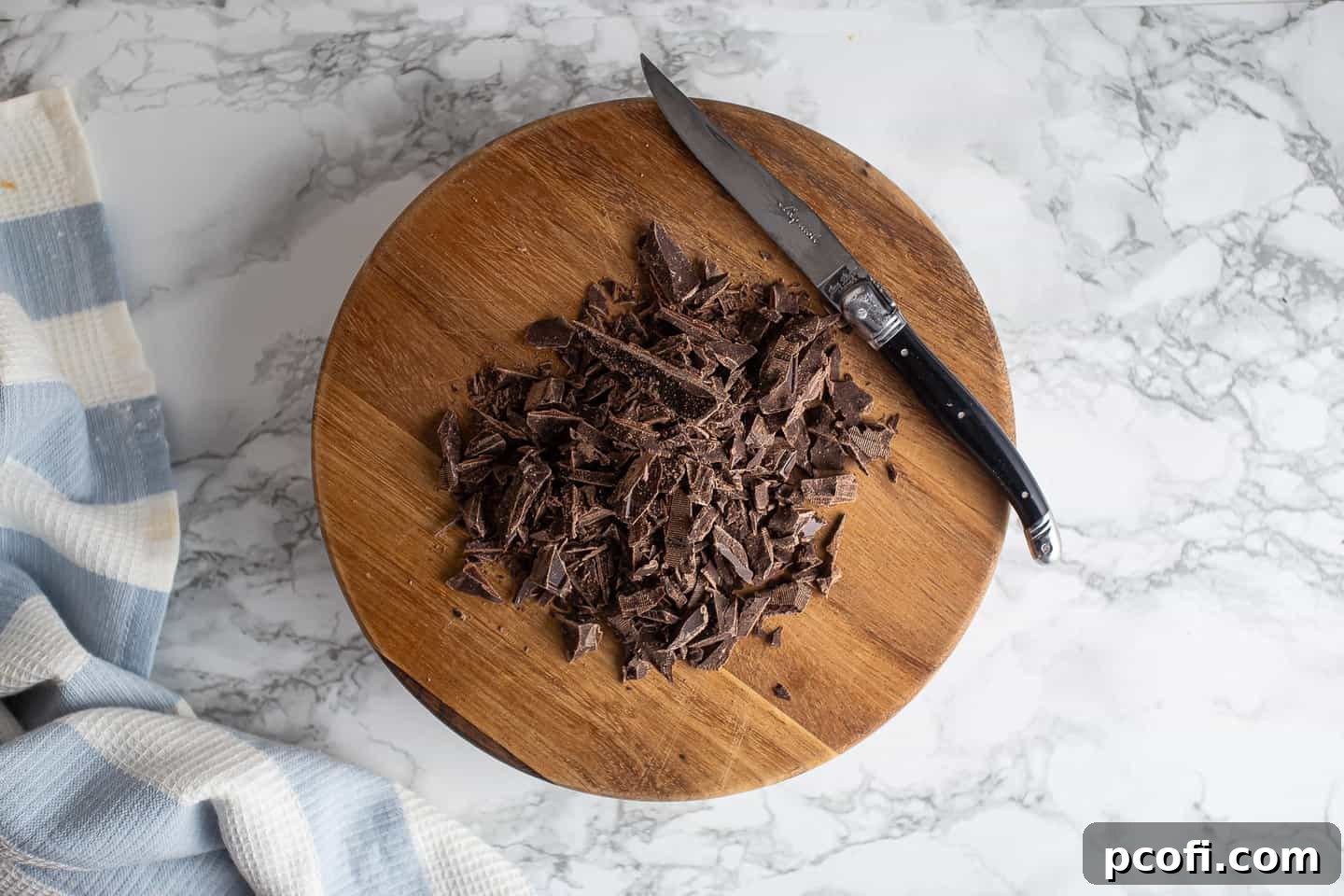
Next, gently heat the heavy whipping cream until it is steamy, but not boiling. You can achieve this either in a microwave-safe bowl or in a small saucepan over medium-low heat on the stovetop. The goal is to get it hot enough to melt the chocolate effectively without scorching the cream.
Once the cream is steamy, pour it directly over the chopped chocolate in a heat-safe bowl. Allow this mixture to sit undisturbed for approximately 5 minutes. This resting period is crucial as the hot cream will gradually melt the chocolate, making it easier to combine into a smooth ganache.
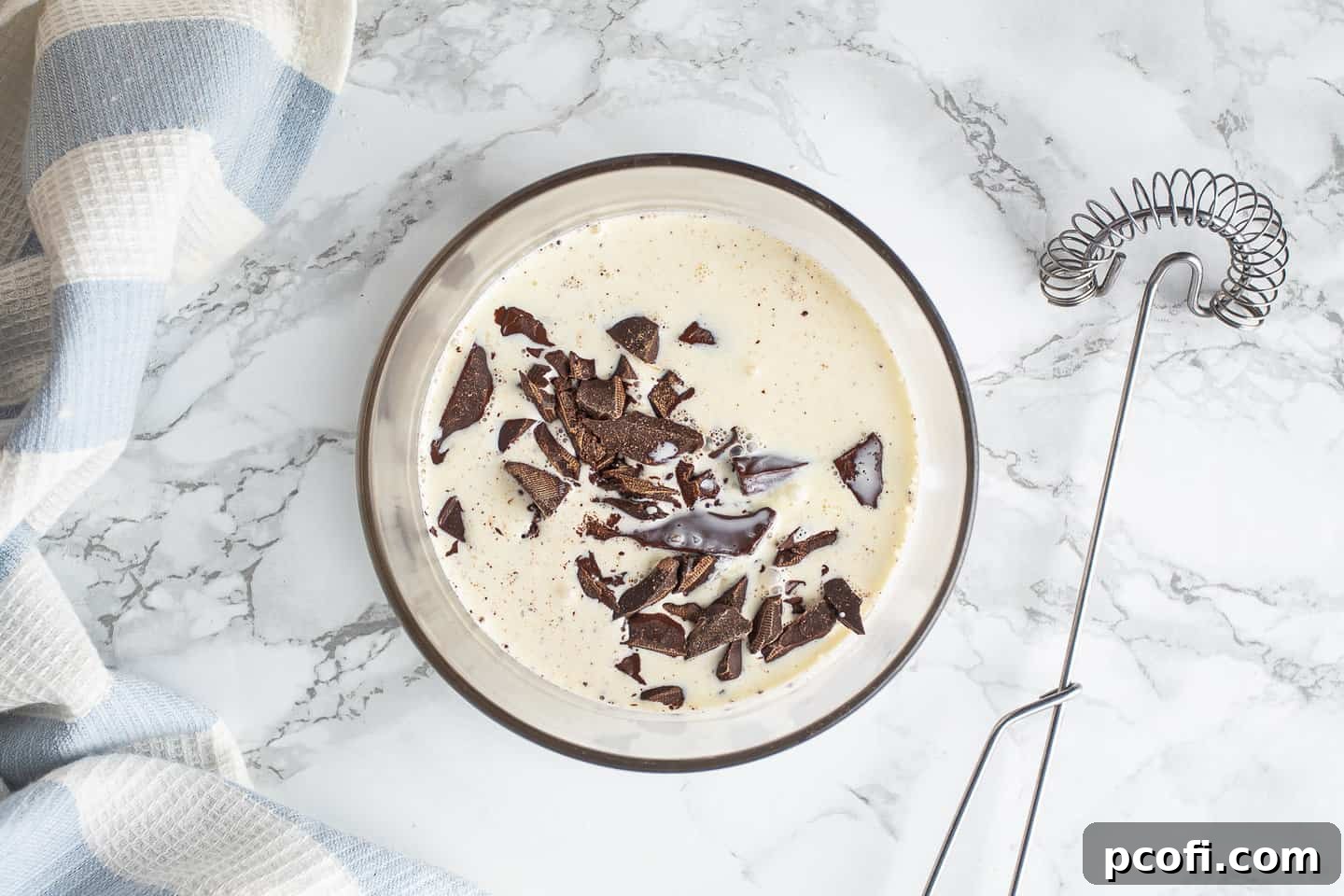
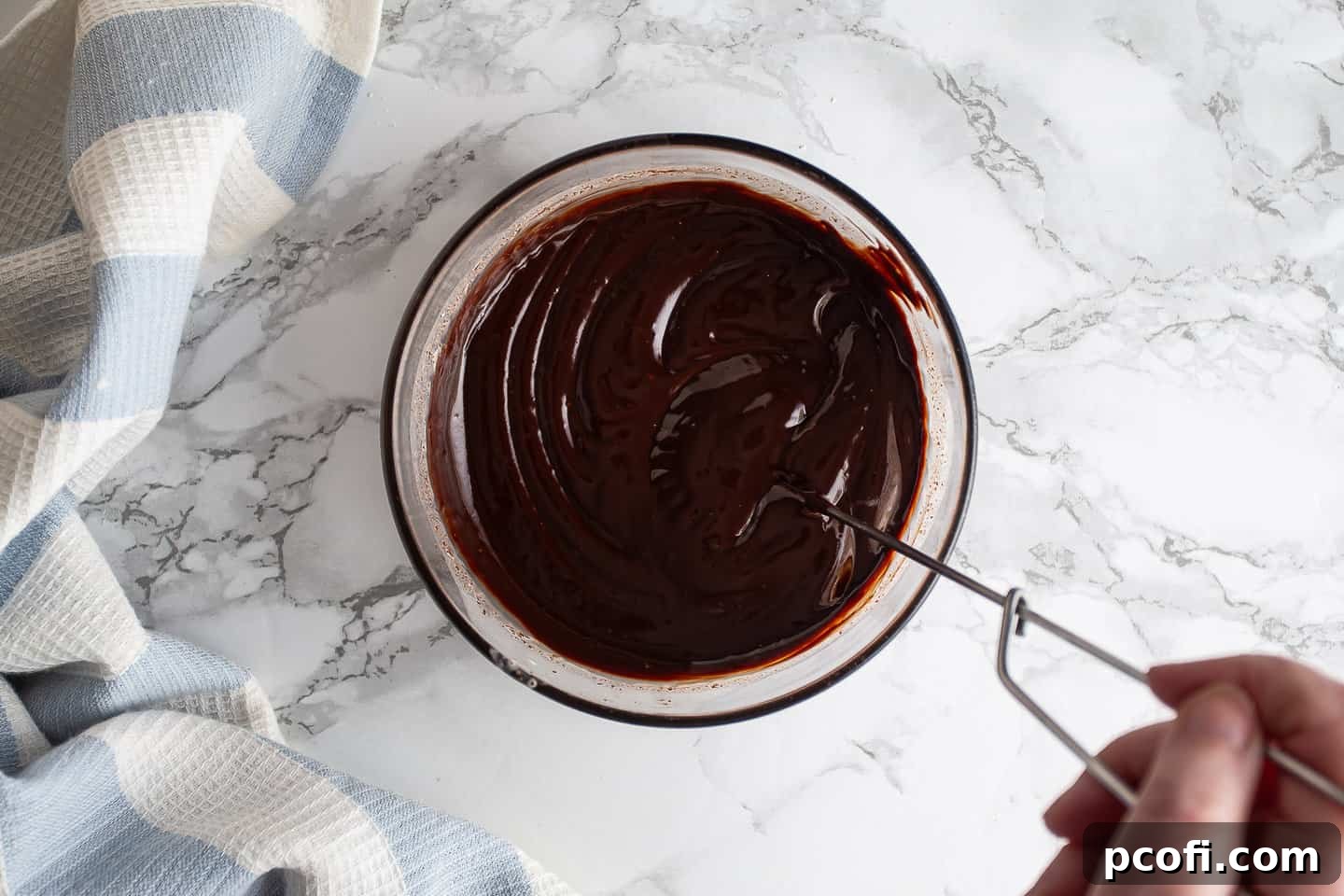
After the 5 minutes, gently stir the cream and chocolate together using a silicone spatula or whisk. Start from the center and work your way outwards until the mixture is completely smooth, glossy, and beautifully combined into a rich ganache. Set this decadent filling aside to cool slightly while the dough finishes its first rise. A slightly thicker, less liquid ganache will be easier to spread and manage during the shaping process.
Step 3: Fill & Shape the Loaf
Once your dough has gloriously doubled in bulk, gently punch it down to release the trapped gases. Turn the dough out onto a lightly floured surface and, using your rolling pin, roll it out into a large, wide rectangle. The exact dimensions aren’t critically important, but aim for a rectangle that is as thin as you can comfortably manage without tearing it. A thinner dough translates to more layers of irresistible chocolate swirl in your final babka. Ideally, the shorter side of your rectangle should be roughly the length of your loaf pan, making it easier to transfer later.
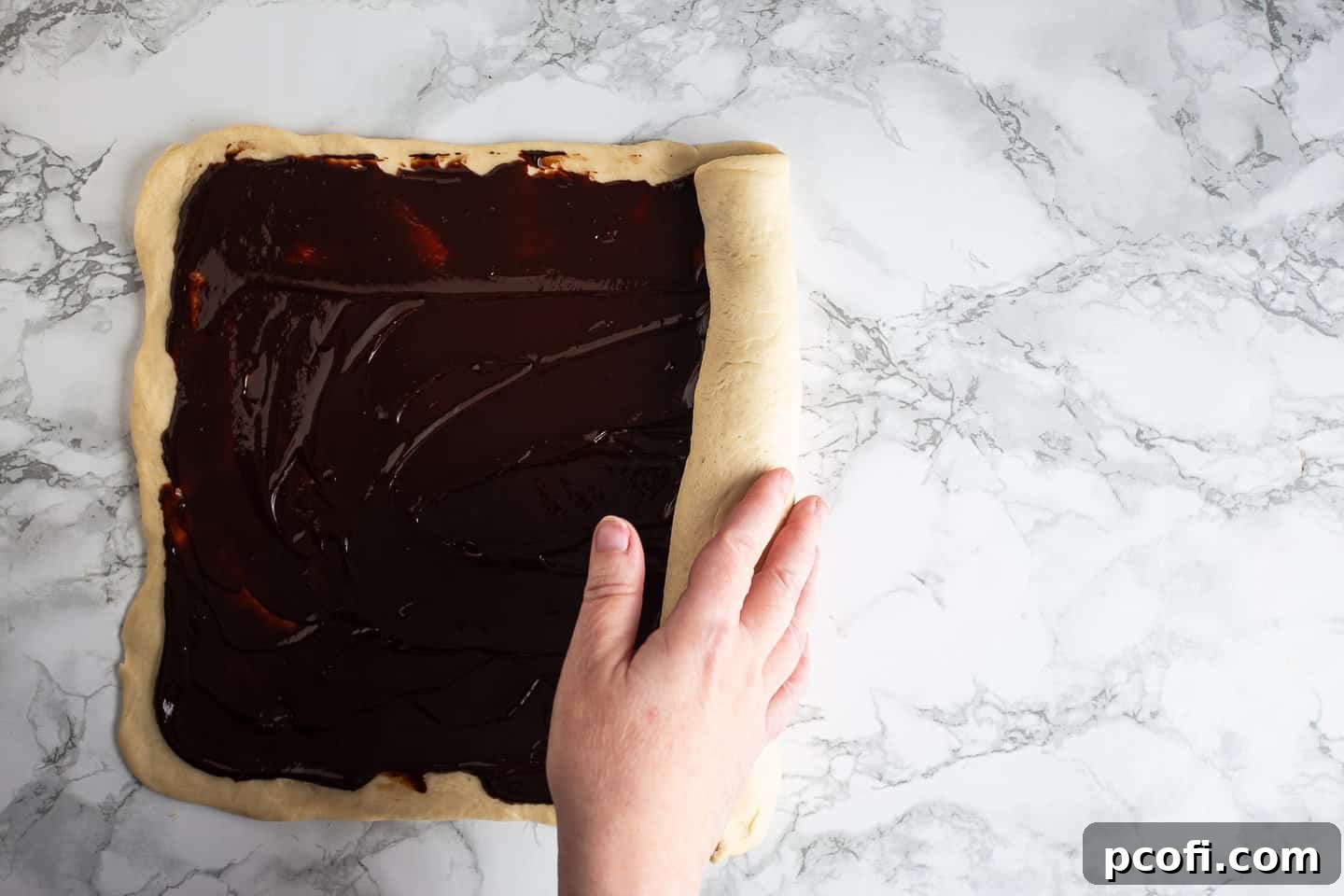
Generously spread the cooled chocolate filling evenly over the entire surface of the rolled-out dough. Be sure to leave a small, bare margin (about half an inch) around all the edges. This margin is essential for pinching and sealing the dough later, preventing the filling from oozing out during shaping and baking.
Now, starting from one of the shorter sides of the rectangle, carefully roll the dough up into a tight log. Take your time to roll it as snugly as possible, ensuring the layers of chocolate are compacted. This step is very similar to preparing classic cinnamon rolls, focusing on creating a uniform, compact cylinder.
Once you have a neat log, use a sharp knife to carefully slice the log in half lengthwise. It’s crucial to leave the very top section of the log connected, so it looks like two long “arms” joined at one end. This connection point will anchor your twist.
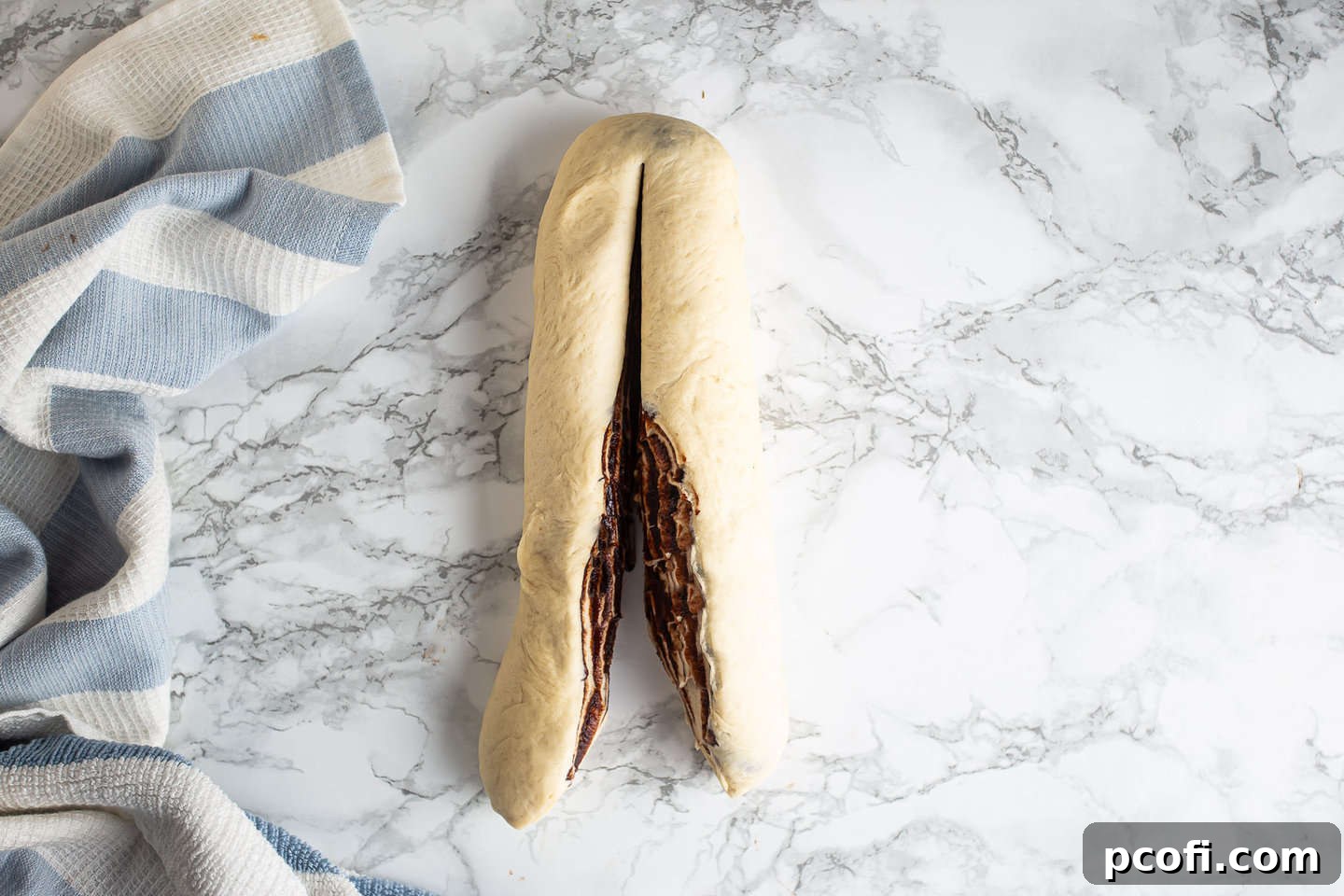
Now comes the fun part: creating the signature babka swirl! Gently twist the two long, exposed halves of the dough around each other, ensuring the chocolate-filled layers are visible and facing outwards. Pinch the ends together to seal them. This twisting motion creates the beautiful, marbleized pattern that is so characteristic of babka.
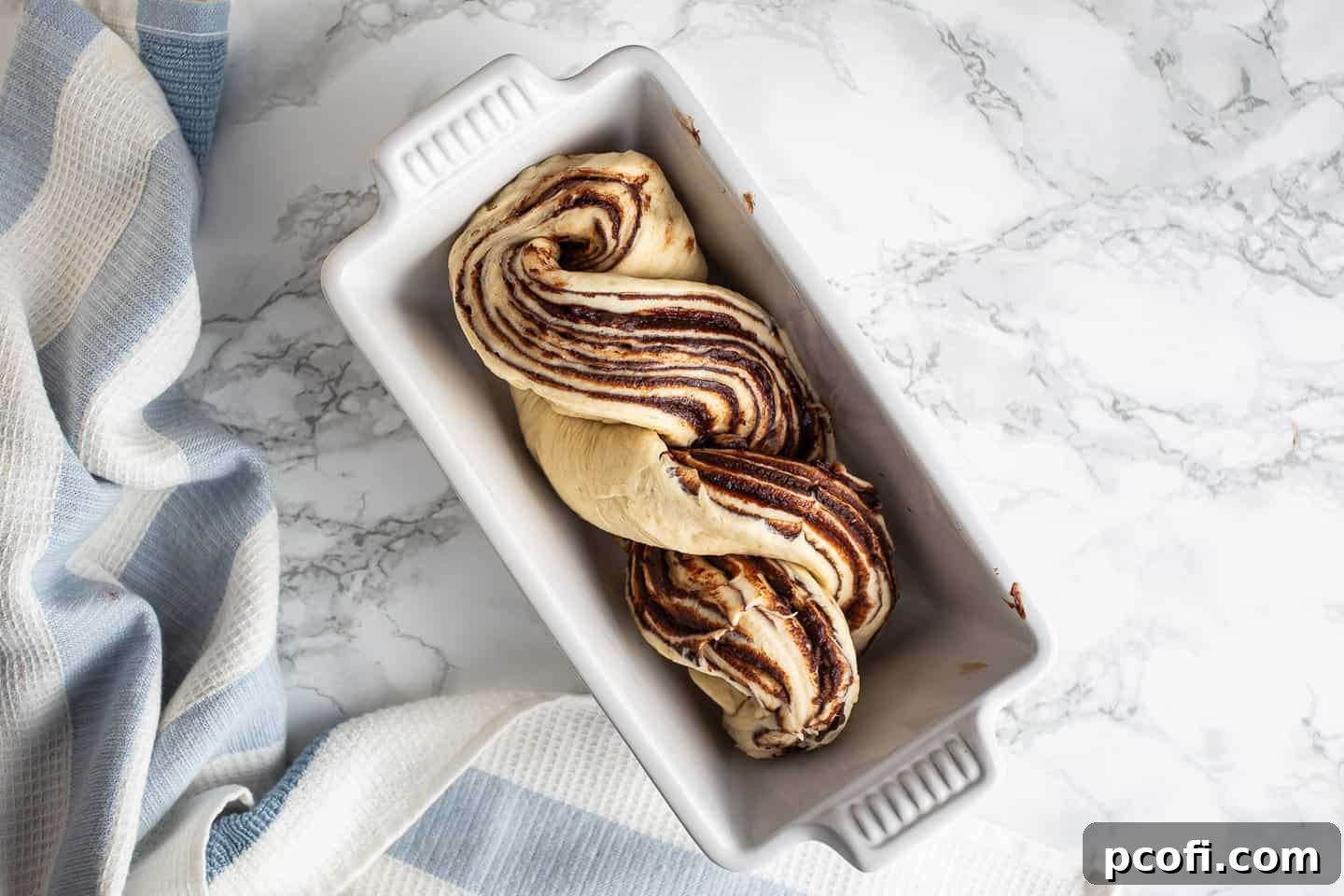
Carefully transfer the twisted dough into your prepared loaf pan. Lightly cover the pan with plastic wrap once more and place it in a warm environment for its second rise. This final rise allows the dough to proof, becoming even lighter and more airy before baking, which will give your babka its ultimate soft texture.
Step 4: Bake!
When your unbaked babka has beautifully doubled in size after its second rise, it’s ready for the oven. Gently remove the plastic wrap and preheat your oven to 350 degrees F (175 degrees C). The babka should look visibly puffy and light.
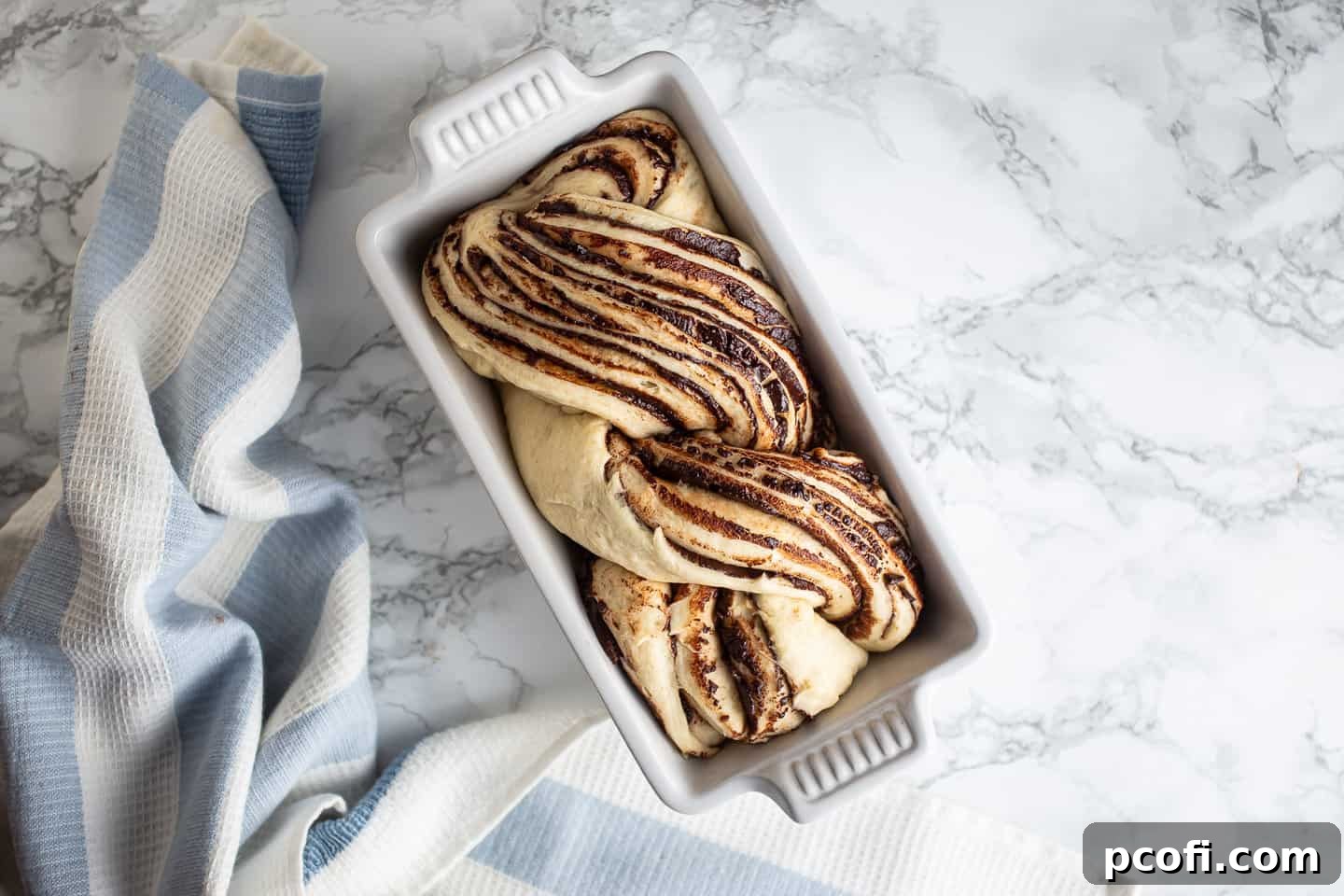
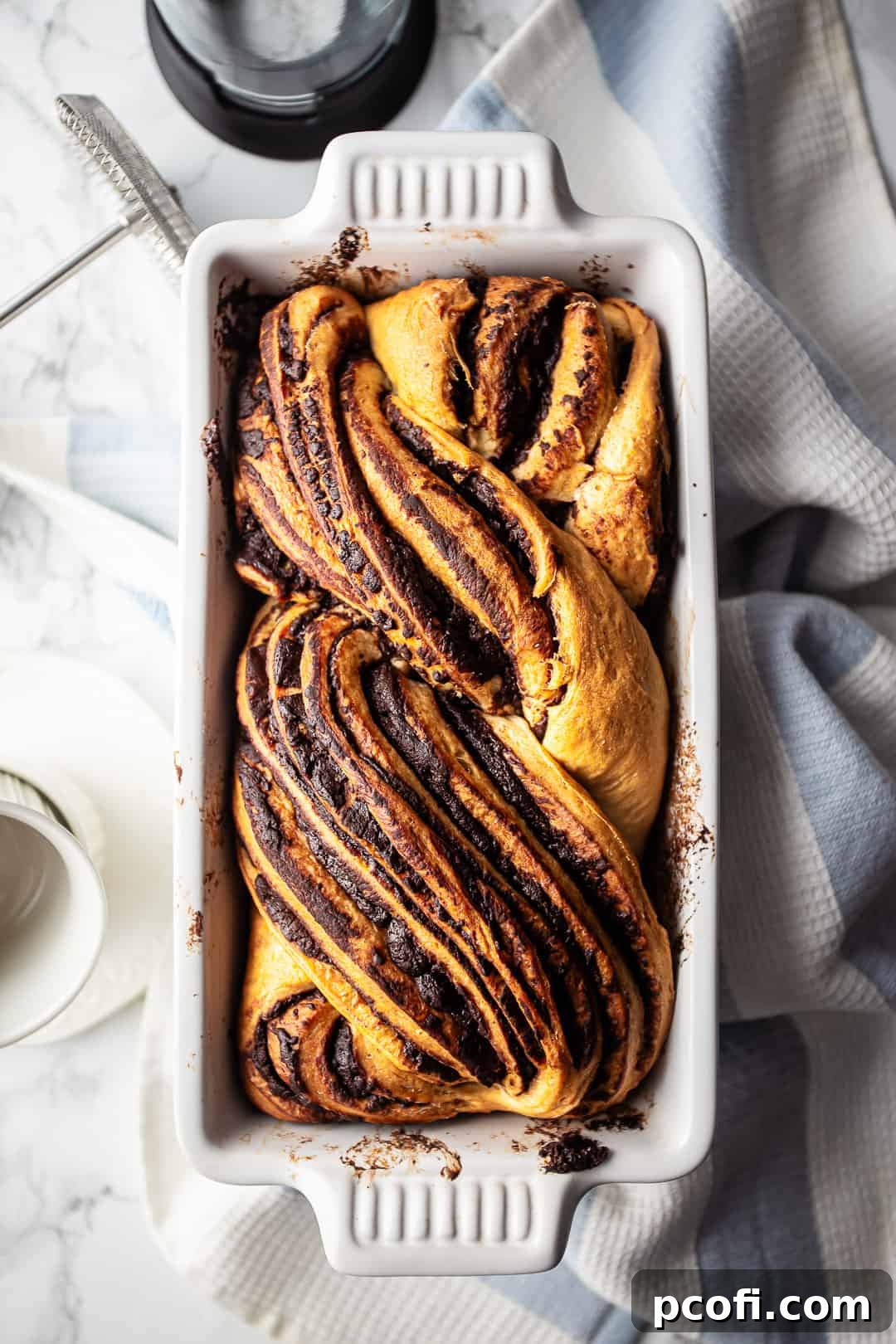
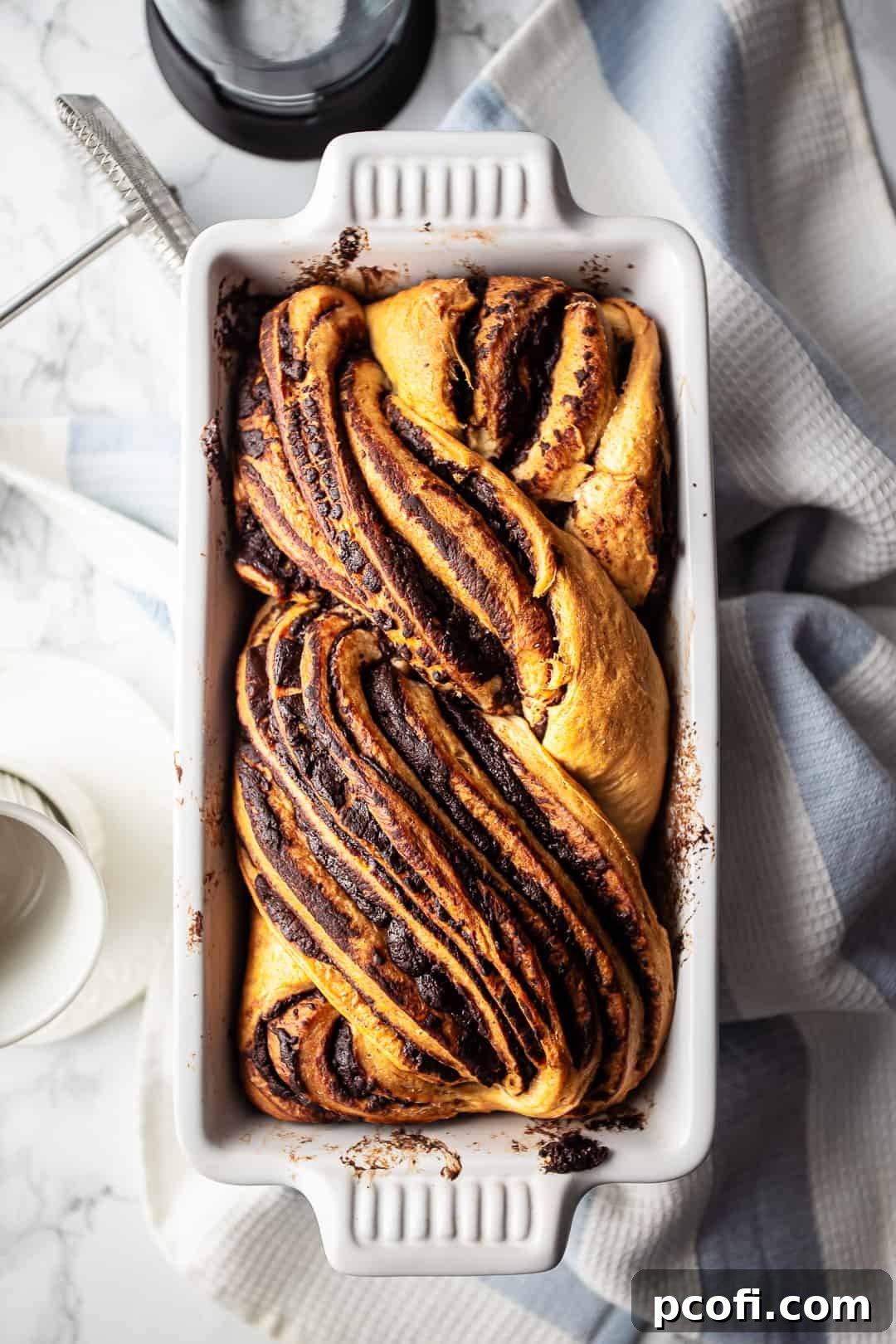
Bake the babka for approximately 1 hour, or until its internal temperature reaches around 195 degrees F (90 degrees C) when measured with an instant-read thermometer. During baking, the babka will dramatically puff up, causing its chocolate-filled layers to gracefully open and separate, resembling the delicate petals of a blossoming flower. The top will transform into a rich, golden brown, indicating it’s perfectly baked and ready to be enjoyed. Keep an eye on the browning, and tent with foil if it’s getting too dark too quickly.
How to Serve and Enjoy Your Babka
Chocolate babka is a truly versatile delight, perfect for savoring at any time of day. Its rich flavor and comforting texture make it suitable for a variety of occasions.
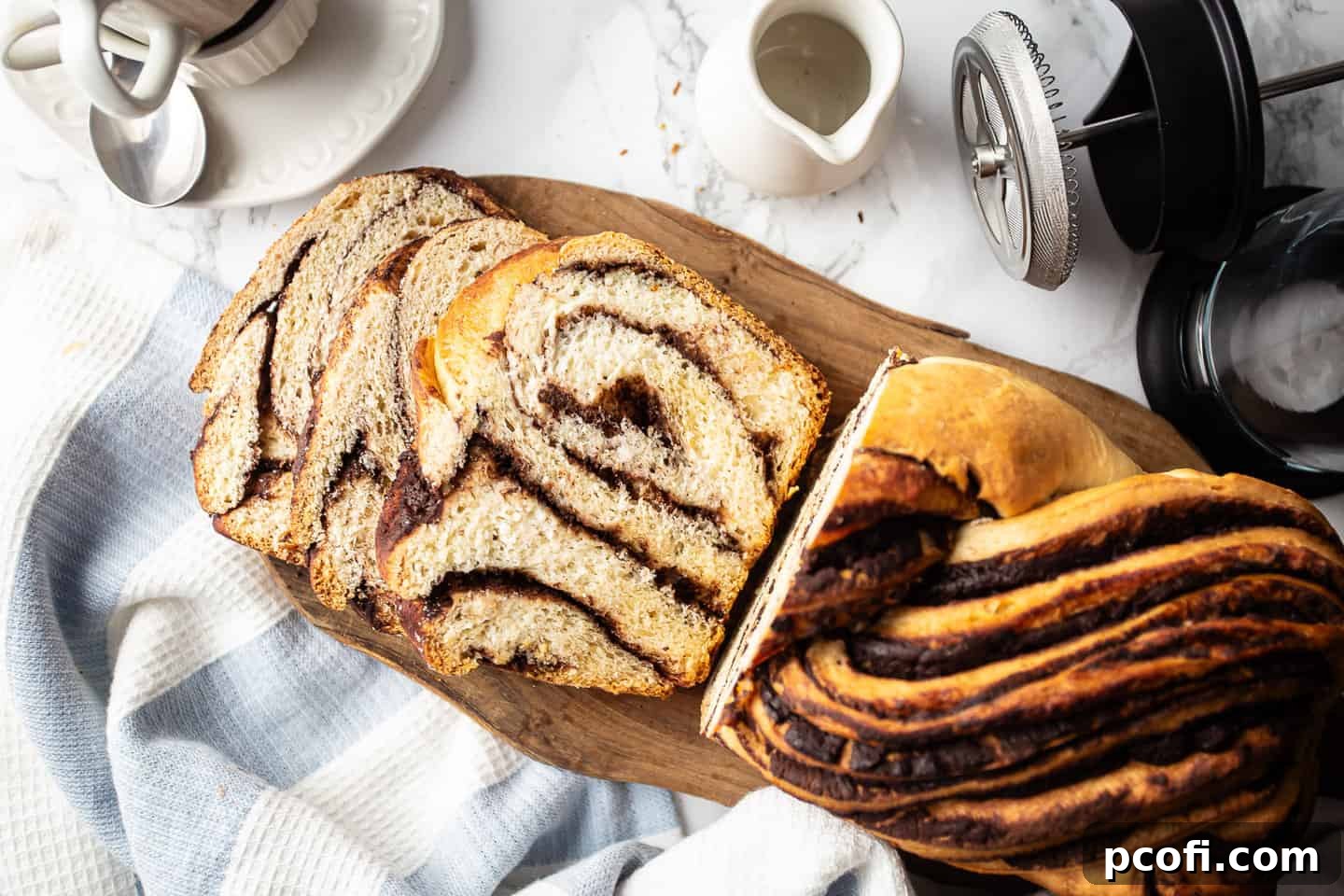
Many adore it as a luxurious breakfast or brunch item, especially when paired with a steaming cup of freshly brewed coffee or a soothing mug of tea. The combination of sweet bread and robust chocolate makes for an excellent start to the day. It also serves wonderfully as an afternoon pick-me-up, offering a moment of indulgence amidst a busy schedule.
Beyond morning meals, babka shines as a dessert. Its elegant swirls and decadent flavor make it a sophisticated conclusion to any meal. You can enjoy this bread warm, at room temperature, or even chilled. While it’s absolutely perfect on its own, a light smear of soft, unsalted butter or a dollop of your favorite fruit jam can add an extra layer of enjoyment without overpowering its inherent deliciousness. Consider serving it with a scoop of vanilla bean ice cream for an extra special treat.
For an even more irresistible experience, slice the babka thickly and gently toast it until the edges are slightly crisp and the chocolate filling is warm and gooey. This simple step elevates the flavors and textures, making it an extraordinary indulgence.
Expert Tips for Perfect Babka
Achieving a truly remarkable chocolate babka is within your reach with these expert tips:
- Check Yeast Expiration Date: Yeast is a living organism, and like any ingredient, it has a shelf life. Always double-check the expiration date on your yeast packet. Expired or “dead” yeast is the most common reason for bread failing to rise, resulting in a dense, disappointing loaf. A quick proofing step (sprinkling yeast on warm liquid) helps confirm its activity.
- Keep it Comfy for Yeast: Yeast thrives in warmth but is sensitive to extreme heat. Aim for liquids around 105 degrees F (40 degrees C) – think of it as a baby’s bathwater temperature. Water that is too hot will kill the yeast, preventing any rise. Conversely, a cozy, warm environment, such as a sunny windowsill, a slightly warmed (then turned off) oven, or an oven with a “Proof” setting, will encourage the yeast to work efficiently, leading to a much more significant and airy rise in your dough.
- Let the Ganache Cool: After preparing your chocolate ganache, it’s essential to allow it to cool down and thicken slightly before spreading it onto the dough. If the ganache is too warm and liquid, it will be difficult to spread evenly and will likely ooze out when you try to roll, cut, and twist the dough. A thicker, more set ganache provides better structure and makes shaping your babka much easier and cleaner.
- Cover for Even Browning: Keep a close eye on your chocolate babka as it bakes. Because of the sugar in the dough and filling, the top can brown quite quickly. If you notice it’s getting too dark before the internal temperature reaches 195 degrees F (90 degrees C), simply tent the loaf loosely with aluminum foil. This will prevent further browning while allowing the inside to finish cooking through.
- Cool in the Pan for Moisture: Once baked, resist the urge to immediately remove the babka from its pan. Allowing it to cool down gradually in the loaf pan helps to retain moisture, resulting in a more tender and less dry crumb. Let it cool for at least 15-20 minutes before carefully transferring it to a wire rack to cool completely.
- Don’t Rush the Kneading: As mentioned in the dough-making section, kneading for a full 10 minutes is non-negotiable for a pillowy, elastic crumb. If kneading by hand, be persistent; if using a stand mixer, let it do its job. Properly developed gluten is the secret to a great babka texture.
Frequently Asked Questions (FAQs)
There are a few common culprits when dough fails to rise. The most frequent issue is inactive or “dead” yeast. Always ensure your yeast is fresh and within its expiration date. Additionally, the temperature of your liquids is crucial; water that is too hot (above 115°F or 46°C) can kill the yeast, while water that is too cold won’t activate it effectively. Aim for a comfortable warmth, around 105°F (40°C), similar to a baby’s bath. Finally, yeast needs a warm environment to thrive and produce gas, so allowing your dough to rise in a cozy, draft-free spot will significantly encourage it to double in bulk.
Absolutely! For a sourdough version, you can substitute 100 grams of active (fed and bubbly) sourdough starter in place of the dry active yeast. When using sourdough, be prepared for potentially longer rise times, as sourdough fermentation can be slower than commercial yeast. Observe the dough closely and allow it to double in size for each rise, which might take several hours more depending on the strength of your starter and ambient temperature.
Yes, instant yeast can certainly be used. The main difference is that instant yeast does not require proofing in warm liquid before mixing with other ingredients; it can be added directly to the dry ingredients. When using instant yeast, you might find that the dough rises a bit faster, so you may need to reduce the suggested rise times by about 10 to 15 minutes, or simply watch the dough more closely for visual cues of doubling in size.
A crumbly or dense babka can often be attributed to a few factors. Insufficient kneading is a primary cause; a full 10 minutes of vigorous kneading is crucial for developing the gluten that gives babka its elastic and pillowy structure. If the gluten isn’t properly developed, the bread won’t hold its shape or texture well. Additionally, both under-rising (not allowing enough time for the yeast to work) and over-rising (where the dough rises too much and then collapses) can lead to a less-than-ideal texture. Ensure your rise times are appropriate and that the dough roughly doubles in size.
Planning ahead is highly recommended for this chocolate babka recipe, as it involves several chilling and rising periods, along with cooling time after baking. We suggest starting the recipe at least one day, or even two days, before you plan to serve it. The unbaked dough, after its first rise, can be stored in the refrigerator for up to 48 hours, or even frozen for up to 2 weeks. Once baked, a tightly wrapped babka will stay fresh and delicious at room temperature for 5 to 7 days. If you still have leftovers after a week, transfer them to the refrigerator for a few additional days of freshness. This flexibility makes babka an excellent choice for entertaining.
Absolutely, yeast breads like babka freeze exceptionally well, making them perfect for meal prep or enjoying later. To freeze, ensure the baked babka is completely cool. Then, wrap it tightly in several layers of plastic wrap, followed by a layer of aluminum foil, or place it in a freezer-safe bag to prevent freezer burn. It will maintain its quality in the freezer for approximately 2 months. When you’re ready to enjoy it, simply thaw it at room temperature, and it will taste as fresh and delicious as the day it was baked. You can also gently warm slices in a toaster or oven to revive its fresh-baked feel.
This recipe yields one standard-sized loaf of chocolate babka. The nutritional information provided in the recipe card below accounts for the entire loaf. To determine individual serving sizes, simply divide the total nutritional values by the number of slices you choose to cut the loaf into. A typical loaf might yield 10-12 generous slices, but you can adjust this based on your preference and dietary needs.
Explore More of Our Best Yeast Bread Recipes
- Sweet & Zesty Orange Rolls
- Decadent Gooey Butter Cake
- Traditional Hot Cross Buns
- Classic Homemade Cinnamon Bread
As an Amazon Associate, I earn from qualifying purchases.
Chocolate Babka
Leave a Review
Save Recipe
Ingredients
For the Bread
- 3 1/3 cups (416.67 g) bread flour, divided (you may need slightly more or less)
- 3/4 teaspoon (4.5 g) kosher salt
- 2/3 cup (162.67 g) milk, warm, not hot (aim for 105 degrees F)
- 1/3 cup (79.33 g) heavy whipping cream, warm, not hot (aim for 105 degrees F)
- 4 tablespoons (56 g) unsalted butter, melted and cooled slightly
- 3 tablespoons (36 g) granulated sugar
- 2 1/4 teaspoons (7 g) dry active yeast (1 packet or 1/4 ounce)
- 2 (88 g) large eggs
For the Filling
- 6 ounces (170.1 g) chocolate, chopped
- 1/4 cup (59.5 g) heavy whipping cream
Instructions
To Make the Bread
- Stir about half the flour together with the salt in a large bowl.
- Make a well in the center, and pour in the milk, cream, melted butter, and sugar.
- Sprinkle the yeast on top of the liquids and allow it to dissolve (approx. 5 minutes).
- Stir everything together until combined, then add the eggs.
- Stir until fully incorporated, then add the remaining flour, a little at a time, until the dough is no longer sticky. (It should gather itself into a ball and pull cleanly away from the sides of the bowl. You may need slightly more or less flour.)
- Cover lightly with plastic wrap and allow the dough to rise in a warm place until doubled in volume (approx. 1 hour).
- Punch the dough down and roll it out to a thin, wide rectangle.
- Spread the filling on top, leaving a bare margin around the edges for sealing.
- Starting at one of the short sides of the rectangle, roll into a short, tight log.
- Starting near the top of the log, slice the log in half lengthwise.
- Twist the two long halves around one another and place in a loaf pan.
- Cover lightly and set in a warm place to rise a second time until doubled (approx. 1 hour).
- Preheat the oven to 350 degrees F and bake the bread until it registers an internal temperature of around 195 degrees F (approx. 1 hour).*
To Make the Filling
- Chop the chocolate and place it in a heat-safe bowl.
- Heat the cream (either in the microwave or in a pot on the stove over medium-low heat) until steamy.
- Pour the hot cream over the chopped chocolate and allow it to stand for 5 minutes.
- Stir the cream and chocolate together until smooth and combined.
Notes
Tried this recipe?
Mention @bakingamoment on Instagram or tag #bakingamoment.