Mastering Pate a Choux: Your Essential Guide to Perfect Cream Puffs, Eclairs, and More
Welcome, fellow baking enthusiasts! There are few things as rewarding in the kitchen as mastering a truly versatile and impressive pastry. Today, we’re diving deep into the world of Pate a Choux – often simply called Choux Pastry. Don’t let the elegant French name (pronounced “PAT-uh-shoo”) intimidate you; this fundamental dough is surprisingly simple to make, yet forms the base for some of the most beloved desserts and savory snacks in the culinary world. With this comprehensive tutorial, complete with step-by-step guidance, you’ll soon be whipping up light, airy cream puffs, sophisticated éclairs, delicate profiteroles, and savory gougères with confidence and ease.
Pate a Choux is a foundational recipe, a true building block in pastry arts. Once you understand the basic principles, a world of delectable possibilities opens up. From the classic sweet fillings to savory cheese-infused delights, this pastry provides a perfect canvas. This guide aims to demystify the process, ensuring your success from your very first attempt.
The Magic of Choux Pastry: Simple Ingredients, Spectacular Results
At its heart, Pate a Choux uses just a handful of common pantry ingredients: water, butter, salt, sugar, flour, and eggs. The real magic happens through a specific cooking technique that creates a unique dough capable of puffing dramatically in the oven, forming a hollow interior perfect for filling. This isn’t a leavened dough in the traditional sense; instead, it relies on steam generated during baking to create its characteristic lightness and airy structure.
This recipe comes together remarkably quickly, requiring minimal active time before baking. The key is understanding each stage of the process, which we will break down in detail to ensure you achieve that coveted “perfect puff” every time. Think of it as a culinary science experiment where you control the delicious outcome!
Step-by-Step: Crafting Your Pate a Choux from Scratch
Stage 1: The Panade – Cooking the Base on the Stove
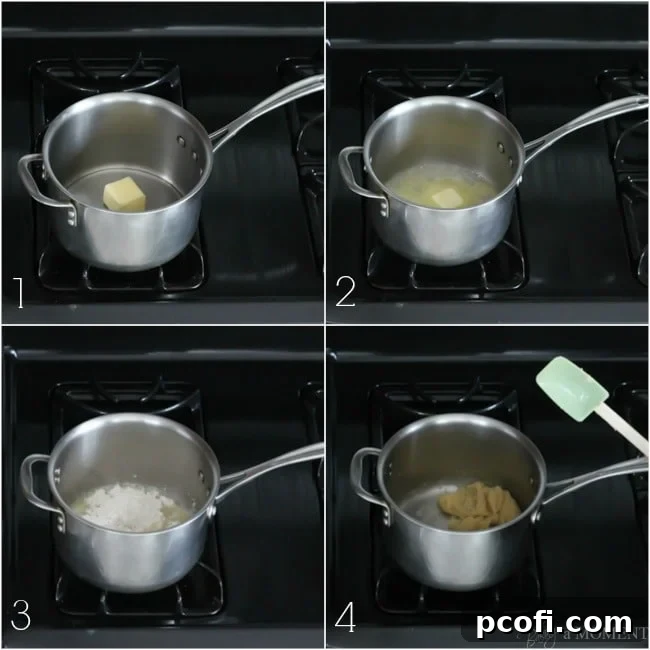
The journey to perfect choux pastry begins on the stovetop. In a sturdy saucepan, combine water, butter, a pinch of salt, and a touch of sugar. The sugar adds a subtle sweetness and aids in browning, while salt balances the flavors. Heat this mixture over medium-high heat. Your goal here is to melt the butter completely and bring the liquid to a rolling simmer. It’s crucial that the butter is fully incorporated and the mixture is hot before moving to the next step.
Once simmering, remove the pot from the heat and add all the flour at once. This might seem aggressive, but it’s key to developing the gluten structure quickly. Immediately stir vigorously with a wooden spoon or spatula. The mixture will quickly come together into a rough ball. Return the pot to medium heat and continue to cook, stirring constantly and pressing the dough against the bottom and sides of the pan. This process, known as drying out the panade, is essential. You’re effectively cooking out excess moisture from the dough. Continue cooking for about 3 to 5 minutes, until the dough forms a smooth ball and a thin film or crust begins to form on the bottom of the pot. This film is your visual cue that enough moisture has been cooked out, leading to a lighter, crispier final product.
Stage 2: Incorporating the Eggs – Achieving the Perfect Consistency
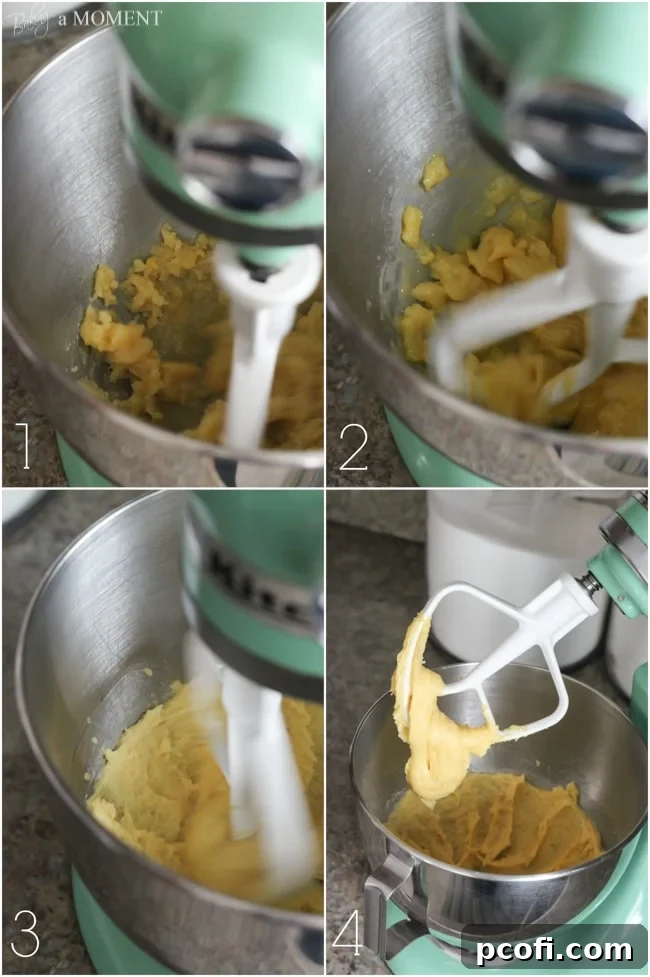
Once the panade is properly dried, transfer it immediately to a mixing bowl. If using a stand mixer, fit it with the paddle attachment. Begin beating the dough on medium speed for a minute or two to allow some of the steam to escape and the dough to cool slightly. This prevents the eggs from scrambling when added. You want the dough to be warm, not scorching hot.
Now comes the pivotal step: adding the eggs. Drop them in one at a time, ensuring each egg is fully incorporated into the dough before adding the next. Initially, the dough might look lumpy, separated, or even grainy after the first egg. Don’t despair! Keep mixing. As you add more eggs, the dough will transform, becoming smooth, glossy, and stretchy. The finished choux dough should have a consistency often described as “ribbon stage” – when you lift the paddle attachment, the dough should fall back into the bowl in a thick ribbon that holds its shape for a moment before slowly collapsing. This rich, eggy aroma is a sure sign you’re on the right track!
Stage 3: Shaping and Baking – The Moment of Transformation
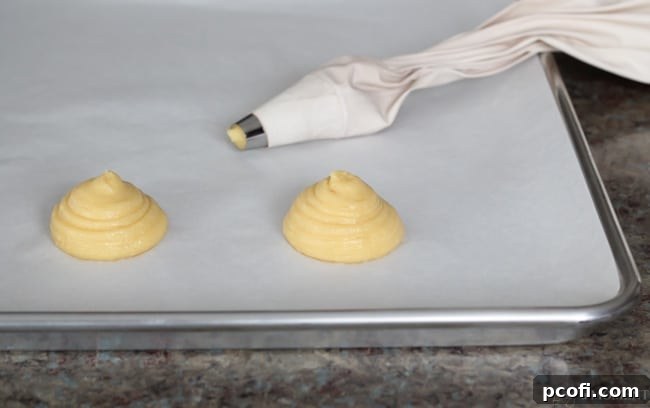
With your perfectly prepared choux dough, it’s time to shape your creations. You can either spoon dollops of dough onto a parchment-lined baking sheet or, for a more professional and uniform look, pipe it using a pastry bag fitted with your preferred tip. For classic cream puffs, a round tip works wonderfully, creating charming two-inch diameter mounds. For éclairs, a larger open star or round tip can be used to pipe long, straight fingers.
If your piped shapes have little “pointy tops,” simply wet your fingertip and gently pat them down. This ensures even baking and a beautiful, smooth surface. Remember to leave adequate space (about 3 inches) between each piece, as they will expand significantly in the oven.
Baking choux pastry is a two-stage process that leverages steam for its incredible puff. Start with a high oven temperature (typically 425°F or 220°C) for the first 10-15 minutes. This intense heat rapidly turns the moisture in the dough into steam, which forces the pastry to puff up and create that characteristic hollow interior. After this initial blast, reduce the oven temperature (usually to 375°F or 190°C) and continue baking. This lower temperature allows the pastry to dry out thoroughly and crisp up, preventing it from collapsing once removed from the oven. Resist the urge to open the oven door during the first 20-25 minutes of baking, as this can cause the puffs to deflate.
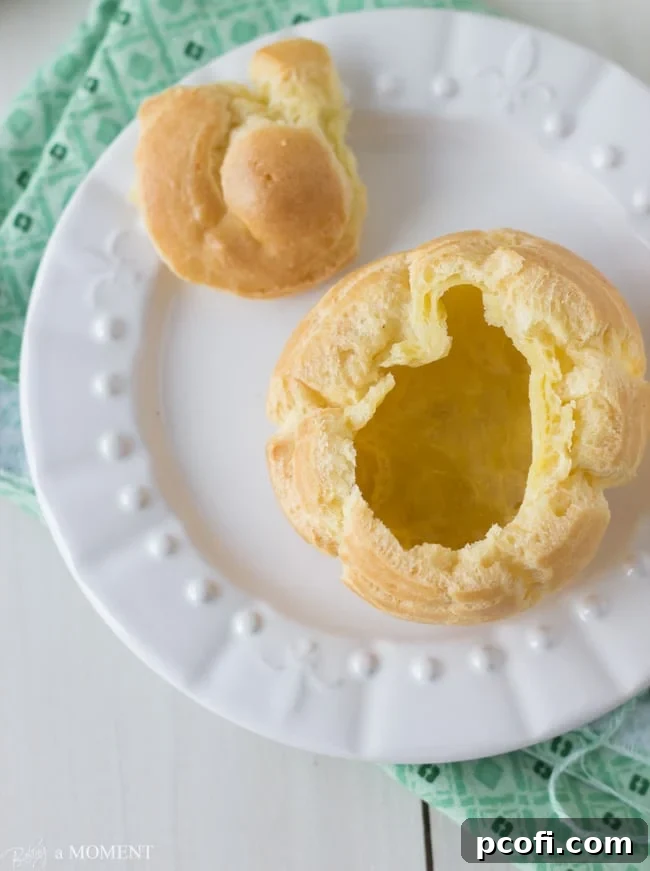
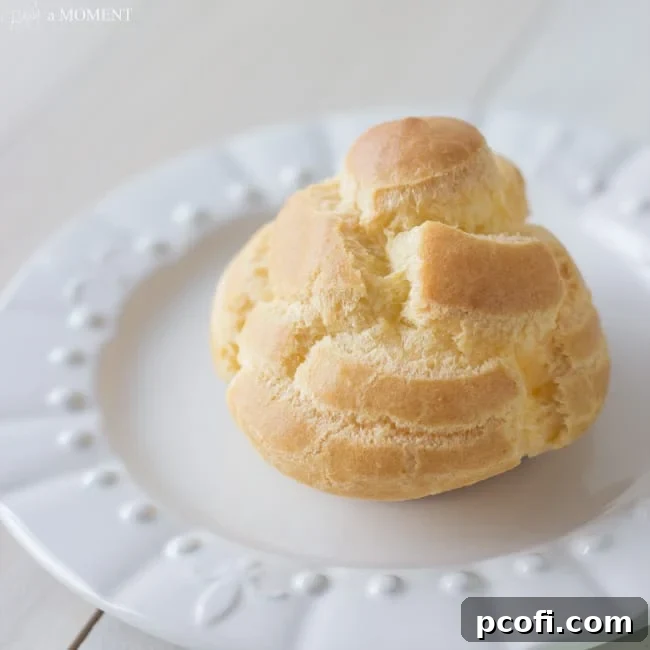
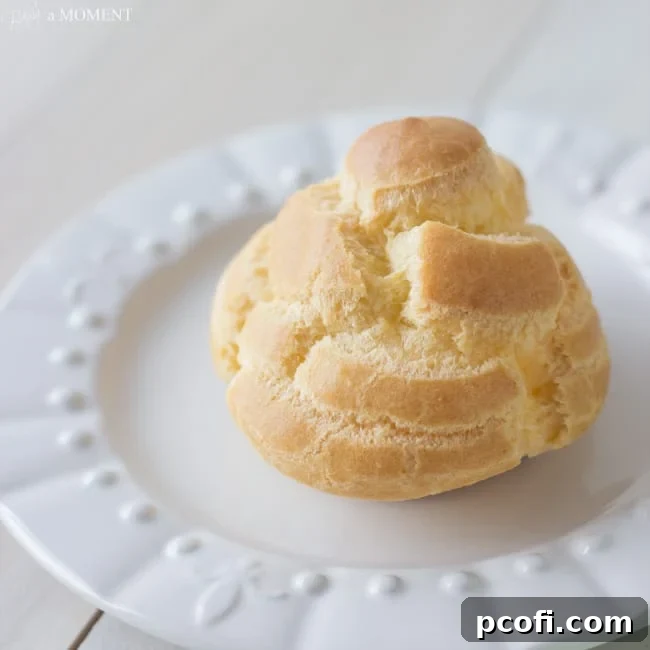
The magic unfolds before your eyes! Your choux will puff up dramatically, often doubling in size, turning a beautiful golden brown. When they emerge from the oven, they should be light, crisp, and hollow inside. A quick test for doneness is to tap the bottom; it should sound hollow. Once slightly cooled, slice off their tops, and you’ll reveal a perfect little “hidey-hole” – ready and waiting for your chosen filling.
Troubleshooting Common Choux Pastry Issues
- Choux Doesn’t Puff: This is often due to not cooking out enough moisture from the panade, or opening the oven door too early, letting out the crucial steam. Ensure your dough forms that film on the bottom of the pot and avoid peeking during the initial bake.
- Choux Collapses: If your puffs deflate shortly after coming out of the oven, it usually means they weren’t baked long enough to dry out completely. Extend the lower-temperature baking time until they are truly firm and light.
- Soggy Bottoms: This can happen if your oven rack is too low or if the baking sheet is too close to the heat source. Ensure proper air circulation.
- Too Soft/Cakey Interior: This indicates too much egg was added, or the panade wasn’t dried enough. The dough should be glossy and form a ribbon, but not be too runny.
Beyond Cream Puffs: Endless Possibilities
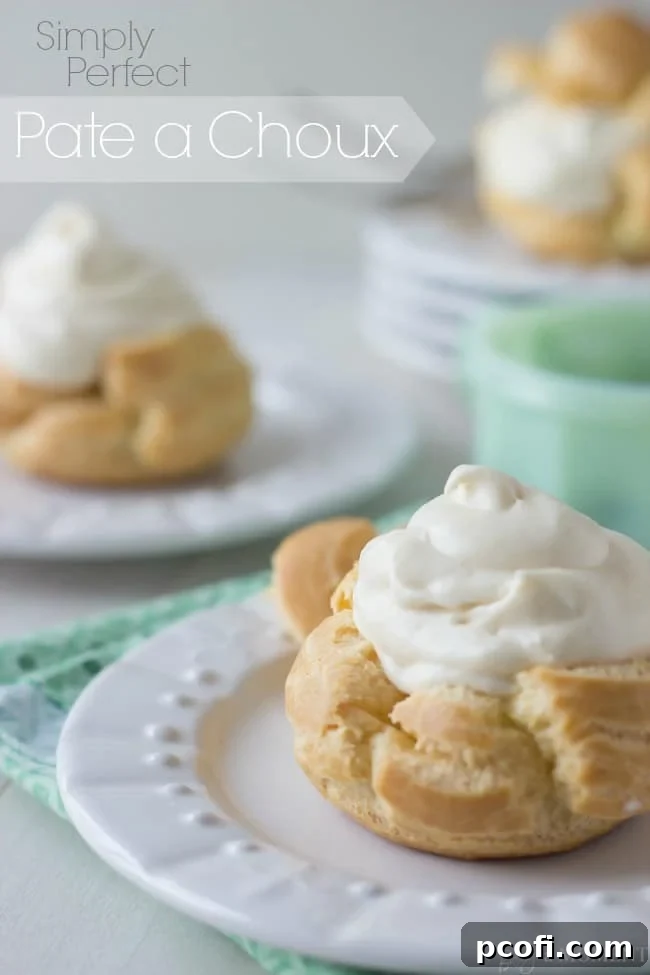
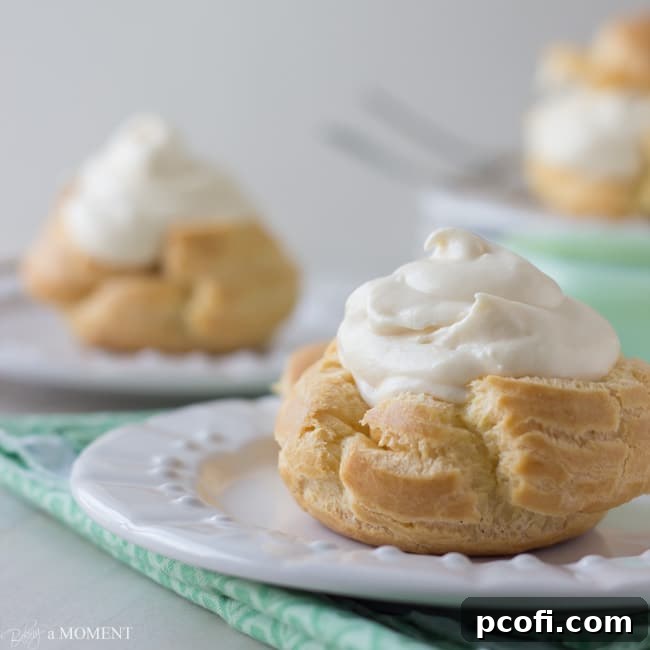
While today we’re showcasing classic cream puffs, Pate a Choux is incredibly versatile. You’ve already seen examples like mini puffs, elegant eclairs, and even a unique take on baked churros. You can even pipe them into whimsical swan shapes for a stunning presentation. For savory options, try mixing grated Gruyère or Parmesan cheese into the dough before piping to create delicious gougères – perfect as an appetizer!
The next time, I’ll be sharing a truly spectacular filling for these light-as-air shells, perhaps something incredibly fluffy, sweet, rich, or even a little boozy. And yes, there will be sauce! You won’t want to miss the ultimate combination.
PS- If you’re looking to stock your recipe box with more stellar basic recipes that truly shine, you’ve landed in the right spot! Having spent, ahem, over 20 years experimenting and perfecting recipes, I’m thrilled to share more from my “Simply Perfect” series:
Simply Perfect Peanut Butter Cookies
Simply Perfect Vanilla Cupcakes
Simply Perfect Vanilla Buttercream
Simply Perfect Chocolate Cupcakes
Simply Perfect Chocolate Buttercream
Simply Perfect Pizza Dough
Simply Perfect Brownies from Scratch
Simply Perfect Pie Crust
Simply Perfect Apple Pie
** WATCH THIS LIVE RECIPE DEMO TO SEE HOW IT’S DONE! **
As an Amazon Associate I earn from qualifying purchases.
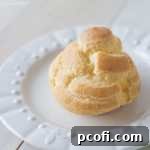
Simply Perfect Pate a Choux
Leave a Review
Save RecipeSaved!
Ingredients
- 1 cup (236.59 ml) water
- 1/2 cup (113.5 g) unsalted butter, (1 stick )
- 1/2 teaspoon sugar
- 1/4 teaspoon salt
- 1 cup (125 g) all-purpose flour
- 4 eggs, (large)
Instructions
-
Preheat the oven to 425 degrees F (220 degrees C). Line a baking sheet with parchment paper.
-
In a medium saucepan, combine the water, butter, sugar, and salt. Cook over medium-high heat, stirring occasionally, until the butter is completely melted and the mixture reaches a vigorous simmer.
-
Remove the saucepan from the heat. Add all the flour at once and stir vigorously with a wooden spoon or heat-resistant spatula until the dough comes together into a ball. Return the pot to medium heat and continue to cook, stirring constantly and pressing the dough against the bottom and sides of the pot, for about 3-5 minutes. This process cooks out excess moisture; the dough will form a smoother ball and a thin film will appear on the bottom of the pot.
-
Transfer the hot dough mixture to the bowl of a stand mixer fitted with a paddle attachment (or a large mixing bowl if using a hand mixer). Beat on medium speed for 1-2 minutes to allow some steam to escape and the dough to cool slightly.
-
With the mixer still running on medium speed, add the eggs one at a time. Ensure each egg is fully incorporated into the dough before adding the next one. The dough will initially look lumpy and separated, but will come together into a smooth, glossy, and stretchy consistency (the “ribbon stage”) after all eggs are added.
-
Pipe or spoon the dough onto the prepared parchment-lined baking sheet. For cream puffs, aim for approximately 2-inch diameter mounds, leaving about 3 inches of space between each puff to allow for expansion. If any puffs have pointy tops, gently smooth them down with a wet fingertip.
-
Bake in the preheated 425°F (220°C) oven for 10-15 minutes, then reduce the oven temperature to 375°F (190°C) and continue baking for another 20-25 minutes, or until the choux puffs are golden brown, fully puffed, light, and dry to the touch. The total baking time can range from 20-40 minutes depending on size and oven. Do not open the oven door during the first 20-25 minutes of baking.
-
Remove from the oven and allow to cool on a wire rack before filling. If not using immediately, store cooled shells in an airtight container for up to 2 days, or freeze for longer storage.
Notes
©Baking a Moment