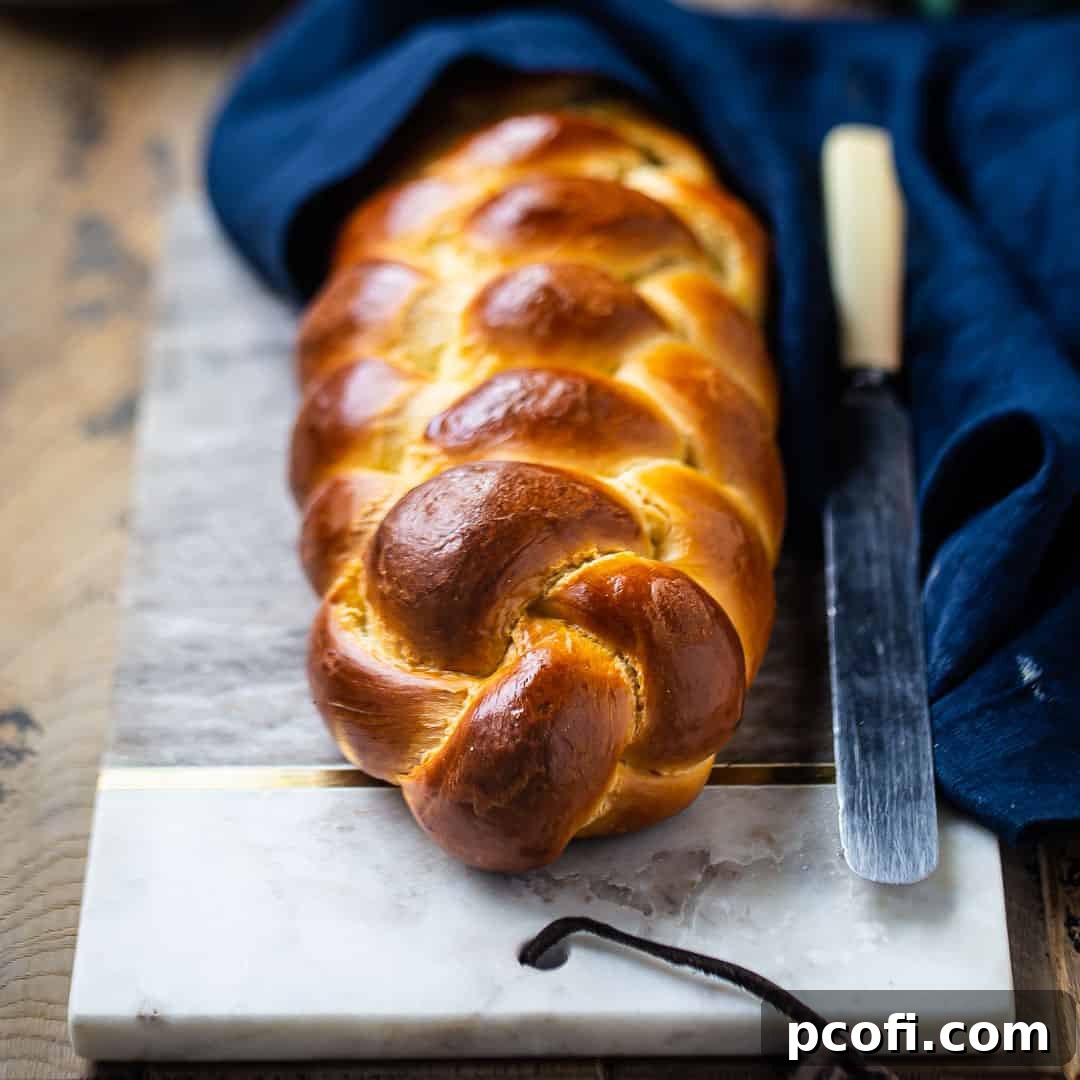
The Ultimate Homemade Challah Bread Recipe: Soft, Golden & Braided Perfection
Imagine a bread that is soft, fluffy, and golden, with a delightful hint of sweetness that makes every bite a pleasure. This traditional braided Challah Bread is not only a feast for the eyes but also a treat for the palate. Whether you are preparing it for a special Shabbat meal, celebrating a Jewish holiday, or simply wish to fill your home with the comforting aroma of freshly baked bread, this accessible recipe is designed to be easily mastered in an afternoon. From the moment you begin mixing the dough to the satisfying first slice, you’ll find the entire process incredibly rewarding.
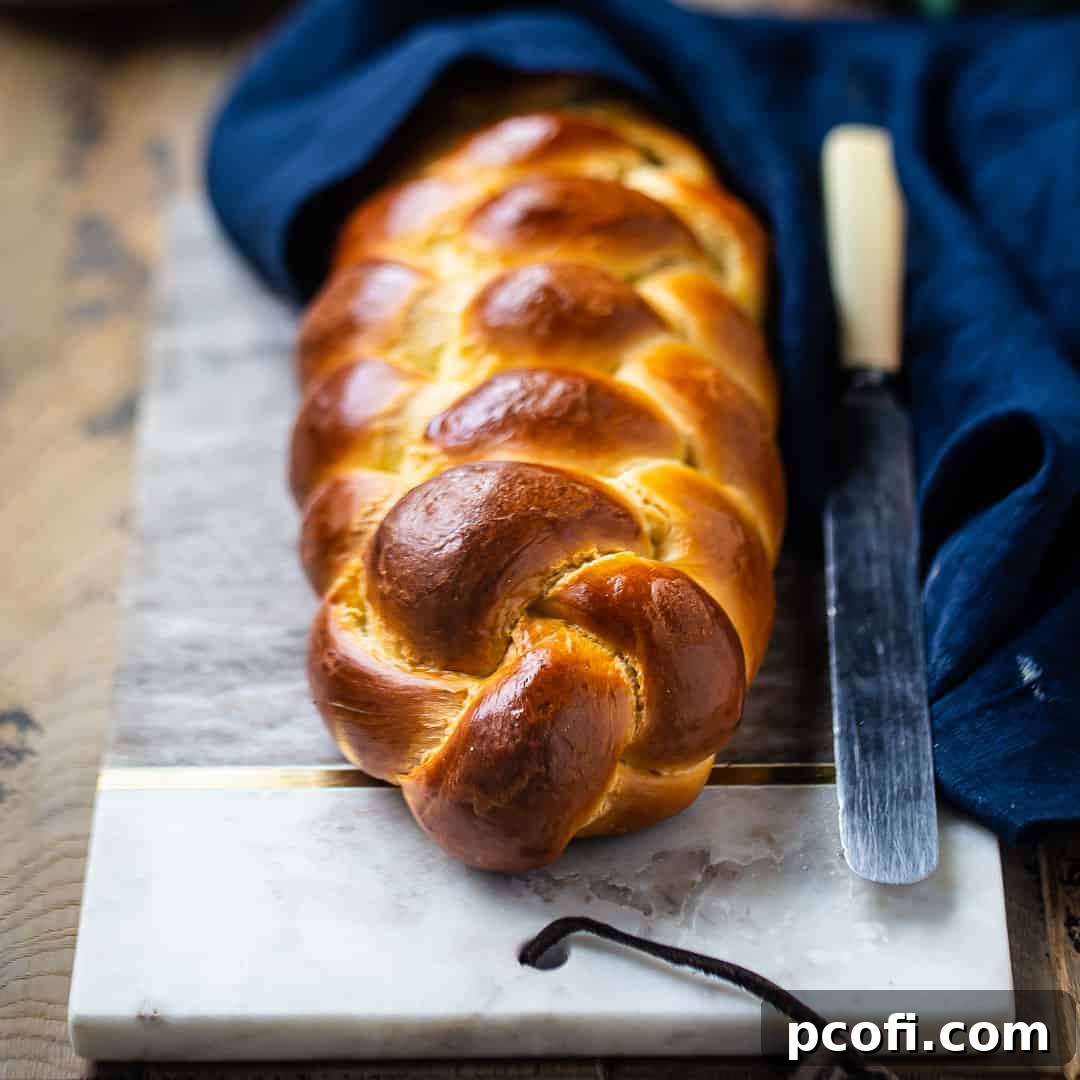
Table of Contents
- What is Challah Bread?
- Here’s Why You’ll Love This Homemade Challah Recipe
- Essential Ingredients for Perfect Challah Bread
- Step-by-Step: Crafting Your Perfect Challah Bread
- Helpful Tips and Tricks for Baking Challah
- Challah Bread Frequently Asked Questions (FAQ)
- More Delicious Yeast Bread Recipes to Explore
- Classic Braided Challah Bread Recipe Card
I am genuinely excited to share one of my absolute favorite recipes with you today: Challah bread! There are countless reasons to adore this bread. Its distinctive golden-yellow hue, incredibly soft and airy texture, and delicate sweetness make it stand out. Not to mention, its iconic braided shape is simply gorgeous to behold, instantly identifying it as Challah. Beyond its visual appeal, the experience of baking and sharing homemade Challah is a true delight.
Challah belongs to a special category known as enriched breads. This means that, in addition to the fundamental components of water, yeast, and flour, it is enriched with eggs and extra fat, typically oil. These added ingredients are the secret to the bread’s superior qualities: its remarkable moisture, unparalleled softness, and deep, satisfying flavor. This enriching process is similar to what you find in other beloved baked goods like Hawaiian rolls, sweet babka, and indulgent sticky buns, all celebrated for their tender crumbs and rich taste profiles.
What Is Challah Bread?
Challah is a traditional Jewish braided bread, deeply rooted in history and culture, yet universally cherished for its exquisite taste and beautiful presentation. Characterized by its soft, slightly sweet, and rich texture, Challah is an “enriched dough.” This means it incorporates ingredients beyond the basic flour, water, and yeast, specifically eggs and oil (or occasionally butter in non-traditional versions). These additions are key to its signature golden color, tender crumb, and subtly sweet flavor. While the most recognizable form is a long, intricate braid, Challah is also often shaped into a round, spiral loaf for specific holidays like Rosh Hashanah, symbolizing continuity and the circle of life.
Culturally, Challah holds immense significance, particularly within Jewish traditions. It is a central element of the Shabbat meal and other holiday feasts. Its preparation typically adheres to Kosher dietary laws, which mandate the separation of meat and dairy products. This is why authentic Challah recipes, including the one presented here, are dairy-free, using oil instead of butter. This characteristic makes Challah a wonderfully versatile bread, suitable for serving alongside any meal, meat or dairy, or simply enjoyed on its own as a delightful snack.
Despite its profound cultural heritage, the appeal of Challah transcends religious and ethnic boundaries. It’s a delicious and visually striking bread that is enjoyed year-round by people from all walks of life. Its tender, slightly sweet profile makes it a fantastic accompaniment to a wide range of foods, from savory sandwiches to sweet breakfast dishes. If you appreciate the rich, soft quality of breads like brioche, you will undoubtedly fall in love with Challah, which offers a similar luxurious experience with its unique, dairy-free identity.
Here’s Why You’ll Love This Homemade Challah Recipe
- Beautifully Braided & Visually Stunning: The hallmark of Challah is its breathtaking braided appearance. Our recipe guides you through creating a classic 4-strand braid, which looks incredibly impressive but is surprisingly simple to master. The result is a loaf that stands out on any table, making it perfect for special occasions or simply elevating an everyday meal.
- Incredibly Soft, Airy, and Perfectly Sweet: This Challah recipe yields a bread with an exceptionally tender, airy, and springy crumb that truly melts in your mouth. The delicate sweetness derived from honey is perfectly balanced, making the bread delightful whether eaten plain, toasted, or used for sandwiches. It achieves that coveted balance between richness and lightness.
- Perfect for Beginners & Immensely Rewarding to Bake: Don’t let the idea of baking homemade bread intimidate you! This recipe is crafted to be approachable for bakers of all experience levels. You won’t need specialized equipment beyond a mixing bowl and your hands (though a stand mixer is a welcome convenience). The journey from raw ingredients to a golden, fragrant loaf is an incredibly satisfying and confidence-boosting experience.
- Freezer-Friendly & Convenient for Make-Ahead Preparation: Life can be busy, but that shouldn’t stop you from enjoying fresh Challah. This recipe is wonderfully freezer-friendly; you can bake a loaf (or two!) ahead of time and freeze it whole or sliced for later enjoyment. The dough itself can also be prepared in advance and refrigerated for an overnight rise, offering fantastic flexibility for your baking schedule without compromising on the quality or flavor of the freshly baked bread.
Essential Ingredients for Perfect Challah Bread
Creating an exceptional Challah begins with understanding the purpose and quality of each ingredient. The precise quantities for each component are listed in the detailed recipe card at the bottom of this page, but here’s an insight into why each element is crucial:
- Warm water: This is more than just a mixing agent; it’s the catalyst for your yeast. The water should feel comfortably warm to the touch, much like a baby’s bath, ideally around 105°F (40°C). Water that is too hot will kill the yeast, rendering it inactive, while water that is too cold will prevent it from properly activating and rising.
- Honey: Beyond imparting a subtle, natural sweetness that enhances Challah’s rich flavor profile, honey plays a vital role in feeding the yeast. This nourishment encourages robust fermentation, contributing to a beautifully risen and flavorful bread. Its liquid form also ensures it blends smoothly into the dough.
- Active dry yeast: The powerhouse behind your bread’s magnificent rise and characteristic airy structure. Active dry yeast typically requires a brief period of proofing to activate. If you prefer a slightly faster process, instant yeast can be directly substituted; just be mindful that it tends to work more quickly, so monitor your dough’s rise times carefully.
- Large egg and egg yolk: These are fundamental to Challah’s identity as an “enriched” bread. The whole egg provides essential moisture and helps build structure, while the additional egg yolk significantly contributes to a richer flavor, a softer, more tender crumb, and the desirable deep golden color.
- Neutral oil: Ingredients like vegetable, canola, or grapeseed oil are preferred. The oil provides the necessary fat content for a moist and tender crumb without introducing any strong flavors that might compete with the Challah’s inherent taste. As Challah is traditionally dairy-free for Kosher purposes, oil is the ideal fat choice over butter.
- All-purpose flour: This forms the structural foundation of your Challah. While all-purpose flour is excellent for achieving a tender result, some bakers might opt for bread flour for a slightly chewier texture, thanks to its higher protein content. It’s best to start with the recommended amount and incrementally add more as needed, as environmental factors like humidity can influence the exact quantity required for the perfect dough consistency.
- Kosher salt: An indispensable ingredient in bread making, salt goes beyond mere seasoning. It is vital for balancing the sweetness, enhancing all the other flavors present in the bread, and critically, regulating yeast activity. This control ensures a more consistent and flavorful rise, preventing the yeast from working too quickly.
- Egg wash: A simple yet transformative mixture of one beaten egg with a splash of water. Brushing this over your braided loaf before baking is the secret to achieving Challah’s iconic deep golden-brown, shiny crust, which adds both visual appeal and a delightful texture to the exterior.
Step-by-Step: Crafting Your Perfect Challah Bread
Step 1: Activate the Yeast & Start the Dough
To begin your Challah journey, combine the honey and warm water in a spacious mixing bowl. The water temperature is paramount here; it should feel pleasantly warm, similar to a baby’s bath, ideally around 105°F (40°C). This temperature is crucial for waking up your yeast without harming it. Sprinkle the active dry yeast evenly over the surface of the sweetened water. Allow this mixture to rest undisturbed for 5 to 10 minutes. During this short period, you should observe small bubbles or a foamy layer developing on the surface. This effervescence is a positive sign that your yeast is alive, active, and ready to infuse your bread with its airy magic. If, after 10 minutes, you see no bubbles or foam, your yeast is likely inactive (either expired or damaged by incorrect water temperature). In such a case, it’s best to discard the mixture and start anew.
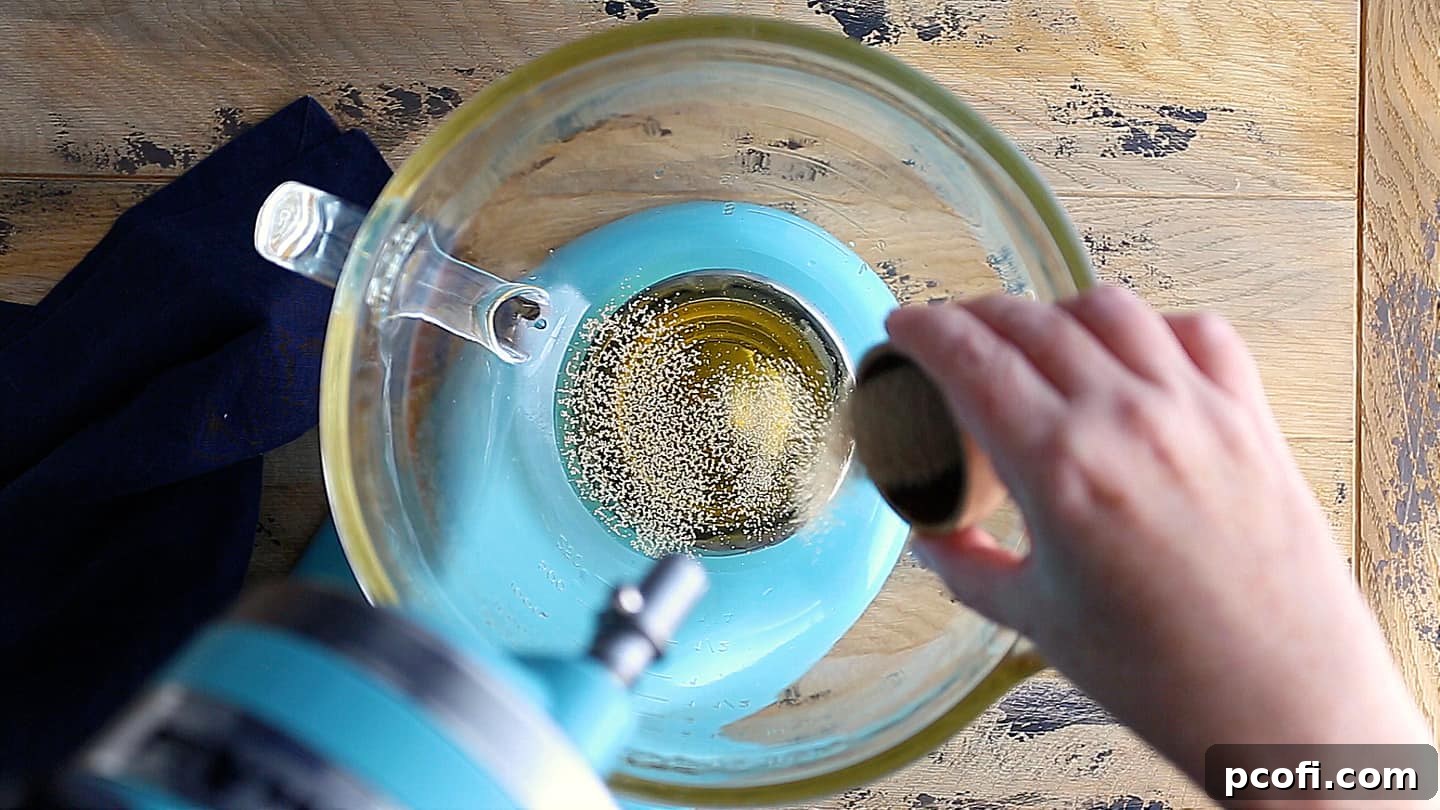
If you opt to use instant yeast as a substitute, be aware that it typically proofs at a faster rate than active dry yeast, so you’ll need to monitor your dough’s rise times more closely. For those interested in a sourdough variation, detailed instructions on how to substitute sourdough starter for commercial yeast can be found in the “Notes” section of the recipe card below.
Step 2: Incorporate Eggs & Oil
Once you’ve confirmed your yeast is thriving with visible bubbles, it’s time to enrich the dough further. Whisk in the large egg, the additional egg yolk, and your chosen neutral oil into the yeast mixture. These enriching ingredients are indispensable for imparting Challah with its signature moist, tender texture and beautiful golden color. I typically use vegetable oil, but any neutral-flavored oil that remains liquid at room temperature will work perfectly. Consider options such as grapeseed oil (an excellent choice if available), canola oil, avocado oil, or even light olive oil.
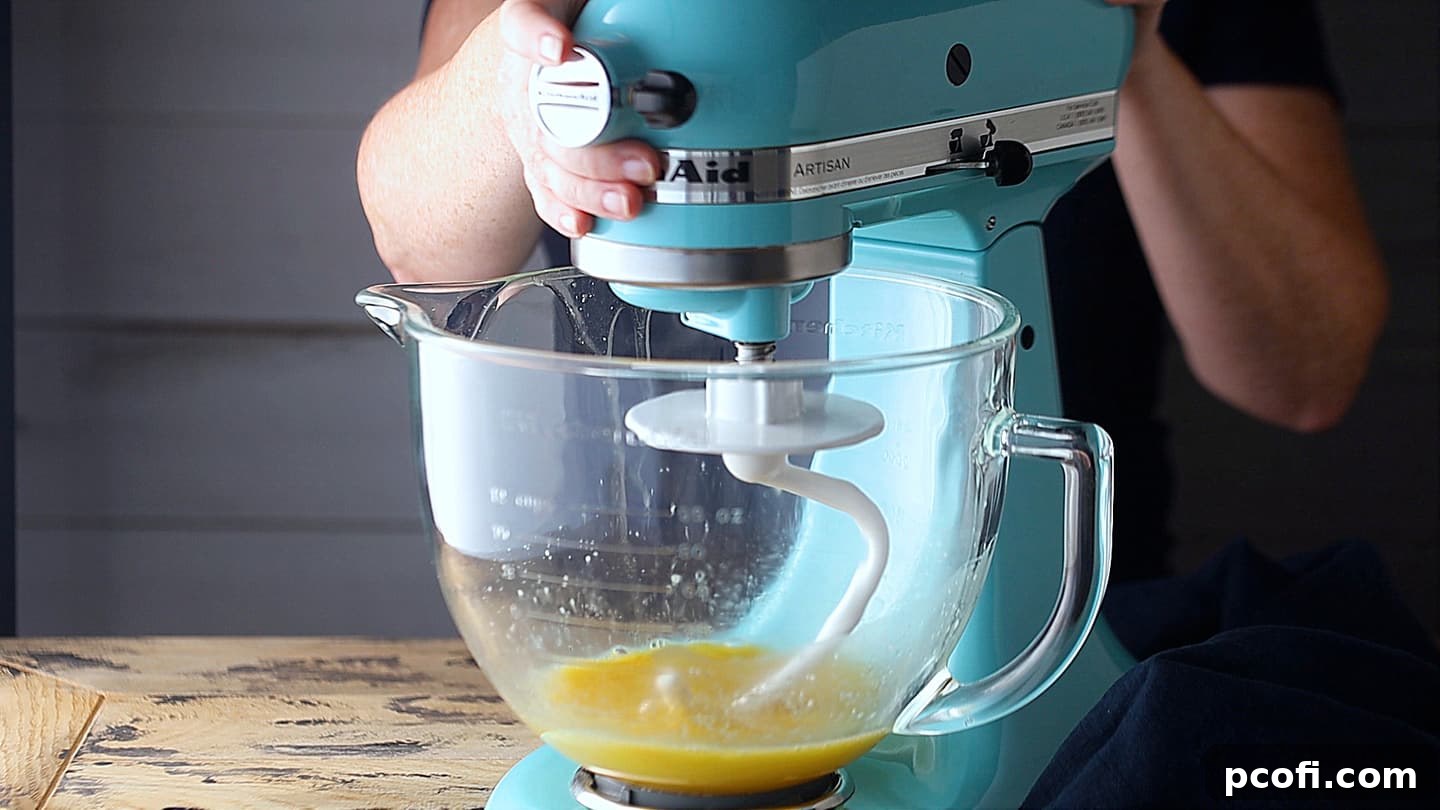
An important tip for bread baking is that the precise amount of flour required can vary considerably. Environmental factors such as humidity, the specific brand of flour, and even altitude can influence how much flour your dough will absorb. It’s not an exact science, so be prepared to adjust. For instance, in one instance, I might need 2 ½ cups of flour, while in another, only 1 ¾ cups might suffice for the desired consistency.
Step 3: Gradually Add Flour and Salt
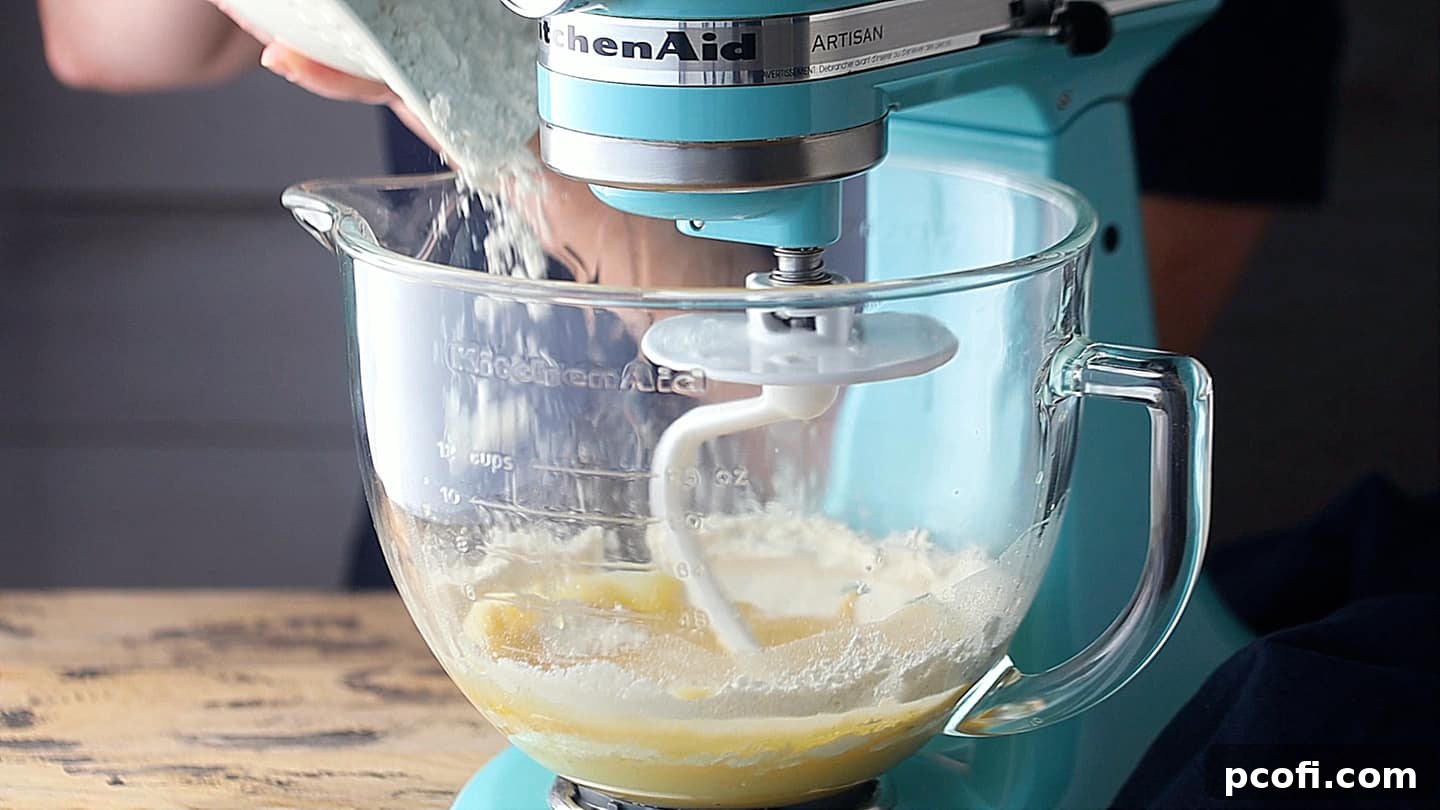
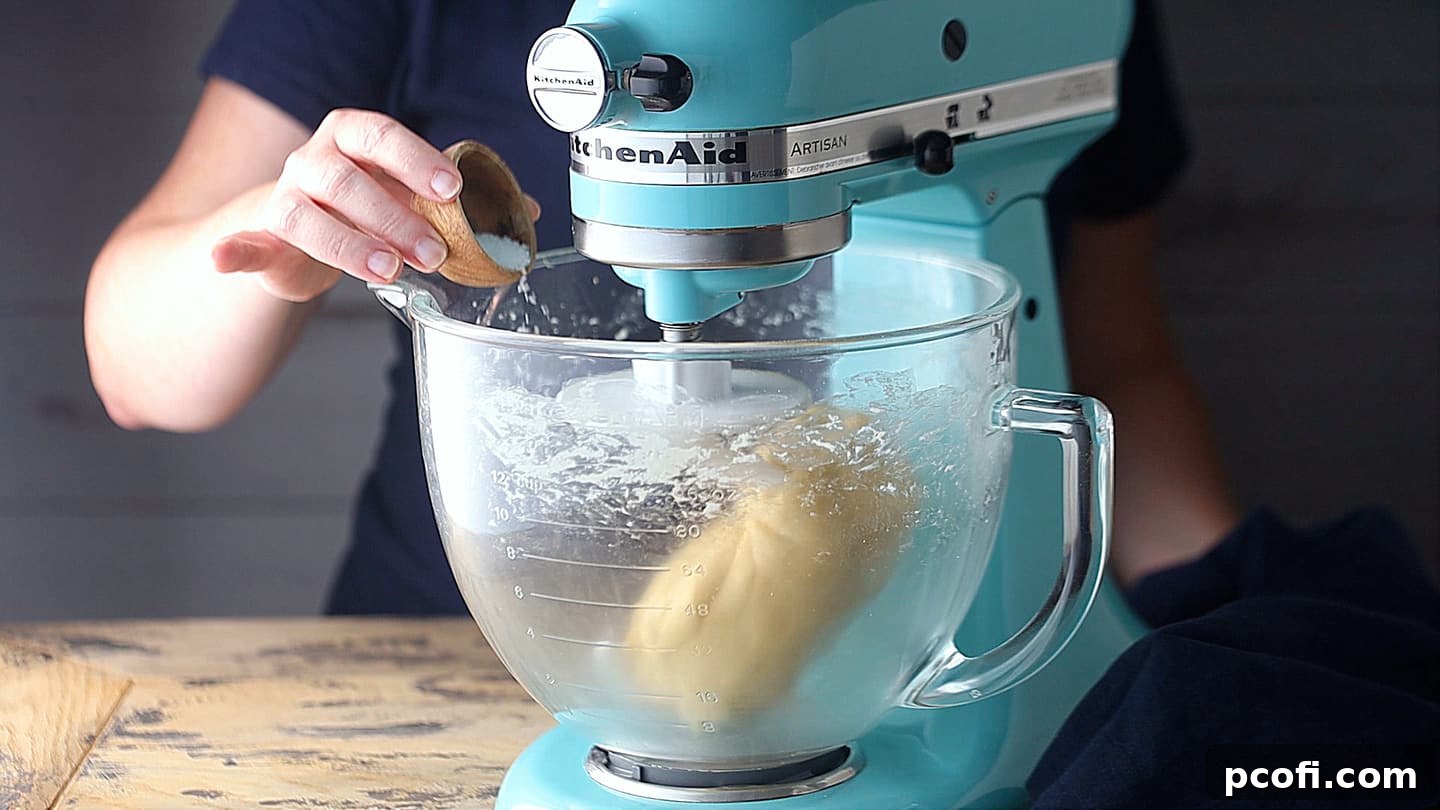
Now, it’s time to incorporate the all-purpose flour. Begin by adding about half of the total flour to your liquid mixture and mix it until it’s fully incorporated. Once that initial amount is blended, start adding the remaining flour slowly, a little at a time. Continue mixing until the dough begins to gather itself into a cohesive ball and pulls cleanly away from the sides of your mixing bowl. The dough should feel soft and slightly tacky, but not overly sticky. Trust your judgment here, as the exact flour amount can vary. Finally, work in the kosher salt. Adding it towards the end helps ensure it doesn’t interfere with the initial yeast activation.
Step 4: Knead the Dough to Develop Gluten
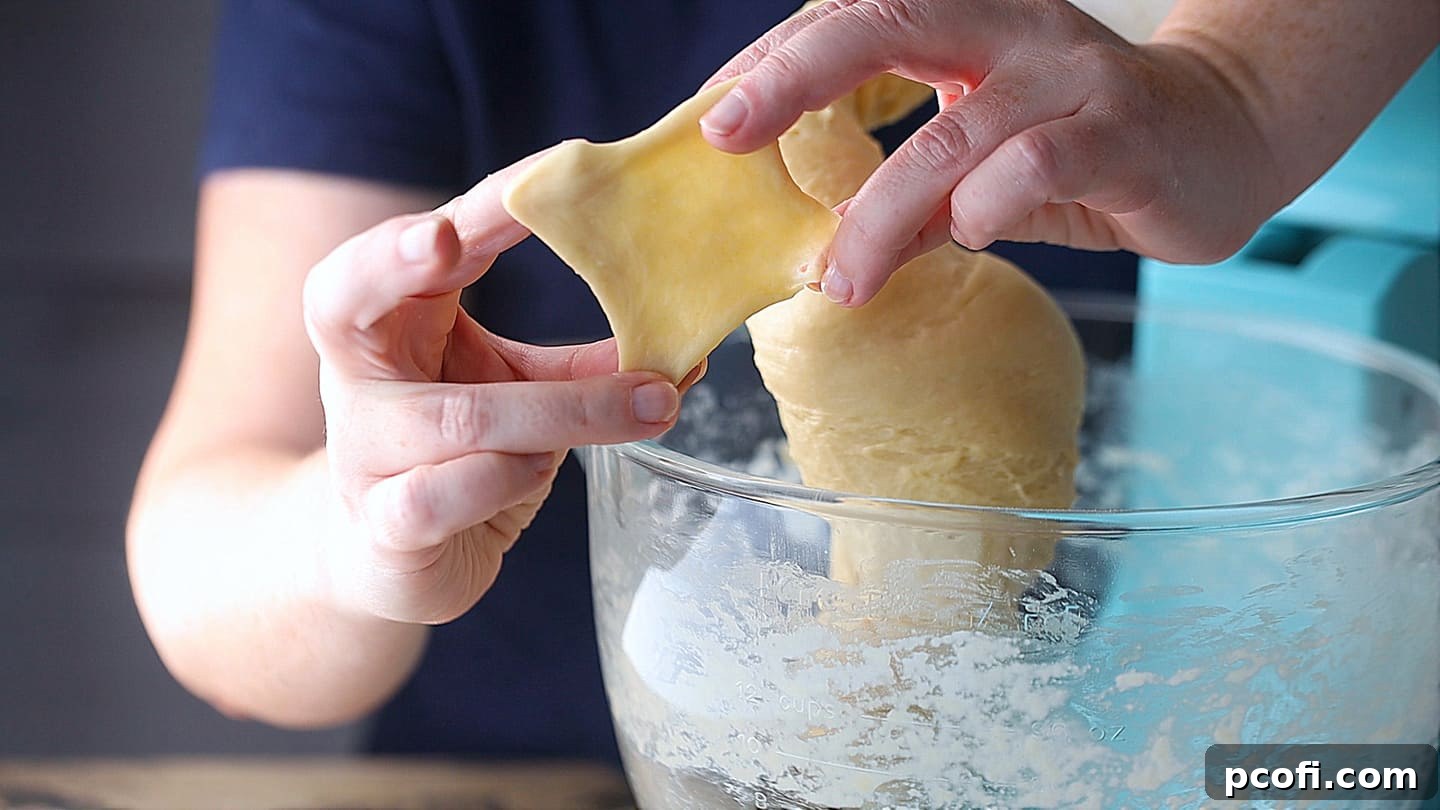
Once all the ingredients are combined and the dough has formed, the critical step of kneading begins. Kneading is essential for developing the gluten proteins in the flour, which are responsible for giving Challah its characteristic stretchy, elastic quality and its ultimately tender yet slightly chewy texture. You’ll want to knead the dough for approximately 5 to 10 minutes, either vigorously by hand on a lightly floured surface or using a stand mixer fitted with a dough hook. To determine if your dough is adequately kneaded, perform the “windowpane test”: pinch off a small piece of dough and gently flatten it with your fingertips. Then, carefully pull and stretch it from the center outwards. If the dough can stretch thin enough to become translucent, allowing light to pass through it like a windowpane, without tearing, then your gluten is perfectly developed, and your dough is ready for the next stage!
Step 5: The First Rise (Bulk Fermentation)
Lightly mist your mixing bowl with non-stick spray or a thin layer of oil to prevent the dough from sticking. Place the kneaded ball of dough into the greased bowl and cover it securely with plastic wrap or a clean, damp kitchen towel. Set the bowl aside in a warm, draft-free spot to allow the dough to undergo its first rise, also known as bulk fermentation. This process typically takes between 1 to 2 hours, depending on the ambient temperature in your kitchen. The dough is sufficiently risen when it has roughly doubled in volume and passes a simple “poke test”: gently insert two fingers into the dough, up to the second knuckle. If, upon removal, the indentations remain with only a slight, slow rebound, your dough is perfectly proofed. Once this stage is complete, gently “punch down” the dough to release the accumulated gases, then knead it briefly a few times to redistribute the yeast and eliminate any large air pockets. Your dough is now perfectly prepared for shaping!
Step 6: Shape Your Beautiful Challah Braid
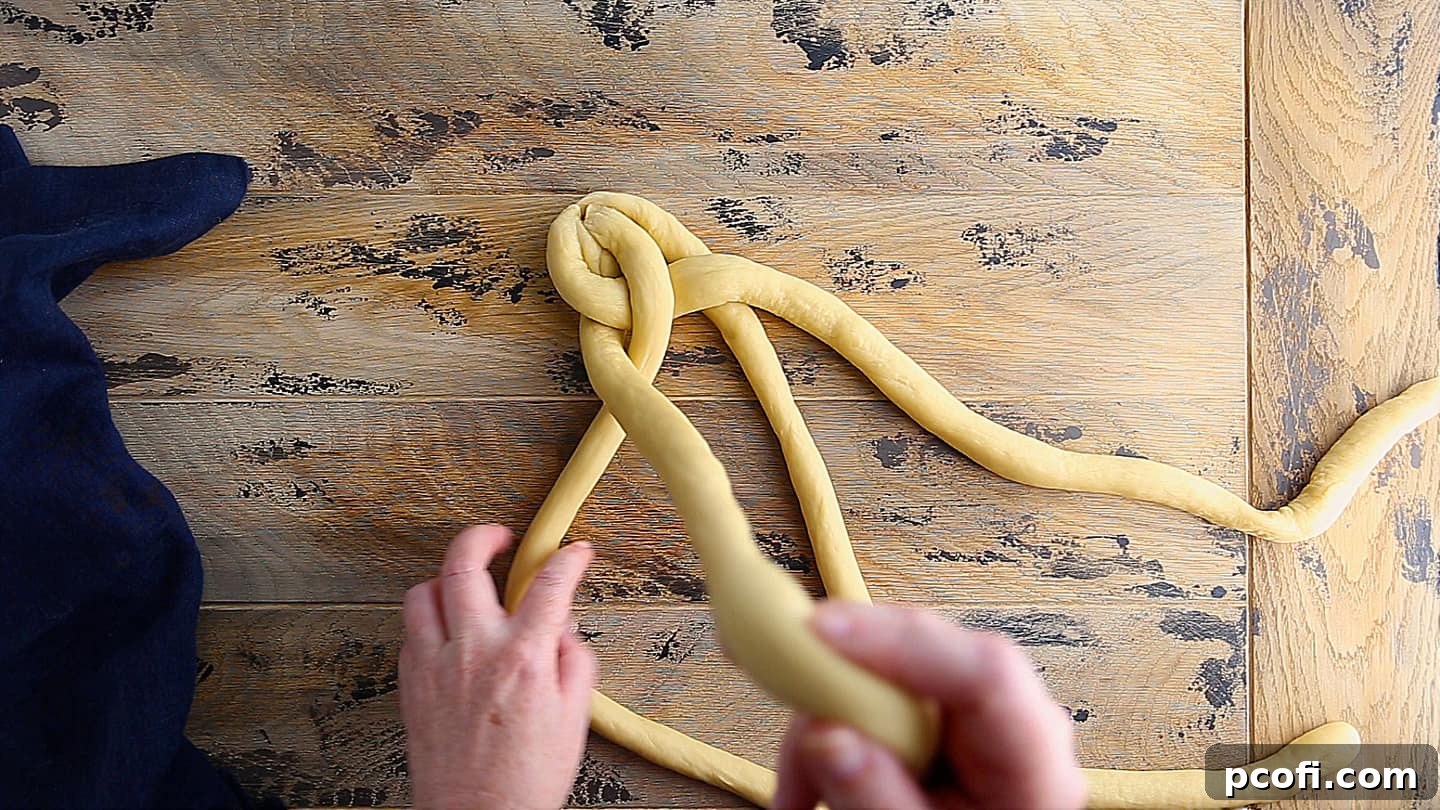
The distinctive braided shape is what truly sets Challah apart. For the stunning loaf seen in these photos, a 4-strand braid was created. Begin by dividing your dough into four equal portions. Roll each portion into a long, uniform rope, ensuring they are all roughly the same length and thickness for an even bake and a symmetrical braid. Pinch one end of all four ropes together firmly to secure them. To form a 4-strand braid, envision your ropes numbered 1, 2, 3, and 4 from left to right. Take the left-most strand (rope #1) and weave it over rope #2, then under rope #3, and finally over rope #4. This original rope #1 will now be positioned on the far right. Repeat this precise pattern, always starting with the new left-most strand: over, under, over. Continue this weaving motion until you reach the very end of the ropes. Once the braid is complete, firmly pinch the remaining ends together to seal the loaf, ensuring it holds its shape during baking.
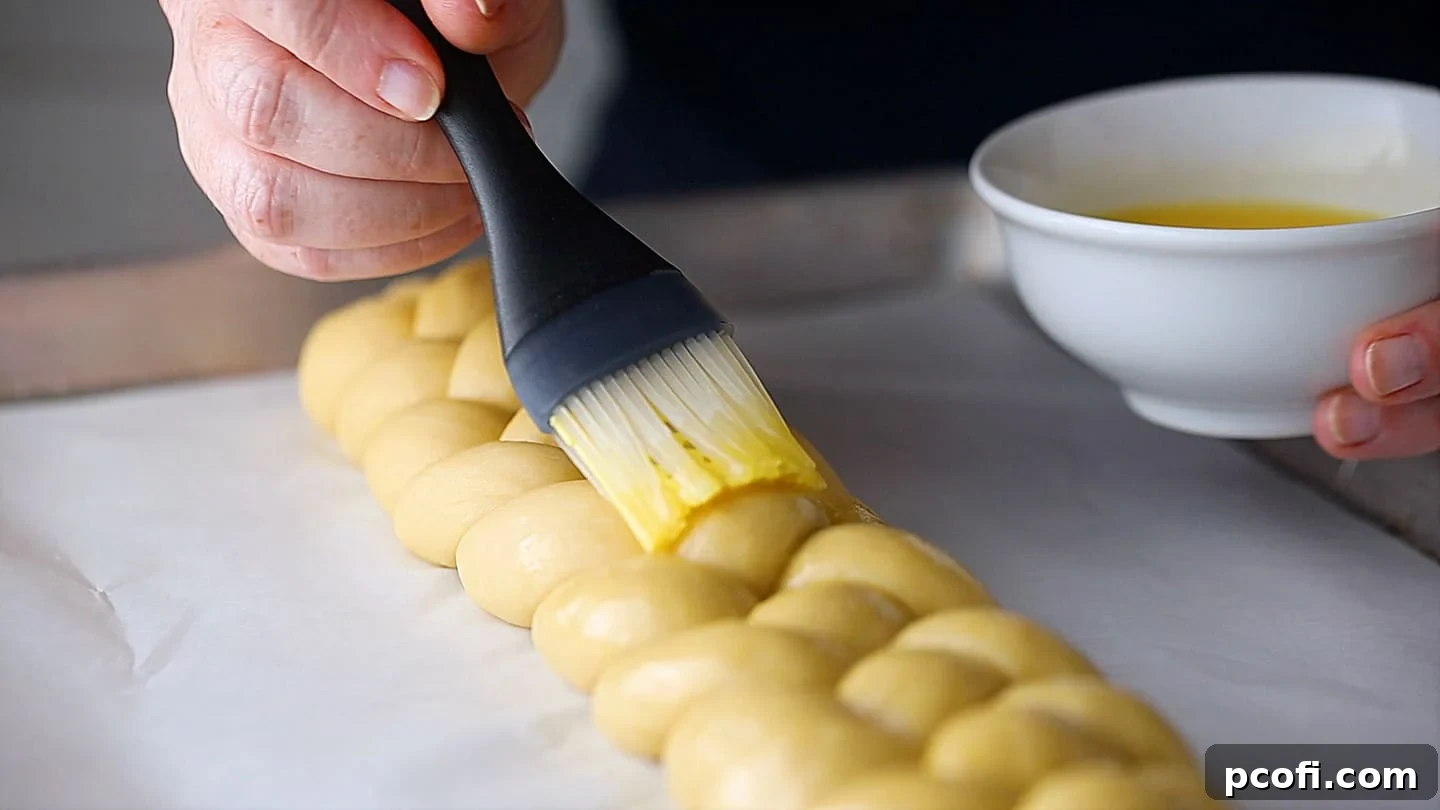
Step 7: Apply the First Egg Wash
Carefully transfer your beautifully shaped Challah braid to a baking sheet that has been lined with parchment paper. Now, prepare your egg wash: simply beat one large egg with a few teaspoons of water until the mixture is smooth and well combined. Using a pastry brush, gently and evenly coat the entire surface of your braided loaf with this egg wash. This step is crucial for two reasons: it will significantly contribute to your bread developing a deep, rich golden color during baking, and it will give the crust a gorgeous, glossy sheen, enhancing its overall visual appeal. After brushing, loosely cover the bread with lightly greased plastic wrap, setting it up for its crucial second rise.
Step 8: The Critical Second Rise (Proofing)
The second rise, often referred to as proofing, is a critically important stage in Challah baking. It directly impacts the final texture, volume, and appearance of your bread. After the first egg wash, allow the covered loaf to rise again in a warm, draft-free location for approximately 1 to 2 hours, or until it has visibly doubled in size. Achieving perfect proofing is paramount for a light, airy crumb. If your bread is underproofed, it will not expand sufficiently in the oven, leading to a dense, gummy interior and potentially developing unsightly cracks on the surface during baking. Conversely, if the bread is overproofed, the delicate gluten structure becomes excessively stretched and weakened, causing the loaf to collapse in on itself as it bakes. This often results in a flat, heavy, or “leaden” bread.
To accurately gauge whether your Challah is perfectly proofed, perform the fingertip test: gently press the tip of your finger into an inconspicuous part of the dough, just up to the first knuckle. If the indentation holds its form and rebounds very slowly or only partially, your dough has achieved optimal proofing and is ready for the oven. If it springs back rapidly and completely, it requires more time to rise. If it collapses entirely and doesn’t rebound, it is likely overproofed, though you might still be able to bake it with adjusted expectations.
Step 9: Bake to Golden Perfection
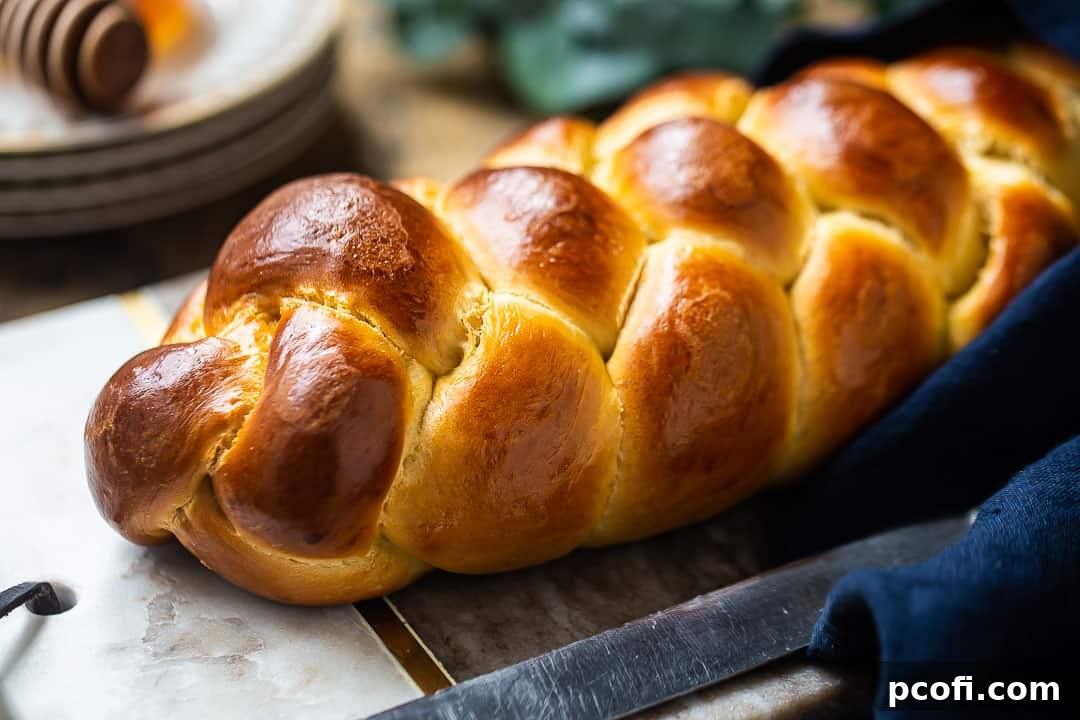
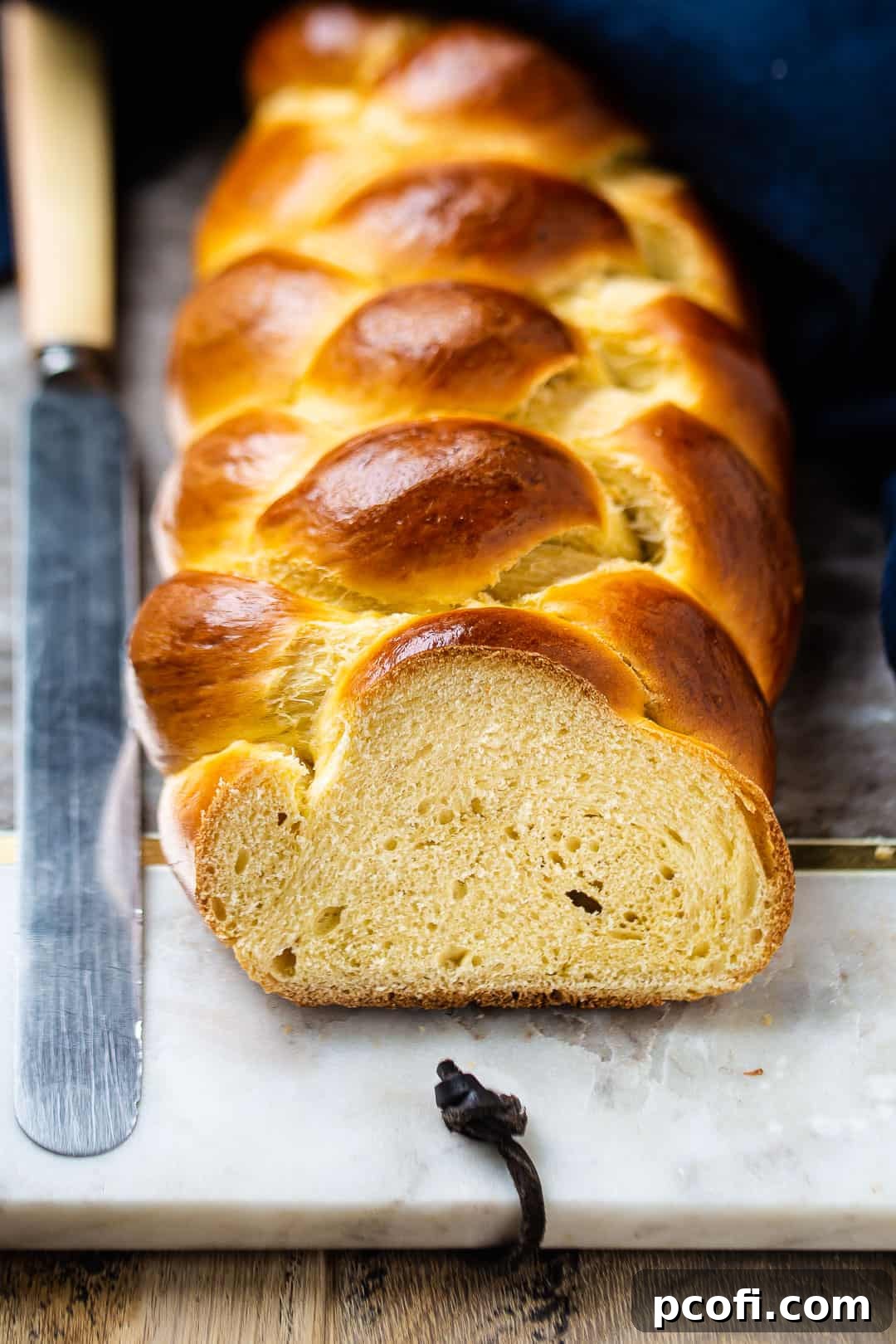
Once your Challah loaf has successfully completed its second rise and passed the fingertip test, it’s time to preheat your oven to 350°F (175°C). Just before carefully transferring the baking sheet to the oven, apply a second, lighter coat of egg wash to the entire surface of the loaf. This final brush will enhance the crust’s beautiful luster and contribute to an even, deep golden-brown color. Bake the Challah bread for approximately 20 to 30 minutes. You’ll know it’s perfectly done when it’s beautifully puffed up, boasts a rich, even golden-brown color all over, and sounds hollow when gently tapped on the bottom. An internal temperature reading of 190-200°F (88-93°C) with an instant-read thermometer also confirms doneness. Allow the magnificent loaf to cool completely on a wire rack before slicing into it and savoring its exceptional softness and flavor.
Helpful Tips and Tricks for Baking Challah
- Equipment Flexibility in Dough Preparation: While a stand mixer fitted with a dough hook is an excellent tool that streamlines the mixing and kneading process, it is by no means a mandatory piece of equipment for this Challah recipe. The dough can be equally well mixed and kneaded entirely by hand. Kneading by hand offers a wonderful tactile experience, allowing you to develop a keen sense for the dough’s consistency and elasticity. For those who own a bread machine, many models include a “dough” cycle that can efficiently handle the initial mixing and first rise, offering another convenient option.
- Achieving the Perfect Golden Crust: To further enhance the visual appeal and add a delightful textural contrast to your Challah, consider sprinkling a pinch of coarse sea salt, sesame seeds, or poppy seeds over the egg-washed loaf just before it goes into the oven. For an extra rich, deep golden crust and added shine, ensure you apply a second, lighter egg wash just before baking.
- Monitoring Oven Temperature: Ovens can vary significantly in temperature. For consistent baking results, using an oven thermometer to verify your oven’s true temperature is highly recommended. This ensures your Challah bakes evenly and achieves the desired color and texture.
Adapting Challah for Special Diets
A wonderful attribute of traditional Challah is its natural dairy-free composition, making it an excellent and inclusive choice for individuals with dairy sensitivities or those adhering to Kosher dietary laws. This recipe purposefully utilizes oil as its fat source, ensuring the bread remains moist and rich without any dairy components.
- Vegan Challah: To transform this recipe into a completely vegan-friendly version, you will need to replace both the eggs and the honey. For the honey, a direct 1:1 substitution with granulated sugar or maple syrup will work perfectly. For the eggs, any commercially available 1:1 egg substitute, such as flax eggs (1 tablespoon ground flaxseed + 3 tablespoons water per egg), applesauce, or a proprietary vegan egg replacer, should yield good results. It’s worth noting that vegan Challah may exhibit a slightly different texture or a less intense golden color due to the absence of egg yolks, but it will still produce a delicious and satisfying loaf.
- Gluten-Free Challah: Crafting a successful gluten-free Challah requires selecting the right flour blend. Look for a high-quality gluten-free all-purpose flour blend specifically designed for a 1:1 substitution with traditional wheat flour. Many such blends already incorporate xanthan gum or other binders crucial for mimicking the structural properties of gluten. Be prepared for a gluten-free dough to feel somewhat stickier and exhibit less elasticity than dough made with conventional wheat flour. Adjust your kneading expectations and handling techniques accordingly, as gluten-free doughs typically develop differently.
Recommended Gluten-Free Flour Blends:
- King Arthur Flour Gluten-Free Measure for Measure Flour
- Bob’s Red Mill Gluten-Free All-Purpose Baking Flour
- Cup4Cup Multi-Purpose Gluten-Free Flour
Challah Bread Frequently Asked Questions (FAQ)
Can this Challah recipe be made in advance?
Yes, absolutely! This Challah recipe is remarkably versatile for advance preparation, making it an excellent choice for meal planning or when you’re hosting. You can easily employ an “overnight method” for convenience. Follow all the recipe steps up to shaping the bread and applying the first egg wash. At this point, cover the shaped loaf loosely with greased plastic wrap and place it in the refrigerator overnight, or for up to 48 hours. The cold temperature will significantly slow down the yeast activity, allowing for a slow, flavorful rise. For longer storage, the unbaked, shaped loaf can even be frozen for up to 2 weeks. To do this, place it on a tray in the freezer until it’s solid, then transfer it to an airtight freezer bag or container. When you’re ready to bake, simply remove the Challah from the refrigerator or freezer and allow it to come to room temperature, which will also initiate its final rise. Once it has doubled in size and successfully passes the gentle fingertip test (as described in Step 8), apply a second egg wash and bake it according to the recipe’s directions.
How do you properly store Challah bread to maintain freshness?
Proper storage is essential to preserve Challah’s exceptional freshness and tender texture. Once your baked Challah has completely cooled on a wire rack (a crucial step to prevent condensation and a soggy crust), wrap it tightly in plastic wrap. For an extra layer of protection against air exposure, place the wrapped loaf into an airtight container or a large zip-top bag, ensuring you press out as much air as possible before sealing. Stored at room temperature, freshly baked Challah will remain wonderfully fresh and delicious for several days. To extend its shelf life even further, you can store it in the refrigerator for up to 2 weeks, although refrigeration can sometimes cause a slight change in its texture. Challah also freezes exceptionally well; when tightly wrapped and stored in the freezer, it will maintain its quality for at least a few months. To serve, thaw frozen Challah at room temperature or gently warm it in a low oven to revive its fresh-baked aroma and softness.
What kind of add-ins work well with Challah bread?
Challah offers a versatile canvas for a delightful array of add-ins, allowing you to customize its flavor profile and texture to your preference. These additions can be kneaded directly into the dough during the mixing stage or sprinkled on top before baking for an appealing visual element and an extra crunch. Here are a few popular and delicious ideas:
- Sweet & Fruity Additions: Incorporate golden raisins, dried cranberries, finely chopped dates, or other dried fruits for bursts of natural sweetness and chewy texture. For a more decadent treat, chopped chocolate (dark, milk, or white) or elegant cinnamon sugar swirls can transform your Challah into a dessert-like bread.
- Savory Enhancements: If you prefer a savory twist, consider kneading in fresh or dried herbs such as fragrant rosemary, delicate thyme, or aromatic basil. Shredded cheeses like sharp cheddar, nutty Parmesan, or tangy crumbled feta can create a wonderfully savory loaf that pairs well with meals.
- Toppings & Seeds for Texture: Beyond the basic egg wash, you can add an extra layer of texture and flavor with classic toppings like sesame seeds, poppy seeds, or a sprinkle of flaky sea salt. For a unique and flavorful crunch, try a generous dash of everything bagel seasoning. Aromatic spices such as cinnamon, a hint of cardamom, or a pinch of exotic saffron can also infuse the bread with complex, enticing aromas.
What are the best ways to use leftover Challah?
If you find yourself with the delightful dilemma of leftover Challah – a rare but welcome occurrence – its rich, tender, and slightly sweet texture makes it incredibly versatile for transforming into other delectable dishes. Beyond simply enjoying it slathered with butter and your favorite jam, Challah truly shines in several creative culinary applications:
- Gourmet Sandwiches: Its soft yet sturdy crumb is perfect for crafting elevated sandwiches. Try it with thinly sliced roast beef, savory turkey, or as the foundation for a luscious tuna, egg, or chicken salad sandwich. The subtle sweetness of Challah surprisingly complements a wide range of savory fillings beautifully.
- The Ultimate French Toast: Challah is widely regarded as one of the best breads for French toast. Its enriched nature allows it to absorb the egg custard perfectly without becoming soggy, leading to an exceptionally rich, fluffy, and golden French toast. For the best results, slice your Challah thickly.
- Decadent Bread Pudding or Casseroles: Stale Challah is ideal for making exquisite sweet bread puddings, where it readily absorbs custards and bakes into a comforting, rich dessert. It’s also fantastic for savory bread casseroles or stuffings, adding a unique depth of flavor and tender texture. For an effortless, crowd-pleasing breakfast or brunch, consider transforming it into a delightful French Toast Casserole.
- Flavorful Croutons or Breadcrumbs: When your Challah is truly past its prime for fresh eating, don’t discard it! It can be repurposed into incredibly flavorful croutons for enhancing salads or soups, or finely ground into breadcrumbs perfect for coating fried foods or topping baked casseroles.
More Delicious Yeast Bread Recipes to Explore
If you’ve enjoyed the process of baking this Challah, you might be inspired to try your hand at other delightful yeast bread recipes. Expand your baking repertoire with these fantastic options:
- Authentic New York Bagel Recipe: Achieve that perfect chewy interior and crisp crust at home.
- Classic Soft White Bread Recipe: A staple, perfect for sandwiches and toast, with a wonderfully tender crumb.
- Crusty French Baguette Recipe: Master the art of the perfect artisan loaf with a crackly crust and airy interior.
- Homemade Fluffy Crescent Rolls: Light, buttery, and melt-in-your-mouth, these are perfect for any meal.
Classic Braided Challah Bread
Ingredients
- 1/3 cup (59.15 g) warm water (around 105°F / 40°C)
- 2 tablespoons (29.57 g) honey
- 1 teaspoon (4.93 g) active dry yeast
- 1 large (44 g) egg
- 1 large (18 g) egg yolk
- 3 tablespoons (29.57 g) oil (vegetable, canola, grapeseed, or light olive oil)
- 1 3/4 cups (187.5 g) all-purpose flour (you may need up to 2 1/4 cups depending on environmental conditions)
- 1 teaspoon (4.93 g) kosher salt
- Egg wash (1 egg beaten with a few teaspoons of water)
Instructions
- Place the warm water and honey in a large mixing bowl and sprinkle the yeast on top.
- Stir in the yeast until dissolved, and set aside for 5-10 minutes until small bubbles or foam form on the surface. If no bubbles appear, discard the mixture and restart with fresh yeast and properly tempered water.
- Once the yeast mixture is bubbly, stir in the egg, egg yolk, and oil until well combined.
- Add about half the all-purpose flour, mixing on medium-low speed until it’s fully incorporated into the wet ingredients.
- While continuing to mix, gradually add small amounts of the remaining flour, just until the dough gathers itself into a cohesive ball and pulls cleanly away from the sides of the bowl. Adjust the flour quantity as needed based on your dough’s consistency.
- Mix in the kosher salt until it is thoroughly combined throughout the dough.
- Knead the dough (either by hand on a lightly floured surface or using a stand mixer with a dough hook) for approximately 5 to 10 minutes, or until it passes the windowpane test (where a small piece of dough can be stretched tissue-thin without tearing).
- Place the kneaded dough in a lightly greased bowl, cover it with plastic wrap, and allow it to rest in a warm, draft-free place until it has doubled in volume (this usually takes about 1 to 2 hours).
- When the dough has doubled, gently punch it down to release gases, knead it briefly a few times, and then divide it into 4 equal portions for braiding.
- Roll each of the 4 dough portions into a long, uniform rope. Pinch all four ropes together firmly at one end to secure them.
- To braid, take the left-most rope and weave it over the next rope, then under the third rope, and finally over the fourth rope. This original left-most rope is now positioned on the far right. Repeat this pattern (over, under, over), always starting with the new left-most rope, until the entire braid is formed. Pinch the ends together firmly at the bottom to seal the loaf.
- Carefully transfer the braided loaf to a baking sheet lined with parchment paper. Brush generously with the prepared egg wash, then cover it loosely with lightly greased plastic wrap.
- Allow the loaf to undergo its second rise until it has doubled in bulk (typically 1 to 2 hours). Confirm it’s ready by performing the fingertip test (the indentation should hold its shape).
- Preheat your oven to 350°F (175°C). Just before placing the loaf in the oven, brush it with a second, lighter coat of egg wash.
- Bake the Challah bread for 20 to 30 minutes, or until it is beautifully puffed, deeply golden brown, and sounds hollow when tapped on the bottom. An internal temperature of 190-200°F (88-93°C) indicates doneness.
Notes
*Water Temperature: The warm water should be around 105°F (40°C), feeling like a warm bath. Using a kitchen thermometer can help ensure accuracy to prevent killing the yeast or hindering its activation.
**Yeast Substitution: Instant yeast can be directly substituted for active dry yeast; note that it may proof faster. For sourdough bakers, you can substitute 1/2 cup of active sourdough starter, omitting the specified water and reducing the all-purpose flour by approximately 1/3 cup to account for the starter’s hydration.
***Yeast Activity Check: If the honey-water-yeast mixture does not form small bubbles or a foamy layer within 10 minutes, the yeast is likely inactive. Discard the mixture and begin again with fresh yeast and correctly tempered water.
****Windowpane Test: To perform this test, pinch off a small piece of dough, gently flatten it with your fingertips, and then carefully stretch it from the center outwards. If the dough can be stretched thin enough to be translucent, allowing light to pass through like a windowpane, without tearing, your dough has achieved adequate gluten development from kneading.
*****Proofing Test (Second Rise): To assess proper proofing, gently press the tip of your finger into an inconspicuous part of the loaf (up to the first knuckle). If the indentation holds its form and rebounds very slowly or only partially, the dough is perfectly risen and ready to bake. If it springs back quickly and completely, it needs more time to rise. If it collapses, it is likely over-proofed and may result in a dense or flat loaf.
Calories: 121 kcal
Carbohydrates: 17 g
Protein: 3 g
Fat: 5 g
Saturated Fat: 1 g
Cholesterol: 30 mg
Sodium: 201 mg
Potassium: 34 mg
Fiber: 1 g
Sugar: 3 g
Vitamin A: 41 IU
Calcium: 7 mg
Iron: 1 mg