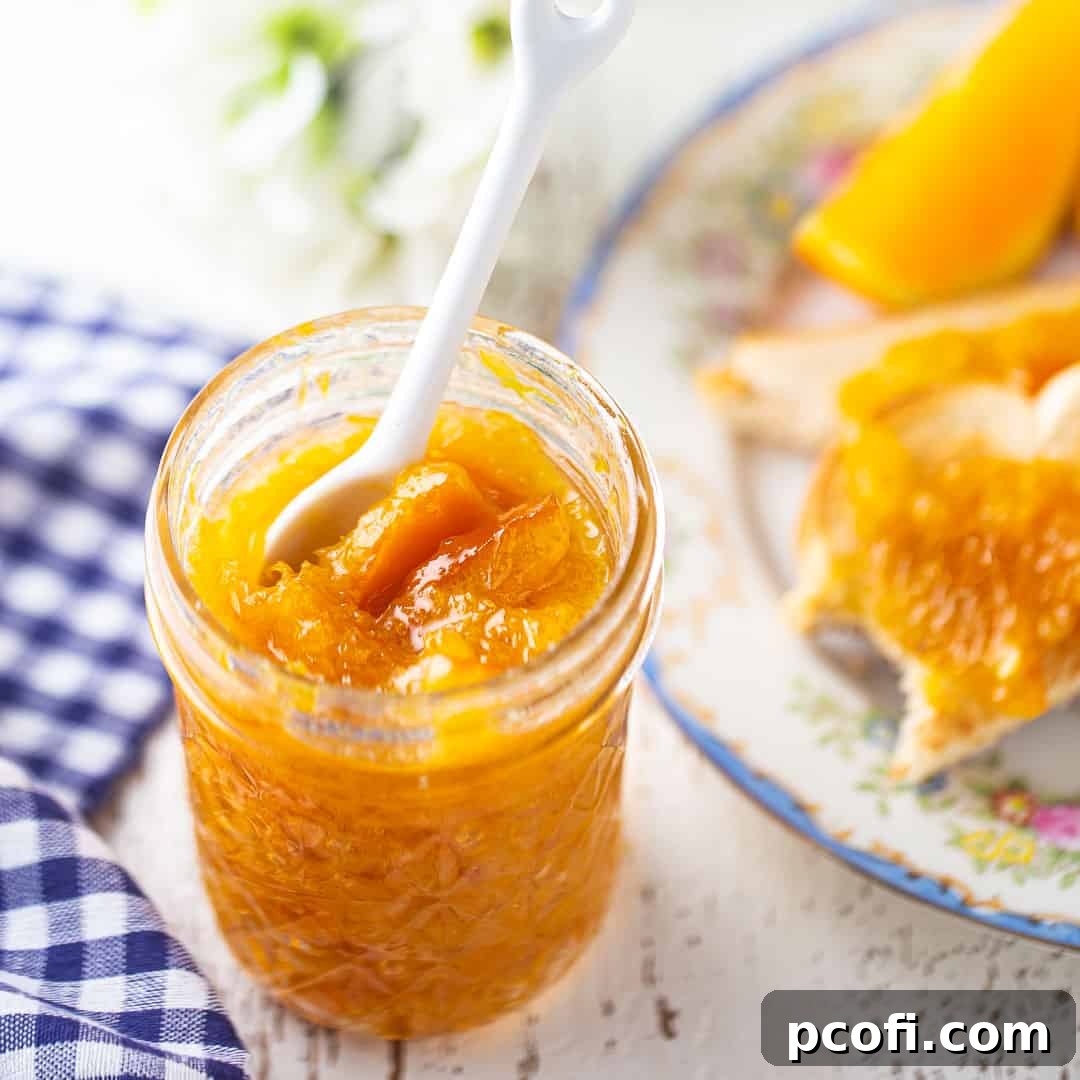
Easy Homemade Orange Marmalade: Just 4 Simple Ingredients, No Pectin Required!
There’s nothing quite like the vibrant, zesty flavor of homemade orange marmalade to brighten any day. Imagine a spread bursting with the essence of fresh oranges, balanced with a delightful sweetness and a hint of pleasant bitterness. You might think making your own marmalade is a complicated affair, but I’m here to tell you it’s incredibly simple!
This recipe uses only four basic ingredients – oranges, water, sugar, and a touch of lemon juice – and astonishingly, requires no added pectin. The secret lies in harnessing the natural pectin found abundantly in citrus fruits. With a little patience and a few easy steps, you’ll be creating jars of this sunny, cheerful preserve in no time. It’s the perfect way to capture the bright spirit of spring or to add a burst of sunshine to your breakfast table any time of year.
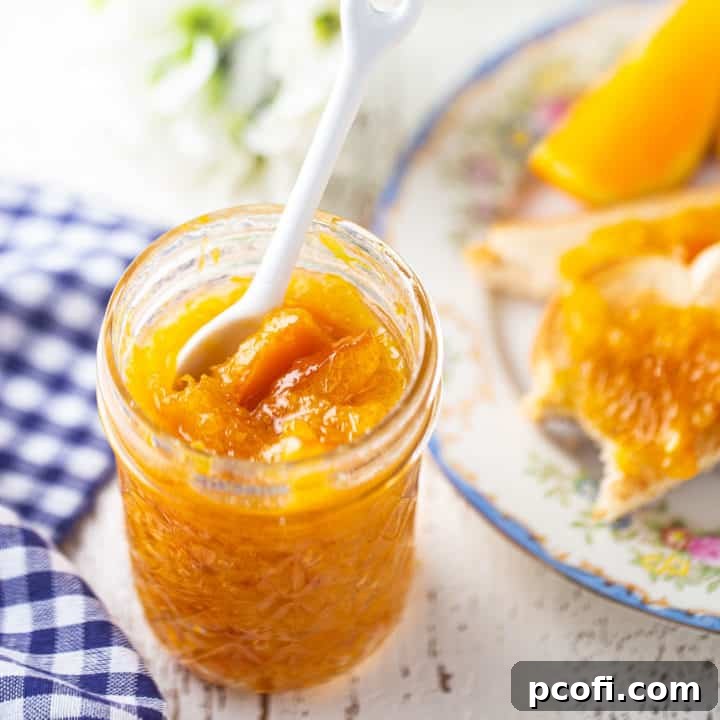
Why You’ll Love This No-Pectin Orange Marmalade Recipe
As spring unfurls its splendor, my kitchen invariably becomes a haven for citrus. The crisp, sunny days naturally make me crave the bright, tangy notes of lemons, limes, grapefruits, and of course, oranges. Over the past few weeks, I’ve been sharing some of my favorite citrus creations like homemade lemon curd, easy key lime pie, and lemon pound cake, and the overwhelming positive feedback tells me I’m not alone in this citrus obsession!
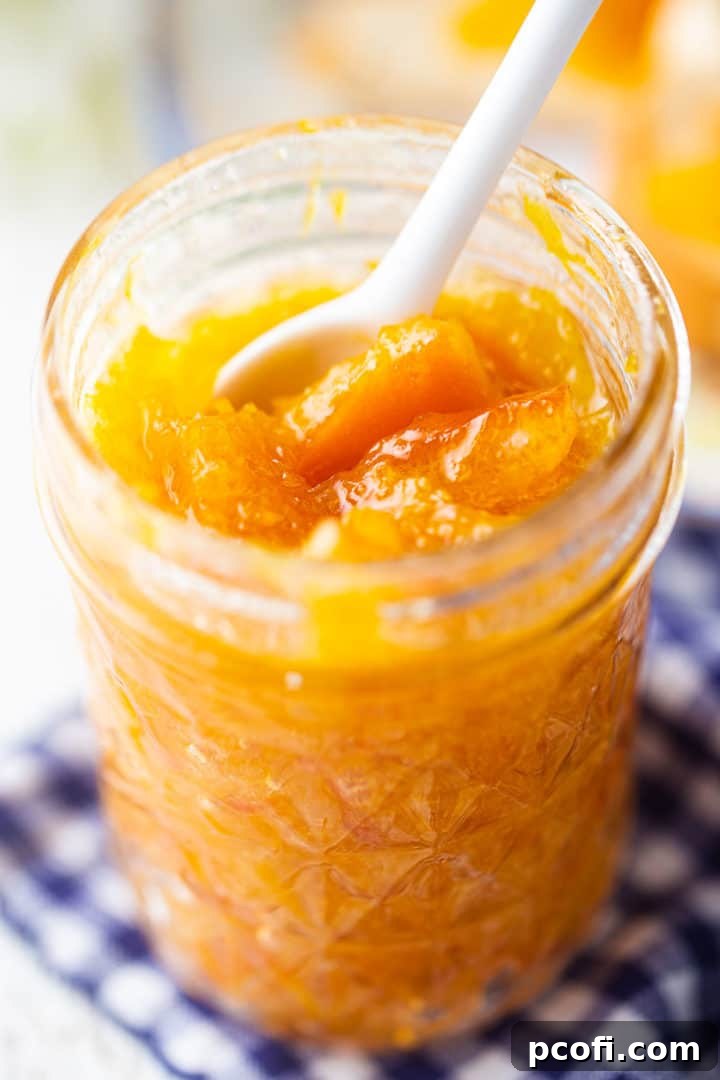
That’s why I’m so excited to share this incredibly easy orange marmalade recipe with you today. Forget complicated steps or special ingredients; this recipe is designed for simplicity and maximum flavor. Most of the process is hands-off, involving a simple cycle of soaking and boiling. The result is a thick, perfectly sweet, and wonderfully spreadable marmalade, brimming with real orange fruit and peel. It delivers that signature sunny orange flavor, beautifully complemented by a pleasingly subtle bitter note that defines a truly great marmalade.
It’s a fantastic project for a leisurely weekend, and the rewards are absolutely delicious. Whether you’re a seasoned preserver or a complete novice, this recipe will guide you to success, making you feel like a kitchen wizard!
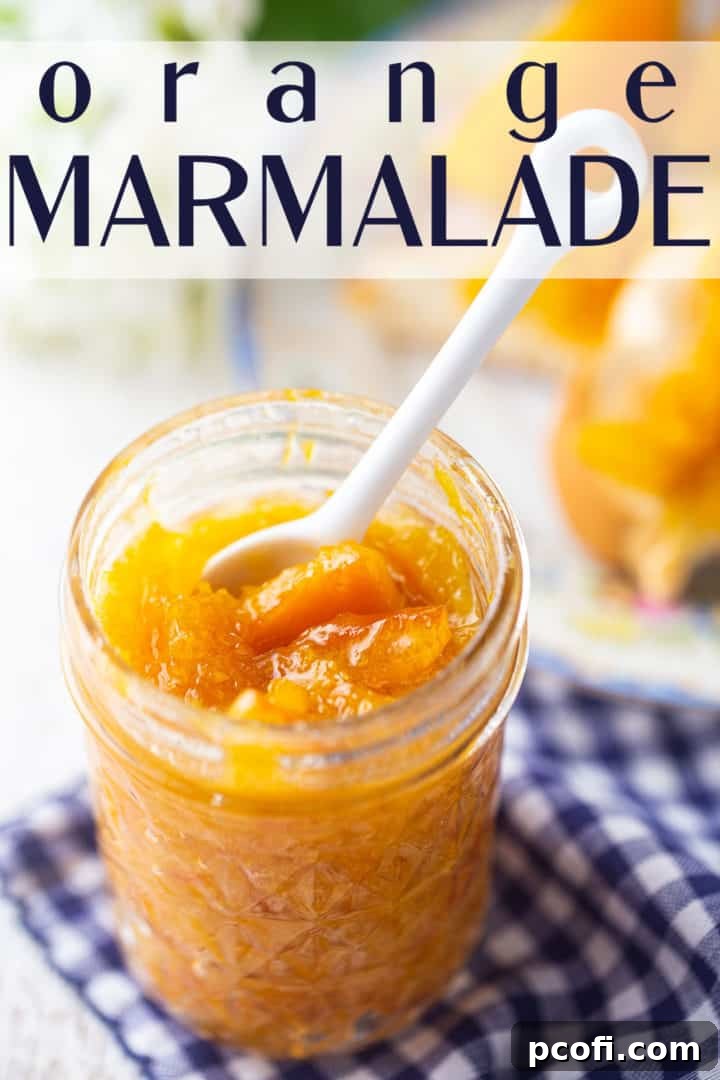
What Exactly is Marmalade?
At its heart, marmalade is the citrus equivalent of fruit preserves. While many fruit jams and jellies often rely on pureed or roughly chopped fruit, marmalade proudly incorporates the entire fruit – or at least, a significant portion of it. This means you’ll find delectable bits of orange pulp and beautifully candied peel suspended throughout, contributing to an incredibly intense and concentrated orange flavor and a unique textural experience.
The magic happens when fruit and sugar are simmered together, transforming into a spreadable topping that holds a myriad of delicious possibilities. Unlike jams, which can be made with various fruits, marmalade specifically refers to a preserve made from citrus fruits. The distinct bitter note, especially prevalent in traditional recipes using Seville oranges, is a hallmark of authentic marmalade and adds a layer of complexity that sets it apart from other sweet spreads.
How to Make Homemade Orange Marmalade: Step-by-Step Guide
Crafting this delightful orange marmalade is a journey of simple steps, primarily involving preparation and patient simmering. Here’s how to achieve that perfect sunny-sweet spread:
1. Prepare Your Oranges
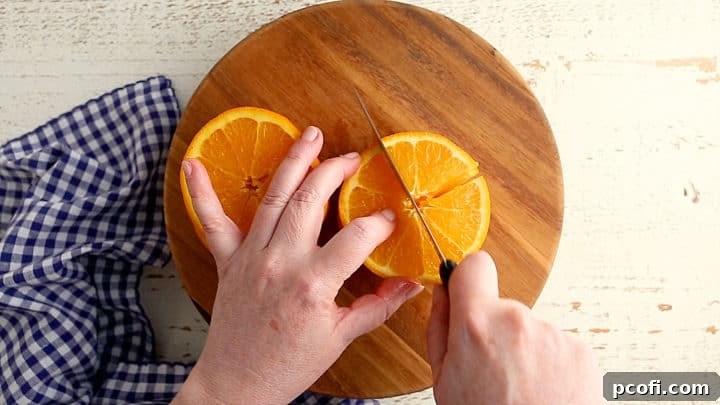
Begin by selecting good quality oranges. For this recipe, I opted for readily available navel oranges, but there are other excellent choices we’ll discuss later. The most crucial first step is to slice your oranges as thinly as possible. Thin slices are essential not only for a pleasant texture in the finished marmalade but also for maximizing the release of natural pectin from the peel and membranes during the soaking process. While a sharp knife works, I highly recommend using a mandoline slicer if you have one. It allows for consistent, paper-thin slices that will melt beautifully in your mouth. Once sliced, cut these thin rounds into quarters.
2. The All-Important Soaking Step (No Added Pectin Magic!)
Transfer your quartered orange slices to a large, non-reactive pot. Cover them generously with plain water – the temperature of the water (hot or cold) doesn’t significantly impact this stage. This soaking step is where the magic happens, eliminating the need for commercial pectin. Oranges, especially their peels and seeds, are naturally rich in pectin, a soluble fiber that acts as a gelling agent. Soaking the fruit overnight allows this natural pectin to release into the water, ensuring your marmalade will set beautifully without any extra additives. This also helps to mellow some of the bitterness from the peel.
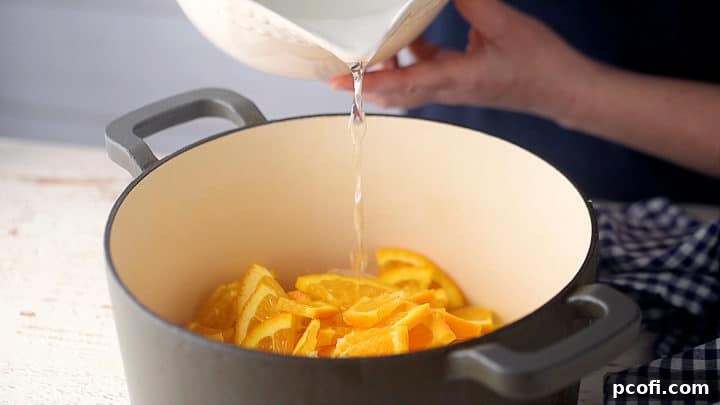
3. Soften the Peels
The next morning, place the pot of soaked oranges and their liquid over high heat and bring it to a boil. Reduce the heat to a simmer and let it cook for approximately 30 minutes, or until the orange peels become wonderfully tender. This step is critical; once sugar is added, the peels will not soften further, only become chewy. To test for doneness, try cutting a piece of peel with the edge of a spoon. If it yields easily, they’re ready. If not, continue simmering until they reach the desired softness. Don’t rush this part!
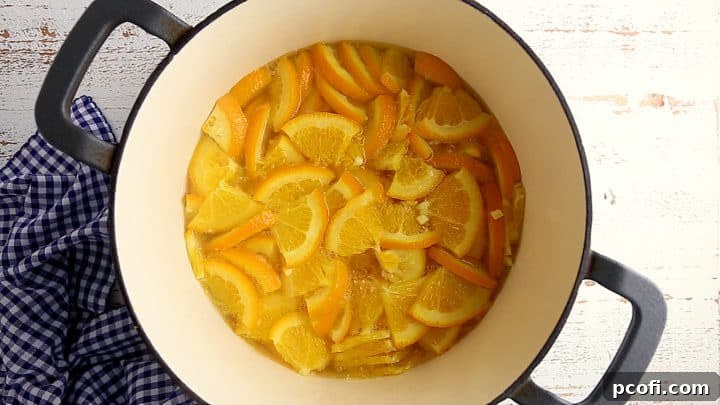
4. The Sweet Transformation: Adding Sugar and Boiling to Set
Once the peels are tender, add the granulated sugar to the pot. Stir gently until the sugar dissolves completely. Let the mixture simmer for another 30 minutes, allowing the flavors to meld and the sugar to fully incorporate. Then, increase the heat to medium-high and bring the marmalade to a rolling boil. It’s important to stir frequently during this stage to prevent the marmalade from scorching on the bottom of the pot. As it boils, you’ll notice the mixture thickening and becoming more concentrated. The sugar helps draw out moisture and combines with the pectin to create that characteristic gel.
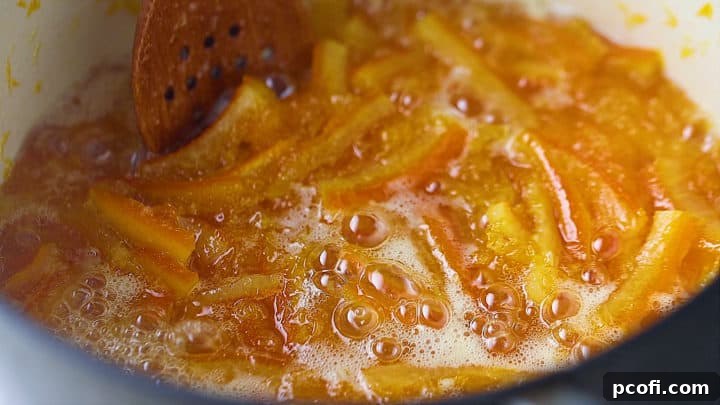
5. The Final Touch: Lemon Juice
Once the marmalade has reached its desired thickness and gel point (more on that below!), remove the pot from the heat. Stir in a tablespoon of fresh lemon juice. This isn’t just for flavor, although it certainly brightens the taste; lemon juice also contains its own pectin and acid, which further aids in the setting process and provides balance to the sweetness and bitterness of the oranges.
How to Know When Your Marmalade is Perfectly Cooked
Determining the exact moment your marmalade is ready is key to achieving that ideal spreadable consistency. As it boils, the marmalade will visibly thicken and become more translucent. There are two reliable methods to test for doneness:
Using a Candy Thermometer
The most precise method involves a digital food thermometer. Your marmalade is typically ready when it reaches 220 degrees F (104 degrees C). At this temperature, the pectin and sugar have created the optimal gel structure. Even if it still appears a bit syrupy in the hot pot, trust the thermometer – it will set to the perfect consistency once cooled. If you don’t already own one, I highly recommend investing in a digital food thermometer. It’s an indispensable kitchen tool not just for preserves, but also for candy making, certain frosting recipes, and perfectly cooked meats.
The Wrinkle Test (Old-Fashioned Method)
For those who prefer a traditional approach, the wrinkle test is a time-honored technique. Before you start boiling, place a small plate in your freezer. When you think the marmalade might be ready, spoon a small amount onto the chilled plate. Return the plate to the freezer for 1-2 minutes to rapidly cool the marmalade. Then, remove the plate and gently push the edge of the marmalade with your finger. If the surface wrinkles and doesn’t simply run back together, your marmalade has reached its gel point and is ready to be removed from the heat.
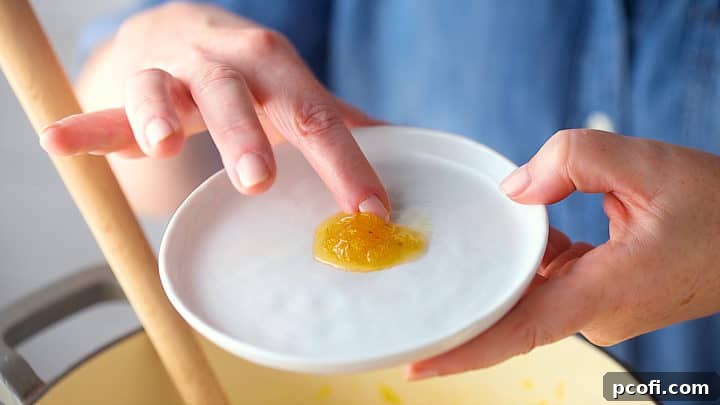
Troubleshooting Common Marmalade Issues
- Undercooked Marmalade (Too Runny): Don’t panic! If your marmalade doesn’t set properly after cooling, simply return it to the pot and boil it for a few more minutes, retesting for doneness. Continue this process until it reaches the correct gel point.
- Overcooked Marmalade (Too Stiff): If you find your marmalade is too firm in the jar, it’s an equally simple fix. Gently reheat it in a saucepan with a tablespoon or two of water, stirring until it reaches your preferred consistency.
- Too Bitter: While a touch of bitterness is characteristic of marmalade, if it’s overwhelming, you might try using less of the white pith (the spongy layer between the peel and fruit) next time, as this is where much of the bitterness resides.
Preserving Your Homemade Orange Marmalade: Water Bath Canning
Once your orange marmalade is cooked to perfection, you have a couple of options for storage. While it will keep in the refrigerator for up to 3 months, I highly recommend processing it in a boiling water canner for long-term shelf stability. This optional step, though requiring a little extra effort, ensures your marmalade remains fresh and safe in your pantry for up to a year, making it perfect for gifting or enjoying throughout the seasons.
Steps for Boiling Water Canning:
- Sterilize Your Jars: Before filling, sterilize your canning jars and lids. You can do this by submerging them in boiling water for at least 10 minutes, running them through a dishwasher’s sanitizing cycle, or heating them in an oven (check jar manufacturer instructions for oven safety). Keep jars hot until ready to fill.
- Fill the Jars: Carefully spoon the hot marmalade into the sterilized jars, leaving about 1/2-inch of headspace (the space between the marmalade and the rim of the jar). This headspace is crucial for proper sealing.
- Clean Rims and Seal: Wipe the rims of the jars with a clean, damp cloth to remove any marmalade residue. This ensures a proper seal. Place the lids and screw on the bands until finger-tight (do not overtighten).
- Process in Water Bath: Gently lower the filled jars into a boiling water canner, ensuring they are completely submerged by at least an inch of water. Bring the water back to a rolling boil and process the jars for 10 to 20 minutes (adjusting for altitude if necessary – consult a reliable canning guide for specific times).
- Cool and Check Seals: Carefully remove the jars from the canner and place them on a towel-lined counter to cool undisturbed for 12-24 hours. As they cool, you should hear a “ping” sound, and the center of the lid’s “button” will suction down. This indicates an airtight seal has formed. Any jars that haven’t sealed can be refrigerated and used within 3 months. Store properly sealed jars in a cool, dark place.
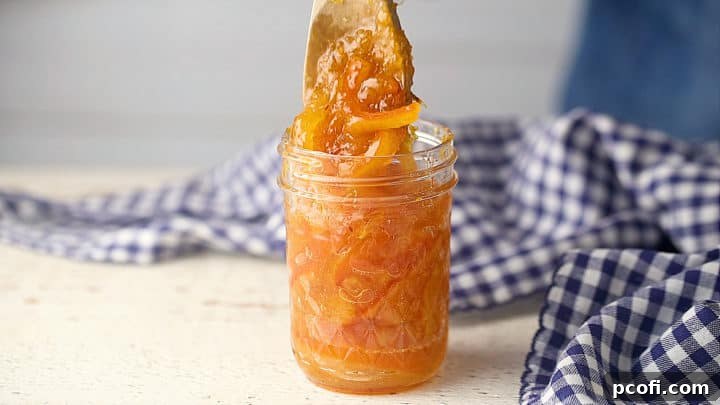
Choosing the Right Oranges for Your Marmalade
While I used common navel oranges for this recipe, you have a wide array of choices when it comes to citrus, each offering a slightly different flavor profile and level of bitterness or sweetness. Experimenting with different varieties can yield exciting results!
- Navel Oranges: Sweet, juicy, and readily available, they produce a beautifully balanced marmalade with a moderate bitter note.
- Clementines/Tangerines/Satsumas: These smaller, sweeter mandarins result in a milder, less bitter marmalade, perfect if you prefer a sweeter spread or for a children-friendly version. Their thinner peels also make for a very tender texture.
- Blood Oranges: Known for their stunning ruby-red flesh, blood oranges will give your marmalade a gorgeous color and a distinctive, berry-like flavor profile.
- Seville Oranges: For the most traditional and authentic marmalade experience, Seville oranges are the gold standard. These tart, bitter oranges are packed with pectin and deliver that characteristic robust, intensely bitter flavor that marmalade connoisseurs adore. They are typically in season during winter months.
Beyond oranges, don’t hesitate to venture into other citrus fruits! Meyer lemons (a sweeter, less acidic lemon variety), grapefruits (for a more pronounced bitter punch), or even exotic yuzu would make fantastic, unique marmalades. You can even combine different citrus types for a custom blend.
Dietary Considerations: Is This Marmalade for Everyone?
Good news! This homemade orange marmalade recipe is naturally accommodating for various dietary needs. It is:
- 100% Gluten-Free: Made purely from fruit, sugar, and water, with no grains or gluten-containing ingredients.
- Dairy-Free: Contains no milk products.
- Vegan: All ingredients are plant-based.
- Egg-Free: No eggs are used in this recipe.
- Nut-Free: Free from all common tree nuts and peanuts.
This makes it a wonderful treat or gift option for friends and family with common food sensitivities, ensuring everyone can enjoy its delightful flavor.
Delicious Ways to Enjoy Your Homemade Orange Marmalade
While often associated with breakfast, homemade orange marmalade is incredibly versatile and can elevate a wide range of dishes. Here are some of my favorite ways to savor it:
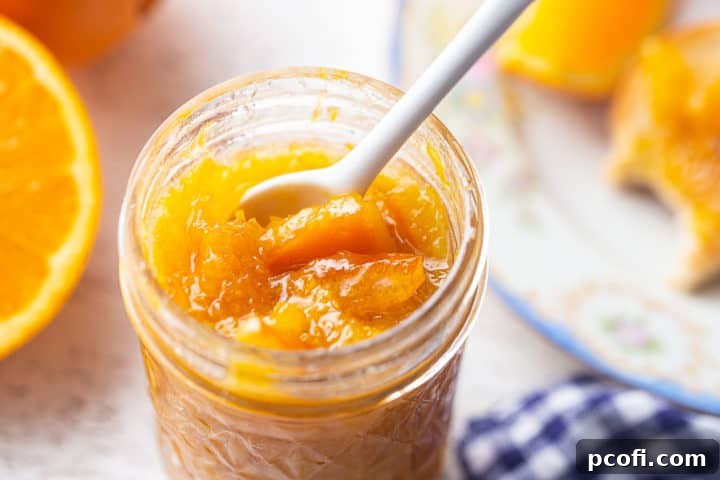
- Classic Spreads: The most beloved way! Spoon it generously onto warm, toasted brioche, fluffy biscuits, tender scones, or crusty artisan bread. It’s truly a cheerful way to kickstart your day.
- Baking: Use it as a vibrant filling between layers of cake, swirled into muffins or quick breads, or as a glossy glaze for fruit tarts and pastries.
- Savory Pairings: Don’t limit it to sweets! Orange marmalade makes a fantastic glaze for roasted chicken, duck, or pork. It can also be incorporated into dressings for salads or served alongside a cheese board for a delightful sweet-tart counterpoint.
- Beverages: Stir a spoonful into hot tea for a soothing drink, or get creative and use it to add a zesty twist to cocktails and mocktails.
- Homemade Gifts: Jars of homemade marmalade make thoughtful and impressive gifts for holidays, hostesses, or any occasion.
More Favorite Topping & Preserve Recipes
If you’ve enjoyed making this marmalade, you might love these other delicious topping and preserve recipes:
- Easy Dulce de Leche Recipe
- Homemade Raspberry Sauce
- Classic Strawberry Jam
- Quick Balsamic Vinaigrette
As an amazon associate I earn from qualifying purchases.
Orange Marmalade Recipe Card
Yields: 48 Servings
Prep Time: 20 mins
Cook Time: 2 hrs
Soaking Time: 8 hrs
Total Time: 10 hrs 20 mins
Make this easy homemade orange marmalade- you only need 4 simple ingredients, no pectin required! So sunny-sweet and cheerful!
Ingredients
- 3 medium oranges (approx. 393 g), I used navel oranges
- 4 cups (946.35 g) water
- 3 cups (600 g) granulated sugar
- 1 tablespoon (14.79 g) lemon juice
Instructions
- Cut the oranges into thin slices, then cut the slices into quarters.
- Place the oranges in a large pot and add the water.
- Soak the oranges in water overnight (at least 8 hours).
- Place the pot over high heat and boil the mixture for 30 minutes, or until the peels are soft.
- Turn the heat to low, add the sugar, and simmer for 30 minutes, stirring until sugar dissolves.
- Increase the heat to medium-high and boil the marmalade until thickened and it reaches 220 degrees F (104 C).* Stir frequently to prevent burning.
- Remove the pot from the heat and stir in the lemon juice.
- Carefully spoon the marmalade into sterilized jars (allowing about 1/2-inch of headspace), wipe the rims with a clean cloth, add the lids, and submerge in boiling water for 10 to 20 minutes.**
Notes
- Makes approx. (3) 8-ounce jars of marmalade.
- *To test the marmalade for doneness without a thermometer, place a small amount on a plate and freeze for 1 minute. If the edge wrinkles when pushed, it has reached the gel point and you can remove it from the heat.
- **You’ll know your jars are safely processed when the “button” on the lid suctions down and stays that way. Jars that do not seal can be stored in the refrigerator for up to 3 months.
Nutrition Information
Serving: 1 tablespoon, Calories: 52kcal, Carbohydrates: 13g, Protein: 1g, Fat: 1g, Saturated Fat: 1g, Sodium: 1mg, Potassium: 15mg, Fiber: 1g, Sugar: 13g, Vitamin A: 18IU, Vitamin C: 4mg, Calcium: 4mg, Iron: 1mg
Recipe Meta
Cuisine: American
Course: Breakfast, Brunch, Topping
We hope you enjoy this easy homemade orange marmalade! It’s a truly rewarding experience to make your own preserves from scratch. If you tried this recipe, we’d love to hear about it!