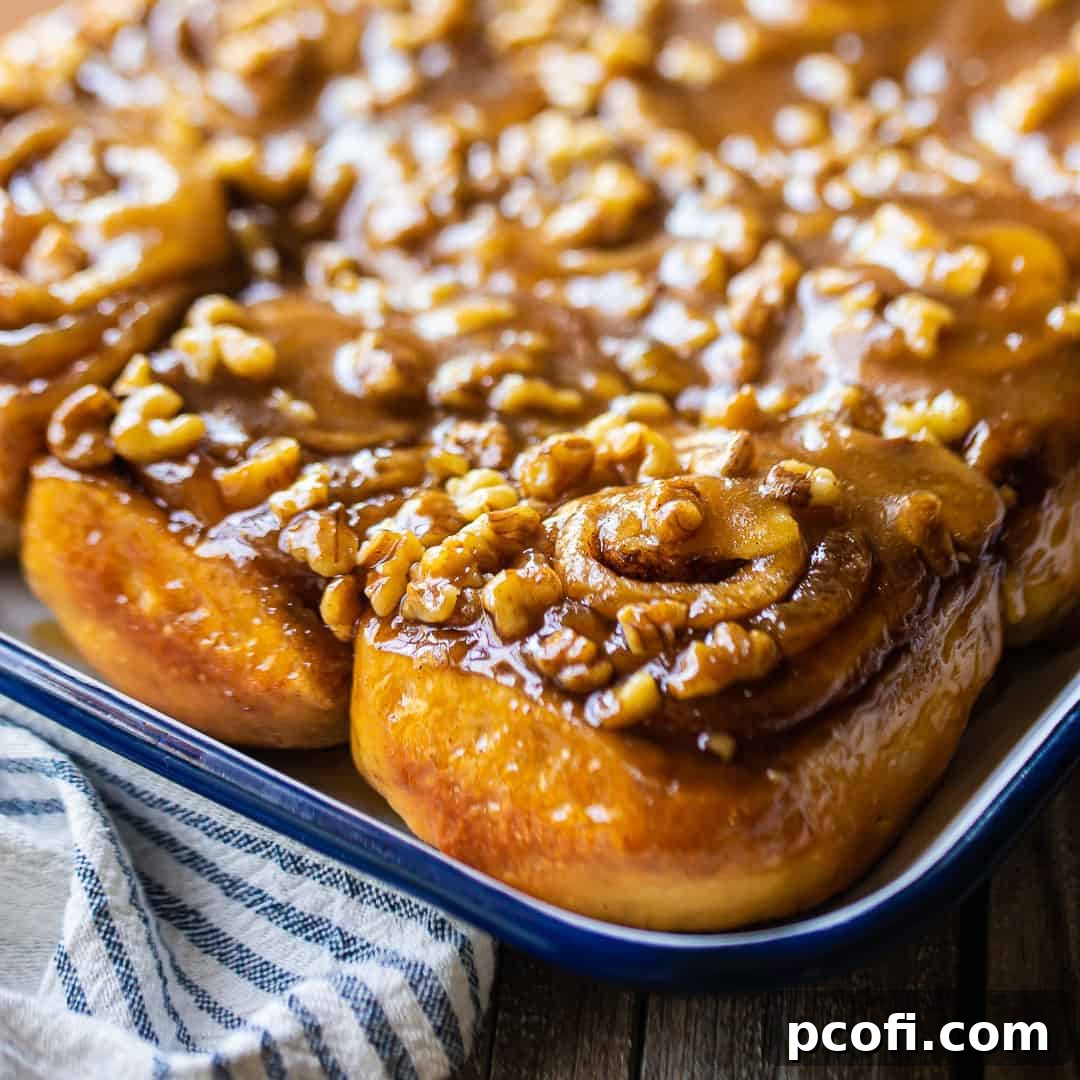
Indulge in the Ultimate Homemade Sticky Buns: A Gooey, Sweet Delight You Can Prepare Overnight!
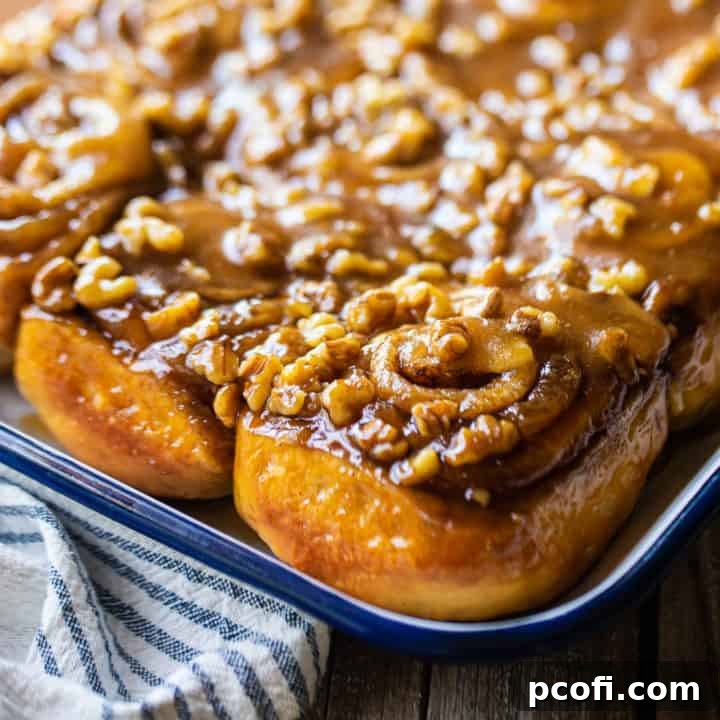
Few things awaken the senses quite like the aroma of freshly baked sticky buns filling your home. Today, we’re diving into a recipe that has been on my must-make list for what feels like an eternity: truly decadent, homemade sticky buns that promise a blissful start to any day. This recipe isn’t just about baking; it’s about bringing a piece of baking tradition right into your kitchen.
Living in Pennsylvania Dutch country, one could argue I reside in the sticky bun capital of the world. Here, these sweet, gooey pastries aren’t just a treat; they’re a way of life, deeply ingrained in our culinary heritage. Every bakery, grocery store, and farmers market proudly displays their versions of sticky buns, each one a testament to generations of baking expertise. The Amish and Mennonite communities, renowned for their exceptional baking skills, certainly don’t hold back when it comes to pastries like these.
My own baking journey was shaped by the best teachers imaginable. Working in local bakeries throughout my formative years, I absorbed invaluable lessons on crafting perfect yeast doughs and rich fillings. If you’ve tried my sour cream donuts, apple dumplings, or strawberry rhubarb pie, you’ve experienced a taste of the wisdom passed down by those incredible women in their traditional bonnets and sturdy shoes. This sticky buns recipe is a culmination of everything I learned, delivering soft, buttery yeast dough swirled with warm cinnamon and brown sugar, all drenched in an irresistible, gooey brown sugar caramel topping. Imagine tearing into one, still warm from the oven, with a hot cup of coffee in hand – pure bliss!
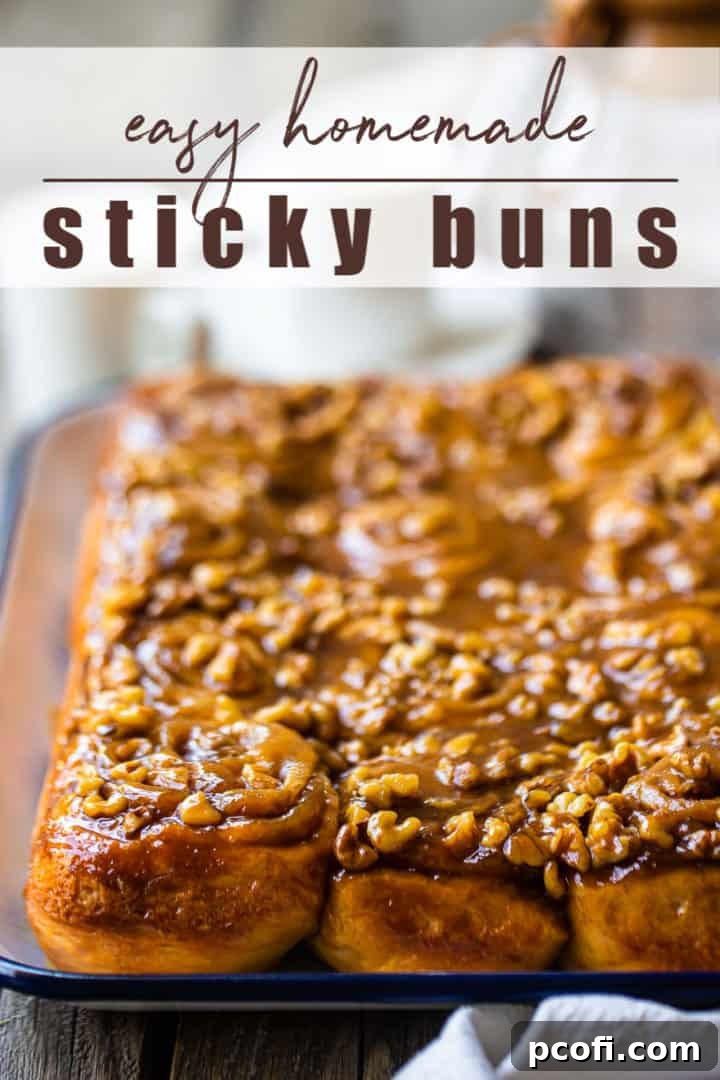
What Are Sticky Buns?
At first glance, sticky buns bear a striking resemblance to classic cinnamon rolls, but they come with an added, delightful twist: they’re baked in a rich, buttery brown sugar glaze. Think of them as the ultimate upscale cinnamon roll or a delightful “upside-down” cake in roll form. The magical part of sticky buns is how the caramel topping is placed at the bottom of the baking pan, with the cinnamon-swirled dough nestled on top. As the buns bake, the sweet caramel bakes right into the bottom, creating a wonderfully moist and flavorful crust. Once baked, the entire pan is inverted onto a serving platter, allowing that luscious, gooey glaze to cascade down over the warm rolls, coating them in all their sticky, sweet glory.
You can customize your sticky buns with various delightful additions. Chopped nuts, such as pecans or walnuts, are popular choices that add a satisfying crunch and nutty flavor. Some traditional recipes also include plump raisins, which lend a chewy texture and bursts of fruity sweetness. Whether you prefer them adorned with these extras or simply plain, allowing the caramel and cinnamon flavors to shine, homemade sticky buns are a truly heavenly breakfast or brunch pastry.
For those who adore classic cinnamon rolls, be sure to try my recipe for Homemade Cinnamon Rolls. If the “upside-down” baking method intrigues you, my Pineapple Upside-Down Cake recipe offers a similarly captivating experience.
How to Make Homemade Sticky Buns
Making homemade sticky buns is a rewarding baking project, perfect for a cozy afternoon in the kitchen. While it involves a few distinct components, each step is straightforward, leading to a truly spectacular result.
The Dough
We begin with the yeast dough, as it requires the most time for rising. Don’t be intimidated; the process is quite simple, but patience is key. Starting with the dough allows you to prepare the topping and filling while it proofs.
First, activate your yeast. Combine granulated sugar with warm water. The ideal temperature for activating yeast is around 105°F (40°C), which feels comfortably lukewarm—like a baby’s bath. It’s crucial not to use water that’s too hot, as this can kill the yeast and prevent your dough from rising. Sprinkle a packet of active dry yeast evenly over the sweetened water and let it sit for 5 to 10 minutes.
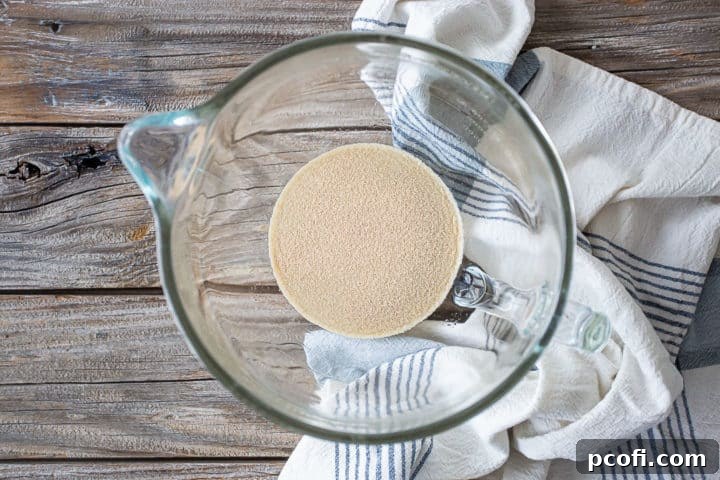
After this resting period, your yeast mixture should appear foamy and bubbly. This foam is a clear indication that your yeast is alive and active, ready to work its magic.
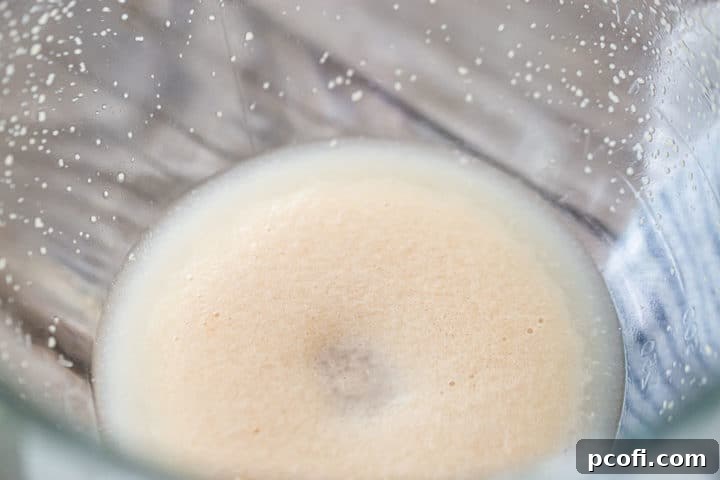
If your yeast doesn’t foam, it might be expired or killed by hot water. In this case, it’s best to start over with fresh yeast. Once the yeast is active, stir in the buttermilk, oil, a large egg, and kosher salt until well combined.
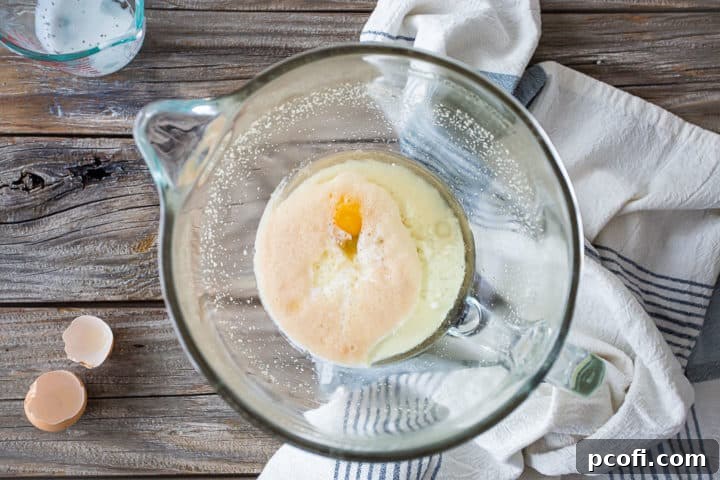
Now, gradually incorporate the all-purpose flour. The exact amount of flour can vary based on factors like humidity and how precisely your ingredients were measured. Begin by adding about two-thirds of the recommended flour, mixing until it’s just combined.
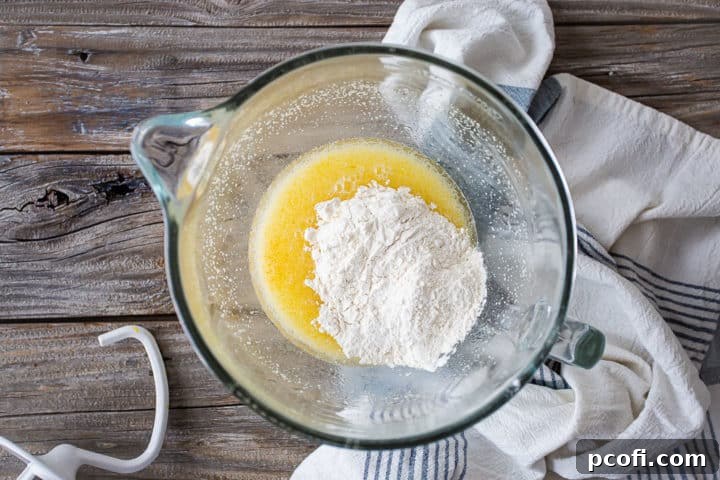
Continue adding the remaining flour a little at a time, kneading until the dough is no longer sticky and pulls away cleanly from the sides of the bowl, forming a cohesive ball. Stop adding flour as soon as it reaches this consistency, as too much flour can result in dry, tough buns.
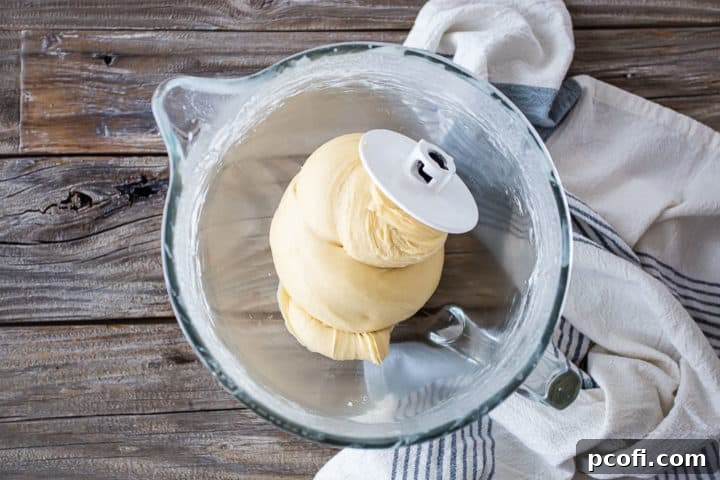
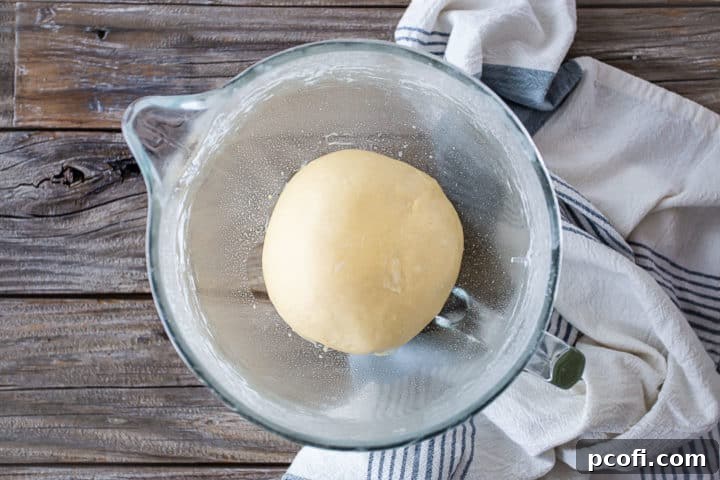
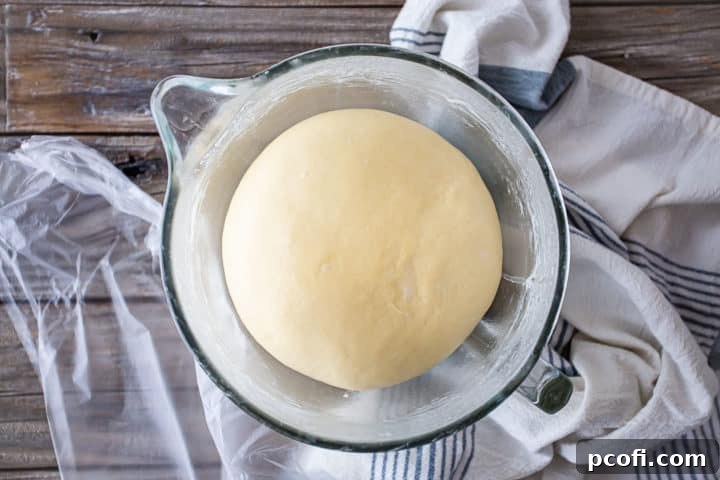
Once you’ve achieved the right consistency, knead the dough for an additional 10 to 15 minutes. This prolonged kneading is crucial for developing the gluten, which gives the dough its elastic, stretchy texture – a hallmark of truly delicious yeast breads. You can verify proper gluten development using the “windowpane test,” which we’ll discuss in the troubleshooting section. After kneading, lightly mist your mixing bowl with non-stick spray, return the dough to the bowl, cover it tightly with plastic wrap, and let it rise in a warm place until it has doubled in volume. In most kitchens, this takes about an hour, though ambient temperature and humidity can influence the exact time needed.
The Topping
While your dough is rising, you can efficiently prepare the luscious sticky bun topping. In my bakery days, we affectionately called this mixture “goo” – a rather apt description, though “caramel,” “butterscotch,” or “brown sugar glaze” sound far more appetizing! This rich topping is what transforms ordinary sweet rolls into extraordinary sticky buns.
To make it, simply combine brown sugar, honey, unsalted butter, and a touch of kosher salt in a small, microwave-safe bowl. Heat the mixture gently in the microwave, using short 30-second increments, stirring after each, until the butter is fully melted and all the ingredients are smoothly incorporated. The goal is a fluid, glossy consistency.
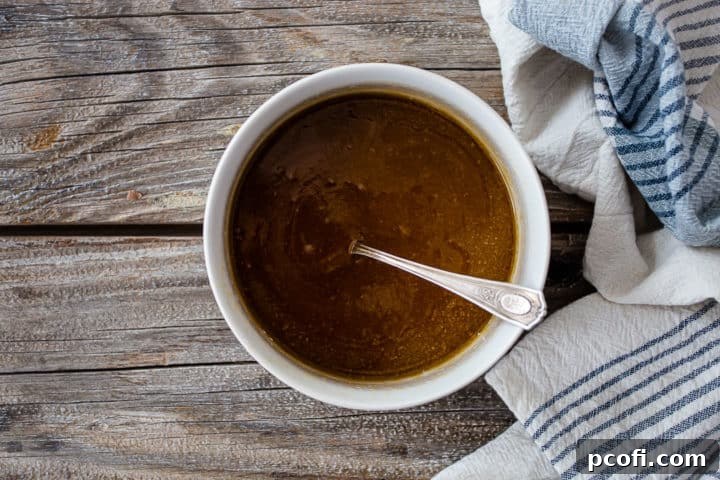
Once your “goo” is perfectly prepared, pour it evenly into the bottom of a 9×13-inch baking dish. This creates the sweet foundation for your sticky buns. Now is the time to add any optional inclusions. At my home, chopped walnuts are a definite favorite, adding a wonderful crunch and earthy flavor that beautifully complements the sweet caramel. Pecans are another classic and equally delicious choice. If you’ve ever had sticky buns from the shore, you know raisins are also a popular addition, though they can be divisive! Feel free to add them if you love their chewy sweetness, or omit them if your family prefers a nut-only topping.
The Filling
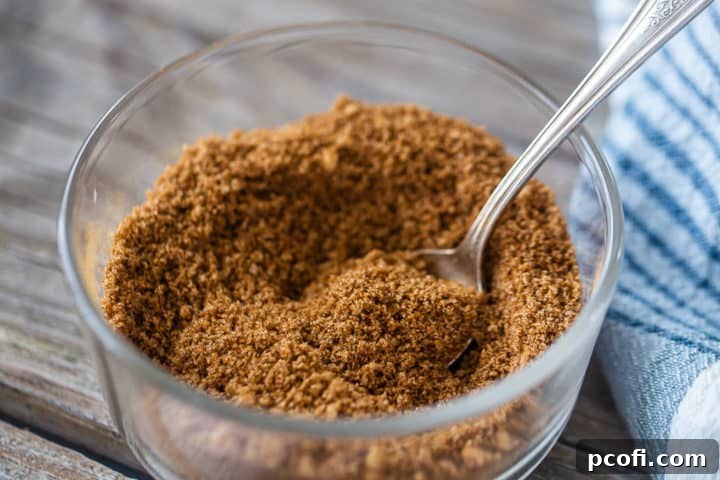
No sticky bun would be complete without its signature cinnamon-brown sugar swirl. This aromatic filling adds warmth and spice to every bite. In a small bowl, simply combine light brown sugar and ground cinnamon. Use a fork to mix them thoroughly, ensuring the cinnamon is evenly distributed throughout the sugar. This step is quick and easy, but it contributes significantly to the overall flavor profile of your homemade sticky buns.
How to Shape the Rolls
Once your dough has impressively doubled in volume, gently punch it down to release the air. This prepares it for shaping into the beautiful swirls of your sticky buns.
Lightly flour your work surface and roll the dough out into a large rectangle. While the exact dimensions aren’t critical, focus on achieving a consistent thickness of about 1/8-inch. The thinner you roll the dough, the more surface area you’ll have for spreading that delectable cinnamon brown sugar mixture, resulting in more luscious spirals in each bite. Once rolled, spread a generous, even layer of softened unsalted butter across the entire surface of the dough. This butter acts as a glue for the filling and contributes to the buns’ rich texture.
Next, sprinkle the prepared cinnamon brown sugar filling evenly over the buttered dough, making sure to cover it from edge to edge. Carefully, starting from one of the shorter sides of the rectangle, roll the dough up into a tight, uniform log. A tight roll is key to achieving those beautiful, well-defined spirals.
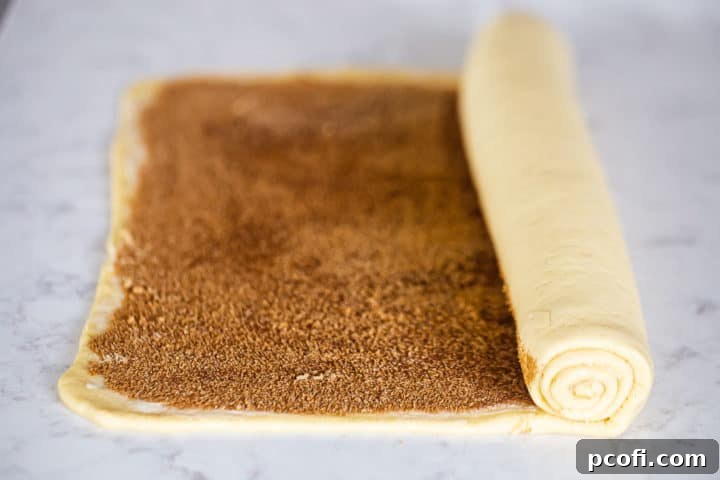
To portion your buns, cut the log into 12 equal rolls. A simple trick is to cut the log in half, then cut each half into quarters, and finally, cut each quarter into three equal rolls. This helps ensure uniform size. Carefully place the cut rolls, spiral side up, into the baking dish prepared with the gooey brown sugar glaze. Arrange them snugly, but leave a little space for them to expand as they rise.
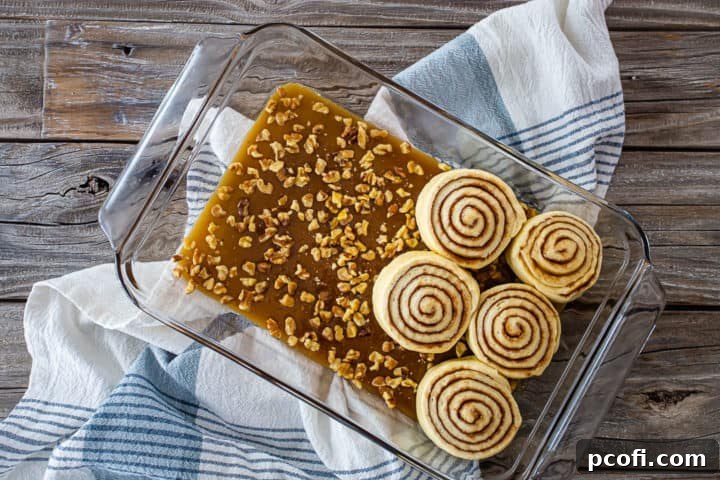
These shaped rolls will need one more rise before baking.
How to Bake Them
Here’s where the convenience of this recipe truly shines! You have two excellent options for baking your sticky buns:
- **Immediate Baking:** Allow the shaped rolls to complete their second rise (proof) until doubled in volume, then bake them right away.
- **Overnight Sticky Buns:** For warm, fresh-baked sticky buns in the morning with minimal effort, prepare them the day before! After placing the shaped rolls in the baking dish, cover them tightly with plastic wrap and refrigerate for up to 48 hours. You can even freeze them for up to 2 weeks for ultimate meal prep convenience.
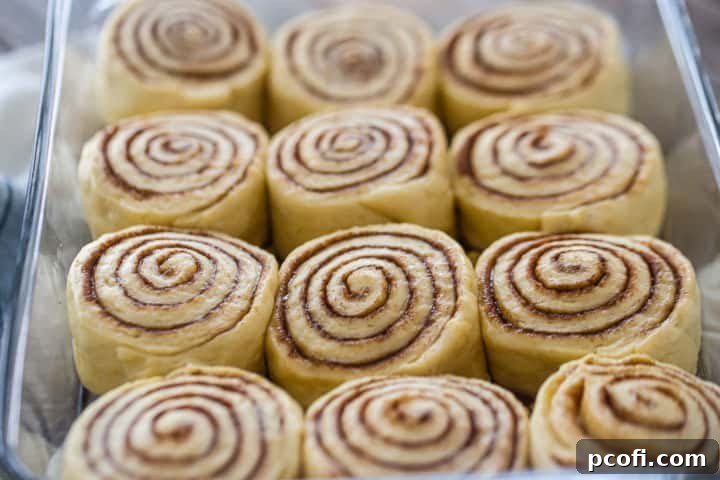
If baking refrigerated or frozen buns, always allow them to come to room temperature first (about 45 minutes) and then let them rise until doubled in bulk (approximately 1 hour). Once proofed, preheat your oven to 350°F (175°C).
Remove the plastic wrap and pop the sticky buns into the oven. As they bake, the buttery brown sugar topping will melt and bubble, and the rolls will puff up beautifully, turning a gorgeous golden brown around the edges. They are done when they are set in the middle and deeply fragrant, typically after 30 to 35 minutes.
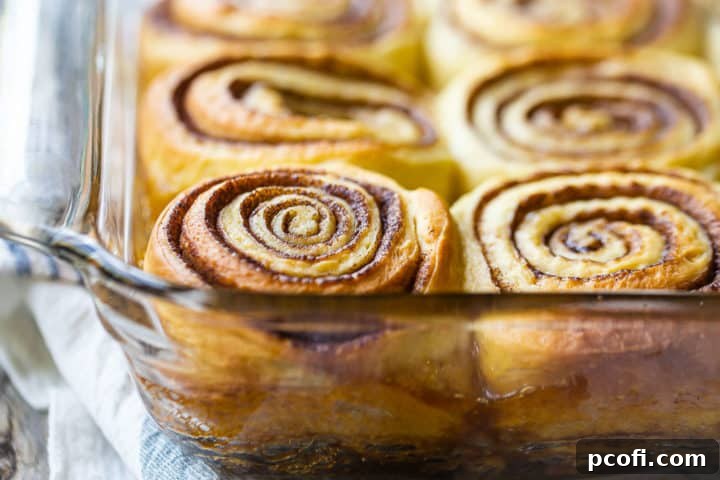
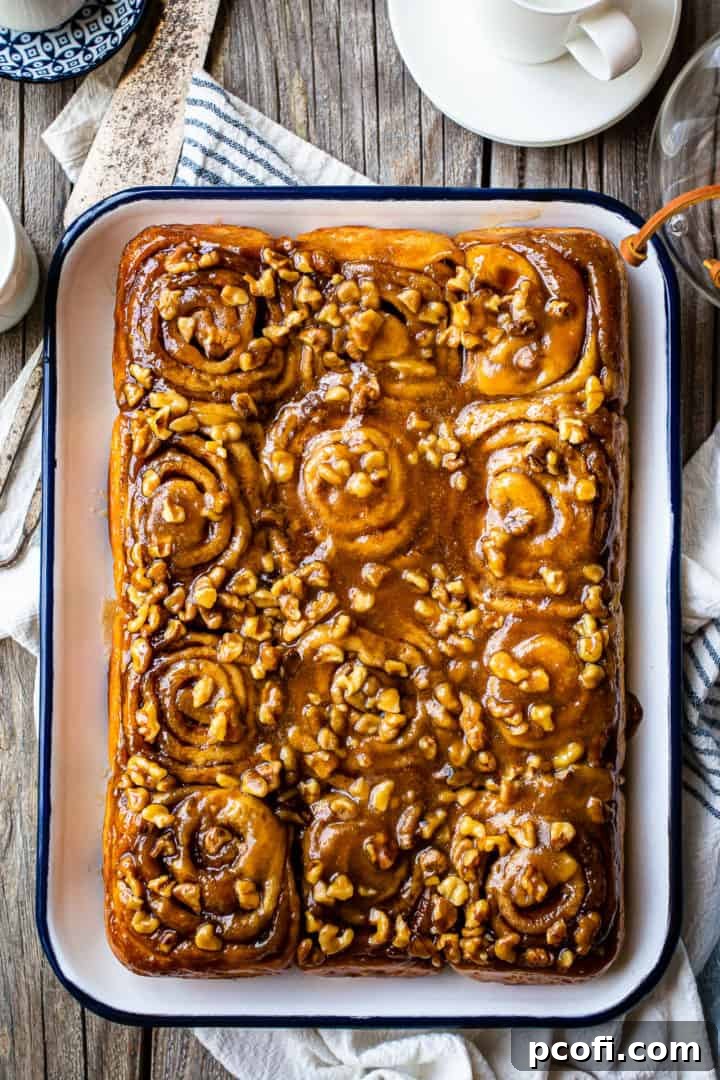
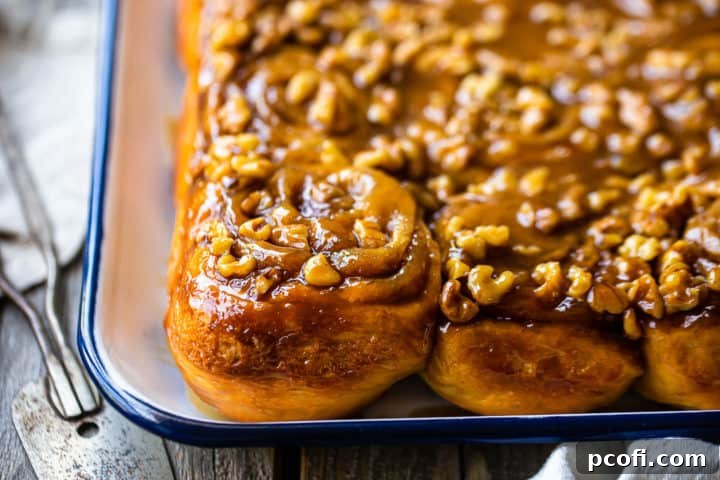
Once baked, allow them to cool in the pan for about 20 to 30 minutes. This cooling period helps the caramel topping to set slightly but remain fluid enough to coat the buns perfectly. The most exciting moment? Flipping them out onto a serving platter while they’re still warm. This allows the glorious, molten glaze to cascade over the buns, coating every crevice in its irresistible stickiness. Serve immediately for the best experience!
Troubleshooting Common Sticky Bun Issues
Baking with yeast can feel a bit intimidating, and sometimes things don’t go exactly as planned. Don’t worry if your first batch isn’t perfect – that’s part of the learning process! To help you achieve consistently amazing homemade sticky buns, I’ve outlined the most common pitfalls in yeast bread making and how to avoid them.
Why Dough Sometimes Doesn’t Rise
There are two primary reasons why your yeast dough might fail to rise:
- **The yeast has died.**
- **The conditions in your kitchen aren’t optimal for yeast activity.**
Yeast can sometimes be inactive right out of the package. It might have been exposed to heat during storage or simply be past its expiration date. Always check the date on the package. A very common mistake is dissolving yeast in water that is too hot. Water above 115°F (46°C) can kill the delicate yeast organisms. Aim for water that feels lukewarm, like a baby’s bath, or precisely 105°F (40°C) if you’re using a thermometer. If your yeast doesn’t become foamy and bubbly after 5-10 minutes, it’s best to discard it and start with fresh yeast.
Even with active yeast, dough needs a warm environment to thrive. If your kitchen is particularly cool, seek out a warmer spot for your dough to proof. Near a sunny window, next to a heat vent, or on top of a warm (but not hot) appliance like a refrigerator can provide the ideal conditions for your dough to double in volume.
Why Yeast Breads Sometimes Come Out Crumbly
If your sticky buns or other yeast breads have a crumbly, dense texture rather than a soft, elastic one, the culprit is often insufficient kneading. Kneading is the process that develops the gluten in the flour. Gluten is a protein network that provides the dough with its structure, elasticity, and the ability to trap gas (produced by the yeast) which makes the bread light and airy. Without adequate kneading, these gluten strands won’t properly form, leading to a crumbly result.
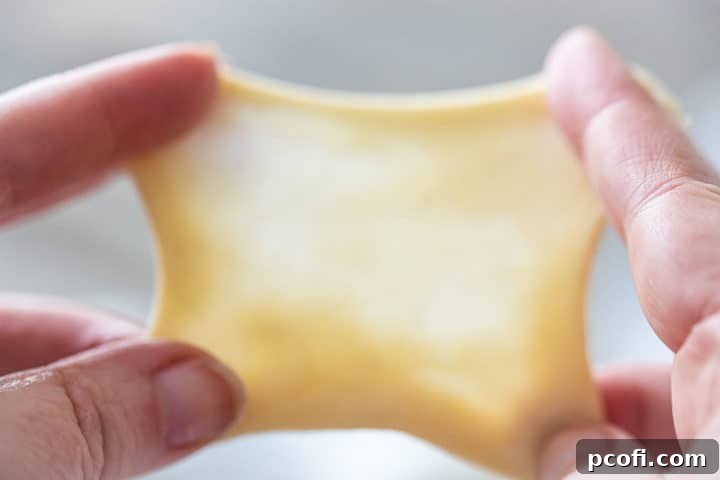
A reliable way to check if your dough has been kneaded sufficiently is the “windowpane test”:
Pinch off a small piece of dough (about a tablespoon). Gently stretch it with your fingertips from the center outwards. You should be able to stretch the dough into a thin, translucent sheet, almost like a windowpane, without it tearing. If you can see light passing through it, your glutens are well-developed. If it tears easily, continue kneading for a few more minutes and test again. This technique works for almost any yeast dough!
How Long Will Sticky Buns Keep?
These delicious homemade sticky buns are best enjoyed fresh, but they can certainly be stored for later. At room temperature, tightly covered to prevent drying out, they will stay fresh for about a day. For longer storage, transfer any leftovers to an airtight container and refrigerate them. In the refrigerator, your sticky buns will keep well for an additional 5 to 7 days. The gooey caramel topping helps to keep them moist, but ensuring they are properly sealed is key to maintaining their freshness.
Can You Freeze Sticky Buns?
Absolutely! Sticky buns freeze wonderfully, making them a fantastic make-ahead option. To freeze, ensure they are completely cooled, then wrap them tightly in plastic wrap and then in aluminum foil to prevent freezer burn. They will last in the freezer for up to 2 months. When you’re ready to enjoy them, thaw them overnight in the refrigerator or at room temperature before reheating.
How to Reheat Sticky Buns
Nothing compares to a warm, gooey sticky bun! Fortunately, reheating them is simple, allowing you to enjoy that fresh-baked experience all over again.
- **Microwave:** For a quick warm-up, place a single sticky bun in the microwave for about 30 seconds. Be careful not to overheat, as the caramel can become extremely hot.
- **Oven:** For multiple buns or a crispier exterior, wrap them loosely in aluminum foil and place them in a 170°F (75°C) oven until heated through, typically 10-15 minutes.
- **”Grilled Bun” Method:** This is a local favorite in my area and a game-changer! Slice the sticky bun horizontally, butter the cut sides lightly, and toast them on a skillet over medium-high heat until golden and slightly crispy. The warmth enhances the caramel, and the toasted edges add an incredible texture. It’s truly fan-freakin’-tastic!
A Few More of My Favorite Breakfast Treats:
- Irish Scones
- Apple Coffee Cake
- French Toast Casserole
- Homemade Waffle Recipe
As an Amazon Associate, I earn from qualifying purchases.
Sticky Buns
Leave a Review
Save RecipeSaved!
Ingredients
For the Dough:
- 3/4 cup (177.44 g) water, , warm
- 1/3 cup (66.67 g) granulated sugar
- 1 packet (7 g) dry active yeast*, (1/4 ounce or about 2 teaspoons)
- 1/4 cup (74.67 g) oil
- 1/4 cup (60 g) buttermilk
- 1 (44 g) egg, (large)
- 1/2 teaspoon (2.46 g) kosher salt
- 4 1/2 cups (562.5 g) all-purpose flour, (you may need as little as 4 cups or as much as 5 cups)
For the Filling:
- 1/4 cup (56.75 g) unsalted butter, (half a stick), softened
- 3/4 cup (165 g) light brown sugar, (loosely packed)
- 4 teaspoons (19.72 g) ground cinnamon
For the Topping:
- 1 cup (220 g) brown sugar, (dark or light), loosely packed
- 1/4 cup (84.75 g) honey
- 1/4 cup (56.75 g) unsalted butter, (half a stick)
- 1/2 teaspoon (2.46 g) kosher salt
- 1/2 cup pecans, walnuts, and/or raisins, (optional)
Instructions
To Make the Dough:
-
Place the warm water in a large mixing bowl, and stir in the sugar.
-
Sprinkle the yeast over the water, and allow it to dissolve and become foamy.
-
Whisk in the oil, buttermilk, egg, and salt until combined.
-
Add about 2/3 of the flour, and mix together until combined.
-
Continue adding flour a little at a time, while mixing, until the dough pulls away cleanly from the sides of the bowl and gathers itself into a ball.
-
Knead the dough until it passes the windowpane test** (approximately 10 to 15 minutes).
-
Mist the bowl with non-stick spray, then place the dough back in, cover it with plastic wrap, and allow it to proof until doubled in volume (approximately 1 hour).
To Make the Topping:
-
Place the brown sugar, honey, butter, and salt in a medium bowl and microwave (covered) in 30-second increments (stirring after each), until the butter is melted and the mixture is smooth.
-
Pour the glaze into the bottom of a 9×13 baking dish, and sprinkle nuts and/or raisins on top (if using).
To Fill and Shape the Buns:
-
Knead the dough a few times, then roll it out to a large rectangle about 1/8-inch thick.
-
Smear the softened butter all over the surface of the dough.
-
Stir the brown sugar and cinnamon together in a small bowl, then spread the mixture in an even layer over the buttered dough.
-
Starting with one of the shorter sides of the rectangle, roll the dough up into a tight log.
-
Cut the log in half, then into quarters, then cut each quarter into 3 equal rolls.
-
Place the rolls (cut side up) in the prepared baking dish, then cover with plastic wrap and refrigerate for up to 48 hours, or freeze for up to 2 weeks (optional; skip to step 8 if desired).
-
Remove the unbaked sticky buns from the refrigerator and allow them to come to room temperature (approximately 45 minutes).
-
Allow the sticky buns to proof until doubled in size (approximately 1 hour).
-
Preheat the oven to 350 degrees F.
-
Remove the plastic wrap and bake the sticky buns until puffed, golden brown around the edges, and set in the middle (approximately 30 to 35 minutes).
-
Cool the sticky buns for 20 minutes in the pan, then flip them out onto a serving platter and allow to cool completely.
Notes
**Pinch off a little piece of dough and using your fingertips, stretch it gently from the center outward. You should be able to pull it tissue-thin without it tearing. It should be so thin you can see light passing through it, just like a windowpane.