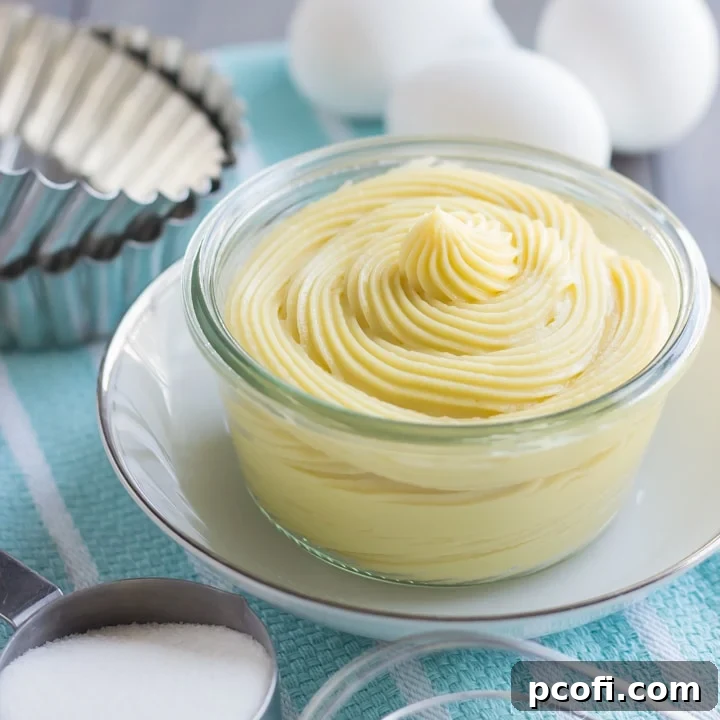
Homemade Pastry Cream Recipe: Your Ultimate Gluten-Free & Dairy-Free Guide
Unlock the secret to a baker’s essential with this incredibly versatile, creamy, and rich homemade pastry cream. Whether you’re a seasoned pro or just starting your baking journey, having a reliable recipe for this foundational filling is a game-changer. Our easy-to-follow guide and accompanying video tutorial will show you how to master this classic custard, tailored to be completely gluten-free and dairy-free without compromising on its luxurious texture and delightful flavor. Prepare to elevate your desserts with this exquisite, egg-y creation!
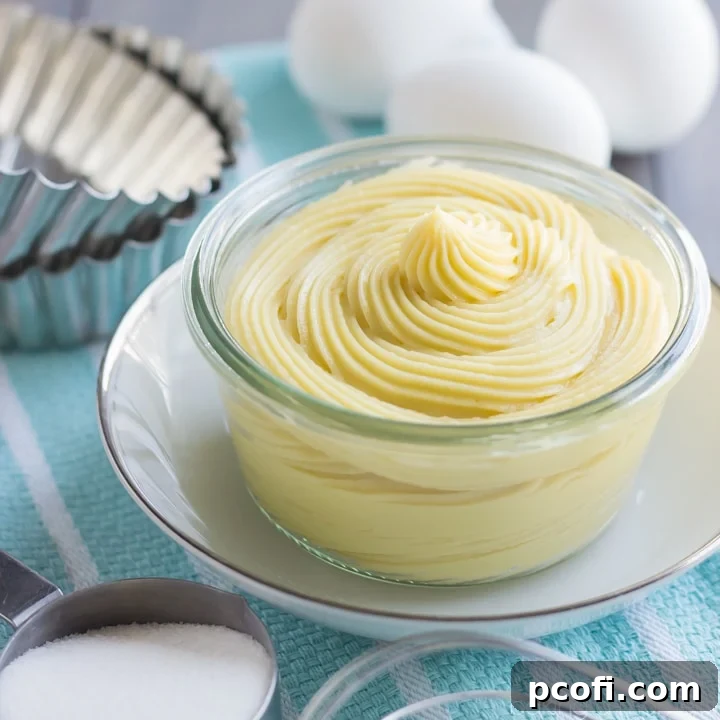
The Indispensable Filling: Why Every Baker Needs This Recipe
Every passionate baker understands the value of a “building block” recipe – a fundamental creation that can transform into countless delightful desserts. Pastry cream, or *crème pâtissière* as it’s known in French baking, is precisely that. It’s not just a filling; it’s a foundation for culinary creativity, a silky smooth canvas ready to enhance a myriad of sweet treats. Imagine a light, sweet, and comforting filling that brings an irresistible touch to anything it graces. That’s exactly what this homemade pastry cream delivers.
My own baking journey, which started in professional kitchens crafting vast hotel pans of this delectable custard, has evolved to perfecting smaller, more accommodating batches at home. This recipe reflects that evolution, adapting the traditional richness to meet modern dietary needs while retaining all its classic appeal. The simplicity and sheer adaptability of this pastry cream will quickly make it a permanent fixture in your baking repertoire.
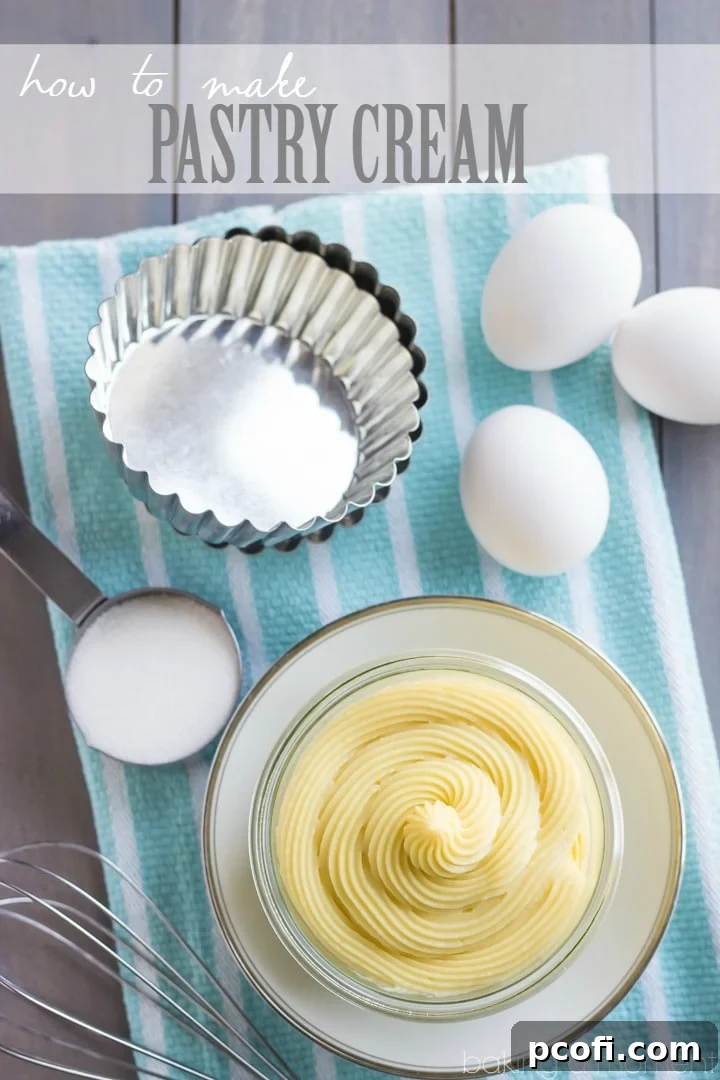
A World of Dessert Possibilities with Pastry Cream
The true magic of homemade pastry cream lies in its incredible versatility. Once you’ve mastered this basic recipe, a universe of dessert creations opens up before you. Its smooth, thick texture and delicate flavor make it the perfect companion for a vast array of baked goods and sweet confections. Here are just a few ways this luscious custard can elevate your culinary game:
- Cakes and Cupcakes: Use it as a luxurious filling between cake layers, transforming a simple sponge into an elegant torte. It’s also fantastic piped into cupcakes for a delightful surprise.
- Eclairs and Cream Puffs: The quintessential filling for these classic French choux pastry delights. Its richness beautifully complements the light, airy shells.
- Fruit Tarts: Spread a generous layer of pastry cream onto a sweet pastry crust before arranging fresh seasonal fruits on top. The cream provides a wonderful base that balances the tartness of the fruit.
- Parfaits and Trifles: Layer it with berries, cake cubes, granola, or whipped cream for stunning and easy-to-assemble individual desserts. Its creamy consistency adds depth and moisture.
- Pies: Serve as the base for various cream pies, like banana cream or chocolate cream pie. Simply pour it into a pre-baked pie shell and chill until set.
- Donuts and Buns: Injecting pastry cream into homemade donuts, Berliner pastries, or sweet buns creates a truly indulgent treat.
- Standalone Dessert: Enjoy it on its own, perhaps topped with a sprinkle of cinnamon, fresh berries, or a dollop of whipped coconut cream, for a sophisticated yet simple dessert.
- Crepes and Waffles: A dollop of pastry cream makes an excellent accompaniment to warm crepes, pancakes, or waffles, especially when paired with fresh fruit.
With this recipe in your arsenal, you’ll never be short on ideas for impressive and delicious desserts.
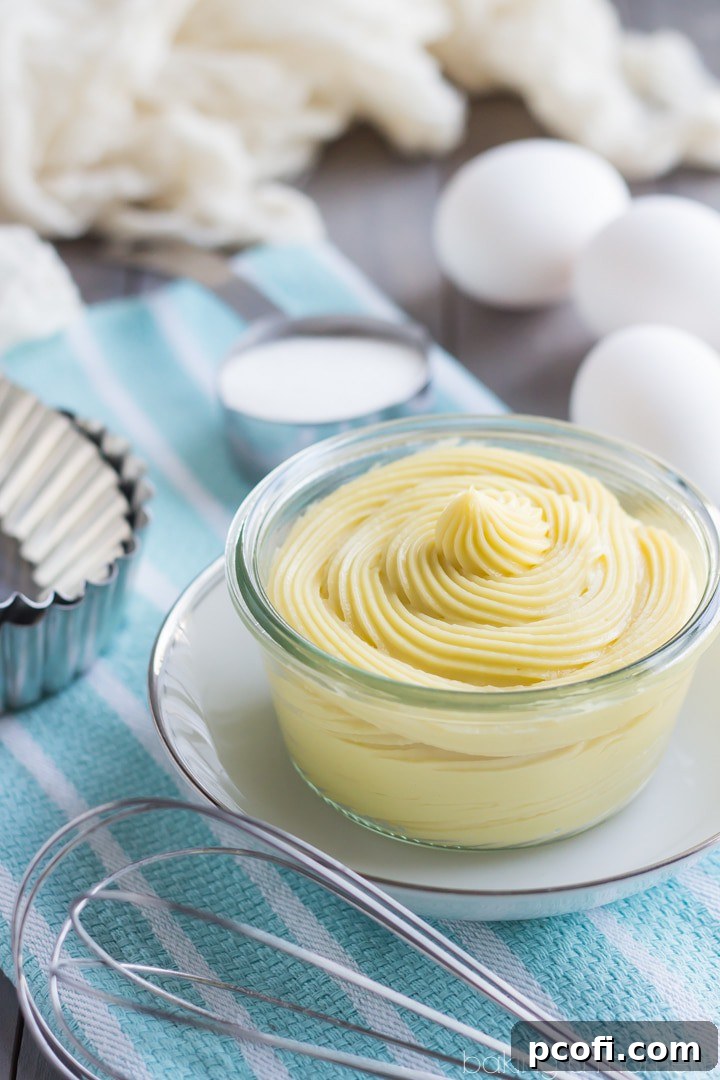
Demystifying the Art of Tempering Eggs
For many home bakers, the thought of “tempering eggs” can sound intimidating, conjuring images of curdled custards and kitchen mishaps. However, I’m here to assure you that it’s a technique far simpler than it sounds, and absolutely crucial for achieving that silky-smooth pastry cream texture. Tempering is merely the process of gradually raising the temperature of cold ingredients, like egg yolks, by slowly adding hot liquid. This gentle introduction of heat prevents the eggs from scrambling, allowing them to thicken evenly and beautifully into a rich custard.
The key to successful tempering is patience and a steady whisk. By drizzling a small amount of hot milk into the egg mixture while continuously whisking, you slowly bring the eggs up to temperature. Once a portion of the hot liquid has been incorporated, the egg mixture is warm enough to be returned to the saucepan with the remaining hot milk, where it can be gently cooked until thickened. Our detailed video tutorial, conveniently located in the recipe card below, visually breaks down each step, making it practically foolproof. You’ll be whisking like a pro in no time, creating flawless pastry cream every single time.
The Magic of Gluten-Free and Dairy-Free Pastry Cream
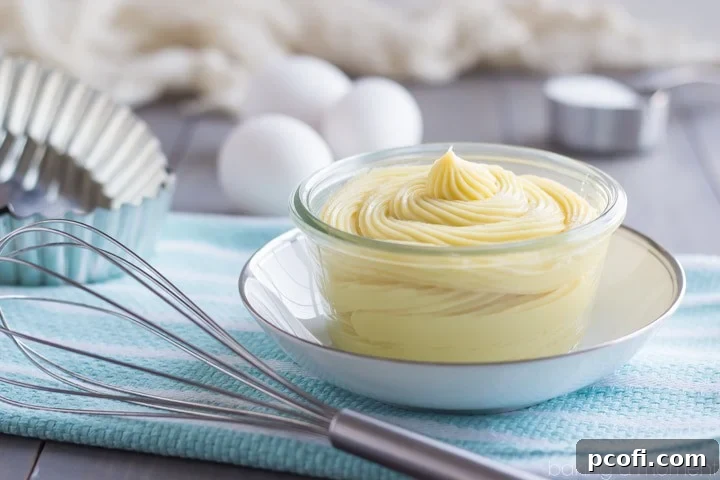
What truly sets this pastry cream recipe apart is its ingenious adaptation to be completely gluten-free and dairy-free, without sacrificing any of the decadent flavor or luxurious texture. For those managing food allergies or sensitivities, this is fantastic news. In its essence, pastry cream is a delightful hybrid – imagine the rich, caramelized notes of *crème brûlée* blended with the comforting creaminess of classic vanilla pudding. This recipe captures that essence beautifully, making it accessible to a wider audience.
The traditional recipe often calls for dairy milk and sometimes flour as a thickener. Here, we make two smart substitutions: using **coconut milk** for dairy and **cornstarch** for gluten. Coconut milk, particularly full-fat canned coconut milk, imparts an incredible richness and a subtle, delightful tropical note that complements the vanilla beautifully. It provides the necessary fat content and creaminess that dairy milk typically offers. Cornstarch, on the other hand, is a naturally gluten-free thickener that creates a wonderfully smooth and stable custard, often yielding an even silkier texture than flour. This combination ensures that the pastry cream maintains its integrity and deliciousness, offering a fantastic option for everyone to enjoy without compromise.
Expert Tips for a Perfectly Smooth Pastry Cream
Achieving that perfectly smooth, lump-free pastry cream is easier than you think, especially with a few insider tips:
- Whisk Vigorously: When combining the egg yolks, sugar, cornstarch, and salt, ensure you whisk them thoroughly until the mixture is light yellow and creamy. This prevents lumps from forming later.
- Slow Tempering: The golden rule for tempering is “slow and steady wins the race.” Drizzle the hot milk into the egg mixture in a thin, continuous stream while whisking constantly. Don’t rush this step.
- Constant Stirring on the Stove: Once the tempered mixture is back in the pot, stir continuously over medium-low heat. This prevents the bottom from scorching and ensures even thickening. Use a heat-proof rubber spatula or a sturdy whisk, making sure to scrape the bottom and sides of the pot.
- Don’t Overcook: Cook until the pastry cream visibly thickens and coats the back of a spoon. It will continue to thicken as it cools. Overcooking can lead to a grainy texture.
- Strain for Silkiness: This step is non-negotiable for a truly professional result. Pouring the cooked pastry cream through a fine-mesh strainer catches any tiny lumps or bits of cooked egg, ensuring an incredibly smooth consistency. Use the back of a ladle or spatula to push it through.
- Prevent a Skin from Forming: As soon as the pastry cream is strained, press a piece of plastic wrap directly onto its surface. This contact ensures no air gets trapped between the cream and the wrap, preventing an undesirable “skin” from forming as it cools.
- Chill Thoroughly: Pastry cream needs ample time to chill and firm up. Refrigerate for at least 2 hours, or preferably longer, before using. A well-chilled pastry cream is easier to work with and has the best texture.
- Re-whisk if Needed: After chilling, the pastry cream might seem very stiff. Give it a good whisk for a minute or two before using to restore its smooth, pliable consistency.
Storage and Make-Ahead Considerations
Homemade pastry cream is wonderful for make-ahead baking. Once prepared and properly chilled, it can be stored in an airtight container in the refrigerator for up to 3-4 days. Always ensure the plastic wrap is pressed directly onto the surface to maintain freshness and prevent a skin from forming. While it’s best enjoyed fresh, this allows you to prepare components of your dessert in advance, saving time on busy baking days.
Freezing pastry cream is generally not recommended, as the texture can become grainy and separate upon thawing due to the cornstarch and egg yolks. For the best results, always aim to use it within its refrigerated shelf life.
Some tools/ingredients you may need for this recipe:
This post contains affiliate sales links.
Homemade Pastry Cream
Leave a Review
Save Recipe
Ingredients
- 6 egg yolks
- 1/2 cup (100 g) granulated sugar
- 1/4 cup (32 g) cornstarch
- 1/2 teaspoon (0.5 teaspoon) kosher salt
- 1 1/2 cups (366 ml) milk, (dairy, nut, soy, or coconut milk)
- 1 teaspoon vanilla extract
Instructions
-
Place the yolks, sugar, cornstarch, and salt in a medium bowl and whisk to combine.
-
Heat the milk in a small pot until small bubbles form around the edge, and wisps of steam are rising from the surface.
-
Add the hot milk to the egg mixture, a little at a time, whisking to combine.
-
When all the milk has been added, transfer the mixture back to the pot and place over medium-low heat. Cook the pastry cream, whisking, until thickened.
-
Stir in the vanilla, and pour the pastry cream through a fine mesh strainer, into a heat-safe bowl.
-
Use the back of a ladle to press the mixture through the sieve.
-
Press a layer of plastic wrap directly onto the surface, and refrigerate.
Conclusion: Your New Favorite Dessert Essential
Homemade pastry cream, especially this glorious gluten-free and dairy-free version, is more than just a recipe; it’s an essential skill for any home baker. It’s incredibly adaptable, surprisingly simple to make, and offers a refreshing alternative for those with dietary restrictions without compromising on taste or texture. From elegant tarts to simple parfaits, this rich, creamy, and flavorful filling will become your go-to for elevating everyday desserts into extraordinary culinary experiences.
So, gather your ingredients, watch the video tutorial, and confidently whip up a batch of this fantastic pastry cream. Your taste buds, and those of your lucky friends and family, will thank you!