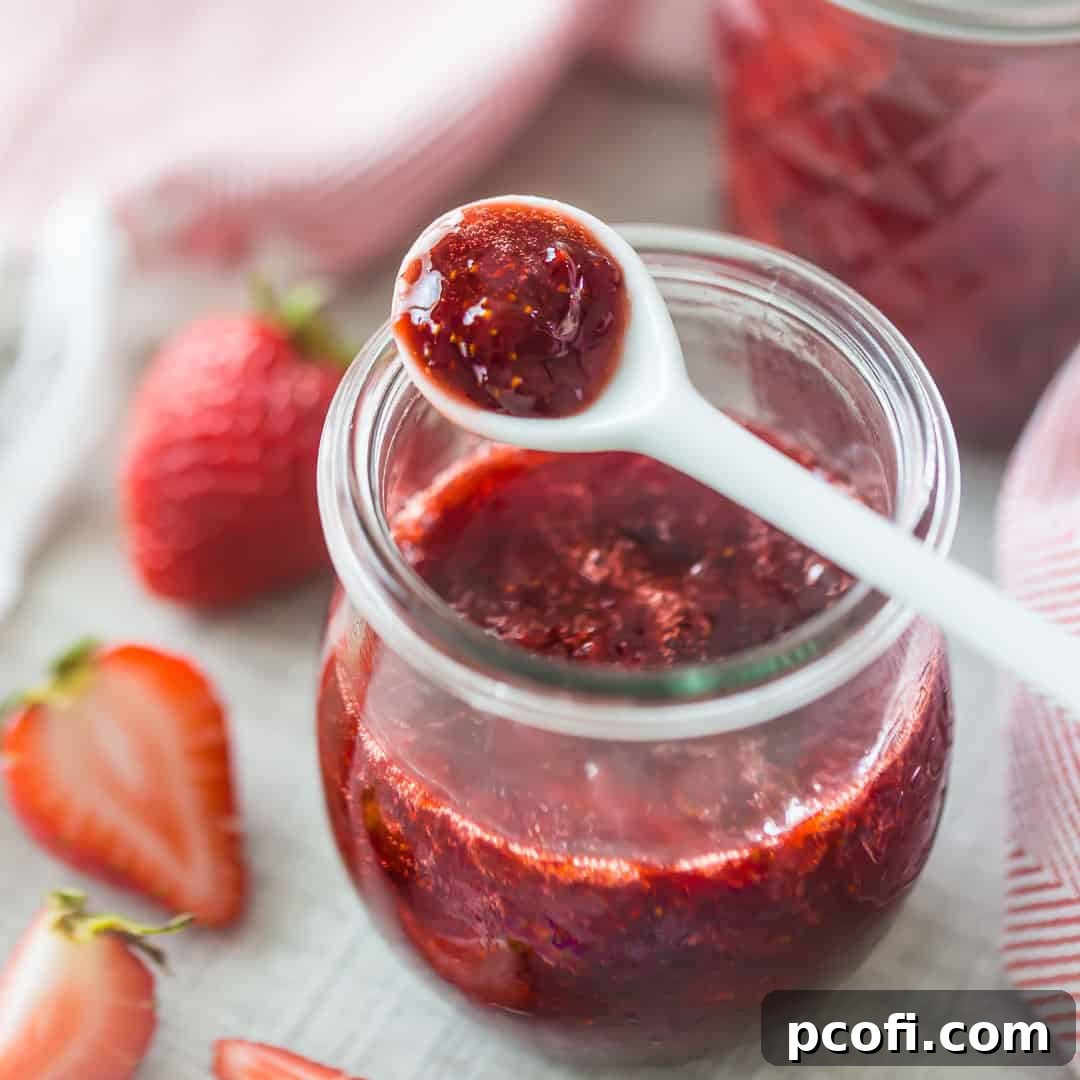
Homemade Strawberry Jam from Scratch: Just 3 Ingredients & No Pectin Needed!
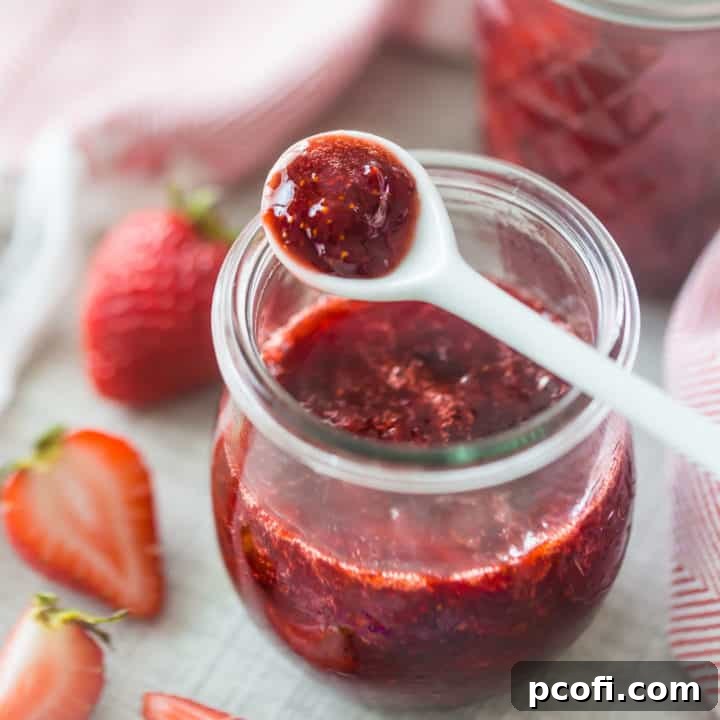
There’s nothing quite like the taste of summer captured in a jar, and this homemade strawberry jam recipe delivers exactly that. Forget complicated processes or specialty ingredients; we’re going back to basics with a simple, no-pectin approach that yields wonderfully flavorful results. Whether you’re a seasoned canner or a first-timer, this guide will walk you through creating delicious strawberry preserves perfect for canning, refrigerating, or freezing.
After a lovely weekend getaway to the Hudson Valley, spending time with family and enjoying Father’s Day, I returned home inspired to share this much-loved recipe. I’ve spent considerable time perfecting this strawberry jam, anticipating every question and streamlining the process to ensure your success. I promise you, making your own jam is incredibly rewarding and surprisingly straightforward.
This recipe truly highlights the natural sweetness and vibrant flavor of fresh strawberries, requiring only three core ingredients. While it’s fantastically simple, I’ve also included a couple of optional tips that act as an “insurance policy” for that perfect gel. Get ready to experience an explosion of summery goodness!
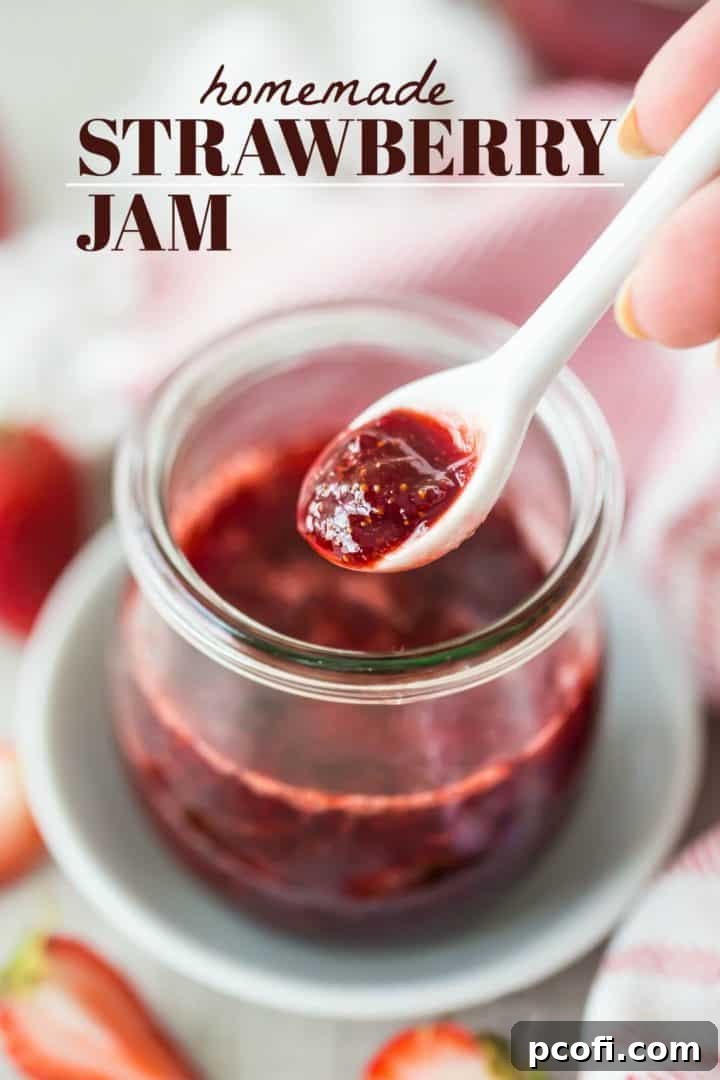
Jam, Jelly, and Preserves: What’s the Difference?
The terms jam, jelly, and preserves are often used interchangeably, but there are distinct differences worth noting, especially when you’re making them from scratch. Understanding these nuances can help you achieve your desired texture and appearance.
- Jelly: Jelly stands out because it’s made solely from fruit juice, not the fruit pulp itself. This results in a clear, translucent spread with a firm, quivering texture. The fruit is typically cooked, then strained through cheesecloth to remove all solids before the juice is boiled with sugar and pectin.
- Jam: Jam is made from crushed or chopped fruit, or fruit puree, cooked with sugar and often pectin (though not in our recipe!). It has a thicker, more opaque consistency than jelly, with fruit particles evenly distributed throughout. The fruit breaks down during cooking, creating a soft, spreadable texture.
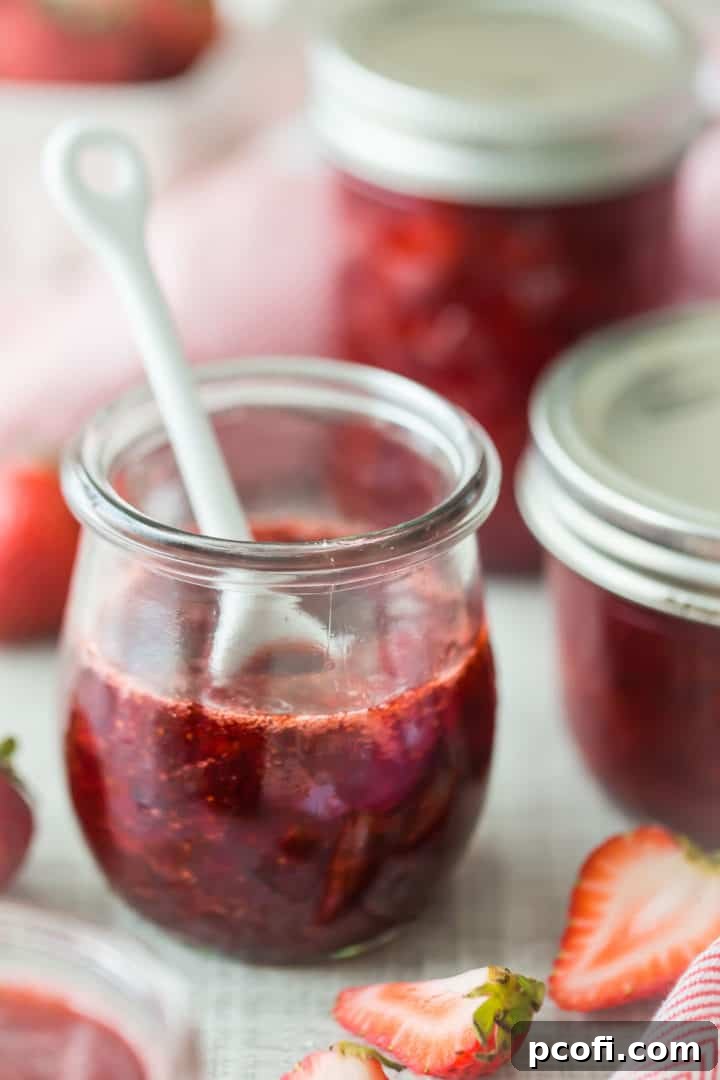
- Preserves: Preserves are a type of jam that feature larger pieces of whole fruit or significant chunks suspended in a softer fruit syrup or gel. The goal is to keep the fruit as intact as possible, providing a more rustic texture and a burst of fresh fruit flavor with every spoonful. This is precisely what we’re making today – strawberry preserves, rich with delightful fruit chunks.
Our strawberry preserves recipe is slightly quicker than traditional jam because there’s no need to puree the fruit beforehand. However, if you prefer a smoother jam, you can easily puree your raw strawberries using a blender, food processor, or food mill before starting the cooking process.
Is Homemade Strawberry Jam Healthy?
The concept of “healthy” varies greatly depending on individual dietary needs and preferences. What I can assure you about this homemade strawberry jam is that it’s crafted with minimal, wholesome ingredients, giving you complete control over what goes into your food. This recipe is:
- **Gluten-Free:** No wheat or gluten-containing ingredients are used.
- **Dairy-Free:** Completely free of milk and dairy products.
- **Vegetarian:** Plant-based and suitable for vegetarians.
- **Vegan:** Also suitable for a vegan diet.
However, due to the sugar content, it is generally not considered suitable for Paleo or Keto diets. For detailed nutritional information, please refer to the recipe card below, which provides a breakdown of calories, carbohydrates, and other values per serving.
How to Make the Best Strawberry Preserves
The star of our show, of course, is strawberries!
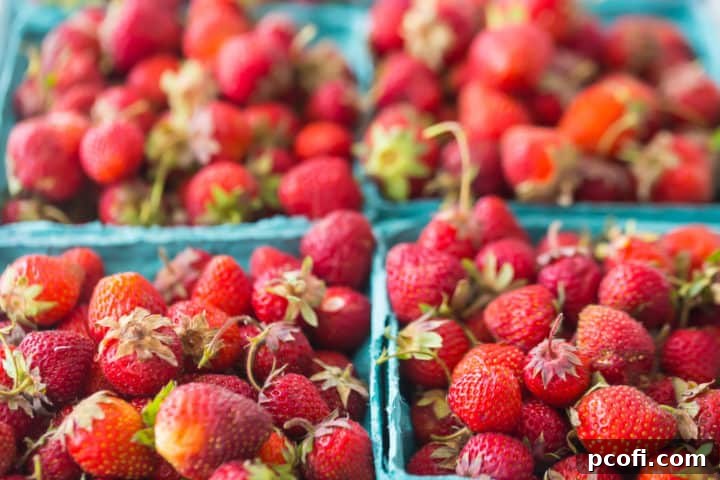
I recently had the pleasure of going berry picking, so I had an abundance of incredibly fresh, organic strawberries. Using fresh, ripe berries is key to achieving the most vibrant flavor in your jam.
Choosing Your Strawberries
My berries were small and sweet, yielding an intense flavor. While fresh, locally picked strawberries are ideal, you can absolutely use standard fresh strawberries from your local supermarket. Look for firm, bright red berries without any mold or soft spots. Even frozen strawberries work beautifully for jam! If using frozen, there’s no need to thaw them first; simply add them directly to the pot, and they’ll release their juices as they heat.
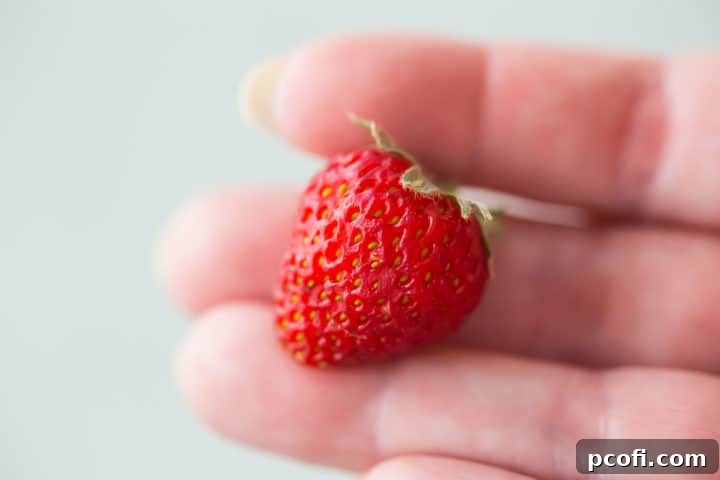
Before cooking, prepare your strawberries by gently rinsing them under cool water and then hulling them (removing the green leaves and white core). If your berries are large, you can halve or quarter them to ensure they cook down evenly and release their juices. For smaller berries, like the ones I used, leaving them whole or just halving them works perfectly for preserves, maintaining those lovely fruit chunks.
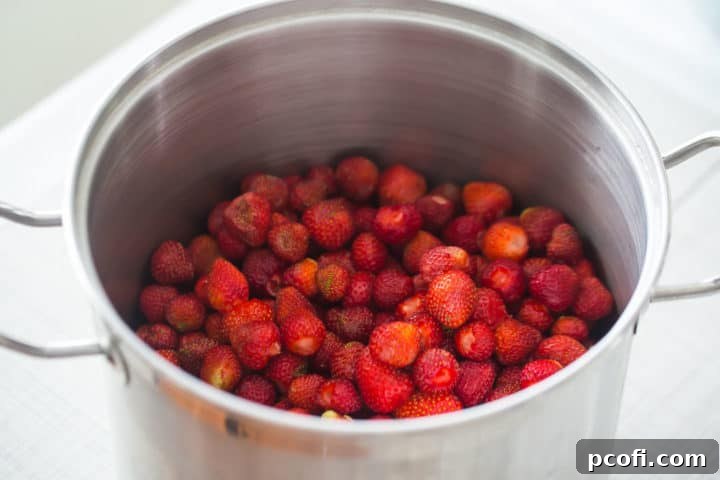
Once prepped, place the strawberries into a large, heavy-bottomed pot. A heavy-bottomed pot is crucial to prevent burning, especially when cooking sugar-rich mixtures over high heat.
Mastering Jam without Added Pectin
The beauty of this recipe lies in its simplicity, requiring only three core ingredients to create a beautifully set jam:
- Strawberries: The star, providing flavor and some natural pectin.
- Sugar: Essential for sweetness, preserving the fruit, and helping with the gelling process.
- Lemon Juice: Crucial for its acidity, which activates the natural pectin in the fruit and aids in setting the jam.
While strawberries do contain natural pectin, they are generally considered a lower-pectin fruit compared to apples or citrus. This can sometimes make achieving a firm set challenging. To ensure success without relying on store-bought pectin, we use a clever trick: incorporating additional sources of natural pectin.
You can boost the pectin content by adding the peel and core of an apple, or the peel and seeds of a lemon. These often-discarded parts are rich in natural pectin. This optional step acts as a natural gelling agent, providing an “insurance policy” for a perfectly set jam.
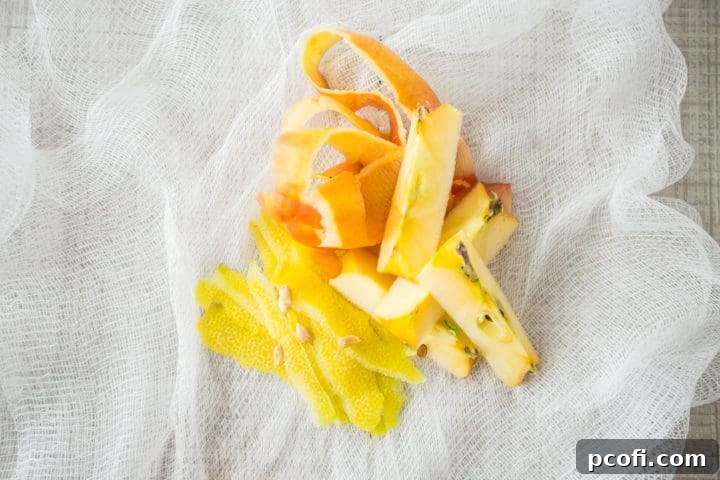
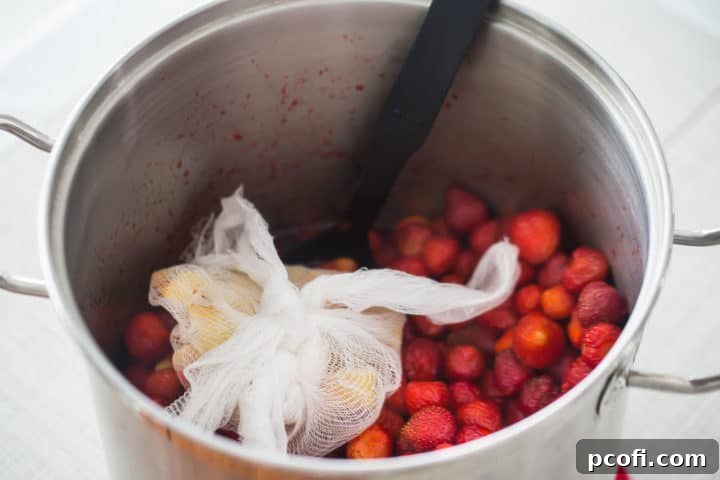
If you choose to use these natural pectin boosters, simply tie the apple peels, core, lemon peels, and seeds into a small sachet using a piece of cheesecloth. This allows their pectin to release into the jam while making them easy to remove before bottling.
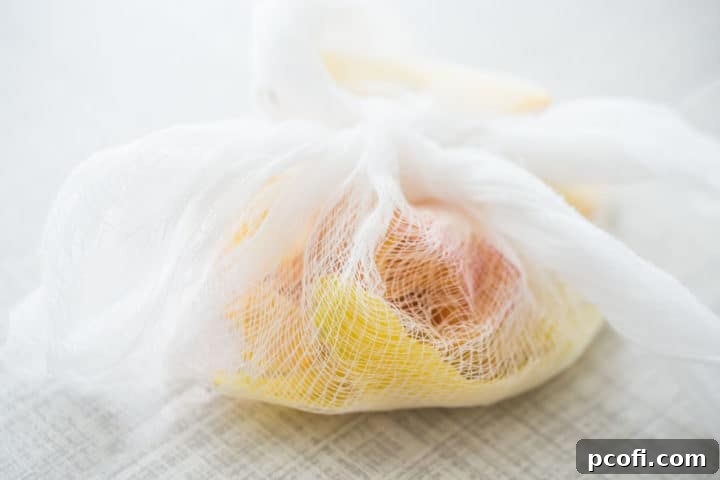
To begin the jam-making process, add the prepared strawberries and the optional pectin sachet to your pot. Simmer the fruit over very low heat for about 20 minutes. This slow-cooking stage is crucial: it gently coaxes out the fruit’s natural juices and helps extract the pectin, especially if you’re using the optional apple and lemon parts. You’ll notice the berries softening and releasing a significant amount of liquid as they cook.
After the initial simmering, add the granulated sugar to the pot. Sugar not only sweetens the jam but also acts as a preservative and aids in the gelling process by binding with pectin. I found the sweetness level in this recipe to be perfectly balanced, but feel free to adjust it slightly to your preference if you prefer a less sweet jam.
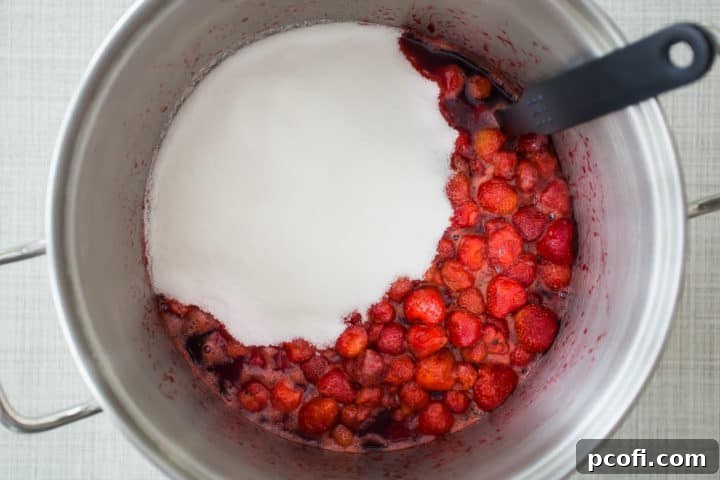
Increase the heat to high and bring the mixture to a rapid, rolling boil. This high-heat cooking is essential for evaporating excess moisture and concentrating the sugars and pectin, which allows the jam to thicken. The boiling process will take approximately 30 to 40 minutes, depending on your stove and the moisture content of your berries. During this time, it’s vital to stir frequently to prevent the jam from sticking to the bottom of the pot and burning.
Sterilizing Your Jars for Canning (Optional)
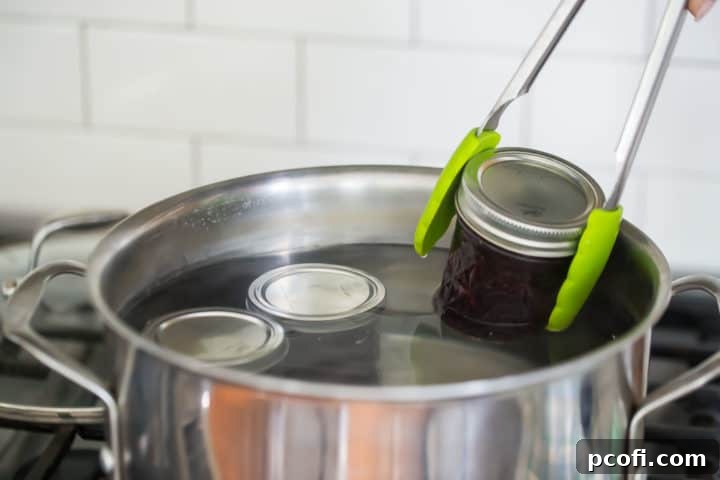
If you plan to can your jam for long-term storage at room temperature, sterilizing your jars is a critical step for food safety. While the jam is boiling, you can prepare your jars. Submerge clean canning jars and their lids in a large pot of boiling water for at least 10 minutes. The lids have a rubbery sealing compound around the rim; this needs to soften in the hot water to create a proper seal with the jars.
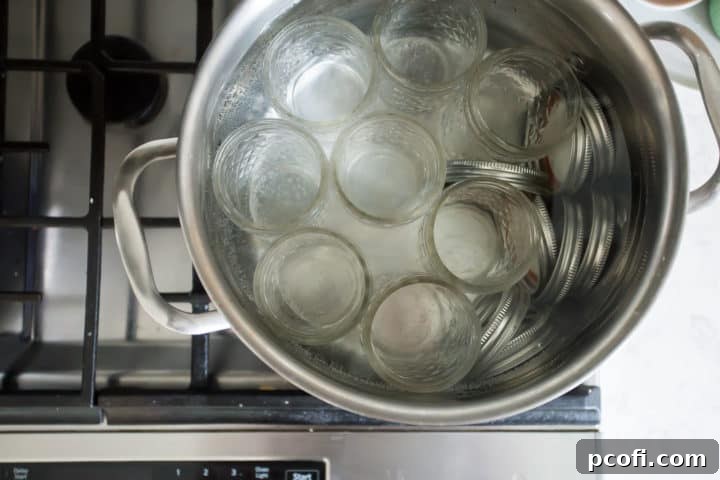
**Note:** This sterilization step is only necessary if you intend to water-bath can the jam for shelf stability. If you’re simply making refrigerator or freezer jam, you don’t need to sterilize the jars; just ensure they are clean and dry.
Ensuring Your Homemade Jam Sets Perfectly
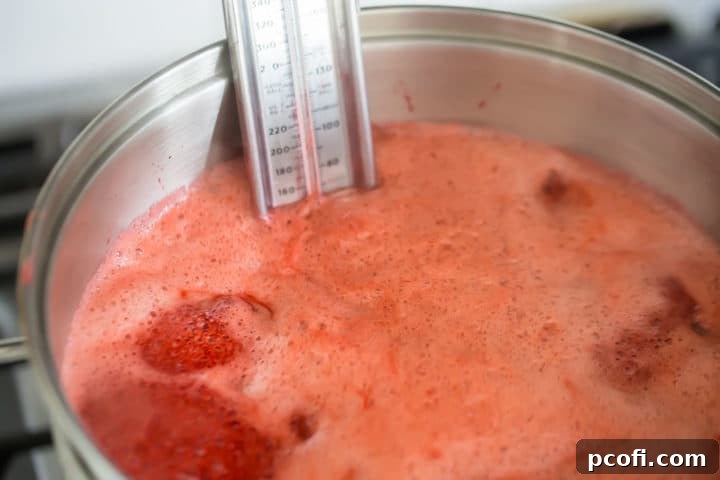
As your jam boils, you’ll observe a significant amount of steam rising from the pot. This steam is the natural moisture evaporating from the fresh berries. As the water boils away, the mixture will visibly reduce in volume and begin to thicken. Remember that jam continues to thicken considerably as it cools, making it tricky to know the exact moment it’s ready. This simple test is incredibly helpful:
Before you start cooking, place a small ceramic saucer or plate in the freezer to get it thoroughly chilled. When you suspect your jam is ready, spoon a few drops of the hot jam onto the cold saucer. Place it back in the refrigerator for about 5 minutes to chill completely. Then, gently nudge the jam with your fingertip. If you see wrinkles forming on the surface, congratulations! Your jam has reached the proper consistency and will set beautifully once cooled.
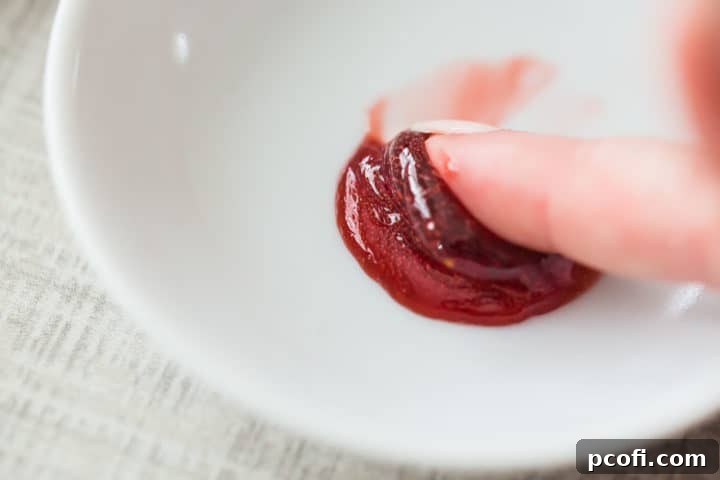
Throughout the boiling process, consistent stirring is key to prevent the jam from scorching on the bottom of the pot. You’ll also notice the jam’s color deepening as it thickens. A darker, more concentrated color, combined with reduced volume, are all good indicators that you’re on the right track to a perfectly thick and spreadable jam.
Generally, your jam will need to boil for about 30 to 40 minutes, or until it reaches a temperature of 210 degrees F (99 degrees C) and passes the wrinkle test. Once it’s ready, carefully remove the cheesecloth sachet (if used) and stir in the final tablespoon of lemon juice. This last addition of lemon juice enhances the flavor and helps ensure the jam’s pH is optimal for setting.
Processing Jars of Homemade Jam in a Water Bath (for shelf stability)
If you’ve opted for canning, the next step is to carefully ladle the hot jam into your sterilized jars. Fill the jars, leaving about ¼ inch of headspace from the rim. This headspace is crucial for creating a proper vacuum seal.
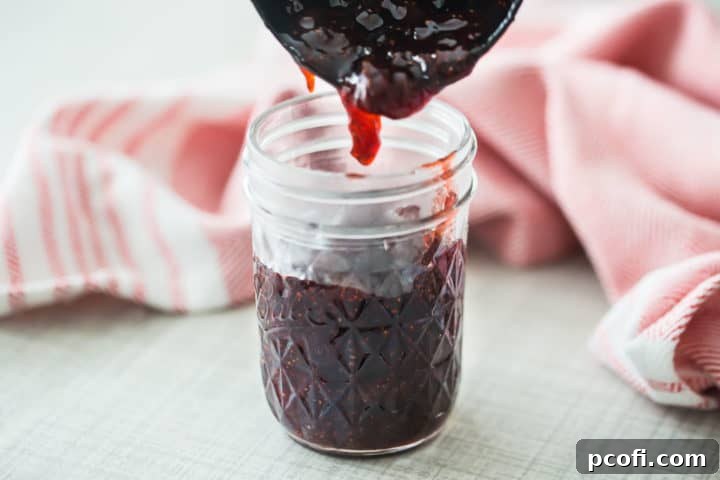
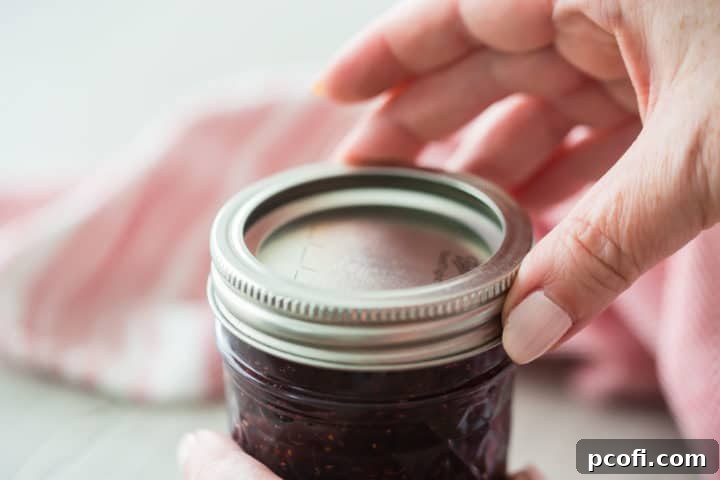
Using a clean, damp cloth, carefully wipe the rims of the jars to remove any drips or sticky residue. This ensures a tight seal. Then, place the lids and screw on the bands until they are fingertip tight (not overly tight).
Carefully lower the filled jars into a large pot of boiling water, ensuring they are fully submerged by at least one inch of water. Bring the water back to a full boil and process the jars for 10 minutes. This creates a vacuum seal, making the jam shelf-stable.
Once processed, remove the jars from the boiling water and place them on a clean towel or cooling rack, ensuring they are not touching each other. Allow them to cool completely, undisturbed, for 12 to 24 hours. As the jars cool, you’ll hear distinct “pop” sounds, indicating that the lids have sealed properly. The center of each lid should be concave and not flex when pressed. If any lids haven’t sealed, simply re-submerge them in boiling water for another 10 minutes with new lids, or store those jars in the refrigerator and consume within a few weeks.
Delightful Uses for Homemade Strawberry Jam
Once you’ve tasted the exquisite flavor of freshly made strawberry jam, you’ll find endless ways to enjoy it. Here are just a few suggestions to inspire you:
- Classic Spreads: The quintessential use! Slather it generously over warm scones, fluffy biscuits, or flaky croissants for a delightful breakfast or afternoon tea.
- Baked Goods Filler: Elevate your desserts! Use it as a luscious filling for homemade donuts, or sandwich it between delicate French macarons for a sophisticated treat.
- Layer Cakes & Trifles: Create stunning desserts by layering jam between slices of white cake, vanilla cake, or even rich chocolate cake. For a show-stopping trifle, combine it with cubed pound cake and billowy whipped cream.
- Tart & Pastry Delight: Spoon it into a tart shell, topped with fresh fruit, creamy pastry cream, or more whipped cream. It’s also fantastic dabbed into the center of puff pastry squares to make quick and delicious turnovers.
- Breakfast Boost: Swirl it into your favorite baked French toast casserole for an extra fruity kick, or simply spoon it over warm waffles.
- Ice Cream & Cheesecake Topping: Drizzle homemade strawberry jam over creamy vanilla ice cream or spoon it generously over a decadent cheesecake for an irresistible finish.
- Simple Snacks: For a quick and satisfying snack, spread it on graham crackers or over a slice of angel food cake.
- Thoughtful Gifts: Perhaps my favorite use! Homemade jam makes a truly special and personal gift. Package it beautifully for Christmas stockings, hostess gifts, or party favors. It’s a gift that speaks volumes about care and craftsmanship.
How Long Does Strawberry Jam Last?
The shelf life of your homemade strawberry jam depends on how you store it:
- Canned Jam (Water-Bath Processed): If properly processed in a water bath, unopened jars can be stored at cool room temperature for up to one year. Once a jar is opened, it should be refrigerated and consumed within 6 to 8 months.
- Refrigerator Jam (Not Processed): If you choose not to water-bath process your jam, it must be stored in the refrigerator immediately after cooling. It will last for approximately 6 months in the fridge.
- Freezer Jam: For even longer storage without canning, homemade jam freezes beautifully. Simply pour the cooled jam into freezer-safe containers, leaving adequate headspace for expansion, and freeze. It will keep for up to 1 year in the freezer. Thaw in the refrigerator before use.
What to Do if Your Jam is Runny
Don’t despair if you open a jar of homemade jam and find it hasn’t set quite as firmly as you’d hoped! This is a common occurrence, and it’s easily remedied. All is not lost; you can simply pour the runny jam back into a clean, heavy-bottomed pot and boil it for a bit longer, allowing more moisture to evaporate. Continue to test for setting using the cold saucer method until it reaches the desired consistency. Once it passes the test, you can then repeat the canning process with clean, sterilized jars and, crucially, fresh lids.
Remember that canning jars are reusable, but their lids are not. The sealing compound on the lids is designed for a single use to ensure a proper, airtight seal. Always use new lids when re-canning or canning for the first time. You can easily purchase extra canning lids here.
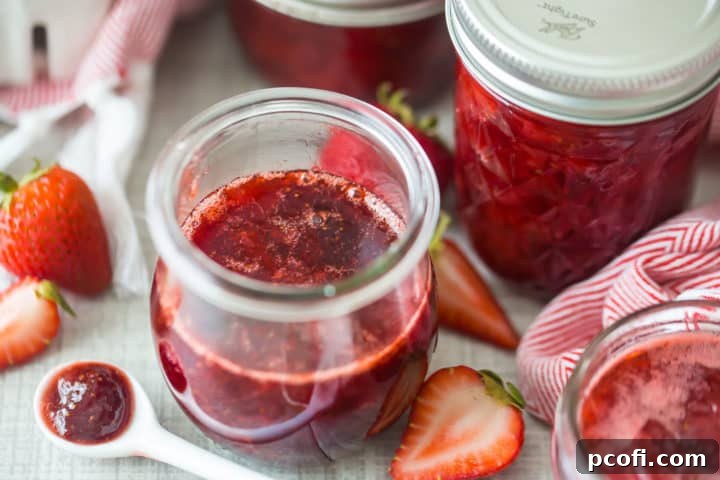
For those looking to stock up on beautiful canning jars, here are links to some of the varieties I’ve used in the photos, perfect for gifting or storing your delicious homemade jam:
- 8-ounce quilted jelly jars
- Wide-mouth half-pint jars
- 4-ounce mini Mason jars
- Weck mini tulip jars
- Weck mold jars
Enjoy the sweet satisfaction of creating your own delicious strawberry jam!
As an amazon associate I earn from qualifying purchases.
Strawberry Jam Recipe
How to make homemade strawberry jam from scratch- no pectin & just 3 simple ingredients! With instructions for canning, refrigerator, or freezer jam.
Servings: Approximately 4 8-ounce jars (144 tablespoons)
Prep Time: 25 minutes
Cook Time: 1 hour
Processing Time: 10 minutes (if canning)
Ingredients
- 4 pounds (1814.37 g) fresh strawberries, hulled
- 1 apple, peel & core only (optional, for natural pectin)
- 1 lemon, peel & seeds only (optional, for natural pectin)
- 3 1/2 cups (700 g) granulated sugar
- 1 tablespoon lemon juice
Instructions
- Remove the leaves and stems from the strawberries and place them in a large, heavy-bottomed pot.
- Tie the apple peel, apple core, lemon peel, and lemon seeds up in a piece of cheesecloth to make a sachet, and add it to the pot (this step is optional but recommended for better gelling).
- Cook the berries with the sachet (if using) over very low heat for 20 minutes, or until a lot of juice has been released and foam is beginning to form on the surface. Stir occasionally.
- Add the sugar to the pot and stir until dissolved. Turn the heat up to high and bring the mixture to a rapid, rolling boil.
- Continue to boil over high heat for 30 to 40 minutes, stirring frequently to prevent burning, or until the mixture reaches 210 degrees F (99 degrees C) and has become thick and syrupy.
- To test for doneness, place a small saucer in the freezer to chill before you start cooking. When the jam appears ready, spoon a few drops of the hot liquid onto the cold saucer and allow it to chill for 5 minutes in the refrigerator. If the chilled jam wrinkles when nudged with a fingertip, you know it will set properly.
- Once the jam is ready, remove the sachet (if using), and stir in the final tablespoon of lemon juice.
- Transfer the hot jam to clean, sterile jars, leaving ¼ inch of headspace. Wipe jar rims clean. Screw on lids and bands until fingertip tight. Submerge jars in boiling water for 10 minutes to process for shelf stability. (Alternatively, if not processing, store jam in the refrigerator or freezer.)
Notes
- *Processing the jars in a water bath is optional. If you choose not to process, be sure to keep the jam in the refrigerator (up to 6 months) or freezer (up to 1 year).
- This recipe makes approximately 4 8-ounce jars of jam.
Nutrition Information
Serving: 1 tablespoon, Calories: 24kcal, Carbohydrates: 6g, Protein: 1g, Fat: 1g, Saturated Fat: 1g, Sodium: 1mg, Potassium: 22mg, Fiber: 1g, Sugar: 6g, Vitamin A: 5IU, Vitamin C: 7.9mg, Calcium: 2mg, Iron: 0.1mg
Recipe Details
Cuisine: American
Course: Breakfast, Brunch, Dessert, Topping
Watch our video tutorial above to see the process in action!