Mastering Baking: Your Essential Guide to Cup to Gram & Ounce Conversions
Embarking on a baking adventure often means navigating a world of measurements. Whether you’re a seasoned baker or just starting, the challenge of converting ingredients from imperial measurements (like cups and ounces) to the precision of the metric system (grams) can be daunting. But fear not! We’ve meticulously compiled an indispensable resource to simplify your kitchen life: a comprehensive, free printable infographic that effortlessly bridges the gap between these measurement systems. Say goodbye to guesswork and hello to consistent, delicious results every time you bake!
Why Accurate Baking Measurements Matter
Baking is often described as a science, and for good reason. Unlike cooking, where a pinch of this or a dash of that can often work, baking relies on precise ratios. The exact balance of flour, sugar, fat, and liquid determines the texture, flavor, and overall success of your baked goods. A seemingly small deviation in ingredient quantities can lead to flat cookies, crumbly cakes, or dense bread. This is where the debate between volume (cups) and weight (grams) measurements becomes critical.
The Precision of Metric Baking
Many professional bakers and culinary experts advocate for metric measurements, particularly grams, for their superior accuracy. When you measure flour in a cup, variables like how loosely or tightly it’s packed can drastically alter the actual amount. A “cup of flour” can vary by as much as 20% in weight depending on who is measuring it. However, 100 grams of flour is always 100 grams of flour. This consistency is paramount for achieving reliable results, especially when following recipes from international sources or experimenting with new techniques.
The global culinary landscape is increasingly adopting the metric system, making access to reliable conversion tools more important than ever. Our goal is to empower every home baker to confidently tackle any recipe, regardless of its original measurement system, ensuring perfectly baked creations every single time.
Your Comprehensive Conversion Solution
We understand the universal desire for streamlined, accurate baking. That’s why we’ve dedicated extensive effort to create this all-encompassing conversion chart. Over countless hours, we meticulously measured and cross-referenced virtually every baking ingredient imaginable from our pantry. This isn’t just a basic chart; it’s a labor of love that covers ingredients featured in countless recipes across our site, plus many more that you might encounter in new culinary explorations.
From various types of flour (all-purpose, whole wheat, cake flour) to different sugars (granulated, brown, powdered), fats (butter, shortening, oils), liquids (milk, water, cream), and even leavening agents and flavorings – we’ve got you covered. This chart is designed to be your one-stop resource for converting cups and ounces into precise gram measurements, ensuring that your ingredients are always perfectly balanced.
Imagine the convenience: no more second-guessing, no more mid-recipe frantic searches. Just pure, unadulterated baking joy. This printable chart is crafted to be your most trusted kitchen companion, guaranteeing accuracy and consistency for all your baking endeavors.
How to Use Your Free Printable Baking Conversion Chart
Getting started with your new essential baking tool is simple. Here’s how to make the most of this invaluable resource:
- Download and Print: Click the download link provided below to get your high-resolution printable chart. We recommend printing it on sturdy paper or even laminating it for durability in a busy kitchen environment.
- Easy Access: Once printed, tape it inside your kitchen cabinet, on your pantry door, or simply keep it in a recipe binder. Its clear layout and easy-to-read format mean quick access whenever you need it.
- Identify Your Ingredient: Look up the specific ingredient required in your recipe (e.g., all-purpose flour, granulated sugar, butter).
- Find the Imperial Measurement: Locate the imperial measurement (cups or ounces) listed in your recipe.
- Discover the Metric Equivalent: The chart will instantly provide you with the accurate gram conversion for that ingredient. Use a reliable kitchen scale to weigh out the exact amount.
This chart is designed for intuitive use, making the conversion process seamless and stress-free. Whether you’re making a delicate French macaron or a hearty American apple pie, having this chart at your fingertips ensures professional-level precision.
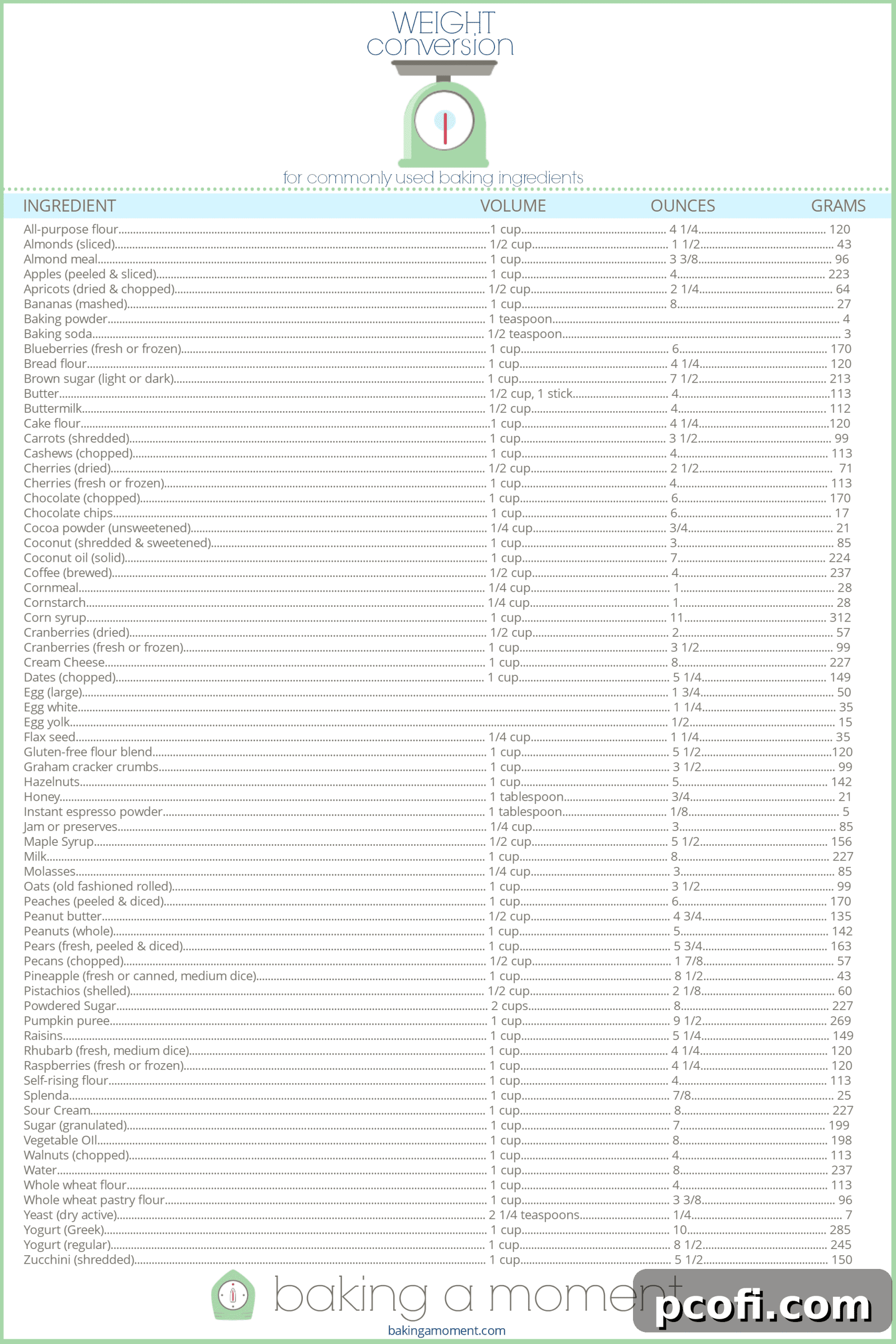
Ready to transform your baking? Click here to download your free printable Cup to Gram and Ounce Conversion Chart today!
Beyond Conversions: Tips for Metric Baking Success
While our chart handles the core conversions, here are some additional tips to elevate your metric baking experience:
- Invest in a Good Digital Kitchen Scale: This is the single most important tool for metric baking. Look for one that can measure in grams and ounces, with a tare function (to zero out the weight of your bowl).
- Weigh Directly into Your Mixing Bowl: Many recipes call for adding ingredients sequentially. With a scale, you can weigh each ingredient directly into your mixing bowl, taring the scale back to zero after each addition. This reduces cleanup and streamlines the process.
- Understand Ingredient Density: Our chart accounts for the varying densities of ingredients. For example, a cup of flour weighs differently than a cup of sugar. Always refer to the chart for the specific ingredient you are using.
- Temperature Conversions: Don’t forget about oven temperatures! While most recipes use Celsius in metric systems, many older imperial recipes use Fahrenheit. A quick conversion tool or chart for oven temperatures (e.g., 350°F is approximately 175°C) is also handy.
- Liquid Measurements: For liquids, 1 milliliter (ml) is approximately 1 gram, making liquid measurement in grams equally precise. However, for larger volumes, you might still see milliliters in metric recipes, which is perfectly fine for liquids.
- Rounded vs. Precise: Some conversions may result in decimal points. For most home baking, rounding to the nearest whole gram is acceptable. Our chart provides practical, usable numbers.
By integrating these practices with our comprehensive conversion chart, you’ll gain unparalleled control over your baking, leading to consistently superior results and a much more enjoyable kitchen experience.
Your Undying Love and Affection are Our Reward
The creation of this detailed resource was a significant undertaking, born from a desire to make baking accessible and enjoyable for everyone, everywhere. We poured countless hours into ensuring its accuracy and comprehensiveness, all with you, the passionate home baker, in mind.
We genuinely hope this conversion chart becomes an indispensable part of your kitchen toolkit. Please take a moment to bookmark this page for easy future access – it will always be here for you. Share it with fellow baking enthusiasts, print it out, and let it simplify your culinary journey. Your satisfaction and the joy you find in successful baking are the ultimate reward for our efforts.
This resource is a testament to our commitment to providing helpful, high-quality content that truly makes a difference in your kitchen. Happy baking, and may all your conversions be perfectly precise!
Stay Connected & Share Your Baking Adventures!
We love seeing your creations! Connect with us on social media and share how our conversion chart has helped you achieve baking success.
- Email Subscribe
- YouTube