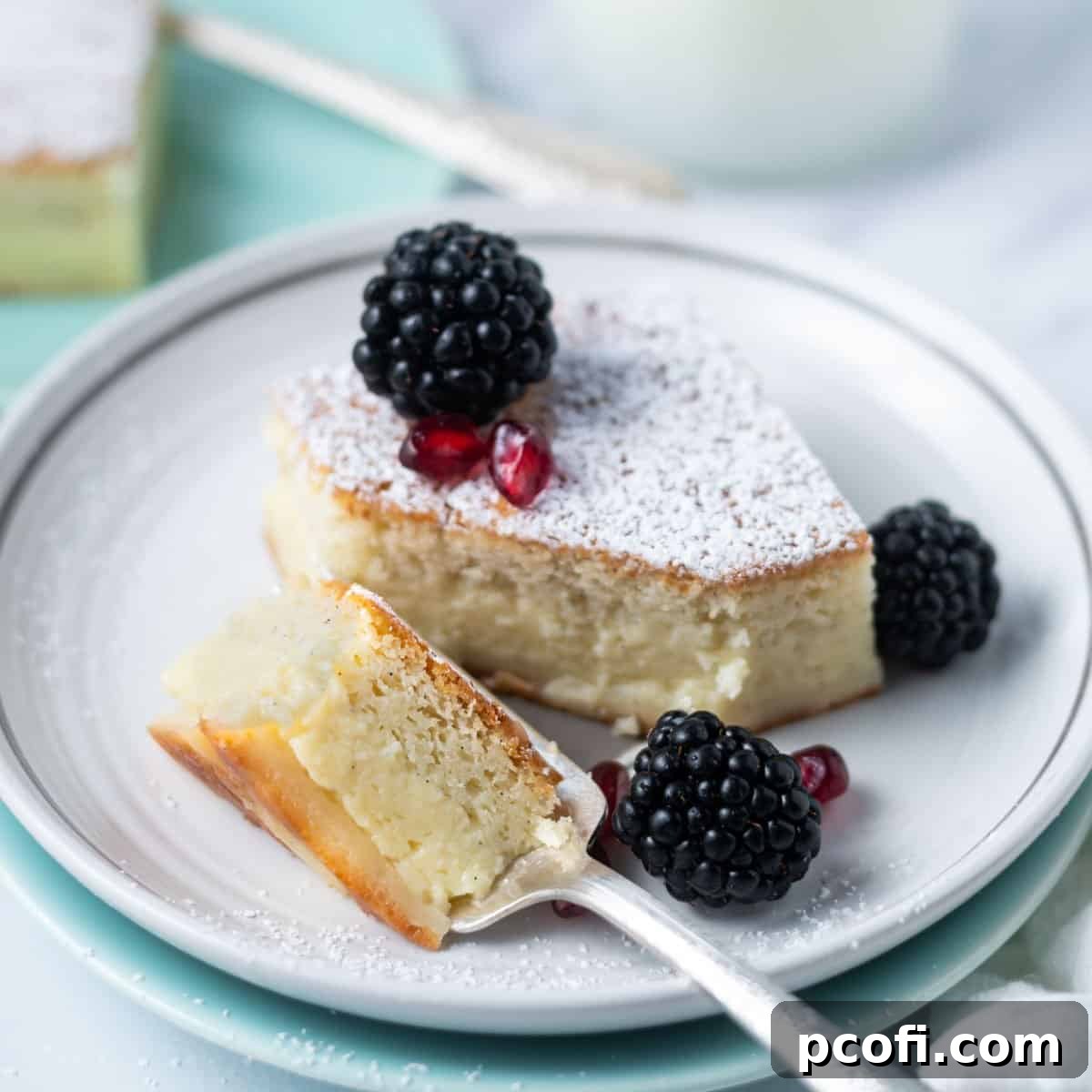
If you’re searching for a dessert that defies expectations and delights with every bite, look no further than the remarkable vanilla bean Magic Custard Cake. This truly enchanting bake transforms a seemingly simple batter into a stunning three-layered masterpiece. Imagine an irresistibly airy sponge top, giving way to a luxuriously soft and creamy custard middle, all resting upon a silky, dense base that practically melts in your mouth. Infused with the rich, aromatic essence of real vanilla beans, this cake is an impressive yet approachable treat, made with everyday ingredients and boasting a delicate texture that will captivate everyone who tries it.
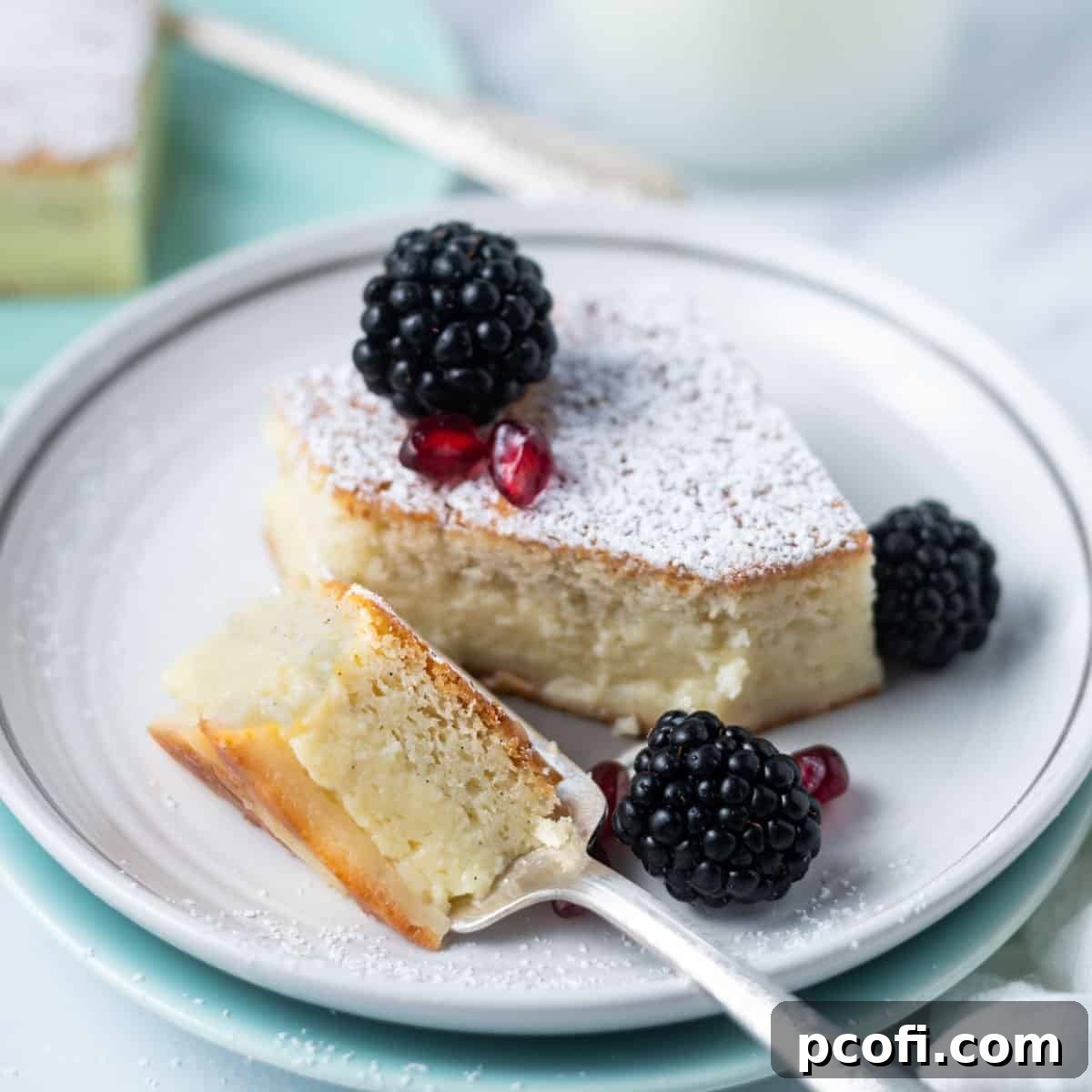
The magic custard cake is a true kitchen marvel, often leaving bakers wondering at its delightful transformation. When you first mix the eggs, sugar, milk, and butter, the batter appears surprisingly thin, almost like a fascinating science experiment. But the true enchantment unfolds in the oven! As it bakes, this humble mixture self-separates into three distinct layers: a light and golden sponge on top, a velvety, luscious custard in the middle, and a rich, pudding-like bottom layer. It’s a captivating process that results in a dessert far more sophisticated than its straightforward preparation suggests.
This vanilla bean magic custard cake is the epitome of effortless elegance. It calls for readily available ingredients and requires minimal hands-on prep time, yet it presents as a truly fancy dessert. Each slice is a harmonious blend of light, creamy, and dense textures, making it ideal for a special weekend treat, an impressive dinner party finale, or simply when you desire a luxurious dessert without the extensive labor.
The allure of the Magic Custard Cake lies in its unique ability to create these three distinct layers from a single batter. The scientific secret? It’s all about temperature, density, and the properties of the ingredients. The delicate egg whites, whipped to stiff peaks, rise to form the light sponge. The denser egg yolk, sugar, and flour mixture forms the custard. And the milk, being the lightest component in the final liquid batter, sinks to the bottom during baking, solidifying into the pudding-like base. This fascinating interaction during the baking process is what gives the cake its “magic” moniker and its unforgettable textural symphony. Every forkful offers a different experience, from fluffy to creamy to silken.
Essential Ingredients for Your Magic Custard Cake
Crafting this incredible three-layered vanilla bean magic custard cake requires a few simple yet crucial ingredients. Understanding their role will help you achieve the perfect texture and flavor profile.
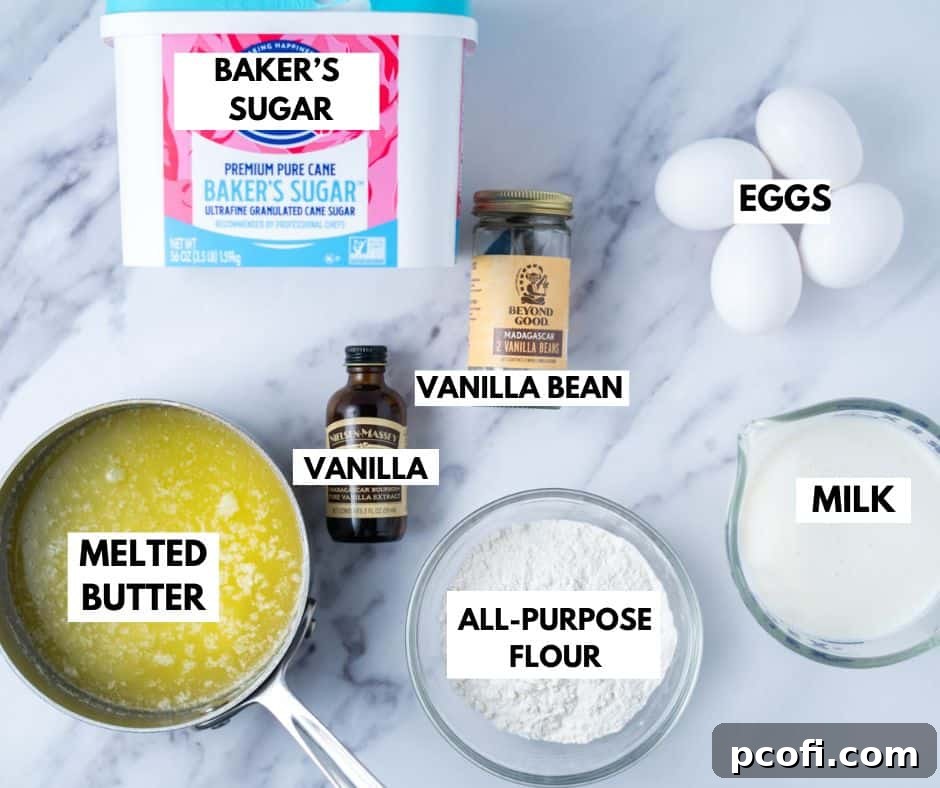
- Sugar – For the finest texture and quickest dissolution, baker’s sugar (also known as caster sugar or superfine sugar) is highly recommended. Its finer granules integrate seamlessly into the batter, ensuring a smooth result. If you don’t have it, don’t worry, a simple trick can transform regular granulated sugar into superfine.
- Eggs – You will need four large eggs for this recipe. A critical step involves separating the yolks from the whites, as they are incorporated into the batter at different stages and serve distinct purposes in creating the cake’s unique layers. Bringing them to room temperature before use is key for optimal whipping and emulsification.
- Vanilla – To truly elevate this vanilla bean magic custard cake, we employ a double dose of vanilla. A full vanilla bean is scraped and infused directly into the sugar, imparting a deep, complex, and visible flecked vanilla flavor. Additionally, a touch of vanilla extract is used to enhance the whipped egg whites, ensuring a rich, aromatic vanilla essence throughout every layer.
- Butter – Unsalted butter is essential for controlling the overall saltiness of your bake. It needs to be melted and then slightly cooled before being added to the cake batter. This ensures it blends smoothly without cooking the other ingredients.
- Milk – The milk contributes significantly to the custard’s creamy texture. While 2% milk was used in the original recipe, whole milk or even 1% can be used. The fat content in the milk is important for achieving that characteristic richness and creamy consistency in the middle layer.
- Flour – All-purpose flour provides the necessary structure to the cake, particularly forming the delicate and soft sponge layer on top, while also contributing to the body of the custard and base.
Creating Your Vanilla Bean Magic Custard Cake: A Step-by-Step Guide
Embark on a delightful baking journey with these detailed steps to create your own mesmerizing vanilla bean magic custard cake. Follow along for perfect results and witness the magic unfold in your kitchen.
Step 1: Infuse Your Vanilla Sugar
Begin by preparing your vanilla sugar. Take your vanilla bean and carefully slice it in half lengthwise, revealing the tiny, aromatic seeds within. Using the back of your knife, gently scrape out all the precious vanilla seeds. Transfer these seeds to a bowl containing ¾ cup of baker’s sugar. Now, using clean hands, rub the vanilla seeds into the sugar. This hands-on method helps to release the vanilla’s fragrant oils, intensely infusing the sugar with its exquisite flavor. Set this aromatic vanilla sugar aside for later.
Step 2: Whip the Egg Whites to Stiff Peaks
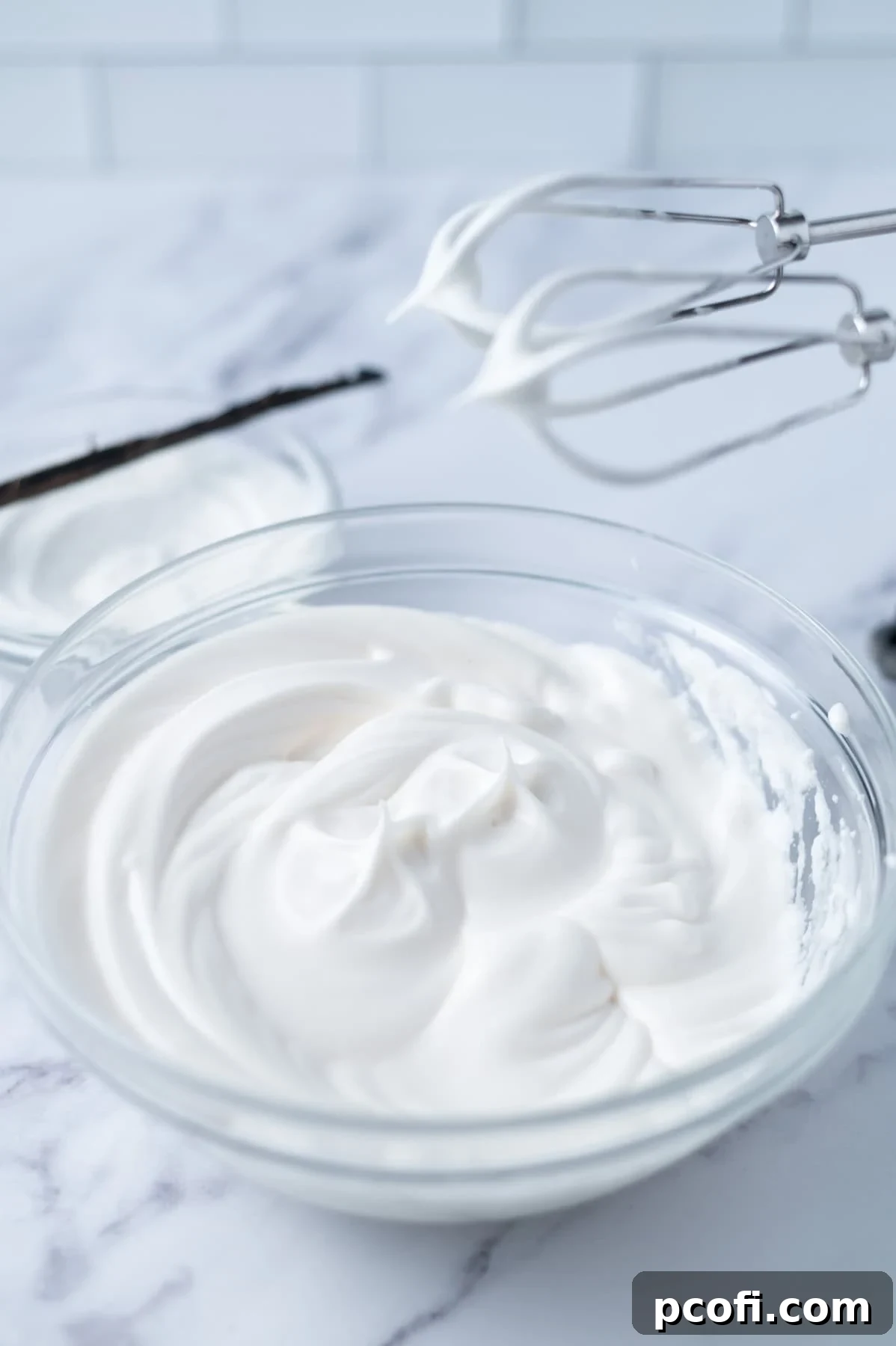
In a separate, clean bowl, combine the room-temperature egg whites with 2 tablespoons of the baker’s sugar and 1 teaspoon of vanilla extract. Using either a hand mixer or a stand mixer fitted with the whisk attachment, beat the mixture on medium-high speed until it forms stiff, glossy peaks. This means that when you lift the whisk, the peaks of egg white should stand firm and hold their shape. Be careful not to overbeat. Once achieved, gently set the bowl of whipped egg whites aside.
Step 3: Prepare the Egg Yolk Batter
Now, turn your attention to the egg yolks. In a large mixing bowl, beat the room-temperature egg yolks together with the vanilla-infused sugar (from Step 1) on medium speed. Continue beating for approximately 2 minutes, or until the mixture becomes noticeably light in color and pale, with a slightly thicker consistency. This process incorporates air and creates a foundational texture for the custard layer.
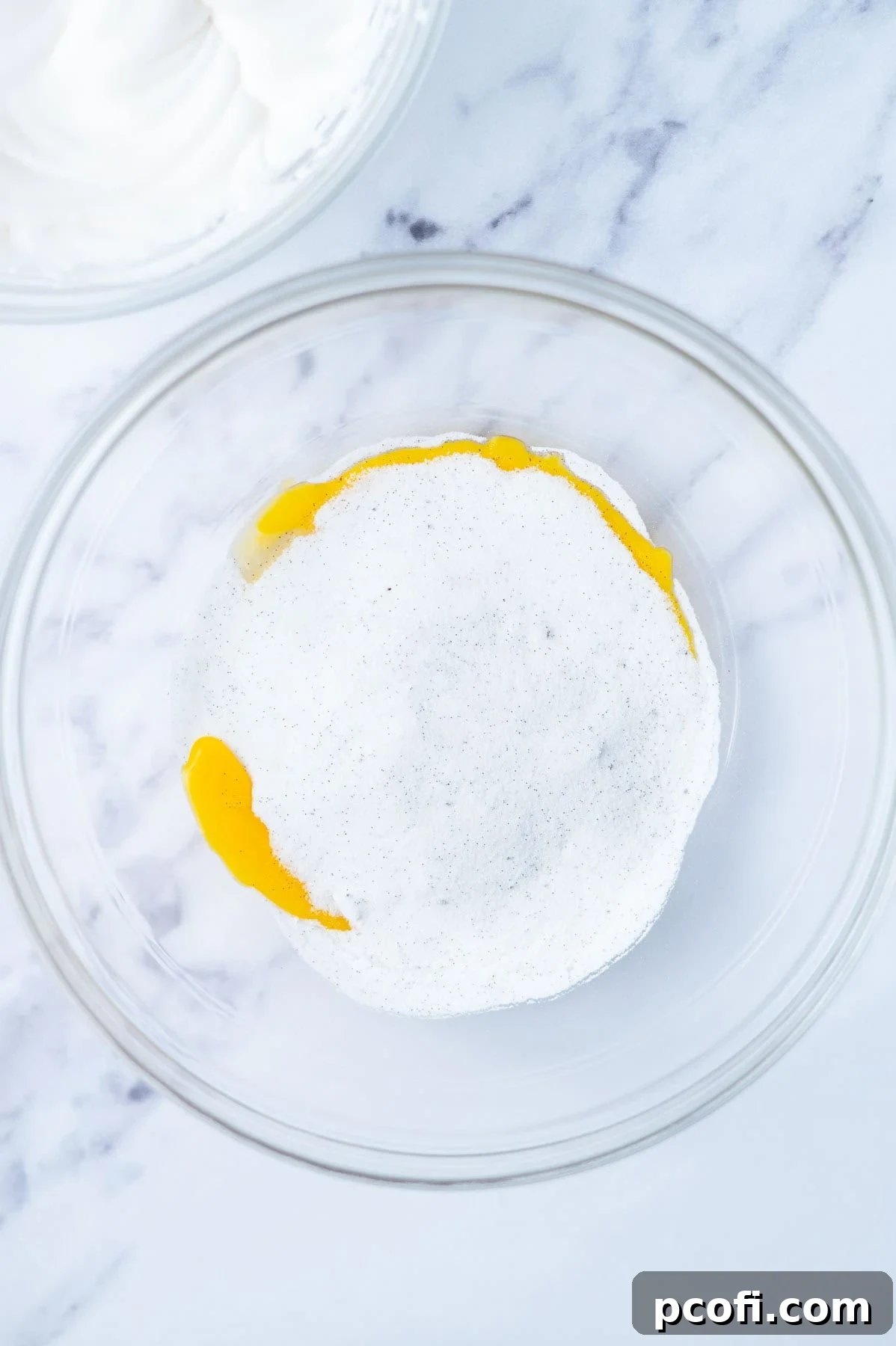
Next, pour the slightly cooled melted butter into the egg yolk and sugar mixture. Continue beating for another minute, ensuring the butter is thoroughly incorporated and the batter is smooth and well blended. This adds richness and moisture.
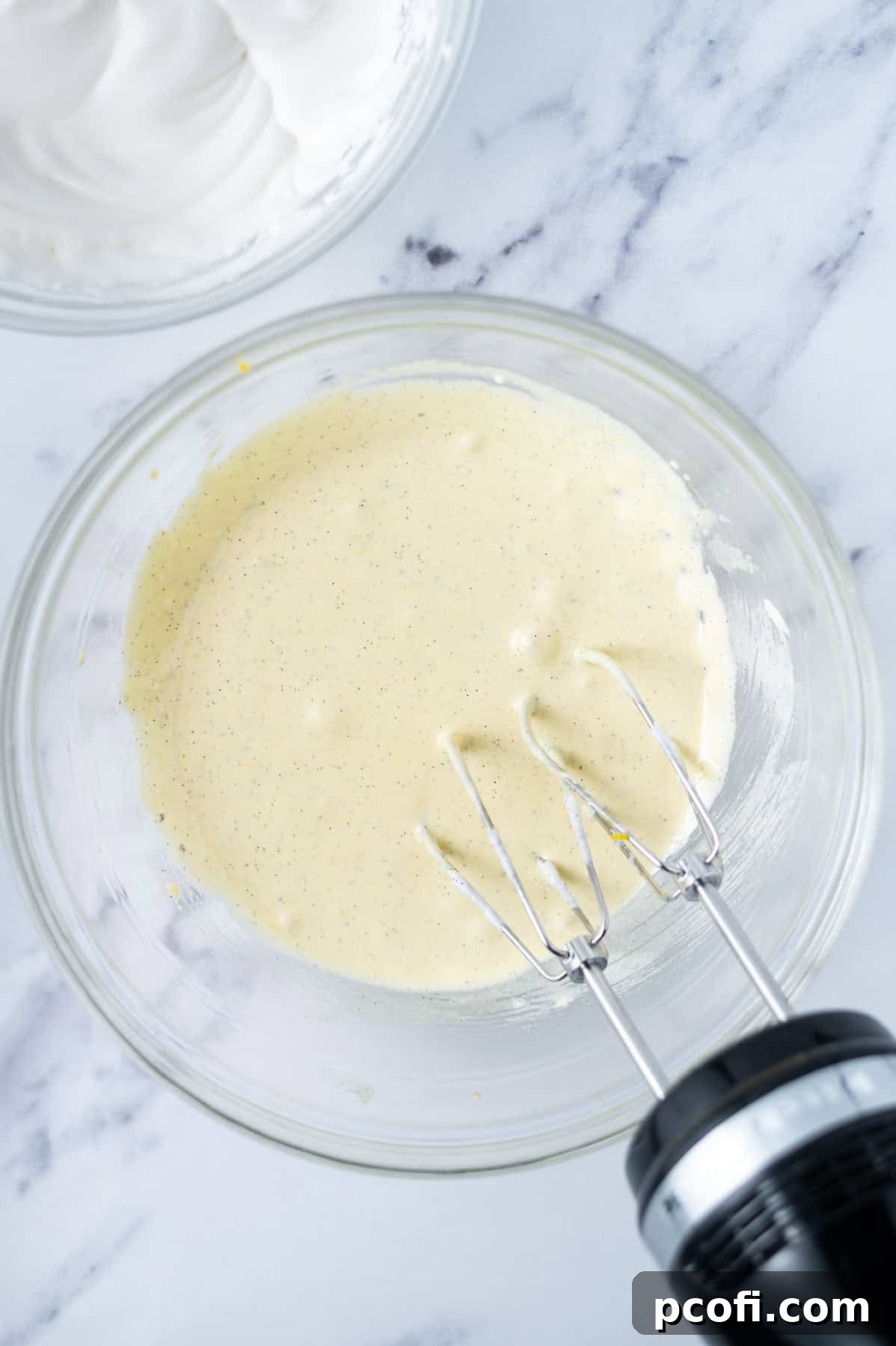
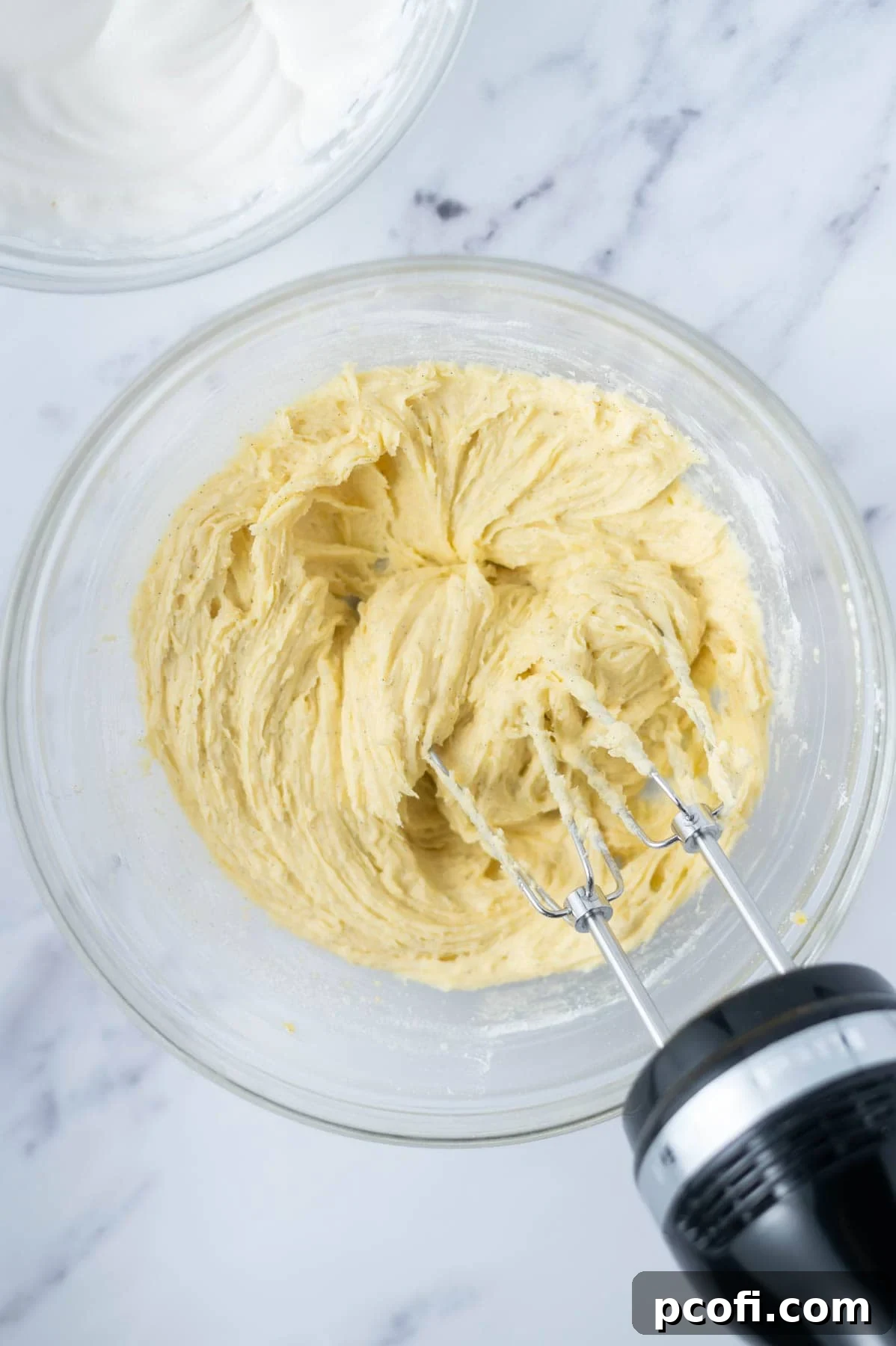
With the mixer on low speed, gradually add the all-purpose flour to the batter. Mix until the flour is fully incorporated and the batter achieves a smooth consistency. At this stage, you’ll notice the batter is quite thick. Avoid overmixing the flour to prevent a tough cake.
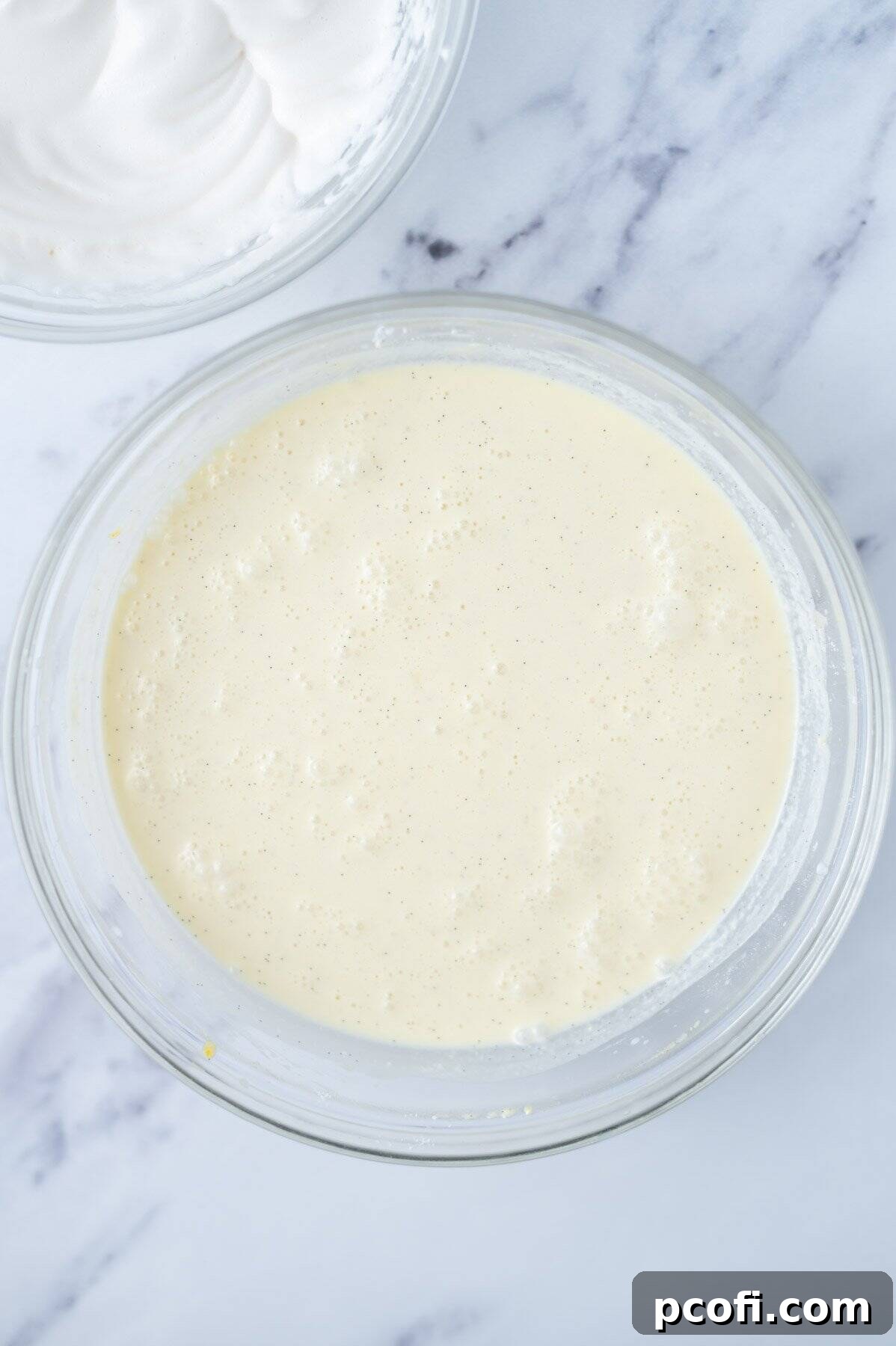
Now, slowly stream in the lukewarm milk, adding about ¼ to ½ cup at a time, continuing to mix on low speed. Ensure each addition is fully blended before adding the next. Once all the milk has been incorporated, the batter will thin out considerably. This thin consistency is crucial for the cake’s magical layer separation.
Step 4: Fold in the Whipped Egg Whites
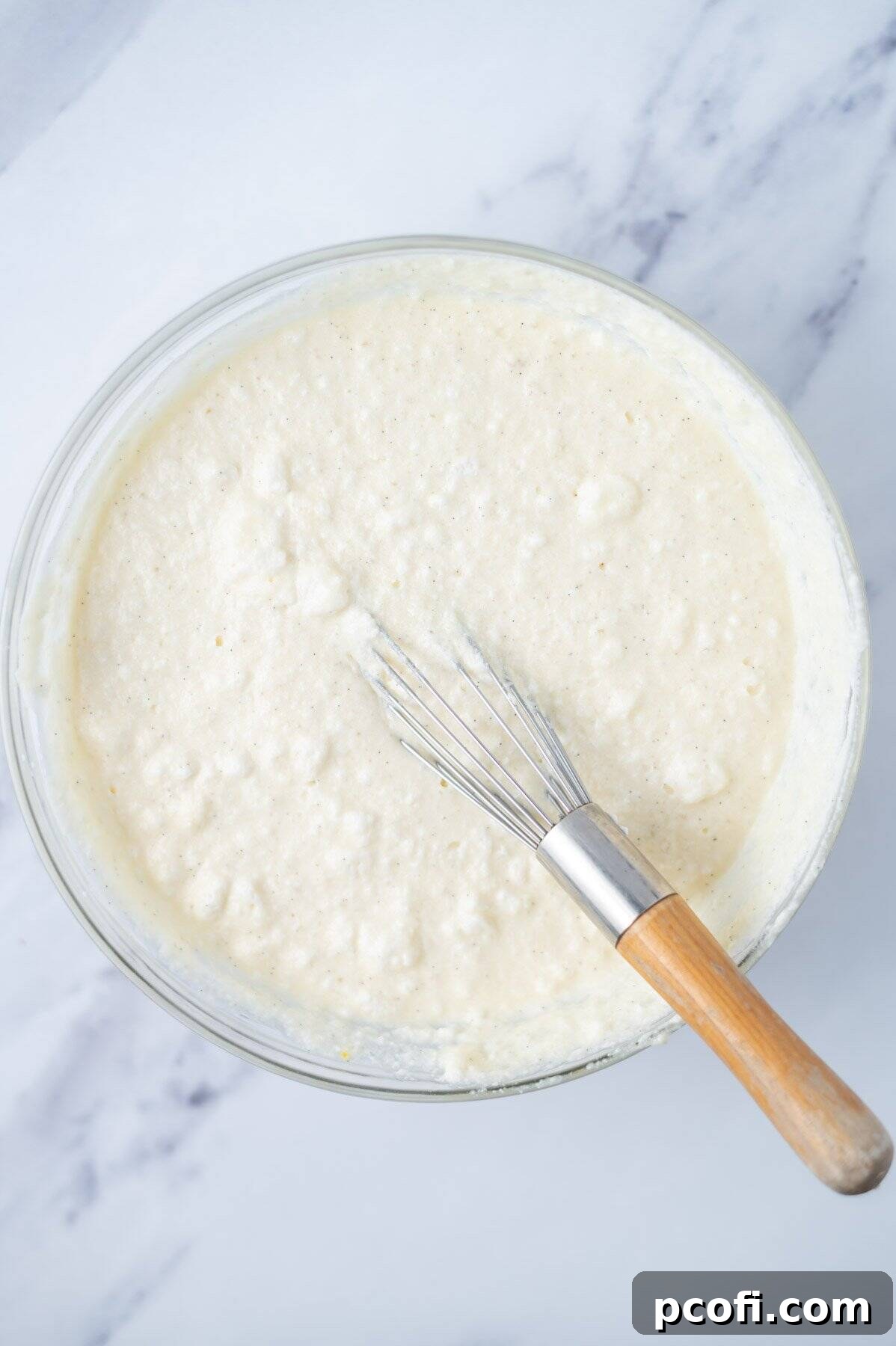
This step requires a gentle hand. Carefully incorporate the whipped egg whites into the batter in three separate additions. Using a whisk or a rubber spatula, gently fold the whites into the thin batter. The goal is to retain as much air as possible in the egg whites, which will form the airy top layer of the cake. Don’t worry if you see some small, clumpy bits of egg whites floating on top; this is perfectly normal and contributes to the cake’s unique texture.
Step 5: Pour into Prepared Pan
Pour the carefully mixed batter into your prepared 8×8 baking pan, which should be lined with parchment paper. This parchment lining is essential for easy removal after baking and cooling.
Step 6: Bake to Perfection
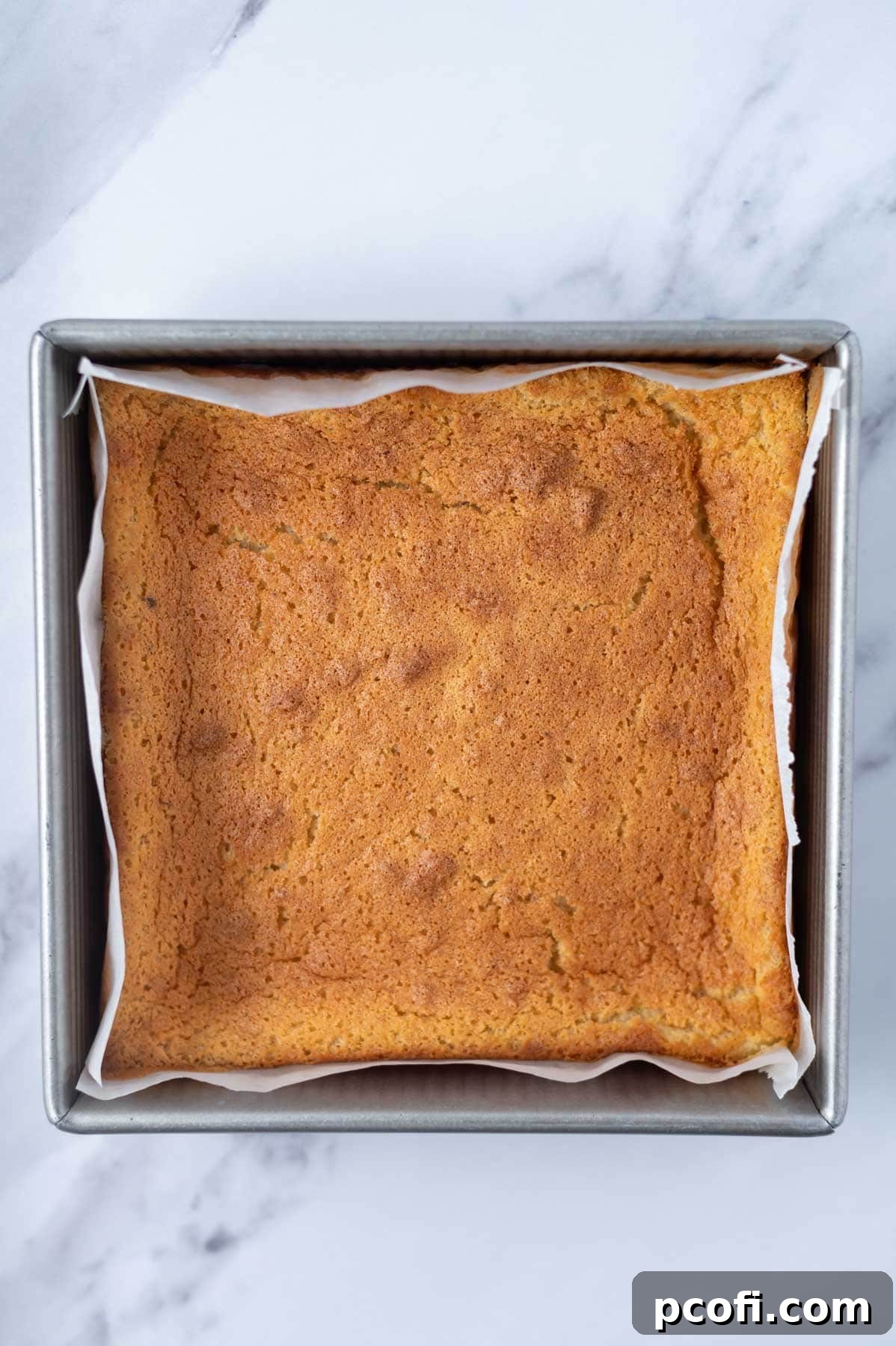
Place the pan into your preheated oven. Bake the magic custard cake for 40-65 minutes. The ideal doneness is when the top is beautifully golden brown and the cake has a slight, gentle jiggle only in the very center when the side of the pan is lightly shaken, similar to a perfectly set cheesecake. The edges should appear set and firm.
Keep in mind that oven temperatures can vary significantly, so the baking time is an estimate. Start checking the cake around the 40-minute mark. If you notice the top browning too quickly before the cake is fully set, you can lightly tent the pan with a piece of aluminum foil to prevent further browning. Continue to check the cake in 10-minute intervals until it reaches the desired golden hue and subtle jiggle, as perfectly illustrated in the image below. This careful observation ensures all three layers set correctly.
Expert Tips for Crafting the Ultimate Magic Custard Cake
Achieving a flawless magic custard cake is simple with these expert tips and tricks. Follow these guidelines to ensure your vanilla bean creation is absolutely perfect every time.
- Temperature Matters for Eggs: While separated, cold eggs are easier to handle for a clean separation of yolks and whites, it is crucial to let both come to room temperature before mixing. Room-temperature egg whites whip up with more volume and stability, contributing to a lighter sponge. Room-temperature yolks emulsify better with sugar and butter, resulting in a smoother, more uniform custard.
- Baker’s Sugar Substitute: If you don’t have baker’s sugar (superfine or caster sugar) on hand, you can easily make your own. Simply pulse regular granulated sugar in a food processor for about 30-60 seconds. You’ll know it’s ready when it feels softer and finer than granulated sugar, but still retains a slight grainy texture, not a powdery one like confectioners’ sugar.
- The Perfect Milk Temperature: For optimal blending and to prevent shocking the other ingredients, ensure your milk is lukewarm. This means it should be gently warmed to a temperature between 95°F and 105°F (35°C-40°C). This ideal temperature helps the milk seamlessly integrate into the batter, contributing to the creamy consistency of the custard layer.
- Baking Doneness – A Unique Test: Unlike many cakes, the traditional toothpick test won’t work perfectly for this magic custard cake due to its soft and creamy middle layer. Instead, rely on visual cues and a gentle jiggle. You want the edges of the cake to be visibly set and firm, the top to be a beautiful golden hue, and the very center to have a slight, delicate jiggle, much like a perfectly baked cheesecake or a crème brûlée. This indicates that the custard is set but still wonderfully tender.
- Patience is Key for Cooling: Resist the urge to slice into your cake right after it comes out of the oven. Allowing the magic custard cake to cool completely, preferably in the refrigerator for several hours or overnight, is crucial. This cooling period allows the layers to fully set and solidify, ensuring clean slices and the distinct textural contrast.
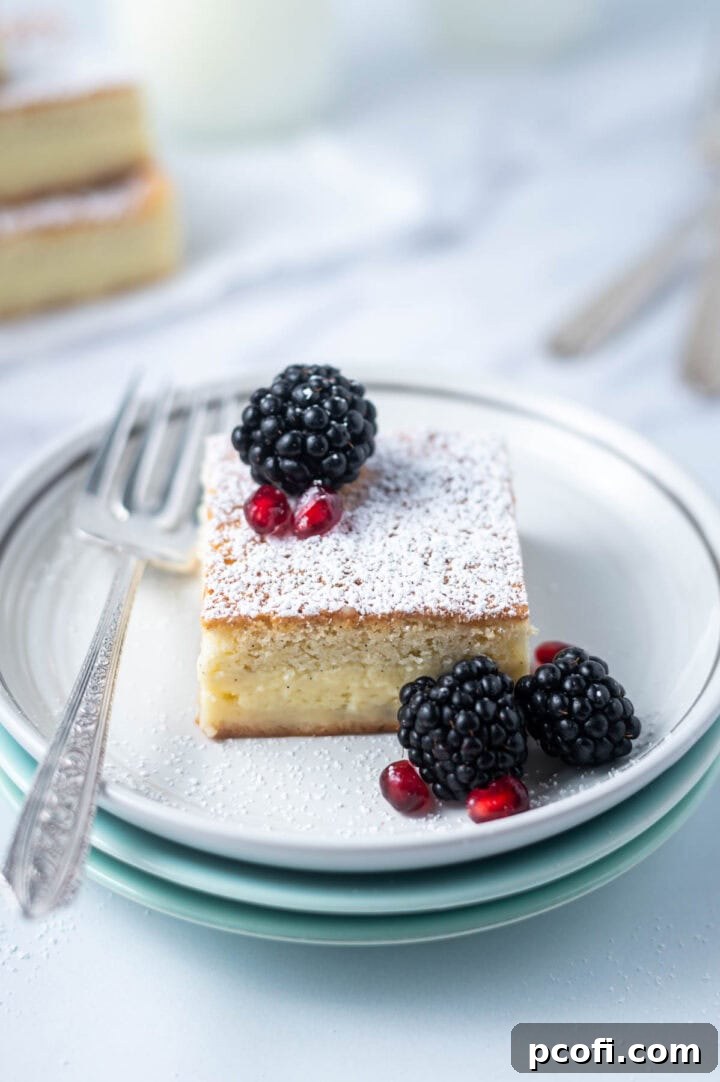
- Garnish for Elegance: A light dusting of powdered sugar is a classic and elegant finish for this cake. You can also elevate its presentation with fresh berries, a dollop of whipped cream, or a drizzle of chocolate sauce, enhancing both its visual appeal and flavor.
Explore More Delightful Cake Recipes
If you loved the magic of this vanilla bean custard cake, you might enjoy exploring these other fantastic cake recipes that promise to tantalize your taste buds and impress your guests:
- Cream Puff Cake
- Chocolate Chip Cake
- Perfect Vanilla Cake
- Basque Cheesecake
- Moist Pumpkin Layer Cake
- Lemon Chiffon Cake
Magic Custard Cake
Leave a Review
Save RecipeSaved!
Ingredients
- 4 large eggs, separated, room temperature*
- 1 vanilla bean
- ¾ cup baker’s sugar + 2 tablespoons, divided (175g)
- 1 teaspoon vanilla extract
- ½ cup unsalted butter, melted and slightly cooled (113g)
- ¾ cup all-purpose flour (94g)
- 2 cups 2% milk, lukewarm**
Instructions
-
Preheat your oven to 325°F (160°C). Prepare an 8×8 inch baking pan by lining it completely with parchment paper, allowing the paper to overhang on two sides for easy removal of the cake.
-
To prepare the vanilla sugar, carefully slice the vanilla bean in half lengthwise. Using the back of a small knife, scrape out all the tiny vanilla seeds. Combine these seeds with ¾ cup of baker’s sugar in a bowl. Use your clean hands to thoroughly work the vanilla seeds into the sugar until evenly distributed and fragrant. Set aside.
-
In a clean, dry mixing bowl, beat the room-temperature egg whites, 2 tablespoons of baker’s sugar, and 1 teaspoon of vanilla extract. Use a hand mixer or stand mixer on medium-high speed until stiff, glossy peaks form. Be careful not to overbeat. Set the whipped egg whites aside.
-
In a separate large mixing bowl, beat the room-temperature egg yolks with the vanilla-infused sugar (prepared in step 2) on medium speed for about 2 minutes. Continue beating until the mixture is light, pale in color, and slightly thickened.
-
Pour the melted and slightly cooled unsalted butter into the egg yolk mixture. Continue beating on medium speed for another minute until the butter is fully incorporated and the batter is smooth and homogeneous.
-
Reduce the mixer speed to low. Gradually add the all-purpose flour to the batter, mixing just until it is smooth and no dry streaks remain. At this point, the batter will be quite thick and dense. Avoid overmixing the flour.
-
Slowly pour in the lukewarm milk, about ¼ to ½ cup at a time, while the mixer is still on low speed. Mix until each addition is well combined before adding more. Once all the milk has been added, the batter will become significantly thinner and quite liquidy. This is the correct consistency for the magic to happen.
-
Gently fold the whipped egg whites into the thin batter in three additions. Use a large whisk or rubber spatula to incorporate them with a light hand, trying not to deflate the air. You will likely see some small, distinct clumps of egg whites floating on top; this is normal and desired for the cake’s layered structure.
-
Carefully pour the finished batter into your prepared 8×8 inch baking pan. Transfer the pan to the preheated oven.
-
Bake for 40-65 minutes. The cake is done when the top is a beautiful golden brown, and the center still has a slight, delicate jiggle (like a cheesecake) when you gently shake the pan. Keep in mind that baking times can vary between ovens. Start checking at 40 minutes. If the top begins to brown too quickly, loosely tent the pan with aluminum foil. Continue to check the cake in 10-minute intervals until it reaches the ideal doneness.
-
Allow the cake to cool completely at room temperature before attempting to remove it from the pan. For the best texture and clean slices, chill the cake in the refrigerator for at least 2-3 hours, or preferably overnight. Before serving, dust generously with powdered sugar if desired.
Notes
**Lukewarm milk should be comfortably warm to the touch, ideally between 95-105°F (35-40°C). This temperature helps it integrate smoothly into the batter without seizing other ingredients.
Your delicious vanilla bean magic custard cake should be stored covered in the refrigerator for optimal freshness. It will keep well for up to three days. Freezing this cake is not recommended, as it can affect the delicate texture of the custard layer.