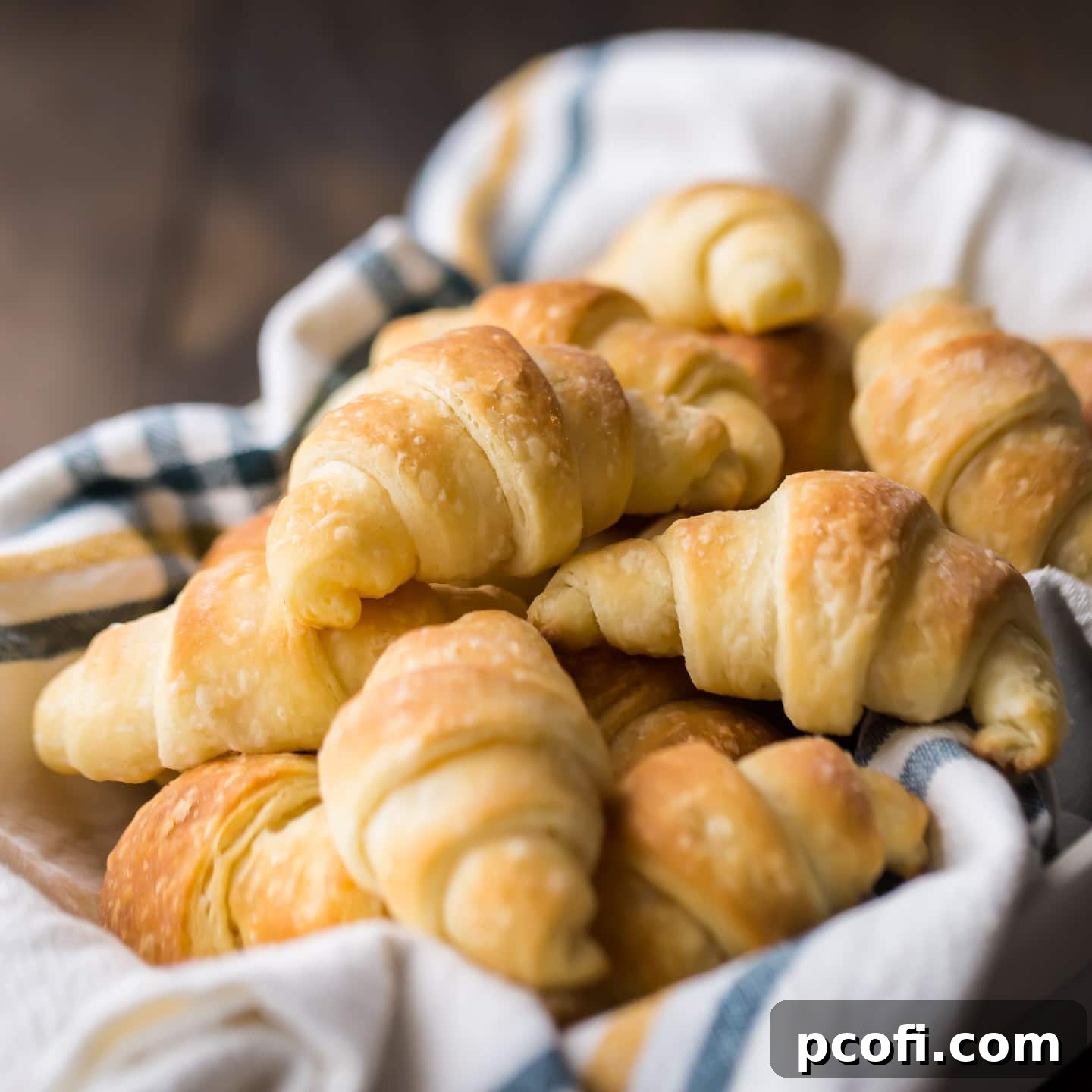
Light, Flaky, and Soft Homemade Crescent Rolls: Your Ultimate Guide to Perfect Dinner Bread
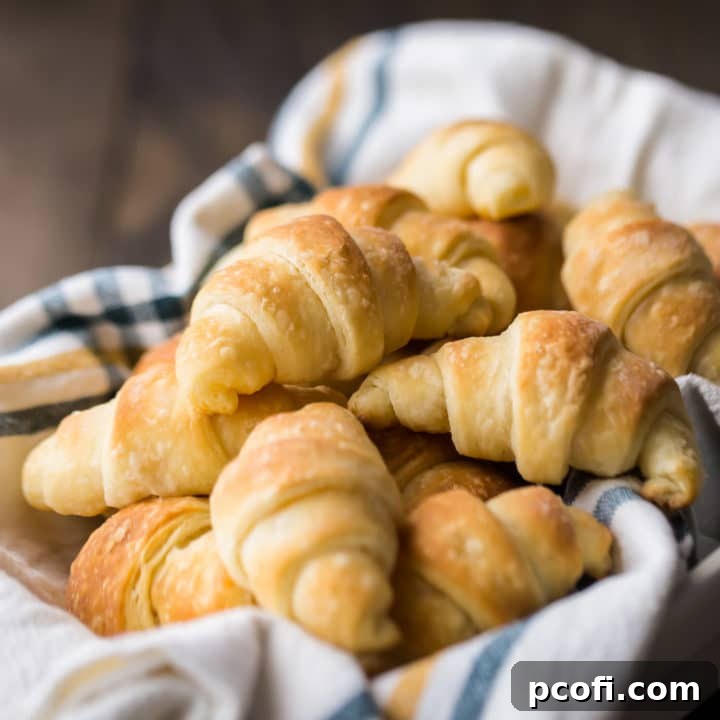
There’s an undeniable charm that comes with homemade bread, especially when it’s fresh from the oven, warm, and inviting. Among the myriad of bread varieties, homemade crescent rolls hold a special place. Imagine: delicate, golden-brown rolls, so irresistibly light and flaky that they practically melt in your mouth, leaving behind a subtle hint of yeasty sweetness and rich buttery flavor. They are the epitome of comfort food, transforming any dinner table into a more special occasion.
While store-bought dinner rolls offer convenience, nothing compares to the superior taste and texture of crescent rolls made from scratch. This recipe is designed to bring that exceptional experience into your kitchen, promising soft, puffy, and utterly delicious results with just a few simple ingredients. Forget about complex techniques; this guide simplifies the process, making homemade baking accessible to everyone. With a little bit of patience during the dough chilling and rising times, you’ll be on your way to crescent roll heaven in approximately 45 minutes of active preparation time.
Why Choose Homemade Crescent Rolls Over Store-Bought?
The difference between homemade and store-bought crescent rolls is truly night and day. Once you taste these light, airy, and deeply flavorful rolls, you’ll understand why. Homemade rolls boast an unparalleled freshness that pre-packaged versions simply cannot replicate. The aroma alone, as they bake to golden perfection, is enough to entice anyone into the kitchen.
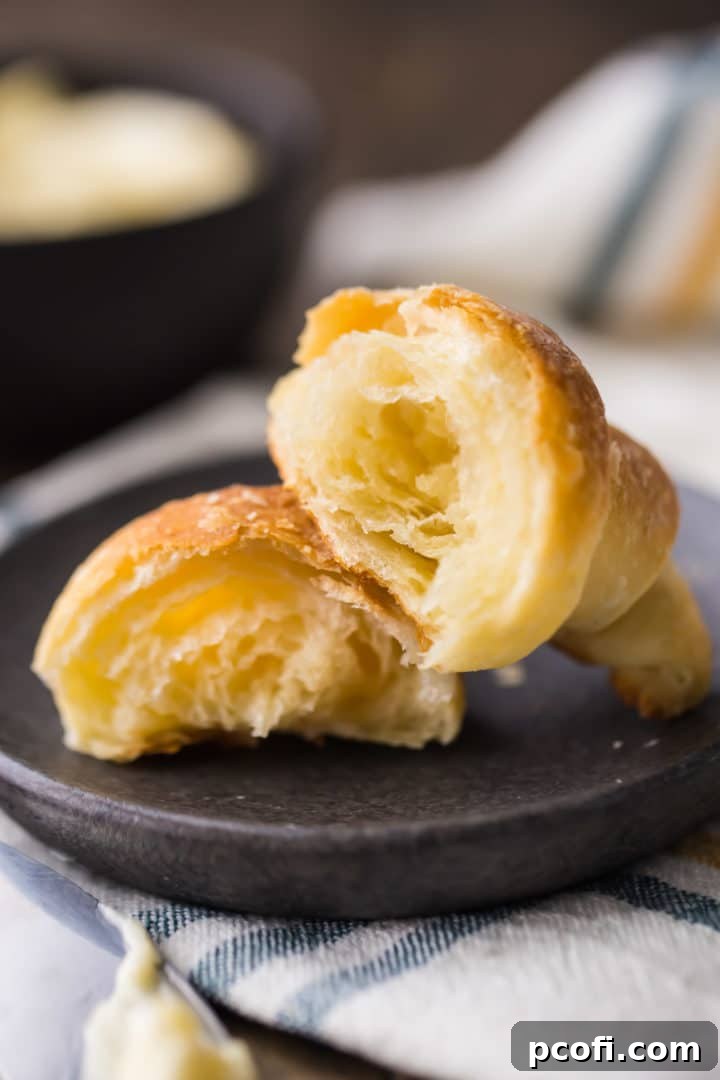
Beyond the delightful scent and taste, there’s a unique satisfaction in serving something you’ve created from scratch. Each bite offers a delicate crispness on the outside, giving way to an incredibly soft, tender, and subtly sweet interior. The layers, especially when achieved through our special technique, are a testament to the care and quality put into every roll. These homemade wonders elevate any meal, from a casual family dinner to a festive holiday spread, impressing guests with their gourmet appeal. Moreover, by controlling the ingredients, you ensure a wholesome and additive-free treat for your loved ones.
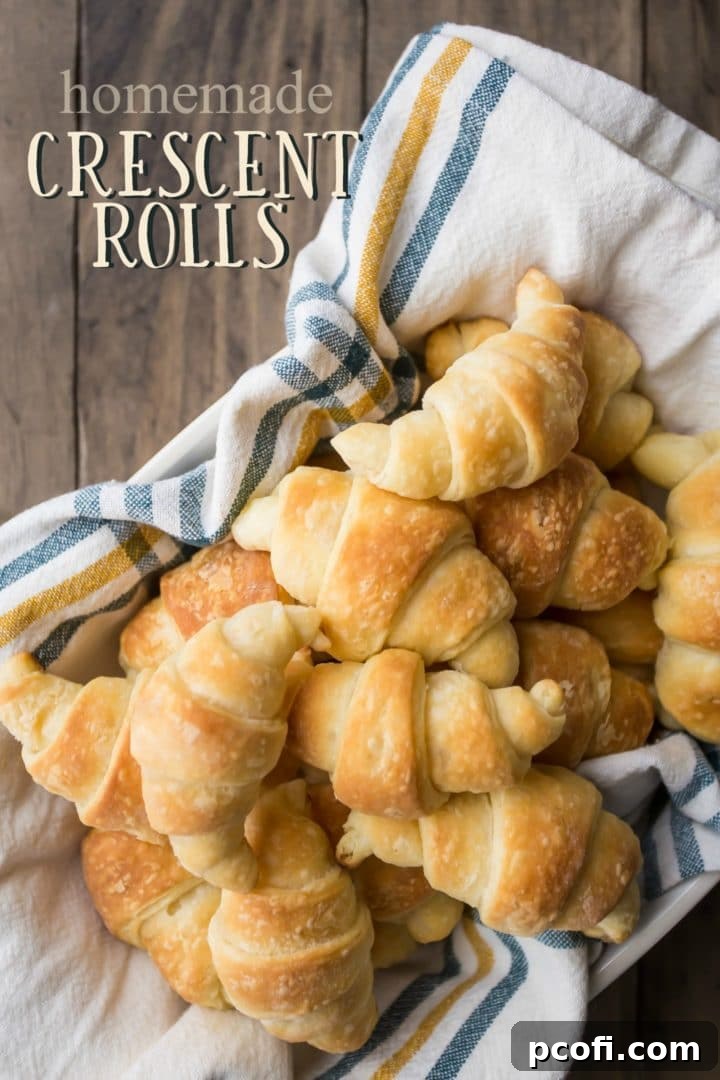
The Journey to Perfect Crescent Rolls: Step-by-Step Dough Preparation
Crafting the dough for these exquisite crescent rolls is surprisingly straightforward. You won’t even need a stand mixer for this recipe; a simple mixing bowl and a whisk will suffice. The magic begins with a few basic, high-quality ingredients that, when combined correctly, yield an exceptionally tender and flavorful dough.
Start by gathering your dry ingredients: all-purpose flour, granulated sugar, active dry yeast, and kosher salt. Place these into a large mixing bowl. A good whisking ensures that the yeast and salt are evenly distributed throughout the flour, which is crucial for a consistent rise and balanced flavor in your final product.
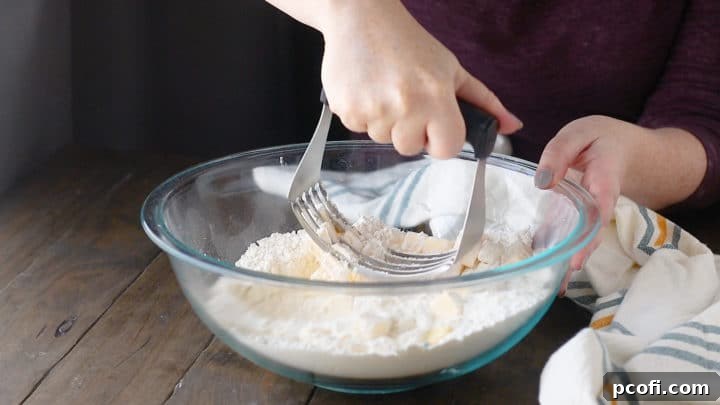
The next critical step involves incorporating the cold butter. Cut cold unsalted butter into small pieces and add it to your dry mixture. The key here is to “cut in” the butter until it resembles small, pea-sized pieces. This technique prevents the butter from fully blending with the flour, creating pockets of butter that will later melt and steam, forming those desirable flaky layers. A pastry blender is an ideal tool for this, but if you don’t have one, two knives or even a food processor can achieve the same result. The crucial detail is to ensure the butter remains cold throughout this process. Warm butter will integrate too much into the dough, leading to a less flaky texture.
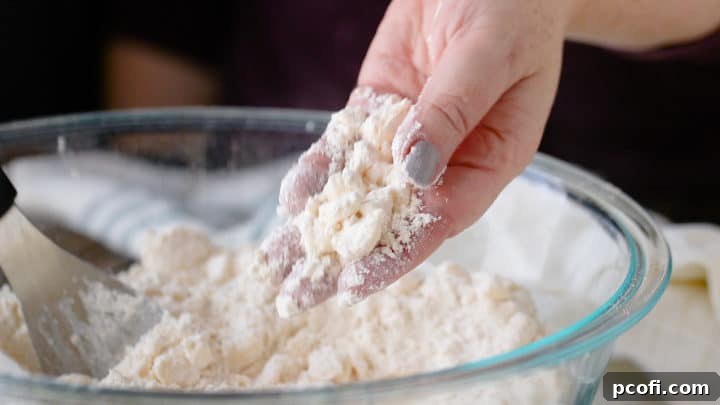
Once the butter is properly worked in, it’s time for the liquid components. In a separate small bowl, whisk together milk, water, and an egg. This blend adds moisture and richness, contributing to the rolls’ tender crumb. Pour this liquid mixture into the flour and butter, then stir everything until the dough comes together into a shaggy ball. Avoid overmixing; a slightly shaggy texture is perfectly fine. Finally, wrap the dough tightly in plastic wrap and refrigerate it for at least 30 minutes. This chilling period allows the gluten to relax, the flavors to meld, and most importantly, the butter to firm up again, preparing the dough for the next vital step.
The Secret to Unbelievably Flaky Crescent Rolls: Lamination Explained
This is where the magic truly happens, transforming simple dough into a masterpiece of flakiness. The secret lies in a technique called lamination, a method beloved by pastry chefs for creating beautifully layered baked goods. While it adds a few extra minutes to your active time, the results—hundreds of delicate, buttery layers—are undeniably worth the effort.
After your dough has been prepared and adequately chilled, lightly flour your work surface. Roll the dough out into a long rectangle, aiming for about 1/2-inch thickness. Now, here’s the lamination step: fold the dough into thirds, much like you would fold a letter. This action effectively stacks the butter and dough layers on top of each other. Once folded, rotate the dough 90 degrees, and repeat the rolling and folding process. You’ll want to perform this entire sequence – roll, fold, turn – about 3 to 5 times. Each repetition multiplies the layers within the dough, creating an intricate structure that will later expand into magnificent flakes during baking. The visual of this process, often demonstrated in baking videos, truly helps to grasp the technique.
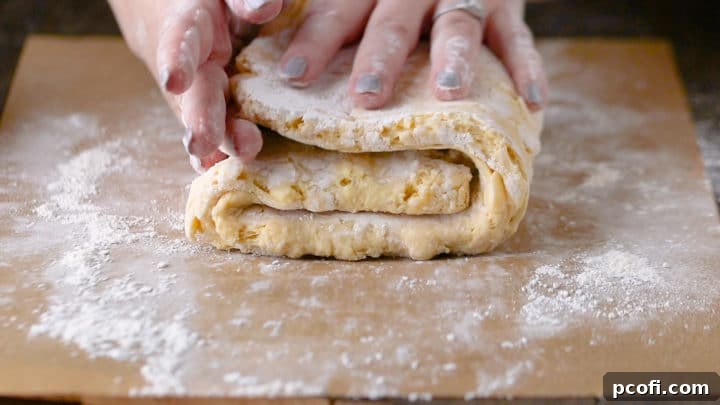
While this lamination step is highly recommended for achieving the ultimate flaky texture, it’s an optional enhancement. If you’re short on time, you can still produce fantastic crescent rolls by simply making the dough, rolling it out, cutting it, and shaping it. However, if you can spare those extra minutes for the lamination process, you will be rewarded with a pastry-like flakiness that elevates these dinner rolls to an extraordinary level. This technique is similar to what’s used in creating perfect pie crusts, Danish pastries, or puff pastry, and it truly makes all the difference in achieving that light, airy, and melt-in-your-mouth quality.
Shaping Perfection: Crafting Your Crescent Rolls
Once your beautifully laminated and chilled dough is ready, it’s time for the most visually rewarding part: shaping your homemade crescent rolls. This step allows you to transform the dough into its iconic, appealing form.
To make the process more manageable, begin by dividing your dough into three equal portions. Working with smaller sections prevents the dough from warming up too much and makes rolling easier. Take one portion and roll it out onto a lightly floured surface. The goal here is to achieve a long, thin rectangle, approximately 1/8-inch thick. Remember, the thinner you roll the dough, the more distinct and numerous the flaky layers in your finished crescent rolls will be. Precision isn’t paramount, but aim for consistency.
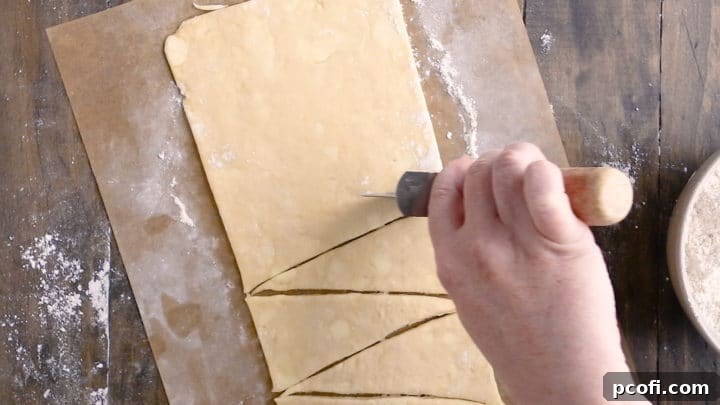
After you’ve rolled out your rectangle of dough, use a sharp knife or a pizza cutter to trim away any rough edges, creating clean lines. Then, cut the dough into long, somewhat skinny triangles. Ideally, you’re looking for triangles that are roughly 2 inches wide at their base and about 4 inches long. Don’t stress too much about exact measurements; a little variation adds to the rustic charm of homemade baking!
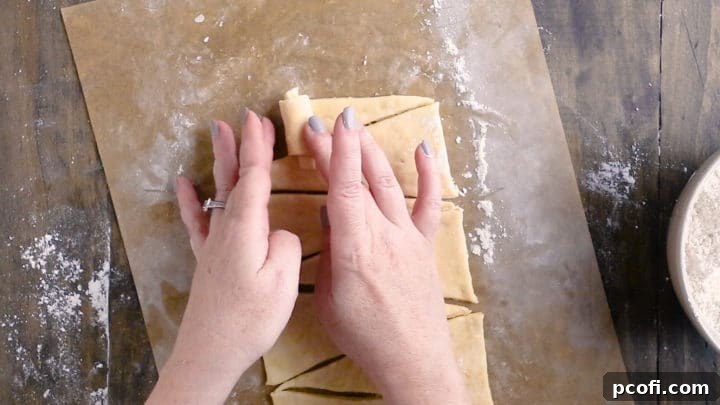
To shape the iconic crescent, pick up one of your triangles. Start at the wide end and gently roll the dough tightly, moving towards the pointy tip. Once rolled, ensure the pointy end is tucked securely underneath the roll; this prevents it from unfurling during baking. Finally, gently bend the roll into its characteristic curved crescent shape. Repeat this process with all your dough portions.
Once all your crescent rolls are shaped, place them onto baking sheets lined with parchment paper, leaving enough space for them to expand. Cover them loosely with plastic wrap and let them proof in a warm place until they’re puffy and nearly doubled in size. This proofing stage is essential for light, airy rolls. Afterward, they’re ready to be baked to a beautiful golden perfection, filling your home with an irresistible aroma.

Make-Ahead Magic: Preparing Crescent Rolls in Advance
One of the most appealing aspects of this homemade crescent roll recipe, especially for busy home bakers or during festive seasons, is its fantastic make-ahead potential. Preparing components in advance can significantly reduce stress on the day of serving, allowing you to enjoy fresh-baked rolls without the last-minute rush.
You can follow all the recipe steps right up to the point where the dough is cut and shaped into individual crescents. Once your charming little crescent shapes are laid out on a parchment-lined baking sheet, instead of proofing them immediately, simply cover the entire tray loosely with plastic wrap. Then, transfer the whole tray into the refrigerator. These unbaked, shaped crescent rolls can be stored in the fridge overnight or for up to 24 hours. This means you can do all the prep work the day before a big dinner or event.
A few hours before you plan to serve them, take the trays of unbaked rolls out of the refrigerator. Allow them to come to room temperature and then proceed with the proofing step as directed in the recipe. The rolls will rise beautifully, just as if they were freshly made. This method is incredibly convenient for holidays like Thanksgiving or Christmas, ensuring a batch of warm, homemade rolls is always just a bake away.
Storage and Reheating Tips for Freshness
Should you be fortunate enough to have any leftover homemade crescent rolls (a rare occurrence, we warn you!), proper storage ensures they remain as fresh and delightful as possible. Once baked and completely cooled, the best way to keep them soft is to place them in an airtight container or a zip-top bag. At room temperature, they will maintain their freshness for a few days. If you need them to last longer, storing them in the refrigerator can extend their shelf life to approximately one week.
For even longer preservation, crescent rolls freeze exceptionally well. You can freeze baked and cooled rolls by placing them in a freezer-safe zip-top bag. They will stay fresh in the freezer for several weeks, up to a month. When you’re ready to enjoy them, simply remove the desired number of rolls from the freezer. For optimal results, warm them gently in a preheated oven set to its lowest temperature (around 200-250°F or 90-120°C) for about 10 to 15 minutes. This slow reheating process helps to restore their soft texture and reawakens that wonderful fresh-baked aroma, making them taste almost as good as they did on day one.
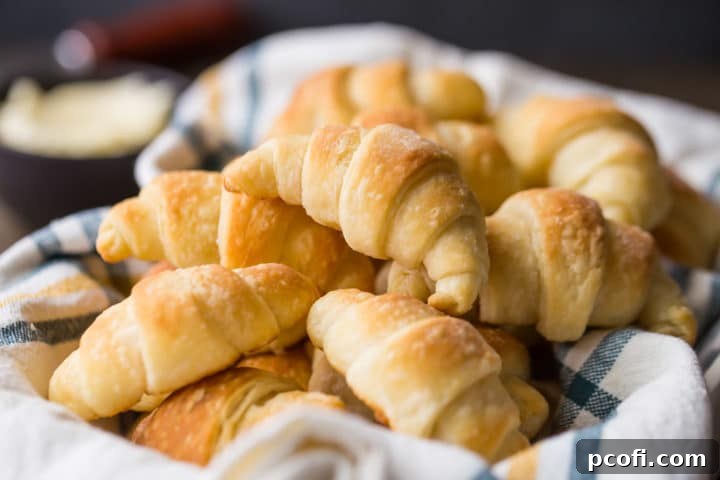
Your friends and family are undoubtedly going to adore these light, soft, and buttery homemade crescent rolls. They are more than just a side dish; they are a delightful centerpiece that elevates any meal. The joy of pulling apart a warm, flaky roll, knowing it was crafted with love from scratch, is an experience that truly enhances the dining table. Prepare for compliments and requests for the recipe!
Homemade Crescent Rolls: The Ultimate Recipe
This comprehensive recipe guides you through making the most delectable, flaky, and tender crescent rolls from scratch. Perfect for elevating any meal or special occasion.

- Yields: 28 rolls
- Prep Time: 45 mins
- Cook Time: 10 mins
- Chilling/Proofing Time: 2 hrs (minimum combined)
- Total Time: Approximately 2 hrs 55 mins (excluding inactive chilling)
Ingredients
- 2 3/4 cups (343.75 g) all-purpose flour
- 3 tablespoons (36 g) granulated sugar
- 2 teaspoons (6.22 g) dry active yeast
- 1 1/4 teaspoons (7.5 g) kosher salt
- 1 cup (227 g) unsalted butter, cold
- 1/2 cup (122 g) milk
- 1/4 cup (59.15 g) water
- 1 large (44 g) egg
Instructions
- Begin by combining the dry ingredients – flour, granulated sugar, active dry yeast, and kosher salt – in a generously sized mixing bowl. Whisk these dry ingredients thoroughly to ensure even distribution, laying the groundwork for a balanced and flavorful dough.
- Add the cold unsalted butter, cut into small cubes. Using a pastry blender or two knives, cut the butter into the flour mixture until only pea-sized pieces of butter remain. This step is crucial for achieving flaky layers.
- In a separate small bowl, whisk together the milk, water, and egg until well combined. Pour this liquid mixture into the dry ingredients in the large bowl.
- Stir everything together with a sturdy spoon or spatula until the dough gathers itself into a cohesive ball. Avoid overmixing; a slightly shaggy dough is desirable at this stage.
- Wrap the dough tightly in plastic wrap and place it in the refrigerator to chill for at least 30 minutes. This chilling period makes the dough easier to handle and helps keep the butter cold.
- Lightly dust a clean work surface with flour. Remove the chilled dough from the refrigerator and roll it out into a rough rectangle shape, approximately 1/2-inch thick.
- Fold the dough into thirds, similar to folding a letter. Bring one short end to the center, then fold the other short end over it.
- Rotate the folded dough 90 degrees. Roll it out into a rectangle again, and repeat the folding process.
- Repeat the rolling and folding process 3 to 5 more times. This lamination technique creates hundreds of butter and dough layers, which will result in exceptionally flaky crescent rolls. After the final fold, wrap the dough again in plastic wrap and chill for at least another 30 minutes.
- Divide the chilled dough into 3 equal portions. This makes the rolling and shaping process more manageable.
- Working with one portion at a time, roll it out into a long, thin rectangle, about 1/8-inch thick, approximately 16 inches long, and 5 inches wide. The thinner you roll the dough, the more layers your finished crescent rolls will have.
- Trim any rough edges from the rectangle, then cut the dough into skinny triangles. Aim for triangles that are about 2 inches wide at the base and approximately 4 inches long.
- To shape each crescent, start at the wide end of a triangle and gently roll it towards the pointy end. Ensure the pointy end is tucked securely underneath the roll to prevent it from unraveling during baking. Gently bend the rolled dough into the classic curved crescent shape.
- Place the shaped crescent rolls onto baking sheets lined with parchment paper, leaving some space between each roll. Loosely cover the baking sheets with plastic wrap and let the rolls rise in a warm spot for about 1 hour, or until they have become puffy and nearly doubled in size. This proofing step allows the yeast to activate and the rolls to achieve their light texture.
- Preheat your oven to 400 degrees F (200 degrees C).
- Bake the crescent rolls for 10 to 15 minutes, or until they are puffed up and beautifully golden brown on top.
Notes for Success
- Yeast: If using instant yeast instead of active dry yeast, you may find the rise time is slightly reduced (by 10-15 minutes). Always watch your dough, not the clock – it’s ready when it has doubled in volume.
- Freezing Unbaked Rolls: To prepare crescent rolls for future baking, shape them as directed, then place them on a parchment-lined baking sheet and freeze until solid. Once frozen, transfer them to a zip-top freezer bag for convenient storage. Unbaked, frozen rolls can be kept in the freezer for up to 2 weeks. When ready to bake, thaw them at room temperature, allow them to proof until doubled in size, and then bake as instructed in the recipe.
- Achieving the Best Flakiness: The key to incredibly flaky crescent rolls is keeping the butter cold throughout the dough preparation and lamination process. If the butter melts and incorporates too much into the dough, your rolls will be less flaky and more bread-like. If your kitchen is warm, consider chilling your mixing bowl and utensils, and work quickly to keep the butter firm.
Nutrition Information (per serving, estimated)
- Calories: 115 kcal
- Carbohydrates: 11 g
- Protein: 2 g
- Fat: 7 g
- Saturated Fat: 4 g
- Cholesterol: 23 mg
- Sodium: 109 mg
- Potassium: 31 mg
- Sugar: 1 g
- Vitamin A: 220 IU
- Calcium: 10 mg
- Iron: 0.6 mg
Cuisine & Course
- Cuisine: American
- Course: Side Dish, Bread, Appetizer
Tried this recipe? Share your creations! Mention @bakingamoment on Instagram or tag #bakingamoment.