Master the Art of Cutting a Fresh Pineapple into Perfect Chunks: An Easy, Step-by-Step Guide
Welcome, fellow food enthusiasts! Today, we’re diving into a kitchen skill that’s not only incredibly satisfying but also a fantastic way to save money and enjoy the vibrant taste of fresh fruit: learning how to cut a whole pineapple. Many of us are accustomed to reaching for pre-cut pineapple in the grocery store, often paying a premium for the convenience. However, a whole, fresh pineapple is not only significantly more cost-effective—often just a few dollars—but also offers unparalleled flavor and nutritional benefits. They’re readily available year-round, making them a perfect addition to your culinary repertoire.
Forget the notion that cutting a pineapple is a daunting task reserved for professional chefs. With the right technique, you can transform a whole pineapple into beautiful, bite-sized chunks in a matter of minutes. In fact, many can do it in under four minutes with a bit of practice! This comprehensive guide, complete with a detailed video tutorial, will walk you through every step, ensuring you gain the confidence to tackle any pineapple that comes your way. Get ready to enjoy the sweet, tangy goodness of fresh pineapple in your smoothies, snacks, salads, and more!
Why Choose Fresh Pineapple Over Canned or Pre-Cut?
The choice between fresh, canned, or pre-cut pineapple might seem trivial, but the differences are significant, especially when it comes to taste, nutrition, and value. Opting for a whole fresh pineapple offers numerous advantages:
- Superior Flavor and Texture: Fresh pineapple boasts a bright, sweet-tart flavor and a juicy, crisp texture that simply cannot be replicated by canned versions. Canned pineapple often loses some of its natural zest and crispness due to processing and is typically packed in syrup, adding unnecessary sugars. Pre-cut pineapple, while convenient, can quickly lose its freshness, becoming drier and less flavorful the longer it sits.
- Maximized Nutritional Value: Pineapples are packed with vitamins, minerals, and enzymes, most notably Bromelain, which aids digestion and has anti-inflammatory properties. When you cut a pineapple yourself, you ensure you’re getting the fruit at its peak freshness, preserving its maximum nutritional content. Processing for canned varieties can diminish some of these delicate nutrients.
- Cost-Effectiveness: This is perhaps one of the most compelling reasons to learn how to cut a pineapple at home. Pre-cut pineapple can cost upwards of $9.99 per pound or more, making it a luxurious item. A whole fresh pineapple, on the other hand, typically costs just a few dollars, yielding several pounds of delicious fruit for a fraction of the price. This saving adds up considerably over time, especially if pineapple is a regular part of your diet.
- Versatility in Use: With a whole pineapple, you have the freedom to cut it into any shape or size you desire – chunks for snacking, rings for grilling, spears for fruit platters, or crushed for baking. You’re not limited by the pre-packaged cuts, opening up a world of culinary possibilities.
- Reduced Waste: By purchasing whole fruit, you contribute to reducing plastic waste often associated with pre-packaged produce. Plus, you control what goes into your body, ensuring no unknown preservatives or additives are present.
Choosing the Perfect Ripe Pineapple
The secret to delicious pineapple starts with selecting the right one at the store. Here’s how to pick a perfectly ripe, sweet, and juicy pineapple:
- Smell the Bottom: This is arguably the most reliable indicator of ripeness. Gently sniff the base of the pineapple. A ripe pineapple will have a sweet, distinctive pineapple aroma. If there’s no scent, it’s likely under-ripe. If it smells fermented or vinegary, it might be over-ripe.
- Check the Color: While not the sole indicator, the color can offer clues. Look for a pineapple with a golden-yellow hue around the base, gradually turning more yellow or orange towards the top. A completely green pineapple might be under-ripe, though some varieties stay greener even when ripe. Avoid pineapples with brown, soft spots, or visible mold.
- Feel for Firmness: Gently squeeze the pineapple. It should feel firm but yield slightly with gentle pressure, similar to a ripe avocado. Avoid pineapples that are rock-hard (under-ripe) or mushy (over-ripe).
- Tug a Leaf: Try to pull one of the center leaves from the crown. If it pulls out with relative ease, the pineapple is likely ripe. If it’s firmly stuck, it might need more time. If it comes out too easily and the leaves look dry, it might be over-ripe.
- Assess the Weight: A ripe pineapple should feel heavy for its size, indicating it’s full of juice.
Armed with these tips, you’ll be able to confidently select a pineapple that promises maximum flavor and sweetness for your culinary creations.
Essential Tools for Cutting a Pineapple Like a Pro
You don’t need fancy gadgets to cut a pineapple efficiently. A few basic kitchen tools are all you require:
- Sharp Chef’s Knife: This is the most crucial tool. A large, sharp chef’s knife makes quick work of the tough skin and dense flesh. A dull knife will be harder to use and potentially more dangerous.
- Sturdy Cutting Board: A large, stable cutting board is essential to provide a safe and secure surface while cutting. Consider one with a groove to catch any pineapple juice.
- Paring Knife (Optional): A smaller knife can be helpful for removing any stubborn “eyes” or for more intricate trimming, though a skilled hand with a chef’s knife can often manage without one.
- Pineapple Corer (Optional): While not necessary for a basic cut, a pineapple corer can quickly remove the core and create perfect rings if that’s your preferred cut. However, our method will show you how to core it with just a knife.
Step-by-Step Guide: How to Cut a Pineapple Perfectly
Follow these straightforward steps, and you’ll be enjoying fresh pineapple in no time. We’ve broken down the process to make it as simple as possible:
- Preparation: Wash and Stabilize.
Before you begin, thoroughly wash the outside of the pineapple under cool running water to remove any dirt or potential residues. Place the pineapple on your sturdy cutting board, laying it on its side. - Trim the Ends: Top and Bottom.
Using your sharp chef’s knife, carefully slice off the top (crown) and the bottom (base) of the pineapple. Aim to cut about 1/2 to 1 inch from each end, creating two flat, stable surfaces. This allows the pineapple to stand upright securely on your cutting board. Discard the ends. - Remove the Skin: Vertical Slices.
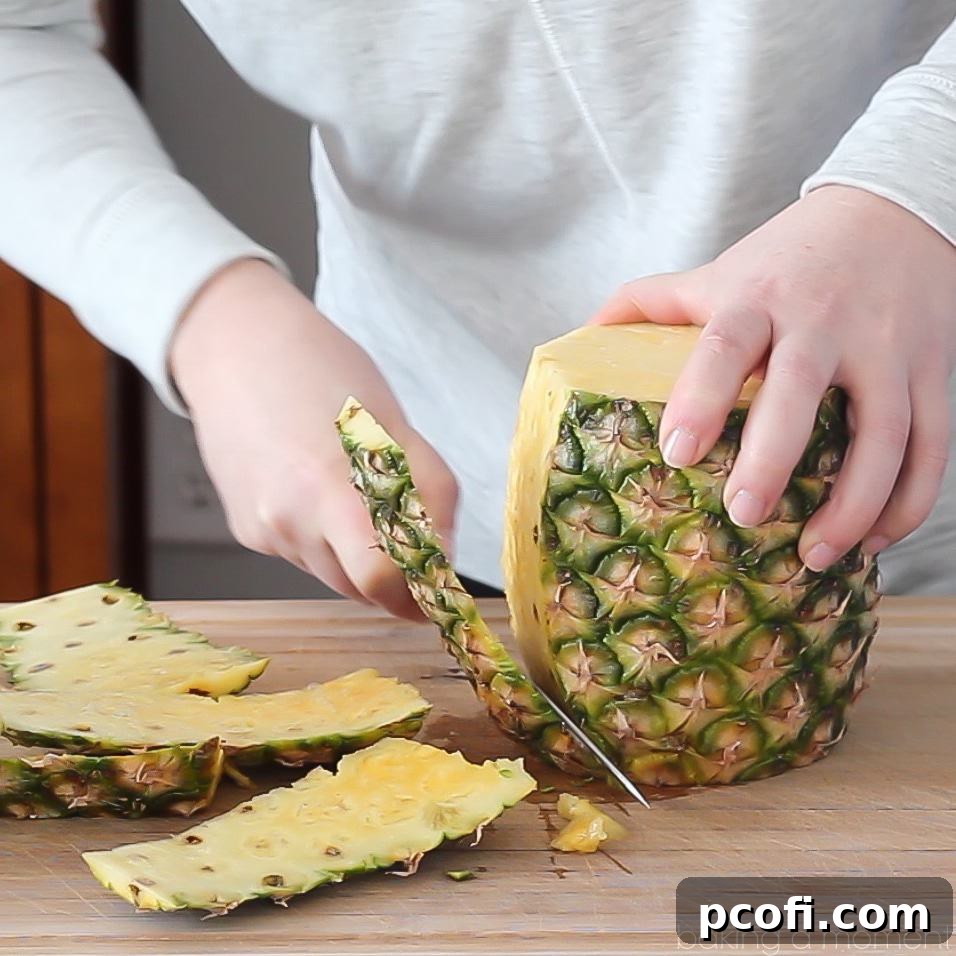
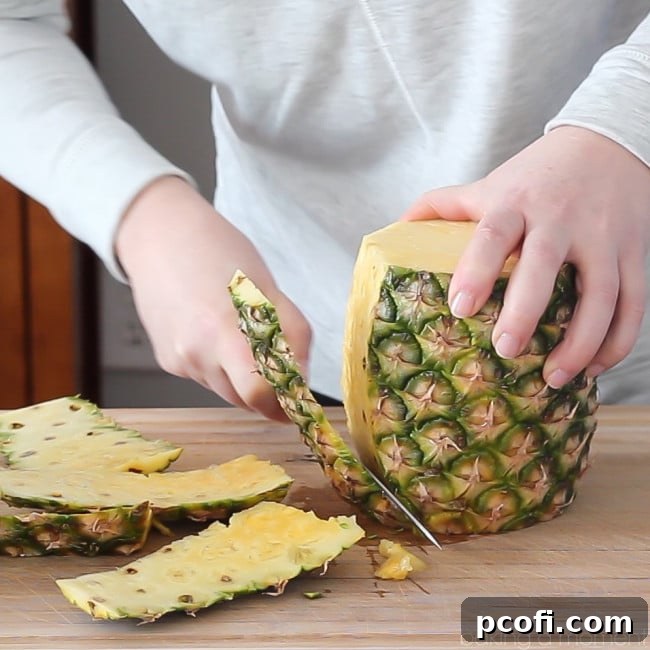
Stand the pineapple upright on one of its newly flattened ends. Now, carefully slice downwards, following the natural curve of the pineapple, to remove the tough, spiky skin. Work your way around the entire pineapple, removing strips of skin. Try to keep your cuts shallow to maximize the edible fruit, but don’t worry about getting every “eye” at this stage. Once all the skin is removed, you’ll notice small, brownish “eyes” or pores arranged in diagonal rows across the fruit. - Remove the “Eyes” (Optional, but Recommended for Aesthetics).
While you can leave the eyes, most prefer to remove them for a smoother eating experience. To do this efficiently, notice the diagonal lines formed by the “eyes.” Using your chef’s knife or a paring knife, make two diagonal cuts along one row of eyes, creating a shallow V-shaped trench. Lift out the strip containing the eyes. Repeat this process around the entire pineapple, creating a spiral pattern of V-shaped grooves. This technique is much more efficient than picking out individual eyes. - Core the Pineapple: The Heart of the Matter.
The core of a pineapple is fibrous and tough, so it’s best removed. There are a couple of popular methods:- Method 1 (Rings/Wedges): Lay the skinned pineapple on its side. Slice the pineapple into thick rounds (about 1/2 to 3/4 inch thick). Then, use a small cookie cutter or a paring knife to cut out the central core from each ring. Alternatively, you can slice the pineapple lengthwise into quarters, then trim away the core from the inner edge of each quarter.
- Method 2 (Chunks – Recommended): Stand the pineapple upright again. Slice it in half lengthwise. Then slice each half lengthwise again, creating four long spears. Lay each spear on its side and carefully cut out the triangular-shaped core from the inner edge of each spear.
You now have four cored pineapple spears, ready for dicing.
- Slice and Dice: Getting Your Chunks.
Take each cored pineapple spear and slice it lengthwise into desired thickness (e.g., two or three long strips). Then, turn the strips and cut across them to create your perfect bite-sized pineapple chunks. You can make them as large or as small as you prefer for snacking, smoothies, or recipes.
Congratulations! You’ve successfully broken down a whole fresh pineapple. Gather your delicious chunks and prepare to enjoy the fruits of your labor!
Watch the Video Tutorial for Visual Guidance
While our step-by-step written instructions are comprehensive, sometimes seeing is believing! This short, efficient video tutorial will visually demonstrate each cutting technique, making it even easier to follow along. Watch as we transform a whole pineapple into perfect pieces in just over two minutes, highlighting the speed and simplicity of this process. It’s the perfect complement to our detailed guide, ensuring you master the skill quickly.
Storing Your Freshly Cut Pineapple
Once you’ve cut your pineapple, proper storage is key to maintaining its freshness and flavor:
- Airtight Container: Place your pineapple chunks in an airtight container. This prevents them from absorbing odors from other foods in the refrigerator and keeps them from drying out.
- Refrigeration: Store the container in the refrigerator. Freshly cut pineapple will typically last for 3-5 days when stored correctly.
- Freezing for Longer Storage: For longer preservation, freeze pineapple chunks. Spread them in a single layer on a baking sheet and freeze until solid. Once frozen, transfer them to a freezer-safe bag or container. Frozen pineapple is excellent for smoothies and can last for several months.
- Uncut Pineapple Storage: Whole, uncut pineapples can be stored at room temperature for a few days. Once ripe, it’s best to consume them or refrigerate them within 2-3 days to prevent over-ripening.
Creative Ways to Enjoy Your Fresh Pineapple
Now that you have a bounty of fresh pineapple, the possibilities are endless! Here are just a few ideas to inspire you:
- Healthy Snacking: Enjoy the chunks plain as a refreshing, healthy snack.
- Smoothies and Juices: Add fresh or frozen pineapple to your favorite smoothie recipes for a tropical twist. It pairs wonderfully with spinach, banana, coconut water, or mango.
- Fruit Salads: Incorporate pineapple into vibrant fruit salads with berries, melon, grapes, and citrus.
- Grilling: Grilled pineapple rings or spears are a fantastic side dish for savory meals or a delicious dessert. The heat caramelizes the sugars, enhancing its sweetness.
- Salsas and Savory Dishes: Diced pineapple makes an excellent addition to savory salsas (especially with fish or chicken tacos), stir-fries, or as a topping for pork or ham.
- Desserts: Use pineapple in upside-down cakes, tarts, sorbets, or even homemade popsicles.
- Marinades: The Bromelain in pineapple can act as a natural meat tenderizer, making it a great ingredient for marinades.
The Nutritional Power of Pineapple
Beyond its delicious taste, pineapple is a nutritional powerhouse. It’s low in calories, high in water content, and packed with essential vitamins and minerals:
- Vitamin C: A single serving provides a significant portion of your daily Vitamin C, boosting your immune system and acting as a powerful antioxidant.
- Manganese: Crucial for bone health, metabolism, and antioxidant defense.
- Bromelain: This unique enzyme complex found in pineapple helps in protein digestion, reduces inflammation, and may aid in recovery after strenuous exercise.
- Dietary Fiber: Supports digestive health and helps maintain bowel regularity.
- B Vitamins: Including B1 (thiamine) and B6 (pyridoxine), which are important for energy production and brain function.
Incorporating fresh pineapple into your diet is a flavorful way to support your overall health and well-being.
Conclusion: Master the Art of Pineapple Cutting Today!
As you can see, cutting a whole fresh pineapple is far from complicated. With a sharp knife, a stable cutting board, and a few minutes of your time, you can effortlessly transform this tropical fruit into perfectly prepared pieces. By mastering this simple kitchen skill, you’ll unlock superior flavor, maximize nutritional benefits, and significantly cut down on your grocery bill. Say goodbye to expensive pre-cut versions and hello to the vibrant, juicy taste of fresh, homemade pineapple chunks.
So, next time you’re at the store, confidently grab a whole pineapple. Follow our guide, watch the video, and you’ll soon be enjoying the unparalleled deliciousness of freshly cut pineapple, ready for any culinary adventure. Happy slicing!
