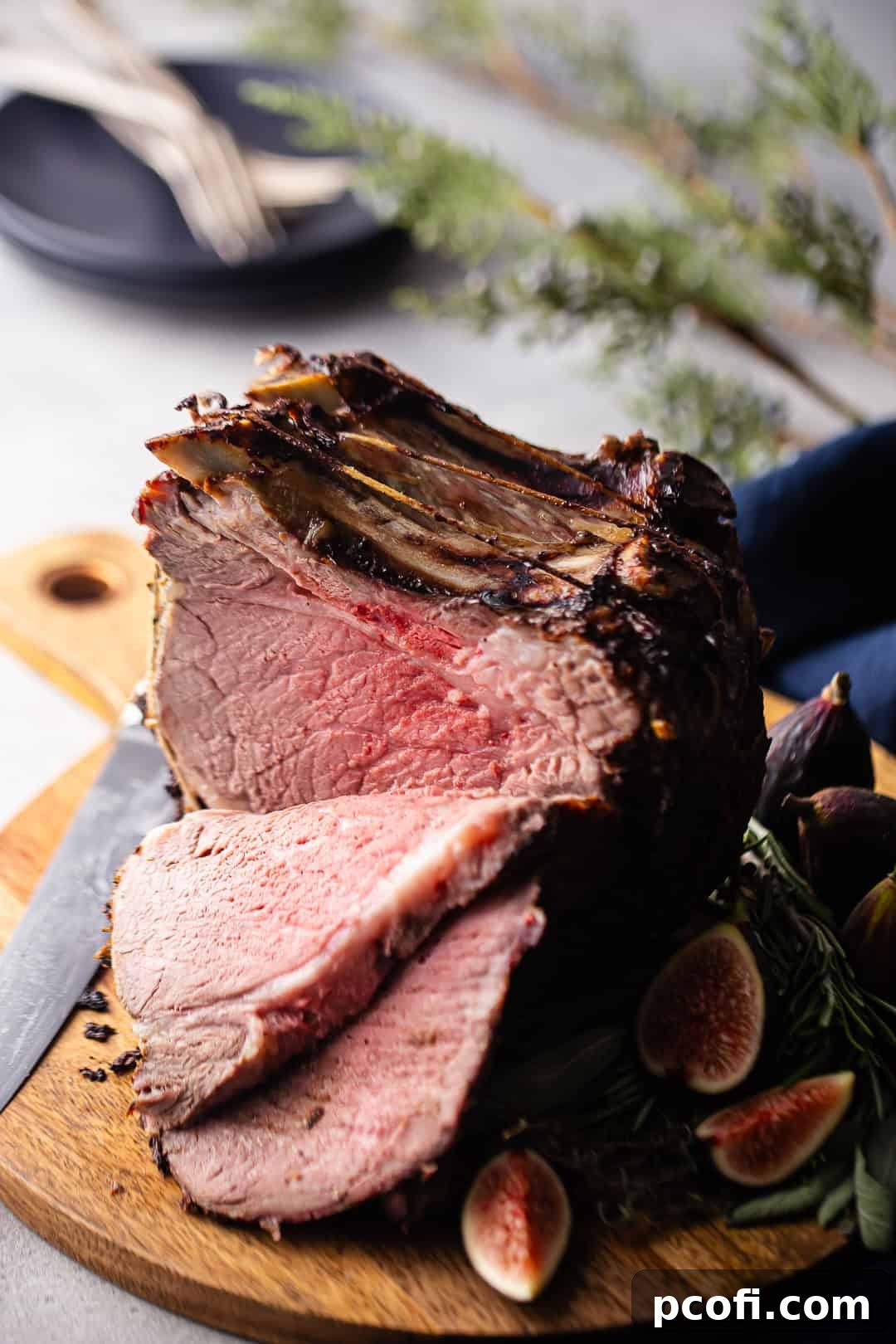
Elevate your next gathering into an unforgettable culinary experience with this exquisite Standing Rib Roast. Renowned for its unparalleled tenderness, succulent juiciness, and a perfectly seasoned crust, this prime rib recipe transforms any meal, whether it’s a festive holiday feast or a cherished Sunday dinner, into a truly celebratory occasion. Despite its impressive appearance, preparing this standing rib roast is surprisingly straightforward, requiring minimal hands-on effort and consistently delivering deliciously impressive results that will leave your guests in awe.
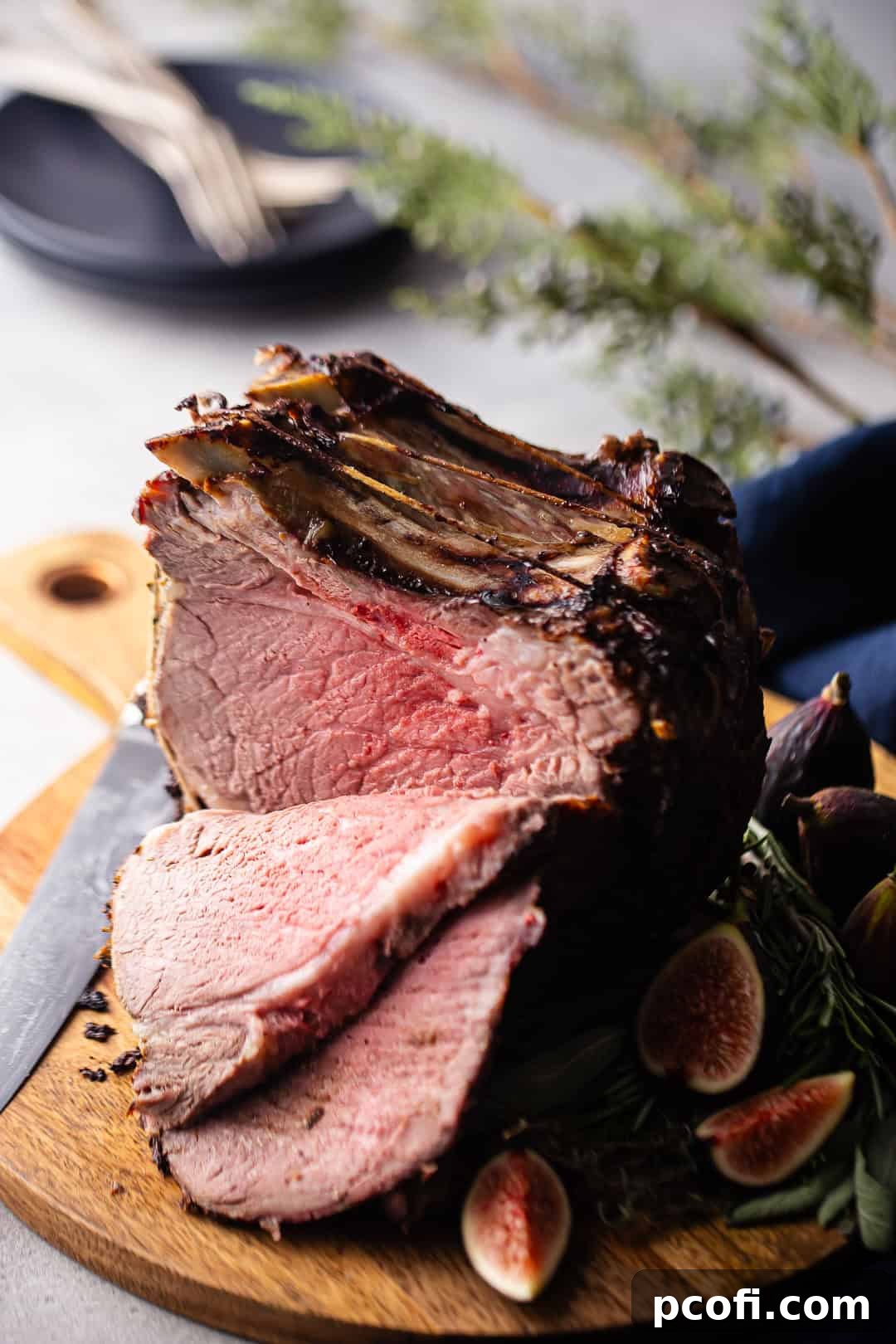
Table of Contents
- Why This Standing Rib Roast Recipe is a Must-Try
- Essential Ingredients for a Flawless Standing Rib Roast
- Step-by-Step Perfection: Crafting Your Standing Rib Roast
- Expert Tips for the Perfect Rib Roast
- Frequently Asked Questions About Prime Rib
- More Celebratory Holiday Recipes
Jump to Recipe
The concept of cooking a grand prime rib, often referred to as a standing rib roast, can be daunting for many home cooks. It’s understandable; this is an investment piece of meat, and the pressure to get it right is real. However, the secret to a perfect standing rib roast lies in two fundamental aspects: sourcing a high-quality cut of beef and, crucially, avoiding overcooking. This isn’t as challenging as it sounds, especially when you arm yourself with the right tools and knowledge. A reliable meat thermometer, for instance, is not just a helpful gadget; it’s an indispensable component for success, ensuring your roast reaches that coveted tender, juicy, and perfectly pink internal temperature every single time.
In this comprehensive guide, we’ll demystify the process, providing you with all the insights and techniques needed to prepare a restaurant-quality standing rib roast right in your own kitchen. From selecting the best ingredients to mastering the roasting process and offering expert tips for carving and serving, we’ll cover every detail. Get ready to impress your family and friends with a centerpiece dish that’s as delectable as it is elegant.
Why This Standing Rib Roast Recipe is a Must-Try
- Unrivaled Flavor Profile: This recipe creates a magnificent garlic-and-herb crust that not only locks in moisture but infuses every bite of the beef with an aromatic, deep, and savory flavor. The blend of fresh herbs and pungent garlic penetrates the meat, creating a symphony of tastes that truly stands out.
- Consistently Tender and Juicy: By employing a slow-roasting method, we ensure that the beef cooks gently, resulting in an incredibly tender texture that practically melts in your mouth. The controlled cooking also guarantees a beautiful, rosy pink center, indicative of a perfectly cooked prime rib.
- Surprisingly Simple to Prepare: Despite its gourmet appeal, this recipe calls for just a few basic ingredients and fresh herbs for the flavorful paste. The preparation is straightforward, making it accessible even for those who might be new to roasting large cuts of meat. Most of the work is done by the oven, leaving you free to enjoy your guests.
- Visually Stunning Table Centerpiece: A beautifully cooked standing rib roast is more than just a meal; it’s a showstopper. Its impressive presentation and bold flavors make it the quintessential centerpiece for any festive gathering, guaranteeing gasps of delight and satisfied smiles around the table.
- Effortless Elegance: This dish exudes sophistication without requiring advanced culinary skills. It’s the ideal choice for hosts who want to create a memorable dining experience with minimal stress and maximum impact.
Essential Ingredients for a Flawless Standing Rib Roast
Achieving a spectacular standing rib roast begins with selecting the right ingredients. Each component in this recipe plays a vital role in developing the deep flavors and achieving the perfect texture. For the full list of quantities, please refer to the detailed recipe card at the bottom of this page.
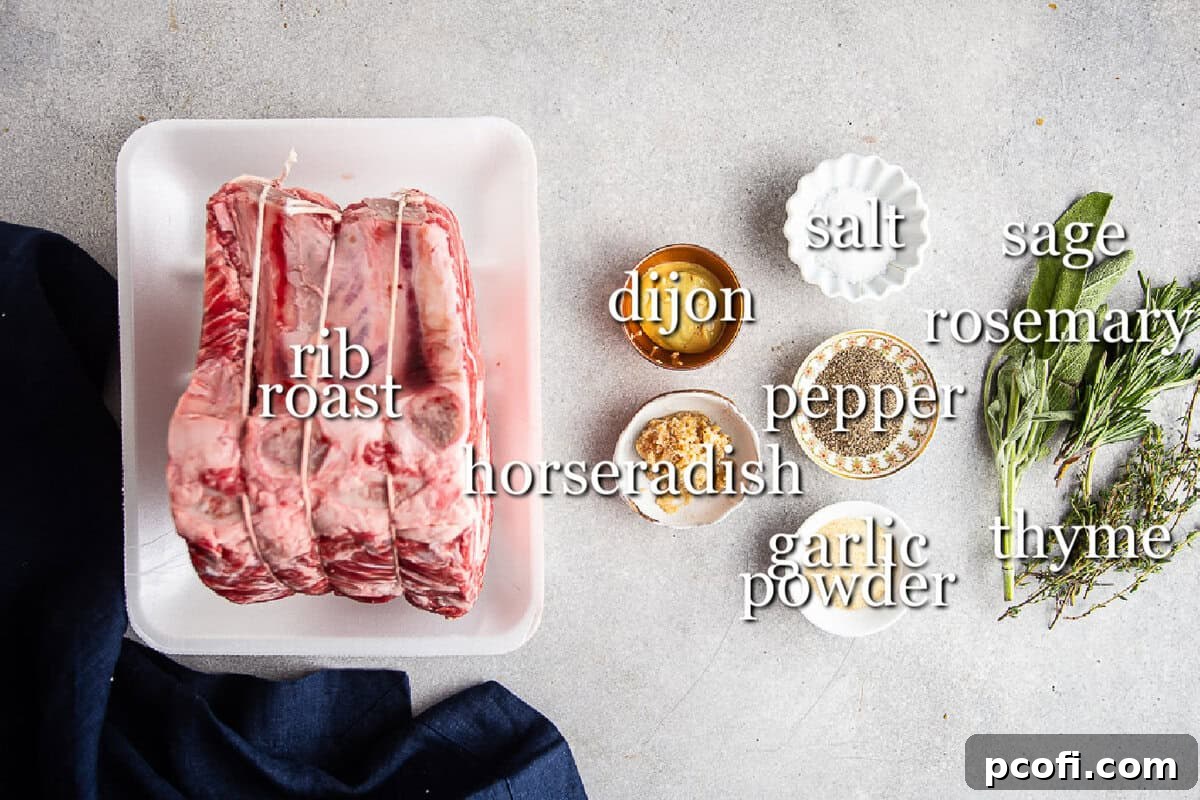
- Kosher Salt: This is a non-negotiable for seasoning large cuts of meat. Its coarser texture and slower dissolution rate allow for better absorption into the meat, enhancing flavor without making it overly salty. Avoid substituting with regular table salt, which has a finer grain and stronger salinity, leading to uneven seasoning.
- Garlic Powder (Granulated): Opt for granulated garlic powder over finely powdered versions for better distribution and less clumping. Ensure it’s fresh for maximum potency; stale garlic powder loses much of its aromatic punch. It provides a foundational savory note that complements the rich beef.
- Fresh Rosemary: Finely chop fresh rosemary leaves to release their fragrant, pine-like, slightly peppery flavor. Fresh herbs are crucial here, as their essential oils bring a vibrant aroma and taste that dried herbs simply cannot replicate to the same extent.
- Fresh Thyme Leaves: Carefully pick the delicate leaves off their woody stems. Thyme offers an earthy, minty, and slightly citrusy undertone that pairs beautifully with beef, contributing to the complex herbaceous crust.
- Fresh Sage Leaves: Sage brings a warm, savory, slightly peppery, and aromatic flavor that is classic with roasted meats. If fresh sage is unavailable, a good quality rubbed sage can be used as a substitute, but remember that dried herbs are more concentrated, so use about one-third less.
- Prepared Horseradish: This ingredient provides a subtle, zesty kick that cuts through the richness of the beef without overpowering its natural flavor. If you only have raw horseradish, grate it finely and mix it with a small amount of mayonnaise or sour cream to achieve a similar consistency and mildness.
- Dijon Mustard: There’s no true substitute for Dijon mustard in this recipe. Its tangy, sharp, and slightly spicy notes act as a superb emulsifier for the herb paste and contribute a depth of flavor that yellow mustard simply cannot replicate. It also aids in creating that beautiful crust.
- Extra-Virgin Olive Oil: Beyond helping to bind all the herb paste ingredients together, olive oil assists in achieving a beautiful golden-brown crust on the roast. Its fruity, peppery notes also subtly enhance the overall flavor profile of the rub.
- Standing Rib Roast: This is the star of the show. Always aim to buy the highest quality roast you can find. A good butcher is your best friend here; ask them to trim any excess fat and, crucially, to tie the roast for you. Tying ensures even cooking and helps the roast maintain its majestic shape, making your prep work significantly easier. Look for a roast with good marbling for ultimate juiciness and flavor.
Step-by-Step Perfection: Crafting Your Standing Rib Roast
Follow these detailed steps to ensure your standing rib roast turns out tender, juicy, and perfectly cooked, with a savory herb crust that everyone will adore. Visual guides are essential, and we’ve included images to help you through each stage.
Step 1: Prepare the Oven and Roast
Begin by preheating your oven to a blazing 500°F (260°C). This initial high heat is critical for creating that coveted crispy, browned crust on the exterior of the roast. While the oven heats, place your trimmed and tied standing rib roast into a large, sturdy roasting pan or a suitable baking dish. Ensure the roast is at room temperature before it goes into the oven; this promotes more even cooking throughout the meat.
Step 2: Assemble the Aromatic Herb Paste
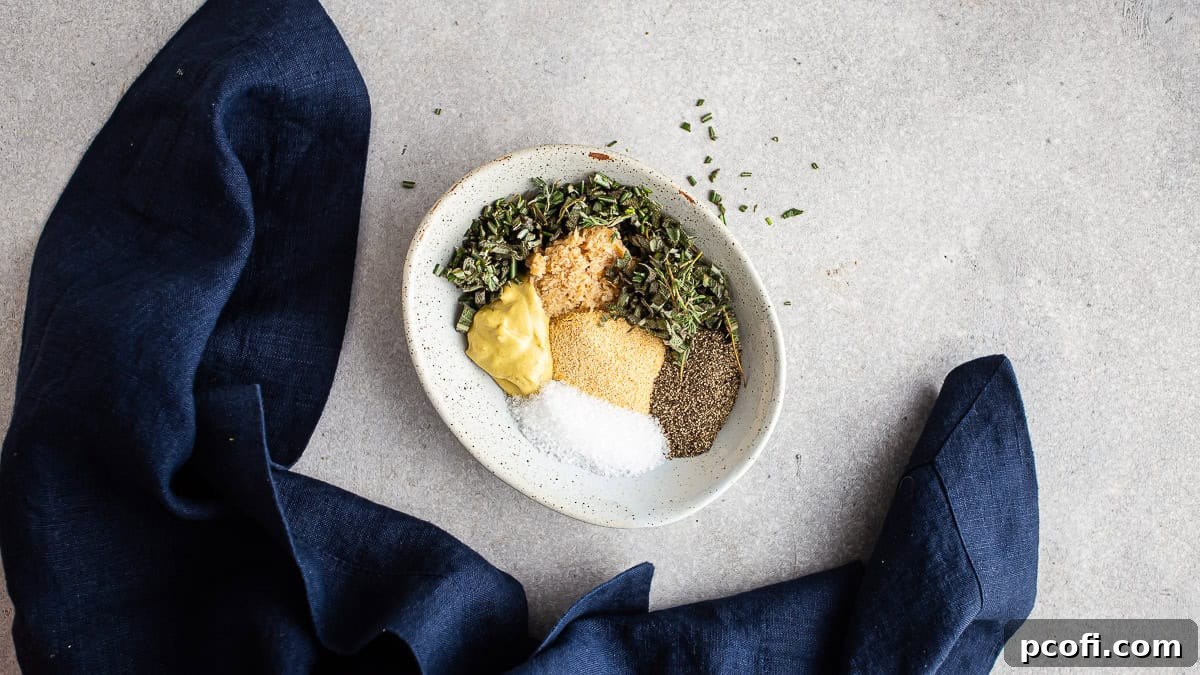
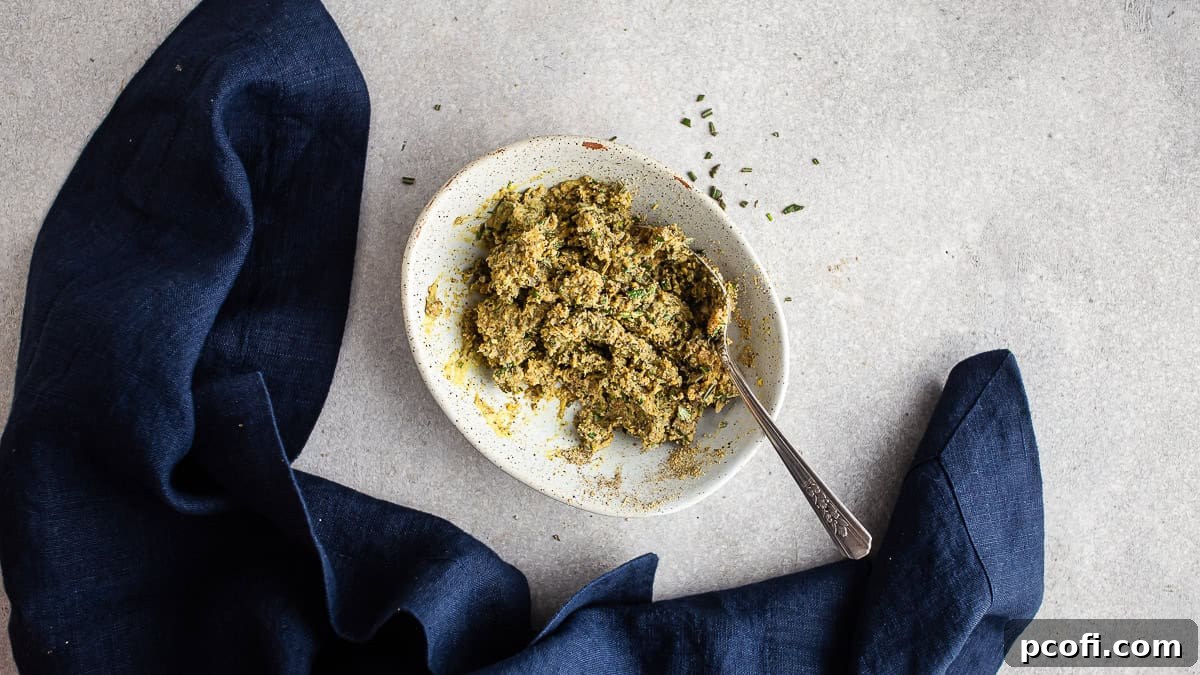
In a small mixing bowl, combine all the ingredients for your flavorful herb paste: the kosher salt, granulated garlic powder, finely minced fresh rosemary leaves, fresh thyme leaves, fresh sage leaves, prepared horseradish, Dijon mustard, and extra-virgin olive oil. This combination of ingredients will create a powerful flavor enhancer for your prime rib.
Step 3: Mix to Form a Thick Paste
Using a spoon or a small spatula, thoroughly mix all the contents of the bowl. Continue mixing until all the ingredients are well incorporated and you achieve a thick, uniform paste. This ensures that the flavors are evenly distributed and will adhere well to the surface of the roast.
Step 4: Generously Coat the Roast
Take the aromatic herb paste and generously spread it over the entire surface of the standing rib roast. Use your hands or a spatula to ensure an even coating. Don’t be shy; cover all sides, including the ends, to maximize flavor and crust development. This layer will become a flavorful, golden-brown crust during roasting.
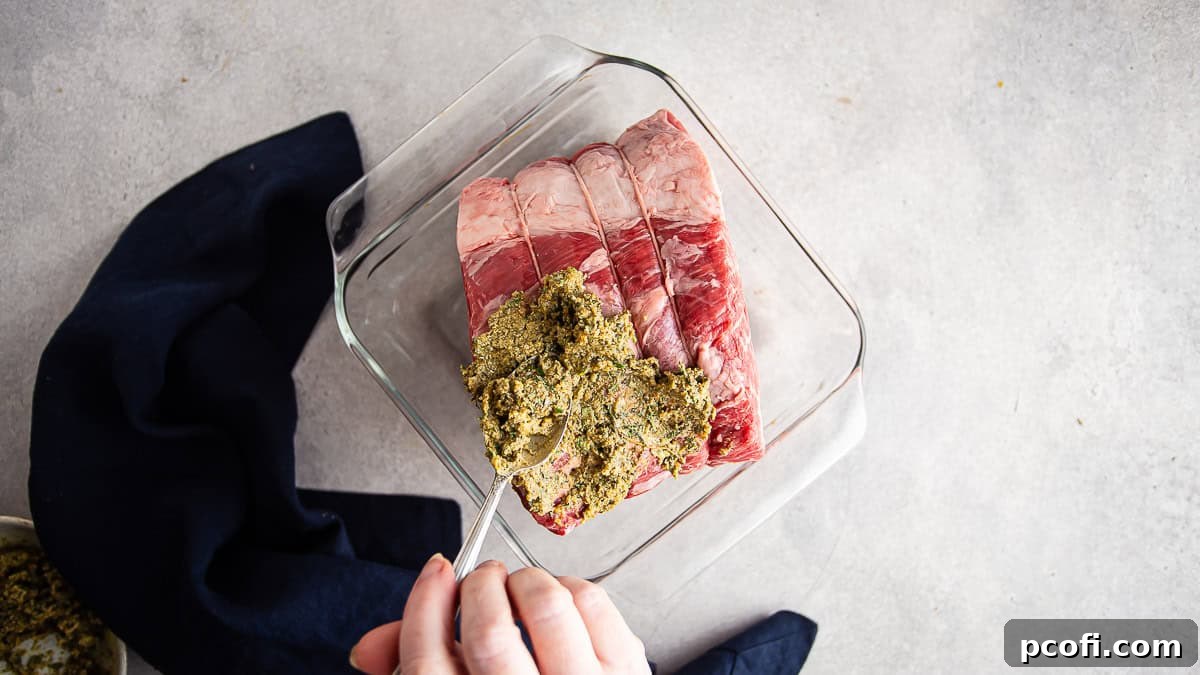
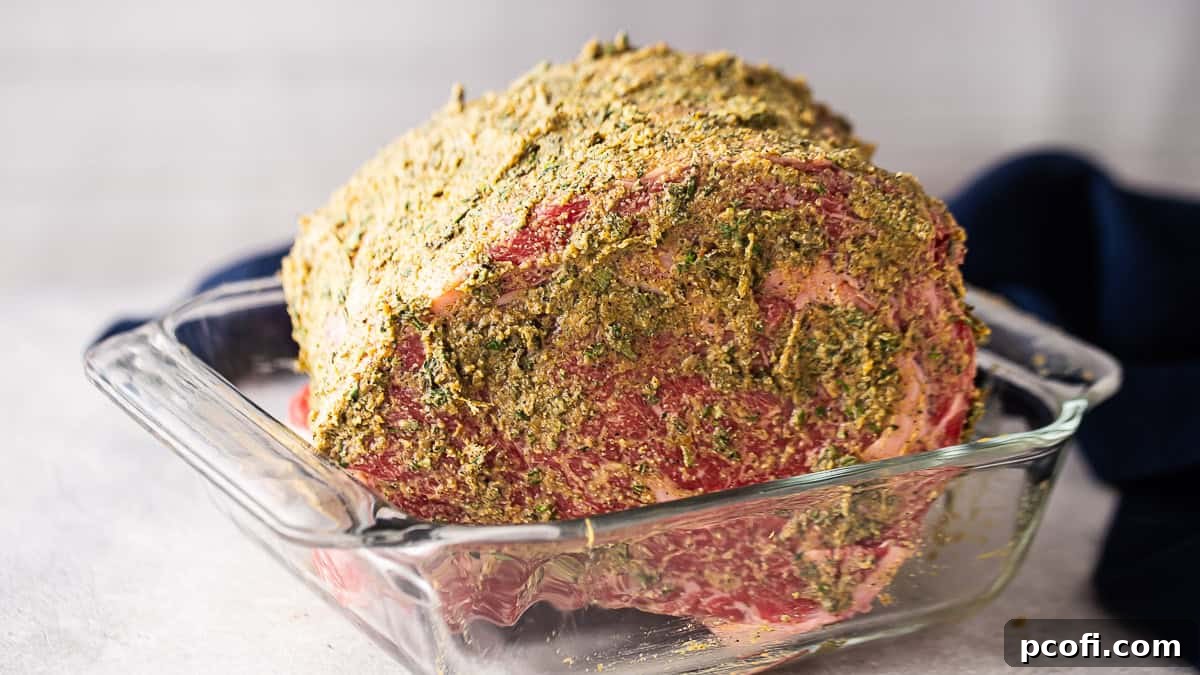
Make sure to cover all sides of the roast with the herb butter, pressing it gently to ensure it adheres. This uniform coating is key to developing a consistent flavor and texture across the entire exterior of the prime rib.
Step 5: The Two-Stage Roasting Process
Place the coated rib roast into the preheated 500°F (260°C) oven. Roast for an initial 20 minutes. This high heat phase is crucial for creating a beautiful, crispy, and flavorful crust on the outside of the beef, often referred to as “searing” or “browning.”
After the initial 20 minutes, reduce the oven temperature to 350°F (175°C) without opening the oven door if possible (to maintain heat). Continue roasting until the internal temperature of the thickest part of the roast reaches 130°F (54°C) for a perfect medium-rare doneness. This secondary, lower-temperature roasting typically takes approximately 5 more hours, but the exact time will vary significantly depending on the size and initial temperature of your roast. Always rely on an accurate meat thermometer, inserted into the center of the roast and not touching any bones, for precise results.
Expert Tips for the Perfect Rib Roast
Mastering a standing rib roast involves a few key techniques and considerations that can elevate your results from good to truly exceptional. Keep these expert tips in mind for a consistently perfect prime rib.
- Bring the Roast to Room Temperature: This is a critical step often overlooked. Allow the standing rib roast to sit out at room temperature for at least an hour, or even up to two hours for larger cuts, before you begin cooking. This ensures that the meat cooks more evenly from edge to center, preventing a cold, undercooked middle or an overcooked exterior.
- Utilize an Oven-Safe Meat Thermometer: Precision is paramount when cooking a prime rib. An oven-safe leave-in meat thermometer is your best friend. Insert it into the thickest part of the roast, ensuring it doesn’t touch any bones, before placing it in the oven. This allows you to monitor the internal temperature without repeatedly opening the oven door, which can cause significant temperature fluctuations and extend cooking time.
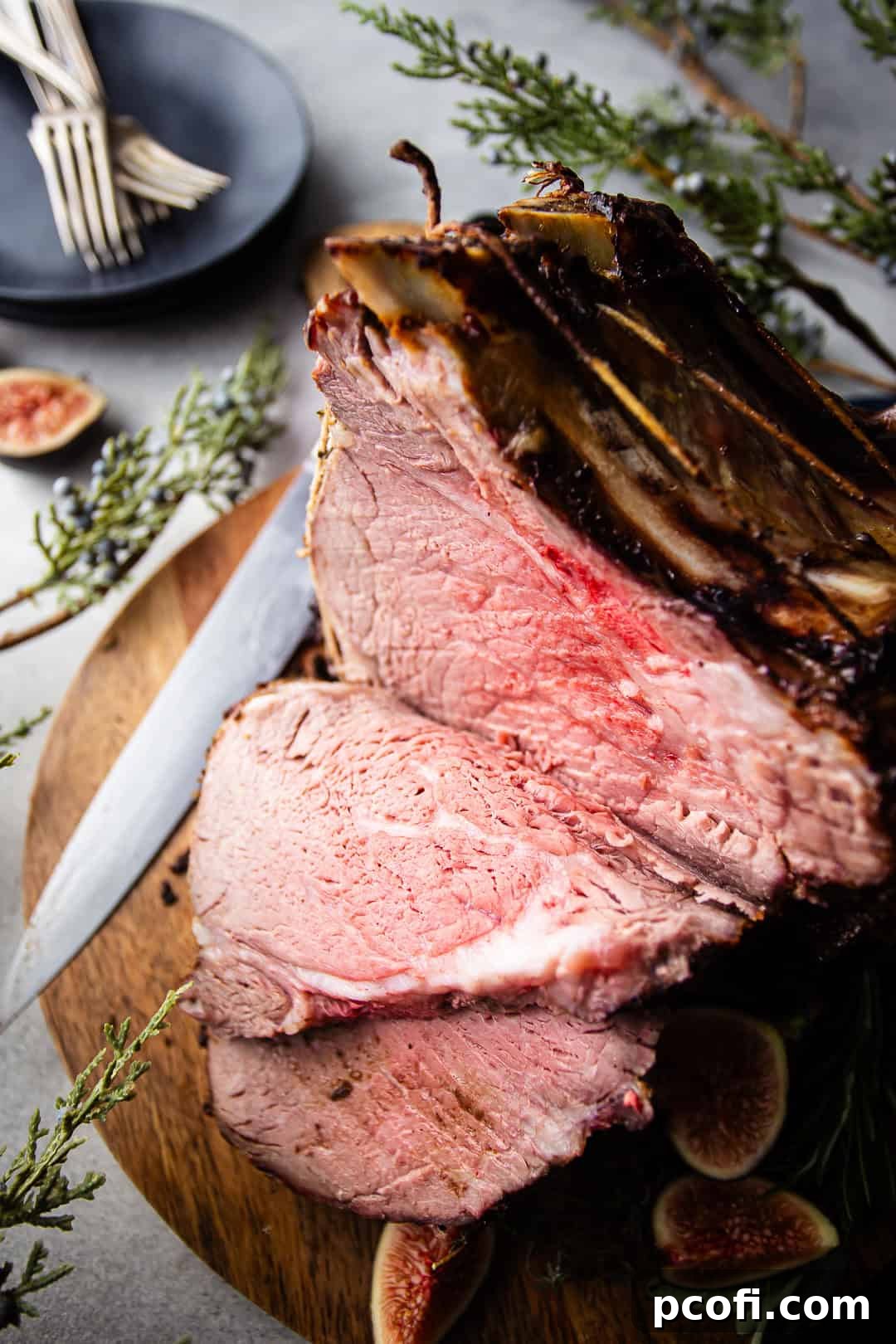
- Prioritize Resting the Meat: After removing the roast from the oven, it’s absolutely essential to let it rest. Cover it loosely with foil and allow it to rest for a minimum of 30-45 minutes (for larger roasts, even up to an hour) before carving. This resting period allows the muscle fibers to relax and the internal juices to redistribute throughout the meat, resulting in every slice being incredibly tender and juicy. Cutting too soon will cause the juices to run out, leaving you with dry meat.
- Carve Against the Grain: For the most tender eating experience, always slice the meat against the grain. Look for the direction of the muscle fibers and cut perpendicular to them. This shortens the fibers, making each bite easier to chew and more pleasurable.
- Consider a Bone-In vs. Boneless Roast: While a bone-in roast offers superior flavor and acts as a natural rack for even cooking, a boneless roast is easier to carve. If opting for bone-in, ask your butcher to cut the bones off and then tie them back on for easy removal after cooking.
- Prepare a Simple Au Jus: Don’t let those delicious pan drippings go to waste! After roasting, skim off excess fat and use the remaining drippings to make a simple au jus or gravy. Deglaze the pan with a bit of beef broth or red wine, simmer, and season to taste for an exquisite accompaniment to your prime rib.
Frequently Asked Questions About Prime Rib
A 12-pound standing rib roast is quite generous and will typically serve about 12 people comfortably, usually leaving you with some delicious leftovers. A good rule of thumb is to estimate about 1 pound of bone-in roast per person.
Yes, you can substitute dried herbs for fresh if necessary, but keep in mind that dried herbs are more concentrated in flavor. As a general guideline, use about one-third less dried herb than fresh. For example, if the recipe calls for 2 tablespoons of fresh rosemary, use approximately 2 teaspoons of dried rosemary.
For different levels of doneness, adjust the final internal temperature accordingly. Use a reliable meat thermometer to guide you:
- For Medium: Cook until the inside reaches 140–145°F (60-63°C).
- For Medium-Well: Cook until the inside reaches 150–155°F (66-68°C).
- For Well-Done: Cook until the inside reaches 160°F (71°C) or higher. Be aware that cooking well-done will result in a less tender and juicy roast.
Remember that the temperature will rise by 5-10 degrees Fahrenheit while the meat rests, so pull it out of the oven a few degrees shy of your target.
Tying the roast, especially if it’s bone-in and the bones have been separated, helps it to maintain a compact, even shape during cooking. This ensures that the heat penetrates uniformly, resulting in a more consistent doneness across the entire roast. You can certainly ask your butcher to do this for you, or you can easily tie it yourself using kitchen twine at 1-inch intervals around the roast.
A classic prime rib pairs beautifully with rich and comforting side dishes. Consider creamy mashed potatoes, roasted asparagus or green beans, Yorkshire pudding, a vibrant roasted root vegetable medley, or a fresh garden salad with a light vinaigrette. Don’t forget a rich gravy made from the pan drippings!
Store any leftover prime rib in an airtight container in the refrigerator for up to 3-4 days. To reheat without drying it out, slice the meat thinly and gently warm it in a skillet with a splash of beef broth or in a low oven (around 250°F / 120°C) until just warmed through. Avoid microwaving, as it can make the meat tough.
More Celebratory Holiday Recipes
- Maple and Sage Brown Butter Roasted Turkey
- Sweet Potato Casserole
- Challah Bread
- Beef Bourguignon
- Ham Glaze Recipe
- Orange Sriracha Glazed Carrots with Goat Cheese and Pistachios
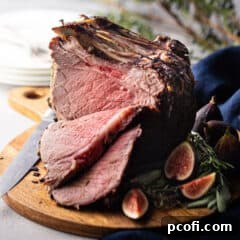
Perfect Standing Rib Roast
Leave a Review
Ingredients
- 2 tablespoons (36 g) kosher salt
- 2 tablespoons (16 g) garlic powder
- 2 tablespoons (4 g) rosemary leaves, fresh, finely minced
- 2 tablespoons (14 g) thyme leaves, fresh
- 2 tablespoons (29.57 g) sage leaves, fresh, finely minced
- 2 tablespoons (30 g) horseradish
- 2 tablespoons (30 g) Dijon mustard
- 2 tablespoons (28 g) extra-virgin olive oil
- 12 pounds (5443.1 g) standing rib roast, trimmed and tied
Instructions
-
Preheat your oven to 500 degrees F (260°C). Place the trimmed and tied standing rib roast in a large roasting pan or baking dish. Ensure the roast has come to room temperature for at least 1-2 hours before roasting for even cooking.
-
In a small bowl, combine the kosher salt, garlic powder, finely minced fresh rosemary, fresh thyme, fresh sage, prepared horseradish, Dijon mustard, and extra-virgin olive oil. Stir thoroughly until all ingredients are well combined and form a thick, cohesive paste.
-
Generously spread the prepared herb paste evenly over all sides of the standing rib roast. Ensure a thick, uniform coating for optimal flavor and crust development.
-
Place the coated roast into the preheated 500°F (260°C) oven and roast for 20 minutes to achieve a beautiful initial sear and browned crust.
-
After 20 minutes, reduce the oven temperature to 350°F (175°C). Continue to cook the beef until a reliable meat thermometer, inserted into the thickest part of the roast (avoiding bone), registers an internal temperature of 130°F (54°C) for medium-rare doneness. This typically takes approximately 5 more hours, but total cooking time will vary based on roast size and oven calibration.
-
Once the desired internal temperature is reached, remove the roast from the oven, cover it loosely with foil, and allow the meat to rest for at least 45 minutes before carving. This crucial resting period ensures the juices redistribute, resulting in a tender and succulent prime rib.