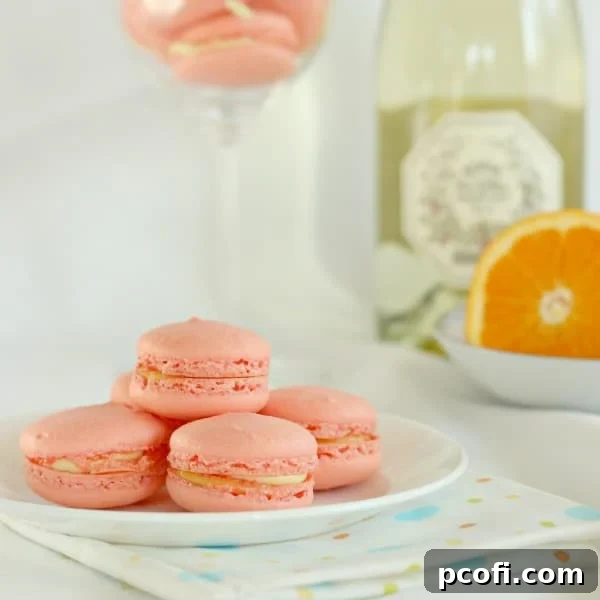
Mimosa Macarons: The Ultimate Mother’s Day Brunch Dessert
This post originally appeared on YinMomYangMom.com.
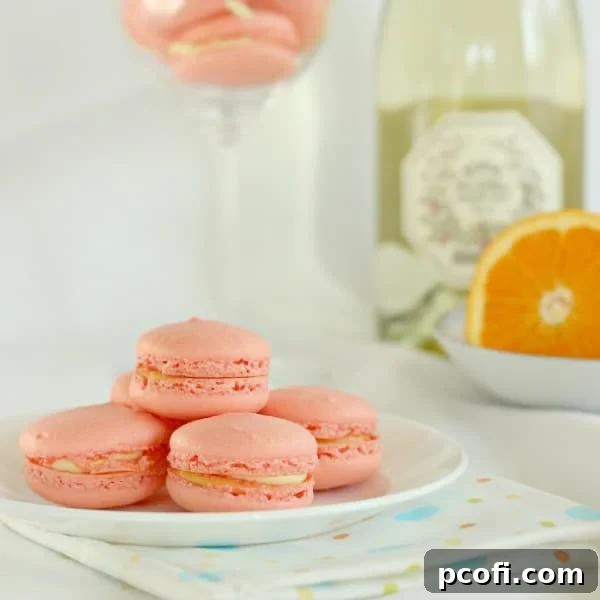
As Mother’s Day approaches, many of us start dreaming of ways to celebrate the incredible women in our lives. While traditional brunch outings are a beloved classic, there’s something truly special about a homemade gift that speaks volumes of love and effort. This year, why not elevate your celebration with a dessert that perfectly encapsulates the spirit of the occasion? Imagine all the effervescent charm of your favorite brunch cocktail, the mimosa, transformed into an elegant, delicate French macaron. These Mimosa Macarons are designed to do just that, offering a delightful fusion of bright orange and subtle champagne flavors in every bite.
French macarons, known for their delicate, crispy shells and luscious fillings, might seem intimidating to master. However, the reward of seeing a perfect batch emerge from your oven, complete with characteristic “feet,” is immensely satisfying. For Mother’s Day, a holiday I hold particularly dear, I find immense joy in crafting a culinary gift that is both beautiful and delicious. These mimosa-inspired treats are no exception, combining sophistication with a touch of celebratory whimsy that is sure to impress.
The inspiration for these exquisite macarons stems directly from the quintessential Mother’s Day brunch tradition. For as long as I can remember, a leisurely brunch, often accompanied by the sparkling cheer of mimosas, has been a cornerstone of our family’s Mother’s Day festivities. While I don’t typically indulge in sparkling beverages before noon on any other day, Mother’s Day always feels like a special exemption – a delightful permission to sip on that iconic blend of orange juice and champagne. Capturing that festive essence in a bite-sized dessert seemed like the perfect tribute.
Crafting the Perfect Mimosa Macaron Shells
The foundation of any great macaron is its shell, and for these Mimosa Macarons, we infuse them with a vibrant burst of fresh orange flavor. A generous helping of finely grated orange zest is incorporated into the macaron batter, perfuming the delicate pastries with a bright, citrusy aroma that is both refreshing and inviting. This isn’t just about adding flavor; the zest contributes to the overall sensory experience, making each macaron a tiny masterpiece of taste and fragrance. The subtle warmth from baking further enhances these aromatic notes, ensuring that the essence of orange shines through beautifully.
Achieving the perfect macaron shell is an art form, often requiring precision and a keen eye for detail. The process involves carefully sifting almond flour and powdered sugar, whipping egg whites to a glossy, stiff peak meringue, and then gently folding these two components together in a technique known as “macaronage.” This step is crucial: over-mixing can lead to flat, brittle shells, while under-mixing can result in lumpy, footless macarons. The goal is a batter that flows like a “ribbon” from your spatula, smooth and shiny, ready to be piped into elegant rounds.
For those new to macaron making, remember that patience is key. Allowing the piped shells to rest for 20-30 minutes before baking is vital. This resting period allows a thin skin or membrane to form on the surface of the macaron, which helps create those iconic “feet” – the ruffled base that lifts the macaron shell during baking. This skin prevents the air from escaping upwards, forcing it out the sides and creating that signature texture. The result is a crisp exterior and a slightly chewy interior, a hallmark of a truly well-made French macaron.
The Luxurious Champagne Pastry Cream Filling
No macaron is complete without its exquisite filling, and for these mimosa delights, we turn to a sophisticated champagne pastry cream. This rich, creamy filling offers a delightful contrast to the crisp, light macaron shells, while subtly reinforcing the celebratory theme. The recipe for this elegant pastry cream was inspired by a wonderful version I discovered on SprinkleBakes.com. It comes together beautifully, yielding a smooth, luscious cream with a distinctly perceptible champagne flavor – a delightful surprise that adds an extra layer of refinement.
While the original recipe was designed to be enjoyed as a stand-alone verrine, I made a few minor adjustments to suit the sweetness profile of macarons. French macaron shells are inherently sweet, and to achieve a harmonious balance, I opted for a slightly less sweet pastry cream. This ensures that the combined flavors are perfectly balanced, preventing an overpowering sweetness and allowing both the orange and champagne notes to sing. If you prefer your desserts on the sweeter side, I highly recommend visiting Heather’s beautiful page at SprinkleBakes.com and following her original recipe for the pastry cream.
Making pastry cream involves tempering eggs with warm liquid, then cooking the mixture gently until it thickens to a velvety consistency. The addition of butter and vanilla at the end enhances its richness and smoothness. Once cooked, it’s essential to strain the pastry cream through a fine-mesh sieve to ensure it’s perfectly smooth and free of any lumps. Covering it with plastic wrap directly on the surface and chilling thoroughly allows it to set, developing its full flavor and ideal texture for piping into our macaron sandwiches.
Essential Macaron Making Tips for Success
Beyond the core techniques, a few insider tips can make all the difference in your macaron journey:
- Sifting is Non-Negotiable: Always sift your almond meal and powdered sugar together. Even if your almond flour claims to be “superfine,” sifting removes any larger granules that can compromise the smooth texture of your shells.
- Aged Egg Whites: Many macaron enthusiasts swear by using aged egg whites. This simply means separating your egg whites a day or two in advance and letting them sit, covered loosely, in the fridge. This process reduces their water content, leading to a more stable meringue.
- Coloring Your Shells: If you wish to tint your macaron shells with gel paste food coloring, as I did (using Wilton Rose Pink and Wilton Lemon Yellow for a soft, festive hue), timing is crucial. Add the color to the egg whites when they reach the soft peak stage. Incorporating it earlier ensures even distribution without over-mixing the delicate batter once the dry ingredients are folded in. Remember that the color will fade slightly when the almond mixture is added and again during baking, so you might need to go a shade or two brighter than your desired final color.
- The Macaronage Sweet Spot: The “ribbon stage” (where the batter falls off the spatula in a continuous, slow ribbon) is the most critical part of macaronage. It often takes practice to recognize. It’s better to slightly under-mix and have thicker batter than to over-mix and have runny batter.
- Tap and Rest: After piping, gently tap your baking sheets on the counter a few times to release any trapped air bubbles. Then, let the shells rest at room temperature until a dry skin forms. This can take anywhere from 20 minutes to over an hour, depending on humidity.
- Oven Calibration: Ovens can vary wildly. Knowing your oven is crucial. Consider investing in an oven thermometer to ensure accurate temperatures. Macarons are sensitive to heat fluctuations.
These Mimosa Macarons are more than just a dessert; they are a gesture of love and appreciation. The vibrant orange shells and the sophisticated champagne cream come together to create a truly unforgettable treat. Imagine presenting these beautiful, delicate pastries to your Mom this Mother’s Day – a homemade gift that is as thoughtful as it is delicious. They are a wonderful way to celebrate that special woman who fills your life with so much love, bringing a touch of elegance and joy to her day.
I hope you’ll whip up a batch of these for your Mom or any special woman in your life this holiday! They truly are a wonderful way to show how much you care, combining the festive spirit of brunch with the delicate artistry of French baking.
If you’re a macaron enthusiast or simply looking to expand your macaron-making repertoire, explore some of my other delightful macaron creations:
- Nutty Irishman Macarons
- Mexican Chocolate Macarons
- Sesame Macarons with Pomegranate Lime Buttercream
- Green Tea and Mandarin Macarons
- Red Velvet Macarons
- Chai Spiced Macarons
As an Amazon Associate, I earn from qualifying purchases.
Mimosa Macarons
Servings: 20 pastries (about)
Prep Time: 50 mins | Cook Time: 15 mins | Drying Time: 30 mins | Total Time: 1 hr 35 mins
These mimosa macarons are perfect for Mother’s Day! All the orange and champagne flavor of a mimosa, that favorite brunch cocktail, in the form of a French macaron!
Print Recipe
Leave a Review
Ingredients
For the Filling
- 1/2 cup (118.29 ml) heavy cream, divided
- 1/2 cup (118.29 ml) sparkling white wine
- 2 tablespoons cornstarch
- 2 tablespoons granulated sugar
- 1 whole egg, (large)
- 2 egg yolks, (large)
- 2 tablespoons unsalted butter
- 1 teaspoon vanilla extract
For the Macaron Shells
- 100 grams almond meal, (approx. 1 cup + 1 tablespoon + 1 teaspoon)
- 155 grams powdered sugar, (approx 1 cup)
- 2 tablespoons orange zest, (zest of one orange)
- 3 (90 g) egg whites, (large)
- 1/8 teaspoon cream of tartar
- 55 grams superfine sugar, (approx. 1/4 cup + 2 teaspoons)
- rose pink & lemon yellow gel paste food coloring, (optional)
Instructions
Make the Filling:
- Combine ¼ cup cream with cornstarch, yolks, and egg; set aside.
- In a small saucepan, combine the remaining cream, sparkling wine, and sugar, and place over medium heat.
- When just beginning to simmer, add a third of the wine mixture to the egg mixture, whisking vigorously.
- Add the warmed egg mixture to the pot, and cook over low heat, until thickened.
- Remove from heat and stir in the butter and vanilla.
- Pour through a fine-mesh strainer into a heat-safe bowl, cover the surface with plastic wrap, and chill.
Make the Shells:
- Sift the almond meal and confectioners sugar together, discarding any large bits.
- Add the orange zest.
- Whip the whites until frothy.
- Add the cream of tartar and continue to whip until soft peak stage.
- Slowly add in the superfine sugar.
- Tint with gel paste color, if desired.
- Continue to whip until stiff peaks are achieved.
- Fold the almond mixture into the whites until the batter drops from the spatula in a long ribbon.
- Pipe one-inch diameter rounds onto a parchment-lined baking sheet.
- Preheat the oven to 375 degrees F.
- Allow the shells to dry and form a thin membrane/skin for about 20-30 minutes.
- Drop the oven temperature to 325 degrees F and bake for 12-15 minutes.
- Cool on the baking sheet.
Assemble the Macarons:
- Pipe about two teaspoons of filling onto half the shells and sandwich.
Nutrition Information (per serving, approx.)
Calories: 123kcal,
Carbohydrates: 14g,
Protein: 2g,
Fat: 7g,
Saturated Fat: 3g,
Cholesterol: 39mg,
Sodium: 15mg,
Potassium: 25mg,
Fiber: 1g,
Sugar: 12g,
Vitamin A: 163IU,
Vitamin C: 1mg,
Calcium: 19mg,
Iron: 1mg
Cuisine: French
Course: Dessert, Snack
Tried this recipe?
Mention @bakingamoment on Instagram or tag #bakingamoment.