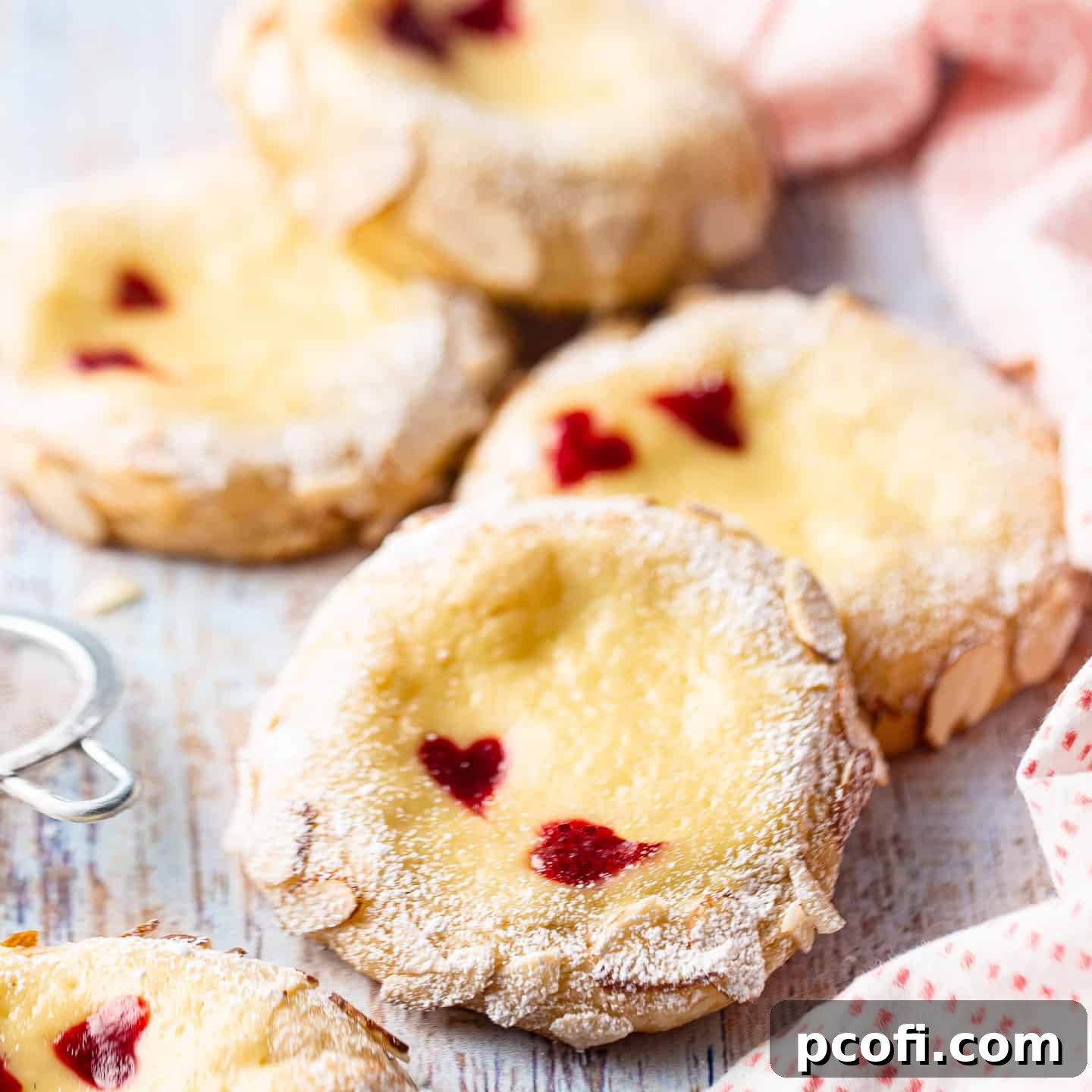
Unlock the secret to crafting the most authentic, flaky, and irresistibly creamy Cheese Danish pastries right in your own kitchen! This streamlined recipe delivers that classic buttery pastry and rich cheesecake filling without unnecessary complexity, making it an achievable delight for any home baker.
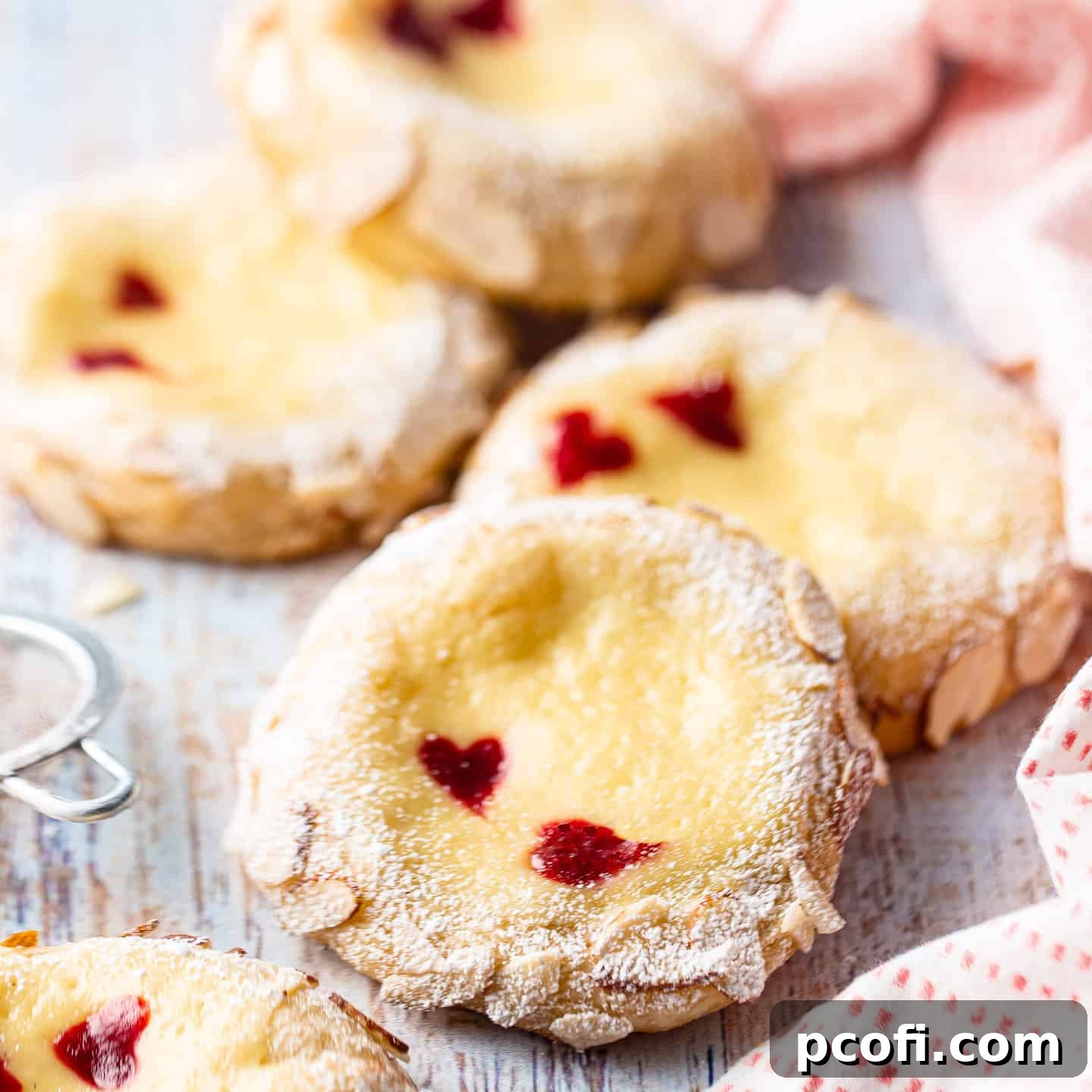
My journey to perfecting the homemade cheese Danish wasn’t without its detours. Initially, like many home bakers seeking a shortcut, I experimented with store-bought puff pastry. The promise of ease and convenience was tempting, yet the results were, frankly, quite disappointing. The pastries lacked the characteristic rise, appeared pale and unappetizing, and felt heavy rather than airy. Most importantly, the flavor was just… meh.
Having previously delved into the art of authentic Danish pastry dough, I knew what a truly exceptional Danish should embody. A proper Danish is a masterpiece of baking: light as air, gloriously puffy, with a rich golden-brown hue and an unmistakable buttery aroma. It should boast hundreds of paper-thin layers that yield a delicate crispness, yet remain exquisitely soft within. And, of course, at its heart, a sweet, luscious pool of filling.
The shortcut version simply couldn’t compare. It was a stark reminder that some indulgences are worth the extra effort. If I was going to treat myself and my loved ones to a truly special breakfast or brunch item, it had to be extraordinary. The disappointing imitation only solidified my resolve to tackle the “real deal.”
This recipe for homemade cheese Danish is the culmination of that commitment. I’ve meticulously refined the process, stripping away any intimidating complexities to make laminated dough as approachable as possible. Think of it as a simplified, yet uncompromisingly authentic, version of my popular puff pastry recipe and my croissant recipe. Laminated doughs often carry a reputation for being overly complicated and fussy, but I firmly believe they don’t have to be. My goal here is to demystify the process, empowering you to create bakery-quality pastries with confidence.
So, get ready to embark on a delightful baking adventure. Continue reading to discover how to craft authentic, buttery, and flaky Danish cheese pastries that will impress and delight, all without the traditional fuss!
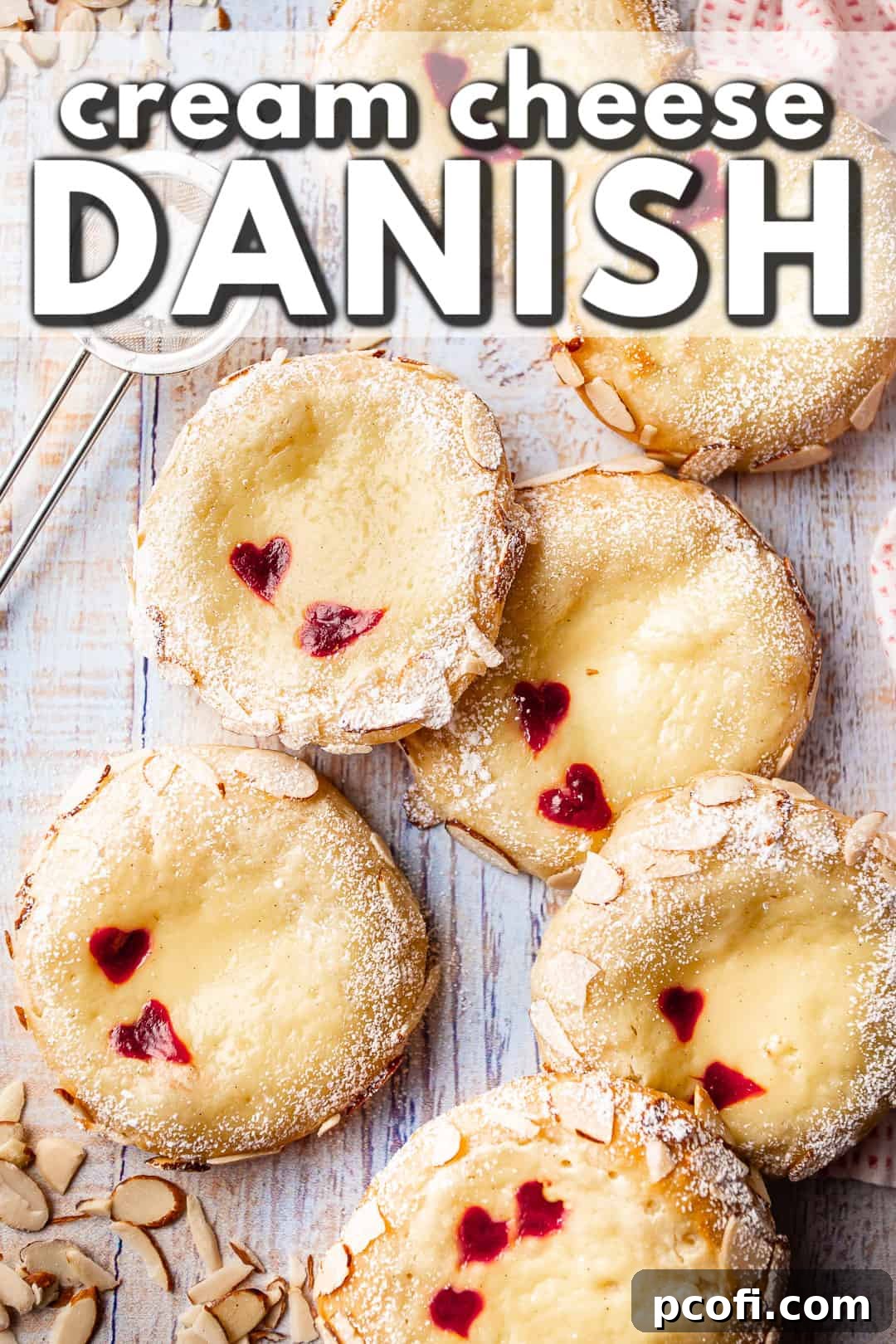
Table of Contents
- What are Cheese Danish?
- Why This is the Best Cheese Danish Recipe
- What Do Cream Cheese Danish Taste Like?
- Ingredients for Authentic Danish
- Essential Equipment
- How to Make Danish Cheese Pastry
- Serving Suggestions
- Expert Baking Tips
- Frequently Asked Questions About Cheese Danish
- More Delightful Breakfast Recipes
Jump to Recipe
What are Cheese Danish?
At its heart, a cheese Danish is a delicate, slightly sweet, and incredibly flaky pastry, beautifully crowned with a rich and tangy cheesecake-style filling. These delightful treats are a staple for breakfast, brunch, or as a satisfying snack, and they pair exquisitely with a warm cup of coffee or tea.
The magic of a Danish lies in its laminated dough. This specialized dough undergoes a meticulous process of rolling and folding, incorporating layers of butter, to create hundreds of individual, ethereal layers. This technique is similar to that used for puff pastry or croissant dough, but with key distinctions. Danish dough typically includes sugar, eggs, and yeast, which contribute to its unique texture and slightly sweet, bread-like character. In contrast, traditional puff pastry contains no yeast, sugar, or eggs, focusing solely on butter and flour for its crisp flakiness. Croissant dough, while containing yeast like Danish dough, usually omits sugar and eggs, offering a more savory profile. These additions to Danish dough result in a pastry that is both tender and resilient, with a nuanced flavor that perfectly complements its creamy filling.
Why This is the Best Cheese Danish Recipe
This particular cheese Danish recipe stands out for several compelling reasons, making it a superior choice for both novice and experienced bakers:
- Unforgettable Flavor and Texture: Each bite of this Danish offers an unparalleled experience. The pastry is remarkably light, wonderfully soft, and boasts an exquisite flakiness that simply melts in your mouth. Its subtly sweet and profoundly buttery flavor is truly one-of-a-kind, creating a perfect harmony with the luscious cream cheese filling.
- Wholesome, High-Quality Ingredients: We believe that exceptional taste begins with exceptional ingredients. This recipe exclusively uses real, fresh components, such as creamy unsalted butter, farm-fresh eggs, and high-quality all-purpose flour. This commitment to real ingredients ensures a healthier and more flavorful pastry, free from artificial additives.
- Simplified and Approachable Method: Despite its authentic results, the methodology for this recipe has been meticulously simplified. We’ve broken down the steps, making the lamination process less daunting and significantly quicker than traditional methods. This ease of preparation reduces stress and increases your chances of success, proving that authentic baking doesn’t have to be overly complicated.
- Incredible Versatility: This recipe provides a fantastic foundation for your creativity. You can easily customize the size and shape of your Danish pastries to suit any occasion, from individual servings to larger braided forms. Furthermore, the possibilities for garnishes are endless, allowing you to personalize each batch with your favorite toppings and flavors.
What Do Cream Cheese Danish Taste Like?
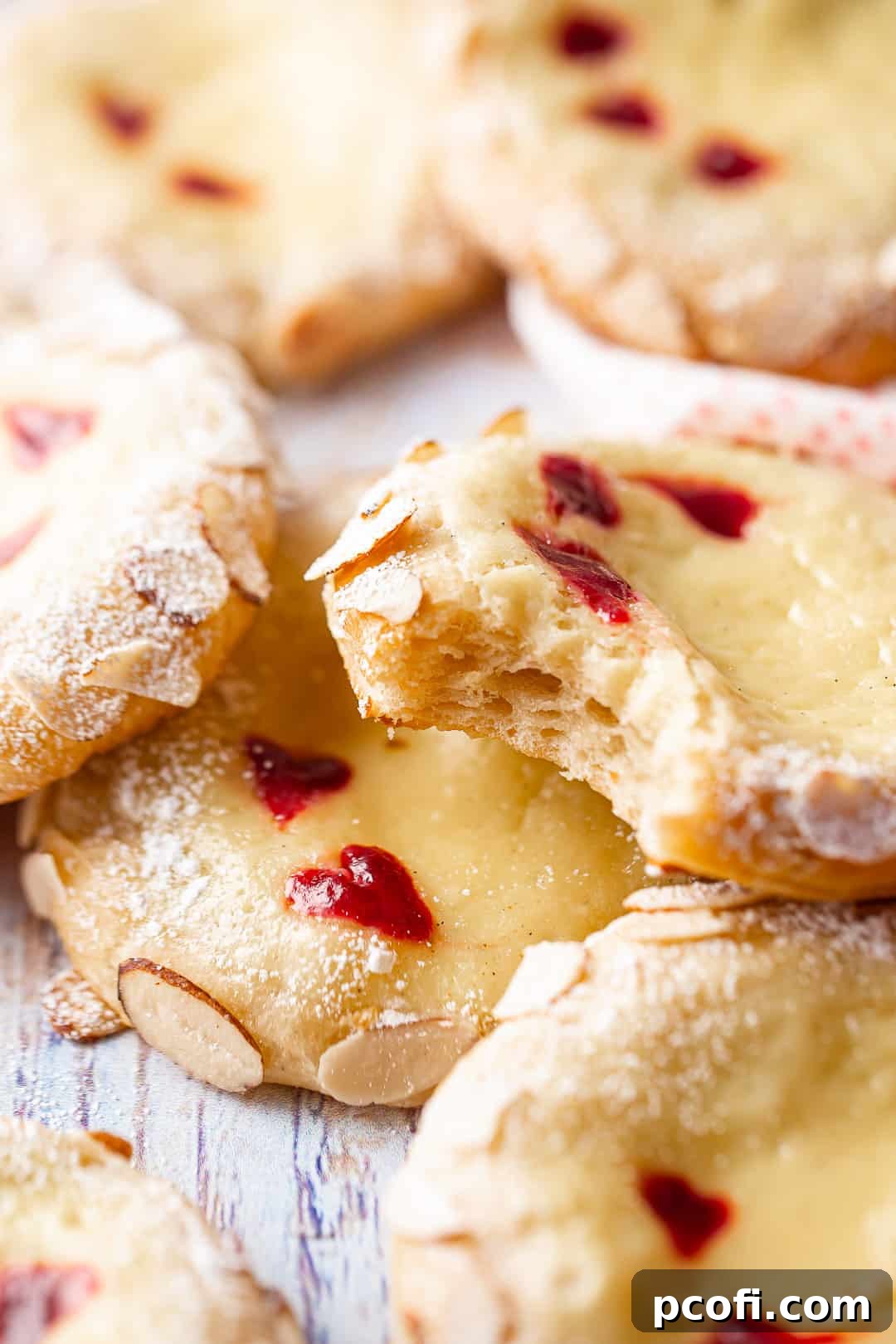
Imagine a pastry that emerges from the oven gloriously puffy, remarkably light, and intensely buttery. Its edges are a delightful crisp, hinting at the countless delicate layers within, while the interior remains cloud-soft. Nestled in the center of this golden marvel is a smooth, velvety dollop of rich cream cheese filling, its tanginess perfectly balanced by a subtle sweetness. The yeast in the dough imparts a delicate, comforting aroma, harmonizing beautifully with the creamy, slightly tangy cheesecake. Each bite delivers a complex yet comforting experience: the crisp, buttery exterior giving way to a tender, ethereal interior, all complemented by the cool, sweet, and tangy cream cheese. It’s a symphony of textures and flavors that embodies pure indulgence.
Ingredients for Authentic Danish
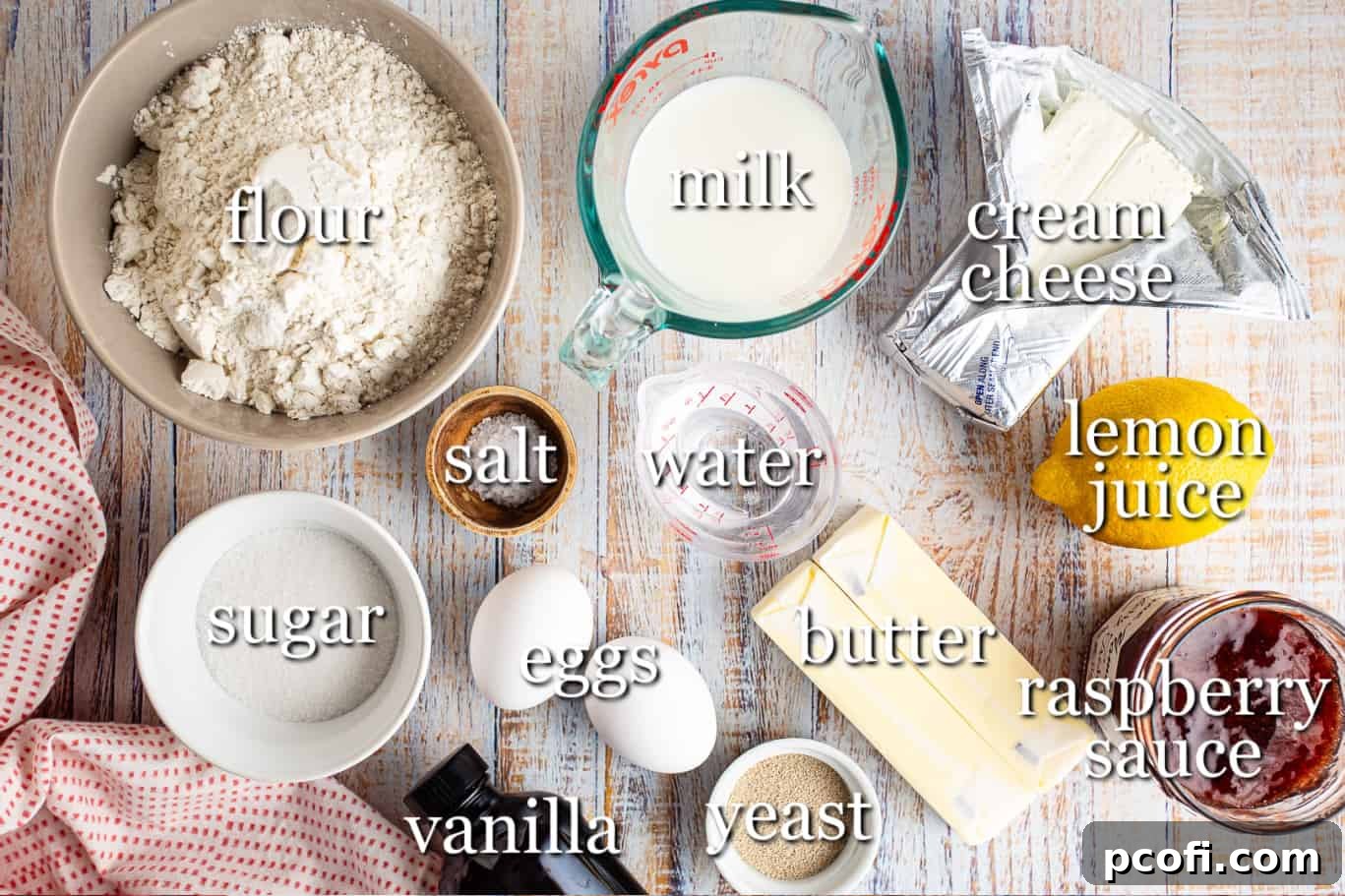
Crafting exceptional Danish pastries begins with understanding the role of each ingredient. Here’s a closer look at what you’ll need:
Flour: Standard all-purpose flour is perfectly suitable for this recipe. It provides the necessary structure and elasticity for the dough without requiring sifting, simplifying your preparation process. A good quality all-purpose flour will ensure your Danish maintains its shape while achieving a tender crumb.
Sugar: Granulated white sugar plays a dual role, sweetening both the delicate pastry dough and the creamy filling. Beyond taste, sugar contributes to the moistness of the final product and helps achieve that beautiful golden-brown crust during baking through caramelization.
Salt: Using kosher salt is recommended due to its pure, clean flavor profile, free from the additives found in common table salt. Salt is a crucial flavor enhancer, bringing out the subtle sweetness of the dough and the richness of the filling. It truly intensifies every other flavor in the pastry, making a noticeable difference.
Butter: Unsalted butter is paramount for precision in baking, allowing you complete control over the salt content in your Danish. Different butter brands have varying salt levels, so using unsalted butter ensures a consistent and predictable result every time. For this recipe, the butter must be thoroughly chilled, almost ice-cold, to facilitate proper lamination and create distinct layers.
Milk: Any type of milk you typically have on hand will work. It’s important to bring it to room temperature or gently warm it to about 105 degrees F (40 degrees C). This temperature is ideal for activating the yeast, ensuring a proper rise without scalding it.
Water: Similar to the milk, the water should also be warm, ideally around 105 degrees F (40 degrees C). This is roughly the temperature of a baby’s bath – warm to the touch but not hot. It helps in hydrating the dough and activating the yeast effectively.
Eggs: Large chicken eggs add richness, structure, and a beautiful golden color to the dough. While room temperature eggs are generally preferred in baking for better emulsification, it is not absolutely critical for this recipe, offering a bit more flexibility.
Vanilla: Vanilla infuses the Danish with its comforting, sweet fragrance and flavor. I particularly enjoy using vanilla extract in the dough for its subtle notes and vanilla bean paste in the cream cheese filling for a more intense, visually appealing speckle of vanilla flavor.
Yeast: Active dry yeast is specified for this recipe because it promotes a slower, more controlled rise. This extended fermentation time is key to developing a deeper, more complex flavor profile in the pastry. Be sure to double-check that you’re using active dry yeast and not instant yeast, as they behave differently.
Cream cheese: This forms the essential base of our luxurious filling. For a perfectly smooth and lump-free mixture, ensure your cream cheese is softened to room temperature before blending with other ingredients. This allows it to incorporate seamlessly and achieve a silky texture.
Lemon juice: Just a small splash of lemon juice is added to the cream cheese filling. This touch of acidity brightens the flavor, enhancing the inherent tanginess of the cream cheese and preventing the filling from tasting overly sweet.
Optional Garnishes
These additions can elevate the visual appeal and add extra layers of flavor and texture to your cheese Danish:
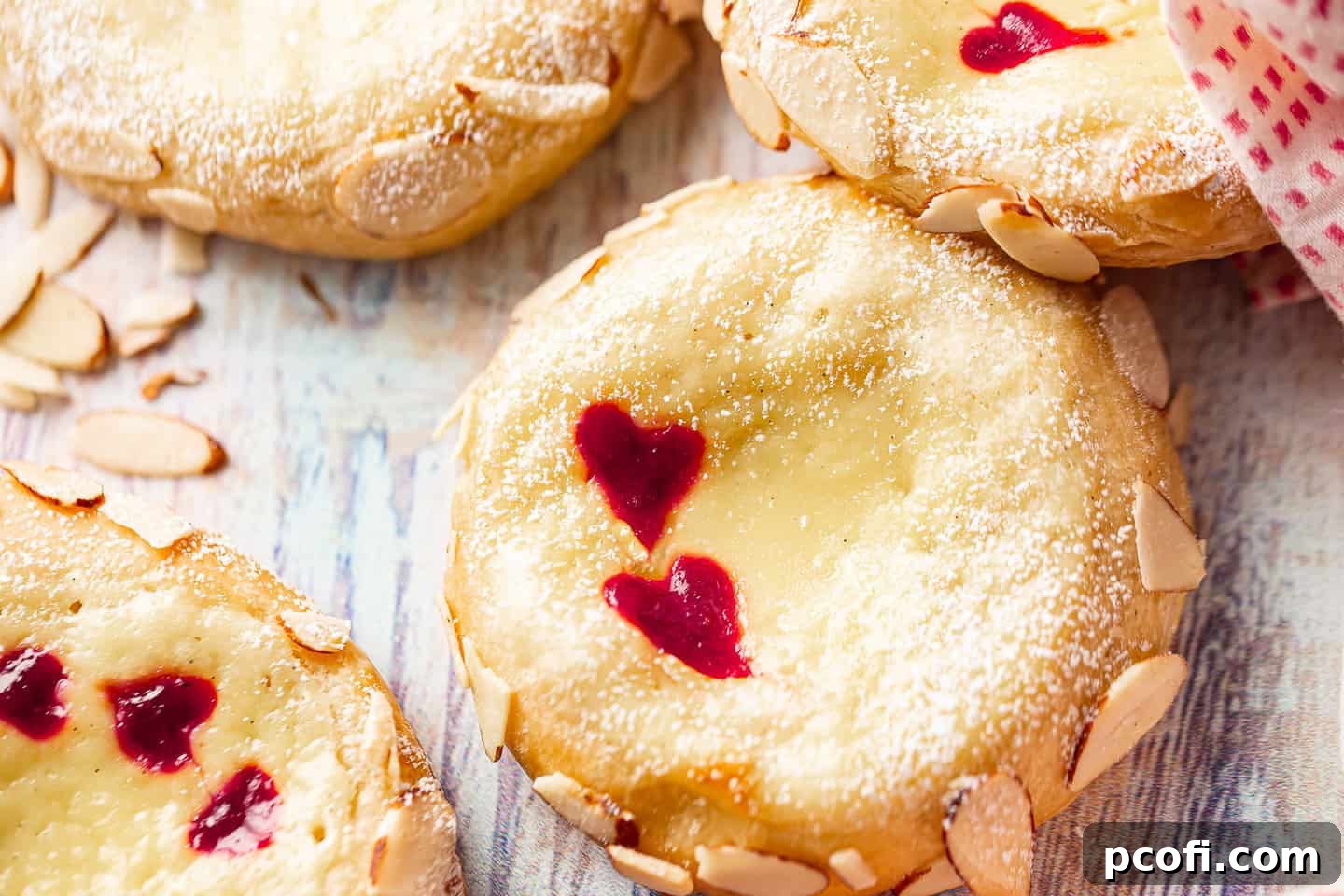
Raspberry sauce: If you wish to replicate the charming raspberry hearts pictured, a small amount of vibrant raspberry sauce is needed. You can easily find the recipe for homemade Raspberry Sauce (it’s surprisingly simple to make!) or use a good quality store-bought version.
Almonds: For an added textural contrast and nutty flavor, a sprinkle of sliced almonds around the edges of the pastries provides a delightful crunch that complements the soft pastry and creamy filling.
Powdered sugar: A delicate dusting of powdered sugar over the finished Danish not only adds a touch of sweetness but also creates a beautiful, elegant presentation, giving them that classic bakery finish.
Essential Equipment
While some specialized tools can make the process smoother, most of these items are common kitchen staples:
- Measuring cups and spoons: Precision is key in baking, especially with laminated doughs. Accurate measurements ensure the correct balance of ingredients. Refer to a guide on How to Measure Ingredients for best results.
- Mixing Bowl: A sturdy bowl is essential for mixing the dough. For effortless kneading, I highly recommend using a stand mixer equipped with a dough hook. It handles the heavy work, developing the gluten in the dough perfectly.
- Knife or Bench Scraper: A sharp knife or a bench scraper is indispensable for precisely dividing the dough into equal portions, which is crucial for uniform pastries.
- Rolling Pin: This is perhaps the most important tool for creating laminated dough. You’ll need it to roll out the dough thinly and evenly, incorporating the cold butter layers to achieve that signature flakiness.
- Piping Bag or Squeeze Bottle: If you plan to add the decorative raspberry garnish, a piping bag with a small round tip or a simple squeeze bottle will allow for precise application.
- Bamboo Skewer or Toothpick: For creating the charming heart patterns in the raspberry sauce, a fine-tipped tool like a bamboo skewer or a toothpick is perfect.
- Pastry Brush: A pastry brush is used for evenly applying the egg wash to the edges of the Danish before baking, which helps achieve a beautiful golden sheen.
- Foil: Aluminum foil is used to gently “tent” the cheese Danish while they undergo their final rest, preventing them from drying out and maintaining a humid environment crucial for their rise.
How to Make Danish Cheese Pastry
This recipe breaks down the process into 6 manageable steps, making the journey to authentic cheese Danish surprisingly straightforward. You absolutely have this!
Step 1: Prepare the Dough Base
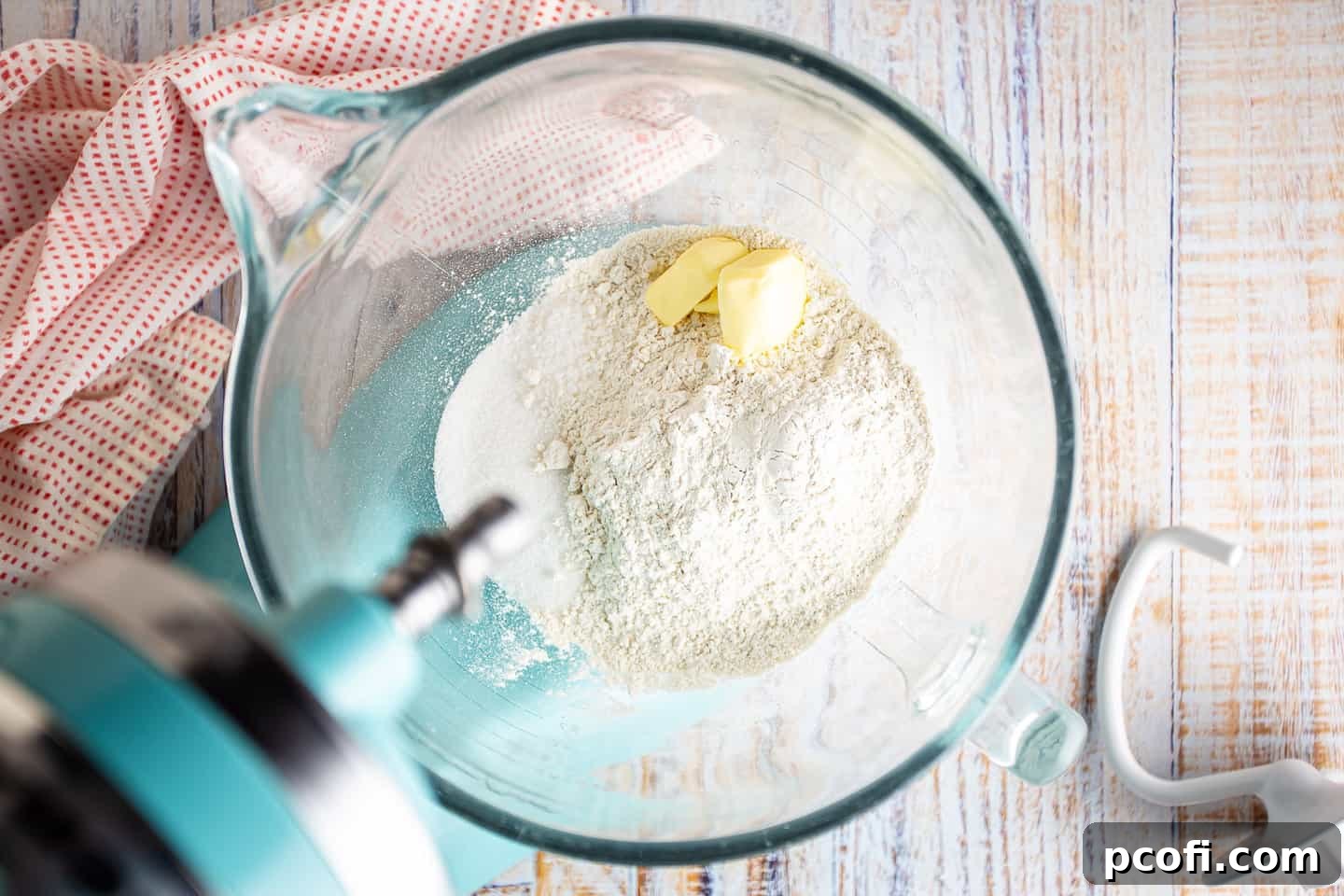
Begin by combining the dry ingredients: flour, sugar, and salt, in a large mixing bowl. Then, incorporate 2 tablespoons of chilled butter. You can do this using your stand mixer, a pastry cutter, or even your clean hands. The goal is to work the butter into the dry ingredients until no pieces of butter are larger than a pea. The mixture should have the texture of coarse crumbs, resembling wet sand.
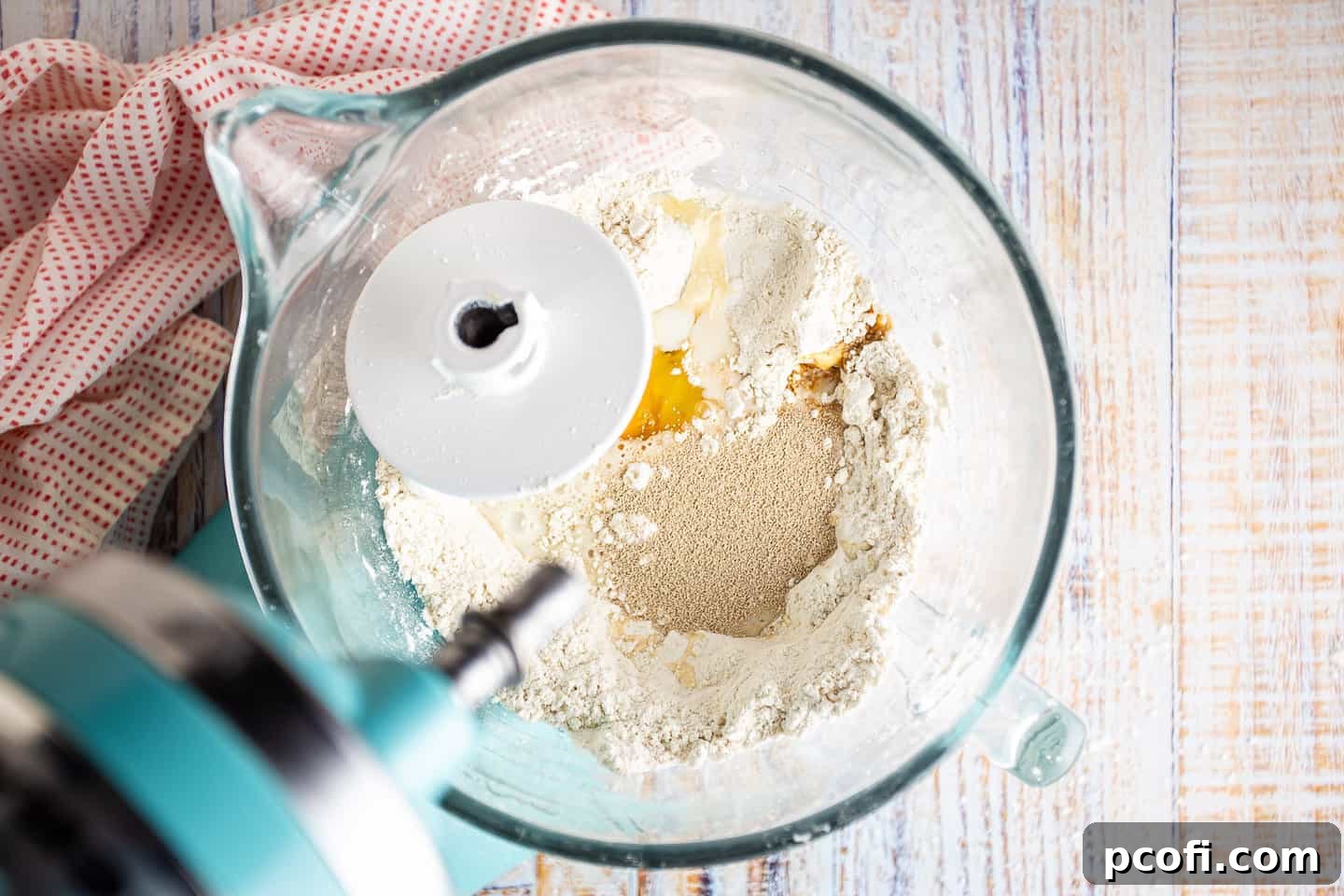
Next, create a small well in the center of the flour mixture. Pour in the warmed milk, water, a large egg, and vanilla extract. Gently sprinkle the active dry yeast over these liquids. Allow the yeast to bloom and dissolve for about 5 minutes; you’ll see it become foamy, indicating it’s active.
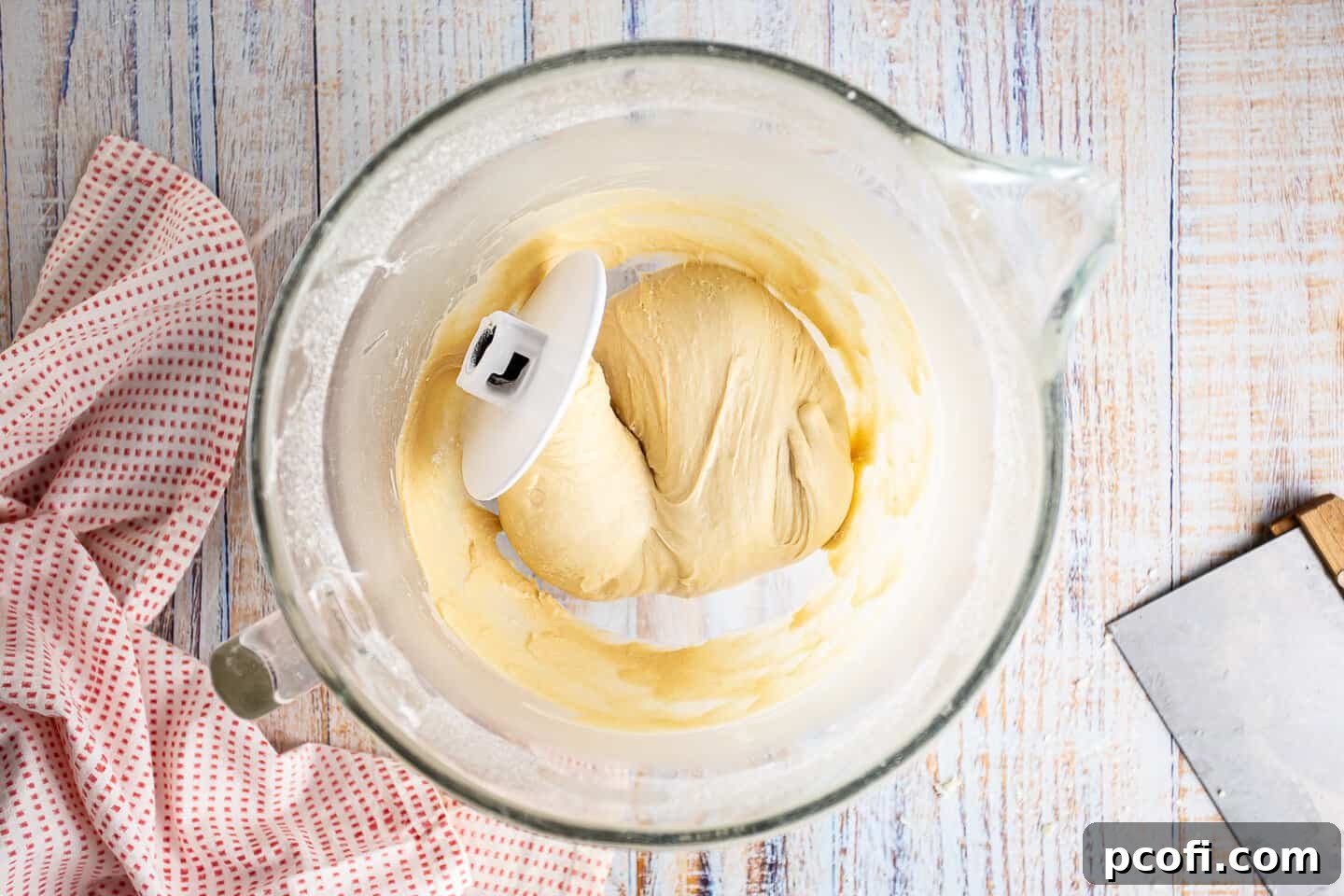
Once the yeast is dissolved, mix all the ingredients thoroughly until a sticky dough forms. Now comes the kneading! Knead the dough for a full 10 minutes. This extended kneading time is crucial for developing the gluten, which will give your Danish its characteristic elasticity and structure. After 10 minutes, the dough should transform from sticky to noticeably smoother, more elastic, and much easier to handle. It will have a supple feel and a slight sheen.
Step 2: The Art of Lamination
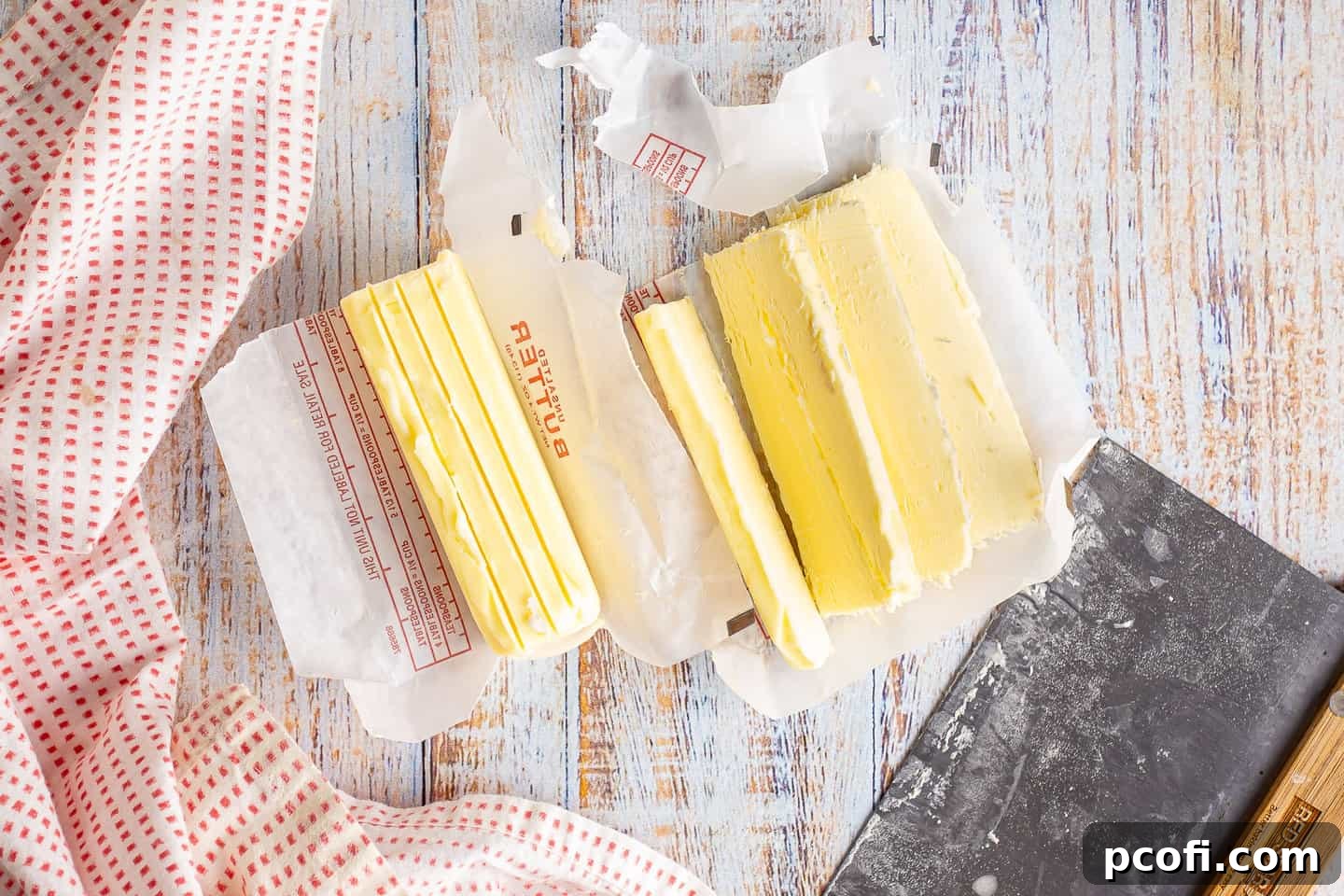
This is where the magic of flakiness truly happens. Take the remaining chilled butter and cut it into several long, thin slabs. This uniform thickness is important for even layering.
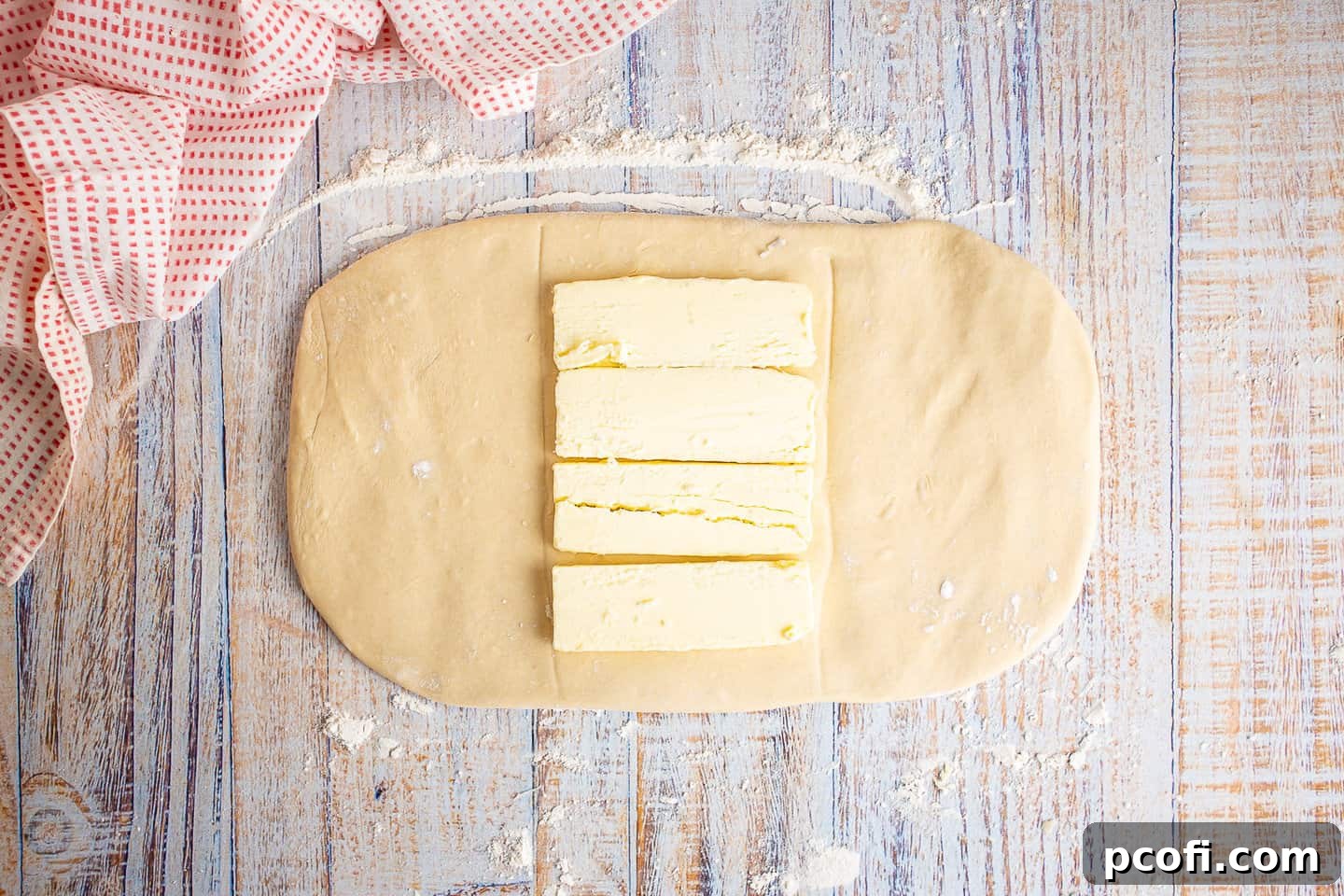
Lightly flour your work surface to prevent sticking. Roll out the kneaded dough into a long, even rectangle. Aim for a thickness of about 1/4 inch. Carefully arrange half of your butter slabs in a neat square formation directly in the center of the dough rectangle.
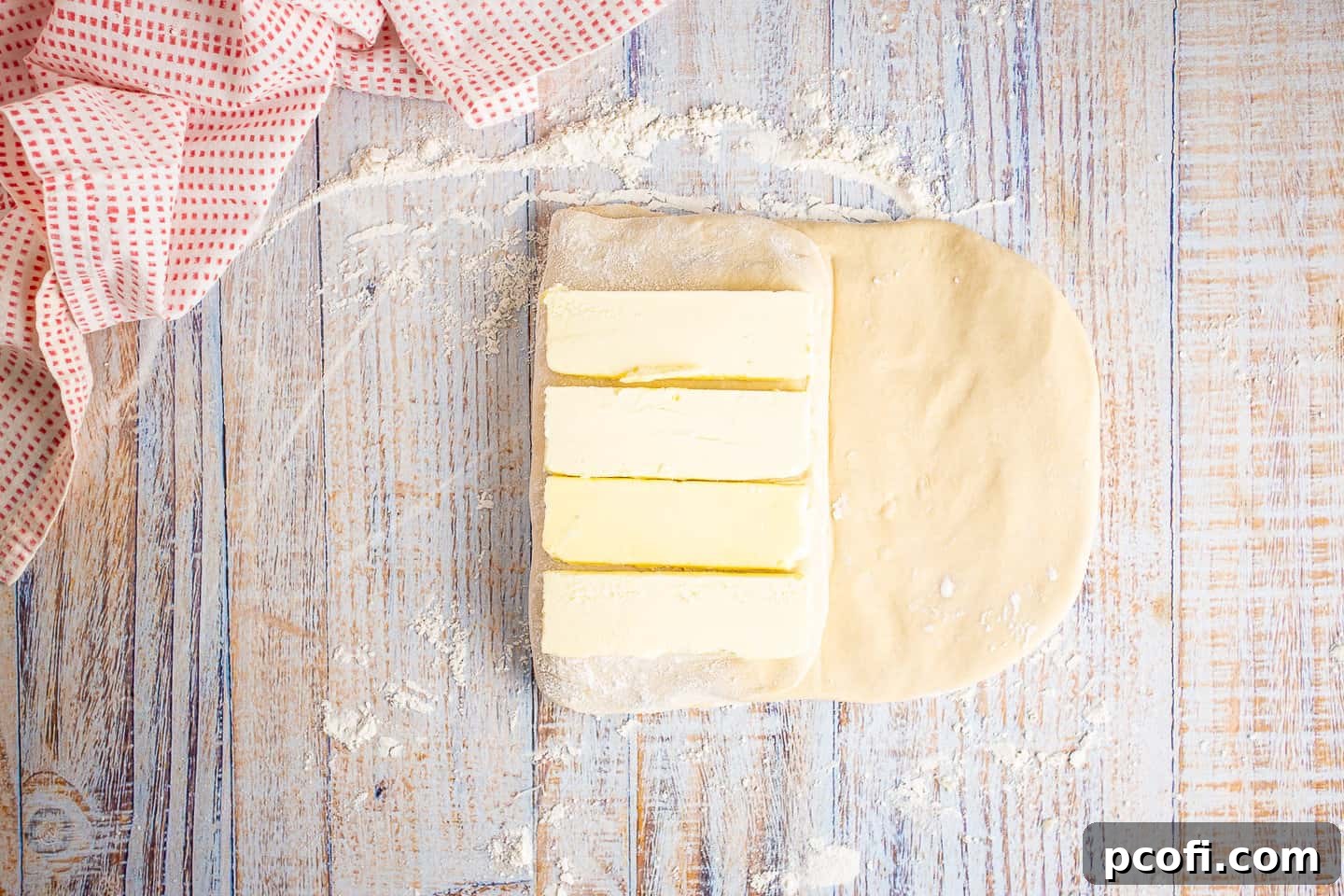
Now, gently fold the left third of the dough over the butter, completely encasing it. Place the remaining butter slabs on top of this folded section, forming another square layer.
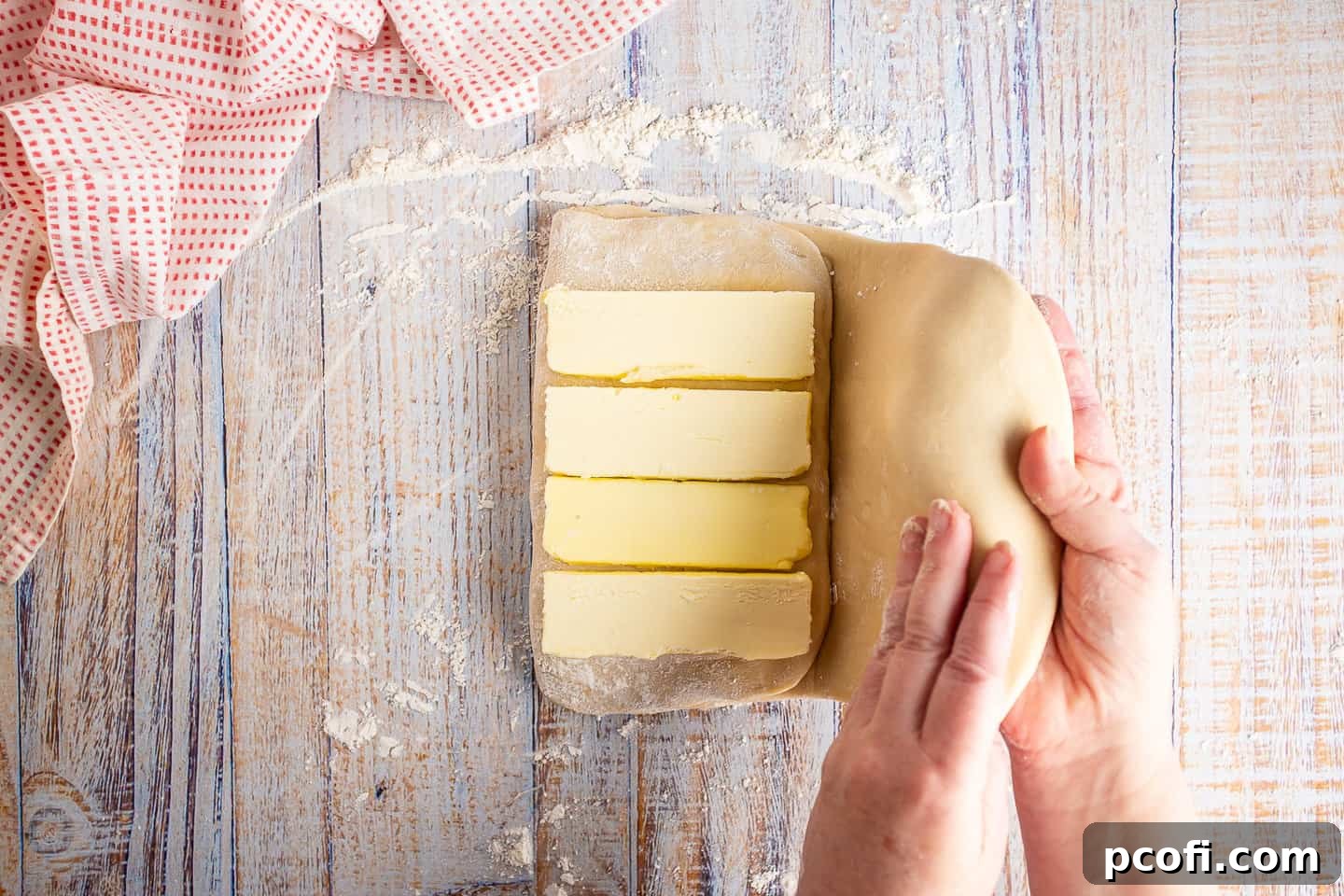
Finally, bring the right third of the dough over the second layer of butter. Firmly pinch all around the edges of the dough to seal in the butter completely. This step is crucial to prevent butter from escaping during subsequent rolling.
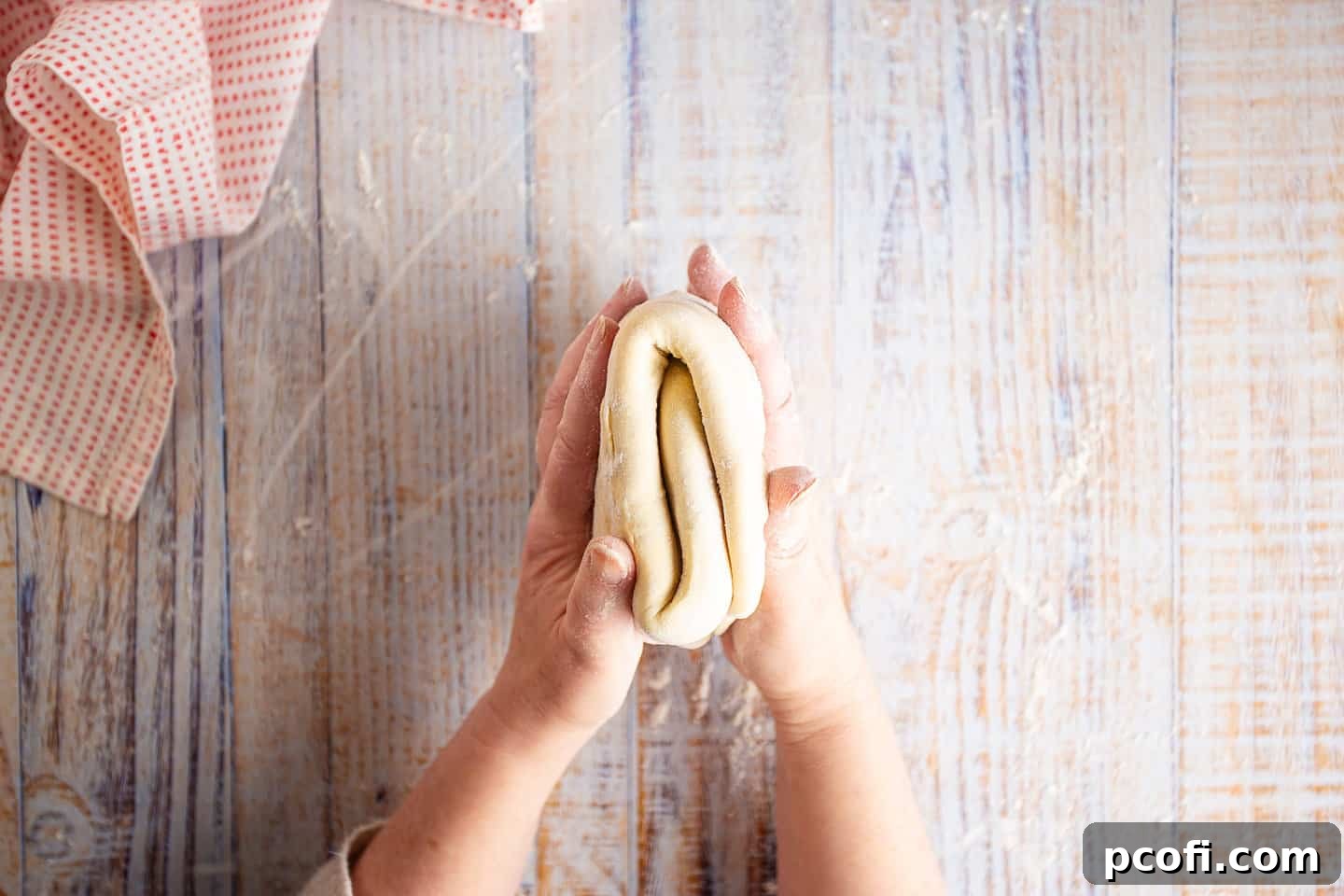
Now, the lamination process continues. Rotate the dough 90 degrees. Lightly flour your surface and the dough as needed (if butter starts to break through, a little extra flour can help). Roll the dough into a long rectangle once more, and then fold it into thirds, like a business letter. You will repeat this rolling and folding (known as a “turn”) three times in total. This creates the numerous, delicate layers that define a true Danish pastry. After the final fold, wrap the dough securely in plastic wrap and refrigerate it for at least one hour to rest. This chilling period is vital for the butter to firm up and for the gluten in the dough to relax, making it easier to work with.
Step 3: Prepare the Creamy Filling
While your meticulously laminated dough is resting in the fridge, you can whip up the luscious cream cheese filling. This part is incredibly simple! In a medium bowl, combine softened cream cheese, granulated sugar, one large egg, a few drops of fresh lemon juice, and vanilla bean paste (or vanilla extract). Beat all these ingredients together with an electric mixer until the mixture is completely smooth, light, and velvety. Ensure there are no lumps of cream cheese, as a smooth filling is key to a perfect Danish. Set aside until ready to use.
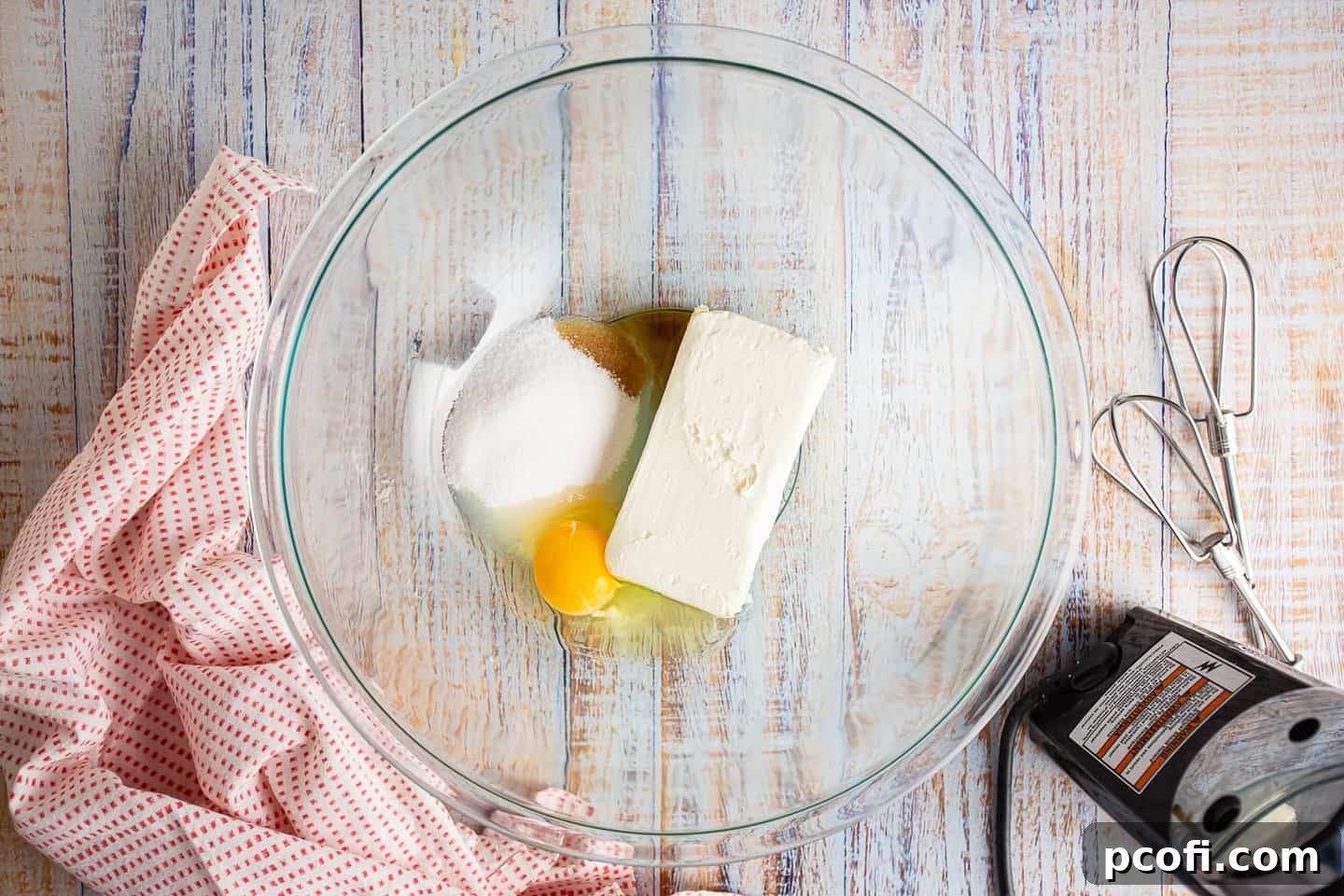
Step 4: Shape the Pastries
Once the dough has had its full hour of rest, remove it from the refrigerator. On a lightly floured surface, gently roll it out into a large rectangle, about 1/4 inch thick. Now, it’s time to divide the dough into individual portions. For uniform Danish, first cut the dough in half lengthwise. Then, divide each half into three equal sections, and finally, divide each of those sections into three more. This methodical division will yield 18 perfectly sized, equal portions of dough.
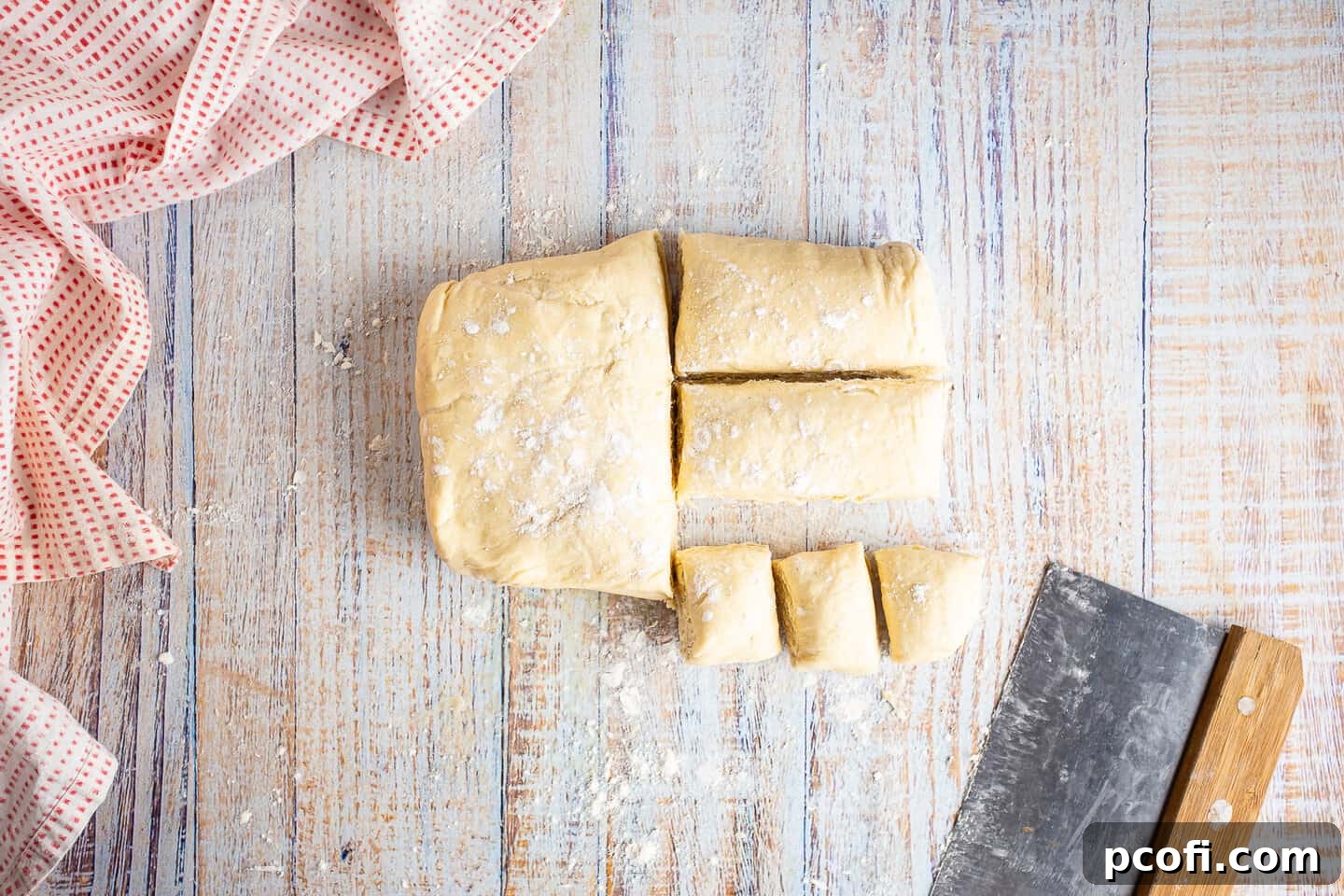
Take each portion and gently shape it into a flat disc, creating a slight depression in the center. This depression will hold your filling. Crucially, prick the center depression of each disc several times with a fork or skewer. This technique is called “docking” the dough, and it’s essential for preventing the center of the pastry from puffing up excessively during baking, ensuring a perfect cradle for your cream cheese filling.
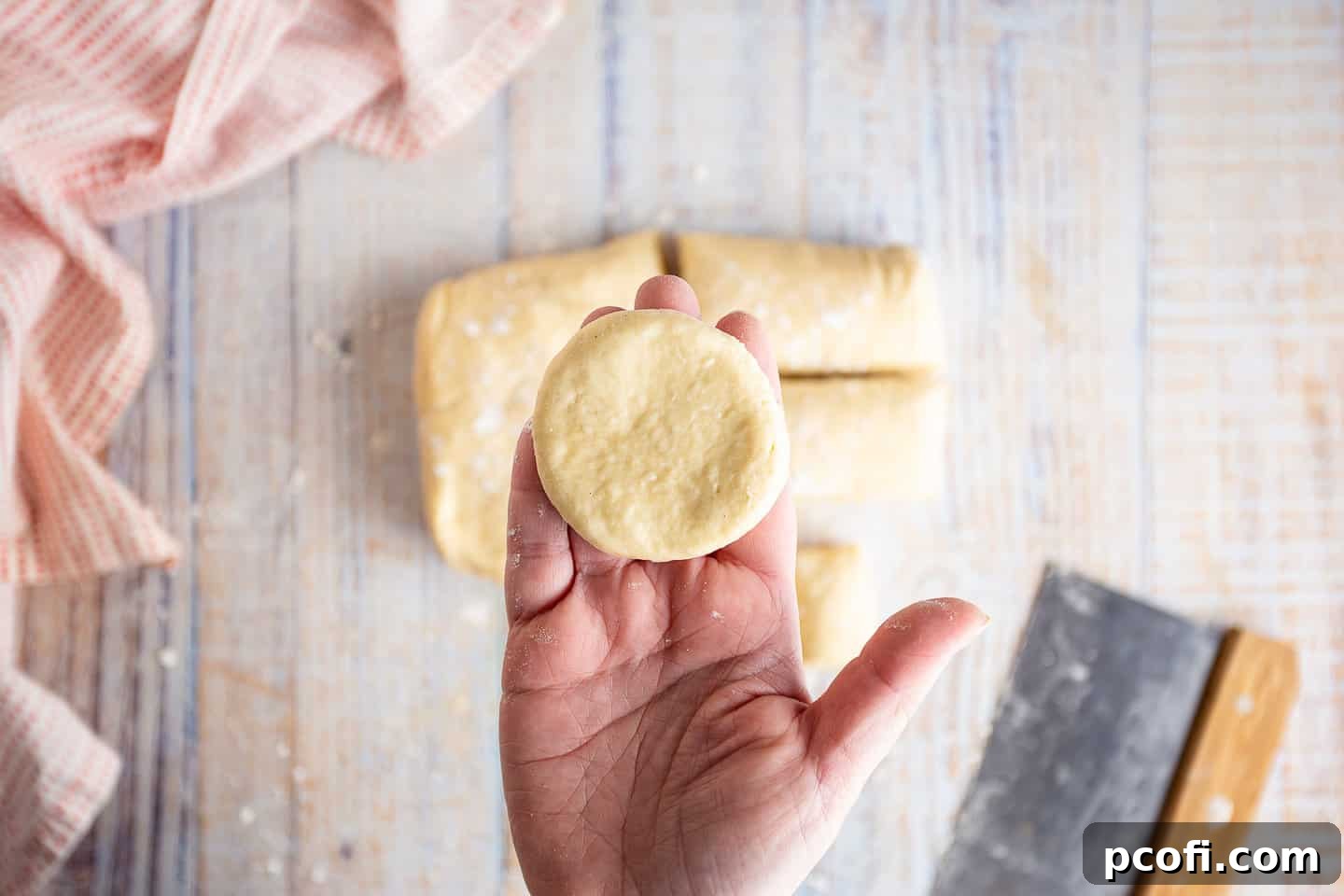
Step 5: Fill and Rest
Generously spoon about a teaspoon of the velvety cream cheese filling into the center of each docked dough disc. If you’re feeling artistic and wish to add the raspberry hearts, carefully squeeze a few drops of raspberry sauce onto the cream cheese filling. Then, take a bamboo skewer or toothpick and gently drag it through the raspberry drops to create charming heart shapes. This small detail adds a burst of color and a touch of elegance.
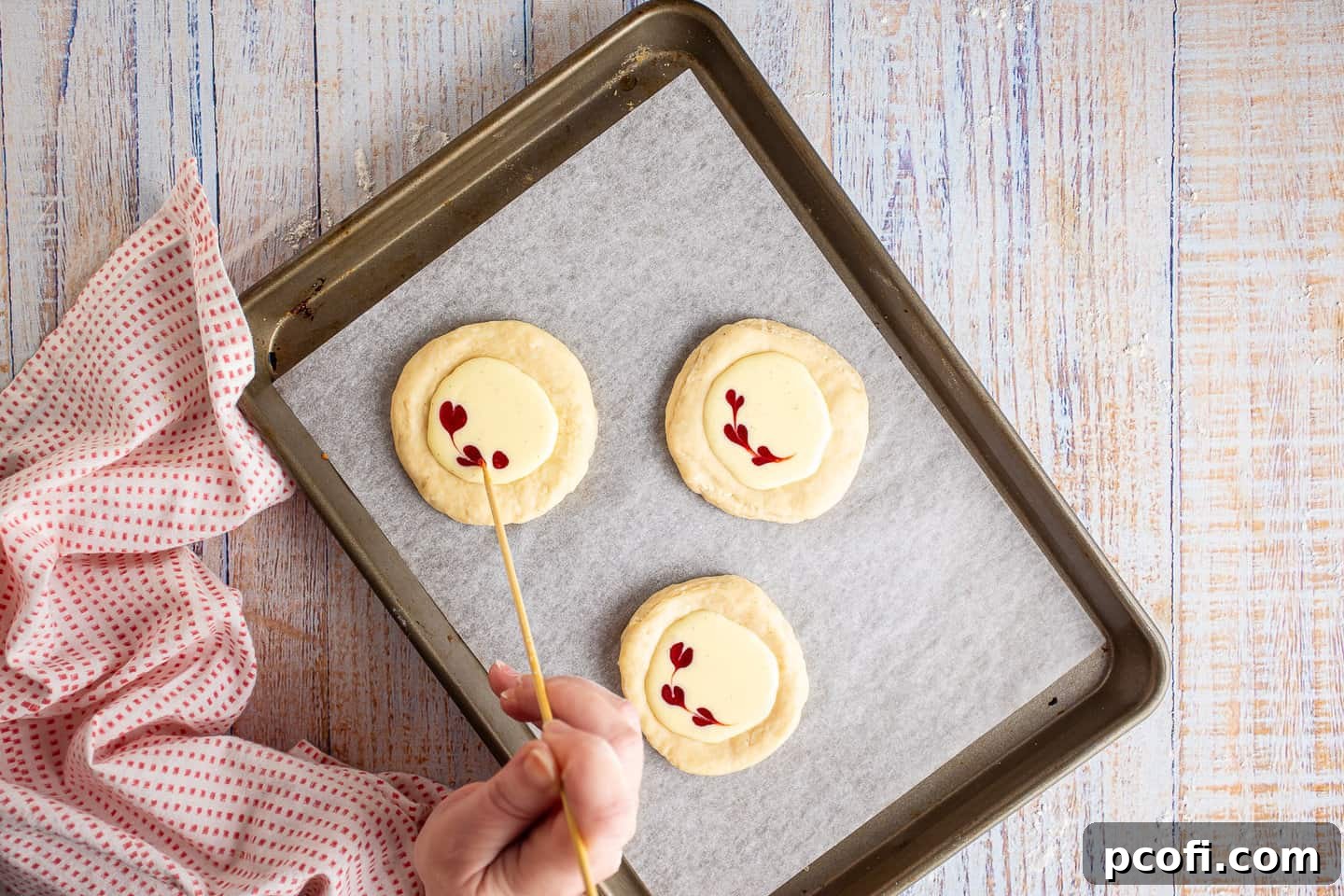
Once filled and garnished, carefully transfer the pastries to a baking sheet lined with parchment paper. Lightly tent the entire baking sheet with aluminum foil, ensuring the foil doesn’t touch the pastries, to create a humid environment. Allow the unbaked Danish pastries to rest at room temperature for another hour. This final proofing allows the yeast to work its magic one last time, contributing to a lighter, airier texture.
Step 6: Bake to Golden Perfection
As the resting time for your Danish nears its end, begin preheating your oven to 400 degrees F (200 degrees C). A hot oven is essential for achieving that characteristic puff and flakiness. While the oven preheats, gently brush the exposed pastry edges of each Danish with an egg wash (one egg beaten with a teaspoon of water). This will give them a beautiful, glossy, golden-brown finish.
For an extra layer of flavor and texture, sprinkle a pinch of sliced almonds around the outside edges of the pastries, if desired. Once the oven is fully preheated, carefully place the baking sheet inside. Bake the Danish in the hot oven until they are gloriously puffy, deeply golden brown, and the filling is set. This typically takes between 8 to 15 minutes, depending on your oven. Keep a close eye on them to prevent over-browning.
Serving Suggestions
Once your homemade cheese Danish emerge from the oven, they are truly a sight to behold. I find them most appealing with a delicate snowfall of powdered sugar dusted artfully around their edges—it’s a simple touch that adds both sweetness and visual elegance. These versatile pastries can be enjoyed warm, at room temperature, or even chilled. There’s nothing quite like a freshly baked cheese Danish paired with your morning coffee for a truly indulgent start to the day. They also make a fantastic addition to a brunch spread or as a sophisticated dessert.
Expert Baking Tips for Success
Achieving bakery-quality cheese Danish at home is entirely possible with a few key considerations:
- Verify Yeast Freshness: Always double-check the expiration date on your active dry yeast. Old or inactive yeast is the most common reason for dough failing to rise. Fresh yeast is crucial for a light and airy pastry.
- Optimal Liquid Temperature: The milk and water you use for the dough should be warm, but never hot. Aim for approximately 105 degrees F (40 degrees C). Temperatures that are too cold won’t activate the yeast, while excessively hot liquids will kill it. A thermometer can be very helpful here.
- Generous Flour Dusting: As you roll and fold the dough during lamination, maintain a lightly floured work surface. This prevents sticking, which can tear the dough and cause butter to escape. If you notice butter beginning to break through the dough, simply dust that area with a little more flour to contain it.
- Strategic Resting Environment: The second resting period for the shaped pastries should occur in a moderately warm place. Yeast thrives in warmth, so a sunny windowsill or the top of a refrigerator (where residual heat can collect) are ideal spots to encourage a faster rise. However, be cautious: avoid excessively warm environments, as high heat can cause the butter within the laminated dough to melt prematurely, compromising the flaky layers.
- Preheat Thoroughly: Ensure your oven is fully preheated to the specified temperature (400 degrees F / 200 degrees C) before placing the Danish inside. The sudden blast of intense heat is critical. It creates a rapid burst of steam within the dough layers, which forces them apart, resulting in that wonderfully puffy, multi-layered, and flaky texture.
Frequently Asked Questions About Cheese Danish
It’s perfectly normal if your cheese Danish don’t puff up significantly during their room temperature rest. Danish dough is quite rich, containing ample sugar, butter, and eggs, and these ingredients inherently inhibit the yeast’s initial rise. The dramatic puff and flakiness typically occur once the pastries hit the hot oven. If they don’t rise much in the oven, your yeast might have been inactive. This can happen if it’s expired or if the liquids you mixed it with were too hot. Always aim for a liquid temperature of around 105 degrees F (40 degrees C) for optimal yeast activation.
Absolutely! This Danish pastry recipe is incredibly versatile. Feel free to unleash your creativity with fillings. They work wonderfully with various fruit jams, vibrant marmalades, tart curds like lemon curd, or even smooth nut butter fillings. The possibilities are truly endless, allowing you to tailor your Danish to your personal preferences.
Certainly! The beauty of this dough is its adaptability to different shapes. While round discs are classic, you could create elegant cheese Danish braids, squares, or even pinwheels. Just remember that altering the size or thickness of the pastries might require slight adjustments to the baking time. Larger Danish will need more time, while smaller ones may bake faster.
Yes, these Danish pastries can be made ahead, which is a fantastic time-saver. The entire preparation process, including resting times, typically spans around 3 hours. To break up the work, you can prepare the dough, allow it to complete its first rest, then divide, shape, and fill the pastries. At this point, cover them well and refrigerate for up to 48 hours, or freeze them for up to 2 weeks. When you’re ready to bake, simply allow the pastries to come to room temperature (this might take 1-2 hours for refrigerated, longer for frozen), then proceed with brushing on egg wash and baking as usual. This makes them perfect for entertaining or a leisurely weekend breakfast.
This recipe is designed to yield 18 individual cheese Danish pastries. Each Danish is considered one serving. The nutritional information provided in the recipe card accounts for one Danish, including the optional raspberry hearts, sliced almonds, and a dusting of powdered sugar.
More Delightful Breakfast Recipes
If you enjoyed making these authentic cheese Danish, you might also love exploring some of my other popular breakfast and brunch recipes:
- Sweet Orange Rolls: Soft, fluffy rolls infused with bright citrus flavor.
- Classic Cinnamon Crumb Cake: A moist cake topped with a generous layer of buttery cinnamon crumbs.
- Irresistible Cranberry Orange Muffins: Perfect for a quick and fruity start to your day.
- Decadent Chocolate Chip Scones: Buttery scones studded with rich chocolate chips.
As an Amazon Associate, I earn from qualifying purchases.

Authentic Cheese Danish
This easy cheese Danish recipe couldn’t be more authentic! Creamy filling & flaky, buttery pastry, but streamlined, simplified, and so yummy!
Leave a Review
Ingredients
For the Pastry
- 2 3/4 cup (343.75 g) all-purpose flour
- 3 tablespoons (36 g) granulated sugar
- 1 1/4 teaspoons (7.5 g) kosher salt
- 1 cup (227 g) unsalted butter, (divided), cold
- 1/2 cup (122 g) milk, (whatever kind you keep on hand), warm
- 1/4 cup (59.15 g) water, warm
- 1 (44 g) large egg
- 1 teaspoon (4 g) vanilla extract
- 2 1/4 teaspoons (7 g) active dry yeast (1 packet)
- Egg wash (1 egg beaten with a teaspoon of water)
- 1/2 cup (46 g) sliced almonds, (optional garnish)
- 2 teaspoons (4 g) powdered sugar, (optional garnish)
For the Filling
- 8 ounces (226.8 g) cream cheese, softened
- 1/3 cup (66.67 g) granulated sugar
- 1 (44 g) large egg
- 1 teaspoon (5 g) lemon juice
- 1 teaspoon (5 g) vanilla bean paste (extract can be substituted)
- 2 teaspoons (18 g) raspberry sauce, (optional garnish)
Instructions
To Make the Pastry
- Stir the flour, sugar, and salt together in a large bowl.
- Cut or rub in 2 tablespoons of the cold butter until the mixture resembles coarse crumbs.
- Make a well in the center, and pour in the milk, water, egg, and vanilla.
- Sprinkle the yeast on top and allow it to dissolve (approx. 5 minutes).
- Stir everything together until combined, then knead the dough until smooth and elastic (a full 10 minutes).
- Transfer the dough to a lightly floured surface and roll/pat it into a rectangle shape.
- Cut the remaining cold butter lengthwise into several long, thin slices, and line half of them up in a flat square in the middle of the rectangle.
- Fold one side of the rectangle over the butter, and stack the remaining butter on top in the same way.
- Fold the other side of the rectangle over the second square of butter, pinching around the edges to seal the 2 butter squares inside the dough.
- Sprinkle flour on the dough as needed to prevent sticking, and flatten and roll the dough and butter into a rectangle shape again, folding into thirds and repeating 3 times.
- Chill the dough (covered) for one hour.
- Divide the dough in half, then divide each half into thirds and each third into thirds again (you should have 18 equal portions).
- Shape each portion of dough into a flat disc with a slight depression in the middle, and prick the depression with the tines of a fork to dock the dough and prevent it rising in the middle.
- Fill with the cream cheese mixture, garnish with raspberry sauce, and tent with foil.
- Rest the pastries for one hour.
- Preheat the oven to 400 degrees F (200 degrees C).
- Brush with egg wash, sprinkle sliced almonds around the edge, and bake until puffed and golden (approx. 8 to 15 minutes).
- Dust around the edges with powdered sugar, if desired.
To Make the Cream Cheese Filling
- Beat the cream cheese, sugar, egg, lemon juice, and vanilla together until smooth.
Notes
Ensure all butter is very cold for best lamination results. Do not overmix the dough after adding liquids, just enough to combine before kneading. Adjust bake time for your specific oven.
Nutrition Information
Calories: 261 kcal
Carbohydrates: 23 g
Protein: 4 g
Fat: 17 g
Saturated Fat: 9 g
Polyunsaturated Fat: 1 g
Monounsaturated Fat: 5 g
Trans Fat: 0.4 g
Cholesterol: 59 mg
Sodium: 213 mg
Potassium: 84 mg
Fiber: 1 g
Sugar: 7 g
Vitamin A: 522 IU
Vitamin C: 0.2 mg
Calcium: 38 mg
Iron: 1 mg