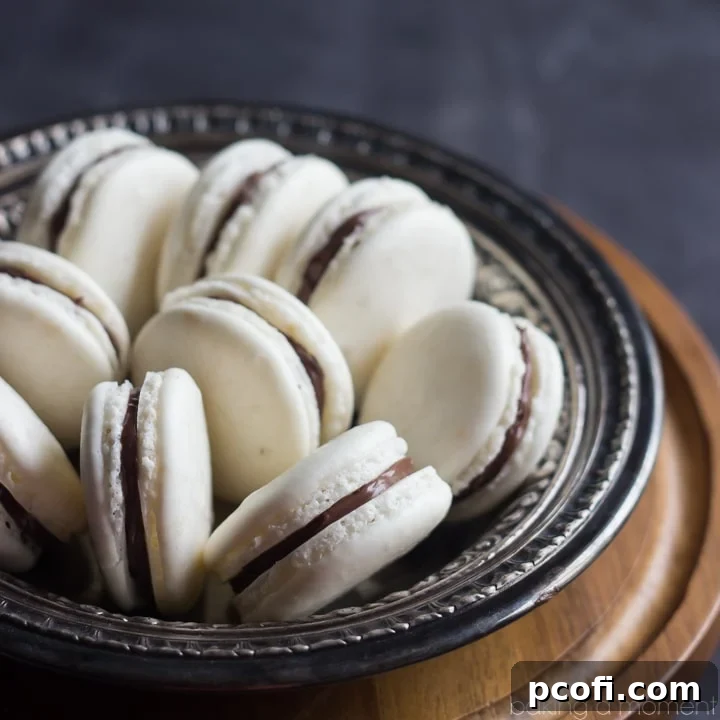
Mastering the Art of French Macarons: Your Ultimate Guide to Perfect Homemade Shells
The delicate allure of French macarons has captivated bakers and dessert enthusiasts worldwide. These elegant, bite-sized almond meringue cookies are renowned for their crisp shells, chewy interiors, and the distinctive “pieds” (feet) that form at their base during baking. While their sophisticated appearance might suggest they are exclusively for professional patisseries, the truth is that you can absolutely create these exquisite treats right in your own kitchen! This ultimate guide is designed to demystify the macaron-making process, providing you with simple instructions, invaluable tips, and a foundational recipe for classic almond shells that are naturally gluten-free.
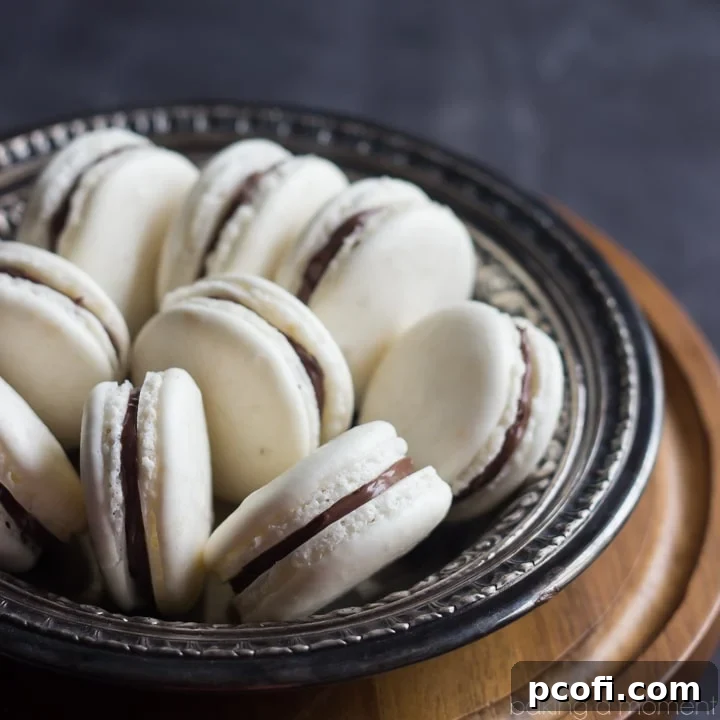
The Allure of French Macarons: More Than Just a Cookie
French macarons hold a special place in the world of confections. Beyond their undeniable visual appeal, they offer an unparalleled combination of textures and flavors. They are wonderfully gift-able, making them a thoughtful present for any occasion, and their adaptability is truly endless. From classic vanilla and chocolate to exotic fruit and spice combinations, the possibilities for flavor innovation in both the shells and fillings are limited only by your imagination. Experimenting with different pairings and colors transforms baking into a creative adventure, allowing you to craft uniquely personalized treats.
However, despite their charm, macarons often come with a reputation for being notoriously difficult to make. Many aspiring bakers express hesitation, fearing the complexity or the risk of failure. Comments like, “I love macarons, but I’m too scared to try making them,” or “They look delicious, but I don’t think I’m experienced enough,” are common refrains. I’ve heard these concerns repeatedly, and I’m here to wholeheartedly tell you: while macarons can be a bit finicky at times, they are absolutely within your reach!
Conquering Macaron Fear: Embracing Imperfection for Delicious Results
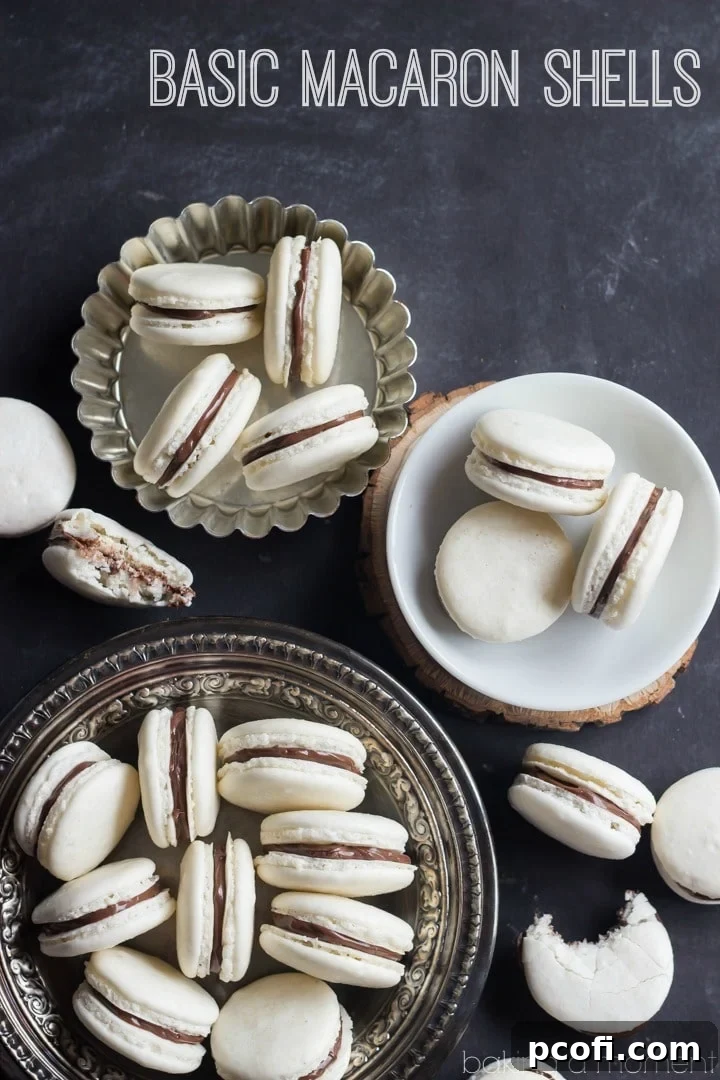
Let’s be honest: not every batch of macarons will be picture-perfect, and that’s perfectly okay. Take a close look at the macarons featured here – some might be slightly lopsided, the edges perhaps not as crisp as a commercial bakery’s, and you might even spot a tiny air bubble or two. But here’s a little secret: these minor imperfections do not detract one bit from their incredible taste! If I can successfully bake these delightful treats in a less-than-ideal oven (imagine something like this: a well-loved, possibly quirky oven), then you, too, can achieve fantastic results in your own home kitchen.
The beauty of homemade macarons lies not in their flawless symmetry, but in the joy of creating something so unique and delicious from scratch. Lopsided macarons with a few air bubbles taste every bit as good as their aesthetically “perfect” counterparts. So, banish those fears and embrace the baking adventure. Are you ready to dive in and discover the rewarding world of homemade French macarons? Let’s get started!
Understanding the Basic Macaron Ingredients and Process
At its heart, macaron making follows a straightforward process, similar to many other pastries, but with an emphasis on precision. For the best results, weighing your ingredients with a kitchen scale is highly recommended. This method offers far greater accuracy than volume measurements (like measuring cups), which can significantly impact the delicate balance required for perfect macarons.
The basic composition involves combining dry ingredients with wet ingredients. The dry component consists of finely ground almond meal (often called almond flour), powdered sugar (also known as confectioners’ or icing sugar), and a small pinch of kosher salt. These ingredients contribute to the characteristic texture and flavor of the macaron shell.
The wet component is primarily a meringue, made from egg whites and granulated sugar (sometimes referred to as caster sugar), with a touch of cream of tartar. Cream of tartar acts as a stabilizer, helping the egg whites whip up into a firm, glossy meringue that holds its shape, preventing it from falling flat. Once the meringue reaches the correct consistency, the dry ingredients are gently folded in, a technique known as “macaronage,” to create the perfect batter. It truly is that simple in principle.
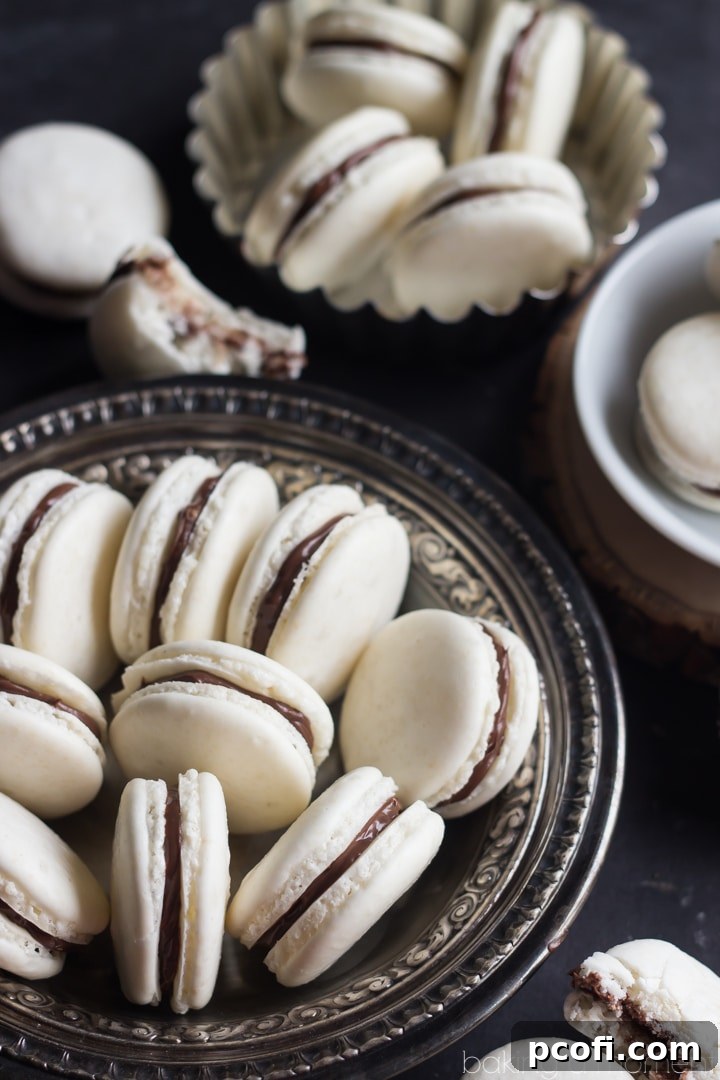
Essential Tips for Macaron Success
While the basic steps are simple, attention to detail makes all the difference. Here are ten crucial tips to help you achieve macaron mastery:
- Use Room Temperature Egg Whites from Whole Eggs: Egg whites separate more easily when cold, but whip up to their maximum volume and stability when at room temperature. Avoid pasteurized liquid egg whites, as they often don’t yield the same robust meringue required for macarons. Allow whole eggs to sit on the counter for at least 30 minutes to an hour before separating.
- Ensure Immaculate Mixing Equipment: Any trace of fat, grease, or egg yolk can prevent egg whites from whipping properly. Thoroughly clean your mixing bowl (preferably metal or glass) and whisk attachment with hot, soapy water, then dry them completely. You can even wipe them down with a little vinegar or lemon juice for extra assurance.
- Choose the Right Coloring (If Tinting): For vibrant, stable colors without altering the batter’s consistency, use gel paste or powdered food coloring. Liquid food coloring can introduce too much moisture, thinning the batter and leading to poor results. Add the color to your meringue once it has reached stiff peaks, before incorporating the dry ingredients.
- Recommended Gel Paste Colors: Shop Gel Paste Food Colors
- Recommended Powdered Colors: Shop Powdered Food Colors
- Master the Macaronage (Folding Technique): This is perhaps the most critical step. You want to fold the almond mixture into the meringue until the batter achieves the perfect “lava-like” consistency – it should flow off the spatula in a slow, continuous ribbon. Over-mixing will result in a runny batter that spreads too much, while under-mixing will yield thick, lumpy shells without proper “feet.” Err slightly on the side of under-mixing, as the batter will be worked a little more when transferring to the piping bag.
- Pipe Slightly Smaller Rounds: Remember that macaron batter will spread slightly as it settles. Pipe your rounds a bit smaller than your desired final size to account for this expansion. Consistent piping size is also key for even baking.
- Handle Gently After Piping: Some recipes suggest forcefully tapping baking sheets on the counter to release air bubbles. While this can work, it sometimes leads to cracked shells in the oven. I prefer a gentle approach; a few soft taps or gently rocking the sheet can often suffice to release larger air bubbles. Personally, I find a few tiny bubbles preferable to cracked shells.
- Allow Proper Drying Time (Form a “Pellicle”): This step, known as “curing” or “drying,” is essential for forming the signature “feet.” The exact drying time varies based on humidity, but typically ranges from 30 minutes to over an hour. You’ll know they’re ready when you can lightly touch the surface of a macaron shell and feel a thin, dry membrane (a “pellicle”) that doesn’t stick to your finger. This pellicle helps create a barrier, forcing the air upwards during baking and forming the feet.
- Bake at a Low, Consistent Temperature: Macarons bake best at lower temperatures (around 300°F / 150°C) to prevent browning and ensure they cook through evenly. Bake one sheet at a time for optimal results. Baking times can vary, so keep a close eye on them. They are done when they are set and the “feet” are well-formed. Gently try to wiggle a shell; if it doesn’t move easily from its foot, it’s likely ready. Let them cool completely on the baking sheet to prevent breakage.
- Choose Complementary Fillings: The shells themselves are quite sweet, so pairing them with a less-sweet or contrasting filling creates a beautifully balanced flavor profile. Dark chocolate ganache, tangy lemon curd, salted caramel, or fruit preserves are excellent choices that cut through the sweetness of the shells.
- Rest Overnight for Optimal Flavor and Texture: This is a non-negotiable step for truly exceptional macarons. Once filled, store your macarons in an airtight container in the refrigerator overnight (or for at least several hours). This resting period allows the filling and the shell to “meld” together, softening the shell slightly and creating that signature soft, chewy, melt-in-your-mouth texture that macarons are famous for.
Recommended Macaron-Making Tools
Having the right tools can simplify the macaron-making process significantly. While not all are strictly necessary, they certainly help achieve more consistent and professional results:
- Digital Kitchen Scale: Essential for accurate ingredient measurements. Shop Digital Kitchen Scales
- Stand Mixer with Whisk Attachment: Makes whipping egg whites much easier and more consistent. Shop Stand Mixers
- Fine-Mesh Sieve: For sifting almond flour and powdered sugar to ensure a smooth batter. Shop Fine-Mesh Sieves
- Food Processor: To finely grind almond meal and powdered sugar together. Shop Food Processors
- Piping Bags and Round Tips (e.g., Wilton 1A or Ateco 805): Crucial for uniformly sized macaron shells. Shop Piping Bags & Tips
- Silicone Baking Mats (e.g., Silpat) or Parchment Paper: For non-stick baking and easy removal. Shop Silicone Baking Mats
- Baking Sheets: Sturdy, light-colored baking sheets for even heat distribution. Shop Baking Sheets
- Rubber Spatula: For gentle macaronage. Shop Rubber Spatulas
Unleash Your Creativity: Macaron Flavor Ideas
Once you’ve mastered the basic shell, the world of macaron flavors is yours to explore! Here are some exciting combinations I’ve enjoyed and shared over the years, designed to inspire your next baking project:
- Chocolate Walnut Macarons with Salted Caramel Filling: A rich, nutty, and salty-sweet delight.
- Hazelnut Macarons with Pumpkin Maple Cream Cheese Filling: Perfect for autumn, offering warm and cozy flavors.
- Coffee Macarons with Nutella Filling: A harmonious blend for coffee and chocolate lovers.
- Blueberry Mascarpone Macarons: Light, fruity, and creamy, ideal for spring or summer.
- Strawberry Rose Macarons: An elegant and fragrant combination that’s beautifully romantic.
- Orange Walnut Macarons with Spiced Cream Cheese and Cranberry Filling: A sophisticated flavor profile, great for holidays.
Visual Guidance: Videos for Mastering Macarons
Sometimes, seeing is believing, especially when it comes to delicate techniques like macaronage and piping. If you’re still feeling a little apprehensive, visual tutorials can provide immense confidence. Observing the process firsthand can clarify nuances that text alone might not fully convey. There are excellent video tutorials available that demonstrate each step, from whipping the perfect meringue to achieving the ideal batter consistency and piping flawless rounds. Look for videos that guide you through a live recipe demo, often offering more in-depth insight into the technique and troubleshooting common issues.
This post includes affiliate sales links, which means I may earn a small commission if you make a purchase through these links, at no extra cost to you.
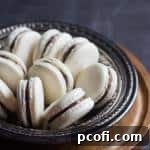
Basic Macaron Shells
Servings: 30 sandwiches (approx.)
Prep Time: 30 mins
Cook Time: 10 mins
Drying Time: 45 mins
Total Time: 40 mins (active time)
You can totally do this! Follow my simple instructions and video tutorial, and you’ll be enjoying freshly made French macarons from your own home kitchen! This basic recipe for classic almond shells couldn’t be more simple. (Naturally gluten-free.)
Leave a Review
Save Recipe
Ingredients
- 120 grams egg whites (about 4 large eggs)
- 170 grams almond meal (also called “almond flour”)
- 200 grams powdered sugar (also called “confectioners” or “icing” sugar)
- 1/8 teaspoon kosher salt
- 1/4 teaspoon cream of tartar
- 70 grams granulated sugar (also called “caster’s” sugar)
- Gel paste or powdered food coloring, optional
Instructions
- Set the egg whites aside to come to room temperature.
- Measure the almond meal, powdered sugar, and salt into the bowl of a food processor. Process the mixture finely, then sift, discarding any large bits. Set aside.
- Measure the granulated sugar in a small bowl.
- Add the cream of tartar to the egg whites, and mix on medium-high speed, using the whip attachment.
- When the whites hold soft peaks, start adding the granulated sugar, very slowly, while continuing to whip.
- When all the granulated sugar has been incorporated, continue to whip until the meringue is stiff and glossy. Add color, if using.
- Add the sifted almond meal mixture to the meringue, and fold together using a spatula. Continue folding until the batter drops from the spatula in one long ribbon (the “lava” consistency).
- Transfer the batter to a piping bag fitted with a large round tip, and pipe 1 1/2-inch diameter rounds onto parchment-lined baking sheets.
- Allow the piped macarons to dry for 45-60 minutes, or until a thin, dry membrane forms on their surface (the “pellicle”). This is crucial for the “feet” to form.
- Preheat the oven to 300 degrees F (150°C), and bake the macarons (one sheet at a time) until they are set and have developed “feet” (approximately 10-15 minutes). Do not allow them to brown.
- Allow the macarons to cool completely on the baking sheet before carefully peeling them from the parchment paper. Once cool, sandwich them with your preferred filling.
Nutrition Information (per serving)
- Calories:
- 76kcal
- Carbohydrates:
- 6g
- Protein:
- 3g
- Fat:
- 4g
- Saturated Fat:
- 1g
- Cholesterol:
- 6mg
- Sodium:
- 41mg
- Potassium:
- 99mg
- Sugar:
- 5g
- Vitamin A:
- 60IU
- Vitamin C:
- 0.6mg
- Calcium:
- 73mg
- Iron:
- 0.3mg
Cuisine: French
Course: Dessert, Snack
I hope this comprehensive guide empowers you to embark on your macaron-making journey with confidence. Don’t hesitate to reach out if you have any lingering questions – I’ll do my best to provide the answers you need for your sweet success!
Tried this recipe?
Mention @bakingamoment on Instagram or tag #bakingamoment to share your creations!