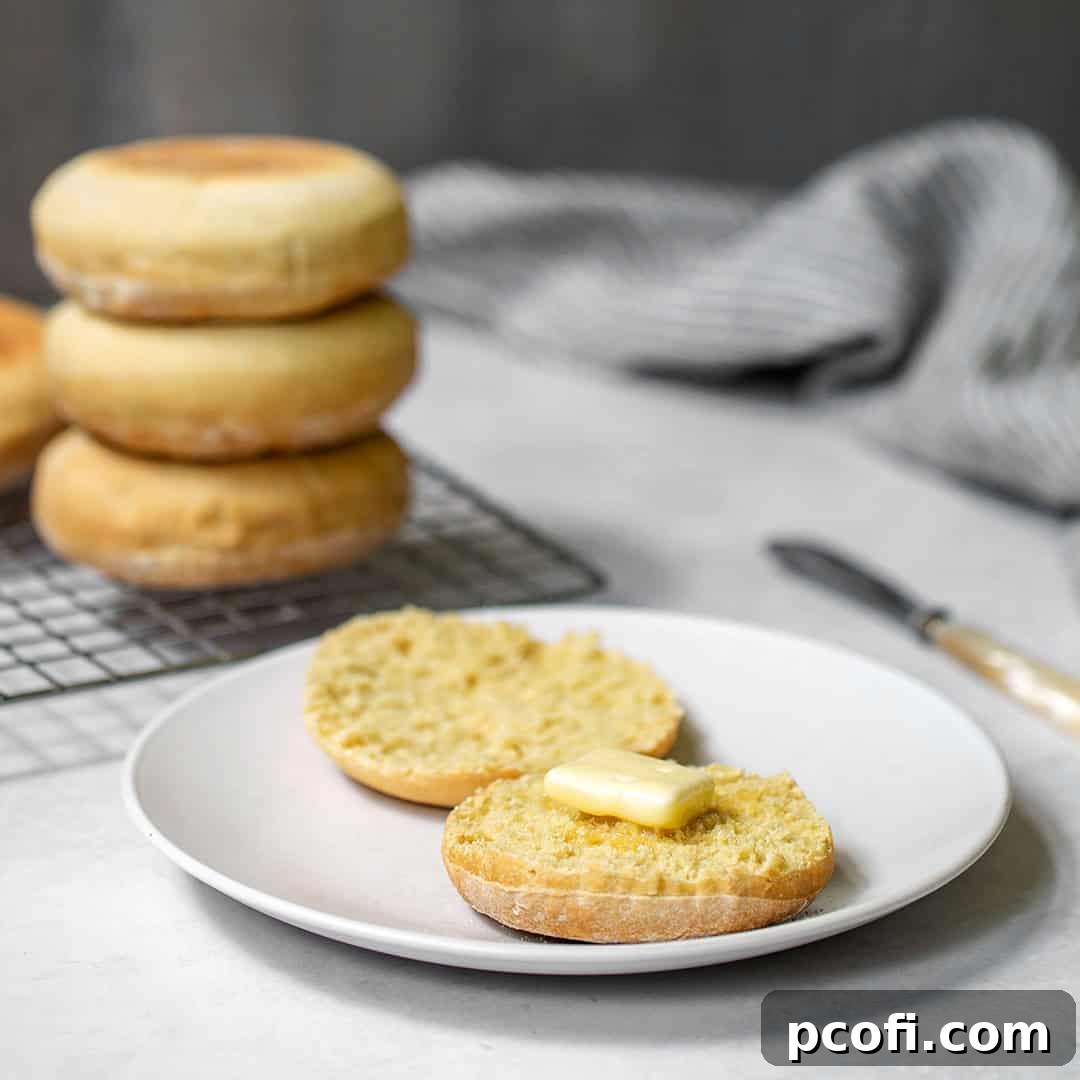
Indulge in the simple pleasure of homemade English muffins. This classic recipe delivers beautifully soft and chewy muffins, famous for their unique “nooks and crannies,” making them the perfect vessel for melted butter and jam. Easy to follow and incredibly rewarding, this recipe will transform your breakfast routine into a gourmet experience.
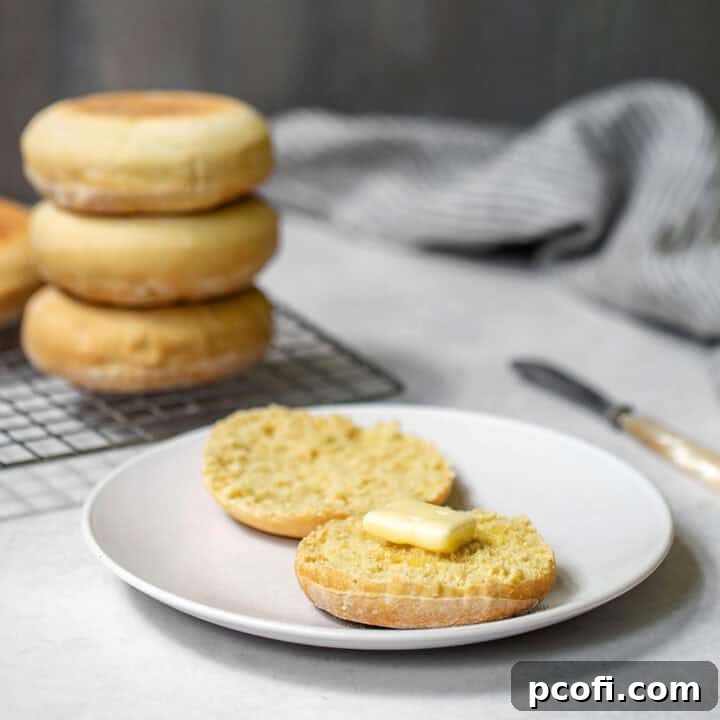
There’s nothing quite like the comforting aroma and taste of freshly baked English muffins. Forget the store-bought varieties; once you try this easy homemade English muffin recipe, you’ll never look back. Crafted for simplicity and maximum flavor, these muffins achieve that coveted tender interior and slightly crisp exterior, characteristic of the best English muffins.
This delightful recipe is a collaborative effort, originally developed by Jen, a brilliant baker whose culinary creations never cease to amaze. Her meticulous attention to detail ensures a foolproof process that even novice bakers can master. If you’ve enjoyed Jen’s other remarkable recipes, such as her refreshing peach ice cream, vibrant Greek pasta salad, or her bright lemon cookies, you know you’re in for a treat.
But let’s truly appreciate the star of the show: homemade English muffins. For many, these iconic breakfast items evoke a sense of nostalgia. The joy of a perfectly toasted English muffin, generously slathered with melted butter and sweet jam, is unparalleled. Imagine the butter seeping into every tiny air pocket, creating a symphony of textures and flavors. It’s a culinary experience that elevates a simple breakfast to pure bliss. While once a daily indulgence, these wonderful muffins are now a special treat, and this recipe promises tall, fluffy, and utterly delicious results every time.
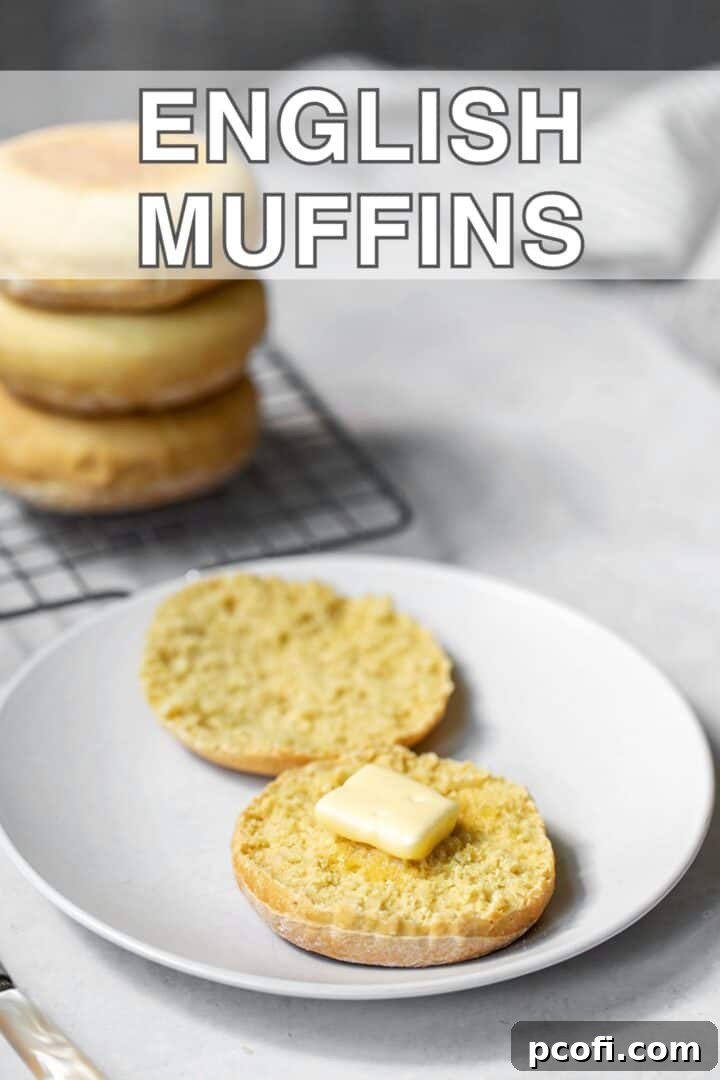
Table of Contents
- What Are English Muffins?
- Why This is the Best English Muffin Recipe
- What Do English Muffins Taste Like?
- Essential Ingredients for English Muffins
- Special Equipment for English Muffins
- How to Make English Muffins Step-by-Step
- How to Serve English Muffins
- Expert Tips for Perfect English Muffins
- Frequently Asked Questions About English Muffins
- More Delightful Bread Recipes
Jump to Recipe
What Are English Muffins?
English muffins are a beloved staple, though they defy easy categorization. They are a unique type of yeast bread, often described as a flat-bottomed, disc-shaped bread, distinct from traditional loaves or rolls. What truly sets them apart is their dual leavening system: they rely on both yeast for fermentation and baking soda for an extra lift. This combination contributes to their distinctive texture and internal structure.
Historically, English muffins trace their origins back to the United Kingdom, where they were a popular tea-time treat. Their preparation method is also quite unusual; they are typically cooked on a griddle or skillet first, which creates a lightly browned and crisp exterior, and then finished in the oven to ensure they are fully cooked through and wonderfully soft inside. This two-stage cooking process is crucial for achieving their signature qualities.
The hallmark of a truly great English muffin lies within its interior. Once split horizontally (ideally with a fork, not a knife, to maximize the “craggles”), you’ll discover a myriad of small air pockets and uneven surfaces. These “nooks and crannies” are essential for catching and absorbing butter, jam, or any other topping you choose, making them impossibly light and flavorful. They offer a pillowy-soft chewiness with a subtle yeasty tang, making them an excellent choice for a hearty breakfast or a satisfying afternoon snack.
Why This is the Best English Muffin Recipe
Among the countless recipes for English muffins, this one stands out for several compelling reasons:
- Unbeatable Homemade Flavor: There’s an undeniable difference in taste when you create something from scratch with fresh, wholesome ingredients. This recipe yields English muffins that are superior in flavor and texture to anything you’ll find in a grocery store. The aroma alone as they bake will make your kitchen feel like a professional bakery.
- Simple Ingredients, Exceptional Results: You won’t need to hunt for obscure items. This recipe calls for a handful of common pantry staples, proving that extraordinary results can come from humble beginnings. The beauty of its simplicity makes it approachable for anyone.
- Easy-to-Follow Instructions: Jen has crafted this recipe with the home baker in mind. The step-by-step instructions are clear, concise, and easy to understand, even if you’re new to yeast baking. Each stage is thoughtfully explained, guiding you to success without complexity or confusion.
- Incredible Versatility: While perfect with classic butter and jam, these English muffins are a blank canvas for culinary creativity. They can be topped with sweet spreads, savory ingredients, or even used as a base for gourmet sandwiches. The dough itself can also be gently adapted with other flavors if you feel adventurous.
- Perfect Texture Every Time: This recipe consistently delivers English muffins that are wonderfully tall, fluffy, and tender on the inside, with that desirable crisp exterior and an abundance of those famous “nooks and crannies” that make them so delightful.
What Do English Muffins Taste Like?
The flavor profile of these English muffins is a harmonious blend of tang, sweetness, and savoriness. You’ll notice a distinct, pleasant yeasty tang, a signature characteristic of traditional fermented breads, which is beautifully balanced by a hint of sweetness from the granulated sugar. When properly toasted, the exterior develops a subtle crispness, while the interior remains wonderfully soft and airy.
Once you spread a dollop of butter or jam onto a warm, fork-split English muffin, the flavors truly come alive. The butter melts into every nook and cranny, creating a rich, creamy counterpoint to the bread’s slight tang. With jam, you get an added layer of fruitiness and sweetness, making each bite a delightful experience. They are inherently comforting and satisfying, providing a substantial yet light foundation for countless toppings.
Essential Ingredients for English Muffins
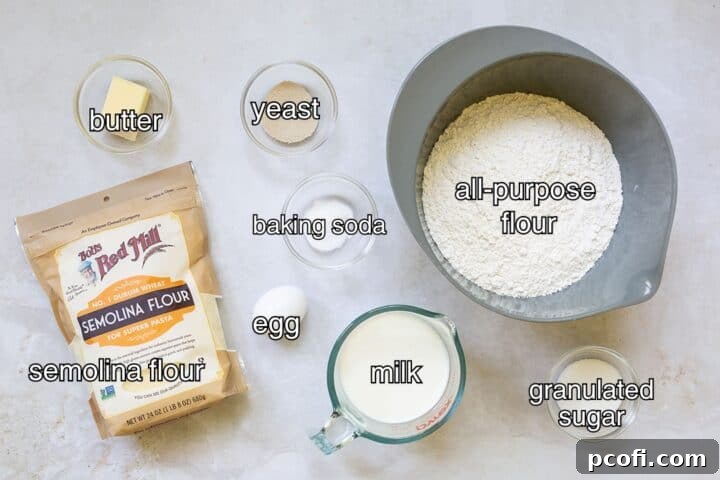
Crafting perfect English muffins requires just a few basic ingredients, each playing a crucial role in achieving their signature taste and texture:
- All-Purpose Flour: This forms the structural backbone of your English muffins. All-purpose flour provides the right balance of protein to create a tender yet chewy crumb. For those with dietary restrictions, a good quality 1:1 gluten-free flour blend can often be substituted, though results may vary slightly.
- Kosher Salt: More than just a flavor enhancer, salt plays a vital role in controlling yeast activity and strengthening the gluten network in the dough. It brings out the subtle complexities of the other ingredients, ensuring a well-rounded taste.
- Granulated Sugar: A small amount of sugar serves multiple purposes. It provides essential food for the yeast, helping the dough to rise effectively. Additionally, it contributes a delicate sweetness, keeps the English muffins moist, and aids in achieving that beautiful golden-brown color during cooking.
- Leavening Agents: Baking Soda and Instant Yeast: This recipe cleverly combines two powerful leavening agents. Instant yeast provides the primary rise, creating that classic bread-like texture and yeasty flavor. Baking soda, when combined with acidic ingredients (like those naturally present or developed during fermentation), contributes an additional boost, ensuring a light, airy crumb and those coveted nooks and crannies.
- Whole Milk: Milk adds richness, tenderness, and a lovely depth of flavor to the dough that water simply cannot replicate. It also helps in dissolving the yeast and developing a smooth, pliable dough. Using whole milk ensures a richer final product.
- Unsalted Butter: Incorporating unsalted butter enriches the dough, making the English muffins incredibly tender and contributing to a luxurious mouthfeel. The butter also helps to carry and enhance all the delicious flavors, ensuring they linger pleasantly on your palate.
- Large Egg: An egg adds further richness and helps to bind the dough, contributing to a more stable structure. It also imparts a beautiful golden hue to the finished muffins, making them even more visually appealing. If you prefer a plant-based option, a 1:1 egg substitute can often work.
- Semolina Flour for Dusting: While not mixed into the dough, semolina flour is essential for dusting your work surface and baking sheet. Its coarser texture prevents sticking and contributes a subtle, delightful chewiness and crispness to the exterior of the English muffins during cooking.
Special Equipment for English Muffins
While you don’t need a professional kitchen, a few key pieces of equipment will make your English muffin baking process smoother and more successful:
- Measuring Cups and Spoons: Accurate measurements are crucial in baking. Using a reliable set of measuring cups and spoons ensures consistency in your dough.
- Large Mixing Bowl: You’ll need a spacious bowl to combine your dry ingredients and later to allow your dough ample room to rise.
- Small Saucepan: Essential for gently heating the milk and butter to the perfect lukewarm temperature, which is critical for activating the yeast without killing it.
- Stand Mixer with Dough Hook Attachment: This piece of equipment is a true arm-saver! A stand mixer makes the kneading process effortless, ensuring the dough is thoroughly developed for optimal texture. While not strictly necessary (you can knead by hand), it vastly simplifies the process.
- Rolling Pin: A rolling pin allows you to evenly roll out your dough to the specified thickness, ensuring uniform muffins.
- 3 ¾-inch Round Cookie Cutter: This specific size of round cutter is ideal for shaping individual English muffins, giving them their classic, uniform disc shape. Consistency in size helps with even cooking.
- Parchment Paper Sheets: Lining your baking sheet with parchment paper prevents the dough from sticking, makes for easy transfer, and simplifies cleanup considerably.
- Baking Sheet: Used for transferring the shaped muffins to the oven for their final bake, ensuring they cook through evenly.
- Clean Dish Towel: Essential for loosely covering the dough during its resting and rising phases. This prevents the surface of the dough from drying out and forming a crust.
- Nonstick Skillet (Cast Iron or Heavy-Bottomed): A good quality nonstick skillet or a seasoned cast-iron pan is vital for the initial searing of the English muffins. It helps develop that wonderful golden-brown crust and ensures even cooking on the stovetop.
How to Make English Muffins Step-by-Step
Creating homemade English muffins is a surprisingly simple and gratifying process. Follow these steps for perfect results:
Step 1: Combine Dry Ingredients
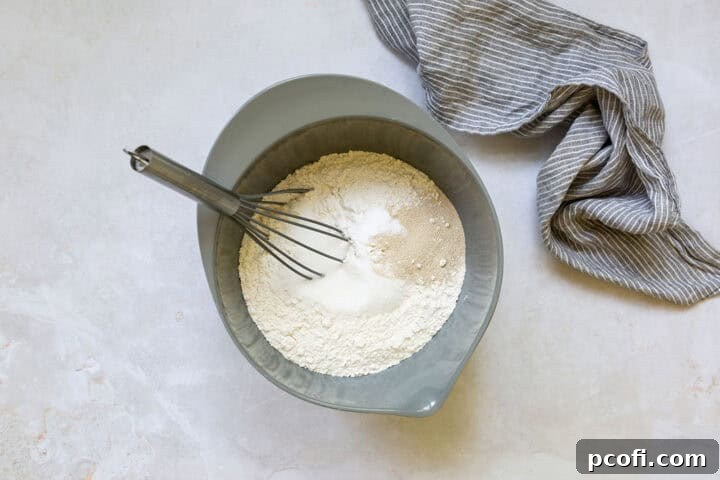
In a medium-sized mixing bowl, thoroughly whisk together the all-purpose flour, kosher salt, granulated sugar, baking soda, and instant yeast. Whisking ensures all ingredients are evenly distributed, which is crucial for proper leavening and flavor balance throughout the dough.
Step 2: Heat Milk and Butter
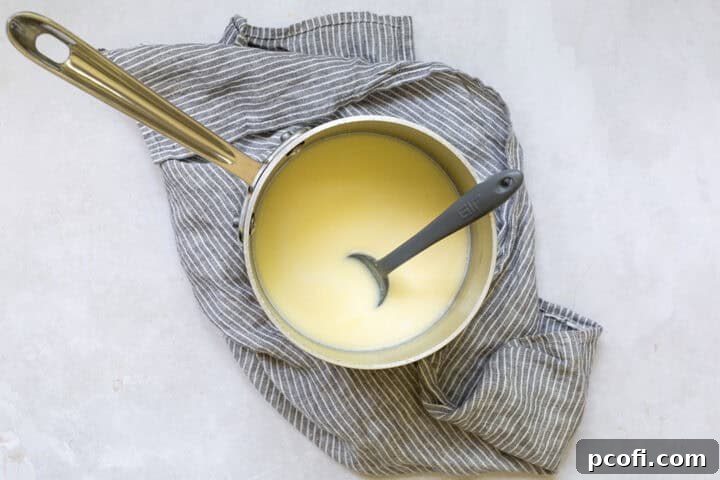
In a small saucepan, gently heat the whole milk and unsalted butter over medium heat, stirring occasionally, until the butter is just melted. The goal is to warm the mixture, not boil it. Once melted, remove from heat and let it cool for several minutes until it reaches a lukewarm temperature (around 105-115°F or 40-46°C). This temperature is ideal for activating the yeast without killing it. You can speed up the cooling process by placing the saucepan in the fridge for a few minutes, stirring frequently.
Step 3: Make Dough
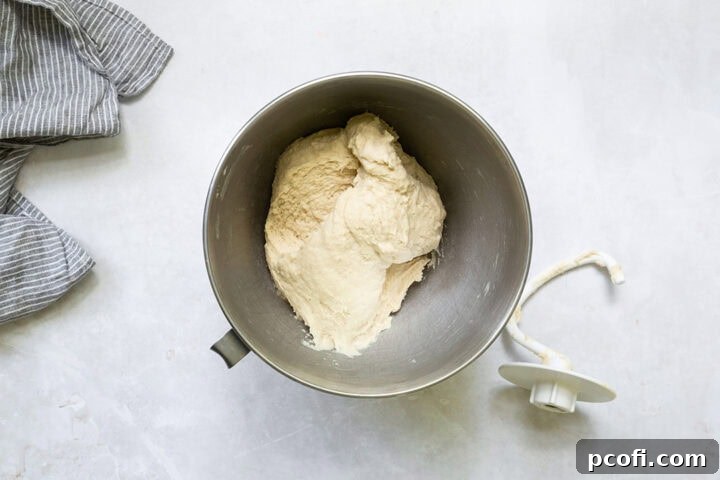
Transfer the whisked dry ingredients to the bowl of a stand mixer fitted with a dough hook attachment. With the mixer on low speed, gradually add the lukewarm milk and butter mixture, followed by the lightly beaten egg. Mix until all the ingredients are just combined and a shaggy dough forms. Increase the mixer speed to medium and continue mixing for an additional minute. The dough will be noticeably soft and slightly sticky, which is perfectly normal for English muffins. If it feels excessively sticky and difficult to handle, add an additional 1-2 tablespoons of flour, mixing until just combined and the stickiness is manageable.
Step 4: Cut Out English Muffins
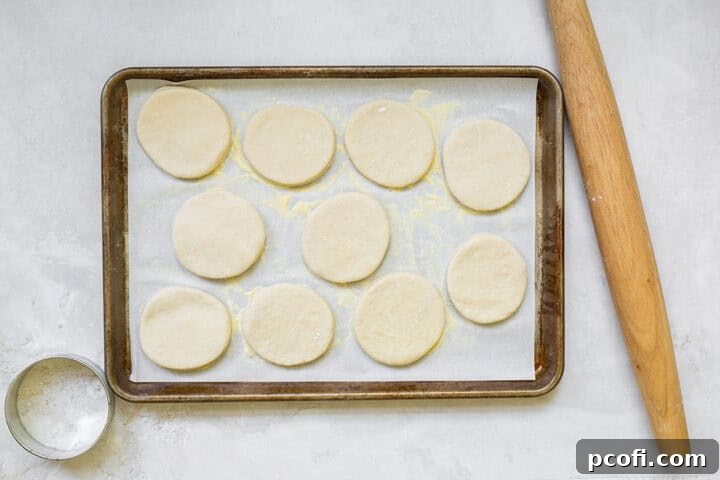
Lightly flour a clean work surface and transfer the dough onto it. Using a rolling pin, gently roll out the dough to an even thickness of approximately ½-inch. Avoid rolling it too thin or too thick for optimal results. Use a 3 ¾-inch round cookie cutter to cut out individual English muffin rounds. Gather any dough scraps, gently re-roll them, and cut out more muffins until all the dough is used. Transfer the shaped dough rounds to a baking sheet lined with parchment paper and lightly dusted with semolina flour. The semolina flour will help prevent sticking and contribute to the exterior texture. Loosely cover the baking sheet with a clean dish towel and let the dough rest and rise in a warm place for 30 to 90 minutes, or until it has noticeably doubled in volume. This proofing stage is crucial for light and airy muffins.
Step 5: Cook English Muffins
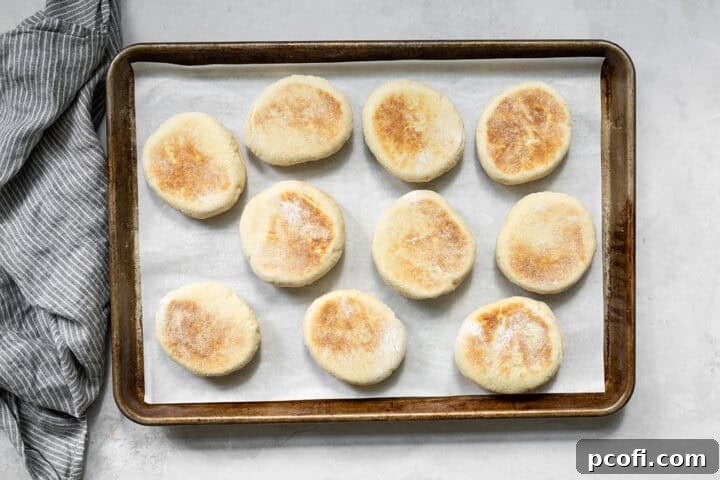
Once the muffins have risen, place an oven rack on the center shelf and preheat your oven to 325°F (160°C). Heat a nonstick skillet over medium-low heat. Carefully place a few English muffins into the skillet, ensuring not to overcrowd the pan (work in batches if necessary). Cook them for approximately 3-5 minutes per side, or until they are beautifully golden-brown and lightly crispy on both sides. This initial skillet cooking develops the characteristic crust. Once browned, transfer the muffins back to the same parchment-lined baking sheet and bake in the preheated oven for an additional 15 minutes. This oven step ensures they are fully cooked through, achieving a fluffy interior while maintaining their shape.
How to Serve English Muffins
The beauty of homemade English muffins lies not only in their taste but also in their versatility. They are a beloved breakfast item, but truly shine as an afternoon snack or even as a base for savory meals.
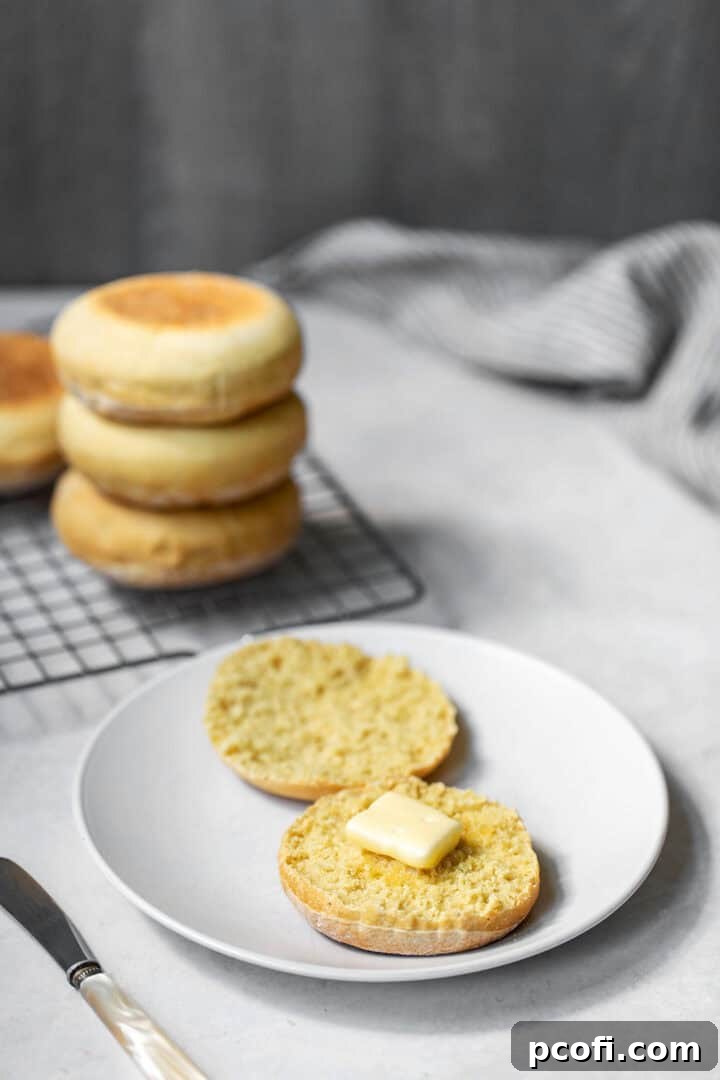
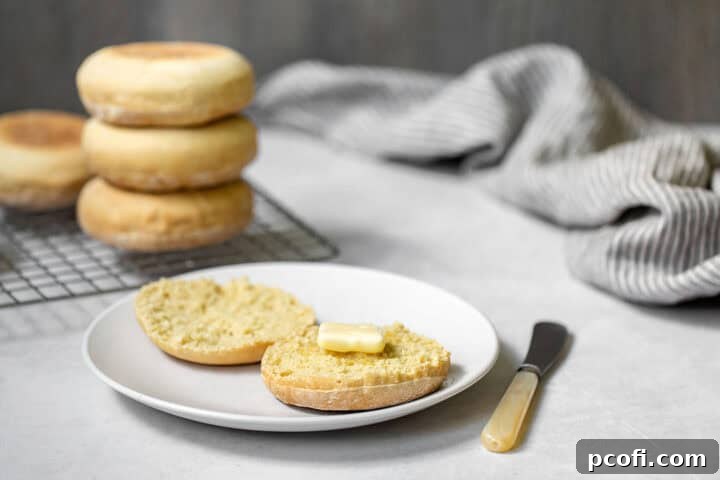
The most important step before serving is splitting them. Resist the urge to use a knife! Instead, gently push the tines of a fork all around the edges of each English muffin, then pull the halves apart horizontally. This “fork-splitting” technique creates those wonderfully uneven, jagged surfaces – the famous “nooks and crannies” – which are vital for a perfect English muffin experience. These craggles become deliciously crispy when toasted, while the opposing hollows remain soft and tender, providing a delightful contrast in every bite.
Once split, toast your English muffin halves to your desired crispness. Then, let your imagination run wild with toppings:
- Classic Comfort: A generous spread of melted butter is always a winner, especially when it sinks into every air pocket. Pair it with your favorite fruit jam (strawberry, raspberry, apricot) or marmalade for a timeless treat.
- Sweet Indulgences: For those with a sweet tooth, try peanut butter, creamy Nutella, rich cookie butter, or tangy lemon curd. A sprinkle of cinnamon sugar is also wonderfully simple and satisfying.
- Savory Creations: English muffins are not just for breakfast. They make an excellent base for savory delights. Consider them for a classic Eggs Benedict, piled high with poached eggs, ham, and hollandaise sauce. They’re also fantastic for breakfast sandwiches with scrambled eggs, cheese, and bacon or sausage. For lunch, use them as bread for mini sandwiches, such as chicken salad, tuna salad, or even a veggie burger.
The possibilities are endless, making English muffins a truly adaptable and delicious canvas for your culinary desires.
Expert Tips for Perfect English Muffins
Achieving bakery-quality English muffins at home is within reach with these expert tips:
- The Importance of Lukewarm Liquid: This is perhaps the most critical tip. Always ensure your milk and butter mixture is lukewarm (between 105-115°F or 40-46°C) before adding it to the dry ingredients. Liquid that is too hot will kill the yeast, preventing your dough from rising, while liquid that is too cold will inhibit yeast activity, leading to a much longer and less effective rise. Using a kitchen thermometer is highly recommended for accuracy.
- Mindful Dough Resting and Reworking: Dough, especially yeast dough, benefits from rest. If you find the dough shrinking back excessively after rolling it out, it means the gluten has become too elastic. Simply cover it and let it rest for another 5-10 minutes. This allows the gluten to relax, making it easier to roll without fighting it. You can re-roll scraps as much as needed, but always give them a quick rest if they become resistant.
- Optimal Proofing Environment: A warm, draft-free environment is ideal for your English muffins to rise. If your kitchen is cool, you can place the covered baking sheet in a slightly warmed (but turned off) oven or near a sunny window. Properly proofed dough will be visibly doubled in volume and feel light and airy.
- Don’t Overcrowd the Skillet: When cooking the English muffins on the stovetop, resist the urge to cram too many into the skillet at once. Overcrowding lowers the skillet’s temperature and prevents even browning. Cook in batches, leaving enough space between each muffin for even heat distribution and easy flipping.
- Consistent Heat for Skillet Cooking: Medium-low heat is key for the skillet cooking stage. This allows the muffins to slowly develop a golden-brown crust without burning the exterior before the interior has a chance to partially cook. If your heat is too high, the outside will burn while the inside remains raw.
- Storage and Freezing for Freshness: Since homemade English muffins are free from preservatives, they won’t last as long as their store-bought counterparts. For best results, store them in an airtight container at room temperature for 1-2 days. For longer storage, freezing is an excellent option. Place cooled English muffins in an airtight freezer bag or container. To enjoy, simply remove from the freezer and microwave individually for about 30-60 seconds, or toast from frozen until warm and crispy.
Frequently Asked Questions About English Muffins
Absolutely! These English muffins store wonderfully. For short-term freshness, they will remain delicious for 24-48 hours when kept in an airtight container at room temperature. Beyond that, we highly recommend freezing them to maintain their quality and prevent staleness.
Yes, freezing is a fantastic way to preserve your homemade English muffins. Once they have completely cooled, simply place them in an airtight container or a heavy-duty freezer bag. They can be stored in the freezer for up to 2-3 months. To thaw and enjoy, remove them from the freezer and heat them in the microwave for approximately 30-60 seconds, or toast them directly from frozen in a toaster until warmed through and lightly crisp.
Each serving is considered to be 1 English muffin. The nutritional information provided in the recipe card below is calculated for a single English muffin and does not include any additional toppings you might add, such as butter, jam, or other spreads.
Yes, you can. If using active dry yeast, you’ll generally need about 25% more than instant yeast. Also, active dry yeast usually requires activation: dissolve it in a portion of the lukewarm milk (around ¼ cup) with a pinch of sugar for 5-10 minutes until foamy, then proceed with the recipe as directed, incorporating this mixture as your “wet ingredients.”
There are a few common reasons for dough not rising. The most likely culprit is inactive yeast, often caused by liquid that was too hot (killing the yeast) or too cold (inhibiting it). Ensure your yeast is fresh and your liquid temperature is correct (105-115°F). A cold kitchen can also slow or prevent rising; try finding a warmer spot for proofing. If the dough still doesn’t rise after a significantly extended time, your yeast might be expired.
More Delightful Bread Recipes
If you’ve enjoyed the rewarding experience of baking these English muffins, you’ll love exploring other bread recipes that bring joy to the kitchen. Expand your baking repertoire with some of our other fantastic creations, perfect for any occasion:
- Easy Cruffin Recipe: A delightful hybrid of a croissant and a muffin, perfect for brunch.
- Pita Bread: Soft, pillowy flatbreads ideal for dips and sandwiches.
- Irish Brown Bread: A rustic, hearty loaf that’s simple to make and incredibly satisfying.
- Chocolate Babka: A rich, sweet braided bread swirled with chocolate, perfect for a special treat.
English Muffins
Leave a Review
Save RecipeSaved!
Ingredients
- 5 cups (625 g) all-purpose flour, (22 1/2 ounces), plus more for dusting
- 1 1/2 teaspoons (9 g) kosher salt
- 1 tablespoon (12 g) granulated sugar
- 1 teaspoon (4 g) baking soda
- 2 teaspoons (24 g) instant yeast
- 1 3/4 cups (427 g) whole milk
- 3 tablespoons (42 g) unsalted butter, cut into pieces
- 1 large (50 g) egg, lightly beaten
- Semolina flour for dusting
Instructions
-
In a medium-sized bowl, whisk together the flour, salt, sugar, baking soda, and yeast.
-
In a small or medium saucepan, heat the milk and butter together over medium heat, whisking occasionally, until the butter has melted.
-
Let the milk cool until it’s lukewarm (you can speed this up by placing the liquid in the fridge for several minutes).
-
Place the dry ingredients in a stand mixer bowl fitted with the dough attachment, then turn on the mixer to low speed.
-
Add the milk mixture* and egg, mixing until the dough comes together.
-
Turn the speed up to medium and mix for an additional minute. (Note: the dough will be a bit sticky. If it’s too sticky to handle, add an additional 1-2 tablespoons of flour and mix until just combined).
-
Transfer the dough to a lightly floured surface, then roll out to around 1/2-inch thick.
-
Use a 3 3/4-inch cookie cutter to cut rounds from the dough, re-rolling as needed.
-
Place the dough on a baking sheet lined with parchment paper and dusted with semolina flour. Cover the baking sheet loosely with a dish towel and set aside to rise in a warm place until doubled in volume (approx. 45-90 minutes).**
-
Place an oven rack on the center shelf and preheat the oven to 325 degrees F.
-
Use a nonstick skillet set over medium-low heat to cook the English muffins for 3-5 minutes per side, or until lightly crisp and browned.
-
Transfer back to the baking sheet and bake for 15 minutes.
-
Before serving, fork split the English muffins.
Notes
**For overnight English muffins, place the uncooked English muffins in the refrigerator for up to 48 hours, or the freezer for up to 2 weeks. Allow them to come to room temperature and rise before cooking and baking.