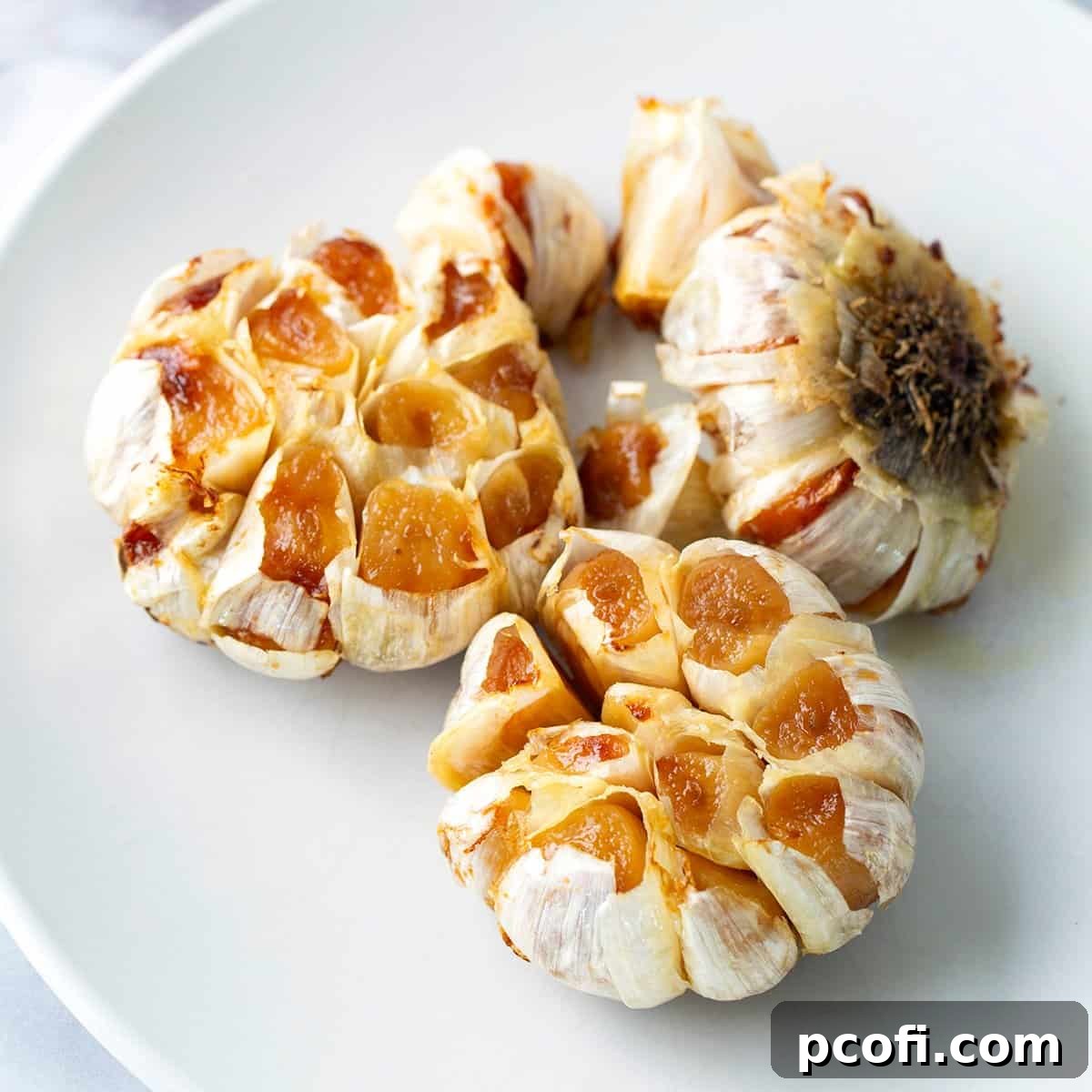
Roasted garlic is a true culinary game-changer, transforming the pungent, sharp bite of raw garlic into a remarkably sweet, mellow, and almost buttery delight. This kitchen staple is incredibly versatile, perfect for elevating everything from creamy mashed potatoes and rustic bruschetta to rich sauces and comforting soups. Learning how to roast garlic at home is a simple yet profoundly rewarding skill that will infuse your cooking with an irresistible depth of flavor.
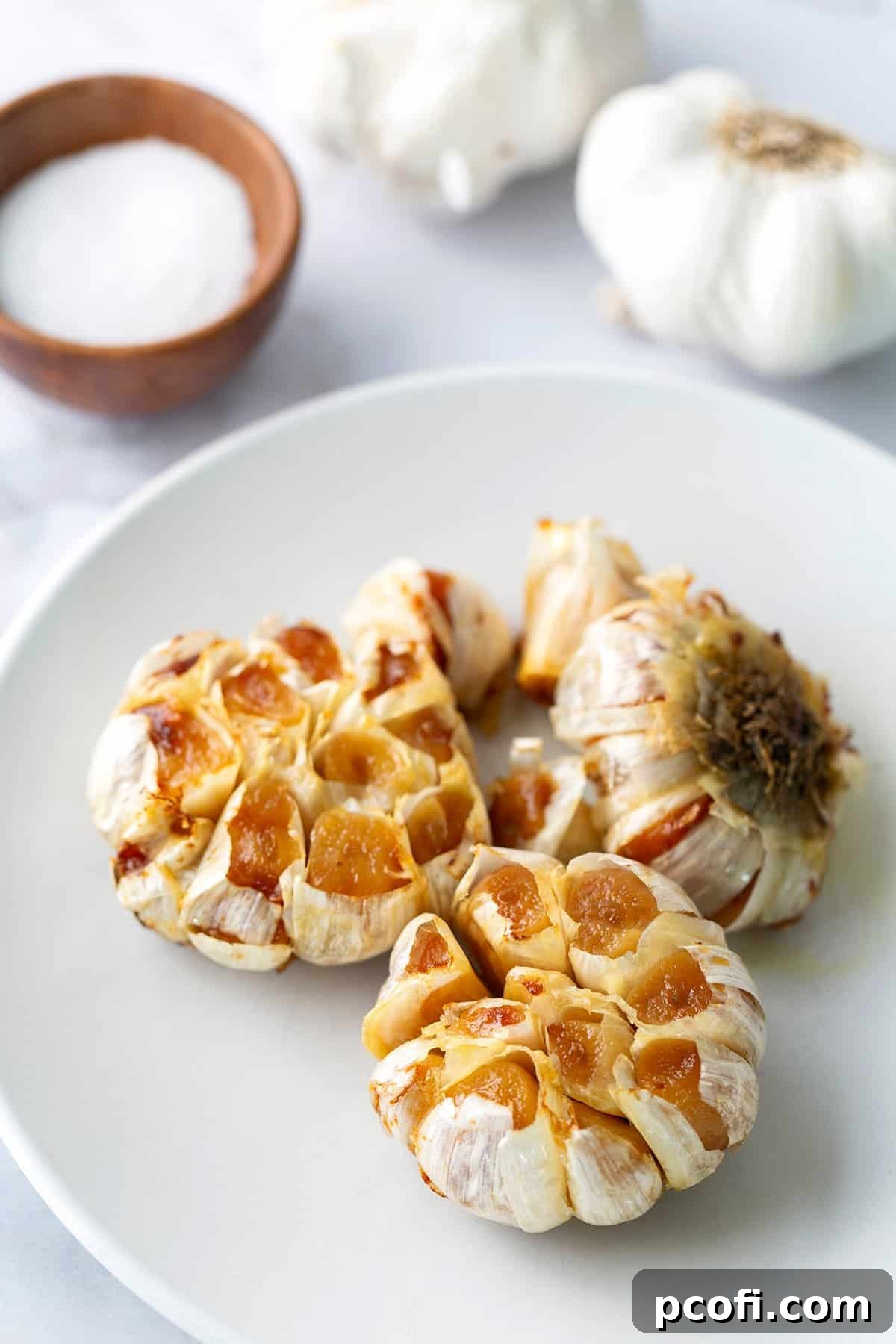
If you’ve never experienced the magic of roasted garlic, prepare to be amazed by its effortless preparation and incredible taste. All it takes is a humble head of garlic, a delicate drizzle of olive oil, and a short spell in the oven. The transformation is nothing short of miraculous, turning firm, potent cloves into soft, spreadable pockets of flavor. As an added bonus, the roasting process fills your kitchen with an utterly divine aroma, making your home smell like a gourmet bakery.
Once you discover just how easy it is to create this golden goodness, you’ll want to keep a batch of roasted garlic on hand at all times. It stores beautifully in the refrigerator or freezer, providing an instant flavor boost to any savory creation. From a simple spread to a secret ingredient in complex dishes, roasted garlic is a versatile companion for any home cook looking to enhance their culinary repertoire with minimal effort but maximum impact.
Table of Contents
- Why You’ll Adore Roasted Garlic
- Essential Ingredients
- Step-by-Step Guide to Roasting Garlic
- Helpful Tips & Tricks for Perfect Roasted Garlic
- Serving Suggestions: Endless Culinary Uses
- Storage and Make-Ahead Tips
- Frequently Asked Questions (FAQ)
- More Homemade Recipes
- Roasted Garlic Recipe Card
Jump to Recipe
Why You’ll Adore Roasted Garlic
Roasted garlic isn’t just another ingredient; it’s a foundational flavor enhancer that every home cook should master. Here’s why this simple preparation will quickly become a cherished favorite in your kitchen:
- Sweet, Mellow Flavor Profile: Forget the pungent, sometimes aggressive sharpness of raw garlic. Roasting transforms it into a remarkably sweet, nutty, and subtly smoky delight. The high heat caramelizes the natural sugars within the cloves, resulting in a soft, almost jam-like texture and a flavor that’s far more nuanced and approachable. It adds a gentle warmth rather than an overpowering bite, making it suitable for a wider range of dishes.
- Incredibly Easy to Make: You don’t need any special skills or fancy equipment to roast garlic. With just a head of garlic, a splash of olive oil, and a sprinkle of salt, you’re halfway there. The oven does most of the work, allowing you to focus on other tasks while your kitchen fills with an enticing aroma. It’s a foolproof method that yields impressive results every time, even for beginner cooks.
- Remarkably Versatile: The culinary applications for roasted garlic are virtually limitless. Its creamy texture makes it perfect for spreading directly onto crusty bread or crackers. Mash it into dressings, dips, spreads, and compound butters for an instant flavor upgrade. Stir it into pasta sauces, risottos, mashed potatoes, or soups to add a rich, savory depth. It can even be incorporated into marinades for meats and vegetables, lending a sophisticated touch without overpowering other ingredients.
- Make-Ahead Friendly & Excellent for Meal Prep: One of the greatest advantages of roasted garlic is its excellent shelf life. You can easily roast several heads at once and store them for later use. This makes it an ideal component for weekly meal prep, ensuring you always have a flavorful shortcut ready. Whether stored in the fridge or freezer, it maintains its delightful flavor and creamy texture, saving you time and effort when cooking busy weeknight meals.
Essential Ingredients
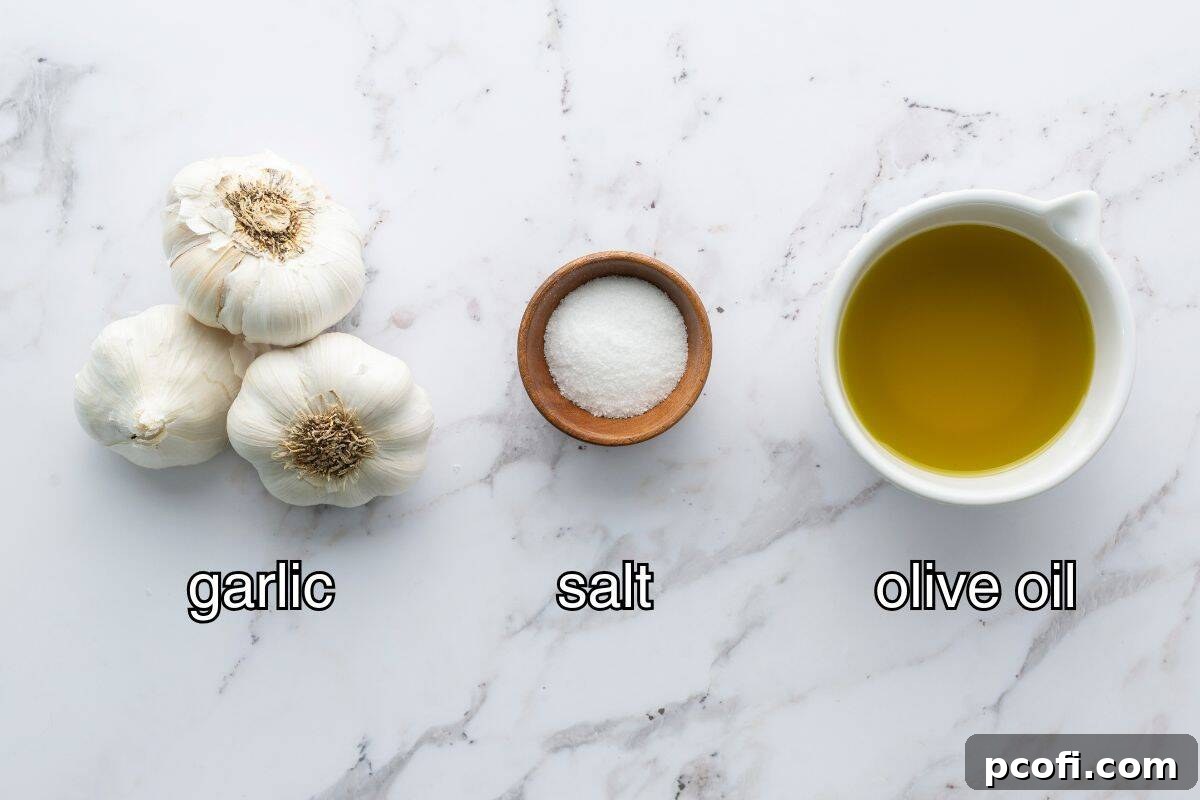
Preparing roasted garlic requires only a few fundamental ingredients, but choosing quality components can make a significant difference in the final product:
- Garlic: The star of our show! Opt for large, firm, fresh whole heads of garlic. The cloves should still be connected and feel weighty for their size. Avoid heads that feel light, hollow, or have soft spots, as these may be past their prime. While any garlic will work, larger bulbs often yield fatter, sweeter cloves, making them easier to handle and offering more pulp per head. The papery outer layers are fine, but ensure the head is mostly intact to hold the cloves together during roasting.
- Extra Virgin Olive Oil: This isn’t just for lubrication; it plays a crucial role in developing the garlic’s flavor and texture. A good quality extra virgin olive oil not only prevents the garlic from drying out but also contributes to the rich, caramelized crust and infuses the cloves with a fruity, peppery note. The oil helps to conduct heat evenly, ensuring the garlic cooks thoroughly and becomes wonderfully soft.
- Kosher Salt: Just a pinch is all you need, but it’s essential. Salt enhances the natural sweetness of the garlic as it roasts, balancing the flavors and preventing it from tasting bland. Kosher salt is preferred for its coarse texture and pure flavor, dissolving easily without imparting any metallic aftertaste. A light sprinkle on the exposed cloves is sufficient.
Step-by-Step Guide to Roasting Garlic
Transforming raw garlic into a sweet, creamy delicacy is incredibly simple. Follow these steps for perfect roasted garlic every time:
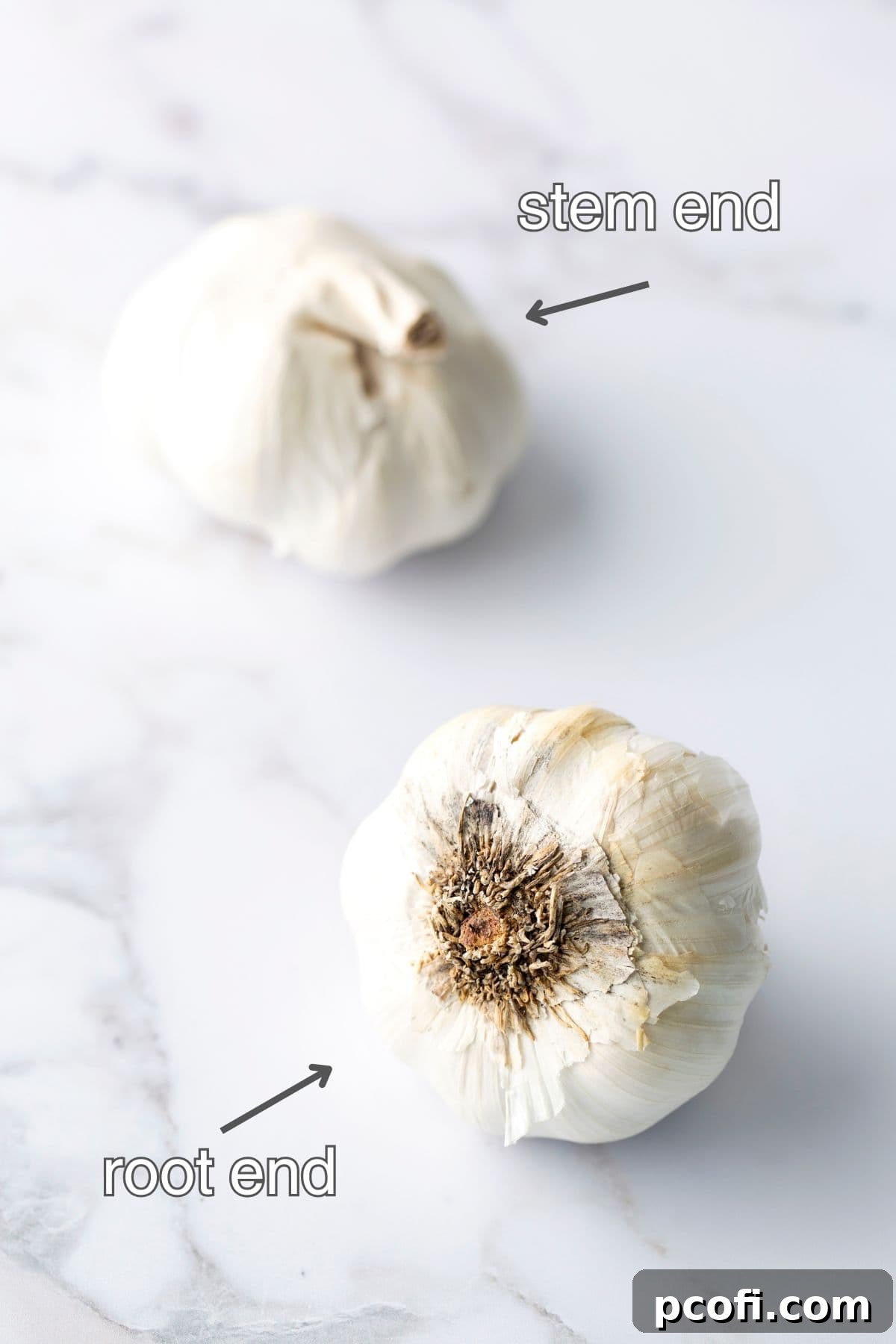
Step 1: Identify The Right End
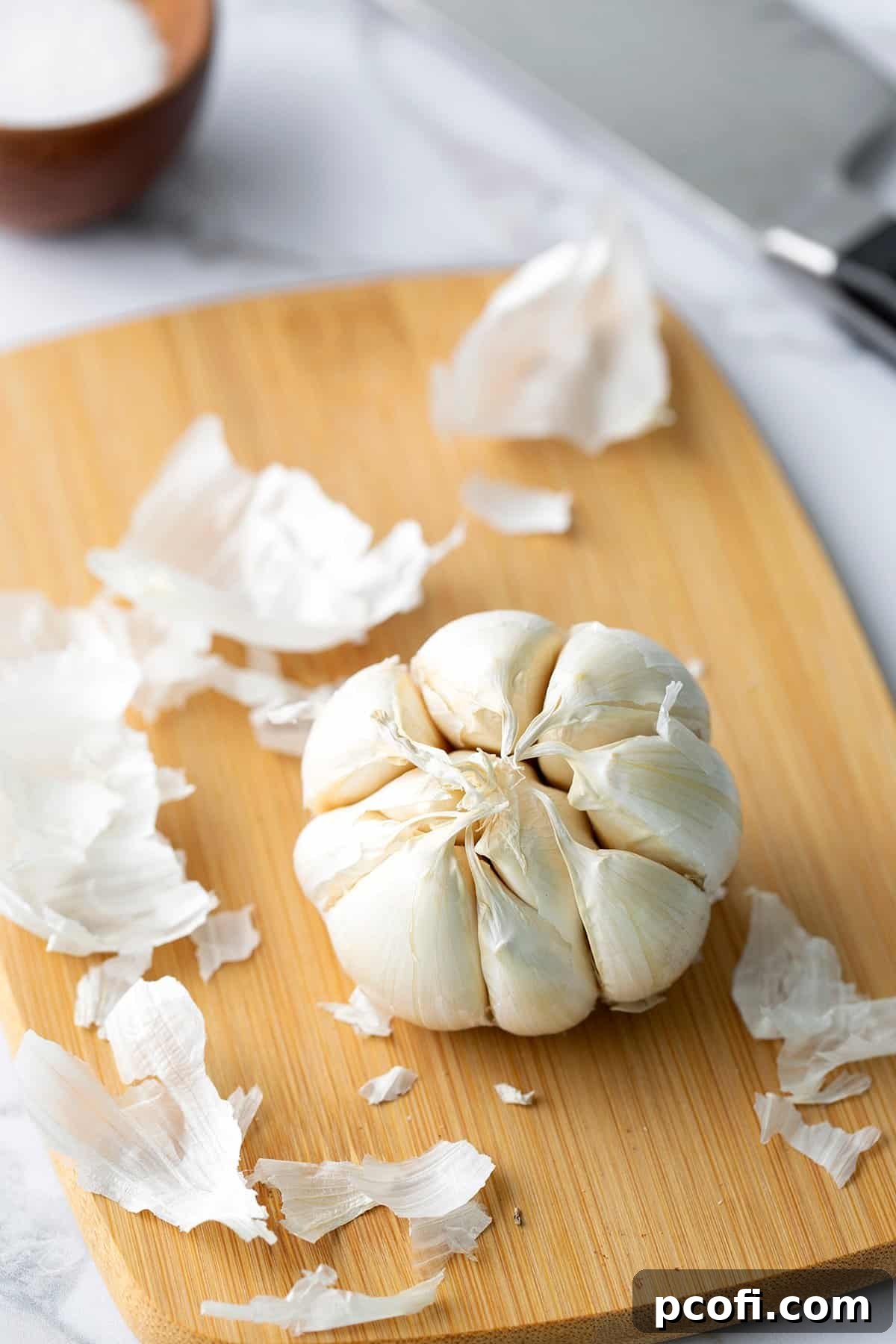
Before you begin cutting, take a moment to identify the two distinct ends of the garlic head: the stem end and the root end. The root end is the flatter, often dirtier part where the roots once grew; this end holds the entire head of garlic together, so it’s crucial not to cut it off. Instead, you’ll be working with the stem end, which is typically pointier.
Step 2: Prepare the Garlic Head
Carefully peel away the outermost papery layers of the garlic head. You want to remove the loose, dry skin that doesn’t tightly adhere to the cloves, exposing the individual cloves underneath. It’s not necessary to peel each individual clove, just the general outer layers of the entire head. Ensure the head remains intact, keeping all the cloves connected at the root end.
Step 3: Trim the Stem End
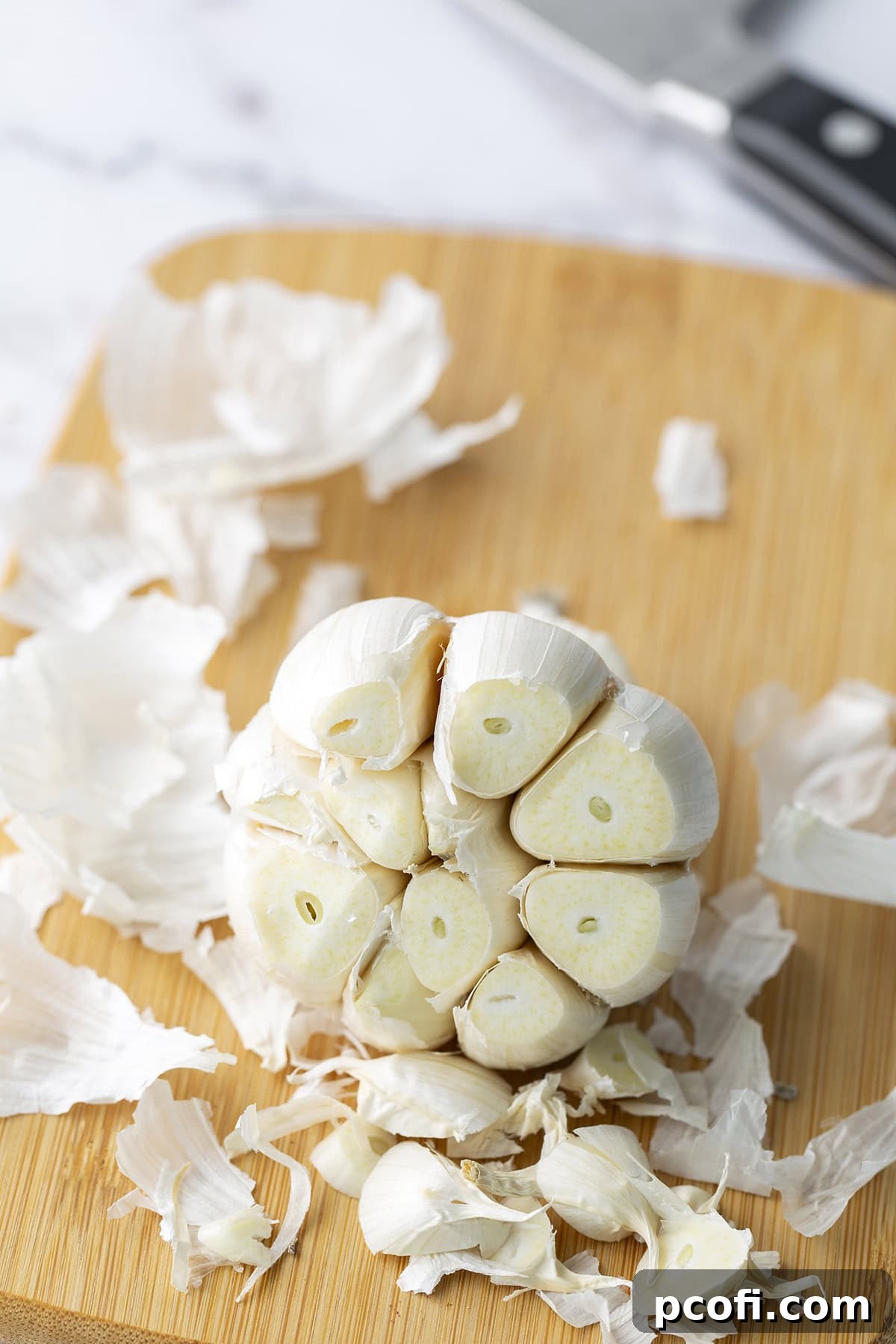
Using a sharp knife, slice off approximately 1/4 to 1/2 inch from the very top (stem end) of the garlic head. This cut should expose the tips of the individual cloves, allowing the olive oil to penetrate and the heat to work its magic. Be careful not to cut too much, as you want the garlic cloves to remain nestled within their protective skin. Again, do not cut the root end.
Step 4: Prepare for Roasting
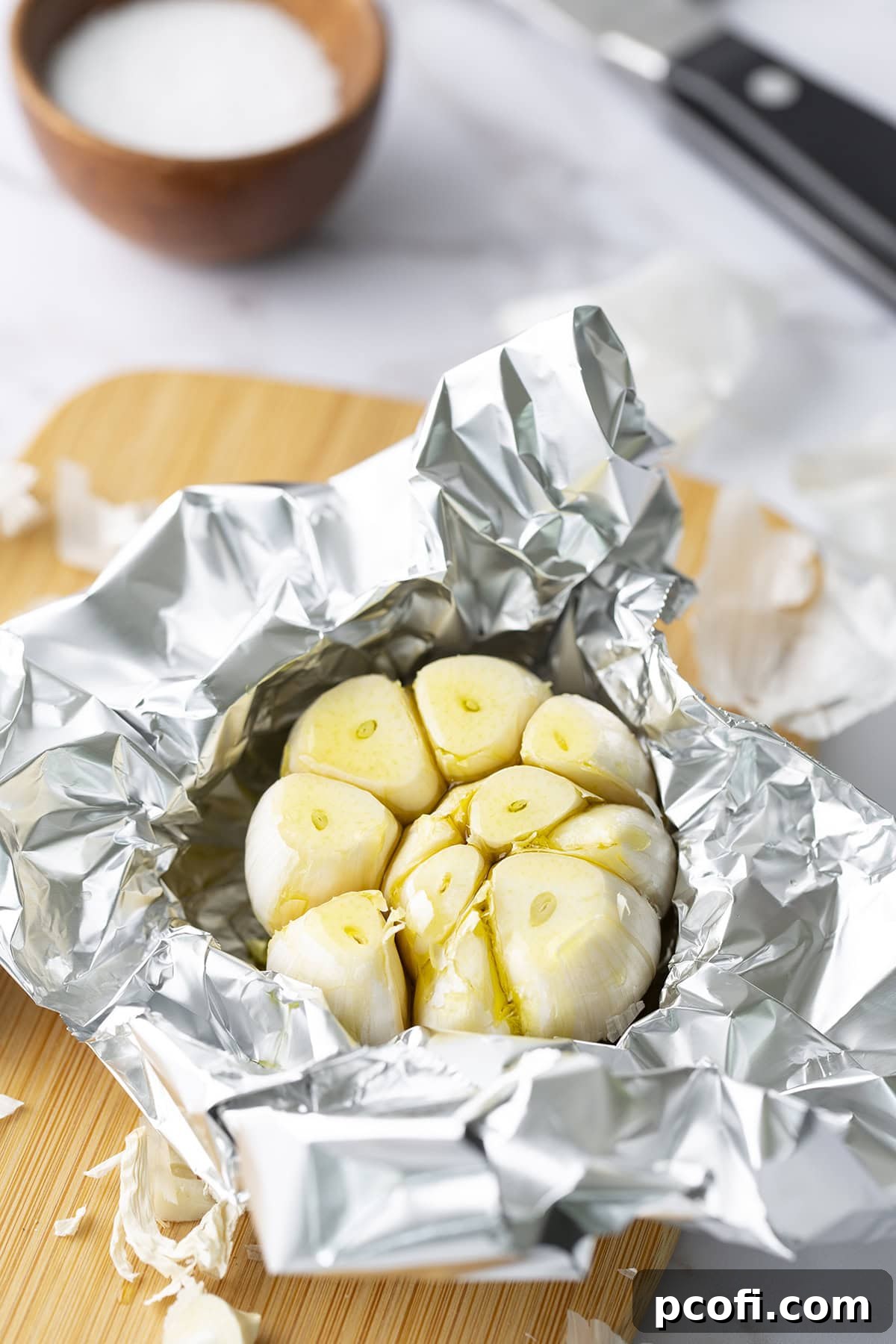
Tear off a generous square of aluminum foil – enough to completely envelop the garlic head. Place the prepared garlic head, sliced side facing upwards, onto the center of the foil. Now, drizzle a good amount of extra virgin olive oil directly over the exposed garlic cloves, ensuring each cut surface is nicely coated. This oil will help caramelize the garlic and keep it moist during roasting.
Step 5: Season with Salt
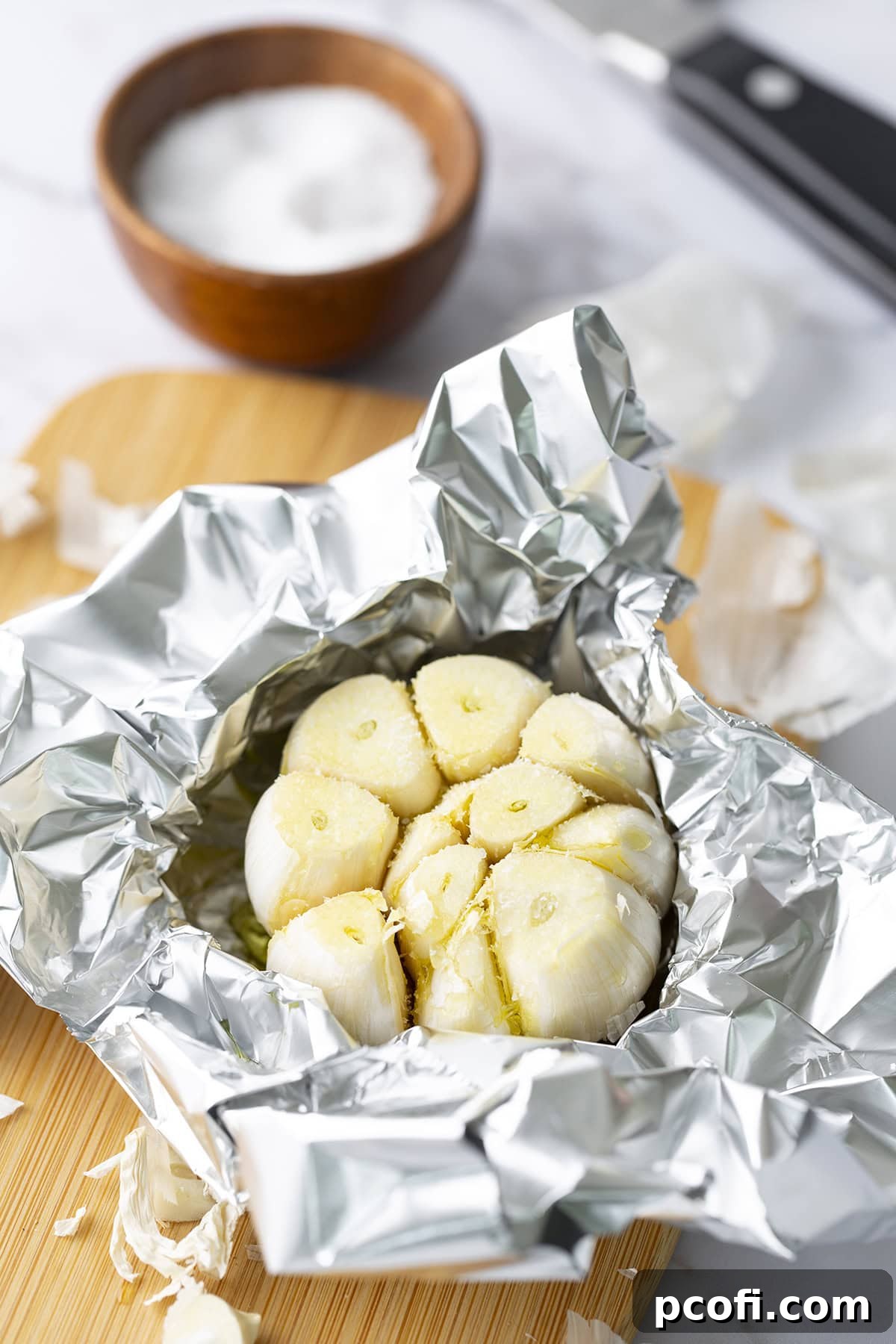
Lightly sprinkle a pinch of kosher salt over the top of the olive oil-coated garlic cloves. The salt will enhance the natural sweetness of the garlic and contribute to its delicious overall flavor profile.
Step 6: Wrap Securely
Bring the edges of the aluminum foil up and over the garlic head, wrapping it tightly to create a sealed packet. This ensures that the garlic steams gently while roasting, becoming incredibly tender, and prevents it from drying out or burning. Place the foil-wrapped garlic on a small baking sheet; this catches any potential oil drips and makes it easier to transfer in and out of the oven.
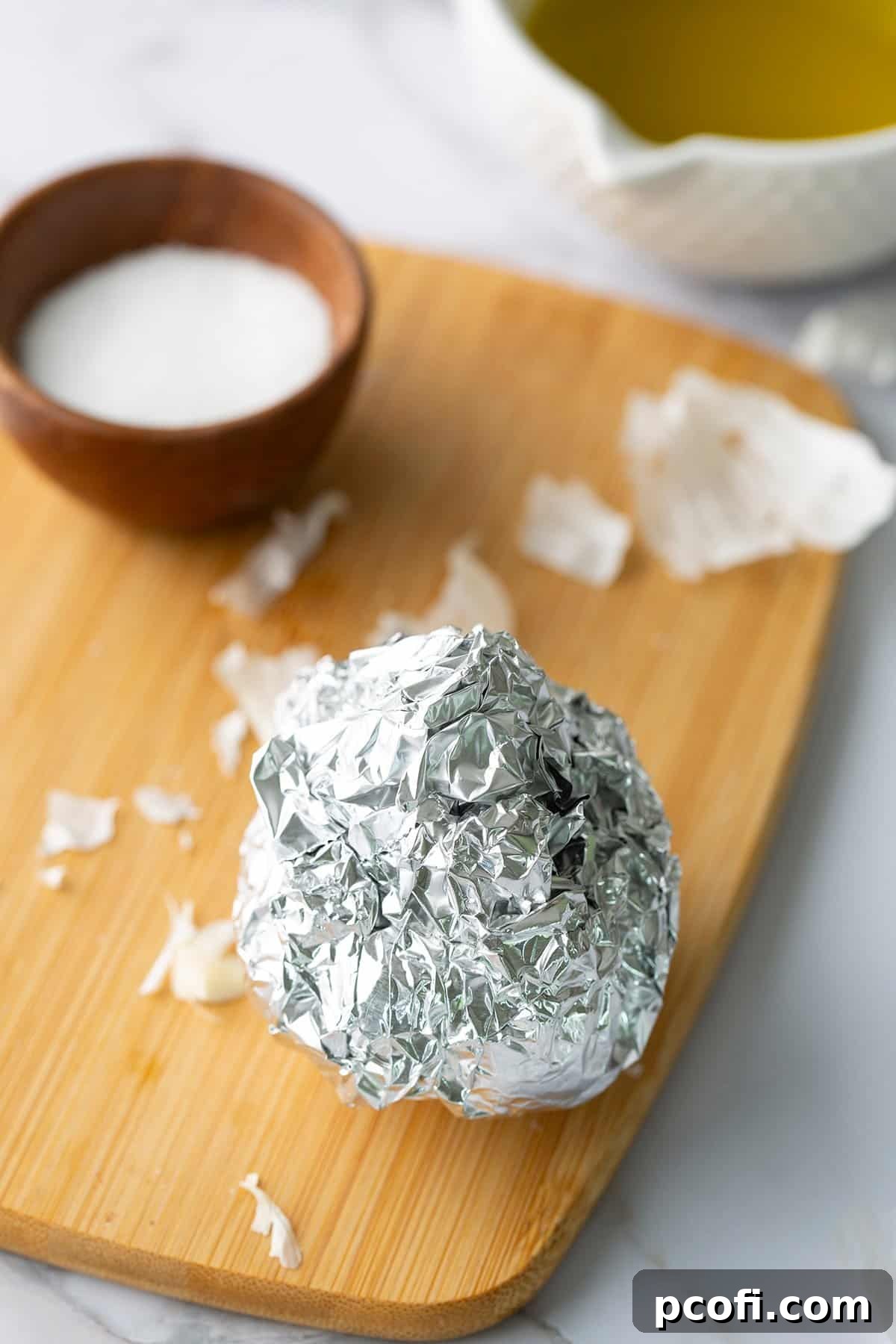
Step 7: Alternative Roasting Method (Ramekin)
As an alternative to wrapping in foil, you can place the prepared garlic head (sliced side up) into a small, oven-safe ramekin. Drizzle with olive oil and sprinkle with salt as before. Then, simply cover the top of the ramekin tightly with aluminum foil. This method provides similar results, though the garlic might caramelize slightly less on the very top compared to direct foil wrapping.
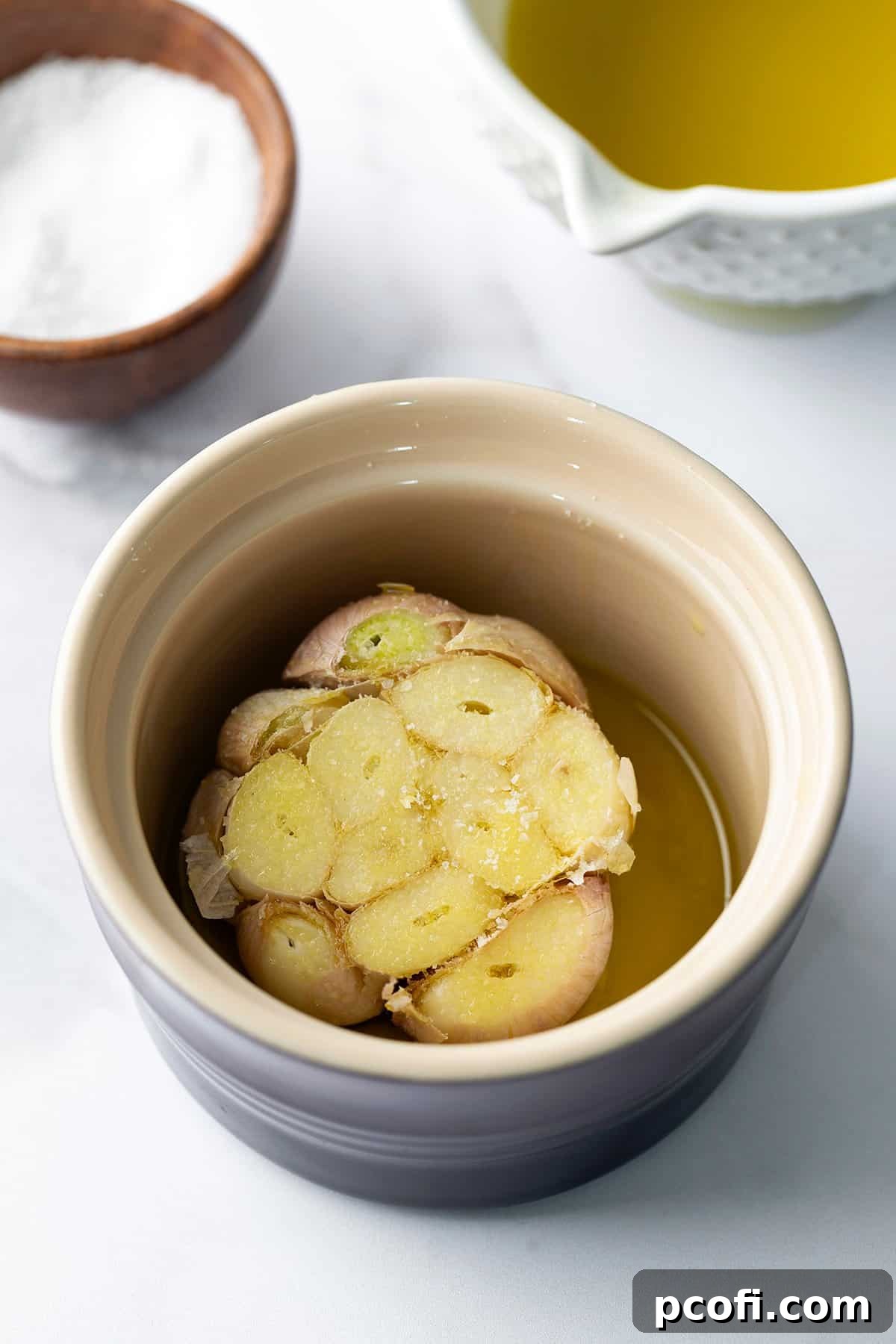
Step 8: Roast and Enjoy
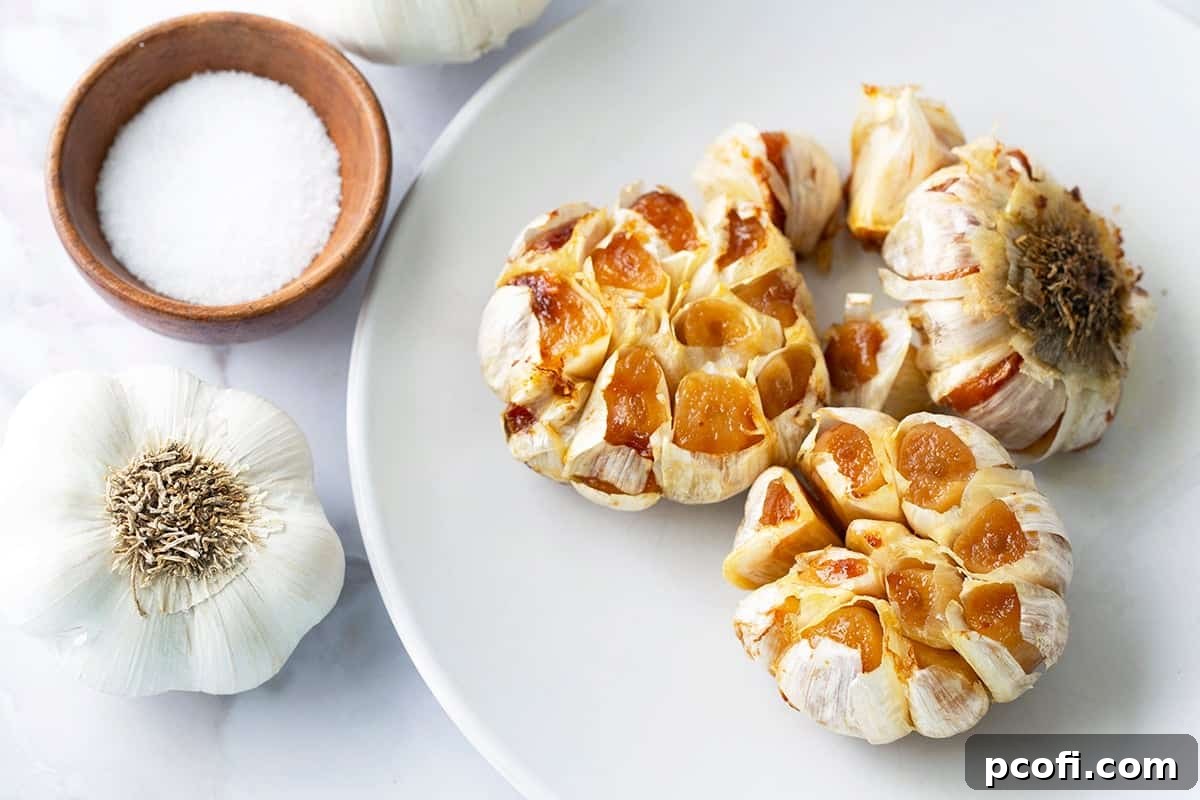
Preheat your oven to 400 degrees F (200 degrees C). Roast the garlic for 35-45 minutes. The roasting time can vary depending on the size of your garlic head; larger bulbs will require more time. You’ll know it’s ready when the cloves are incredibly soft, golden brown, and beautifully caramelized. A gentle squeeze on the foil packet or ramekin should confirm its tenderness. Once roasted, carefully remove the garlic from the oven and let it cool for 5-10 minutes. This cooling period makes it easier and safer to handle. Finally, gently squeeze the bulb from the root end to release the soft, sweet cloves. They should pop out easily, ready to be enjoyed!
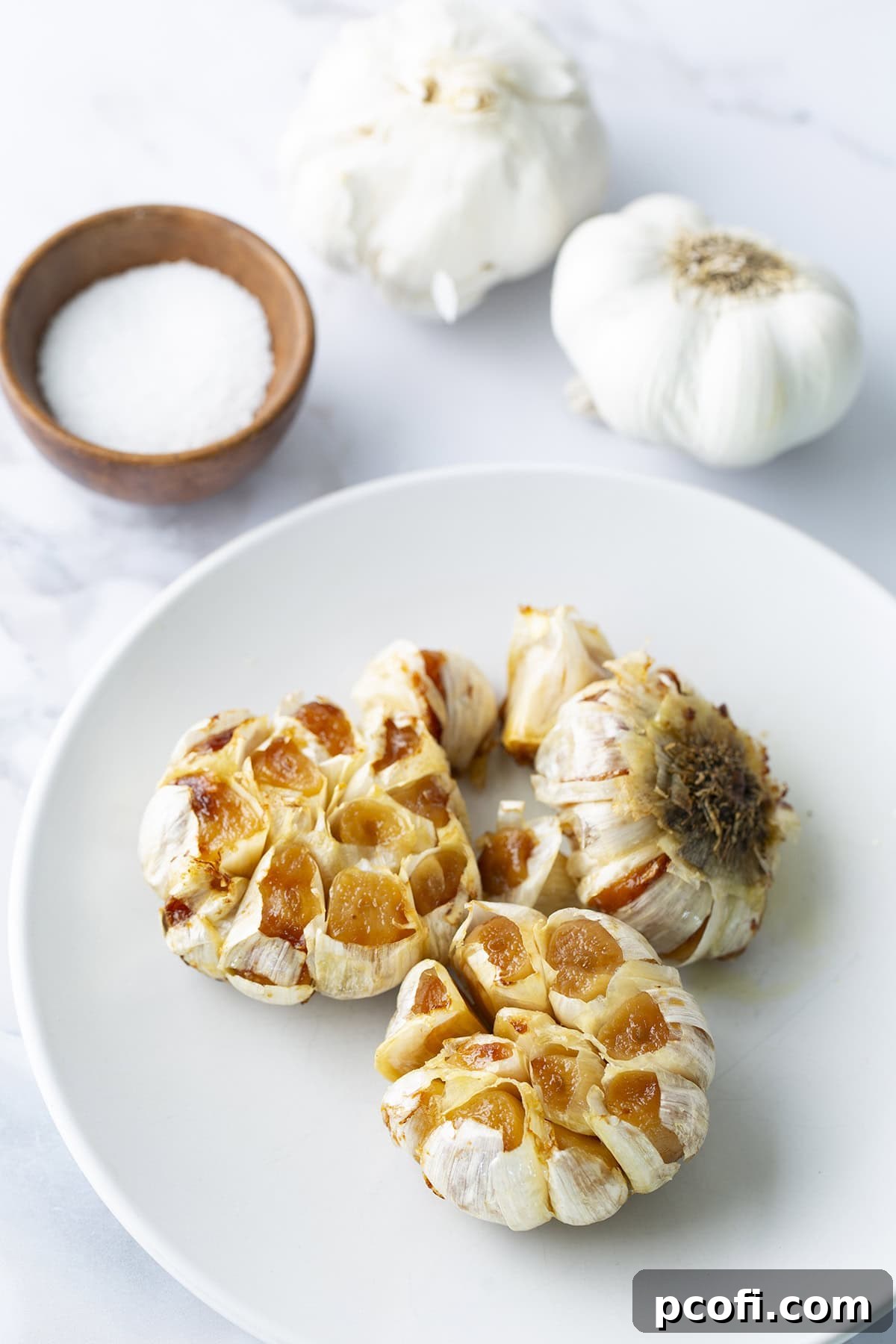
Helpful Tips & Tricks for Perfect Roasted Garlic
Achieving perfectly roasted garlic is simple, but a few expert tips can elevate your results and make the process even smoother:
- Tip 1: Save the Infused Oil: After roasting, you’ll often find a small pool of fragrant, garlic-infused olive oil in the foil packet or ramekin. Don’t discard this liquid gold! Strain it into a small, airtight container and refrigerate. This flavorful oil is excellent for cooking, drizzling over salads, dipping bread, or enhancing marinades. It’s a delicious bonus to your roasted garlic.
- Tip 2: Mash for Easy Use: Once the cloves are squeezed out, they will be incredibly soft. For effortless incorporation into dishes, mash the roasted garlic cloves into a smooth paste using a fork or the back of a spoon. This creates a uniform texture that blends seamlessly into sauces, dressings, and spreads. You can also leave them chunky if preferred for a more rustic texture.
- Tip 3: Adjust for Caramelization: Garlic roasted in a ramekin might sometimes result in slightly less caramelization on the very top compared to direct foil wrapping. If you prefer a deeper golden-brown color and more intense caramelized flavor, you can uncover the ramekin (or open the foil packet) for the last 10-15 minutes of roasting, or even increase the oven temperature to 425 degrees F (220 degrees C) towards the end, keeping a close eye on it to prevent burning.
- Tip 4: Don’t Rush the Cooling Process: While it’s tempting to immediately squeeze out the cloves, allowing the garlic to cool for 5-10 minutes makes it much easier to handle. The cloves firm up slightly, preventing accidental burns and making the squeezing process smoother.
- Tip 5: Roast Multiple Heads: Roasted garlic is so versatile and stores so well, it makes sense to roast multiple heads at once. The preparation time is nearly identical for one head or several, allowing you to stock up for future culinary adventures.
- Tip 6: Choose Fresh Garlic: The fresher the garlic, the better the roasted result. Fresh garlic tends to be sweeter and less bitter. Look for firm, tight heads without any green sprouts or soft spots.
Serving Suggestions: Endless Culinary Uses
The beauty of roasted garlic lies in its incredible versatility. Once you’ve mastered the simple art of roasting, a world of delicious possibilities opens up in your kitchen. Here are just a few ideas to get you started:
- Spread it: The most classic way to enjoy roasted garlic is to simply spread the soft, buttery cloves onto warm, crusty bread, toasted baguette slices, or crackers. A sprinkle of fresh herbs or a drizzle of balsamic glaze can take this simple appetizer to the next level.
- Mash it into dishes:
- Mashed Potatoes: Fold mashed roasted garlic into your favorite mashed potato recipe for an extraordinary depth of flavor.
- Hummus & Dips: Blend it into homemade hummus, white bean dips, or creamy spreads.
- Compound Butter: Mix it with softened butter, fresh herbs, and a pinch of salt to create a savory compound butter perfect for steaks, seafood, or corn on the cob.
- Stir it into sauces and soups:
- Pasta Sauces: Add roasted garlic to marinara, Alfredo, or pesto for a richer, more complex taste.
- Soups & Stews: Stir it into creamy tomato soup, hearty lentil stew, or chicken noodle soup for an aromatic boost.
- Gravies: Whisk it into gravies to enhance their savory profile.
- Elevate main courses:
- Roasted Vegetables: Toss it with other roasted vegetables like broccoli, asparagus, or carrots before roasting for an extra layer of flavor.
- Marinades & Dressings: Incorporate it into marinades for chicken, fish, or beef, or whisk it into homemade salad dressings.
- Pizza & Flatbreads: Dot roasted garlic cloves over homemade pizzas or flatbreads before baking.
- Scrambled Eggs & Omelets: Mix a few mashed cloves into your morning eggs for a gourmet touch.
- Beyond the obvious: Experiment by adding it to grain bowls, avocado toast, sandwiches, or even blending it into savory smoothies for an unexpected kick!
Storage and Make-Ahead Tips
One of the many benefits of roasted garlic is how well it stores, making it perfect for meal prepping. Having a batch ready means you’re always just a step away from infusing your dishes with rich flavor.
- Refrigeration: Once the roasted garlic cloves are squeezed out and mashed (or left whole), place them in an airtight container. They can be stored in the refrigerator for up to 1 week. For best results, you can also cover the cloves with a thin layer of olive oil; this helps preserve their flavor and texture, though it’s important to keep them refrigerated to prevent botulism.
- Freezing: For longer storage, roasted garlic freezes beautifully.
- Option 1 (Pulp): Mash the cloves into a paste, then transfer spoonfuls onto a parchment-lined baking sheet. Freeze until solid, then transfer the frozen garlic “dollops” to a freezer-safe bag or container.
- Option 2 (Ice Cube Tray): Place mashed roasted garlic into ice cube trays, cover with olive oil, and freeze. Once frozen, pop out the cubes and store them in a freezer-safe bag.
Frozen roasted garlic will keep well for up to 3 months. When ready to use, simply thaw the desired amount in the refrigerator or add directly to hot dishes.
- Infused Oil Storage: If you saved the garlic-infused oil, store it in an airtight container in the refrigerator and use it within a week. Due to the risk of botulism, never store garlic-infused oil at room temperature.
Frequently Asked Questions (FAQ)
Here are some common questions about roasting garlic:
Q: What temperature should I roast garlic at?
A: A common and effective temperature for roasting garlic is 400 degrees F (200 degrees C). This temperature allows for good caramelization without burning, resulting in a sweet and tender product.
Q: How long does it take to roast garlic?
A: Typically, it takes 35-45 minutes to roast a head of garlic. The exact time can vary depending on the size of the garlic head and your oven’s calibration. Larger heads will require closer to 45 minutes or even a bit longer.
Q: Can I roast multiple heads of garlic at once?
A: Absolutely! Roasting multiple heads is highly recommended. The process is almost the same for one head as it is for several. Just be aware that roasting a very large batch might slightly extend the overall cooking time.
Q: How do I know when roasted garlic is done?
A: Roasted garlic is done when the cloves are soft, creamy, and have a beautiful golden-brown color. You should be able to easily squeeze the cloves out of their skins. If they still feel firm, they need more time in the oven.
Q: Why is my roasted garlic bitter?
A: Bitterness can occur if the garlic is overcooked (burned), or if it wasn’t fresh to begin with. Ensure you don’t roast it for too long, especially if it’s uncovered. Using fresh, firm garlic heads also helps prevent bitterness.
Q: Can I peel the cloves before roasting?
A: While possible, it’s generally not recommended. Leaving the cloves in their papery skins (within the head) helps them steam and become incredibly tender and sweet. It also protects them from burning and makes them easier to handle after roasting.
Q: What if I don’t have aluminum foil?
A: A small, oven-safe ramekin or any small baking dish with a tight-fitting lid (or one that can be covered with another heat-safe plate) can be used as an alternative. Just ensure it’s tightly covered to trap the moisture.
Q: Can I make roasted garlic without olive oil?
A: While olive oil is highly recommended for flavor and moisture, you could technically roast it without oil, though the results might be drier and less caramelized. Other neutral oils like avocado or grapeseed oil could also be used, but olive oil provides the best flavor. Butter is another option for a rich taste.
More Homemade Recipes
If you love making kitchen staples from scratch, explore these other fantastic homemade recipes:
- How To Make Homemade Buttermilk
- Homemade Hot Cocoa Mix
- How to Make Homemade Marshmallows
- Homemade Pumpkin Pie Spice
- Homemade Pasta Recipe
- Homemade Vanilla Extract
- Homemade Soft Pretzel Recipe
As an Amazon Associate, I earn from qualifying purchases.
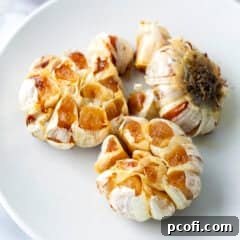
How to Roast Garlic
Roasting garlic is incredibly easy and the results are amazing. You can use roasted garlic in a variety of dishes to add a rich, sweet, garlicky flavor. A truly versatile kitchen staple!
Servings: 1 head of roasted garlic |
Prep Time: 5 mins |
Cook Time: 40 mins |
Total Time: 45 mins
Leave a Review
Ingredients
- 1 head garlic
- 2-3 teaspoons extra virgin olive oil
- Kosher salt
Instructions
- Preheat the oven to 400 degrees F (200 degrees C).
- Leaving the head intact so the cloves stay connected, peel away the papery outer layers of the garlic.
- Slice off about 1/4 to 1/2-inch from the stem end of the garlic, exposing the tips of the cloves. (Do not cut the root end. That’s the side holding the cloves together).
- Place the garlic on a piece of foil with overhang, sliced side up. Drizzle olive oil over the exposed cloves, then sprinkle lightly with salt. Alternately, you can place the head in a small ramekin, sliced side up. Add the olive oil and salt, then cover the top of the ramekin with foil.
- Place on a baking sheet (in case the oil drips) and roast for 35-45 minutes until soft and caramelized (the larger the bulb, the longer it will need to roast). Roasting multiple heads at once might slightly increase the time.
- Let the garlic cool for 5-10 minutes, then squeeze the bulb to remove the cloves.
- Use immediately, refrigerate for up to 1 week, or freeze for up to 3 months.
Notes
This recipe can be scaled up as needed.
Nutrition Information (per serving of one head garlic)
- Calories: 75kcal
- Carbohydrates: 1g
- Protein: 0.2g
- Fat: 8g
- Saturated Fat: 1g
- Polyunsaturated Fat: 1g
- Monounsaturated Fat: 6g
- Sodium: 1mg
- Potassium: 12mg
- Fiber: 0.1g
- Sugar: 0.03g
- Vitamin A: 0.3IU
- Vitamin C: 1mg
- Calcium: 6mg
- Iron: 0.1mg
Cuisine: American
Course: Side Dish
Tried this recipe?
Mention @bakingamoment on Instagram or tag #bakingamoment.