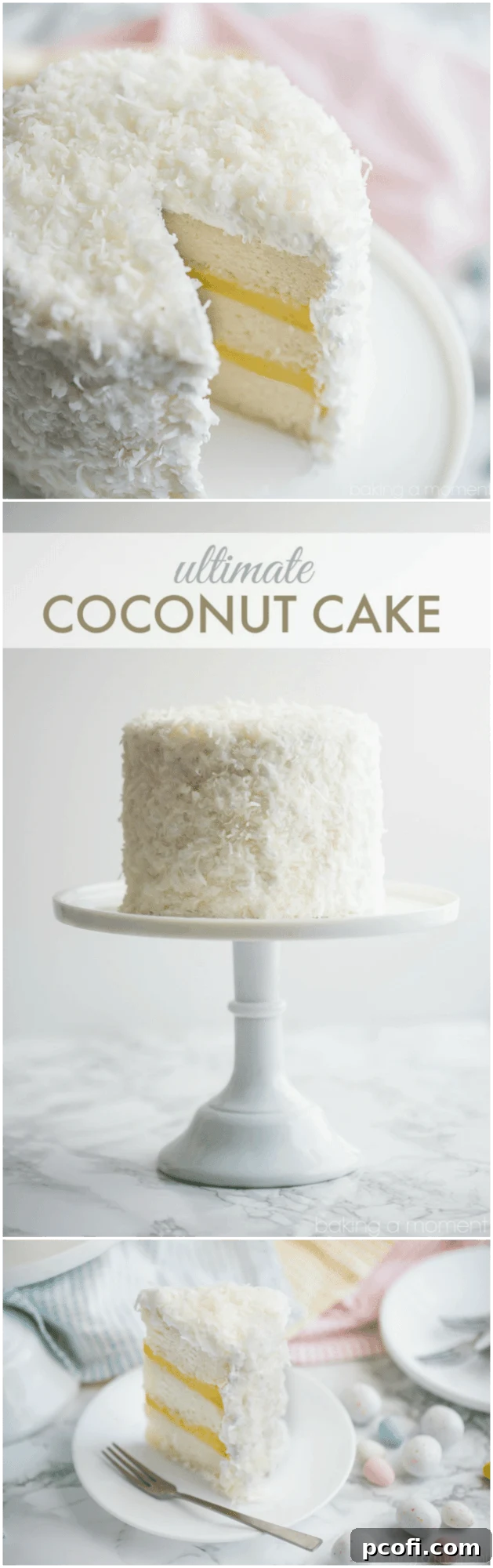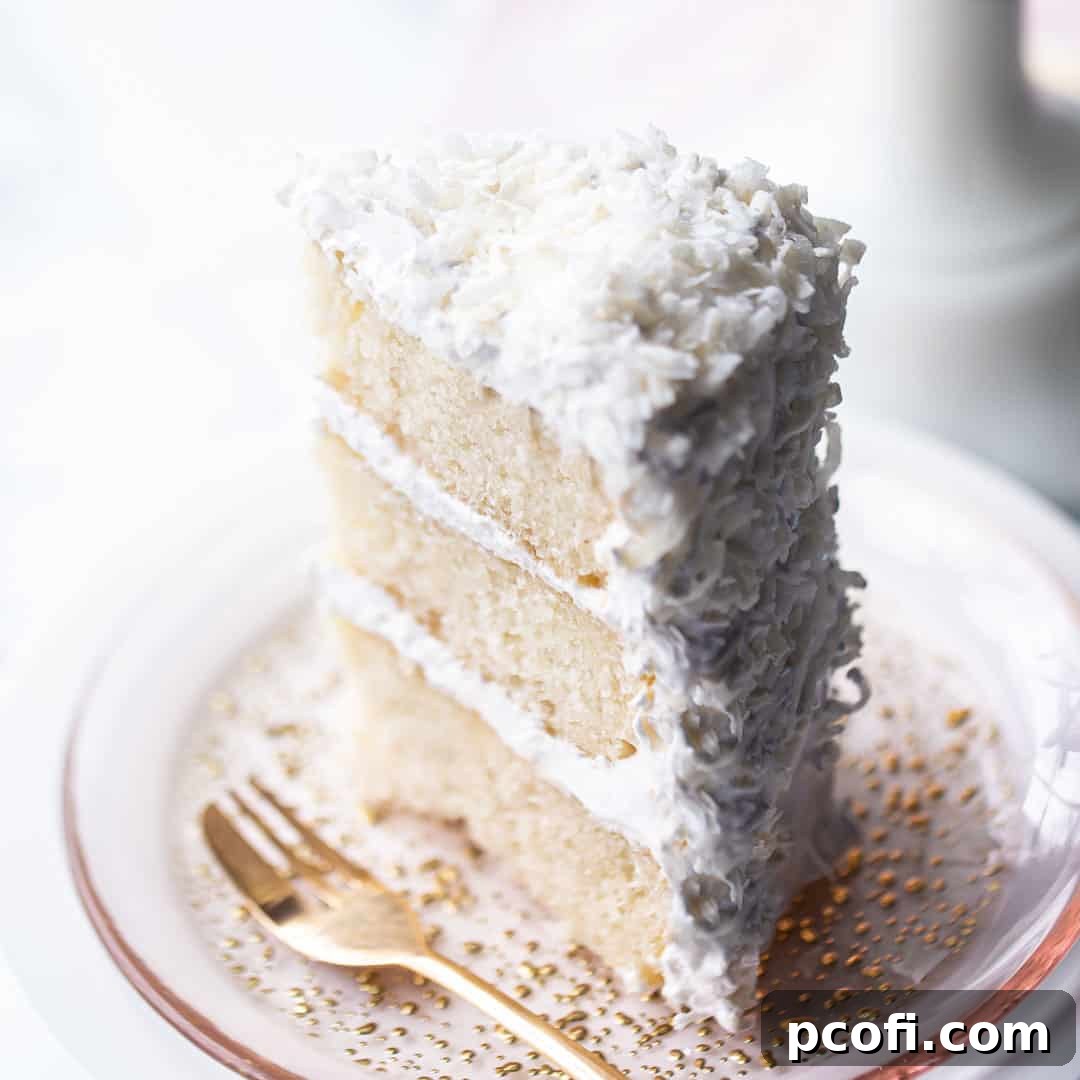
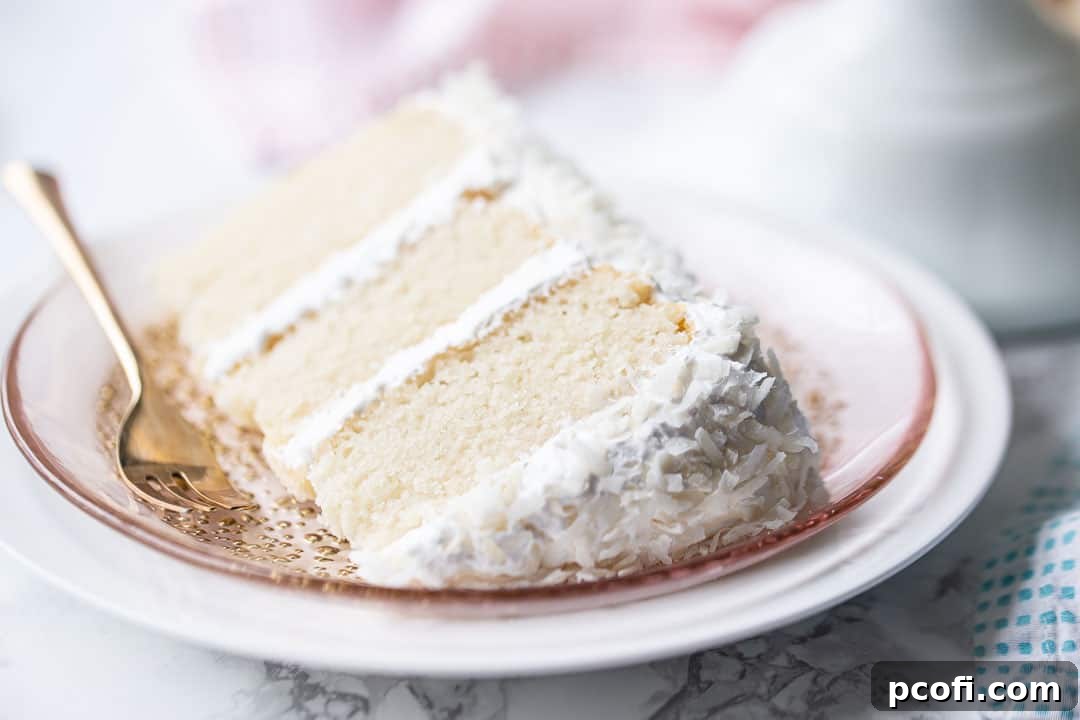
Coconut Cake: A towering triple-layer beauty, generously filled and elegantly iced with a luxurious, marshmallowy frosting, then sumptuously adorned with sweet, delicate mounds of shredded coconut. This recipe promises an unforgettable dessert experience that’s as stunning to behold as it is delightful to taste.
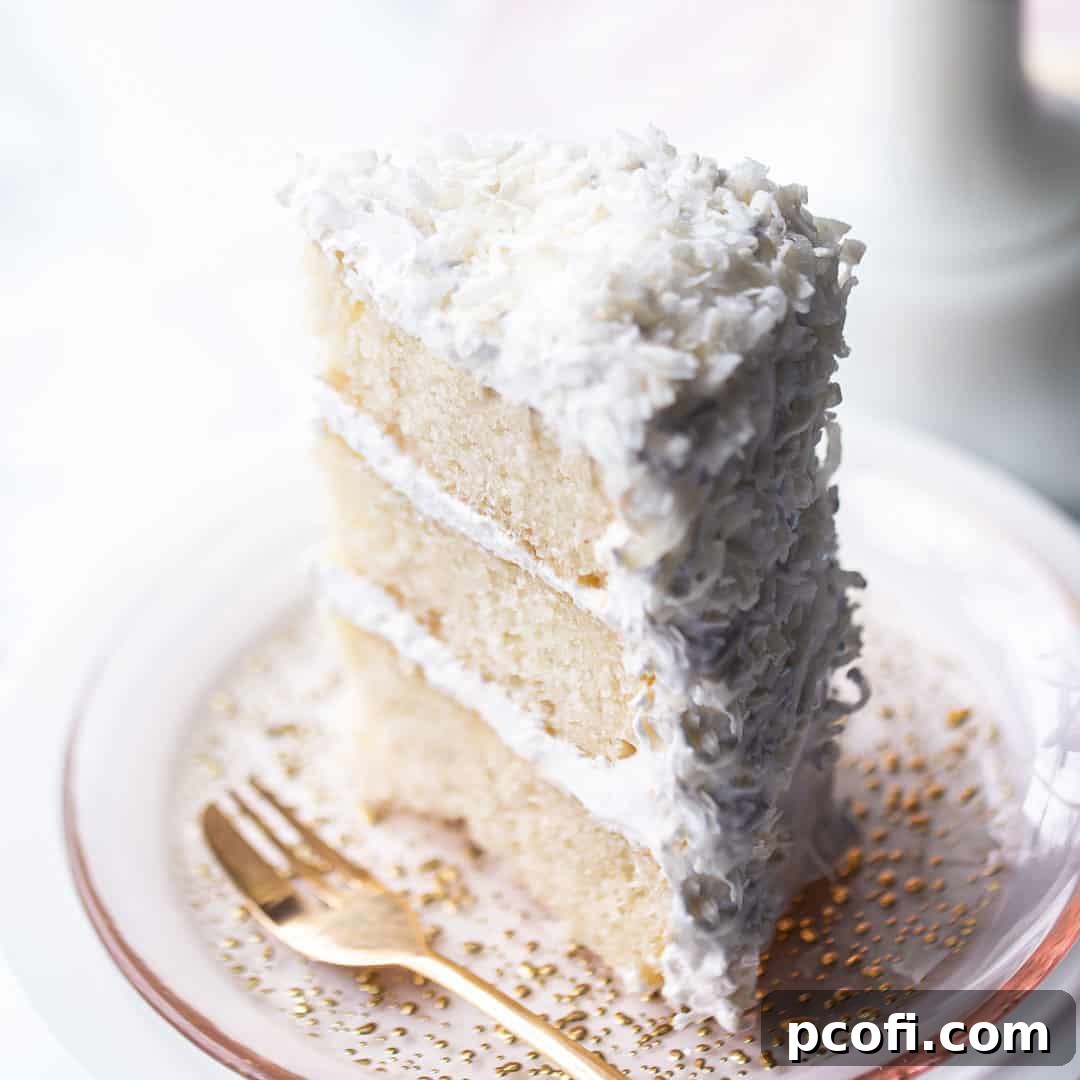
As the days grow longer and a refreshing breeze whispers promises of renewal, it’s clear that spring is truly in the air! With this beautiful season comes a longing for bright, comforting flavors and festive gatherings. My mind naturally drifts to delightful Easter recipes, imagining tables laden with delicious treats. From classic deviled eggs and savory pineapple stuffing to elegant quiche Lorraine and zesty lemon meringue pie, the culinary possibilities are endless!
Amidst this exciting time, it felt like the perfect opportunity to revisit and revitalize one of my most beloved creations: my classic coconut cake recipe. Originally shared way back in 2016, this recipe quickly became a fan favorite, admired for its simplicity and exquisite flavor. It was initially adapted from my renowned white cake recipe, which itself is celebrated for its straightforward “mix dry, mix wet, then combine” method – much like baking a delectable quick bread!
While most enthusiasts adored the original easy coconut cake, some feedback suggested it could be a touch on the dense side. And while a dense cake isn’t always a drawback (think a rich pound cake!), I was inspired to perfect it further. After careful experimentation and refinement, I’m thrilled to present a reworked version that achieves an even lighter, softer, and more wonderfully fluffy texture. This updated recipe truly captures the essence of a cloud-like confection!
Prepare to be enchanted by this coconut cake recipe. It bakes up incredibly light and pillowy, striking the perfect balance of sweetness. Each bite delivers an extra-moist crumb, perfumed throughout with the fresh, irresistible aroma of tropical coconut. I adore baking it as a magnificent triple-layer cake – it’s an undeniable showstopper that commands attention on any dessert table! However, its versatility means it can also be transformed into a shorter, wider cake, a practical sheet cake, or even charming cupcakes, depending on your occasion.
Crowned with a luscious, fluffy-sweet meringue frosting and generously coated in delicate shredded coconut flakes, this revamped coconut cake recipe is destined to be the crowning glory of your holiday spread or any special celebration. Get ready to receive a flurry of compliments and requests for the recipe!
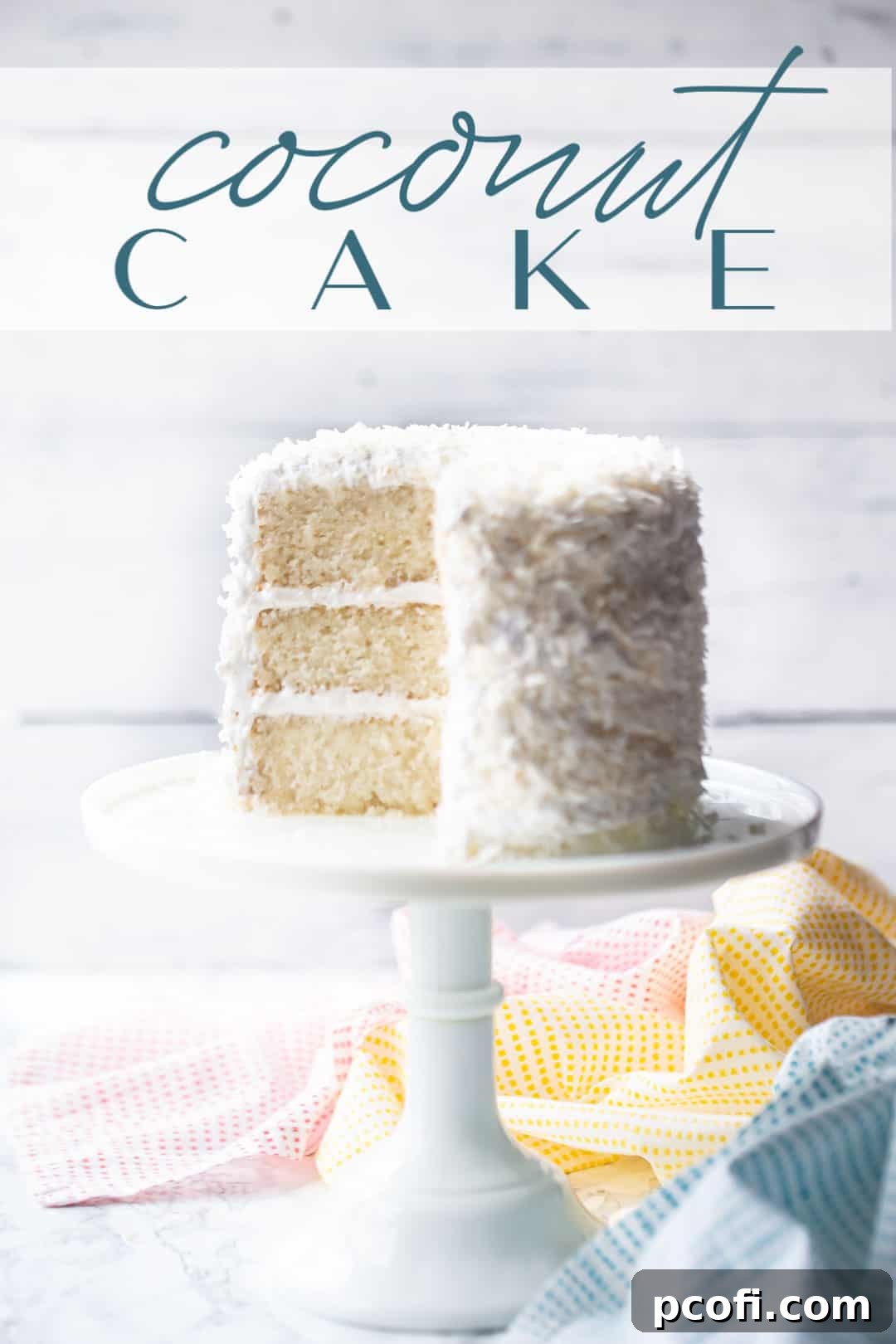
Table of Contents
- Why you’ll love this coconut cake recipe
- Ingredients and notes
- How to make coconut cake
- Recipe FAQ’s
- Expert tips for baking a perfect coconut cake
- Creative variations for your coconut cake
- How to store and keep your coconut cake fresh
- A few more of my favorite coconut recipes!
Jump to Recipe
Why you’ll love this coconut cake recipe
This isn’t just any coconut cake; it’s a culinary masterpiece that will win hearts and impress palates. Here’s why this recipe stands out:
Tropical flavor paradise: Each bite transports you to a sun-drenched island vacation. The cake is deeply infused with a sweet, nutty, and distinctly tropical coconut flavor that is both exotic and comforting. It’s a delightful escape for your taste buds.
Unbelievably moist and tender: Thanks to the generous inclusion of full-fat coconut milk, this cake achieves an unparalleled level of moisture and tenderness. It truly melts in your mouth, leaving a lingering impression of rich, delicate crumb.
Delightful texture contrast: The cake itself is pillowy soft, while the abundant shredded coconut on the exterior and between the layers adds a wonderful, satisfying chewiness. This textural interplay elevates the entire eating experience.
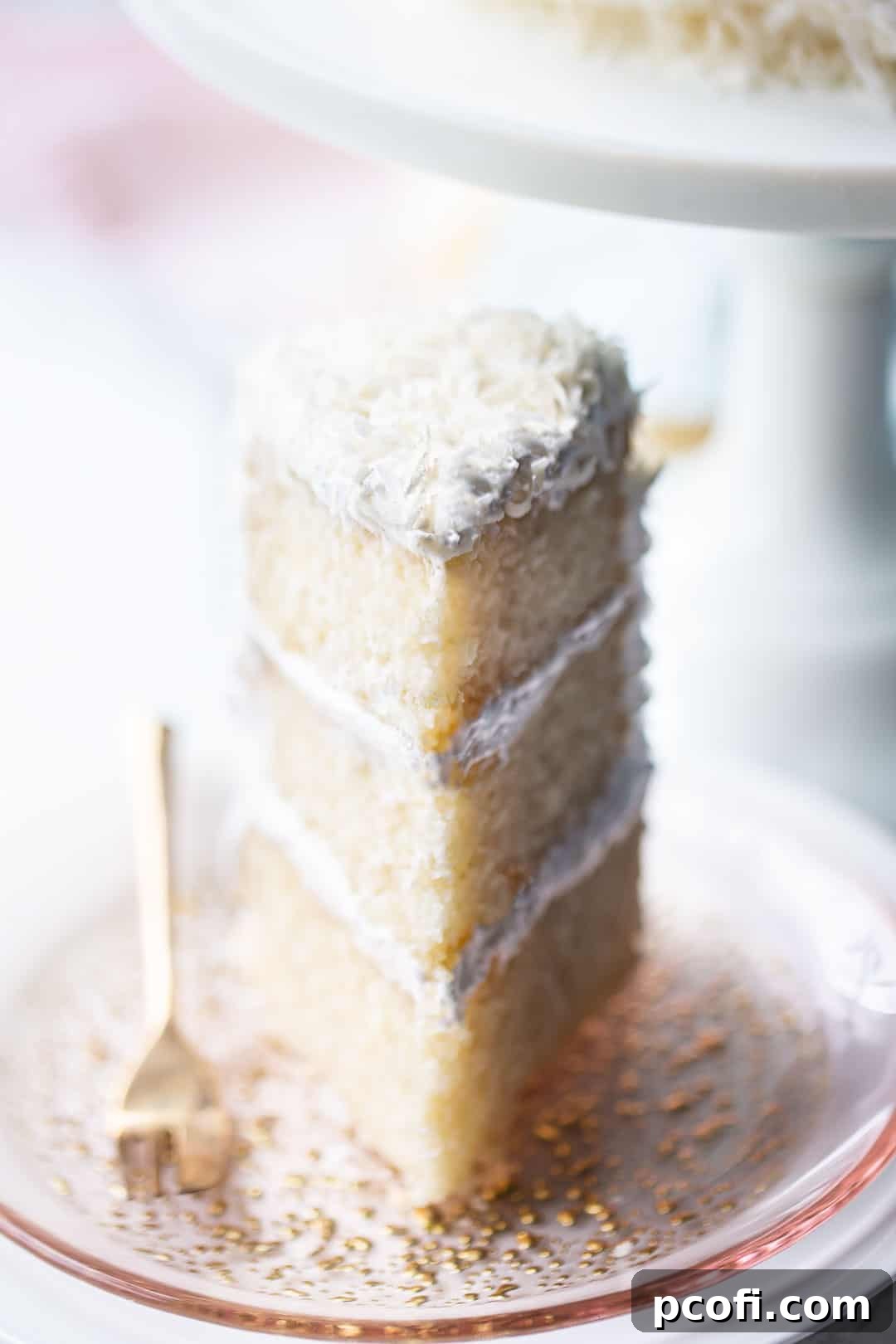
Stunning visual presentation: With its pristine snowy-white layers, glistening marshmallow frosting, and a lavish coating of perfectly toasted (or untoasted, if you prefer) coconut flakes, this cake is an absolute showstopper. It looks as incredible as it tastes, making it an ideal centerpiece.
The ultimate celebratory treat: Whether it’s a joyous birthday, an elegant wedding, or a festive holiday gathering, coconut cake is the quintessential celebratory dessert. Its exotic charm and universally loved flavor add an extra layer of joy and festivity to any special occasion, creating cherished memories for all.
Ingredients and notes for the perfect coconut cake
Crafting this exquisite coconut cake begins with understanding each ingredient and its vital role. Here’s a closer look at what you’ll need and why:
All-Purpose Flour
All-purpose flour is my preferred choice for this recipe, providing a reliable structure and tender crumb. However, if you’re looking for an alternative, you can certainly substitute it with a whole-grain option; just be aware you might need to use slightly less, as whole-grain flours absorb more liquid. For those with dietary restrictions, a gluten-free flour blend designed to substitute 1:1 for regular flour should work beautifully, allowing you to create a delicious gluten-free coconut cake without compromising on texture or flavor.
Granulated Sugar
Beyond its obvious role in sweetening the cake, sugar is a powerhouse ingredient in baking. It significantly aids in the browning process, contributing to a beautifully golden crust, and crucially, it helps maintain moisture. Sugar is hydrophilic, meaning it loves water and draws moisture into the cake, ensuring a tender and fresh crumb. Regular white granulated sugar is perfect here, but if you have another granular sweetener that can be swapped 1:1 for sugar, it should also yield excellent results.
Baking Powder
This coconut cake recipe relies on baking powder as its primary leavening agent, responsible for giving the cake layers their beautiful lift and airy texture. Baking powder is typically double-acting, meaning it starts to react and produce gas (and lift!) once liquid is added, and then again when exposed to the heat of the oven. It’s important to use baking powder, not baking soda, in this recipe, as there isn’t enough acid in the other ingredients to activate baking soda effectively. Baking powder conveniently has a small amount of acid already incorporated into its blend.
Kosher Salt
Salt is a flavor enhancer, not just a seasoning. While the end result won’t taste salty, a good quality kosher salt will beautifully elevate and intensify all the other flavors in the cake, making them more vibrant and nuanced. I prefer kosher salt because it’s free of additives (unlike some table salts that contain iodine, which can impart a metallic or bitter taste), ensuring the purest flavor. Plus, it’s widely available and affordable.
Full-Fat Coconut Milk
Absolutely indispensable for both flavor and moisture, coconut milk is a star in this recipe. It infuses the cake with a rich, sweet coconut essence and is key to achieving that ultra-moist crumb. Be sure to use full-fat, unsweetened coconut milk from a can, not the refrigerated beverage kind, for the best results. Brands like Thai Kitchen are excellent choices for their creamy texture and authentic flavor.
Neutral Oil
Oil contributes significantly to the cake’s richness and overall moisture. It also helps achieve a soft, tender texture that stays moist for longer. The key is to use a neutral-tasting oil, such as vegetable oil or canola oil, so it doesn’t overshadow or detract from the delicate coconut flavor of the cake. While my old recipe used melted coconut oil, I found it sometimes led to a denser cake. If you prefer a more pound-cake-like density and an even more pronounced coconut flavor, melted coconut oil can still be an option, but for a lighter, fluffier cake, stick with a neutral liquid oil.
Egg Whites
Egg whites are crucial for providing structure and stability to the cake layers, helping them rise and hold their shape beautifully. They also contribute to the cake’s light, airy, and downy-soft texture, creating a delicate crumb that’s a hallmark of this recipe.
Coconut Extract
To truly intensify and enhance the overall coconut flavor, a touch of coconut extract makes a significant difference. It boosts the natural coconut notes, ensuring a deeply aromatic and flavorful cake. If coconut extract isn’t available, you can substitute with almond extract for a complementary nutty flavor, or classic vanilla extract for a broadly appealing sweetness.
Fluffy Marshmallow Frosting
This light, ethereal, and wonderfully sweet marshmallow frosting is the perfect companion to the airy texture of the coconut cake. Its delicate sweetness and soft consistency complement without overpowering. You can find a comprehensive guide to making this divine frosting here: Marshmallow frosting.
Shredded Coconut
The undisputed star ingredient for both texture and taste, shredded coconut adds an irresistible chewiness and vibrant visual appeal to the cake. While I generally opt for sweetened shredded coconut for an extra layer of sweetness, unsweetened varieties can be used if you prefer a less sweet profile or wish to toast them for a deeper, nuttier flavor without added sugar. Toasting coconut flakes before applying them can also add a beautiful golden hue and intensify their aromatic qualities.
How to make this stunning coconut cake
Creating this impressive cake is a surprisingly simple process, broken down into six straightforward steps that ensure a flawless and delicious result every time.
Step 1: Prepare your cake pans
Begin by preheating your oven to the specified temperature. For a tall, impressive presentation, I recommend using three 6-inch cake pans. Lightly grease and flour each pan, then line the bottoms with neatly cut circles of parchment paper. This ensures your cake layers release effortlessly, preventing any sticking or tearing. Remember, proper pan preparation is the first step to baking success! While 6-inch pans create a dramatic height, this versatile recipe can also be adapted for other pan sizes; consult the notes in the recipe card below for specific adjustments to baking times and quantities.
Step 2: Whisk the dry ingredients
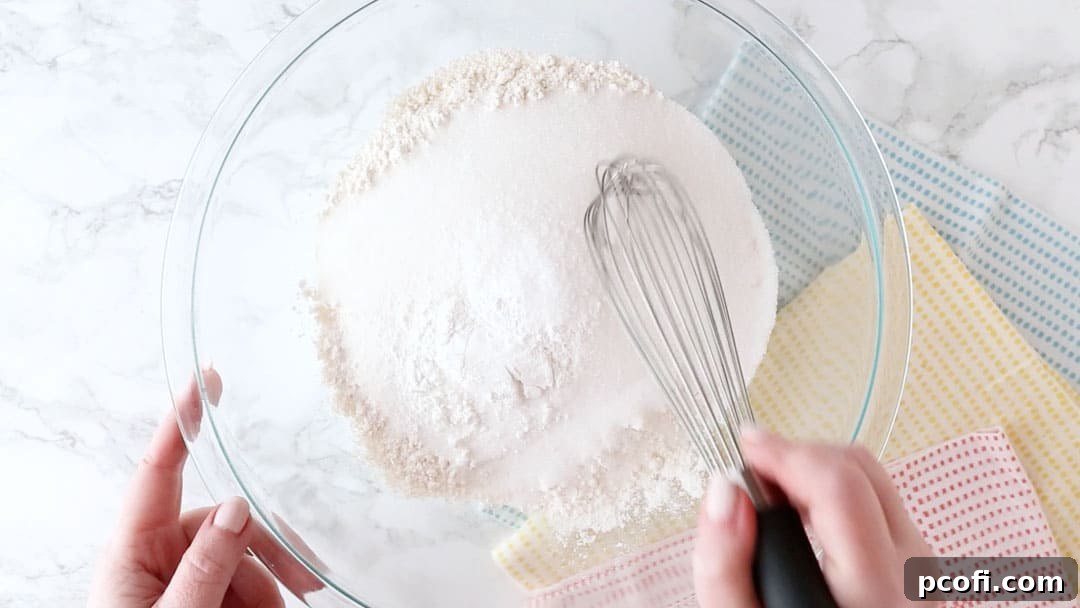
In a large mixing bowl, combine your all-purpose flour, granulated sugar, baking powder, and a touch of salt. Using a whisk, vigorously blend these dry components together. This crucial step ensures that the leavening agent (baking powder) and salt are evenly distributed throughout the flour, guaranteeing a consistent rise and perfectly balanced flavor in every slice of cake.
Step 3: Mix the liquid ingredients
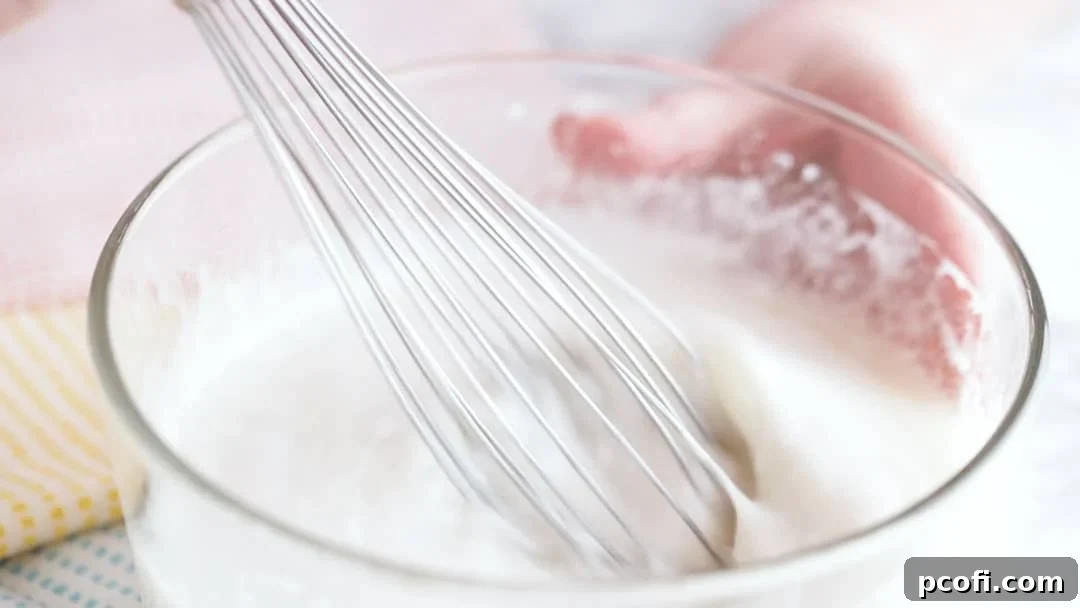
In a separate, smaller bowl, combine the full-fat coconut milk, a neutral-tasting oil (like vegetable or canola oil), egg whites, and the fragrant coconut extract. Whisk these liquid ingredients thoroughly until they are well integrated. For the oil, remember our discussion: a neutral oil ensures the lightest crumb. If you desire a slightly denser, more “pound cake”-like texture and a pronounced coconut flavor, you can opt for melted coconut oil, but for this light and fluffy recipe, stick to a liquid neutral oil.
Step 4: Gently combine wet and dry mixtures
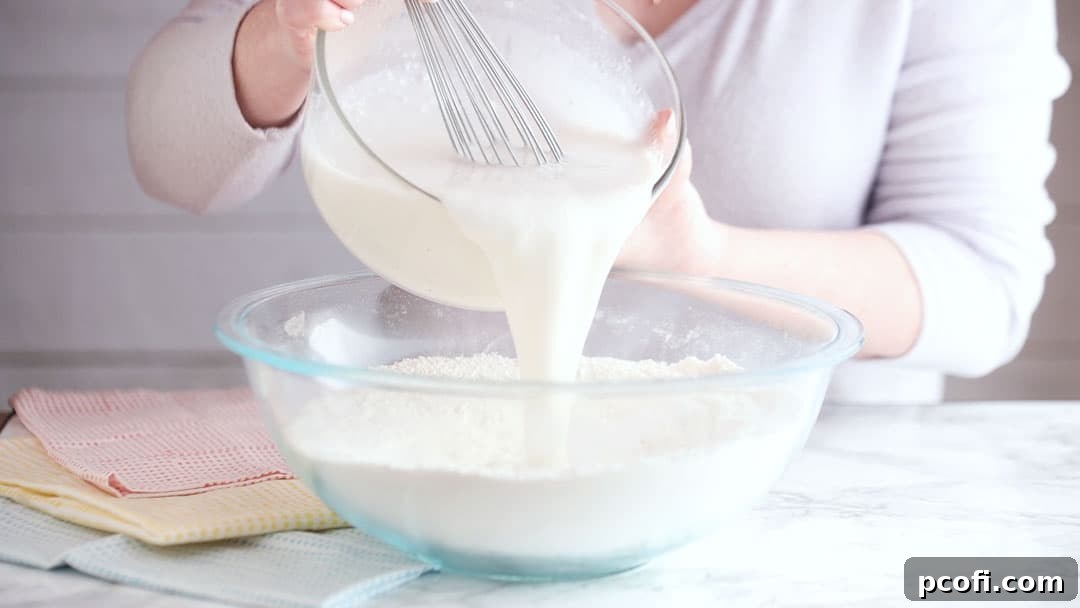
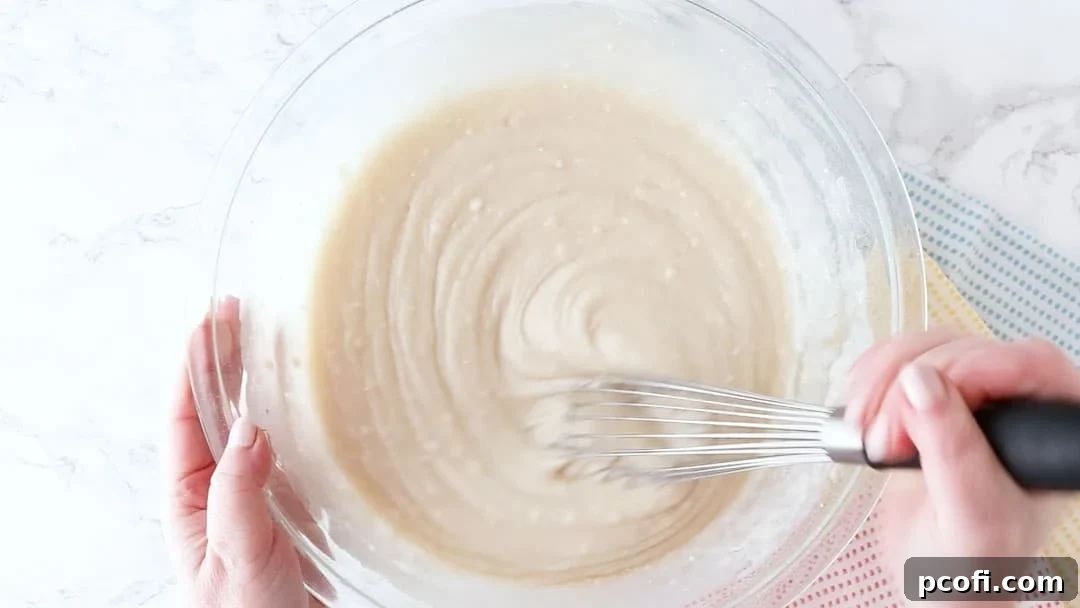
Once your wet ingredients are perfectly combined, pour them into the large bowl containing the dry ingredients. With your whisk or a rubber spatula, gently mix the two mixtures together until just smooth. It’s crucial not to overmix at this stage; overmixing can develop the gluten in the flour too much, leading to a tough, dry cake. Mix only until no streaks of dry flour remain, ensuring a tender, delicate crumb.
Step 5: Bake your beautiful cake layers
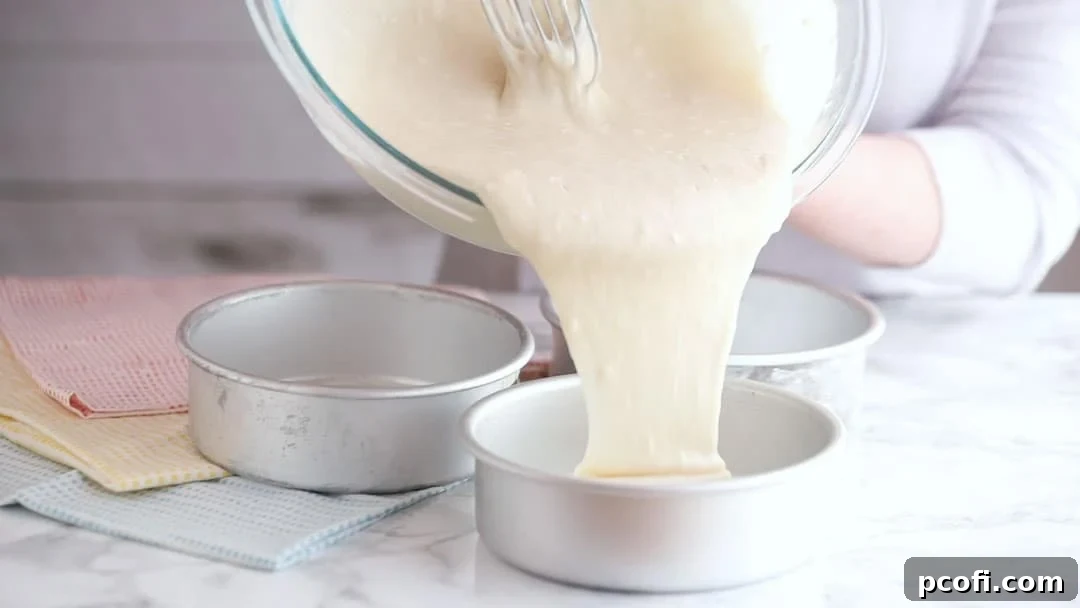
Divide the smoothly blended batter equally among your three prepared cake pans. Carefully transfer them to your preheated oven and let the magic happen! Keep a close watch on your cakes as they bake. You’ll know they’re perfectly done when the tops feel springy to the touch and a toothpick inserted into the thickest part of a layer comes out completely clean, without any wet batter clinging to it. In my oven, this typically takes about 35-45 minutes, but oven temperatures can vary, so I recommend checking a few minutes early. Resist the urge to open the oven door too soon, as a sudden change in temperature can cause the cakes to collapse. Once baked, allow the cakes to cool in their pans for about 10-15 minutes before carefully inverting them onto a wire rack to cool completely. This full cooling period is absolutely essential before proceeding to fill and frost them, ensuring your frosting doesn’t melt.
Step 6: Elegantly frost and decorate
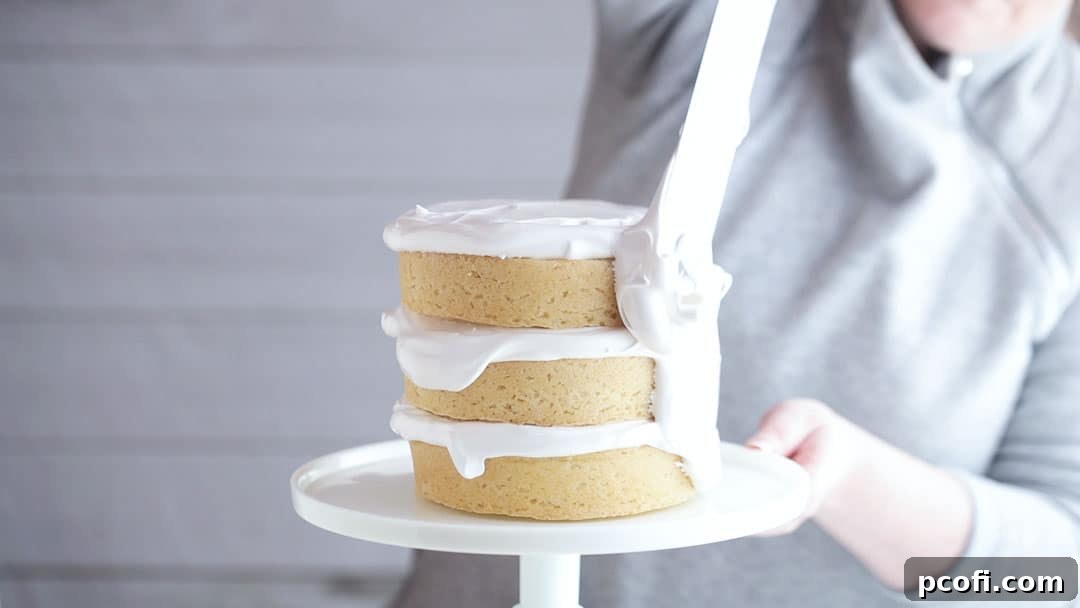
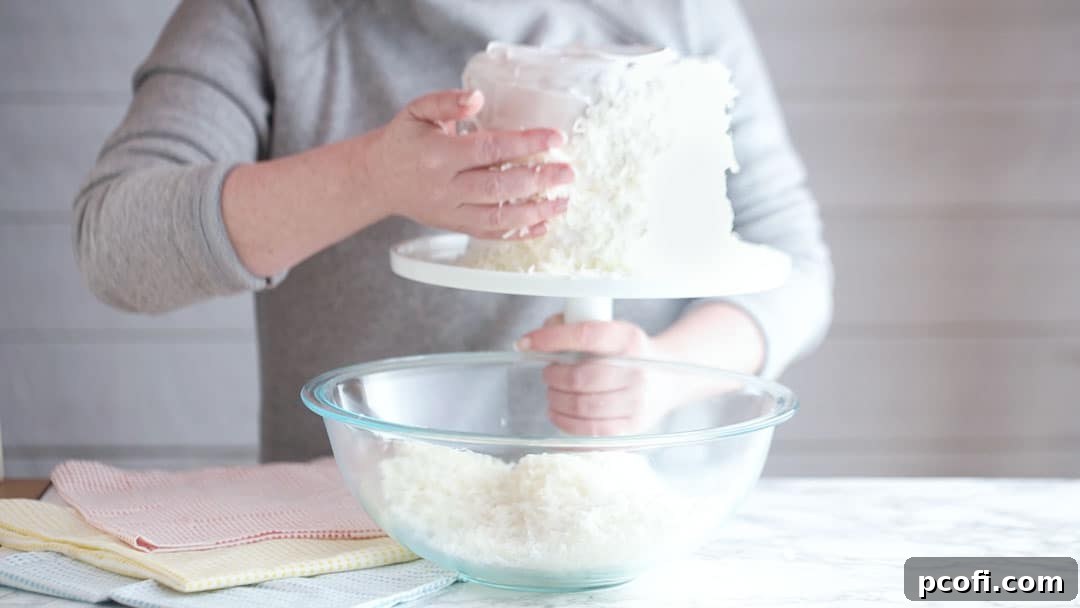
Once your cake layers are completely cool, it’s time for the grand finale: filling and frosting! Lavishly spread the fluffy marshmallow frosting between each layer, building up your impressive cake. Then, expertly coat the entire exterior of the cake with a thick, even layer of this delicious, airy frosting. For the perfect coconut coating, hold the iced cake over a large bowl. Take generous handfuls of shredded coconut and gently press them along the sides and over the top, allowing any excess to fall away neatly into the bowl. This method ensures a beautiful, even, and abundant coating of coconut that will make your cake truly irresistible and visually stunning. The visual guide in the recipe card provides a clear demonstration of this decorating technique.
Recipe FAQ’s for Coconut Cake
For this particular recipe, I’ve chosen my absolute favorite marshmallow frosting to fill and ice the cake. Its light, airy texture and delicate sweetness perfectly complement the moist coconut layers, creating a harmonious balance. To me, coconut and marshmallow are an iconic duo, much like bread and butter! You can find the complete step-by-step tutorial and recipe for this luscious Marshmallow Frosting here. Another excellent and classic choice that offers a similar fluffy consistency is 7-minute frosting.
While this delightful dessert is a treat rather than a health food, you can find plenty of detailed specifics regarding its nutritional information in the recipe card provided below. One notable aspect of this old-fashioned coconut cake is that it is 100% dairy-free! However, it is not vegan as it does contain eggs. It’s a common misconception that eggs are dairy; they are often sold in the dairy section, but “dairy” strictly refers to products derived from milk.
Absolutely! While shredded coconut (sweetened or unsweetened) is convenient and works wonderfully, fresh coconut can elevate the flavor even further. If using fresh coconut, you’ll need to grate it finely. You can also incorporate some of the fresh coconut water into the liquid ingredients for an extra burst of natural flavor, potentially reducing the amount of canned coconut milk slightly.
A dense coconut cake can often be attributed to a few factors. Overmixing the batter is a common culprit, as it develops the gluten in the flour too much, leading to a tough texture. Ensure you mix only until the dry and wet ingredients are just combined. Using too much flour, perhaps by scooping directly from the bag instead of spooning and leveling, can also result in a denser cake. Lastly, using very cold ingredients can sometimes lead to a less airy batter. Always aim for room temperature ingredients for optimal emulsification and a light texture.
Expert tips for baking a perfect coconut cake
Achieving a truly exceptional coconut cake is within reach with these professional insights:
- Quality ingredients are key: Always start with the freshest, highest-quality ingredients you can find. The flavor and texture of your finished cake are directly impacted by the quality of your flour, eggs, and especially your coconut milk and extract. A superior ingredient elevates the entire baking experience.
- Ensure room temperature ingredients: This is a golden rule in baking! Make sure your eggs and coconut milk are at room temperature before you begin mixing. Room temperature ingredients combine more uniformly, creating a smooth, well-emulsified batter. This leads to a finer, more tender crumb and a better rise in your cake.
- Master the “spoon and level” flour measuring technique: Avoid packing too much flour into your measuring cup, which can result in a dry, dense cake. Instead, use the “spoon and level” method: gently spoon flour into your measuring cup until it overflows, then use the straight edge of a knife to level off the excess. For more detailed guidance, refer to my comprehensive guide on How to Measure for Baking.
- Do not overmix the batter: Once you’ve added the wet ingredients to the dry, mix only until they are just combined and no streaks of dry flour are visible. Overmixing develops the gluten in the flour, which can lead to a tough, rubbery cake. A light hand here ensures a tender, melt-in-your-mouth texture.
- Watch your baking time carefully: Coconut cake can quickly go from perfectly moist to disappointingly dry if overbaked. Begin checking for doneness a few minutes before the recommended baking time. Look for a springy top and a clean toothpick test. Every oven is different, so trust your instincts and visual cues.
- Proper cooling is non-negotiable: Allow the cake layers to cool in their pans for about 10-15 minutes after removing them from the oven. This allows the cake to set and prevents it from tearing when transferred. Then, gently invert them onto a wire rack to cool completely. Attempting to fill or frost a warm cake will only result in melted frosting and a messy situation. Patience is a virtue in baking!
Creative variations for your coconut cake
While this coconut cake recipe is divine as is, don’t hesitate to get creative and customize it to your taste or dietary needs:
Gluten-free coconut cake adaptation
Making this cake gluten-free is straightforward! Simply swap out the all-purpose wheat flour for a high-quality gluten-free flour blend. Look for a blend that is specifically designed to substitute 1:1 for regular flour in recipes. Here are a few reliable options that typically yield excellent results:
- King Arthur Flour Gluten-Free Measure for Measure Flour
- Bob’s Red Mill Gluten-Free All-Purpose Baking Flour
- Cup4Cup Multi-Purpose Gluten-Free Flour
Explore different fillings and frostings
The beauty of a layer cake lies in its versatility with fillings and frostings. For a richer, more decadent interior, consider a creamy coconut pastry cream filling. You can adapt my classic Pastry Cream recipe by simply swapping the dairy milk for full-fat coconut milk to amplify the tropical flavor.
If you crave a bright, tangy contrast, a vibrant lemon curd would be a spectacular choice, cutting through the sweetness with its zesty notes. For an indulgent surprise, layers of light and airy chocolate mousse or a sweet, fruity strawberry jam would also be absolutely delightful.
Prefer a frosting that’s a little less sweet than marshmallow? Consider the delicate and luxurious whipped cream frosting for a lighter touch, or the silky smooth Swiss meringue buttercream, which offers a sophisticated, less sugary finish. A tangy cream cheese frosting also pairs exceptionally well with coconut, adding a delightful depth of flavor.
For those who love a classic combination, my easy chocolate frosting would introduce a delicious twist, creating a bounty of chocolate-coconut goodness. And of course, a simple yet ever-popular American-style buttercream remains a favorite for its creamy texture and customizable flavor.
How to store and keep your coconut cake fresh
Ensuring your delicious coconut cake remains fresh and delectable is important, whether you’re planning ahead or savoring leftovers.
Room Temperature Storage: This cake can safely be left at room temperature for a few hours, especially if it’s iced with the marshmallow frosting. The hot sugar syrup used in its preparation effectively cooks the egg whites, making it more stable than traditional whipped cream or custard-based frostings.
Refrigeration for Longevity: For any remaining slices or if you’ve prepared the cake in advance, it’s best to wrap it tightly with plastic wrap or place it in an airtight container. Store it in the refrigerator, where it will maintain its freshness and delightful flavor for several days, typically up to a week. Remember to allow slices to come closer to room temperature before serving for the best texture and flavor.
Freezing for Future Enjoyment: This homemade coconut cake is an excellent candidate for freezing, making it perfect for meal prep or saving for another occasion. You can bake the cake layers ahead of time, allow them to cool completely, then wrap them individually and tightly in plastic wrap, followed by a layer of aluminum foil. Stored this way, the cake layers will last beautifully in the freezer for at least a few months.
You can even fill and frost the cake while the layers are still frozen; this technique can sometimes make frosting easier as the cake is firm! Alternatively, thaw the layers in the refrigerator overnight before assembling. While you can attempt to freeze a fully frosted leftover cake, the results may vary depending on the specific filling and frosting used, as some don’t hold up as well through the freeze/thaw cycle. Marshmallow frosting generally fares well, but be mindful of any delicate fruit fillings or custards.
A few more of my favorite coconut recipes!
If you can’t get enough of that delightful coconut flavor, you’re in luck! Here are some more of my cherished coconut-infused recipes that are sure to please:
- Chewy Coconut Macaroons
- Moist Coconut Bread
- Decadent Coconut Cream Pie (Gluten & Dairy-Free)
- Coconut Stracciatella Shortbread Cookies
As an Amazon Associate, I earn from qualifying purchases.
Coconut Cake
Leave a Review
Save RecipeSaved!
Ingredients
For the coconut cake layers
- 2 1/2 cups (312.5 g) all-purpose flour
- 1 1/2 cups (300 g) granulated sugar
- 1 tablespoon (12 g) baking powder
- 1 teaspoon (6 g) kosher salt, scant
- 13.66 fluid ounces (403.93 g) coconut milk, (1 can, full-fat unsweetened)*
- 1 cup (224 g) neutral oil, (vegetable, canola, or similar)
- 2 (60 g) large egg whites
- 1 1/2 teaspoons (7.39 g) coconut extract
For the marshmallow frosting and decoration
- 5 (150 g) large egg whites
- 1/2 teaspoon (1.5 g) cream of tartar
- 1/8 teaspoon (0.75 g) kosher salt
- 2 cups (400 g) granulated sugar, divided
- 2/3 cup (157.73 g) water
- 2 teaspoons (8 g) vanilla extract
- 1 1/2 cups (120 g) shredded coconut, (approx., sweetened or unsweetened)
Instructions
To make the coconut cake layers
-
Preheat the oven to 325 degrees F. Lightly grease and flour three 6-inch diameter cake pans**, then line the bottoms with circles cut from parchment paper to prevent sticking.
-
In a large mixing bowl, combine the all-purpose flour, granulated sugar, baking powder, and kosher salt. Whisk well to ensure all dry ingredients are evenly distributed.
-
In a separate bowl, whisk together the coconut milk, neutral oil, egg whites, and coconut extract until fully combined.
-
Pour the liquid mixture into the bowl with the dry ingredients. Gently whisk until the batter is smooth and no dry streaks of flour remain, being careful not to overmix.
-
Divide the batter evenly among the 3 prepared pans. Bake the cakes for approximately 35 to 45 minutes, or until a toothpick inserted into the center of a cake layer comes out clean.
-
Allow the cake layers to cool in their pans for 10-15 minutes, then invert them onto a wire rack to cool completely. Once fully cooled, fill and frost the cake with marshmallow frosting and generously coat it with shredded coconut.
To make the marshmallow frosting***
-
In a large mixing bowl, combine the egg whites, cream of tartar, and salt. Whip on medium speed until the mixture becomes foamy.
-
While continuously whipping, gradually add 1 cup of the granulated sugar in a very slow and steady stream (about 1 teaspoon at a time) into the foamy egg whites.
-
Once all of this sugar has been incorporated, continue to whip the meringue until it forms stiff, glossy peaks.
-
Whip in the vanilla extract. Reduce the mixer speed to low and continue to gently stir the meringue while you prepare the hot sugar syrup.
-
In a small saucepan, combine the remaining 1 cup of granulated sugar with the water.
-
Place the saucepan over medium heat and cook the syrup, stirring occasionally, until it boils and reaches a temperature of 235 degrees F (113 degrees C) on a candy thermometer.
-
With the mixer still running on low speed, slowly and steadily pour the hot sugar syrup into the meringue mixture in a thin stream. Be careful to pour it along the side of the bowl, not directly onto the whisk.
-
Once all the hot syrup has been added, increase the mixer speed to high and whip the frosting until it becomes very stiff, glossy, and holds its shape beautifully.
A video demonstrating the preparation and decoration of this coconut cake would typically be embedded here. It visually guides you through each step, from mixing the batter to the final frosting and coconut coating.
Notes
**This recipe can be baked in alternative pan sizes: two 8-inch or 9-inch diameter layers, approximately 24 cupcakes, or one 9×13-inch sheet cake. Remember to adjust the baking time as needed for different pan sizes. For a larger cake, you can double the recipe and bake it in a 12-cup bundt pan.
***For more detailed instructions and troubleshooting tips specifically for the marshmallow frosting, please refer to its dedicated recipe page: Marshmallow Frosting.