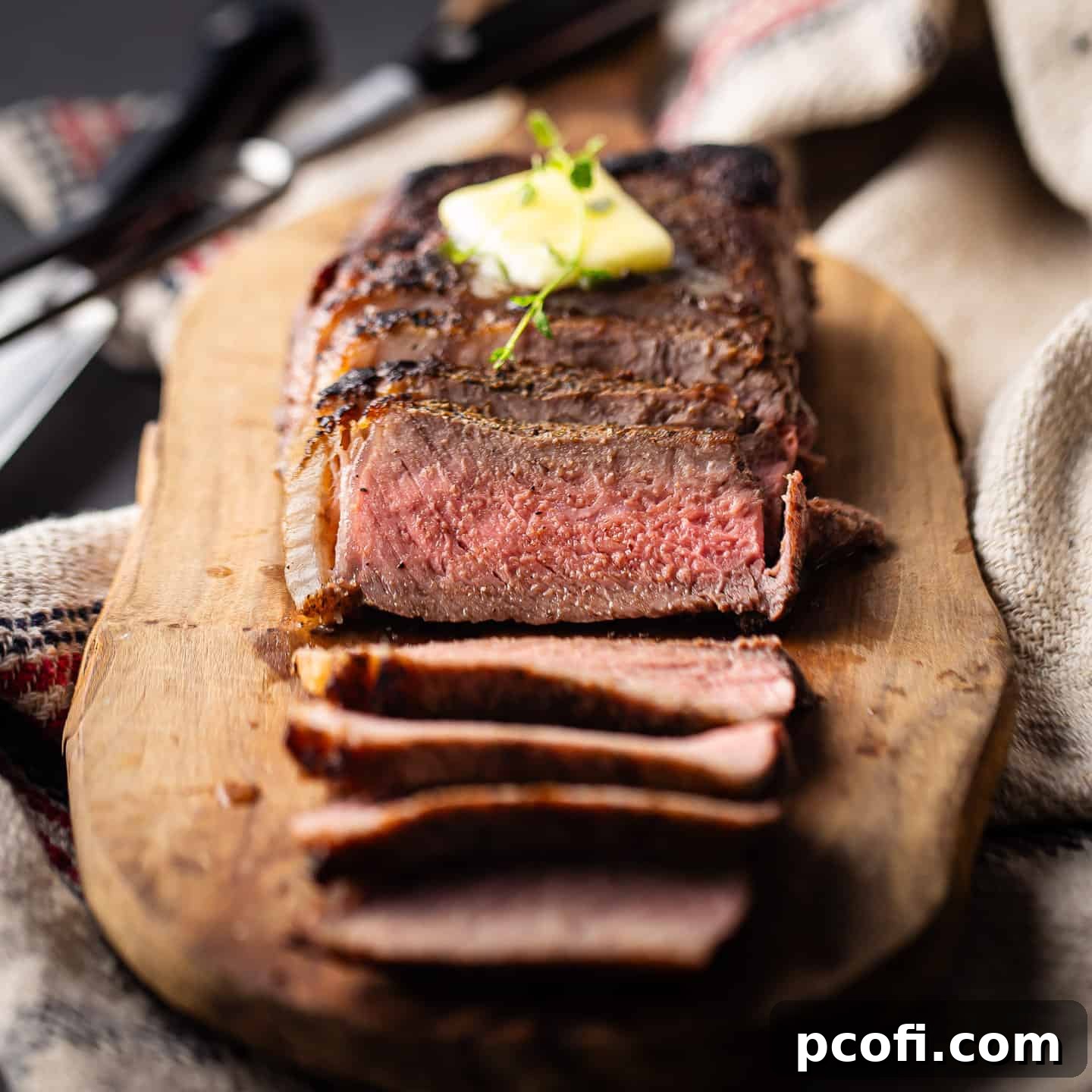
Unlock the secret to a perfectly cooked steak with this foolproof reverse-sear steak recipe! Achieve unparalleled control over doneness and a mouthwatering, deeply caramelized crust every single time. Prepare for the best steak you’ve ever made at home!
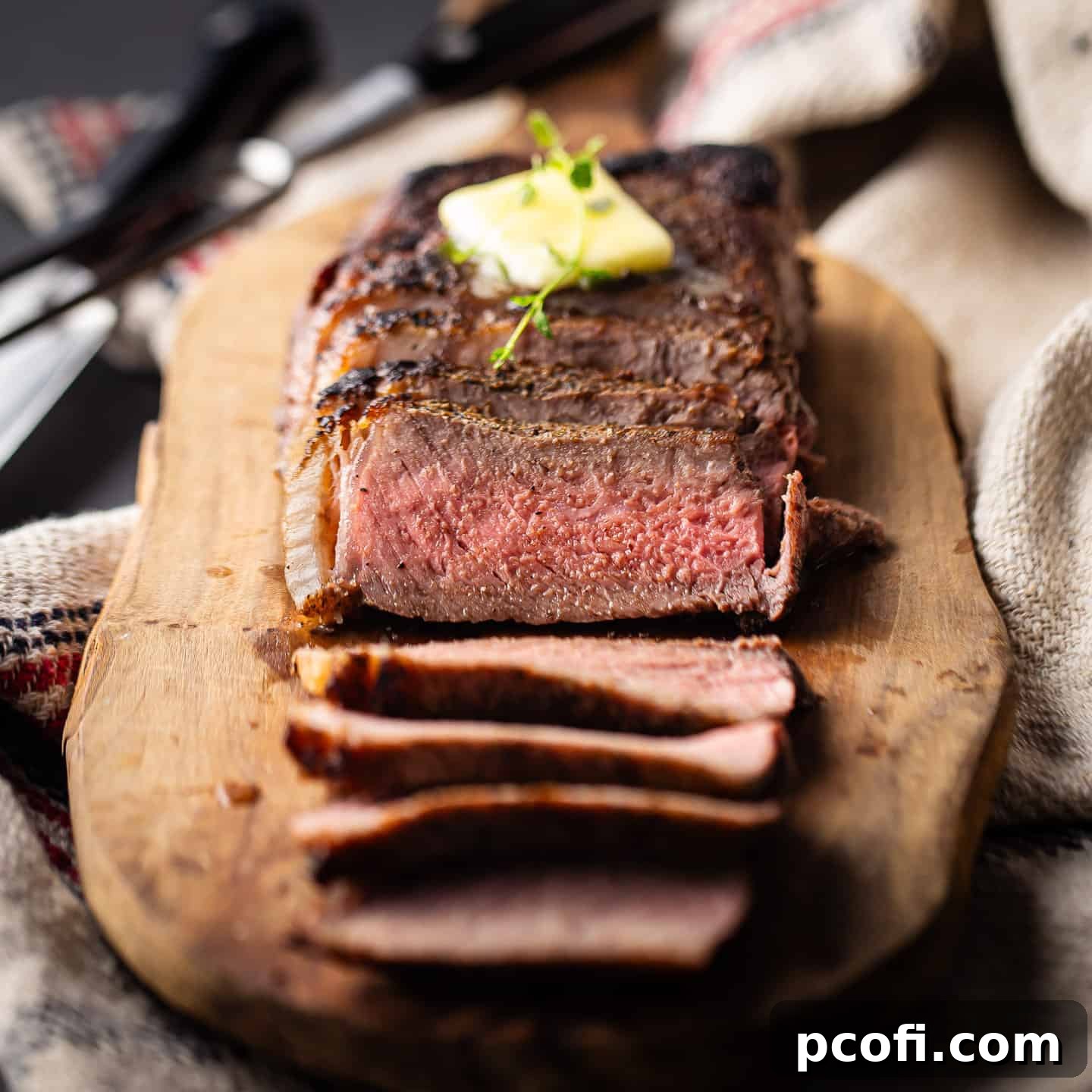
Imagine serving a steak so tender, so juicy, and with a crust so irresistibly flavorful, that it rivals any high-end steakhouse. If you’re planning a special romantic dinner or simply want to elevate your home cooking, this reverse sear steak recipe is an absolute game-changer. It’s a method that promises perfection, transforming even an ordinary weeknight meal into an extraordinary culinary experience.
I was introduced to this technique by my son, and I must admit, I was skeptical at first. But after trying it, I was completely convinced. It’s truly the only way I prepare steak now, and it has become a beloved tradition in our household. Steak night is a special occasion for us, so when we indulge, we want it to be spectacular.
And this recipe never disappoints! Each bite is incredibly tender and bursting with succulent juices. The beauty of the reverse sear method is the precise control it offers, allowing you to achieve your desired level of doneness with absolute confidence. Seasoned boldly yet simply, this approach lets the rich, inherent flavor of the premium beef truly shine through, creating a robust and deeply satisfying meal.
While the process might seem a little unconventional if you’re used to traditional searing, I promise that once you understand the science and experience the delicious results, you’ll be a lifelong convert to reverse-seared steak. Keep reading to discover why this method stands head and shoulders above the rest!
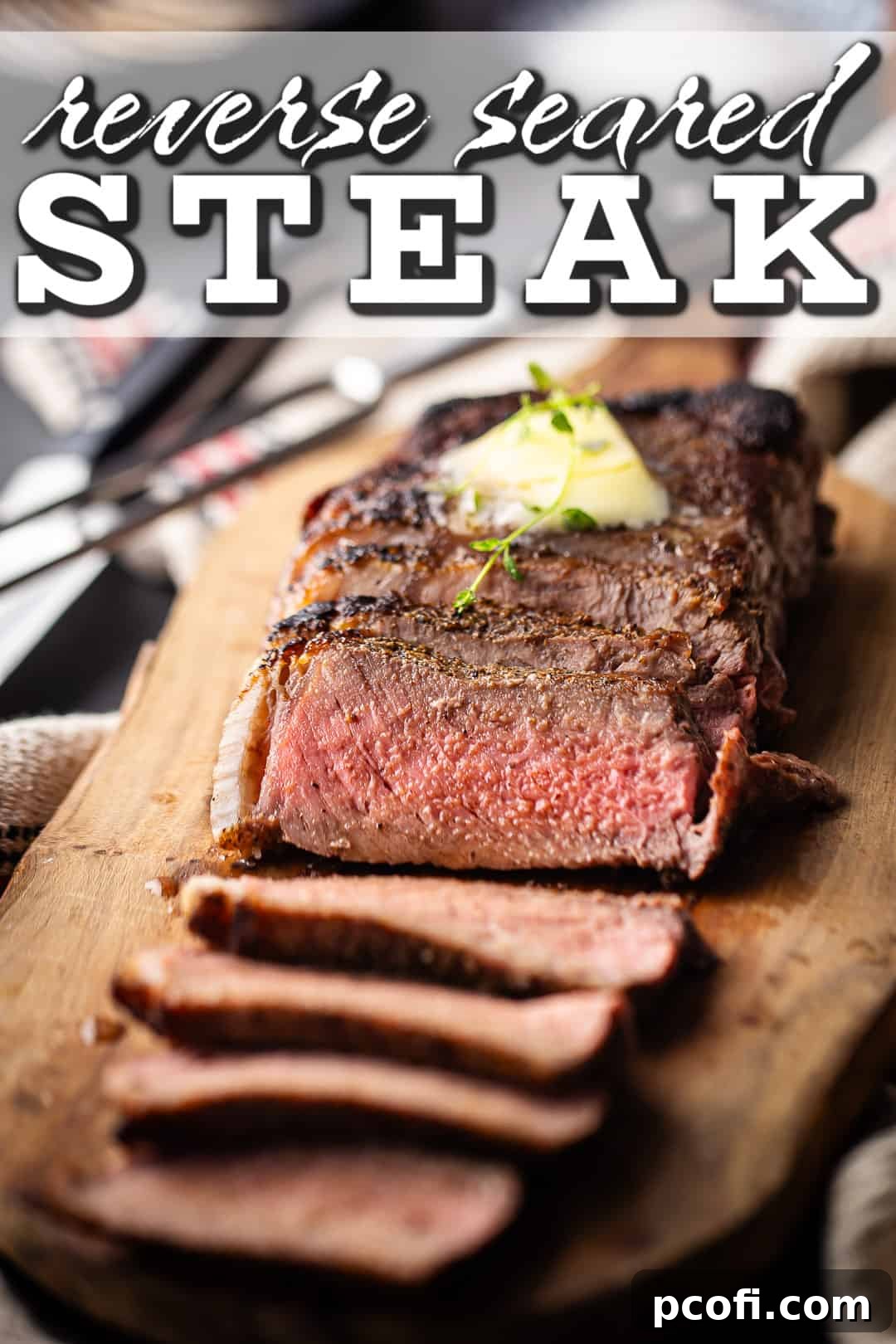
Table of Contents
- What is Reverse-Seared Steak?
- Why Cook Steak with the Reverse Sear Method?
- What Does Reverse Sear Steak Taste Like?
- Choosing the Best Steak Cut for Reverse Searing
- Essential Ingredients for Perfect Reverse Sear Steak
- Special Equipment for Reverse Sear Steak
- How to Reverse Sear a Steak: A Step-by-Step Guide
- How to Serve Your Perfectly Cooked Steak
- Expert Tips for Reverse Sear Success
- Frequently Asked Questions About Reverse Searing
- More Delicious Main Dish Recipes
Jump to Recipe
What is Reverse-Seared Steak?
The reverse sear is a revolutionary cooking method that flips the traditional steak-cooking process on its head. Instead of searing first and then finishing in the oven or on lower heat, you begin by gently baking the steak at a low temperature in the oven. This initial, slow cooking phase gradually brings the internal temperature of the meat up to near-perfect doneness, promoting incredibly even cooking from edge to edge. Once the steak reaches its target temperature, it is then transferred to a screaming hot skillet for a quick, intense sear. This final step creates that coveted, deeply browned, and unbelievably flavorful crust—the hallmark of a truly exceptional steak.
This technique contrasts sharply with the traditional method of searing a cold steak directly in a hot pan. While traditional searing offers a good crust, it can often lead to an unevenly cooked interior, with a grey band just beneath the surface. The reverse sear mitigates this, ensuring every slice is a consistent, tender pink, culminating in a superior eating experience.
Why Cook Steak with the Reverse Sear Method?
- Unparalleled Taste: At its core, any great recipe must deliver incredible flavor, and the reverse sear excels. It brings out the robust, beefy essence of the meat, resulting in a juicy, tender-as-butter steak that will tantalize your taste buds. The slow oven cook ensures maximum moisture retention, while the powerful sear builds layers of savory flavor.
- Ultimate Control and Consistency: This method provides superior control over your steak’s doneness, eliminating the guesswork that often plagues home cooks. By using a reliable meat thermometer and precise temperature guidelines, you can consistently achieve your preferred level of doneness, from rare to well-done, every single time. No more overcooked edges or undercooked centers!
- Simple Ingredients, Big Flavor: You don’t need a complex marinade or a pantry full of exotic spices to make this steak shine. The beauty of reverse searing lies in its simplicity. A few basic seasonings enhance the natural richness of the beef without overpowering it, allowing the quality of the meat to be the star.
- Easier Than You Think: Don’t let the multi-step process intimidate you. Once you understand the fundamentals, reverse searing is surprisingly straightforward and largely hands-off. The oven phase allows you to focus on preparing your side dishes, making it less stressful than constantly monitoring a steak on the stovetop.
- Remarkably Versatile: This technique works beautifully with almost any thick-cut steak, allowing you to adapt it to your preferences and budget. Whether you prefer a rich ribeye, a lean filet, or a robust New York strip, the reverse sear method will deliver exceptional results. It truly allows you to cook your steak to perfection, exactly how you like it.
What Does Reverse Sear Steak Taste Like?
My philosophy for this recipe is to celebrate the inherent, magnificent flavor of high-quality beef. The reverse sear method allows the natural richness of the steak to take center stage, resulting in a deep, hearty, and profoundly savory flavor that you will undoubtedly adore. The slow, gentle cooking process maintains the integrity of the muscle fibers, yielding a steak that is meltingly tender throughout.
This exquisite tenderness is beautifully contrasted by a sharply seasoned, dark brown crust. This crust, developed through the powerful Maillard reaction during the final sear, offers a textural crunch and an explosion of concentrated, savory notes that complement the silky interior of the meat perfectly. It’s a symphony of textures and tastes: a tender, juicy core enveloped by a crispy, flavorful exterior.
Choosing the Best Steak Cut for Reverse Searing
The success of your reverse sear steak starts with selecting the right cut. The ideal steak for this method is typically at least 1.5 to 2 inches thick, as this allows for more precise temperature control during the slow bake without overcooking the exterior. Here are some excellent choices:
Ribeye: If your top priority is flavor, look no further than a thick-cut ribeye. Known for its generous marbling (the intramuscular fat), the ribeye melts as it cooks, infusing the meat with incredible juiciness and a rich, buttery flavor. This marbling also contributes to its tenderness. It’s often considered the king of steaks for good reason.
Filet Mignon: For unparalleled tenderness, filet mignon is the champion. This cut is incredibly lean and boasts a melt-in-your-mouth texture. While it has a milder beefy flavor compared to a ribeye, its luxurious tenderness makes it a top choice for special occasions. The reverse sear treats this delicate cut with the care it deserves.
New York Strip Steak: If you’re looking for a fantastic balance of flavor, tenderness, and value, a New York strip steak is an excellent option. It has a good amount of marbling, a firm texture, and a bold, beefy taste. It often comes with a nice fat cap on one side, which can be rendered down during cooking to add even more flavor.
This recipe is designed to teach you how to cook your steak straight from the fridge, which is often recommended for reverse searing to extend the oven phase and ensure a more even cook. However, if you prefer to let it come up to room temperature first, the method will still work beautifully; just keep a closer eye on the internal temperature as it may cook slightly faster.
Essential Ingredients for Perfect Reverse Sear Steak
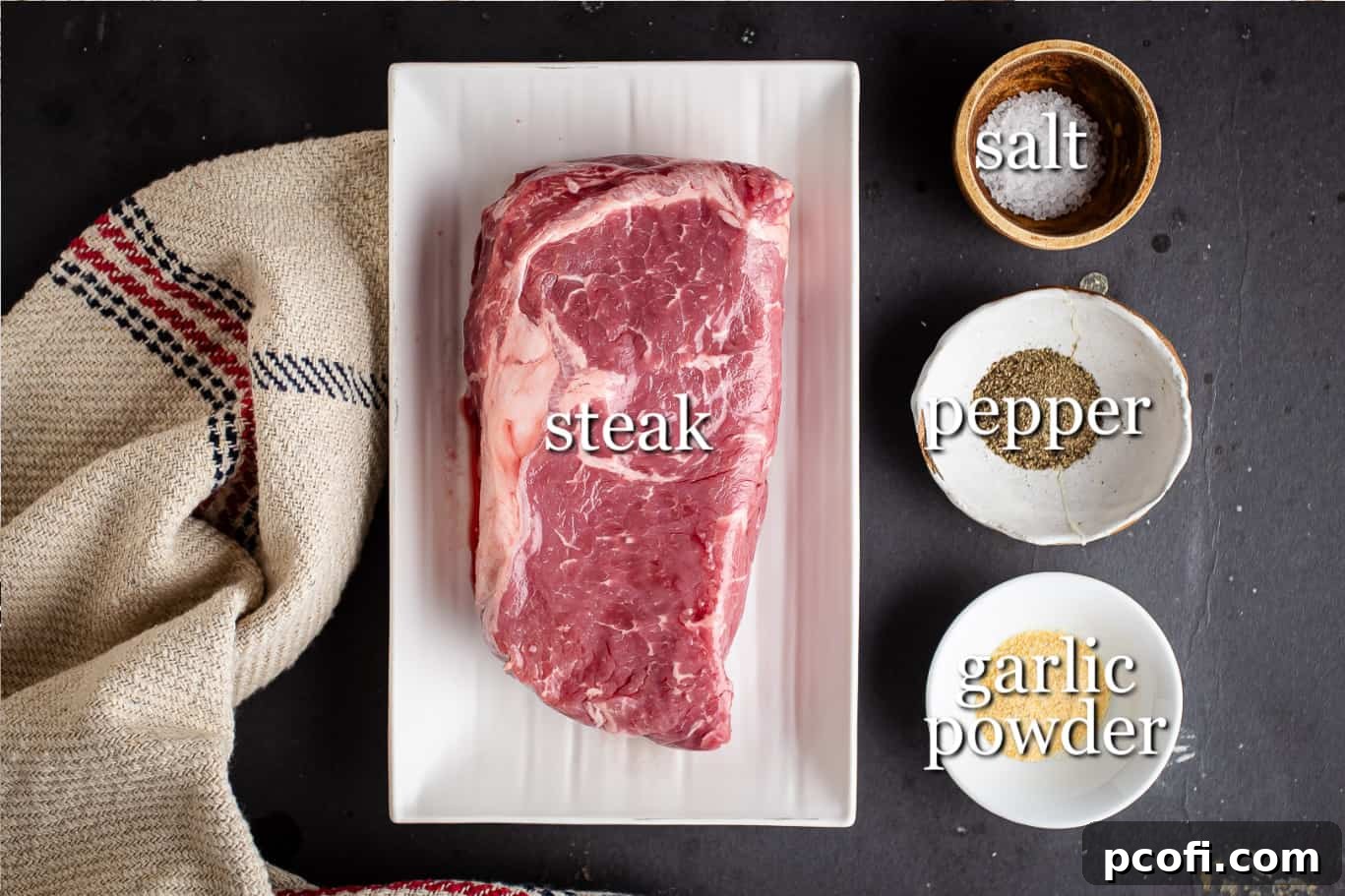
One of the beauties of this recipe is its reliance on minimal, high-quality ingredients that allow the natural flavor of the beef to shine. Here’s what you’ll need:
Steak: As discussed, choose a thick-cut (1.5-2 inches) ribeye for rich flavor, filet mignon for supreme tenderness, or a New York strip for a great balance. The quality of your steak will significantly impact the final result, so opt for the best you can reasonably afford, looking for good marbling and a vibrant red color.
Kosher Salt: I exclusively cook with kosher salt. Its larger flakes are easier to control when seasoning, and it’s a pure salt without additives like iodine, which can sometimes impart a slightly bitter or metallic aftertaste. Salt is crucial for drawing out and enhancing the steak’s natural flavors, and it also contributes to the formation of that desirable crust.
Ground Black Pepper: Freshly ground black pepper is the perfect aromatic complement to the rich flavor of beef. Its subtle bite adds depth without overpowering the delicate nuances of the steak. For the best flavor, I recommend grinding your own just before seasoning.
Garlic Powder: A staple in many of my savory recipes, garlic powder offers a mellow, consistent garlic flavor without the sharpness or potential for burning that fresh minced garlic might present during searing. It’s incredibly easy to use and provides a wonderful aromatic base for your steak.
High Smoke Point Oil (for searing, optional but recommended): While not listed in the original recipe ingredients, using a small amount of a high smoke point oil like avocado oil, grapeseed oil, or canola oil in your hot skillet is crucial for achieving an even, dark crust without burning. Olive oil can be used, but watch its smoke point. You can also finish with a pat of butter after the initial sear for added richness.
Special Equipment for Reverse Sear Steak
While you don’t need a professional kitchen, a few key pieces of equipment will ensure your reverse-seared steak comes out perfectly every time:
- Oven-Safe Pan with a Rack: You’ll need an oven-safe baking sheet, ideally fitted with a wire rack. The rack is important because it allows air to circulate around all sides of the steak, ensuring even cooking during the oven phase and preventing the bottom from steaming. If you don’t have a rack, simply use an oven-safe baking sheet and flip the steak halfway through the baking process.
- High-Quality Meat Thermometer: This is, without a doubt, the most critical tool for reverse searing. An accurate instant-read thermometer or a reliable probe thermometer (which stays in the steak during cooking) will eliminate all guesswork, telling you precisely when to remove the steak from the oven and when it has reached its final desired doneness after searing. Investing in a good thermometer is investing in perfectly cooked meals.
- Tongs or a Fork: Essential for safely handling and turning the hot steak, both in the oven and especially in the blazing hot skillet. Tongs are generally preferred as they offer a more secure grip.
- Heavy-Bottomed Skillet: A heavy-bottomed pan, such as a cast-iron skillet or an enameled cast-iron skillet (which I use and highly recommend), is crucial for achieving that incredible, dark crust. These pans retain heat exceptionally well and distribute it evenly, ensuring a consistent and rapid sear across the entire surface of the steak.
How to Reverse Sear a Steak: A Step-by-Step Guide
Mastering the reverse sear is simpler than you might imagine, breaking down into just four manageable steps. Follow these instructions for a perfectly cooked steak every time:
Step 1: Season Liberally
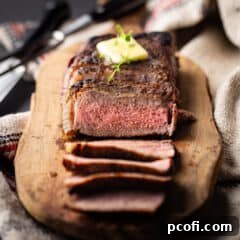
For a thick cut of meat like the one featured in these images, it’s important to season generously. Don’t be shy with your seasonings; the thickness of the steak requires a good amount to penetrate and flavor the interior.
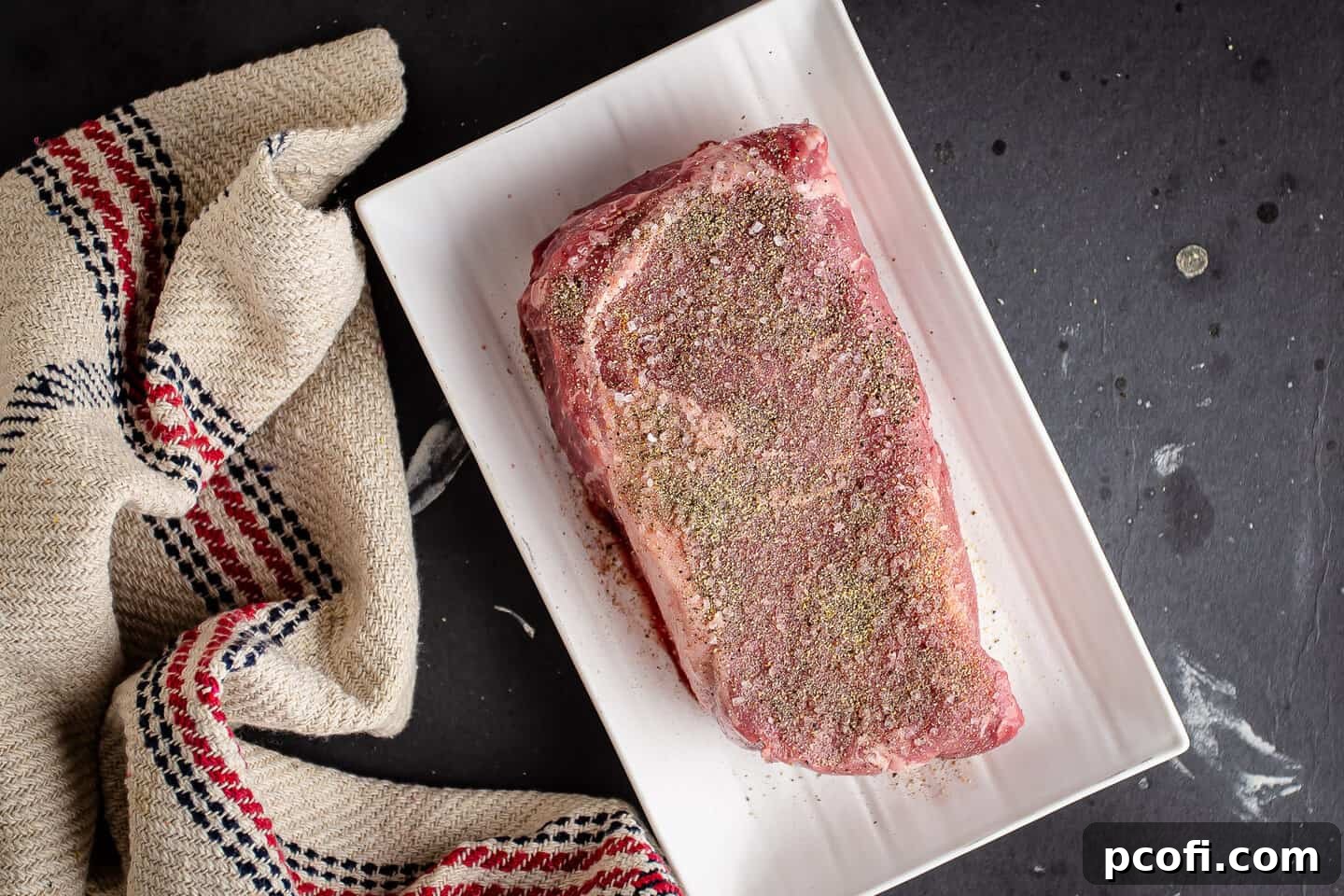
Pat your steak thoroughly dry with paper towels. This crucial step helps create a better crust by removing surface moisture. Then, sprinkle the kosher salt, fresh ground black pepper, and garlic powder evenly over both sides of the steak. Ensure an even coating for maximum flavor development.
Step 2: Low-Temperature Bake
Preheat your oven to a low temperature, typically around 225 degrees F (107 degrees C). Place your generously seasoned steak on an oven-safe pan fitted with a wire rack. This allows for even air circulation, preventing the bottom from steaming.
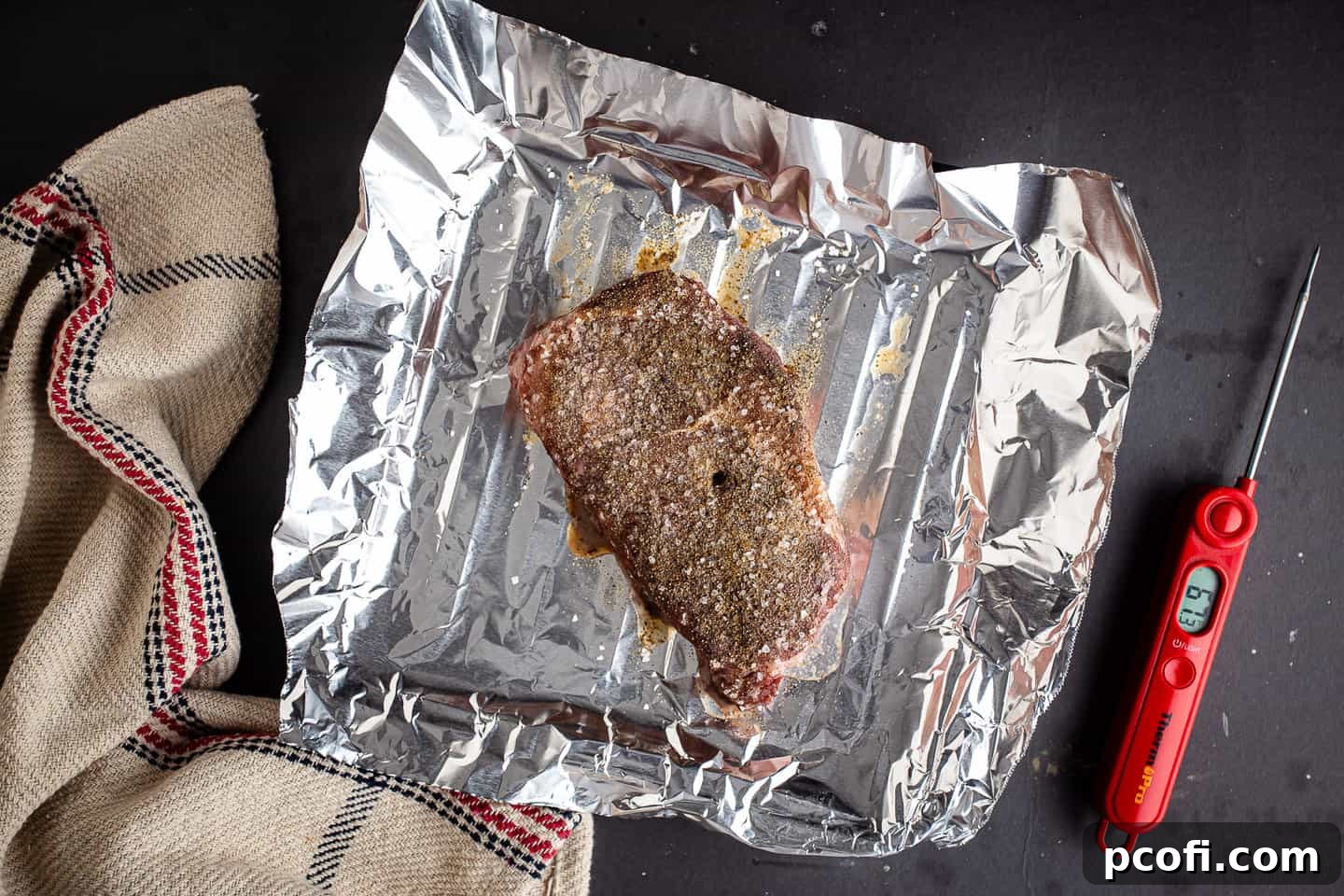
Slide the pan into the preheated oven. You will bake the steak until its internal temperature reaches approximately 15 degrees F (8 degrees C) below your desired final doneness. This slow, gentle cooking ensures the steak cooks evenly through, yielding a beautifully consistent pink interior. Use your meat thermometer to monitor the internal temperature closely.
Here’s a helpful guide to make your life easy and ensure perfect doneness:
| Desired Doneness: | Bake to (Internal Temp): | Sear to (Final Temp): |
| Rare | 115 degrees F (46 C) | 130 degrees F (54 C) |
| Medium-Rare | 125 degrees F (52 C) | 140 degrees F (60 C) |
| Medium | 135 degrees F (57 C) | 150 degrees F (66 C) |
| Medium-Well | 145 degrees F (63 C) | 160 degrees F (71 C) |
| Well-Done | 155 degrees F (68 C) | 170 degrees F (77 C) |
Step 3: High-Heat Sear
Once your steak reaches its target internal temperature from the oven, immediately remove it. Now it’s time for the magic of the sear! Place your heavy-bottomed skillet over high heat and allow it to get smoking hot. Add a small amount of high-smoke-point oil (like avocado or grapeseed) to the pan, just enough to lightly coat the bottom.
Carefully transfer the steak to the smoking-hot pan. Allow it to sear undisturbed for about 2-3 minutes per side, or until a deep, dark brown, crispy crust forms. Don’t overcrowd the pan if cooking multiple steaks, as this can lower the pan temperature and lead to steaming instead of searing. You can also sear the edges of the steak for a minute or so to achieve a uniform crust. For an added touch of richness, you can drop a knob of butter and a sprig of fresh herbs (like thyme or rosemary) into the pan during the last minute of searing, basting the steak with the fragrant butter.
Step 4: The Essential Rest
Resist the urge to cut into your perfectly seared steak right away! Resting the meat is a crucial step that significantly impacts its juiciness and flavor. When meat is exposed to high heat, its muscle fibers contract, pushing the internal juices towards the center. If you slice into it immediately, all those precious juices will spill out onto your cutting board, leaving you with a drier, less flavorful steak.
Allowing the steak to rest, tented loosely with foil, for 5 to 10 minutes (or longer for very thick cuts) gives the muscle fibers time to relax. This allows the juices to redistribute evenly throughout the entire piece of meat, ensuring every bite is incredibly moist and succulent, all the way to the center.
Additionally, during the resting period, the steak will continue to cook slightly from its residual heat, a phenomenon known as “carryover cooking.” The internal temperature can rise by an additional 5 to 10 degrees F (3-6 C), so factor this into your initial baking temperature to avoid overcooking.
How to Serve Your Perfectly Cooked Steak
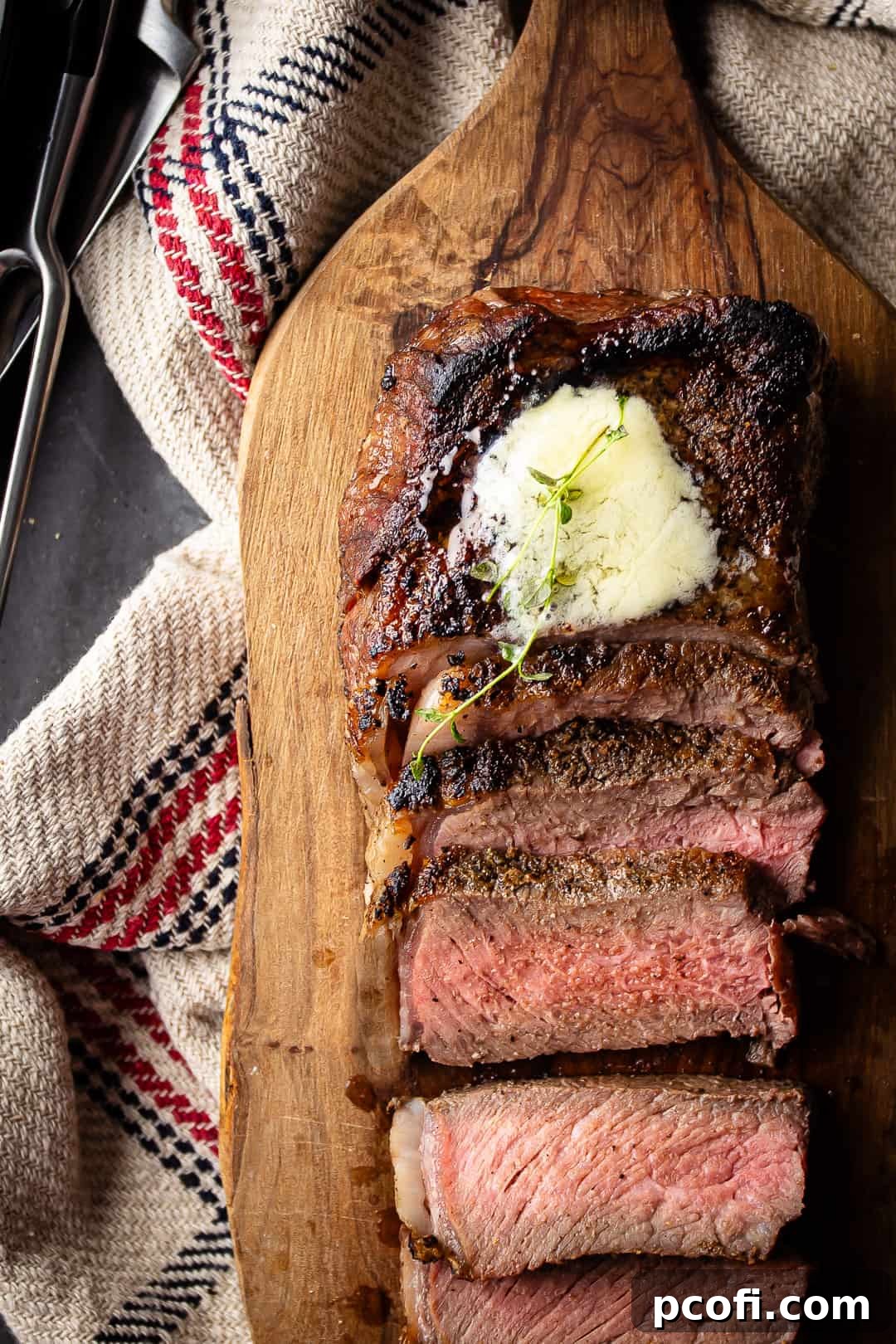
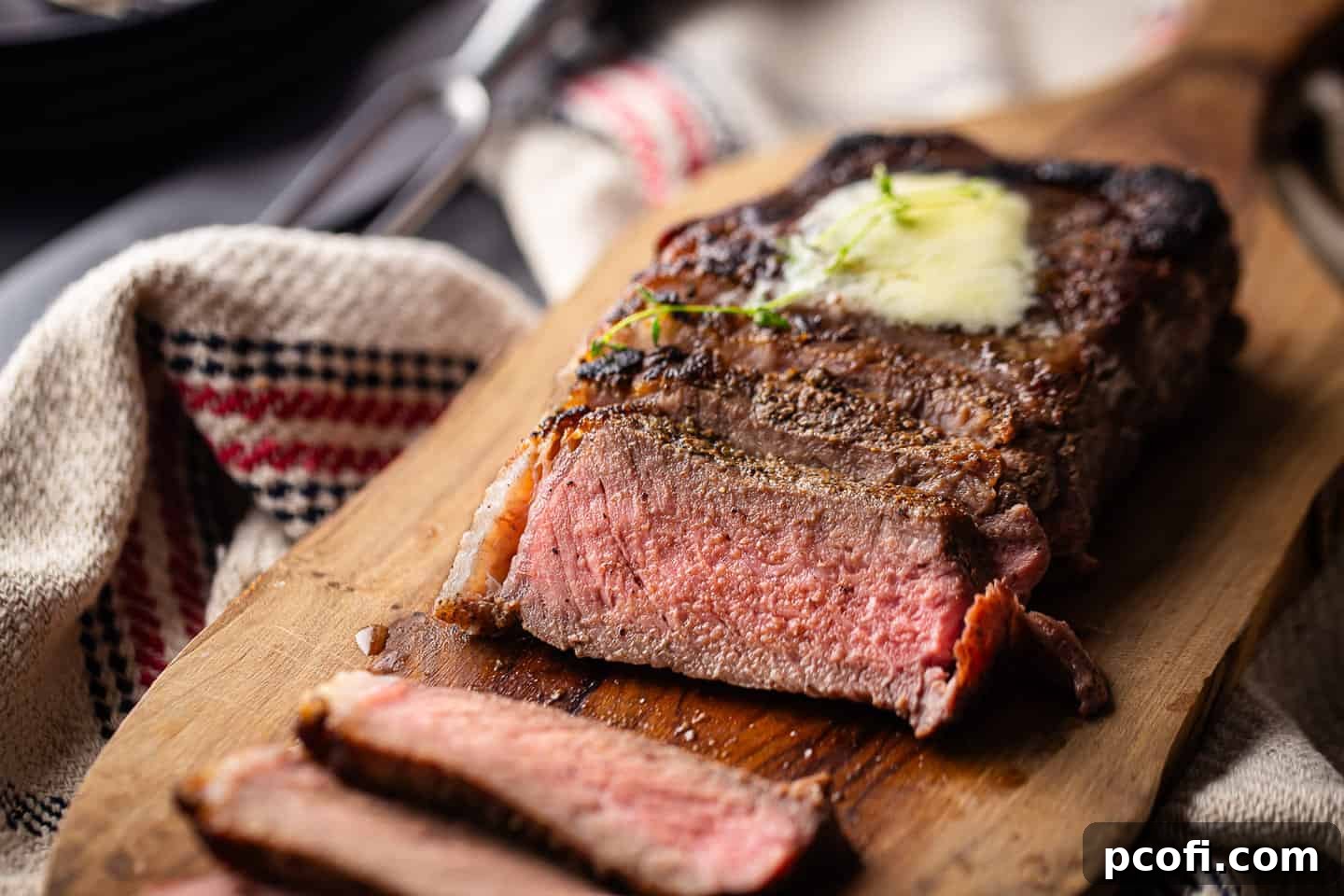
After a proper rest, your reverse-seared steak is ready to be enjoyed! For the most tender experience, always slice the meat perpendicular to the grain. This shortens the muscle fibers, making each bite easier to chew and more enjoyable.
Your steak can be savored hot off the carving board, or surprisingly, it’s also delicious cold. I particularly enjoy cold steak, especially in the warmer months, often sliced thinly and served atop a fresh, vibrant salad for a light yet satisfying meal.
When it comes to side dishes, the possibilities are endless. For a classic, comforting pairing, I can’t imagine anything more delightful than creamy, cheesy scalloped potatoes and rich, savory creamed spinach. A thickly buttered slice of crusty ciabatta bread is also an excellent choice for soaking up any lingering juices.
To complete your luxurious meal, consider a decadent dessert. A silky creme brulee or a warm, molten chocolate lava cake would provide a truly unforgettable finish.
Expert Tips for Reverse Sear Success
Achieving steakhouse-quality results at home is within reach with these expert tips:
The Thicker, The Better: A thicker steak (1.5 to 2 inches) is significantly easier to reverse sear successfully. It provides a larger thermal mass, allowing for more precise temperature control during the slow oven bake and giving you more time to develop that flavorful, dark crust without overcooking the center. Thinner steaks cook too quickly in the oven, making it harder to hit the internal temperature accurately.
Monitor Temperature Religiously: Do not rely on visual cues or cooking times alone. Your meat thermometer is your best friend. I recommend checking the internal temperature of your steak about every 5 minutes once it has been in the oven for about 15 minutes (if starting from a cold steak, straight from the fridge). This frequent monitoring helps prevent overshooting your target temperature during the crucial oven phase.
Pat Your Steak Bone Dry: Before seasoning and baking, thoroughly pat both sides of your steak dry with paper towels. Any surface moisture will hinder the development of a perfect crust during the searing process, essentially steaming the meat instead of browning it. A dry surface is critical for the Maillard reaction.
Embrace the Smoke (and Ventilation!): If your smoke alarm doesn’t protest a little while you’re searing your steak, you’re probably not doing it right! A truly hot pan is essential for a proper, deep crust, and that often means a bit of smoke. Make sure to turn on your kitchen hood fan to its highest setting, and if possible, open a window to ensure good ventilation and keep your ears happy.
Preheat Your Skillet Thoroughly: Don’t rush the searing step. Place your heavy-bottomed skillet over high heat and let it preheat for several minutes until it’s literally smoking slightly or a drop of water immediately evaporates. A properly preheated pan ensures an immediate and even sear, creating that desired crust efficiently.
Frequently Asked Questions About Reverse Searing
While I have a deep appreciation for filet mignon due to its exceptional tenderness, I believe the ultimate prize for reverse searing goes to a thick-cut ribeye. It’s the cut I’ve used for all the images you see here, and for good reason! The ribeye offers a fantastic balance of tenderness and unparalleled flavor, thanks to its generous marbling. When selecting a ribeye, look for a thick steak (at least 1.5-2 inches) with nice, evenly distributed intramuscular fat, as this will render beautifully and infuse the meat with incredible juiciness and taste.
I intentionally don’t provide precise cook times for the oven portion because relying on time alone can be misleading. Many variables affect cooking duration, including the starting temperature and thickness of your steak, as well as the calibration and efficiency of different ovens. The most accurate and reliable guideline is always the internal temperature of the meat, measured with a thermometer. Instead of a timer, use your meat thermometer diligently. To give you a general idea, the ribeye steak featured here, cooked directly from the fridge, took approximately 25 minutes to reach an internal temperature of 125 degrees F in a 225F oven. The searing step then took about 3 to 5 minutes per side to achieve a deep, golden-brown crust.
I honestly wouldn’t recommend it. Steak, especially one cooked to perfection with the reverse sear method, tastes significantly better and offers the best texture when freshly prepared and enjoyed immediately after its resting period. The active cooking time for this method is quite minimal anyway, making it a feasible option even for busy evenings. Preparing it fresh ensures you experience the optimal tenderness, juiciness, and crispy crust that this technique provides.
While freshly cooked is always best, if you do have leftover steak, it can safely remain at room temperature for about an hour. For longer storage, it’s best to refrigerate or freeze it promptly. In the refrigerator, leftover cooked steak will maintain its quality for a few days when stored in an airtight container. For extended preservation, you can freeze it for a few weeks. To reheat, thaw frozen steak in the fridge overnight. You can then gently reheat it in the microwave or, for best results, covered in a 170-degree F (77 C) oven until warmed through, taking care not to overcook it.
Absolutely! While a heavy-bottomed skillet provides excellent contact for crust development, you can certainly use a grill for the searing step. After the oven bake, transfer your steak to a very hot grill. Ensure the grill grates are clean and well-oiled to prevent sticking and achieve clear grill marks. Sear for 2-3 minutes per side, rotating slightly to create diamond patterns if desired, until a beautiful crust forms. Just like with a skillet, the key is high heat for a short duration.
There are a few common culprits if your steak isn’t developing a satisfactory crust. First, ensure your steak is thoroughly patted dry before seasoning and cooking. Any surface moisture will inhibit browning. Second, your skillet must be screaming hot. Allow it to preheat for several minutes over high heat until it’s smoking. Third, don’t overcrowd the pan; if cooking multiple steaks, work in batches to maintain high pan temperature. Lastly, ensure you’re using a high smoke point oil or a fat that can withstand the intense heat required for searing.
More Delicious Main Dish Recipes
If you’ve enjoyed mastering this reverse sear steak, you might love exploring some of my other favorite main dish recipes:
- Hearty Baked Rigatoni
- Classic Shrimp Scampi
- Maple and Sage Brown Butter Roasted Turkey
- Elegant Chicken Marsala
As an amazon associate I earn from qualifying purchases.
Reverse Sear Steak
2
servings
5 minutes
35 minutes
5 minutes
45 minutes
Leave a Review
Ingredients
-
16 ounces
(453.59 g)
steak, (I used one thick-cut ribeye) -
1 teaspoon
(6 g)
kosher salt -
1/4 teaspoon
(0.5 g)
ground black pepper, (generous) -
1/4 teaspoon
(0.75 g)
garlic powder
Instructions
-
Preheat the oven to 225 degrees F (107 degrees C).
-
Pat the steak dry with paper towels. Season generously on both sides with salt, pepper, and garlic powder.
-
Place the seasoned steak on an oven-safe pan with a wire rack. Bake it in the oven until it reaches an internal temperature 15 degrees F (8 C) below the desired doneness (refer to the table in the notes below for specific temperatures).
-
Remove steak from oven. Sear the steak in a lightly greased, very hot skillet for approximately 2-3 minutes on each side, until browned and crusty.
-
Transfer the steak to a cutting board and rest for 5 to 10 minutes, loosely tented with foil.
-
Slice perpendicular to the grain and serve immediately.
Notes
For medium-rare steak: Bake to 125 degrees F (52 C) before searing (final temp 140 F/60 C).
For medium steak: Bake to 135 degrees F (57 C) before searing (final temp 150 F/66 C).
For medium-well steak: Bake to 145 degrees F (63 C) before searing (final temp 160 F/71 C).
For well-done steak: Bake to 155 degrees F (68 C) before searing (final temp 170 F/77 C).
Serving:
8
ounces
,
Calories:
474
kcal
,
Carbohydrates:
0.4
g
,
Protein:
46
g
,
Fat:
32
g
,
Saturated Fat:
14
g
,
Polyunsaturated Fat:
2
g
,
Monounsaturated Fat:
15
g
,
Cholesterol:
138
mg
,
Sodium:
1281
mg
,
Potassium:
616
mg
,
Fiber:
0.1
g
,
Sugar:
0.01
g
,
Vitamin A:
35
IU
,
Vitamin C:
0.01
mg
,
Calcium:
18
mg
,
Iron:
4
mg
American
Main Course
Tried this recipe?
Mention @bakingamoment on Instagram or tag #bakingamoment.