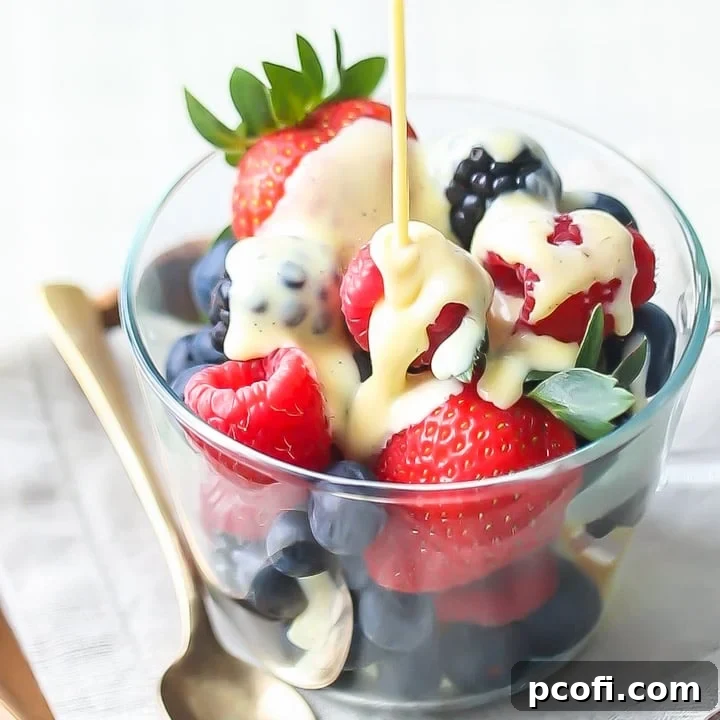
Creme Anglaise, a French term meaning “English cream,” is a luxurious yet surprisingly simple vanilla custard sauce. Often associated with gourmet desserts, this silky, pourable sauce is actually very accessible to home cooks once you master a few basic techniques. It involves gently warming vanilla-infused dairy, carefully tempering egg yolks, and cooking the mixture until it thickens into a beautifully smooth, elegant custard. Perfect for drizzling over cakes, spooning alongside fresh fruit, enhancing brownies, or serving as a versatile base for countless dessert creations, Creme Anglaise is a timeless classic for good reason.
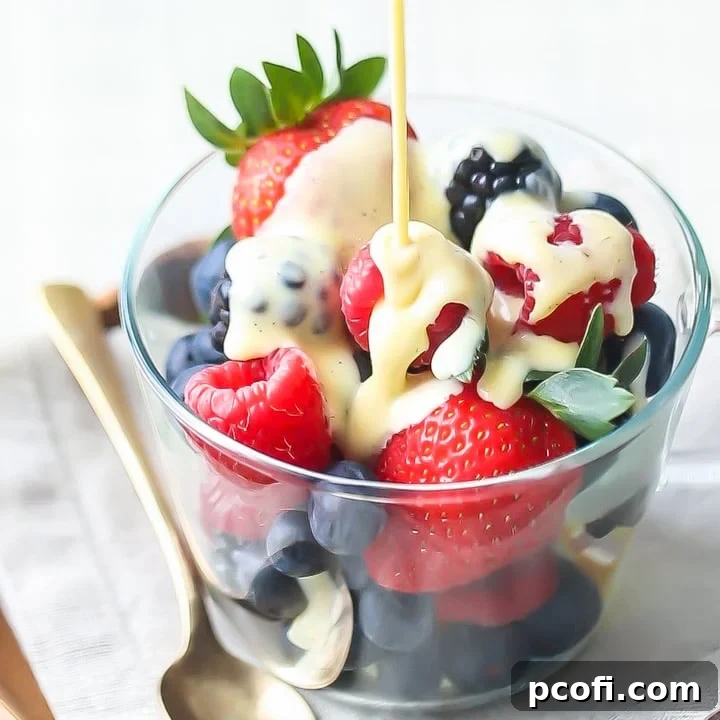
Table of Contents
- What is Crème Anglaise?
- Why You’ll Love This Easy Crème Anglaise Recipe
- Essential Ingredients for Perfect Crème Anglaise
- How To Make Crème Anglaise: Step-by-Step Guide
- Helpful Tips and Tricks for Success
- Troubleshooting Common Crème Anglaise Issues
- Make-Ahead and Storage Tips
- Creme Anglaise Variations
- Serve This With: Delicious Pairings
Jump to Recipe
What is Crème Anglaise?
Often perceived as a gourmet French dessert component, Crème Anglaise is at its heart a simple yet exquisite custard sauce. Unlike thicker custards like pastry cream, Crème Anglaise is designed to be pourable, offering a delicate richness that complements a wide array of sweets. It’s essentially a liquid custard, made from milk, cream, egg yolks, sugar, and typically infused with vanilla. The magic lies in the gentle cooking process, which thickens the mixture just enough to coat a spoon beautifully, without becoming a solid pudding.
Historically, this sauce has graced the tables of sophisticated diners, but its elegance doesn’t require a culinary degree. My mission today is to demystify Crème Anglaise and bring this luxurious vanilla custard sauce into your home kitchen, proving that exceptional desserts are within everyone’s reach. The difference a truly homemade Crème Anglaise makes to a dessert is profound – it’s a testament to the power of simple, high-quality ingredients transformed by careful technique.
Why You’ll Love This Easy Crème Anglaise Recipe
- Effortless Elegance: This rich, velvety vanilla custard sauce instantly elevates even the simplest desserts, turning an ordinary sweet into a restaurant-quality experience with minimal effort.
- Pure, Intense Vanilla Flavor: By using real vanilla bean (or a high-quality vanilla bean paste), you achieve a depth of flavor and beautiful visual flecks that truly set this Crème Anglaise apart from versions made with extract alone. It tastes genuinely gourmet.
- Surprisingly Simple Ingredients: Despite its sophisticated taste, this recipe calls for only 5 common ingredients, proving that extraordinary flavor doesn’t require an extensive shopping list.
- Incredibly Versatile: Beyond being a luxurious plating sauce, Crème Anglaise can serve as a delicate filling for pastries, a base for ice cream, or a delightful accompaniment to fresh fruit. Its adaptability makes it a staple in any baker’s repertoire.
- No Special Equipment Required: You won’t need any fancy gadgets. A saucepan, a whisk, and a bowl are all you need to create this magnificent sauce, making it accessible for every kitchen.
- Excellent for Making Ahead: Crème Anglaise is perfect for meal prep. It keeps beautifully in the refrigerator for several days, allowing you to prepare it in advance and have it ready for impromptu dessert cravings or dinner parties.
Essential Ingredients for Perfect Crème Anglaise
The beauty of Crème Anglaise lies in its simplicity. High-quality ingredients are key to achieving that rich flavor and silky texture. You’ll find the precise measurements in the recipe card at the end of this post, but here’s a closer look at what makes this sauce so special:
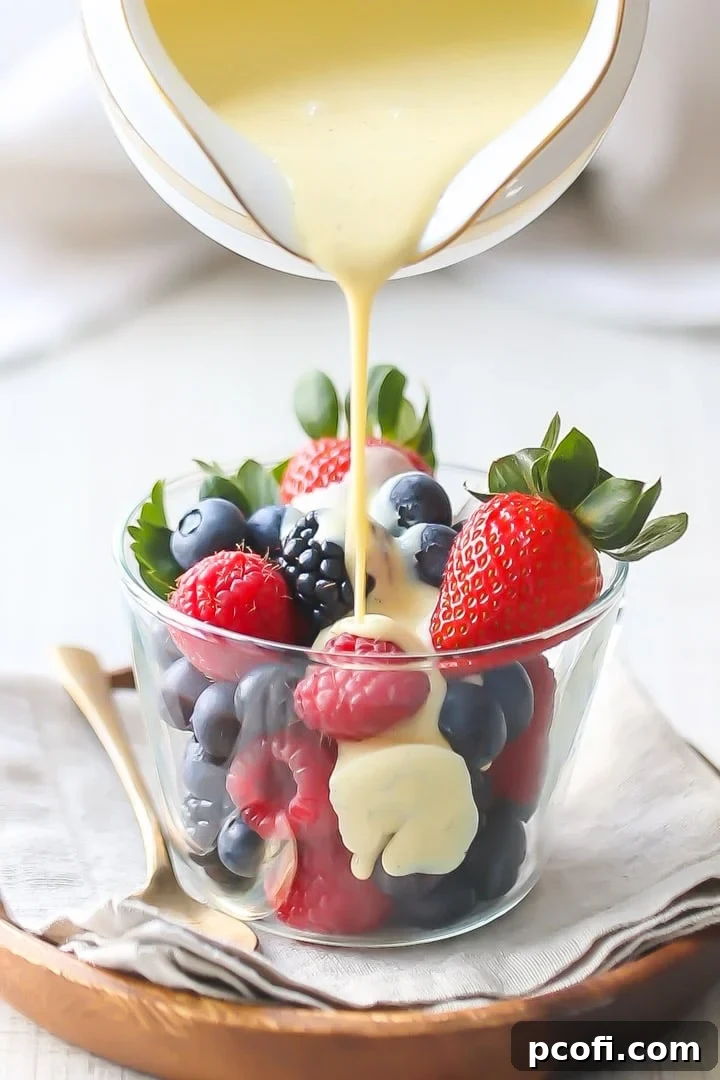
- Milk: This provides the primary liquid base for the custard. Using whole milk or 2% milk is recommended as the fat content contributes to the desired creamy consistency without making the sauce overly heavy. Skim milk will result in a much thinner, less rich custard.
- Heavy Cream: The secret to Crème Anglaise’s luxurious richness and silky mouthfeel. Heavy cream, with its higher fat content, adds that decadent quality that truly elevates the sauce. Do not substitute with half-and-half or lighter creams if you want the authentic experience.
- Vanilla Bean: The star flavor. A whole vanilla bean imparts the purest, most aromatic vanilla flavor and leaves beautiful, tell-tale black specks throughout the custard. Split the bean lengthwise, scrape out the tiny seeds, and add both the seeds and the scraped pod to infuse the dairy. If whole vanilla beans are hard to find, a high-quality vanilla bean paste is an excellent alternative (use an equal amount). In a pinch, 1½ teaspoons of good vanilla extract can be used, but add it *after* the custard has cooked and been removed from the heat to preserve its delicate flavor.
- Egg Yolks: These are the crucial thickening agent in Crème Anglaise, responsible for its luscious, spoon-coating consistency. They also add richness and a beautiful golden hue. Ensure your eggs are fresh for the best results. Separate the yolks carefully from the whites.
- Granulated Sugar: Sweetens the custard beautifully and plays a role in tempering the egg yolks, helping them emulsify smoothly into the dairy mixture. Adjust the amount slightly to your personal preference, but the recipe provides a balanced sweetness.
How To Make Crème Anglaise: Step-by-Step Guide
Making Crème Anglaise is a delicate dance of heat and whisking, but with these clear steps, you’ll achieve a perfect, silky sauce every time. Patience and constant attention are your best friends here!
Step 1: Infuse the Dairy with Vanilla
Combine the milk and heavy cream in a small, heavy-bottomed saucepan. This type of pan helps distribute heat evenly and prevents scorching. Next, prepare your vanilla bean: carefully split it lengthwise with a sharp knife, then use the back of the knife to scrape out the tiny, fragrant seeds. Add both the vanilla seeds and the empty pod to the saucepan with the dairy.
Warm this mixture over medium-low heat. You’re aiming to heat it thoroughly, but not boil it. Look for small bubbles just beginning to form around the edges of the pan and delicate wisps of steam rising from the surface. Once it reaches this point, remove the saucepan from the heat to allow the vanilla to continue infusing and prevent any scalding.
Step 2: Whisk Yolks and Sugar
While the dairy mixture is heating, prepare your egg yolks. In a medium-sized heat-proof bowl, combine the egg yolks and granulated sugar. Using a whisk, beat them together vigorously until the mixture becomes pale yellow and slightly thickened. This process is called “ribboning” or “blanching” the yolks and helps dissolve the sugar, preventing the yolks from scrambling later and ensuring a smooth custard.
Step 3: Temper the Yolks
This is arguably the most crucial step in preventing scrambled eggs! Slowly, in a thin, steady stream, pour about half of the hot vanilla-infused cream mixture into the whisked egg yolks, whisking constantly and energetically. The goal here is to gradually raise the temperature of the egg yolks without cooking them immediately. This gradual temperature increase, known as “tempering,” acclimates the yolks to the heat and prevents them from seizing up when combined with the remaining hot liquid.
Step 4: Cook Gently Until it Coats a Spoon
Once tempered, pour the entire egg-and-dairy mixture back into the original saucepan. Return the saucepan to very low heat. Now, the key is constant, gentle whisking. Continue to whisk steadily for about 5 to 8 minutes, or until the custard thickens just enough to coat the back of a spoon. Don’t let it boil at any point.
A reliable test: dip a spoon into the custard, then run your finger across the back of the spoon. If the line you draw holds clearly without the custard running back into it, your Crème Anglaise is ready. Remember, the custard will continue to thicken slightly as it cools, so err on the side of undercooking rather than overcooking.
Step 5: Strain and Chill
Immediately remove the saucepan from the heat. To ensure a perfectly smooth and silky texture, strain the finished Crème Anglaise through a fine-mesh sieve into a clean, heat-safe container. This step catches any potential stray egg bits, vanilla bean fragments, or tiny lumps, guaranteeing a truly flawless sauce.
For quick chilling and to stop the cooking process, place the container of warm custard into a larger bowl filled with ice water (an “ice bath”). Stir occasionally until the custard has cooled considerably. Once cooled, cover the container tightly with plastic wrap, ensuring the wrap touches the surface of the custard to prevent a skin from forming. Refrigerate until thoroughly chilled and ready to serve.
Helpful Tips and Tricks for Success
- Always Keep the Heat Low: Crème Anglaise is delicate. High heat can scramble the egg yolks in an instant. Maintain low heat throughout the cooking process, especially after returning the mixture to the stove.
- Never Let It Boil: Boiling is the enemy of smooth custard. If you see signs of boiling (large bubbles, rapid steam), remove the pan from the heat immediately and whisk vigorously to cool it down.
- Whisk Constantly on the Stove: Continuous whisking prevents the custard from sticking to the bottom of the pan and ensures even cooking. This active stirring also helps create that beautifully smooth, lump-free texture.
- Strain Every Time: Even if your custard looks perfectly smooth, straining through a fine-mesh sieve is a non-negotiable step. It’s your insurance policy for silkiness and removes any minuscule cooked egg particles.
- If it thickens too much in the fridge: Crème Anglaise naturally thickens more as it chills. If it becomes too thick for your preference, simply whisk in a splash of cold milk or cream until it reaches your desired pourable consistency. You can also gently warm it over very low heat while whisking.
- Use a Heat-Safe Spatula or Wooden Spoon: When cooking the custard, avoid metal spoons for testing as they can scratch non-stick surfaces. A rubber spatula or wooden spoon is ideal for stirring and checking consistency.
Troubleshooting Common Crème Anglaise Issues
- My custard is lumpy or has scrambled egg bits: This is almost always due to overheating or not whisking constantly during tempering or cooking. Don’t despair! Strain the custard through a very fine-mesh sieve, pressing down on any lumps with a spoon. For more stubborn lumps, you can try blending it briefly with an immersion blender or in a regular blender, then straining again. While it might not be perfectly smooth, it will salvage the flavor.
- My custard didn’t thicken: This means it hasn’t reached the correct temperature or hasn’t cooked long enough. Return it to very low heat and continue whisking constantly. Make sure it coats the back of a spoon. If after prolonged cooking it still doesn’t thicken, it’s possible your egg yolks were too small or the ratio of ingredients is off. Unfortunately, it’s hard to “add” more thickening once it’s cooked, but you can try whisking in a very small amount of cornstarch slurry (1 tsp cornstarch mixed with 1 tbsp cold milk) and gently cooking for another minute, being extremely careful not to overheat.
- My custard is too thin: Once chilled, it should thicken further. If it’s still too thin after chilling, see the advice above for “didn’t thicken.”
- A skin formed on top: This happens when the surface is exposed to air as it cools. Always press plastic wrap directly onto the surface of the warm custard before chilling to prevent this. If a skin does form, you can usually just peel it off and discard it.
Make-Ahead and Storage Tips
Crème Anglaise is an excellent make-ahead dessert component, making it perfect for entertaining or enjoying throughout the week. You can prepare it up to 3-4 days in advance. Once cooked and strained, follow the chilling instructions carefully by placing the container in an ice bath and covering the surface directly with plastic wrap to prevent a skin from forming. Store it in an airtight container in the refrigerator.
When ready to serve, if it’s too thick, simply whisk in a tablespoon or two of milk or cream until it reaches the desired consistency. You can serve it chilled, at room temperature, or gently warmed. To reheat, warm it very slowly over low heat, whisking constantly, until just warm. Avoid boiling or overheating, as this can cause it to curdle.
Creme Anglaise Variations
While classic vanilla Crème Anglaise is divine on its own, its simple base makes it a fantastic canvas for other flavors. Here are a few ideas to get creative:
- Chocolate Crème Anglaise: Whisk in 2-3 ounces of finely chopped dark chocolate into the hot custard after it’s strained. Stir until melted and smooth.
- Coffee Crème Anglaise: Add 1-2 teaspoons of instant espresso powder or strong coffee extract to the dairy mixture before heating, or infuse with a few coffee beans and strain them out.
- Citrus Crème Anglaise: Infuse the dairy with strips of orange, lemon, or lime zest along with the vanilla bean. Strain before tempering.
- Nutty Crème Anglaise: Infuse the dairy with a few tablespoons of toasted chopped almonds or pistachios (strain them out before tempering) or add a splash of almond extract or nut liqueur after cooking.
- Spiced Crème Anglaise: Add a cinnamon stick, star anise, or a few cardamom pods to the dairy while infusing. Remember to strain these out.
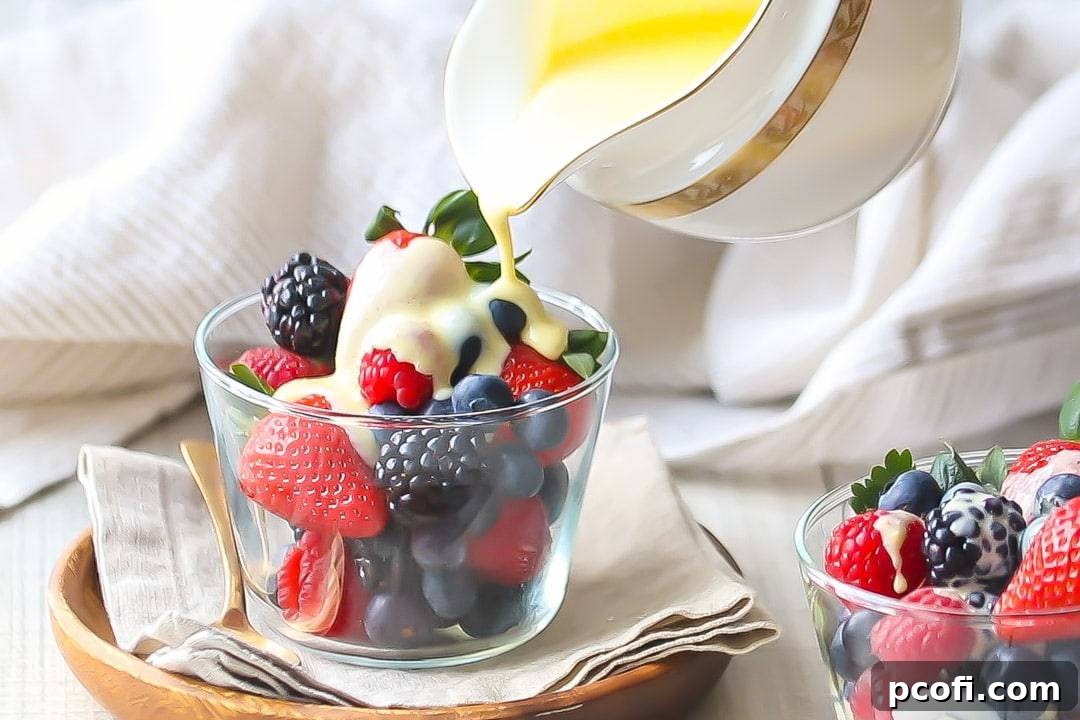
Serve This With: Delicious Pairings
The versatility of Crème Anglaise is truly remarkable. Its rich, vanilla notes and smooth texture make it a perfect companion for almost any dessert. Here are some of my favorite pairings:
- Marble Bundt Cake
- Mocha Cream Puffs
- Pear Gingerbread Upside-Down Cake
- Double Chocolate Pecan Pie
- Chocolate Cherry Galette
- Butter Cake
- Rhubarb Tart
- Chocolate Amaretto Torte
- Fresh berries (strawberries, raspberries, blueberries)
- Chocolate lava cakes
- Bread pudding
- Poached fruits (pears, apples)
- As a base for homemade ice cream

Classic Vanilla Crème Anglaise
Leave a Review
Ingredients
- 1 cup (244 g) whole milk (or 2%)
- ¾ cup (178.5 g) heavy whipping cream
- 1 vanilla bean (or 1½ tsp vanilla bean paste)
- 4 large egg yolks
- ⅓ cup (66.67 g) granulated sugar
Instructions
-
Place the milk and cream in a small, heavy-bottomed saucepan.
-
Split the vanilla bean lengthwise with a sharp knife, scrape out the seeds, and add them (along with the empty pod) to the milk and cream mixture.
-
Heat the mixture on medium-low heat, stirring occasionally, until small bubbles begin to appear around the edges and wisps of steam are rising from the surface. Do not let it boil. Remove from heat.
-
In a medium mixing bowl, whisk the egg yolks and sugar together vigorously until the mixture is pale yellow and slightly thickened.
-
Slowly, in a thin, steady stream, pour about half of the hot dairy mixture over the yolk mixture, whisking constantly and energetically to temper the yolks.
-
When all of the tempered liquid has been incorporated, transfer the entire custard mixture back to the saucepan. Place over very low heat, whisking constantly.
-
Gently cook until the custard has thickened slightly and coats the back of a spoon (about 5-8 minutes). When you run your finger across the spoon, the line should hold. Remember, the sauce will become thicker as it cools.
-
Remove from the heat immediately. Pour the sauce through a fine-mesh strainer into a clean, heat-safe container to ensure a perfectly smooth texture. Discard the vanilla bean pod.
-
Place the heat-safe container into a larger bowl filled with ice water (an ice bath) to cool quickly. Stir occasionally.
-
Once cooled, cover the surface of the Creme Anglaise directly with plastic wrap to prevent a skin from forming. Keep refrigerated until ready to serve.
Notes
Carbohydrates: 12g,
Protein: 4g,
Fat: 21g,
Saturated Fat: 12g,
Cholesterol: 163mg,
Sodium: 32mg,
Sugar: 11g
Tried this recipe?
Mention @bakingamoment on Instagram or tag #bakingamoment.