The Perfect Passover Dessert: Fluffy Pavlova with Red Berries, Zesty Lime & Candied Hibiscus
This post originally appeared on my other blog, YinMomYangMom.com.
Today, I’m thrilled to share a recipe that truly tested my culinary skills from beginning to end! Developing this dessert was a journey filled with trial and error, but the satisfaction of finally perfecting it makes me even more eager to pass along this delightful creation to all of you. It’s a testament to perseverance in the kitchen, and the result is absolutely worth every effort.
Beyond the recipe itself, this post marks my inaugural contribution to the wonderful Sunday Supper movement. Initiated by Isabel Laessig of Family Foodie, Sunday Supper is dedicated to reviving the tradition of gathering around the family dinner table. Both Isabel and I firmly believe that by nurturing our families through shared meals, we empower them in profound ways. This is a principle my husband and I have prioritized long before our children were born. Now, watching our four and five-year-olds thrive from this dedicated family time, we truly understand the immense positive impact it has on their lives and ours.
“I have always known that eating supper around the family table is the best nourishment we can give our families. It is about so much more than just the food that is served. It is something that the entire family looks forward to. It is about commitment to each other, positive communication and time together. In my heart, I know that this is the most important thing I have done for my family.”
-Isabel Laessig
There couldn’t be a more fitting moment to join this inspiring group, as we are just days away from our annual Passover Seder. My family and I will trek to my husband’s extended family gathering, where we anticipate seating over 30 relatives for a supper steeped in tradition, faith, and devotion to our ancestry. The Seder meal itself is a powerful reminder of the historical significance of food in our lives, making this Pavlova an especially meaningful addition to the feast.
Why Pavlova is the Ultimate Passover Dessert
A few weeks ago, while indulging in my favorite pastime – browsing recipes and brainstorming ideas for YinMom YangMom – a brilliant idea struck me! I can’t quite recall the initial spark, but suddenly, it was crystal clear: *Pavlova* would be the quintessential Passover dessert. Little did I know, this seemingly simple revelation would lead me down a challenging but ultimately rewarding path.
As you might recall from a previous post, my husband and I have often found traditional Passover desserts to be a bit underwhelming. The dietary restrictions – avoiding most flours, yeast, and baking powder – make it incredibly difficult to create a truly spectacular and celebratory sweet. This is precisely where Pavlova shines. A lighter-than-air, tender-crisp, marshmallowy confection, it’s made primarily from whipped egg whites, sugar, and a touch of stabilizer. It naturally bypasses many Passover constraints, making it a brilliant, naturally gluten-free option.
I envisioned a magnificent, towering cloud of a cake, generously piled high with vibrant seasonal fruits. Perhaps an unusual yet intriguing ingredient that no one had tried before, crowned with luxurious pillows of freshly whipped cream. The possibilities seemed endless for this show-stopping dessert that could truly elevate our Seder table.
It took me approximately six attempts before I finally achieved the desired result – a perfectly baked Pavlova with that signature crisp exterior and soft, chewy interior. It was a journey of patience and precision, but each failed attempt taught me valuable lessons. Now, I’m excited to share those hard-earned “pearls of wisdom” so you can achieve Pavlova perfection on your first or second try!
Essential Tips for Perfect Pavlova Every Time
Crafting the ideal Pavlova can be a delicate process, but armed with these insights, you’ll be well on your way to success:
- Mastering Egg Separation: Always crack each egg into a separate small bowl before adding it to your main mixing bowl. Even the tiniest speck of yolk introduced into egg whites can prevent them from whipping up properly. The fat in the yolk inhibits the protein structure in the whites from forming the stable foam required for meringue. Trust me, I learned this the hard way on my fourth egg in one batch – the entire effort was compromised. This simple step saves a lot of frustration and wasted ingredients.
- Adhere to the Sugar Ratio: Meringue relies on a precise sugar-to-egg-white ratio for both structure and sweetness. While I often prefer less sweet desserts, reducing the sugar in Pavlova is a recipe for disaster; my meringues collapsed in every instance I tried. The sugar not only provides sweetness but also helps stabilize the whipped egg whites, contributing to that desirable crisp texture. It’s far better to balance the inherent sweetness of the Pavlova with tart fresh fruits and unsweetened whipped cream.
- Choosing Your Stabilizer Wisely: Traditional Pavlova often contains a small amount of cornstarch and vinegar to help stabilize the egg whites, ensuring a crisp exterior and chewy interior. However, Passover dietary laws can be a bit ambiguous regarding cornstarch (known as “kitniyot” for Ashkenazi Jews). You can learn more about this here. If you have any doubts about adhering to your family’s specific Passover traditions, simply omit the cornstarch. A pinch of cream of tartar will achieve a similar stabilizing effect, helping the egg whites whip to a firm, glossy peak. If your family follows Sephardic traditions or is less strict about kitniyot, this authentic recipe which includes cornstarch is fantastic, and I can personally vouch for its deliciousness.
- Gradual Sugar Addition is Key: Incorporating sugar into egg whites is a delicate balancing act. You need to give the sugar enough time to dissolve into the egg whites, but over-beating the meringue can lead to a dry, brittle result. The goal is stiff, glossy peaks. Begin by beating egg whites until foamy and soft peaks form. Then, with the mixer running at medium to medium-high speed, gradually add the granulated sugar in a very slow, steady stream. This slow addition allows the sugar to dissolve properly without deflating the whites. Once all the sugar is in, you can increase the mixer speed to high if needed, continuing to beat until the meringue holds firm, shiny peaks.
- Preventing “Weeping”: Sometimes, after baking, you might notice small droplets of liquified sugar on the surface of your meringues. This phenomenon is known as “weeping.” To combat this and ensure a dry, crisp Pavlova, turn off your oven once baking is complete. Prop the oven door open slightly with a wooden spoon and allow the meringues to cool slowly inside the oven. This gradual cooling and drying process helps prevent moisture from accumulating and sugar from recrystallizing on the surface.
- Assemble Just Before Serving: Meringues can be baked ahead of time and stored in an airtight container at room temperature for several days. However, the complete Pavlova, with all its luscious toppings, should only be assembled right before you plan to serve it. If assembled too far in advance, the meringue will absorb moisture from the cream and fruit, causing it to soften and become soggy, losing its signature crispness. Reserve any delicate elements like the hibiscus syrup for a final drizzle over each individual portion, enhancing both flavor and presentation at the last minute.
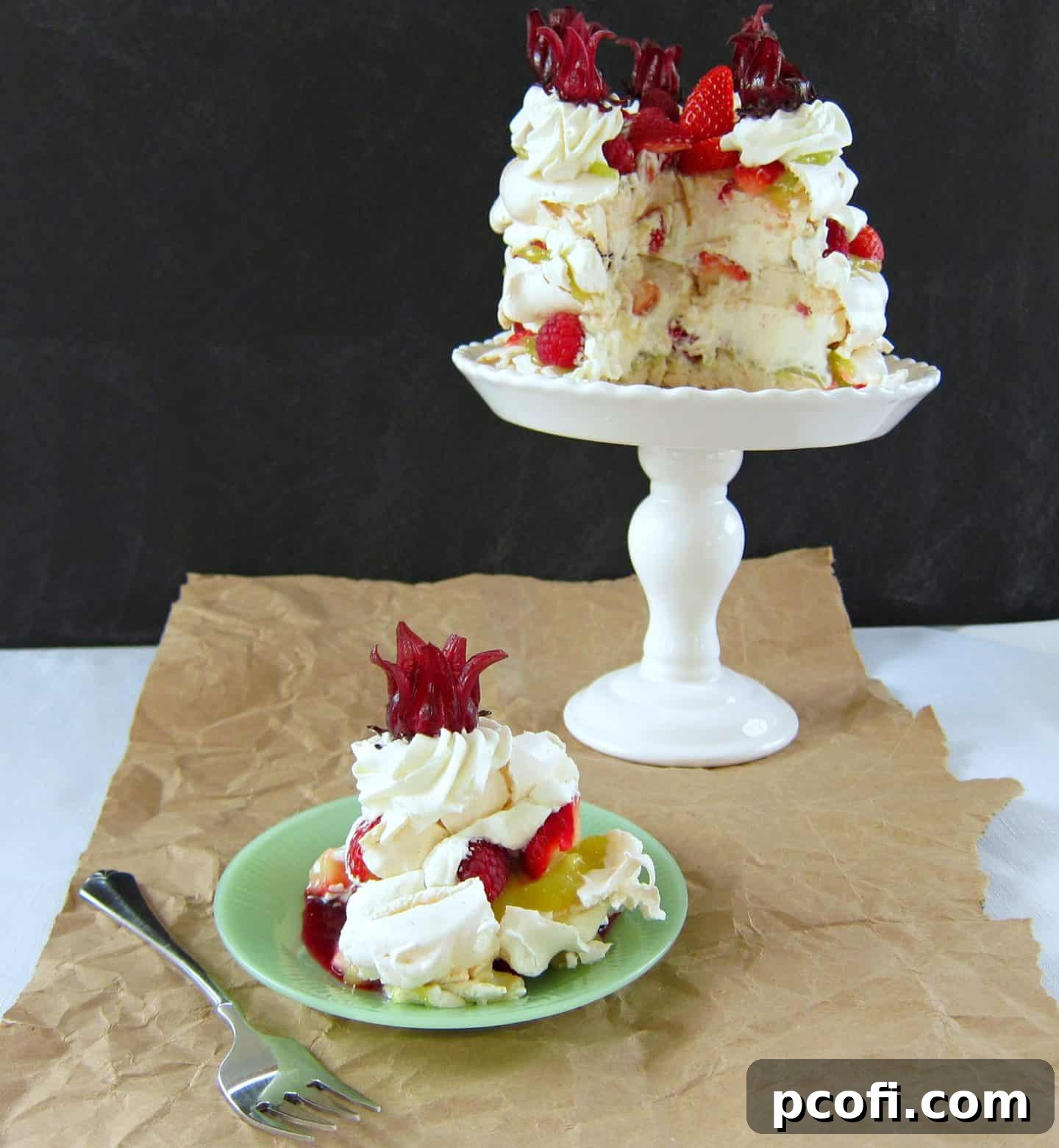
Behold! A fluffy, sweet cloud, finally perfected! The effort was entirely worth it to achieve this delicate balance of textures and flavors. This Pavlova isn’t just a dessert; it’s a celebration of successful baking.
A Symphony of Flavors: Lime, Berries, and Hibiscus
The addition of tart lime curd provides a magnificent counterpoint to the sweet, marshmallowy creaminess of the meringue. Its bright, zesty flavor cuts through the richness, creating a wonderfully balanced taste experience that will delight your palate. While I often opt for a high-quality store-bought lime curd to save time, for those who love to craft everything from scratch, this recipe for citrus curd is an excellent choice.
If you’ve ever savored a cup of Red Zinger tea, then you can easily imagine the delightful explosion of flavors that fresh red berries and candied hibiscus bring to this Pavlova. The juicy sweetness of strawberries and raspberries, combined with the distinct tart and subtly gingery notes of the hibiscus flowers in syrup, creates a truly unique and sophisticated profile. These candied hibiscus flowers are not only deliciously fruity but also visually stunning, adding an exotic touch that makes this dessert truly memorable. You can easily purchase them here.
Prepare this stunning Pavlova for your family’s Seder this year, and be ready for jaws to drop! Its exquisite beauty, incredible taste, and refreshing departure from typical Passover desserts will make it the undeniable star of your celebration. It’s a perfect, elegant, and perfectly permissible sweet ending to your festive meal.
A Special Thanks to the Sunday Supper Community
This delightful dessert was specifically developed as part of the #SundaySupper Easter and Passover recipe exchange. My heartfelt thanks go out to Carla of Chocolate Moosey for her fantastic job hosting the event, and to Beate of The Not So Cheesy Kitchen for her invaluable mentorship as a first-time participant. I encourage everyone to visit their wonderful blogs and leave a friendly comment to show your appreciation!
Don’t miss out on these other fabulous Easter and Passover recipes from the #SundaySupper community:
Easter Recipes
- How To Color Easter Eggs Naturally from Shockingly Delicious
Breakfast, Breads, and Buns
- Bunny Rabbit Bread from In The Kitchen With Audrey and Maurene
- Easter Brunch Creme Brulee Baked Oatmeal from In The Kitchen With KP
- Fresh Blueberries Hot Cross Buns from My Cute Bride
- Hot Cross Cinnamon Buns from girlichef
- Jamaican Easter Spice Bun from The Lovely Pantry
- Paska – Ukranian Easter Bread from Cupcakes and Kale Chips
- Portuguese Easter Bread | Folar de Pascoa from Family Foodie
- Resurrection Rolls from Neighbor Food
Appetizers and Sides
- Asparagus, Brie & Ham Crostini from Daily Dish Recipes
- French Gratin Potatoes (Dauphinoise) from Simply Gourmet
- Lemon Glazed Carrots from Curious Cuisiniere
- Not So Deviled Eggs from Country Girl in the Village
- Orange Raisin Couscous from Vintage Kitchen Notes
- Potato and Leek Gratin from Webicurean
- Spinach Spaetzle (Spinat Spaetzle) from The Not So Cheesy Kitchen
Main Dishes
- Roast Leg of Lamb with Garlic and Rosemary from Small Wallet Big Appetite
- Slow Cooker Honey Glazed Ham from The Meltaways
- Sicilian “Enchiladas” from The Cooking Actress
Dessert
- Alebele – Goan Coconut filled Pancake from Masala Herb
- Bunny-Approved Baked Easter Doughnuts from The Weekend Gourmet
- Carrot Cake Cheesecake from Chocolate Moosey
- Coconut and M&M’s Cookie from Peanut Butter and Peppers
- Coconut Cake with Coconut Buttercream from Juanita’s Cocina
- Coconut Cupcakes from Magnolia Days
- Cream Cheese Candies from Cravings of a Lunatic
- Easter Cookies: Carrots in Dirt from The Urban Mrs
- Easter Egg Cookies from That Skinny Chick Can Bake
- Easter Simnel Cake from Happy Baking Days
- Exotic Walnut Cookies from What Smells So Good?
- Honey Panna Cotta with Grand Marnier Roasted Figs from Gourmet Drizzles
- Japanese Easter, Petit Fours and Flowers from Ninja Baking
- Nutella Easter Egg Candy from The Messy Baker
- Old-Fashioned Peanut Rolled Eggs from Cindy’s Recipes and Writings
- Painted Sugar Cookies from Ruffles and Truffles
- Strawberry Bundt Cake from Basic N Delicious
Passover Recipes
- Homemade Matzo from The Foodie Army Wife
- Mock Gefilte Fish from Fast Food to Fresh Food
Dessert
- Charoset from The Little Ferraro Kitchen
- Flourless Chocolate Torte from Girl in the Little Red Kitchen
- Moroccan Haroset from MarocMama
- Pavlova with Red Berries, Lime and Hibiscus from YinMom YangMom
Wine Pairing Recommendations for #SundaySupper Religious Feasts from ENOFYLZ Wine Blog
Join the conversation! Our vibrant #SundaySupper community hosts a Twitter party every Sunday at 7 PM Eastern. Just follow the hashtag #SundaySupper and include it in all your tweets to join the chat. And be sure to explore the amazing #SundaySupper Pinterest Board for endless culinary inspiration!
Ready to become a part of the Sunday Supper Movement? You can sign up and connect with fellow food enthusiasts by clicking here.
As an Amazon Associate, I earn from qualifying purchases.
Pavlova with Red Berries, Lime, and Hibiscus Recipe
This recipe creates a light, crisp, and marshmallow-soft Pavlova, perfect for Passover or any special occasion. Layered with bright red berries, tangy lime curd, and exotic candied hibiscus flowers, it’s a truly show-stopping dessert.
Servings: 6-8
Prep Time: 20 mins
Cook Time: 1 hr
Total Time: 1 hr 20 mins
Ingredients
- 4 large egg whites (approx. 120 g), preferably at room temperature
- 1/8 teaspoon cream of tartar
- 1 cup (200 g) granulated sugar
- 1/2 teaspoon vanilla extract
- 10 ounces (283.5 g) lime curd (store-bought or homemade)
- 10 ounces (283.5 g) fresh red berries (such as strawberries and raspberries)
- 1 1/2 cups (354.88 ml) heavy cream
- 8.8 ounces (249.48 g) hibiscus flowers in syrup, plus extra syrup for drizzling
Instructions
- Preheat your oven to 275 degrees F (135 C).
- In a clean, dry bowl, beat the egg whites together with the cream of tartar on medium speed until the mixture becomes foamy and soft peaks begin to form.
- Gradually add the granulated sugar, a little at a time, in a very slow and steady stream while the mixer continues to run. This slow addition is crucial for the sugar to dissolve properly. If the mixture appears too thin, increase the mixer speed slightly to incorporate more air, but avoid overbeating the whites before all the sugar is added.
- Continue to whip the meringue until stiff, glossy peaks are achieved. The meringue should be thick and shiny, and when you lift the beaters, the peaks should hold their shape firmly. Be careful not to overbeat, as this can make the meringue brittle.
- Gently fold in the vanilla extract.
- Line a baking sheet with parchment paper. Divide the meringue mixture equally into three portions and use the back of a spoon or an offset spatula to form each portion into a six-inch disc on the parchment paper. These will be your Pavlova layers.
- Reduce the oven temperature to 250 degrees F (120 C). Bake the meringue discs for one hour, or until they are dry to the touch and crisp on the outside, but not browned. The interior should still be soft and marshmallow-like.
- Once baked, turn off the oven completely. Prop the oven door open slightly with a wooden spoon and allow the meringues to cool slowly inside the oven for at least 30 minutes, or until completely cool. This helps prevent cracking and weeping.
- While the meringues cool, whip the heavy cream in a separate bowl until it forms soft peaks. Avoid over-whipping, as it will become too stiff.
- To assemble the Pavlova, place one meringue disc on your serving plate. Spread a layer of lime curd, then a scattering of fresh berries, and a dollop of whipped cream. Top with some candied hibiscus flowers. Repeat this layering process with the remaining meringue discs.
- Finish by garnishing the top layer with more fresh berries, hibiscus flowers, and a generous drizzle of the hibiscus syrup for added flavor and visual appeal. Serve immediately for the best texture.
Nutrition Information (per serving, based on 6 servings)
Calories: 519 kcal, Carbohydrates: 61g, Protein: 7g, Fat: 30g, Saturated Fat: 17g, Cholesterol: 176mg, Sodium: 105mg, Potassium: 160mg, Fiber: 1g, Sugar: 57g, Vitamin A: 998IU, Vitamin C: 42mg, Calcium: 46mg, Iron: 4mg
Recipe Details
Cuisine: Australian
Course: Dessert