The Ultimate Perfect Lemon Meringue Pie: Your Go-To Recipe for a Flawless Dessert
As the chill of winter lingers, many of us find ourselves craving a taste of sunshine. That longing for warmth, brightness, and cheer can feel overwhelming when grey skies persist. While we can’t magically change the weather, we can certainly bring a burst of sunshine into our kitchens with a vibrant citrus treat. Lemon desserts are not only wonderfully uplifting but also incredibly practical for this time of year, as fresh lemons are readily available year-round, unlike many seasonal fruits. This makes them an ideal choice for baking during winter or early spring when other produce might be scarce.
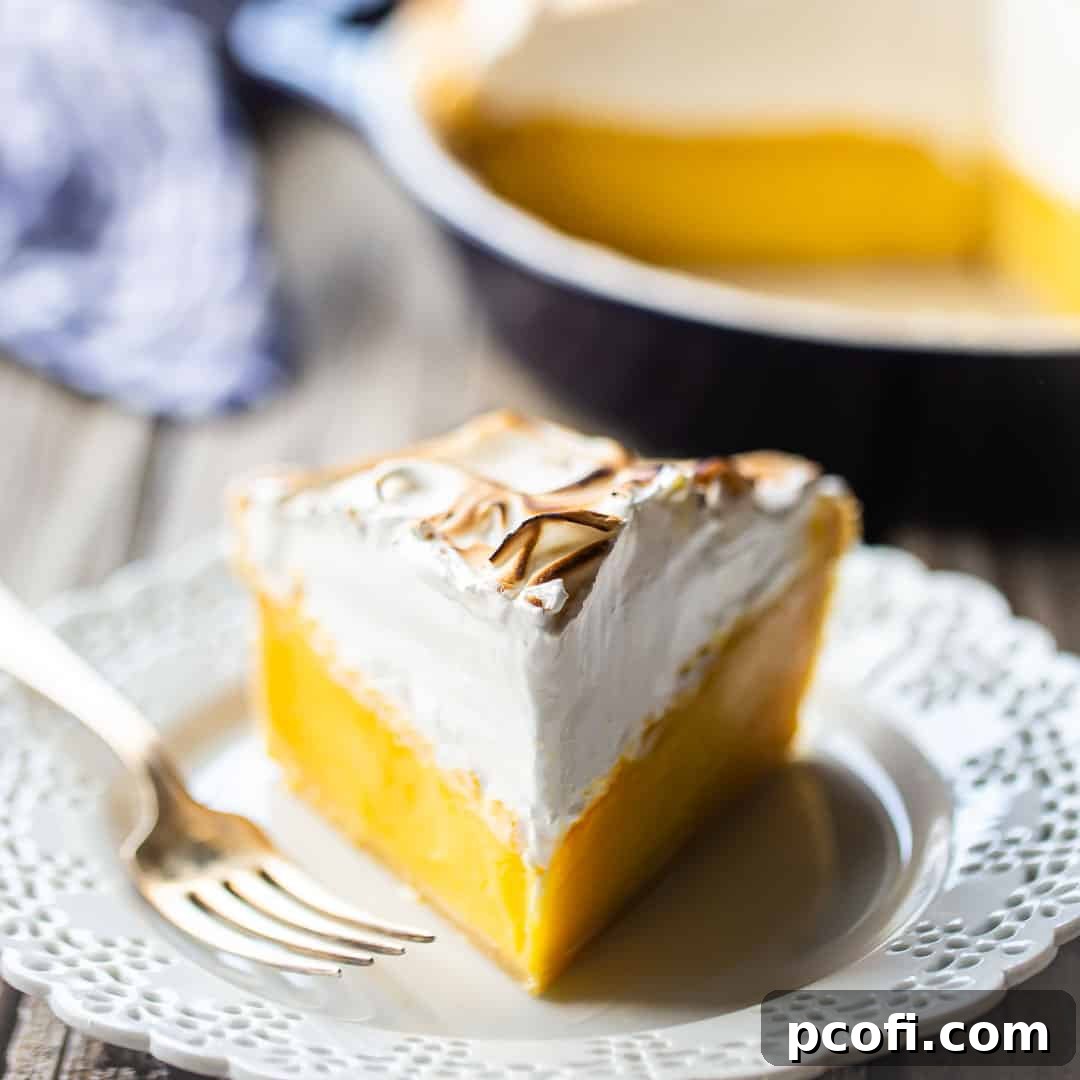
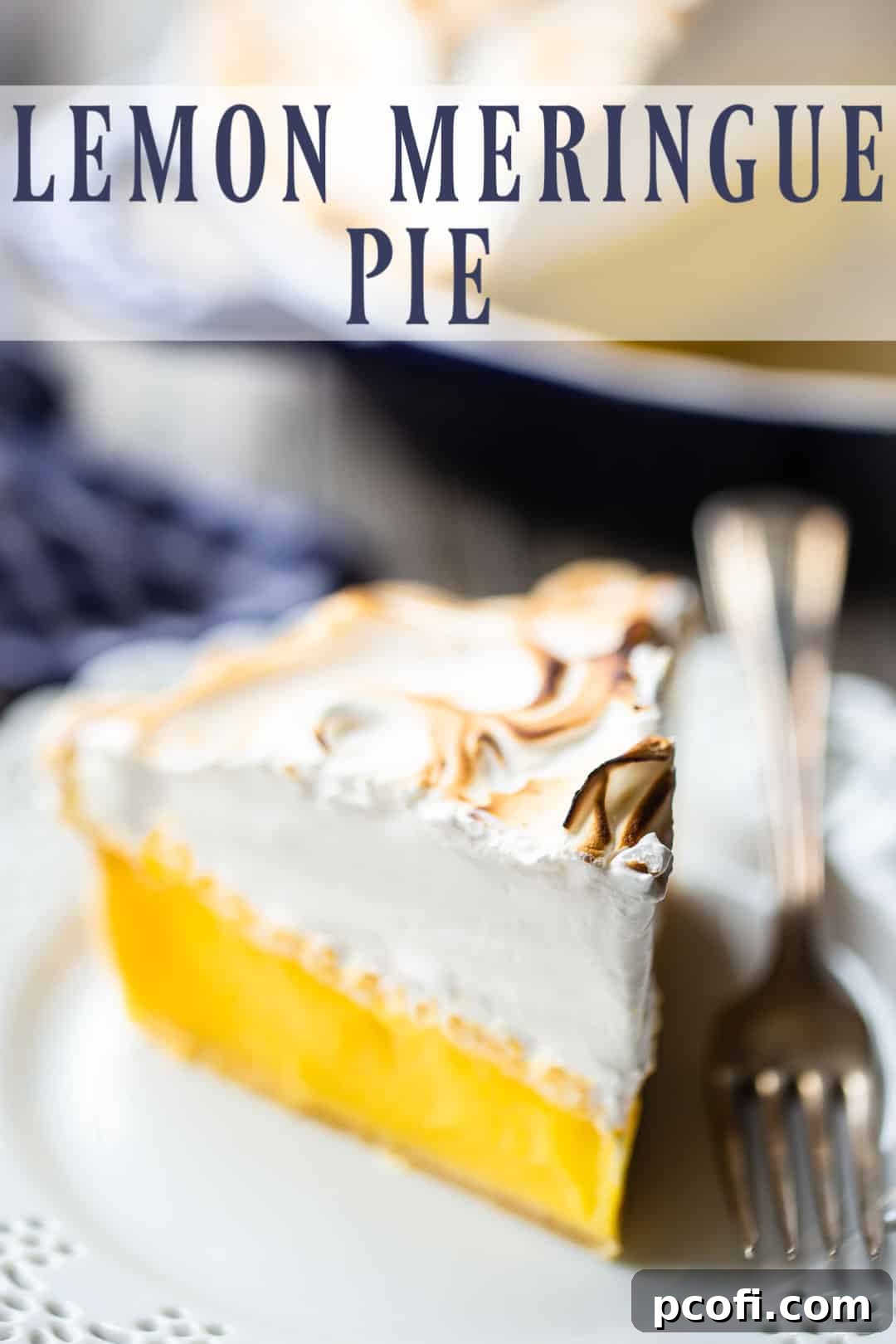
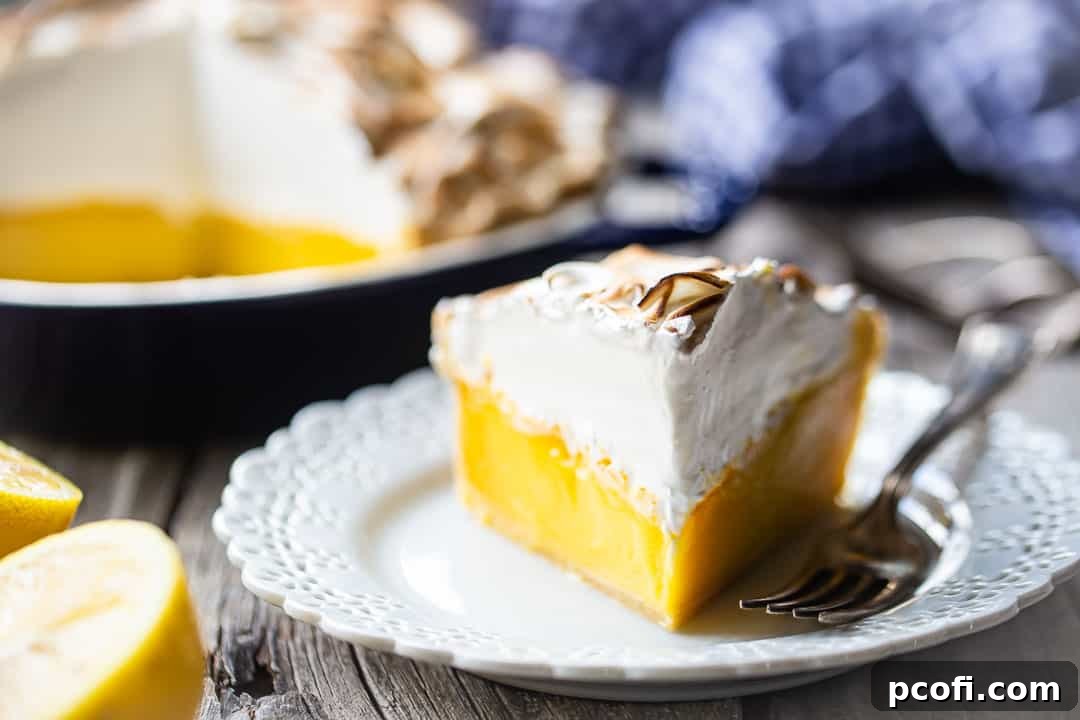
The bright, zesty flavor of lemon elevates so many dishes, from lemon crumb muffins to lemon bars and lemon pound cake. But perhaps its most iconic and beloved application is in a classic Lemon Meringue Pie. This dessert is a symphony of textures and flavors: a rich, buttery crust, a delightfully tangy citrus custard, and a generous, airy cloud of sweet, toasted meringue. The harmonious contrast is simply exquisite.
While lemon meringue pie has a reputation for being a bit challenging to master, I’ve dedicated extensive time to perfecting this recipe. Through countless hours of research, testing, and re-testing, I’ve refined every step to ensure a truly foolproof outcome. You can trust that this recipe will deliver a stunning and delicious pie every single time. Join me as I share all the essential tips and tricks I’ve gathered along the way, guiding you to create the world’s best lemon meringue pie right in your own kitchen!
Crafting the Perfect Lemon Meringue Pie from Scratch
Creating this show-stopping lemon meringue pie involves three distinct yet straightforward components, each contributing to the dessert’s overall perfection:
- The Flaky Pie Crust
- The Tangy Lemon Pie Filling
- The Billowy Meringue Topping
Let’s begin our culinary journey with the foundation: the pie crust.
The Foundation: A Flaky Pie Crust
A truly exceptional lemon meringue pie starts with a buttery, flaky pastry. While a store-bought crust can save time, embarking on a homemade pie crust journey is incredibly rewarding and produces unparalleled results. My preferred homemade pie crust recipe is remarkably simple, requiring just a handful of basic ingredients. Its secret to achieving an incredibly tender, melt-in-your-mouth texture and those coveted flaky layers lies in a special folding technique. This method, almost reminiscent of puff pastry, creates multiple delicate layers that truly elevate the pie experience. You can find all the detailed instructions and a helpful how-to video for this technique on my Simply Perfect Homemade Pie Crust guide.
Once your dough is prepared, rolled out, and adequately chilled, the next crucial step is par-baking it. This partial baking prevents the crust from becoming soggy once the luscious lemon filling is added. To ensure the crust maintains its shape and doesn’t puff up excessively during par-baking, I recommend lining it with parchment paper and filling it with pie weights. If you don’t have pie weights, dry beans or rice make an excellent substitute. This simple step is vital for a structurally sound and delicious pie.
The Heart: A Perfectly Set Lemon Pie Filling
This lemon pie filling is incredibly simple to prepare and, most importantly, sets beautifully every time. Say goodbye to runny, disappointing pie fillings! I discovered this exceptional recipe in Bake from Scratch magazine, and it truly is the ideal complement to this pie.
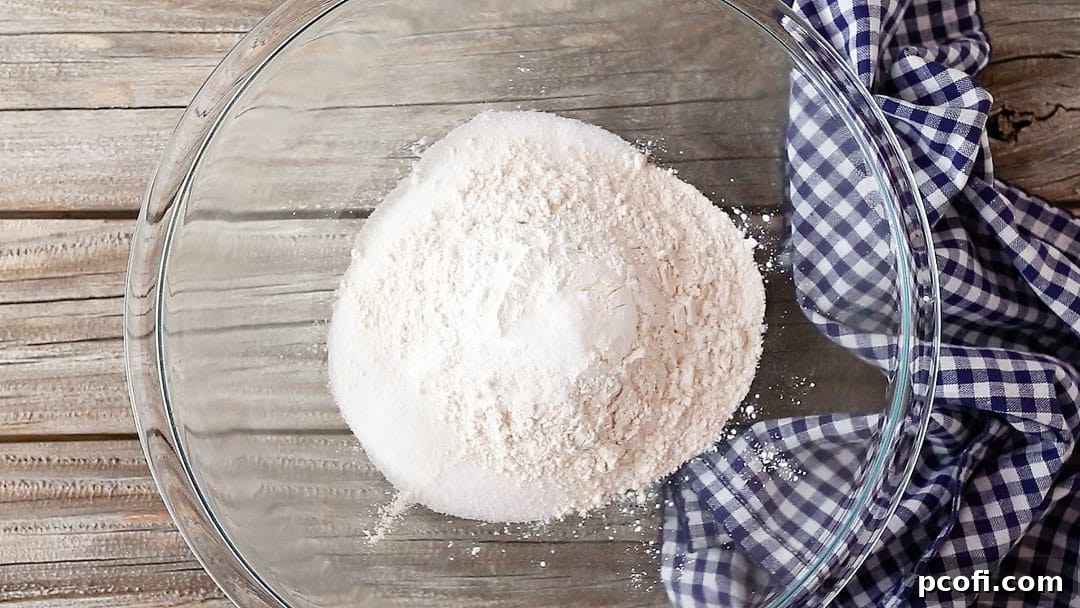
Begin by combining granulated sugar, all-purpose flour, cornstarch, and kosher salt in a large bowl. Whisk these dry ingredients together thoroughly until they are uniformly mixed. The combination of flour and cornstarch acts as a robust thickening agent, guaranteeing a firm, sliceable filling.
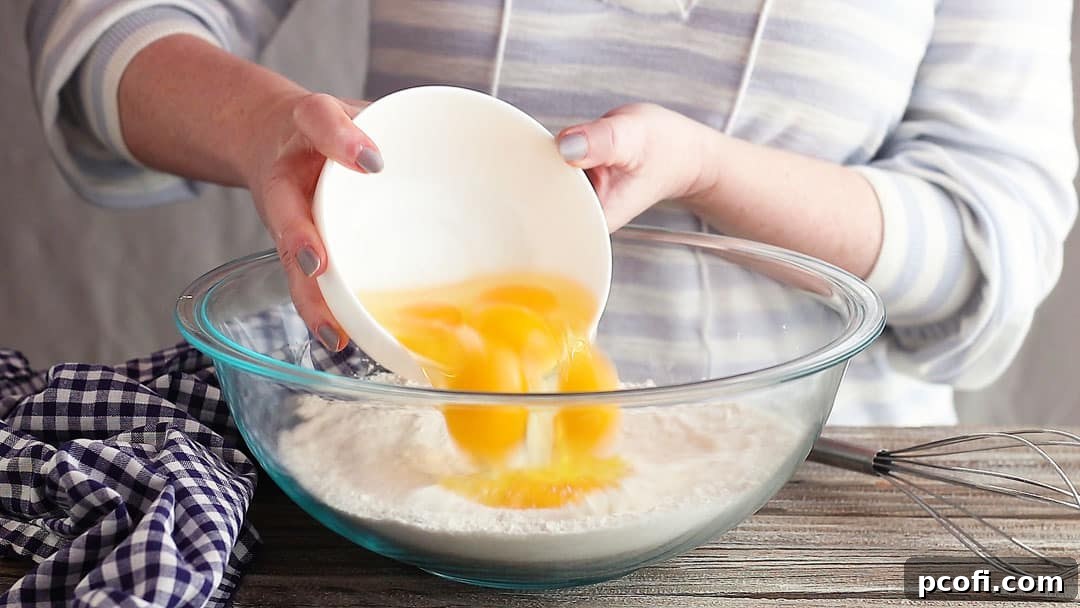
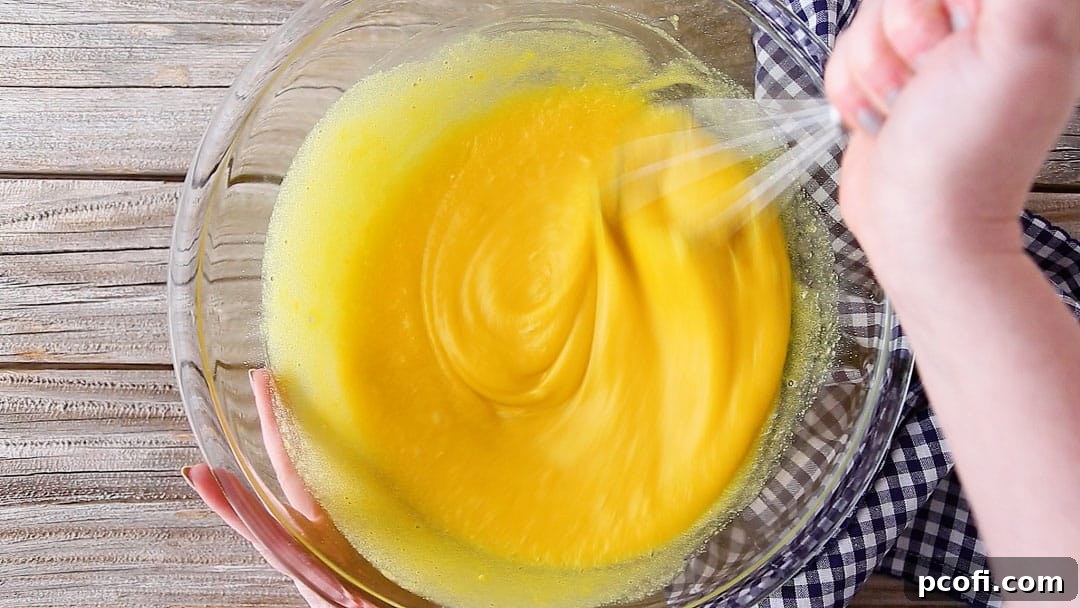
Next, incorporate the eggs. This recipe calls for a generous amount of eggs, including both whole eggs and extra yolks. These play a vital role in helping the pie filling set up firm and provide a luxurious, rich mouthfeel to the finished custard. Whisk everything together until the mixture is completely smooth and free of any lumps. Patience here ensures a silky, uniform texture.
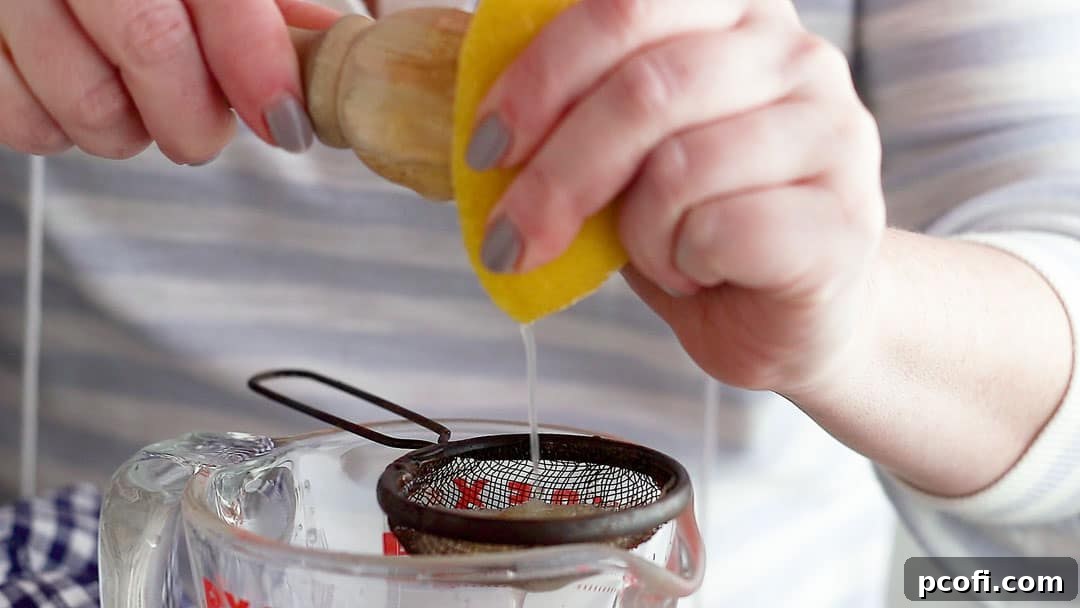
Now, it’s time for the star ingredient: fresh lemon juice. For an unparalleled bright and authentic citrus flavor, always opt for freshly squeezed lemons over bottled juice. The difference in taste is truly incomparable. Juice your lemons directly into a liquid measuring cup, placing a fine-mesh sieve on top to catch any seeds or pulp, ensuring a perfectly smooth filling.
The amount of lemon juice you use can be adjusted to your preference. For an intensely tart lemon flavor, you can go up to 1 1/2 cups of juice. If you prefer a milder citrus note, 1 cup will be plenty. For the lemon meringue pie pictured here, I found 1 1/4 cups of juice provided the perfect balance of tanginess.
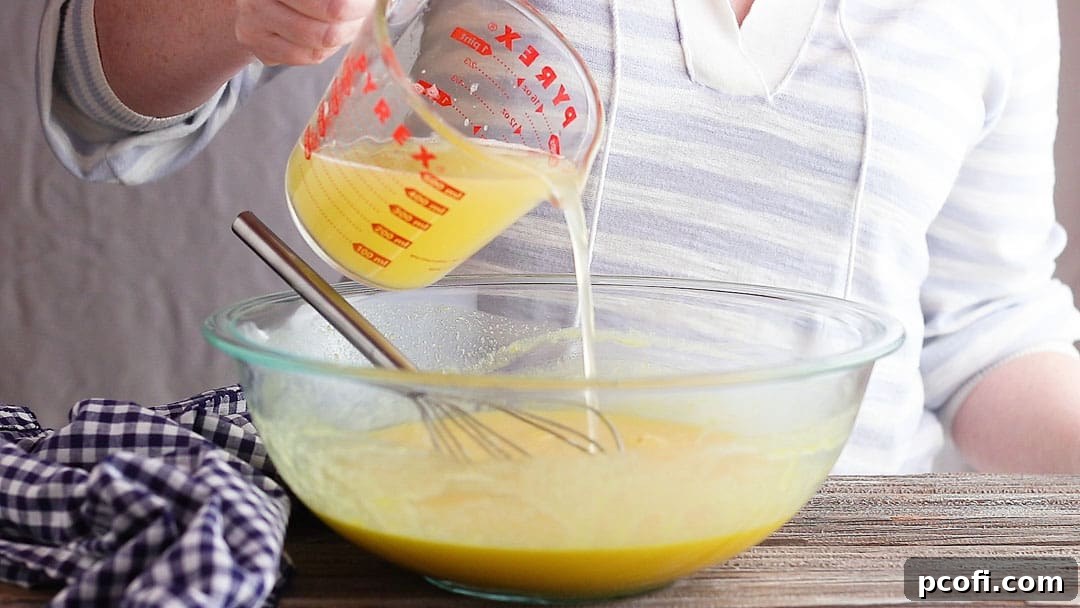
Once the lemon juice is thoroughly whisked into the egg mixture, carefully pour the filling into your pre-baked pie shell. Don’t worry if your crust is still slightly warm from the oven; this is perfectly fine. Bake the pie until the edges are set, but the center still has a noticeable wobble. You might observe a slight browning on the top, but the very middle should still appear quite wet and liquid-like. This is normal, as the filling will continue to firm up as it cools. Be careful not to overcook, as this can lead to cracks in the filling. While still delicious, a crack-free surface is visually more appealing.
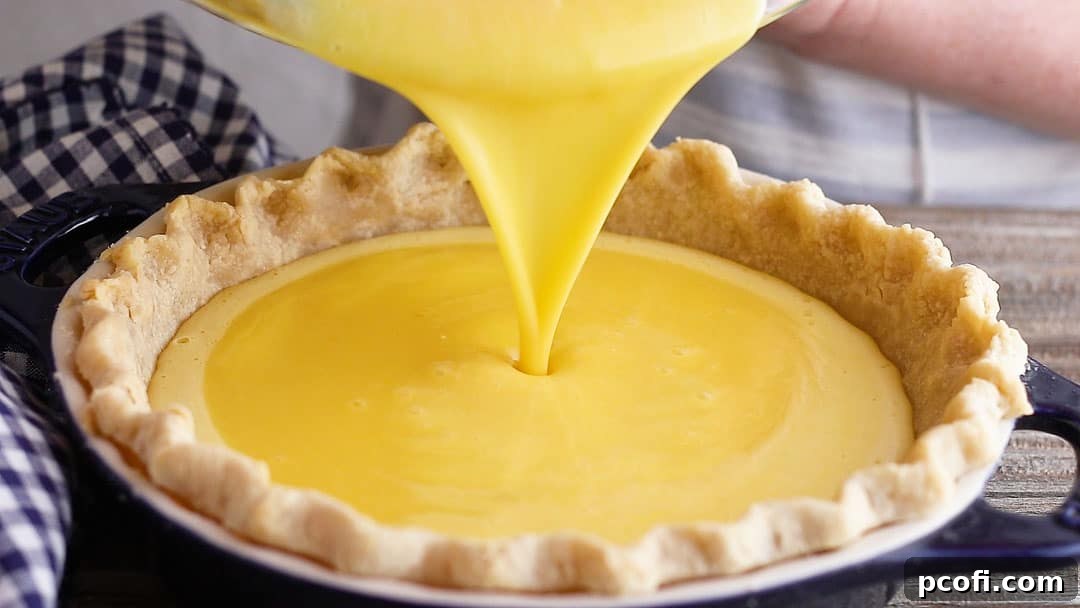
After baking, turn off the oven and open the door slightly, allowing the pie to cool down slowly. This gradual cooling is another key step in preventing cracks. After just a few minutes in the cooling oven, you’ll notice the filling has set completely. Leave it in the warm oven while you prepare the magnificent meringue topping.
The Crown: A Cloud of Perfect Meringue Topping
Achieving a perfect, billowy meringue requires starting with an impeccably clean, large mixing bowl. Glass or metal bowls are superior to plastic, as any trace of fat can prevent egg whites from whipping properly. Plastic bowls often retain microscopic fat molecules on their surface, making it harder to achieve stiff peaks.
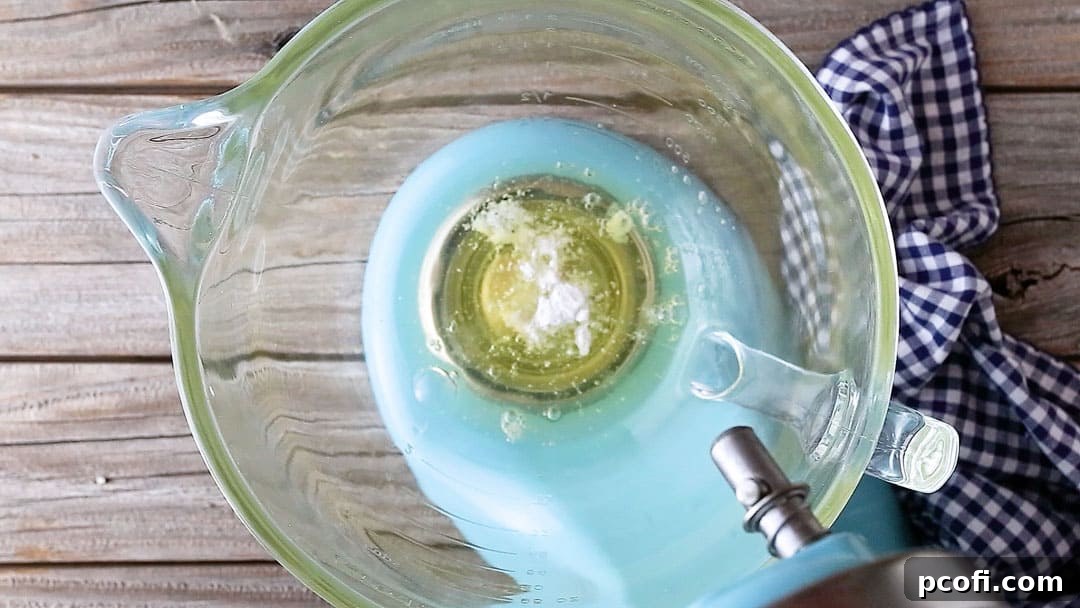
Combine the egg whites, cream of tartar, and salt in your clean bowl. Cream of tartar acts as an invaluable insurance policy for your meringue; it helps the whites whip up to a stiff consistency and maintain that structure, preventing shrinkage or weeping. If you don’t have cream of tartar, a few drops of lemon juice can serve as an emergency substitute.
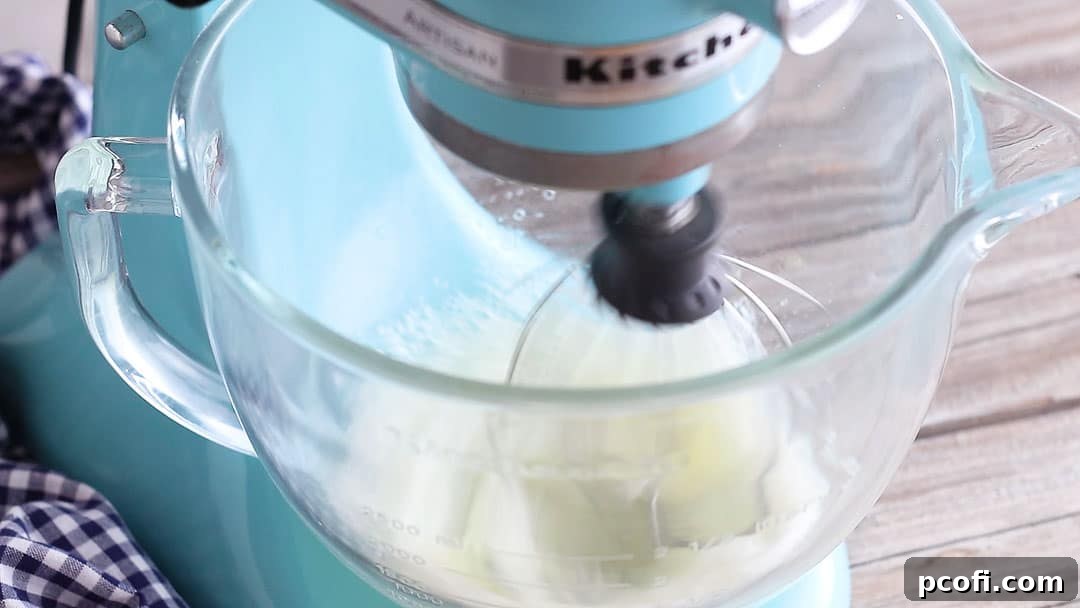
Whip the egg white mixture on medium speed until it can hold soft peaks. At this stage, the meringue will be foamy and just beginning to hold its shape when the whisk is lifted.
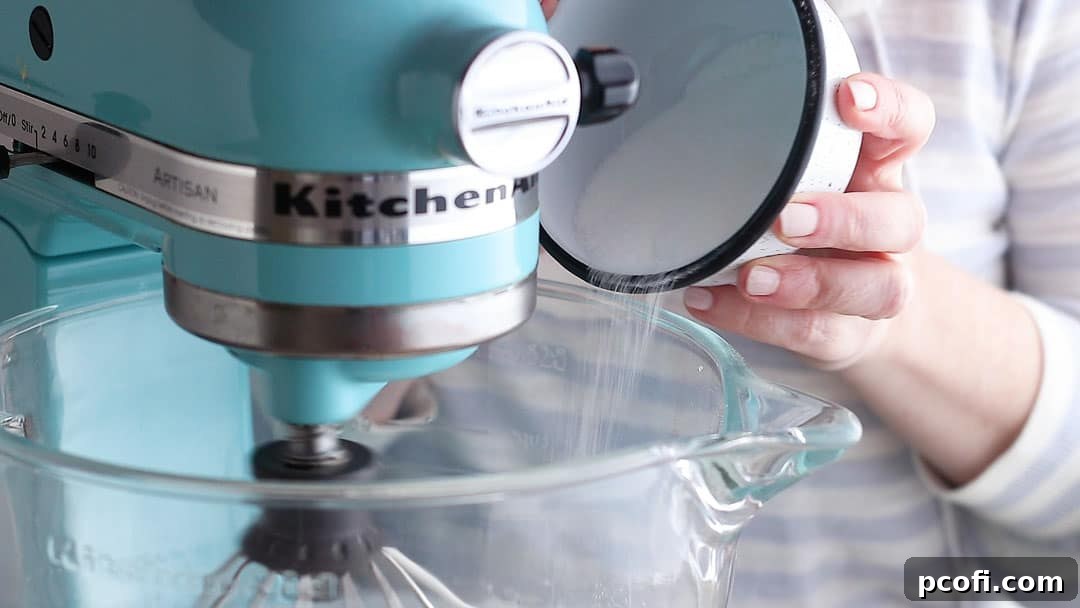
In a separate small bowl, stir together the granulated sugar and a touch of cornstarch. While continuing to whip the meringue, gradually add this sugar-cornstarch mixture in a very slow, steady stream. The slower you incorporate the sugar, the better, as this allows ample time for the sugar to dissolve completely into the meringue. This step is critical in preventing “weeping,” where small beads of moisture form on the meringue surface after toasting.
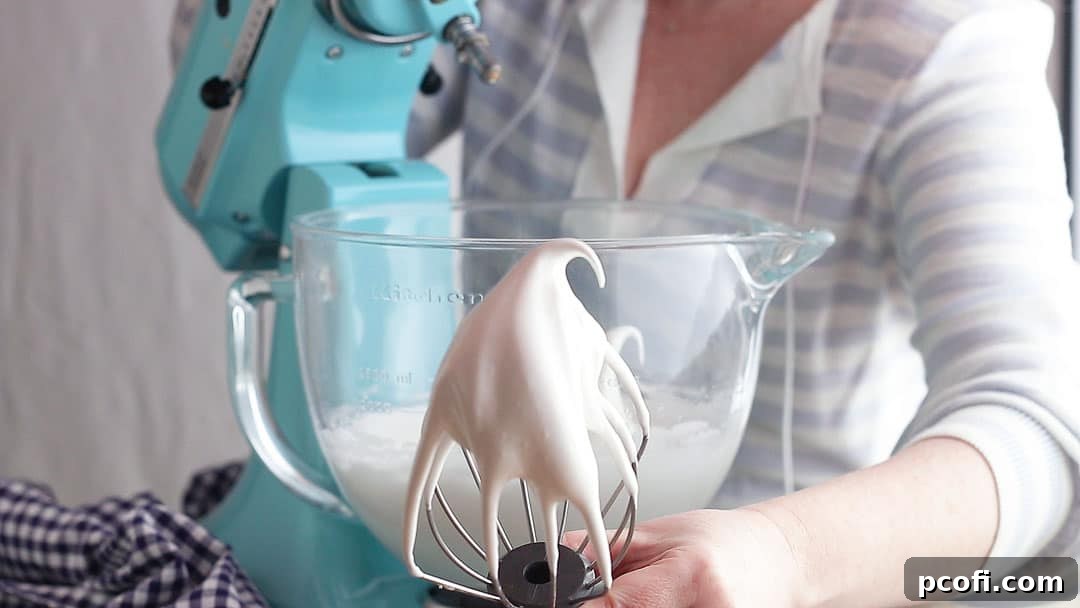
Once all the sugar has been incorporated, add the vanilla extract, increase the mixer speed to high, and continue whipping until the meringue is very stiff. You’ll know it’s ready when you lift the whisk and the meringue holds a firm, unyielding peak without flopping to the side. This stiff peak stage ensures a stable and impressive meringue.
Generously scoop the meringue onto the lemon pie while the filling is still warm. This warmth helps to create a strong bond between the meringue and the lemon filling, preventing them from sliding apart when sliced. Spread the meringue all the way to the edges of the pie crust. This crucial step prevents the meringue from shrinking back during baking or cooling, ensuring a complete and beautiful topping.
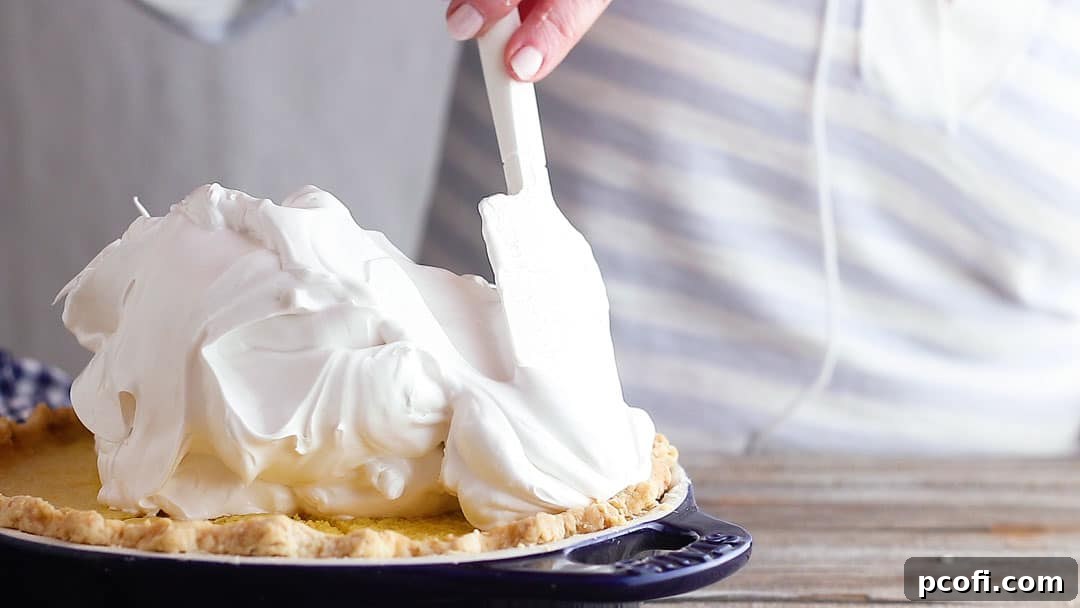
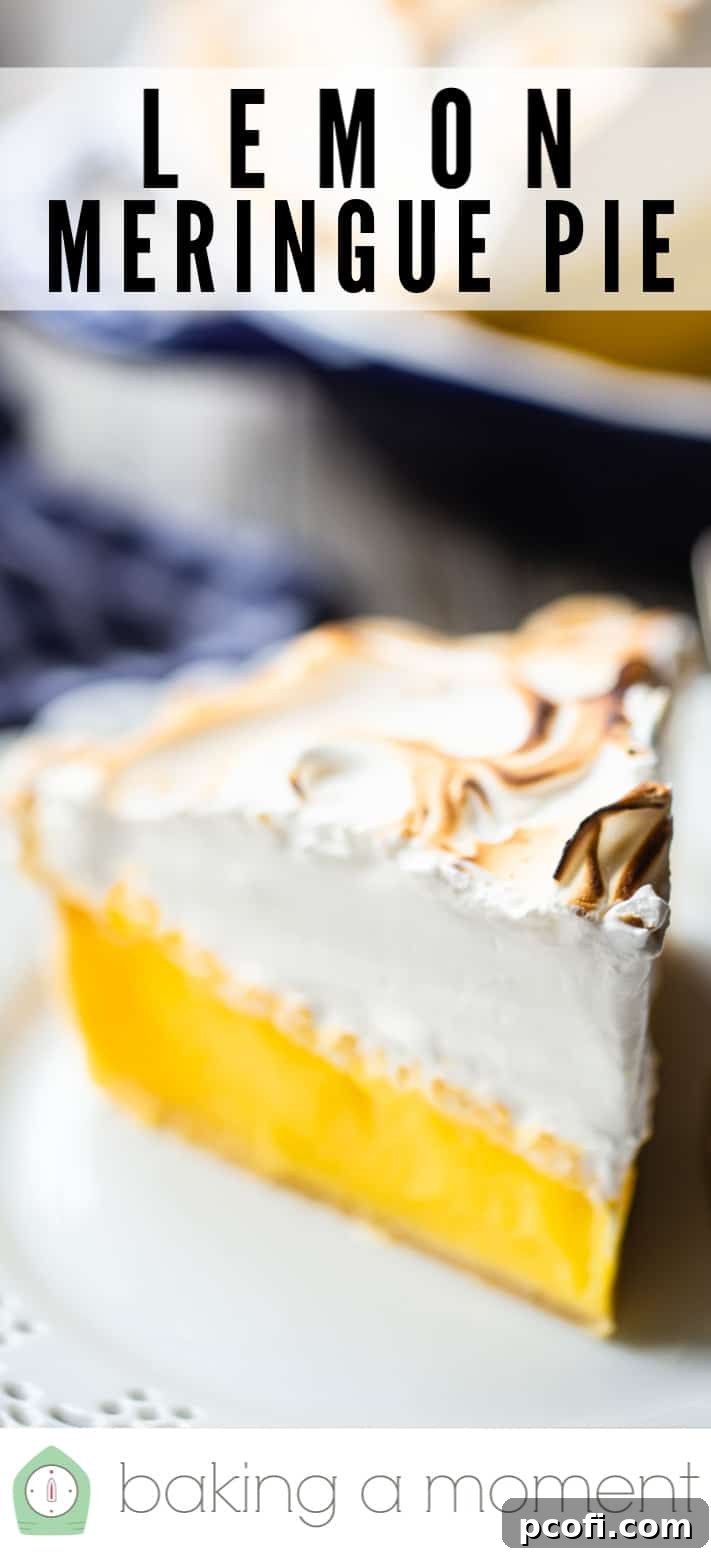
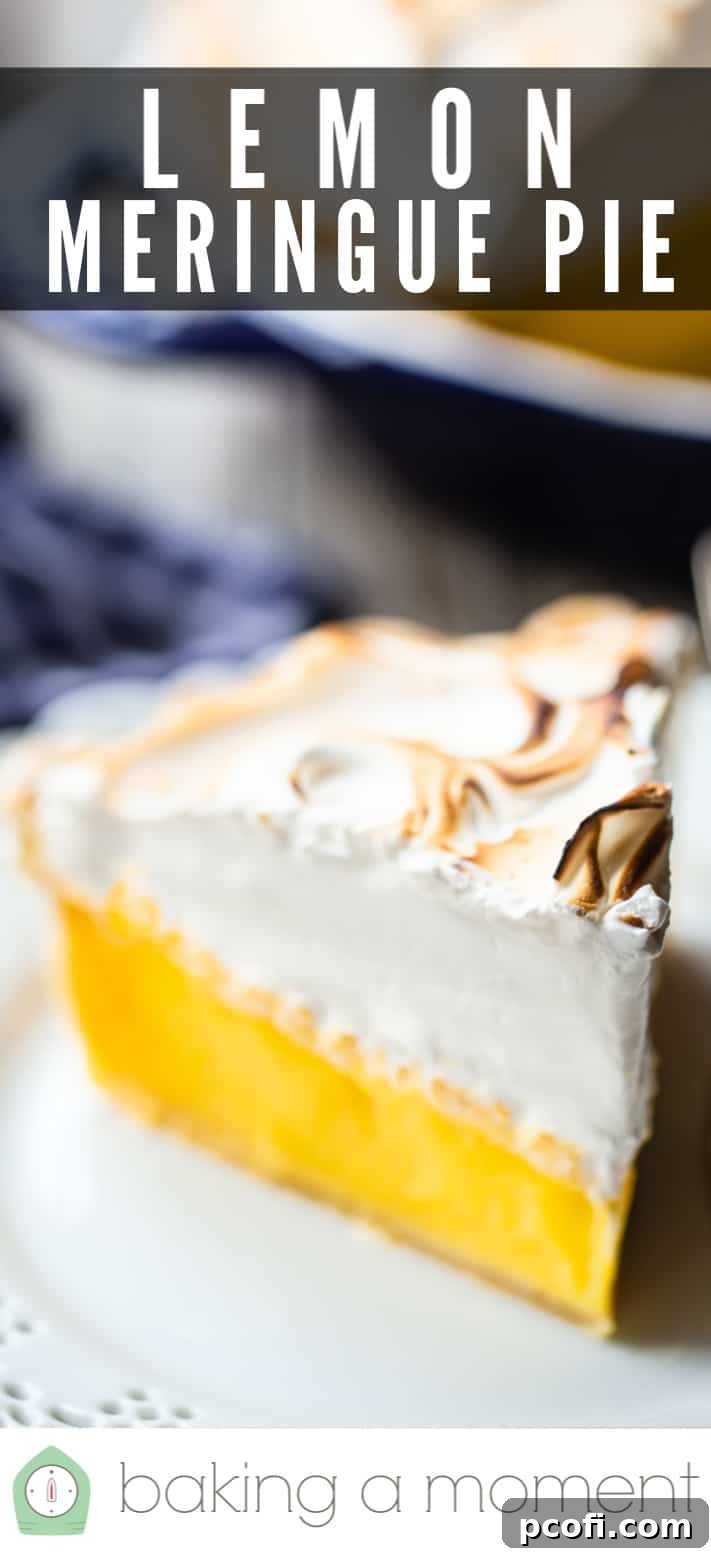
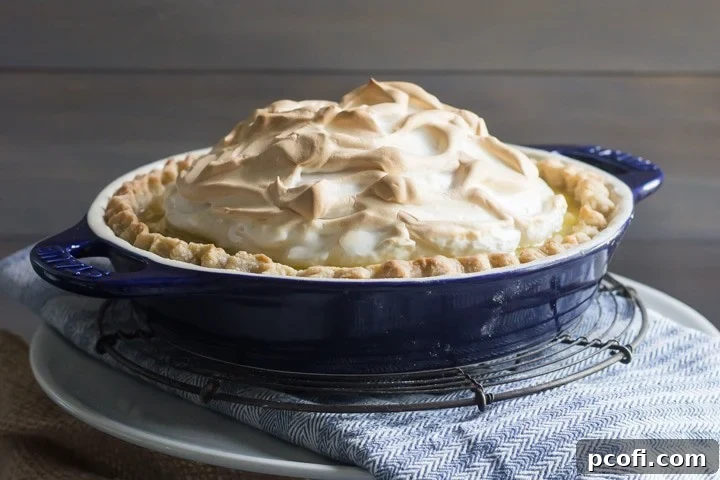
Using the back of a spoon or a small spatula, create elegant swirls, peaks, and valleys across the meringue surface. This not only adds visual appeal but also provides varying textures when toasted. Finally, toast the meringue to a beautiful golden brown. You can achieve this either under the broiler (watching it carefully to prevent burning) or, for ultimate precision and fun, with a brulee torch. A torch offers far more control, allowing you to target specific areas and achieve an even balance of deeply browned, slightly crispy peaks and pale, marshmallow-like valleys.
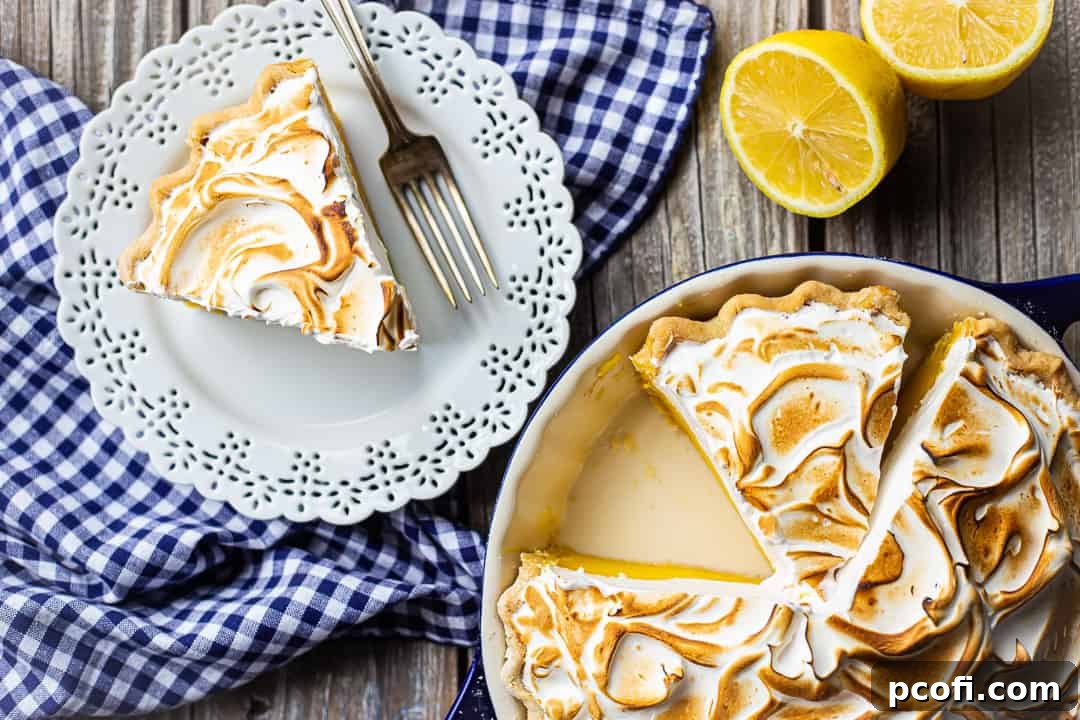
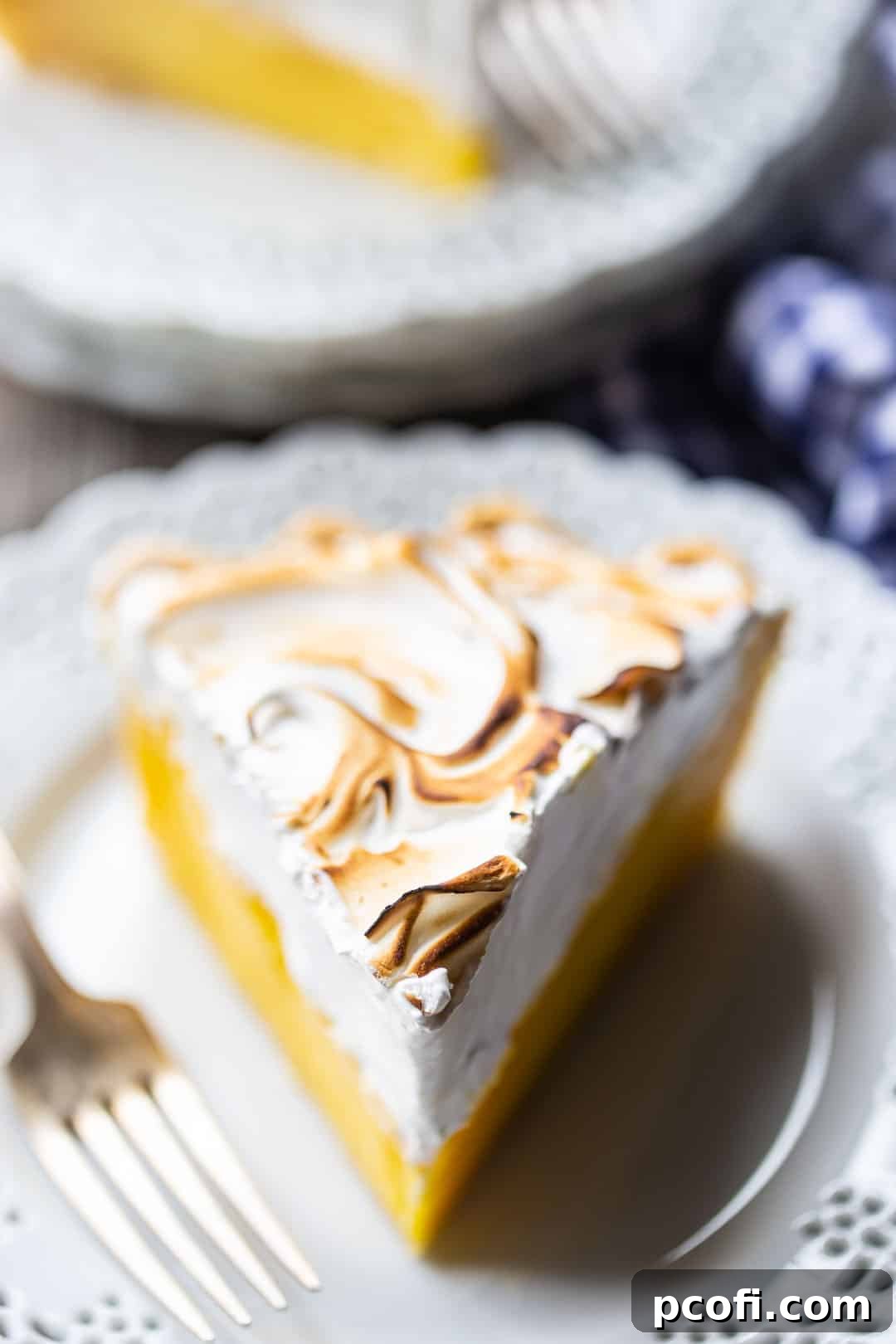
Once your meringue boasts that irresistible golden hue, your perfect lemon meringue pie is ready to be served! For clean, elegant slices, a pro tip is to wet your knife with cold water before each cut. You can serve the pie at room temperature, but for the best texture and to minimize the chance of weeping, it’s truly exceptional when freshly made. While chilling for a short period is acceptable, keep in mind that the longer the pie sits, the higher the likelihood of the meringue beginning to weep.
Troubleshooting Common Lemon Meringue Pie Challenges
Lemon meringue pie is renowned for its deliciousness, but it’s also notorious for a few common pitfalls. Even after years of baking, I’ve had to experiment extensively to uncover all the secrets to a foolproof result. Below, I’ll address some of the most frequent lemon meringue pie mishaps and provide clear solutions to help you prevent them.
Preventing a Runny Filling
Many lemon meringue pie recipes struggle with a filling that simply refuses to set, resulting in a runny, messy dessert that fails to hold its shape. Often, these recipes demand extensive chilling time, which can compromise the meringue’s integrity. However, with this perfected recipe, a runny filling will be a distant memory. This filling bakes entirely in the oven, leveraging ample thickening agents and a generous number of eggs. The result is a custard that sets so firm you can slice it cleanly with a knife, yet remains wonderfully smooth and never gummy or rubbery. It’s a beautiful balance of stability and luscious texture.
Mastering a Stable, No-Weep Meringue
Despite its seemingly simple ingredients—egg whites whipped with sugar—meringue can often be a source of frustration. Achieving a stable, glossy, and non-weeping meringue is key to a perfect lemon meringue pie. Here are the essential tips to remember:
- Immaculate Equipment is Key: Ensure your mixing bowl and whisk are impeccably clean and completely free of any grease. Even a tiny trace of fat will prevent your egg whites from whipping properly, hindering their ability to reach stiff peaks.
- No Yolk Allowed: Absolutely no egg yolk should contaminate your whites. Yolk contains fat, which, as mentioned, is the enemy of stiff meringue. Separate your eggs one by one into a small, separate bowl before adding them to your main mixing bowl. This way, if a yolk accidentally breaks, you only lose one egg white, not an entire batch.
- Start Slowly: Begin whipping the egg whites on medium speed. This gradual approach creates smaller, more uniform air bubbles, which results in a more stable and finely textured meringue.
- Timing is Everything: Start adding the sugar when the egg whites have reached the soft peak stage. At this point, the meringue is foamy but still slightly collapses when the whisk is lifted.
- Add Sugar Gradually: Incorporate the sugar very, *very* slowly, in a steady stream. This gives the sugar sufficient time to dissolve completely into the egg whites. Undissolved sugar crystals are a primary cause of weeping, as they draw moisture to the surface.
- Cornstarch for Stability: Mixing a small amount of cornstarch into your sugar before adding it to the whites provides an extra layer of insurance. Cornstarch helps to absorb any excess moisture in the meringue, further preventing weeping.
- Whip to Stiff Peaks: Continue whipping the meringue until it is very stiff and glossy. When you lift the whisk, the peaks should stand upright and hold their shape without drooping.
- Apply Meringue Warm: Top the pie with the meringue while the lemon filling is still warm. This creates a thermal bond, helping the meringue adhere firmly to the custard and preventing separation.
- Cover the Edges: Spread the meringue all the way to the edges of the pie crust. This physical seal helps to anchor the meringue and significantly reduces the chance of it shrinking back from the crust during cooling.
- Serve Promptly: Lemon meringue pie is at its peak when freshly made. The longer it sits, the higher the chance of the meringue weeping, shrinking, or deflating. Enjoy it soon after it’s prepared for the best experience.
Frequently Asked Questions About Lemon Meringue Pie
Is Lemon Meringue Pie Dairy-Free?
This lemon meringue pie recipe can be made 100% dairy-free if you use a high-quality vegan butter substitute for the pie crust. Since the recipe calls for flour in both the filling and crust, it is not gluten-free. Additionally, as it contains eggs, it is not suitable for a vegan diet. It’s important to clarify that, contrary to a common misconception, eggs are not considered dairy products, even though they are frequently sold in the dairy section of most grocery stores. The term “dairy” exclusively refers to products derived from milk.
Is It Safe to Eat?
The meringue topping in this recipe is lightly toasted but not fully cooked, meaning the egg whites are not completely pasteurized. Therefore, it’s advisable to exercise caution when serving this pie to individuals who are very young, elderly, pregnant, or have compromised immune systems. For these groups, there’s a slight risk associated with consuming undercooked eggs.
A safe alternative is to use pasteurized egg whites. These are widely available, typically in liquid form in cartons, and are safe to consume even raw. Some stores might also carry whole pasteurized eggs in their shells. I’ve used liquid pasteurized egg whites for meringue in the past with excellent results, though they sometimes require a bit more time and effort to whip up to stiff peaks.
Can This Be Made Ahead of Time?
While lemon meringue pie is undeniably at its absolute best when enjoyed fresh, it can be chilled for a short period—perhaps up to 2 hours—before serving. However, it’s crucial to understand that the longer the pie sits, the greater the likelihood of the crust becoming soggy and the meringue beginning to weep or deflate. For the freshest texture and appearance, plan to serve it as soon as possible after preparation.
Does Lemon Meringue Pie Need to Be Refrigerated?
As mentioned, chilling the pie briefly before serving is acceptable. If you have any leftovers, they should be promptly stored in the refrigerator. The pie will remain safe to eat for a few days when refrigerated, though its quality, particularly the meringue’s texture, may diminish over time. I do not recommend freezing lemon meringue pie, as the delicate meringue does not hold up well through the freeze/thaw process and will likely become watery and lose its structure.
More Refreshing Pie Recipes to Enjoy:
- Creamy Peanut Butter Pie
- Easy Grasshopper Pie
- Decadent Chocolate Cream Pie
- Effortless Key Lime Pie
As an Amazon Associate, I earn from qualifying purchases.
Lemon Meringue Pie
10
40 mins
1 hr 5 mins
4 hrs
5 hrs 45 mins
Ingredients
For the Pie Crust:
- 1 1/4 cups (156.25 g) all-purpose flour
- 1/2 teaspoon kosher salt
- 2 1/2 tablespoons oil, (any neutral-tasting oil will work; I like vegetable oil)
- 1/4 cup (56.75 g) unsalted butter, (1/2 stick), cold
- 1/4 cup (59.15 ml) ice cold water
For the Lemon Pie Filling:
- 1 3/4 cups (350 g) granulated sugar
- 1/2 cup (62.5 g) all-purpose flour
- 2 tablespoons cornstarch
- 1/2 teaspoon kosher salt
- 6 large eggs
- 6 large egg yolks
- 1 cup (236.59 ml) lemon juice*, (from about 4 to 5 lemons)
For the Meringue Topping:
- 4 large egg whites
- 1/4 teaspoon cream of tartar
- 1/4 teaspoon kosher salt
- 3/4 cup (150 g) granulated sugar
- 2 tablespoons cornstarch
- 1/2 teaspoon vanilla extract
Instructions
To Make the Pie Crust:
- Place the flour and salt in a medium bowl and whisk to combine.
- Add the oil, whisking it in until the mixture resembles coarse bread crumbs.
- Cut the butter into thin slices and toss them in the flour mixture to coat.
- Dribble ice water in, a tablespoon at a time, mixing just until the dough can hold its shape when squeezed (you may need slightly more or less water, depending upon the humidity of your environment).
- Gather the dough into a ball, shape it into a disc, and wrap it tighly in plastic wrap.
- Refrigerate the dough for at least 1 hour.
- Roll the dough out to 1/4-inch thickness, and fold into thirds.
- Roll again to about 1/4-inch, then fold into thirds again.
- Repeat the rolling and folding process one more time, re-wrap, and refrigerate for another hour.
- Preheat the oven to 400 degrees F.
- Unwrap the dough and on a lightly floured surface, roll to about 2 inches larger than the diameter of a standard-size 9-inch pie plate.
- Slip the dough into the ungreased pie plate, trim away any excess, and fold and crimp the edge.
- Line with a sheet of parchment, and fill with ceramic pie weights or dry beans.
- Partially bake the pie crust for 15 minutes.
To Make the Lemon Pie Filling:
- Preheat the oven to 325 degrees F.
- Place the sugar, flour, cornstarch, and salt in a large bowl, and whisk to combine.
- Whisk in the eggs and egg yolks until smooth.
- Whisk in the lemon juice until combined, then transfer the filling to the partially baked pie crust and bake for 38 to 42 minutes, or until set around the edges but still quite wobbly in the center (the filling will continue to set up as the pie cools).
- Leave the pie in the oven (with the oven turned off and the door slightly ajar) for about 15 minutes, or until it has cooled slightly and the filling has set up.
To Make the Meringue Topping:
- Place the egg whites, cream of tartar, and salt in a large mixing bowl and whip on medium speed until the meringue can hold soft peaks.
- Mix the sugar and cornstarch together in a small bowl.
- With the mixer still running, add in the sugar/cornstarch mixture in a very slow, steady stream.
- When all of the sugar mixture has been added, turn the mixer up to high speed and whip until the meringue is very stiff.
- Stir in the vanilla extract, and scoop the meringue on top of the warm pie.
- Use a spatula to spread the meringue out to the edges of the crust, and to create swirls.
- Toast the meringue for a few minutes under the broiler, or use a brulee torch.
Notes
For more info on the pie crust, click here: Flaky Pie Crust Recipe.
Lemon Pie Filling recipe adapted from Bake from Scratch magazine’s tarte au citron recipe: Tarte au Citron with Pine Nut Crust.
For more info on how to make meringue, click here: Meringue Cookies.
Calories:
436
kcal
,
Carbohydrates:
71
g
,
Protein:
9
g
,
Fat:
14
g
,
Saturated Fat:
5
g
,
Cholesterol:
228
mg
,
Sodium:
355
mg
,
Potassium:
129
mg
,
Fiber:
1
g
,
Sugar:
51
g
,
Vitamin A:
440
IU
,
Vitamin C:
9
mg
,
Calcium:
34
mg
,
Iron:
2
mg
American
Dessert
Tried this recipe?
Mention @bakingamoment on Instagram or tag #bakingamoment.
May 15, 2015
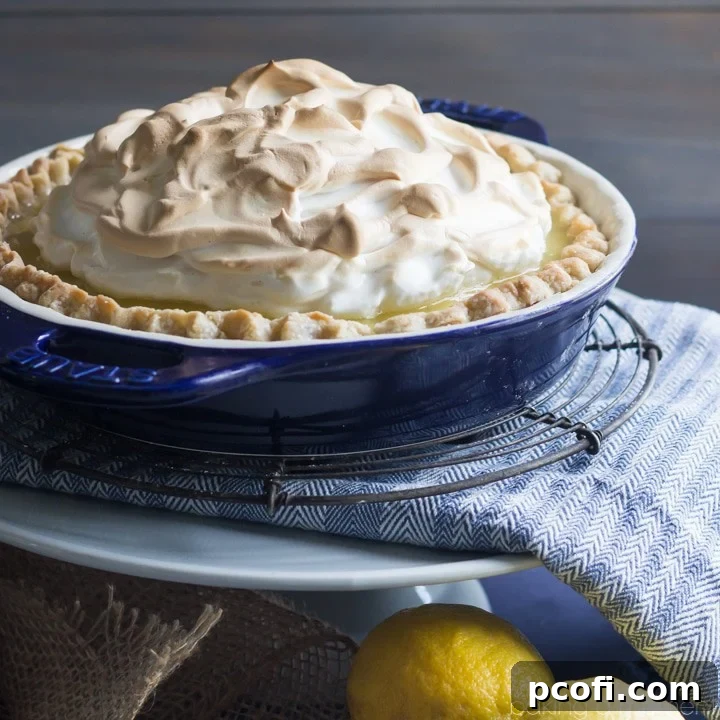
Yesterday was a wheel-spinning kind of day. Do you get those too? I just had so many ideas, things I wanted to do, and I didn’t know quite which way to direct my energy. So I ended up doing lots of different things and basically not really seeing anything fully through.
Hate when that happens. :/
Anyhow, of all the things I started working on, I decided that this would be the one I’d finally finish, and share today, because it’s light, citrus-y, and perfect for weekend entertaining.
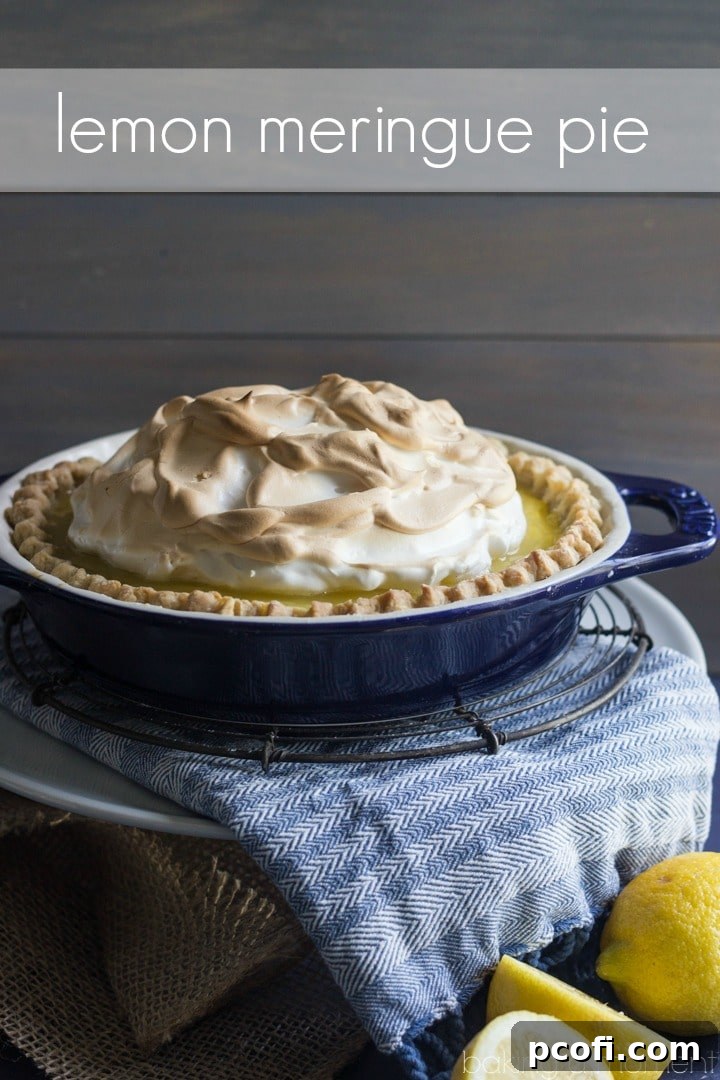
If that’s what you’re going to be up to in the next few days. 😉 And if it’s not then you should probably reconsider your plans. It’s waaaay too gorgeous right now to be anywhere but outside, doing anything but relaxing with loved ones, and eating anything that’s not lick-your-lips delish.
Life’s just too short! And May is even shorter, so eat it all up while you still can!
We didn’t always have dessert when I was growing up, but I do remember lots of summer nights where my mom would defrost a lemon meringue pie she had picked up from the freezer section. It was always a favorite treat! And so I wanted to recreate that same dessert, only this time from scratch, and made from the freshest and best quality ingredients.
My favorite pie crust recipe forms the base, and friends, it just doesn’t get any better. Any butterier, or any flakier. The filling is from King Arthur Flour’s recipe, and it is so SPOT ON. Just sweet enough, tons of bright lemon tang, and that little bit of butter makes it linger on your tongue. The meringue is fluffy, puffy, and like a sweet vanilla cloud.
I used a pasteurized egg white product, just because my fridge is overrun with yolks from making batch after match of macarons. It worked out well- and I don’t always have luck with those liquified whites. In this case it was very good, even though it took a little longer for them to really whip up nice and stiff. You can use fresh egg whites if you’d prefer, but just know that they won’t be fully cooked.
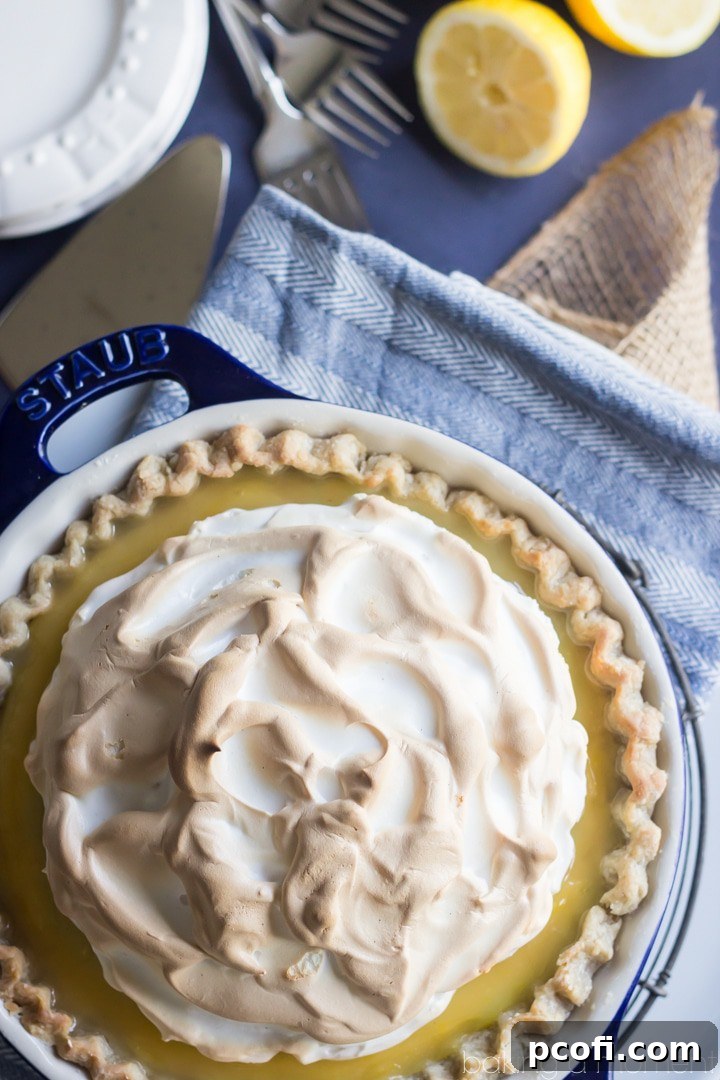
I just love how you get that contrast within the swirls of meringue! The peaks are crunchy-tender and the valleys are soft and marshmallow-y… It’s amazing!
Just one word of advice! Don’t skip the step of chilling the pie before slicing. I foolishly made that rookie mistake and that is why you don’t see any pics of the sliced pie 😉 #shouldveknownbetter
This post contains affiliate sales links.